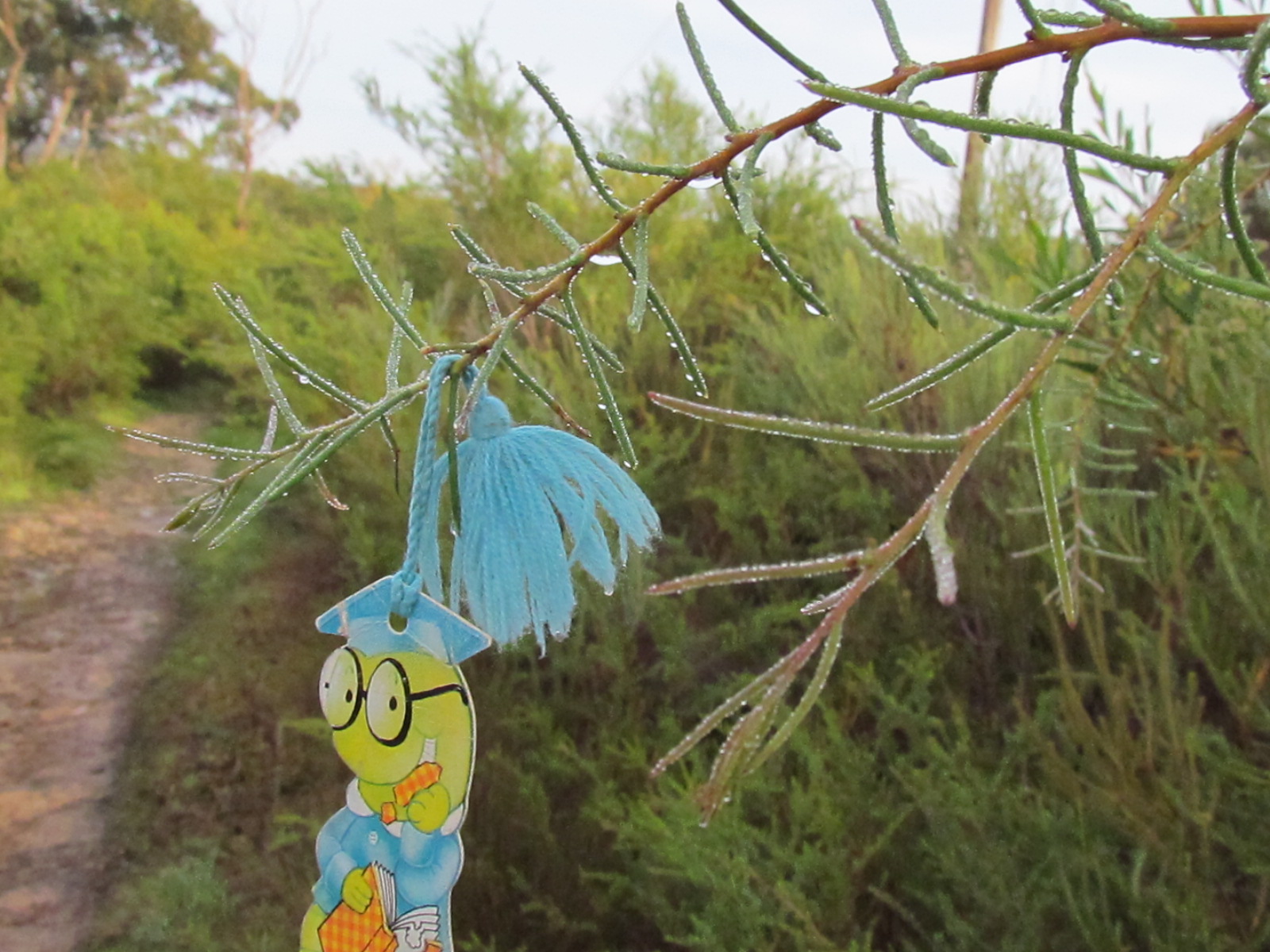
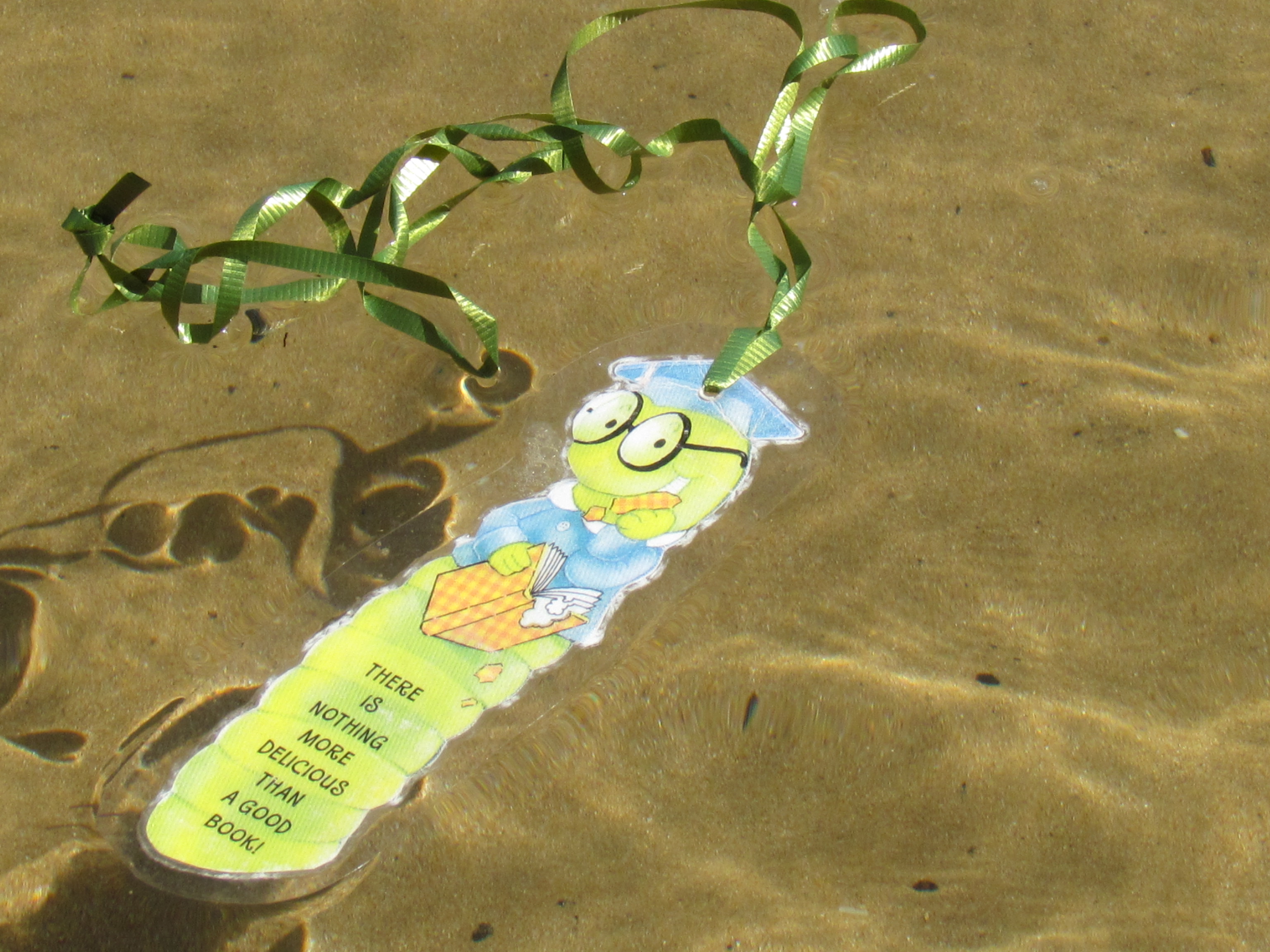
This is the blog of Mark Wordsworm, the travelling worm. I’m a 25-year-old bookmark and can proudly boast my own Hallmark serial number, 95 HBM 80-1. You’ll probably want to read all about me and my Travelling Companion (the TC).
Today’s travel notes
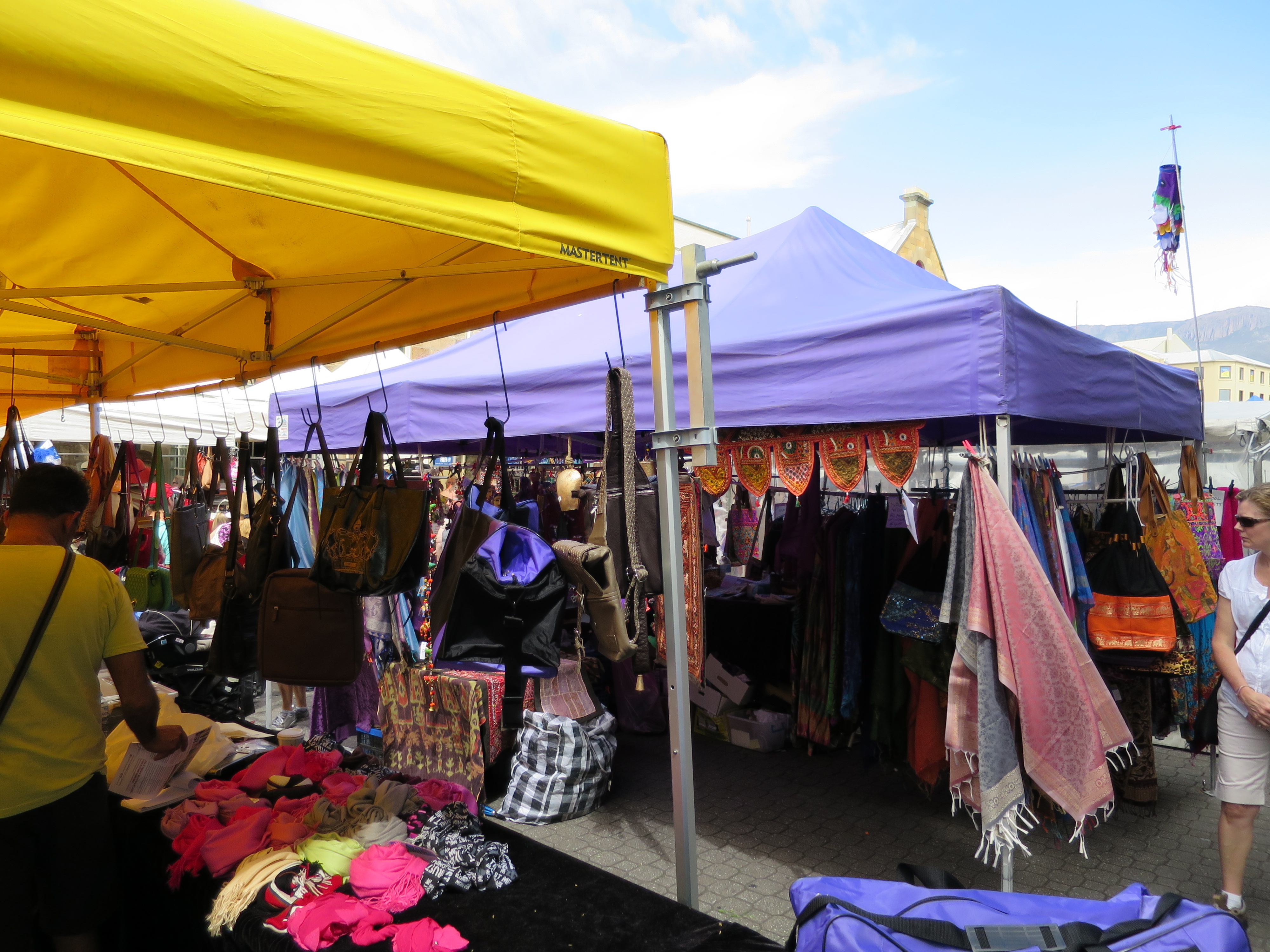
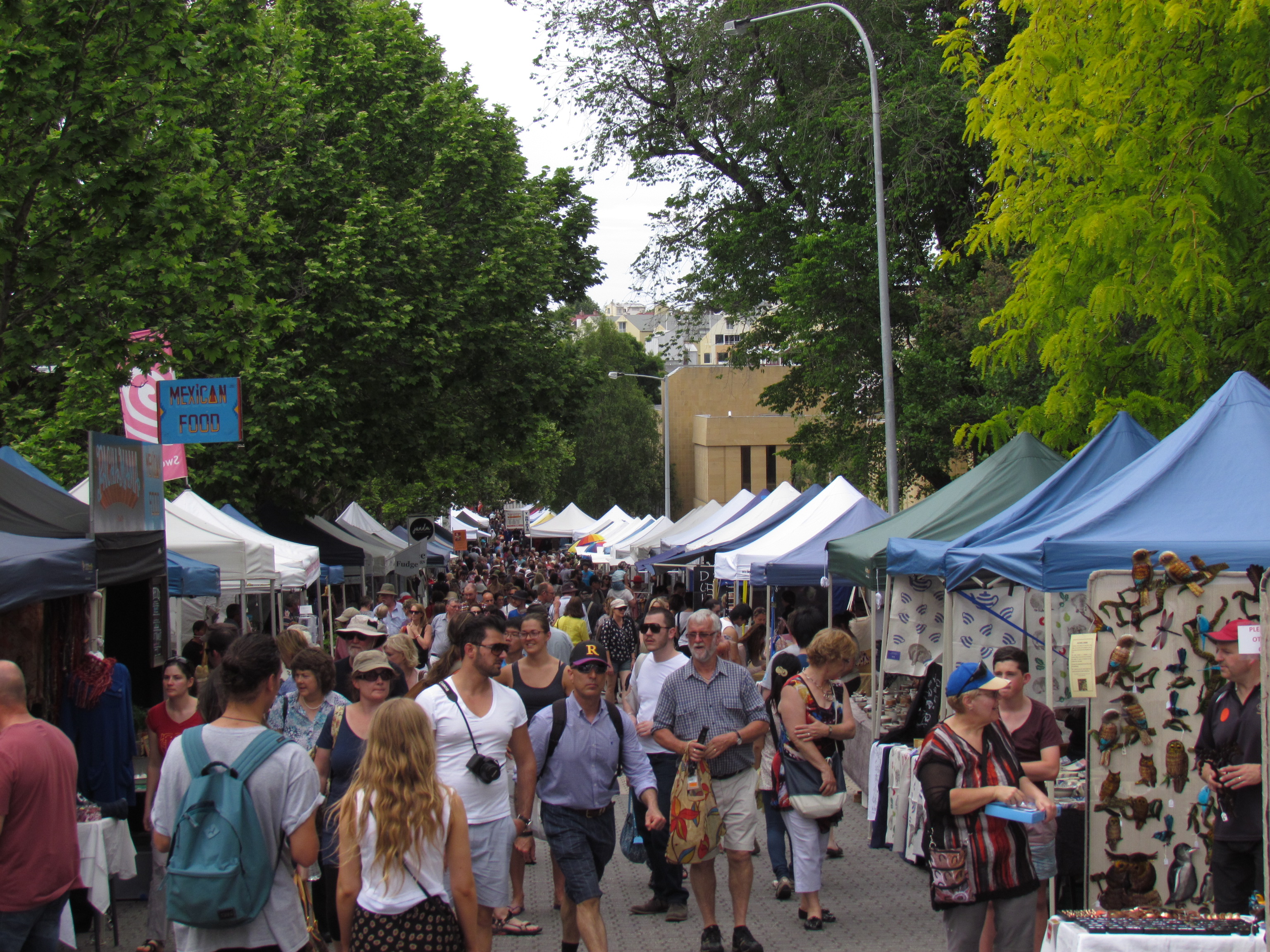
Me and the TC, plus her husband whom this worm fondly dubs the “TC-once-removed”, spent a long weekend in Tasmania last week. We visited the Salamanca Market in Hobart on Saturday morning.
My impressions? Colour, talent, scents, laughter.
The book I’m in
Catching Fire, part 2 of The Hunger Games, by Suzanne Collins. Classy teen science fiction that appeals to adults for its fast pace, clever social commentary and appealing characters.
Travel tip
Take a stroll around the streets in the area of the market, to smell the roses and absorb the architectural variety.
Recommended restaurant
This worm was a tad disappointed in the lunch we found near Salamanca Markets. I’d heard Hobart is a gourmet heaven, but the TC’s potato salad was decidedly below par. Enough said on that score.
The photos
Me in Salamanca Place:
Looking up through Salamanca Market towards Gladstone street:
A couple of the colourful market stalls, snapped by the TC-once-removed:
The view from Gladstone street, looking down through the market:
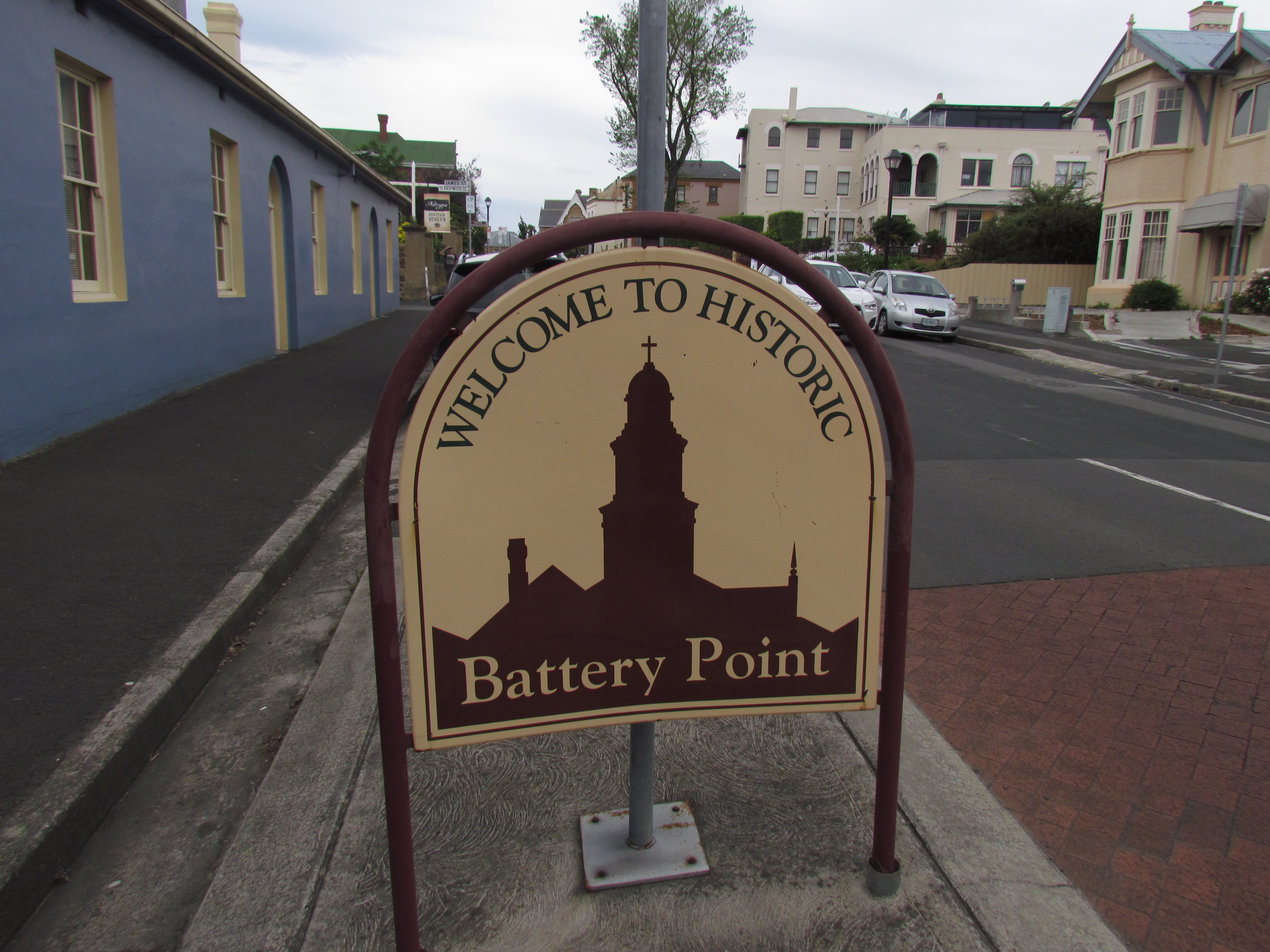
Nearby the market is Battery Point. It’s one of the longest-settled parts of Hobart, dating back to around 1804:
The balcony on this building intrigued the TC-once-removed, because there’s no way of getting onto it:
This is the blog of Mark Wordsworm, the travelling worm. I’m a 25-year-old bookmark and can proudly boast my own Hallmark serial number, 95 HBM 80-1. You’ll probably want to read all about me and my Travelling Companion (the TC).
Today’s travel notes
Me and the TC spent yesterday afternoon on Cockatoo Island on the Parramatta River, immediately inland of Sydney harbour. It’s a forlorn place, strewn with gravel and history.
My impressions? Sandstone, sheds and seagulls.
The book I’m in
Gidget, by Frederick Kohner. An engaging tale of a teenage surfer, written 1957. Clever use of language and style to carry along a simple story with tons of atmosphere.
Travel tip
When travelling to Cockatoo Island, take sunscreen and something to tie back your hair. (That is, if you have lots of it, as the TC does.)
The photos
Me on a metal lathe in the industrial area of Cockatoo Island:
Cockatoo Island, as seen on Google Maps:
The Aboriginal name for the island is Wareamah. The Aboriginal people of the area used to come to the island to fish. But there was no fresh water, so they didn’t live there permanently. In 1839 a governor of New South Wales decided the island was an ideal place to house prisoners and put them to work quarrying sandstone and building prison and military barracks and official residences.
The entrance to the island from the ferry wharf:
Walking into the industrial area:
An impressive sandstone cliff on the right as you walk in, which has survived the extensive quarrying:
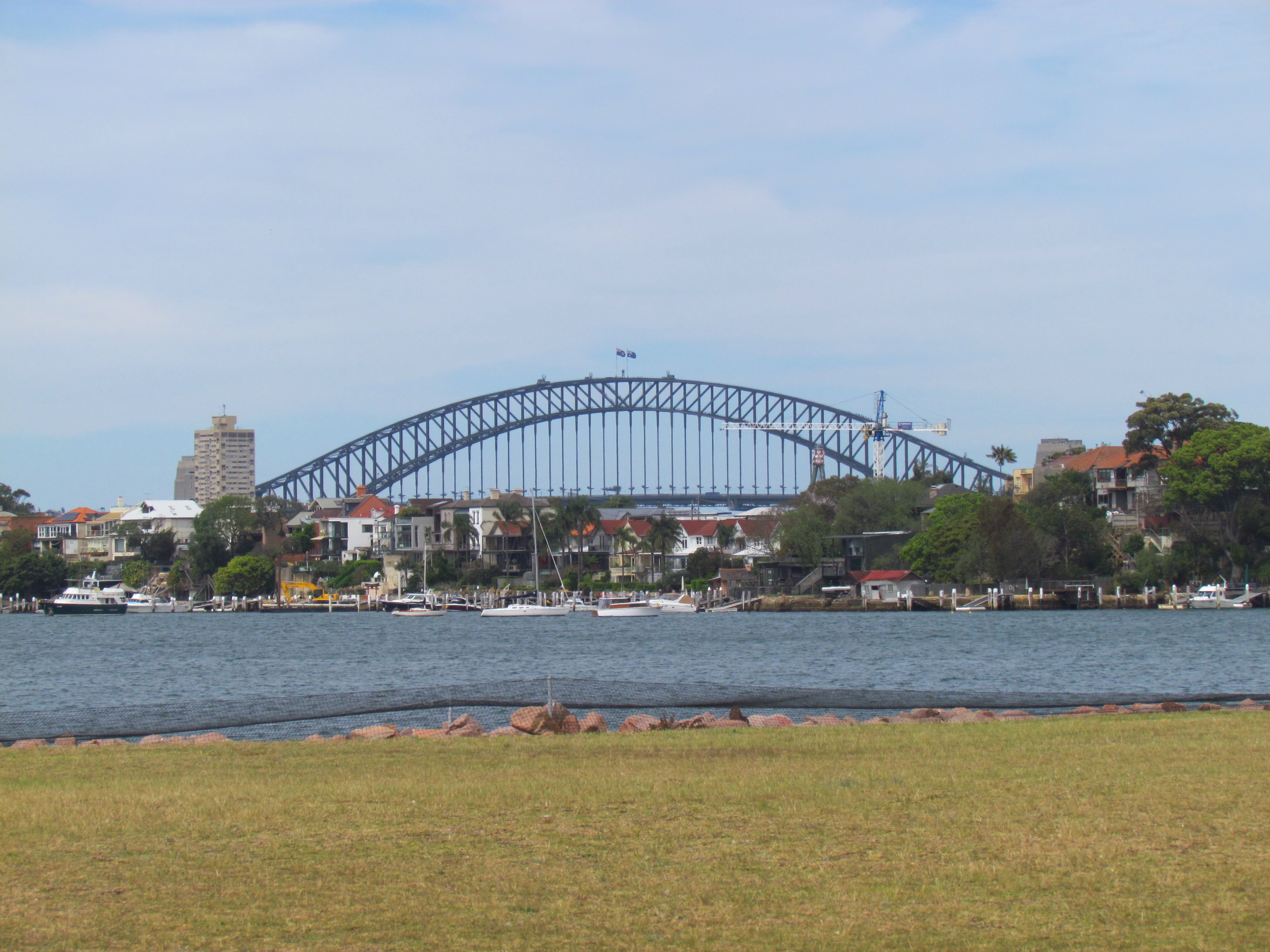
A view of Sydney Harbour Bridge from the island:
In the late 1800s and early 1900s, the island became a major ship-building site, playing a large part in ship construction and repair during World War II. Its use as a dockyard and construction facility for ships and submarines continued until 1992.
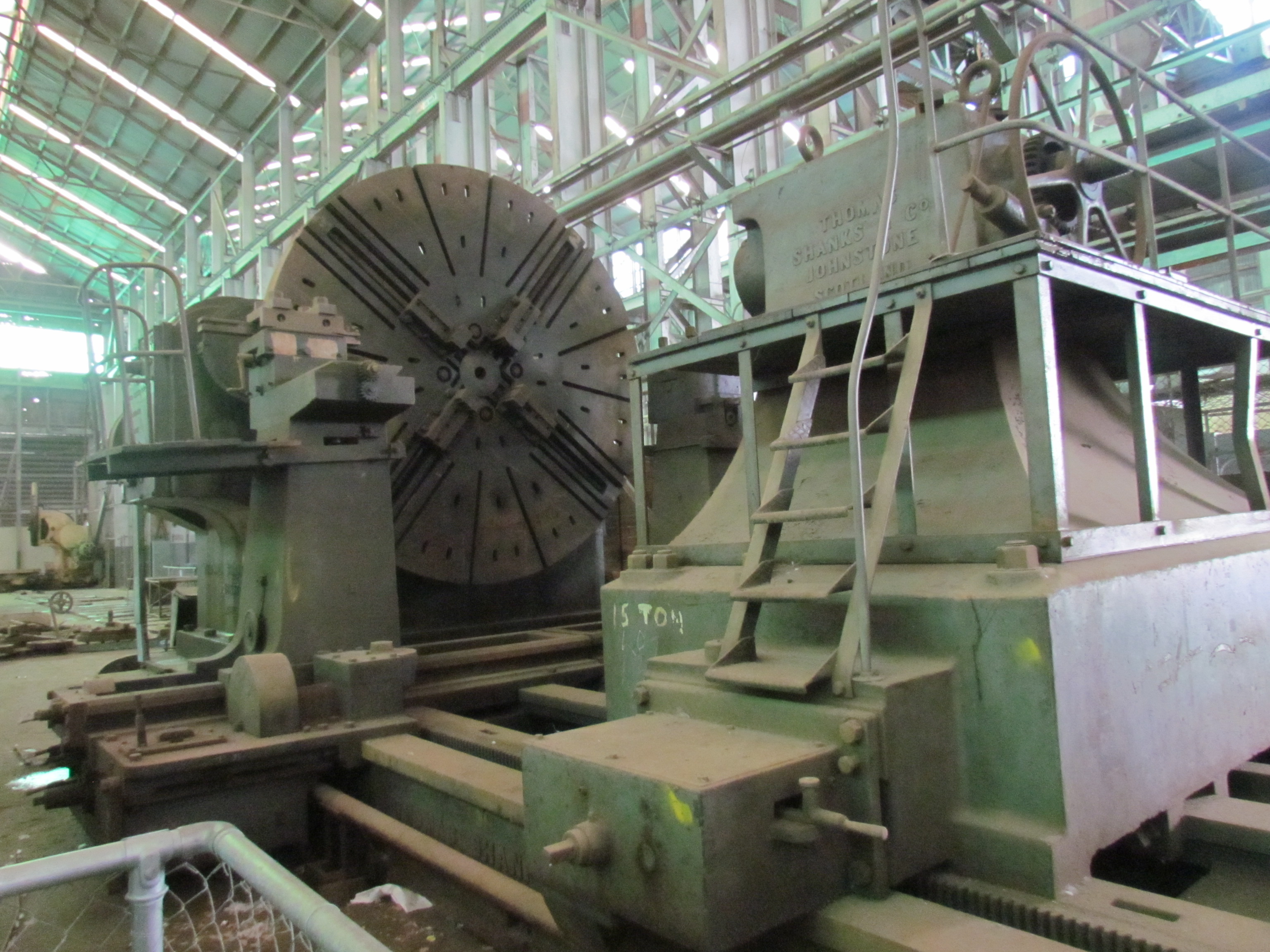
Inside a huge ship-building shed on the island:
The magnificent machinery made this worm feel small and insignificant:
More machinery:
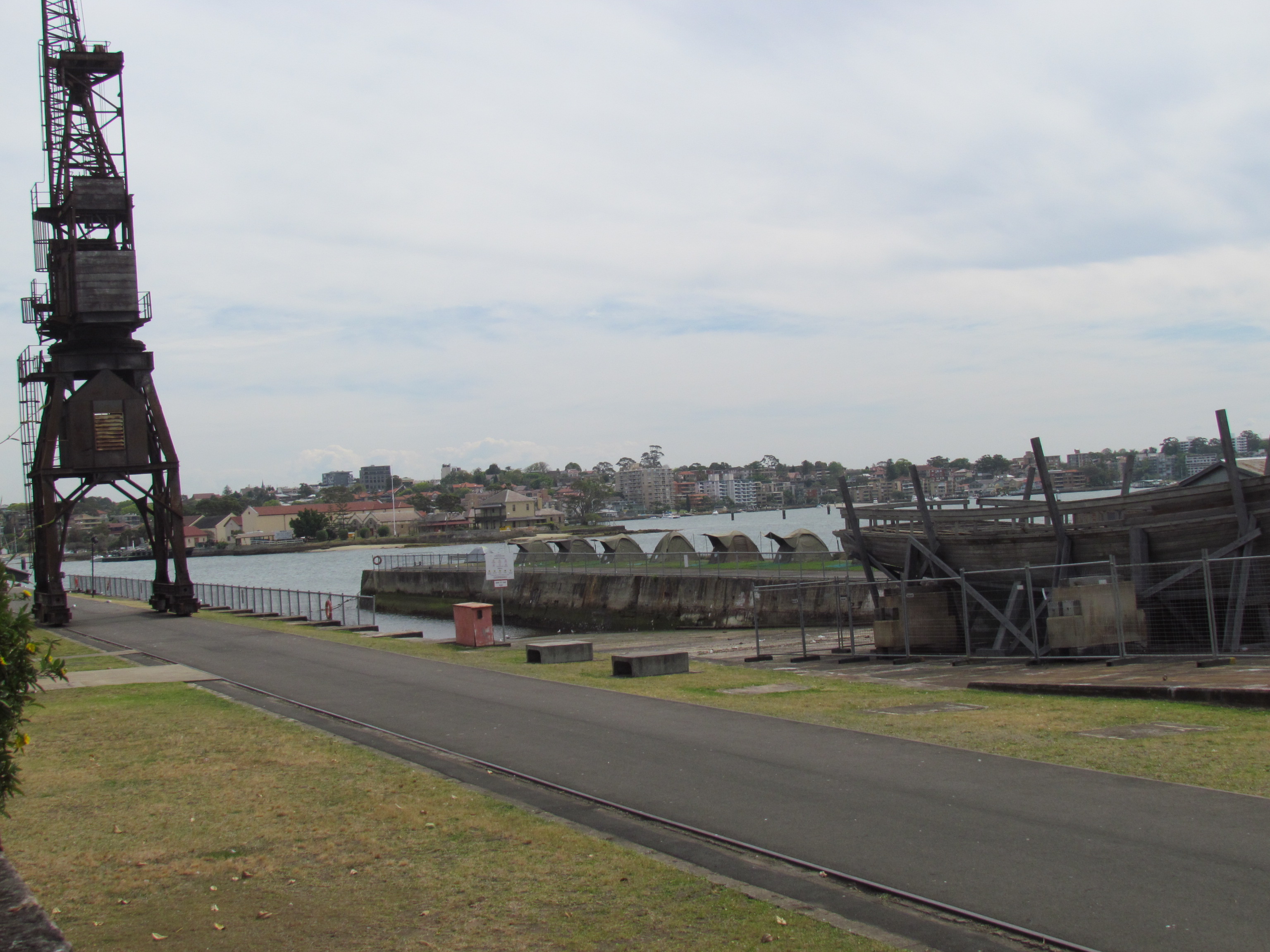
A giant crane stands guard over the Parramatta River:
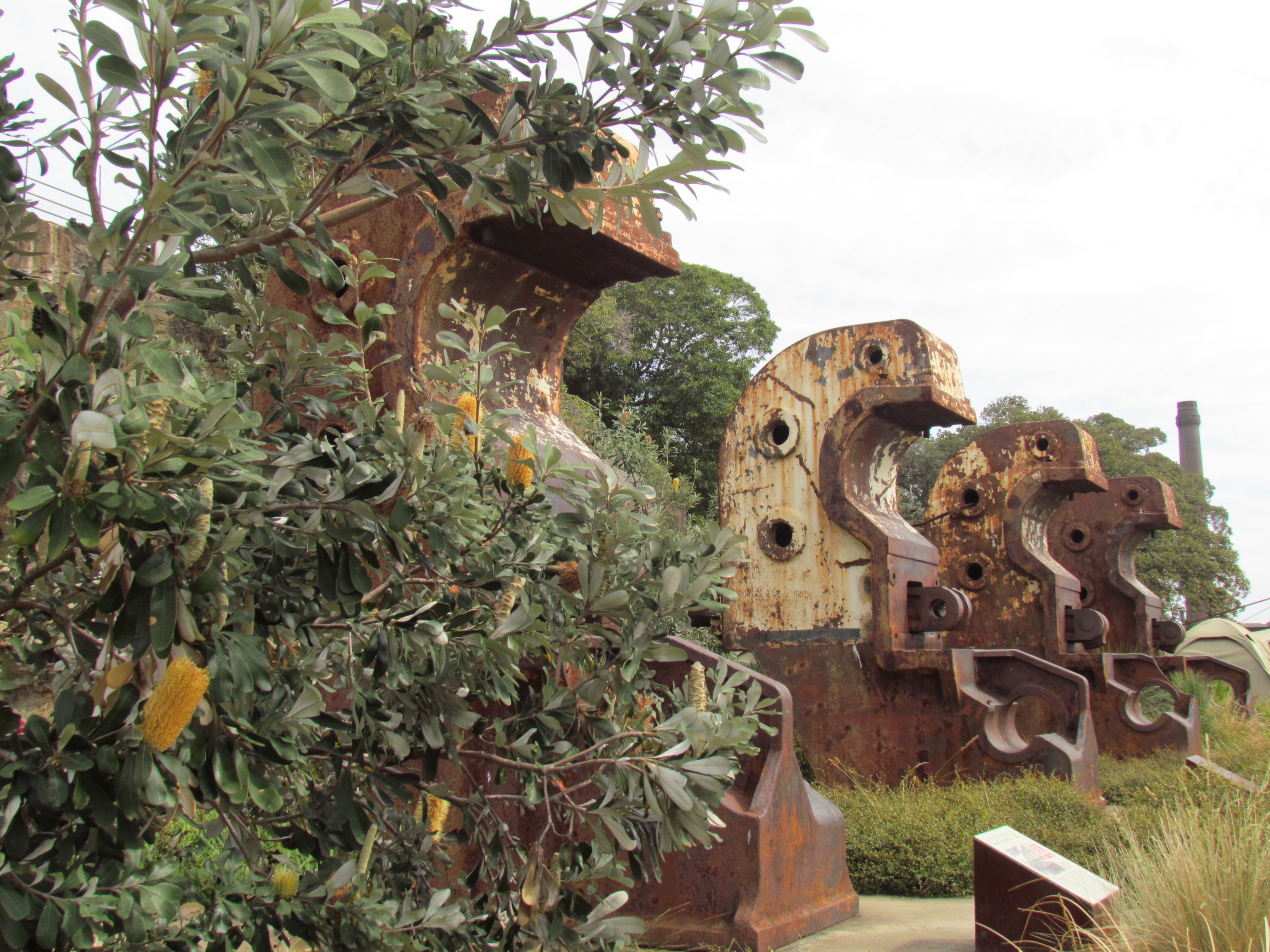
These imposing beam benders are the remains of a hydraulically-powered plate-bending machine from the 1920s, used to bend metal plates up to 9 metres long and one inch thick for ship building:
Below is one of the slipways used to launch ships after construction. Film buffs note: The ark at the top of the slipway was created for and used in the film “Unbroken”, directed by Angelina Jolie and filmed on the island last year:
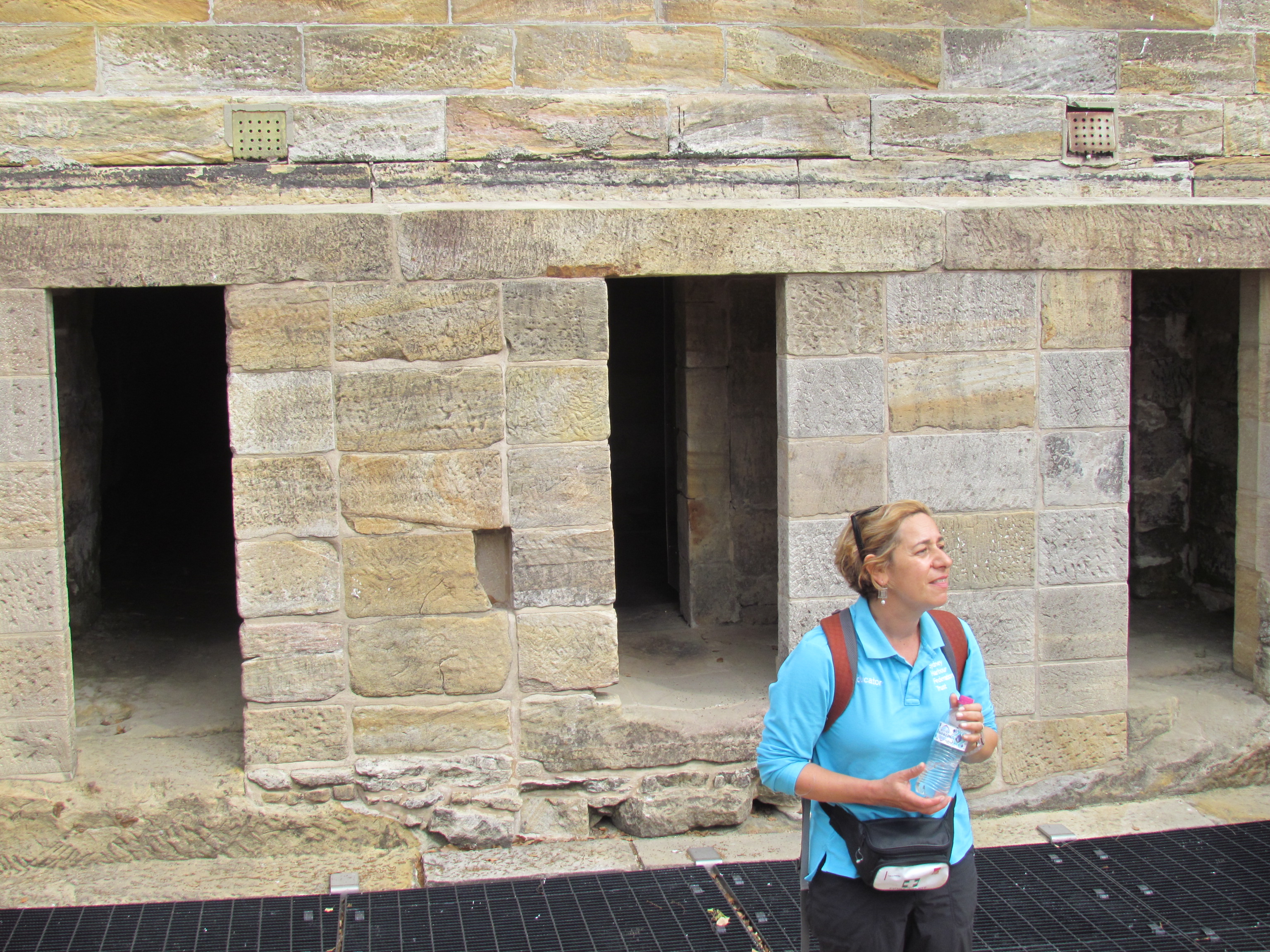
The solitary confinement cells on the island, opened to visitors only last week, and introduced with great enthusiasm by our charming guide:
Inside the left-most solitary-confinement cell:
A tunnel cut through the sandstone, built in 1912, and used as an air-raid shelter during WWII:
A view through the window of the now roofless military guardhouse:
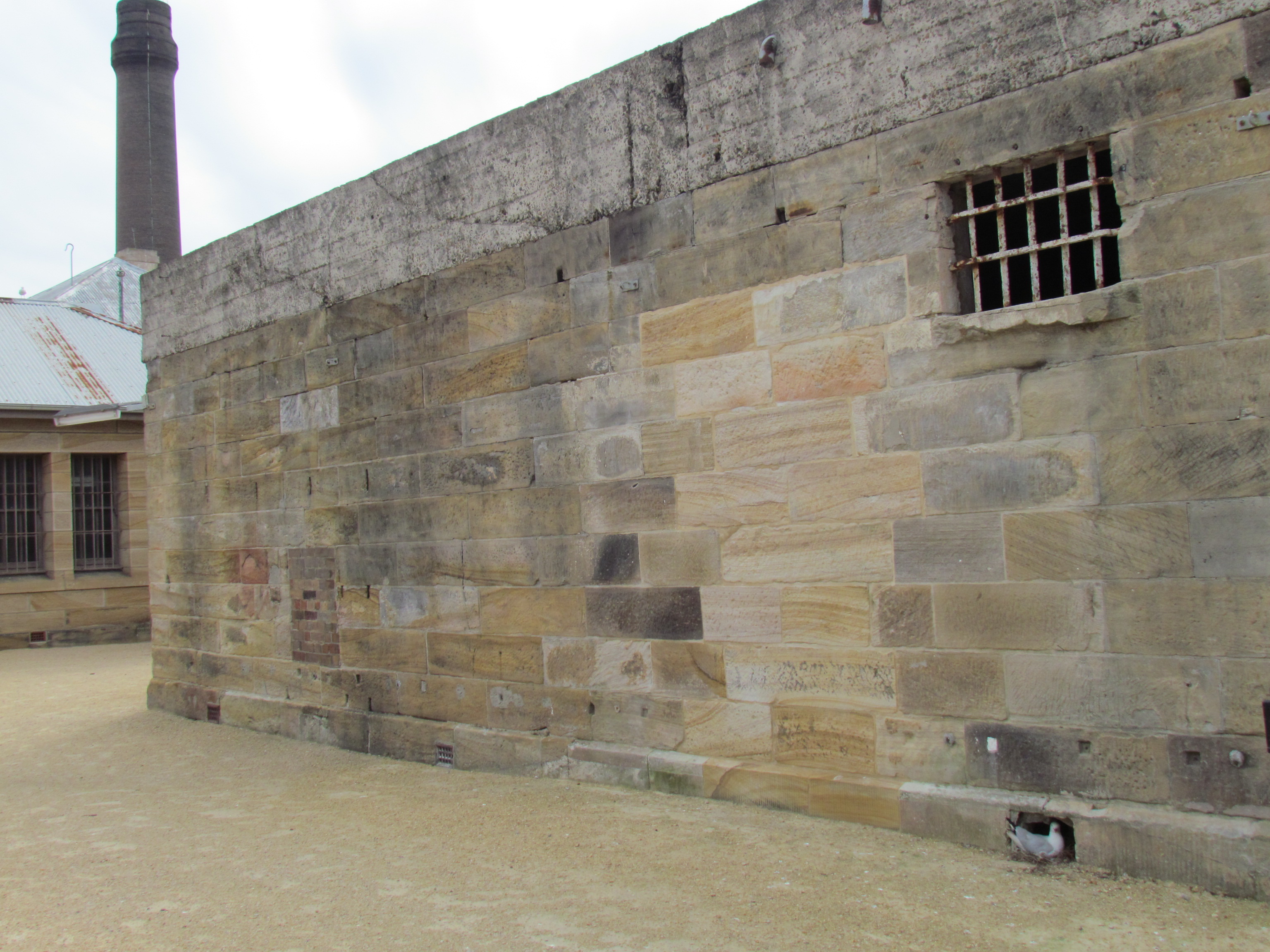
Below is the prison barracks, built in 1839. The convicts themselves quarried the sandstone and erected the buildings. Our guide told us that each man had a specific style when hewing sandstone. You can still see the marks in the stone used in the buildings on the island. At the end of each day, the overseers could tally each man’s work just by looking at the distinctive cuts in the stone:
Notice the seagull nesting at the bottom of the building in the above photo? Pro tip from a wary worm: You don’t need to worry about cockatoos on the island. They all left when people cut down the trees to make room for the convicts. So now the seagulls reign supreme. Go Jonathan! Be afraid, be very afraid. As our guide said, the chicks are cute but the parents are not.
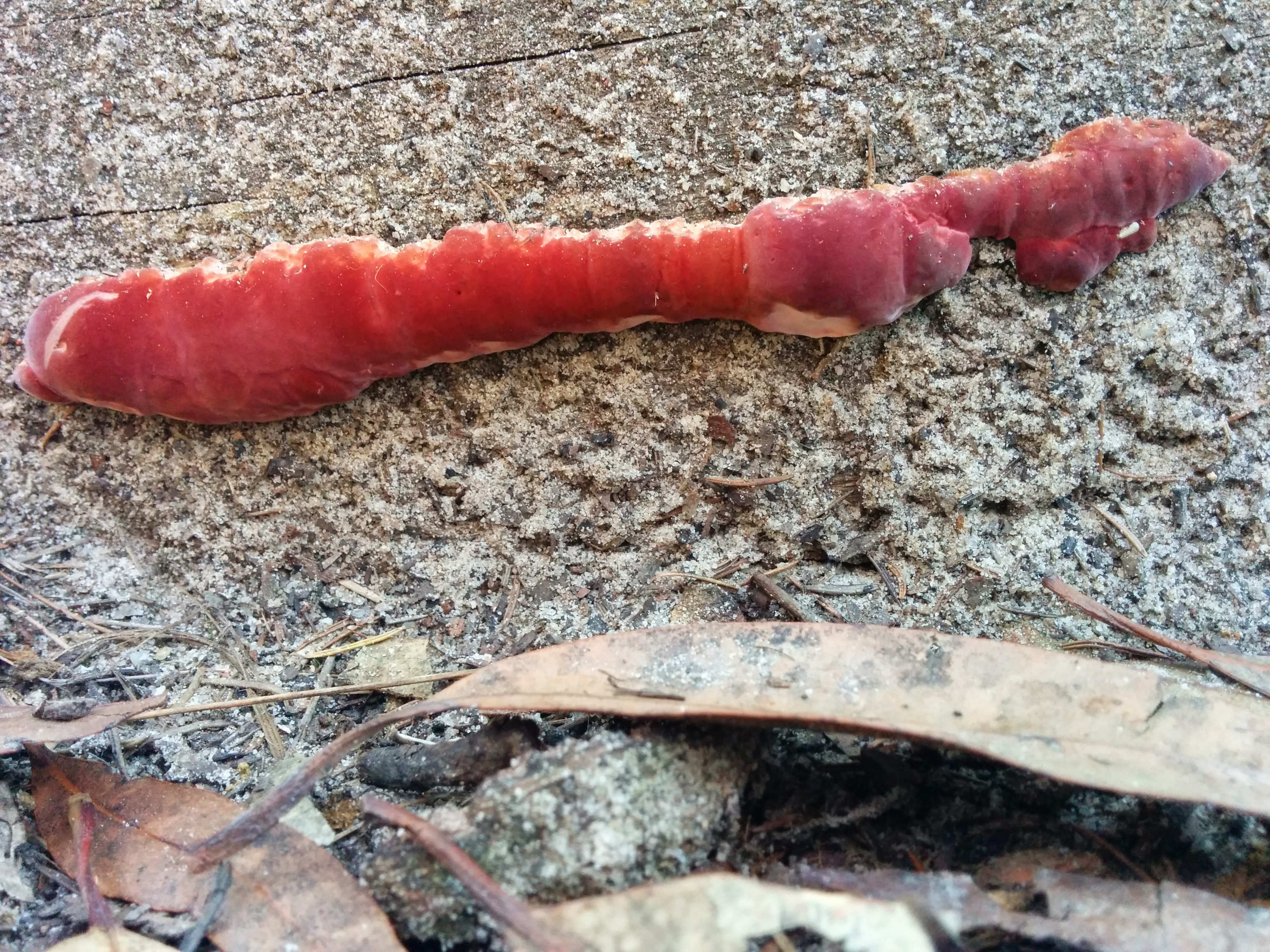
The TC (my Travelling Companion) spotted this weird and wonderful creature on the Wild Flower Walk at Manly Dam Reserve near Sydney, Australia. We’re intrigued. Is it a worm, or some type of fungus, or something else entirely?
It’s quite long, perhaps 10 to 12 centimetres – compare it with the gum tree leaves also visible in the photo. It’s red with pale cream extrusions at the edges. It’s attached to the vertical face of a step. It didn’t move, even when the TC prodded it gently with a stick.
At first the TC thought it was a fungus. But looking more closely at the photos, we’re leaning towards some kind of worm.
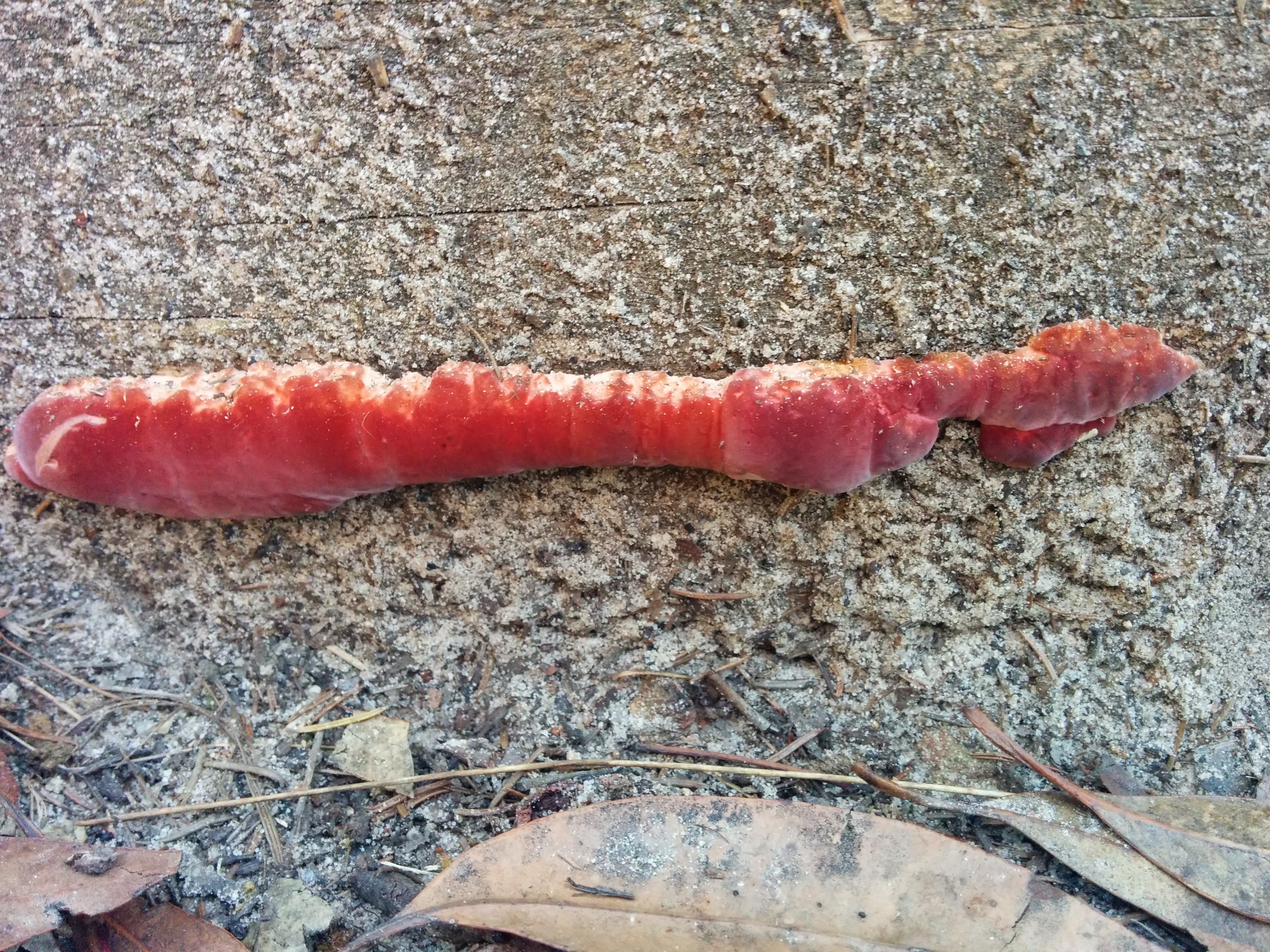
Here is is again, from a slightly different angle. You can probably enlarge the image by clicking it, or by right-clicking and opening the image in the browser.
If you have any ideas about what it may be, please add a comment to this post!
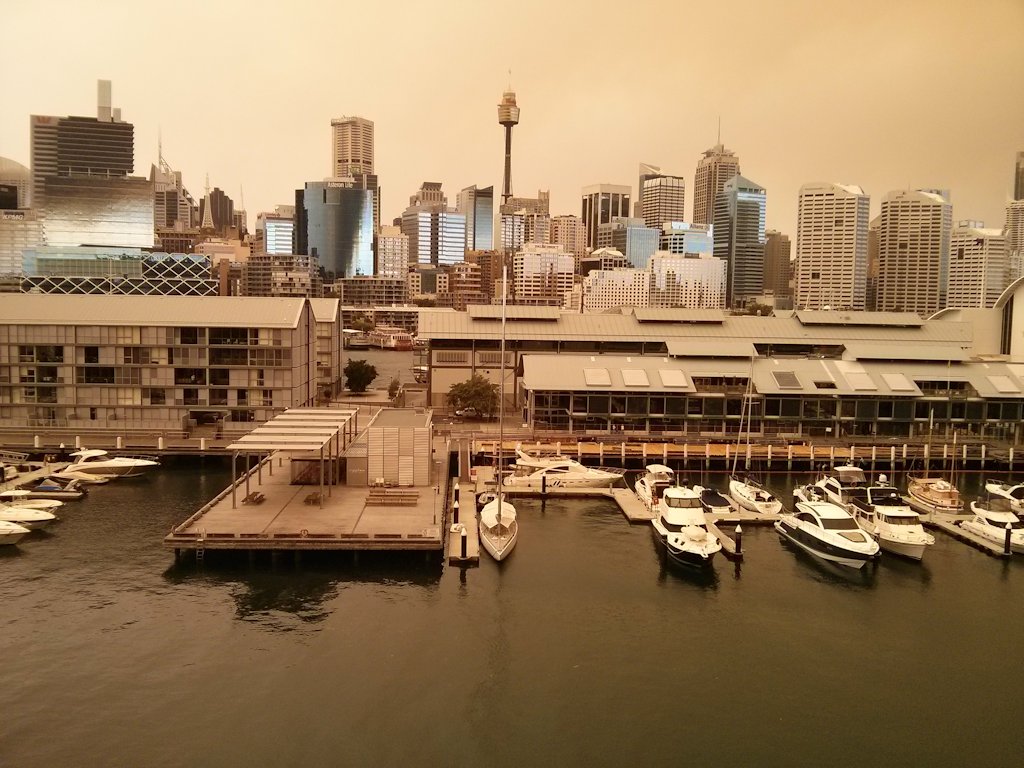
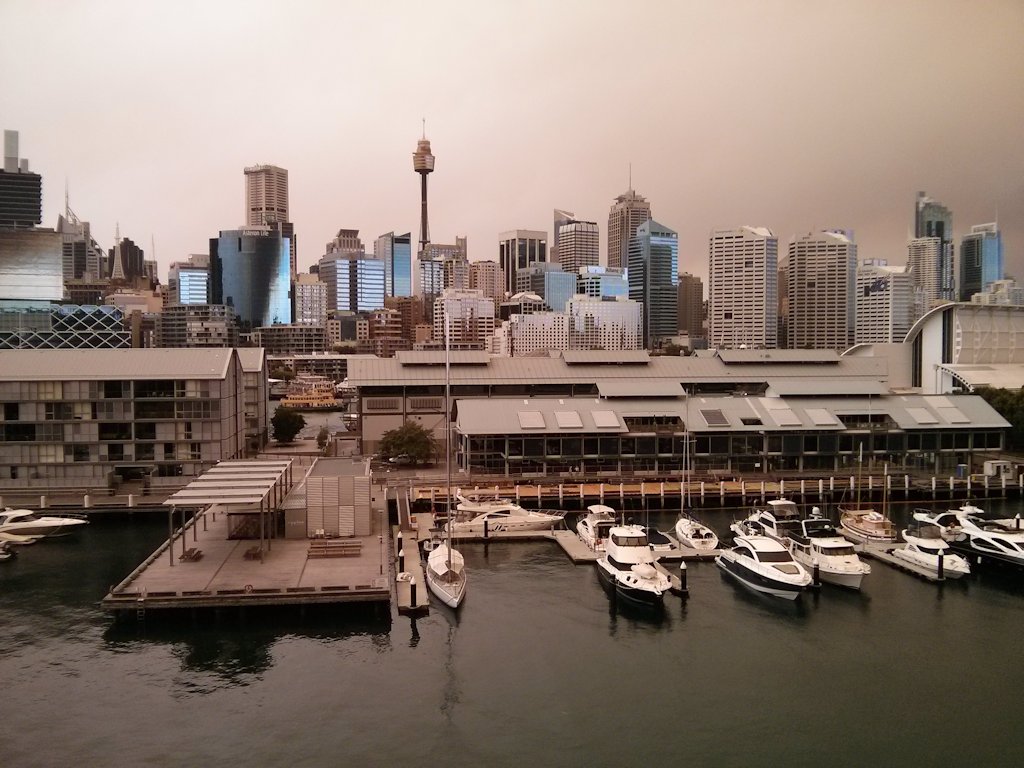
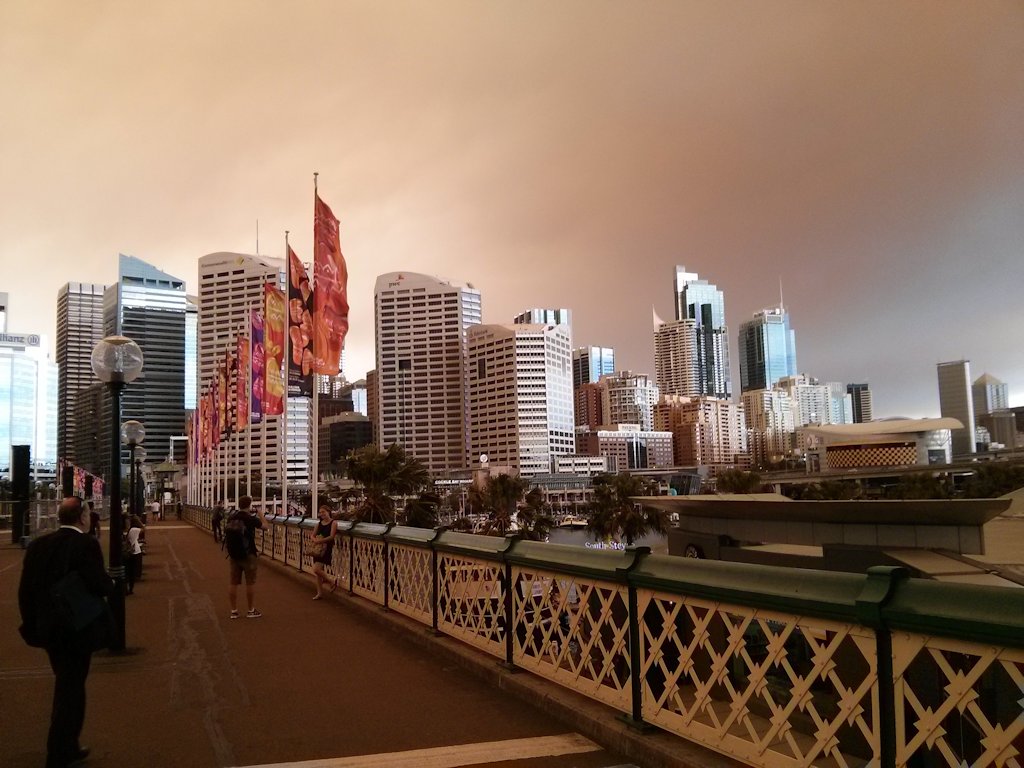
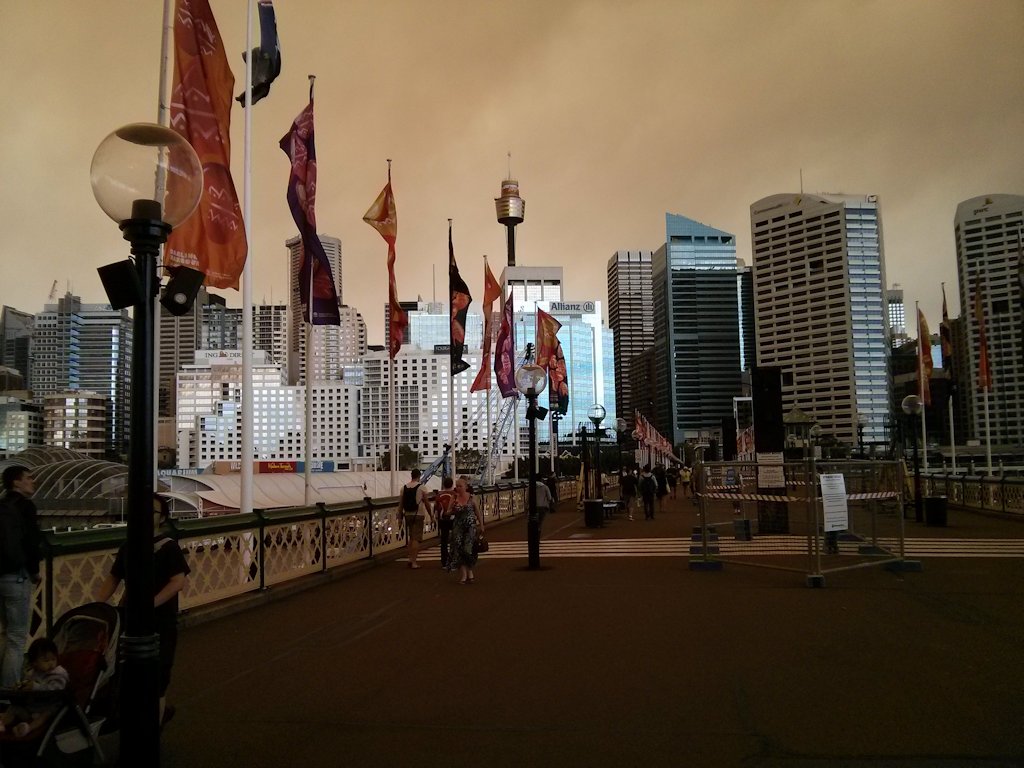
New South Wales, Australia, is battling more than 90 bush fires. The last few days have been scenes of fierce horror and deep sadness for many people. Approximately 1500 fire fighters have been battling the blazes throughout New South Wales. Close to 100 homes have been destroyed. Our fire services and volunteers are hard-working, efficient, smart and heroic.
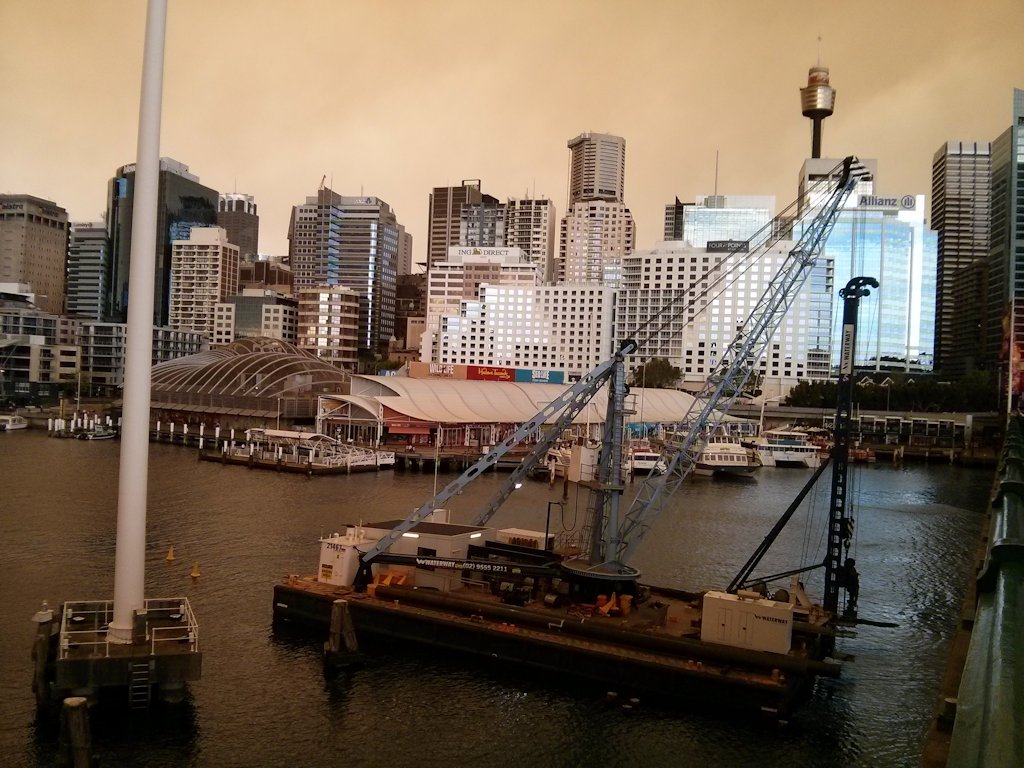
For those of us in the city of Sydney, the fires brought smoke-filled skies and showers of ash. The weird lighting yielded some beautiful effects. It was as if someone had thrown a sepia filter over the city.
These photos show the Sydney city skyline on Thursday this week, as seen from Pyrmont.
This is the blog of Mark Wordsworm, the travelling worm. I’m a 25-year-old bookmark and can proudly boast my own Hallmark serial number, 95 HBM 80-1. You’ll probably want to read all about me and my Travelling Companion (the TC).
Today’s travel notes
Me and the TC popped over to Brisbane last week, to check out the two main campuses of the University of Queensland (UQ). My previous post includes moody shots of Ipswich and some fish in a library. Now for the lowdown on the big smoke itself.
My impressions? A university with character, in a city of character, owned by a river full of attitude.
The book I’m in
The Intercept, by Dick Wolf. Fast, believable action.
Recommended accommodation
Manor Apartment Hotel, 289 Queen Street, Brisbane. It’s in the centre of the city. The service is friendly, the rooms are roomy, and the breakfast is excellent.
Travel tip
Take a ferry trip down the river. It’s not always the fastest way of getting from A to B, but it’s a great way of seeing the city and relaxing at the same time. The ferry ride from the Eagle Street Pier to the UQ campus (St Lucia) takes about half an hour.
The photos
Me on a map of Brisbane, on a podium, on the top of Mount Coot-Tha:
The dark squiggly line running across the map is the river.
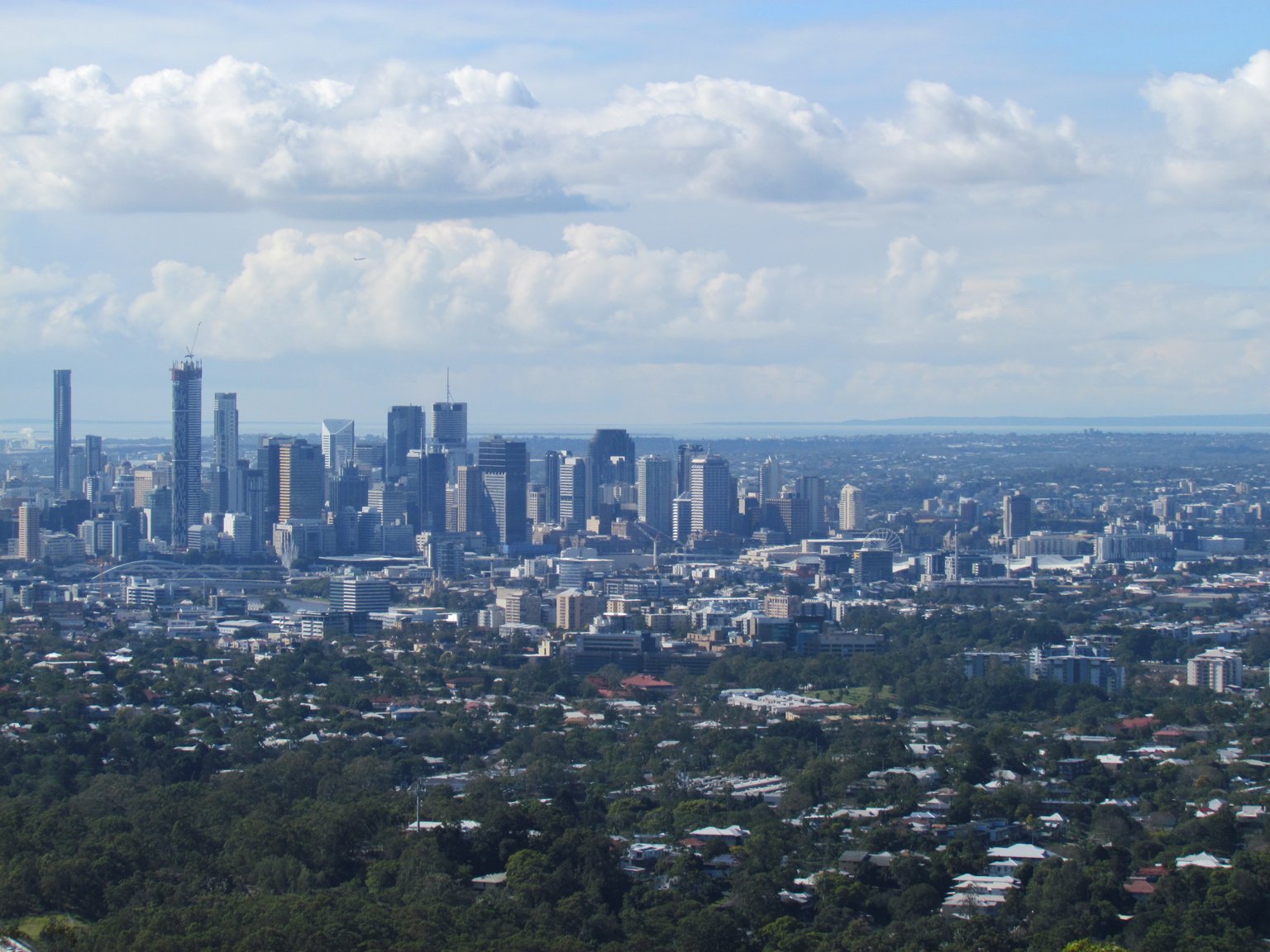
A view of the city of Brisbane, from the viewing site on Mount Coot-Tha:
The St Lucia campus is further inland by a couple of bends of the river. In this picture, you can see the wall of the great court that lies in the centre of the UQ’s St Lucia campus. It’s to the right of the patch of river, in front of the four poles rising up from the bridge:
St Stephen’s cathedral, Brissie:
“Brissie”, pronounced “Brizzy”, is the locals’ rather irreverent name for their city.
We took the ferry from the CBD to the university’s St Lucia campus. Here’s the striking Kurilpa Bridge, seen from the ferry:
Before depositing you on shores academical, this worm would like to take you on a diversion semiotical. Take a look at the sign below, which this worm spotted on a lavatory door at the end of a queue of women:
The women in the queue ignored this door. Instead, with great patience and forbearance, they were waiting in line for a single toilet, which had a sign containing just three pictures: the figure of a woman, a wheelchair, and a baby-changing platform. The patient queue assumed the first toilet (shown above) was for disabled people only, and the second was for everyone. The TC, bless her cotton socks, piped up that she was sure it was OK to use the disabled toilet. Imagine her delighted surprise, and that of everyone else in the queue, to discover six vacant toilets behind the above door, all ready and waiting for “ambulant” people’s use.
So, this worm muses, past experience has conditioned us to expect a special toilet for disabled people and to assume the difficult word “ambulant” is yet another term for “disabled”. And we don’t read.
Here’s another diversion. This worm as vastly amused to see the following sign in the hotel lobby. Shades of Sweeney Todd?
A closer look:
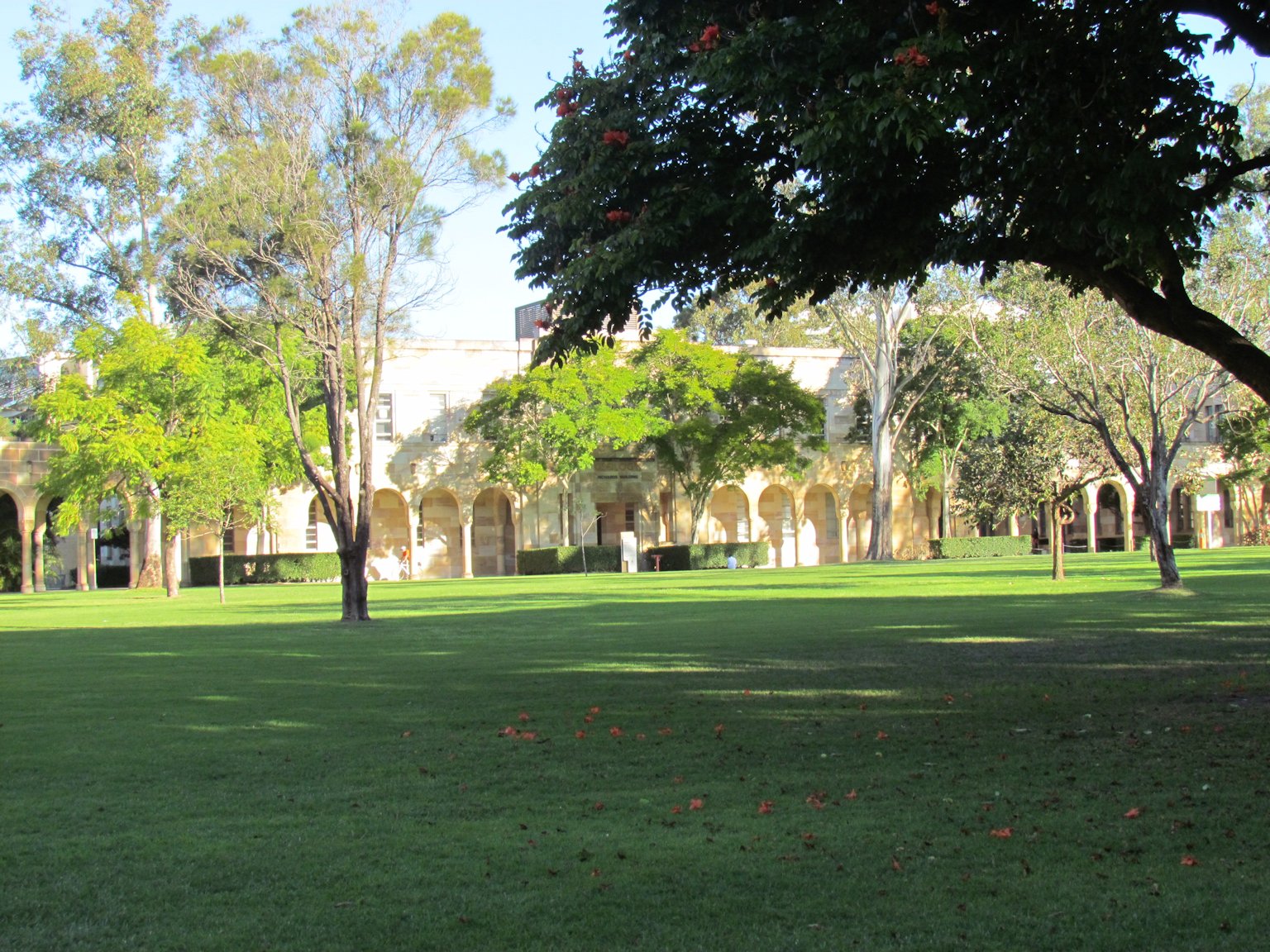
Moving on from dark humour to the light of academia, this is the outside wall of the magnificent great court at UQ’s St Lucia campus:
Inside is spacious and restful:
The detail on the walls:
One of the grotesques, rather gentler than many of that ilk:
This is the blog of Mark Wordsworm, the travelling worm. I’m a 25-year-old bookmark and can proudly boast my own Hallmark serial number, 95 HBM 80-1. You’ll probably want to read all about me and my Travelling Companion (the TC).
Today’s travel notes
Me and the TC hopped up to Brisbane and Ipswich last week, to visit the two main campuses of the University of Queensland (UQ). Our first stop was Ipswich, about 40 kilometres to the west of Brisbane. The UQ Ipswich campus caters for students in the medical and health sciences, as well as arts and education.
My impressions? There’s more to Ipswich than you might think.
The book I’m in
A Nameless Witch, by A. Lee Martinez. This is a truly delightful book, especially for those of us who like a good dose of fun with our fantasy. The hapless hero of the book, a witch without name, suffers temptations both carnal and carnivorous, and manages to conquer an evil sorcerer to boot.
Recommended restaurants
Urban Pantry, 181 Brisbane Street, Ipswich. A great place for coffee, cakes, pastries, and lunch. The welcome is friendly, the food good. Photo below.
Travel tip
Look out for cane toads. Disappointingly, this worm spotted nary a one, but I’m reliably informed the city of Ipswich is hopping with them.
The photos
There’s no photograph of me, your intrepid Travelling Worm, in this post! I do assure you I was there, but I managed to dodge the TC’s camera for a few hours. Rest assured, there’s the obligatory homage to me in my next post, snapped when we were making our way to Brisbane. For now, please enjoy these images of Ipswich.
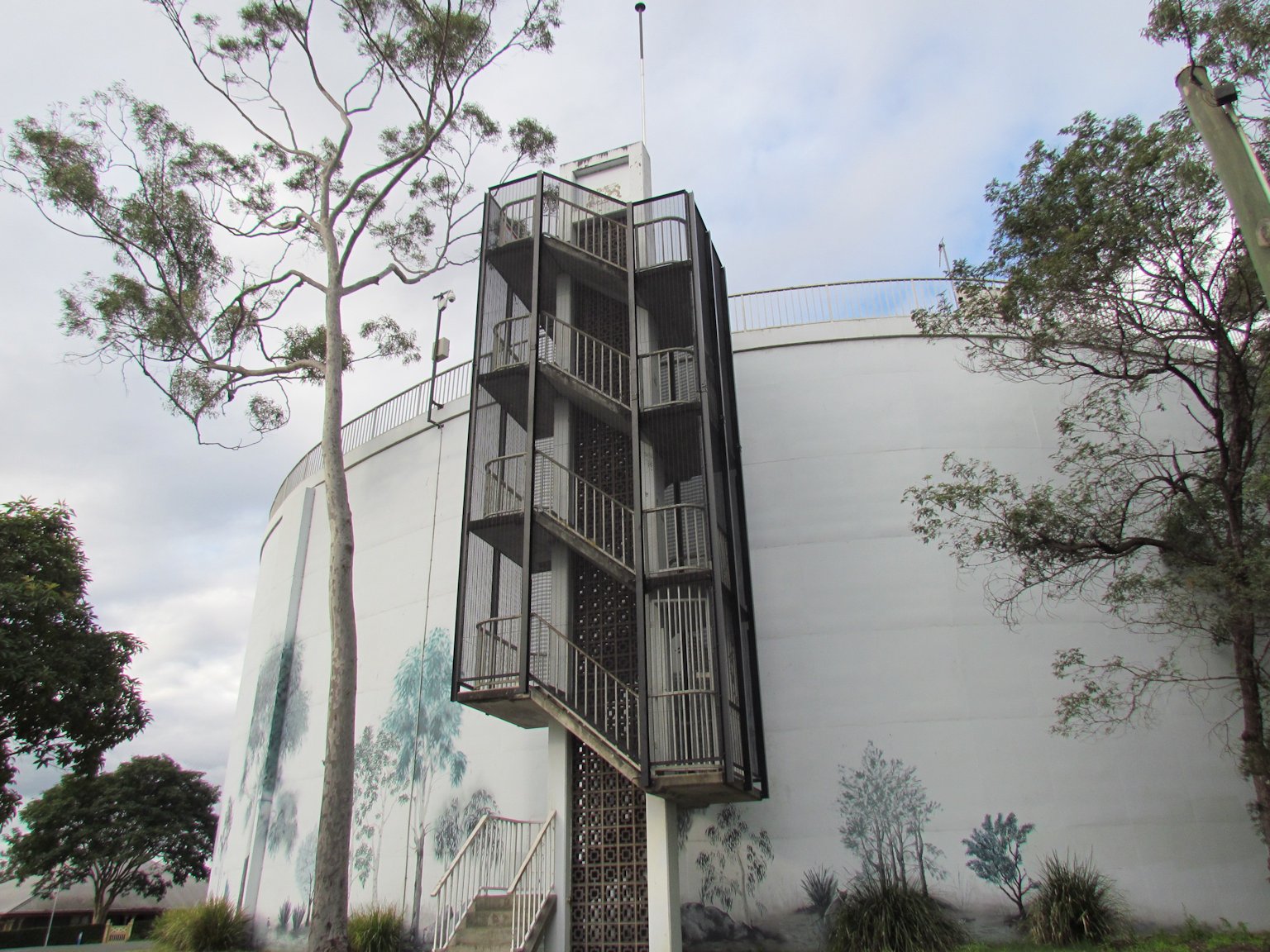
We climbed to the top of the water tower on Denmark Hill, to get a view of the city of Ipswich. This is the tower, with the staircase leading up to the top:
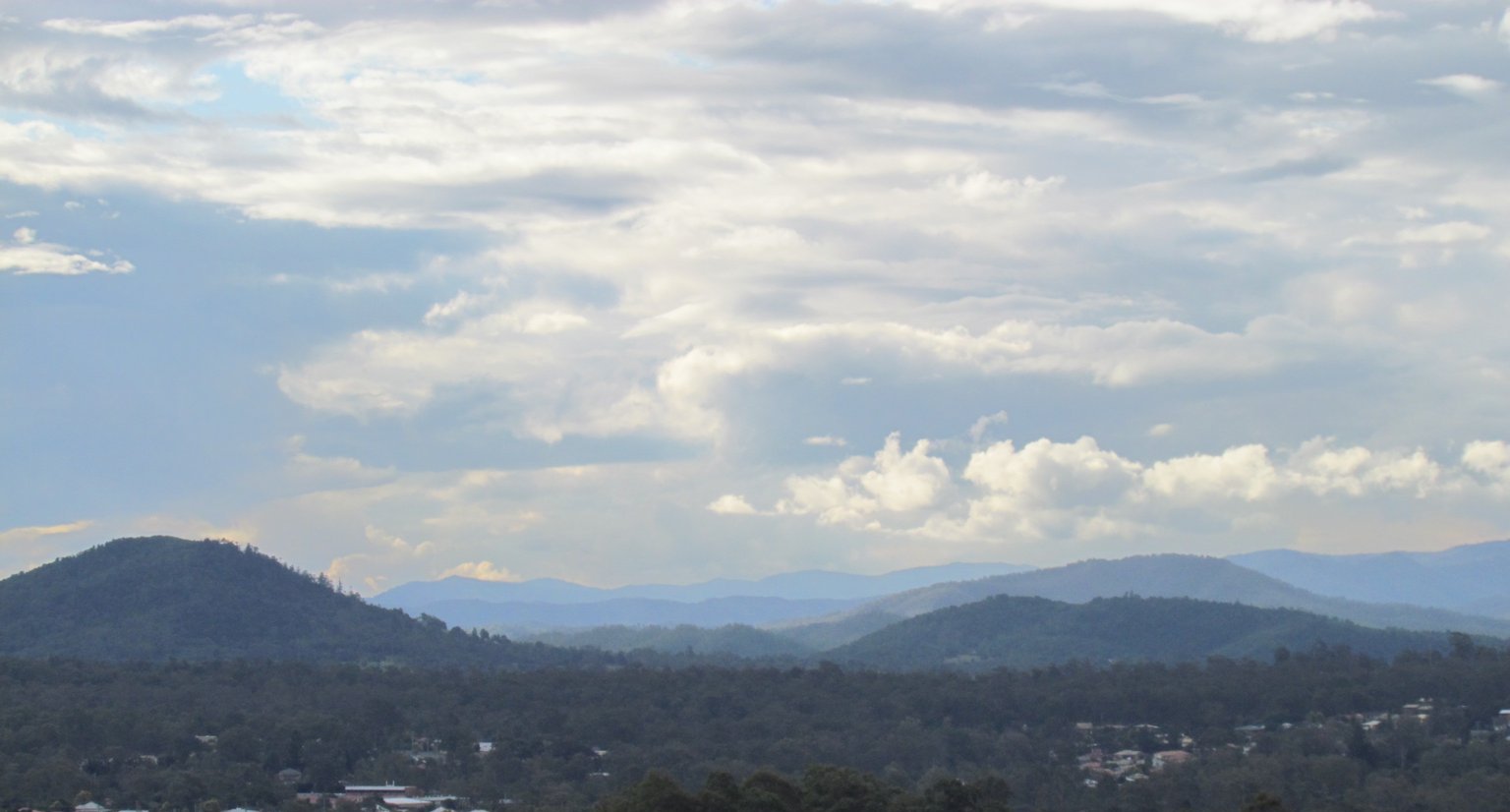
A view of sky and layered hills, from the top of the tower:
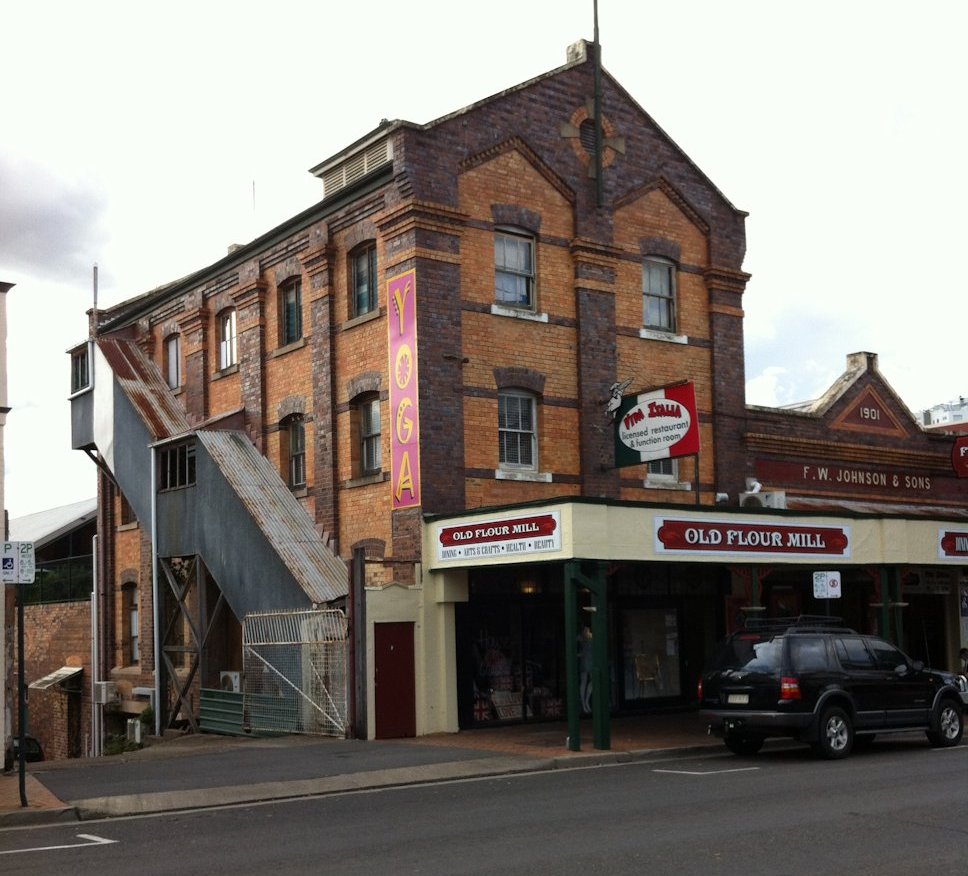
The Old Flour Mill in Ipswich is currently undergoing renovation. A few shops and restaurants have already opened their doors inside this attractive building:
Another interesting edifice on Brisbane Street, Ipswich:
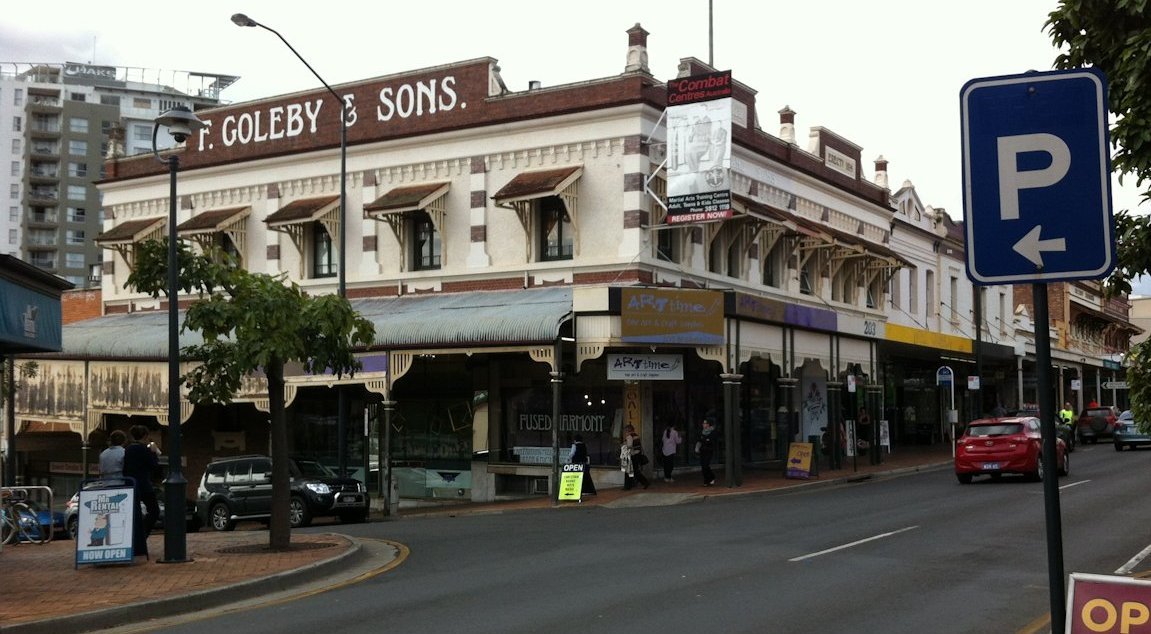
Goleby’s building in Brisbane Street:
Another aspect of the same building:
More of Brisbane Street, including the Urban Pantry – an excellent lunch venue. It’s to the left of the middle of the photo, on the ground floor, with a light brown facade:
We strolled around the Ipswich campus of the University of Queensland. It’s nicely laid out, with plenty of space and pleasing spaces. This is a view of a main thoroughfare, taken from inside the medical school:
The library is gorgeous. This bookworm was sorely tempted to take up permanent residence:
A river runs through it. Yes, through the library. With fish:
Join me in my next post for a look at the big smoke, Brisbane, and the UQ campus there.
This is the blog of Mark Wordsworm, the travelling worm. I’m a 25-year-old bookmark and can proudly boast my own Hallmark serial number, 95 HBM 80-1. You’ll probably want to read all about me and my Travelling Companion (the TC).
Today’s travel notes
Me and the TC have been very busy of late. She’s writing a book! It has the somewhat unwieldy title of Confluence, Tech Comm, Chocolate: A wiki as platform extraordinaire for technical communication. She wrote a blog post about it. This worm is looking forward to a comfy place in the book, when it appears at the end of January.
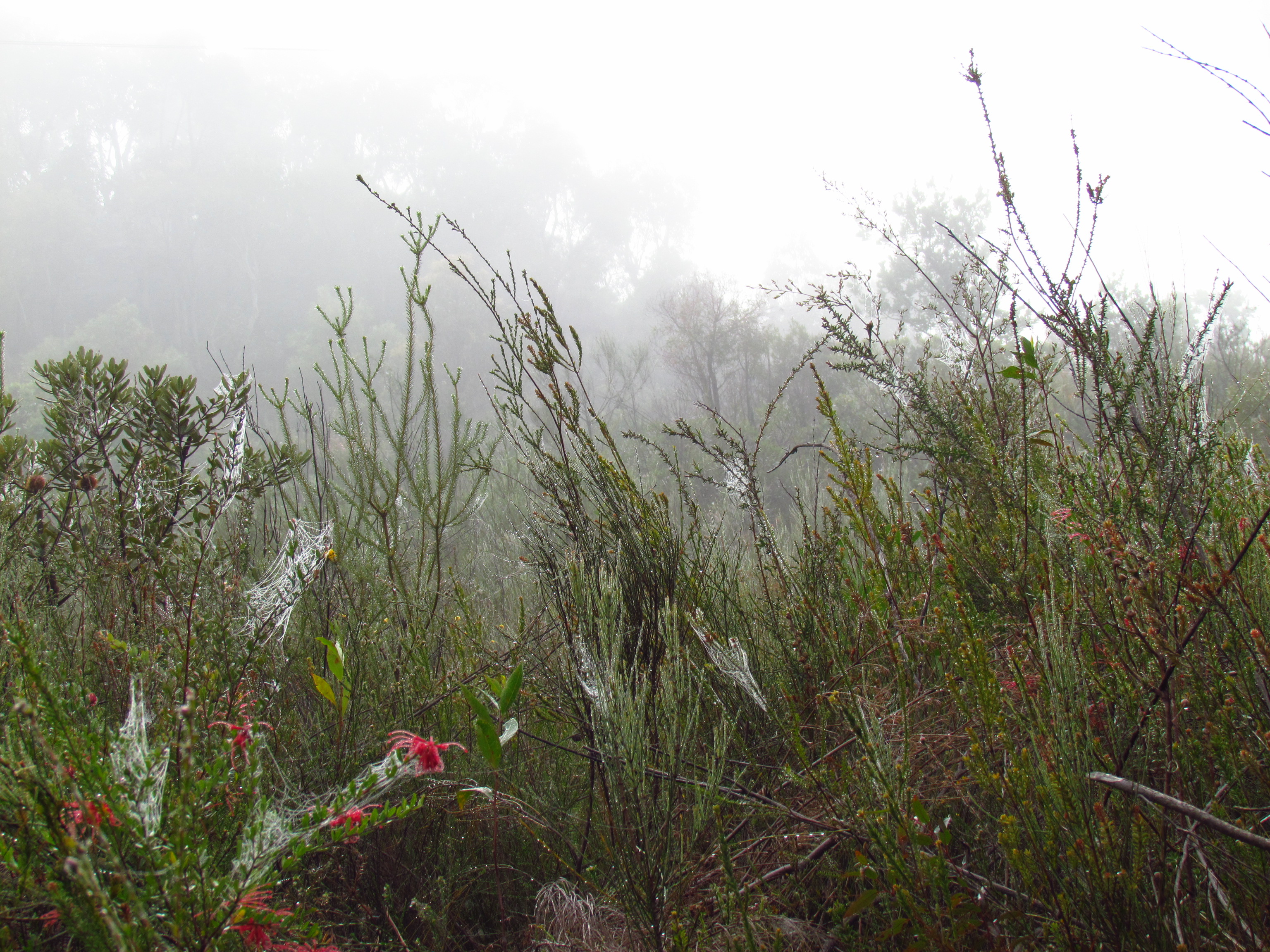
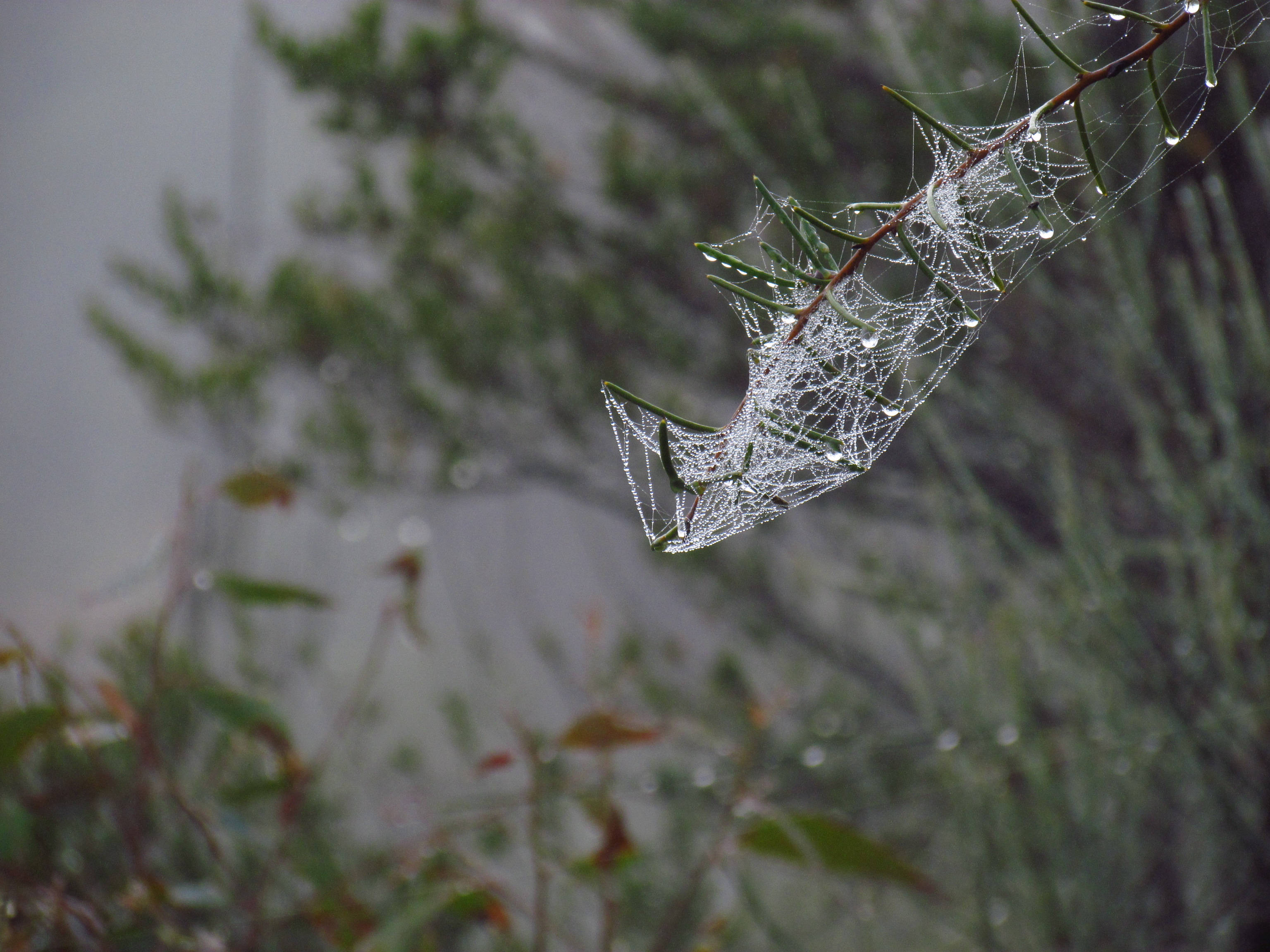
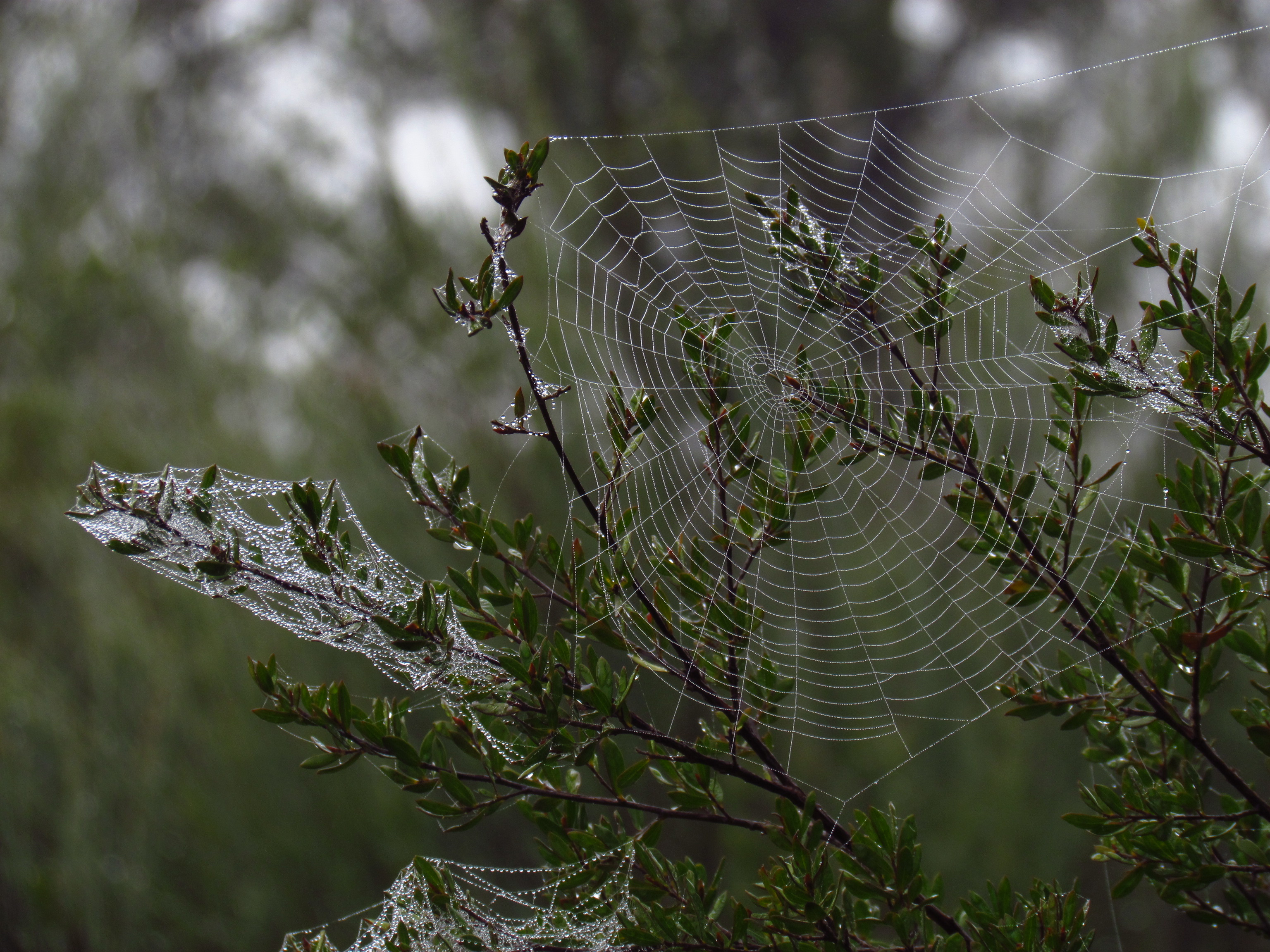
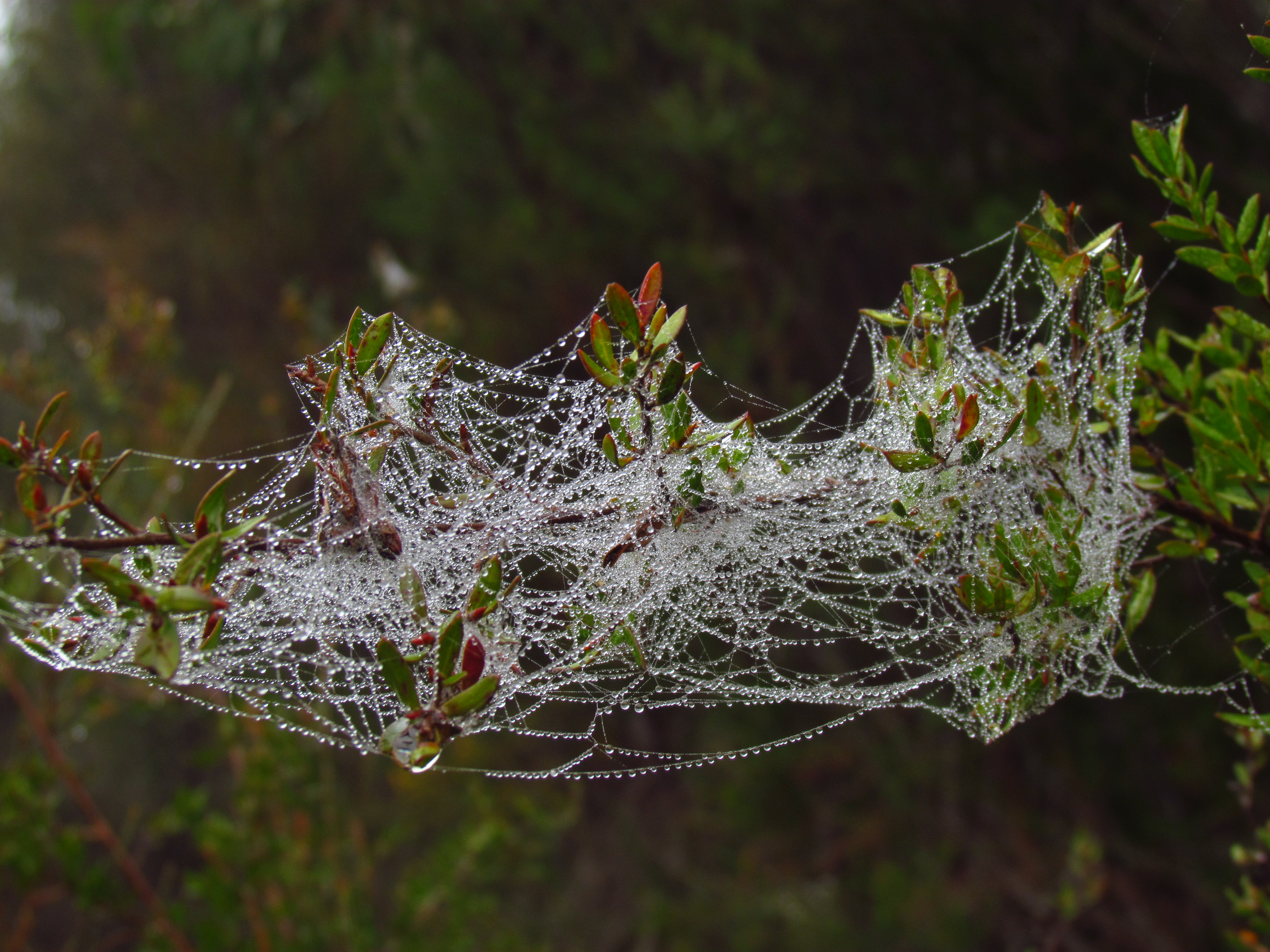
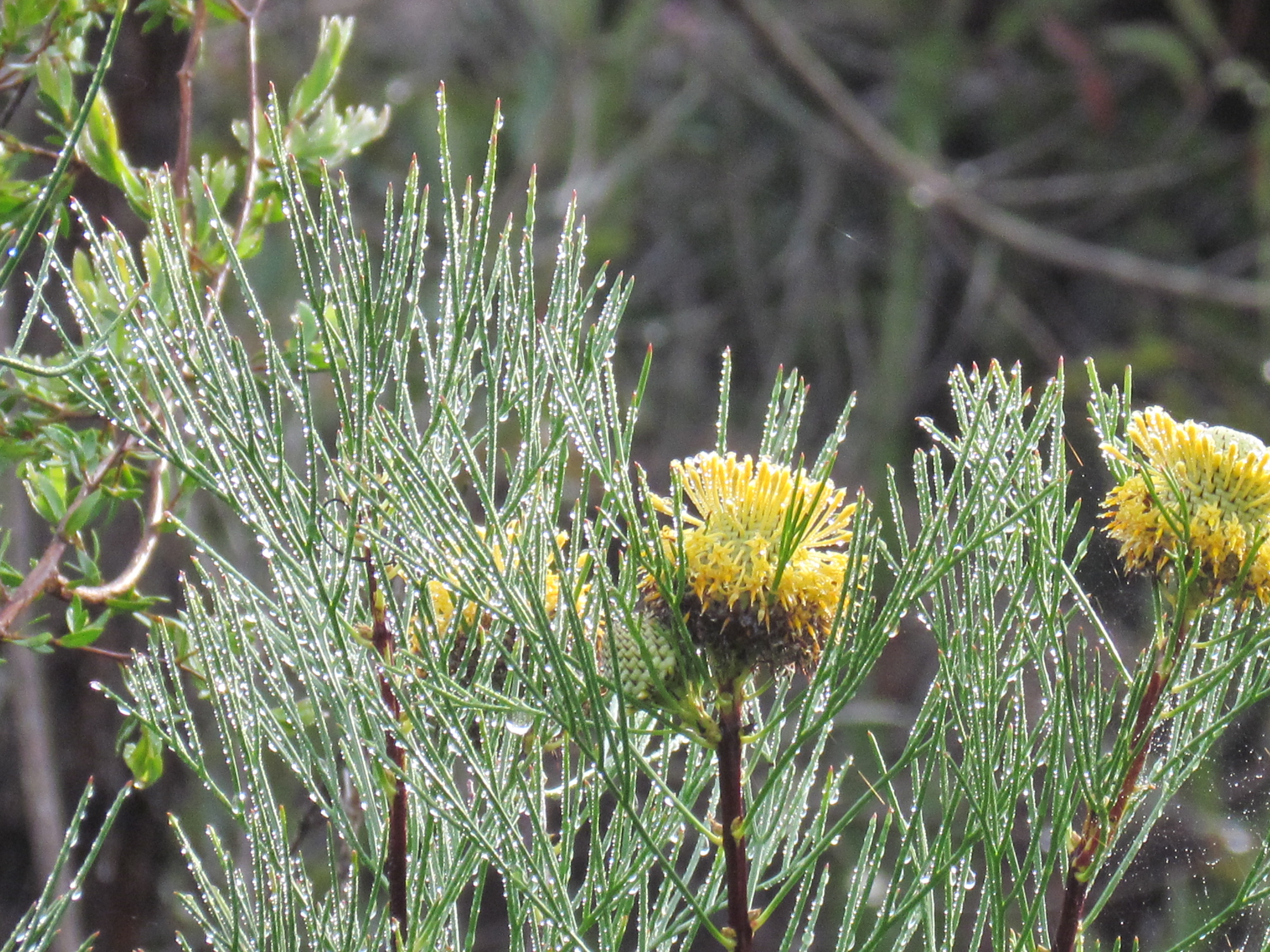
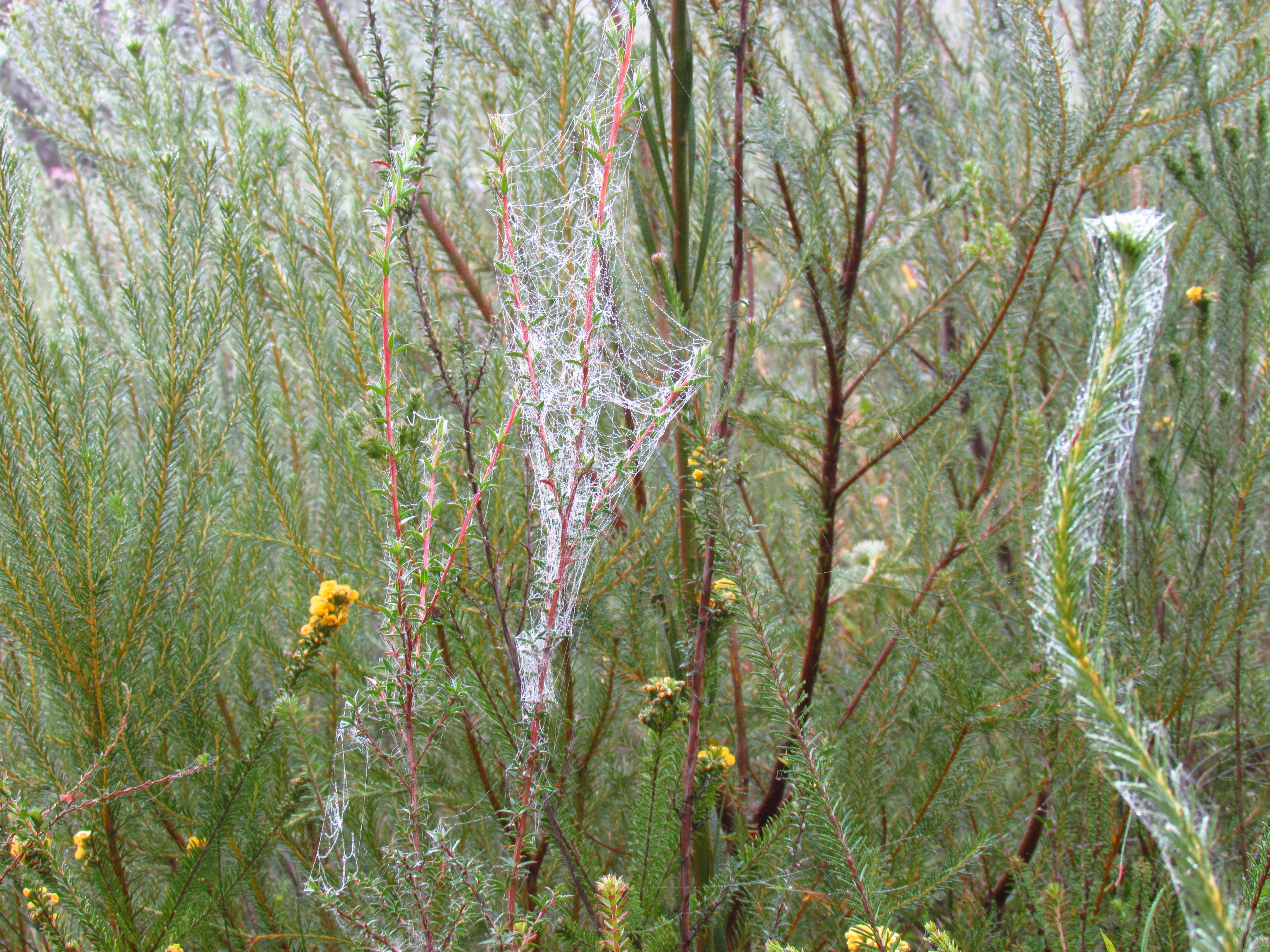
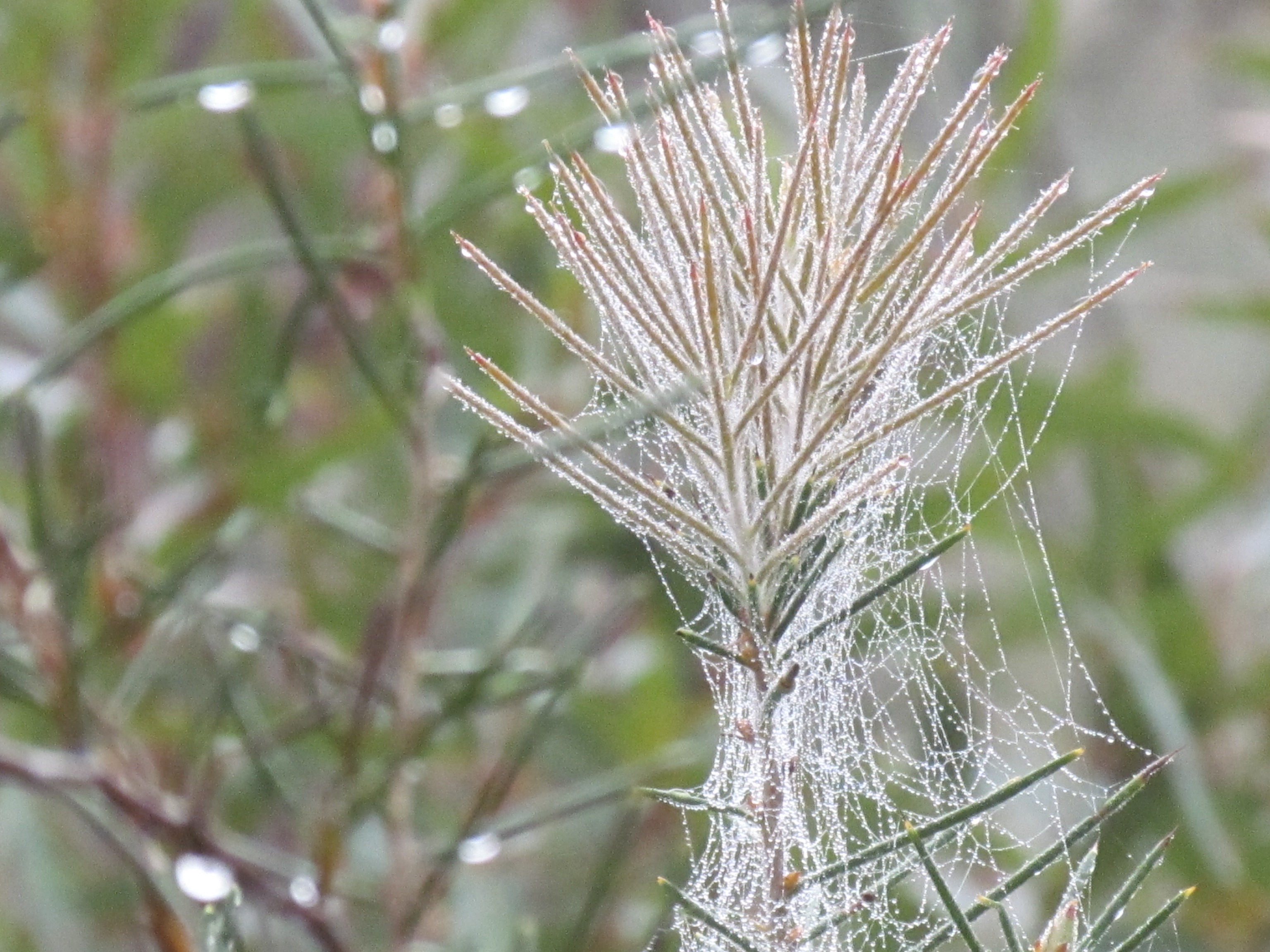
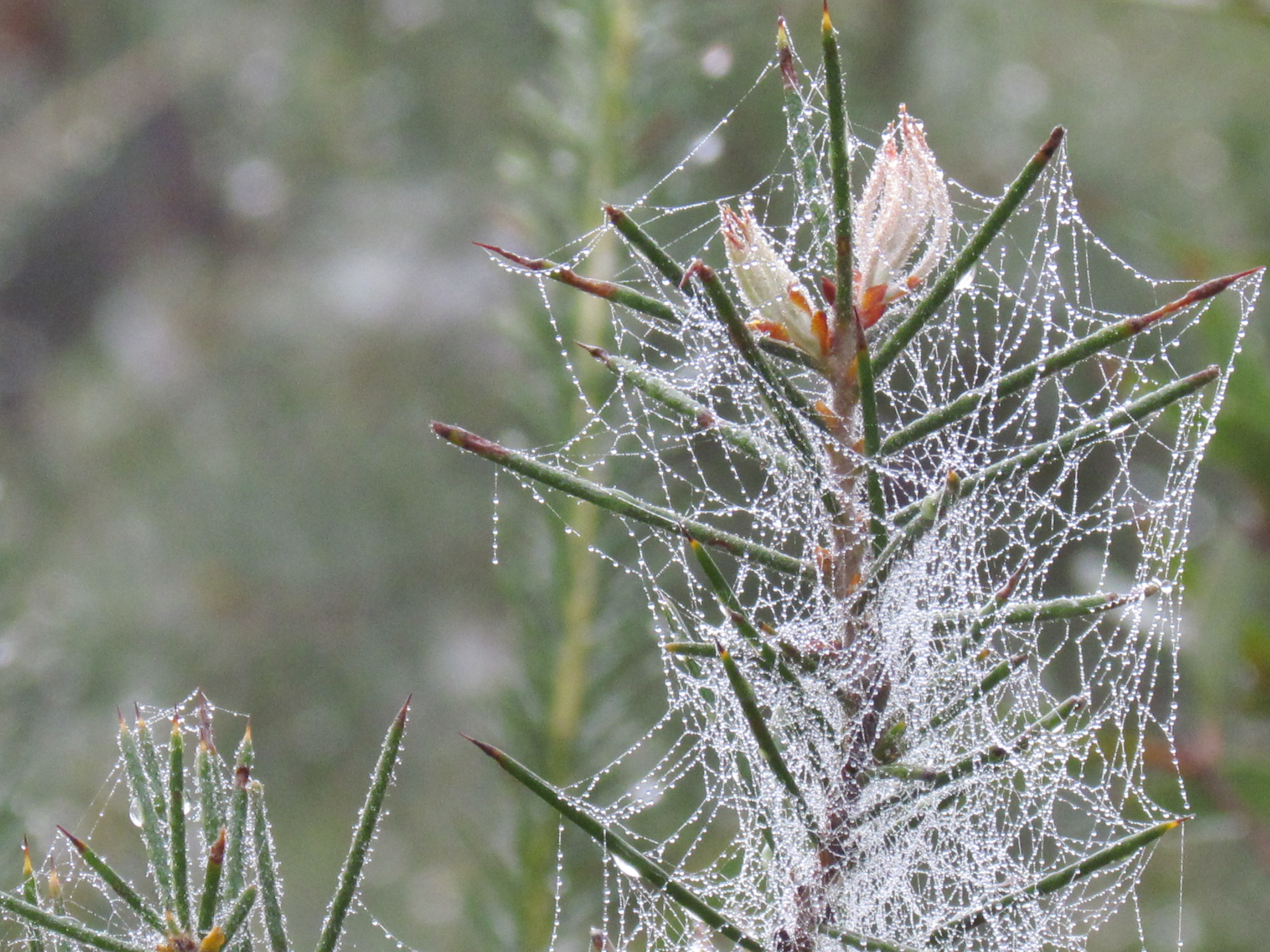
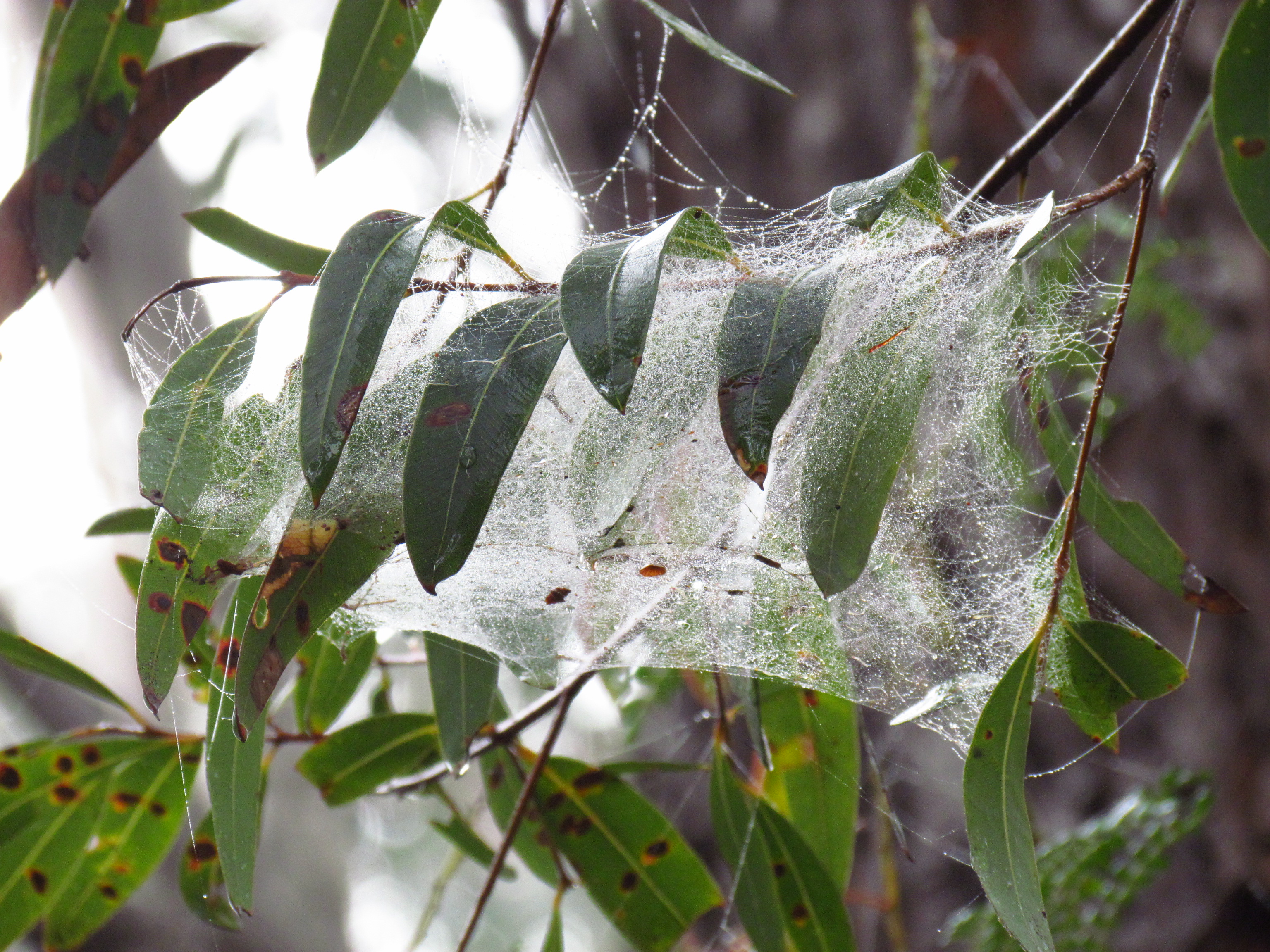
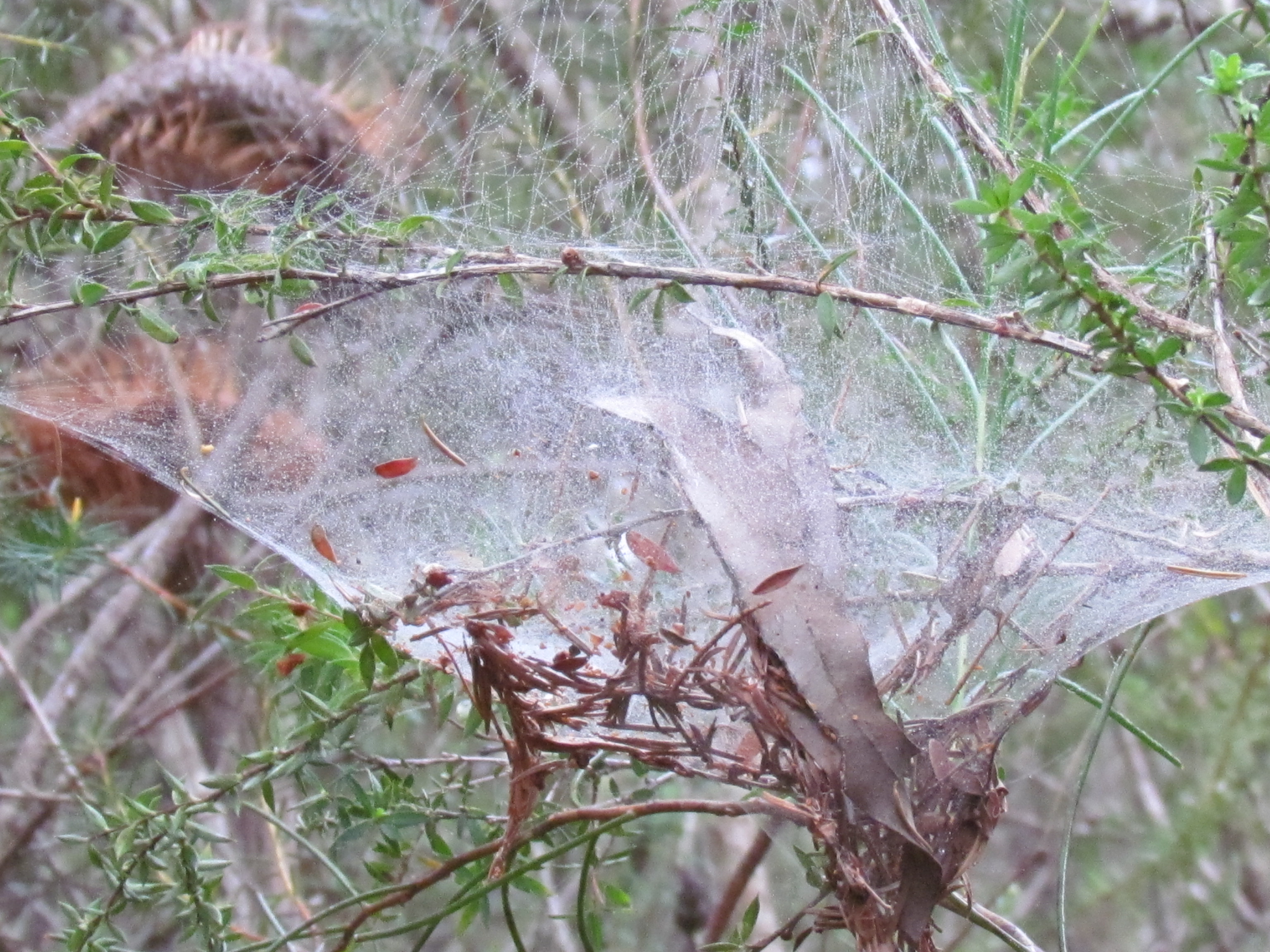
At times when deep in the throes of writing, me and the TC have gone out for a walk. To blow away the cobwebs. And at times there were more cobwebs outside than in.
Follow me into a wonderland of mist and sparkling cobwebs, the world of spring in the Australian bush.
The book I’m in
A Clash of Kings, by George R.R. Martin. A grand epic worthy of any bookworm.
The photos
Me, braving the droplets and the chance of a nasty fall into wet mud, all for the sake of a snapshot:
Entering a wonderland of webs in the mist:
Sparkling cobweb wrapped around a twig:
Like the lights that people drape over Christmas trees:
Droplets shining in the early sun:
The flowers of a Tea Tree amongst the droplets:
Just another gorgeous sparkling web:
And another:
Cobwebs in the mist:
Droplets and big yellow flowers:
Cobwebs on curvy stems:
A web-festooned twig:
Shiny webs:
More eye candy:
Sparkly webs around two flower buds:
Webs draped across the trees:
Webbed twig and yellow flowers:
There’s nothing like a good web to liven up a dead thicket:
This is the blog of Mark Wordsworm, the travelling worm. I’m a 25-year-old bookmark and can proudly boast my own Hallmark serial number, 95 HBM 80-1. You’ll probably want to read all about me and my Travelling Companion (the TC).
Today’s travel notes
The TC’s mum is in town! Yesterday the TC took her mum and the family to The Basin, near Palm Beach just north of Sydney. The Basin is one of the bays in the Hawkesbury waterways, on the shores of the Ku-ring-gai Chase National Park. To reach it, catch a 20-minute ferry ride from Palm Beach.
This worm heard that the outing would involve a ferry crossing and some splashing around in a lagoon. Being a pulp fiction kind of guy, water is anathema to me. So I stayed at home and sent Naught, my trusty stunt worm, instead. You may remember Naught, from his debut in my post about Shelly Beach.
Naught’s impressions? If you’re looking for a relaxing day out of Sydney, where natural beauty and serenity vie with the kookaburras for your attention, The Basin is beaut.
Recommended eating
Take a picnic lunch. There are no restaurants or shops at The Basin, but you can grill food on the barbecues provided.
The book I’m in
After Shock, by Sam Fisher. A good action story, the second in the series about the E-Force rescue team.
Let me tell you a secret: This worm was comfortably ensconced in Philip K. Dick’s book, Do Androids Dream of Electric Sheep? But the TC hoiked me out of there, saying her brain is too lazy for that book at the moment.
The photos
Naught, my stunt double, taking a dip in the sparkling waters of The Basin:
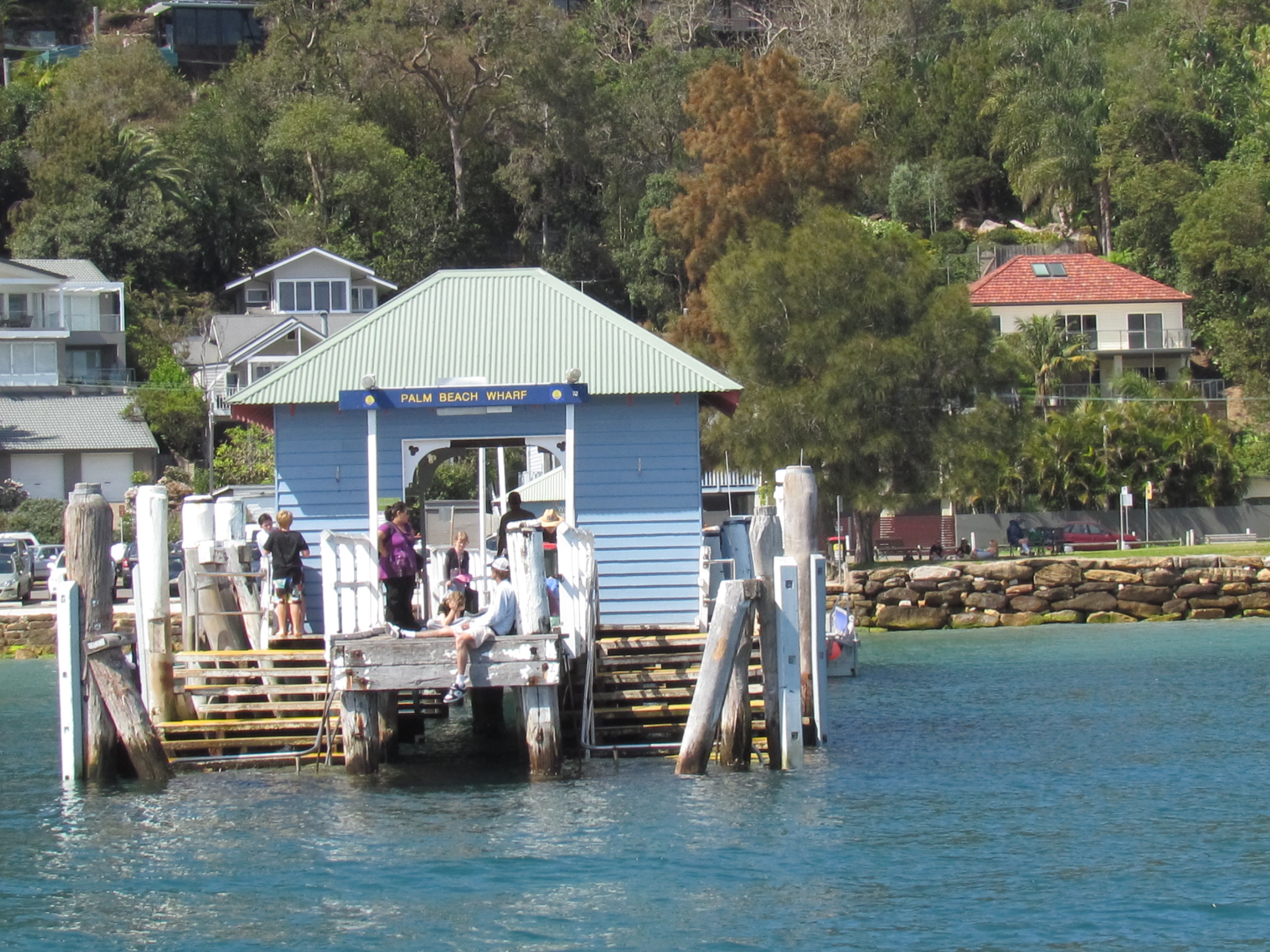
Palm Beach Wharf:
Heading out from Palm Beach across an arm of the Hawkesbury River, destination The Basin. Don’t be deceived by the halo. This is not Saint Wordsworm, but Naught who has already donned his protective coat:
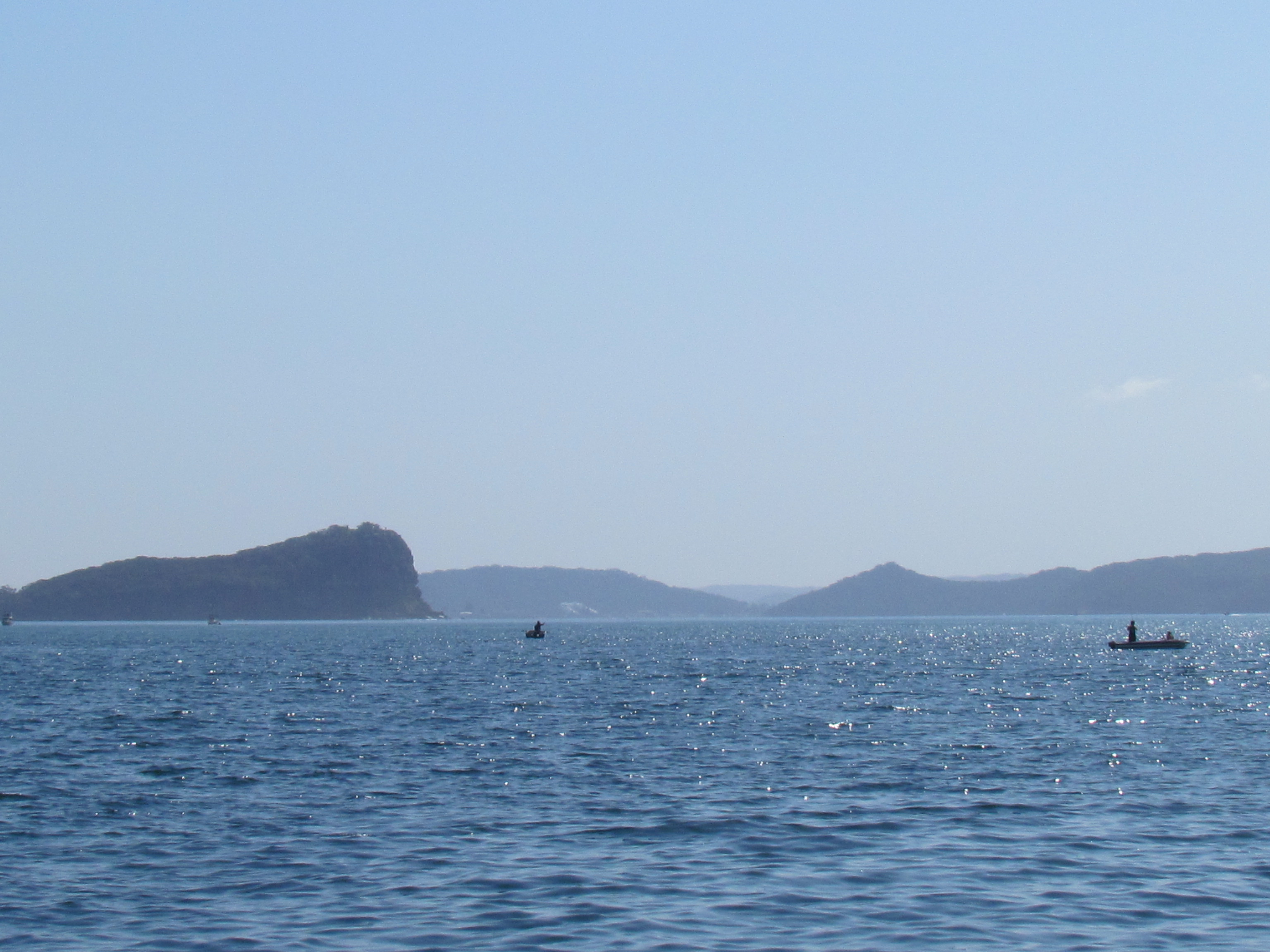
The heads and hills of the Hawkesbury River waterways:
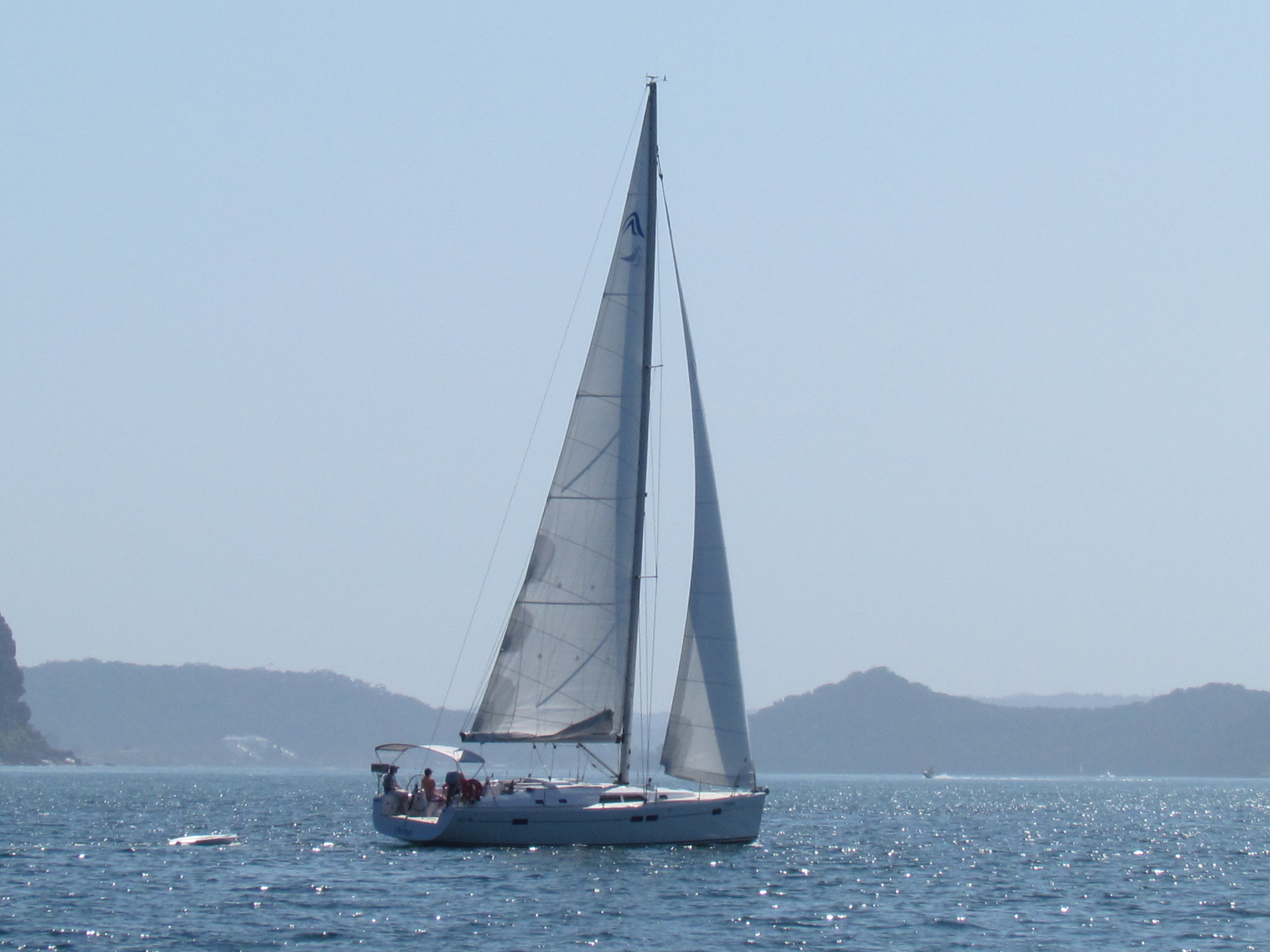
Fellow wayfarers:
Bennets Wharf, the ferry stop before The Basin:
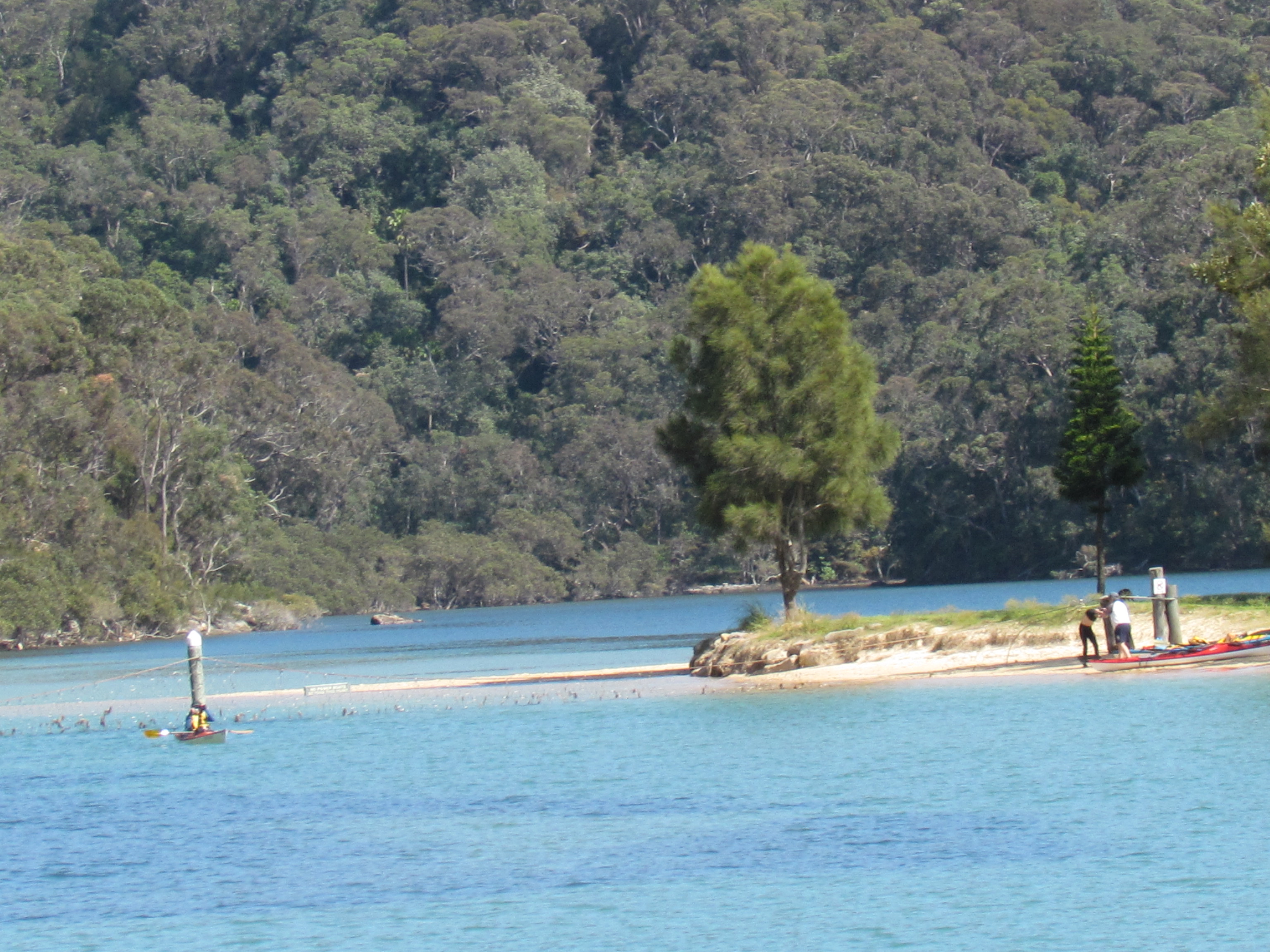
The entrance of The Basin’s lagoon, seen from the ferry:
The ferry approaching The Basin Wharf:
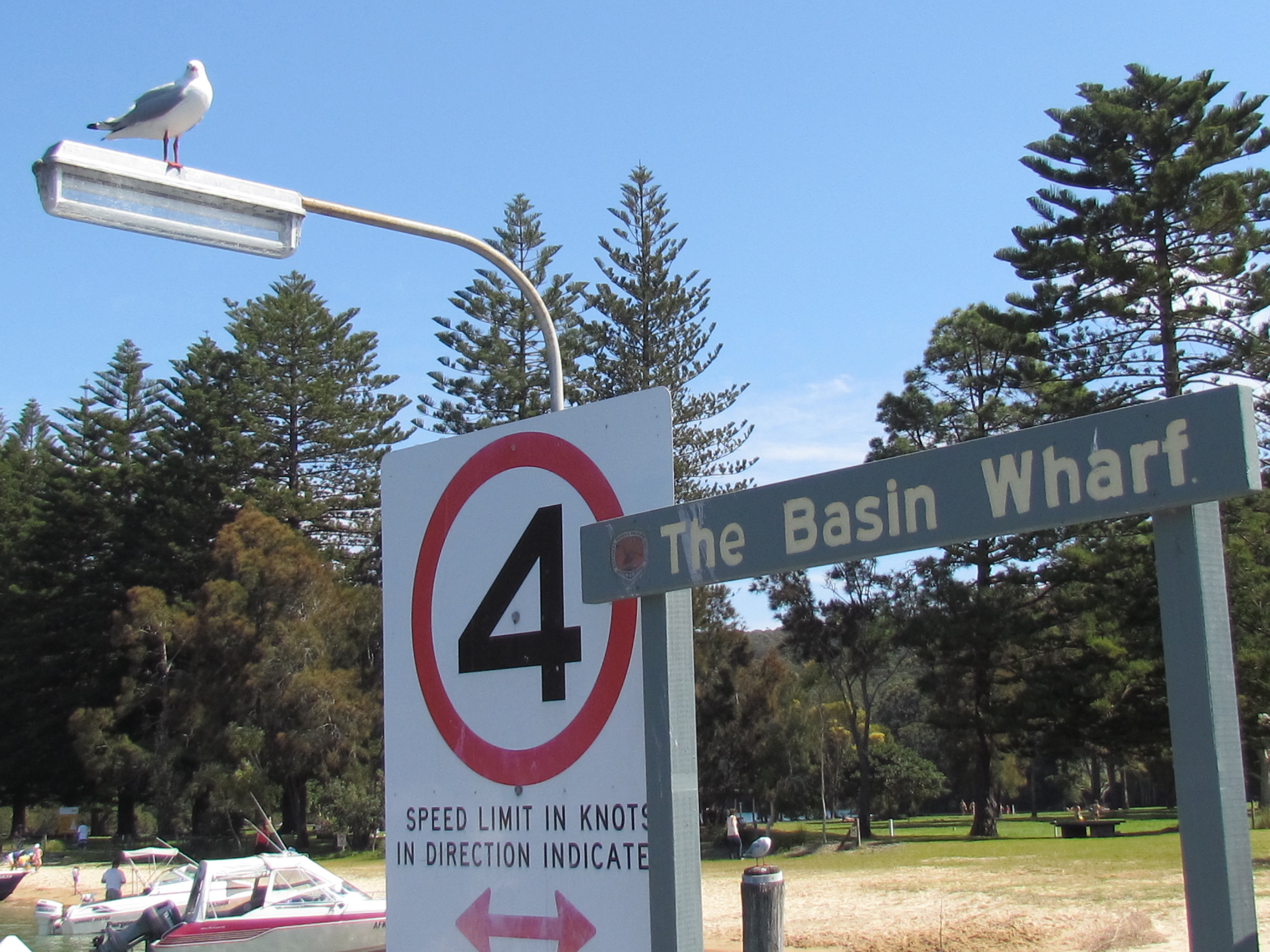
Jonathan waits at The Basin Wharf to greet the travellers:
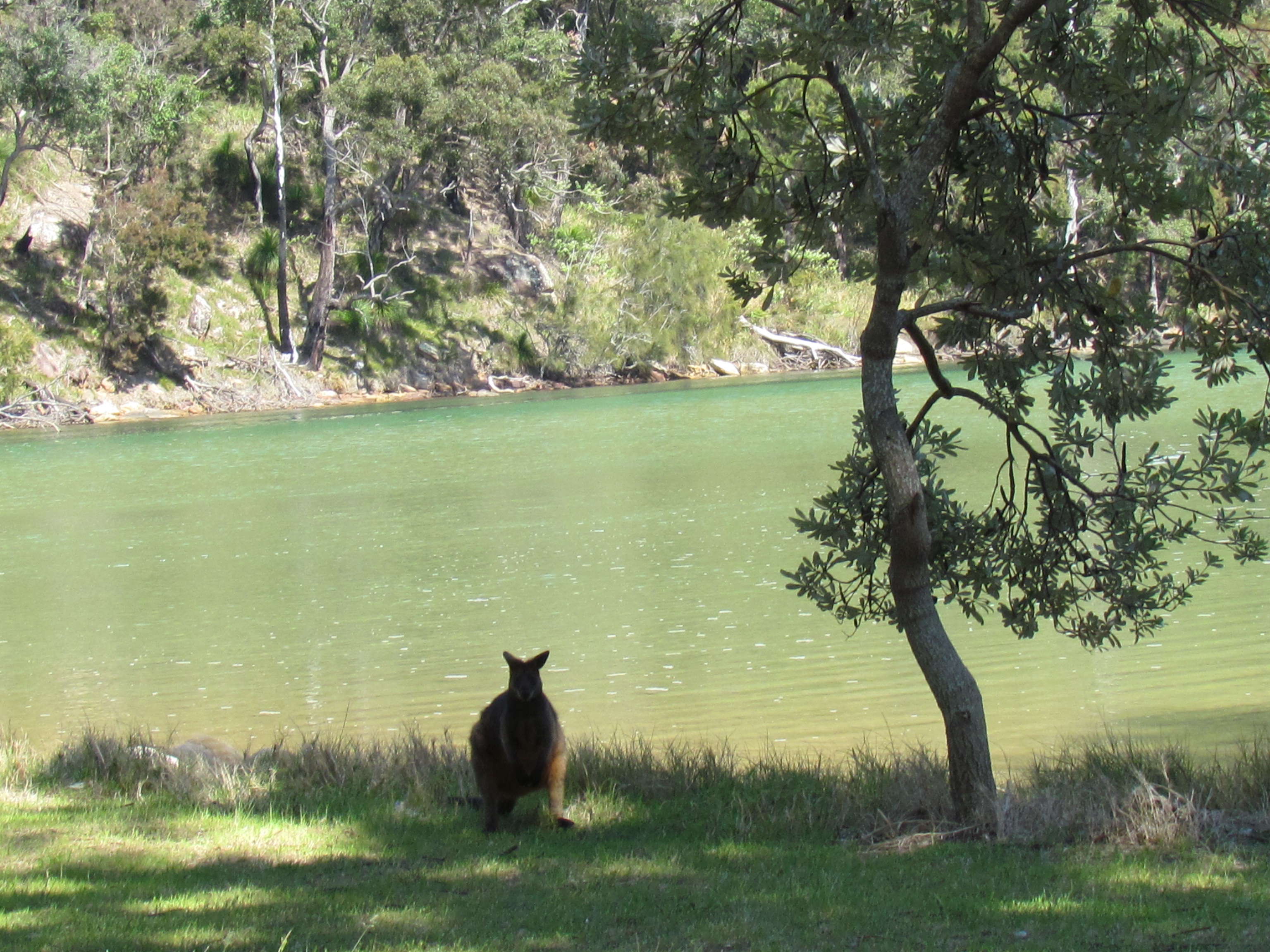
Wallabies abound at The Basin. This mother has a full pouch. The pink cross struts are the feet of the little joey inside the pouch:
Another wallaby on the shores of the lagoon:
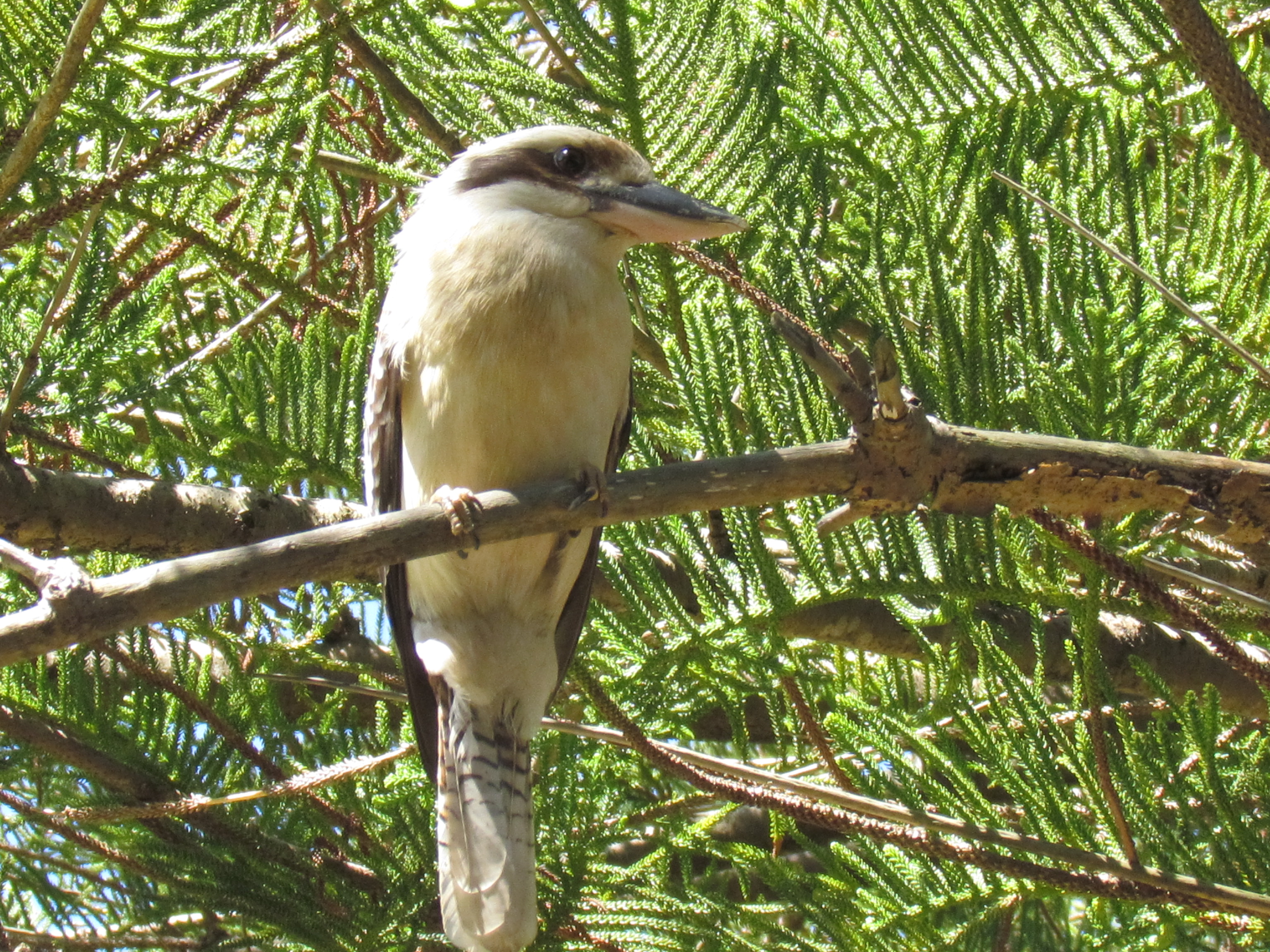
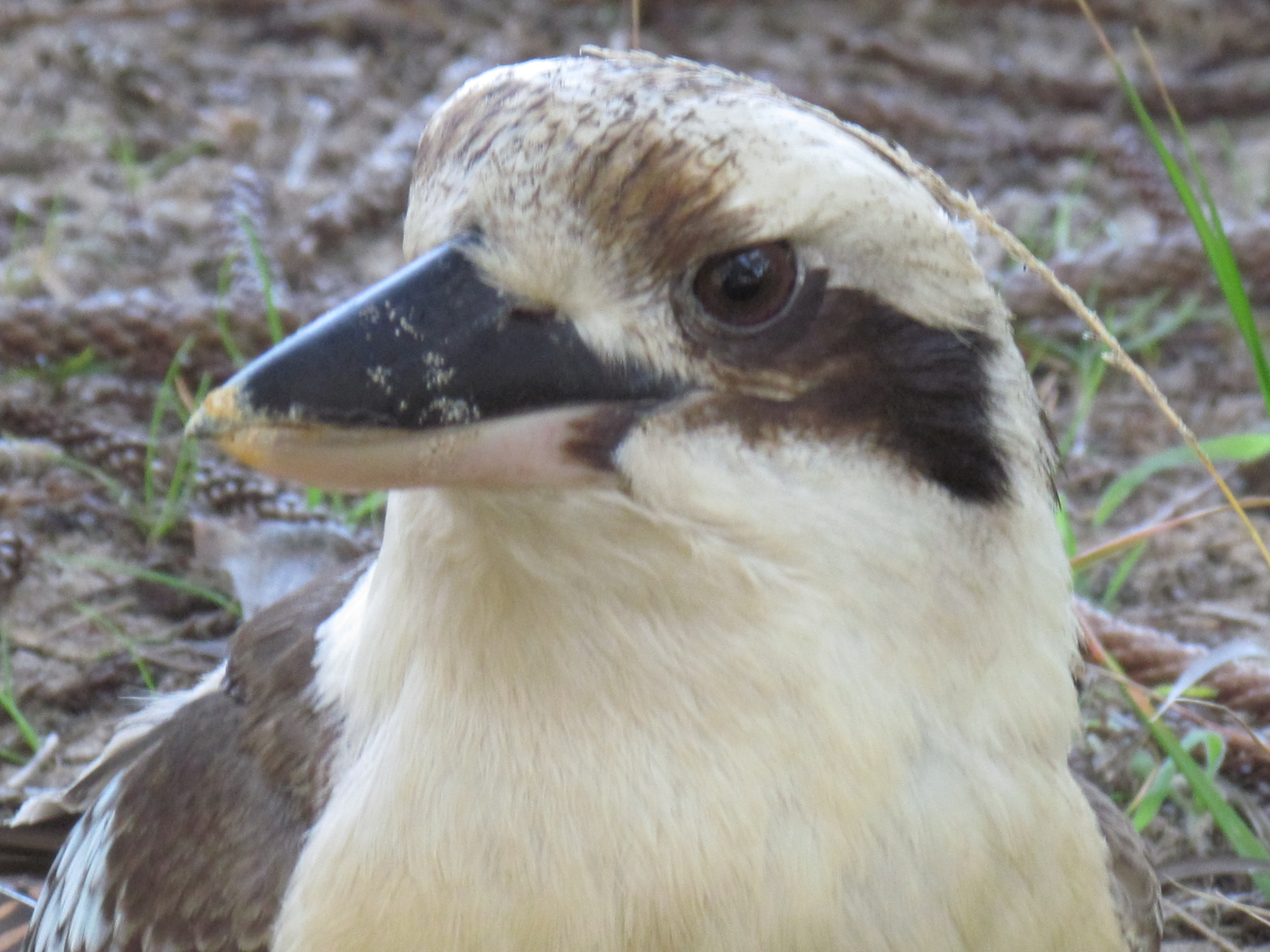
A kookaburra takes an interest in the picnic:
A bird’s eye view. Will ya look at that beak! At this stage even a stunt worm is well advised to take cover:
This is the blog of Mark Wordsworm, the travelling worm. I’m a 25-year-old bookmark and can proudly boast my own Hallmark serial number, 95 HBM 80-1. You’ll probably want to read all about me and my Travelling Companion (the TC).
Today’s travel notes
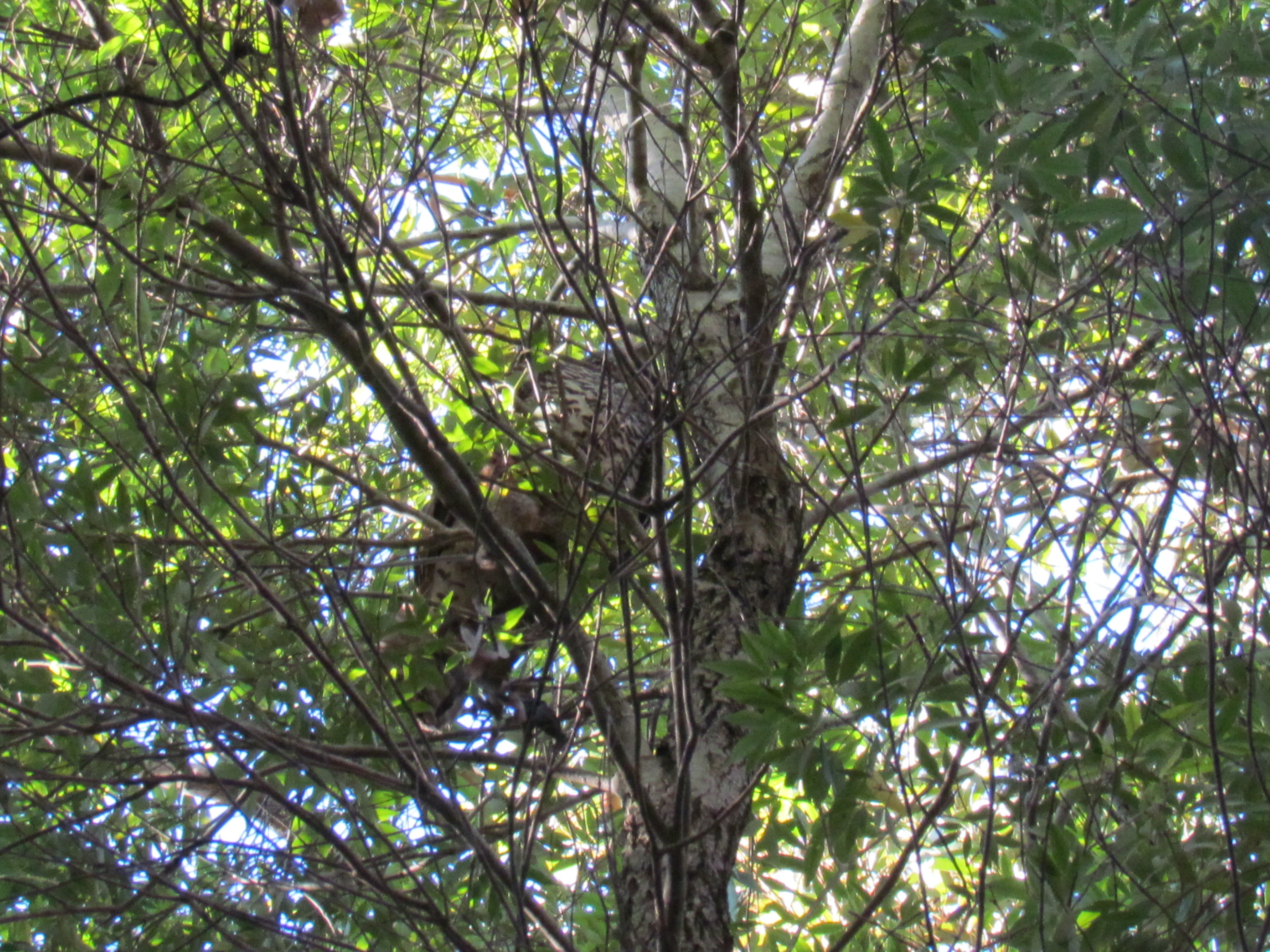
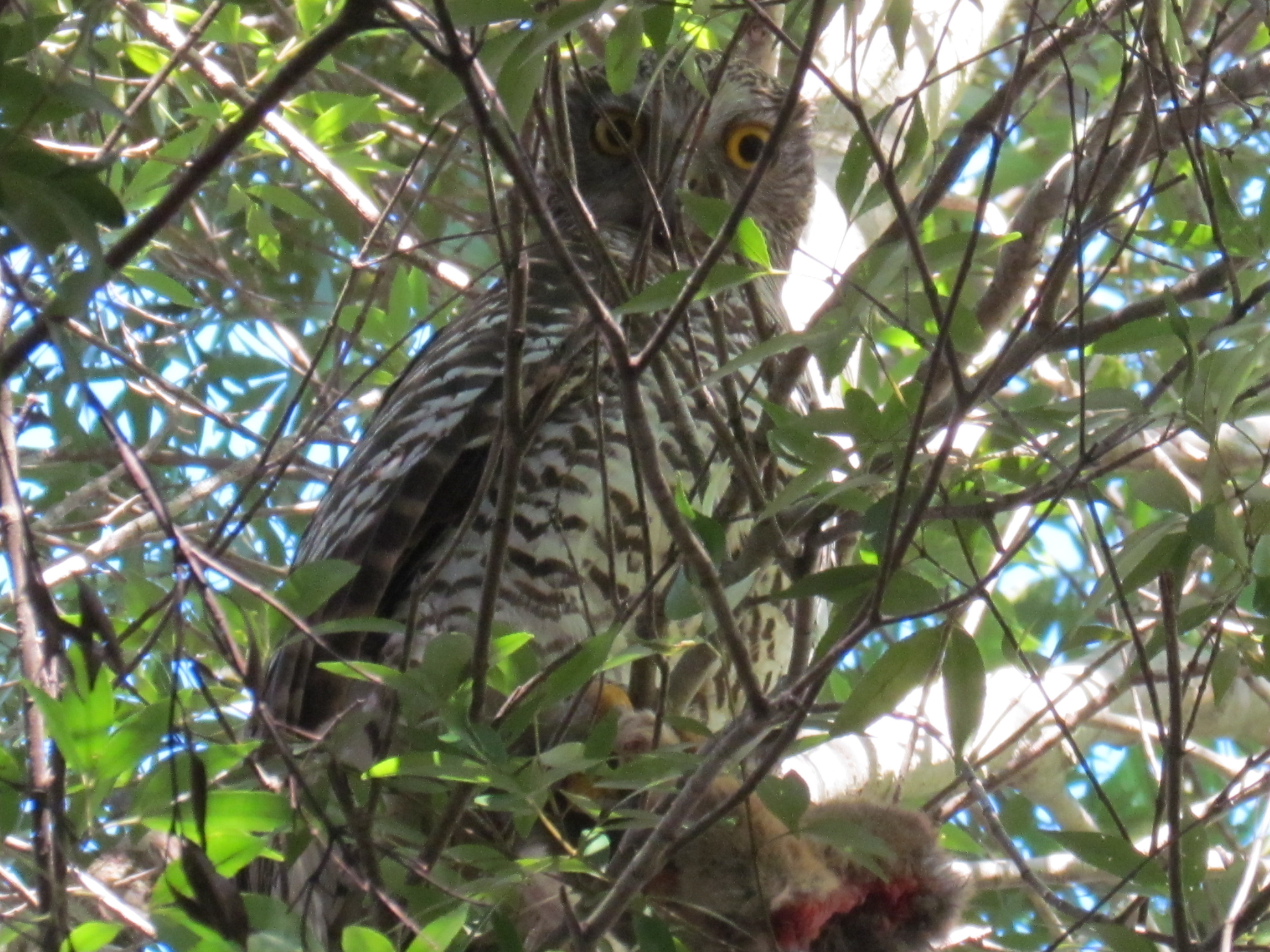
The TC went wandering in the woods yesterday. The first sign of trouble was the ruckus made by the Currawongs. If you hear them kicking up a fuss, there’s sure to be something interesting happening. The TC followed the noise and saw a big, shadowy shape high up in a gum tree. The Currawongs and Magpies were dive-bombing it. That usually means that the birds have found a possum out and about in the day time, and are having fun tormenting the poor disoriented creature
The TC pulled out her camera and zoomed in as far as she could. Check the photos to see what the lens revealed.
The book I’m in
Fourth Day, by Zoë Sharp. A powerful action thriller with a touch of fierce beauty.
The photos
My apologies for disappointing all my fans. There’s no photo of me today. I stayed safely deep in a book, as all wise worms do when a Powerful Owl is in town.
Here’s what the TC first saw. Can you spot the bird? It’s well camouflaged:
The bright glare of a Powerful Owl:
In the video you can hear the Currawongs calling. The owl raises its head to look around, then goes quietly back to sleep. It’s holding the remains of its prey, most likely a possum:
The owl takes a careful look at the TC:
Please excuse the jumpy shots. It was a very steep angle and the lens was just about at maximum zoom. And of course the TC, bless her cotton booties, was somewhat excited about the whole experience.
This is the blog of Mark Wordsworm, the travelling worm. I’m a 25-year-old bookmark and can proudly boast my own Hallmark serial number, 95 HBM 80-1. You’ll probably want to read all about me and my Travelling Companion (the TC) .
Today’s travel notes
Me and the TC have not been doing much travelling recently. You may have noticed the dearth of posts from this worm. What have we been up to, you may well ask?
The TC has acquired a new toy, somewhat unimaginatively named the Canon PowerShot SX30 IS. We call it the SuperZoom. It’s a point-and-shoot digital camera, with a 35-times zoom lens, going from 4.3 mm wide angle to 150.5 mm telephoto. The equivalent in 35 mm terms is 24 mm to 840 mm.
Have your eyes glazed over already? Do you feel the sudden urge to rush off into the traffic or jump over a cliff, or find some other way to put the zing back into life? Now you have the tiniest idea of what things have been like chez TC recently.
The TC ummed and ahhed for months before buying the SuperZoom. She consulted DSLR experts, read reviews and agonised over the choice. Go for a DSLR with quality “glass” (that’s a lens, folks) and total control over all aspects of the photo, but requiring a number of lenses that are expensive, cumbersome and finicky. Or go for a point-and-shoot with a single zoom lens, possibly compromising on the quality of the picture because a one-size-fits-all solution is often a compromise.
Then Canon produced the SX30 IS at around the same time as the TC decided against a DSLR. Decision made, and in the process the TC had learned a whole lot about just why the DSLR enthusiasts were worried that the SX30 IS might yield disappointing results.
F-stops and apertures, exposure times and ISO speeds, bracketing and exposure bias, focal length, depth of field… It’s fascinating stuff. Especially when you realise that most of the terminology and skills were developed to suit photography done with 35mm film, and that folks now just kind of morph the same terminology into the digital world, where it kind of works. Yes, fascinating stuff. So the TC tells me.
My impressions? For a details-oriented person like the TC, this photography lark looks to be an interesting occupation. From the point of view of those around her? Well, it keeps her out of our hair!
Travel tip
When travelling with a camera, or a camera-wielding TC, be prepared to stop and shoot at a moment’s notice.
The book I’m in
How to Do Everything: Digital Camera, by Dave Johnson. This is an excellent book for anyone wanting to learn about photography and digital cameras.
This worm had a narrow escape recently. I was spending some time in a DK book on photography that the TC took a violent dislike to. Ask her about it, then duck!
The photos
Me with Peg and a piece of bark that’s recently fallen from a Sydney Red Gum tree:
F-stops and focus and zooms, oh my!
F-stop: f/4
Exposure time: 1/125 sec
ISO speed: ISO-80
Exposure bias: -1 step
Focal length: 4 mm
Max aperture: 2.875
Metering mode: Pattern
Flash: No flash, compulsory
The TC has discovered that the camera and Windows both store a number of interesting facts about how the picture was taken. To keep her happy, I’ve copied the details below each photograph in this post. She’s been experimenting with the options available in the camera’s various modes. Even thought it’s a point-and-shoot, it offers an impressive flexibility for those who care to click and flick various buttons, wheels and knobs.
A jumble of bark at the base of a Scribbly Gum:
F-stops and focus and zooms, oh my!
F-stop: f/4
Exposure time: 1/50 sec
ISO speed: ISO-400
Exposure bias: 0 step
Focal length: 11 mm
Max aperture: 4
Metering mode: Pattern
Flash: No flash, compulsory
That looks like a secret code on some ancient rolled parchments, doesn’t it? Actually, it’s the work of grubs living in the bark of the tree.
The trunk of a Scribbly Gum:
F-stops and focus and zooms, oh my!
F-stop: f/4.5
Exposure time: 1/40 sec
ISO speed: ISO-100
Exposure bias: -1 step
Focal length: 18 mm
Max aperture: 4.34375
Metering mode: Pattern
Flash: No flash, compulsory
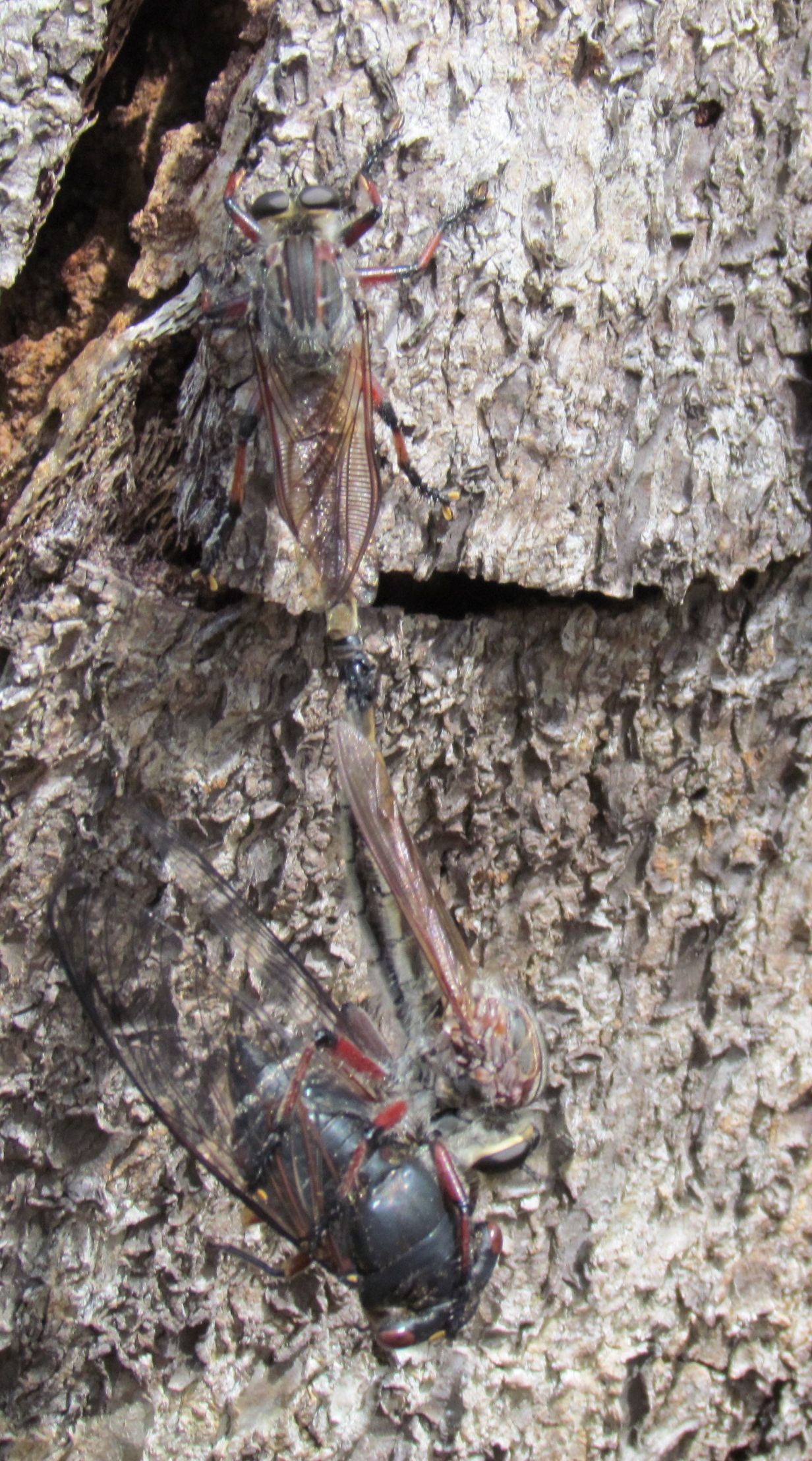
Two dragonflies mating while one chomps a cicada:
F-stops and focus and zooms, oh my!
F-stop: f/4
Exposure time: 1/250 sec
ISO speed: ISO-100
Exposure bias: 0 step
Focal length: 12 mm
Max aperture: 4
Metering mode: Pattern
Flash: No flash, compulsory
Talk about hostile mergers and acquisitions! Did you know that dragonflies are carnivorous? This worm did not, and neither did the TC.
Before we go any further, I have to admit I’m not sure that the happy couple are dragonflies. Their wings are parallel to their bodies, not at right angles. They don’t look like damselflies either, though. These critters were large: about 4 cm long. Do you know what they are?
One of the pair has a cicada firmly grasped in its legs. The trio was very mobile, and flew up and around the TC twice while she photographed it.
Another shot, where you can see the cicada more easily:
F-stops and focus and zooms, oh my!
F-stop: f/4.5
Exposure time: 1/160 sec
ISO speed: ISO-160
Exposure bias: 0 step
Focal length: 29 mm
Max aperture: 4.34375
Metering mode: Pattern
Flash: No flash, compulsory
A kookaburra, shot at maximum telephoto range (150 mm, 35x zoom, equiv. 840mm):
F-stops and focus and zooms, oh my!
F-stop: f/5.8
Exposure time: 1/80 sec
ISO speed: ISO-400
Exposure bias: 0 step
Focal length: 150 mm
Max aperture: 5.0625
Metering mode: Spot
Flash: No flash, compulsory
The TC is inordinately proud of that shot. It was tricky to keep the bird in focus at such a long distance. She played around with the depth of field (there’s another of her newly acquired terms) and exposure, took a number of shots, then chose the one she liked best.
We’ve already covered trees and birds, two of the TC’s favourite subjects. Here’s the third:
F-stops and focus and zooms, oh my!

F-stop: f/3.5
Exposure time: 1/60 sec
ISO speed: ISO-250
Exposure bias: -1 step
Focal length: 8 mm
Max aperture: 3.625
Metering mode: Spot
Flash: Flash, auto, redeye