Ever wondered what the collective noun is for a group of cockatoos? I’m proposing a “quarrel of cockatoos”. Check out my video to see why!
Internet wisdom suggests a few group names for cockatoos, like a chattering, clattering, or crackle of cockatoos. Those are good. Quarrel is used for lawyers and sparrows. But let’s add a “quarrel of cockatoos” to the collective wisdom!
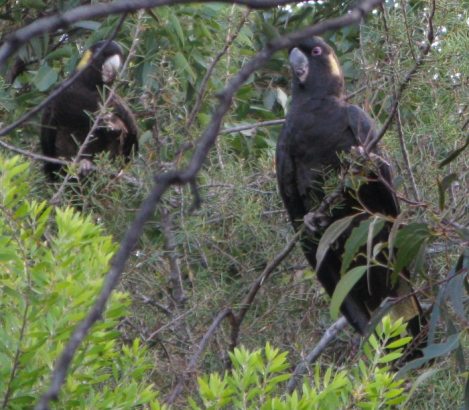
Cockatoos high in a tree at Manly Dam nature reserve, New South Wales, Australia.
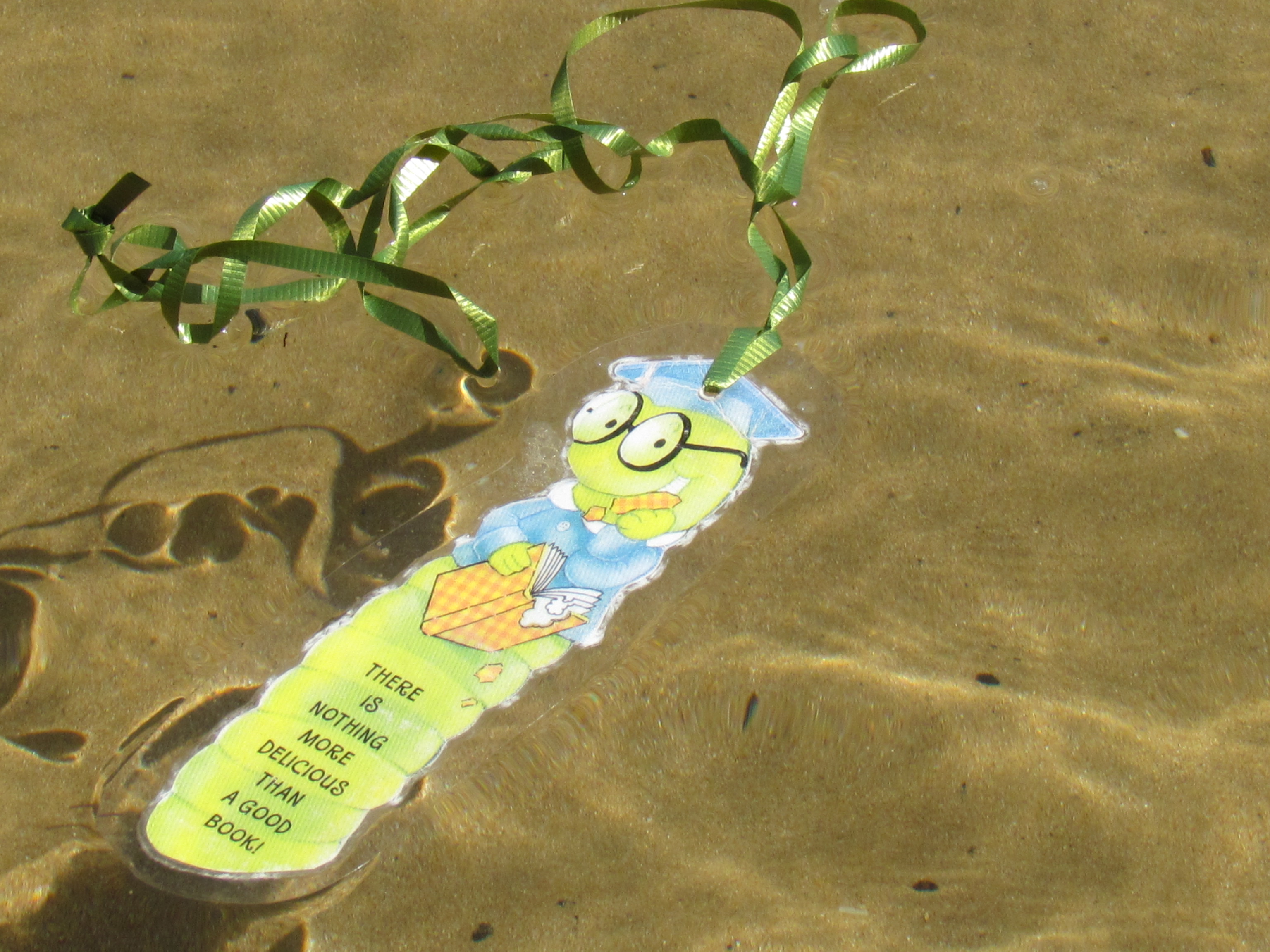
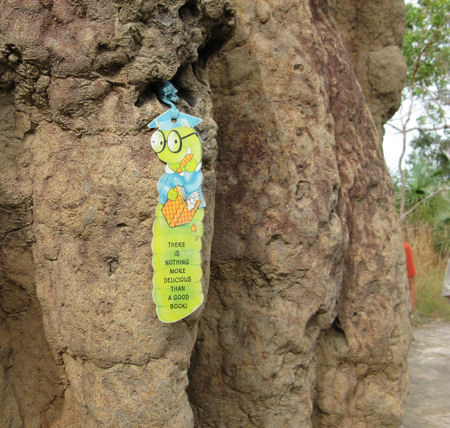
This is the blog of Mark Wordsworm, the travelling worm. I’m a 25-year-old bookmark and can proudly boast my own Hallmark serial number, 95 HBM 80-1. You’ll probably want to read all about me and my Travelling Companion (the TC).
Today’s travel notes
Me and the TC hopped up to Brisbane and Ipswich last week, to visit the two main campuses of the University of Queensland (UQ). Our first stop was Ipswich, about 40 kilometres to the west of Brisbane. The UQ Ipswich campus caters for students in the medical and health sciences, as well as arts and education.
My impressions? There’s more to Ipswich than you might think.
The book I’m in
A Nameless Witch, by A. Lee Martinez. This is a truly delightful book, especially for those of us who like a good dose of fun with our fantasy. The hapless hero of the book, a witch without name, suffers temptations both carnal and carnivorous, and manages to conquer an evil sorcerer to boot.
Recommended restaurants
Urban Pantry, 181 Brisbane Street, Ipswich. A great place for coffee, cakes, pastries, and lunch. The welcome is friendly, the food good. Photo below.
Travel tip
Look out for cane toads. Disappointingly, this worm spotted nary a one, but I’m reliably informed the city of Ipswich is hopping with them.
The photos
There’s no photograph of me, your intrepid Travelling Worm, in this post! I do assure you I was there, but I managed to dodge the TC’s camera for a few hours. Rest assured, there’s the obligatory homage to me in my next post, snapped when we were making our way to Brisbane. For now, please enjoy these images of Ipswich.
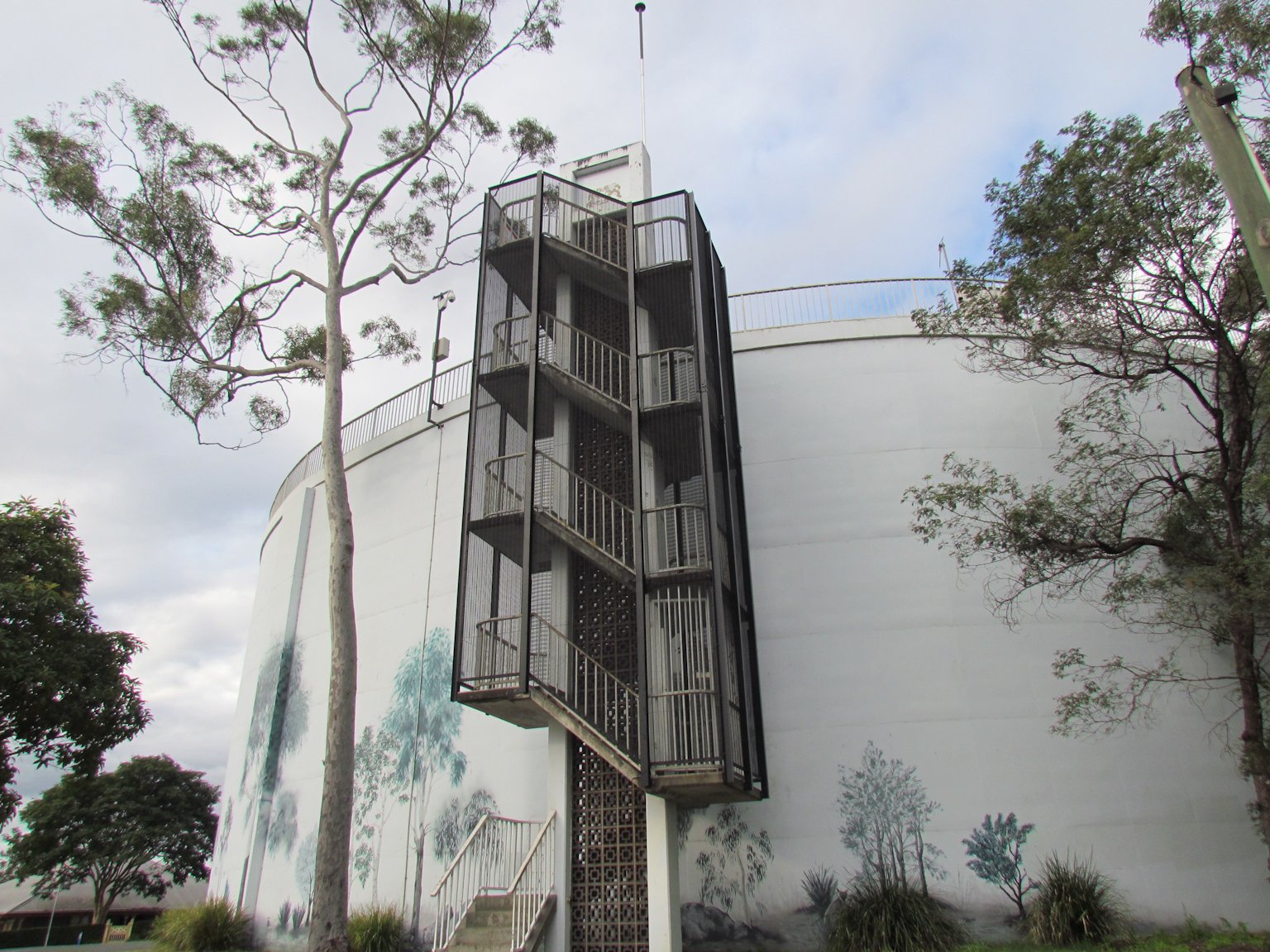
We climbed to the top of the water tower on Denmark Hill, to get a view of the city of Ipswich. This is the tower, with the staircase leading up to the top:
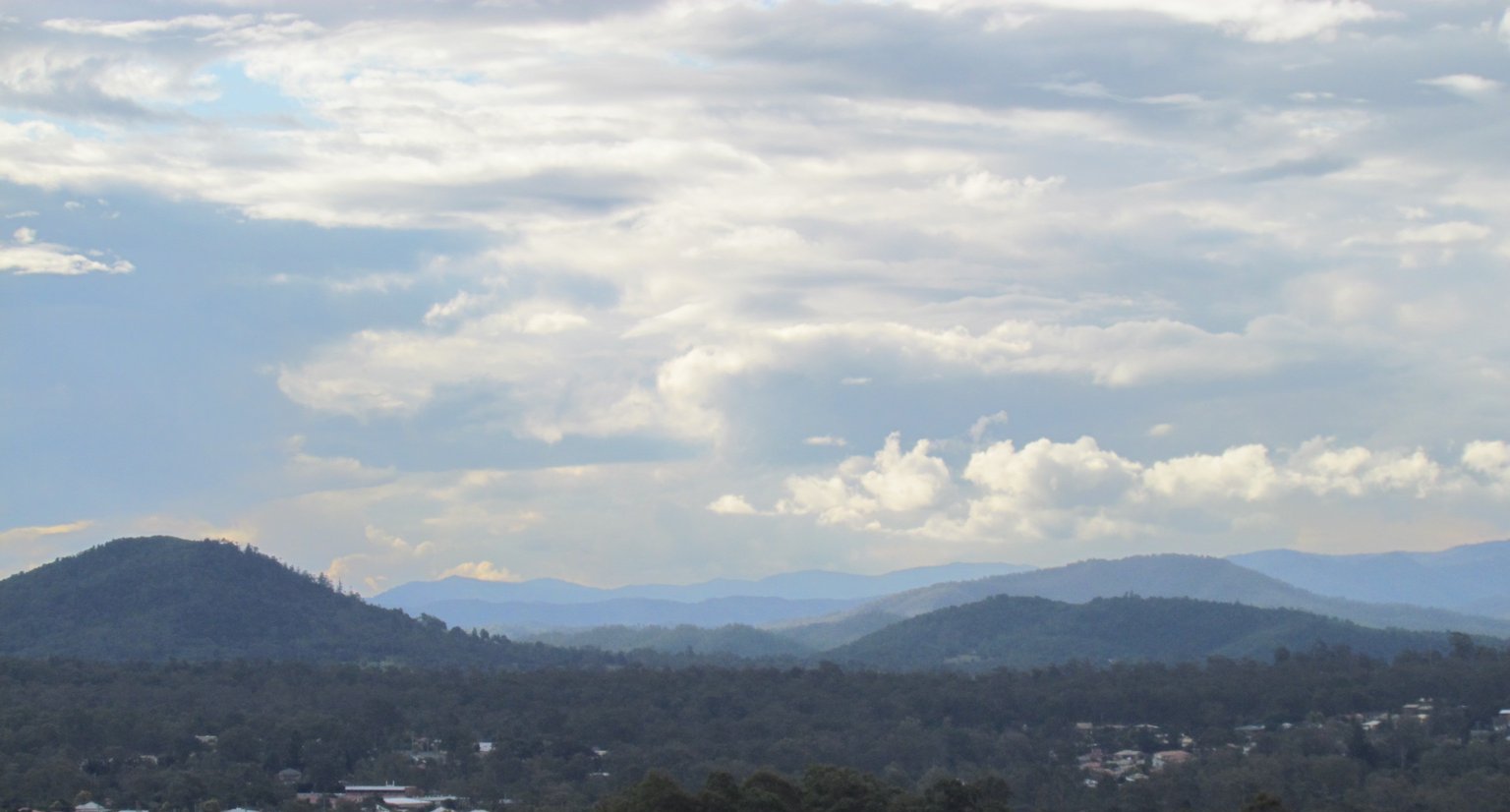
A view of sky and layered hills, from the top of the tower:
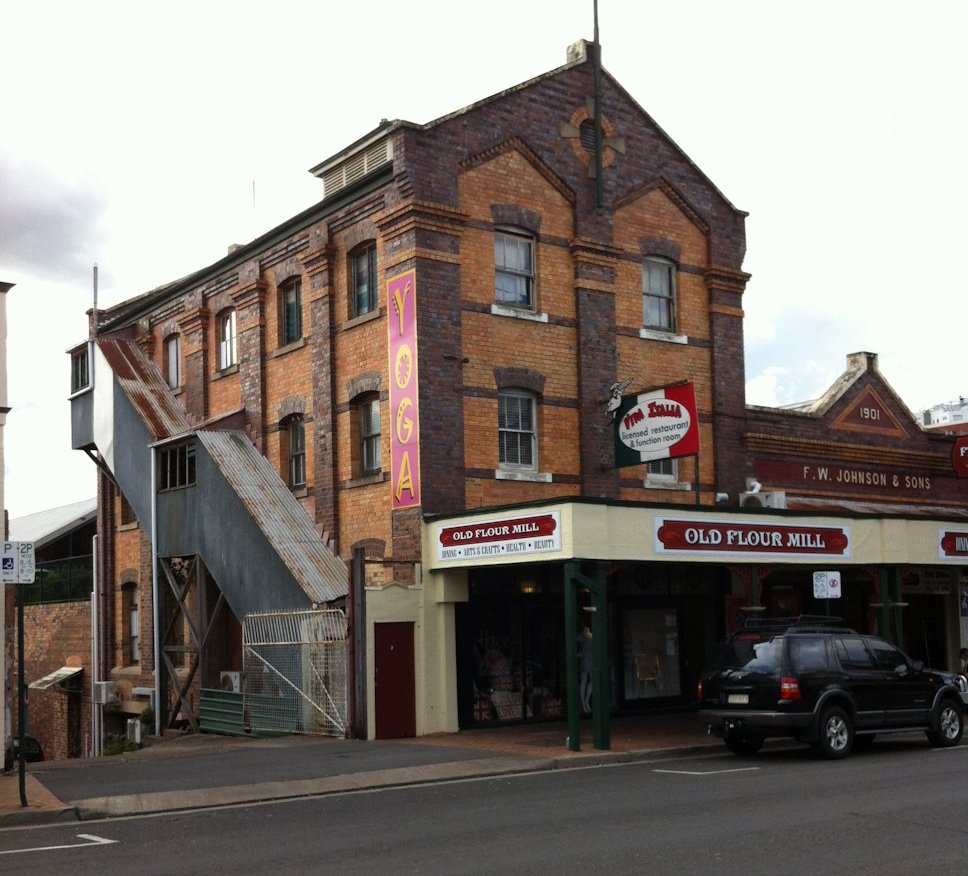
The Old Flour Mill in Ipswich is currently undergoing renovation. A few shops and restaurants have already opened their doors inside this attractive building:
Another interesting edifice on Brisbane Street, Ipswich:
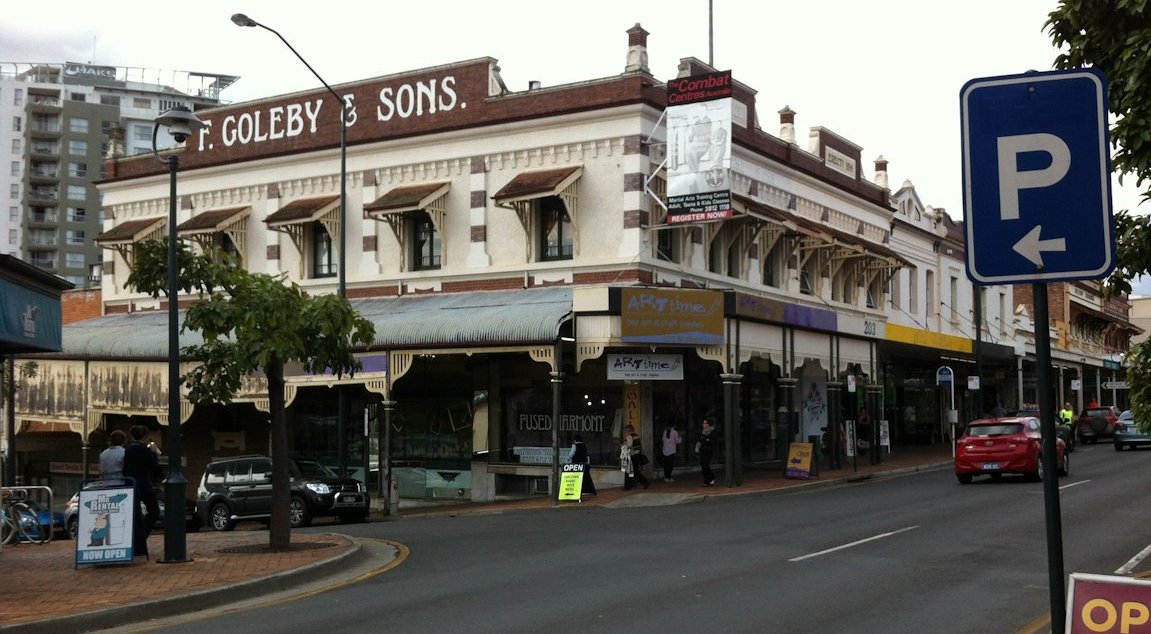
Goleby’s building in Brisbane Street:
Another aspect of the same building:
More of Brisbane Street, including the Urban Pantry – an excellent lunch venue. It’s to the left of the middle of the photo, on the ground floor, with a light brown facade:
We strolled around the Ipswich campus of the University of Queensland. It’s nicely laid out, with plenty of space and pleasing spaces. This is a view of a main thoroughfare, taken from inside the medical school:
The library is gorgeous. This bookworm was sorely tempted to take up permanent residence:
A river runs through it. Yes, through the library. With fish:
Join me in my next post for a look at the big smoke, Brisbane, and the UQ campus there.
This is the blog of Mark Wordsworm, the travelling worm. I’m a 25-year-old bookmark and can proudly boast my own Hallmark serial number, 95 HBM 80-1. You’ll probably want to read all about me and my Travelling Companion (the TC).
Today’s travel notes
Me and the TC have been very busy of late. She’s writing a book! It has the somewhat unwieldy title of Confluence, Tech Comm, Chocolate: A wiki as platform extraordinaire for technical communication. She wrote a blog post about it. This worm is looking forward to a comfy place in the book, when it appears at the end of January.
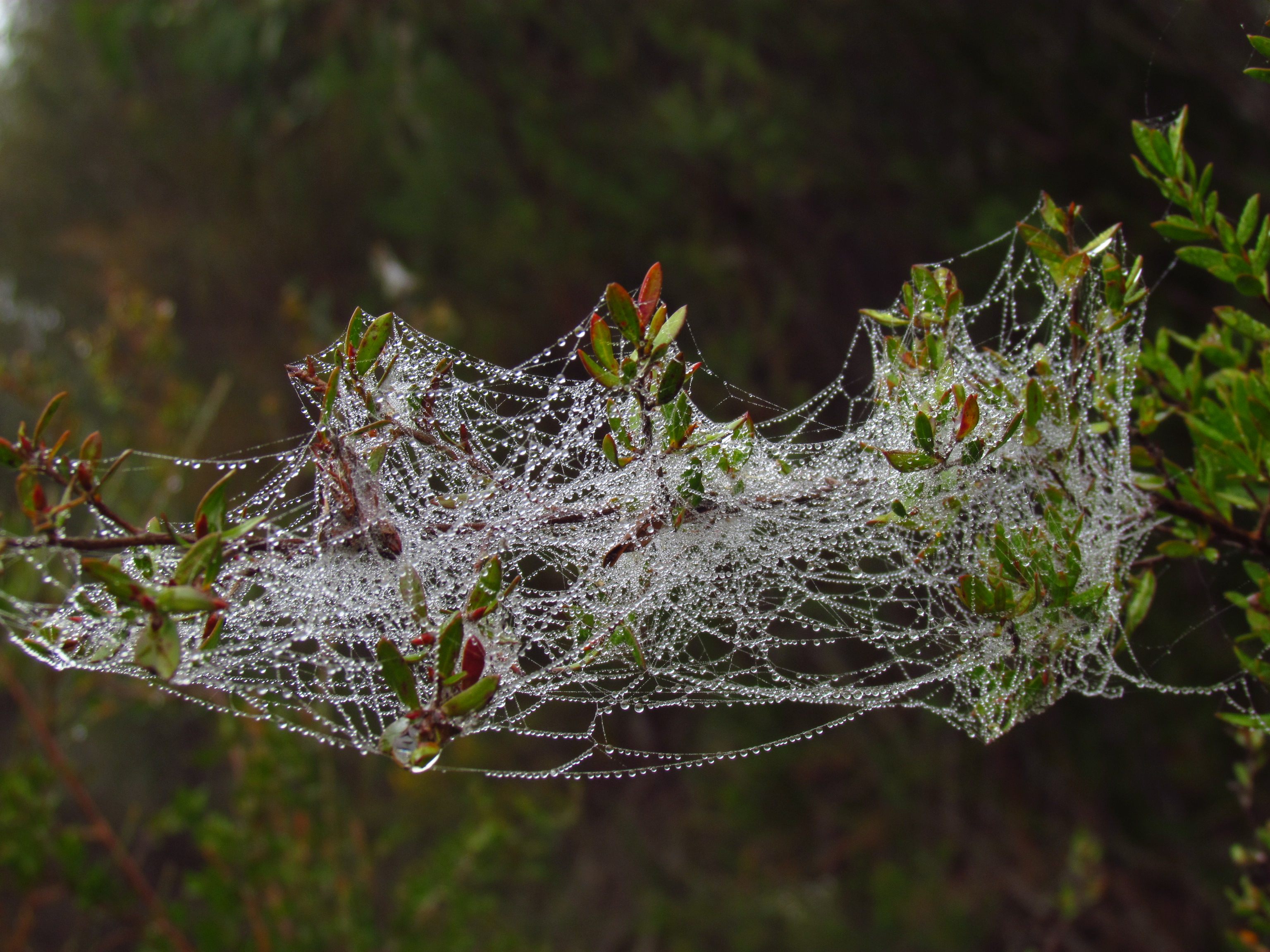
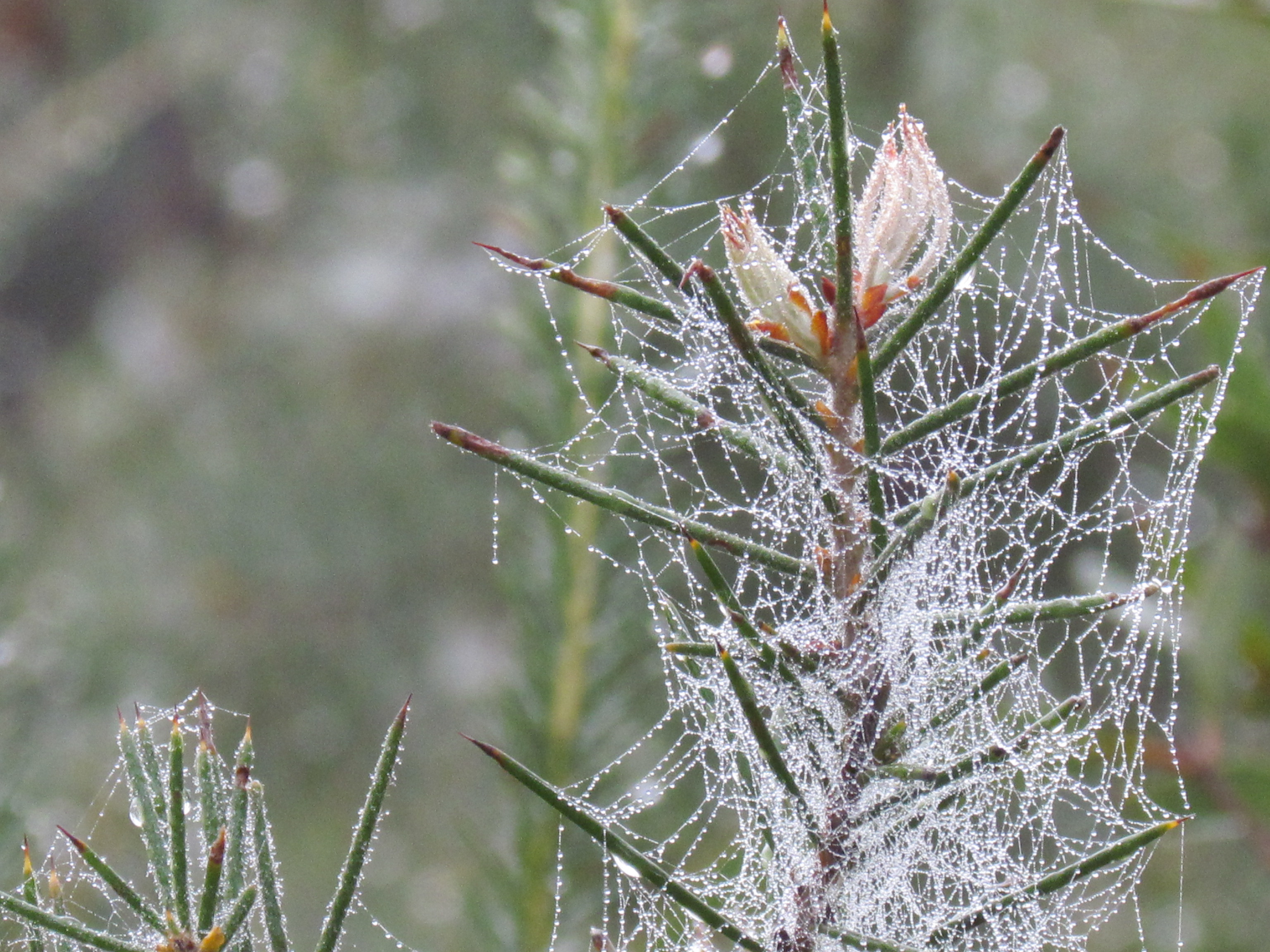
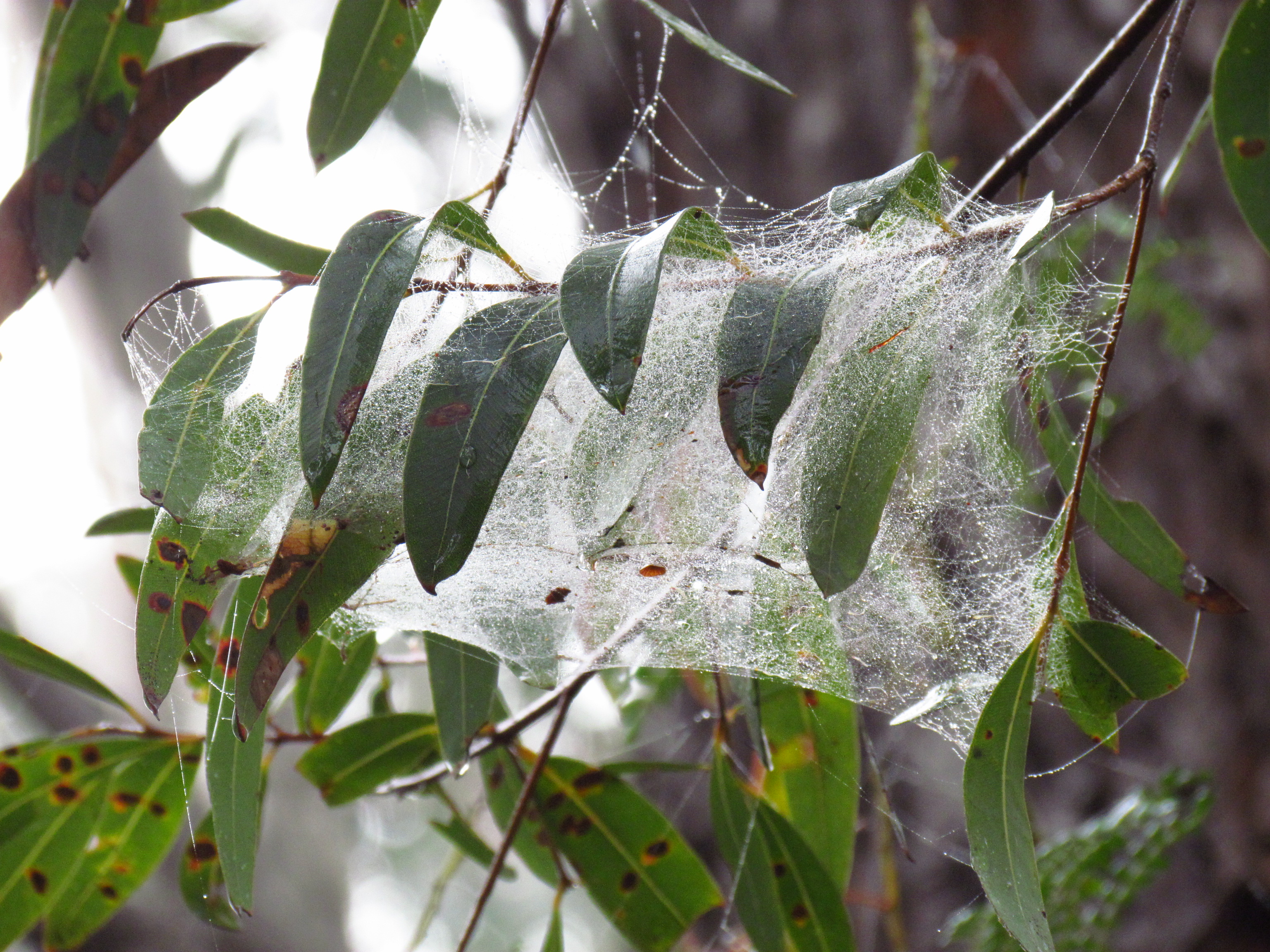
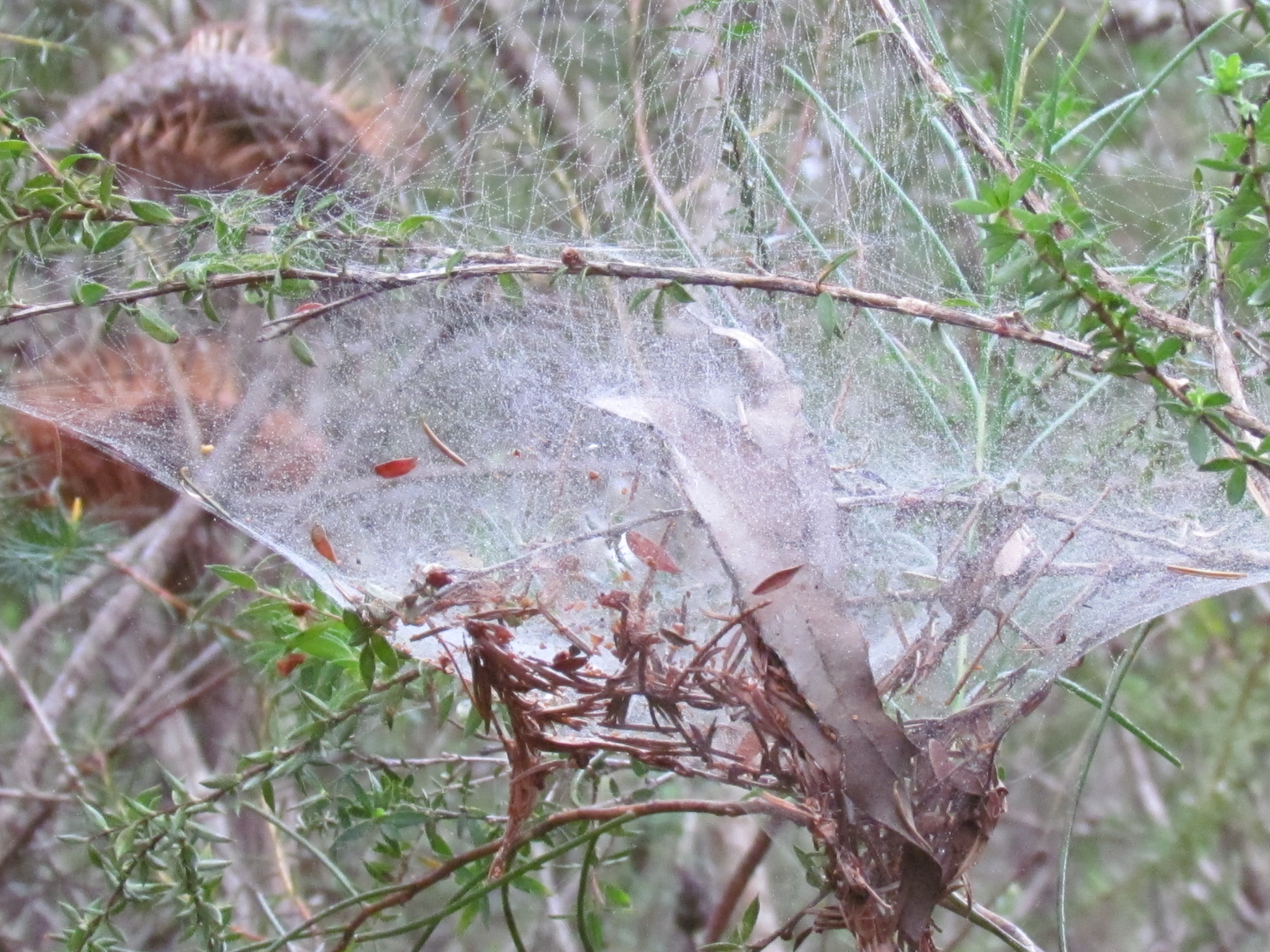
At times when deep in the throes of writing, me and the TC have gone out for a walk. To blow away the cobwebs. And at times there were more cobwebs outside than in.
Follow me into a wonderland of mist and sparkling cobwebs, the world of spring in the Australian bush.
The book I’m in
A Clash of Kings, by George R.R. Martin. A grand epic worthy of any bookworm.
The photos
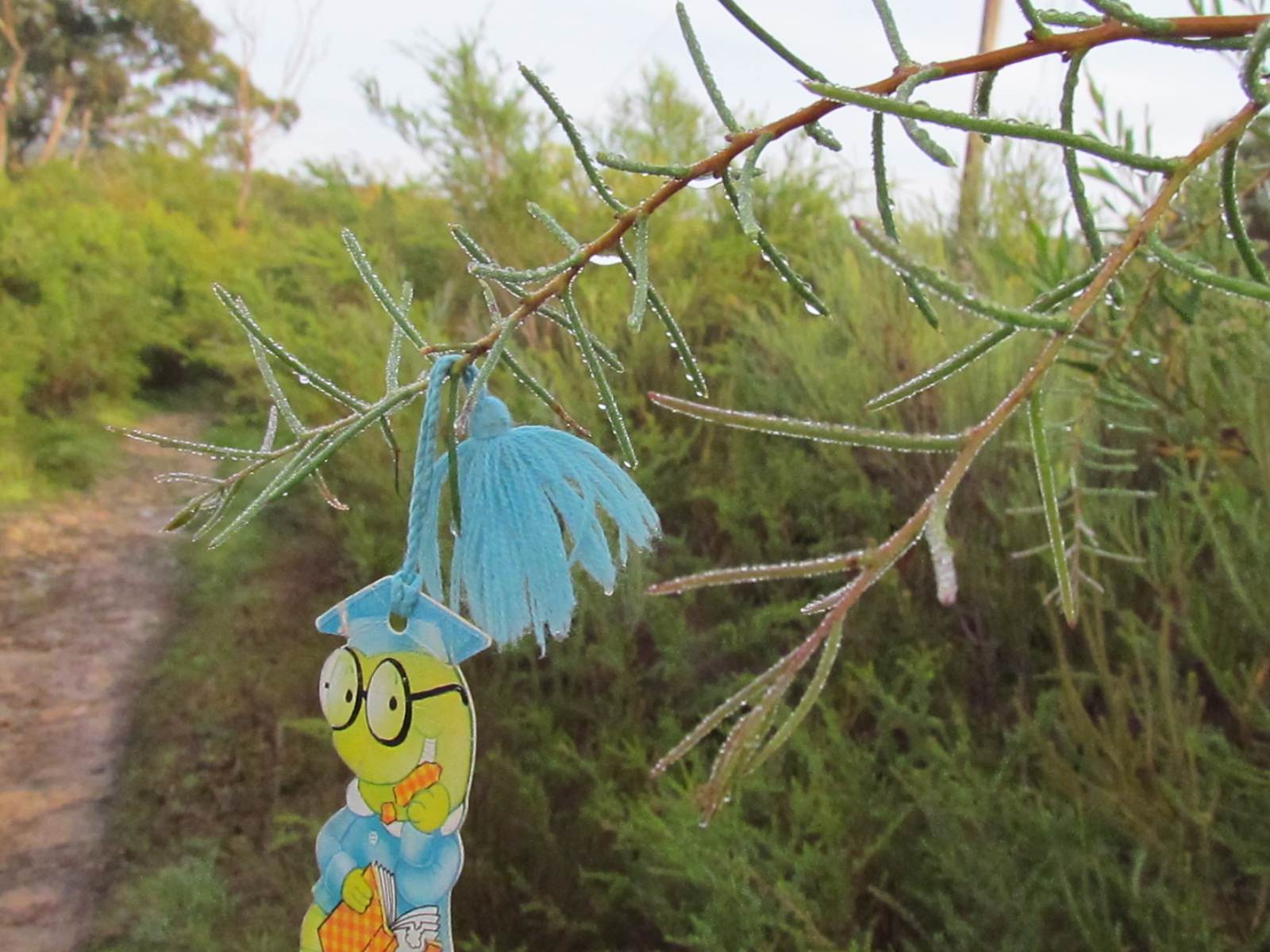
Me, braving the droplets and the chance of a nasty fall into wet mud, all for the sake of a snapshot:
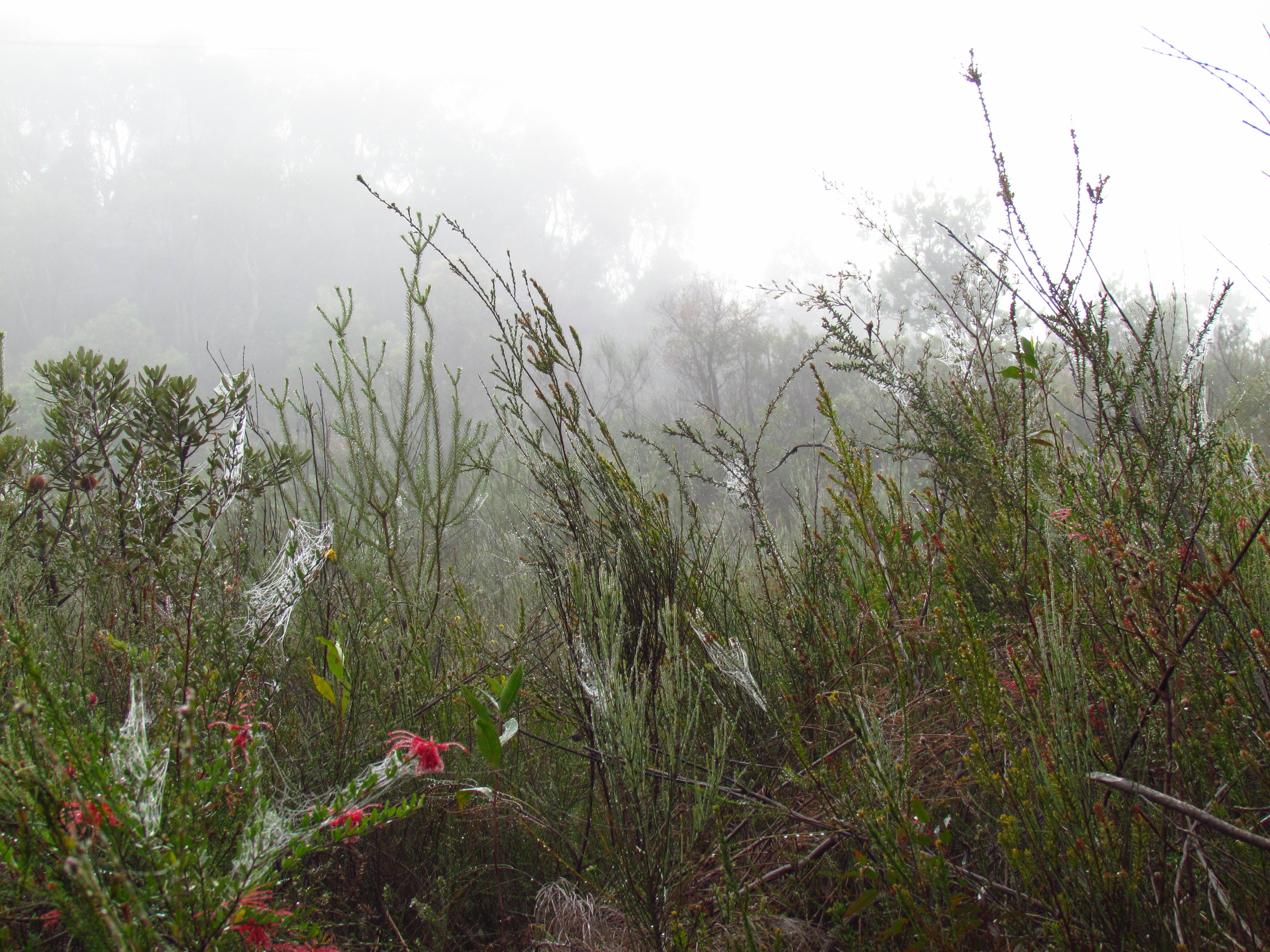
Entering a wonderland of webs in the mist:
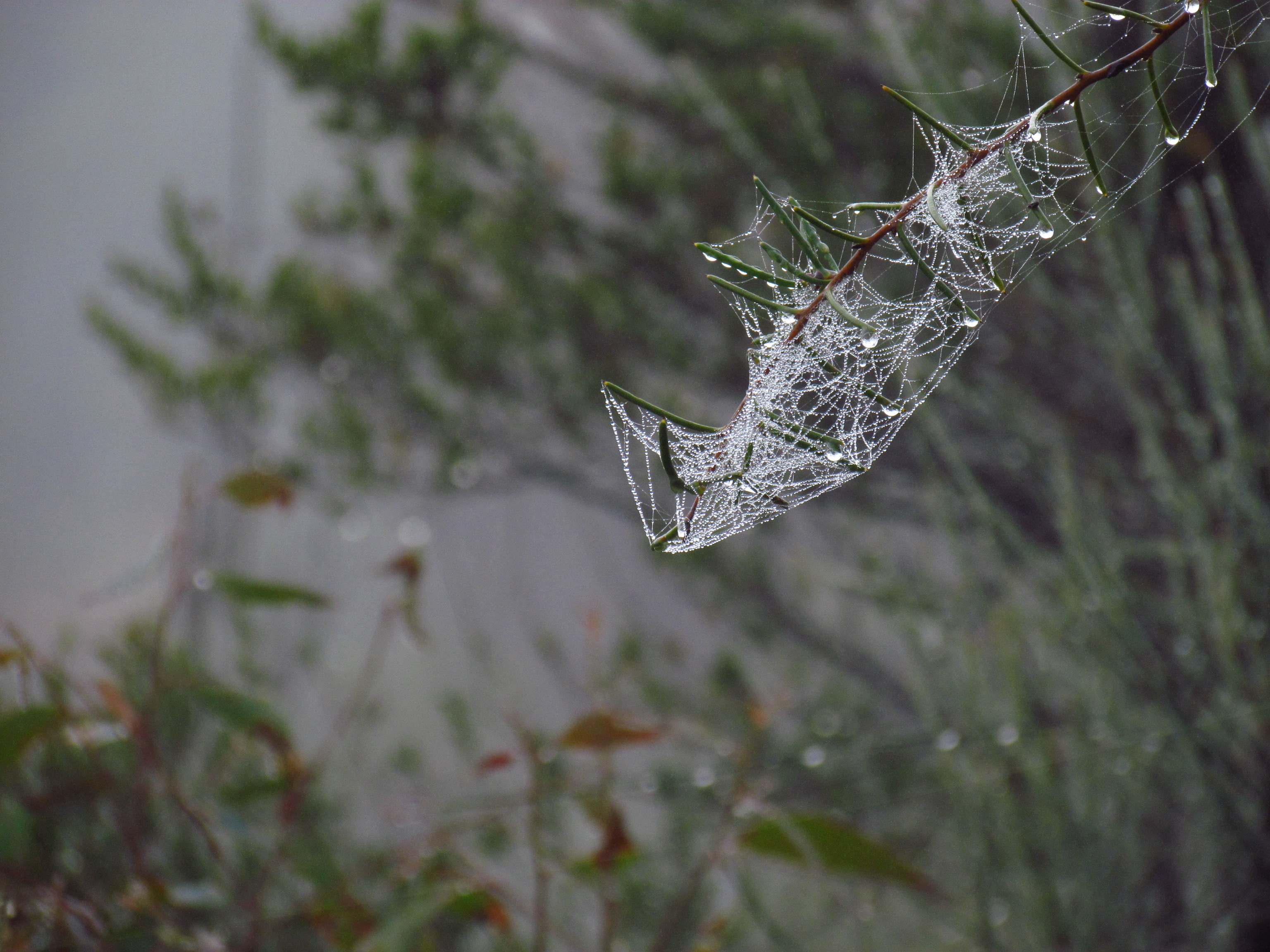
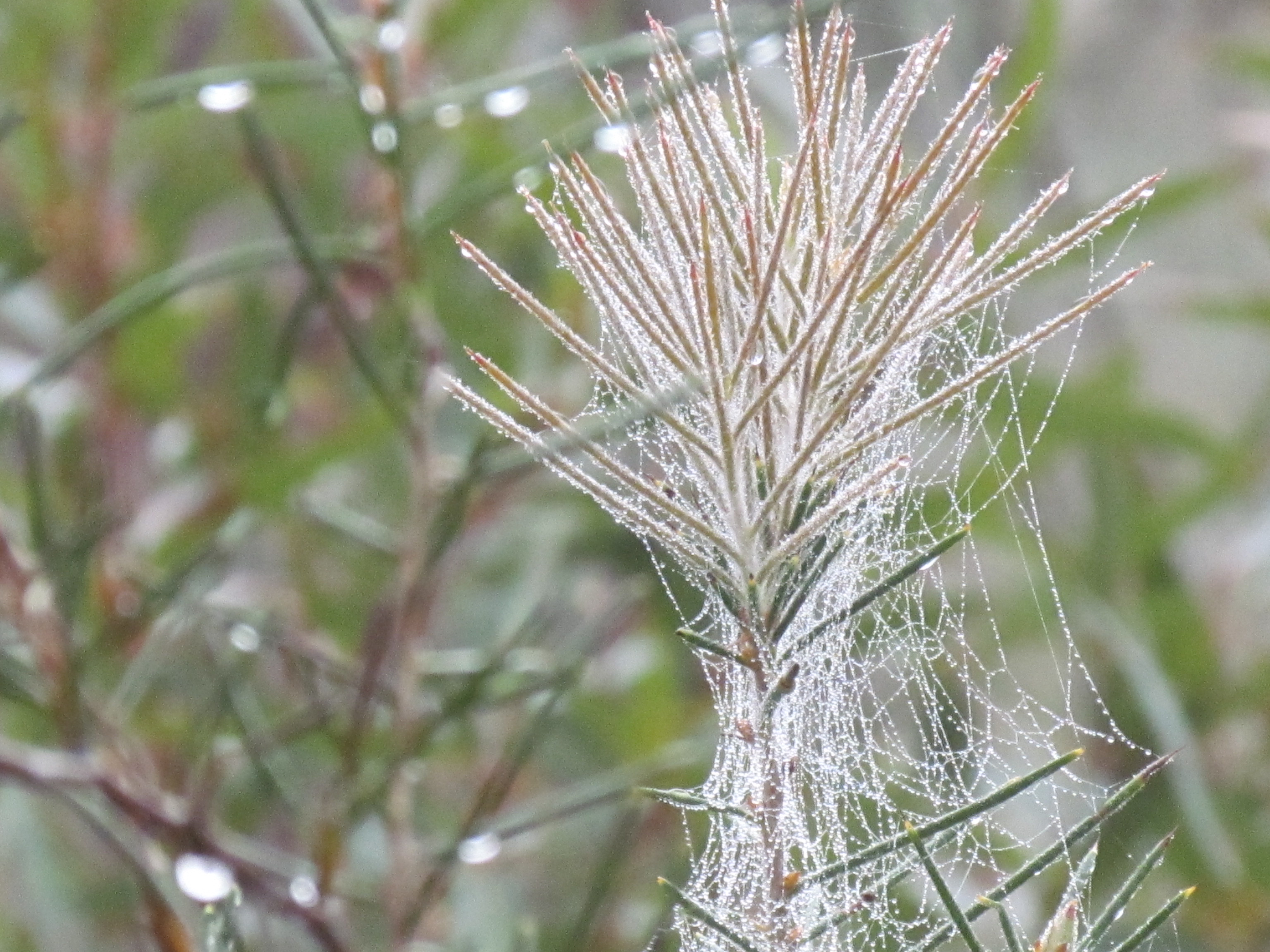
Sparkling cobweb wrapped around a twig:
Like the lights that people drape over Christmas trees:
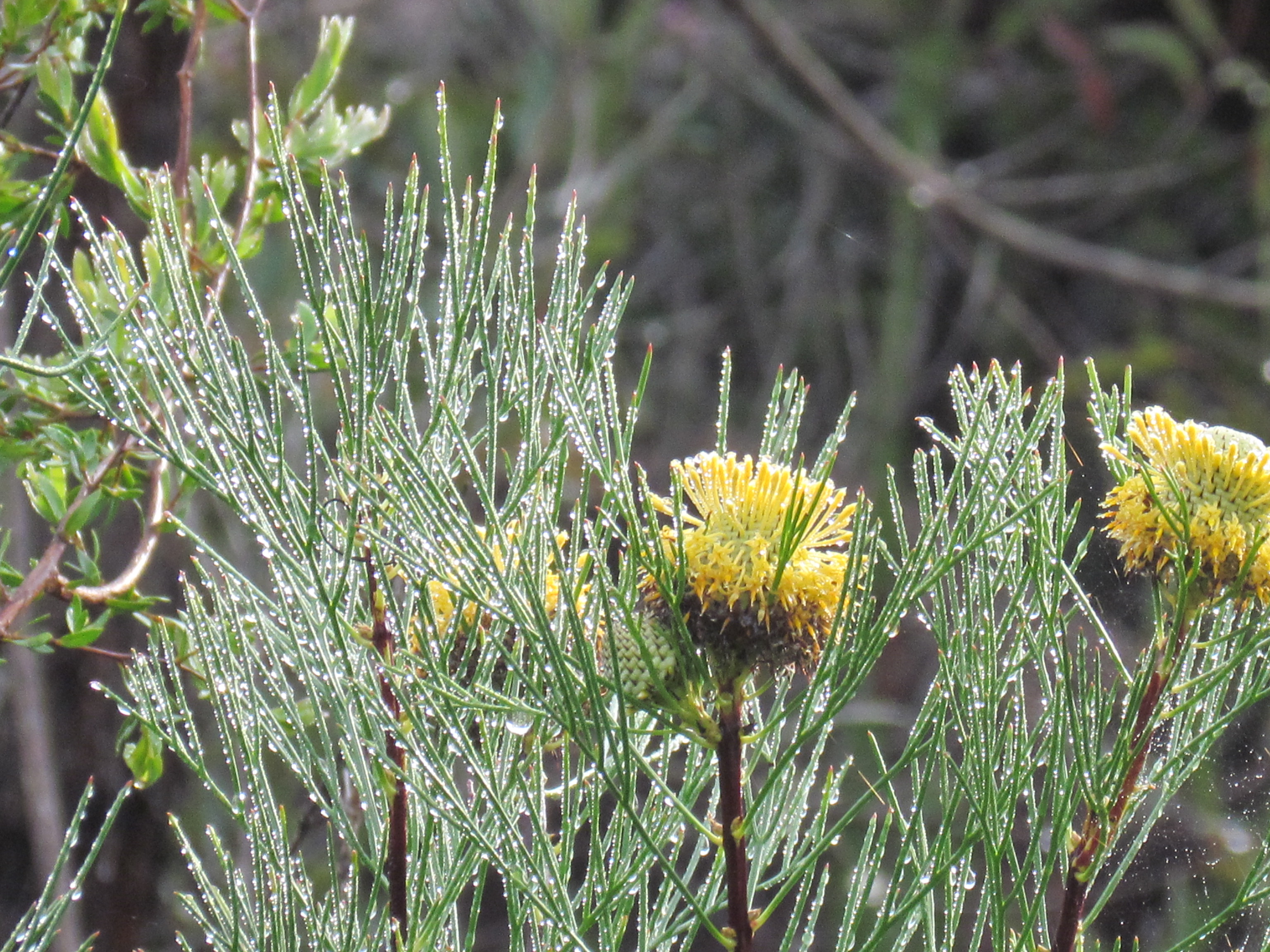
Droplets shining in the early sun:
The flowers of a Tea Tree amongst the droplets:
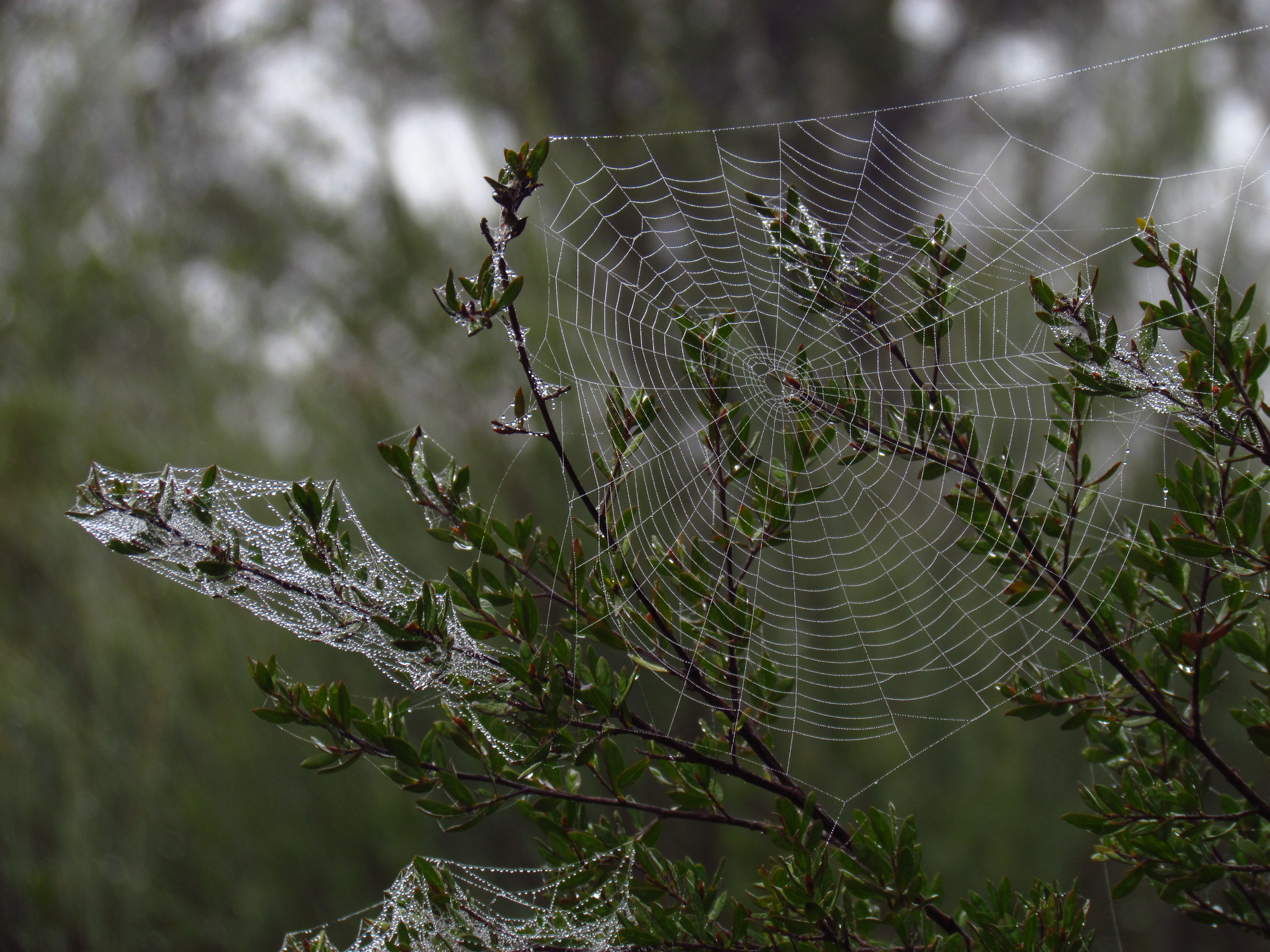
Just another gorgeous sparkling web:
And another:
Cobwebs in the mist:
Droplets and big yellow flowers:
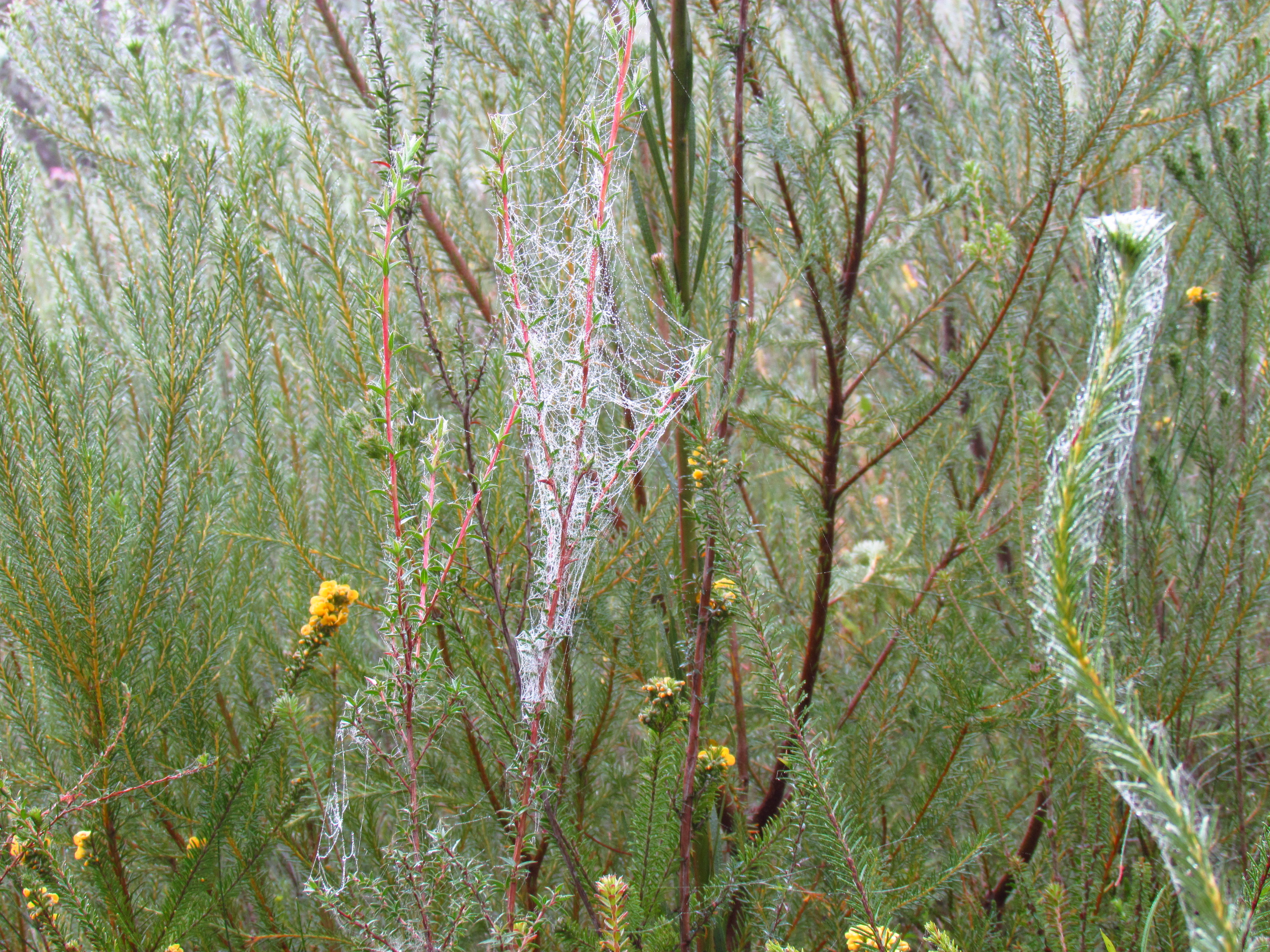
Cobwebs on curvy stems:
A web-festooned twig:
Shiny webs:
More eye candy:
Sparkly webs around two flower buds:
Webs draped across the trees:
Webbed twig and yellow flowers:
There’s nothing like a good web to liven up a dead thicket:
This is the blog of Mark Wordsworm, the travelling worm. I’m a 25-year-old bookmark and can proudly boast my own Hallmark serial number, 95 HBM 80-1. You’ll probably want to read all about me and my Travelling Companion (the TC).
Today’s travel notes
The TC’s mum is in town! Yesterday the TC took her mum and the family to The Basin, near Palm Beach just north of Sydney. The Basin is one of the bays in the Hawkesbury waterways, on the shores of the Ku-ring-gai Chase National Park. To reach it, catch a 20-minute ferry ride from Palm Beach.
This worm heard that the outing would involve a ferry crossing and some splashing around in a lagoon. Being a pulp fiction kind of guy, water is anathema to me. So I stayed at home and sent Naught, my trusty stunt worm, instead. You may remember Naught, from his debut in my post about Shelly Beach.
Naught’s impressions? If you’re looking for a relaxing day out of Sydney, where natural beauty and serenity vie with the kookaburras for your attention, The Basin is beaut.
Recommended eating
Take a picnic lunch. There are no restaurants or shops at The Basin, but you can grill food on the barbecues provided.
The book I’m in
After Shock, by Sam Fisher. A good action story, the second in the series about the E-Force rescue team.
Let me tell you a secret: This worm was comfortably ensconced in Philip K. Dick’s book, Do Androids Dream of Electric Sheep? But the TC hoiked me out of there, saying her brain is too lazy for that book at the moment.
The photos
Naught, my stunt double, taking a dip in the sparkling waters of The Basin:
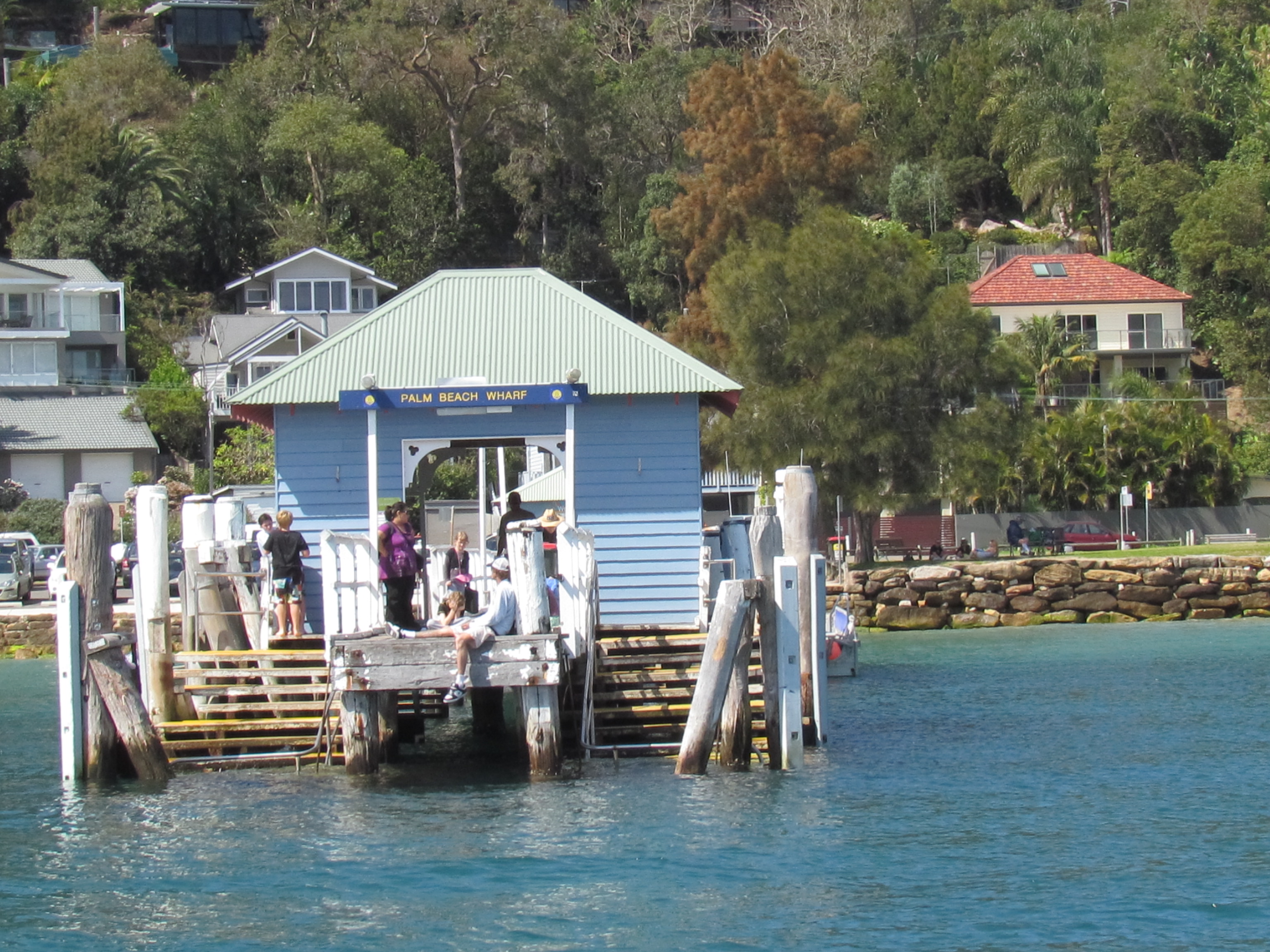
Palm Beach Wharf:
Heading out from Palm Beach across an arm of the Hawkesbury River, destination The Basin. Don’t be deceived by the halo. This is not Saint Wordsworm, but Naught who has already donned his protective coat:
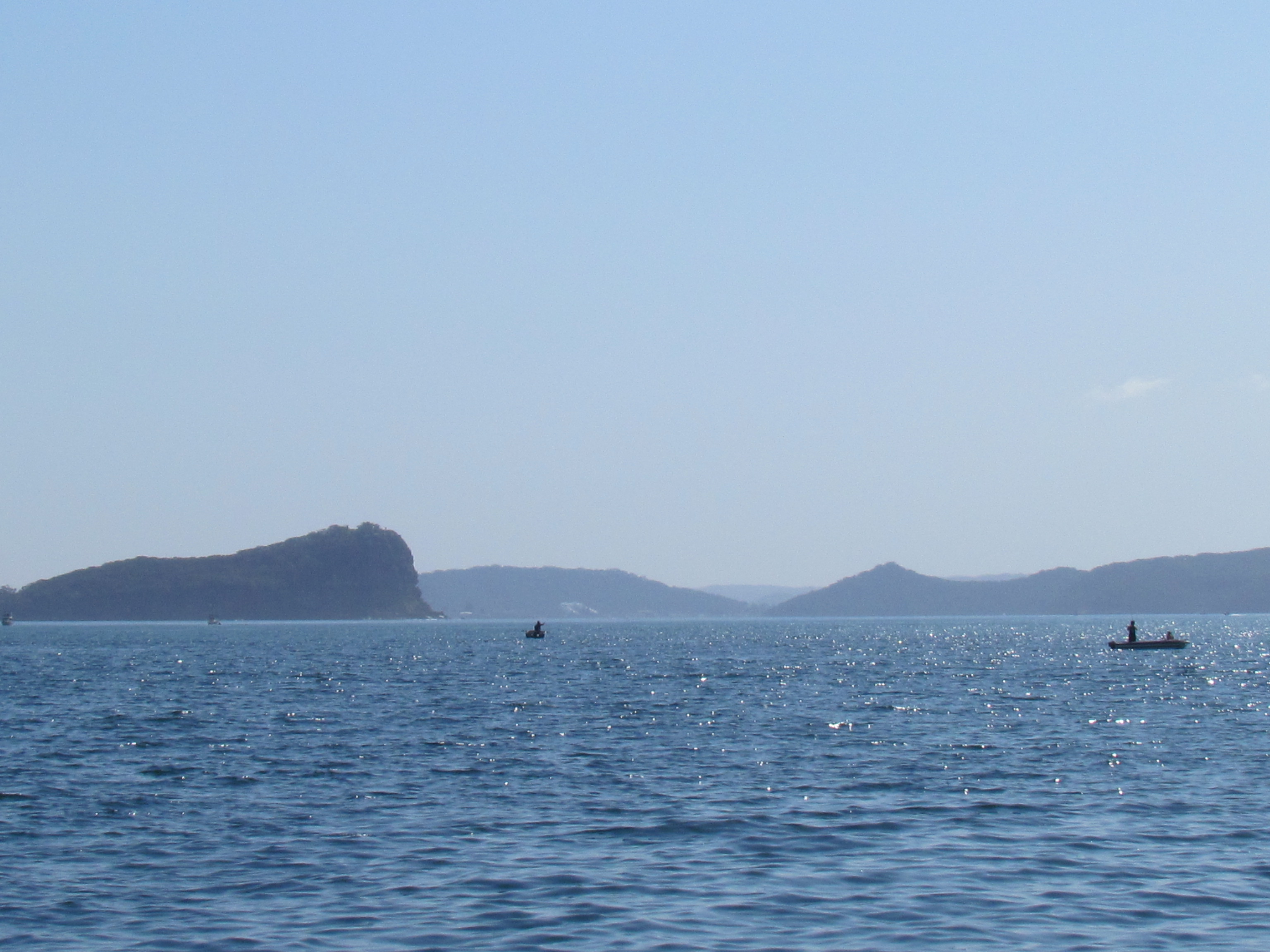
The heads and hills of the Hawkesbury River waterways:
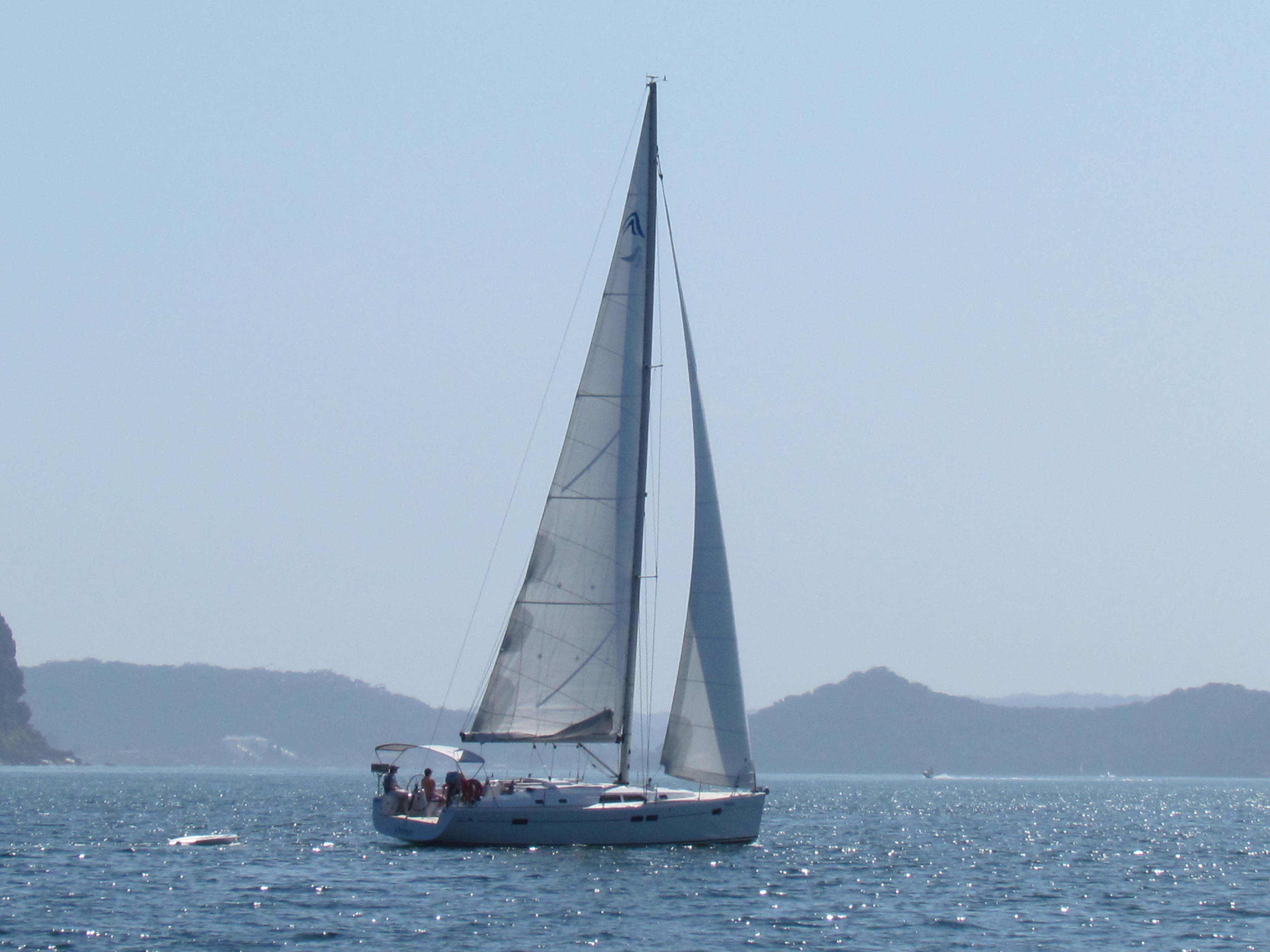
Fellow wayfarers:
Bennets Wharf, the ferry stop before The Basin:
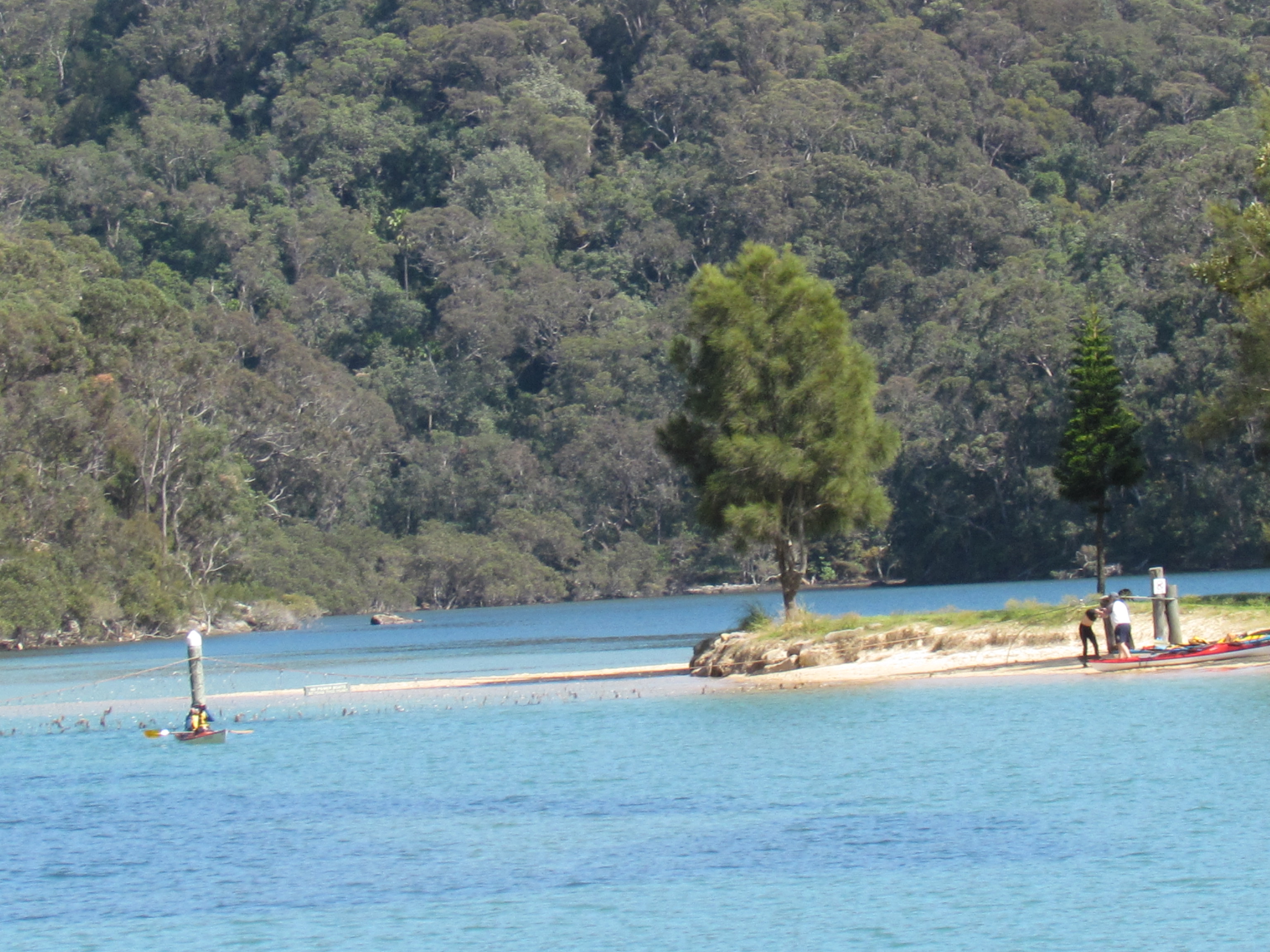
The entrance of The Basin’s lagoon, seen from the ferry:
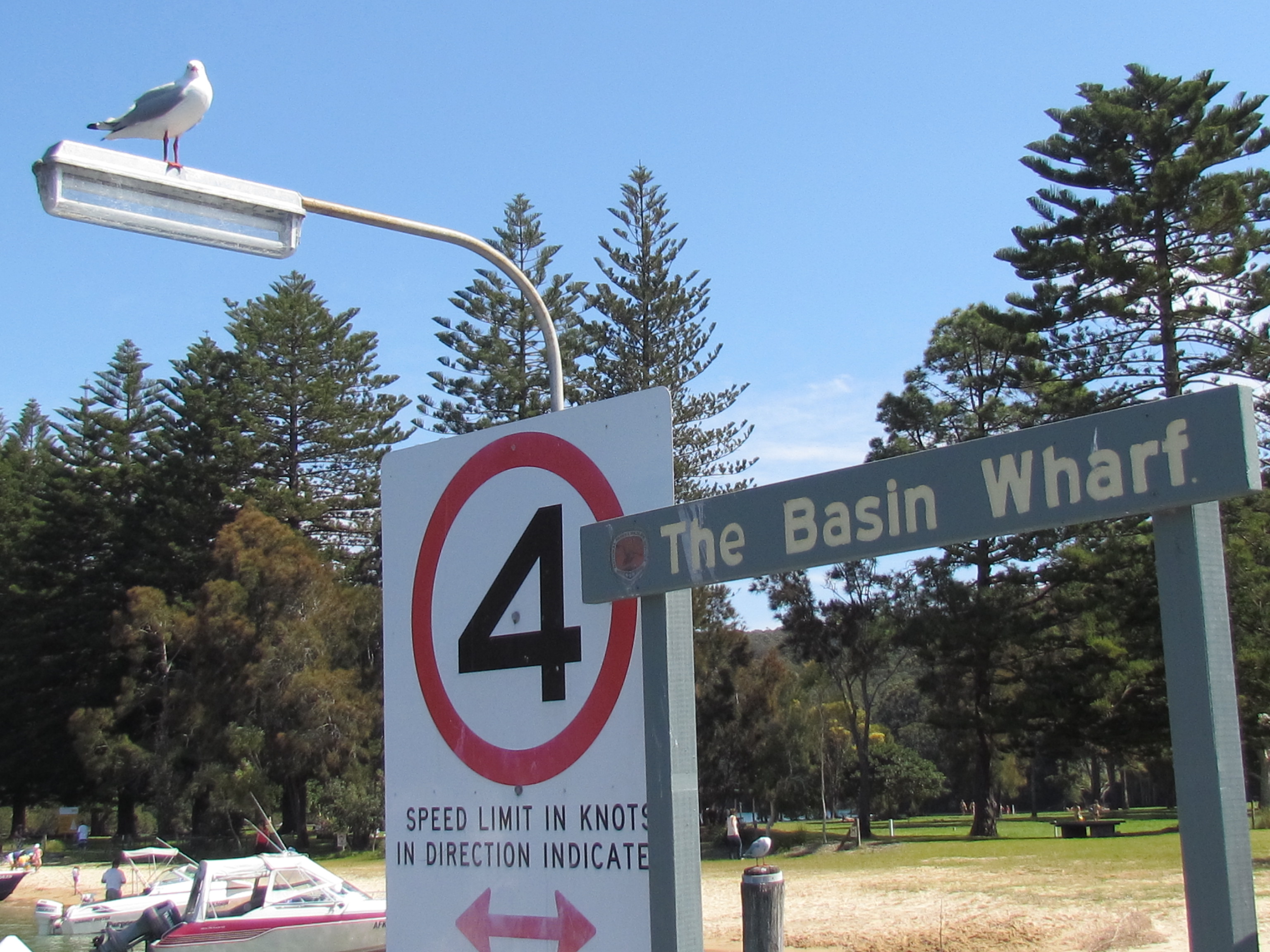
The ferry approaching The Basin Wharf:
Jonathan waits at The Basin Wharf to greet the travellers:
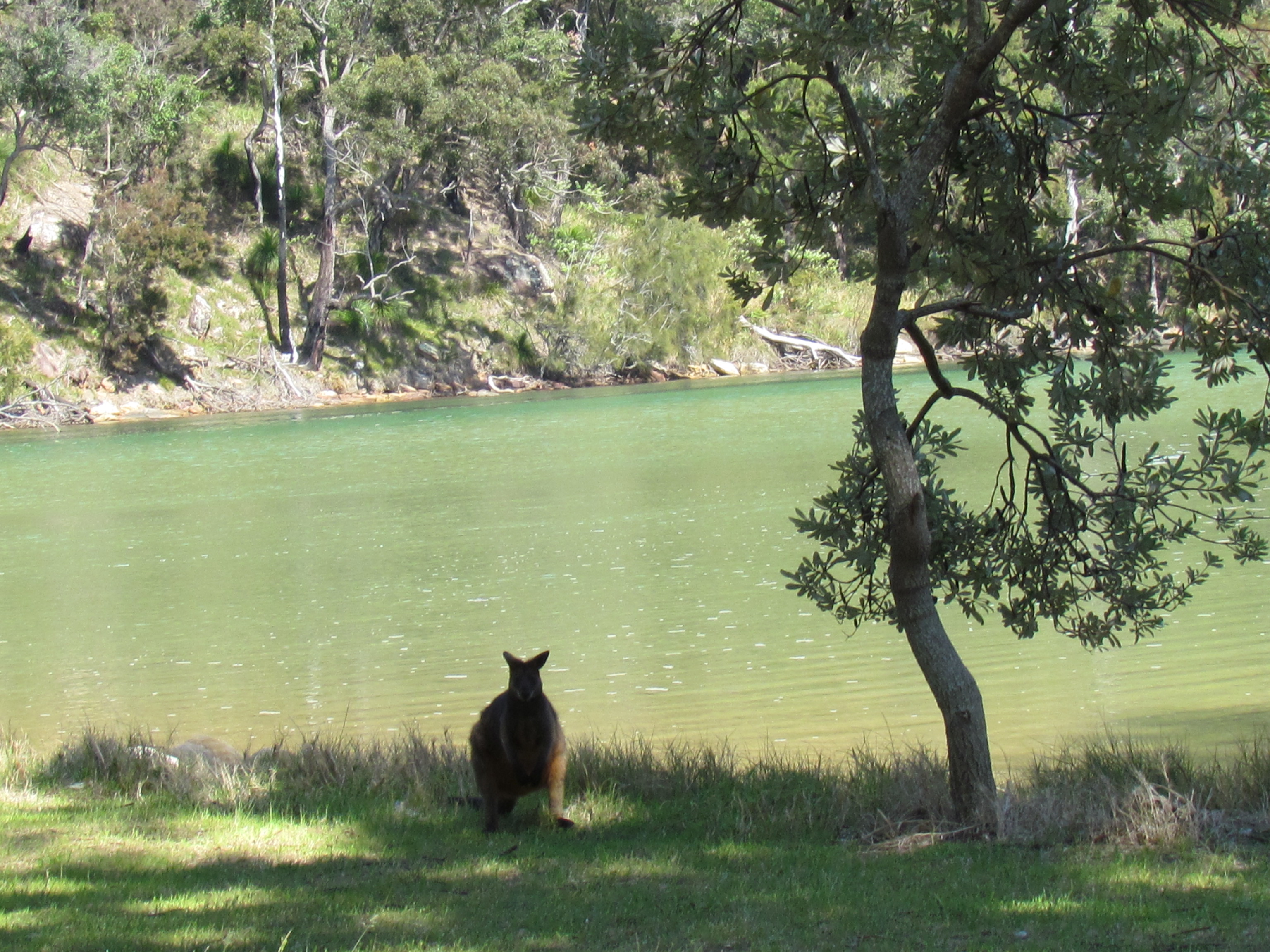
Wallabies abound at The Basin. This mother has a full pouch. The pink cross struts are the feet of the little joey inside the pouch:
Another wallaby on the shores of the lagoon:
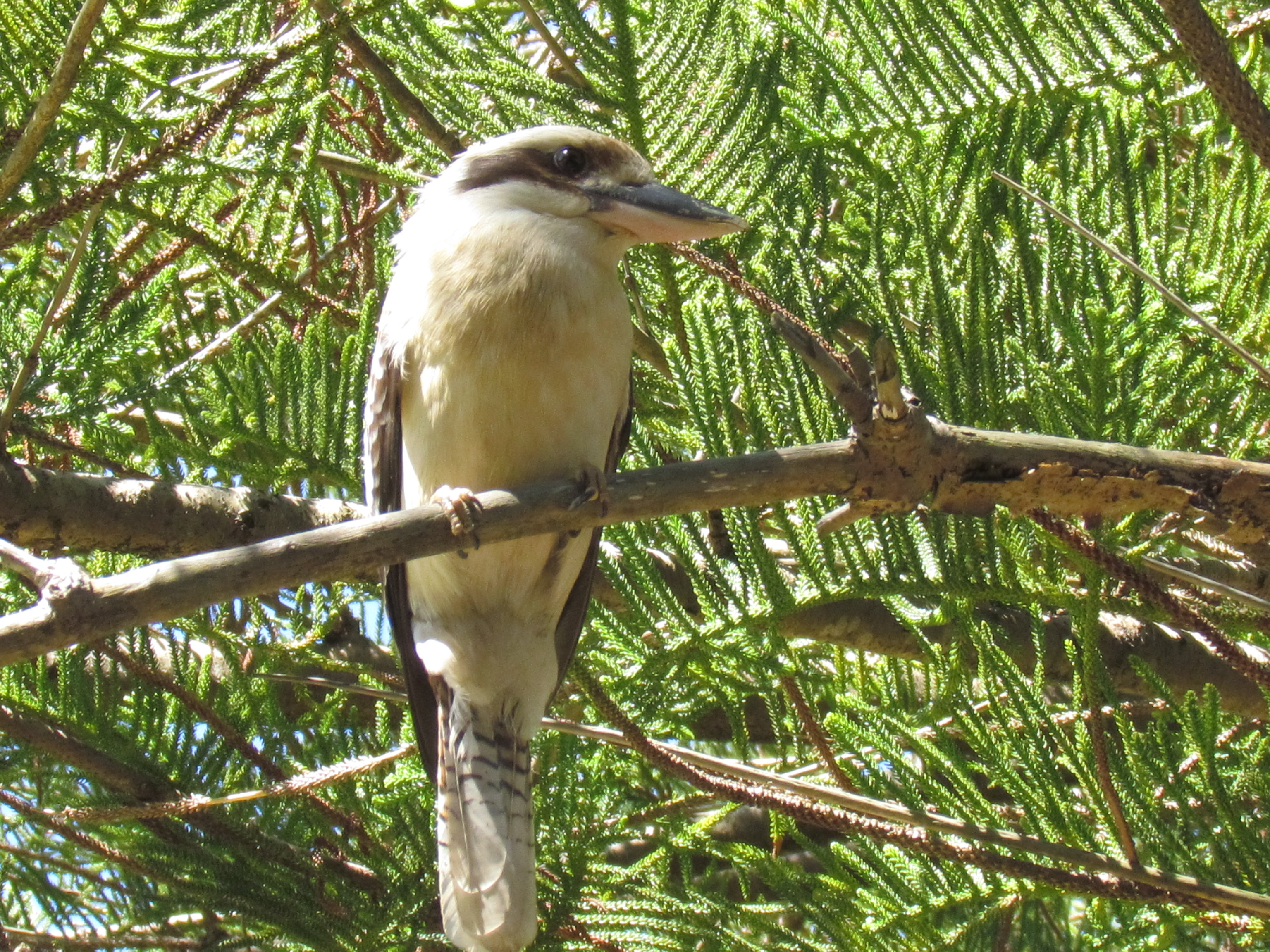
A kookaburra takes an interest in the picnic:
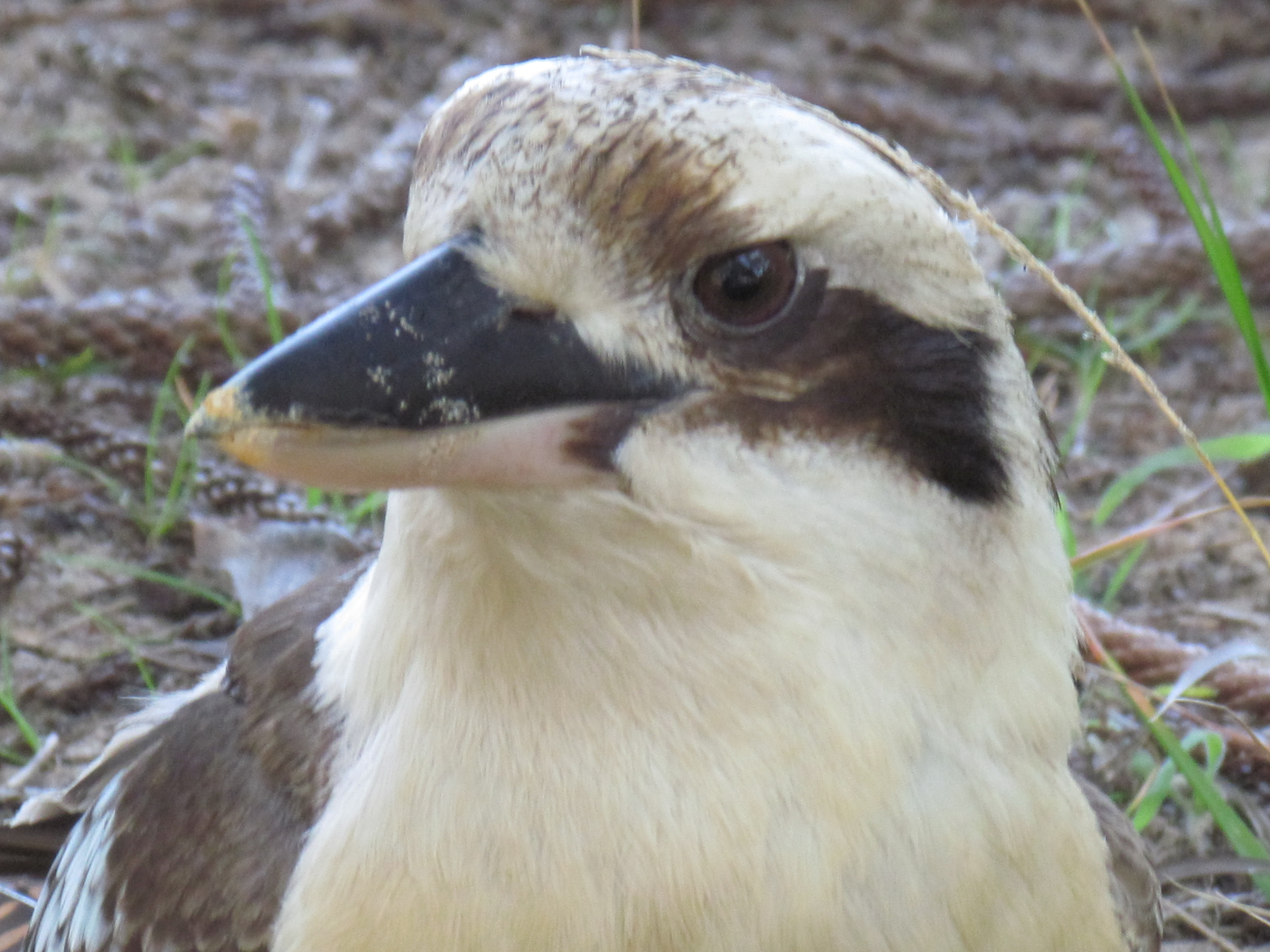
A bird’s eye view. Will ya look at that beak! At this stage even a stunt worm is well advised to take cover:
This is the blog of Mark Wordsworm, the travelling worm. I’m a 25-year-old bookmark and can proudly boast my own Hallmark serial number, 95 HBM 80-1. You’ll probably want to read all about me and my Travelling Companion (the TC).
Today’s travel notes
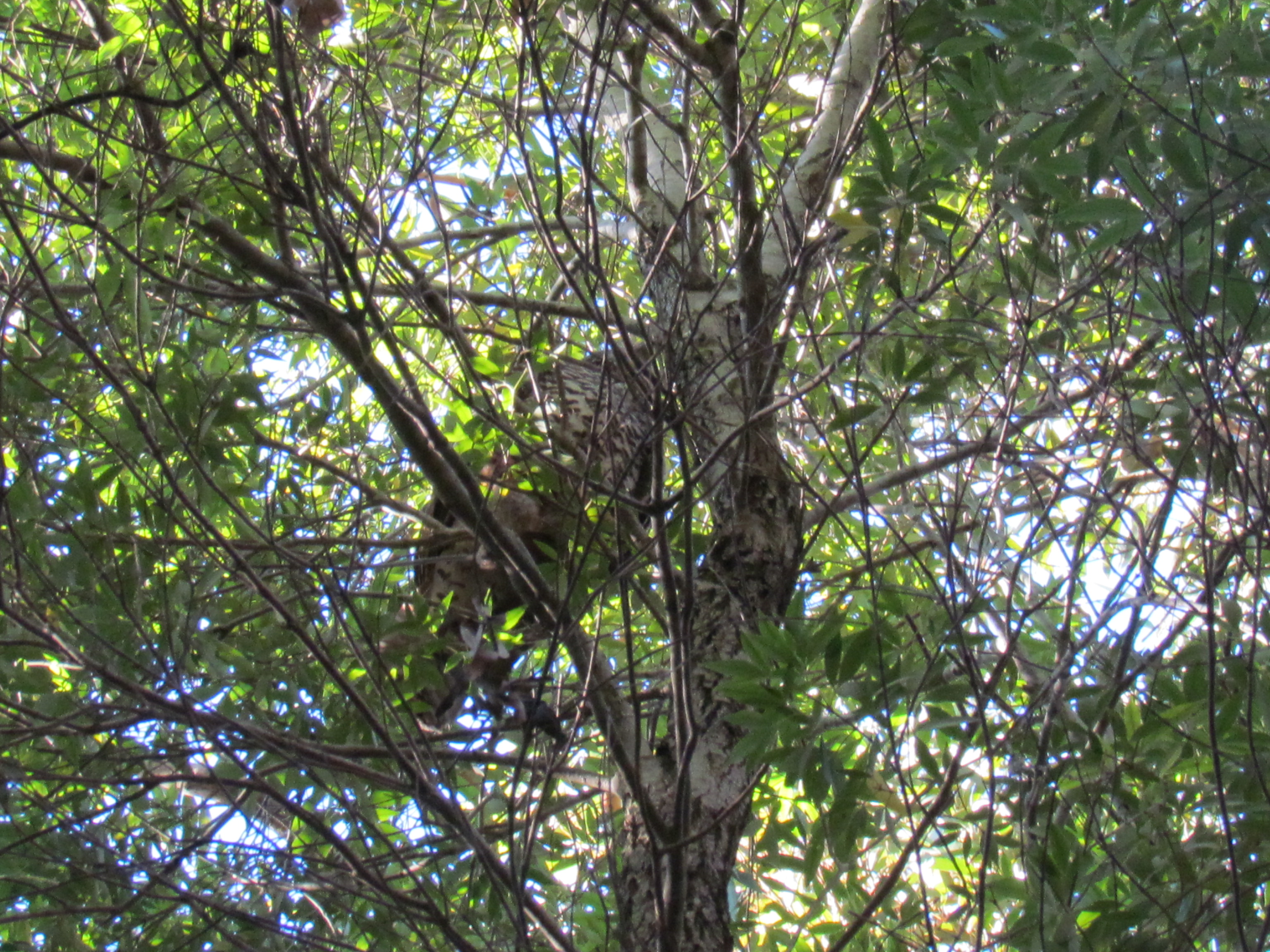
The TC went wandering in the woods yesterday. The first sign of trouble was the ruckus made by the Currawongs. If you hear them kicking up a fuss, there’s sure to be something interesting happening. The TC followed the noise and saw a big, shadowy shape high up in a gum tree. The Currawongs and Magpies were dive-bombing it. That usually means that the birds have found a possum out and about in the day time, and are having fun tormenting the poor disoriented creature
The TC pulled out her camera and zoomed in as far as she could. Check the photos to see what the lens revealed.
The book I’m in
Fourth Day, by Zoë Sharp. A powerful action thriller with a touch of fierce beauty.
The photos
My apologies for disappointing all my fans. There’s no photo of me today. I stayed safely deep in a book, as all wise worms do when a Powerful Owl is in town.
Here’s what the TC first saw. Can you spot the bird? It’s well camouflaged:
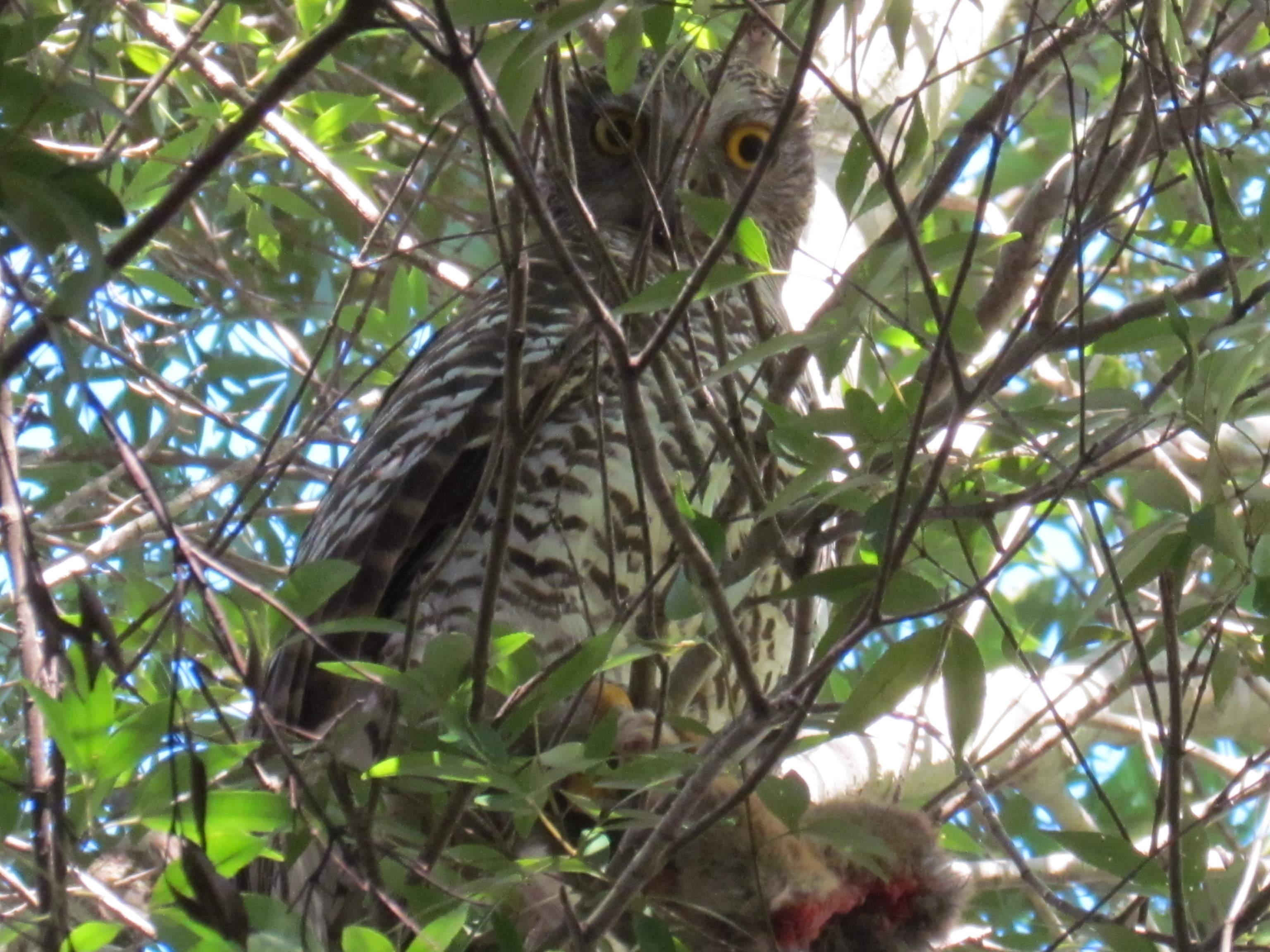
The bright glare of a Powerful Owl:
In the video you can hear the Currawongs calling. The owl raises its head to look around, then goes quietly back to sleep. It’s holding the remains of its prey, most likely a possum:
The owl takes a careful look at the TC:
Please excuse the jumpy shots. It was a very steep angle and the lens was just about at maximum zoom. And of course the TC, bless her cotton booties, was somewhat excited about the whole experience.
This is the blog of Mark Wordsworm, the travelling worm. I’m a 25-year-old bookmark and can proudly boast my own Hallmark serial number, 95 HBM 80-1. You’ll probably want to read all about me and my Travelling Companion (the TC) .
Today’s travel notes
Me and the TC have not been doing much travelling recently. You may have noticed the dearth of posts from this worm. What have we been up to, you may well ask?
The TC has acquired a new toy, somewhat unimaginatively named the Canon PowerShot SX30 IS. We call it the SuperZoom. It’s a point-and-shoot digital camera, with a 35-times zoom lens, going from 4.3 mm wide angle to 150.5 mm telephoto. The equivalent in 35 mm terms is 24 mm to 840 mm.
Have your eyes glazed over already? Do you feel the sudden urge to rush off into the traffic or jump over a cliff, or find some other way to put the zing back into life? Now you have the tiniest idea of what things have been like chez TC recently.
The TC ummed and ahhed for months before buying the SuperZoom. She consulted DSLR experts, read reviews and agonised over the choice. Go for a DSLR with quality “glass” (that’s a lens, folks) and total control over all aspects of the photo, but requiring a number of lenses that are expensive, cumbersome and finicky. Or go for a point-and-shoot with a single zoom lens, possibly compromising on the quality of the picture because a one-size-fits-all solution is often a compromise.
Then Canon produced the SX30 IS at around the same time as the TC decided against a DSLR. Decision made, and in the process the TC had learned a whole lot about just why the DSLR enthusiasts were worried that the SX30 IS might yield disappointing results.
F-stops and apertures, exposure times and ISO speeds, bracketing and exposure bias, focal length, depth of field… It’s fascinating stuff. Especially when you realise that most of the terminology and skills were developed to suit photography done with 35mm film, and that folks now just kind of morph the same terminology into the digital world, where it kind of works. Yes, fascinating stuff. So the TC tells me.
My impressions? For a details-oriented person like the TC, this photography lark looks to be an interesting occupation. From the point of view of those around her? Well, it keeps her out of our hair!
Travel tip
When travelling with a camera, or a camera-wielding TC, be prepared to stop and shoot at a moment’s notice.
The book I’m in
How to Do Everything: Digital Camera, by Dave Johnson. This is an excellent book for anyone wanting to learn about photography and digital cameras.
This worm had a narrow escape recently. I was spending some time in a DK book on photography that the TC took a violent dislike to. Ask her about it, then duck!
The photos
Me with Peg and a piece of bark that’s recently fallen from a Sydney Red Gum tree:
F-stops and focus and zooms, oh my!
F-stop: f/4
Exposure time: 1/125 sec
ISO speed: ISO-80
Exposure bias: -1 step
Focal length: 4 mm
Max aperture: 2.875
Metering mode: Pattern
Flash: No flash, compulsory
The TC has discovered that the camera and Windows both store a number of interesting facts about how the picture was taken. To keep her happy, I’ve copied the details below each photograph in this post. She’s been experimenting with the options available in the camera’s various modes. Even thought it’s a point-and-shoot, it offers an impressive flexibility for those who care to click and flick various buttons, wheels and knobs.
A jumble of bark at the base of a Scribbly Gum:
F-stops and focus and zooms, oh my!
F-stop: f/4
Exposure time: 1/50 sec
ISO speed: ISO-400
Exposure bias: 0 step
Focal length: 11 mm
Max aperture: 4
Metering mode: Pattern
Flash: No flash, compulsory
That looks like a secret code on some ancient rolled parchments, doesn’t it? Actually, it’s the work of grubs living in the bark of the tree.
The trunk of a Scribbly Gum:
F-stops and focus and zooms, oh my!
F-stop: f/4.5
Exposure time: 1/40 sec
ISO speed: ISO-100
Exposure bias: -1 step
Focal length: 18 mm
Max aperture: 4.34375
Metering mode: Pattern
Flash: No flash, compulsory
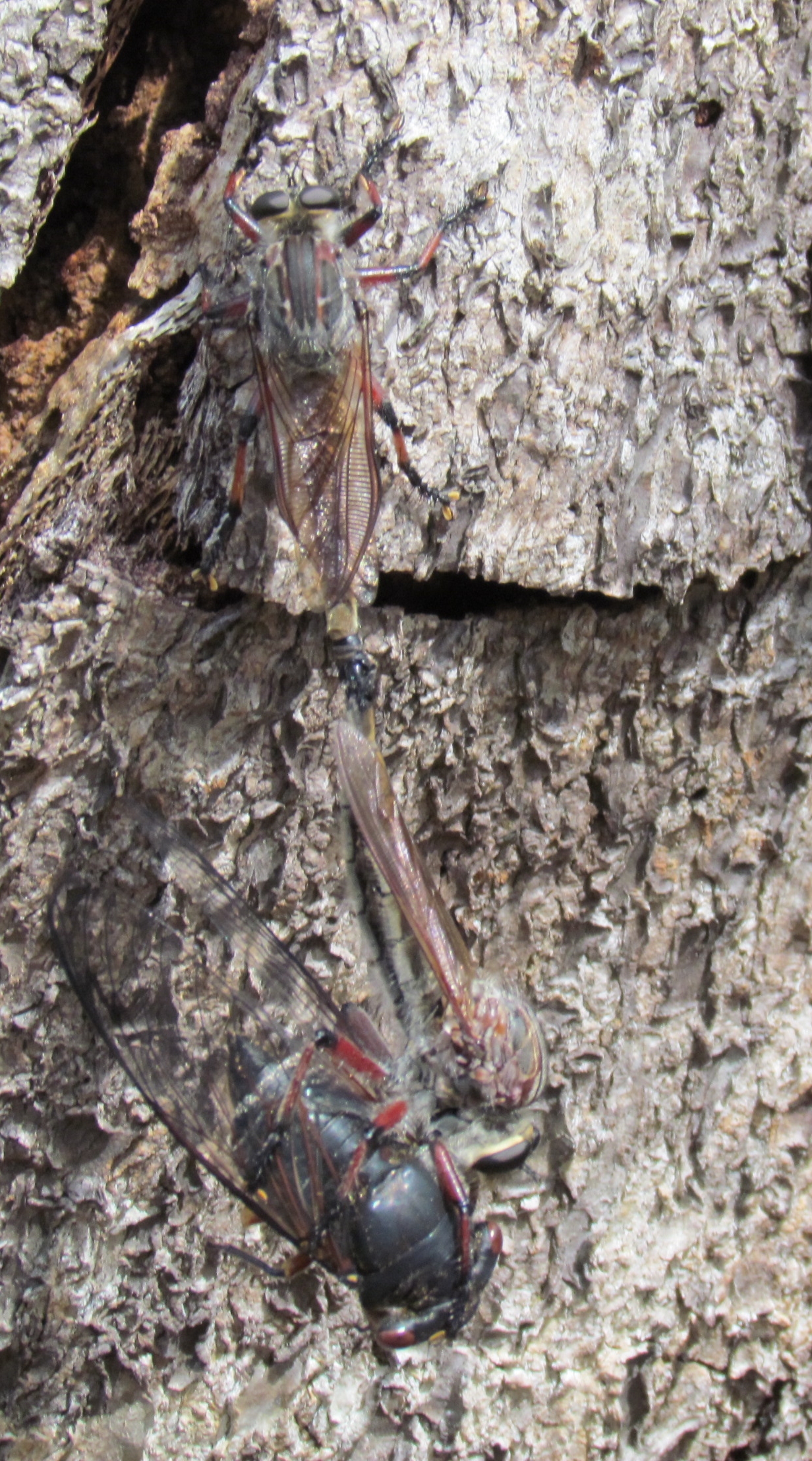
Two dragonflies mating while one chomps a cicada:
F-stops and focus and zooms, oh my!
F-stop: f/4
Exposure time: 1/250 sec
ISO speed: ISO-100
Exposure bias: 0 step
Focal length: 12 mm
Max aperture: 4
Metering mode: Pattern
Flash: No flash, compulsory
Talk about hostile mergers and acquisitions! Did you know that dragonflies are carnivorous? This worm did not, and neither did the TC.
Before we go any further, I have to admit I’m not sure that the happy couple are dragonflies. Their wings are parallel to their bodies, not at right angles. They don’t look like damselflies either, though. These critters were large: about 4 cm long. Do you know what they are?
One of the pair has a cicada firmly grasped in its legs. The trio was very mobile, and flew up and around the TC twice while she photographed it.
Another shot, where you can see the cicada more easily:
F-stops and focus and zooms, oh my!
F-stop: f/4.5
Exposure time: 1/160 sec
ISO speed: ISO-160
Exposure bias: 0 step
Focal length: 29 mm
Max aperture: 4.34375
Metering mode: Pattern
Flash: No flash, compulsory
A kookaburra, shot at maximum telephoto range (150 mm, 35x zoom, equiv. 840mm):
F-stops and focus and zooms, oh my!
F-stop: f/5.8
Exposure time: 1/80 sec
ISO speed: ISO-400
Exposure bias: 0 step
Focal length: 150 mm
Max aperture: 5.0625
Metering mode: Spot
Flash: No flash, compulsory
The TC is inordinately proud of that shot. It was tricky to keep the bird in focus at such a long distance. She played around with the depth of field (there’s another of her newly acquired terms) and exposure, took a number of shots, then chose the one she liked best.
We’ve already covered trees and birds, two of the TC’s favourite subjects. Here’s the third:
F-stops and focus and zooms, oh my!

F-stop: f/3.5
Exposure time: 1/60 sec
ISO speed: ISO-250
Exposure bias: -1 step
Focal length: 8 mm
Max aperture: 3.625
Metering mode: Spot
Flash: Flash, auto, redeye
This is the blog of Mark Wordsworm, the travelling worm. I’m a 25-year-old bookmark and can proudly boast my own Hallmark serial number, 95 HBM 80-1. You’ll probably want to read all about me and my Travelling Companion (the TC) .
Today’s travel notes
Me and the TC are usually pretty easy to please, but we were just a wee bit disappointed with our recent day-trip to Litchfield National Park. The park is in Australia’s Northern Territory, about 100 km from Darwin. It was 16th May, about 3 weeks ago, and we were in Darwin to attend a conference. We took a coach trip to Litchfield, because the TC was nervous about driving around the bush on her own.
“Bah humbug,” she was thereafter heard to exclaim. “Litchfield is a walk in the park.”
My impressions? Tame, but with some pretty colours. The termites and waterfalls are good.
Travel tip
If you’re looking for a full-on nature experience, don’t take a coach tour to Litchfield.
The book I’m in
Gone Tomorrow, by Lee Child. This worm is quite taken by Jack Reacher, the hero of this book. He’s a modern-day swashbuckling pirate, in a ruthlessly homeless kind of way. I wouldn’t like to bump up against him on a dark night. Unless he’s on my side, of course.
The photos
Me knocking on the door of a cathedral termite mound:
Litchfield National Park in the Northern Territory
The termite mounds in the Northern Territory are fascinating, even awe-inspiring. The TC rabbits on about them looming up from the bushes and standing silently in amongst the trees. We saw a number of different types. The cathedral termite mounds are huge and shapely:
Litchfield National Park in the Northern Territory
The magnetic termite mounds are eery and otherworldly. They’re thin and wide, and all built in parallel lines. Wherever you find them, they’re lined up to the the Earth’s north-south axis. I wrote a bit about the magnetic mounds we found near Humpty Doo, just outside Darwin. Here’s one, with a cathedral mound behind it, in the Litchfield National Park:
Litchfield National Park in the Northern Territory
Termite mounds are extremely hard. Our coach driver told us that people used to crush termite mounds and mix the resulting grounds with water, then spread it to make airstrips in World War 2 and later tennis courts.
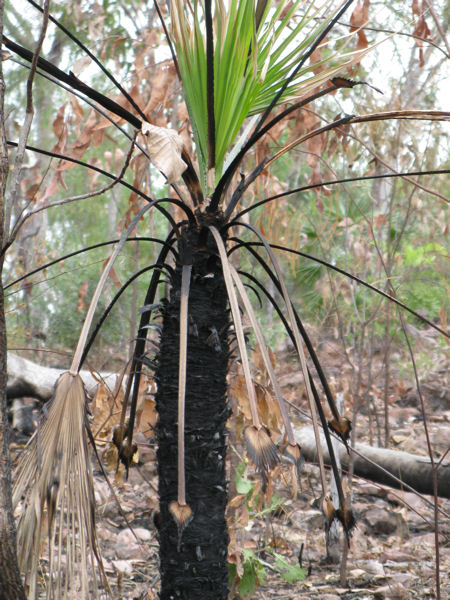
Another fascinating fact from our coach driver: 80% of the trees in that area of the Northern Territory are hollow. Their trunks have been eaten out by termites. The termites and the trees survive quite happily this way, with the termites providing nutrients to the tree and the soil. This is a picture of a palm tree with a termites’ nest inside:
Litchfield National Park in the Northern Territory
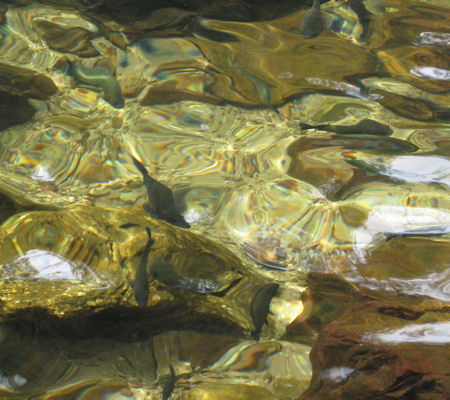
Litchfield has a number of pretty rock pools where you can go swimming. You do need to make sure you’re well into the dry season and all the salties (salt-water crocodiles) have retreated towards the sea. The TC went swimming in the pool under the Florence Falls:
Litchfield National Park in the Northern Territory
A number of large black fish shared the experience. One of them made so bold as to give her a painful nip in the thigh. I’m glad I wasn’t in the water with these fellows:
Litchfield National Park in the Northern Territory
There’s a pretty walk around the Florence Falls. It’s a bit spoilt by the helpful signs explaining how you can make your garden look like this too. Nevertheless, we managed to look past the signs and enjoy the bush and the lovely colours enhanced by a recent burn:
Litchfield National Park in the Northern Territory
More colours:
Litchfield National Park in the Northern Territory
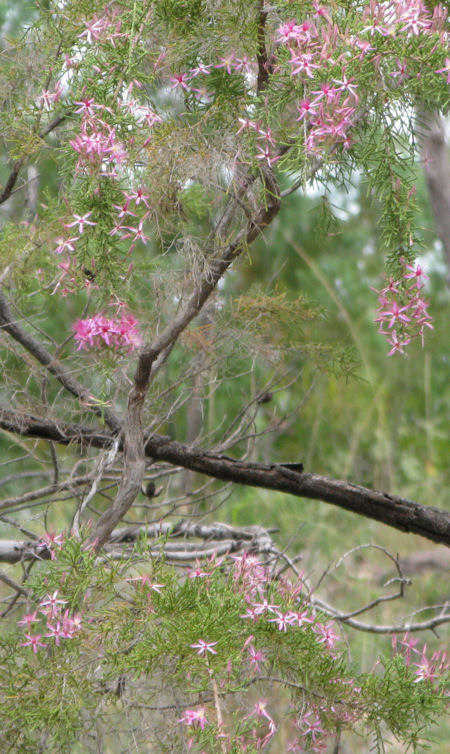
A bit of pink:
Litchfield National Park in the Northern Territory
Some yellow:
Litchfield National Park in the Northern Territory
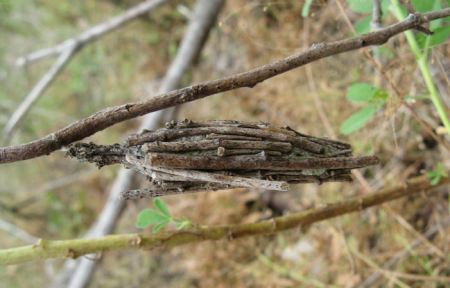
This dude is very interesting. I’m not sure exactly what it is. It’s a creature inside a coat of sticks. All you can see of the creature is the bit that attaches it to the stick. Is it a fellow worm? An insect perhaps? Let me know if you know what it is:
Litchfield National Park in the Northern Territory
These are the Wangi falls:
Litchfield National Park in the Northern Territory
The wetlands around the Wangi falls were more like the swamps we were expecting to see in the Northern Territory:
Litchfield National Park in the Northern Territory
Summing it up, this worm thinks that if you only have a day to spend then the Spectacular Jumping Crocodile Cruise is more interesting. On that tour, you see the wetlands around Humpty Doo as well as the Adelaide River with the salties, and a bit of the bush around Darwin too. I wrote a blog post about it. If you have more time, then probably Kakadu is the thing. We didn’t have time for that this trip.
If you’ve seen a lot more of Litchfield than we did and you found it awe-inspiring, let me know.
This is the blog of Mark Wordsworm, the travelling worm. I’m a 25-year-old bookmark and can proudly boast my own Hallmark serial number, 95 HBM 80-1. You’ll probably want to read all about me and my Travelling Companion (the TC) .
Today’s travel notes
Darwin is an interesting place to be. I suspect it’s a city of many faces, depending on when you’re there and who you’re travelling with. One thing is guaranteed: the heat. At 12 degrees south, it’s decidedly tropical. Darwin is in the Northern Territory, at Australia’s Top End. The TC and I were there in May, soon after the start of the dry season. If that’s dry, this worm would prefer not to be there in the wet.
My impressions? It’s a bit warm in Darwin.
Travel tip
If you plan to walk down Stokes Hill Wharf, take your time. It’s a long wharf and, in case I haven’t mentioned it, Darwin is a bit warm.
Another tip for free: Go looking for the crocs. I wrote about them last week.
New word of the day
“Calenture” – a tropical fever suffered by sailors, who think the sea is a green field and want to jump into it.
The book I’m in
DON’T TELL MUM i WORK ON THE RIGS she thinks I’m a piano player in a whorehouse, by Paul Carter. This book is full-on, extreme energy. Paul Carter tells tall tales of his many years spent working on oil rigs in and around Australia. Adventure and danger, funny and nasty, they all rub up against each other in this book. Highly recommended.
The photos
Me hanging out on a Darwin city street:
In and around Darwin
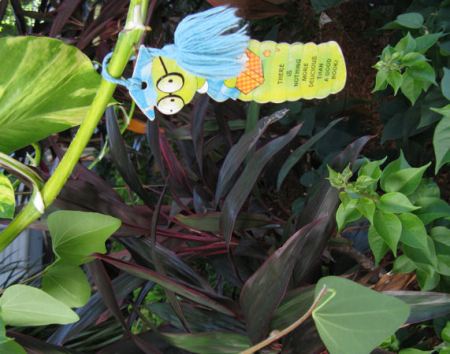
I promised a devoted follower that my next post would tell a tale of peril. Here it is. The TC wanted to show the enormous size of the ivy leaves in Darwin. Note her lamentable lack of regard for my safety. Now you see me, now you…
In and around Darwin
… don’t!
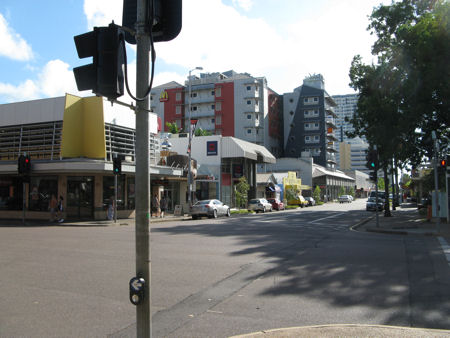
Truth be told, Darwin city centre is not much to write home about. This picture is taken from the corner of Mitchell and Knuckey streets, looking up Knuckey. It’s all happening, folks:
In and around Darwin
Here’s The Mall on Smith street:
In and around Darwin
Darwin is “one of Australia’s most modern capital cities”. That sounds pretty impressive, and even more so when you learn why it’s true. The city has had to be rebuilt twice in recent history: once after the Japanese bombed it in World War 2, and then again after Cyclone Tracy hit in 1974. Tracy just about flattened the town hall (originally the Palmerstone Town Hall). The Darwinites have preserved the ruins, to remind people of that blustery Christmas Eve in 1974:
In and around Darwin
Tracy was quite a ruthless gal. She holds the record for being the most compact tropical cyclone ever to hit Australia. Indeed, she was the most compact world-wide until Marco in 2008.
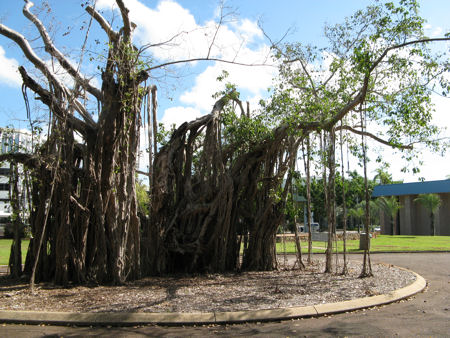
Not far away from the town hall ruins, this old man banyan tree stands in Darwin’s Civic Square:
In and around Darwin
Banyan trees are fairly ruthless in their own right. The banyan starts life as a seed, eaten by a bird and then deposited on another tree’s branch as part of a bird dropping. The banyan starts growing and sends down roots to the ground. The host tree becomes cocooned in banyan roots and branches. Eventually the host dies and the banyan lives on. With good reason, banyans are also called “strangler figs”.
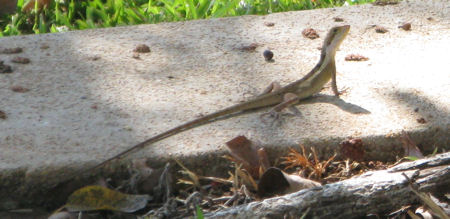
Cyclones and stranglers aside, it’s peaceful around the great banyan now, with birds tweeting and lizards scurrying:
In and around Darwin
This debonair traveller took a close look at the strangler’s roots:
In and around Darwin
Later we moseyed down Stokes Hill Wharf. The TC confessed her disappointment at not finding the wharf littered with plaques and other memorabilia related to Baz Luhrmann’s film “Australia”. Between you and me, I will point out that she would have been the first to complain if we’d found hundreds of tourist traps. The wharf is also the place where many Japanese bombs fell during the WW2 attack on Darwin. Wikipedia says that more bombs were dropped on Darwin than on Pearl Harbor. Here’s a view of the wharf today, just before the TC and I started our long walk:
In and around Darwin
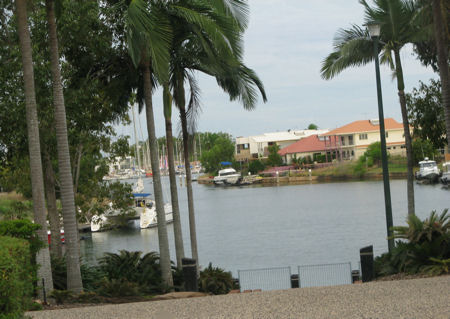
Some of the locals are a trifle scathing of the new suburbs springing up around Darwin. People say the new houses are built without regard for “natural air conditioning”. Evidently the earlier houses were better built to take advantage of breezes. Take it from this worm, there’s precious little breeze to take advantage of. What air there is, is moist and warm. It licks your face like a bulldog’s tongue.
The TC professed admiration for many of the new buildings. The new suburb we saw had direct boating access to the harbour and the Timor sea. Here’s another interesting tidbit, courtesy of this worm: the tidal variation is 6 to 8 metres. That means that the water level drops by 8 metres when the tide goes out. So there’s a system of locks to keep the boats afloat.
In and around Darwin
Outside Darwin there’s a tiny place with the picturesque name of Humpty Doo. (Yes, really.) Close by we spotted these eery constructions:
In and around Darwin
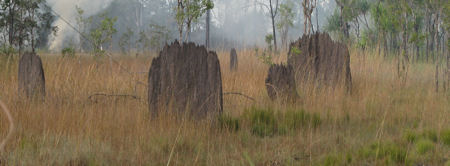
They’re about the same height as the TC, about 4 feet across, sharp on top and only as wide as the TC’s hand. They all face in exactly the same direction. Seeing them, you feel restful and tranquil because they’re just there and they’re so neat. And yet, underlying the tranquillity is an unease. They’re weird, because they’re so neat.
They are magnetic termite mounds. The termites build them all facing in the same direction, more or less exactly on the Earth’s north-south axis. Boffins say that the termites do this to keep warm, by catching the sun’s rays. This worm finds it hard to believe anyone would need to catch more warmth in Darwin. Here’s a closer look at one of the mounds:
In and around Darwin
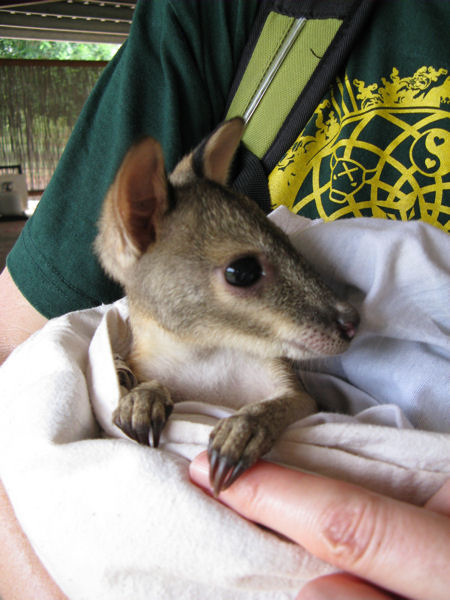
While we were at an Aboriginal art centre just outside Darwin, the TC was given a baby wallaby to hold. Sally is her name. A car hit Sally’s mother while Sally was in her mother’s pouch. Sally survived and is now thriving on bottled milk and tender loving care of one of the staff members at the art centre. Here’s the obligatory cute snap:
In and around Darwin
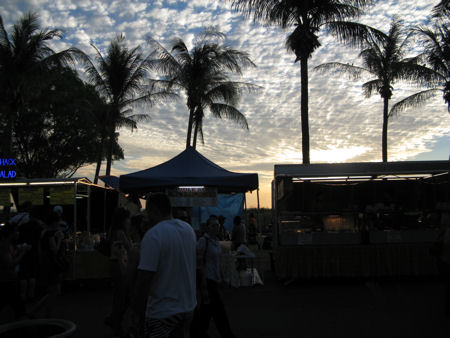
One of Darwin’s “must do” activities is a trip to the Mindil Beach Market. It happens every Thursday and Sunday evening during the dry season:
In and around Darwin
You can buy all sorts of things there, including dinner. The TC found the food “ordinary”, but she has expressed some enthusiasm for the smoothies. Best of all, though, is to be there when the sun goes down.
In and around Darwin
Drift down to the beach, just the other side of the stalls, and watch the sunset.
This is the blog of Mark Wordsworm, the travelling worm. I’m a 25-year-old bookmark and can proudly boast my own Hallmark serial number, 95 HBM 80-1. You’ll probably want to read all about me and my Travelling Companion (the TC) .
Today’s travel notes
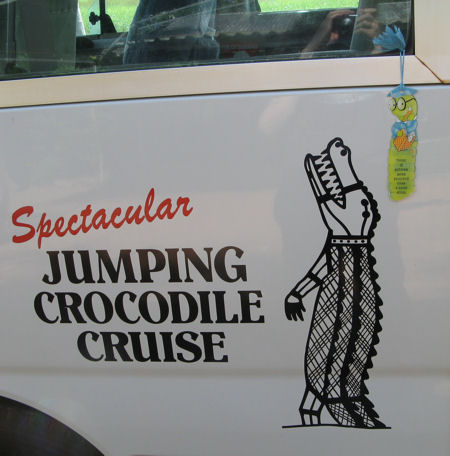
Peg, the TC and I have all been in Darwin, in Australia’s “Top End”, for the past week. The TC, bless her cotton socks, booked herself on a Spectacular Jumping Crocodile Cruise. As is her wont, she took me along. I consented to pose in front of the bus for the obligatory snapshot, then retreated to the safety of my book nestled deep in the TC’s bag. Peg was nowhere to be seen. She’s a very together type of gal and knows when to keep herself out of harm’s way.
My impressions? The Northern Territory’s salties are horrifyingly beautiful.
Travel tip
Believe it when they tell you not to put your arm out over the side of the boat.
The book I’m in
Past Caring, by Robert Goddard. Definitely a “the thot plickens” type of book. This worm recommends it whole-heartedly.
The photos
Me and the only type of jumping croc that I allow anywhere near me:
Jumping crocodiles near Darwin
We were lucky enough to have the one and only Rod as our bus driver and guide. He knows a great deal about the bush, the swamps and the history of Darwin. I was sorry when the tour ended, because he’d only been able to relate a fraction of the stories he knows of Darwin and surrounds. The photo below shows us driving over the dyke at Fogg Dam. Rod told us all about the doomed Humpty Doo rice project, of which Fogg Dam is part. People built the dyke to control the water in the Adelaide River wetlands, so that they could grow rice. Alas, after the first big wet season most of the rice ended up in the Timor Sea. Did you notice the crocodile toys on the dashboard? We were very soon to see the real thing!
Jumping crocodiles near Darwin
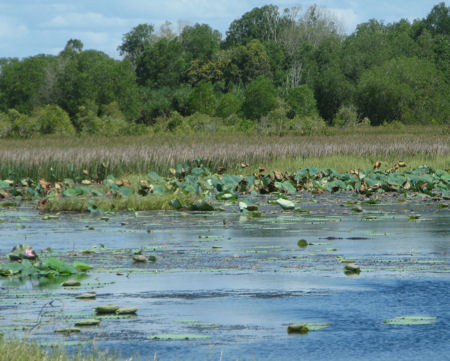
A pretty little Jacana bird wanders through an idyll soon to be shattered:
Jumping crocodiles near Darwin
A late-blooming Lotus lily lures and lulls the unwary:
Jumping crocodiles near Darwin
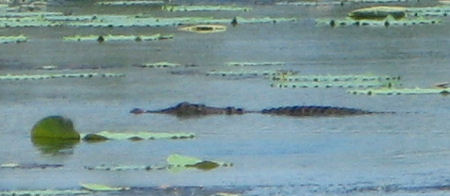
But wait. Take a closer look at those low-lying dark humps at the middle right:
Jumping crocodiles near Darwin
Oh yes, the TC has spotted her first crocodile.
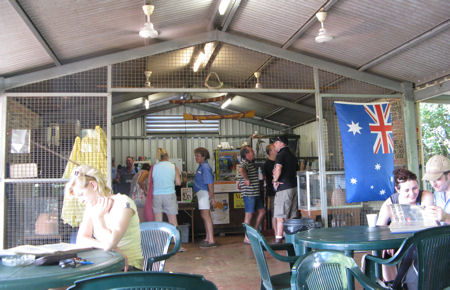
Next stop, the reception room for the Spectacular Jumping Crocodiles Cruise:
Jumping crocodiles near Darwin
Then out onto a reassuringly solid-looking boat:
Jumping crocodiles near Darwin
Gotcha! We walked straight on through that boat and onto the much more intimate craft that would ferry us around the croc-infested banks of the Adelaide River:
Jumping crocodiles near Darwin
The TC, of course, was delighted. So much more real. So much more opportunity to get close to the crocs. Better photographs. Yada yada yada.
Sure enough, we were but a couple of metres off the mooring point when this charmer hove into view:
Jumping crocodiles near Darwin
That was when yours truly, the Travelling Worm, huddled deeper into my book and did my utmost not to attract the TC’s attention. It’s at times like this that she’s apt to whip me out and parade me in front of whatever’s going on, to snap that killer photograph. (Aah, bad choice of words on two counts, worm!)
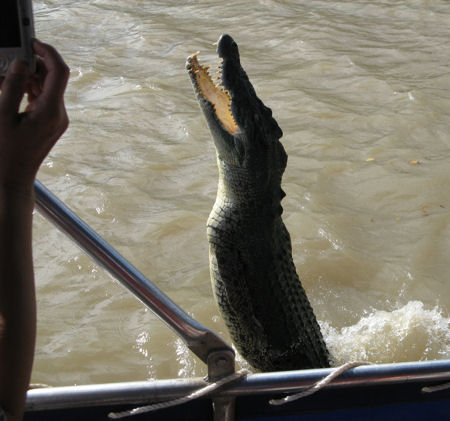
From this point on it’s all go:
For the faint of heart, here’s a still of the same crocodile:
Jumping crocodiles near Darwin
For the tender of heart, here are some baby crocodiles. They’re hatchlings, about 6 inches long:
Jumping crocodiles near Darwin
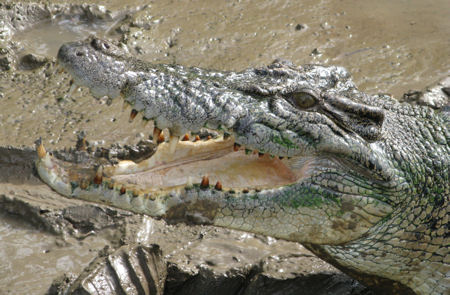
Aah, so cute! Beware, mum is not far away:
Jumping crocodiles near Darwin
Isn’t she gorgeous? Here’s the video:
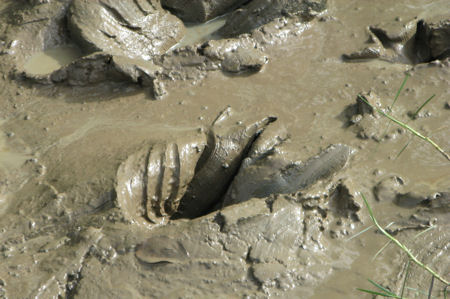
So, if you ever see a footprint like this:
Jumping crocodiles near Darwin
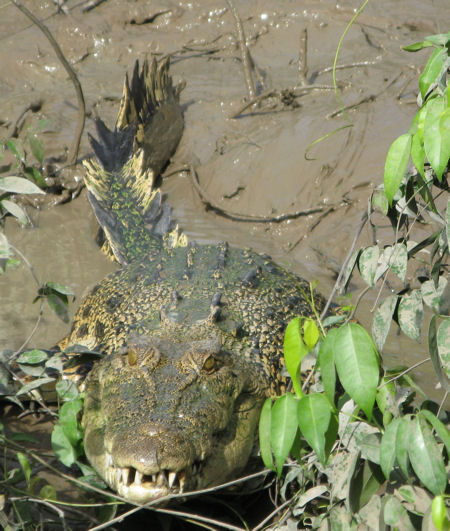
Then look out for a poser like this:
Jumping crocodiles near Darwin
Now I’m back home in the arms of my loved ones. Drool has had his nose put out of joint by my tale of creatures more prehistoric even than he. Peg is, as so often, my anchor:
This is the blog of Mark Wordsworm, the travelling worm. I’m a 25-year-old bookmark and can proudly boast my own Hallmark serial number, 95 HBM 80-1. You’ll probably want to read all about me and my Travelling Companion (the TC) .
Today’s travel notes
For someone who professes to be the friend and companion of a travelling worm, it seems to this worm that the TC has an unhealthy fascination with birds. She’s been taking pictures of the black cockatoos that have just arrived in our neck of the woods.
Needless to say, I stayed well out of sight. Black cockatoos are partial to the odd grub or two, and I don’t rate their level of discernment very highly. I think they’d pounce first and ask questions second.
“Oops, sorry, did I just swallow Mark Wordsworm, the famous Travelling Worm?”
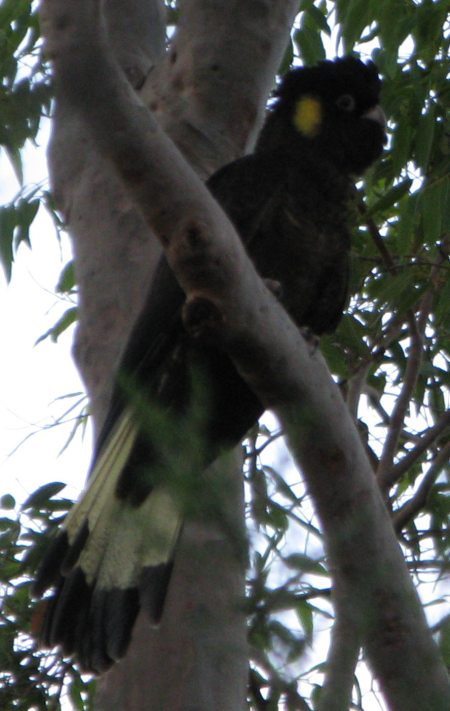
These are the Sydney yellow-tailed black cockatoos. They seem to drop in at around this time every year, probably because a certain type of gum tree is in flower.
The book I’m in
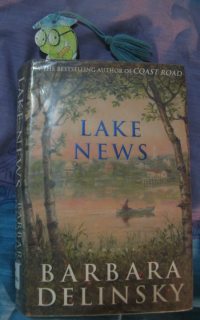
Lake News, by Barbara Delinsky.
The photos
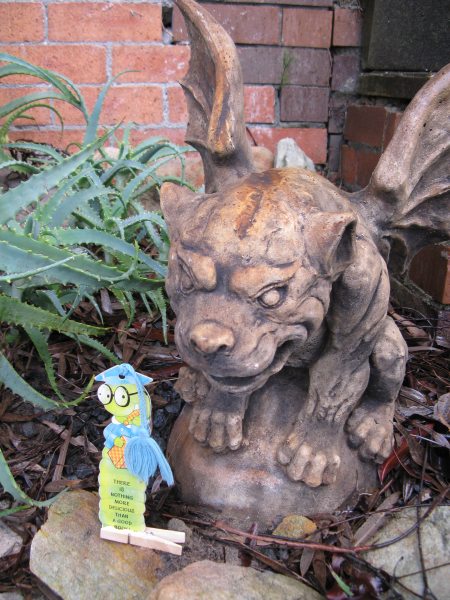
Me not inviting attention from a big cocky bird:
The black cockatoos are in town
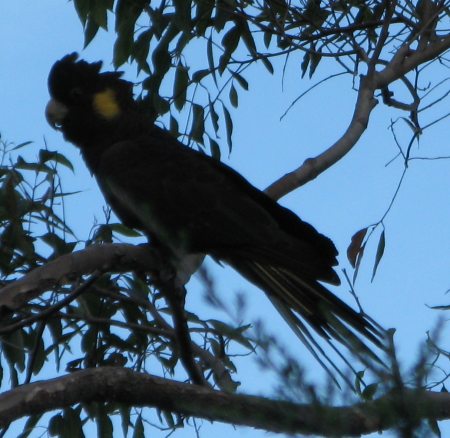
Black cockatoos are difficult photographic subjects, because they’re… well, black. Here’s what the TC managed to get.
Looking savvy:
The black cockatoos are in town
Looking cute and fluffy:
The black cockatoos are in town
Showing off the yellow tail:
The black cockatoos are in town
Prowling along a branch in silhouette, pretending to be a black panther and then spoiling it by squealing like an eagle:
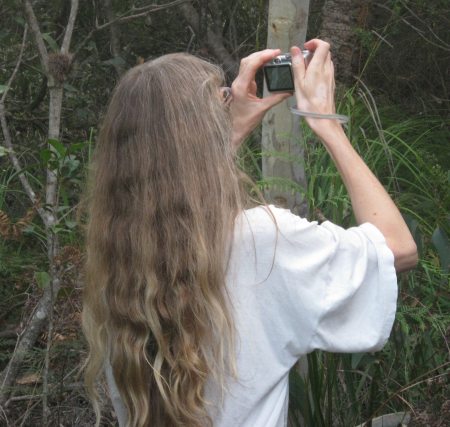
The TC in hot pursuit, snapped by the TC-once-removed:






































 Travelling Worm