This is the blog of Mark Wordsworm, the travelling worm. I’m a 36-year-old bookmark (give or take a few years) and I proudly boast my own Hallmark serial number, 95 HBM 80-1. You’ll probably want to read all about me and my Travelling Companion (the TC).
Today’s travel notes
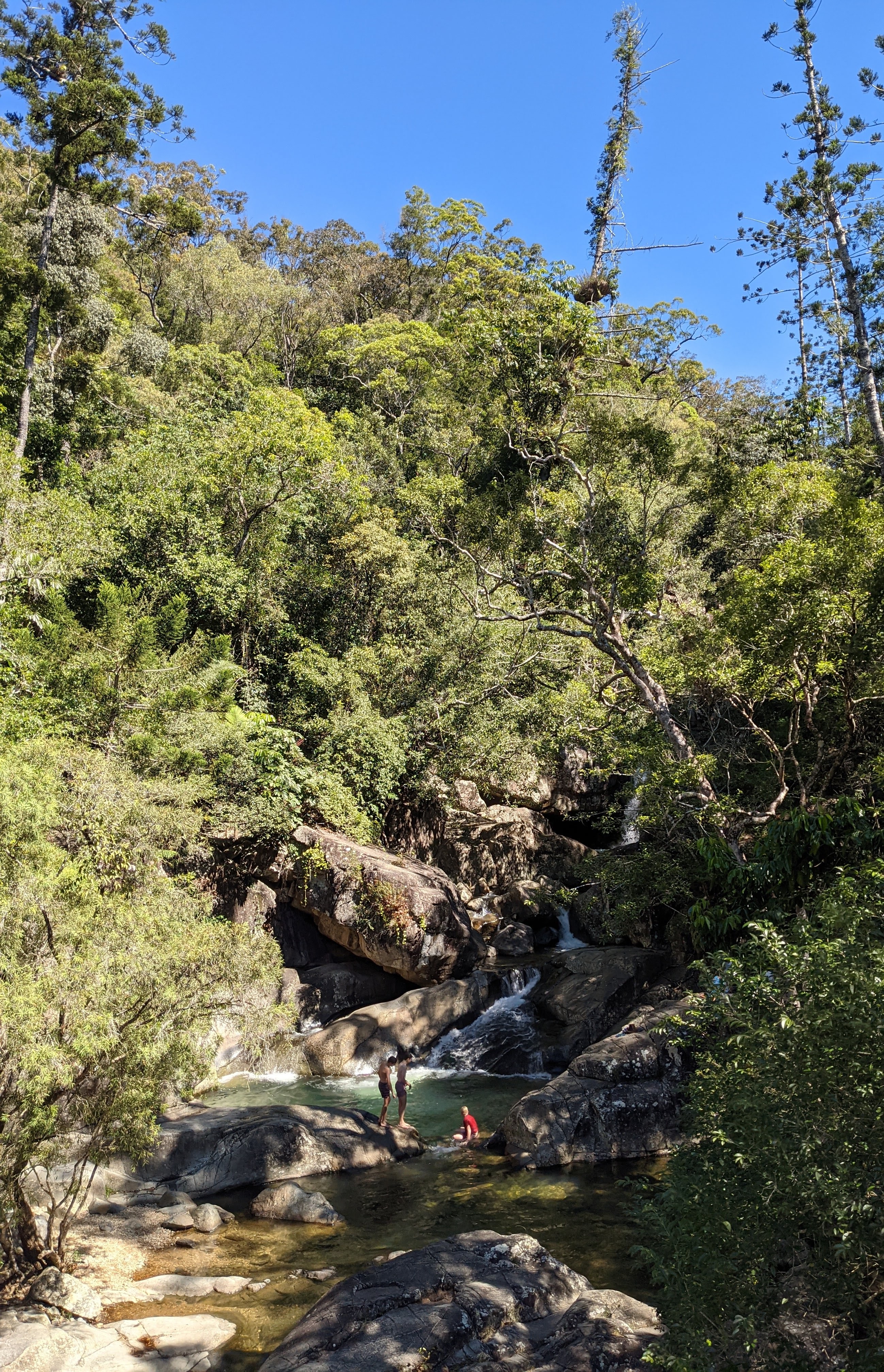
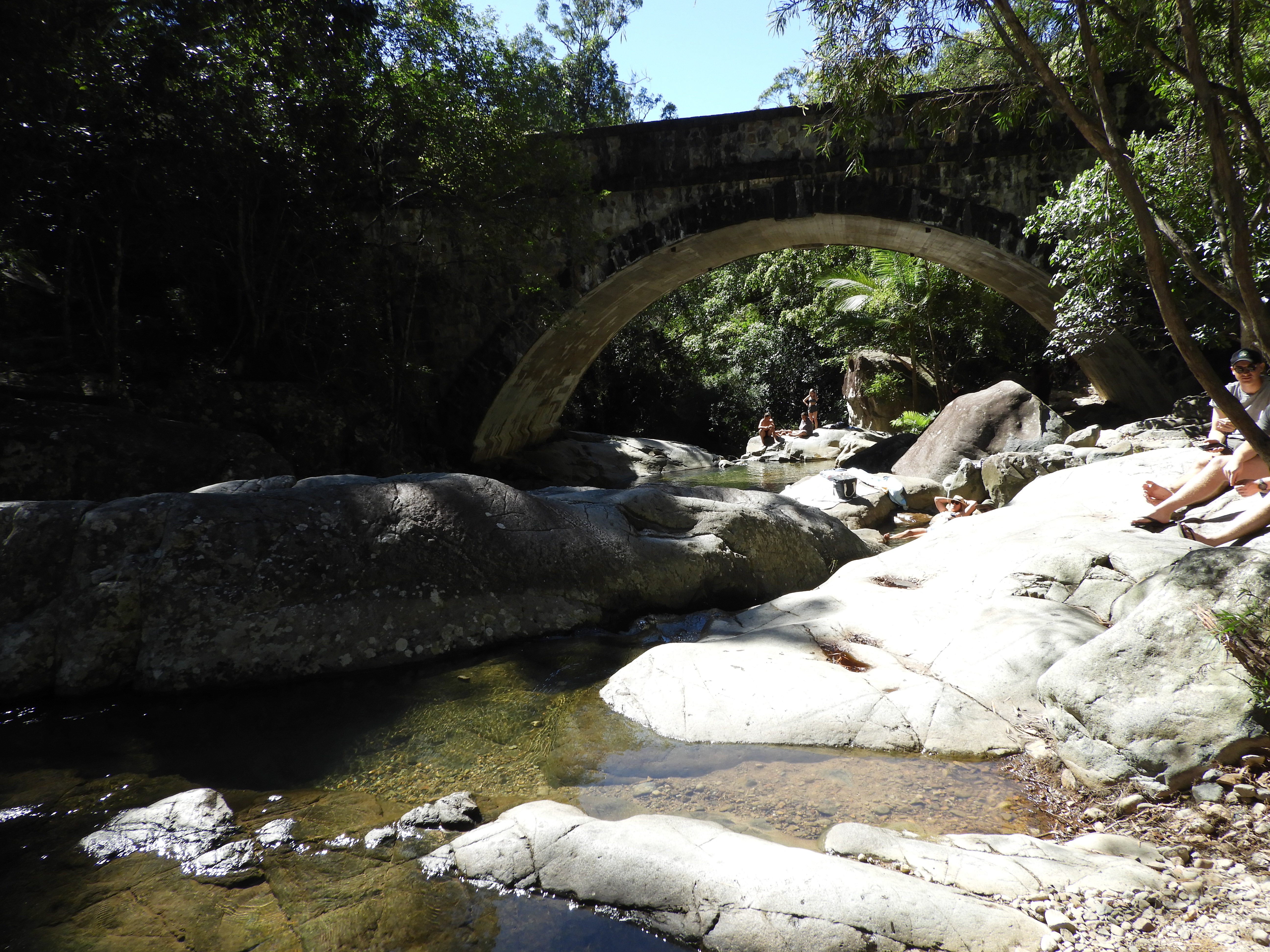
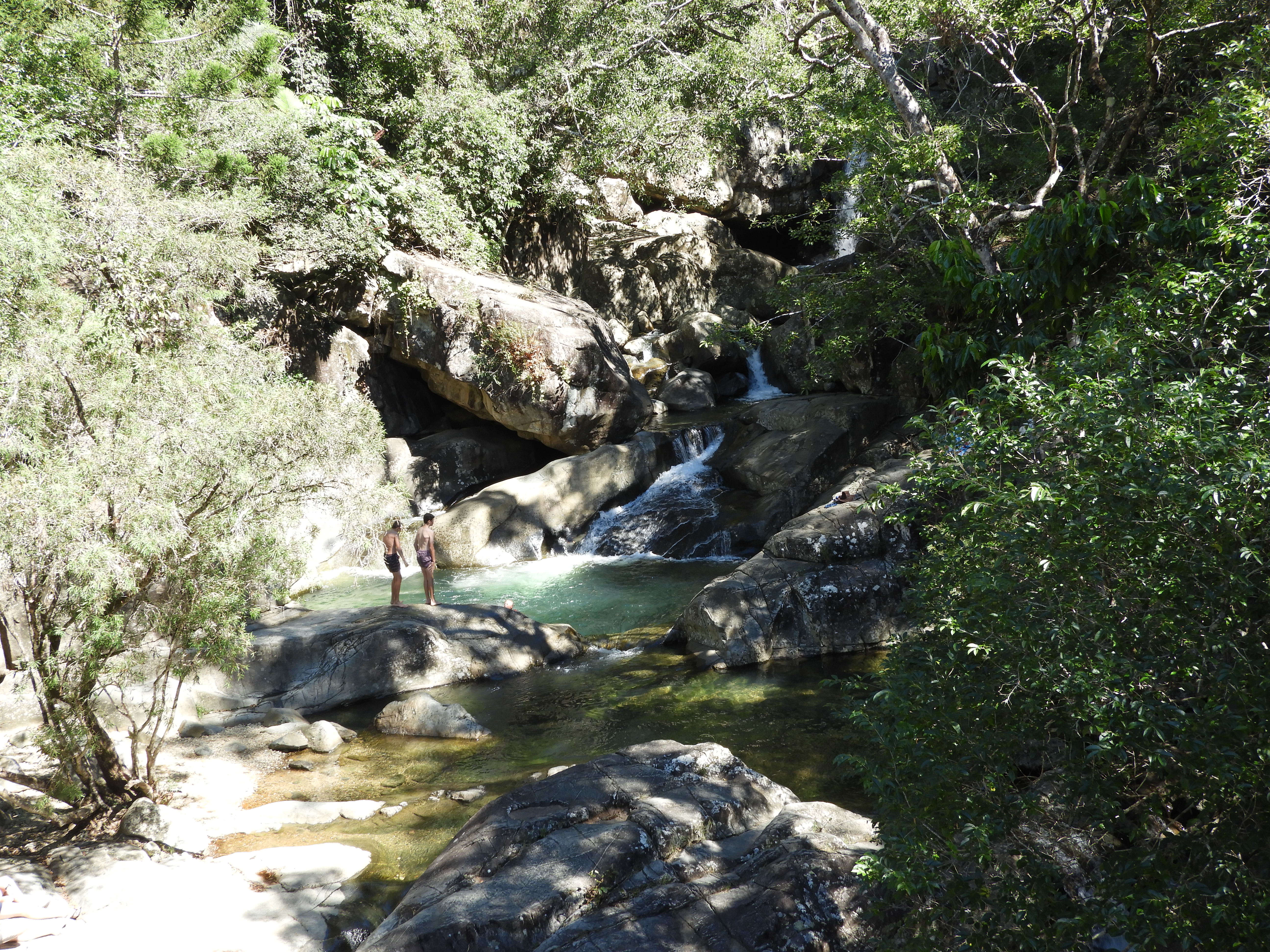
Little Crystal Creek is about one hour’s drive along Bruce Highway, heading north from Townsville in Tropical North Queensland. The road winds steeply up from sea level to the pools and falls of Little Crystal Creek. The trip is a little daunting, especially if, like this worm, you’re not fond of heights. But once you reach the creek, it’s well worth it.
The book I’m in
ashley bell by Dean Koontz. This book is right up my street. A good story with a touch of the supernatural that’s keeping me guessing.
Recommended restaurant
jks Delicatessen, in Ingham, about 45 minutes’ drive north of Little Crystal Creek. Try the pastries and the coffee!
The photos
Me in a somewhat intimate encounter with the wildlife at Little Crystal Creek. This scarlet dragonfly was persistent and curious:
A tall, growth-encrusted tree marks the spot:
Pools glow like jewels:
A stone arch bridge built during the depression of the 1930s crosses the creek:
The creek falls down the hill in a series of little falls and pools:
This is the blog of Mark Wordsworm, the travelling worm. I’m a 36-year-old bookmark (give or take a few years) and I proudly boast my own Hallmark serial number, 95 HBM 80-1. You’ll probably want to read all about me and my Travelling Companion (the TC).
Today’s travel notes
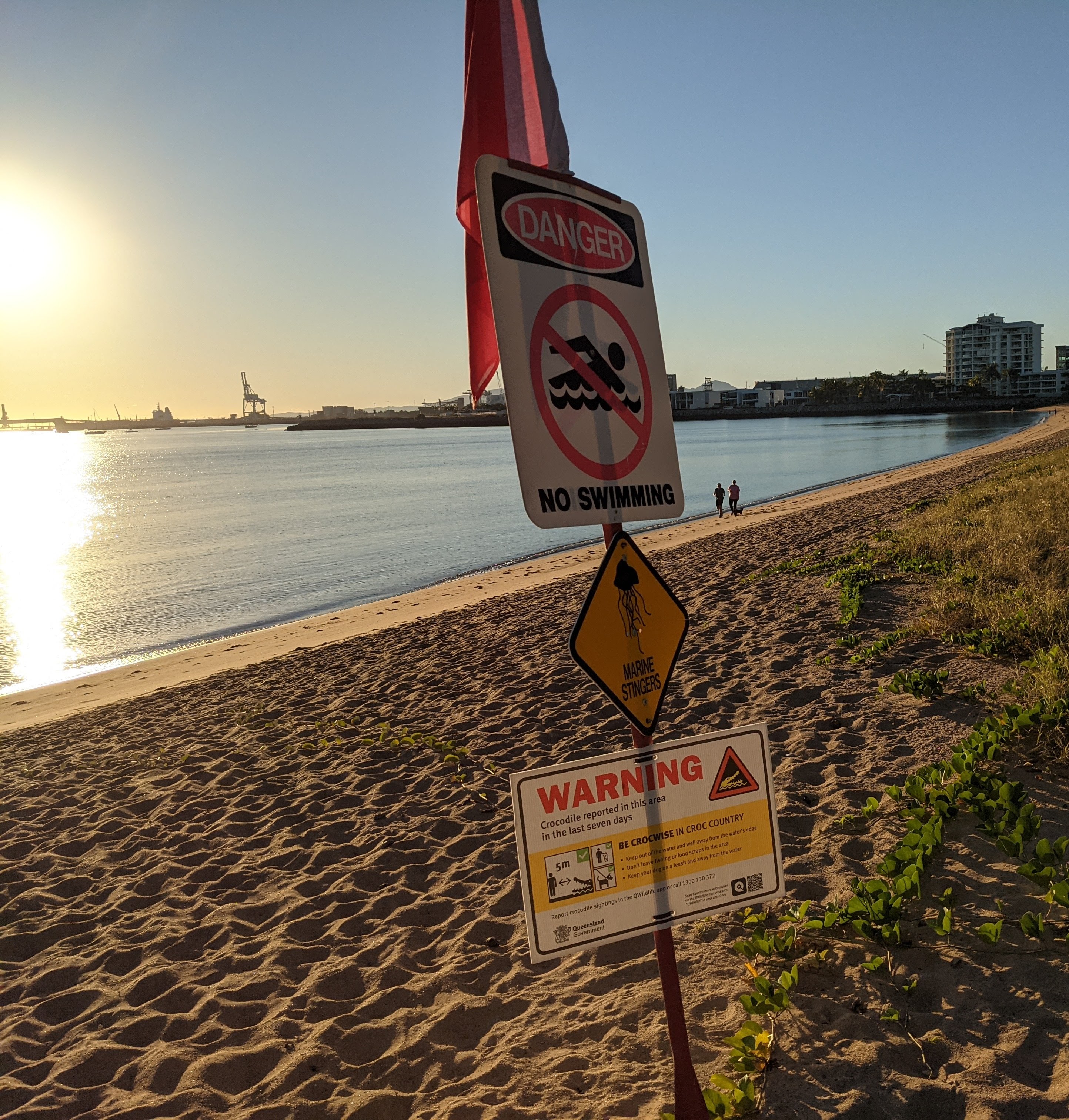
Townsville is a city in Tropical North Queensland, on the north east coast of Australia. It’s a quiet place. In the dry season, that is, when there are no tropical storms in the offing. When the deadly jellyfish have retreated from the shores. And if no salt-water crocodiles lurk in the shallows.
The book I’m in
ashley bell by Dean Koontz. This book is right up my street. A good story with a touch of the supernatural that’s keeping me guessing.
Recommended restaurant
The Great Jewel of India, Flinders Street, Townsville. The service is fast and friendly, and the food is delicious.
The photos
The Strand in Townsville, where the Coral Sea laps gently against the Australian land mass. A sign warns of dangerous swimming, deadly jellyfish, and recently-spotted salt-water crocodiles.
This worm probably wouldn’t choose to walk a dog so close to the shoreline where a saltie might lurk.
Jonathan and his mates enjoy a moment of quiet reflection on The Strand, with Magnetic Island as a backdrop:
Motorised scooters line up with the aerial roots of fig trees:
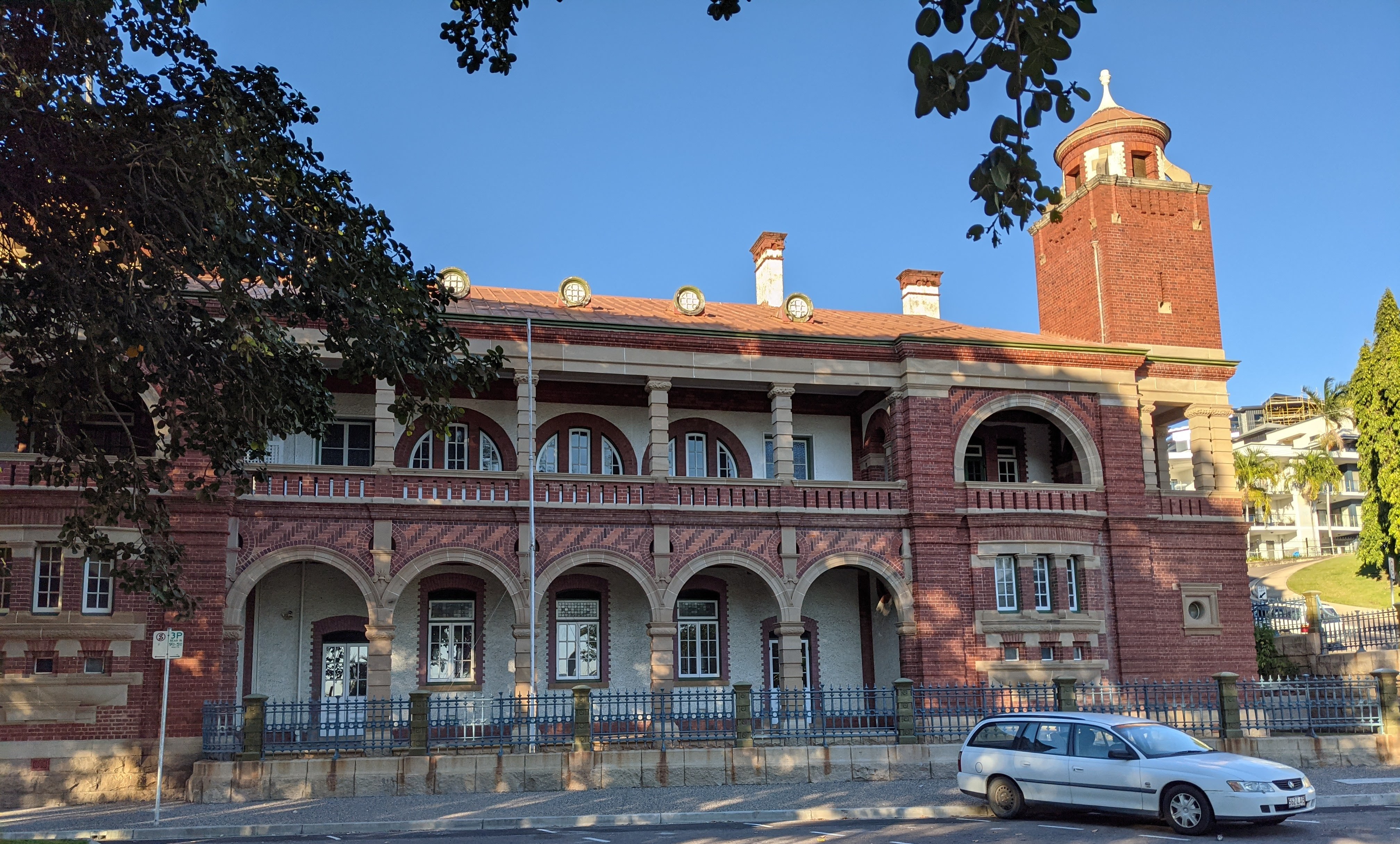
Customs House, a 120-year-old building of red brick and colonnades, with a tower for observing the passage of ships:
Former Telecasters North Queensland Ltd Building, seen from ANZAC Park:
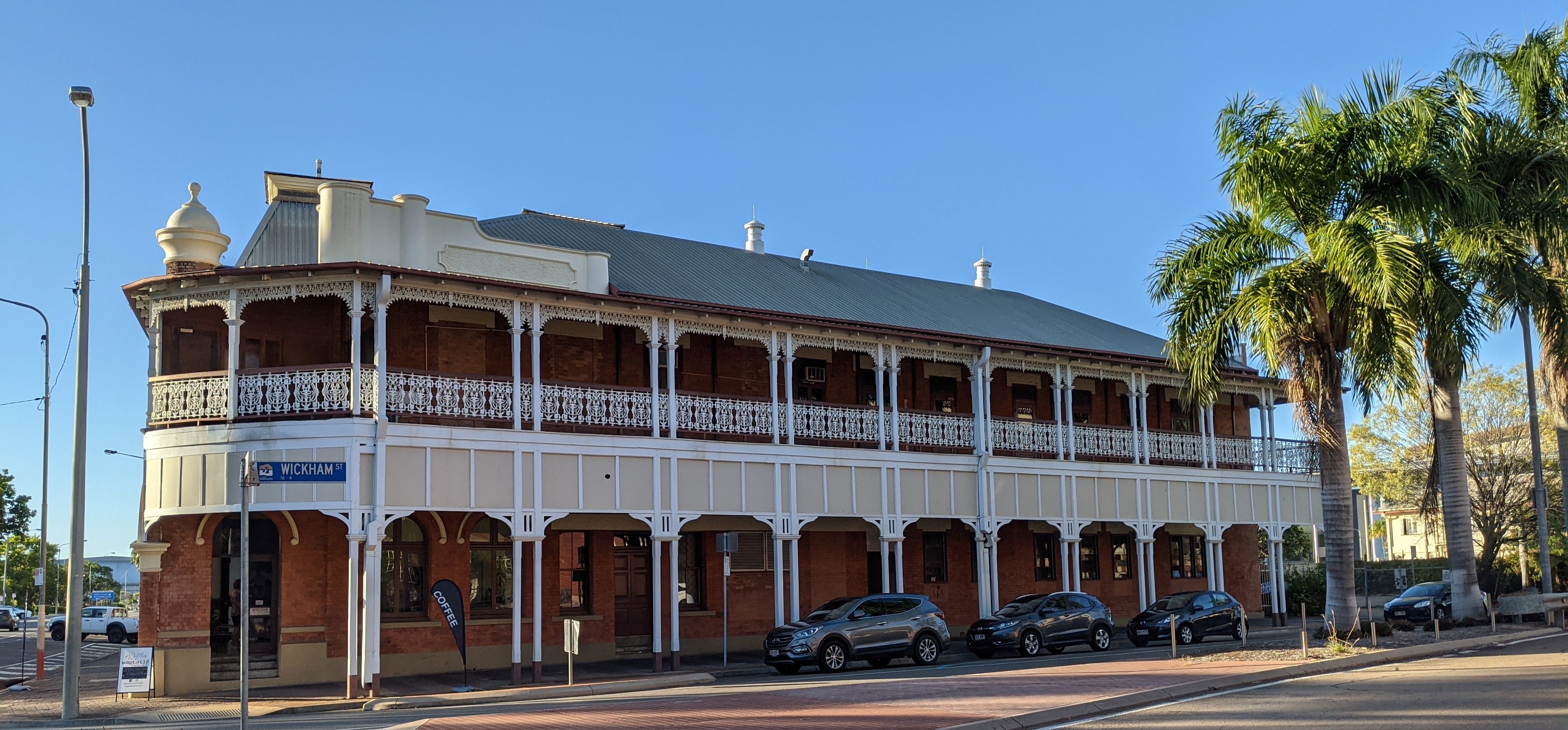
A cafe occupies a corner of this lovely old building:
To finish off with, I’ll leave you with a tranquil view of Magnetic Island from The Strand:
This is the blog of Mark Wordsworm, the travelling worm. I’m a 36-year-old bookmark (give or take a few years) and I proudly boast my own Hallmark serial number, 95 HBM 80-1. You’ll probably want to read all about me and my Travelling Companion (the TC).
Today’s travel notes
Last weekend, the TC and I were in Tropical North Queensland. It was our first trip in more than a year, due to a global pandemic that’s currently holding sway over the world. We spent the bulk of our time in Townsville, but on Saturday we ventured north to a little place called Mission Beach.
This worm was impressed by the sheer chutzpah of Mission Beach. A small place on the large continent of Australia, Mission Beach might not shout out to travellers as a highly visible place on the map, except for one consideration: Mission Beach is home to the closest thing we have to a living dinosaur: Casuarius casuarius johnsonii.
The book I’m in
ashley bell by Dean Koontz. This book is right up my street. A good story with a touch of the supernatural that’s keeping me guessing.
Travel tips
Choose the dry season (May to October) to visit Tropical North Queensland. When we hit the area, the weather was ideal. The days were warm to hot, at around 28℃ maximum. The air cooled down nicely in the late afternoon, and early mornings were a pleasure.
The photos
Me and one of the many warning signs that Cassowaries roam these climes:
Weighing in at around 60 kilograms, a Cassowary is a bird not to be taken lightly. It has a strong, pointy beak at the top end and a long, sharp claw at the bottom end. It runs at around 50 kilometres per hour, and swims certainly better than this worm can. Imagine my despair then, dear reader, when the TC announced that we were to go in search of this very behemoth.
And lo, we found one!
One thing to the bird’s disadvantage is that it can’t fly. At worst, if attacked, I could entrust myself to the vagaries of a passing breeze and hope to escape in its tender embrace. The TC has posted pics and videos of this bird on her blog, aptly titled, In search of a dinosaur uh Cassowary. Drop by there if you’d like to see more.
This worm says, let’s move on to more about the town of Mission Beach! After all, this blog is about me. Oh, and about places and travel and things to see. But primarily about me.
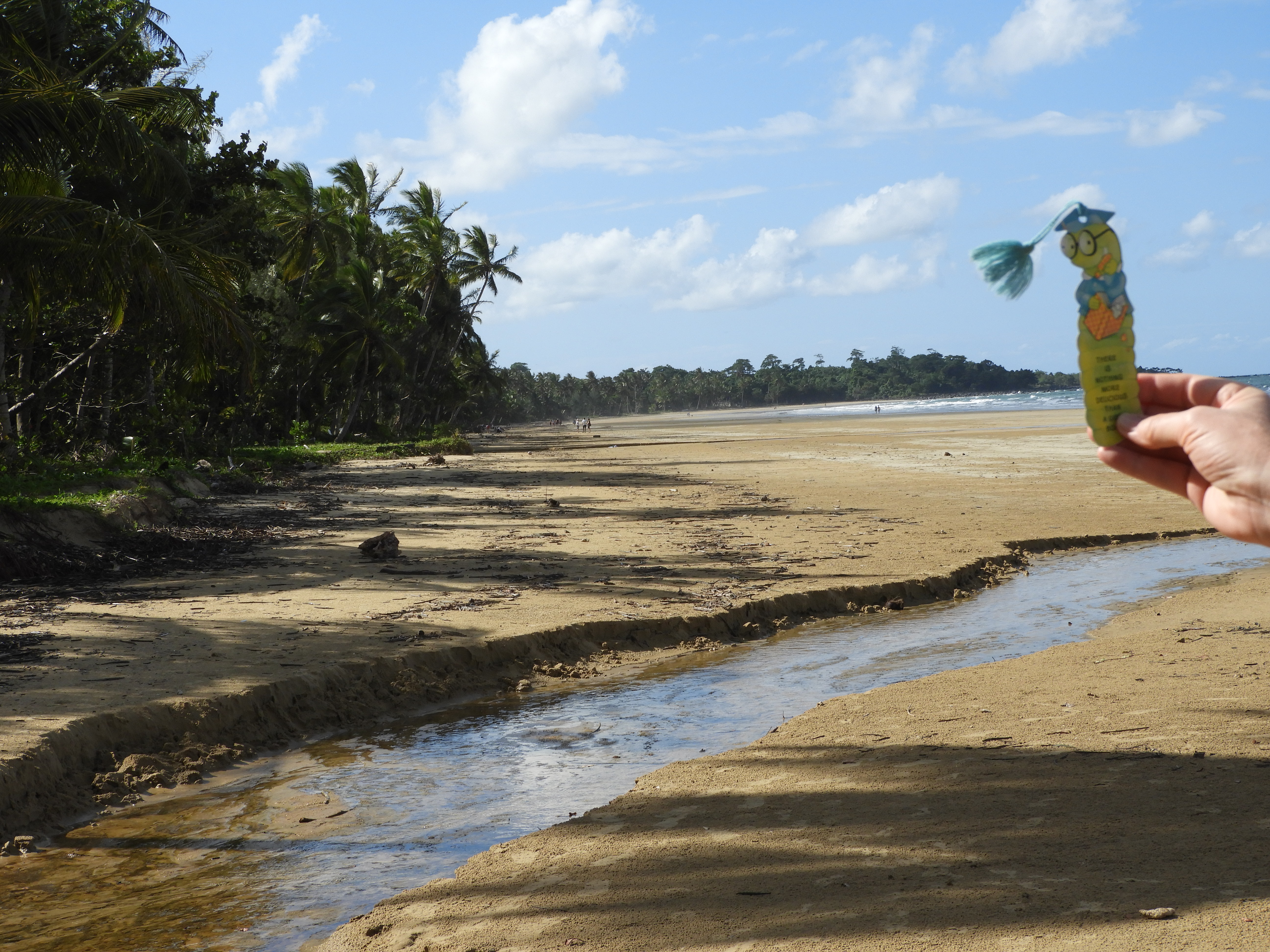
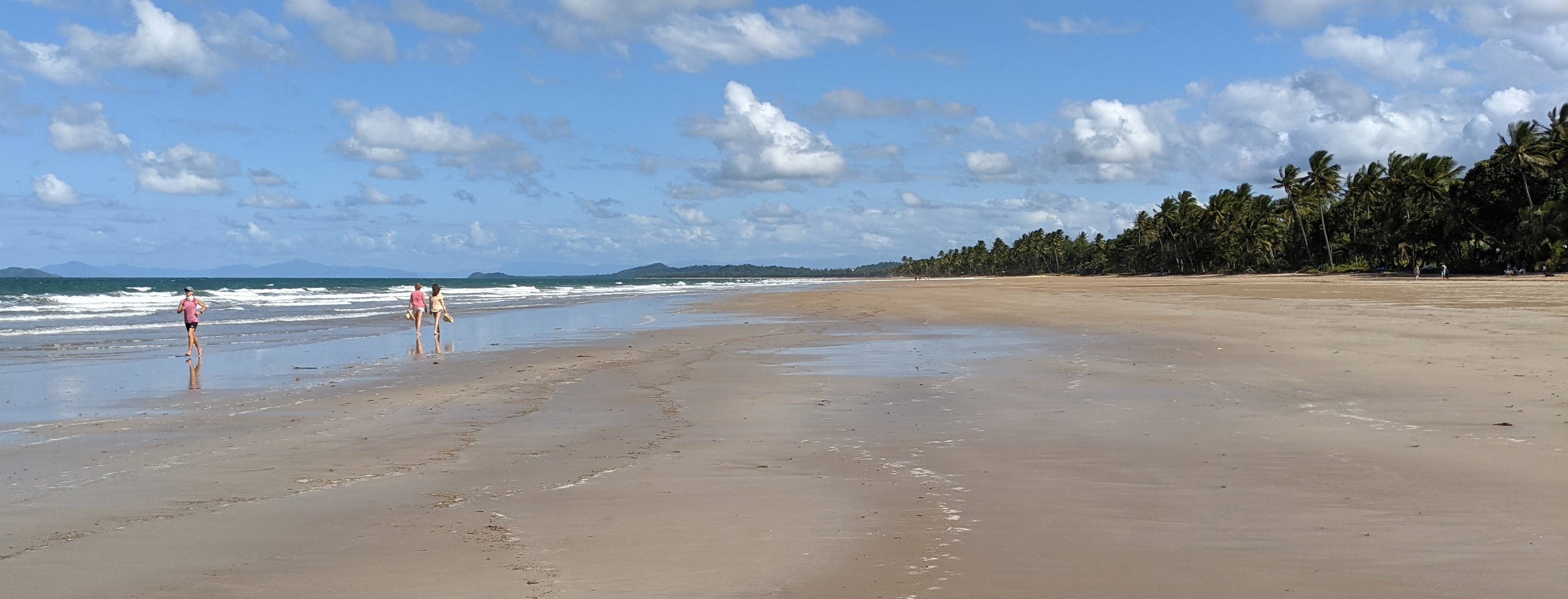
Me on the eponymous Mission Beach:
In the above picture, the camera view looks northwards from the middle of Mission Beach towards Clump Point Lookout.
Other worms have found a home here too, it seems:
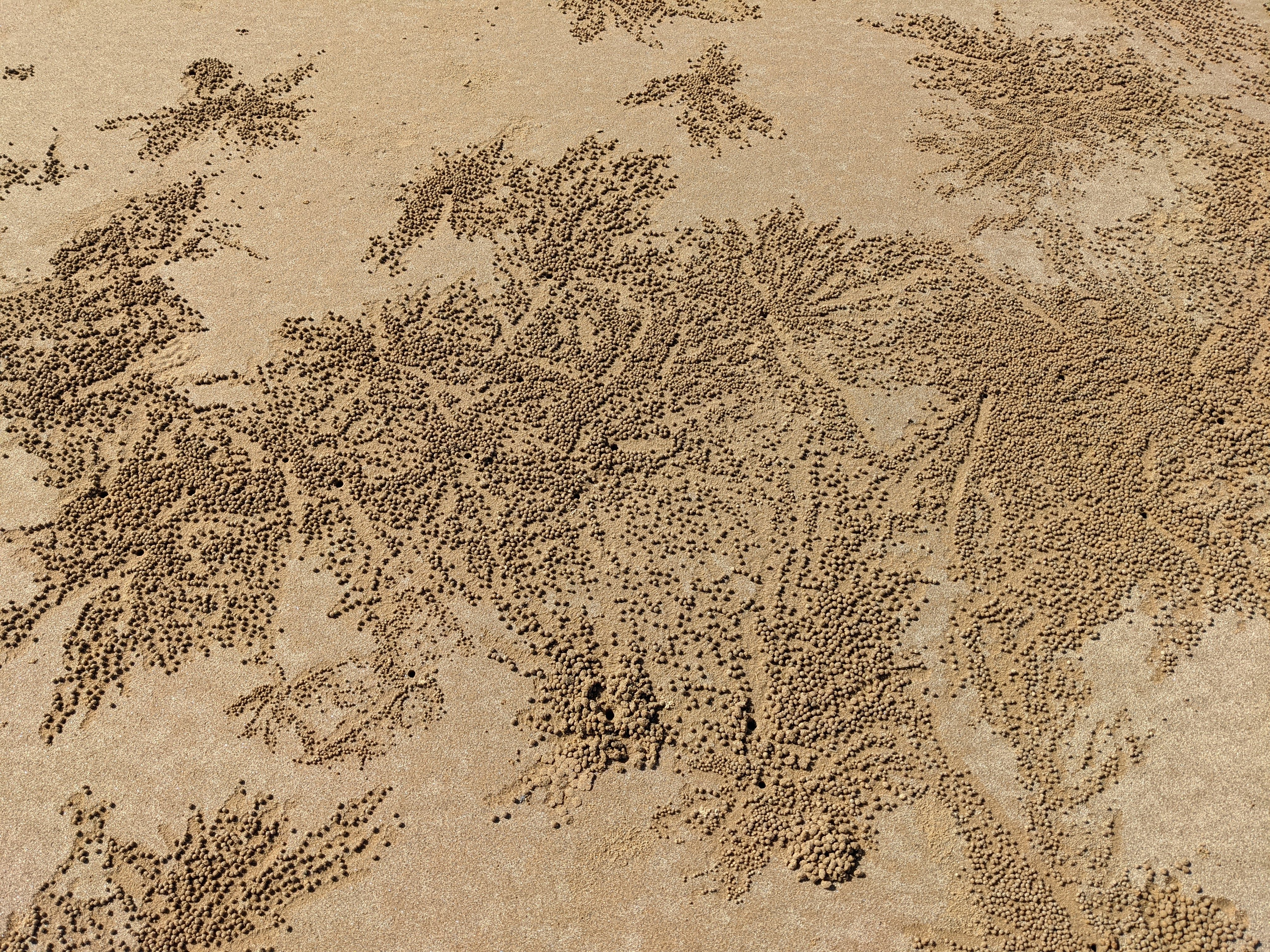
Tiny crabs leave patterns of sand balls, dug up to create their homes:
This view of the beach looks south towards the stinger net in the distance:
The stinger net carves out a section of the sand and sea, keeping it relatively safe for human swimmers during marine stinger season. Marine stingers are jellyfish that can cause serious pain and even death for people. This worm advises to steer clear of stingers. And of Cassowaries.
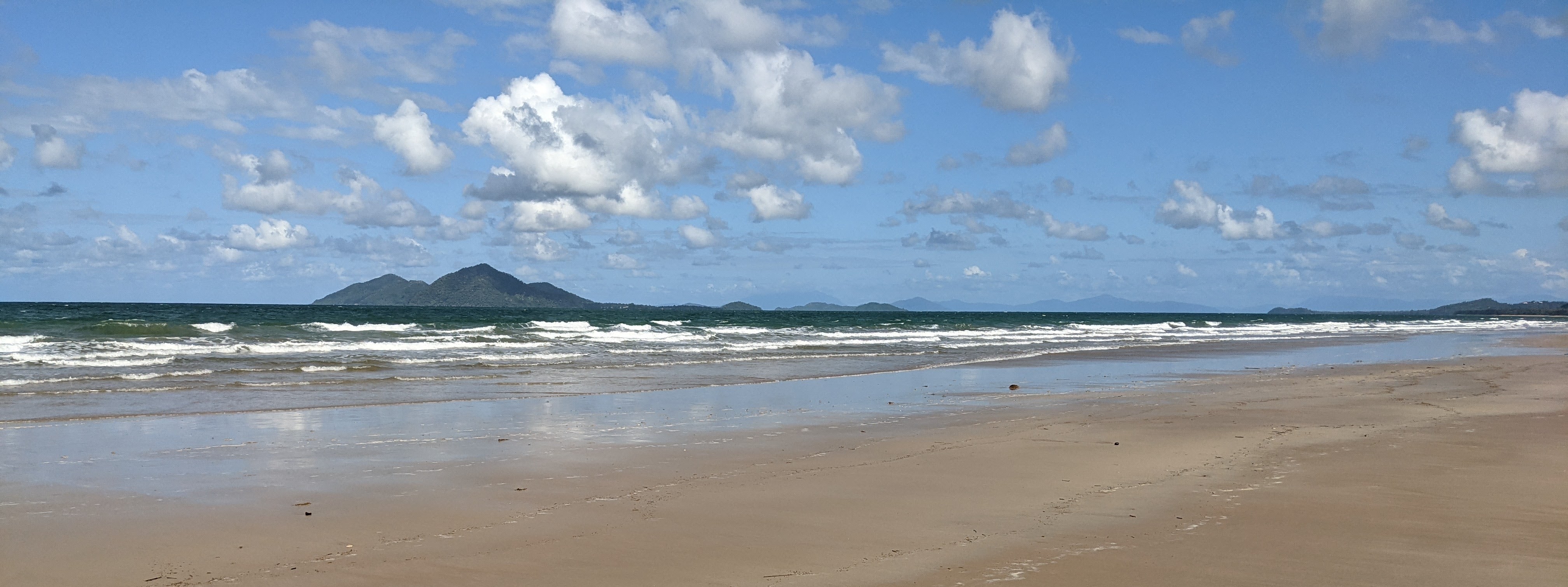
Dunk Island looms enticingly in the distance:
Here’s the main drag of Mission Beach town, just a short crawl from the beach, where you can grab a tasty meal and browse other wares:
This is the blog of Mark Wordsworm, the travelling worm. I’m a 36-year-old bookmark (give or take a few years) and I proudly boast my own Hallmark serial number, 95 HBM 80-1. You’ll probably want to read all about me and my Travelling Companion (the TC).
Today’s travel notes
Today’s a red letter day, for no other reason than that I’ve decided to update my age after checking the date of my first post on this blog, My very first post was on 25 April 2008, titled The red centre. At that time, I judged myself to be 25 years old. Today, just over 11 years later, it seems like a good time for an update. I’m 36 years old, give or take a few years. Happy new age to me.
But now, on to the topic of my latest travel adventures. Me and the TC spent last weekend on Magnetic Island, a tropical island in North Queensland.
The book I’m in
The Wrath of Angels, by John Connolly. A fast-paced mix of murder, mystery, and fallen angels, featuring private detective Charlie Parker.
Recommended accommodation
Island Leisure Resort, 6 Kelly Street, Nelly Bay. The rooms are spacious, comfortable and clean, and the staff are friendly. There’s a swimming pool and a tennis court, and a games room with table tennis and pool tables. Accompanied by great hilarity, the TC rediscovered her mediocrity at both of the last-mentioned.
The photos
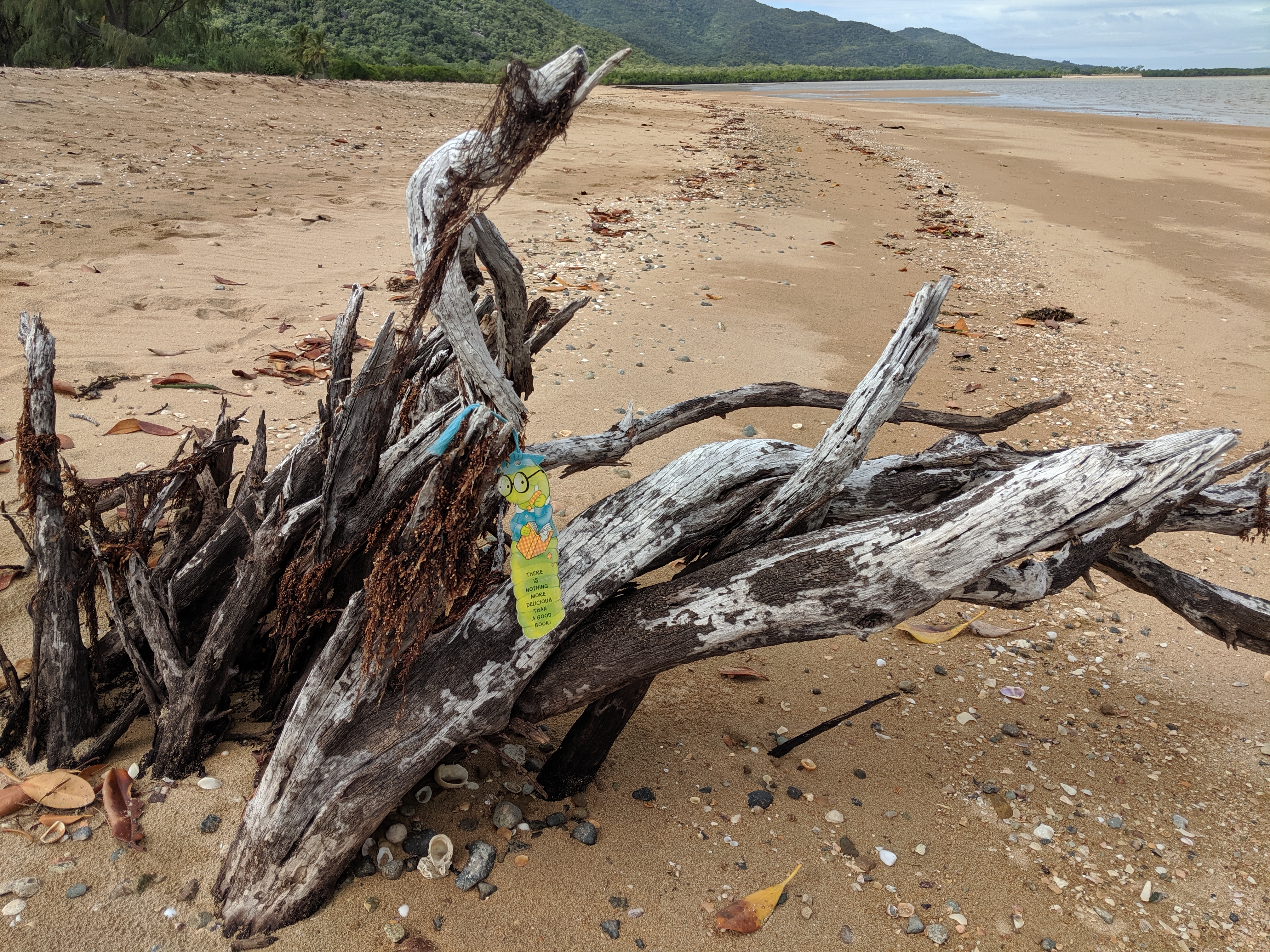
Me and an art piece created by sea and wind, on a beach at the north-west end of Magnetic Island:
The vegetation on the island was lush and green, at least in comparison to many parts of Australia. This photo shows the same beach at the quiet north-western end of the island:
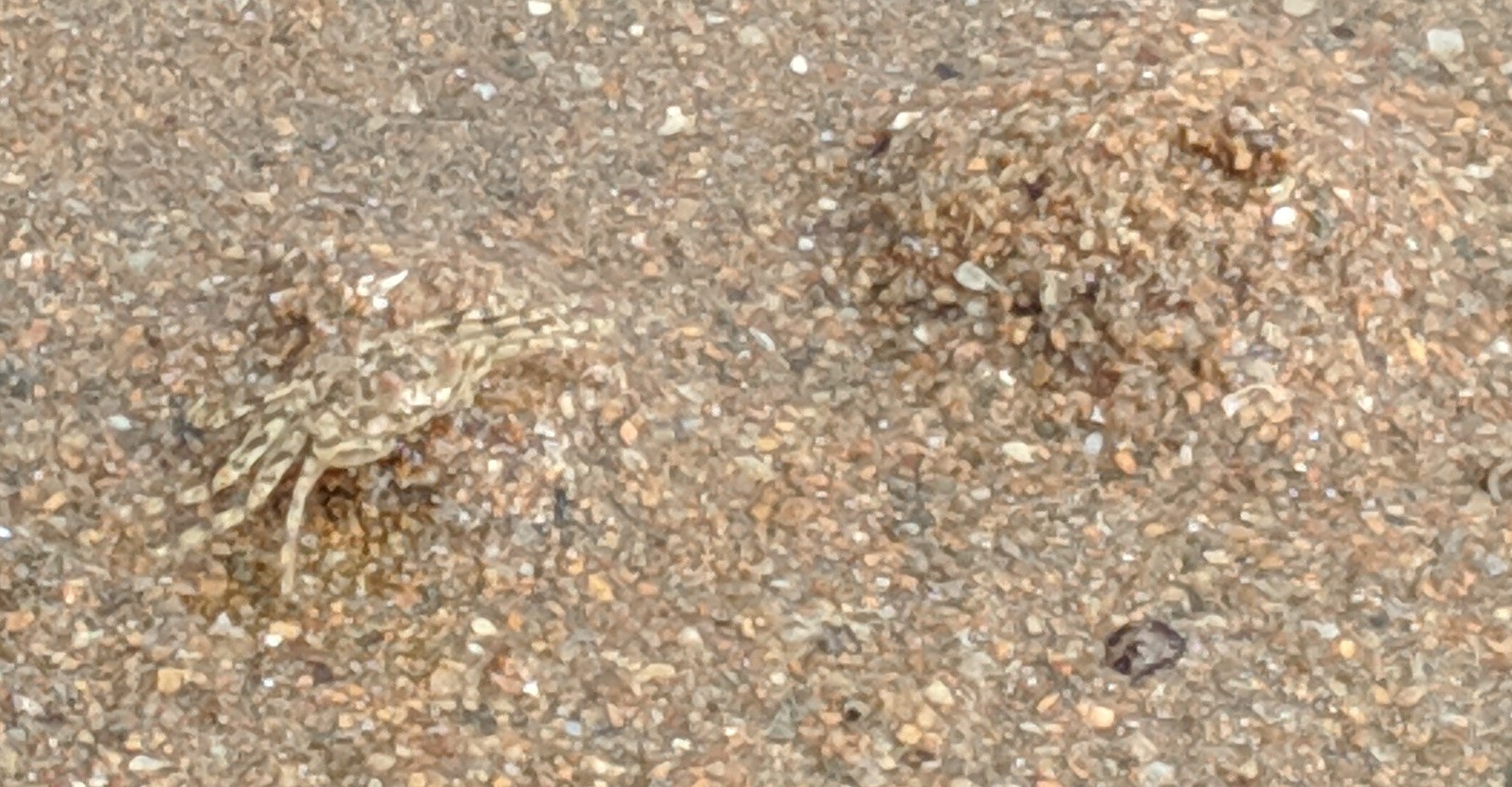
Denizens of the beach included super-fast, nigh-invisible crabs. In the following picture, the crab is on the left. At top right is a mound with a hole in it, probably the entrance to a crab palace:
Jonathan was there too. The presence of Jonathan and his mates constitutes good cause for the crab’s camouflage and speed:
The drive to the beach takes you along a dirt road, crossed by gullies and fords, surrounded by dense Australian bush. A four-wheel drive is useful. Here I am, your dauntless travel guide, surveying a pretty scene along the route:
Mangroves decorated a creek that crossed the road, where we spotted some pretty fish and crabs (not in the photo):
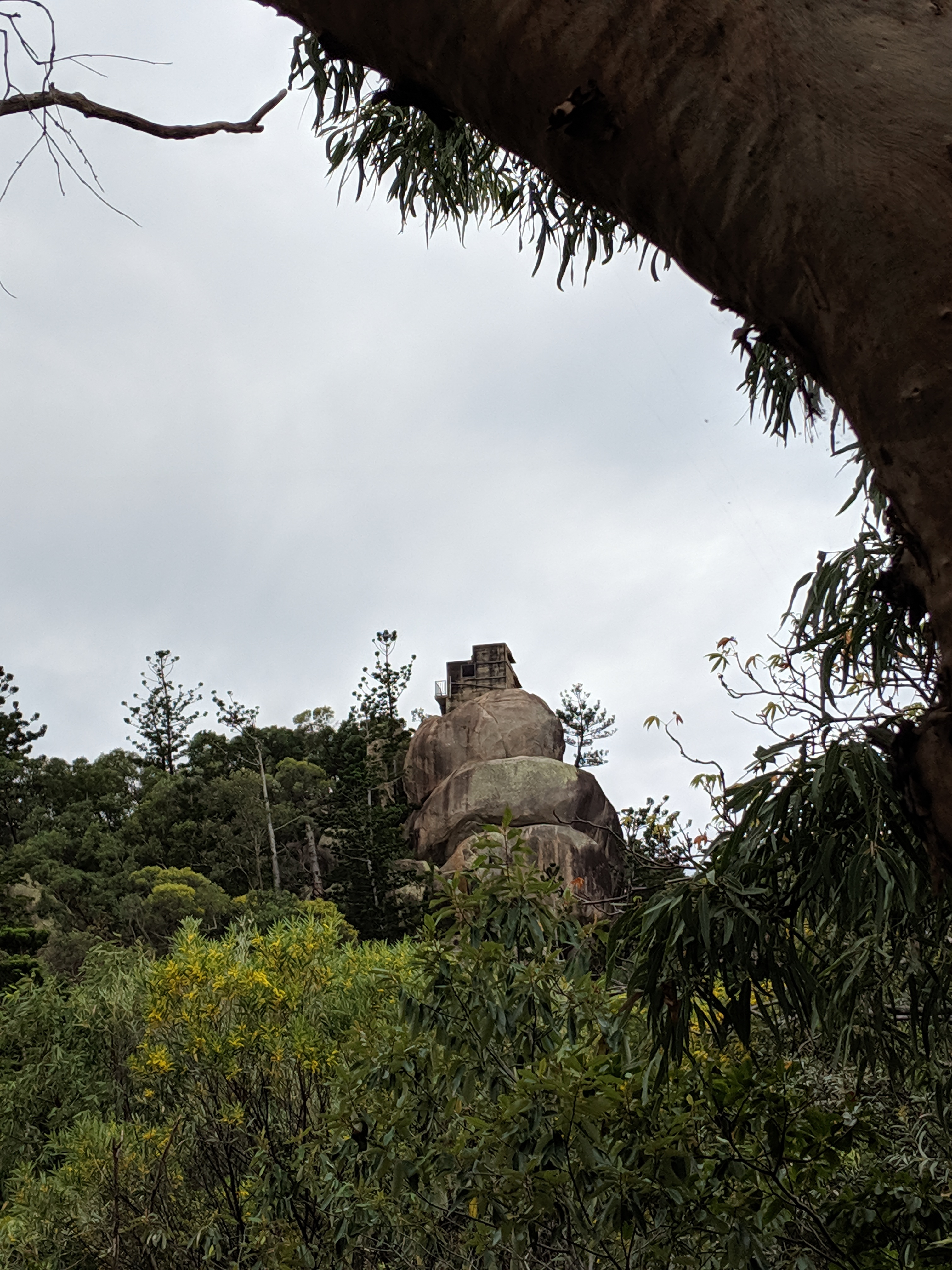
On the other side of the island, to the north east, a World War II fort and its out houses are valiantly fighting off the encroaching bush. Click this image to zoom in:
To get to the fort, the TC followed a winding bush track. The path is about four kilometres for the round trip, and takes about two hours. I stayed comfortably in my book in her bag, ready to hop out for each view and photo opportunity.
Here’s the fort’s lookout building seen from another angle as we approached the fort complex:
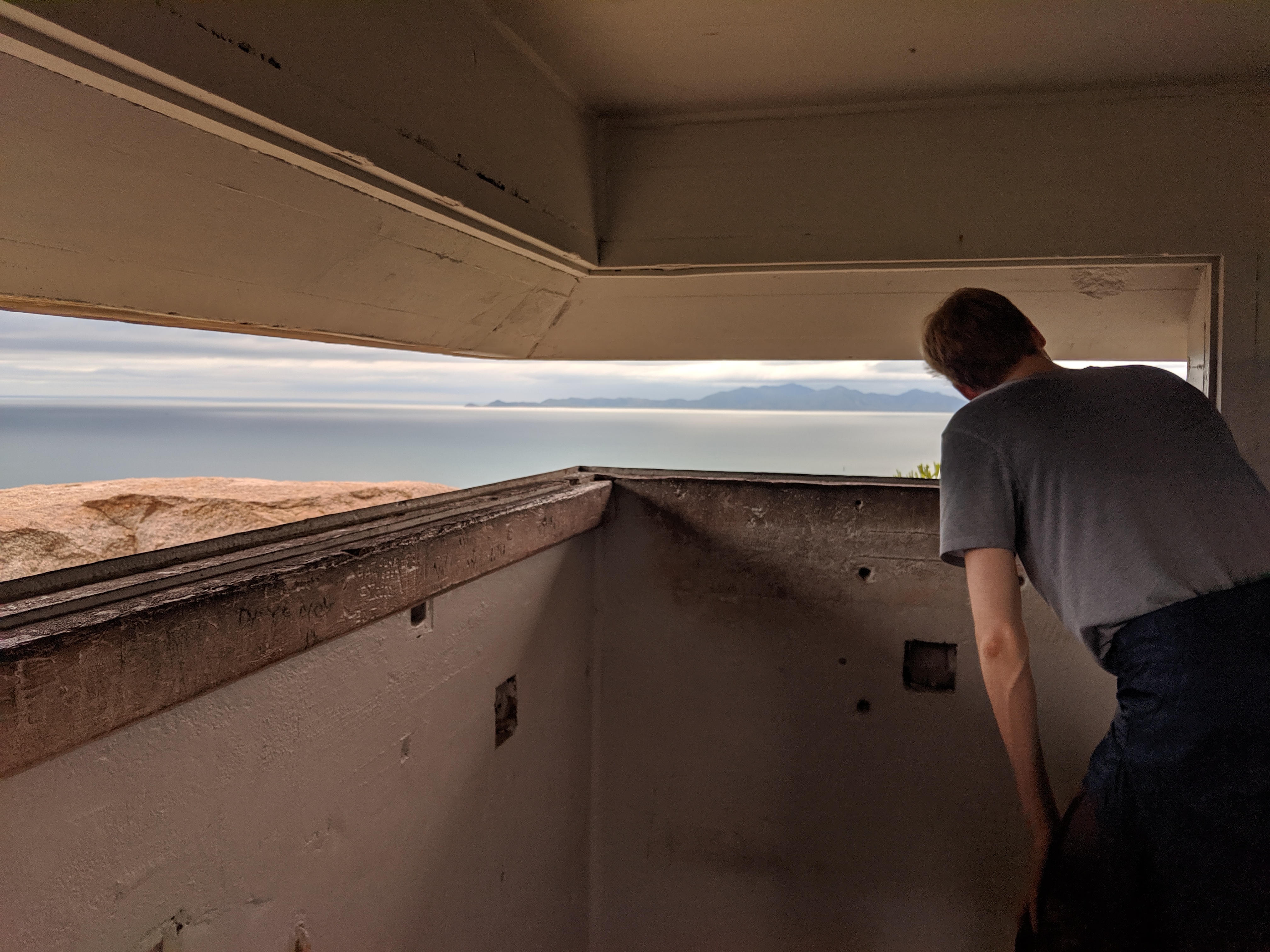
To get to the lookout, we climbed a series of stone steps and metal ladders. The TC did a good job, even hopping up onto the final platform inside the top room to see the view through the plane/ship-spotters slot in the wall. This shot shows an equally bold fellow traveller gazing out through the slot:
The views from the walk up to the fort had the TC ooh-ing and aah-ing:
Arthur Bay looks enticing from above. We didn’t get the opportunity to visit it on this trip:
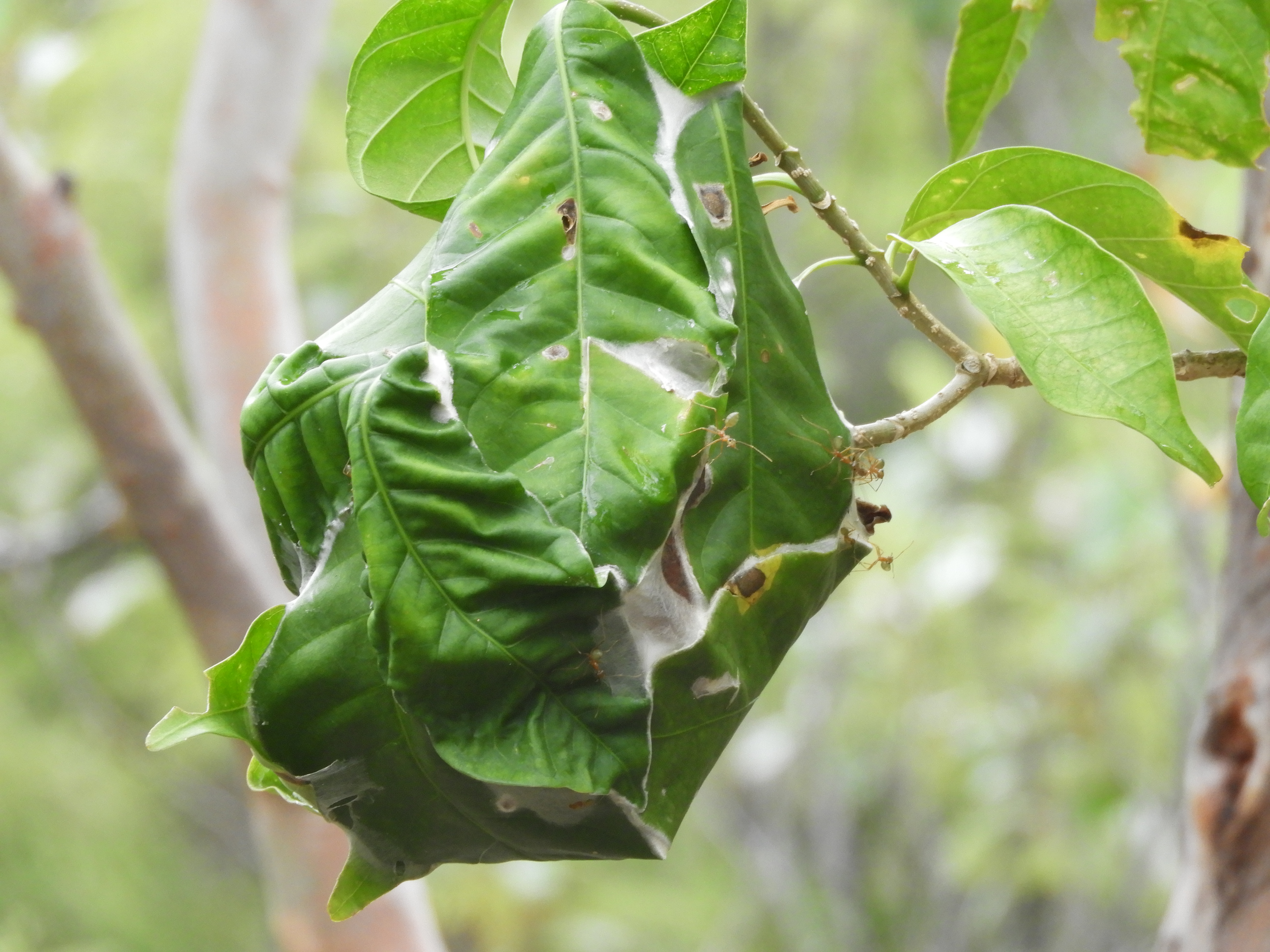
This worm was intrigued to note possible signs of activity by fellow worms. On various parts of Magnetic Island, including the fort walk, we saw bunches of leaves glued together with web:
Could this be the work of a caterpillar like that of the fall webworm or tent caterpillar, which create nests of silk? Looking closer, we noticed ants on the leaf bunches. I’ve since done some research and discovered that these are green tree ants, a type of weaver ant. The adult ants gather in large numbers and pull the leaves together. Then they bring an ant larva, which produces the web to hold the leaves in place:
Below is a slightly fuzzy zoomed-in section of the photo, where you can see a few of the ants:
The TC was curious and leaned in close to examine one of the leaf bunches, as did her two companions. Seconds later, they noticed lines of ants moving down the tree trunk and up their legs. They all jumped away and started stamping their feet in an effort to dislodge the ants. This curious but typical reaction is known by locals as the green ant dance. Poor TC, she does have a knack for getting herself into a pickle.
The guide books promised that we’d see wild koala on the walk up to the fort, and we did. It was as if someone put a cuddly toy up in a tree:
Mostly these wise creatures sleep all day, but this one needed to shift position:
Also interesting, though perhaps not as cuddly, was this deep red mushroom on the side of the walking track:
Another aspect of Magnetic Island that had the TC ooh-ing and aah-ing was the birdlife. For obvious reasons, this worm is not that fond of birds (Jonathan excepted). As a teaser for readers who’re keen on our feathered fiends, below is a clump of Rainbow Bee-eaters:
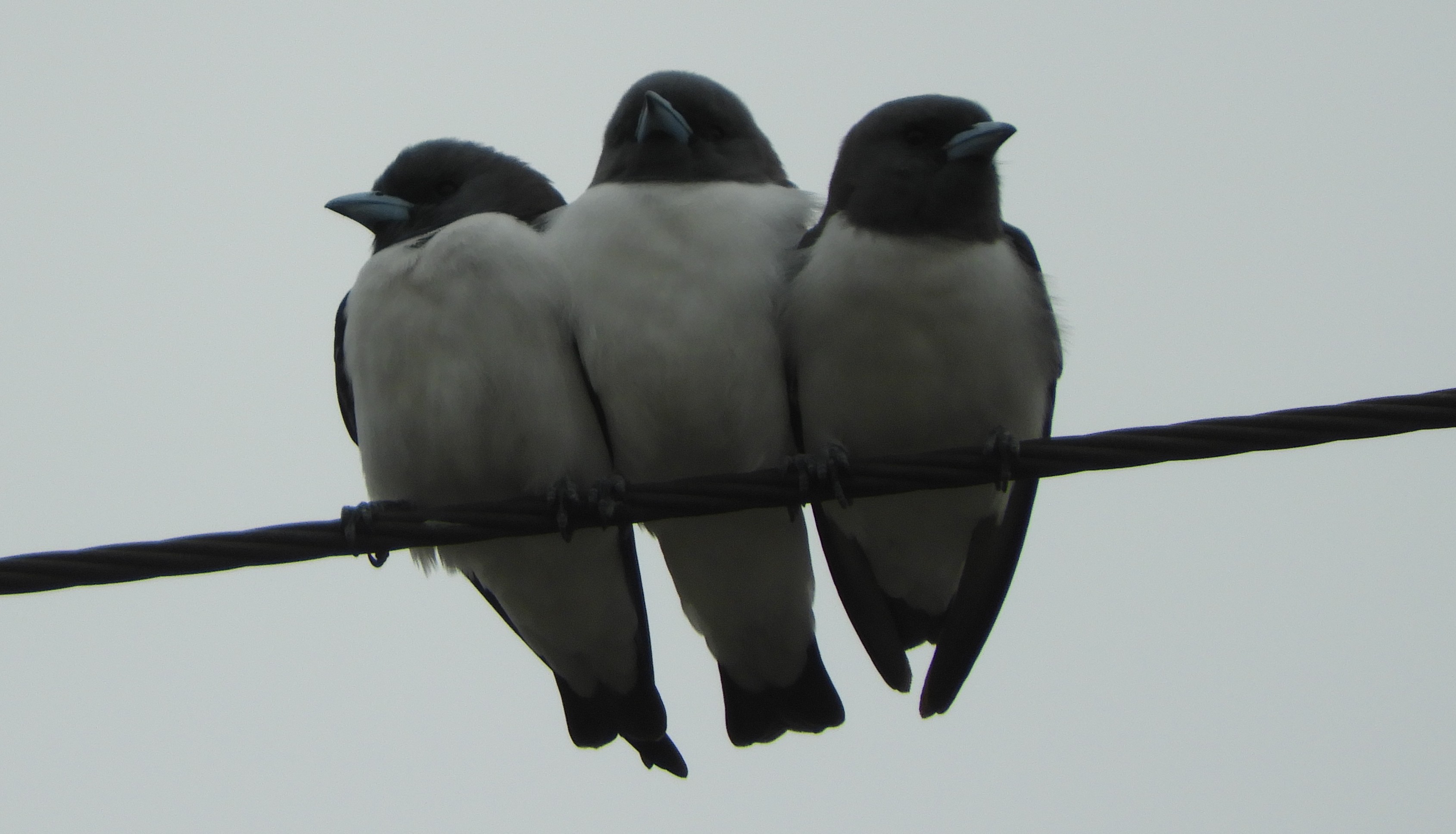
They say trouble comes in threes. Here’s another bird clump, this time of Woodswallows:
This is the blog of Mark Wordsworm, the travelling worm. I’m a 25-year-old bookmark (I haven’t aged at all since I first wrote this introduction) and I proudly boast my own Hallmark serial number, 95 HBM 80-1. You’ll probably want to read all about me and my Travelling Companion (the TC).
Today’s travel notes
Me and the TC spent a couple of days on the Central Coast of New South Wales, Australia. This was a while ago. Now I’m on another trip to somewhere else, and thus finding the time to publish some words.
My impressions? Restful prettiness with enough history and natural beauty to occupy the mind.
Word of the day
Bug is the word of the day. According to the Australian Museum, bugs and beetles are different groups of creatures. They have different mouthparts (beetles chew, bugs don’t), different lifecycles (beetles undergo a complete metamorphosis from larval stage, bugs don’t), different food choices (beetles eat solids, bugs don’t), and different wings (beetles have two pairs, bugs don’t).
This worm concludes there’s a lot that beetles do and bugs don’t. Never mind, the bugs in this post are pretty. At least they have that going for them.
Travel tip
Look before you sit. The colourful bugs pictured below were roaming around on a park bench. A careless sitter would have squished them.
The book I’m in
Infinity Born, by Douglas E. Richards. Artificial intelligence runs wild in this action-packed, thought-provoking book.
The photos
Me and the rising sun, at the window of the Crowne Plaza hotel in Terrigal:
These two bugs roamed around a park bench. Luckily the TC spotted them before sitting down. I think they’re Hibiscus Harlequin Bugs. Almost as attractive as your faithful bookworm!
The bugs are reasonably large, certainly much bigger than a ladybird. For scale, the TC put her finger next to them on the park bench:
Methinks they’re in love, or one of them is. Play the video to see how one follows the other, occasionally bumping into it by mistake or perhaps on purpose:
Now for a complete change of subject, just because I can. Contrary to appearances, this is not a monster’s gullet. It’s a hollow tree trunk:
This is the blog of Mark Wordsworm, the travelling worm. I’m a 25-year-old bookmark and can proudly boast my own Hallmark serial number, 95 HBM 80-1. You’ll probably want to read all about me and my Travelling Companion (the TC).
Today’s travel notes
The TC, bless her cotton socks, occasionally gets a bee in her bonnet about conservation, and goes out pulling up weeds with a group of like-minded souls. Today we went to Sydney Park, in the inner city area of Sydney. We joined a group of 15 volunteers hosted by Conservation Volunteers Australia.
My impressions? Hard work, but the volunteers loved it. Many of them go out once a week or more to look after sites around Sydney.
The book I’m in
Hotel du Barry, by Lesley Truffle. A delightful romp through the streets of London, with more than a glimpse of the dark side of life.
Travel tip
Take a hat and plenty of water.
The photos
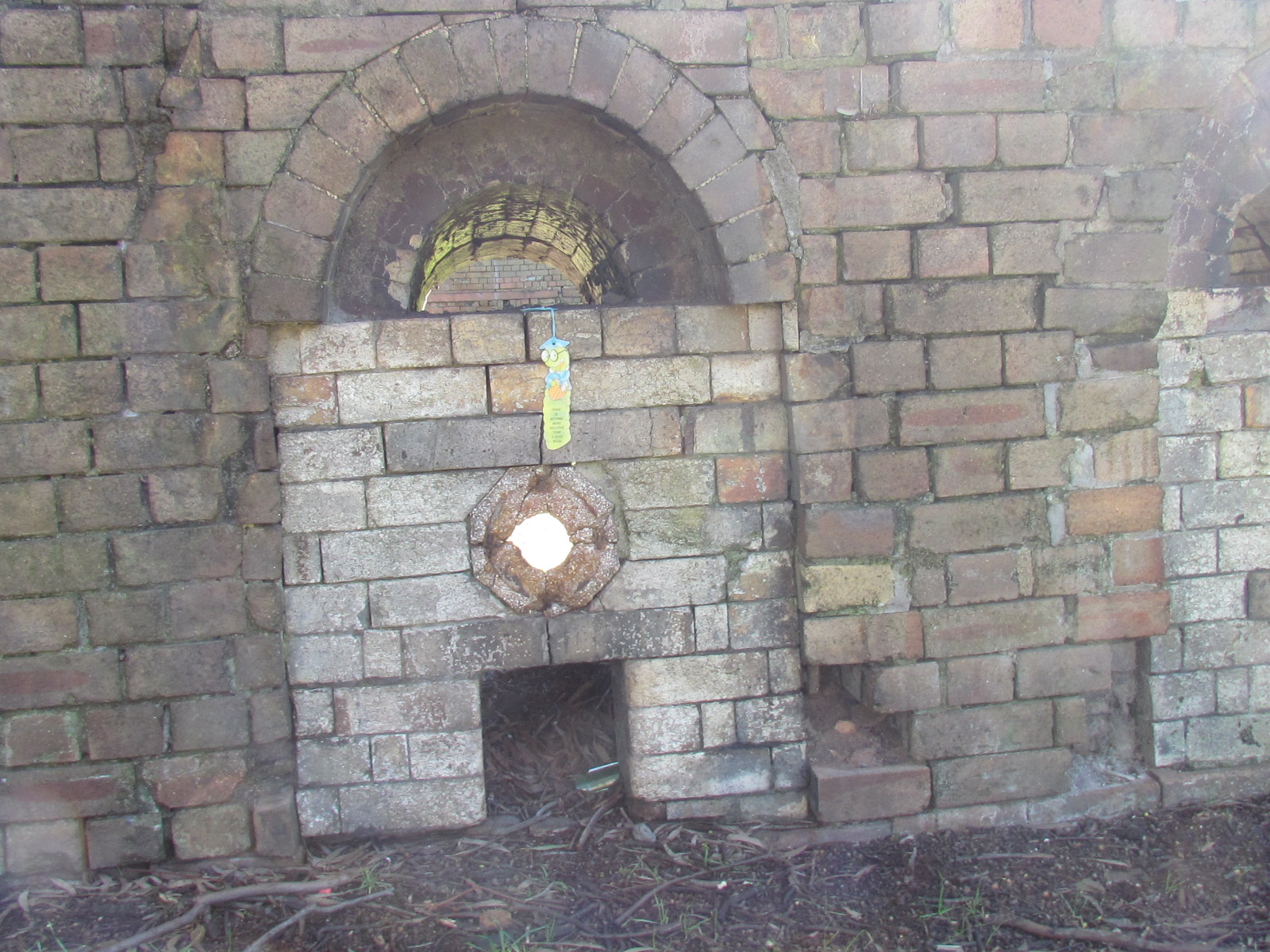
Me at the old brickwork kilns in Sydney Park:
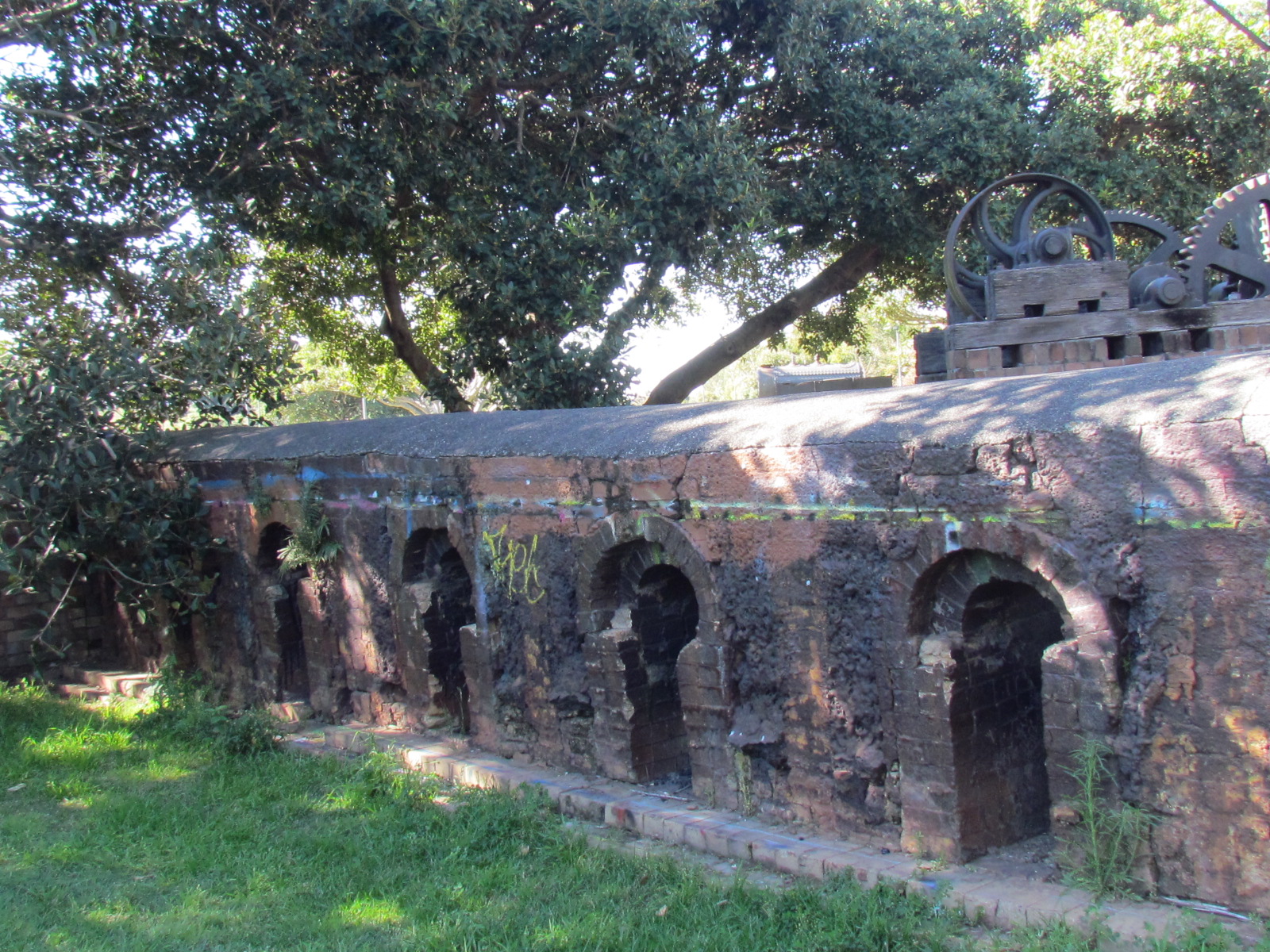
This row of kilns is near the corner of Sydney Park Road and King Street, near St Peters railway station:
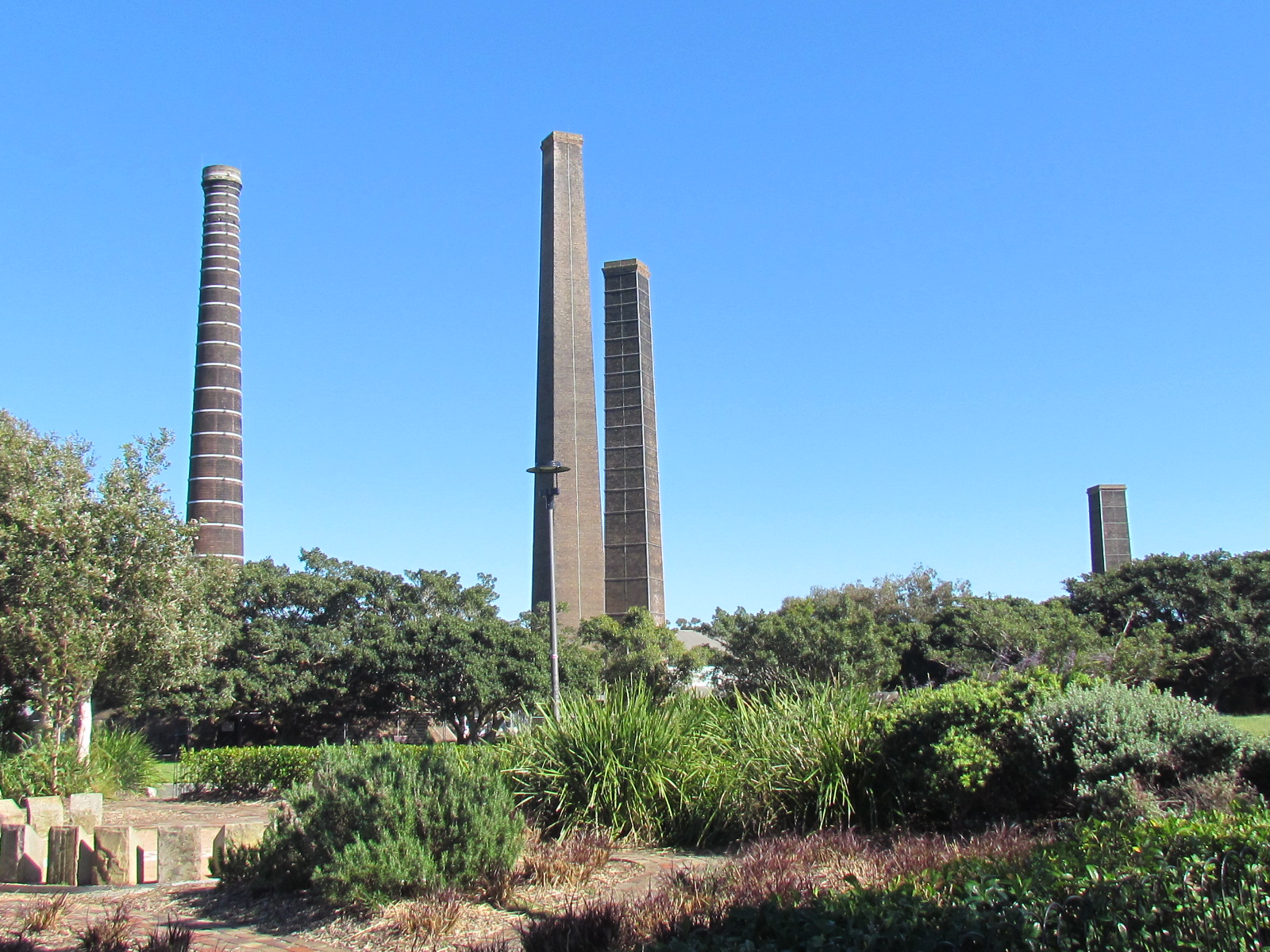
The chimneys from the old brickworks are an imposing sight:
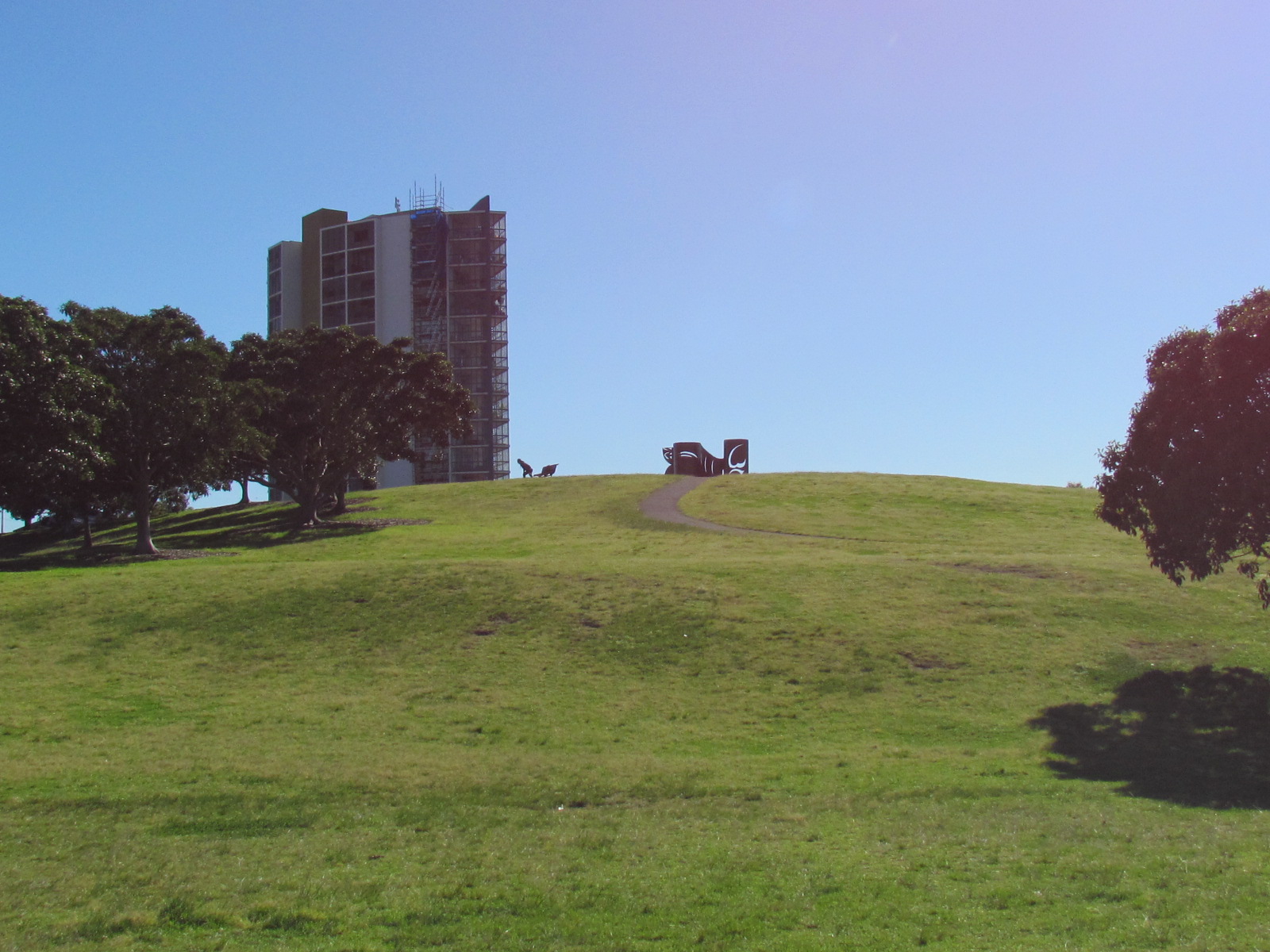
Slopes and skylines are a characteristic of Sydney Park:
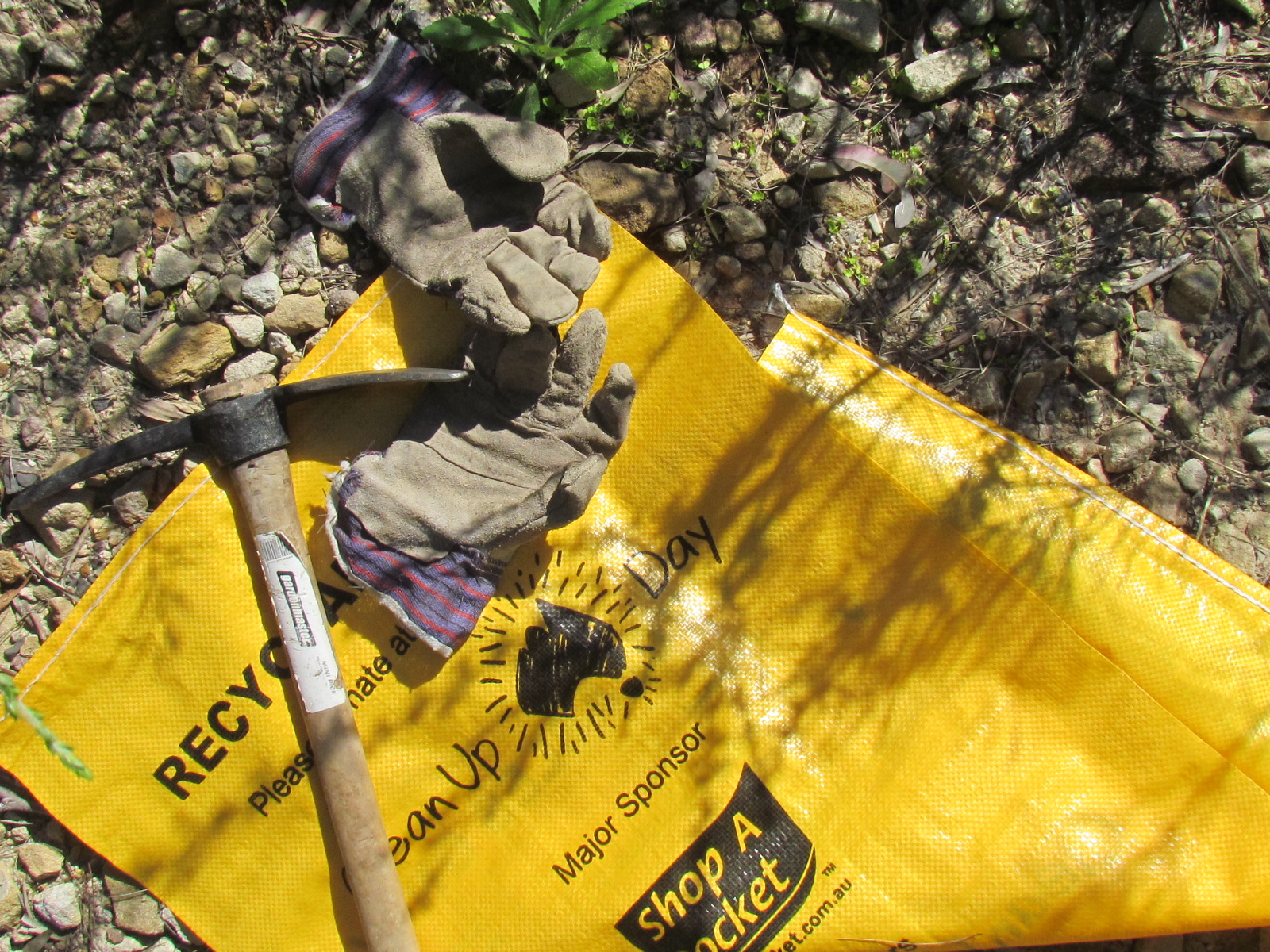
Down to the business of the day: bush conservation. These were the TC’s tools today:
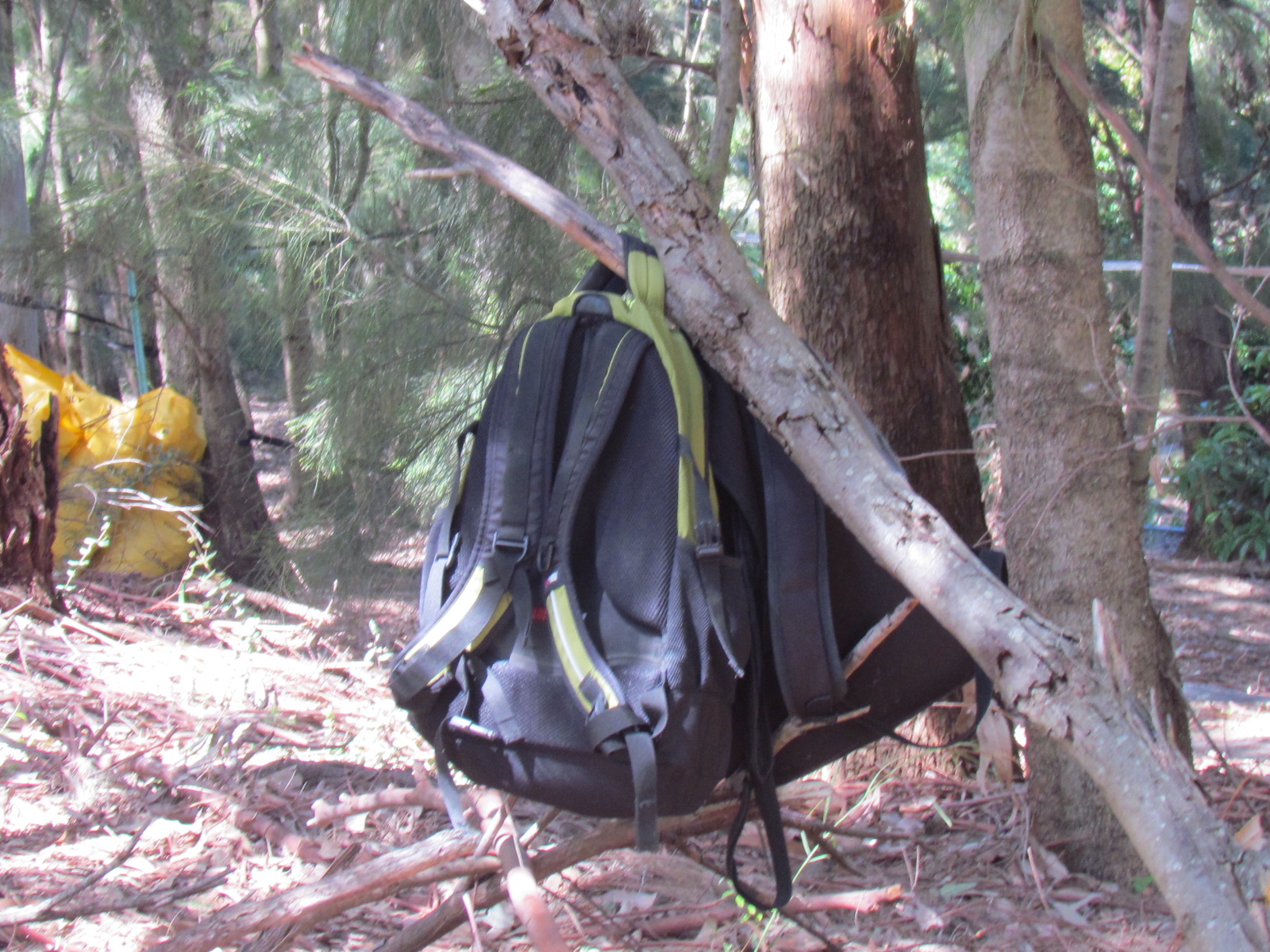
A handy tip from one of the seasoned volunteers: hang your bag on a branch, or you’re likely to find the ants have eaten your lunch:
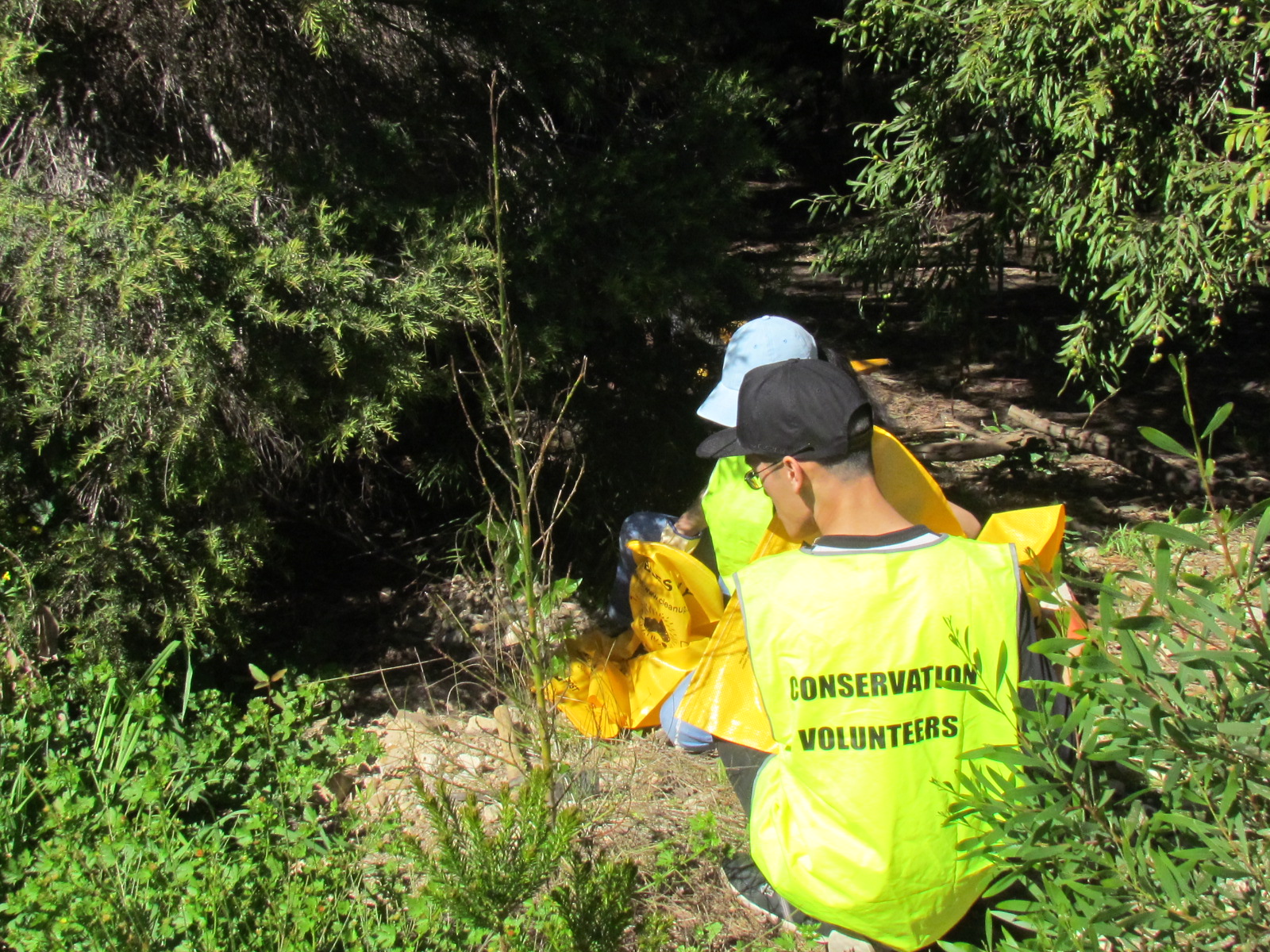
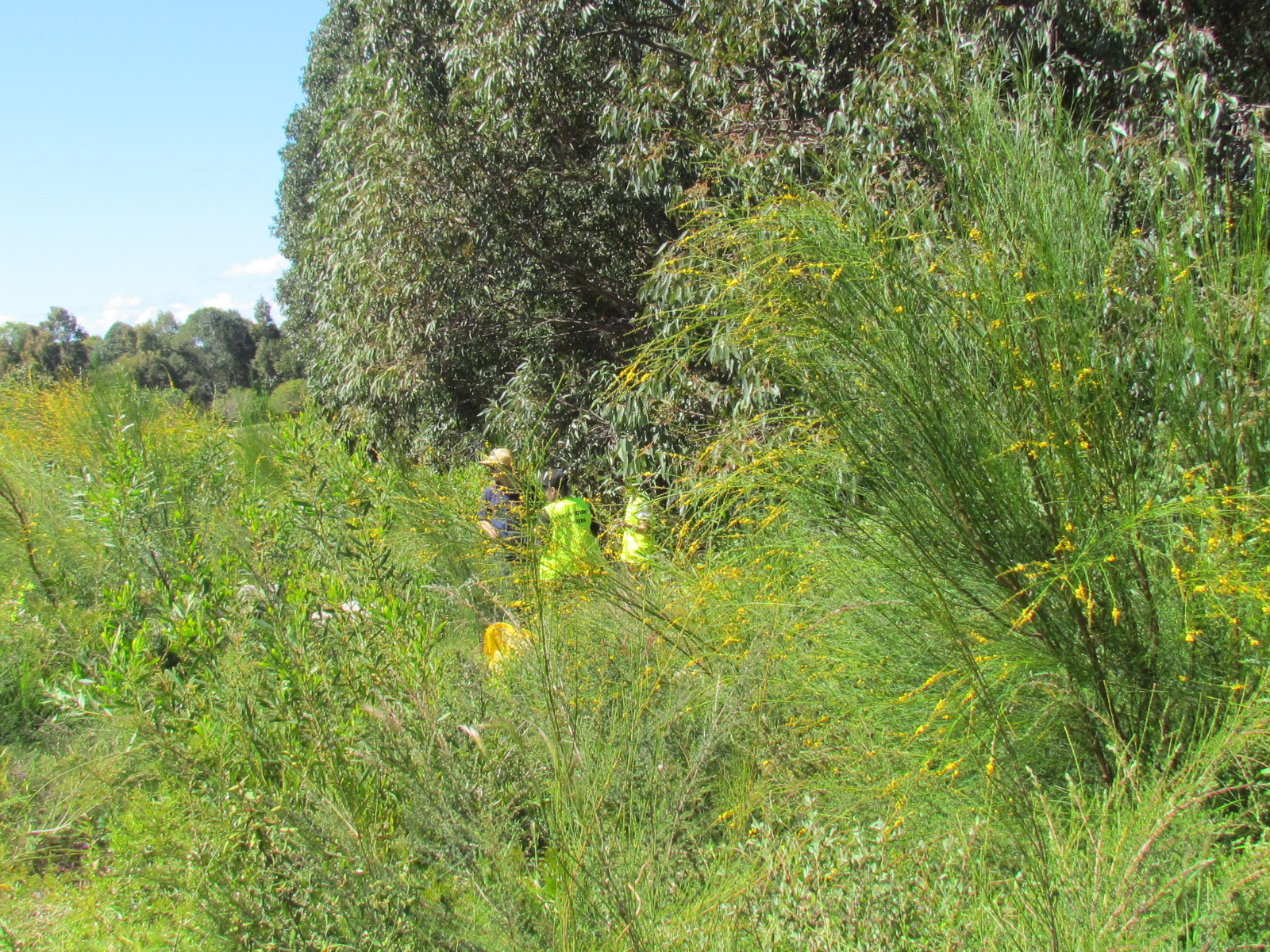
The volunteers wore bright yellow vests:
The bright outfit makes people easier to spot when out in the bush:
The group’s task today was to pull up weeds. Conservation Volunteers Australia and the local council cleared this site a few months ago (it was a mess of grass and weeds), covered it with Sydney sandstone to provide a good base for native plants, then planted a number of bushes and ground cover. The aim is to restore the area with mid-height vegetation, to provide food and homes for small birds and other creatures.
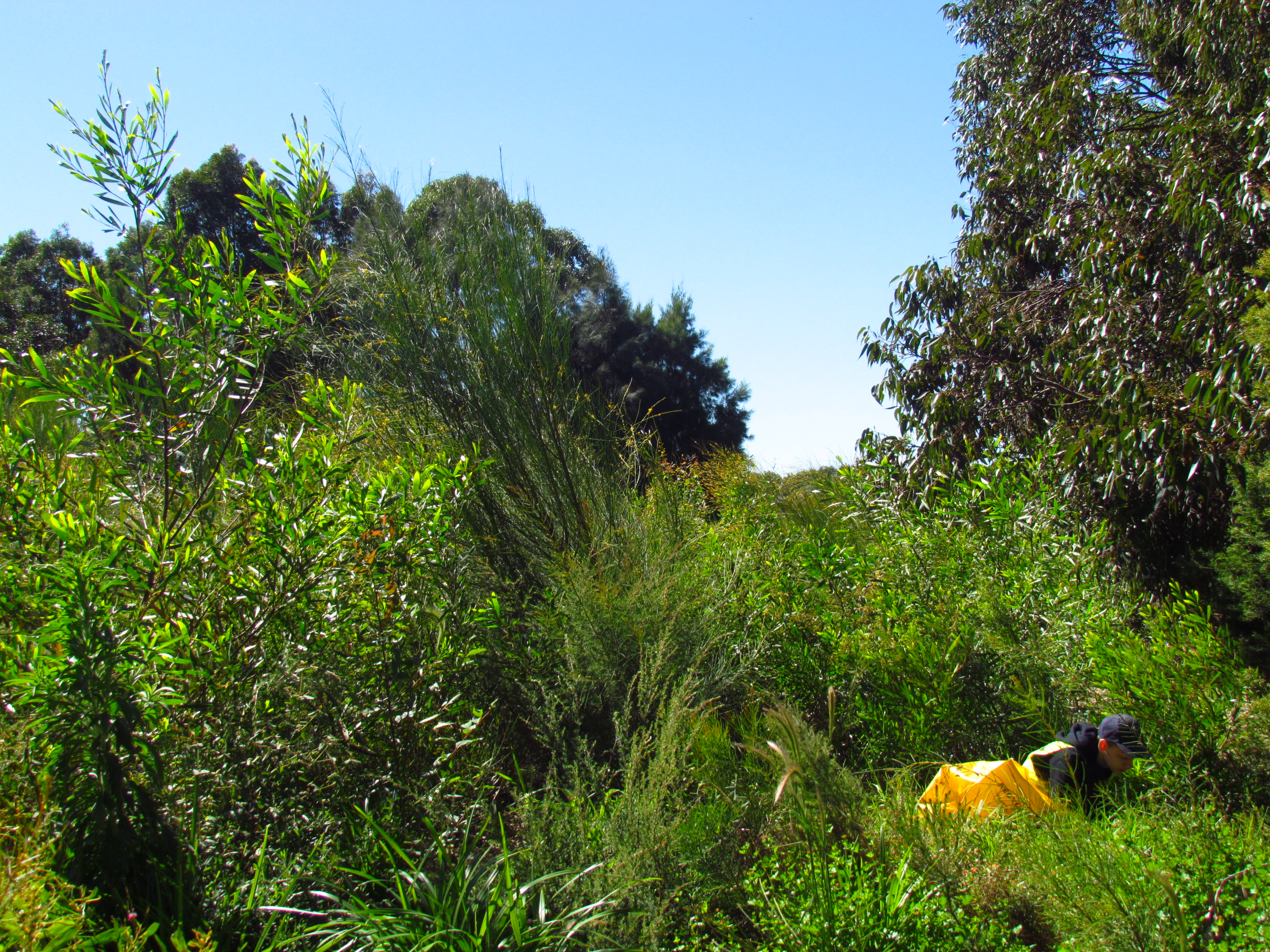
The new plantings are growing well. Spot the conservationists:
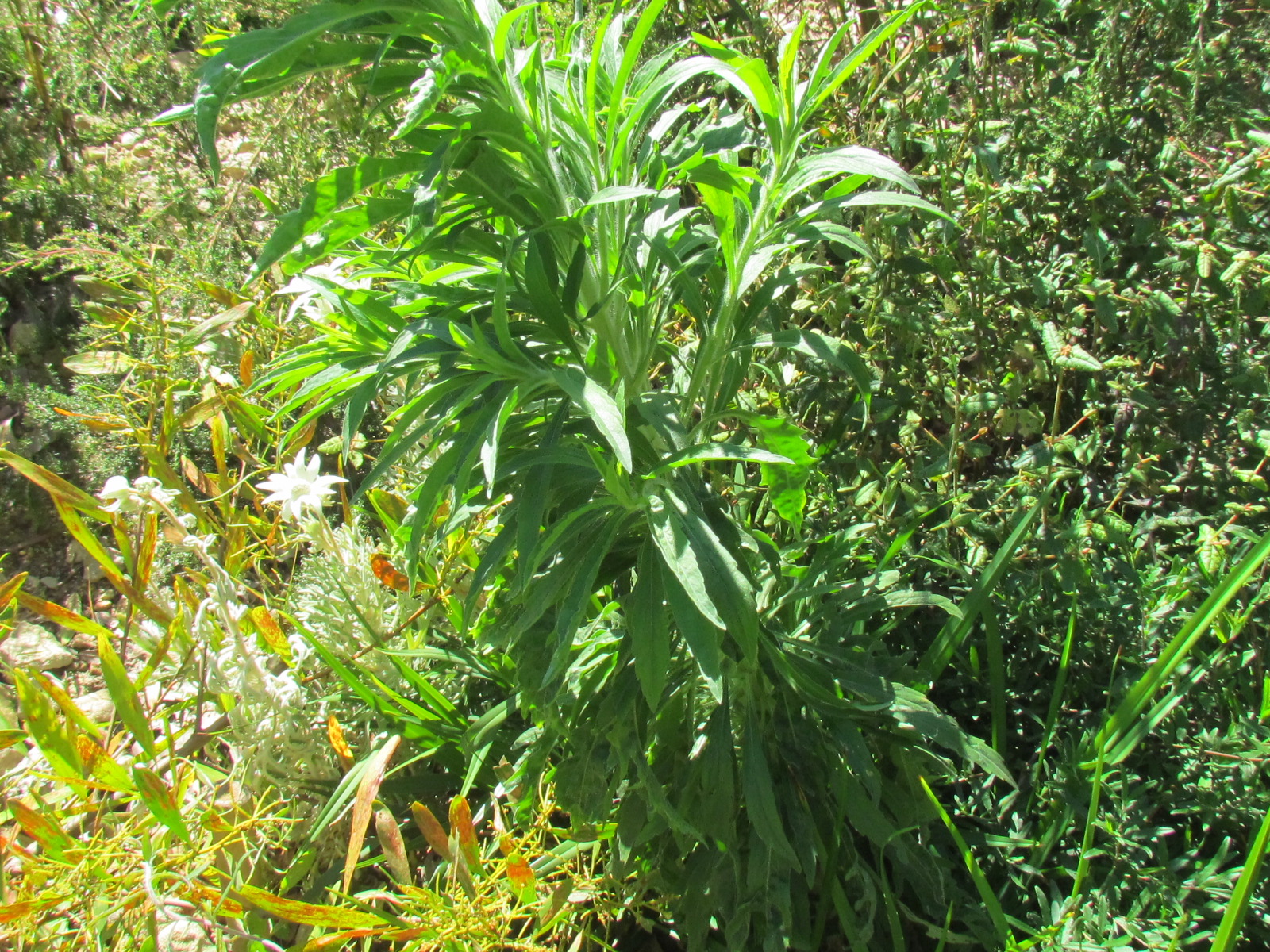
But things are not all good. Meet the enemy! Fleabane is one of the non-native plants the group wants to eradicate. This one was a large specimen, about four feet high. The TC wrestled with it for quite a few minutes, employing mattock and brute strength to pull it out by the roots:
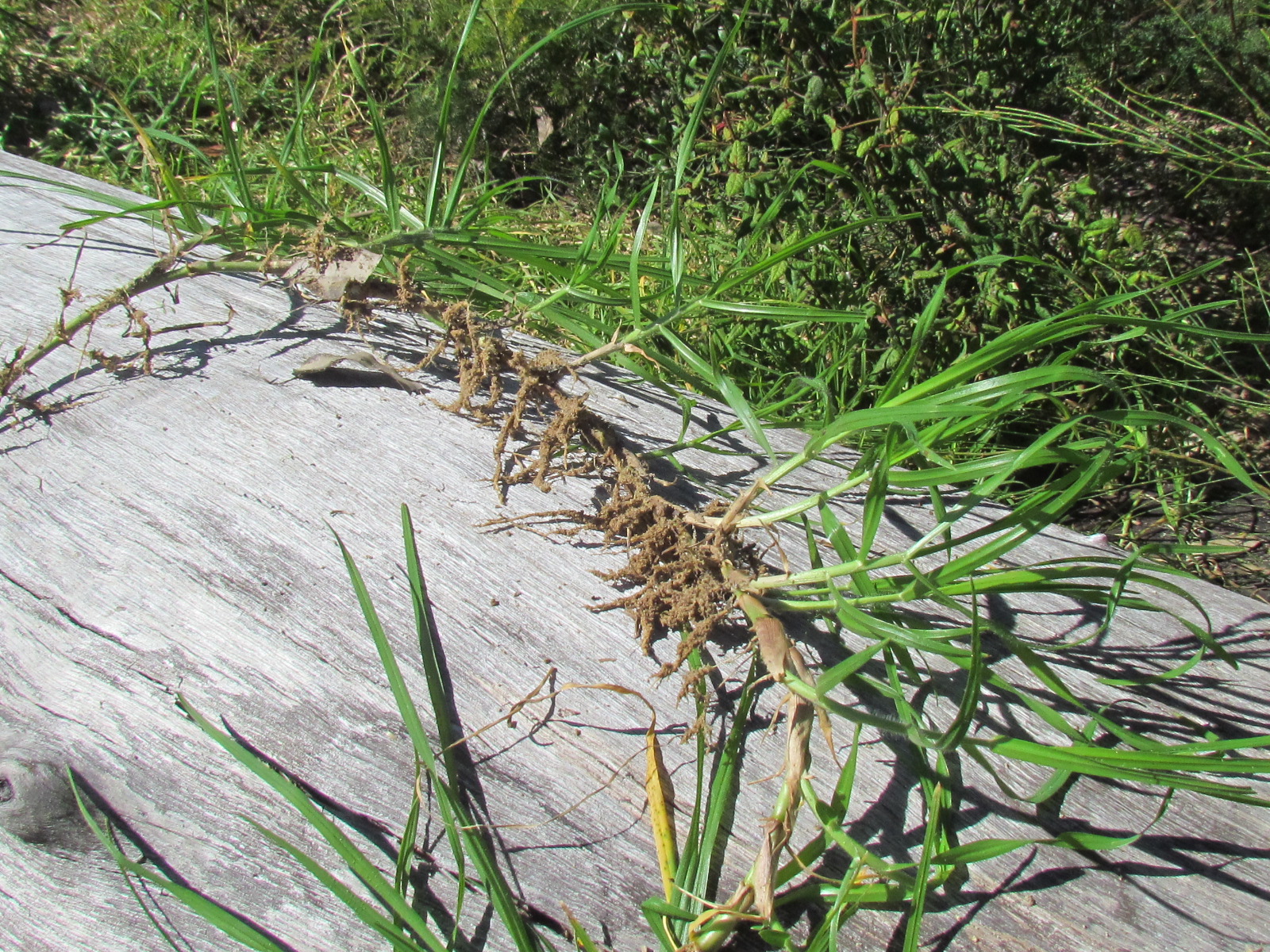
Another baddie bites the dust. Kikuyu grass. The TC found it very satisfying to pull these long strands of grass up from amongst the native bushes:
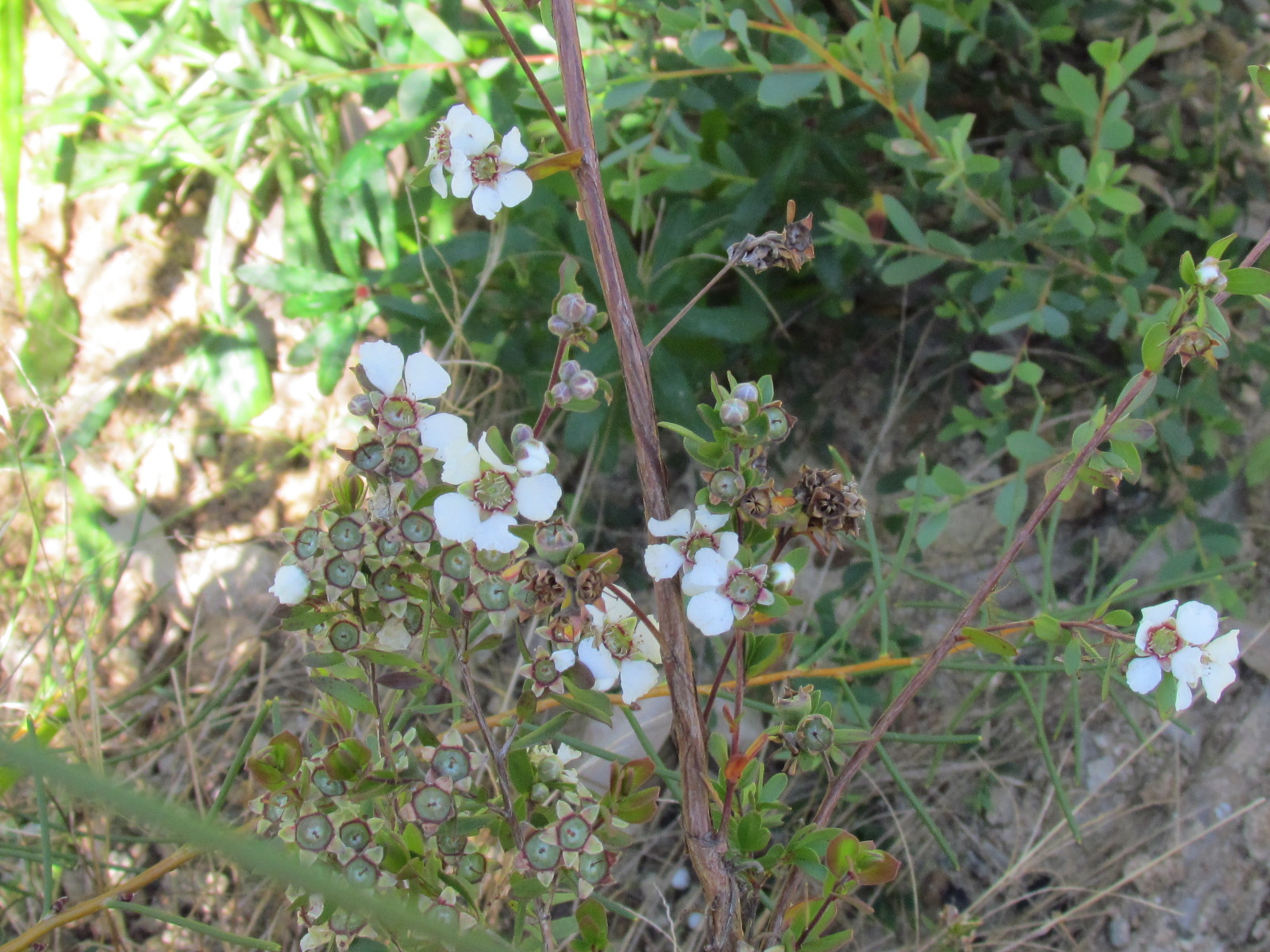
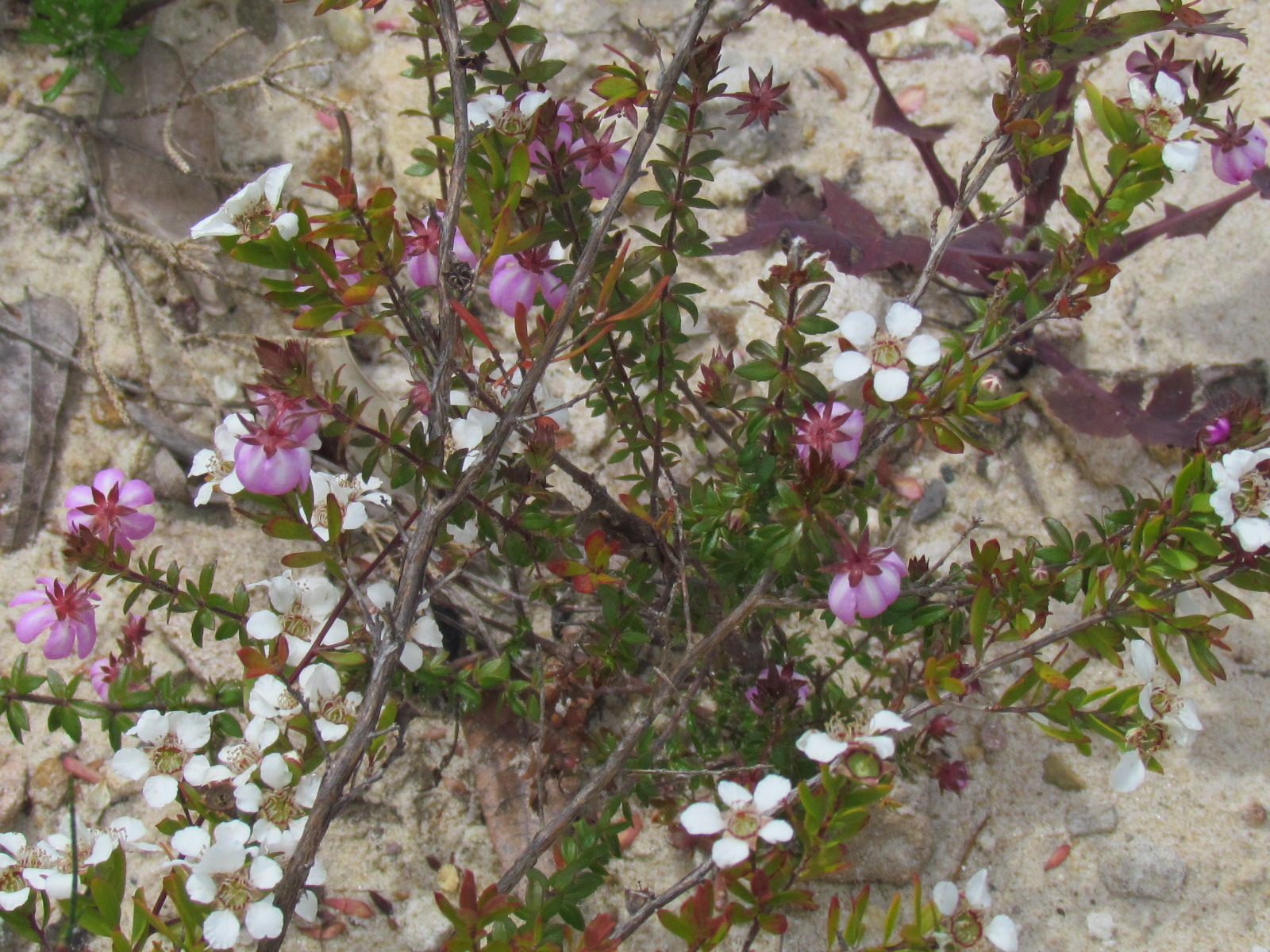
And now for the goodies. This is a tea tree (Leptospermum):
More tea tree, intertwined with a pink-flowered something:
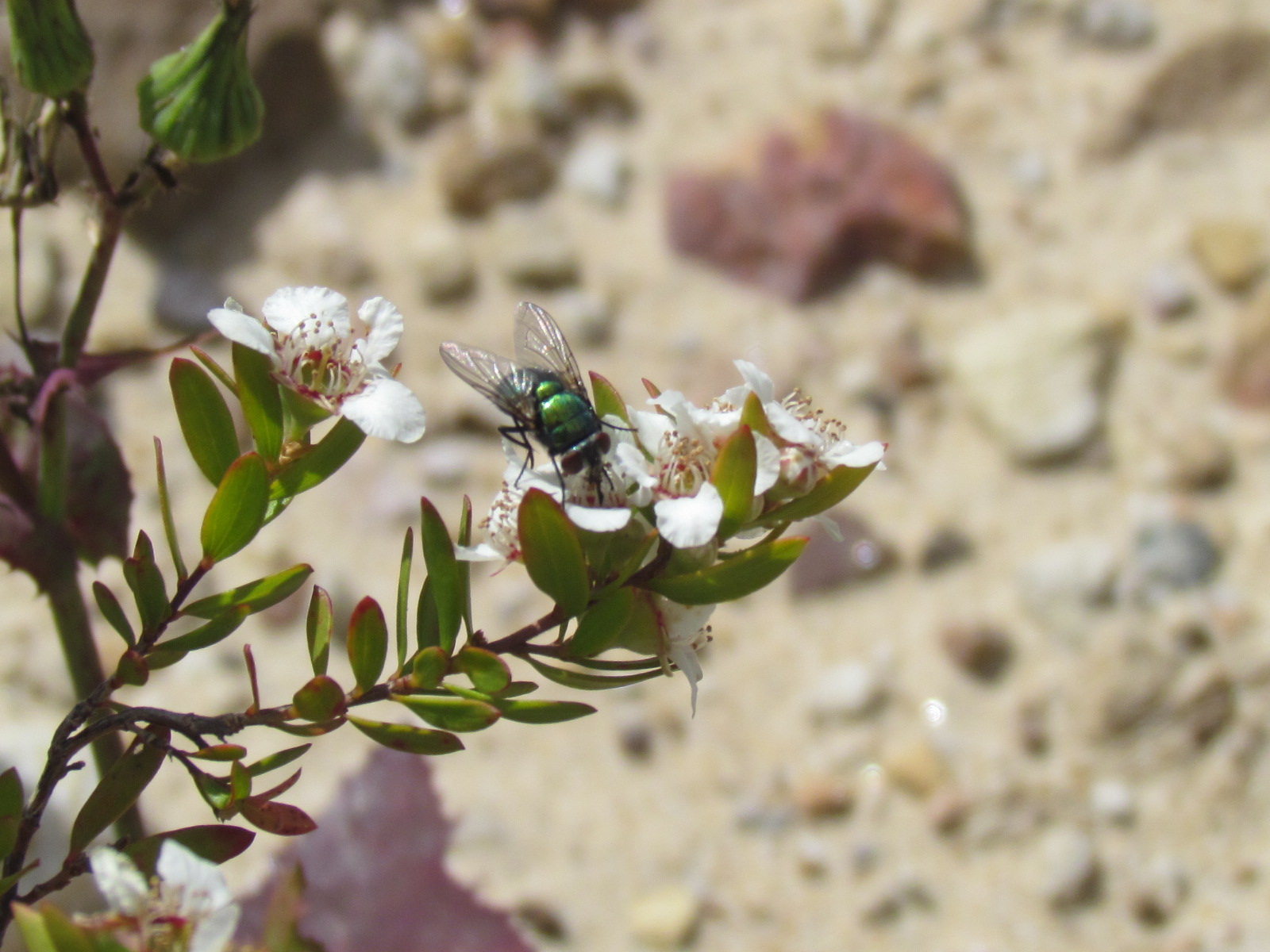
A colourful fly enjoying tea tree nectar:
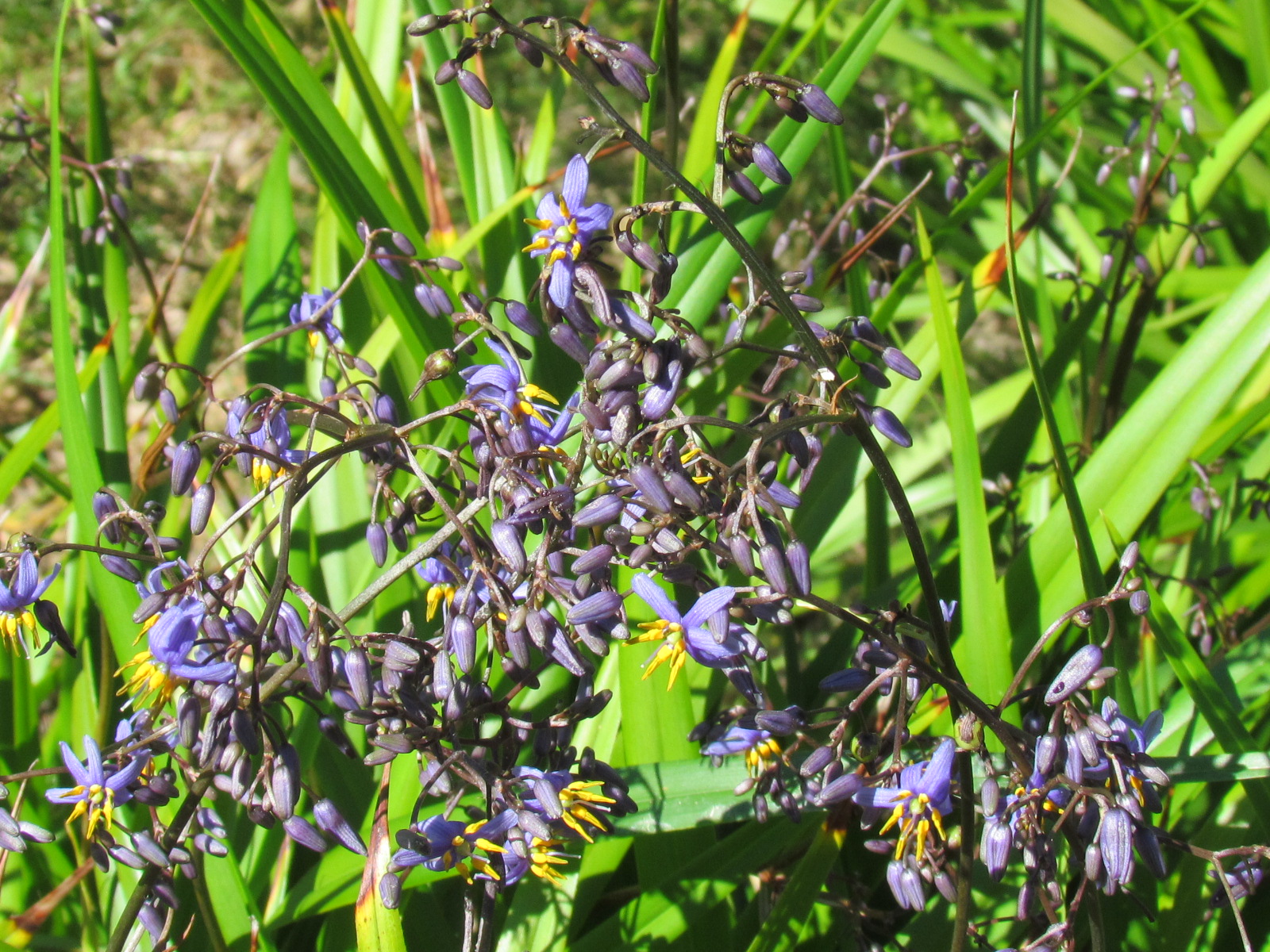
This Dianella caerulea has bright blue flowers, and eventually blueish purple berries that are edible. The TC, bless her soul, delights in plucking them straight from the garden and popping them in her mouth:
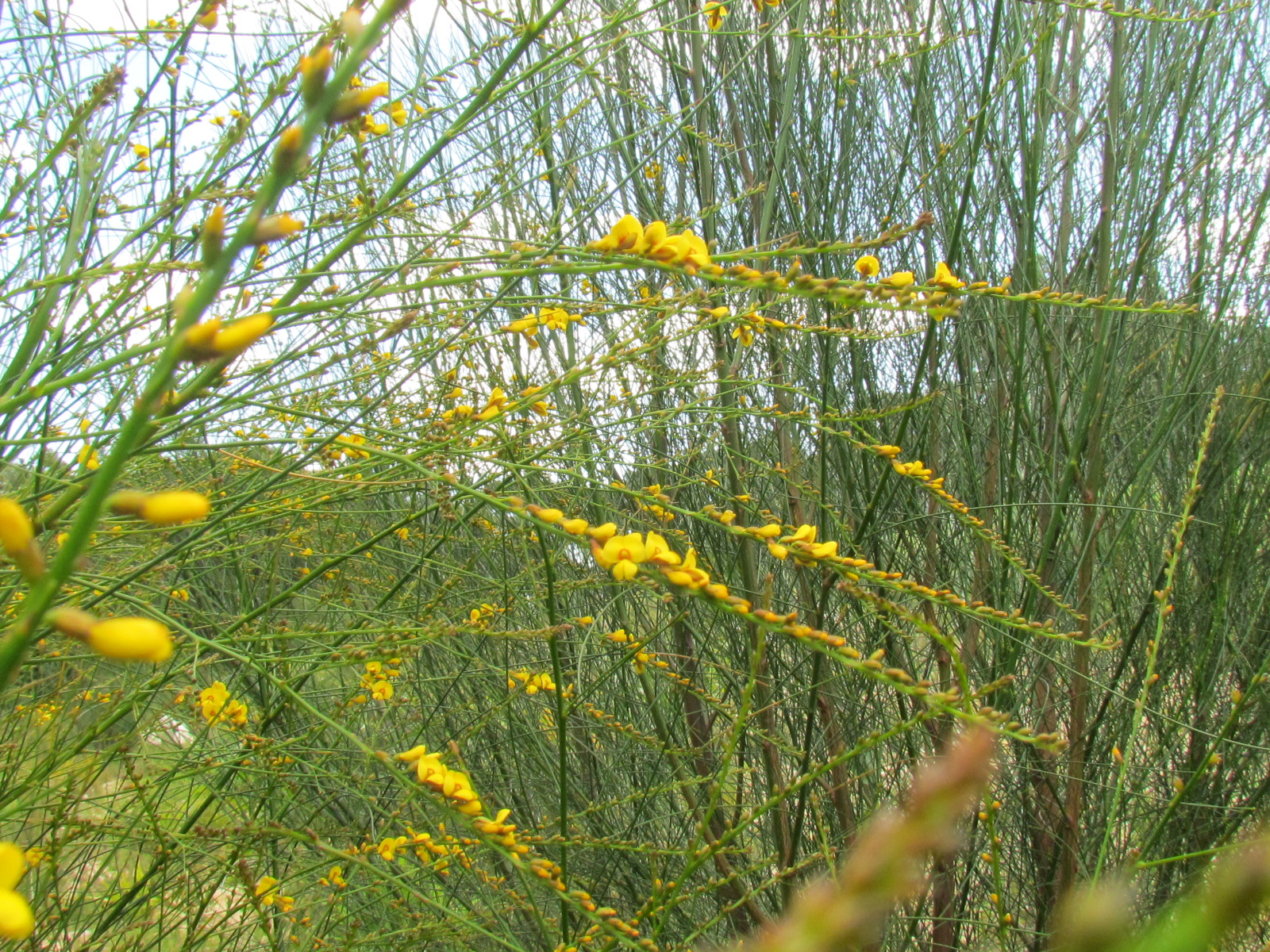
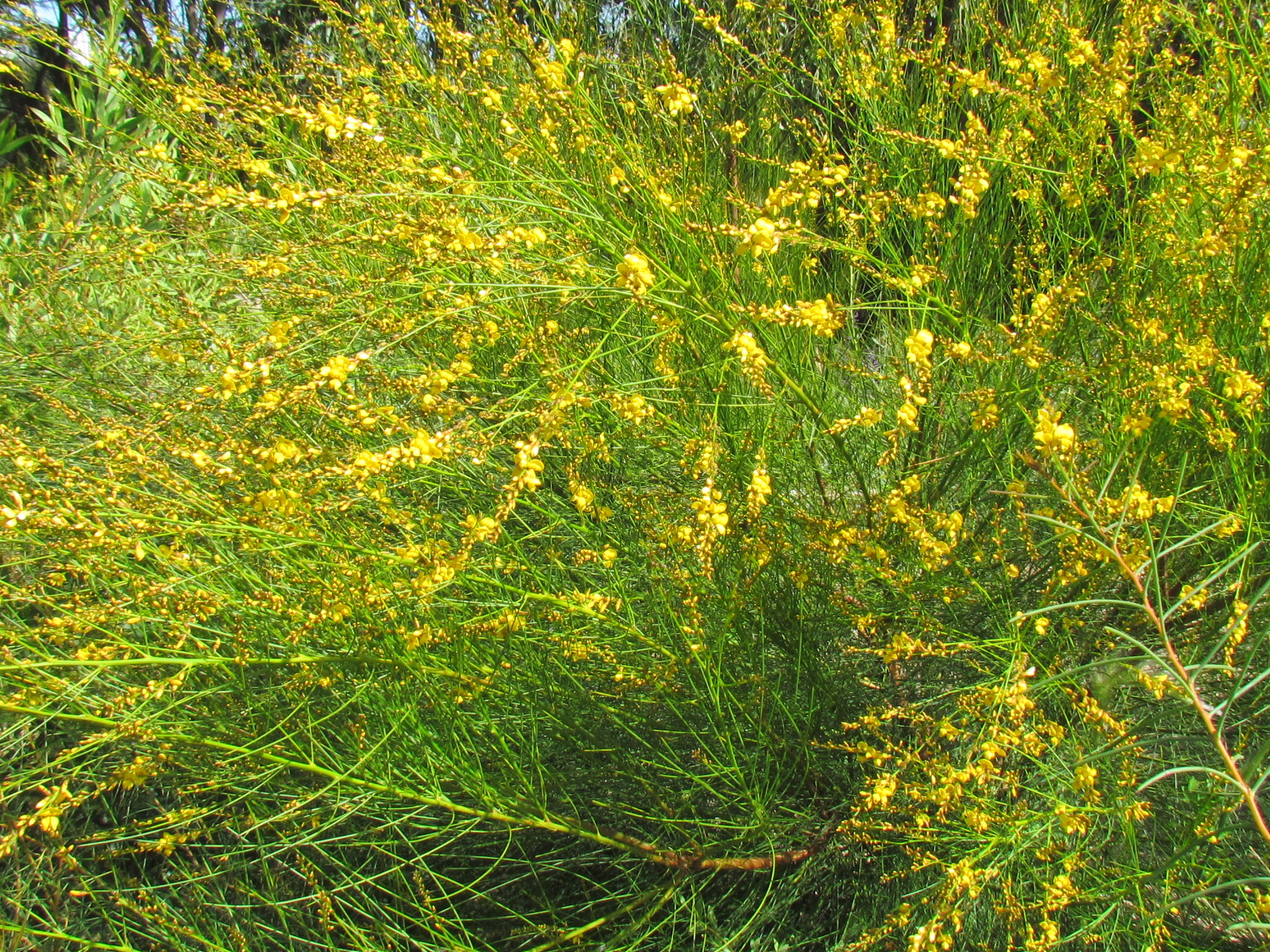
There was a lot of this yellow-flowered bush. The TC doesn’t know the name of it:
A profusion of yellow:
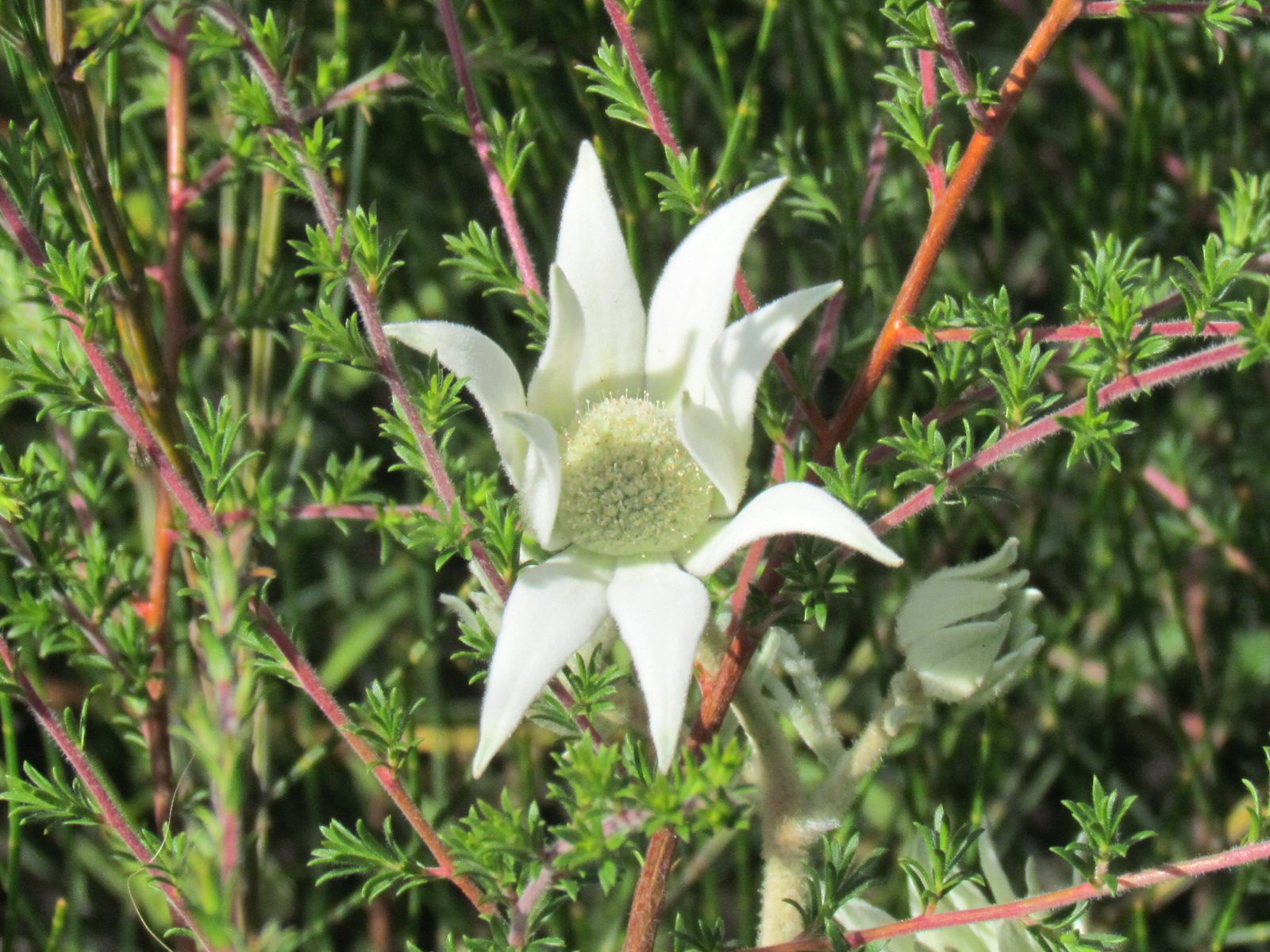
A hardy white flower, the name of which currently escapes the TC and me:
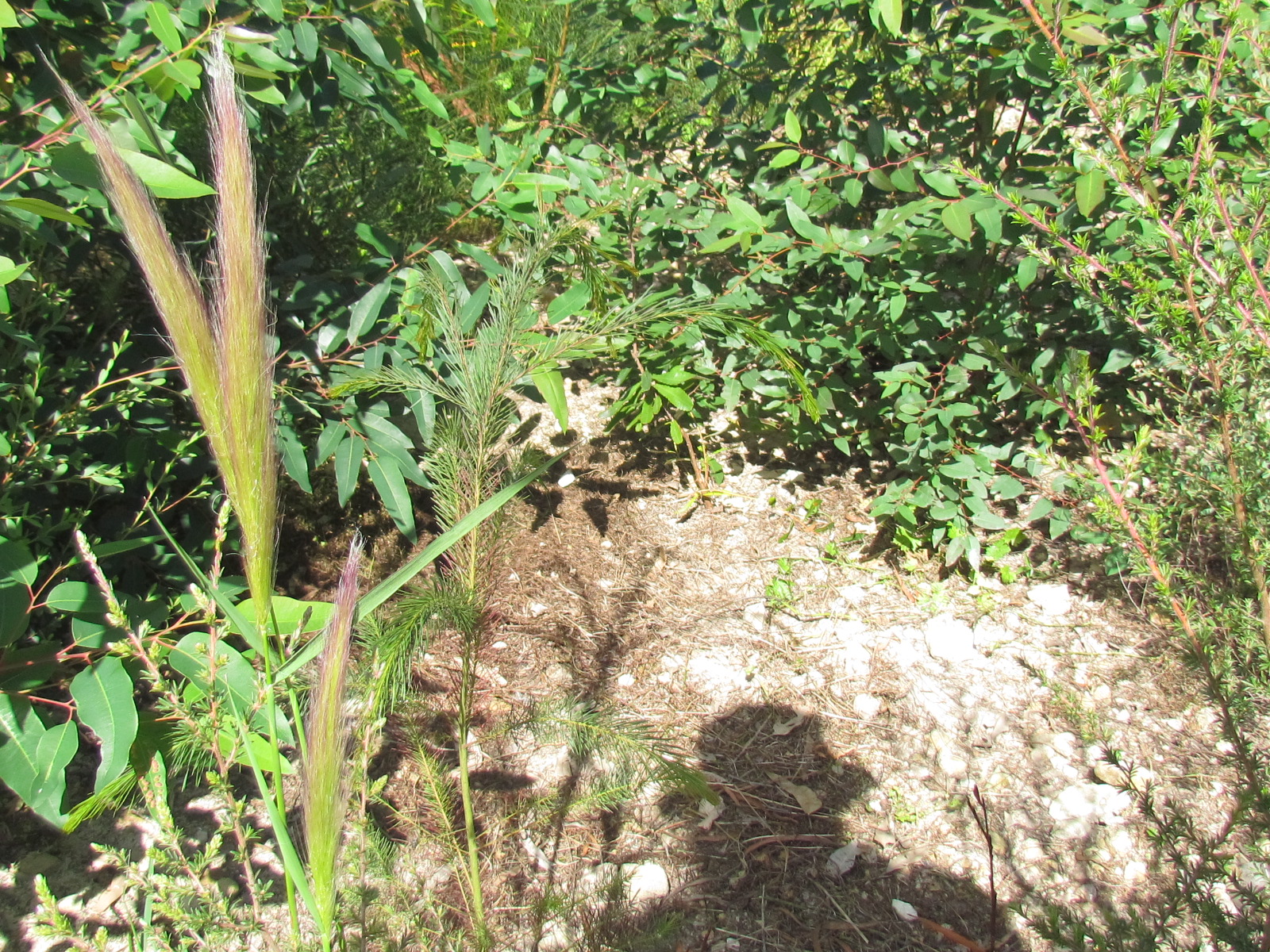
A rare shot of the TC photographing some grass. Note the hat!
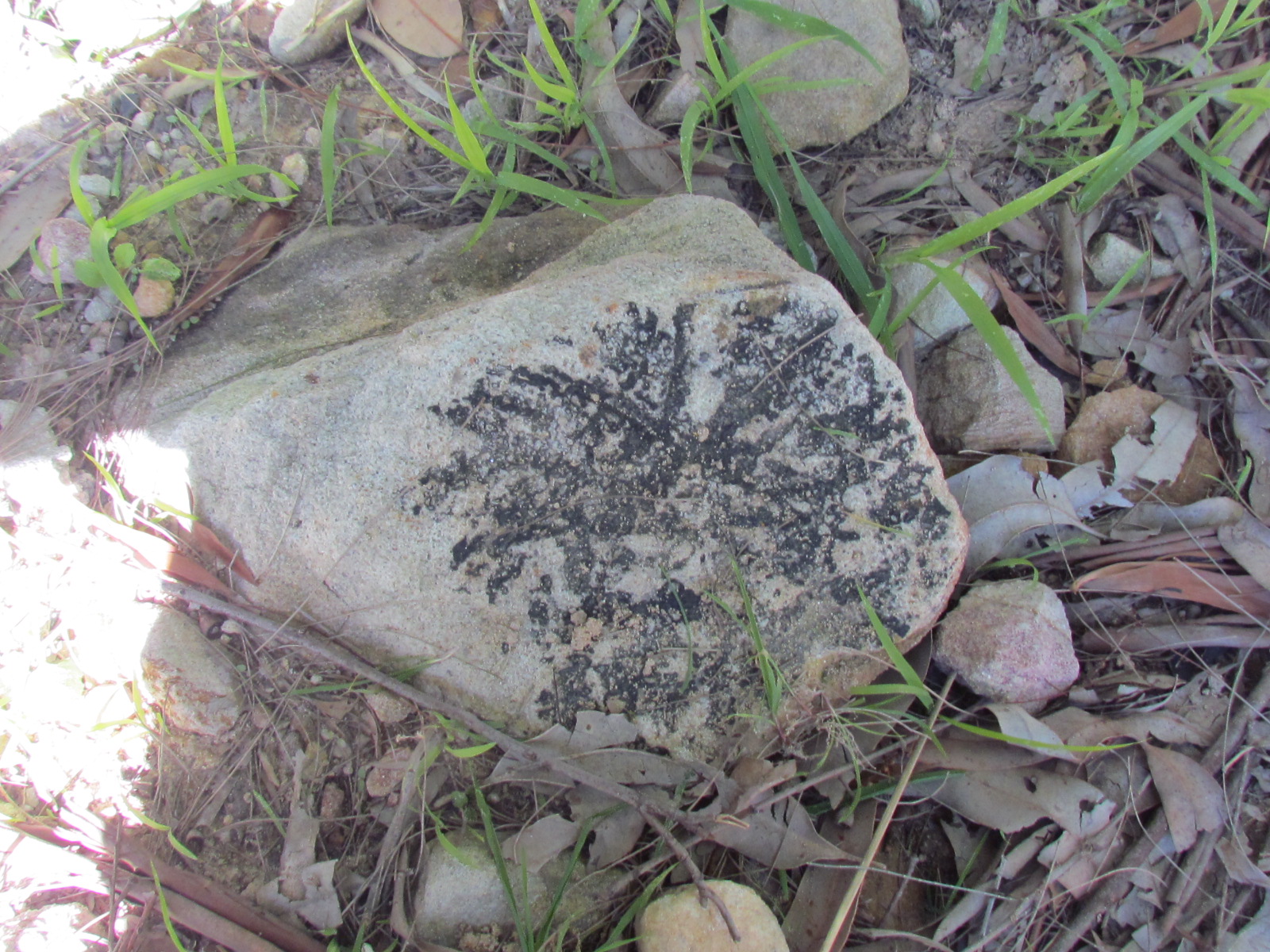
The TC isn’t sure if this is a fossilised leaf or just a pattern in the sandstone rock:
This is the blog of Mark Wordsworm, the travelling worm. I’m a 25-year-old bookmark and can proudly boast my own Hallmark serial number, 95 HBM 80-1. You’ll probably want to read all about me and my Travelling Companion (the TC).
Today’s travel notes
The TC recently spent a couple of days in Leura, a town in the Blue Mountains near Sydney. I was there too, but I spent my time cosily buried in a book. The TC, brave soul that she is, went on a four-hour hike from Leura to Wentworth Falls and back. The walk is 6 to 7 kilometres in distance, with a vertical drop and ascent of 200 metres.
My impressions? To judge by the TC’s glowing face and weary limbs, this was a walk and a half. She loved it, and had sore muscles for days afterwards.
The book I’m in
Jupiter War, by Neal Asher.
Travel tip
When walking in the Blue Mountains, take plenty of water and some food. Although your intention may be to stay out only a couple of hours, weather can change and mishaps can happen.
Recommended accommodation
Fairmont Resort, 1 Sublime Point Rd, Leura NSW 2780. Comfort, warmth, and friendliness.
The photos
Looking out over the Blue Mountains from the Fairmont Resort in Leura. This is where the four-hour walk started. Early in the morning, the valley is filled with mist:
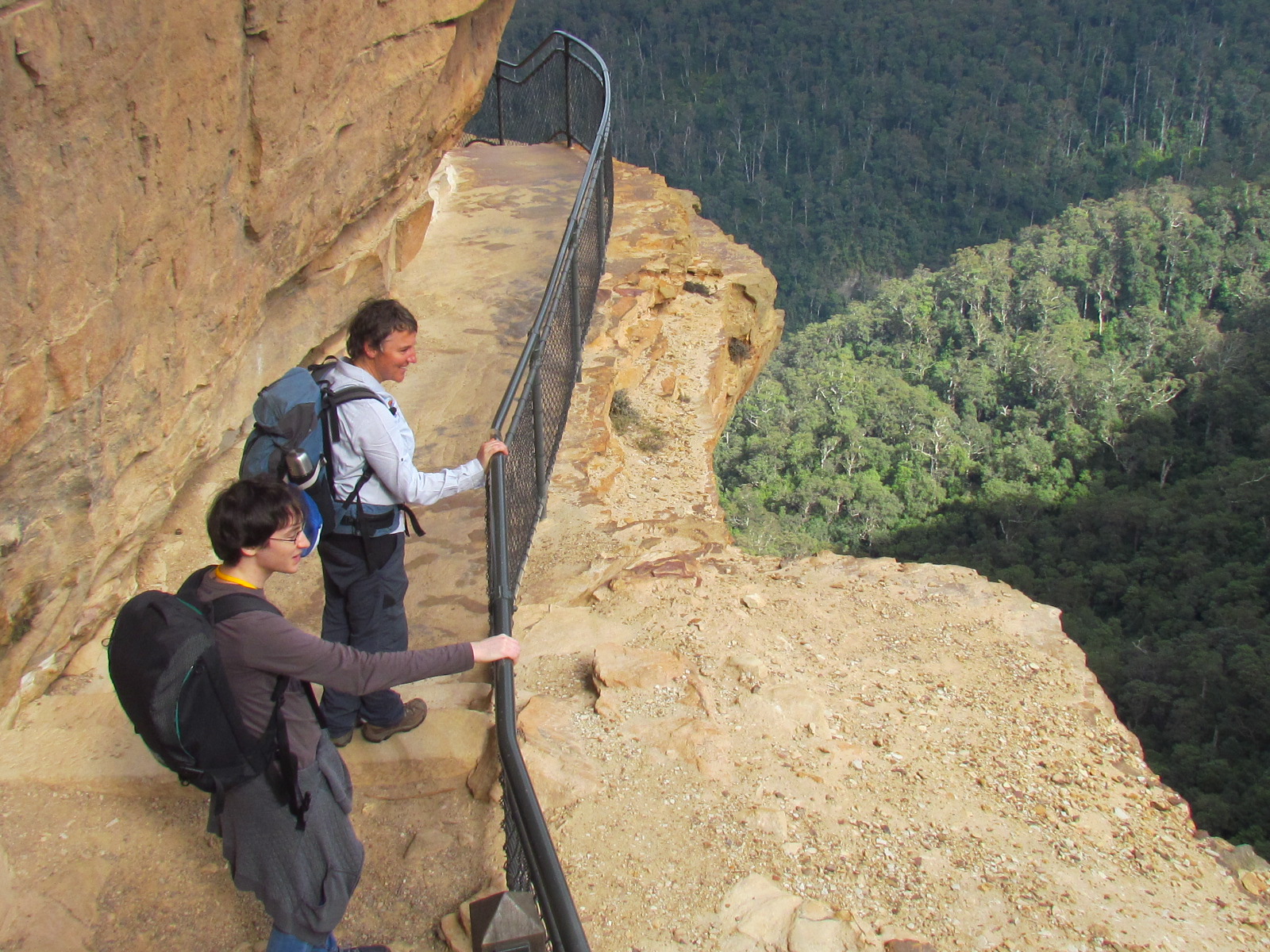
On the way to Wentworth Falls, the path takes you up and down, through forest-filled glens, under overhanging rocks, along cliff faces:
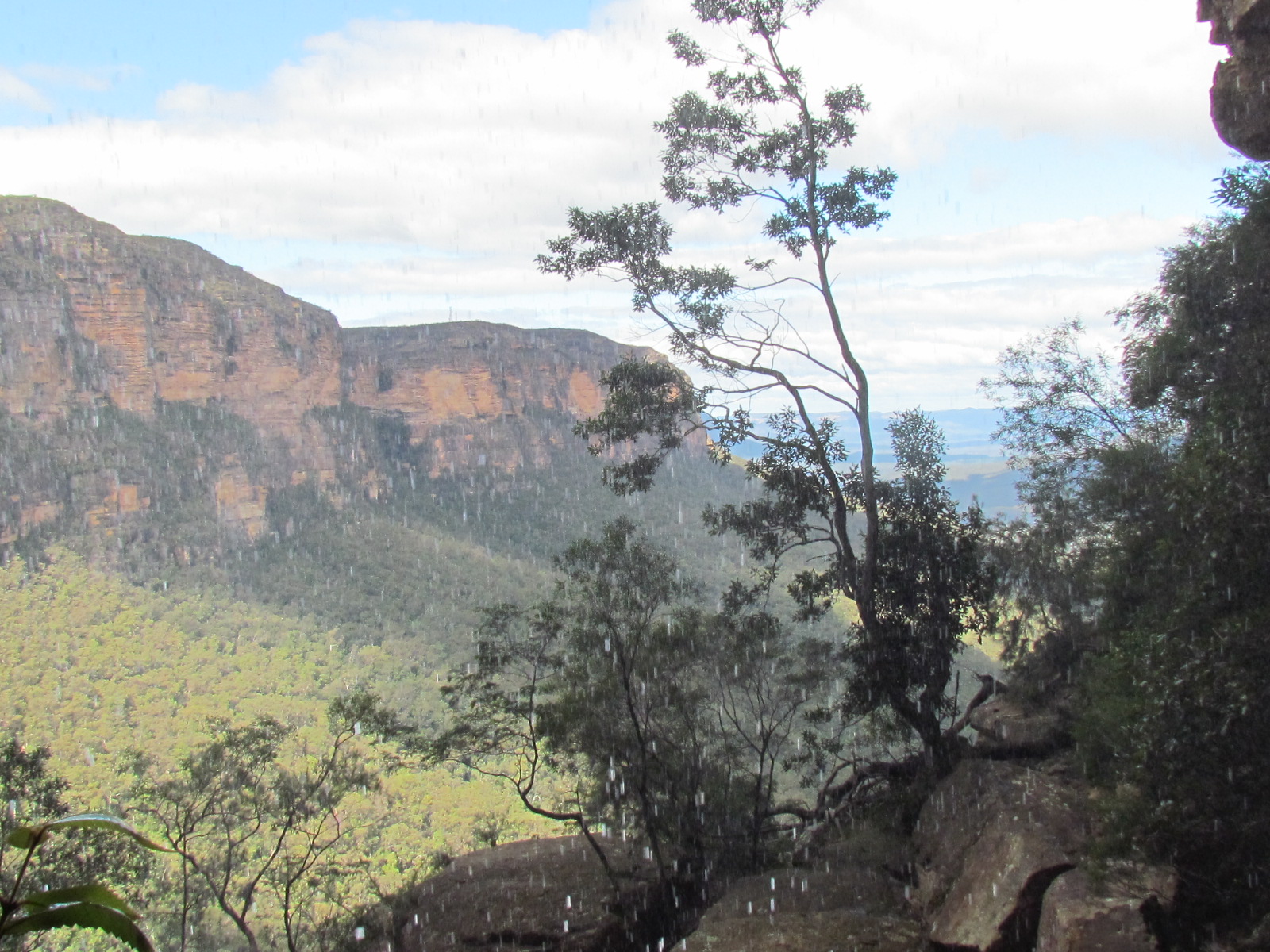
The views are stunning:
At the top of Wentworth Falls, the ground just ends. The water falls over the edge:
Wentworth Falls, seen from the bottom:
To get down there, you can take the National Pass, a spectacular cliff-face path of metal and rock:
Cockatoos frolic around the falls:
On the loop back to Leura, the TC’s group walked through the Valley of the Waters. This is a gorgeous walk, with waterfalls and hanging gardens and spectacular views. This shot is taken from behind the curtain of water that drops off the cliffs:
Here’s a short video taken from behind the same waterfall:
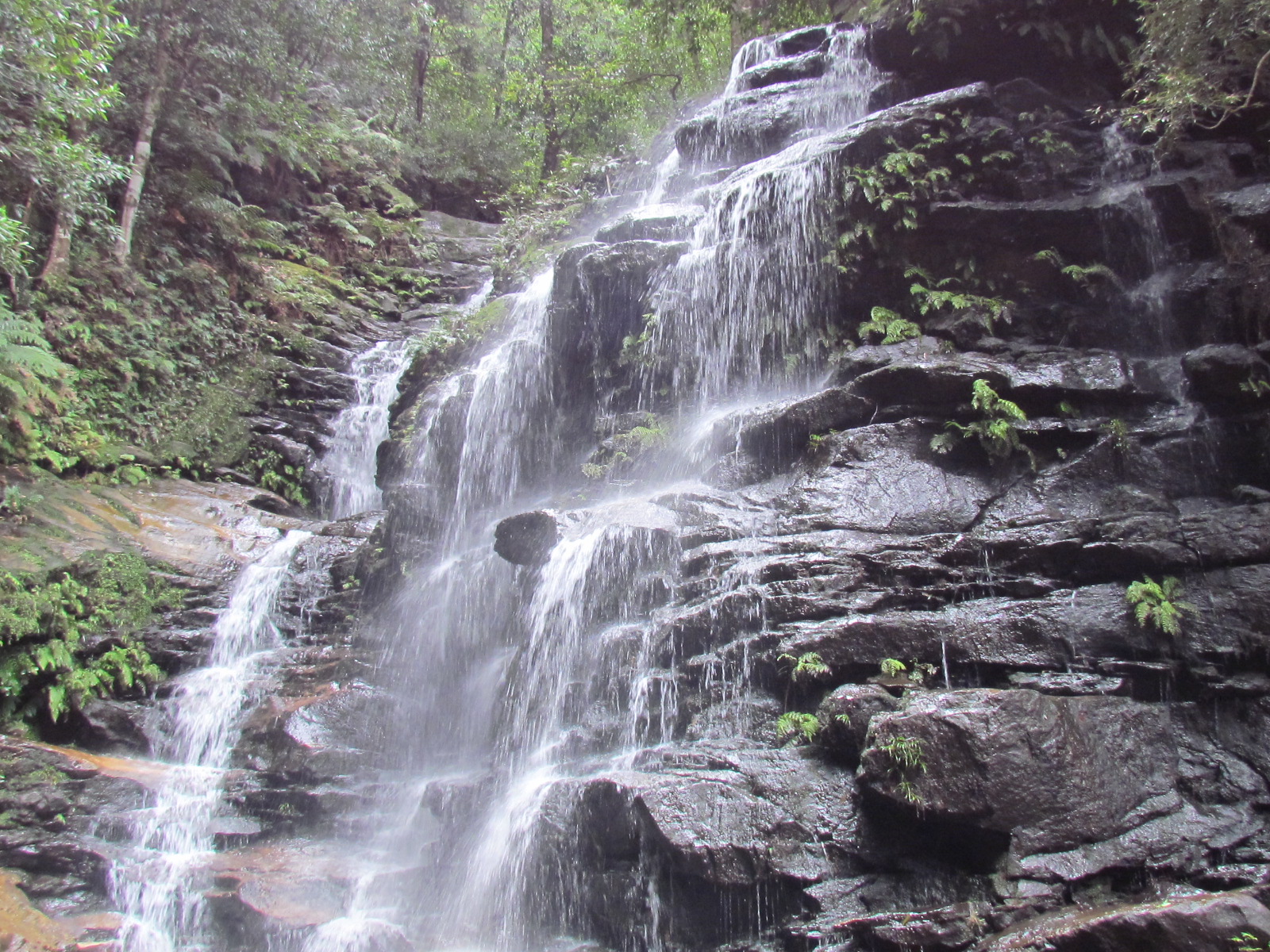
The Cascades are a silver shower of water on black rock:
This is the blog of Mark Wordsworm, the travelling worm. I’m a 25-year-old bookmark and can proudly boast my own Hallmark serial number, 95 HBM 80-1. You’ll probably want to read all about me and my Travelling Companion (the TC).
Today’s travel notes
Me and the TC just spent a day and a half in Melbourne, Victoria. On Saturday we drove from the big smoke down to the Twelve Apostles on Australia’s south coast. The drive takes around three hours. It’s well worth the trip, to see the Apostles themselves as well as the bush and coastal area down the bottom end of Australia.
My impressions? Bright, clear beauty.
The book I’m in
My Brilliant Friend, by Elena Ferrante. Teenage angst, beautifully written, with a hint of dreadfulness to come.
Travel tip
Take layers and layers of clothing to the bottom end of Australia. Even in spring, the cold can be bitter. Leave the brolly behind, unless it has gale-force certification.
The photos
Me at Twelve Apostles, Victoria:
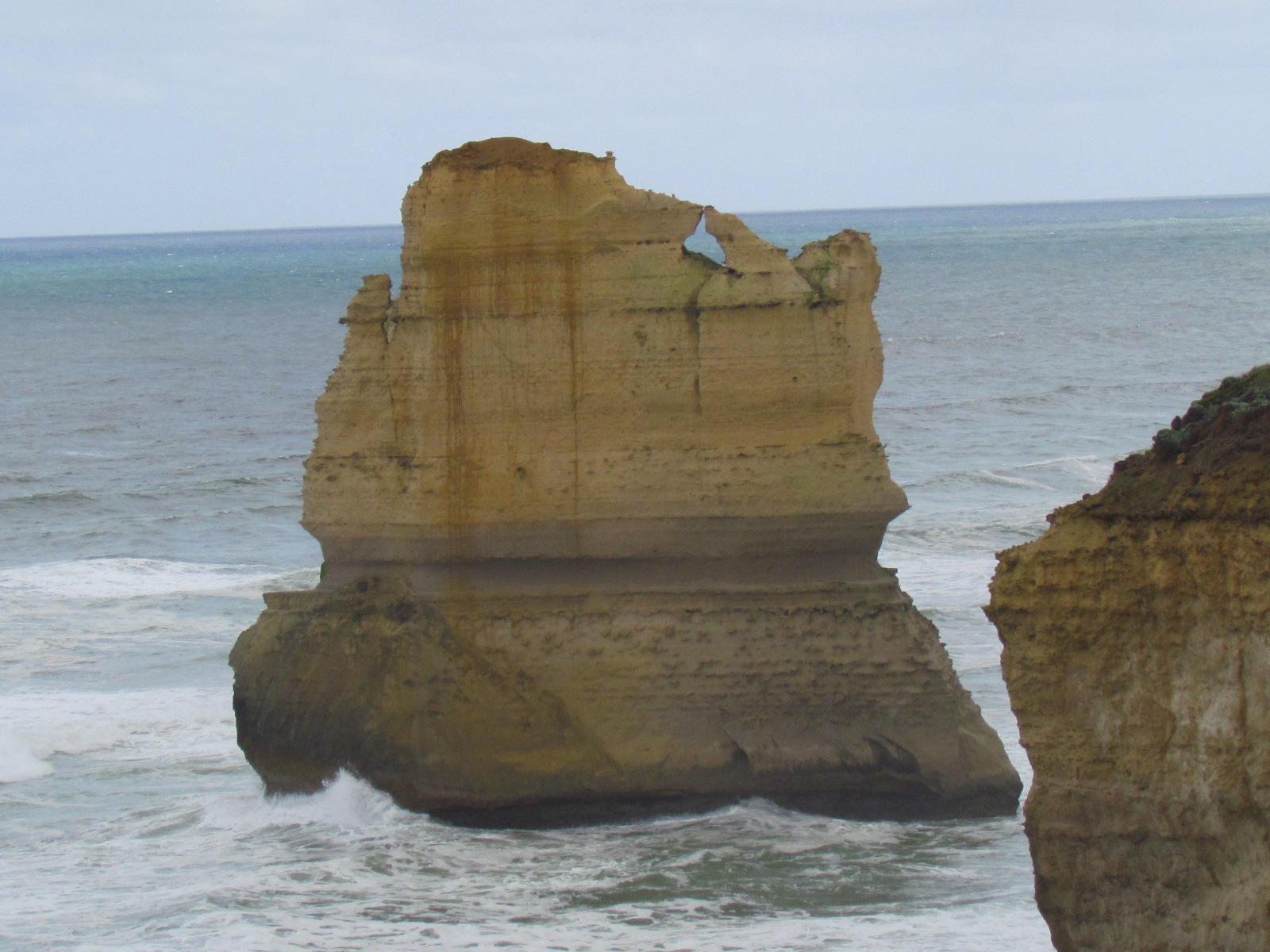
The Apostles are these strange steeples of rock rising directly out of the waves:
The vegetation is pretty in a low-stated way. It’s early spring, with tones of silver and green:
You can walk down the cliff path at the Gibson Steps and stroll along the beach. This shot is taken with the Twelve Apostles out of sight behind the photographer:
This is the blog of Mark Wordsworm, the travelling worm. I’m a 25-year-old bookmark and can proudly boast my own Hallmark serial number, 95 HBM 80-1. You’ll probably want to read all about me and my Travelling Companion (the TC).
Today’s travel notes
Me and the TC spent a couple of days in Freycinet Park, Tasmania. A Bennetts Wallaby, also called a red-necked wallaby, wandered into the car park at the start of the walk to Wineglass Bay Lookout.
My impressions? Somewhat jaded, slightly faded – I’m referring to the wallaby, not to myself of course.
The book I’m in
Where Song Began, by Tim Low. The fascinating tale of how Australia’s birds took over the world.
Recommended accommodation
Freycinet Lodge in Coles Bay. The cabins are dotted around amongst the trees. Inside is clean and comfortable. Open the doors to step out amidst the trees, birds, wallabies and echidnas.
The photos
This worm can pardon the mother wallaby for her slightly dufus expression. It must be hard work carrying such a big joey in the pouch. And so hard to scratch that itch too!
This is the blog of Mark Wordsworm, the travelling worm. I’m a 25-year-old bookmark and can proudly boast my own Hallmark serial number, 95 HBM 80-1. You’ll probably want to read all about me and my Travelling Companion (the TC).
Today’s travel notes
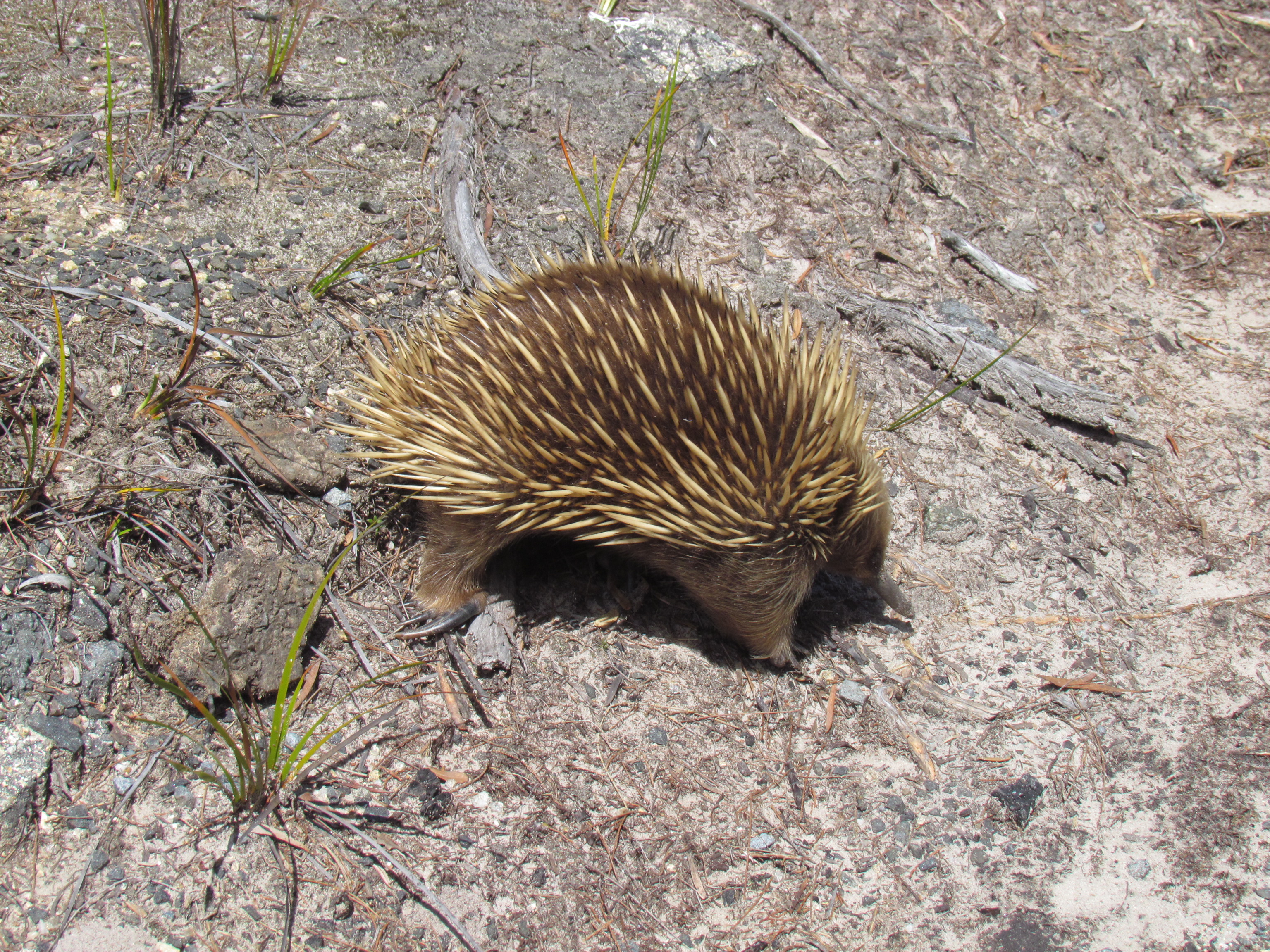
Me and the TC spent a couple of days in Freycinet Park, Tasmania. We encountered a couple of echidnas, sometimes called spiny anteaters.
Unlike other famed Australian creatures, echidnas are not marsupials, although they do have a pouch. So, why not a marsupial? Because they lay eggs and put the eggs into the pouch, whereas marsupials give birth to tiny babies which crawl into the pouch. This puts echidnas into a rare order called “monotremes”. The only other creatures in this order are platypuses.
My impressions? Like a small prickly bear with ostrich tendencies.
The book I’m in
Where Song Began, by Tim Low. The fascinating tale of how Australia’s birds took over the world.
Recommended accommodation
Freycinet Lodge in Coles Bay. The cabins are dotted around amongst the trees. Inside is clean and comfortable. Open the doors to step out amidst the trees, birds, wallabies and echidnas.
The photos
Here’s the first echidna we saw. It “hid” when it heard us, by sticking its snout in a bush. After a few minutes it decided we must have gone away, so it came out to play:
The TC, bless her cotton socks, says this has to be the cutest animal ever. This is the second echidna that crossed her path:

























 Travelling Worm