Travelling Worm

A bookworm's travelogue

Category: australia

  • White Cliffs opal mines and underground motel

    This is the blog of Mark Wordsworm, the travelling worm. I’m a 40-year-old bookmark (give or take a few years) and I proudly boast my own Hallmark serial number, 95 HBM 80-1. You’ll probably want to read all about me and my Travelling Companion (the TC).

    Today’s travel notes

    Me and the TC spent the last few days in the Australian Outback. Although it was a short trip (six days in total), it was the experience of a life time. This post tells of our stay in White Cliffs, a small and remote opal mining settlement in far western New South Wales.

    The book I’m in

    The Book of Eve, by Meg Clothier. Ancient intrigue and engaging characters. I’m now nestled near the end of the book. It’s been quite a ride.

    Travel tips

    Take spare fuel, in case the fuel station at White Cliffs is closed or doesn’t have the right fuel for your vehicle.

    Recommended accommodation

    White Cliffs Underground Motel. The experience is unique. The rooms are entirely underground, as are many of the homes in the area, dug out to provide cool shelter from the extreme heat in summer. Some of the dugouts are converted opal mine shafts and tunnels.

    The photos

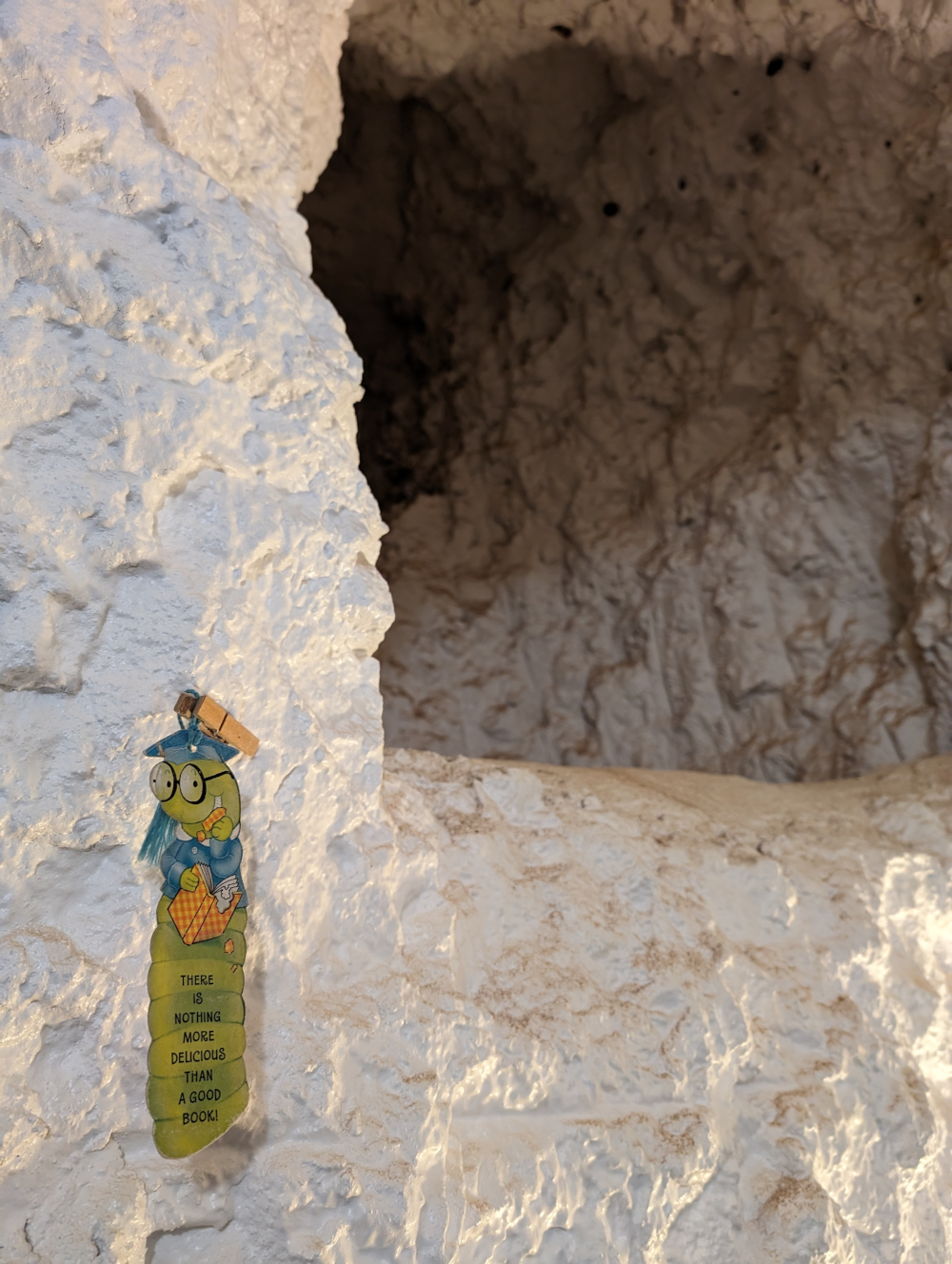
    Me and Peg  in our dugout at the White Cliffs Underground Motel, catching the breeze from a ventilation shaft:
    White Cliffs is in the middle of nowhere (by some definition of nowhere), at 1,025 km west of Sydney and 781 km north-east of Adelaide. The last part of the route is Opal Miners Way, picturesque especially in the late afternoon with the colours blowing across the landscape:

    Janet the Jeep waits while the TC snaps the sundown shots. Janet herself is picturesque at sundown too:

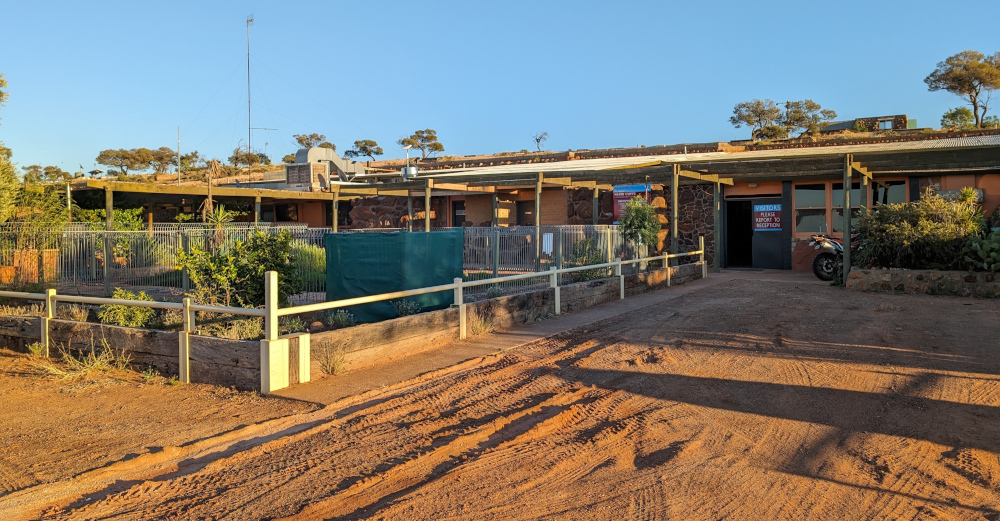
    The entrance to the Underground Motel is long and low, with the rooms built into the hill behind:
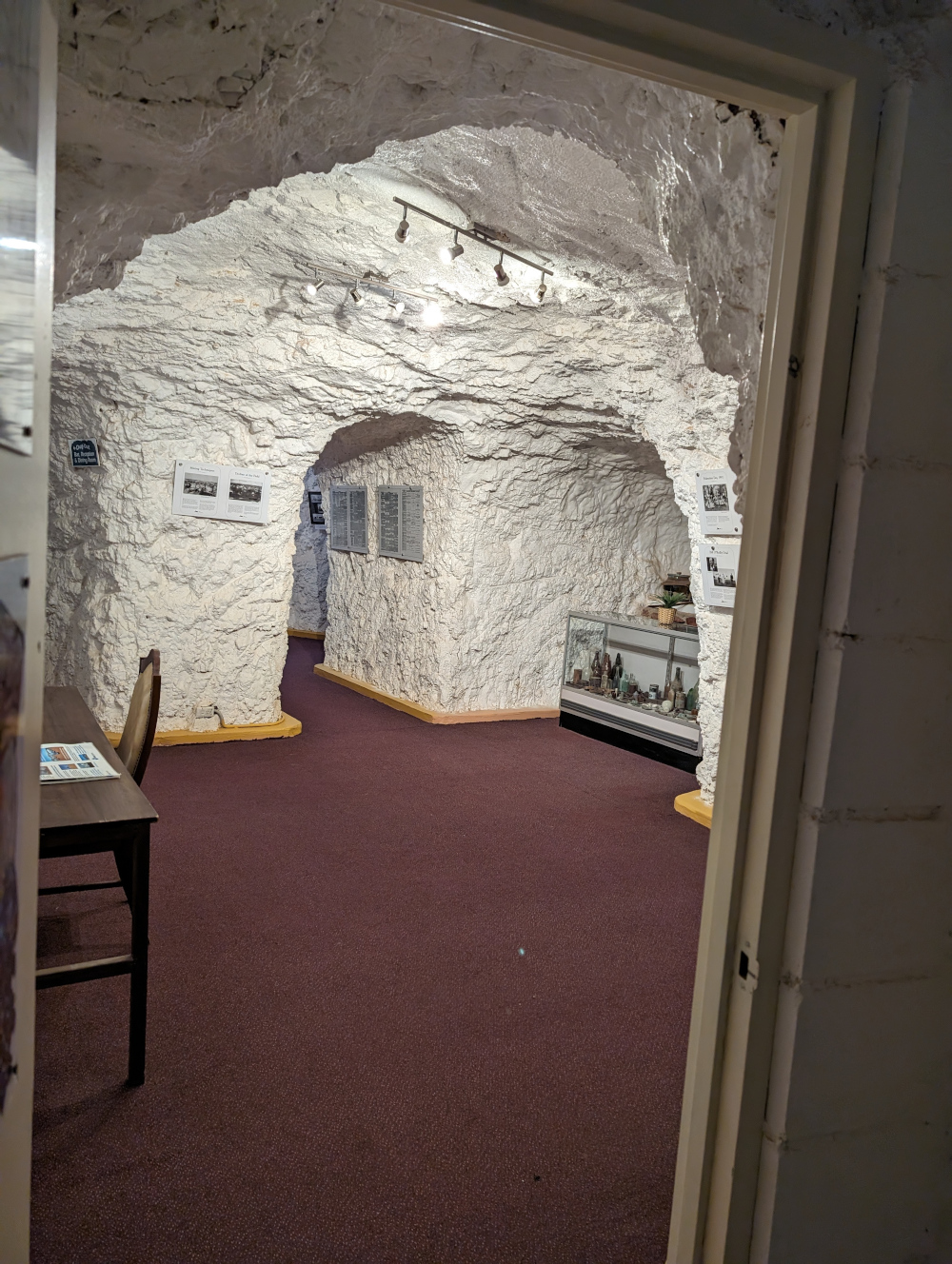
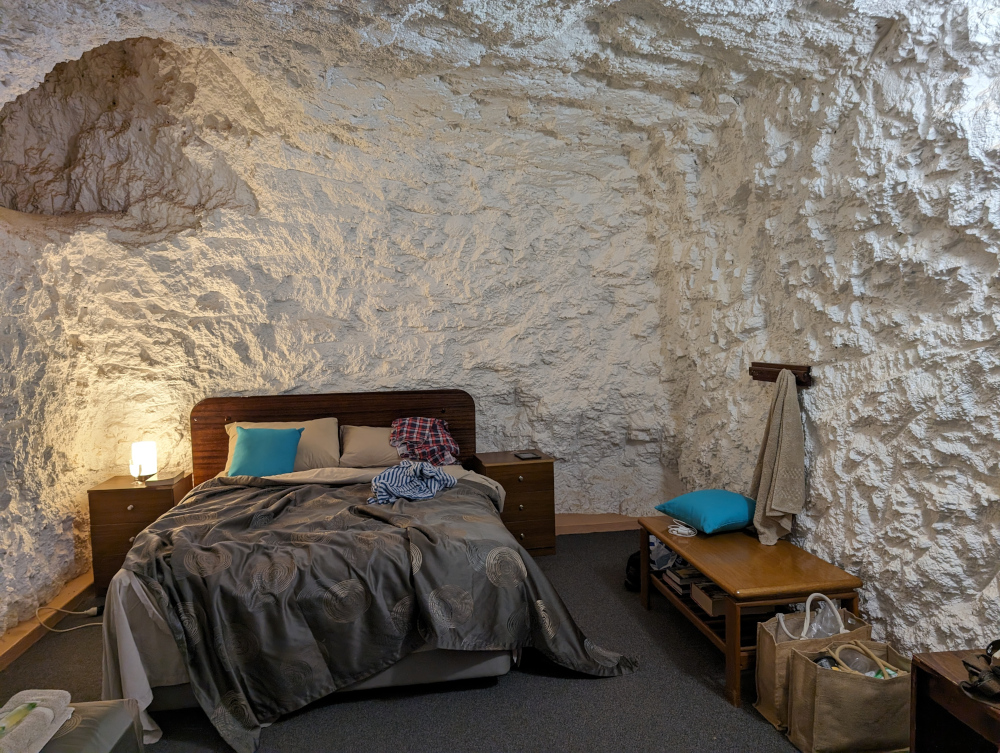
    Being a bookmark, yours truly is comfortable with snug spaces. Other folks might worry that the underground corridors and rooms will feel small and close. However, inside the Underground Motel, the walls are painted white, good for giving an impression of cheer and space:
    In search of our dugout:
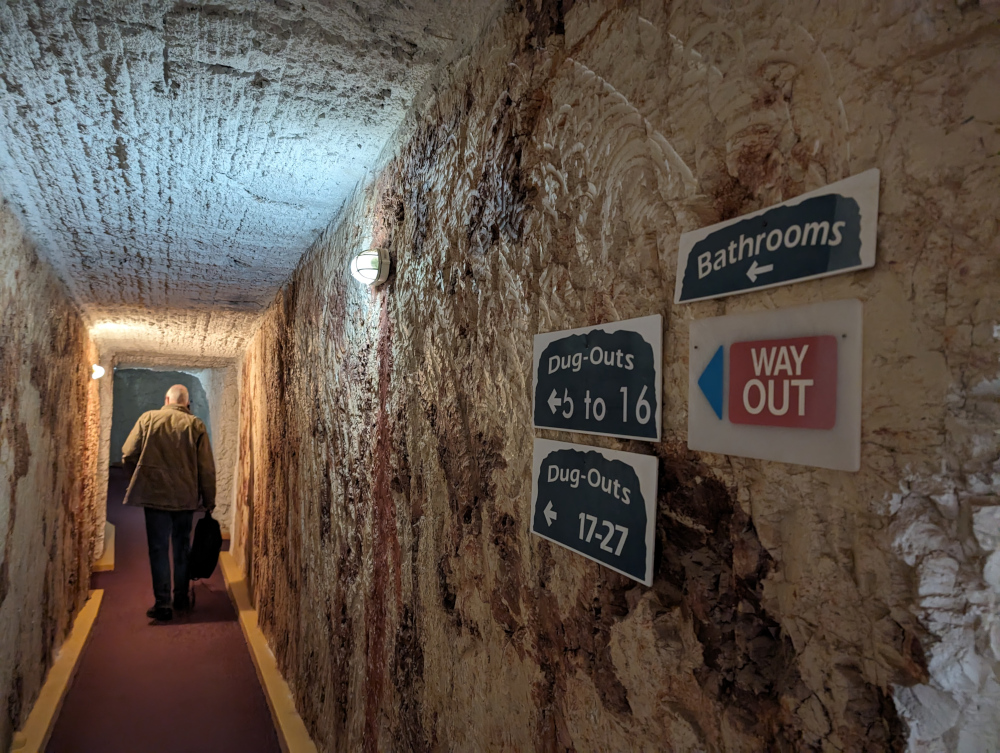
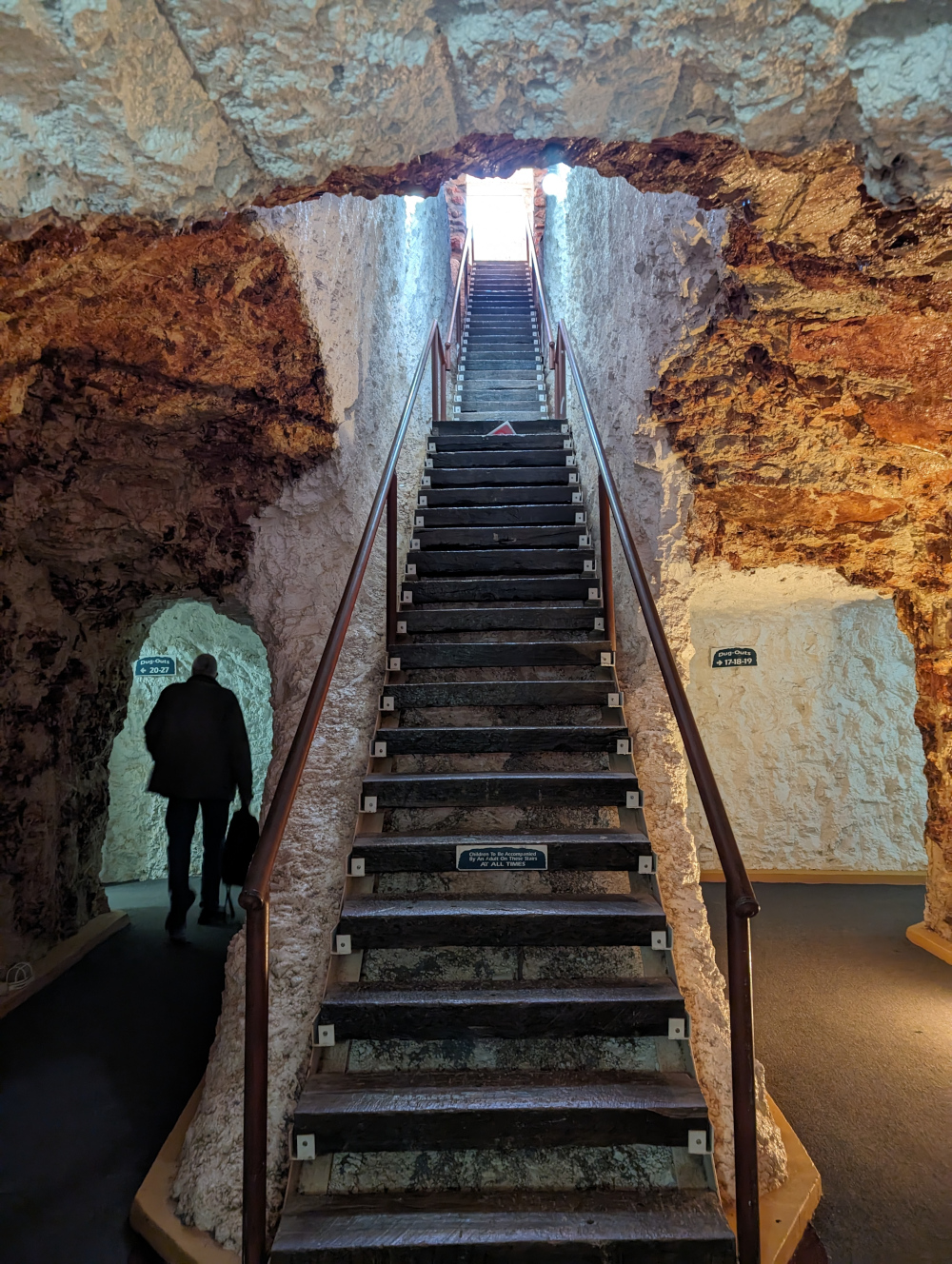
    Passing the stairs that lead up to the roof:
    Our dugout:
    We arrived quite late, and so missed the famed sunset. The TC, bless her cotton socks, sprang up before dawn and led us up to the roof to catch the sunrise:
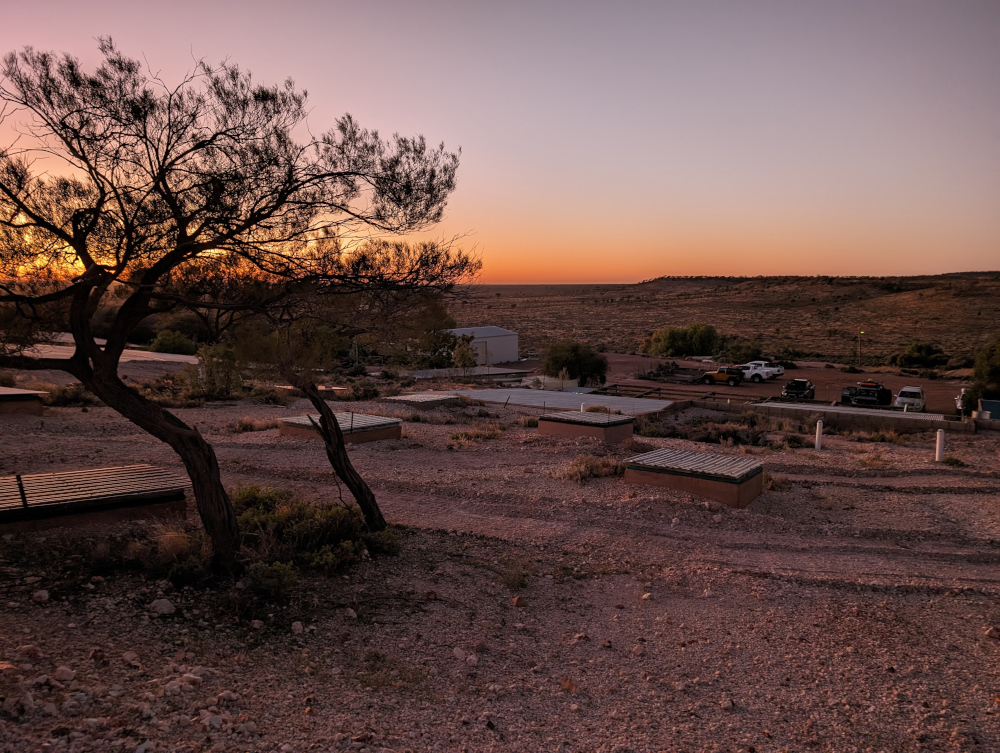
    The rectangular low blocks are covered air shafts for the rooms below. In the car park in the distance, Janet the Jeep waits patiently.

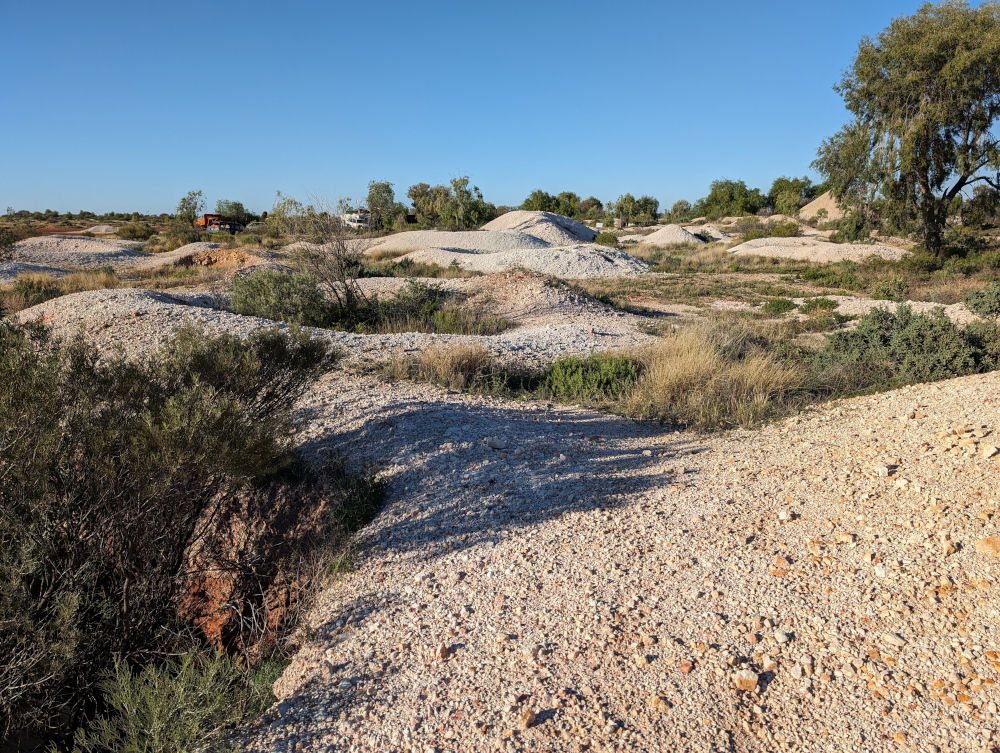
    After breakfast, we explored the opal mines. Mounds of white dirt encircle the mine shafts. Take care, dear traveller, not to misstep and fall down a hole:
    Pieces of equipment stand around, some in use, some not:

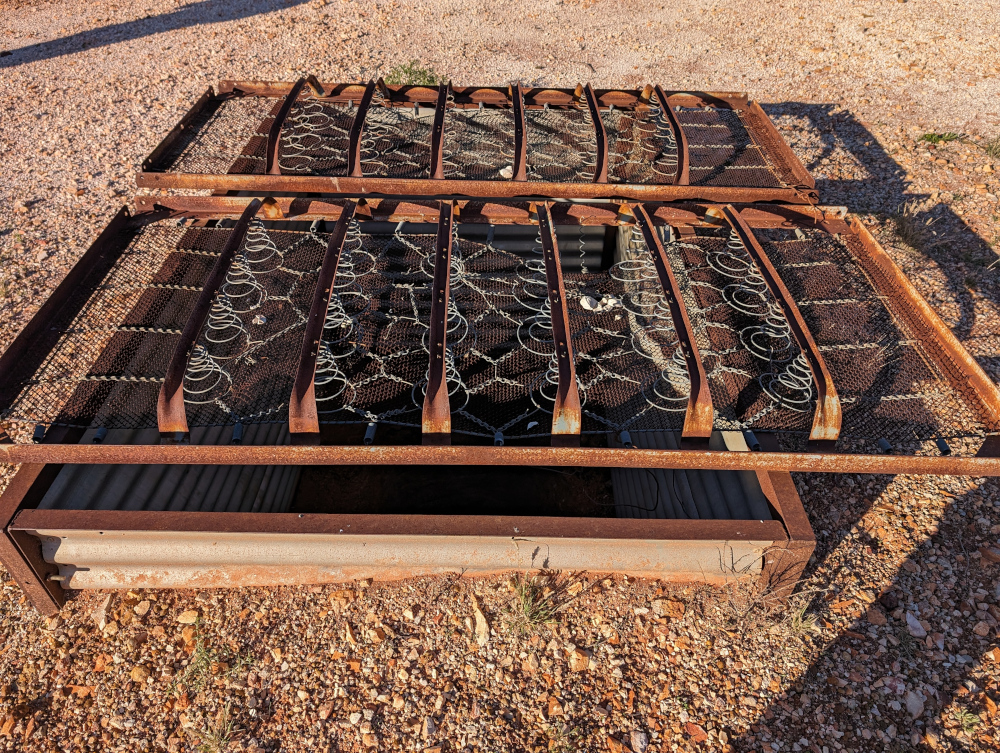
    Inventive methods are used to cover open shafts, like these old bed frames:
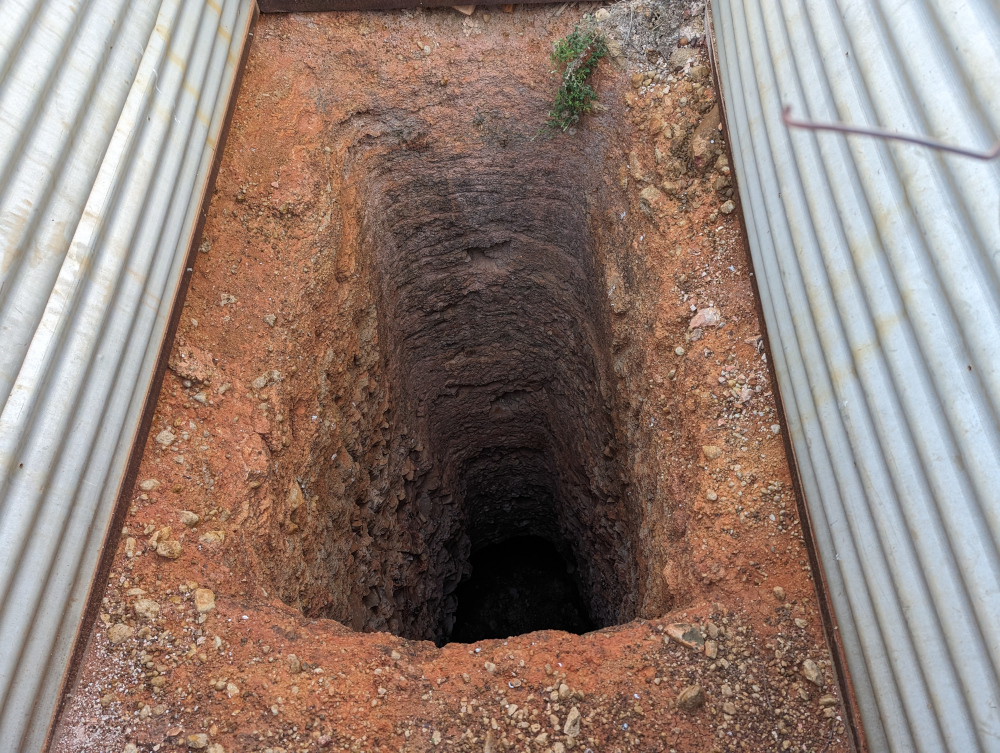
    Underneath the bed frames:
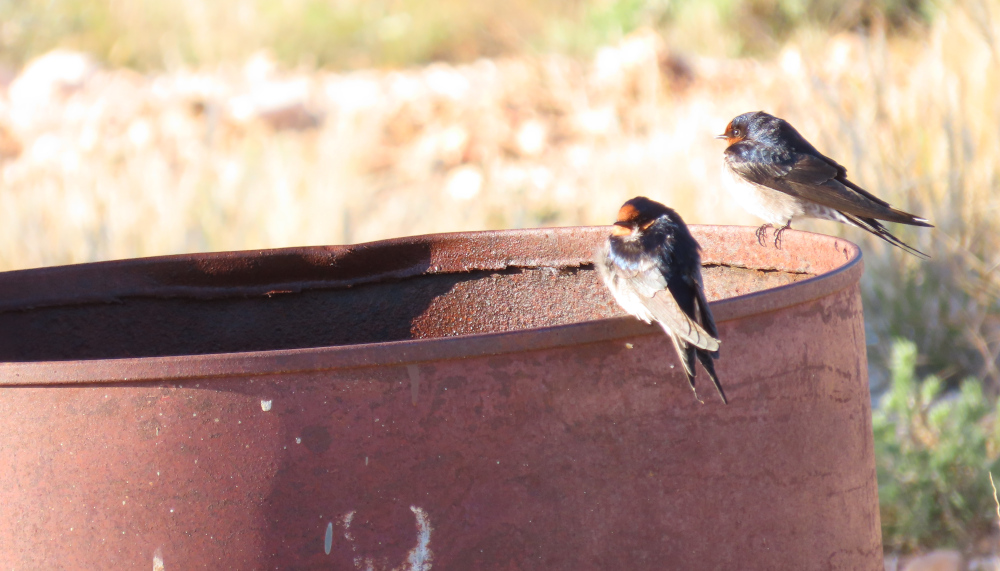
    Swallows perch on old metal drums, which are also used to warn of open mine shafts:
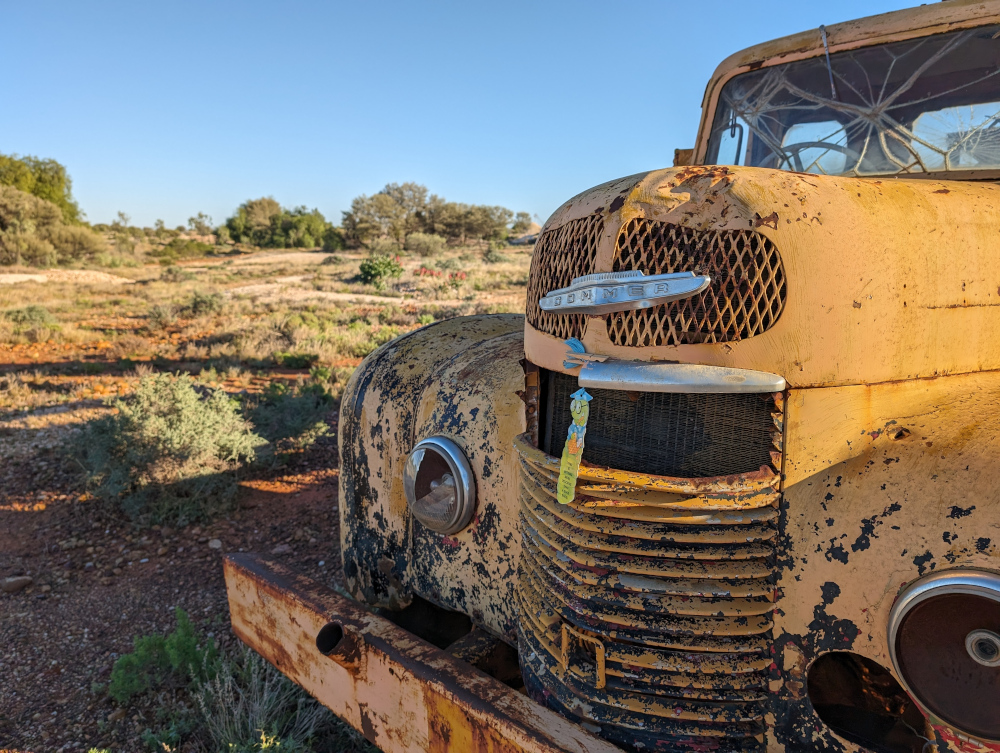
    Old working vehicles rest in peace, like this Commer truck:
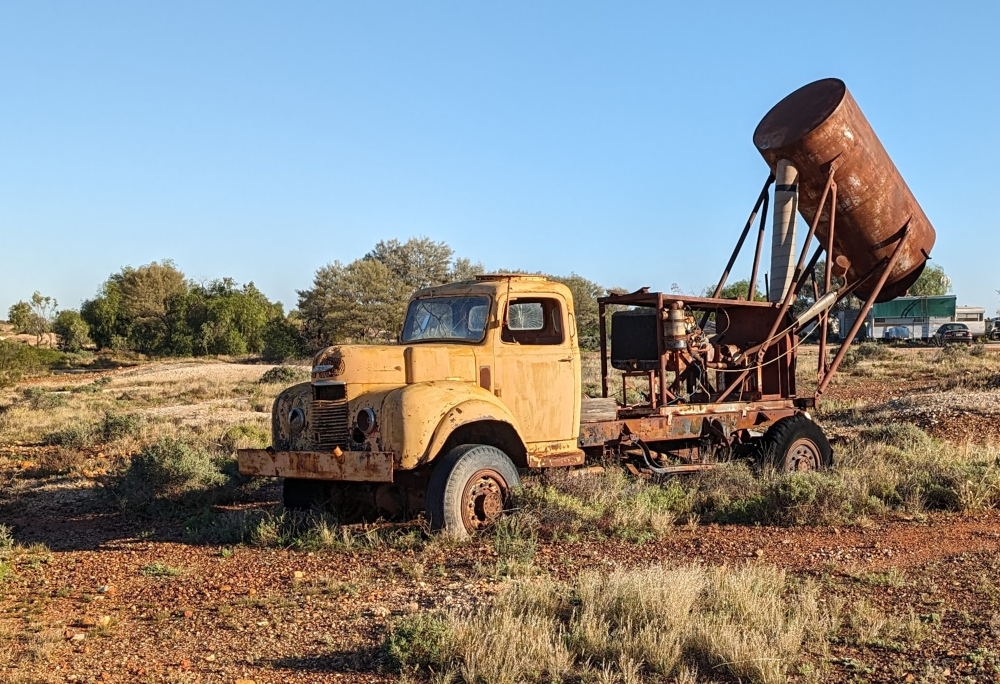
    Your trusty bookmark cosied up to Commer the Truck:
    Janet the Jeep needed fuel, but we discovered that the fuel station at White Cliffs opens late on Sundays. Janet was keen to be on the road again, so the TC Once Removed (he’s the TC’s other travelling companion) topped up from our spare tank:
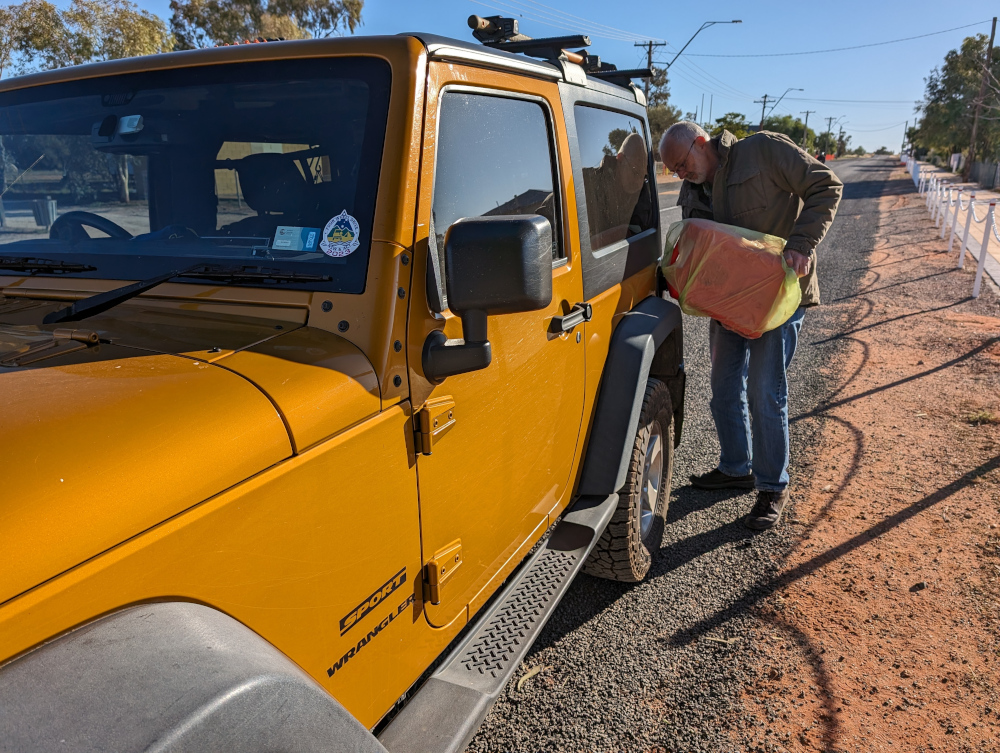
    Bonus tip from the TC Once Removed: Cover your sleeves and wear gloves if you can, otherwise you’ll smell of fuel for the rest of the trip.

    Stay tuned for more of our Outback adventures. Until my next post…

    That’s all for today, folks.


  • Outback Emu

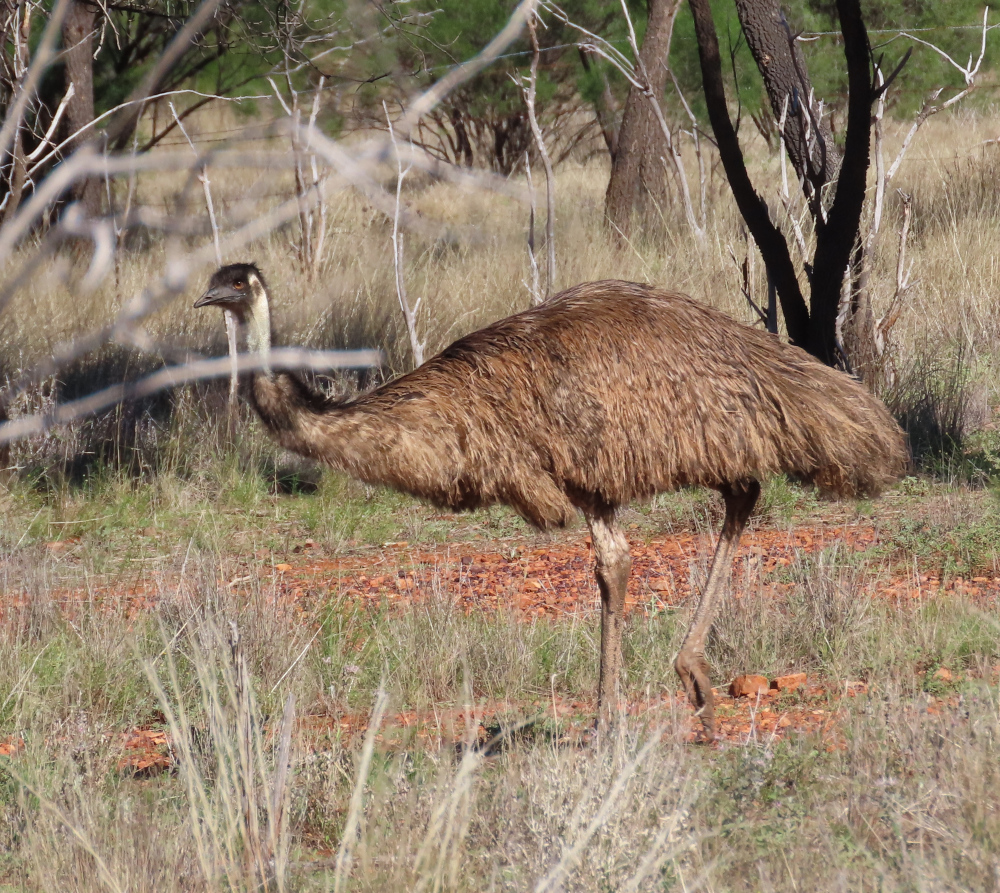
    Me and the TC (read about us) are on the road again. During our Outback adventures, we’ve met several other travellers. Not least are the Emus.

    Tracks in the red dirt alert you to their presence:

    These birds can run at a speed of 50 km per hour (30 miles per hour). We had proof of that when a bird charged out of the bush, ran behind one of the cars in our convoy, hugging the bumper so that the driver had no idea it was there, then spun around the car and dashed in front of it. Luckily, bird and driver avoided a collision.

    From an Emu’s point of view, it seems that cars are either play things or creatures that need to be challenged. This bird is most likely considering a dash onto the highway:

    Emus are the second-largest bird in the world. They’re nearly 6 feet tall (1.9 metres). That’s a lot bigger than yours truly.

    The next encounter is too close for comfort, methinks, but the TC (bless her cotton socks), was keen to get the shot:

    That’s all for today, folks.


  • Big Bogan at Nyngan

    This is the blog of Mark Wordsworm, the travelling worm. I’m a 40-year-old bookmark (give or take a few years) and I proudly boast my own Hallmark serial number, 95 HBM 80-1. You’ll probably want to read all about me and my Travelling Companion (the TC).

    Today’s travel notes

    Me and the TC continue our Outback adventures. Our first overnight stop, after a long day of driving, was Nyngan. This is a little Australian town with a big heart. In the middle of the town is a large steel statue of a fisherman, fondly dubbed the Big Bogan. There are layers of meaning behind the word bogan. Read on to know more about the statue, the name, and the town.

    The book I’m in

    The Book of Eve, by Meg Clothier. Ancient intrigue and engaging characters. This worm is about a third of the way through the book, and is thoroughly enjoying it.

    Travel tips

    Take the time to stop at little towns along the way. There’s a story at every town.

    Recommended accommodation

    Nyngan Riverside Tourist Park. It’s a well-kept camp ground that has place for tents and trailers, and also offers stand-alone cabins for hire.

    The photos

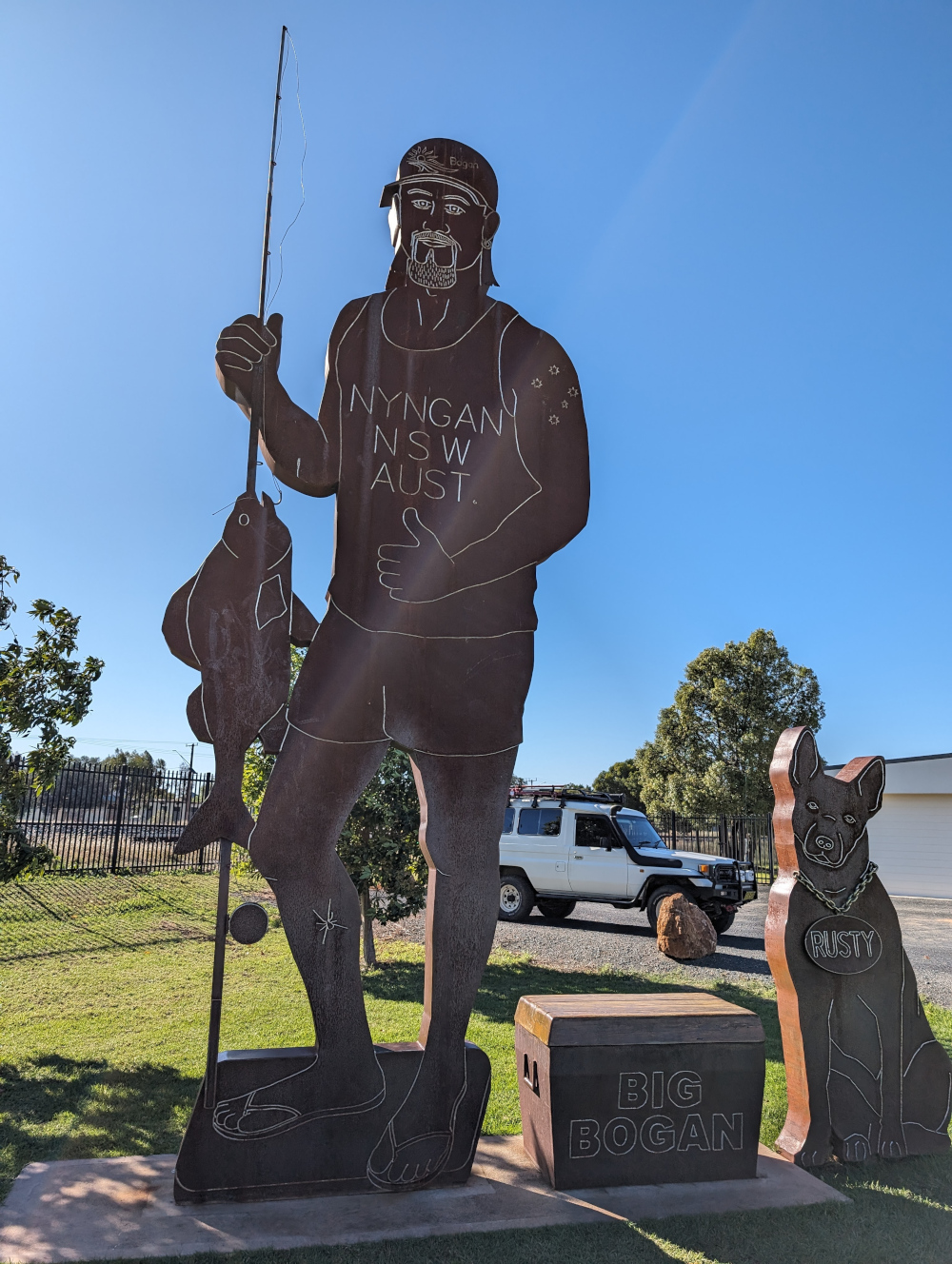
    Me with the Big Bogan and his dog, Rusty:

    The town of Nyngan lies in the Bogan Shire council in western New South Wales. With a population of around 1,900 people, Nyngan is a small town with a big heart.

    The Big Bogan statue was erected in 2015, to give the town a tourist attraction and to honour the history of the area. The dog, Rusty, was added in 2022. The Big Bogan is made of steel and is nearly 6 metres high:

    On the statue are various decorations, including a large spider on its leg and the Southern Cross star formation on its arm. Between the man and the dog rests an esky (an Australian word for a cooler).

    What does the word bogan mean, a faithful reader might wonder, and where did it come from? There are numerous stories about the word and its origins. Your trusty Wordsworm likes to tell it like this: The word bogan has acquired an unfortunate meaning over recent years. It’s used to refer to country people, along the lines of country bumpkin or redneck. However, the original meaning of the word in the Aboriginal Wiradjuri language is “birthplace of a great man”.

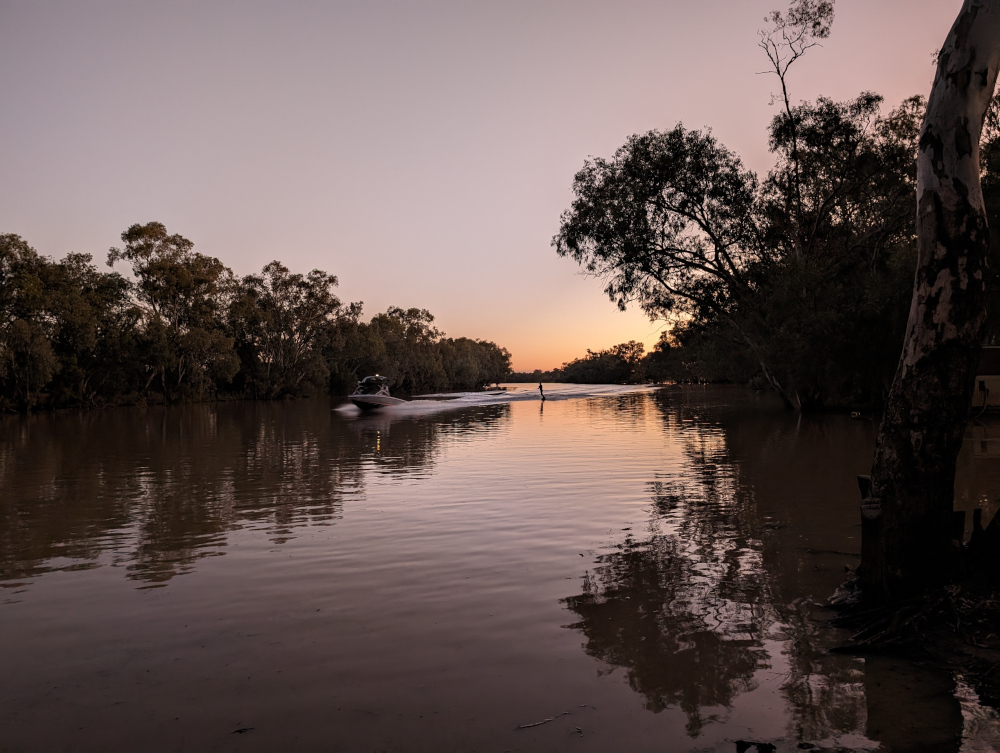
    Through the town of Nyngan runs the Bogan River, on its way from the Harvey Ranges to join the Darling River. The TC snapped this photo in the early evening, at the Riverside Tourist Park where we spent the night:

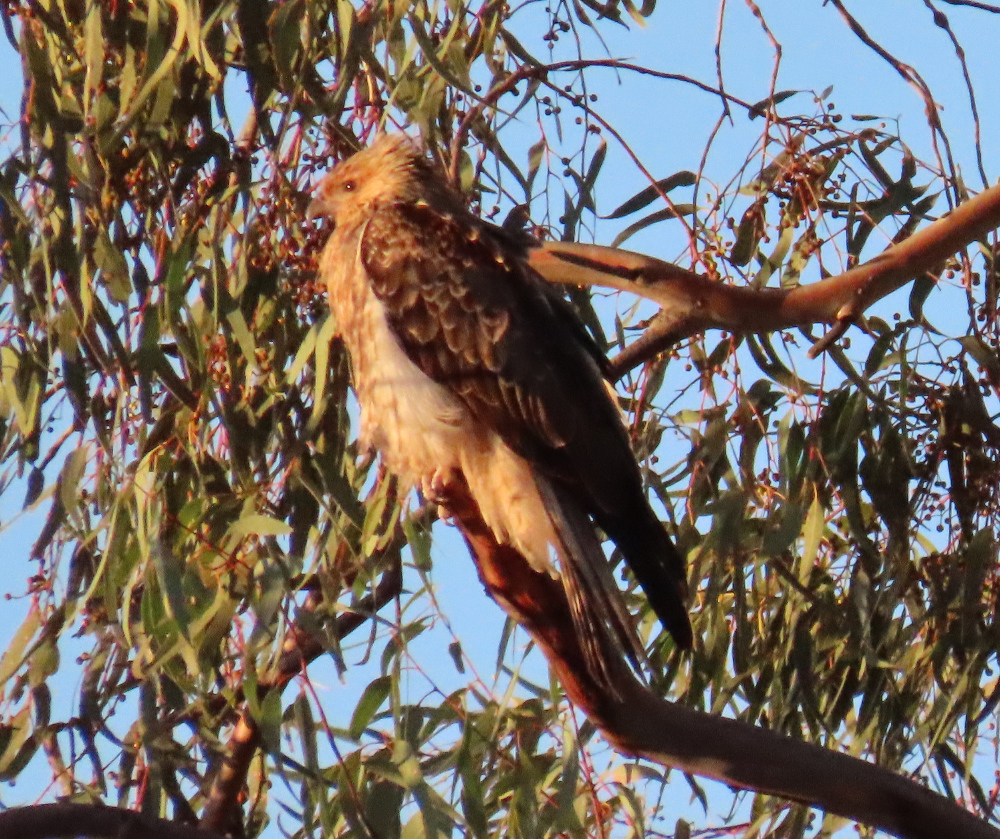
    Early the next morning, a fearsome raptor surveyed its territory from the river bank. Needless to say, yours truly, Wordsworm, stayed out of sight. There’s no place like a good book, especially when danger looms:

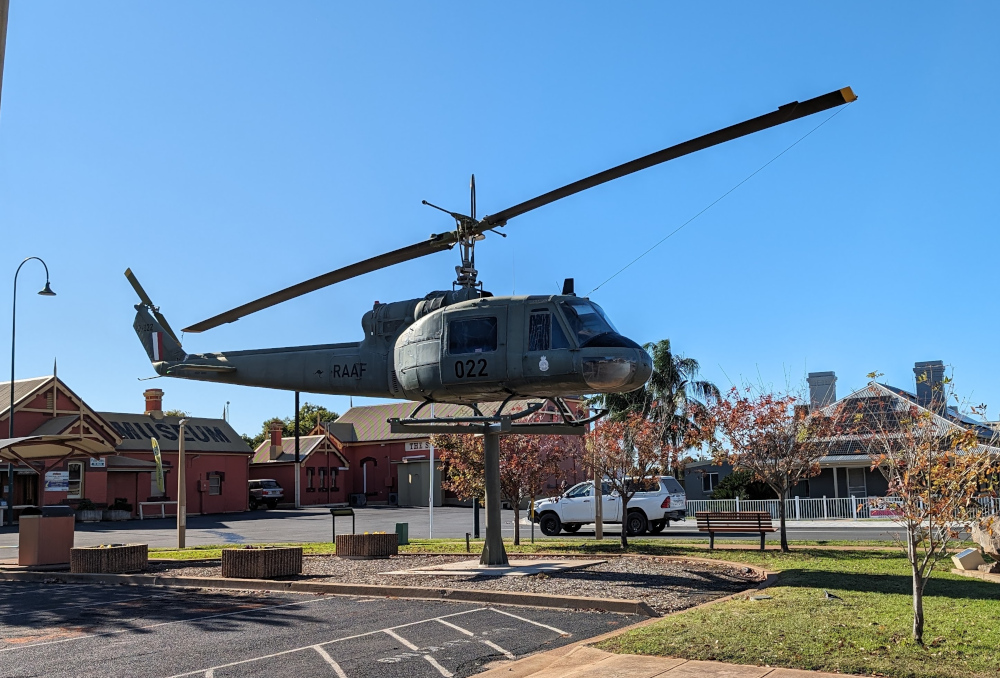
    In 1990, Nyngan was devastated by the worst flooding since the settlement of the town. Almost all residents had to be airlifted to safety. To commemorate the rescue, an Army helicopter stands on a pole outside the railway station:

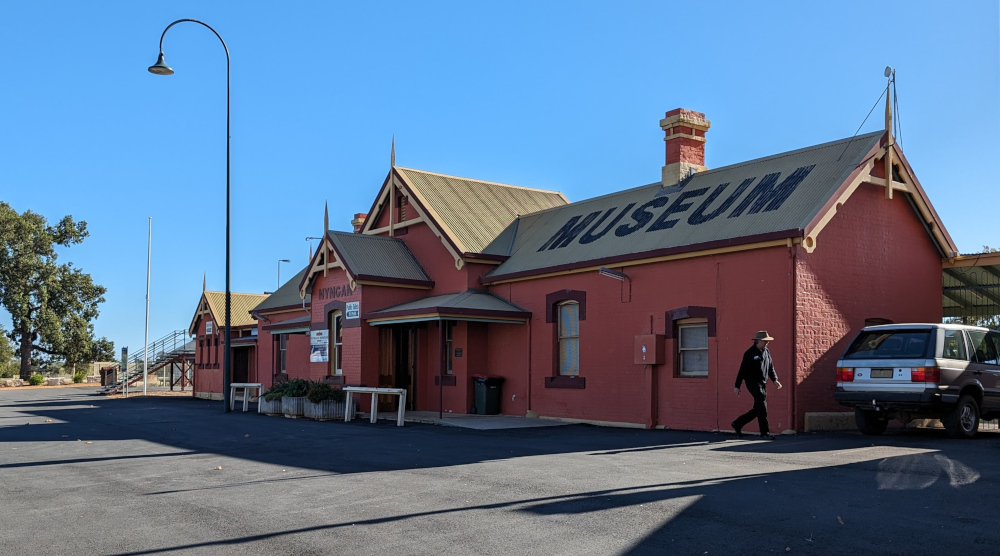
    The railway station itself has been converted into a museum:

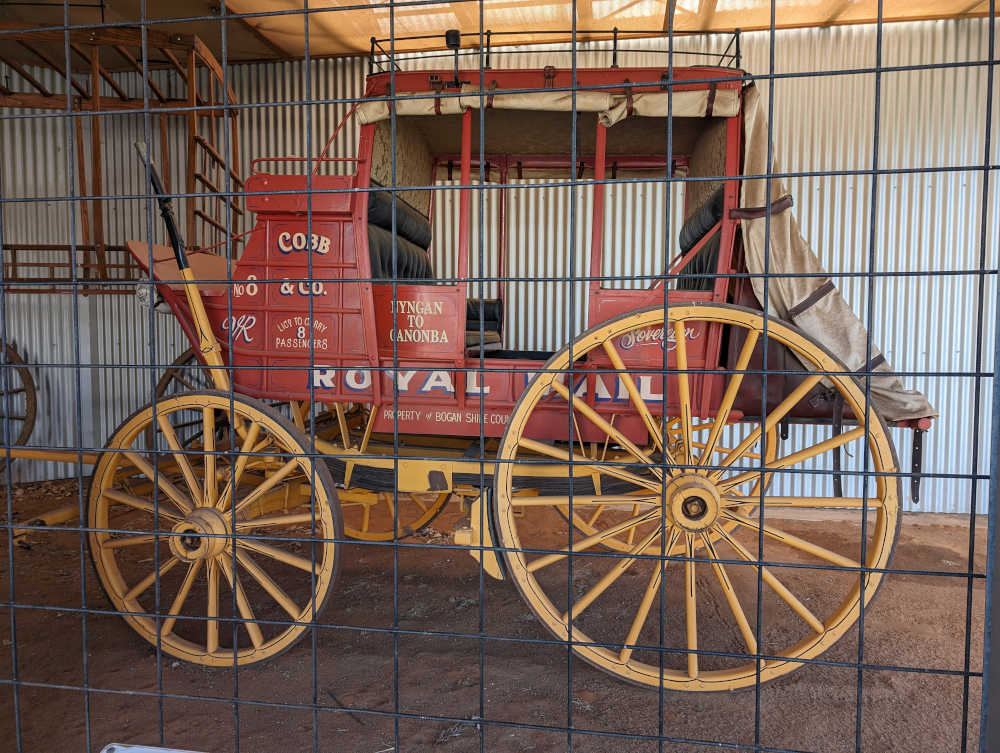
    Outside the museum stands a replica of an old Royal Mail coach that used to travel between Bathurst and Bourke. Imagine traversing the Australian Outback in a horse-drawn vehicle like this:

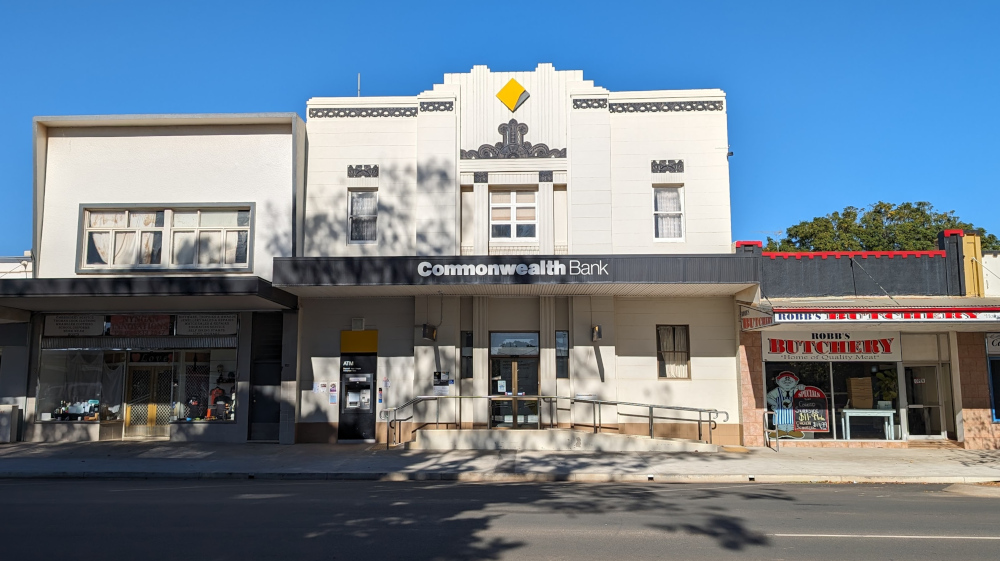
    The Commonwealth Bank building in Nyngan was built sometime between the First and Second World Wars. The building was designed by E.H. Henderson, who was Chief Architect of the Commonwealth of Australia from 1929-1939. He designed many of the Commonwealth Banks buildings in Australia:

    Our Outback adventures continue. Until my next post…

    That’s all for today, folks.

  • Water tower art at Nevertire and Warren

    This is the blog of Mark Wordsworm, the travelling worm. I’m a 40-year-old bookmark (give or take a few years) and I proudly boast my own Hallmark serial number, 95 HBM 80-1. You’ll probably want to read all about me and my Travelling Companion (the TC).

    Today’s travel notes

    Me and the TC are heading west, into the Australian Outback. On our first day, signs beside the road welcomed us to the Blue Mountains, the Inner West, and then the Great Outback. We took an interesting route, inadvertently stumbling across part of the Australian silo art trail. Along the way, we encountered our first road trains and found some cotton.

    The book I’m in

    The Book of Eve, by Meg Clothier. Ancient intrigue and engaging characters. This worm is about a third of the way through the book, and is thoroughly enjoying it.

    Travel tips

    Be off the roads before dark, if you can. There are no lights in the Outback, and the kangaroos like to cross the road in the dark.

    The photos

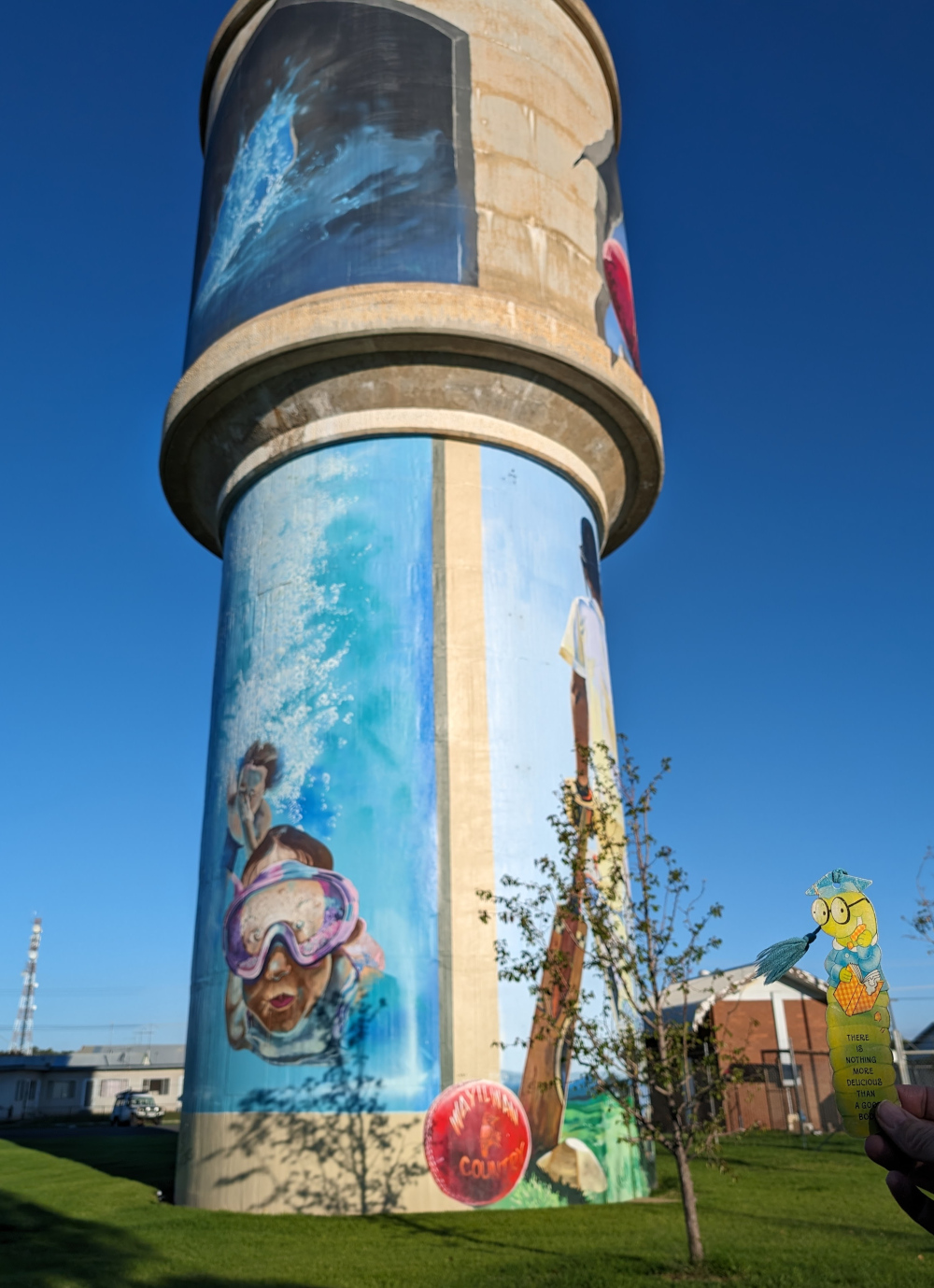
    Me at the water tower in Warren, New South Wales:

    Warren is a small town in the middle of a thriving agricultural area: sheep and wool, wheat, and cotton.

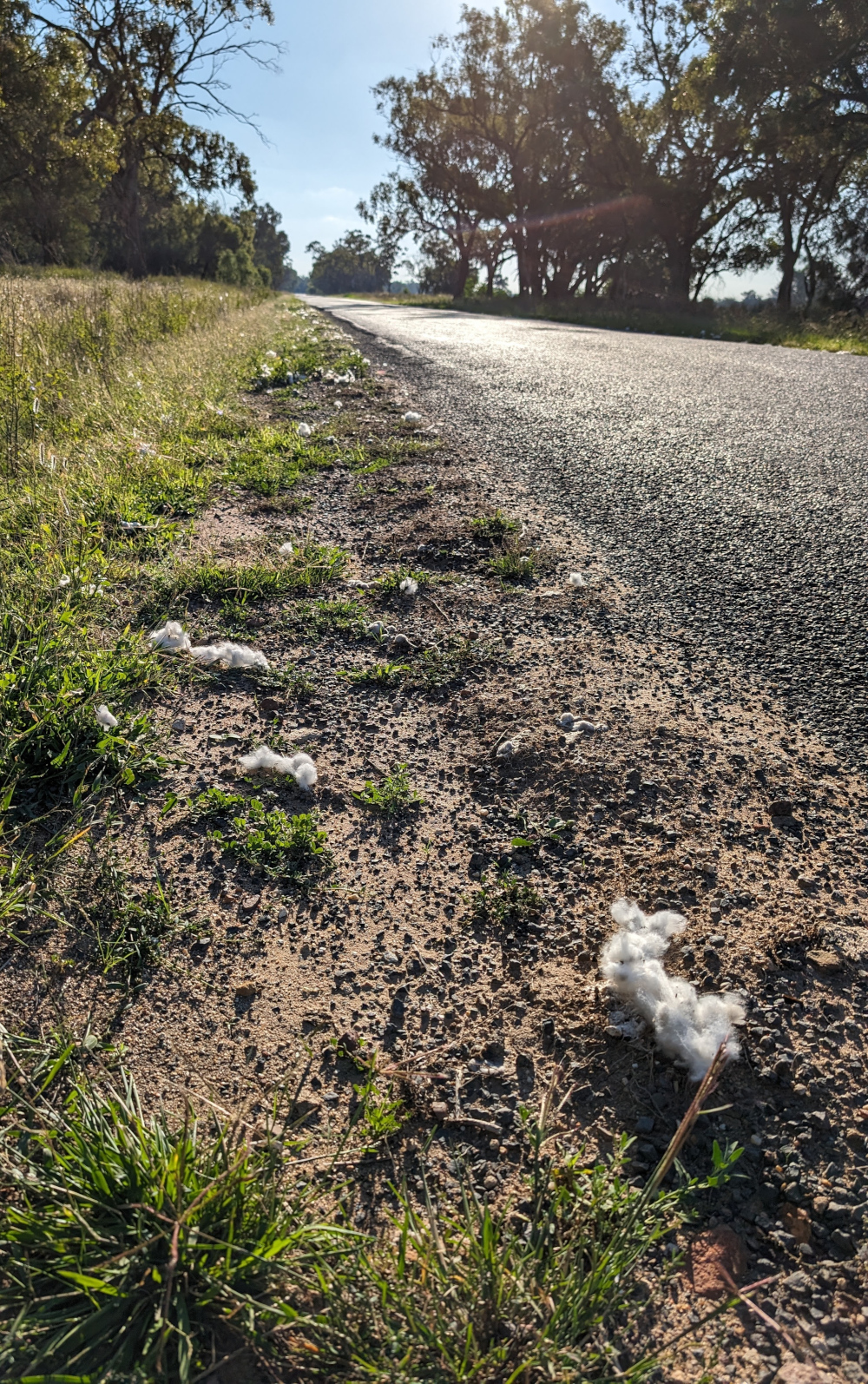
    In fact, the road to Warren is lined with cotton:

    It’s white and fluffy, just as you’d expect cotton puffs to be:

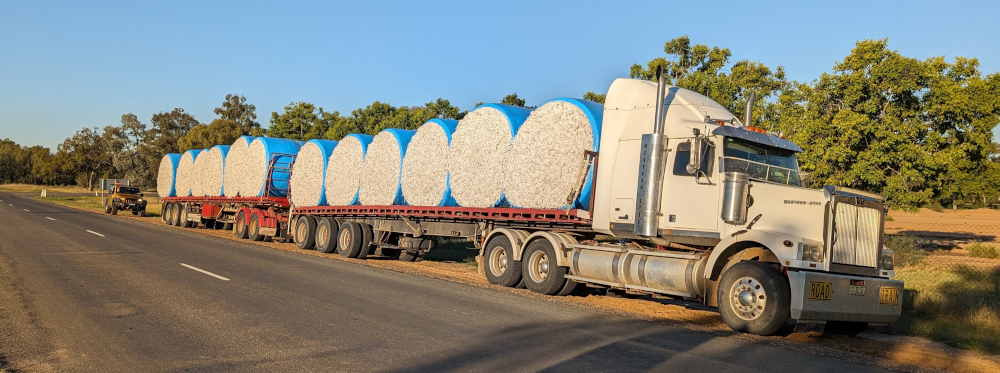
    We encountered our first road trains, the infamously long and fast semi-trucks that transport produce around Australia. Notice the warning boards on the front (and back) of the truck, announcing that it’s a road train. Notice also the length (this is all one truck) and the size in comparison to Janet the Jeep behind the truck:

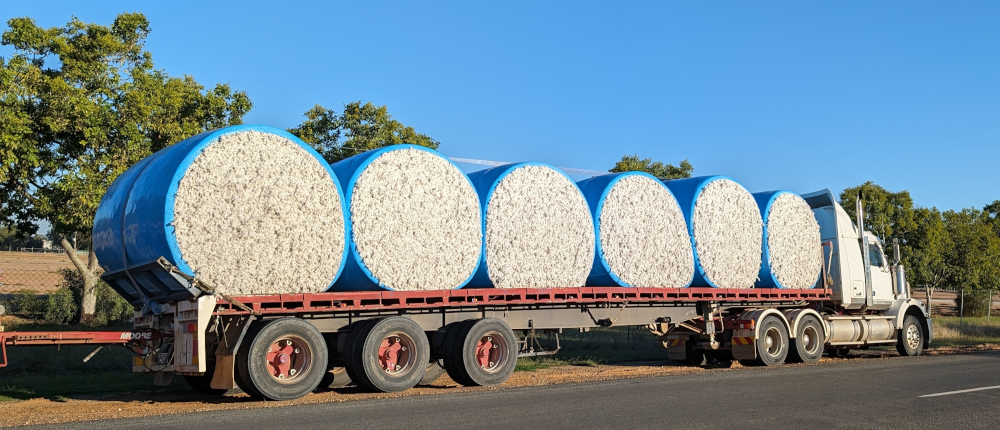
    In this case, the produce was, you guessed it, cotton:

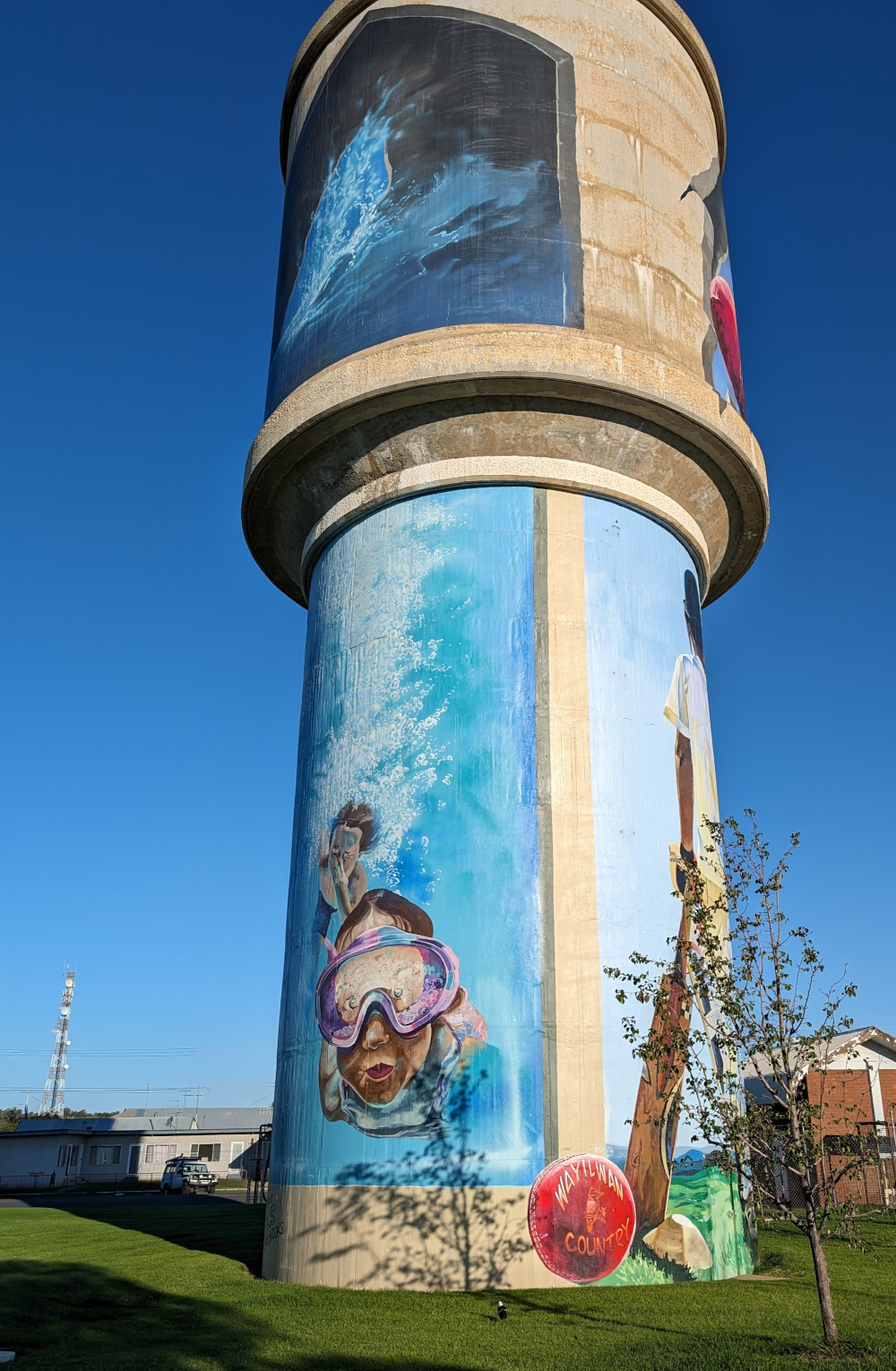
    At Warren, we found our first water tower art. The tower was erected in 1939, and the artwork was added in 2021. The concept design was by Sam Brooks. The work was painted by Bastian Allfrey.

    Maggie posed in front of the tower for scale:

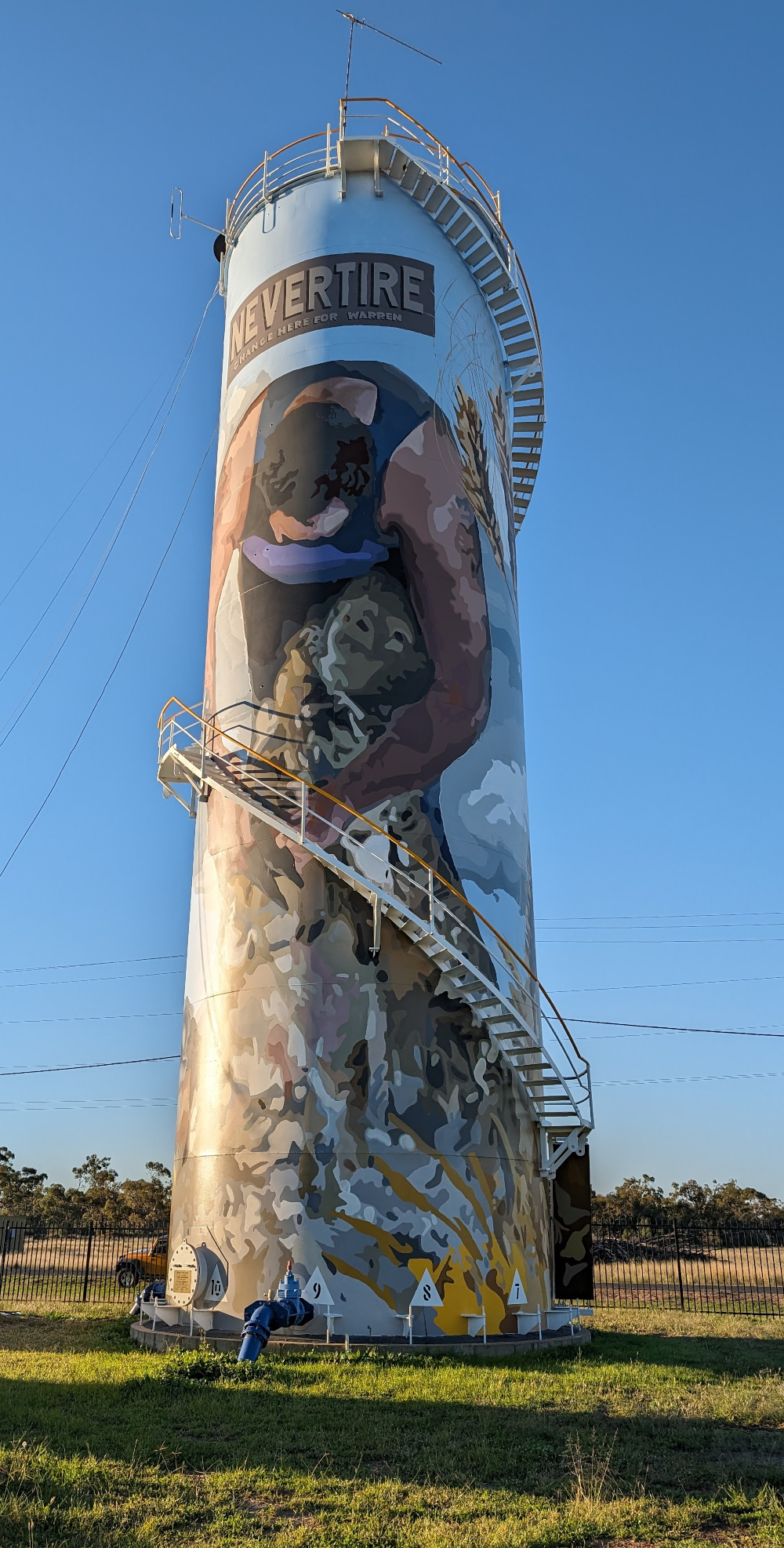
    Nevertire is one of those Australian towns with an amazing name. The town’s water tower depicts the agricultural activities of the area. First, sheep shearing:

    The artwork was completed in 2022 by Artist Bastian Allfrey. Another side of the tower shows wheat:

    And, this worm’s favourite, cotton:

    A posse of kangaroos kept an eye on the TC as she took the photos:

    I’ll post more of our Outback adventures. In the meantime…


  • Bridle Track and Root Hog Road

    This is the blog of Mark Wordsworm, the travelling worm. I’m a 40-year-old bookmark (give or take a few years) and I proudly boast my own Hallmark serial number, 95 HBM 80-1. You’ll probably want to read all about me and my Travelling Companion (the TC).

    Today’s travel notes

    Me and the TC drove the historic Bridle Track and the scenic Root Hog Road this weekend with a group of friends. We camped overnight at Mary Flynn Reserve on the Bridle Track.

    The book I’m in

    Ten Days in A Mad-House, by Nellie Bly. A somewhat horrifying true tale of a reporter in 1887, who had herself checked into an asylum for the insane and wrote a book about her experiences.

    Travel tips

    You need a four-wheel drive vehicle to follow the tracks mentioned in this post. If you decide not to camp nor to stop at the various reserves along the way, you can drive the Bridle Track in two to three hours.

    The photos

    Me with Janet the Jeep and Peg:

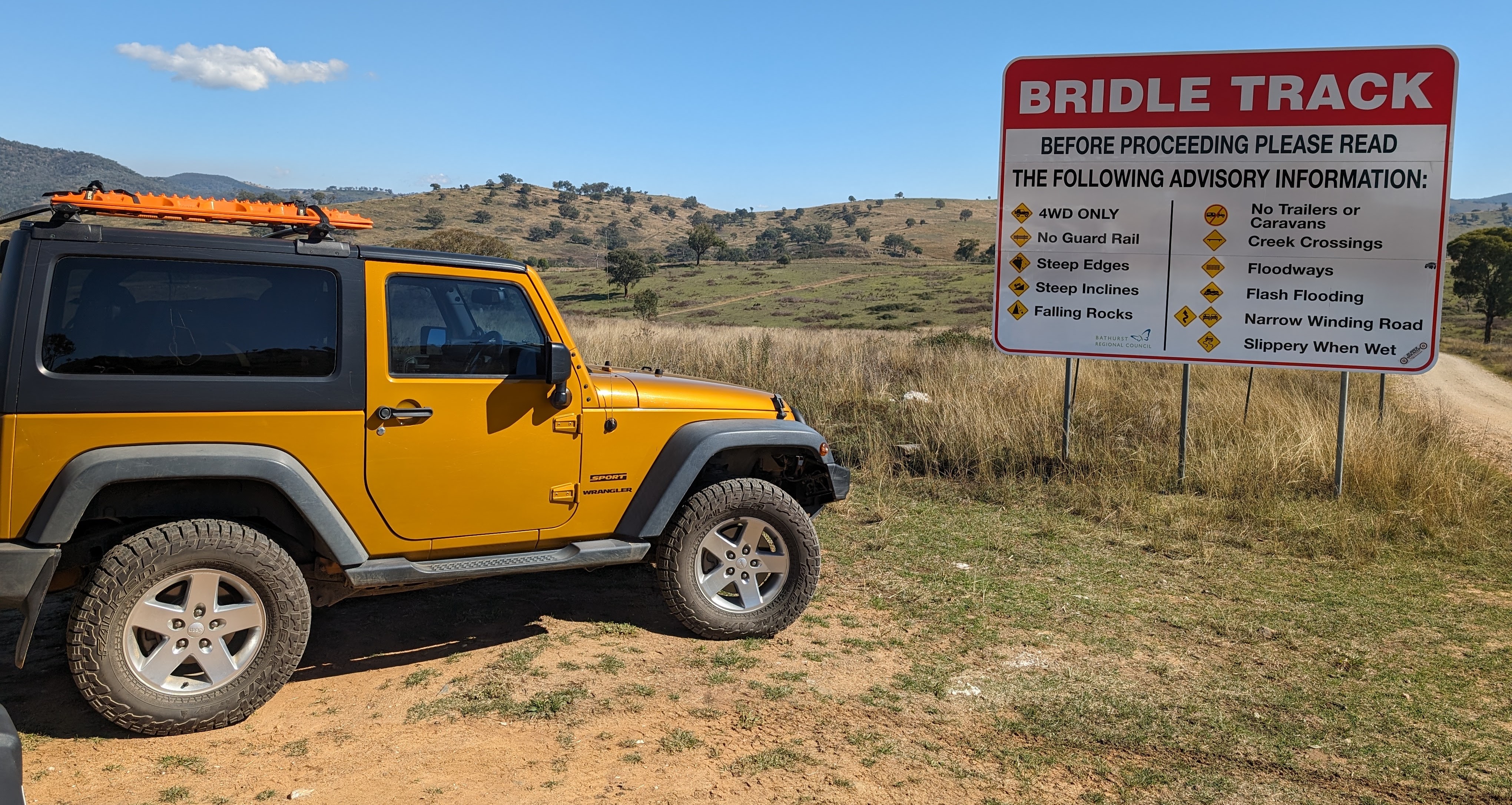
    Introducing the newest member of our merry menagerie: Janet the Jeep. She’s a 2014 Jeep JK Wrangler, manual transmission, with a 3.6 litre, 6-cylinder petrol engine. She has two side doors rather than four, and is known as a shortie because of her short wheel base. Unlike yours truly, Janet is not built for speed but she’s plucky and strong. More like Peg, in fact.

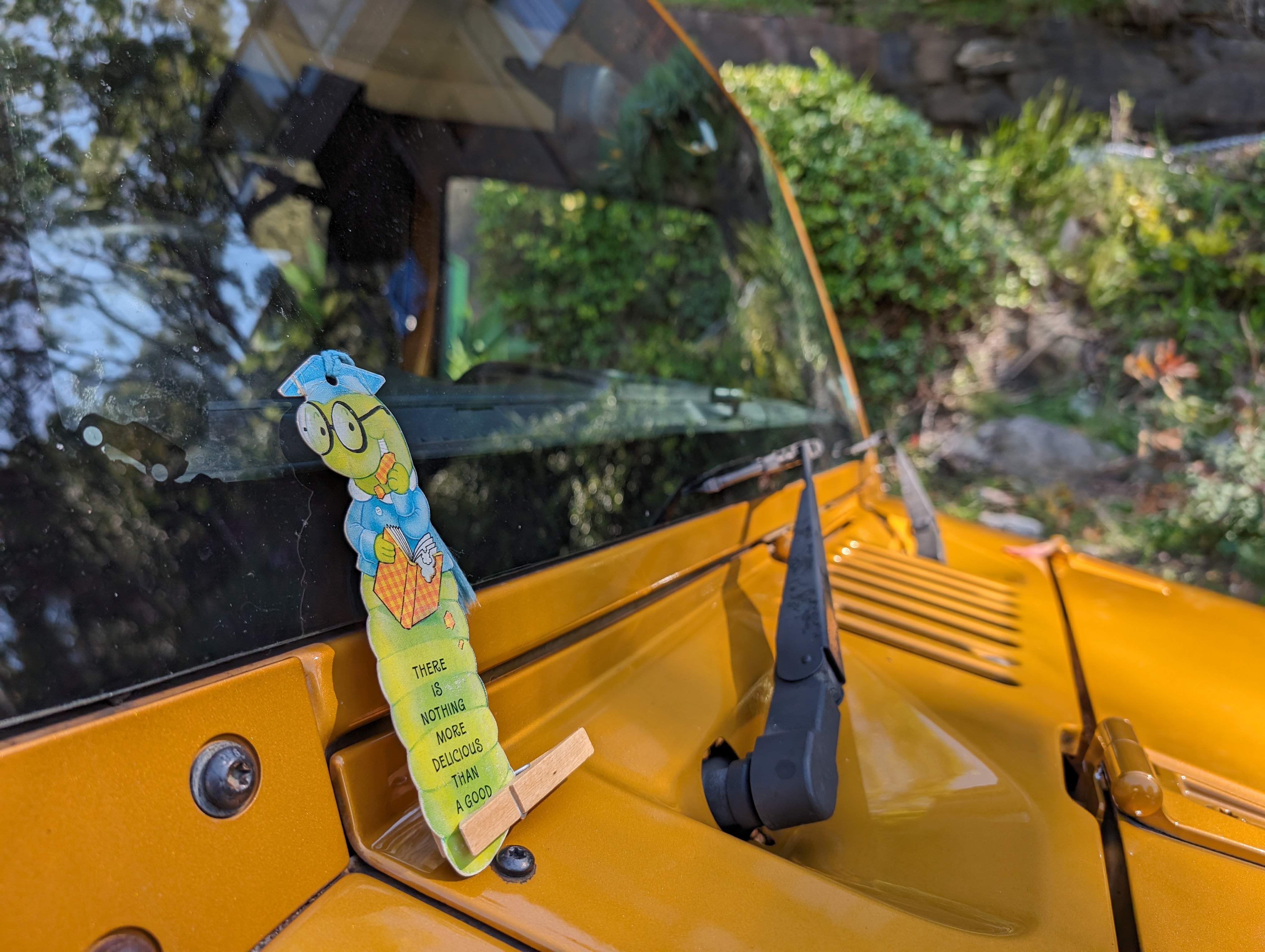
    A keen-eyed reader might notice the little Jeep icon on the windscreen next to this worm. Janet is cute, and she knows it.

    At the start of the Bridle Track, a sign explains the need for a 4WD vehicle and due care:

    Most of the track is a well-graded dirt road. In some sections, there’s a high rocky wall on one side and a steep drop-off on the other. In this section, the road curved through a rocky bluff:

    In years gone by, one specific section of the Bridle Track was very narrow and slippery: the infamous Monaghan’s Bluff. NSW state has since built a bypass, though a sign still greets you as you enter the area:

    The Bridle Track was built in the early 1800s, to give gold miners and settlers a route from Bathurst to Hill End. Bathurst is now a thriving regional city and Hill End is a small town that welcomes visitors interested in the history of the area.

    Right on the side of the Bridle Track is an abandoned mine shaft. The brave can walk into it. The TC, bless her cotton socks, counts herself as one of the brave. She found that she could stand, with head slightly bowed, in the tunnel:

    We camped at the beautiful Mary Flynn Reserve. This view shows part of the campground and surrounding area, taken from the Bridle Track before descending into the valley:

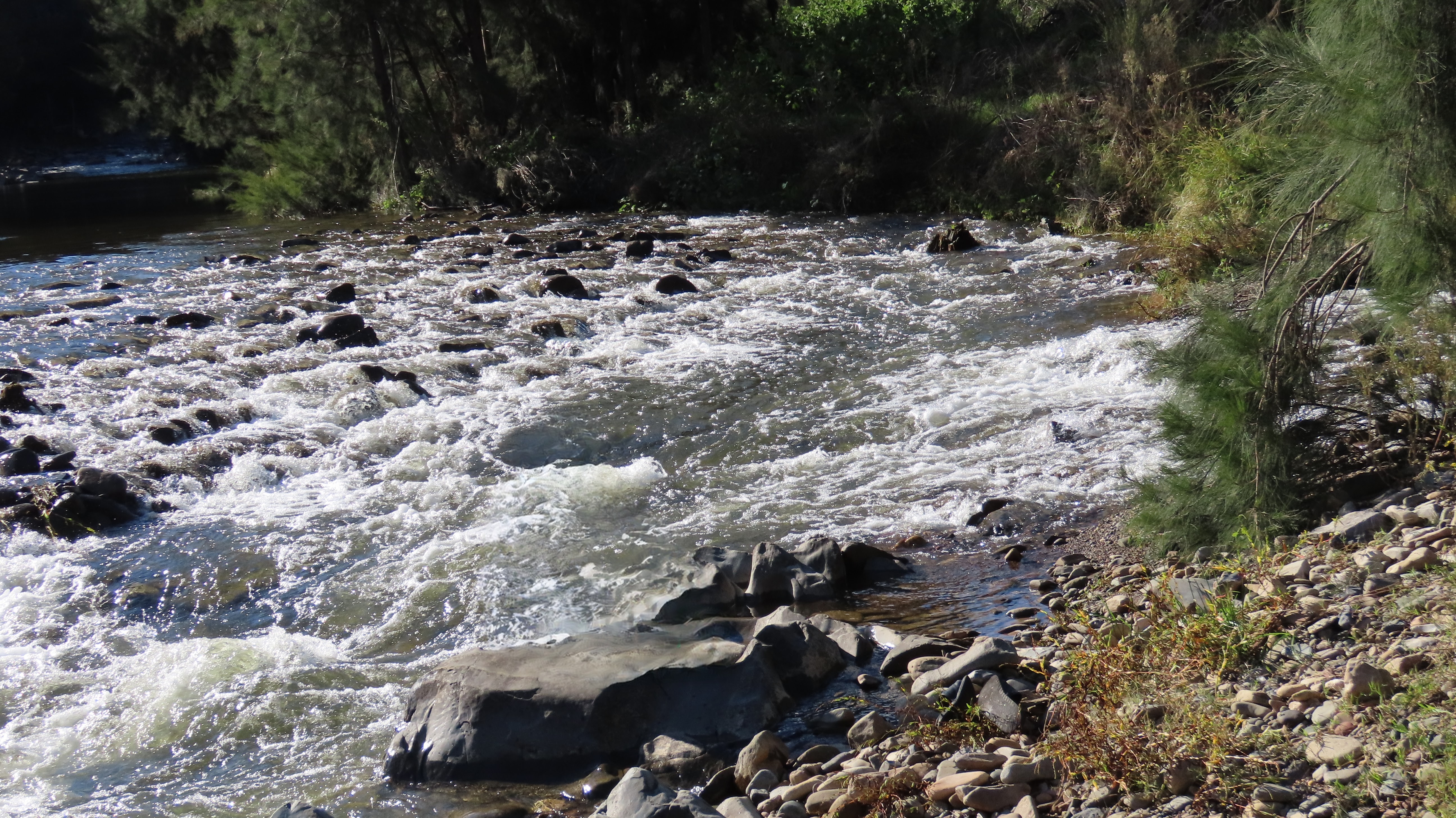
    The Turon River flows past the campsite:

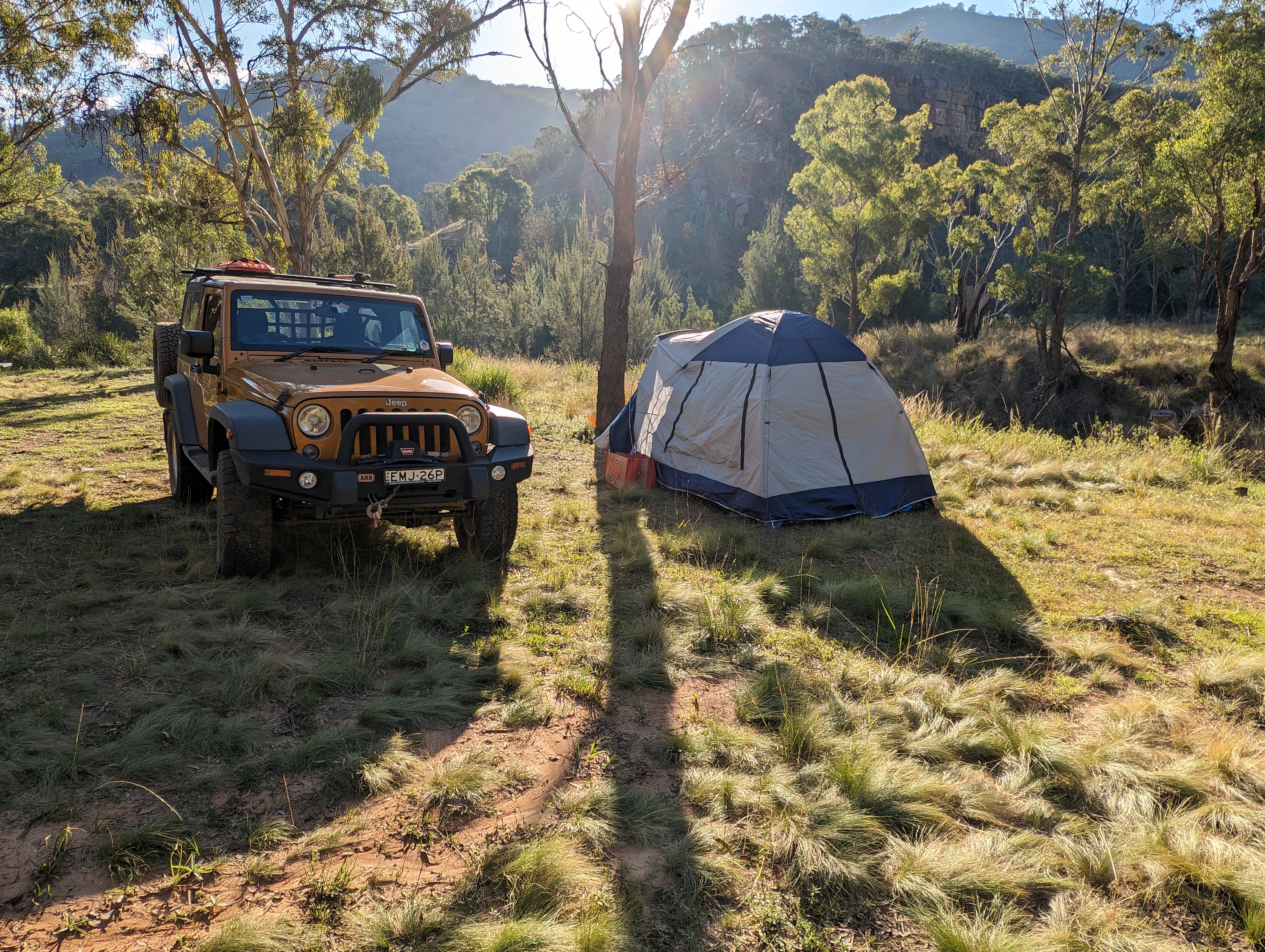
    As the sun goes down, Janet stands guard over the TC’s tent:

    A rainbow campfire, thanks to minerals added by one of the campers:

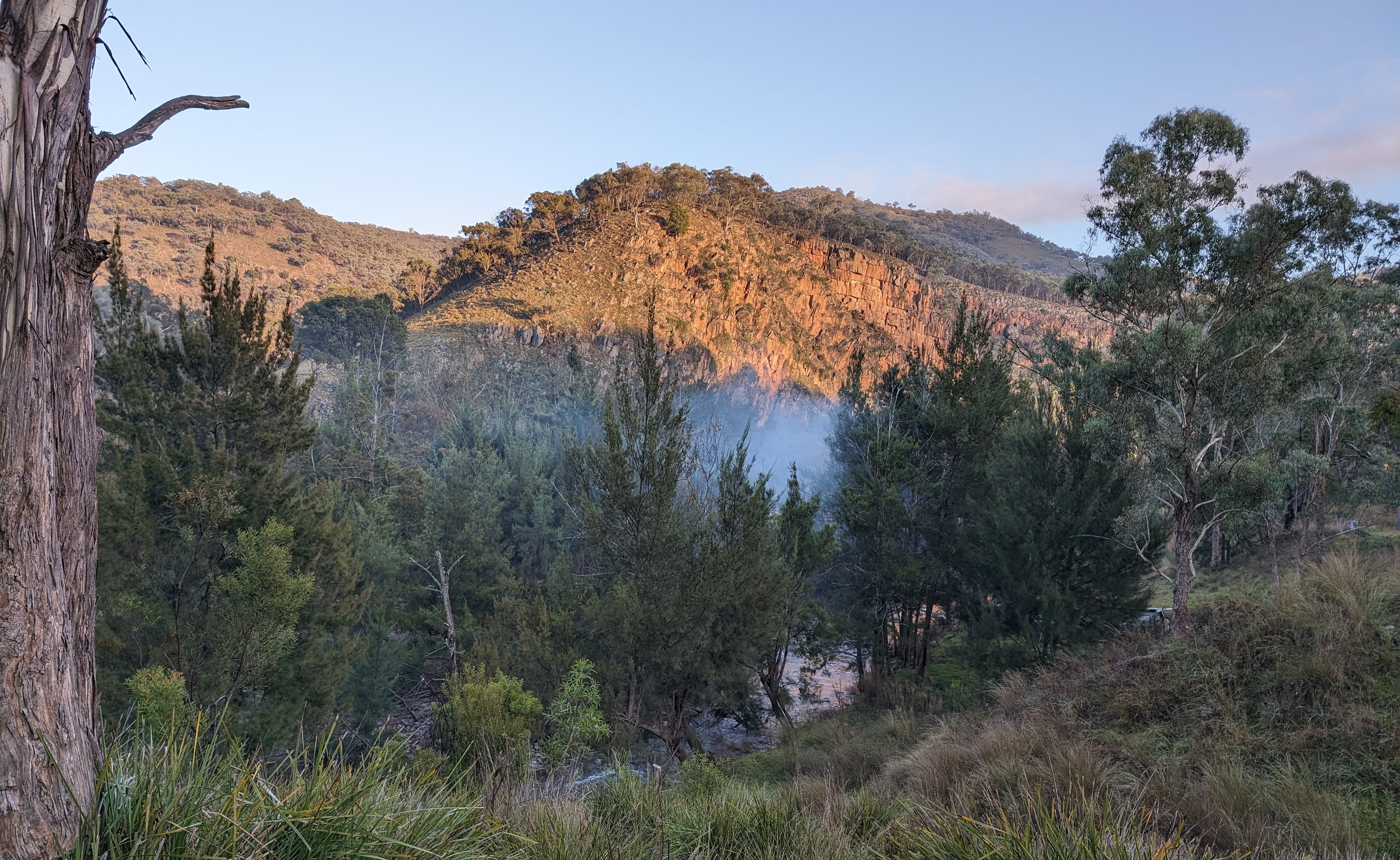
    In the chill of the early morning (it was 6° Centigrade), the sun warms up the rocks on the opposite side of the river, while neighbours get their campfire going down below:

    After packing up our camp, we drove back along the Bridle Track to Root Hog Crossing. This is a crossing of the Macquarie River, at the junction of the Bridle Track and Root Hog Road. The river level was on the high side (measured at about 1 metre at the Rock Forest station), and there was a reasonably strong current. Janet says that it’s the strongest current she’s tackled to date:

    Thanks to our friend Matt for making the video.

    Before doing a trip like this, the TC does plenty of research. She checks the river levels over a couple of weeks, to see what the river’s doing. She also monitors the fire warnings and weather forecasts. On reaching the river crossing, if it looks a bit high or strong current, she’d walk into it first. If you can’t walk the current, then the car can’t take it either. For this crossing, luckily there was a group of three cars doing the crossing when we arrived. We watched them, and judged it safe for our vehicles.

    Root Hog Road is the road of views:

    The next couple of photos are from a previous trip, when we traversed Root Hog Road in the opposite direction. A couple of motorbikes passed us when we stopped to take in the view:

    Another road sign advised due caution:

    Also from our previous trip, this video shows the last part of Root Hog Road as it drops towards the Macquarie River at the junction of Root Hog Road and the Bridle Track. The crossing is to the right, but we turned to the left to take a look at the river and campground:

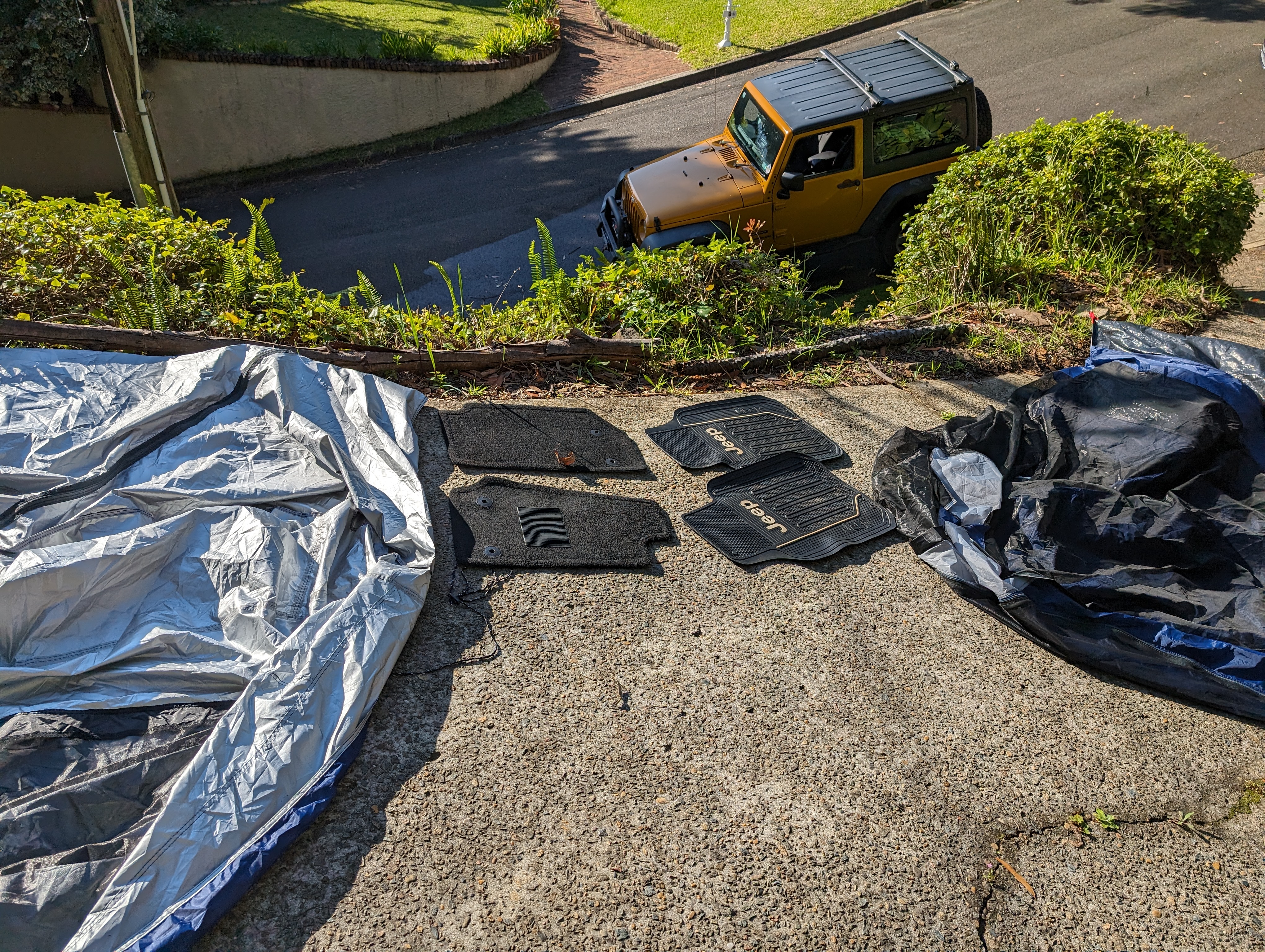
    Cleanup on the day after this week’s trip. Janet got her carpets wet in the Root Hog Crossing, and her paintwork was dusty. The tent was damp from the morning dew:

    If you’re interested in doing this trip yourself, you can find out more about the Bridle Track on the NSW information site.


  • Daintree River and Cape Tribulation

    This is the blog of Mark Wordsworm, the travelling worm. I’m a 36-year-old bookmark (give or take a few years) and I proudly boast my own Hallmark serial number, 95 HBM 80-1. You’ll probably want to read all about me and my Travelling Companion (the TC).

    Today’s travel notes

    Me and the TC recently spent a few days up in Far North Queensland. It’s a land of ancient forests, wide waterways, and tropical beaches.

    This post shows a little of our boat ride on the Daintree river and our trip on up to Cape Tribulation. Or “Cape Trib” as it’s fondly known to the locals.

    The book I’m in

    Autopsy, by Patricia Cornwall. I’m delighted to take my place inside a Kay Scarpetta novel again. Murder and mayhem ensue, cloaked in the delightful intrigues of this forensic pathologist’s family network. A good read.

    Travel tips

    Take an early-morning boat trip on the Daintree River. The Daintree River Wild Watch with Ian “Sauce” Worcester is a beautiful one. And if you do such a trip, take warm clothing. Yes, it’s the tropics, and yes it gets warm when the sun finds you. But on the river, cloaked in mist, it can be rather chilly.

    The photos

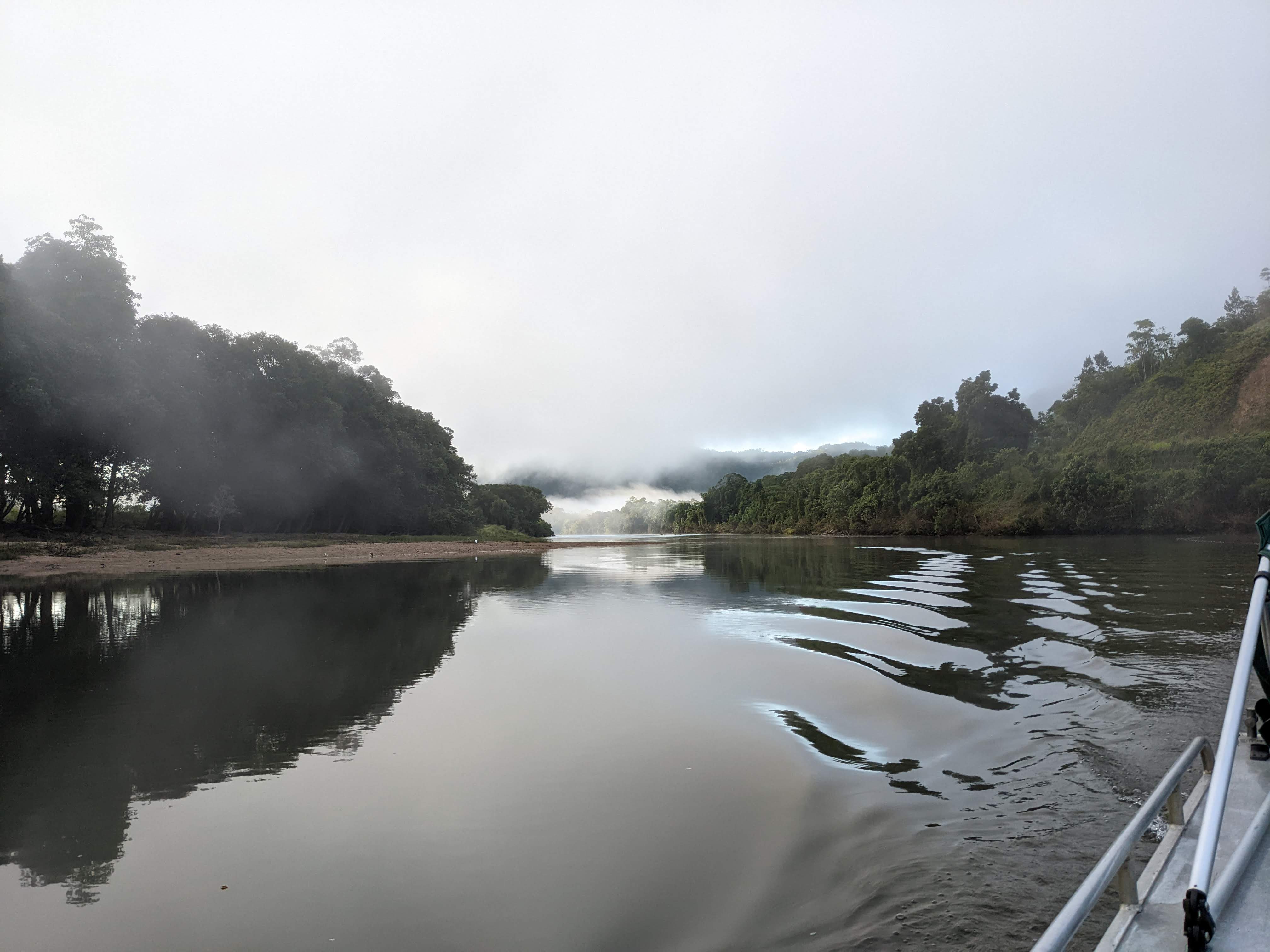
    Early morning on the Daintree River:

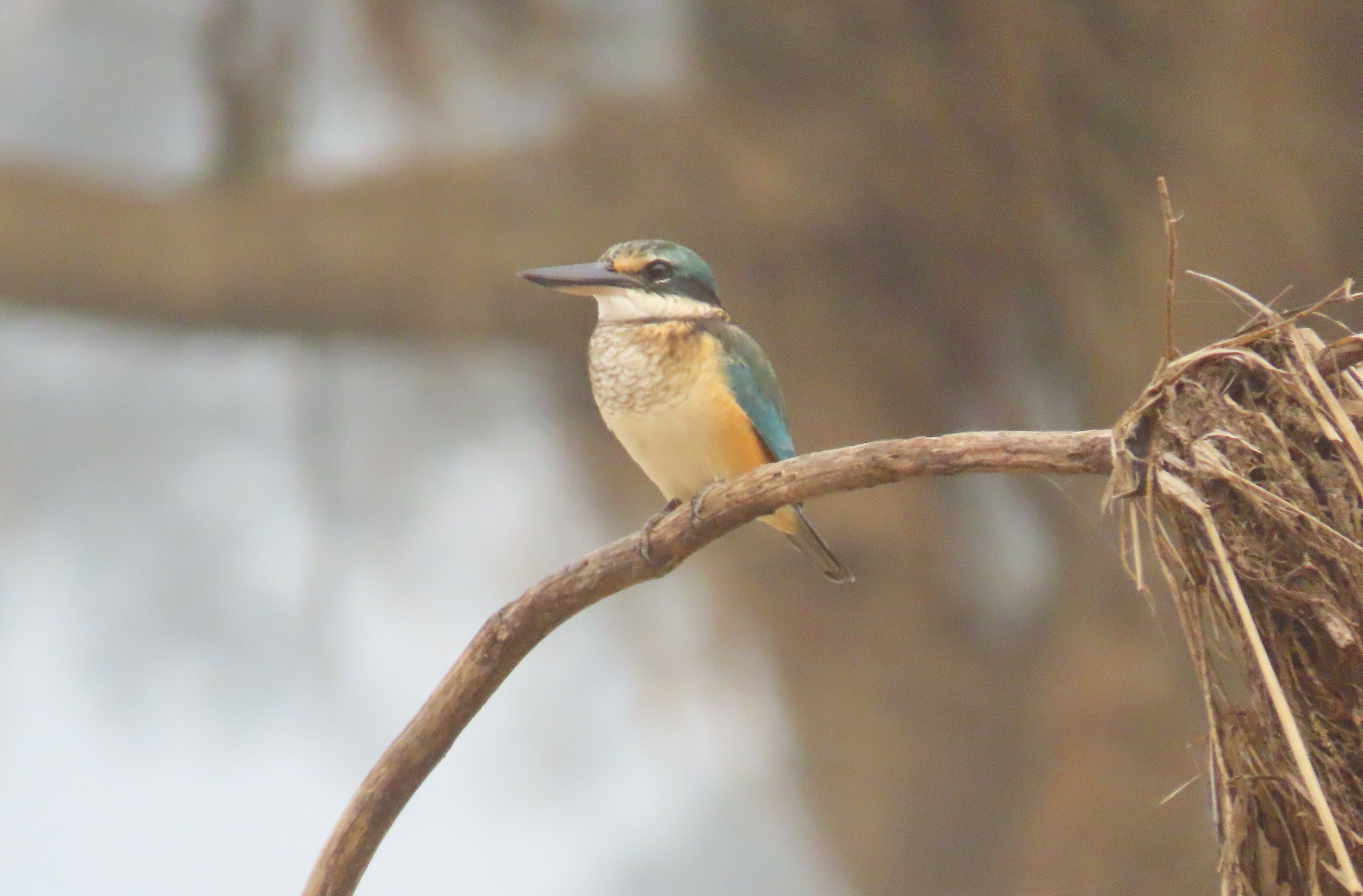
     As the sun came up, so did the birds, like this Sacred Kingfisher:

    A Rainbow Bee-eater, looking less than ready for the harsh light of day:

    The reflections on the still water made it hard to tell imitation from reality:

    Let’s move fifty kilometres north, to Cape Tribulation. Walking from the car park to the beach, we crossed this dark pond:

    Colorful crabs watched us from the driftwood:

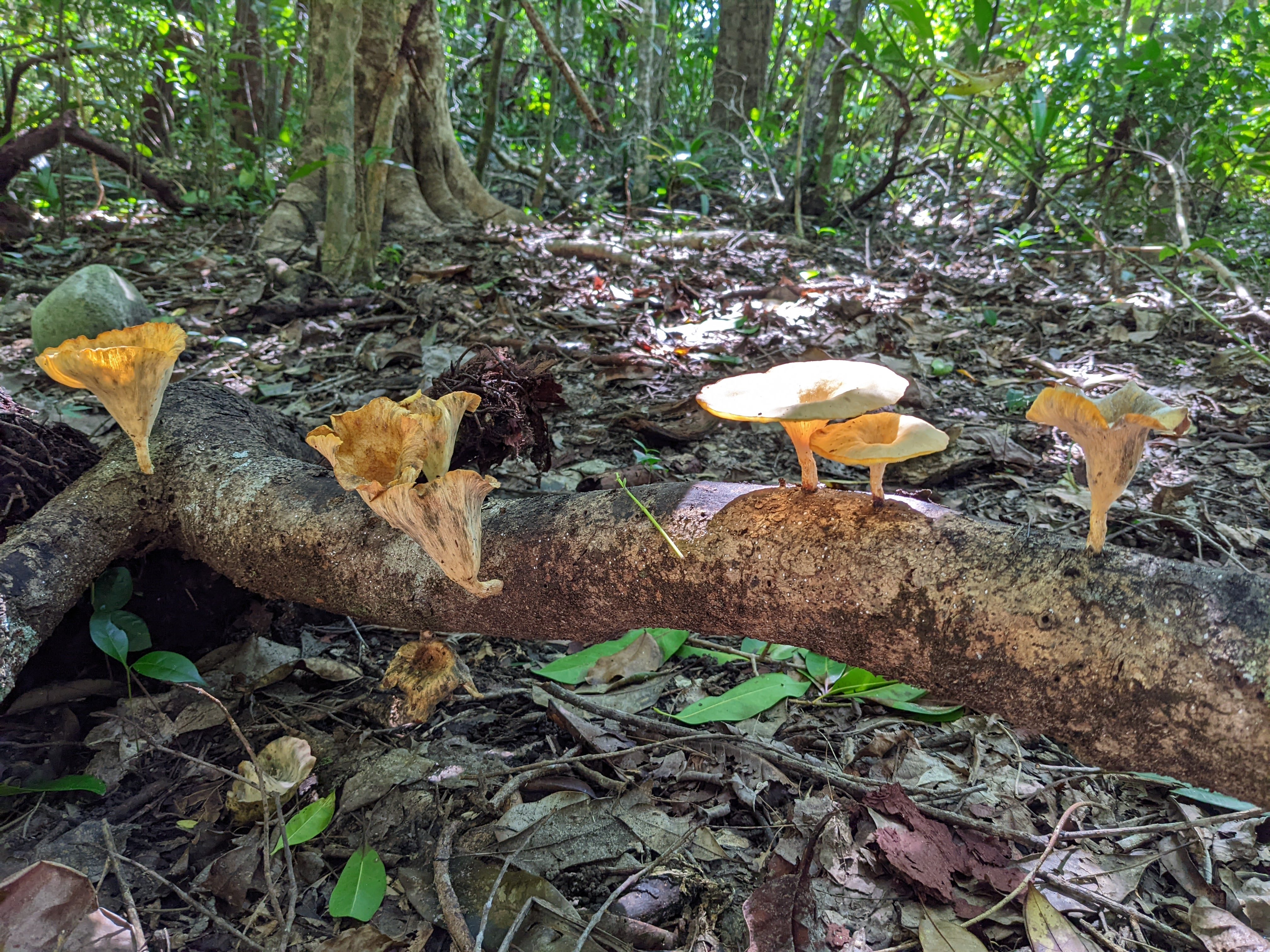
    Mushrooms lit the way:

    The path opened up onto the sands of Cape Tribulation beach:

    Why the name “Cape Tribulation”? Evidently Captain Cook and his ship, the Endeavour, had a tough time in this area. The ship struck part of the Great Barrier Reef and suffered quite a bit of damage as a result. The captain and some of the crew had to trek across the land to find supplies, and found instead that making way through the thick jungle-like forest was no easy task.

    That’s all for today, folks.

  • Mossman Gorge and the Daintree Rainforest

    This is the blog of Mark Wordsworm, the travelling worm. I’m a 36-year-old bookmark (give or take a few years) and I proudly boast my own Hallmark serial number, 95 HBM 80-1. You’ll probably want to read all about me and my Travelling Companion (the TC).

    Today’s travel notes

    Mossman Gorge is part of the Daintree rainforest, a region in Far North Queensland on the north east coast of Australia. Me, the TC, and two other family members walked the Mossman Gorge circuit trail a couple of weeks ago (mid May).

    The book I’m in

    Bloody Genius, by John Sandford. A quiet tale of murder and mayhem. I’ll be happy if the TC deposits me in more of this author’s books.

    Travel tips

    The Daintree is in tropical Far North Queensland. Be prepared for the climate. Even though we were there in the cooler, dry time of year, it was still warm and humid. Take plenty of drinking water. Walk at a reasonable pace that suits you. Don’t plan to do too much in one day. Even for multi-legged folks like yours truly, it pays to take things easy.

    The photos

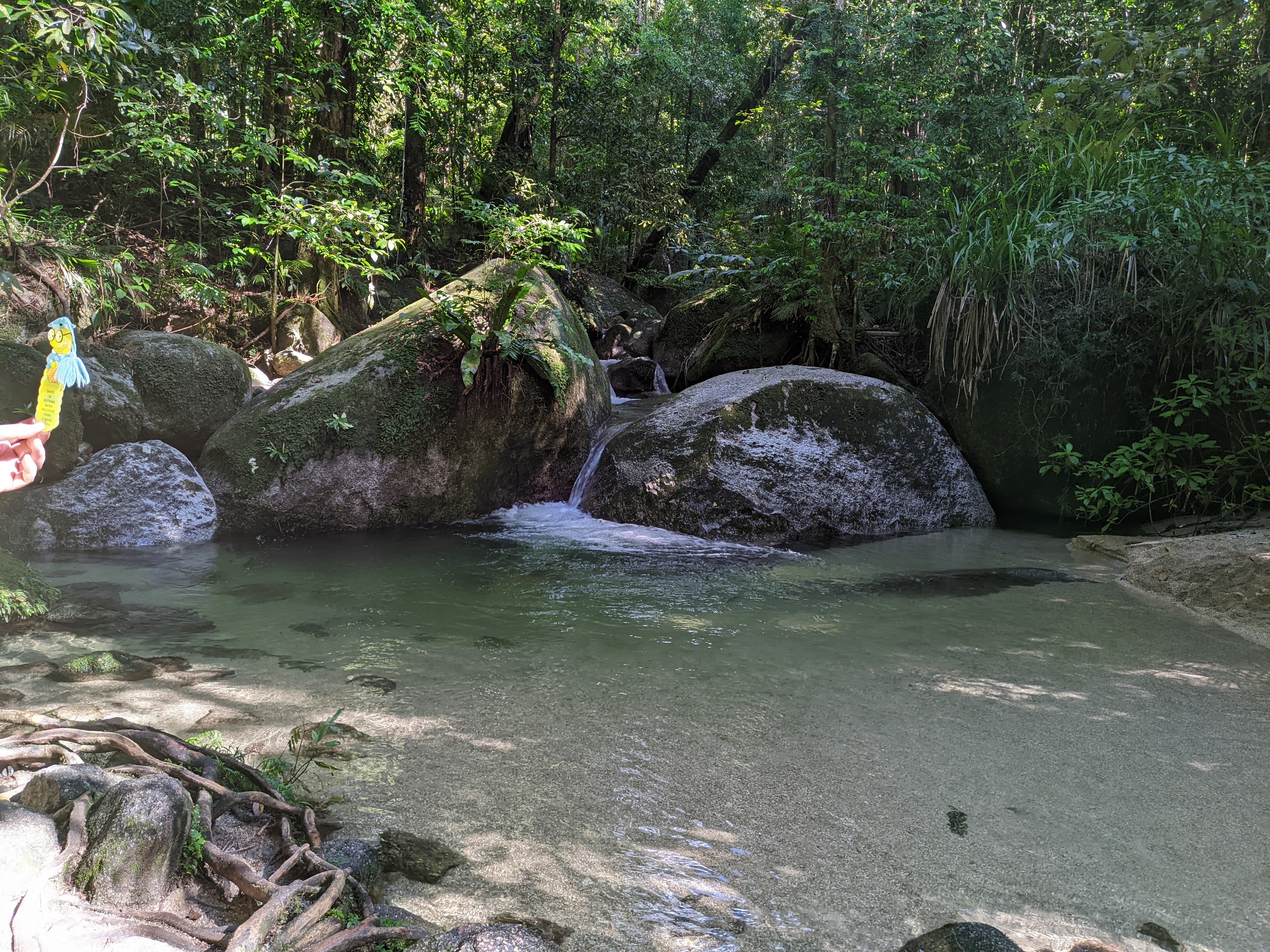
    Me at a clear forest pool in the Daintree rainforest:

    Report has it that the Daintree is the oldest rainforest in the world. It’s more ancient than the Amazon forest, by tens of millions of years. The Daintree survived the ice age by shrinking into small pockets which then expanded when the warmth came back. So, some of the plant species here were around when the dinosaurs called this area home.

    Me, dwarfed by a tall tree covered in vines:

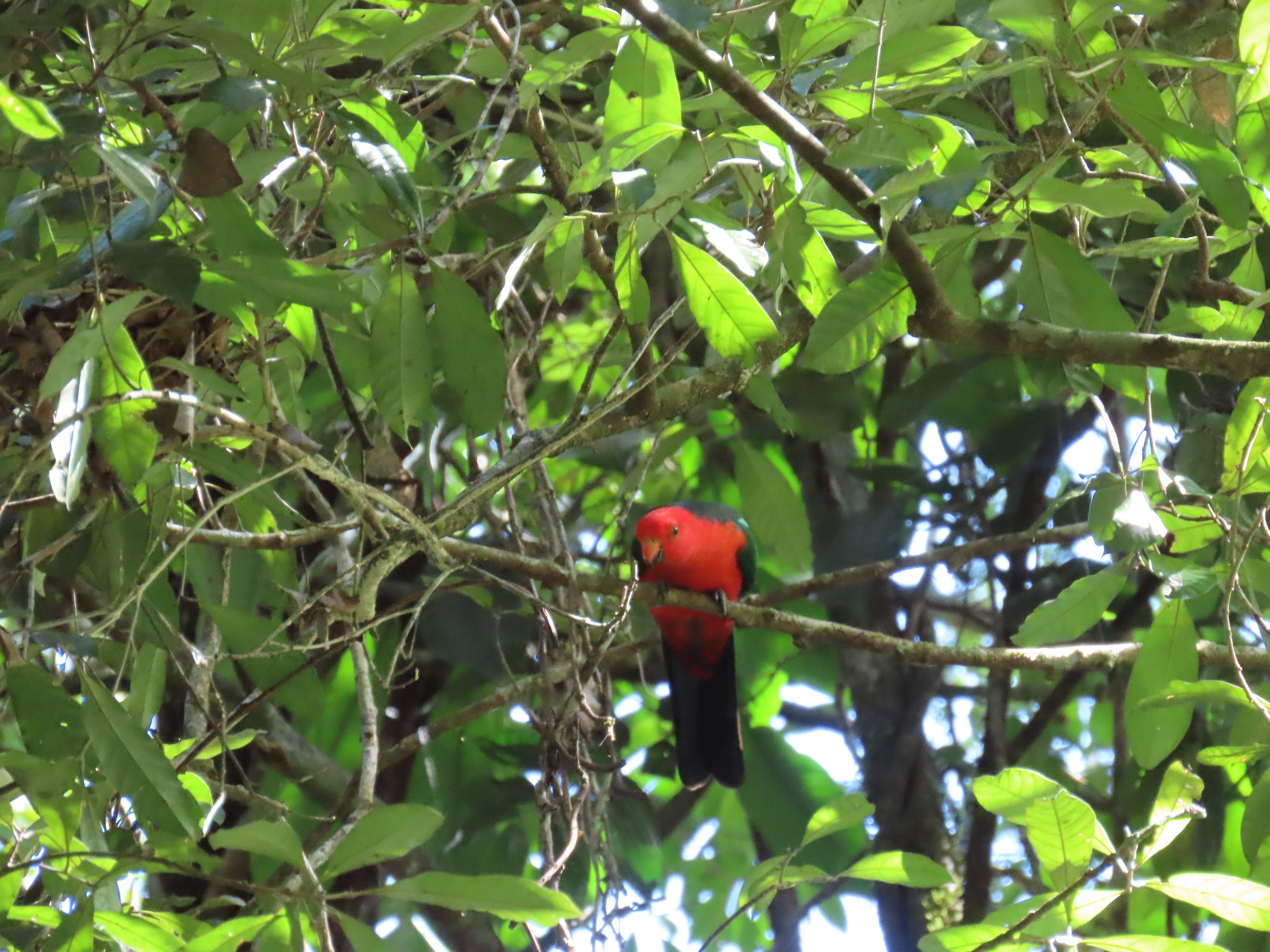
    Speaking of dinosaurs, look who’s looking down from above!

    That particular descendant of the dinosaurs is a King Parrot, one of the 430 species of birds found in this region.

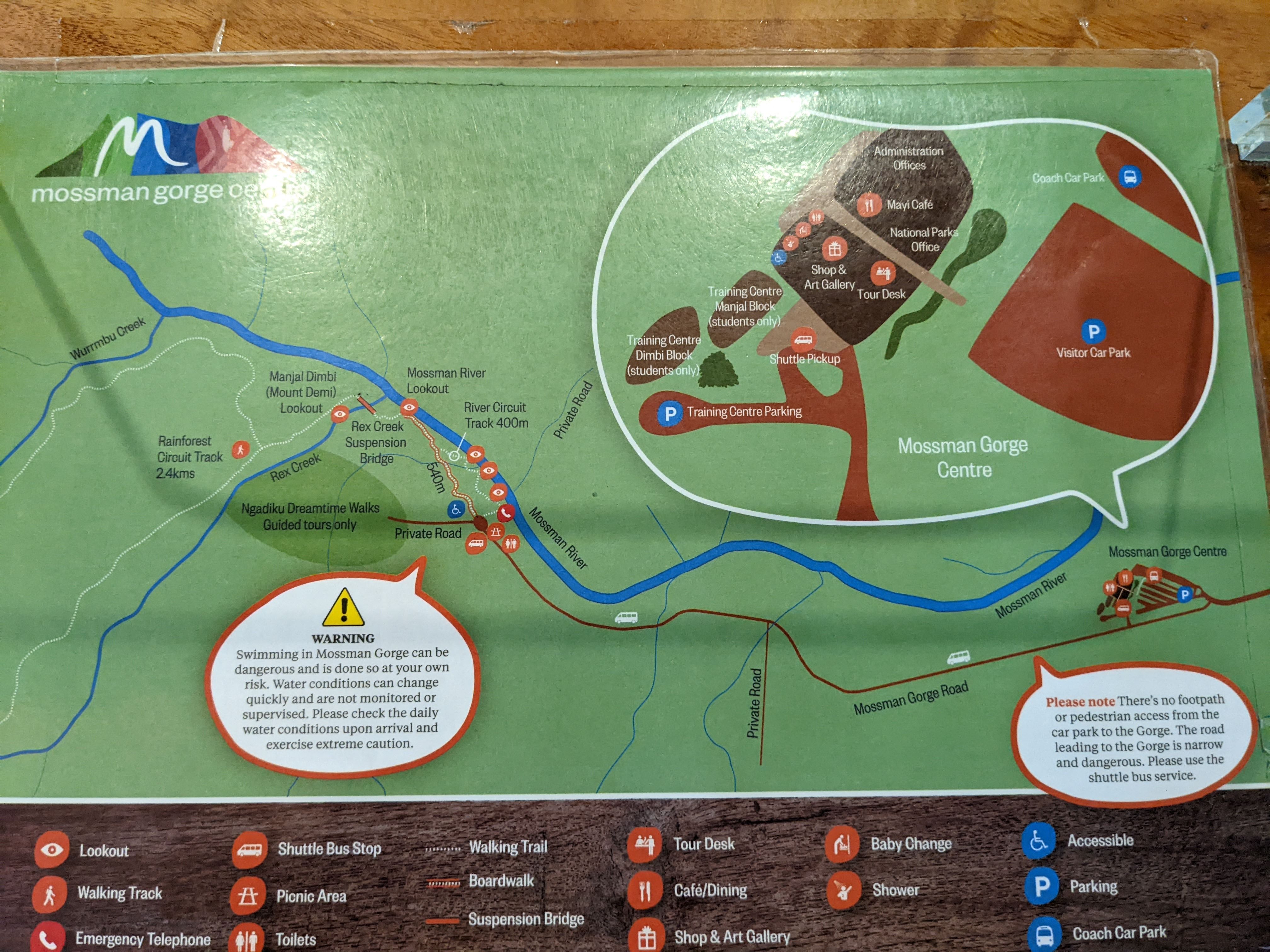
    The Mossman Gorge circuit track offers a lovely way to experience the rainforest. The track is well maintained, and fine to do without a guide. This map of the area shows the car park on the right. From the car park, we caught the shuttle bus to the start of the trail:

    A note from a cautious caterpillar: Heed the warnings! We saw one person being taken out by ambulance after slipping on the rocks, and another person requesting help from the paramedics.

    Warnings aside, being in the Daintree forest is a beautiful, restful experience. This photo captures the timeless atmosphere. Shafts of light filtered by greenery. Tall forest giants. Leaves and vines intertwined in huge variety.

    I did get a crick in my neck from all that looking up at giants. Down at my level, though, there’s a lot going on too. Mmmm mushrooms. I wonder… which side of the mushroom should I nibble on?

    Back at the car park, Skull-face the Spider awaited us:

    Yes, the spider really was that big. It’s a Giant Golden Orb Weaver. If the TC walked into this spider’s web, the spider would cover her entire face! Still, it’s relatively harmless to humans. Yours truly, however, kept well away.

    Zooming in with the camera to take a closer look. The little spiders on the web weren’t actually all that little, until seen next to Skull-face:

    That’s all for today, folks.

  • Cairns in tropical northern Australia

    This is the blog of Mark Wordsworm, the travelling worm. I’m a 36-year-old bookmark (give or take a few years) and I proudly boast my own Hallmark serial number, 95 HBM 80-1. You’ll probably want to read all about me and my Travelling Companion (the TC).

    Today’s travel notes

    This worm and the TC spent a few days in Far North Queensland, where the sun is warm and the sea is calm. When it’s not holding a storm party, that is. Let me show you around the lovely town of Cairns, gateway to the Great Barrier Reef.

    The book I’m in

    Moonraker’s Bride by Madeleine Brent. A good yarn written in this author’s inimitable style. Yours truly is always happy when the TC puts me in one of Madeleine’s books. Madeleine Brent is the alter ego of Peter O’Donnell, best known for the Modesty Blaise series.

    Recommended restaurant

    The Chambers, Spence Street, Cairns City. Excellent food in a comfortable ambience.

    The photos

    Me with Ray, guardian of the Great Barrier Reef.

    Ray is a life-size sting ray, part of an imposing sculpture on the Cairns Esplanade. It’s titled Reef Guardian (Citizens Gateway to the Great Barrier Reef), by Brian Robinson:

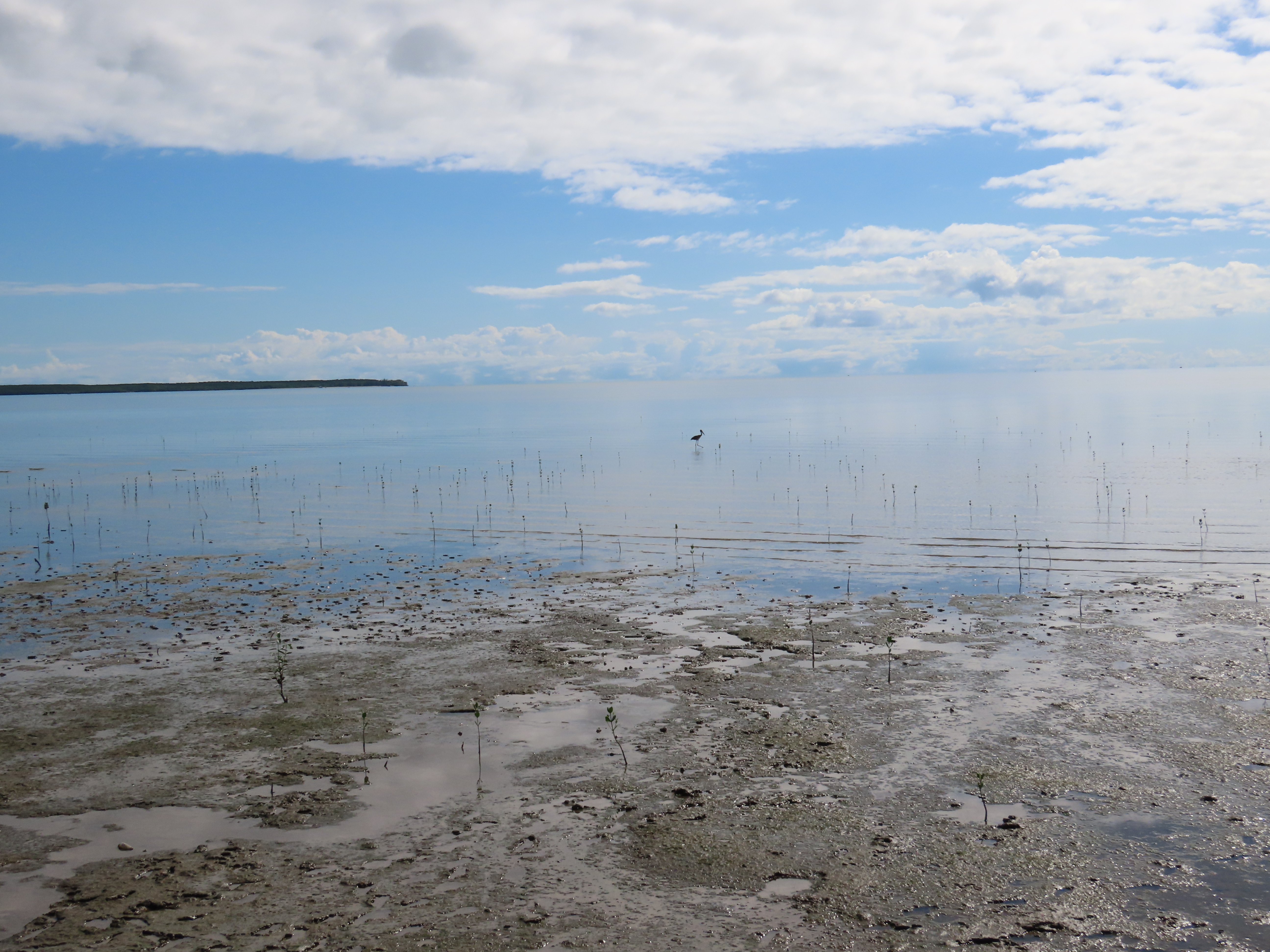
    Beyond the sculpture, the bay of Cairns presents an ever-changing vista. At low tide, it’s a mud flat with mangroves popping up here and there:

    In the distance is a Black-necked Stalk, stalking (that’s right, stalking) the shallows for a bite to eat. Here’s a closeup view of the rather lugubrious character:

    Needless to say, I stayed well out of sight. That beak, those eyes!

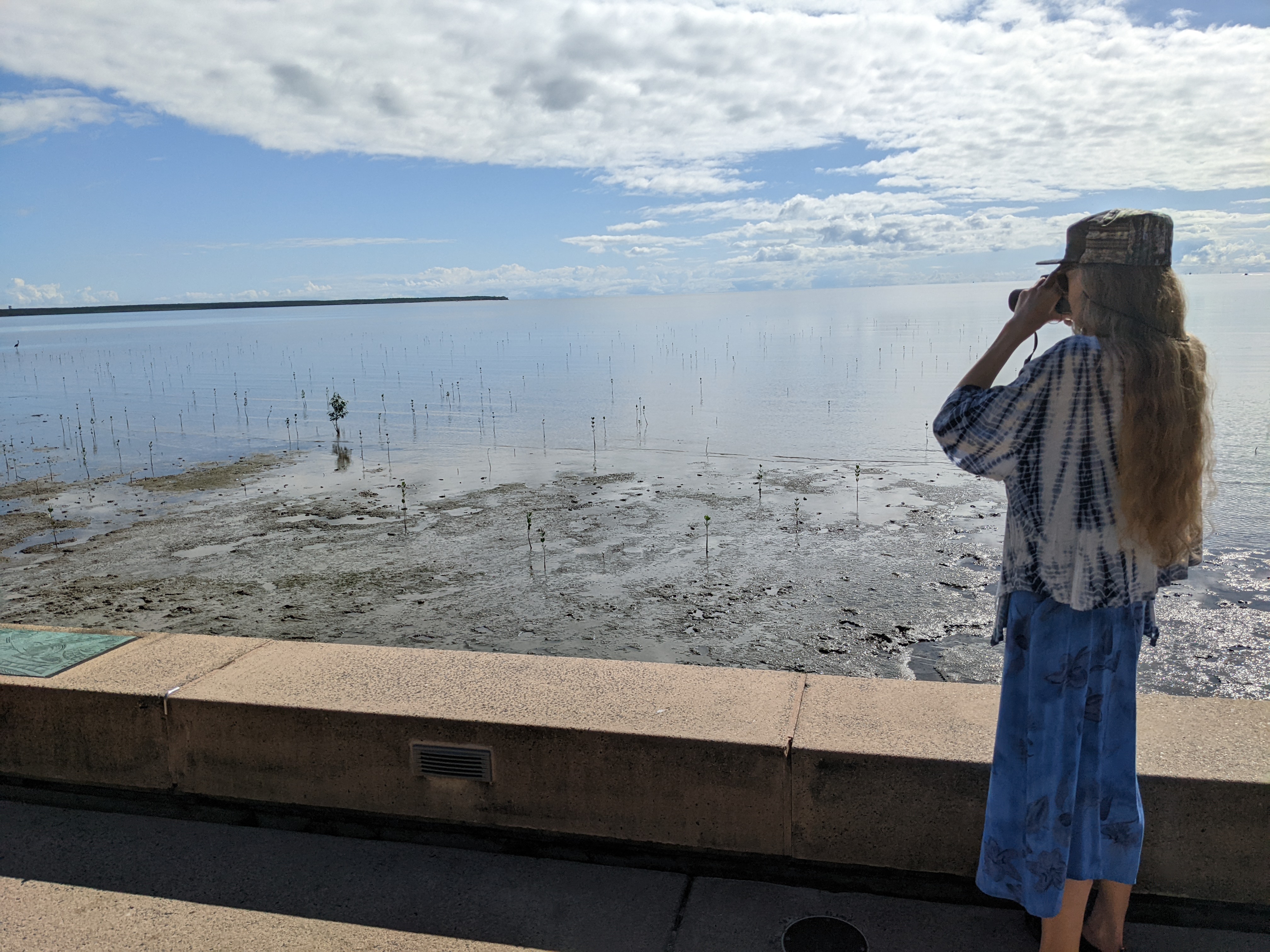
    The TC, bless her cotton socks, was captivated by the tranquility of the scene. She doesn’t look like food to a stalk. Here she is, captured on film in a rare unguarded moment:

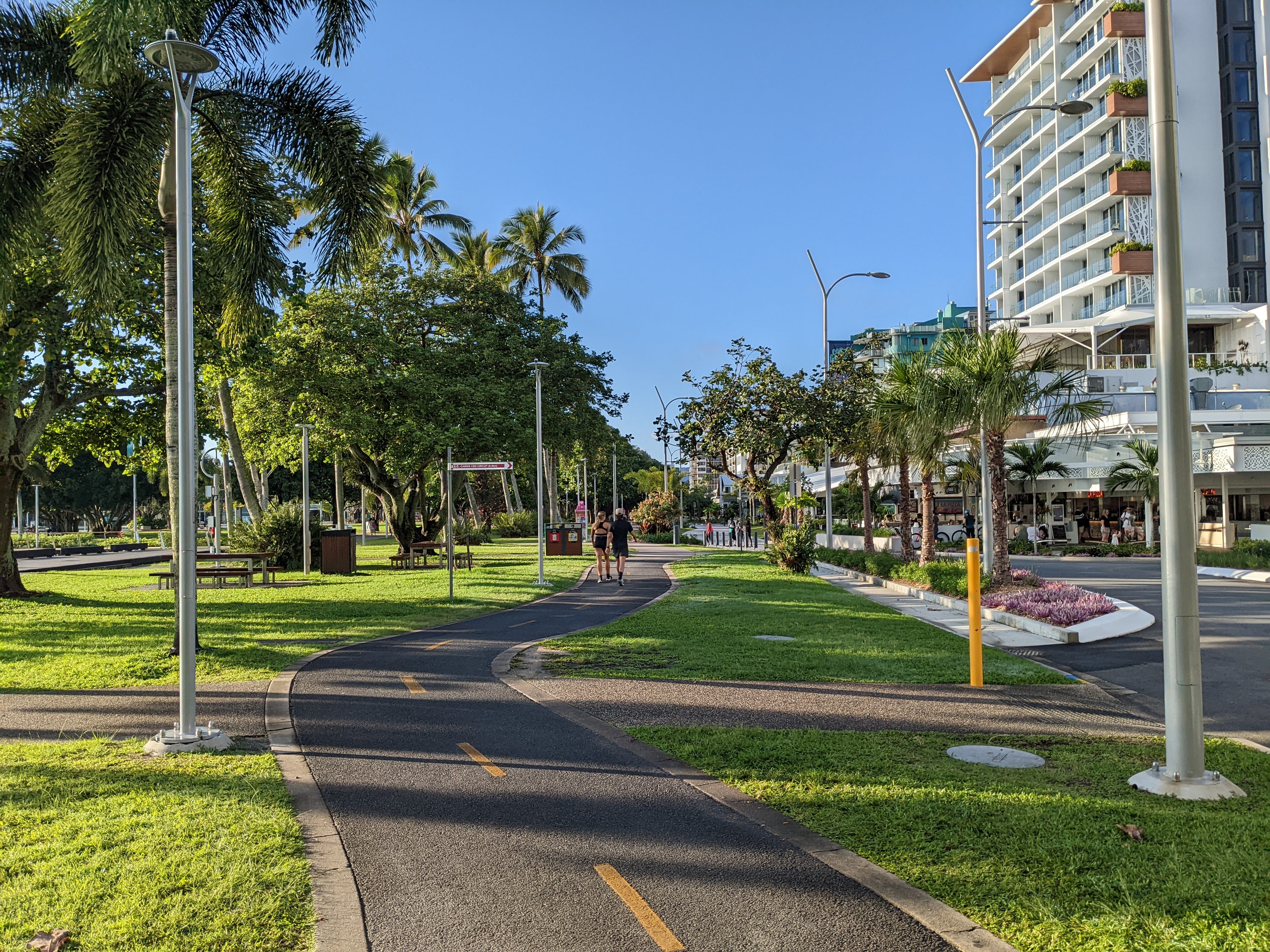
    Along the bay runs the Cairns Esplanade, where Cairns folk and visitors take the air. One corner of the Esplanade is the favourite haunt of a couple of pelicans:

    The Cairns Esplanade Lagoon, a gently-sloping series of pools, leads the eye down into the Coral Sea. If you zoom into the picture, you’ll see Jonathan the seagull and his pals swooping above the Esplanade Lagoon. Perhaps they’re mimicking the frozen flight of fish that swoops there too:

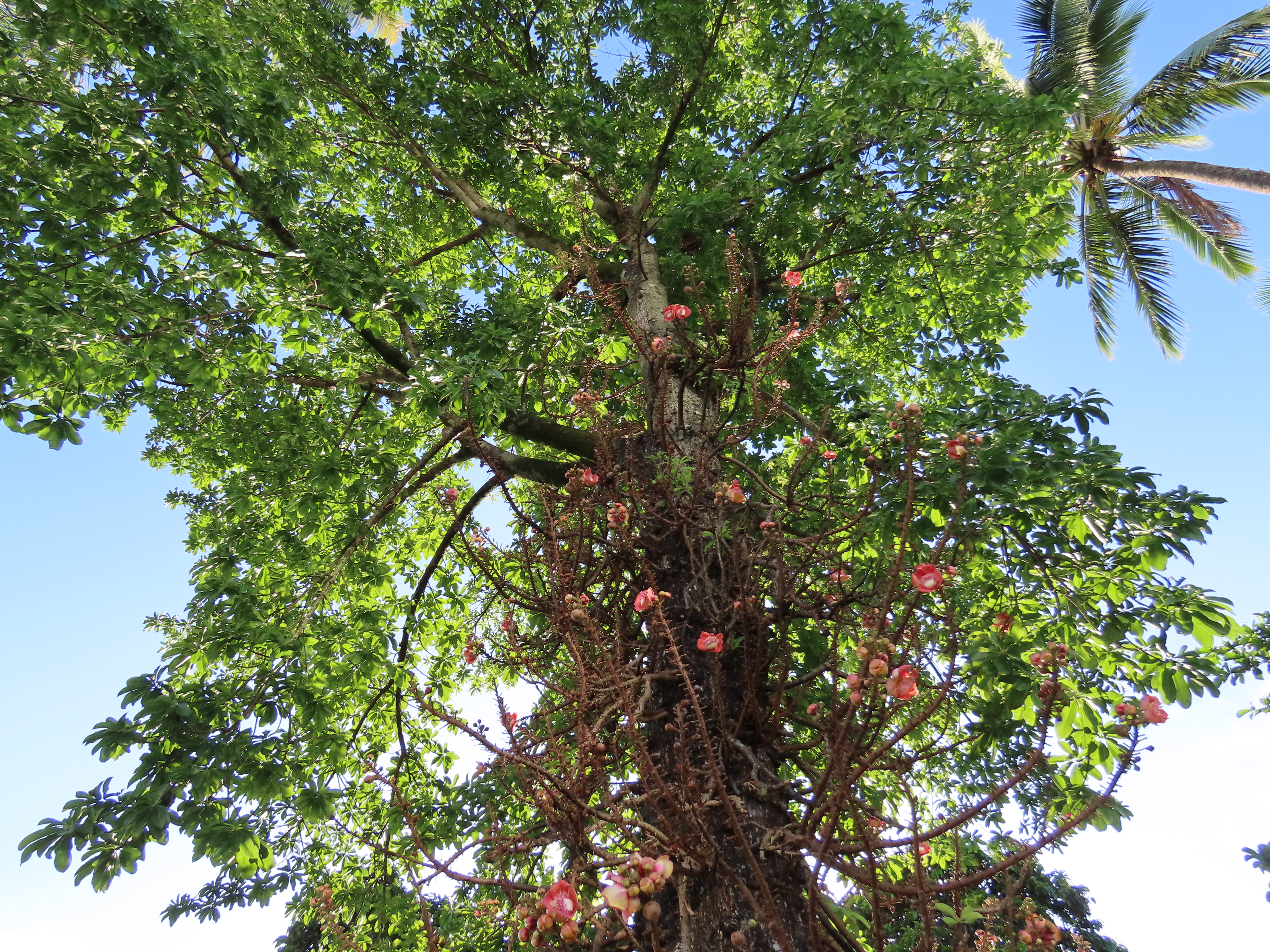
    Trees and grass in the middle of the Esplanade offer relief from the tropical sun. This flowering tree caught my eye because the flowers grow on stalks low down on the trunk and quite separate from the canopy of leaves:

    This is the flower:

    And another view of the flowering branches low on the trunk:

    On one side of the Esplanade lies the Coral Sea. On the other side, enticing eateries and shops line the road beyond the green sward:

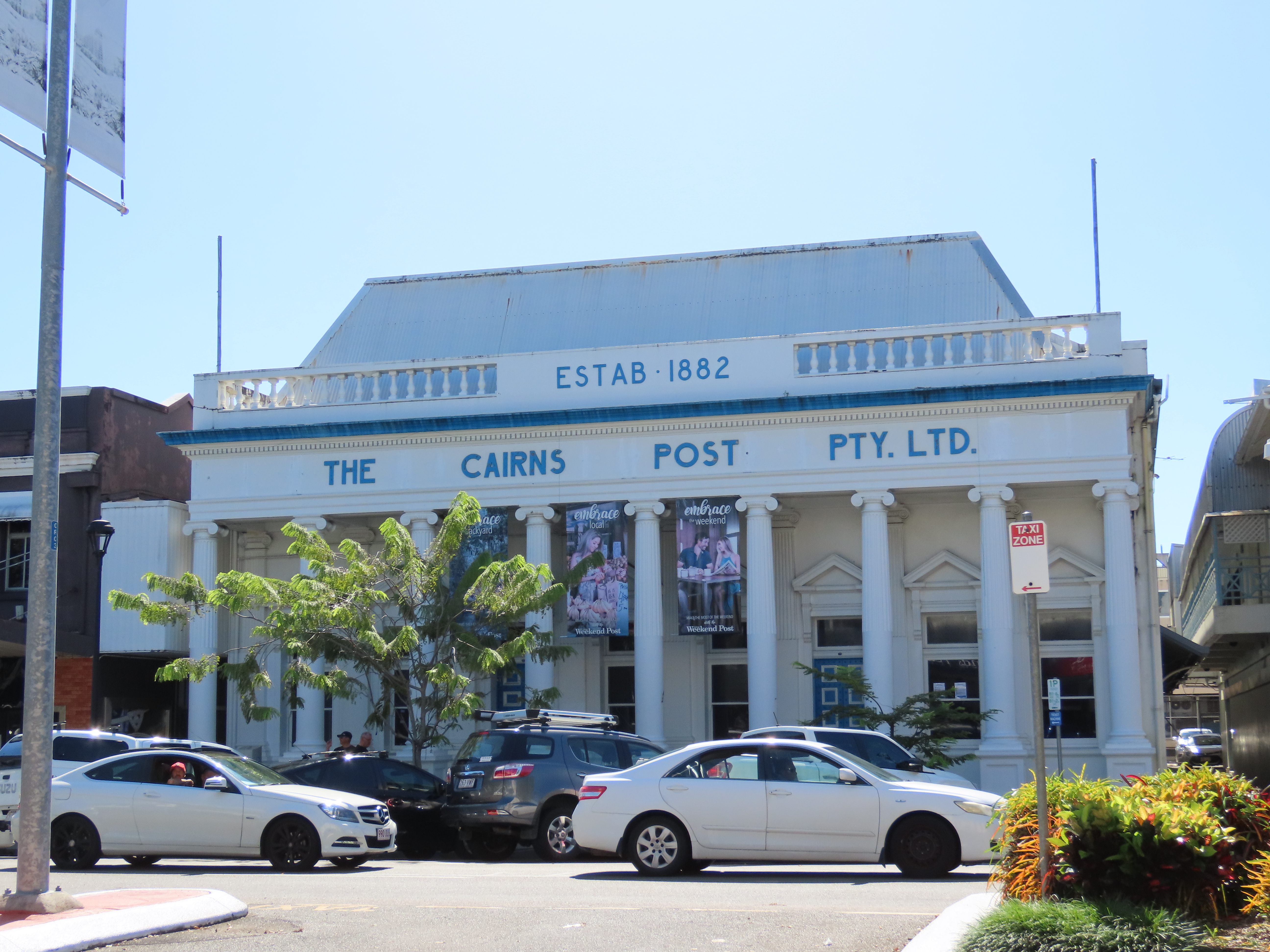
    Cairns is a town of wide avenues with some interesting architecture. An example is the Cairns Post building, established in 1882 as home to the Cairns Post news corporation. The building is currently for sale, so now’s your chance to hop in if you have an eye for architecture and a few million dollars to spare:

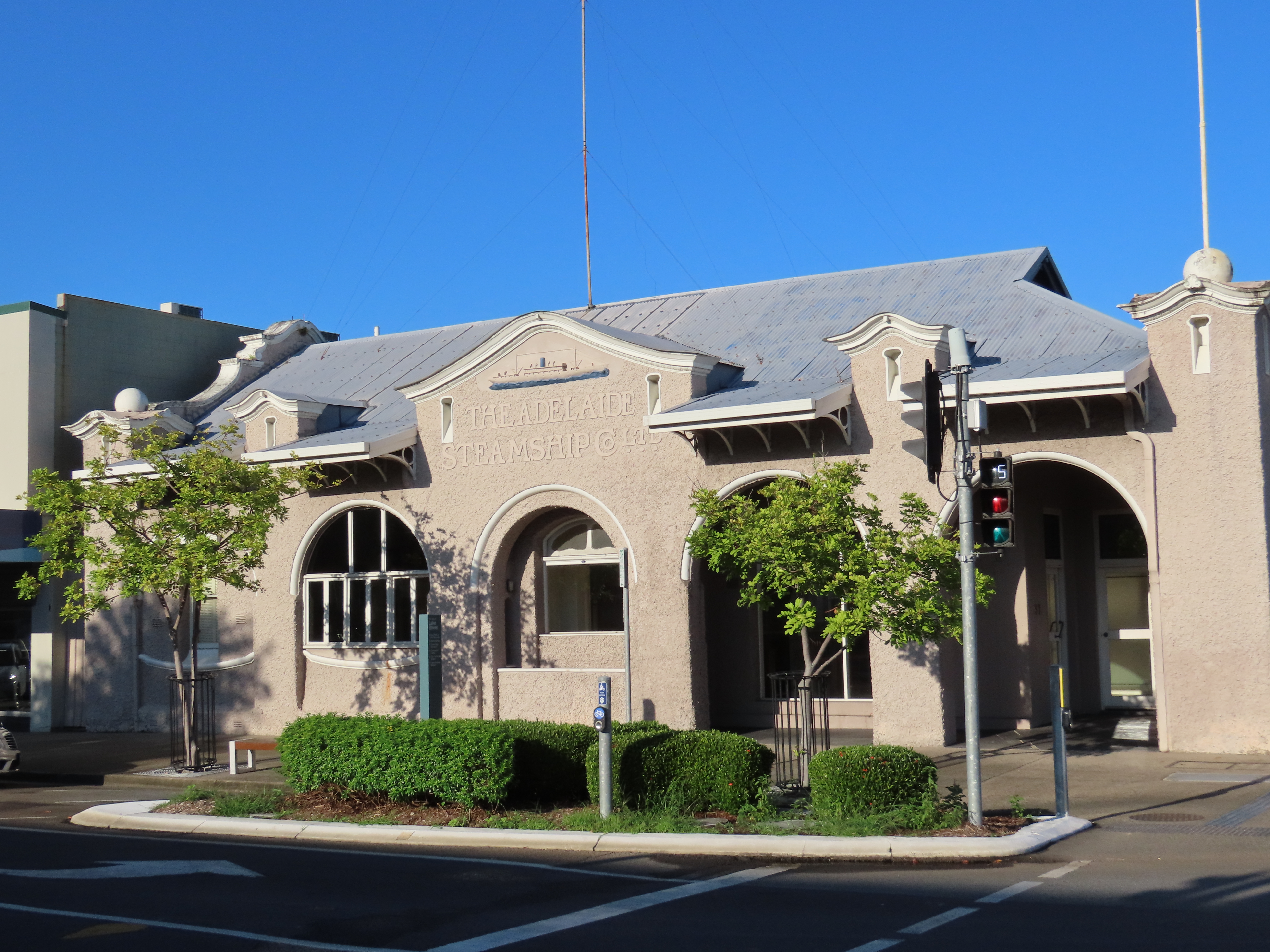
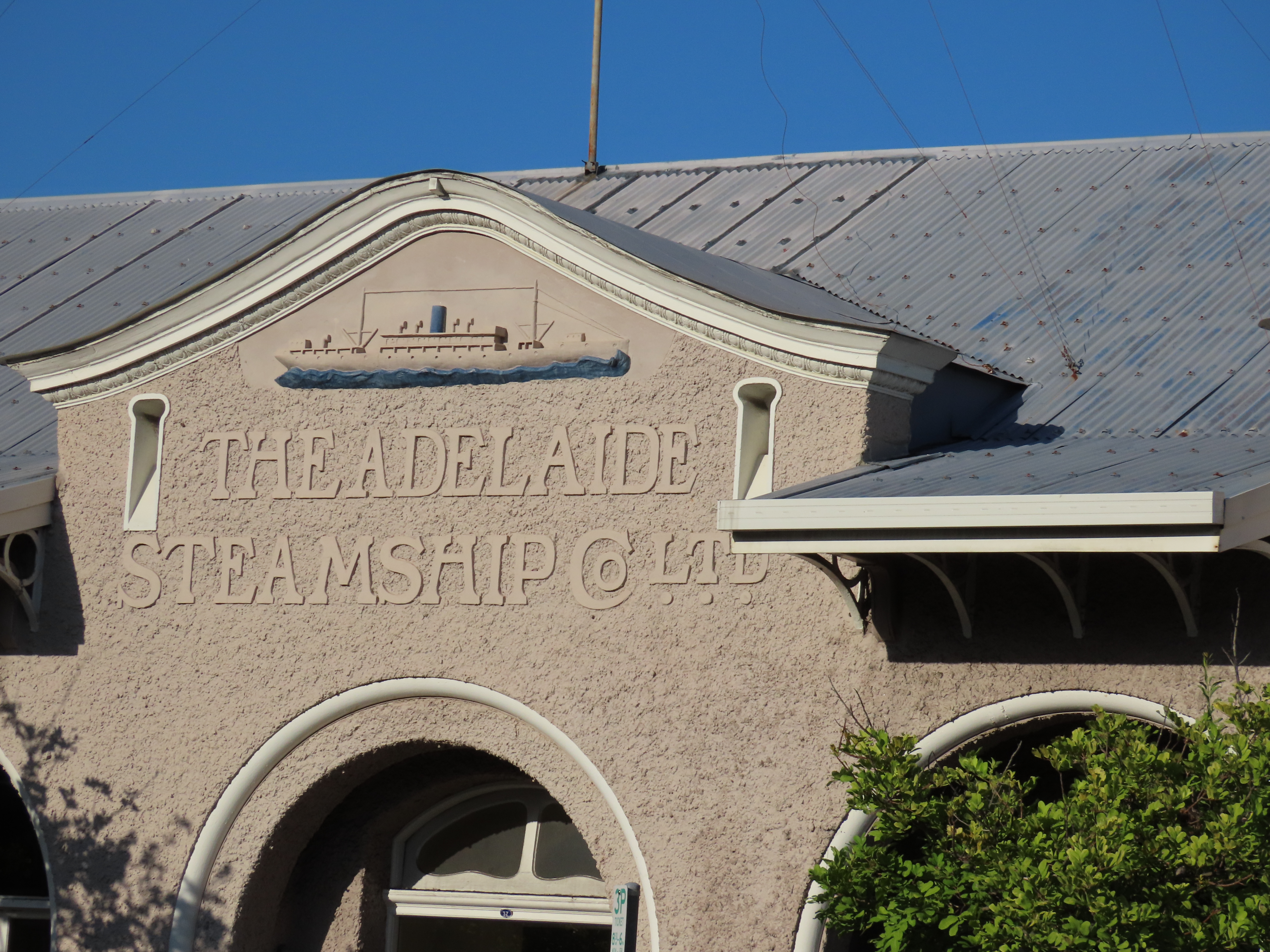
    The next photo shows a building erected in 1910 for the Adelaide Steamship Company:

    Here’s a closeup of the central gable, showing the building’s name spelled out in relief below a sculpture of a company ship:

    An alleyway in the city centre:

    Let’s finish the story with a return to nature and its oddities. These weird-looking mushrooms, which the TC, bless her soul, spotted just off the Esplanade, are Veiled Lady Mushrooms:

    That’s all for today, folks.

  • Kurri Kurri Kookaburra and murals

    This is the blog of Mark Wordsworm, the travelling worm. I’m a 36-year-old bookmark (give or take a few years) and I proudly boast my own Hallmark serial number, 95 HBM 80-1. You’ll probably want to read all about me and my Travelling Companion (the TC).

    Today’s travel notes

    A couple of weeks ago, this worm visited the little town of Kurri Kurri. It’s an intriguing place, springing from a history of coal mining and now re-imagining itself as an artists haven.

    If you’re anything like the TC, bless her cotton socks, you’ll be asking, “Why two words?” Why is the town not called just “Kurri”? Towns and cities in Australia often have names that repeat the same word twice. The pattern comes from the Aboriginal languages that repeat a word to emphasize or strengthen the meaning of the word. In the local Minyung language, “kurri-kurri” means “the beginning” or “the first”.

    The book I’m in

    The Ones We Choose, by Julie Clark. A tale of genetics, romance, and tangled lives. Highly recommended.

    The photos

    Me with the Kurri Kurri Kookaburra:

    This Kookaburra is huge. If it were alive, I’d be taking shelter rather than posing in full view of that eye and that beak. Instead, I was happy to let the bird photo bomb me, as it’s a sculpture.

    In fact, this bird is a little like myself in that the representation is more magnificent than the original form.

    Here’s another view of the Kurri Kurri Kookaburra. The artist is one Chris Fussell. The sculpture was erected in 2009:

    Not far away from the big bird is the Kurri Kurri hotel, first opened in 1904. It’s a typical Australian hotel, in that its primary business is as a pub and restaurant, not accommodation. (The word “hotel” traps many a weary, unwary traveller just arrived in Oz.) It’s a lovely old building, with wrap-around verandas and frilly cast-iron railings:

    On a wall to the right of the hotel in the above picture is one of the murals that the town has recently become known for.

    More paintings liven up a utilitarian building in the town centre:

    The next mural fits right in with the business whose wall it adorns:

    If you look closely at the above mural (the one on the right), you’ll spot a Kookaburra on a pile of tyres. There are more than 60 murals in and around Kurri Kurri. Rumour has it that every mural includes a Kookaburra somewhere.

    Some of the wall decorations are of a bleaker nature, though still artistically and historically interesting:

    That’s all for today, folks.


  • Newcastle, New South Wales

    This is the blog of Mark Wordsworm, the travelling worm. I’m a 36-year-old bookmark (give or take a few years) and I proudly boast my own Hallmark serial number, 95 HBM 80-1. You’ll probably want to read all about me and my Travelling Companion (the TC).

    Today’s travel notes

    This week marked my first visit to Newcastle, famed as the largest coal-exporting city in the world. Now, dear reader, you’d be justified in thinking that I’m talking about the Newcastle in north-east England. Nay, not so, this Newcastle is on the eastern coast of New South Wales, Australia.

    I greatly enjoyed my short visit to this harbour city, and my pleasant encounters with Novocastrians.

    The book I’m in

    Tragaron’s Daughter, by Madeleine Brent. A well-written, fast-moving romance and thriller combined.

    Recommended restaurant

    One Penny Black, 196 Hunter St, Newcastle. Highly recommended. Friendly service. Tasty fresh food in good quantity.

    The photos

    Me in front of the pavilion of the Newcastle Ocean Baths, a grand Art Deco building from the 1920s:

    In the above photo, I’m on the southern side of the pavilion. Take a stroll with me around the building. Go slowly now — I may have more legs than you, but they’re shorter than yours.

    The pavilion and baths were to be closed for renovation just three days after our visit. This worm felt privileged to see them in their current state, and hopes to see the renovated version soon. A somewhat whimsical sign under the pavilion predicted the upcoming upheaval:

    Behind the pavilion are the baths themselves, open to the sea and sky, with tiered seating at one end:

    Behind the tiered seating hides an intriguing little dome, complete with an intriguing little internal staircase:

    The next picture shows the pavilion again, viewed from the northern side this time:

    Moving south from the baths, you can stroll along Newcastle beach, bounded by a terraced headland:

    Moving inland, you’ll probably encounter tram or two. Big brother, in shape at least, to yours truly:

    This worm steered clear of lurking Corellas. Crafty characters they are, with one eye always open for a tasty morsel:

    The streets of Newcastle are well worth a wander, for their varied architecture:

    This building is a good advertisement for the architectural offices that inhabit it:

    To end on a slightly political note, I’ll share this photo demonstrating nuclear free sentiments. No doubt the statement expressed here is in response to a recent state government announcement that Newcastle is one of three sites under consideration for a nuclear submarine base:

    That’s all for today, folks.