This is the blog of Mark Wordsworm, the travelling worm. I’m a 36-year-old bookmark (give or take a few years) and I proudly boast my own Hallmark serial number, 95 HBM 80-1. You’ll probably want to read all about me and my Travelling Companion (the TC).
Today’s travel notes
Me and the TC spent a few hours in Dunfermline this week. Dunfermline is a city in the county of Fife, Scotland, about three miles from the Firth of Forth. (This worm wrote about the bridges over the Firth of Forth in a previous post.)
The book I’m in
Imminent Peril, a Sasha McCandless adventure by Melissa F. Miller. The TC loves this series about a lawyer detective who attracts trouble and deals with it fearlessly.
Travel tips
Park as soon as you find a spot that’s close enough to your destination.
The photos
Looking across the rooftops to the Dunfirmline City Chambers:

Dunfirmline City Chambers was built in the late 1870s. It combines French, Gothic and Scots baronial architectural styles into a pleasing medley. The clock tower stands out as a feature of the town.
The clock caused a bit of drama in November 2022, when one of its hands became loose during strong winds. The town closed the roads around the tower until the clock was rendered safe.
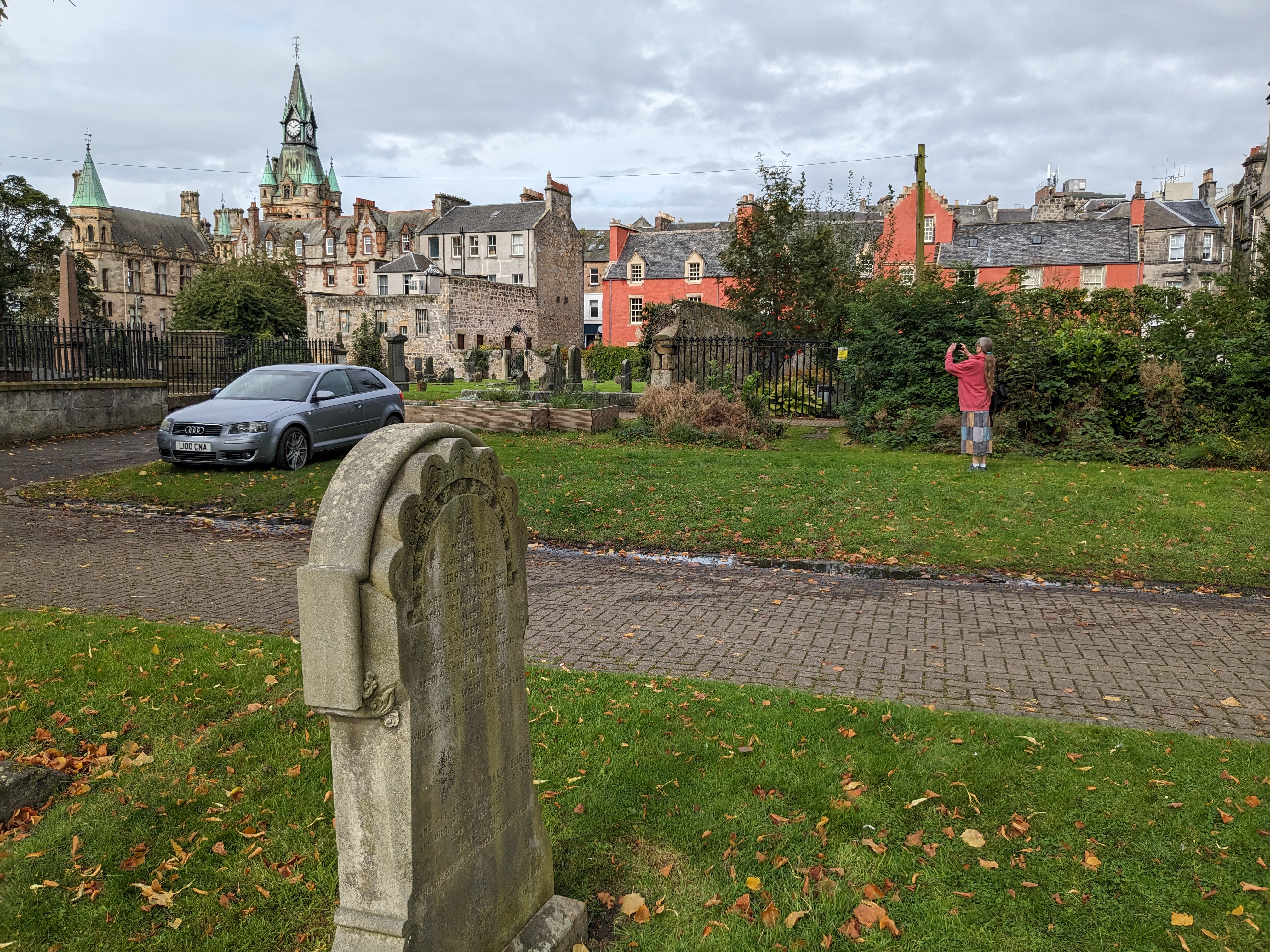
This picture shows the building from the other side of a nearby grave yard:

If you’re keen of eye, you might notice that the next picture shows a rare glimpse of the TC herself. It also includes a partial view of Abbot House, Dunfermline’s oldest house, known locally as the Pink Hoose:
Dunfermline Abbey has been home to Christian worshippers for more than 1000 years:
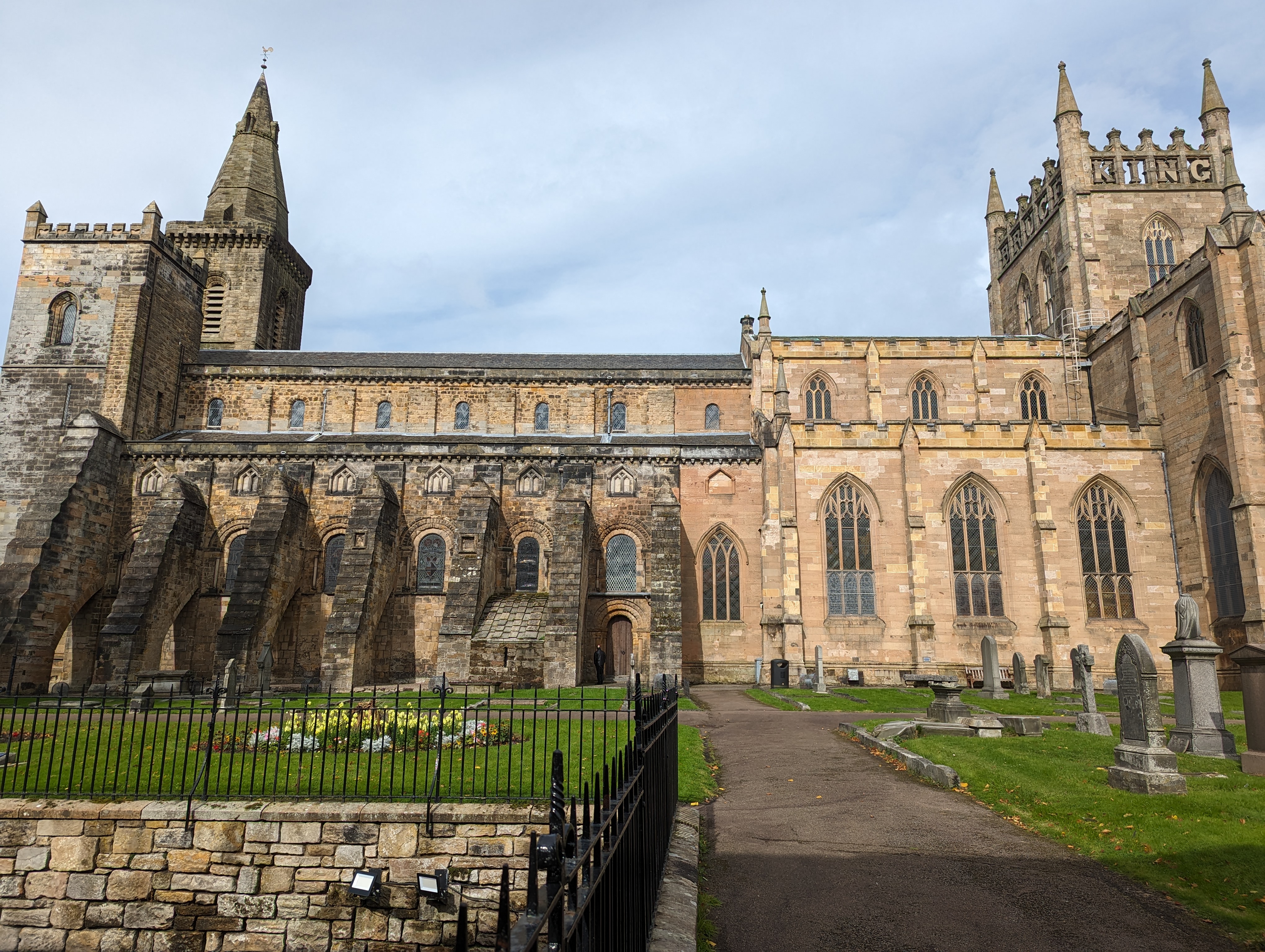
The building has two distinct halves. On the left of the picture (the western half) is the Benedictine Abbey, founded by Queen Margaret in the eleventh century. Margaret arrived in Dunfermline in 1068, following the defeat of the English at the Battle of Hastings in 1066. She married King Malcolm in 1070 and founded Dunfermline Abbey in 1072.
On the right (the eastern half) is the New Abbey Church, constructed in the early nineteenth century. Robert the Bruce is buried under this half of the church. The letters that you see in the balustrade of the square tower spell out “BRUCE KING”.
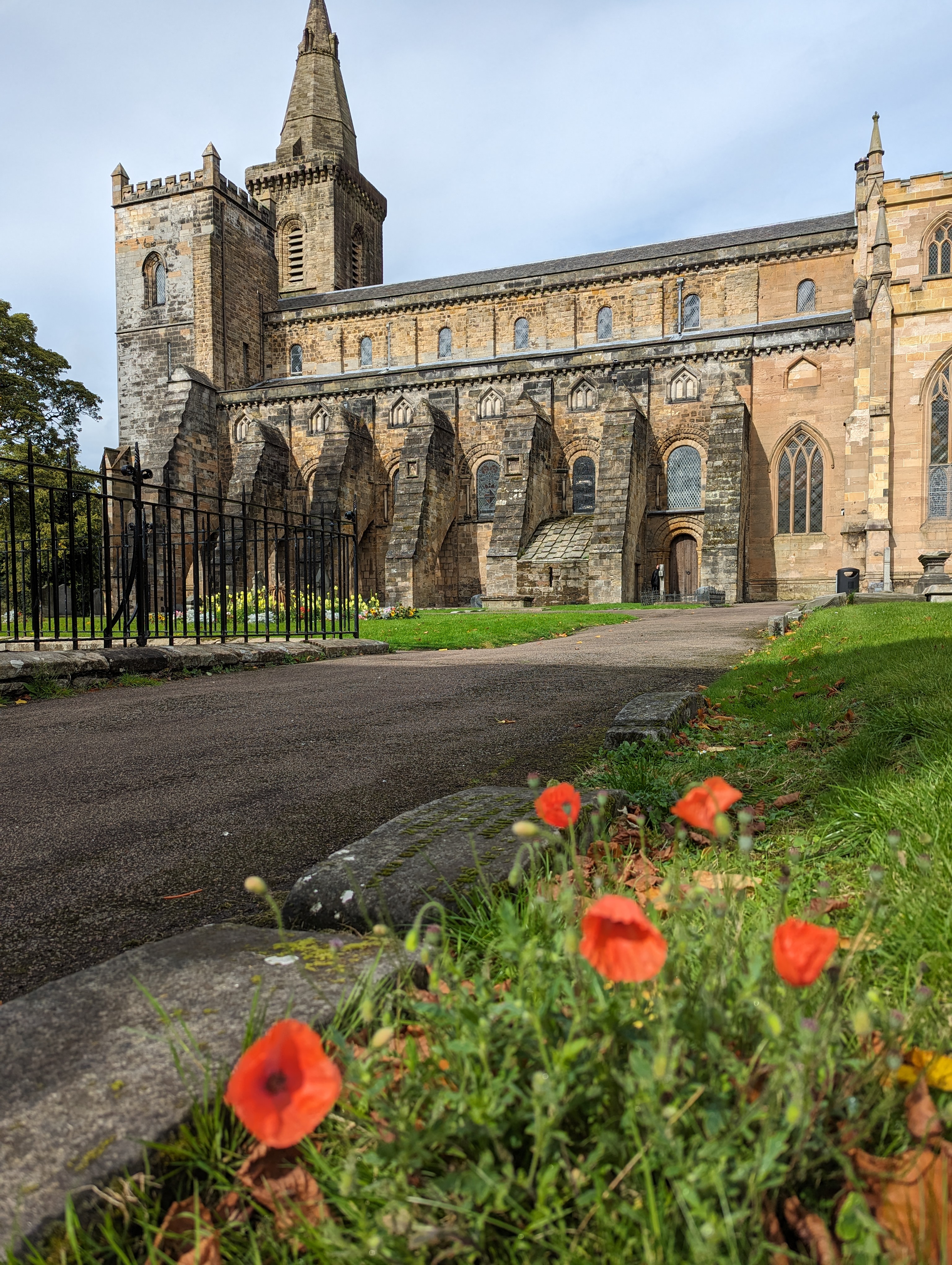
Here’s another view of the older part of the abbey:
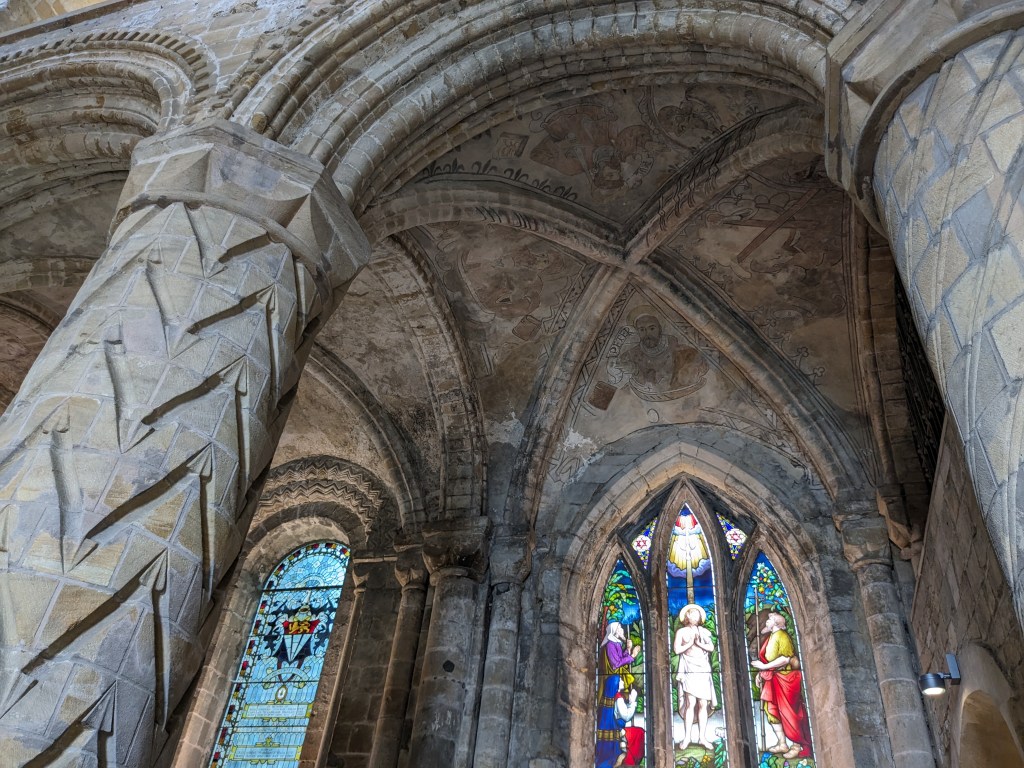
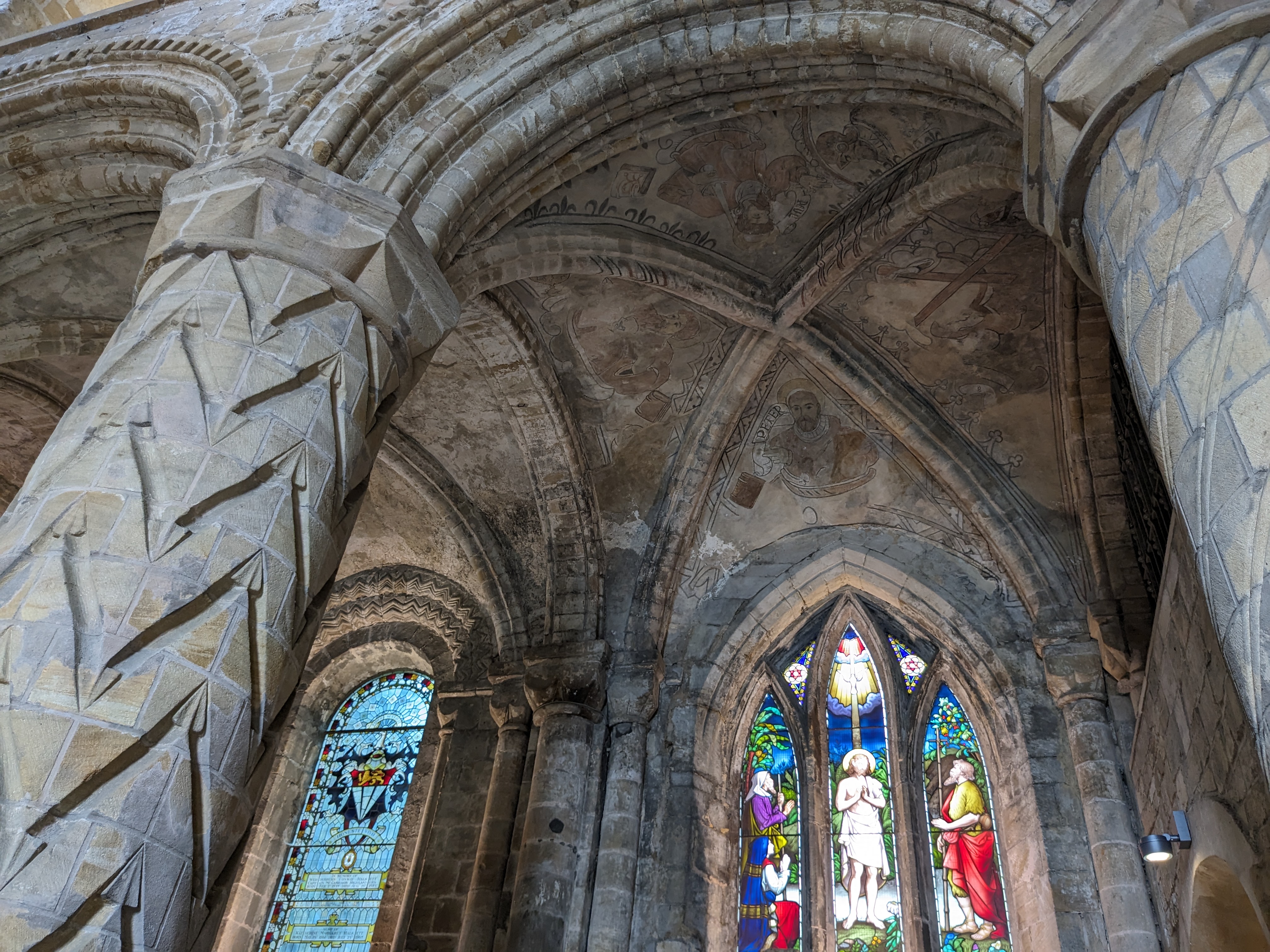
Inside the abbey, one of the arched ceilings still has the early frescoes of the apostles:
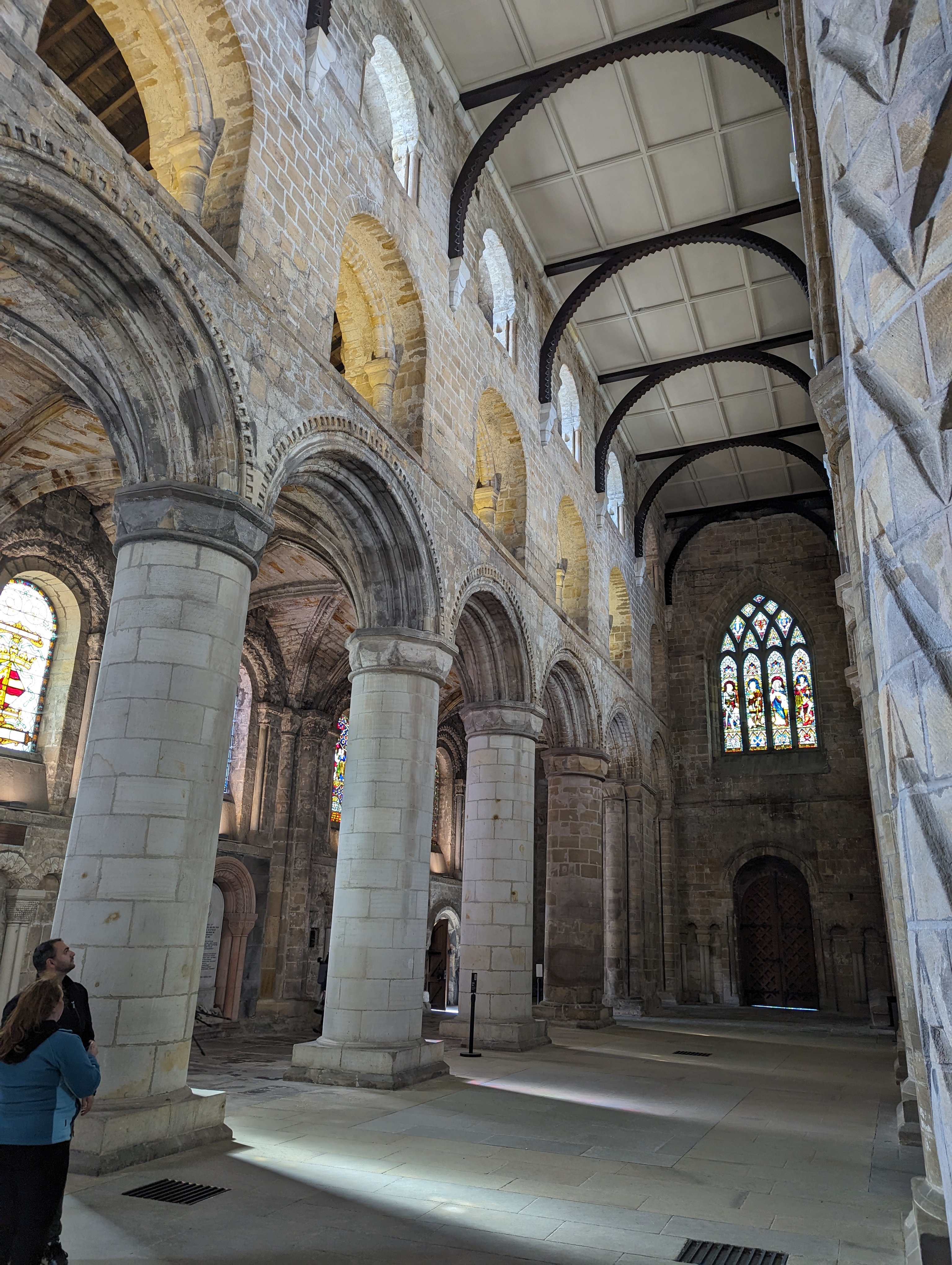
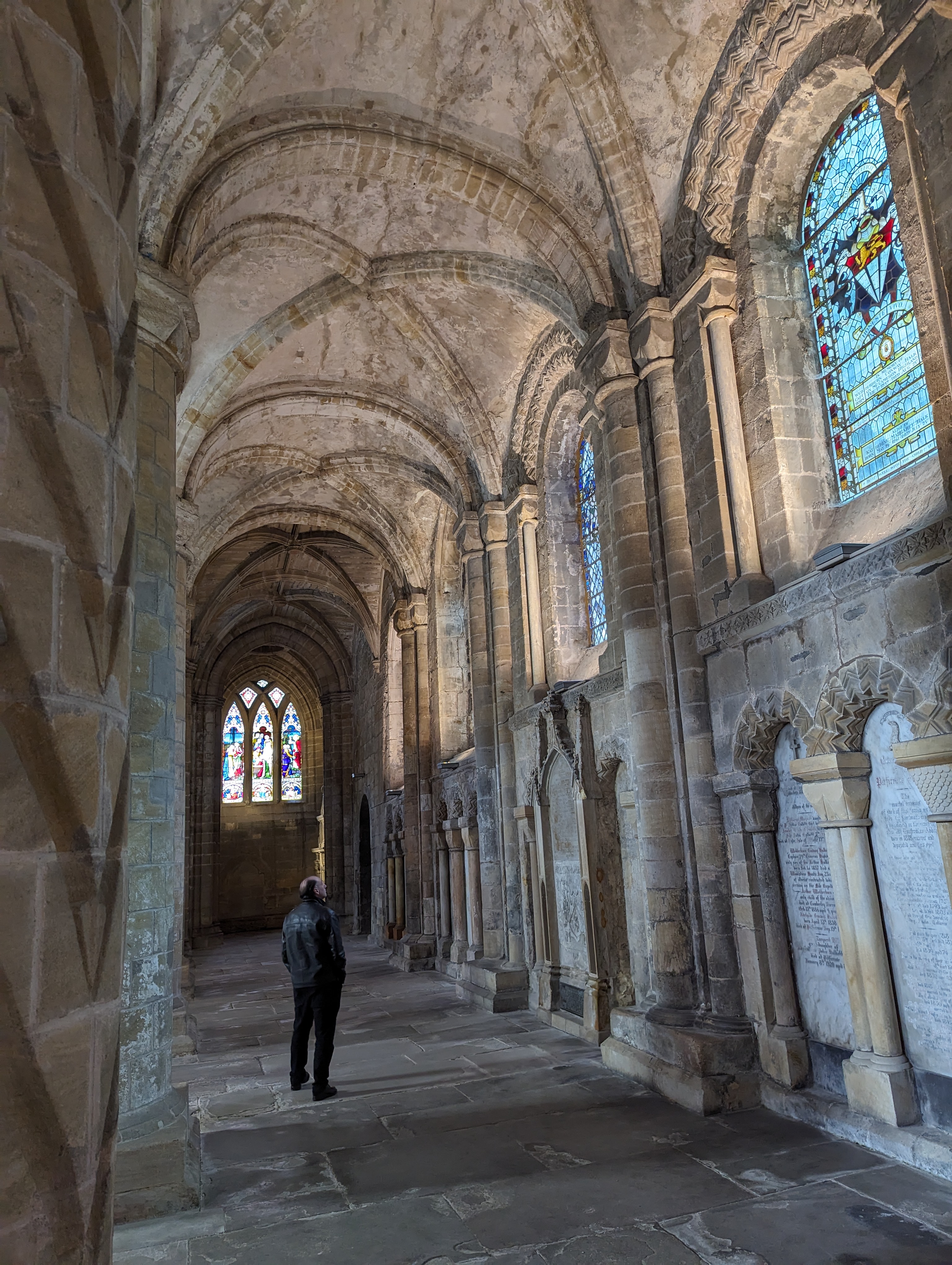
More scenes from inside the old abbey:
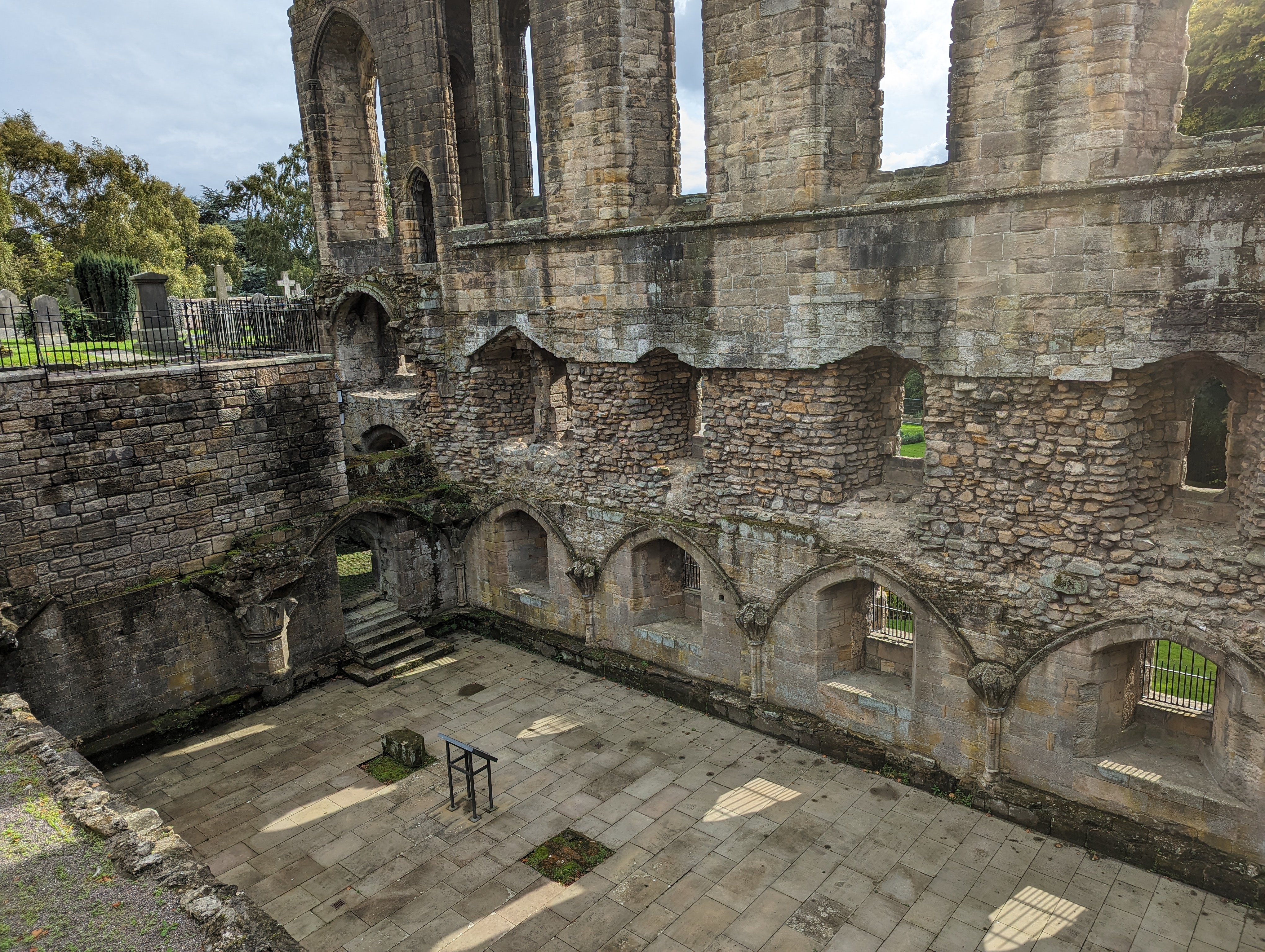
In the grounds of the abbey lie the ruins of the monastery that was built at around the same time as the old abbey, way back in the 1070s:
That’s all for today, folks.


 Travelling Worm
Talk to the Travelling Worm!