This is the blog of Mark Wordsworm, the travelling worm. I’m a 36-year-old bookmark (give or take a few years) and I proudly boast my own Hallmark serial number, 95 HBM 80-1. You’ll probably want to read all about me and my Travelling Companion (the TC).
Today’s travel notes
Me and the TC are in Istanbul, formerly known as Constantinople. This worm is reminded how little I know about the city and about Turkey in general. The Romans made their mark here as in many places. In fact, Constantinople was the capital city of the Roman Empire in 330–395 AD. The city was named after Constantine, the first Christian emperor of Rome. Christianity and Islam have shared the city and even the same buildings through the centuries. A case in point is the Hagia Sophia (Ayasofya in Turkish).
Word of the day
An apse is an architectural term for a semicircular recess covered with a hemispherical vault or with a partial dome.
The book I’m in
We Are Legion (We Are Bob): Bobiverse, by Dennis E Taylor. The TC has just started this book. I predict I’ll find myself tucked into many more of the Bobiverse series.
Recommended restaurant
Amedros, Hoca Rüstem Sk, İstanbul. Delicious food served with flair and pleasure. A quiet retreat from the busy streets.
The photos
Me inside the Hagia Sophia:

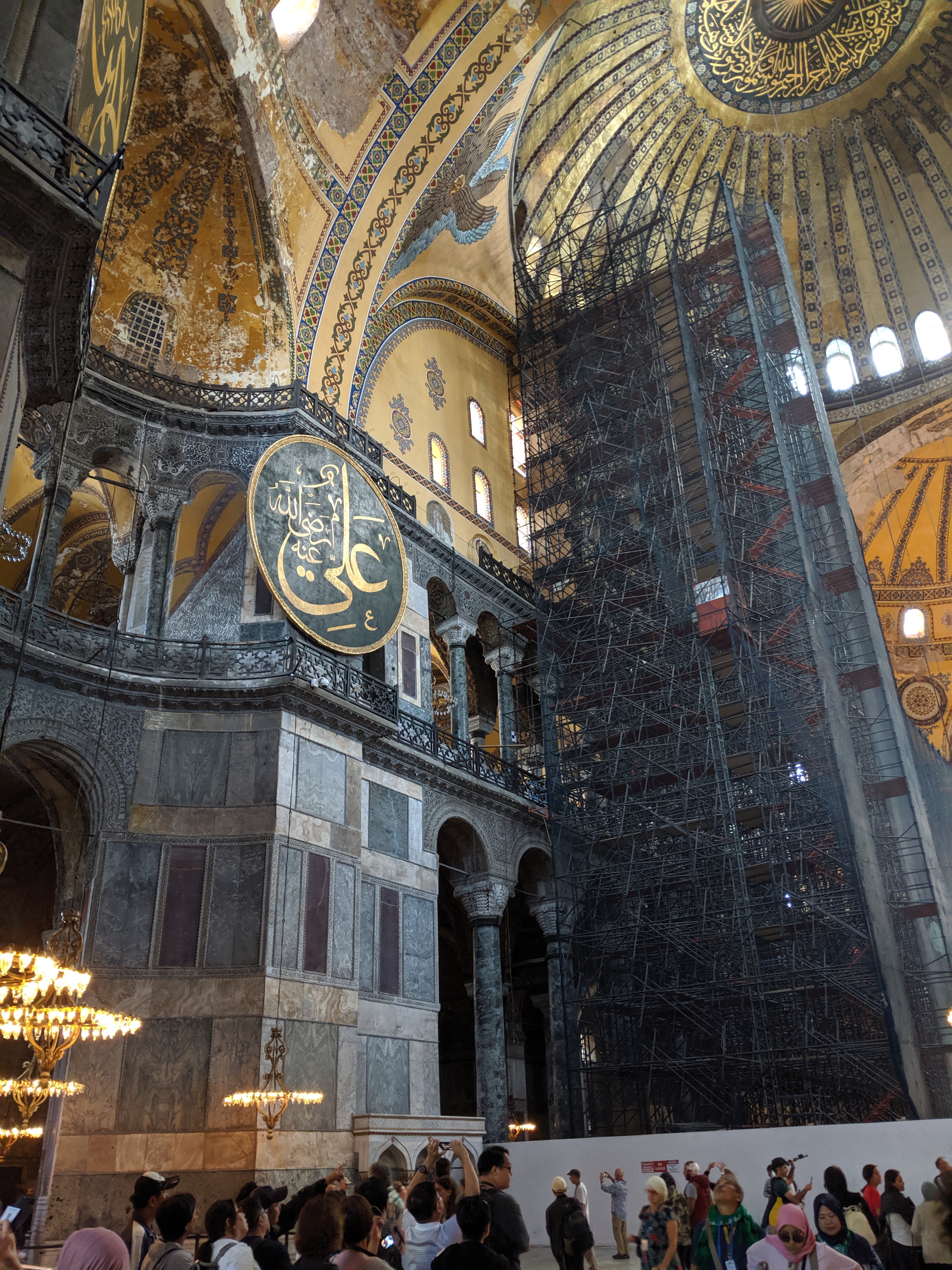
The name Hagia Sophia comes from the Greek words meaning holy wisdom. The above photo shows part of the building’s main dome, the hall, and the apse in the distance. Restoration work is underway, and as a result there’s a huge scaffolding structure on the left.
An external shot of the Hagia Sophia, seen from Ayasofya Meydani (meydan means square or arena):
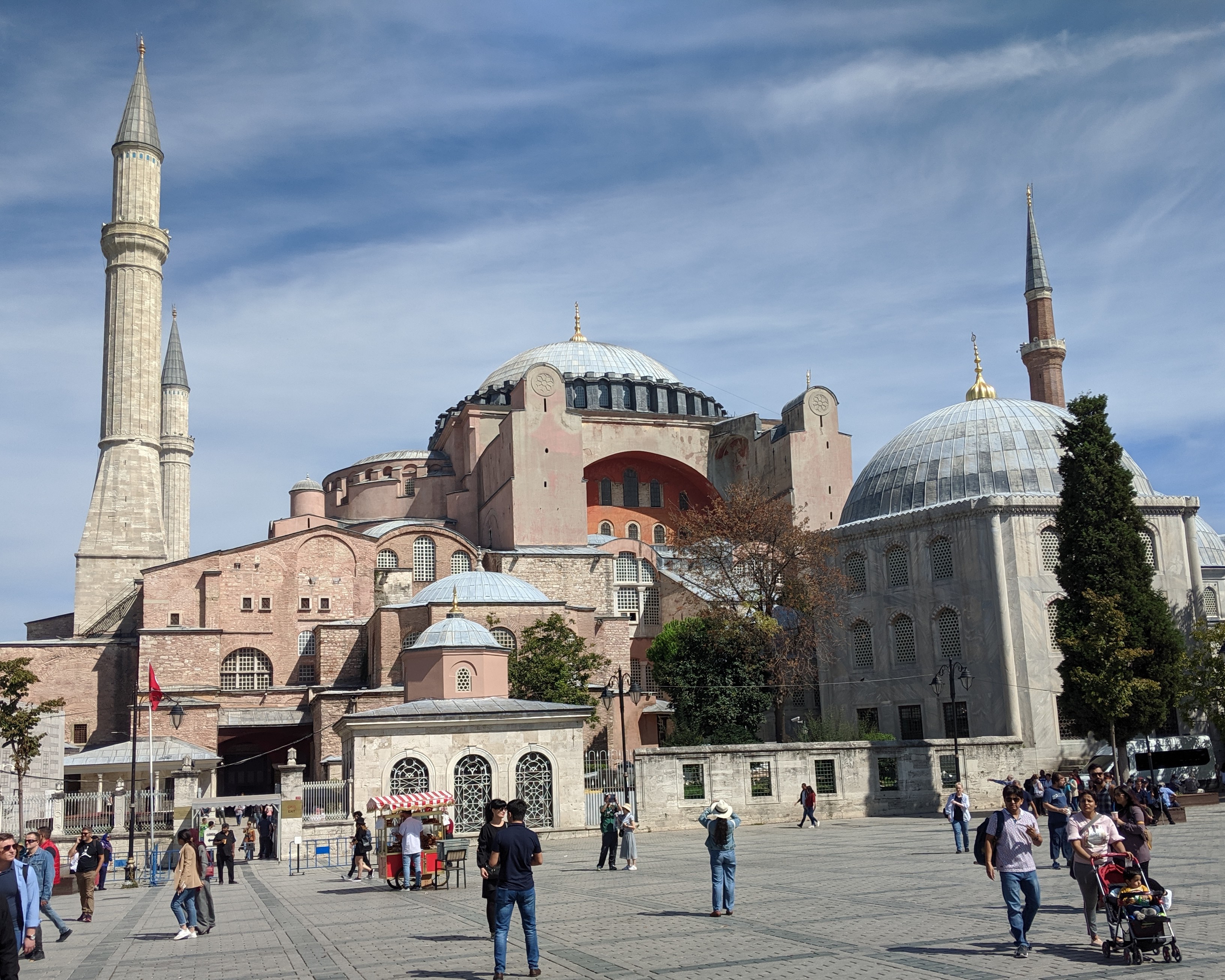
One of the doorways into the building:

Entering the building, you get the feeling you’re walking in the steps of many, as evidenced by the gently puddled marble:
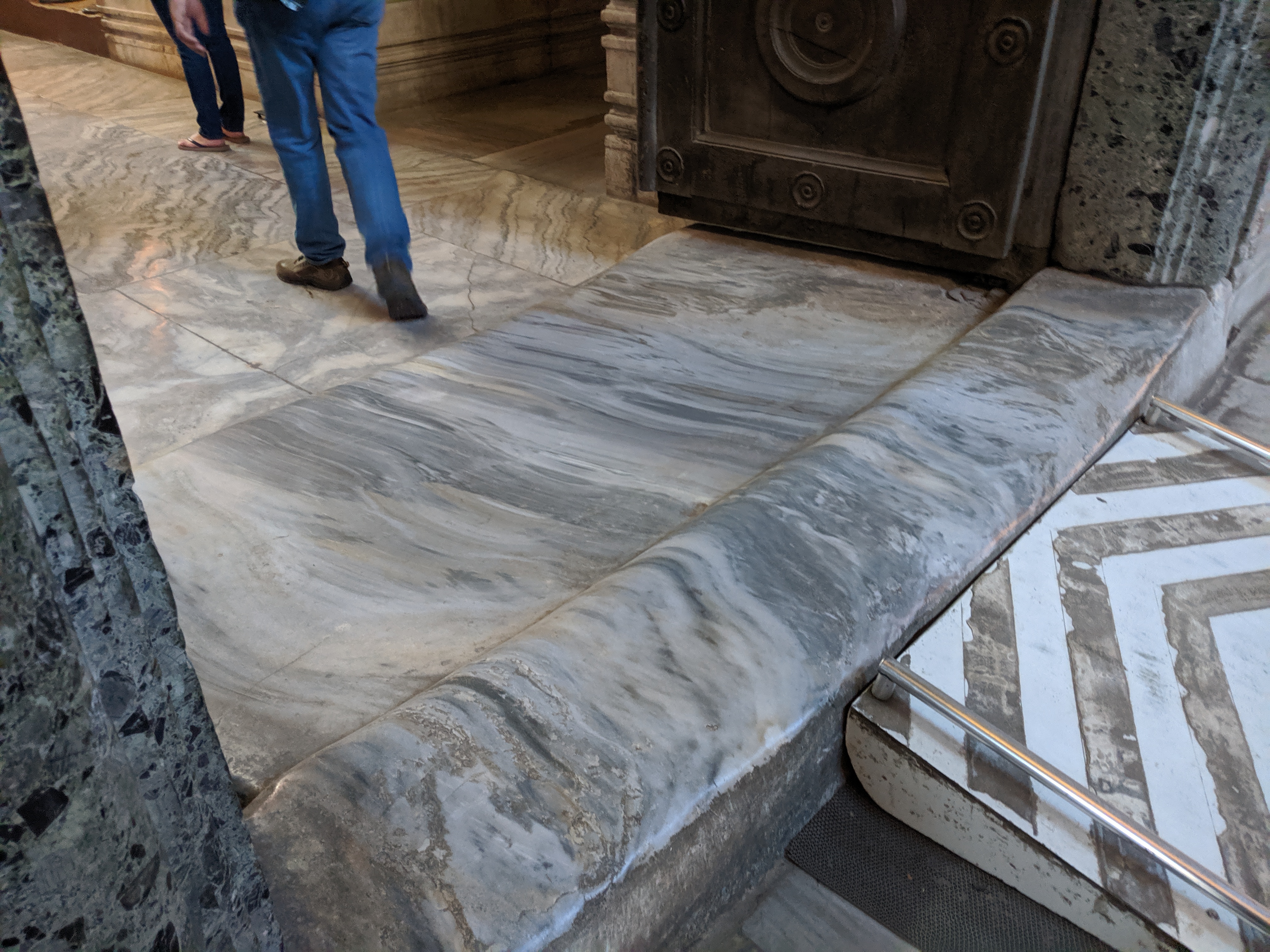
The hall of the Hagia Sophia, seen from the upper viewing level:
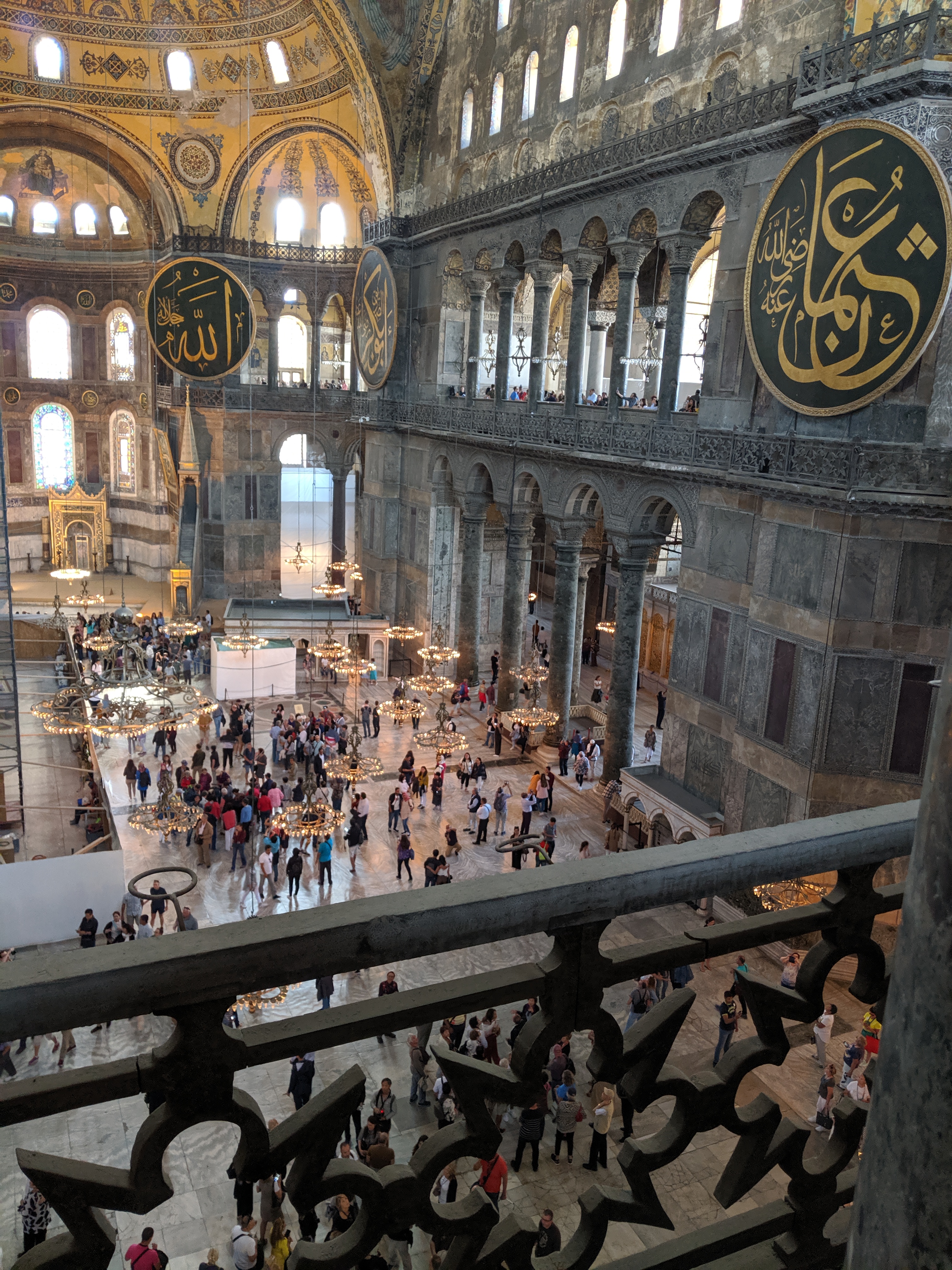
The building started out as Christian church, built in the five-year period from 532 to 537. It was converted to a Muslim mosque in 1453. In 1935 it became a museum.
The apse at one end of the Hagia Sophia has a mosaic of the Virgin and Child, with Muslim symbols all round:
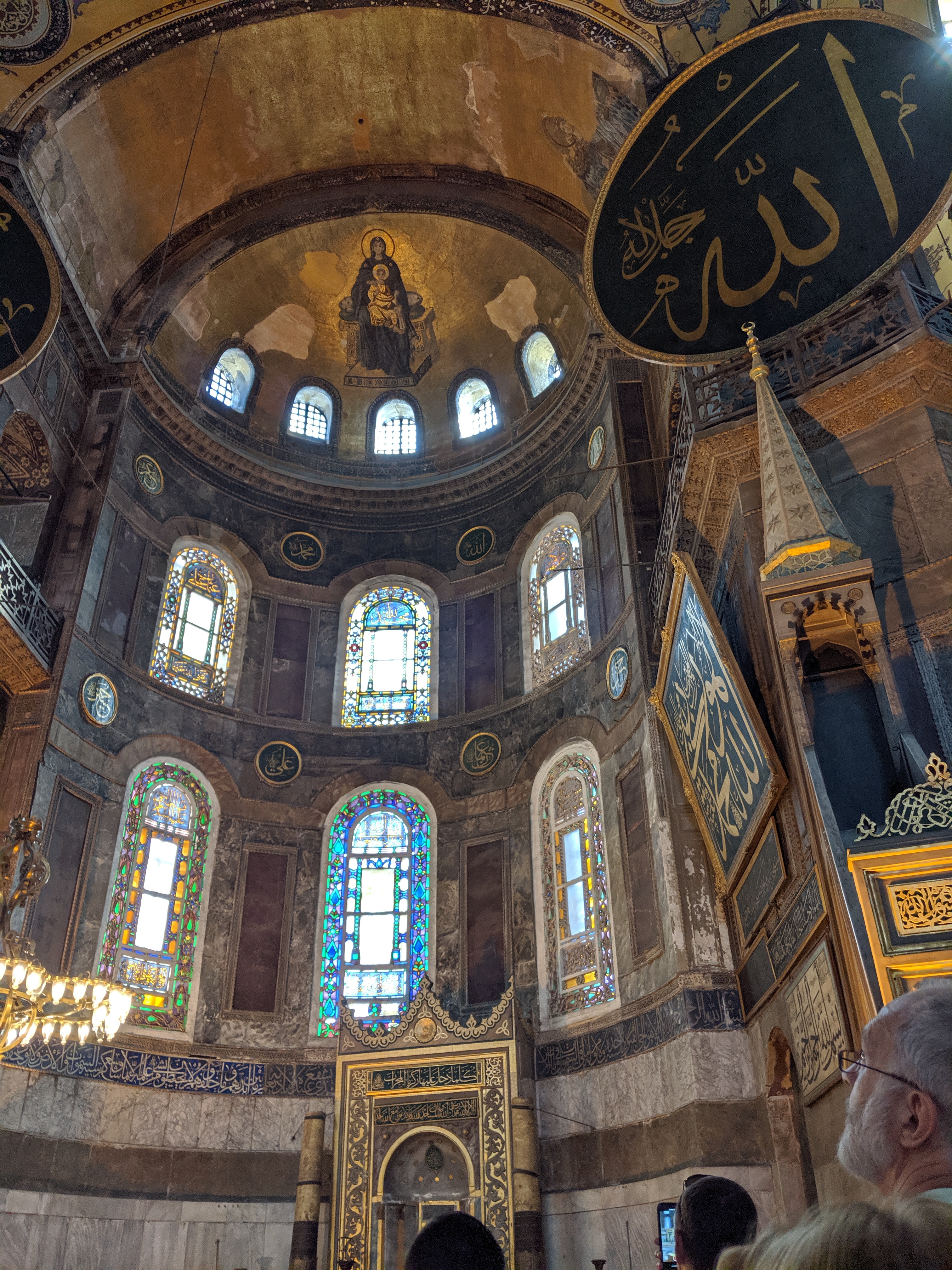
Another view of the main dome, walls, and scaffolding:
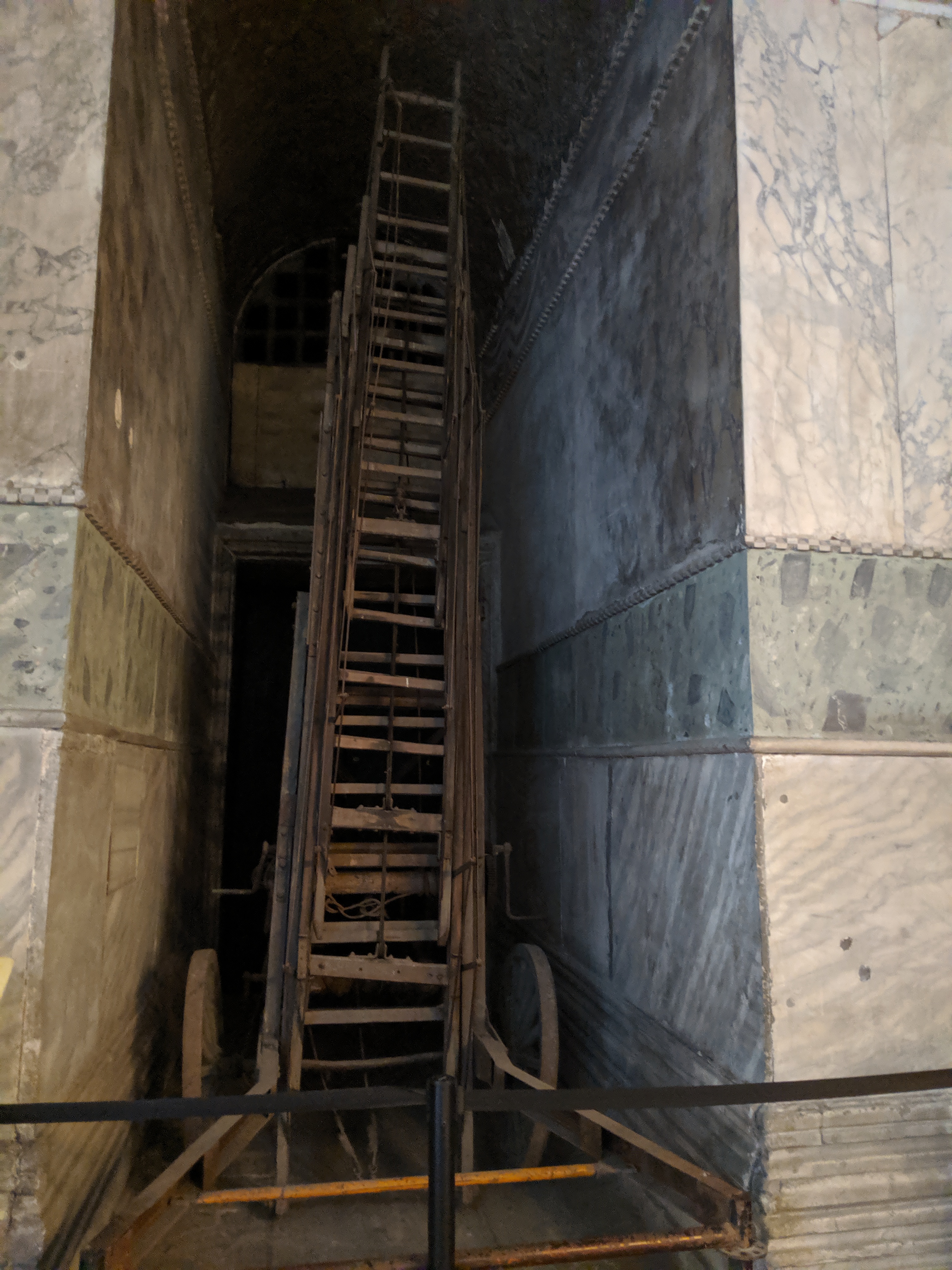
This worm found the scaffolding impressive. Then I saw this old ladder from the late 19th century. The thought of climbing it gave me tingles in all my toes:
A beautifully decorated series of arches:

Marble of various colours and patterns:

A cordoned-off area on the ground floor marked the omphalion, where Roman emperors were coronated:

The oldest item this worm saw in the temple dates from the 2nd century BC – a bronze door created for a Hellenistic temple in Tarsus. Emperor Theosophilus moved the door to the Hagia Sophia in the 9th century AD:

Another old door, slightly less ancient, this marble door dates from the 6th century. It’s on the upper viewing level of the Hagia Sophia, where it used to separate the emperor’s private chambers from the more public meeting rooms:

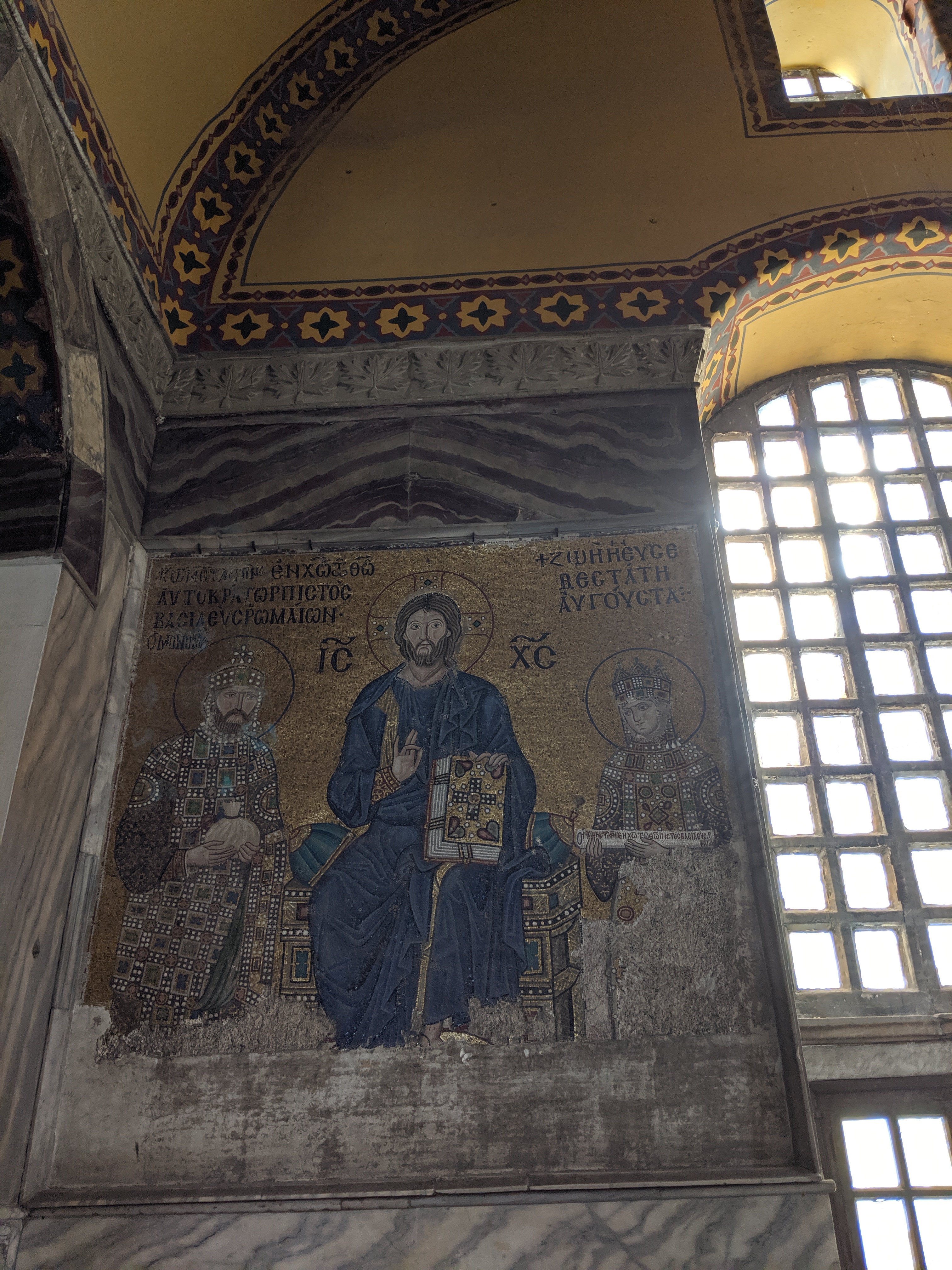
Murals of various styles and periods decorate the walls of the church. This mosaic panel dates from the 11th century and shows Christ on a throne in the middle, with an emperor and empress donating money to the church:
On one of the walls in the upper levels, this worm spotted some ancient graffiti, the work of a Viking imperial guard in the 9th century:

No-one knows what the script says. The only legible bit seems to be part of the name Halfdan. So maybe the script says, Halfdan carved these runes.
The above script boasts a transparent plastic covering for protection, and a plaque explaining its historic importance. Immediately below it, on the vertical side of the wall, is another engraving that boasts no covering and no plaque:
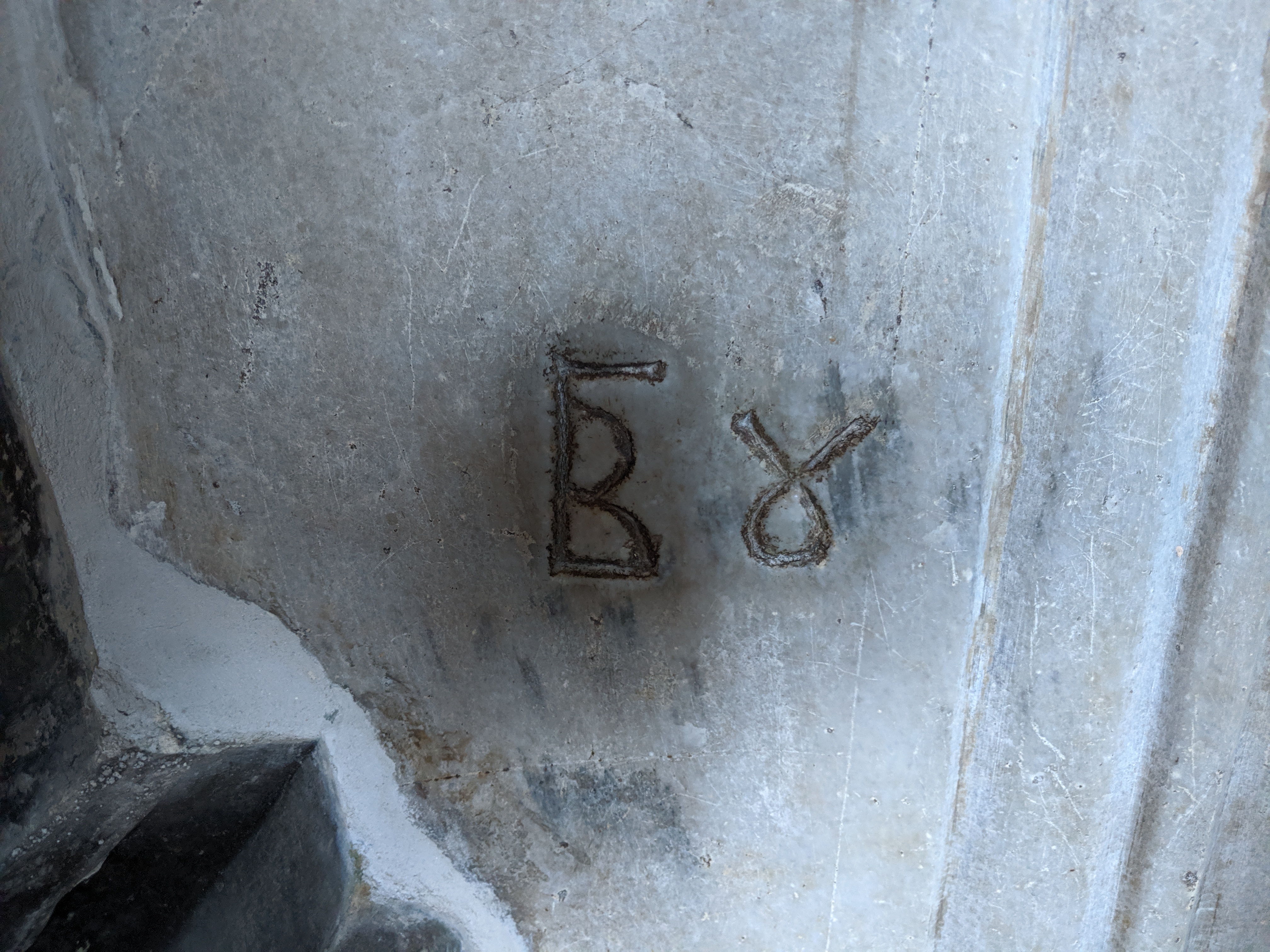
If you know what the above script is, please do let this worm know. I hope it’s a polite bit of writing!
That’s all for today, folks.


 Travelling Worm
Talk to the Travelling Worm!