This is the blog of Mark Wordsworm, the travelling worm. I’m a 36-year-old bookmark (give or take a few years) and I proudly boast my own Hallmark serial number, 95 HBM 80-1. You’ll probably want to read all about me and my Travelling Companion (the TC).
Today’s travel notes
Me and the TC are in Istanbul, formerly known as Constantinople. We dropped in on the Basilica Cistern, an enormous underground chamber built in the sixth century as a place to store water. The cistern lies underneath the Hagia Sophia.
Word of the day
Baklava is a sweet made of layered phyllo pastry, nuts (pistachio, walnuts, or almonds), and honey. Many people cite the Ottoman Empire as the origin of baklava, which nicely gets around the vexed question of whether the dish originated in Turkey or Greece. No matter who first made baklava, it’s delicious.
The book I’m in
Dreams and Shadows, by C. Robert Cargill. A dark tale of faerie and mortality, with a dose of undreamed-of power and doomed love. C. Robert Cargill is a versatile author, well worth keeping an eye on.
Recommended restaurant
Karaköy Güllüoğlu, Istanbul. The best baklava in the world.
The photos
Me with baklava and coffee at Karaköy Güllüoğlu, Istanbul:

The Basilica Cistern is a huge cavern under the streets and buildings of Istanbul, used for storing water in Roman times:
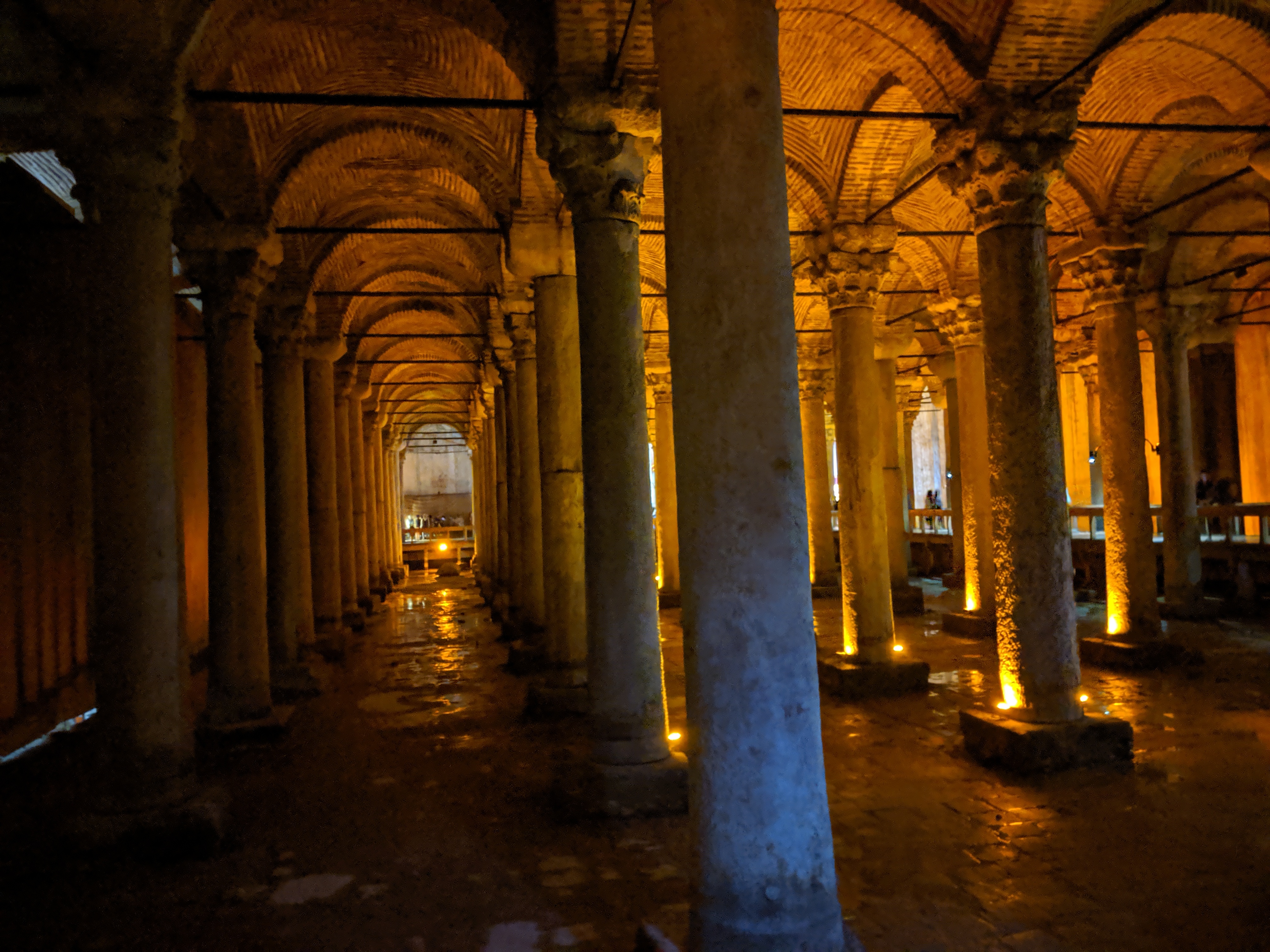
The cistern is rectangular, 140 metres by 70 metres, giving it an area of 9,800 m². It can hold 80,000 cubic metres (17.5 million imperial gallons) of water. There was no water on the day we visited, although we felt drops falling from the ceiling at times. Evidently, when the cistern does contain water, visitors can see fish swimming through it.
The 336 supporting pillars differ in decoration and design. The next photo shows the Crying Column, or Pillar of Tears. Unlike the other pillars, this one is always wet. Legend has it that the pillar commemorates the hundreds of slaves who died while building the cistern:
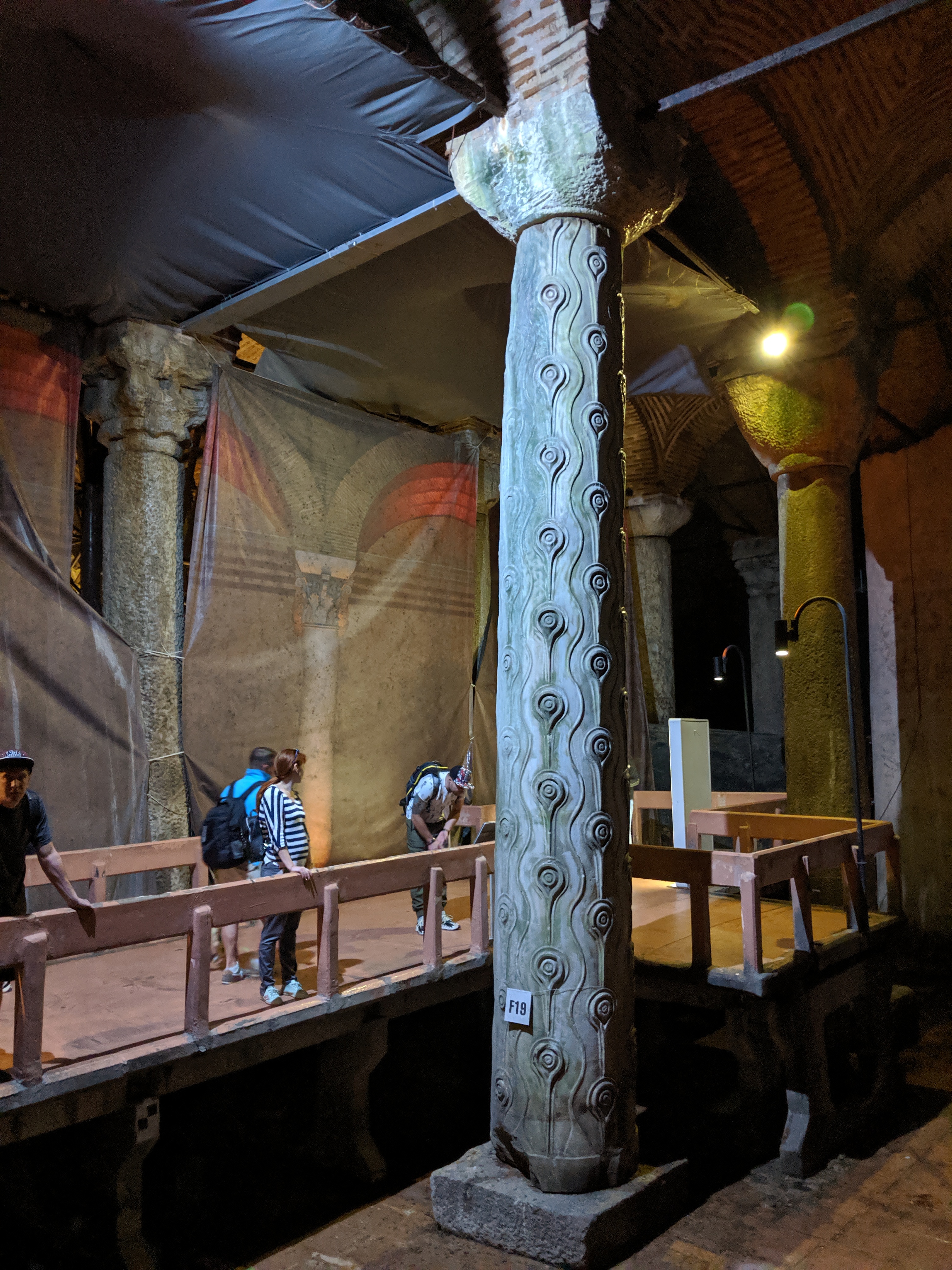
Two of the pillars have the head of the Medusa at their base:

According to legend, the Medusa had snakes for hair and was horrific to look at. So horrific that people turned to stone if they gazed directly at her. Statues of her were placed around buildings for protection. The pillar above has the Medusa head lying on its side, whereas the pillar below has the head upside down:

That’s all for today, folks.


 Travelling Worm
Talk to the Travelling Worm!