This is the blog of Mark Wordsworm, the travelling worm. I’m a 36-year-old bookmark (give or take a few years) and I proudly boast my own Hallmark serial number, 95 HBM 80-1. You’ll probably want to read all about me and my Travelling Companion (the TC).
Today’s travel notes
Me and the TC dropped in on the Old Town Square in Prague. The square is a cobbled area surrounded by gorgeous buildings. The feeling is more open than many town squares in Europe. Grandeur and antiquity are there to see, but are not overpowering.
Word of the day
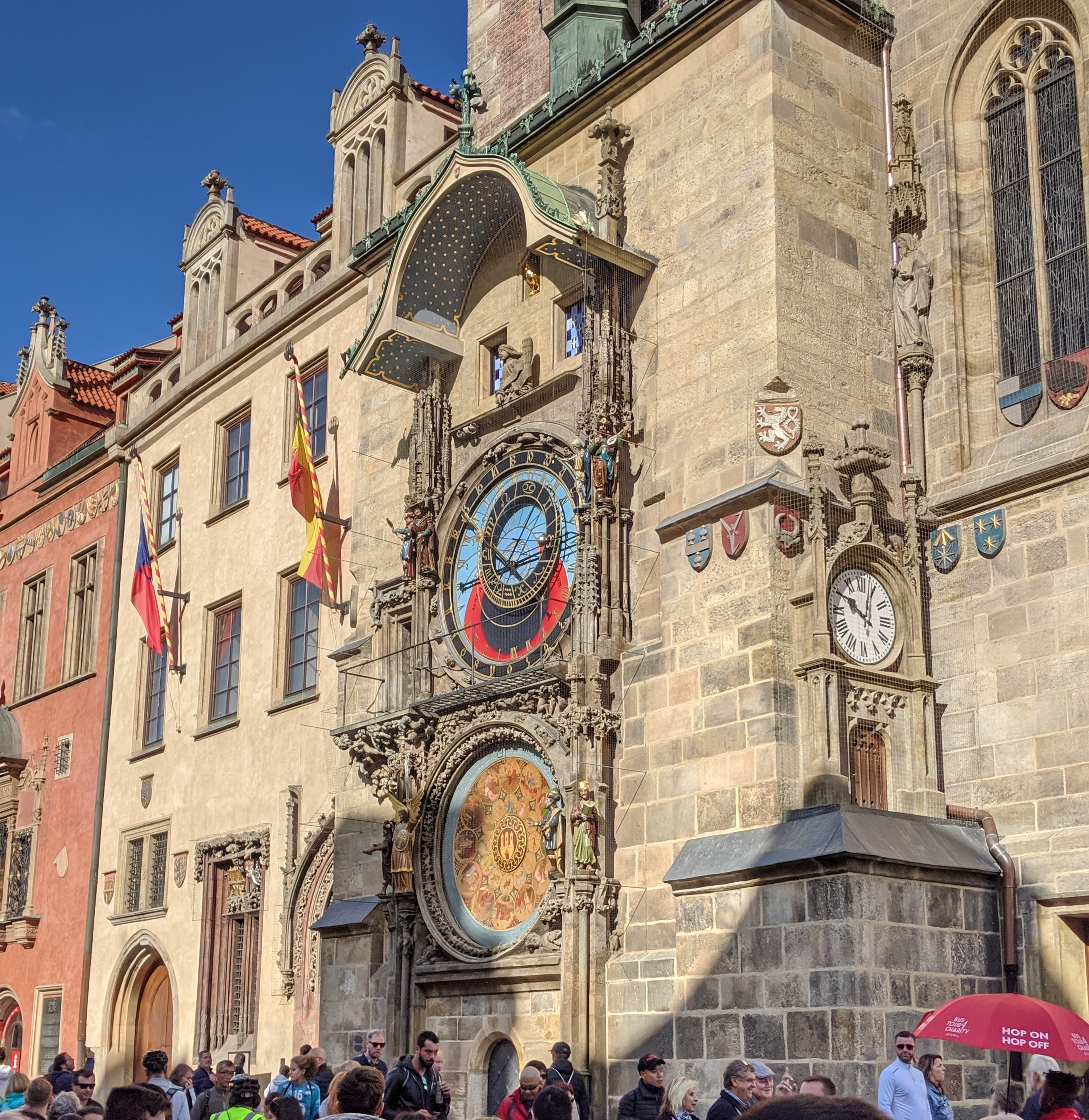
Astronomical clock (yes, dear reader, it’s two words for the price of one) is the term of the day. In addition to the time of day, an astronomical clock displays information such as the relative positions of the sun, moon, and major planets. The clock may also represent the year as a display of the 12 signs of the zodiac.
The book I’m in
Semiosis, by Sue Burke. Man meets plant on a planet far away, some time in the not-too-distant future. Your faithful bookworm highly recommends this book. It feeds the intellect and entertains the mind.
Recommended accommodation
Vienna House Andel’s Prague, Stroupežnického 21, 150 00 Praha 5-Smíchov. Elegance and comfort combined.
The photos
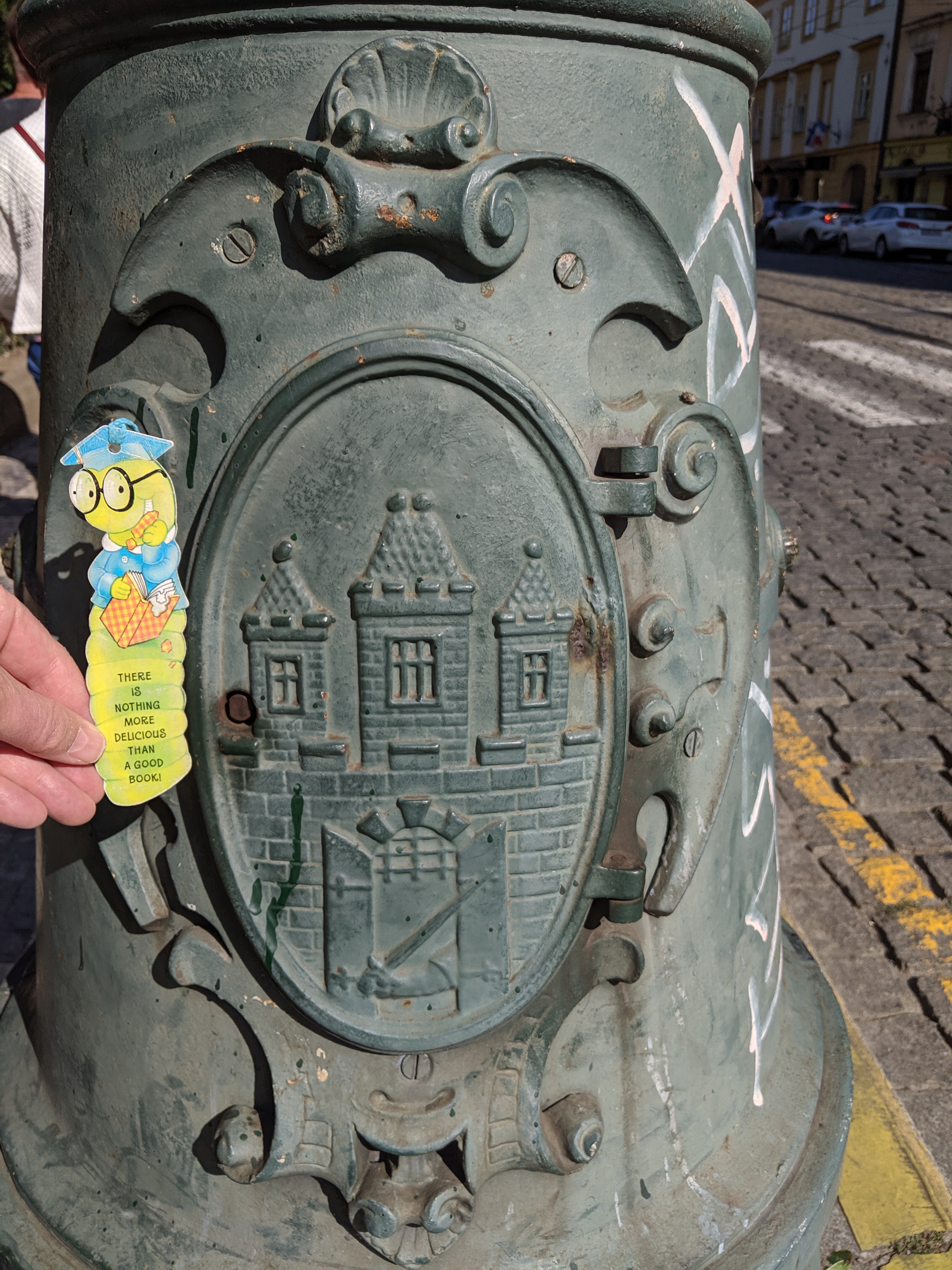
Me and a Prague lamp post. It’s nowhere near the Old Town Square:
The Old Town Square in Prague is more than a thousand years old. It started out as a marketplace in the tenth century. In the centre of the square is a statue of a Czech theologian, Jan Hus, erected in 1915 to commemorate the 500th anniversary of his death. He was burned at the stake in 1415 as punishment for his reformist beliefs:
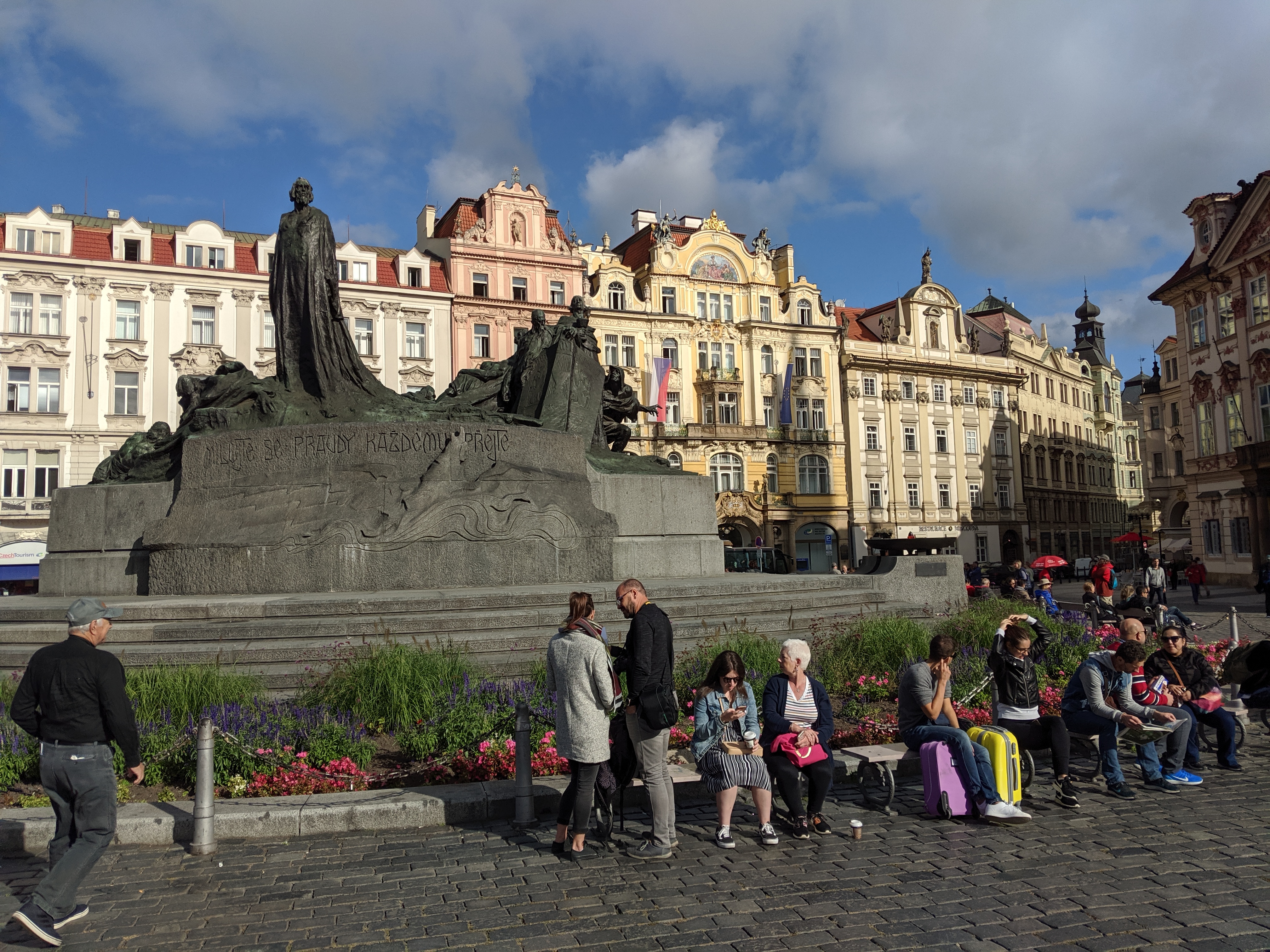
Jan Hus met his end in the city of Constance, not in Prague. But the Old Town Square can tell its own tales of woe as well as joy. It’s seen festivities, tragedies, cheesecakes, executions, buskers, and soldiers.
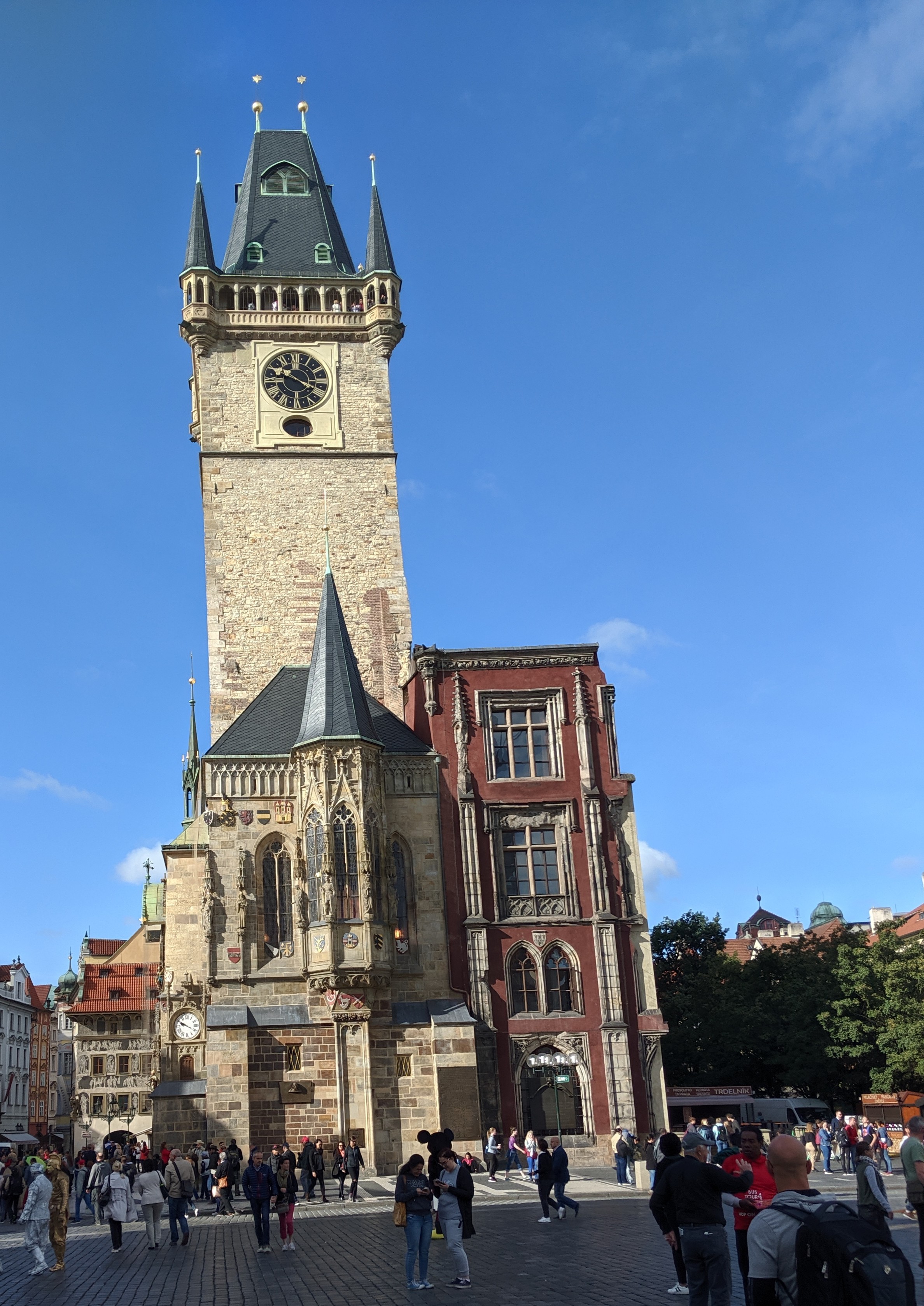
Looking at the Old Town Hall at the south west corner of the square, you may think that the building seems out of balance and ends rather abruptly on the right hand side below the tower. You’re right, dear reader. A large part of the building was destroyed during World War II:
On one side of the town hall’s clock tower is the oldest working astronomical clock in the world, and the third oldest in existence. The clock was installed in 1410:
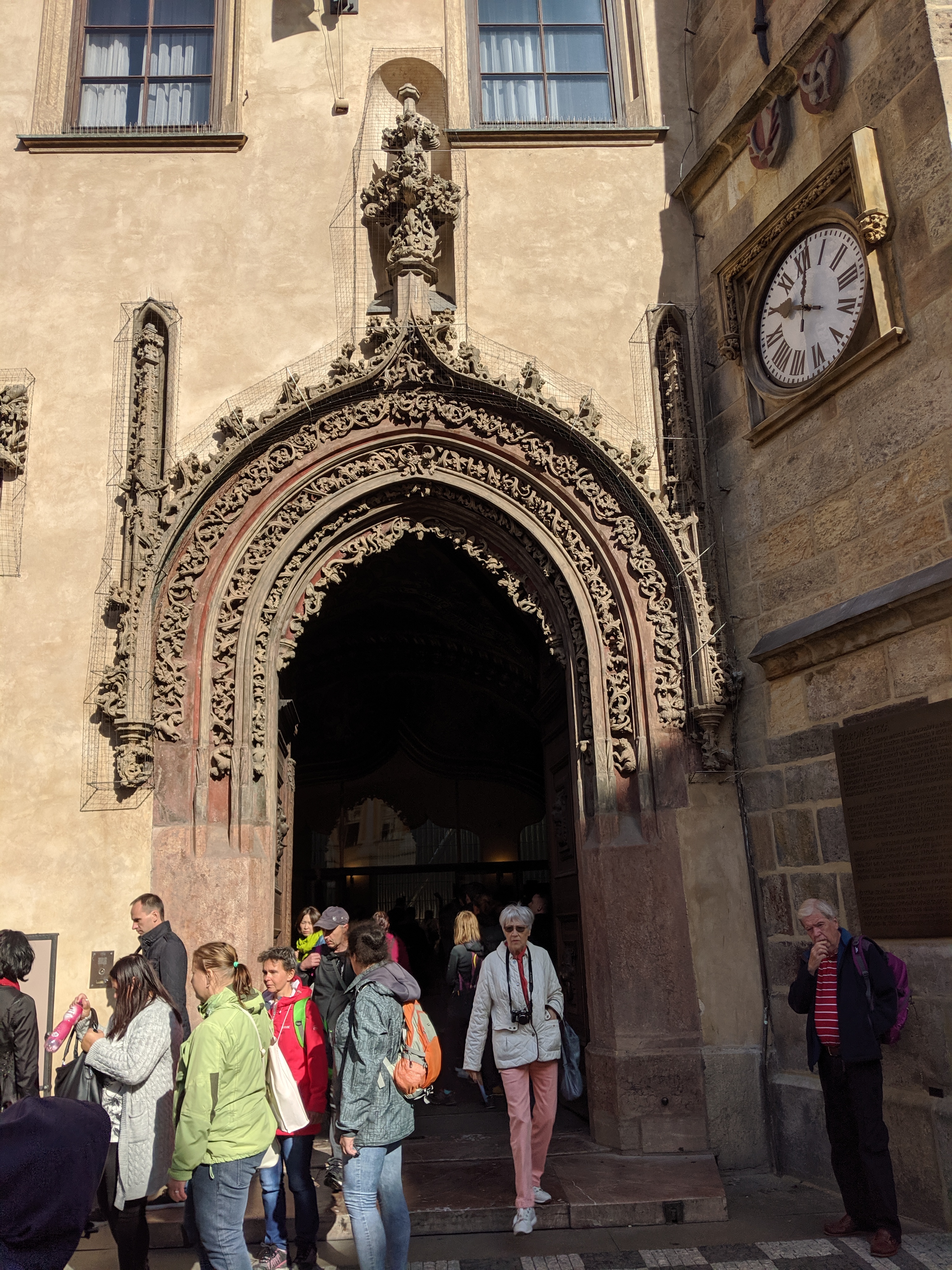
Next to the clock is the entrance to the Old Town Hall, a Gothic-style portal:
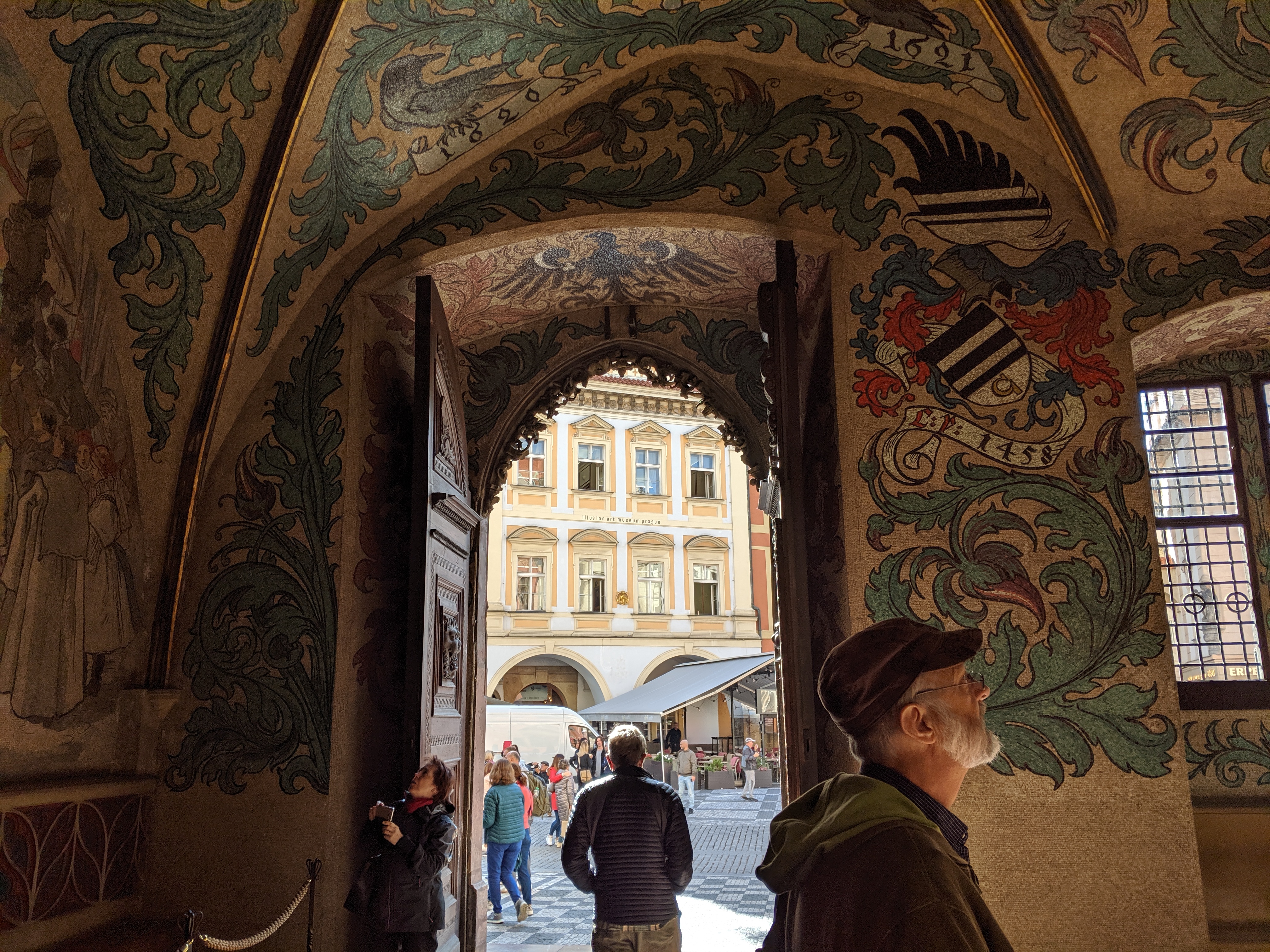
The door leads to an entrance hall decorated with mosaics related to Czech mythology:
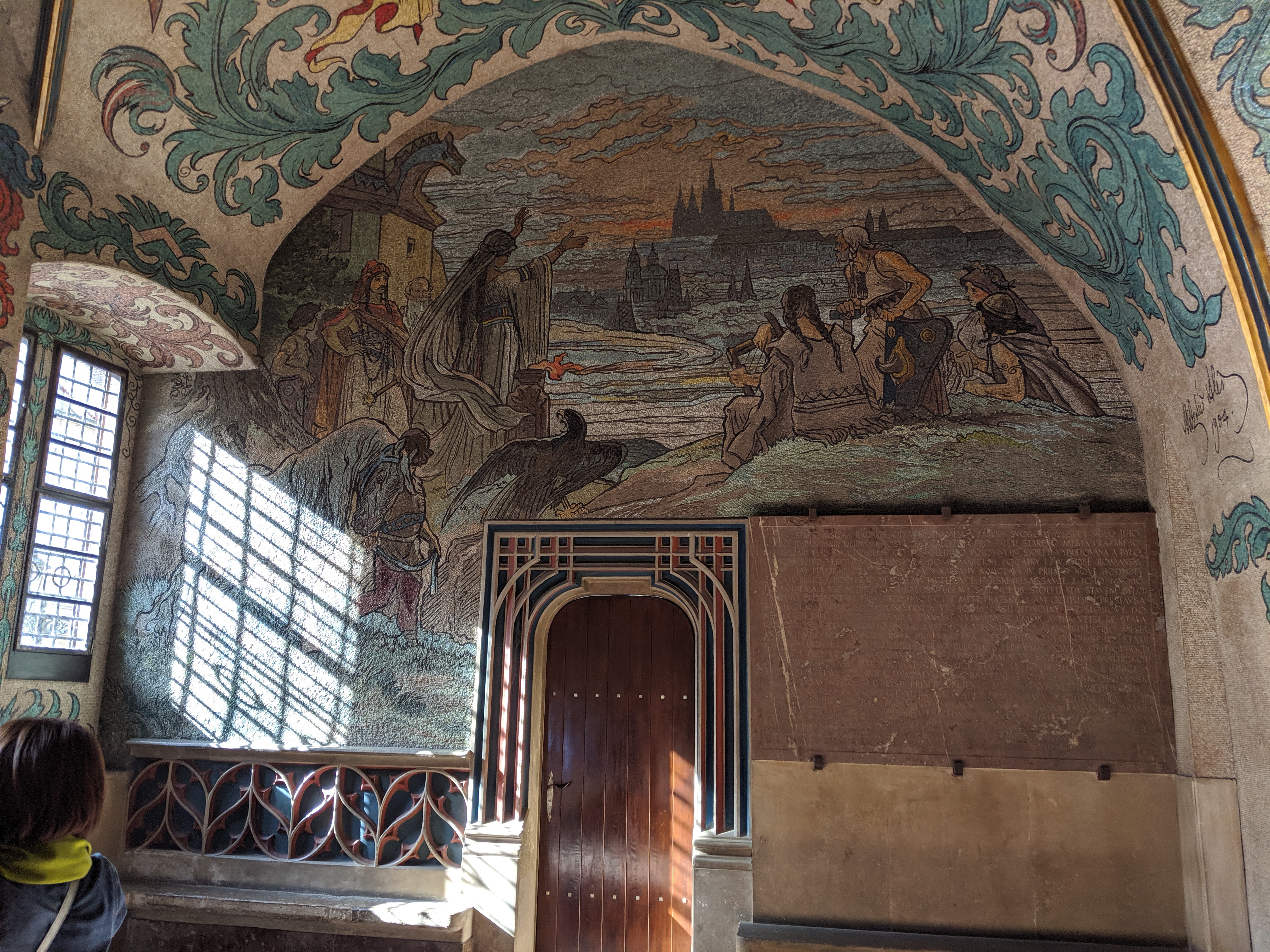
The same entrance hall seen from another angle:
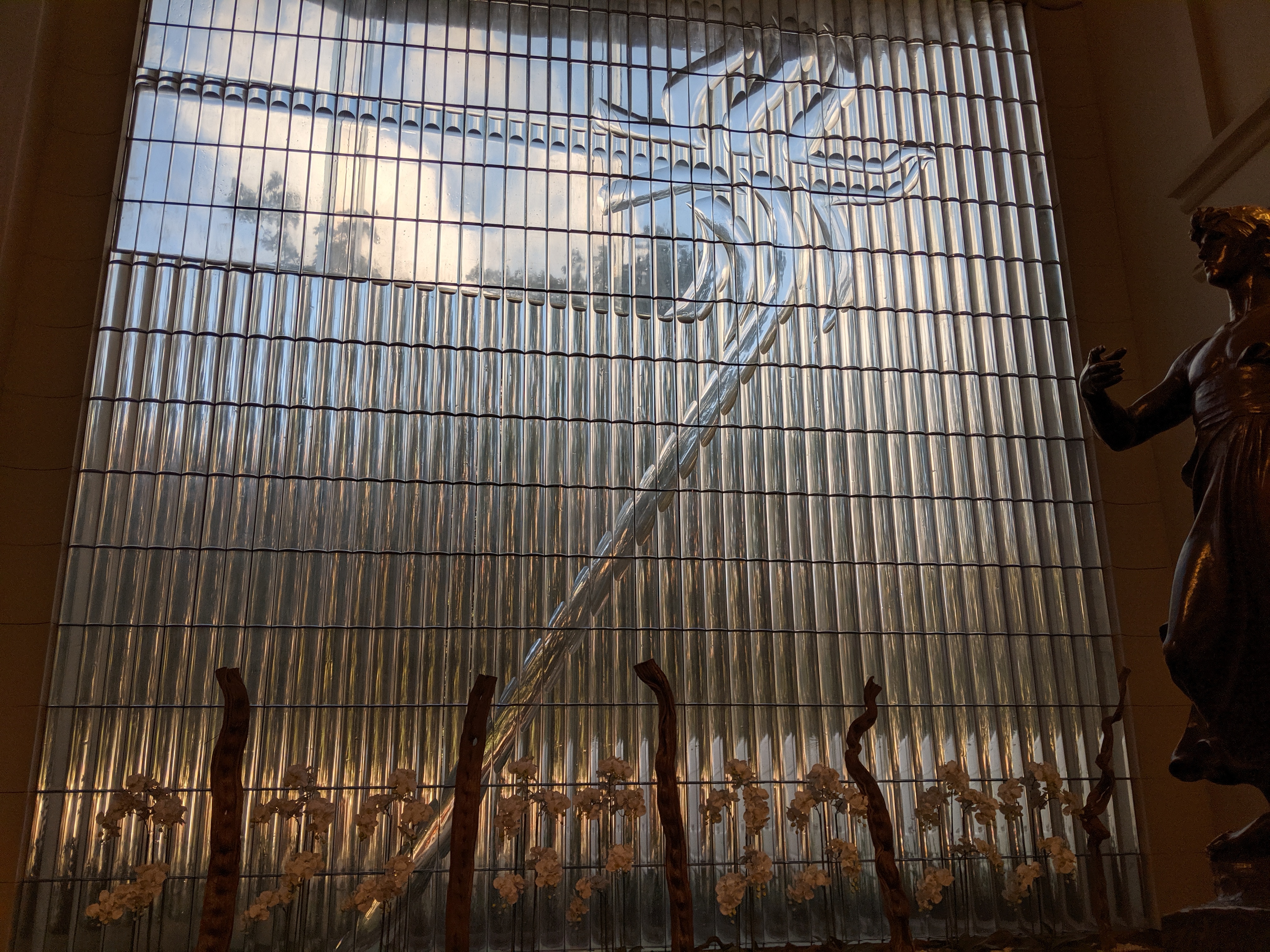
As I mentioned earlier, most of one wing of the town hall was destroyed during the Second World War. Below is a shot of the large window that covers the gap where the rest of the building used to be. What does the image on the window look like to you, dear reader? This worm saw it as a palm tree blown by the wind, Hawaii style. It’s more likely to be a flower, as there are very few palm trees in Prague. I couldn’t find any information about this window:
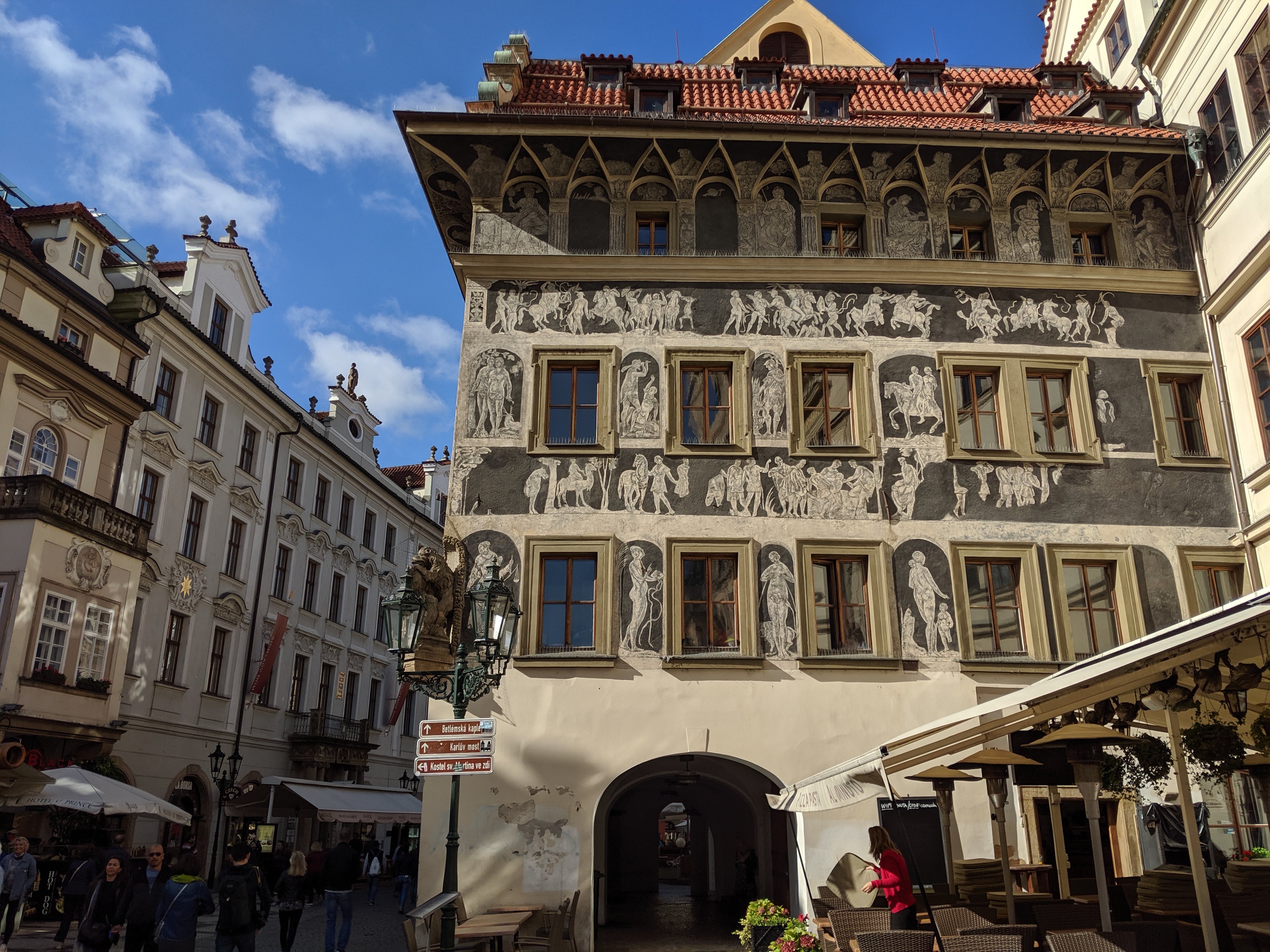
A characteristic of the Old Town Hall is that it’s made up of old houses purchased and merged to form the single large building that is now the town hall. The Minute House (House at the Minute) was built in the 15th century, in the Gothic style. Franz Kafka lived in this house from 1889 to 1896, until the house became part of the town hall in 1896. The sgraffito designs on the outside of the building depict classical and biblical themes:
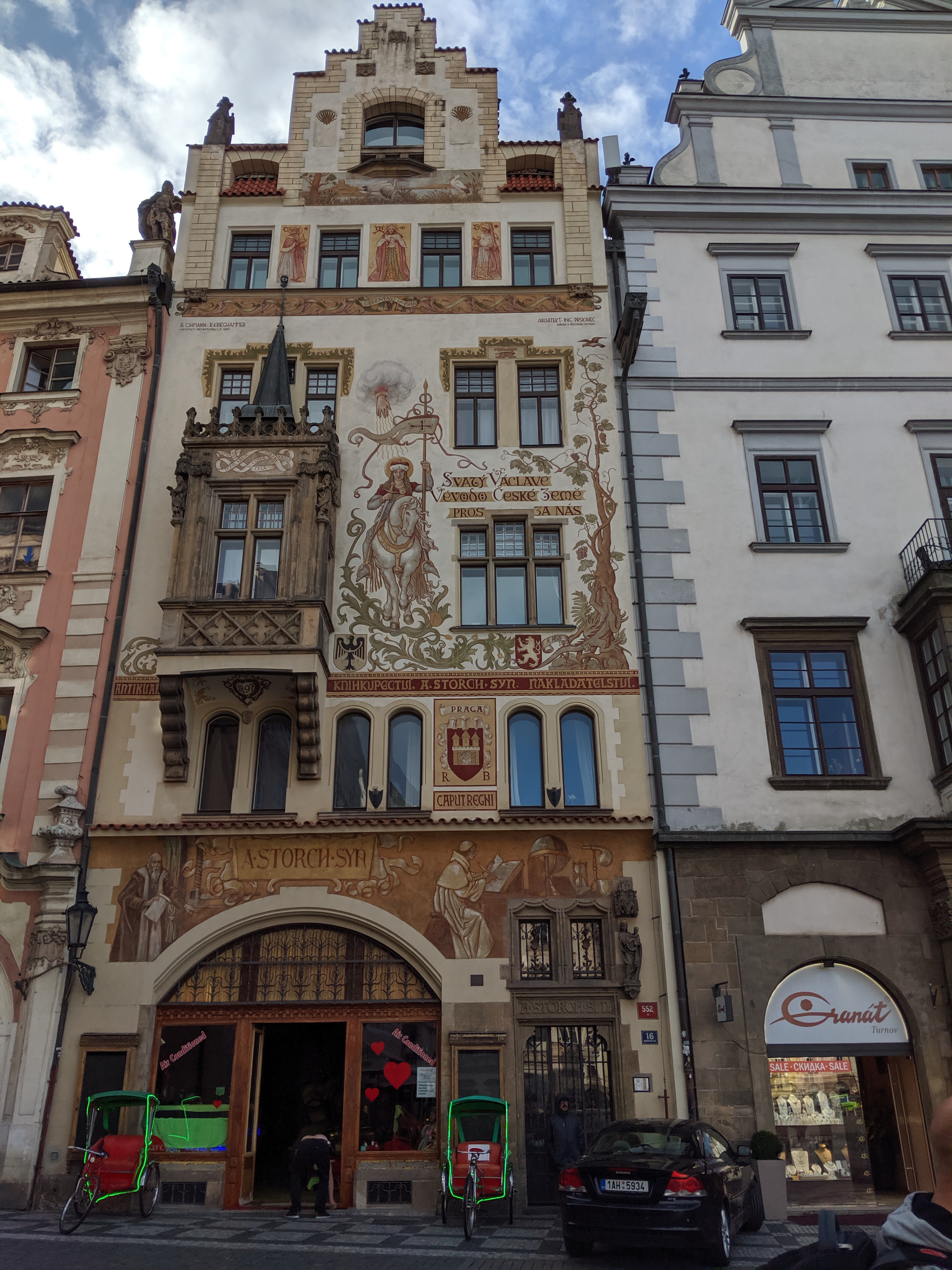
In the same area is Štorch House, built in the Gothic style in the fifteenth century, and redecorated in the neo-Renaissance style in 1897. The painting on the front is etched into the wall, showing St Wenceslas, patron saint of Bohemia:
That’s all for today, folks.


 Travelling Worm
Talk to the Travelling Worm!