This is the blog of Mark Wordsworm, the travelling worm. I’m a 36-year-old bookmark (give or take a few years) and I proudly boast my own Hallmark serial number, 95 HBM 80-1. You’ll probably want to read all about me and my Travelling Companion (the TC).
Today’s travel notes
Prague has long been on the TC’s bucket list, bless her cotton socks. And we made it! This post is an account of our visit to the Wallenstein Palace, which currently houses the Czech Senate.
Word of the day
Semiosis is the process that goes on in our brains when we convert a sign to a meaning. The sign is usually related to language, and can be something like a spoken word, a written word, a traffic signal, and so on.
The book I’m in
Semiosis, by Sue Burke. Man meets plant on a planet far away, some time in the not-too-distant future. Your faithful bookworm highly recommends this book. It feeds the intellect and entertains the mind.
Recommended accommodation
Vienna House Andel’s Prague, Stroupežnického 21, 150 00 Praha 5-Smíchov. Elegance and comfort combined.
The photos
Me and a wolf-bearer in the gardens of the Senate of the Czech Republic. We’re standing in front of the famous dripstone wall that guards one side of the grounds:

The gardens of the Wallenstein Palace are open to the public. The TC and I wandered in quite by chance and stayed to explore. The palace was built in 1623-1630 as the home for a powerful military leader and duke, Albrecht von Wallenstein. Alas, he only lived in the palace for one year before being assassinated.
A view of the gardens looking towards the palace main hall:
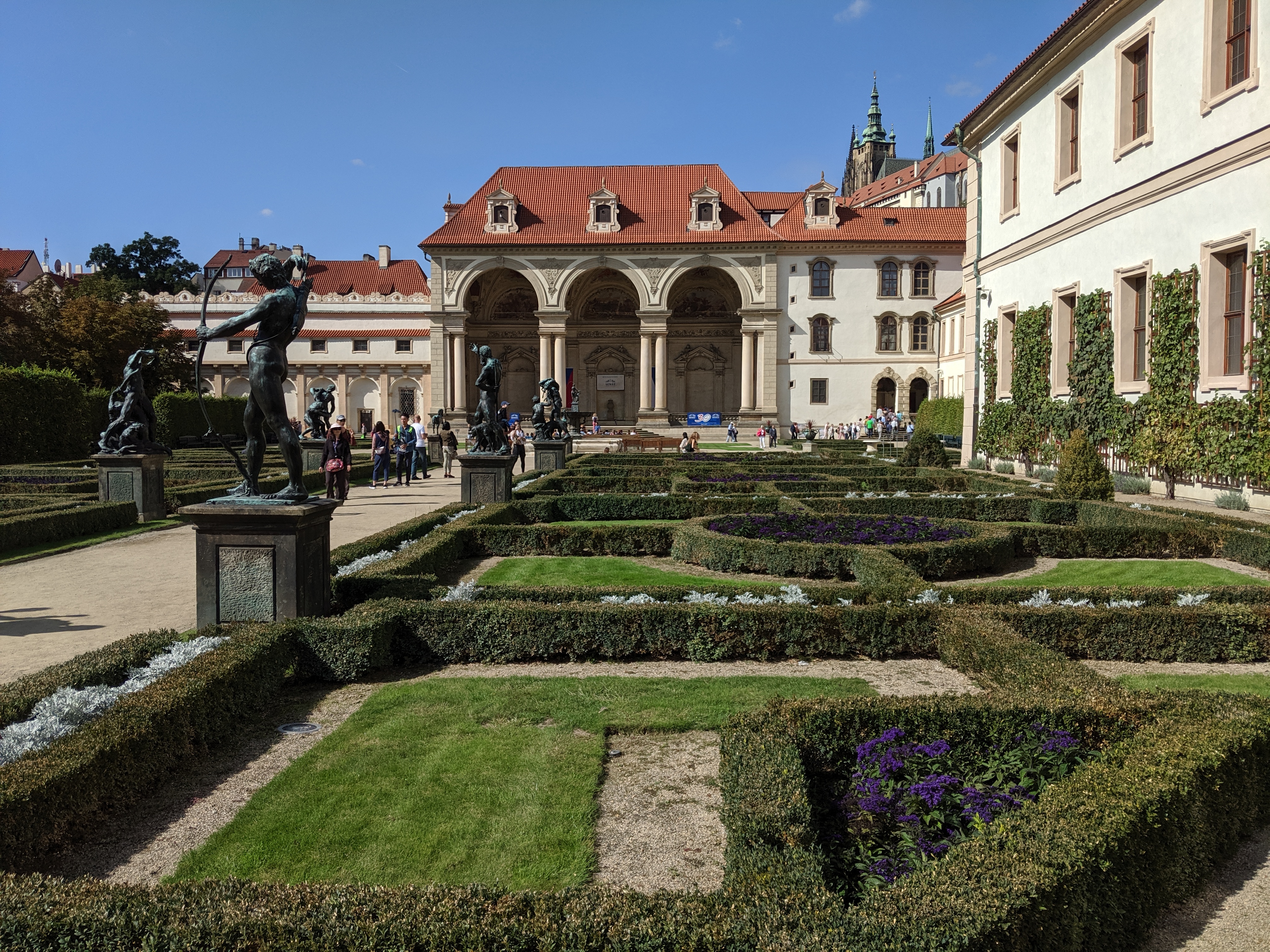
The open hallway at the far end of the gardens, known as the main hall of the palace, contains a plaque announcing the Senate of the Czech Republic. The blue flags on either side celebrate 30 years since the end of Communist rule:

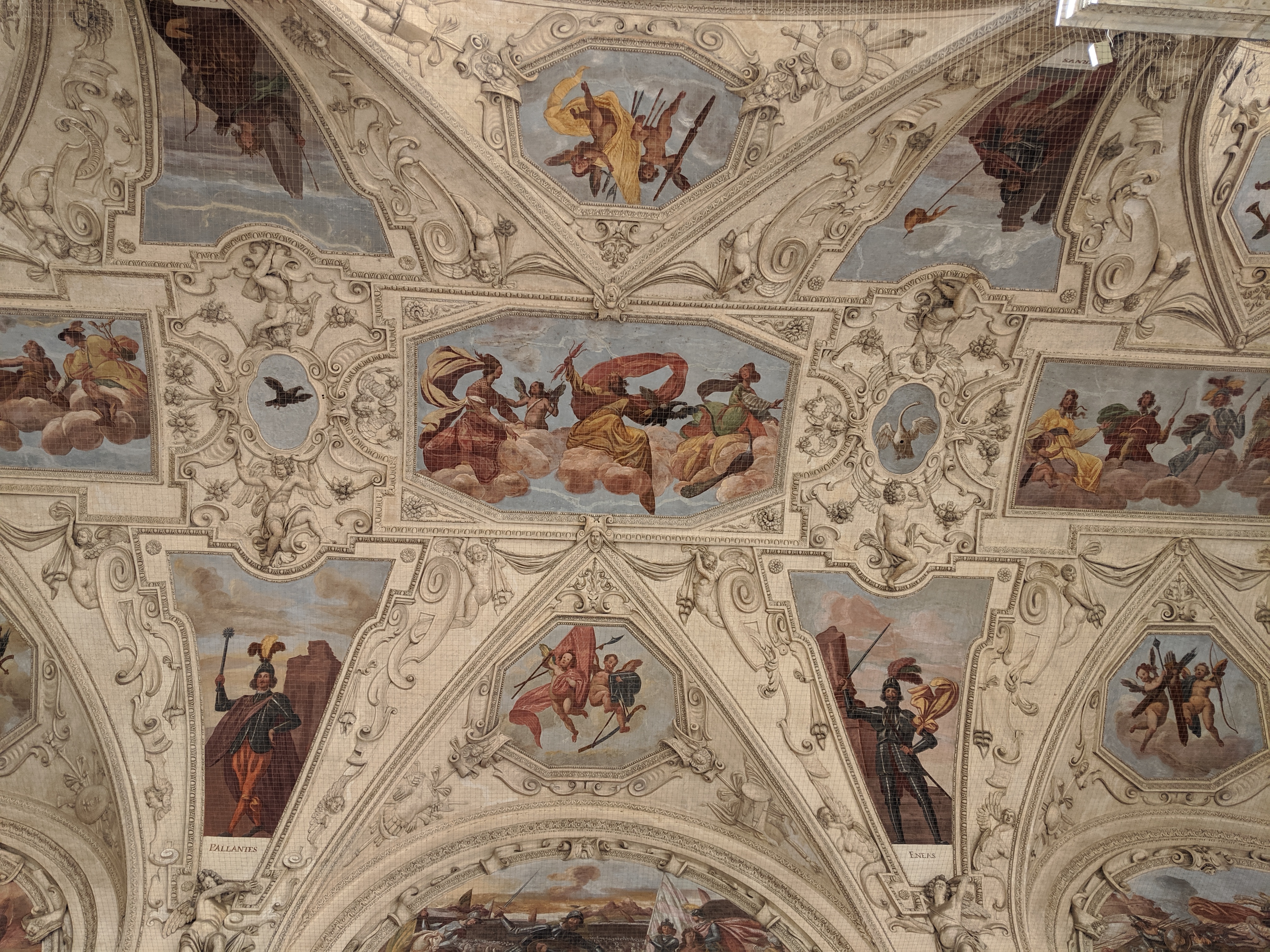
Below is a section of the hall’s highly decorative ceiling. The middle fresco shows Albrecht von Wallenstein as the god of war in a horse-drawn chariot:
And this is what you’ve no doubt been waiting for, dear reader: more of the famous dripstone wall. At first glance, this worm assumed the wall was a modern addition, but it’s part of the original Baroque complex that houses the palace. Seen from afar, the bits and pieces of the wall look like skulls. As you get closer, you realize they don’t represent anything in particular. The designer’s goal was to make you peer and wonder. In some places, it seems as if you should be able to peek through the outer layer into hidden chambers beyond. But when you get close, there’s nothing to see. Eery and grotesque:

This plaque stands in front of the wall to describe the wall and its purpose:

A peacock wonders whether it’s greener on the other side. She hopped over the hedge just after the photo was taken:

That’s all for today, folks.


 Travelling Worm
Talk to the Travelling Worm!