This is the blog of Mark Wordsworm, the travelling worm. I’m a 36-year-old bookmark (give or take a few years) and I proudly boast my own Hallmark serial number, 95 HBM 80-1. You’ll probably want to read all about me and my Travelling Companion (the TC).
Today’s travel notes
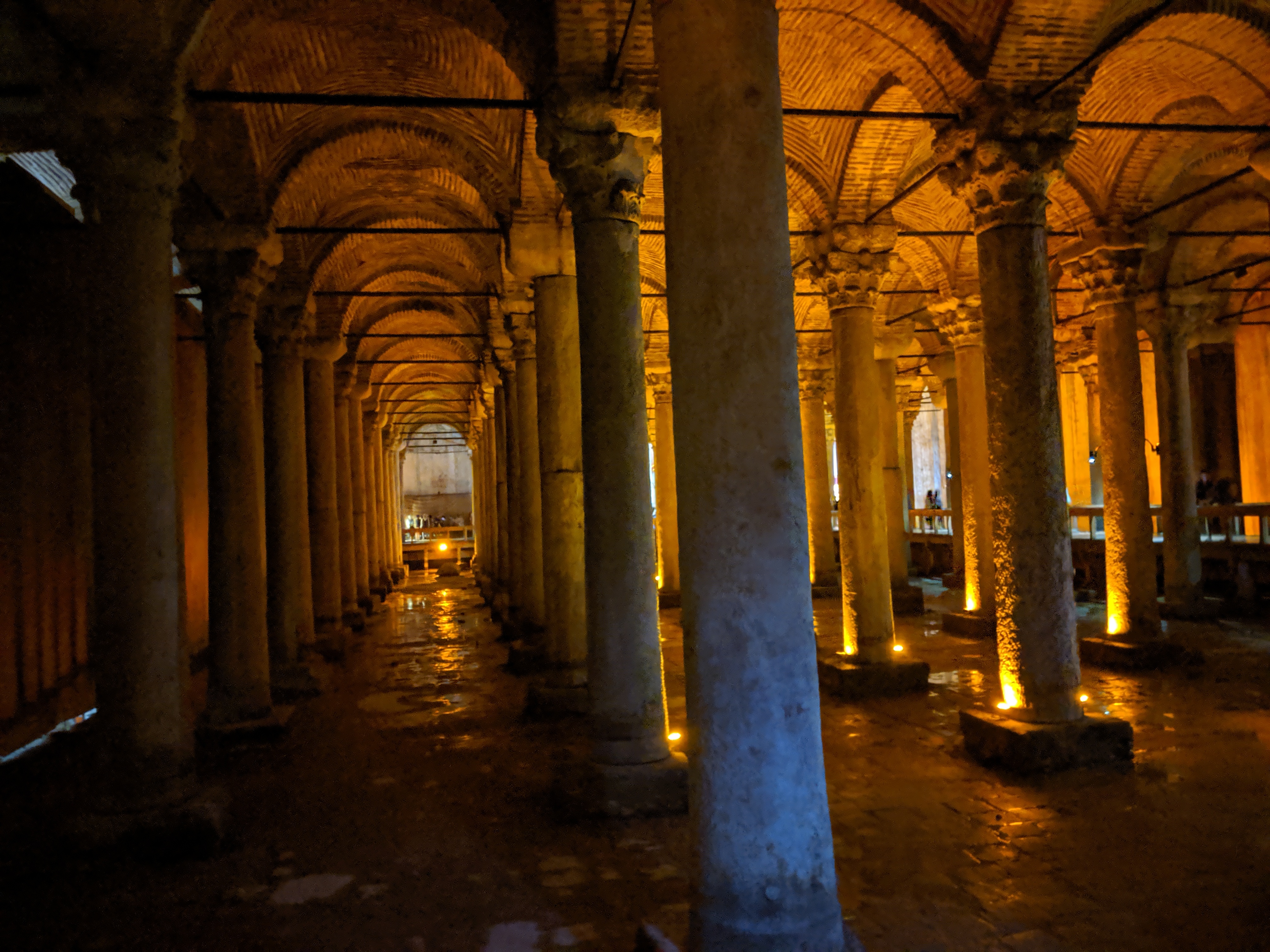
Me and the TC are in Istanbul, formerly known as Constantinople. We dropped in on the Basilica Cistern, an enormous underground chamber built in the sixth century as a place to store water. The cistern lies underneath the Hagia Sophia.
Word of the day
Baklava is a sweet made of layered phyllo pastry, nuts (pistachio, walnuts, or almonds), and honey. Many people cite the Ottoman Empire as the origin of baklava, which nicely gets around the vexed question of whether the dish originated in Turkey or Greece. No matter who first made baklava, it’s delicious.
The book I’m in
Dreams and Shadows, by C. Robert Cargill. A dark tale of faerie and mortality, with a dose of undreamed-of power and doomed love. C. Robert Cargill is a versatile author, well worth keeping an eye on.
Recommended restaurant
Karaköy Güllüoğlu, Istanbul. The best baklava in the world.
The photos
Me with baklava and coffee at Karaköy Güllüoğlu, Istanbul:
The Basilica Cistern is a huge cavern under the streets and buildings of Istanbul, used for storing water in Roman times:
The cistern is rectangular, 140 metres by 70 metres, giving it an area of 9,800 m². It can hold 80,000 cubic metres (17.5 million imperial gallons) of water. There was no water on the day we visited, although we felt drops falling from the ceiling at times. Evidently, when the cistern does contain water, visitors can see fish swimming through it.
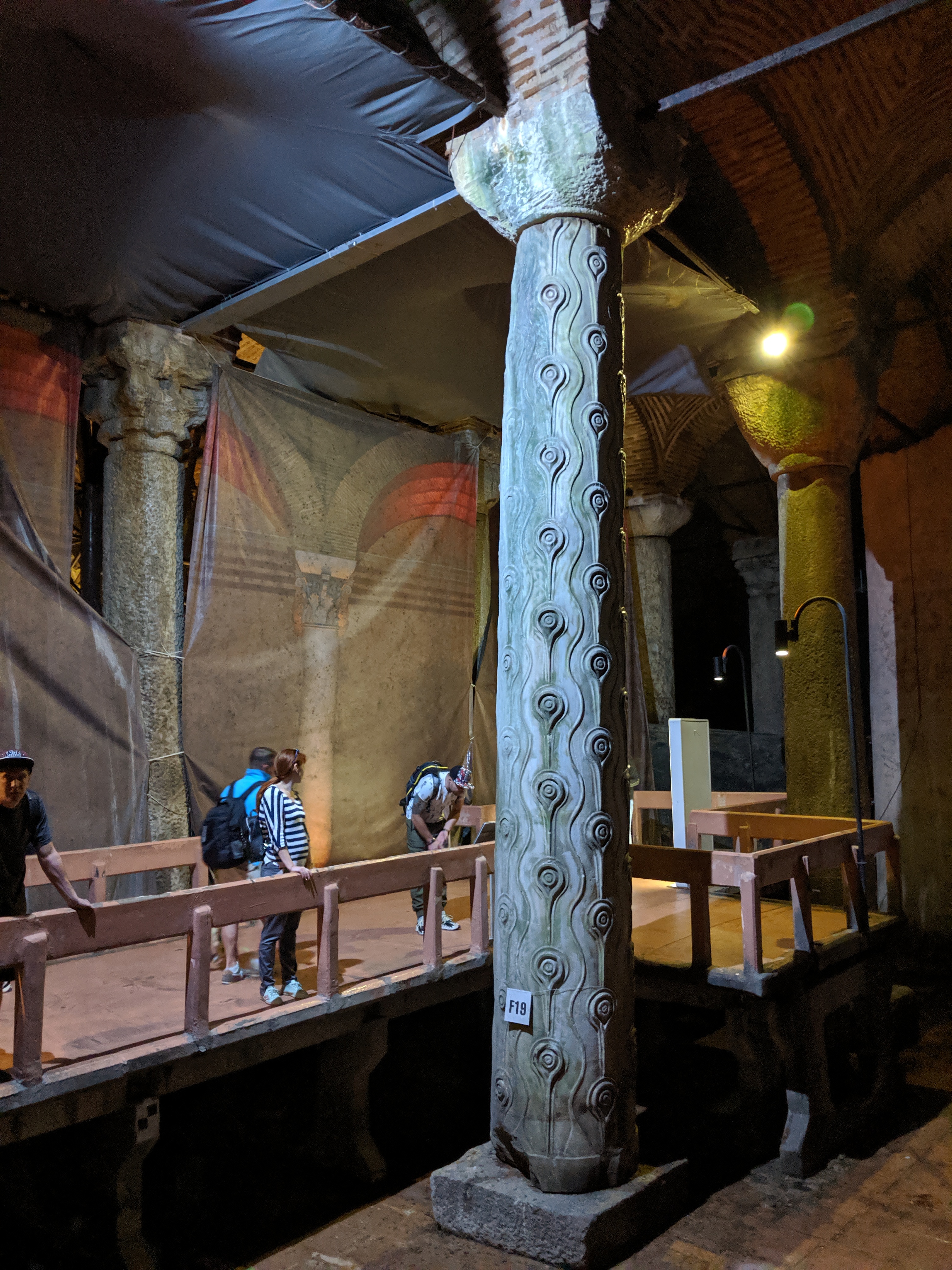
The 336 supporting pillars differ in decoration and design. The next photo shows the Crying Column, or Pillar of Tears. Unlike the other pillars, this one is always wet. Legend has it that the pillar commemorates the hundreds of slaves who died while building the cistern:
Two of the pillars have the head of the Medusa at their base:
According to legend, the Medusa had snakes for hair and was horrific to look at. So horrific that people turned to stone if they gazed directly at her. Statues of her were placed around buildings for protection. The pillar above has the Medusa head lying on its side, whereas the pillar below has the head upside down:
This is the blog of Mark Wordsworm, the travelling worm. I’m a 36-year-old bookmark (give or take a few years) and I proudly boast my own Hallmark serial number, 95 HBM 80-1. You’ll probably want to read all about me and my Travelling Companion (the TC).
Today’s travel notes
Me and the TC spent a couple of days in Cappadocia, a region in central Turkey, exploring the town of Uçhisar and its surrounds.
Word of the day
A troglodyte is a cave dweller. The word also means old-fashioned or deliberately backward-looking.
The book I’m in
Dreams and Shadows, by C. Robert Cargill. A dark tale of faerie and mortality, with a dose of undreamed-of power and doomed love. C. Robert Cargill is a versatile author, well worth keeping an eye on.
Travel tip
Look out for the stray dogs that live in the streets. They’re usually docile and friendly, but can become territorial at night.
Recommended accommodation
Art Residence Cappadocia, from host Derya with Airbnb. A luxurious cave dwelling built into the rock face above Pigeon Valley in Uçhisar.
Recommended restaurant
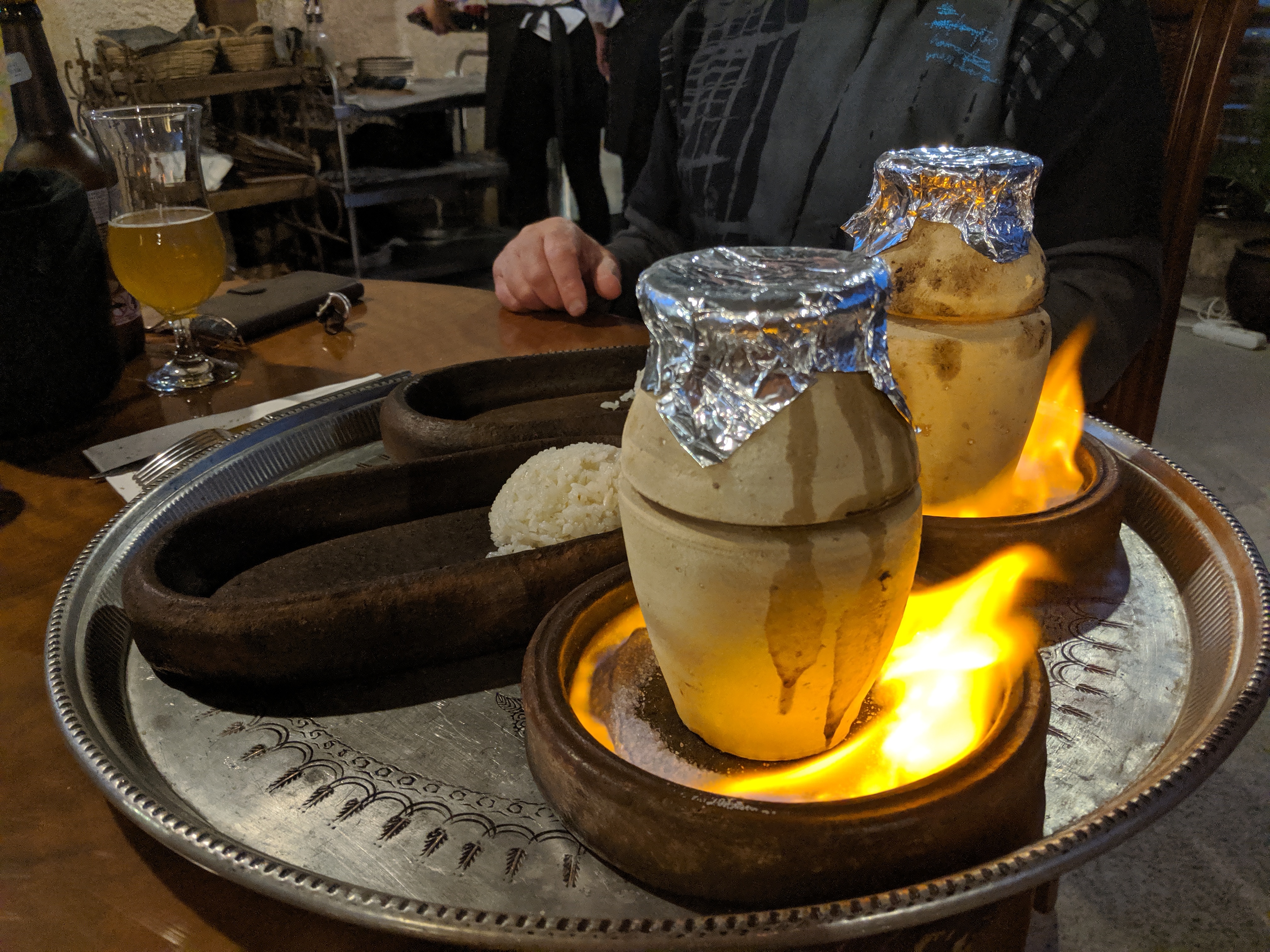
Muhterif, Tekelli, Belediye Meydanı No: 3, 50240 Uçhisar. Good food, very friendly and professional service. One of the photos below shows a the clay pots in which a beef dish arrived.
The photos
Peg’s one job is to support me on my travels, especially in case of wind. Sometimes Peg gets it wrong. Me doing a faceplant:
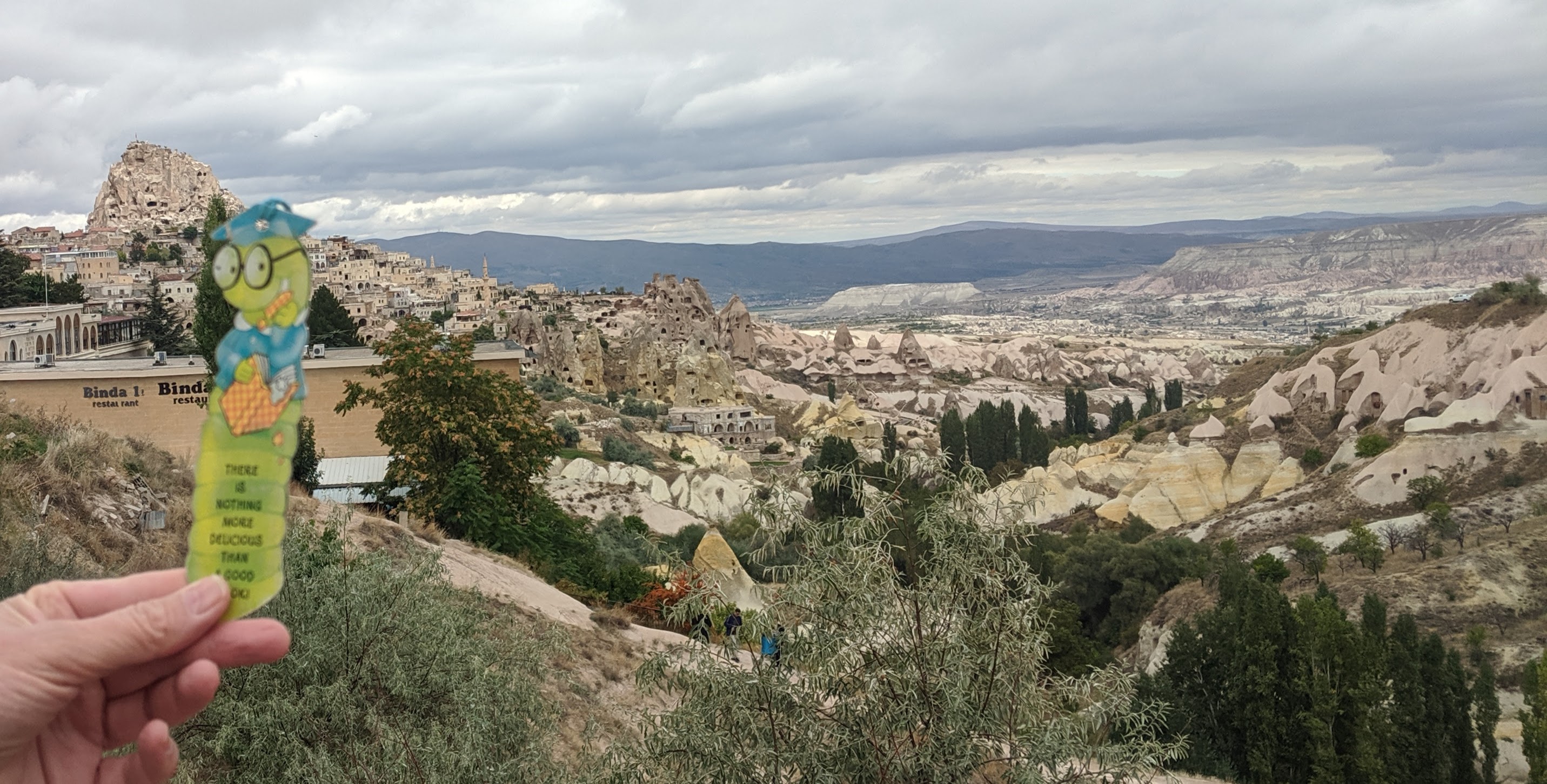
Once more, with feeling. Here’s yours truly, Mark Wordsworm, with Pigeon Valley on the right of the photo and Uçhisar Castle on the left:
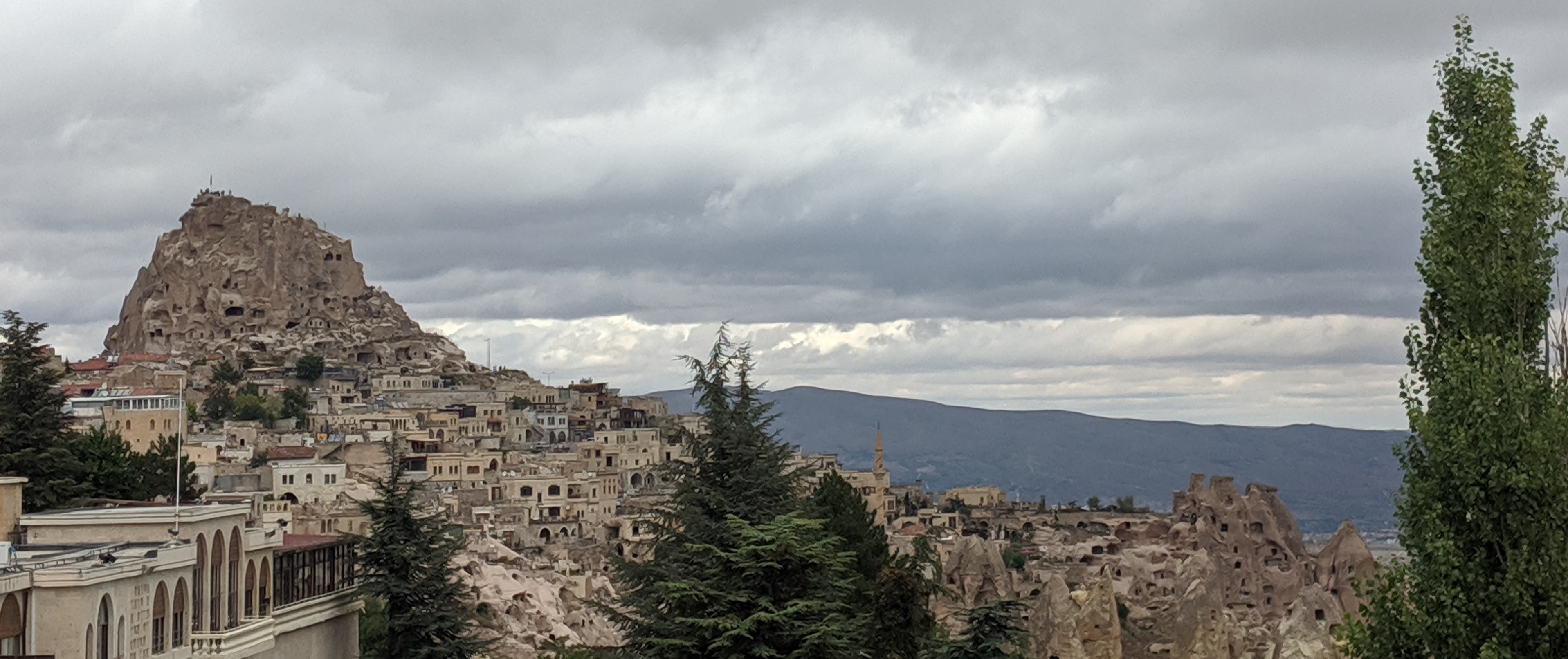
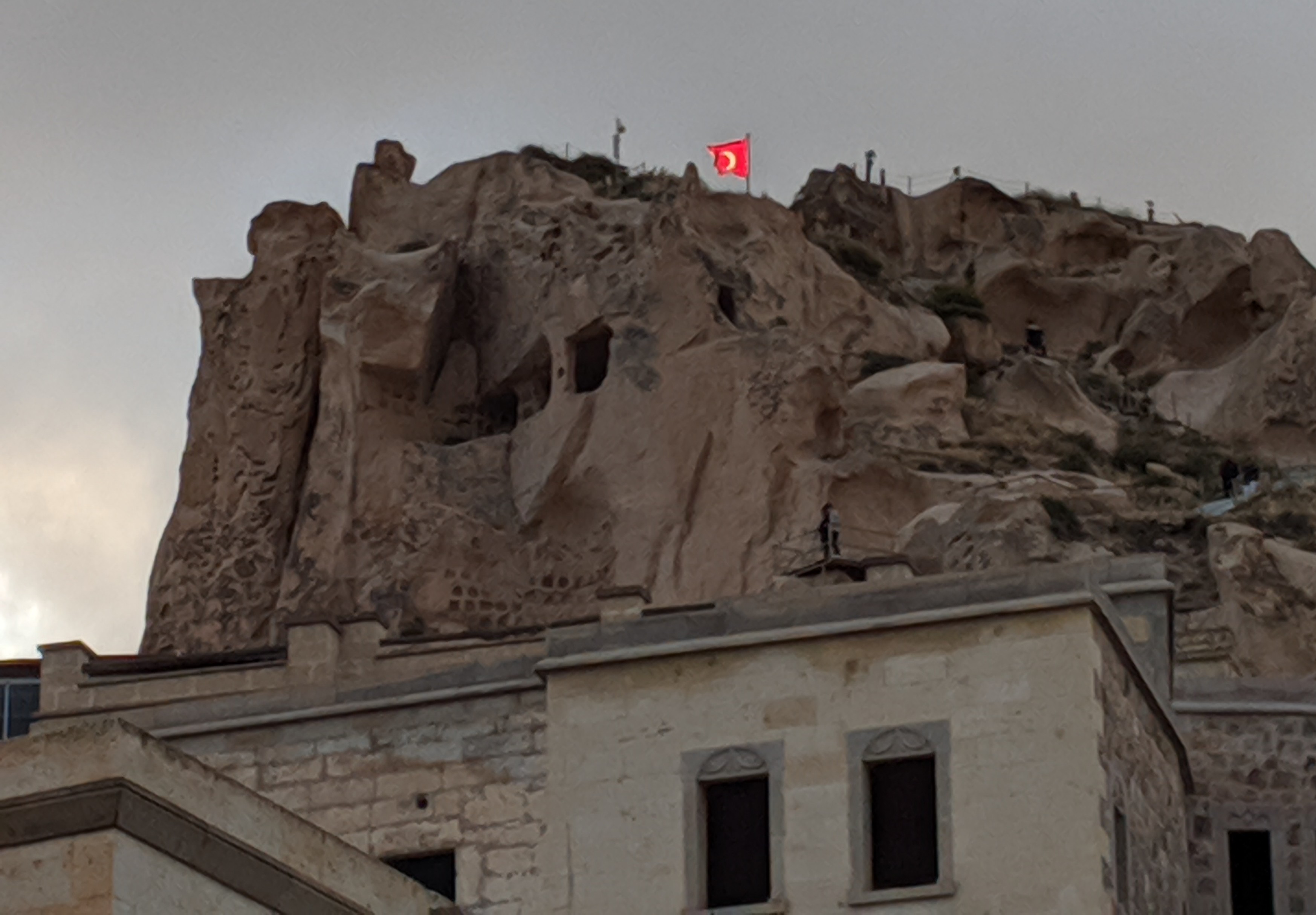
The settlement of Uçhisar stretches up the hill to the castle:
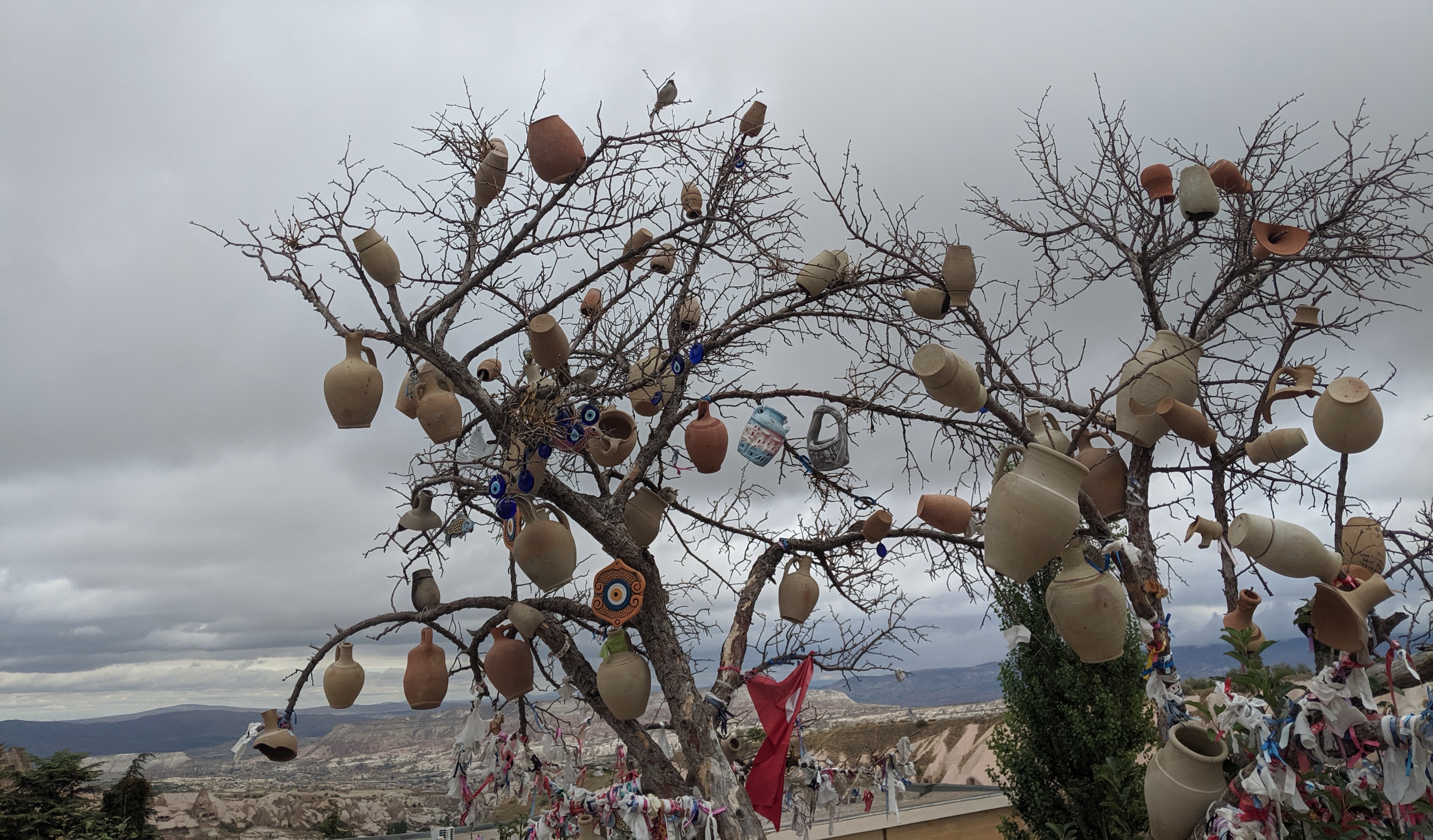
Clay pots and ribbons decorate a tree above Pigeon Valley, with a bird or two hiding in plain sight:
The Turkish flag glows in the late sun:
Looking down the winding road that leads from Uçhisar into the valley:
Old and less old:
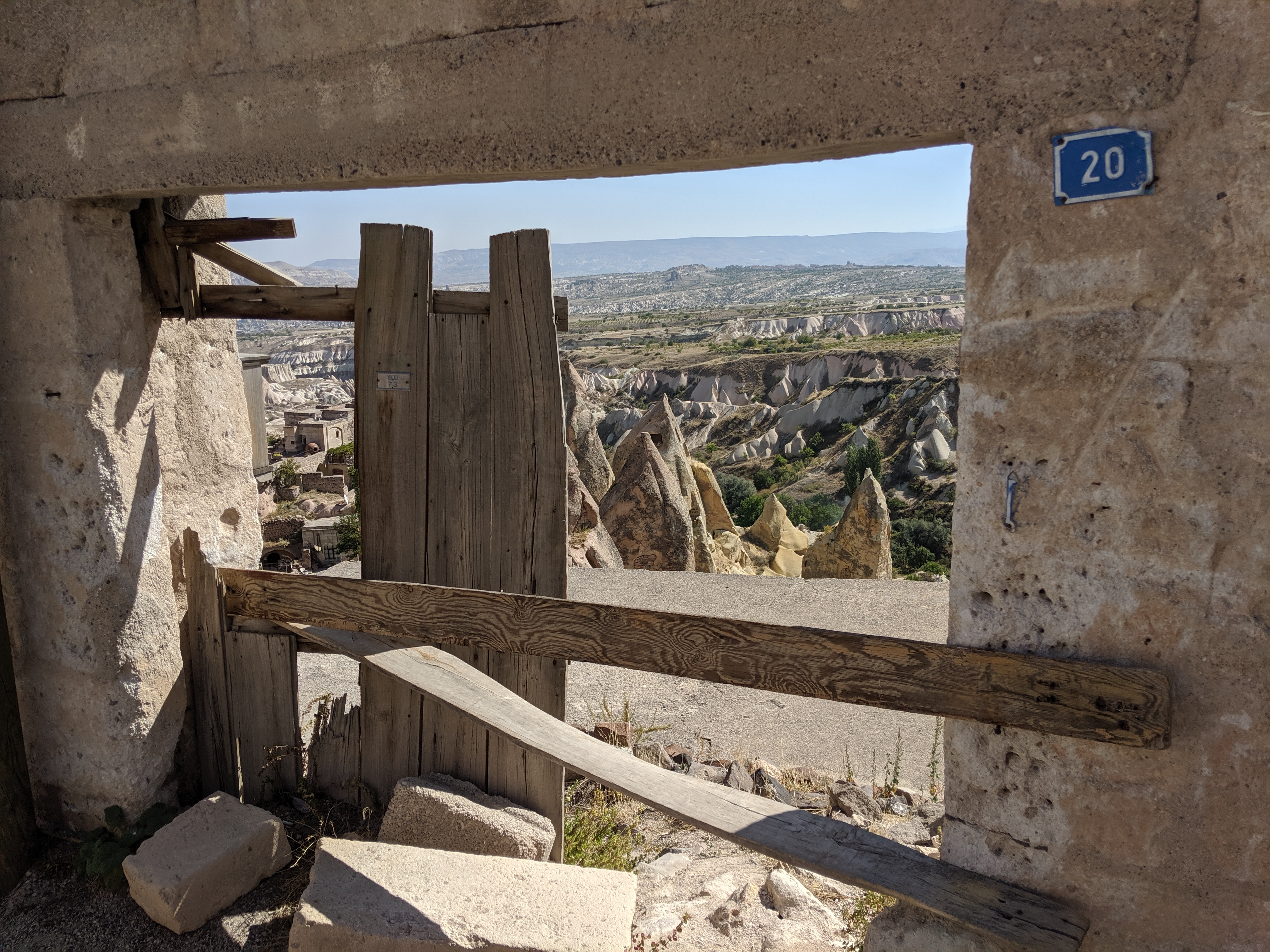
Ruins of various ages offer photographic opportunities:
This worm was not the only creature exploring the terrain. Meet Dagbert the darkling beetle:
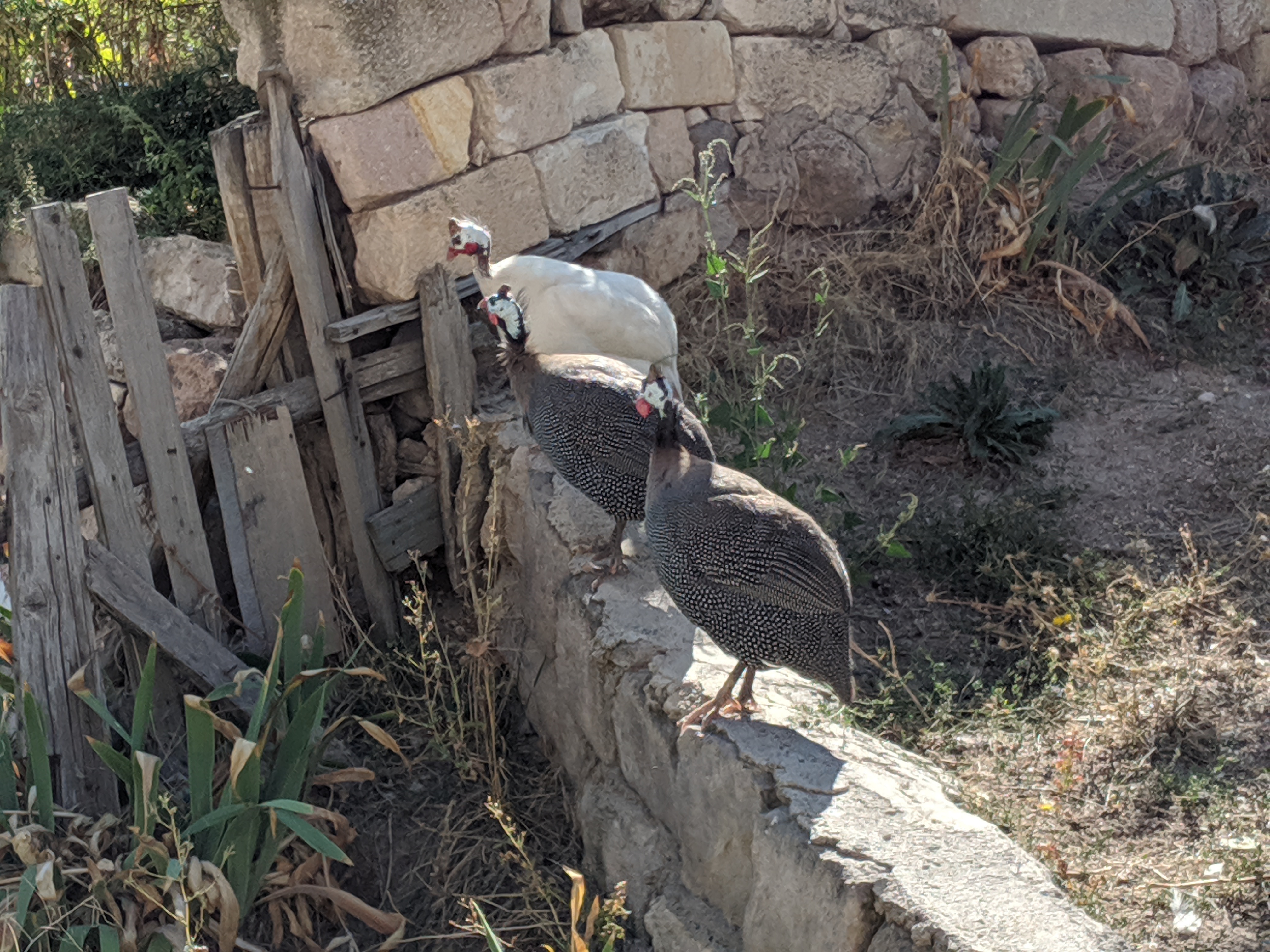
Dagbert warned me to avoid the Guineafowl prowling in search of an easy bite:
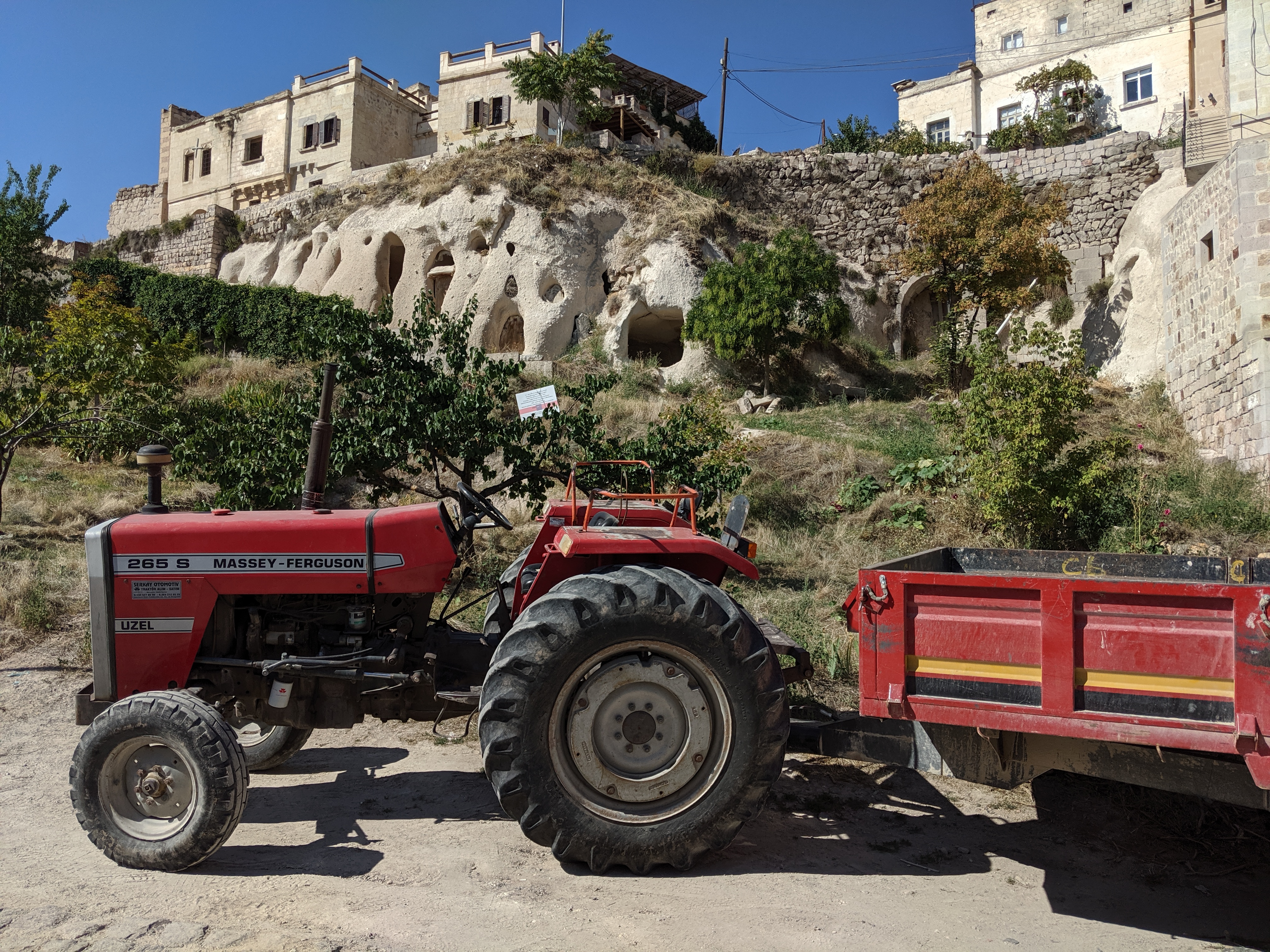
Tractors and other working vehicles traverse the narrow roads too. If you’re driving, be prepared to reverse uphill a long way if you encounter a vehicle coming in the opposite direction to yourself!
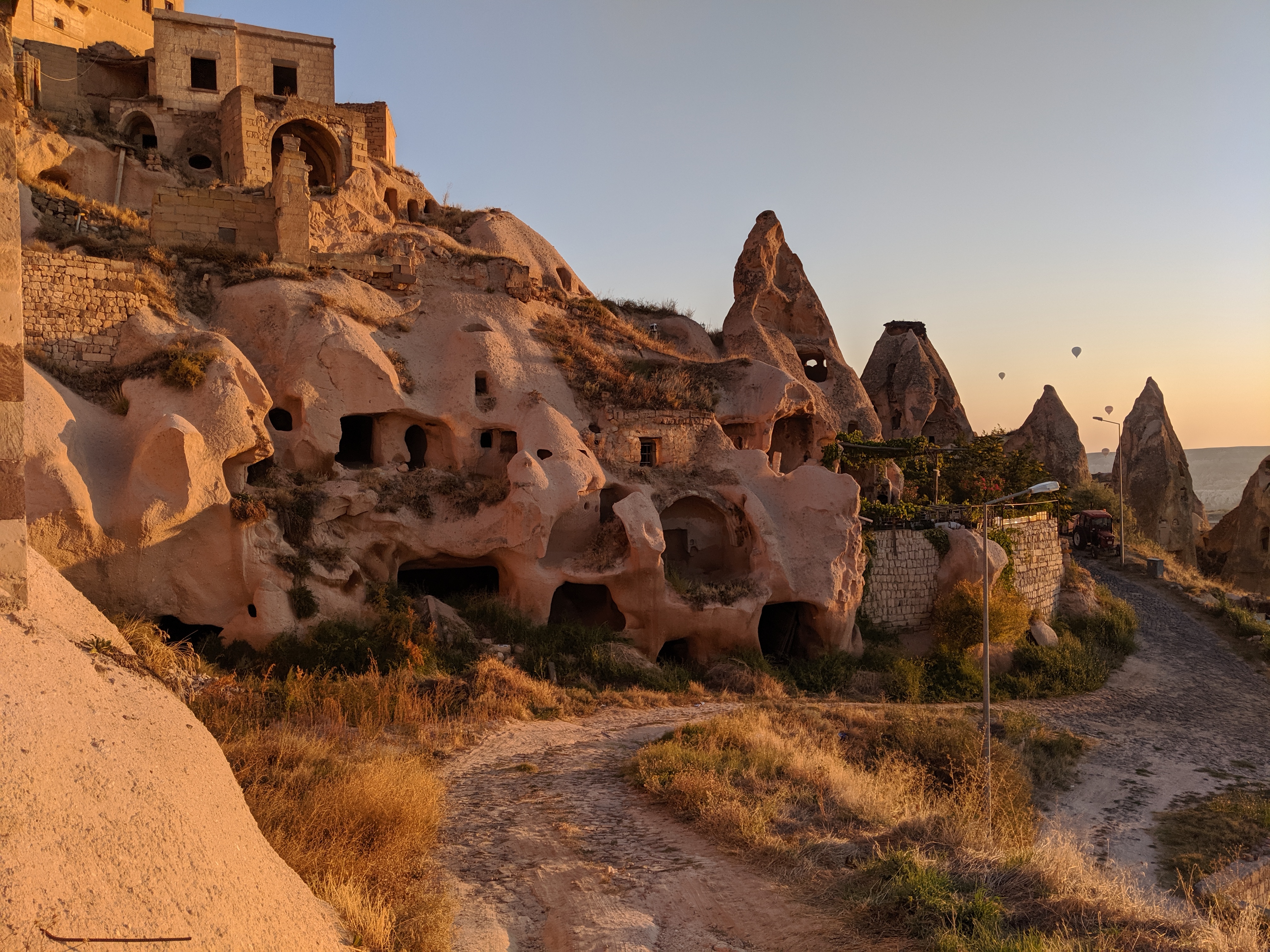
Fairy chimneys and cave dwellings cluster at one end of Pigeon Valley below Uçhisar, with hot air balloons rising in the early morning sky:
The strange pointy hills are knows as fairy chimneys. They’re formed from a type of volcanic rock called tuff. A long, long time ago, before even this worm was in the world, volcanic eruptions spewed up ash that formed a thick layer on the surface of the earth. The ash compacted and hardened into tuff. Thousands of years of wind and water wore away the less durable material.
So, the pointy hills are made of tuff’s toughest stuff.
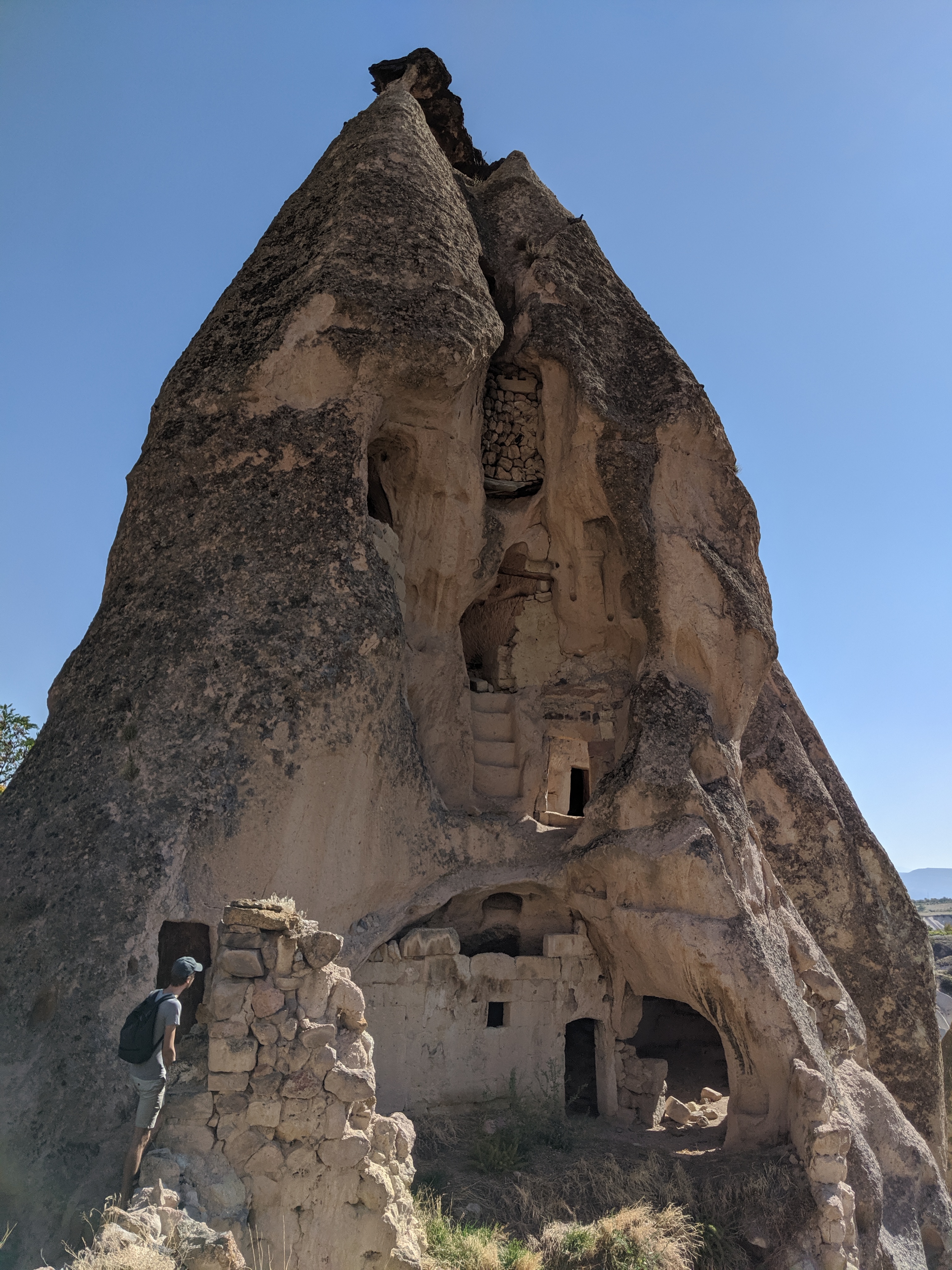
The next shot shows a closeup view of the tallest of the fairy chimneys in this area. The fairy chimneys were hollowed out to create tombs during the Roman period, any time from the third century BC to the early AD centuries:
Cave dwellings abound in the area. Some were built in the Roman period (third to fourth centuries AD) by Christians who came to the area to flee the Romans, and found that digging into the soft rock was an easy and convenient way to build solid, cool homes. People have been excavating homes in the rock for centuries, so it’s hard to know how old a specific cave is.
Some of the cave dwellings are easily accessible, in that they’re at ground level and unsupervised. It’s a bit of a scramble over rough terrain to get to them, and the grass hides unexpected deep holes and caverns, so be careful. Here’s a view inside a cave dwelling:
It’s surprisingly roomy and sophisticated in there. Another room in the same dwelling:
People also carve out pigeon houses in the tuff, and have been doing so for thousands of years. Farmers use the pigeons as a source of fertilizer as well as food:
To finish, enjoy a cheery shot of the flaming clay pots in which a beef dish is served at Muhterif restaurant in Uçhisar:
This is the blog of Mark Wordsworm, the travelling worm. I’m a 36-year-old bookmark (give or take a few years) and I proudly boast my own Hallmark serial number, 95 HBM 80-1. You’ll probably want to read all about me and my Travelling Companion (the TC).
Today’s travel notes
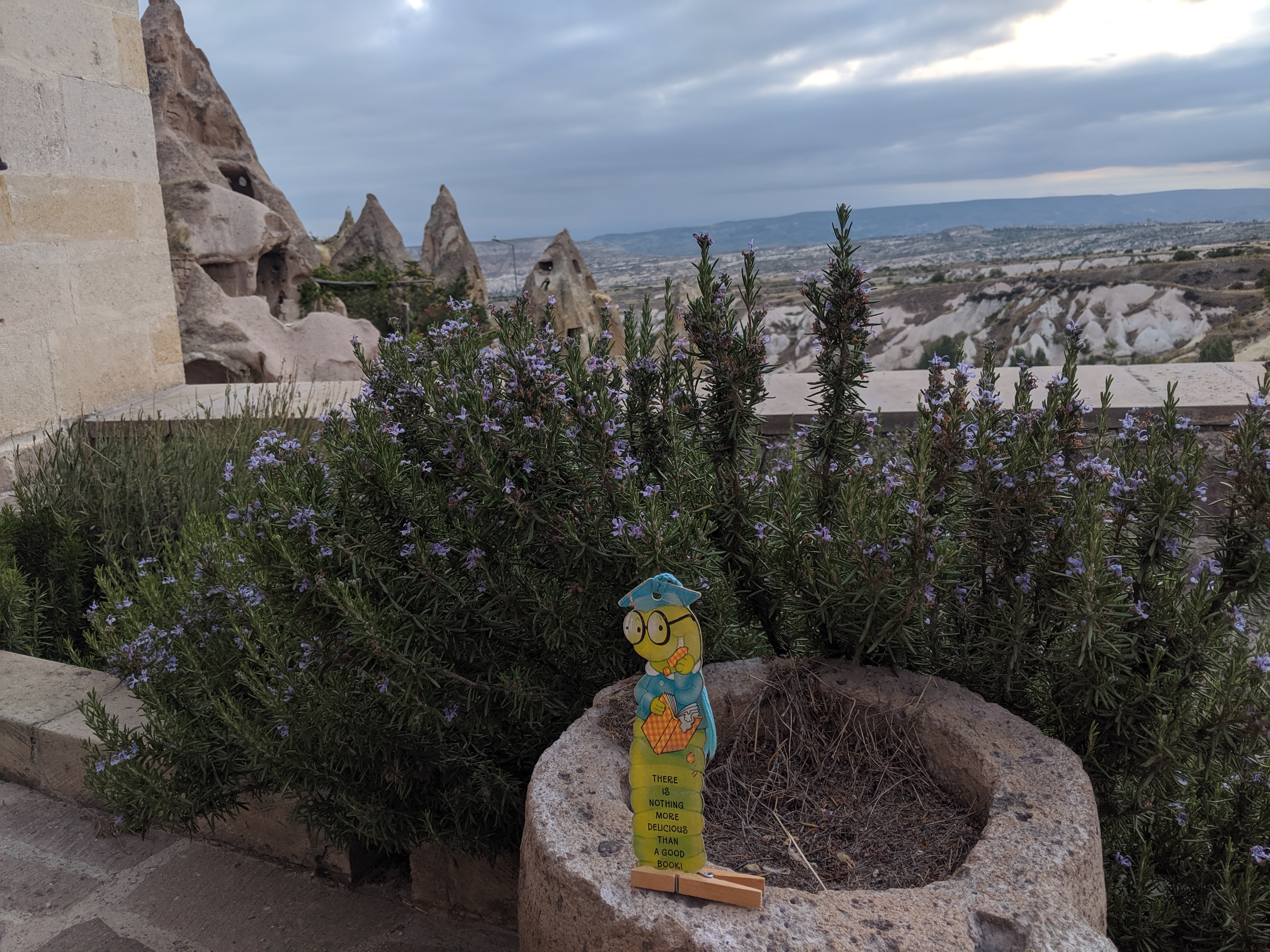
Me and the TC are in in Uçhisar, a small town in Cappadocia, Turkey. I was standing near a small lavender-like bush, admiring the scene of fairy chimneys and rock dwellings spread out below me, when a tiny creature shot by. On closer acquaintance, this worm approves the creature’s form and looks to his own metamorphosis. Rest assured though, dear reader, that such a change is still beyond the horizon.
The photos
Me in front of the lavender-like bush, scene of the strange encounter:
Those pointy hills in the background are the so-called fairy chimneys characteristic of this part of the world. The TC, bless her cotton socks, coined the term bubble hills before being told the correct popular name for this geological formation.
With this imposing scene as backdrop, a curious flying creature made its appearance. Its wings moved so fast they were but a blur. Its brightly-marked body hung almost motionless, suspended in time and space.
Here’s a ten-second video showing a side view of the intriguing creature:
Is it a bird? Is it a bee? The next video is slightly longer, and shows the creature from behind as well as from the side:
A bit of investigation revealed that it’s a hummingbird hawk-moth, also called a bee moth:
So, no beak. That’s a bit of a relief for this worm! Instead, the moth has a long proboscis for dipping into a flower to suck up nectar:
Rather an elegant creature, don’t you think? Perhaps when this worm (or caterpillar, as I may be) decides to metamorphose, I’ll choose a similar form.
This is the blog of Mark Wordsworm, the travelling worm. I’m a 36-year-old bookmark (give or take a few years) and I proudly boast my own Hallmark serial number, 95 HBM 80-1. You’ll probably want to read all about me and my Travelling Companion (the TC).
Today’s travel notes
Me and the TC recently spent a few days in Prague. While there, we saw the Charles Bridge (Karlův most) from the water and the land.
Word of the day
Most is the Czech word for bridge. Knowing that helps when you’re reading signposts and maps.
The book I’m in
Semiosis, by Sue Burke. Man meets plant on a planet far away, some time in the not-too-distant future. Your faithful bookworm highly recommends this book. It feeds the intellect and entertains the mind.
Travel tip
Visit the bridge early in the day or out of season. It can get pretty busy.
Recommended accommodation
Vienna House Andel’s Prague, Stroupežnického 21, 150 00 Praha 5-Smíchov. Elegance and comfort combined.
The photos
Me on my way to Charles Bridge (Karlův most) in Prague:
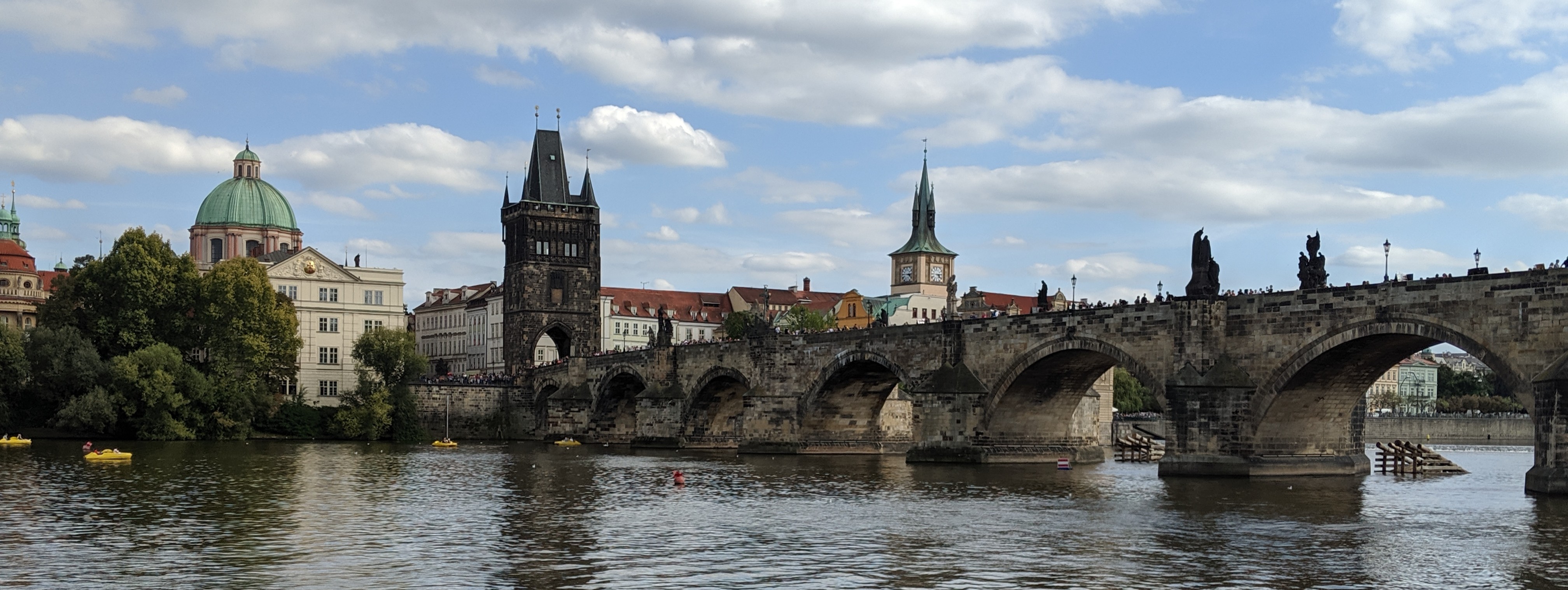
Me and the TC took a boat trip up the Vltava river on morning. That’s an L not an i in Vltava. Evidently the name comes from the Old Germanic wilt ahwa, which means wild water. The Vltava river runs through the centre of Prague. Eighteen bridges cross the river in the city. One of them is the historic Charles Bridge, seen here from aboard the boat:
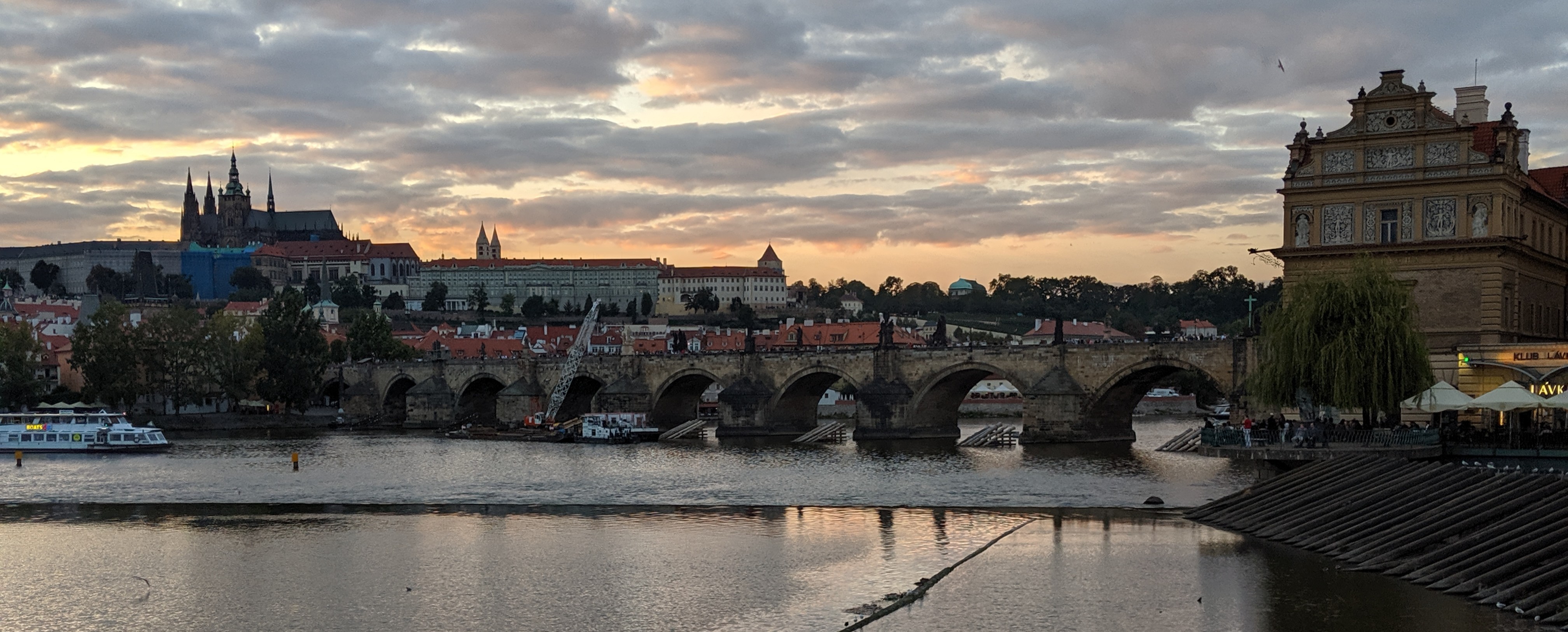
We crossed the bridge on foot on another day. Approaching the bridge on the east bank:
From where we stood on the old city side of the bridge, the western riverbank beckoned:
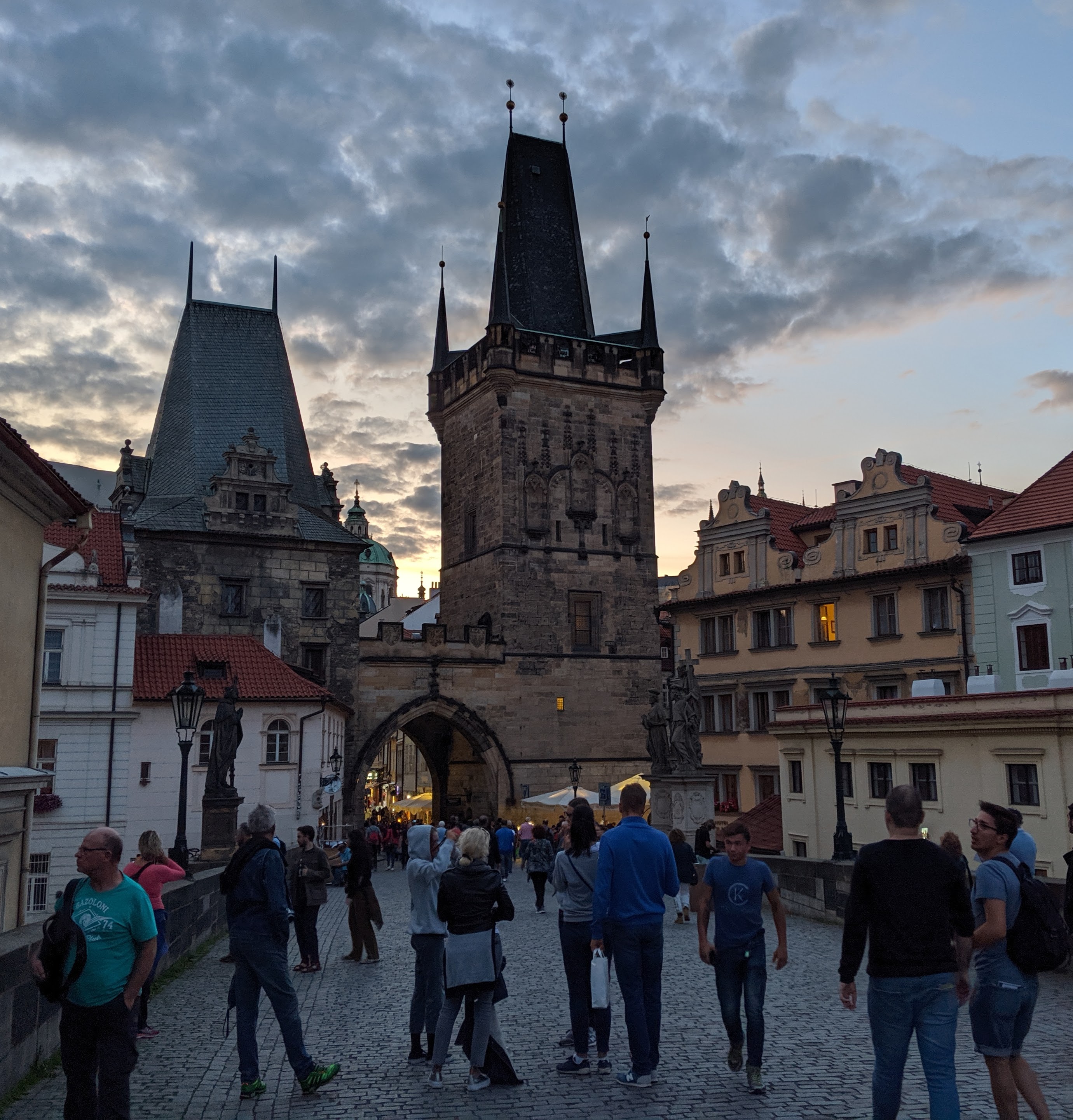
In the glow of early evening, we walked through the arch of an imposing tower that leads onto the bridge:
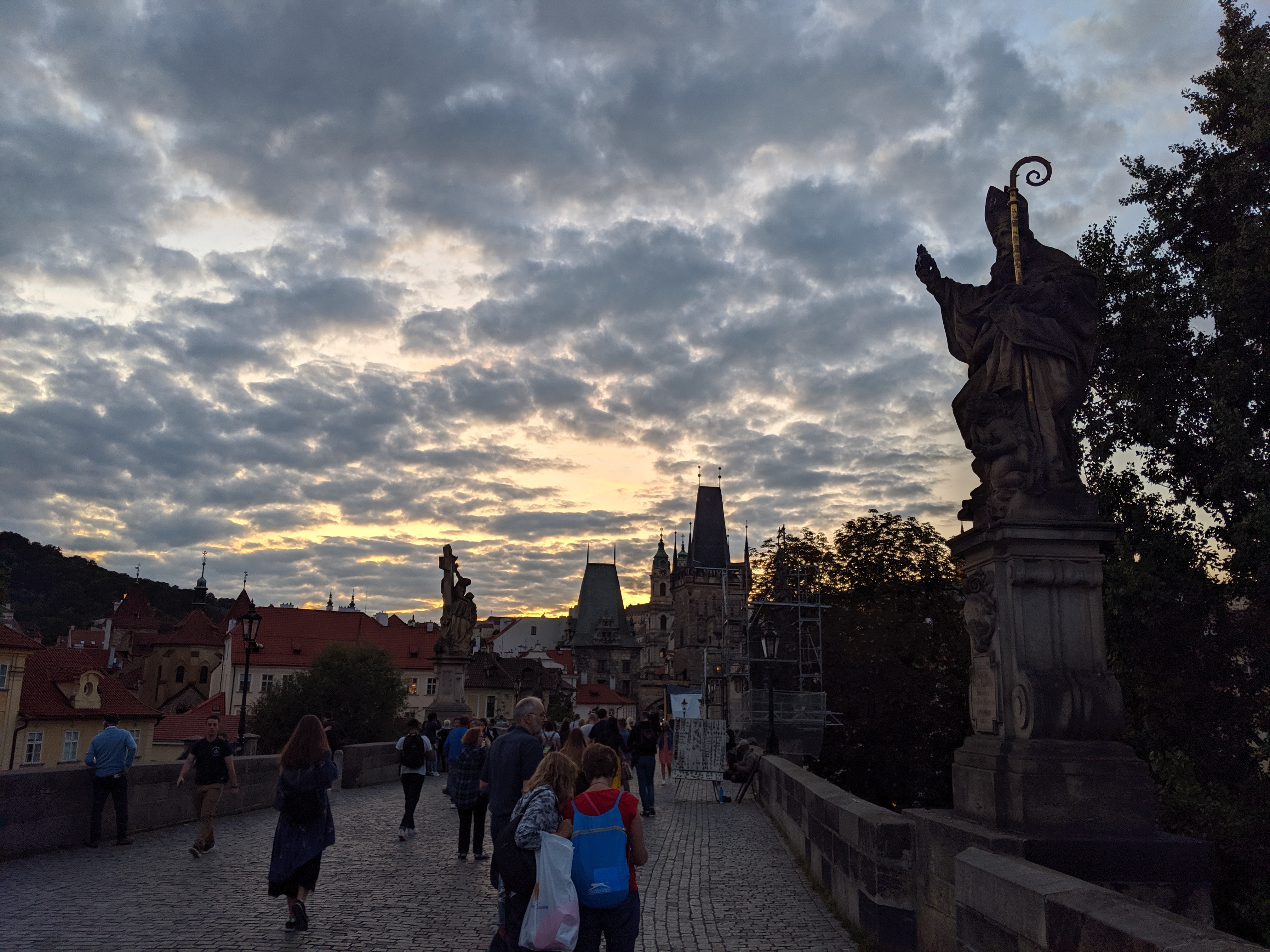
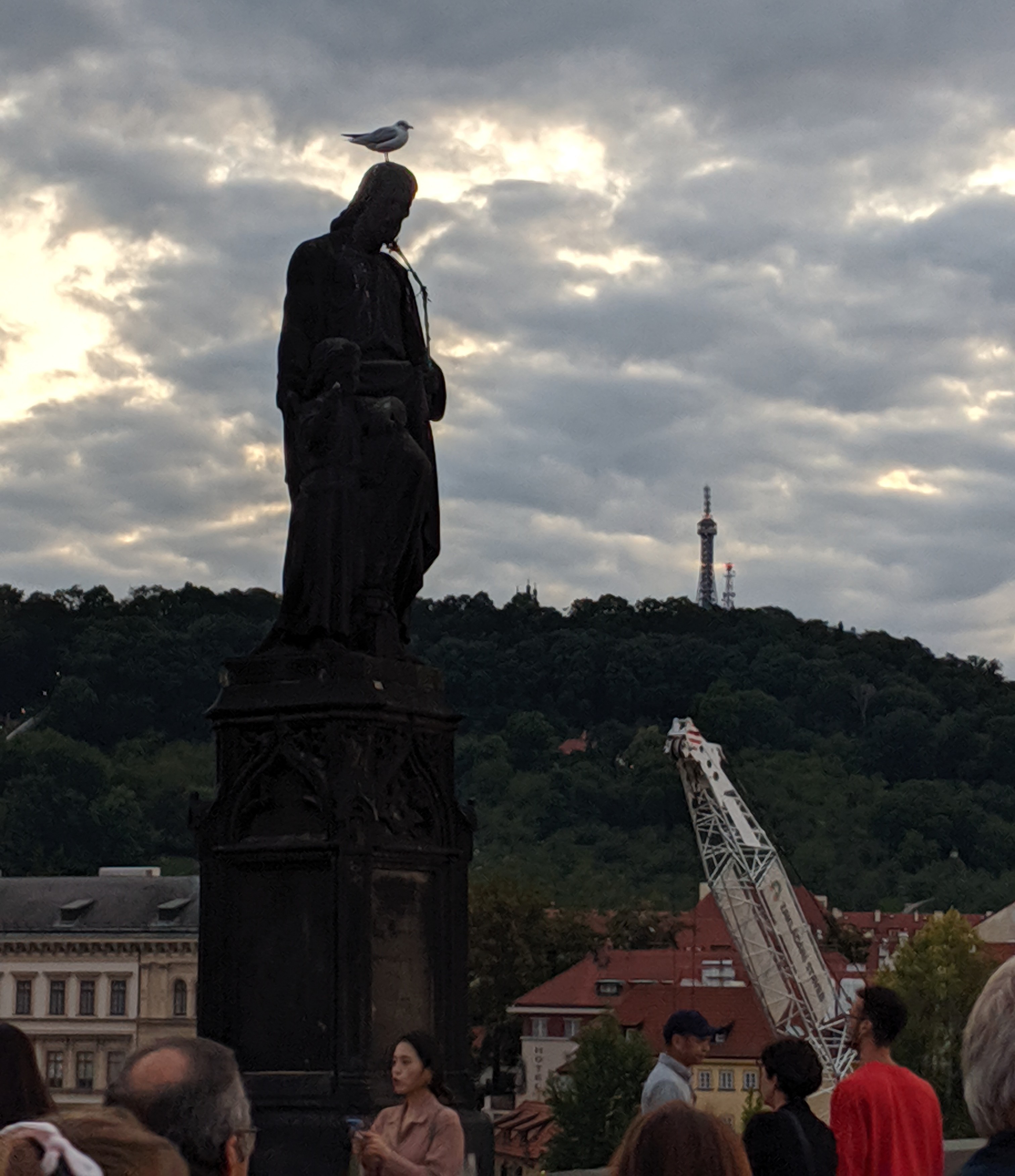
Crossing the bridge watched over by an array of saints:
One of the saints was executed by being thrown off the bridge into the river. Parts of the decorative plaques at the base of his statue have been rubbed to a gleam by passers by. Touching the plaques is supposed to bring good luck. It looks as if a spotlight is shining on the images:
As usual, Jonathan has found a spot to show off his glamour:
An archway at the western end of the bridge glows with promise:
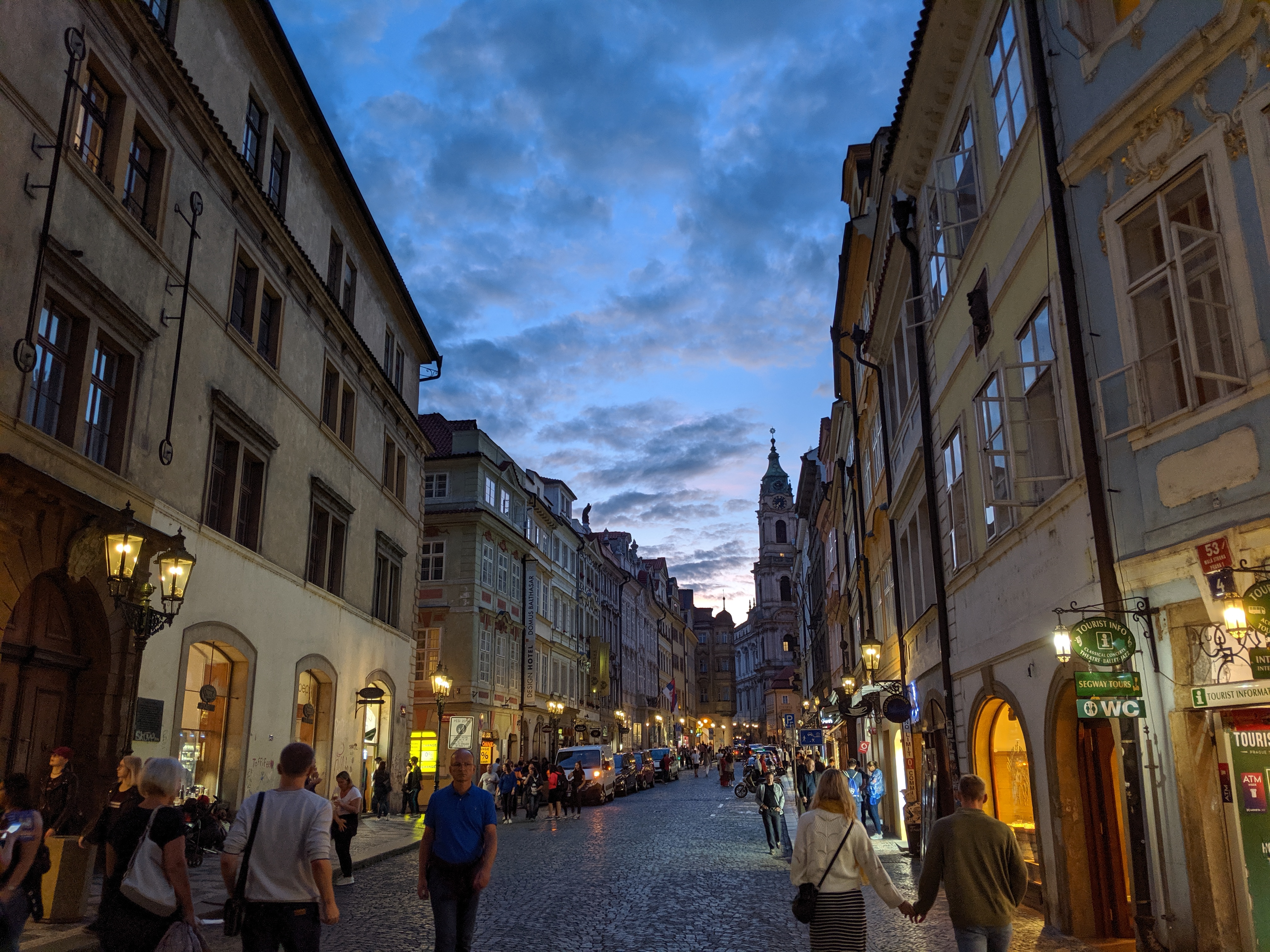
Through the archway into a warren of picturesque streets like this one:
This is the blog of Mark Wordsworm, the travelling worm. I’m a 36-year-old bookmark (give or take a few years) and I proudly boast my own Hallmark serial number, 95 HBM 80-1. You’ll probably want to read all about me and my Travelling Companion (the TC).
Today’s travel notes
Prague has long been on the TC’s bucket list, bless her cotton socks. And we made it! This post is an account of our visit to the Wallenstein Palace, which currently houses the Czech Senate.
Word of the day
Semiosis is the process that goes on in our brains when we convert a sign to a meaning. The sign is usually related to language, and can be something like a spoken word, a written word, a traffic signal, and so on.
The book I’m in
Semiosis, by Sue Burke. Man meets plant on a planet far away, some time in the not-too-distant future. Your faithful bookworm highly recommends this book. It feeds the intellect and entertains the mind.
Recommended accommodation
Vienna House Andel’s Prague, Stroupežnického 21, 150 00 Praha 5-Smíchov. Elegance and comfort combined.
The photos
Me and a wolf-bearer in the gardens of the Senate of the Czech Republic. We’re standing in front of the famous dripstone wall that guards one side of the grounds:
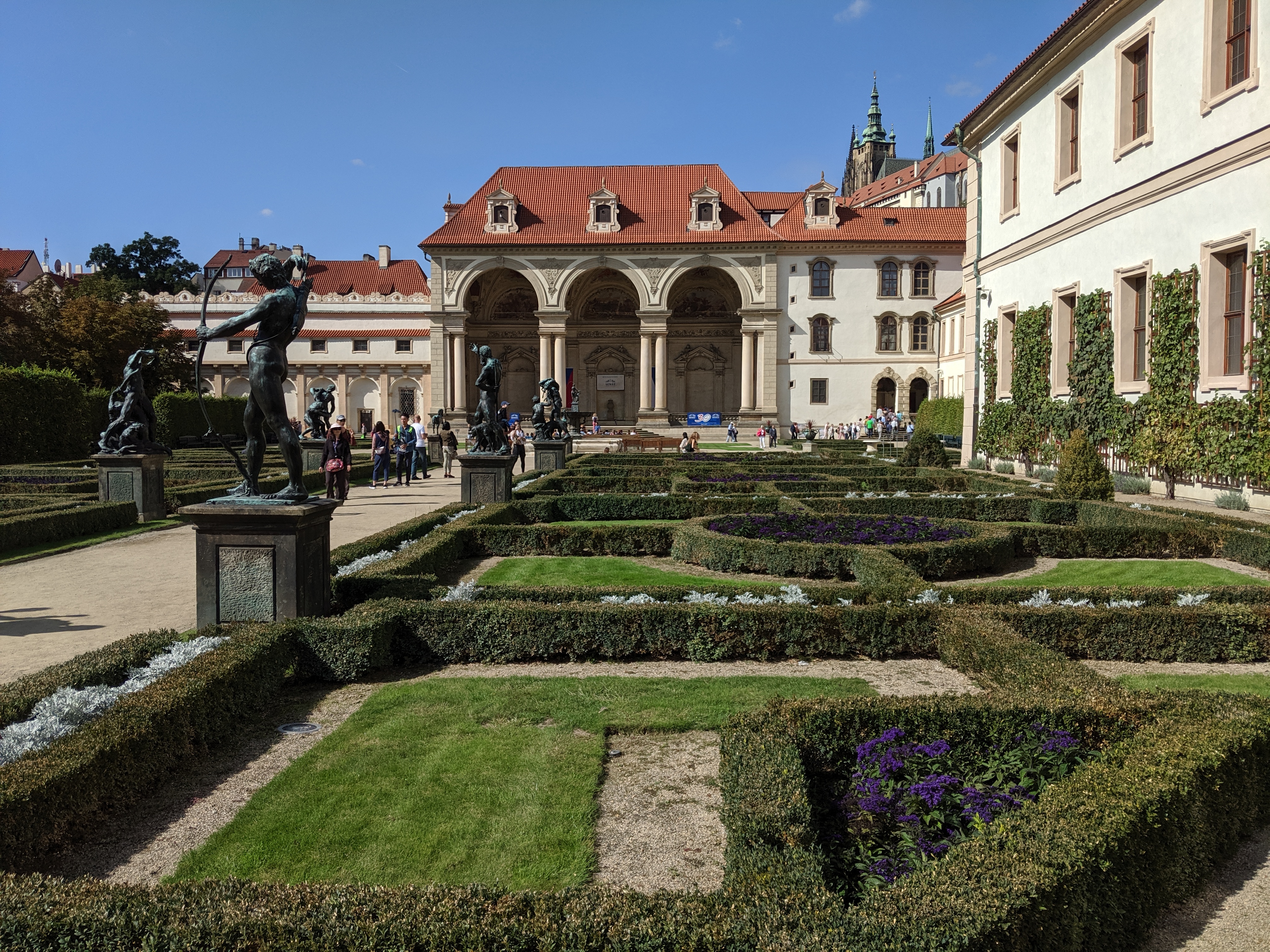
The gardens of the Wallenstein Palace are open to the public. The TC and I wandered in quite by chance and stayed to explore. The palace was built in 1623-1630 as the home for a powerful military leader and duke, Albrecht von Wallenstein. Alas, he only lived in the palace for one year before being assassinated.
A view of the gardens looking towards the palace main hall:
The open hallway at the far end of the gardens, known as the main hall of the palace, contains a plaque announcing the Senate of the Czech Republic. The blue flags on either side celebrate 30 years since the end of Communist rule:
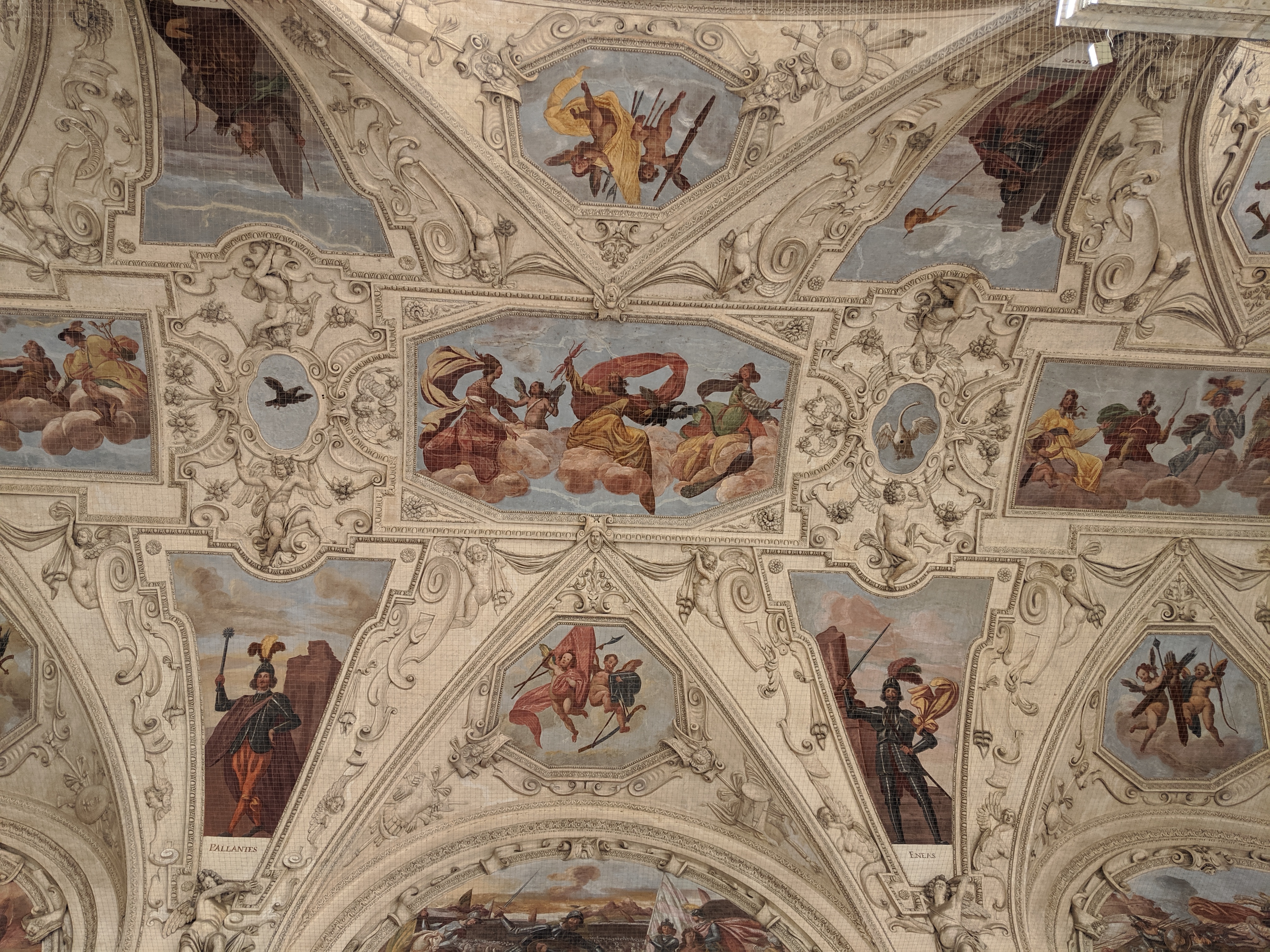
Below is a section of the hall’s highly decorative ceiling. The middle fresco shows Albrecht von Wallenstein as the god of war in a horse-drawn chariot:
And this is what you’ve no doubt been waiting for, dear reader: more of the famous dripstone wall. At first glance, this worm assumed the wall was a modern addition, but it’s part of the original Baroque complex that houses the palace. Seen from afar, the bits and pieces of the wall look like skulls. As you get closer, you realize they don’t represent anything in particular. The designer’s goal was to make you peer and wonder. In some places, it seems as if you should be able to peek through the outer layer into hidden chambers beyond. But when you get close, there’s nothing to see. Eery and grotesque:
This plaque stands in front of the wall to describe the wall and its purpose:
A peacock wonders whether it’s greener on the other side. She hopped over the hedge just after the photo was taken:
This is the blog of Mark Wordsworm, the travelling worm. I’m a 36-year-old bookmark (give or take a few years) and I proudly boast my own Hallmark serial number, 95 HBM 80-1. You’ll probably want to read all about me and my Travelling Companion (the TC).
Today’s travel notes
Today’s a red letter day, for no other reason than that I’ve decided to update my age after checking the date of my first post on this blog, My very first post was on 25 April 2008, titled The red centre. At that time, I judged myself to be 25 years old. Today, just over 11 years later, it seems like a good time for an update. I’m 36 years old, give or take a few years. Happy new age to me.
But now, on to the topic of my latest travel adventures. Me and the TC spent last weekend on Magnetic Island, a tropical island in North Queensland.
The book I’m in
The Wrath of Angels, by John Connolly. A fast-paced mix of murder, mystery, and fallen angels, featuring private detective Charlie Parker.
Recommended accommodation
Island Leisure Resort, 6 Kelly Street, Nelly Bay. The rooms are spacious, comfortable and clean, and the staff are friendly. There’s a swimming pool and a tennis court, and a games room with table tennis and pool tables. Accompanied by great hilarity, the TC rediscovered her mediocrity at both of the last-mentioned.
The photos
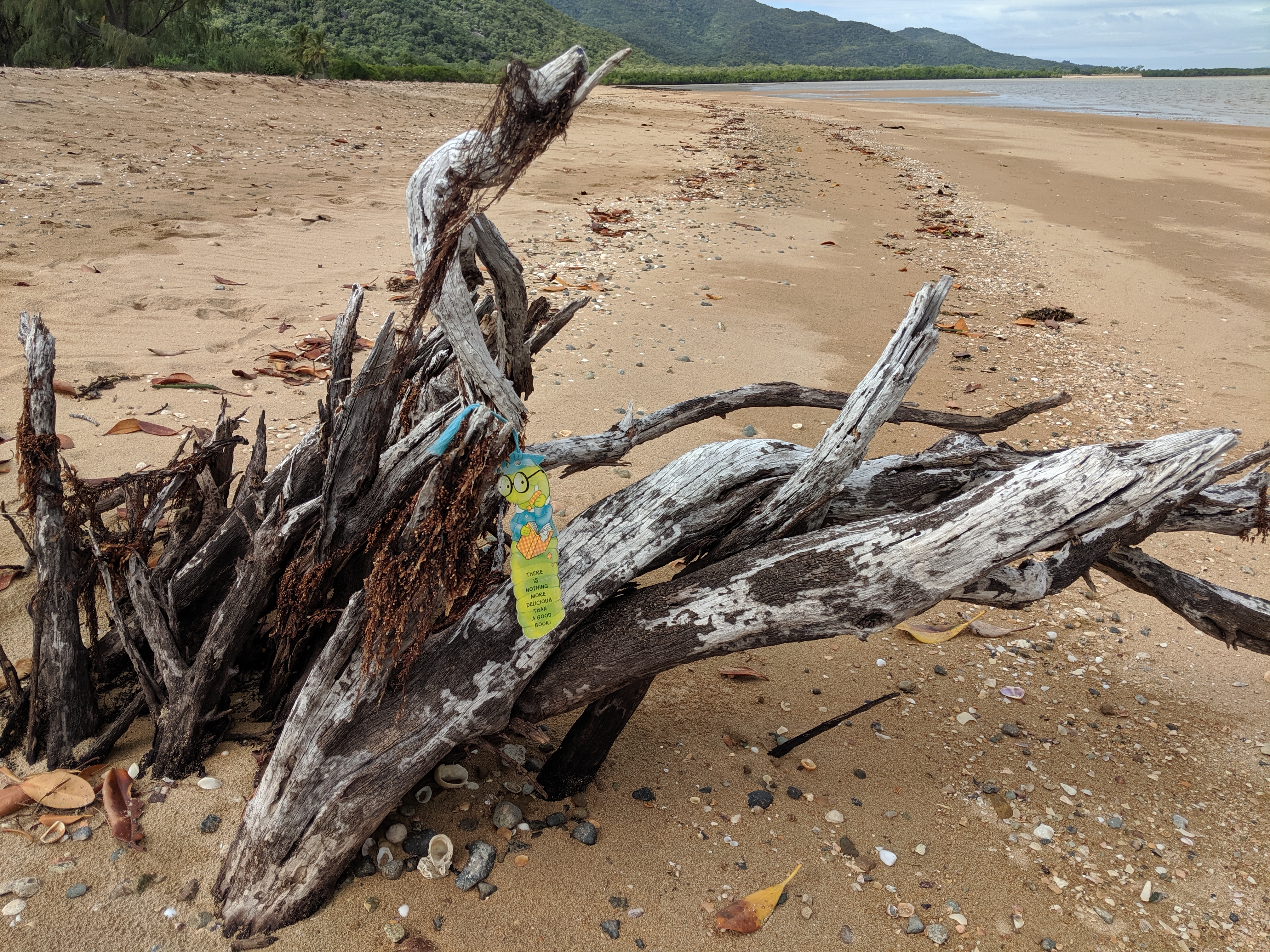
Me and an art piece created by sea and wind, on a beach at the north-west end of Magnetic Island:
The vegetation on the island was lush and green, at least in comparison to many parts of Australia. This photo shows the same beach at the quiet north-western end of the island:
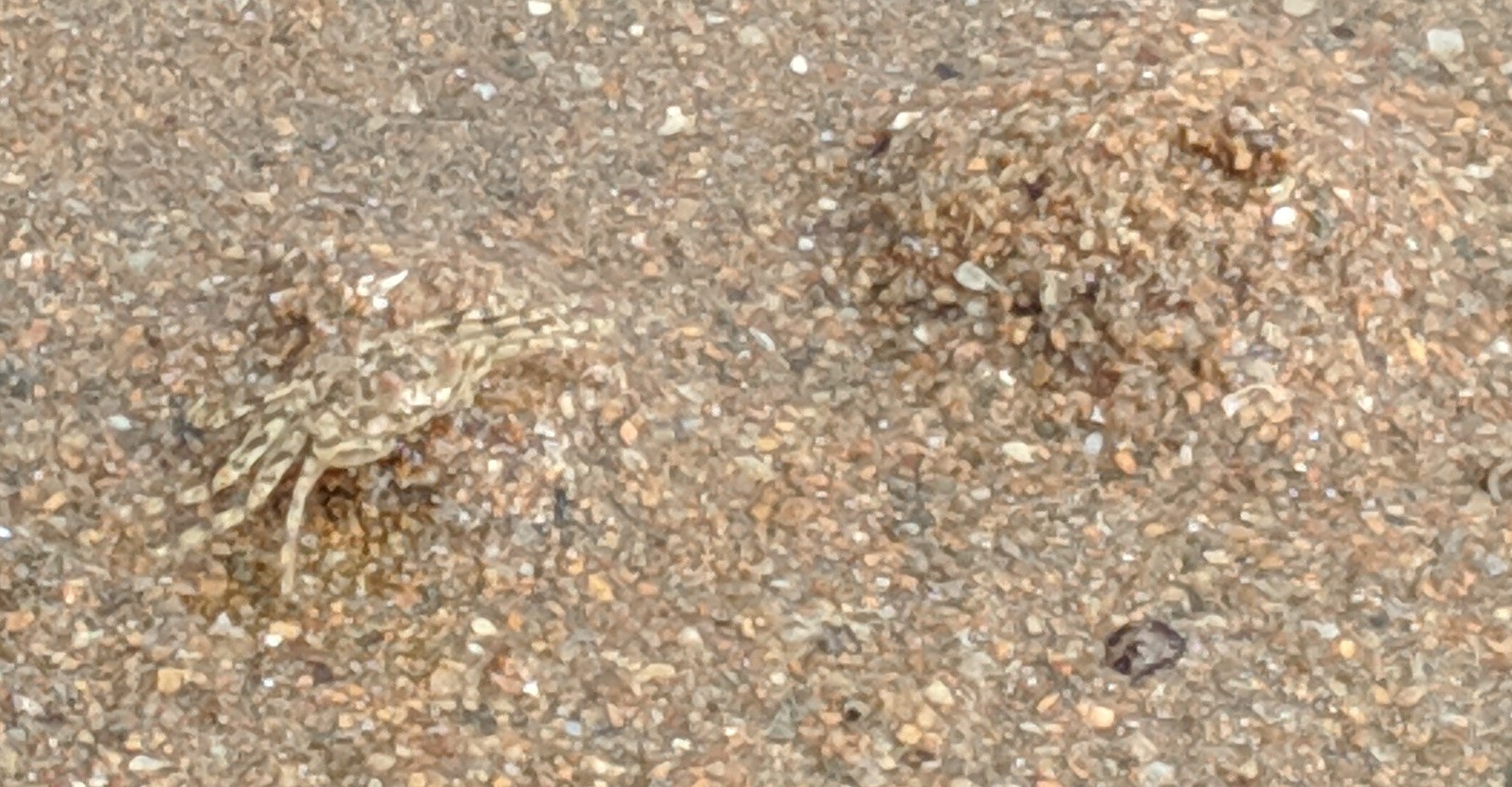
Denizens of the beach included super-fast, nigh-invisible crabs. In the following picture, the crab is on the left. At top right is a mound with a hole in it, probably the entrance to a crab palace:
Jonathan was there too. The presence of Jonathan and his mates constitutes good cause for the crab’s camouflage and speed:
The drive to the beach takes you along a dirt road, crossed by gullies and fords, surrounded by dense Australian bush. A four-wheel drive is useful. Here I am, your dauntless travel guide, surveying a pretty scene along the route:
Mangroves decorated a creek that crossed the road, where we spotted some pretty fish and crabs (not in the photo):
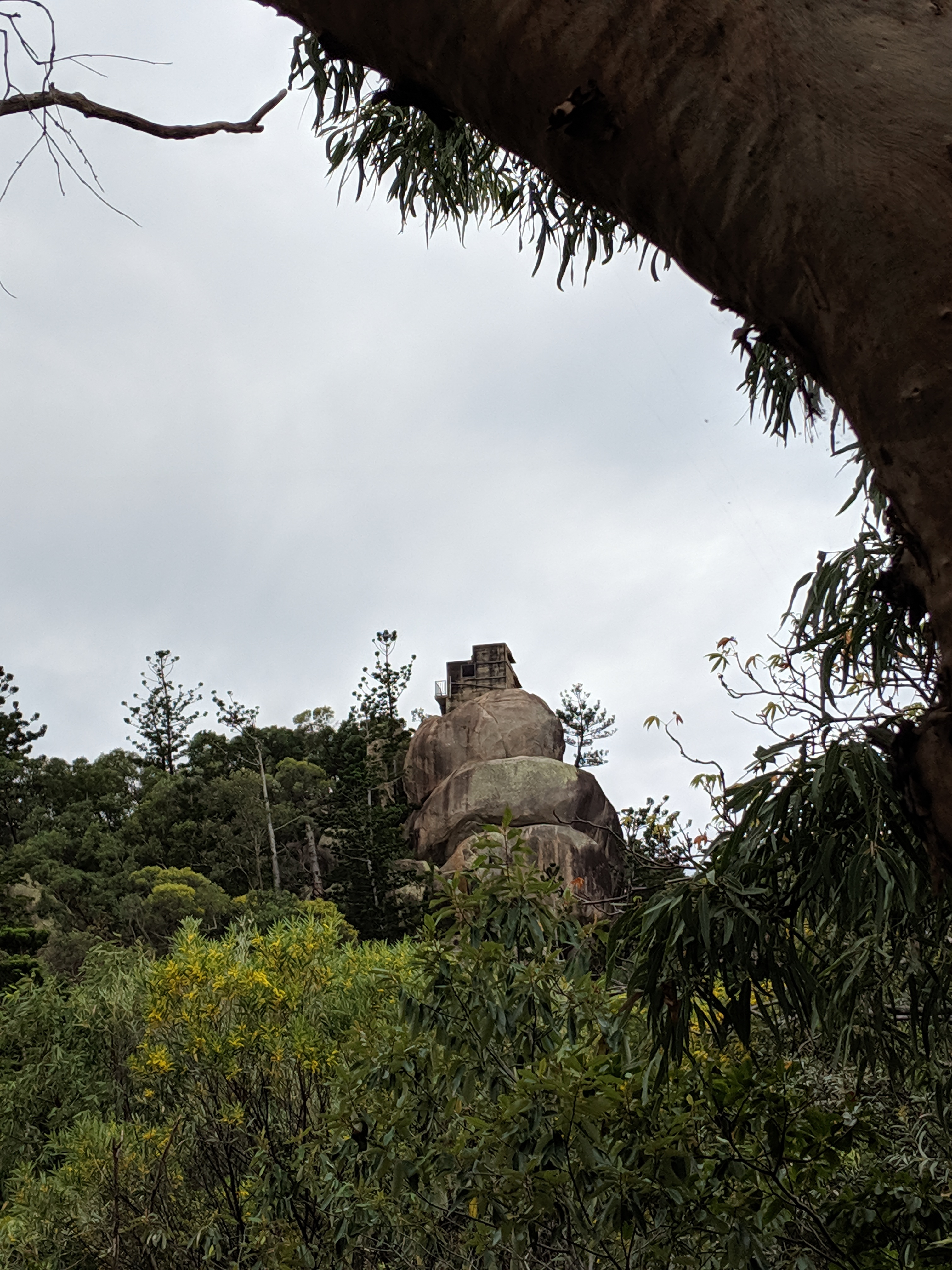
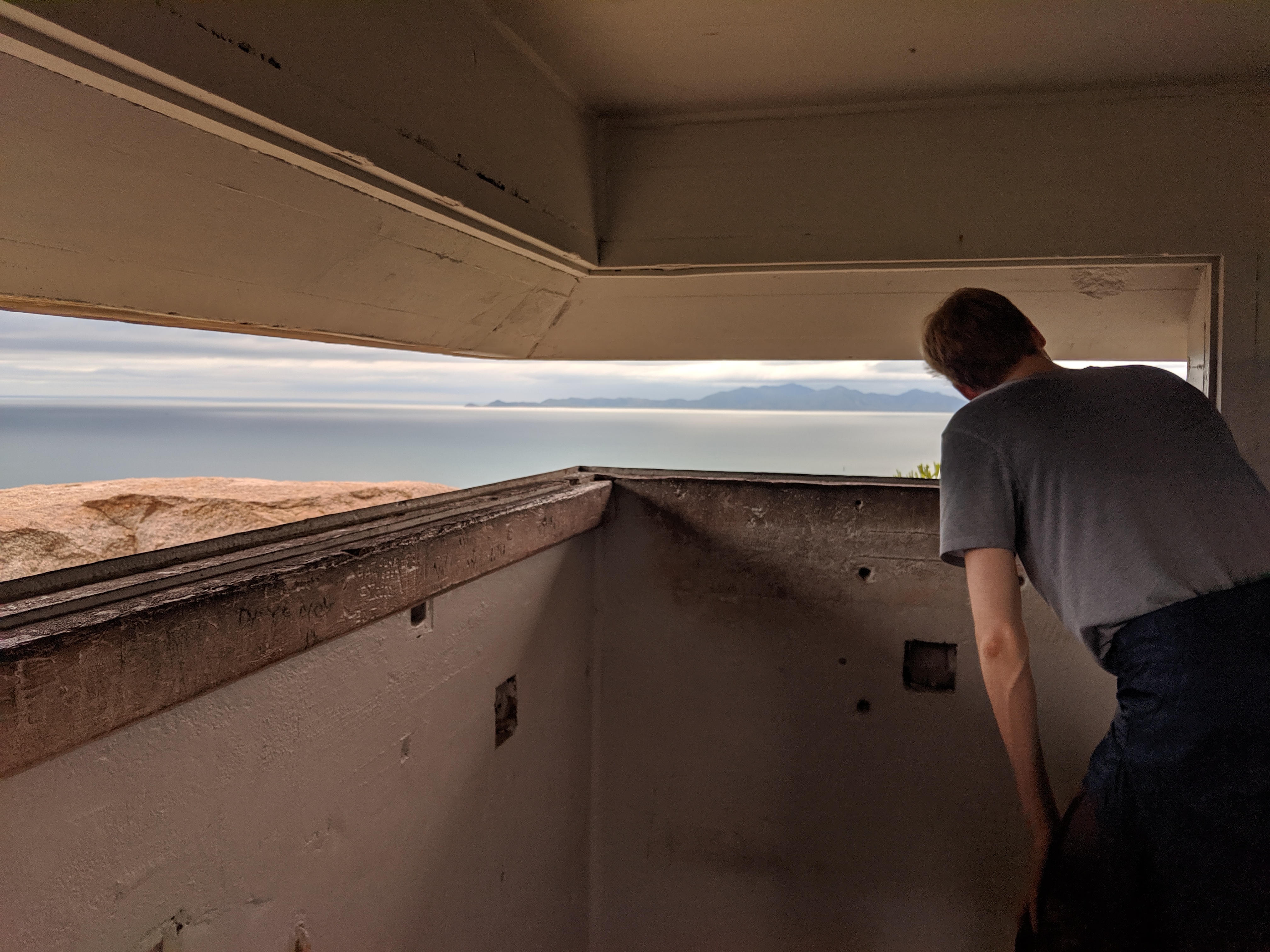
On the other side of the island, to the north east, a World War II fort and its out houses are valiantly fighting off the encroaching bush. Click this image to zoom in:
To get to the fort, the TC followed a winding bush track. The path is about four kilometres for the round trip, and takes about two hours. I stayed comfortably in my book in her bag, ready to hop out for each view and photo opportunity.
Here’s the fort’s lookout building seen from another angle as we approached the fort complex:
To get to the lookout, we climbed a series of stone steps and metal ladders. The TC did a good job, even hopping up onto the final platform inside the top room to see the view through the plane/ship-spotters slot in the wall. This shot shows an equally bold fellow traveller gazing out through the slot:
The views from the walk up to the fort had the TC ooh-ing and aah-ing:
Arthur Bay looks enticing from above. We didn’t get the opportunity to visit it on this trip:
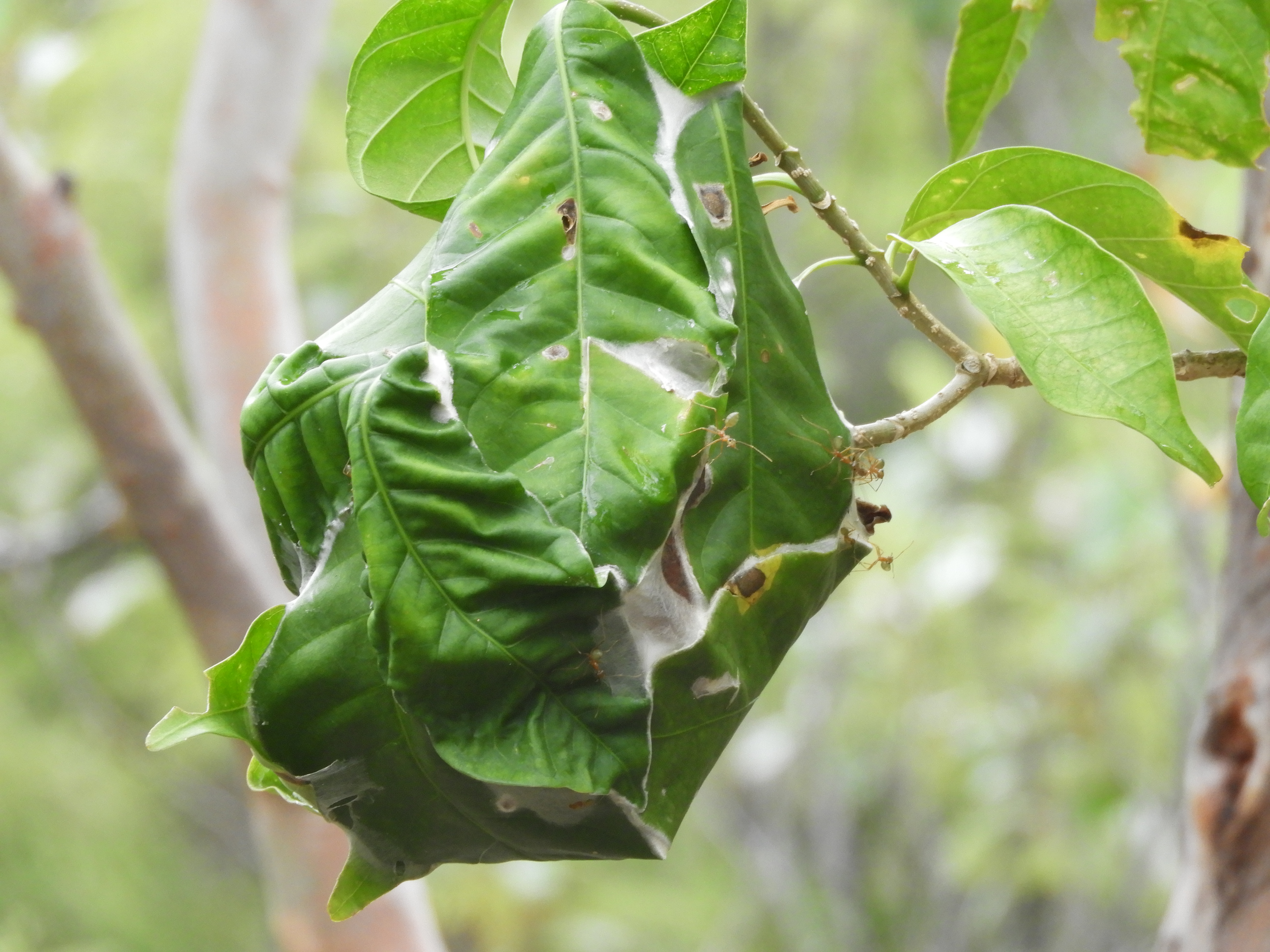
This worm was intrigued to note possible signs of activity by fellow worms. On various parts of Magnetic Island, including the fort walk, we saw bunches of leaves glued together with web:
Could this be the work of a caterpillar like that of the fall webworm or tent caterpillar, which create nests of silk? Looking closer, we noticed ants on the leaf bunches. I’ve since done some research and discovered that these are green tree ants, a type of weaver ant. The adult ants gather in large numbers and pull the leaves together. Then they bring an ant larva, which produces the web to hold the leaves in place:
Below is a slightly fuzzy zoomed-in section of the photo, where you can see a few of the ants:
The TC was curious and leaned in close to examine one of the leaf bunches, as did her two companions. Seconds later, they noticed lines of ants moving down the tree trunk and up their legs. They all jumped away and started stamping their feet in an effort to dislodge the ants. This curious but typical reaction is known by locals as the green ant dance. Poor TC, she does have a knack for getting herself into a pickle.
The guide books promised that we’d see wild koala on the walk up to the fort, and we did. It was as if someone put a cuddly toy up in a tree:
Mostly these wise creatures sleep all day, but this one needed to shift position:
Also interesting, though perhaps not as cuddly, was this deep red mushroom on the side of the walking track:
Another aspect of Magnetic Island that had the TC ooh-ing and aah-ing was the birdlife. For obvious reasons, this worm is not that fond of birds (Jonathan excepted). As a teaser for readers who’re keen on our feathered fiends, below is a clump of Rainbow Bee-eaters:
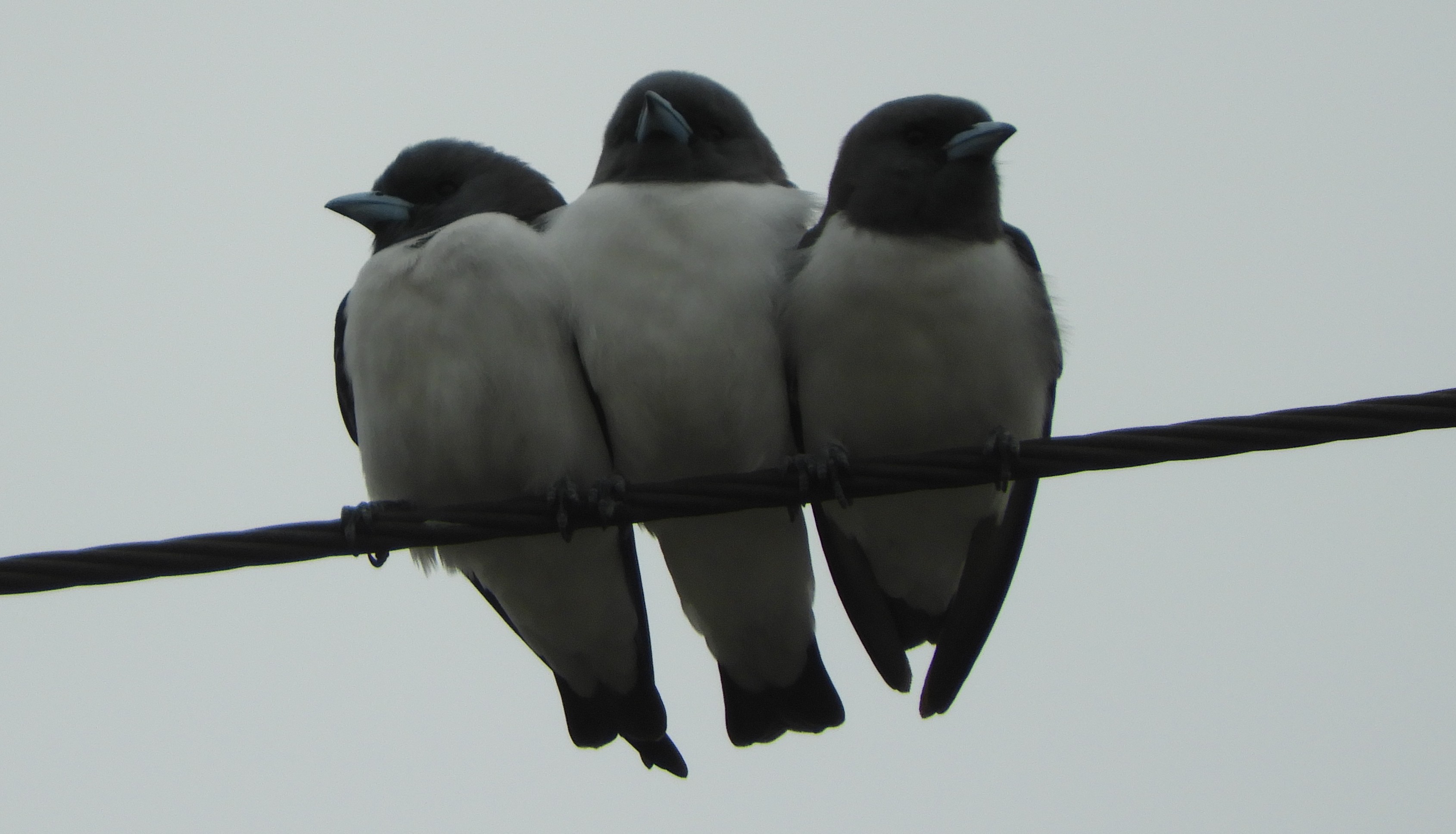
They say trouble comes in threes. Here’s another bird clump, this time of Woodswallows:
This is the blog of Mark Wordsworm, the travelling worm. I’m a 25-year-old bookmark (I haven’t aged at all since I first wrote this introduction) and I proudly boast my own Hallmark serial number, 95 HBM 80-1. You’ll probably want to read all about me and my Travelling Companion (the TC).
Today’s travel notes
Me and the TC find ourselves in Denver, Colorado, city of fast-changing weather and friendly folks.
The book I’m in
Record of a Spaceborn Few, book 3 in the Wayfarers series by Becky Chambers. I’ve just extracted myself from this book, but I feel as if I’m still cosily tucked between its leaves. Figuratively speaking, that is, since the TC read the book on her Kindle. Becky Chambers draws the reader a warm picture of life among family, friends, and colleagues, where the individuals concerned are sapient beings of various types and in various situations. Highly recommended.
The photos
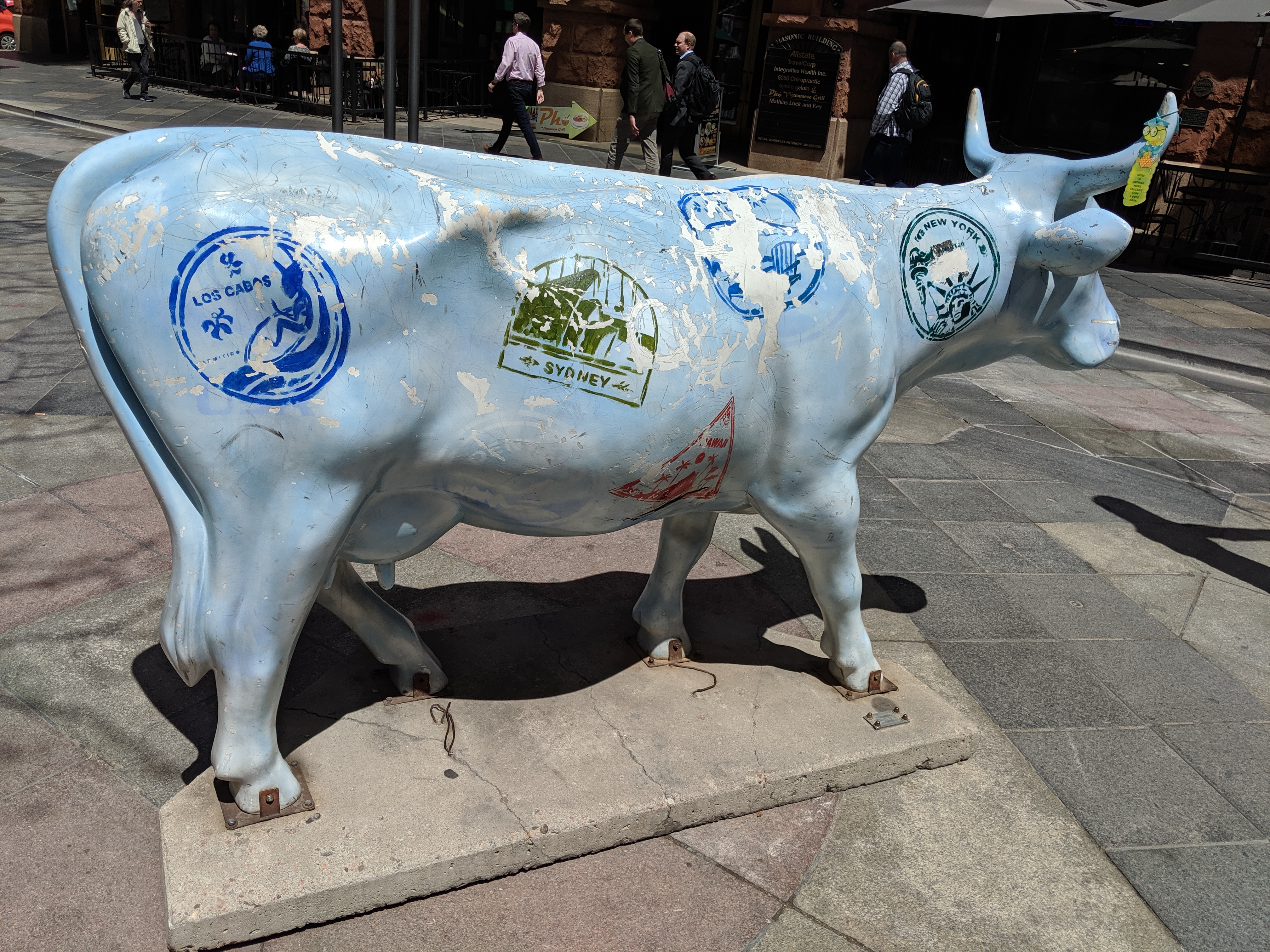
Me hitching a ride on one of the cows that hang out on Denver’s 16th Street Mall:
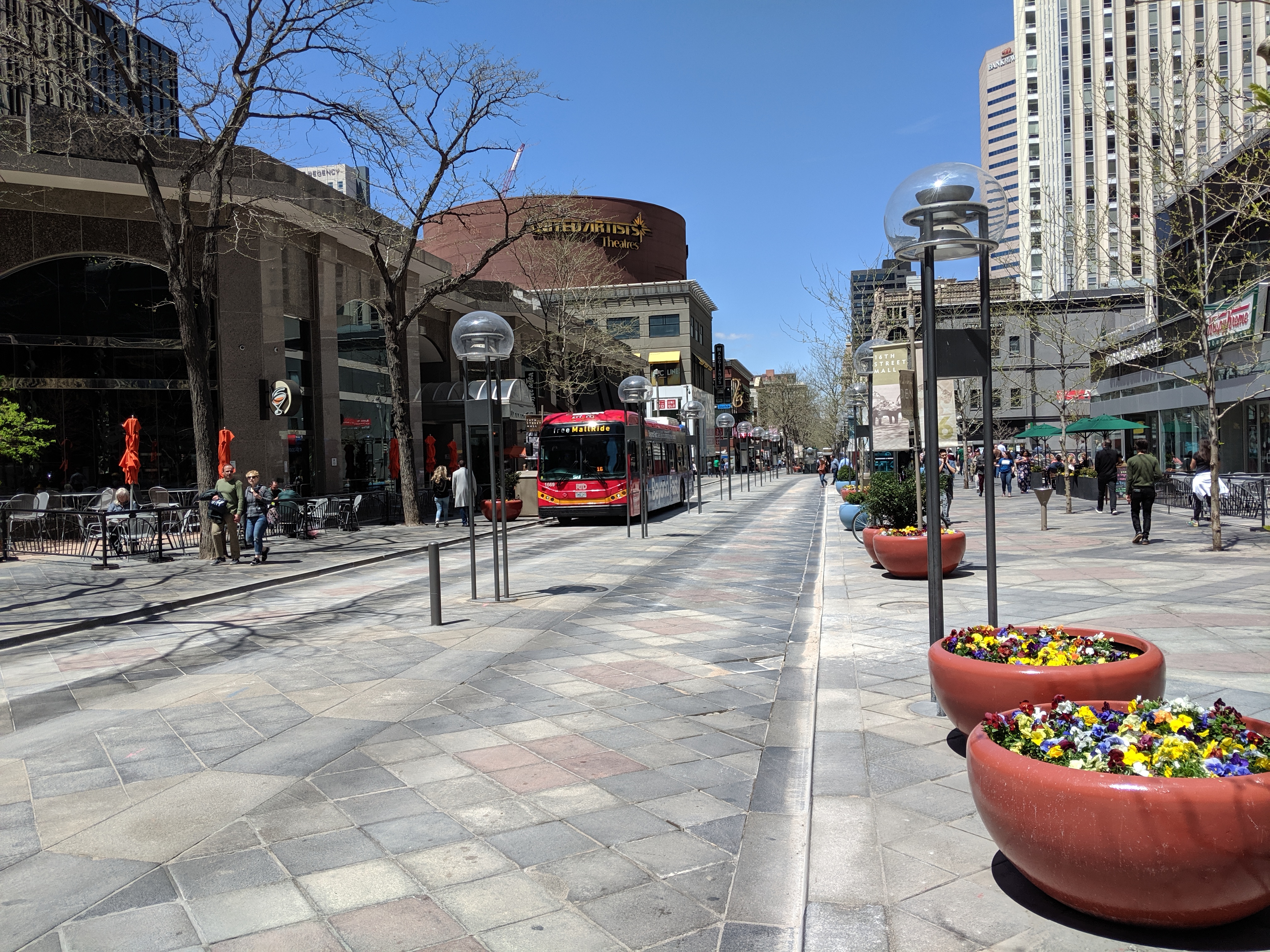
The 16th Street Mall is a pedestrian walkway that runs for about a mile through downtown Denver. It was designed by an architect named I.M. Pei. This shot of the mall shows one of the shuttle buses that offer free rides from one end of the mall to the other:
The road is paved in a pattern of red, white and gray granite slabs. If you hover high above them, evidently the pattern reminds you of the skin of a diamondback rattlesnake. Hovering is not a talent of your faithful worm, so I missed this resemblance.
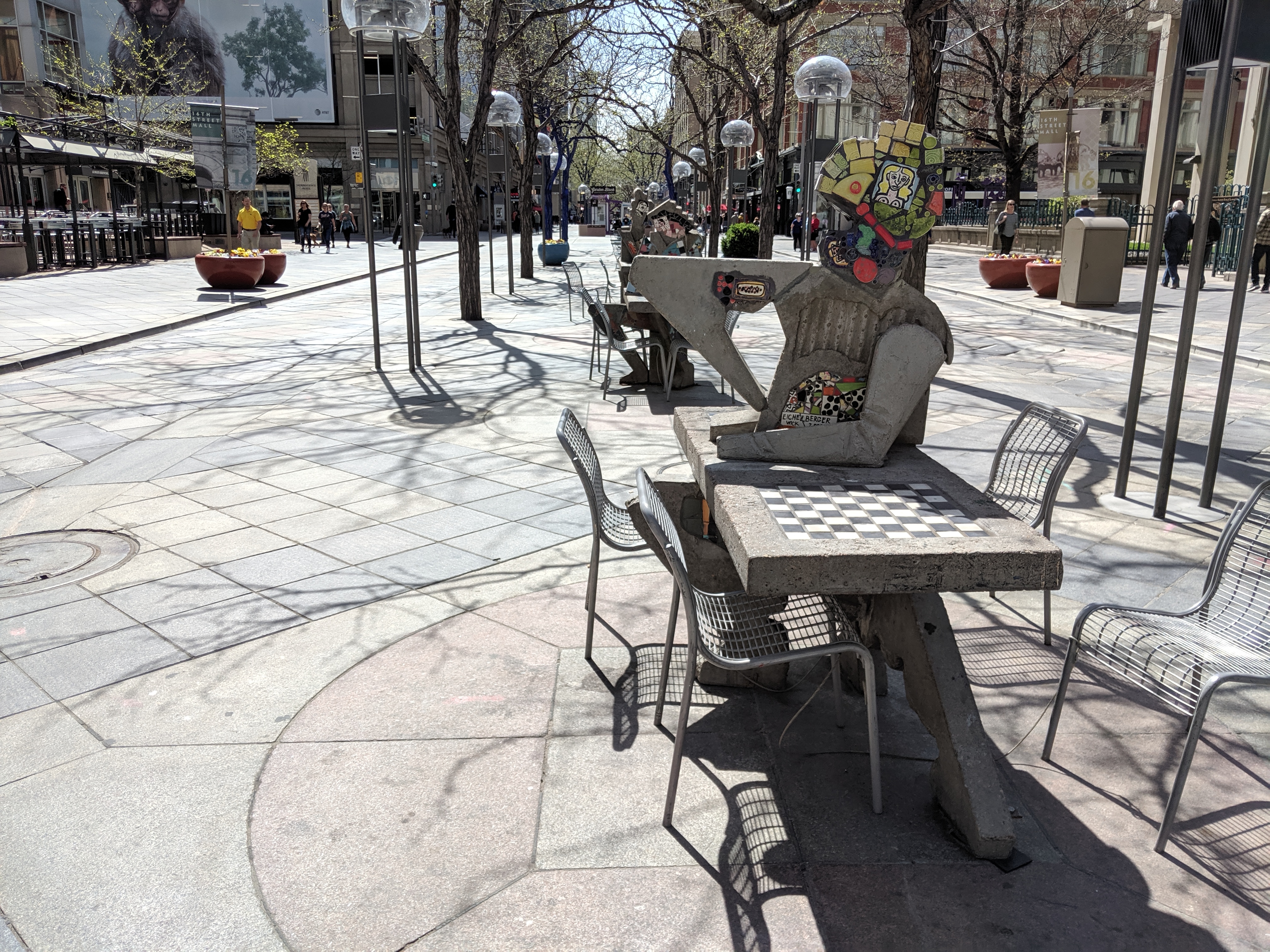
An innovative design for a table, on the 16th Street Mall in Denver. Even when there’s no-one sitting at the bench, it looks like a happy place to be:
Another cow on the mall. When I got up close, this one whispered to me the name of my home town. Nice beast!
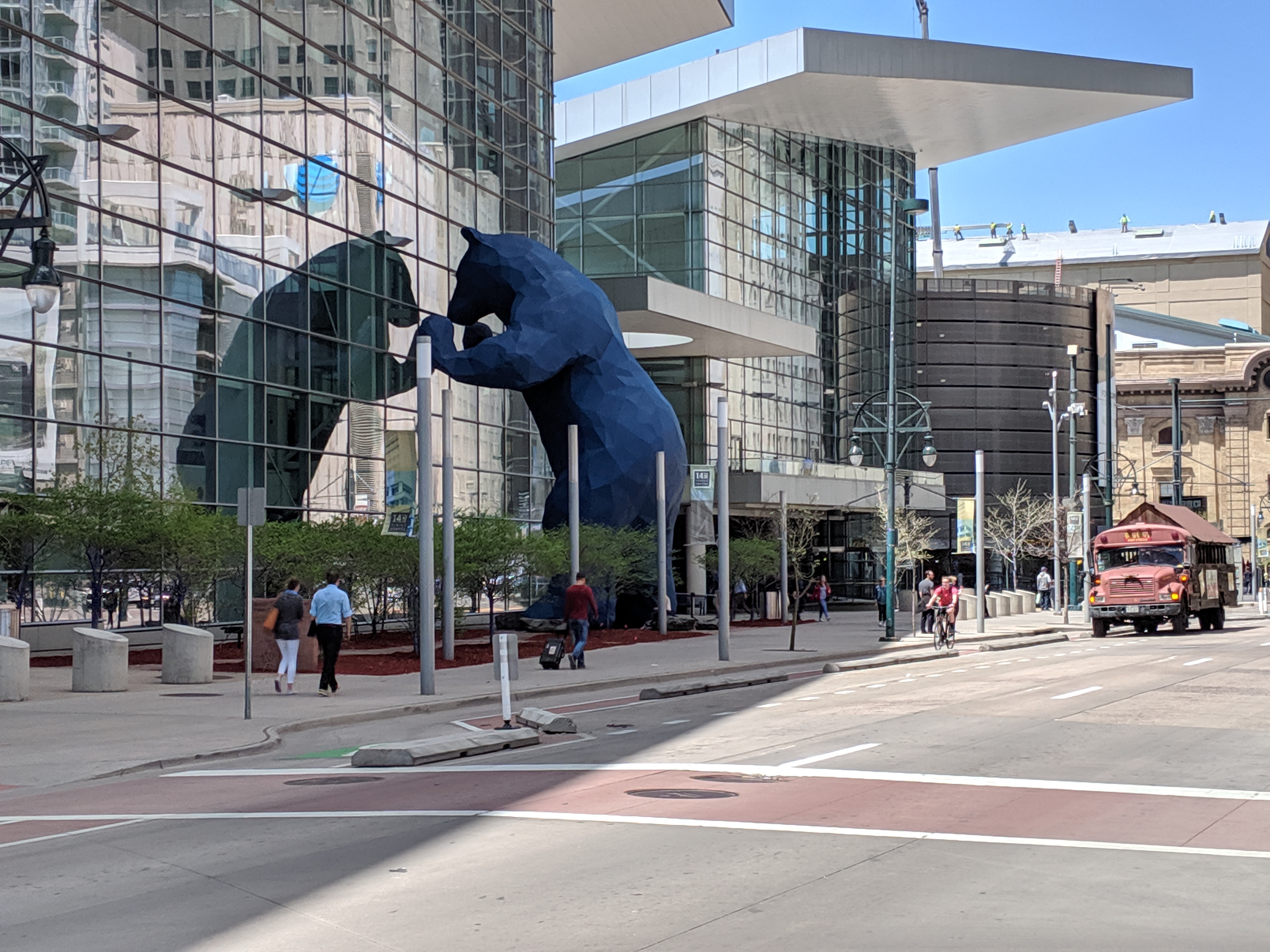
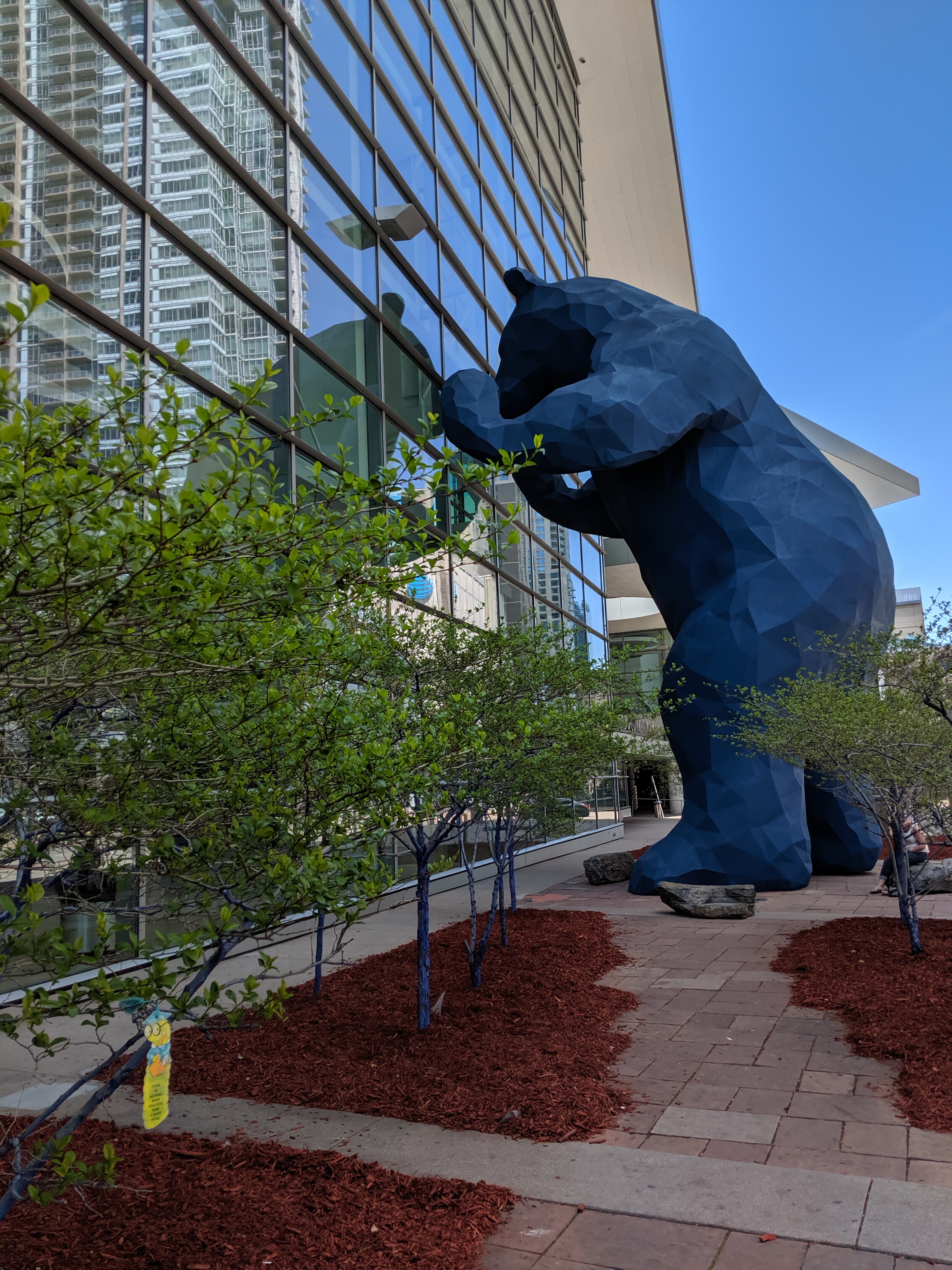
Just off the mall is the Colorado Convention Center, with this cute little bear peering through the window:
The blue bear, created by Lawrence Argent, is 40 feet high. Not so small, really, when you compare it to my own height. You should, however, take into account that I’m practically-speaking two-dimensional. Height has a different meaning in my dimensions. Here’s a pic of me getting reasonably close to the bear. For safety’s sake I stayed under the cover of a tree:
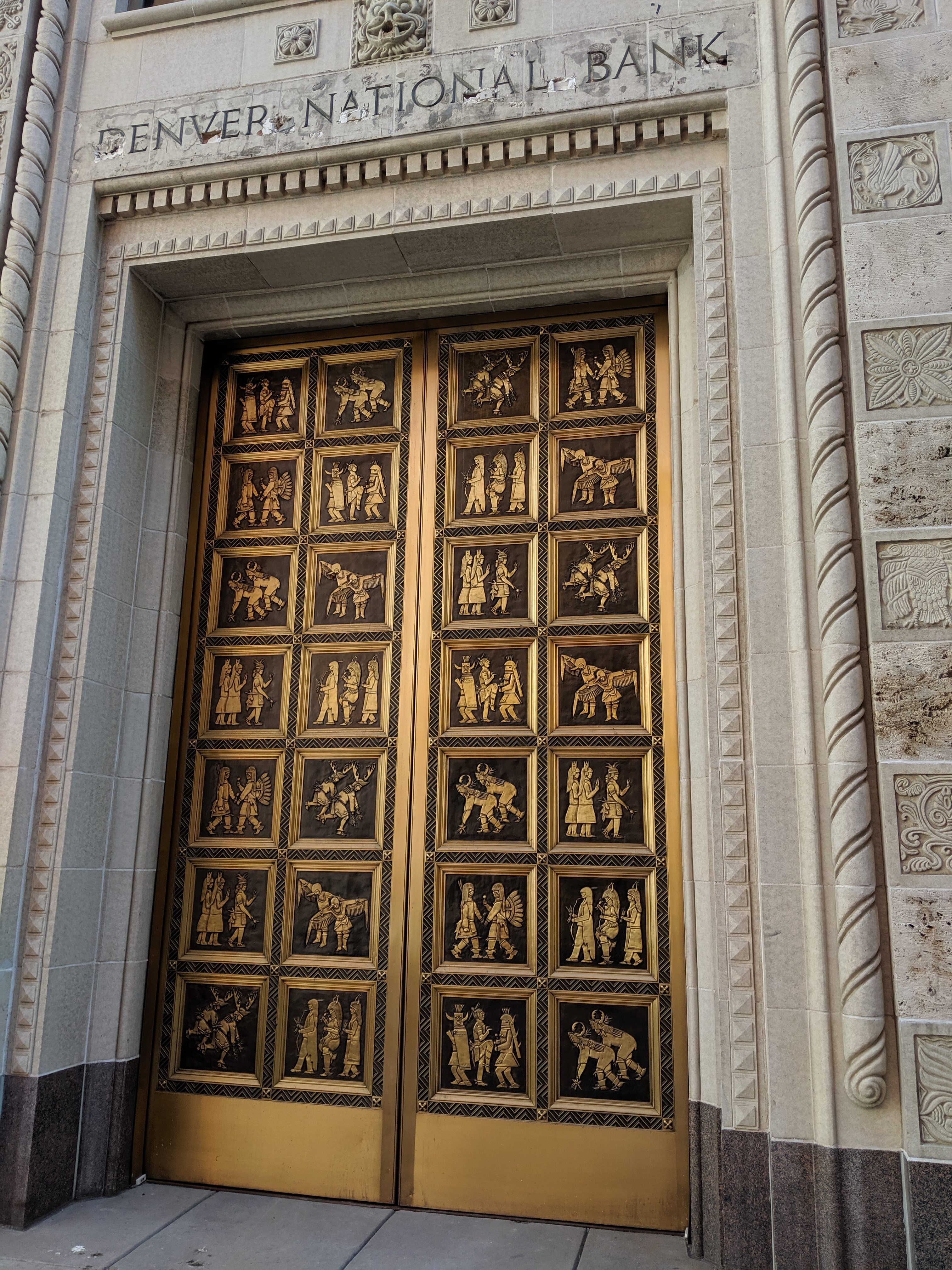
A couple of banks on 17th Street caught my attention. This is the door of the Denver National Bank:
The imposing building of the Colorado National Bank:
Union Station adds colour and structure to a bright blue sky:
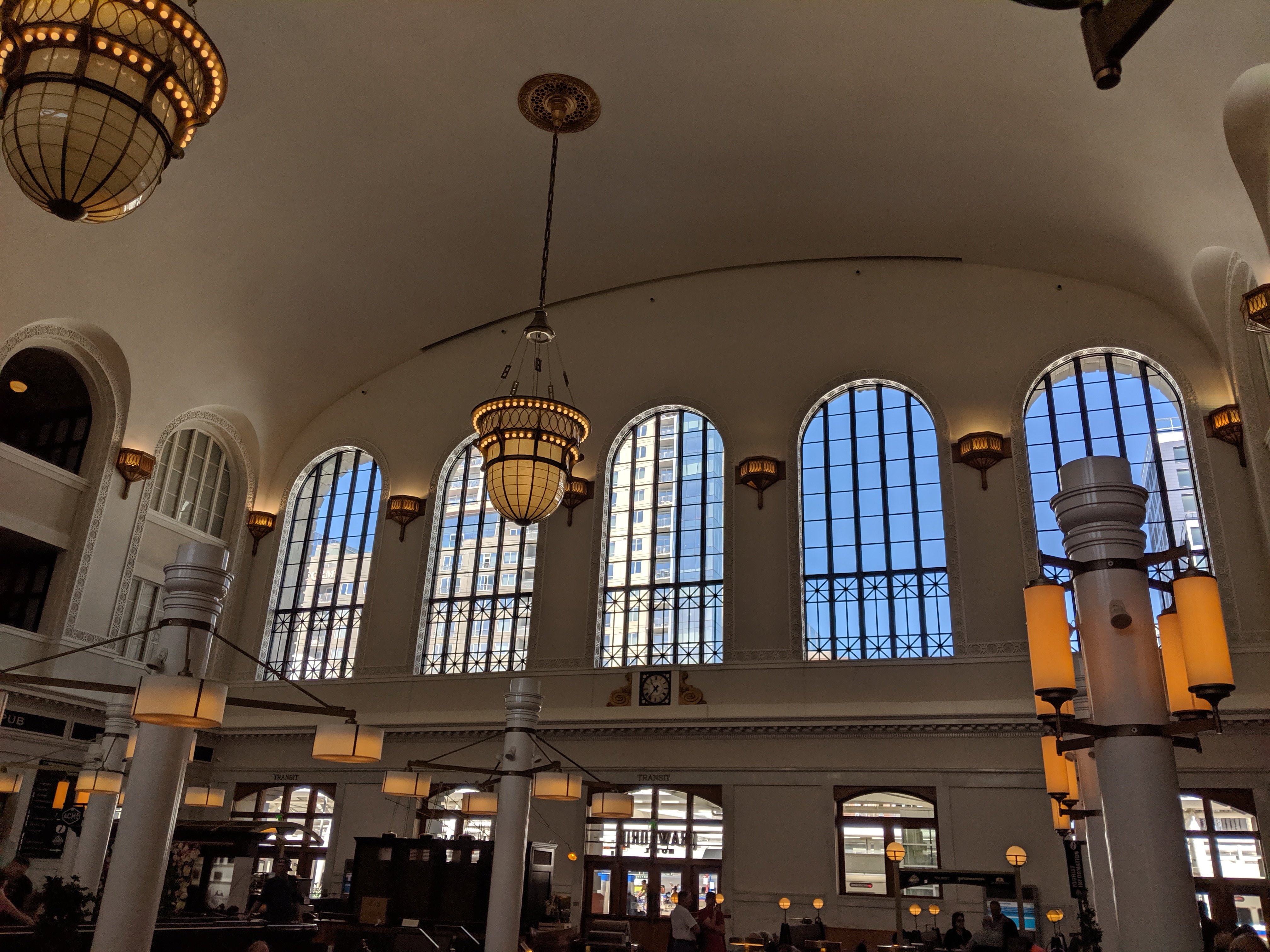
Inside Union Station:
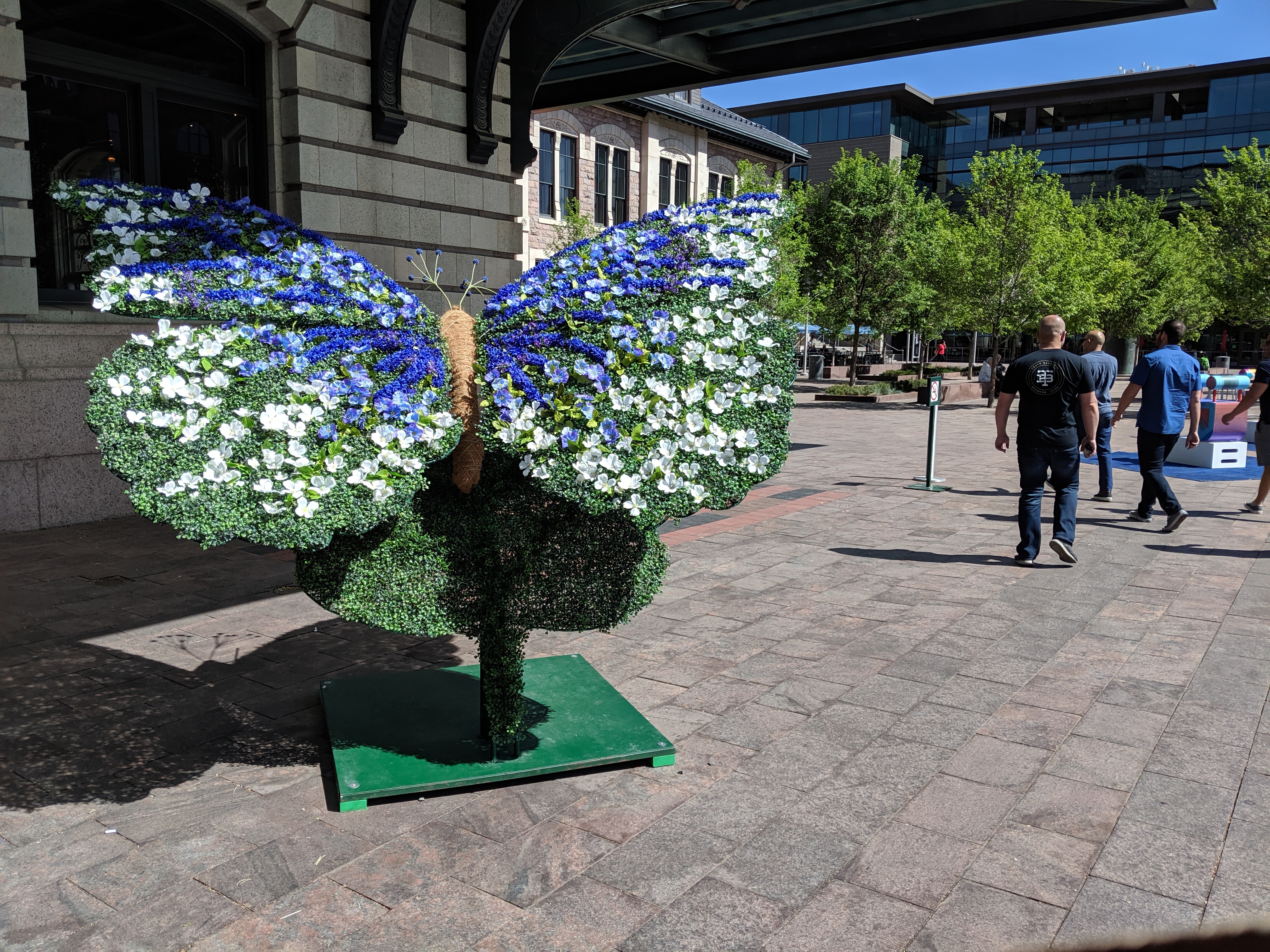
A beauteous butterfly at the door to the station. Your faithful worm would have liked to meet the caterpillar that formed this creature:
This is the blog of Mark Wordsworm, the travelling worm. I’m a 25-year-old bookmark (I haven’t aged at all since I first wrote this introduction) and I proudly boast my own Hallmark serial number, 95 HBM 80-1. You’ll probably want to read all about me and my Travelling Companion (the TC).
Today’s travel notes
Me and the TC strolled down to Gas Works Park, on the banks of Lake Union in Seattle.
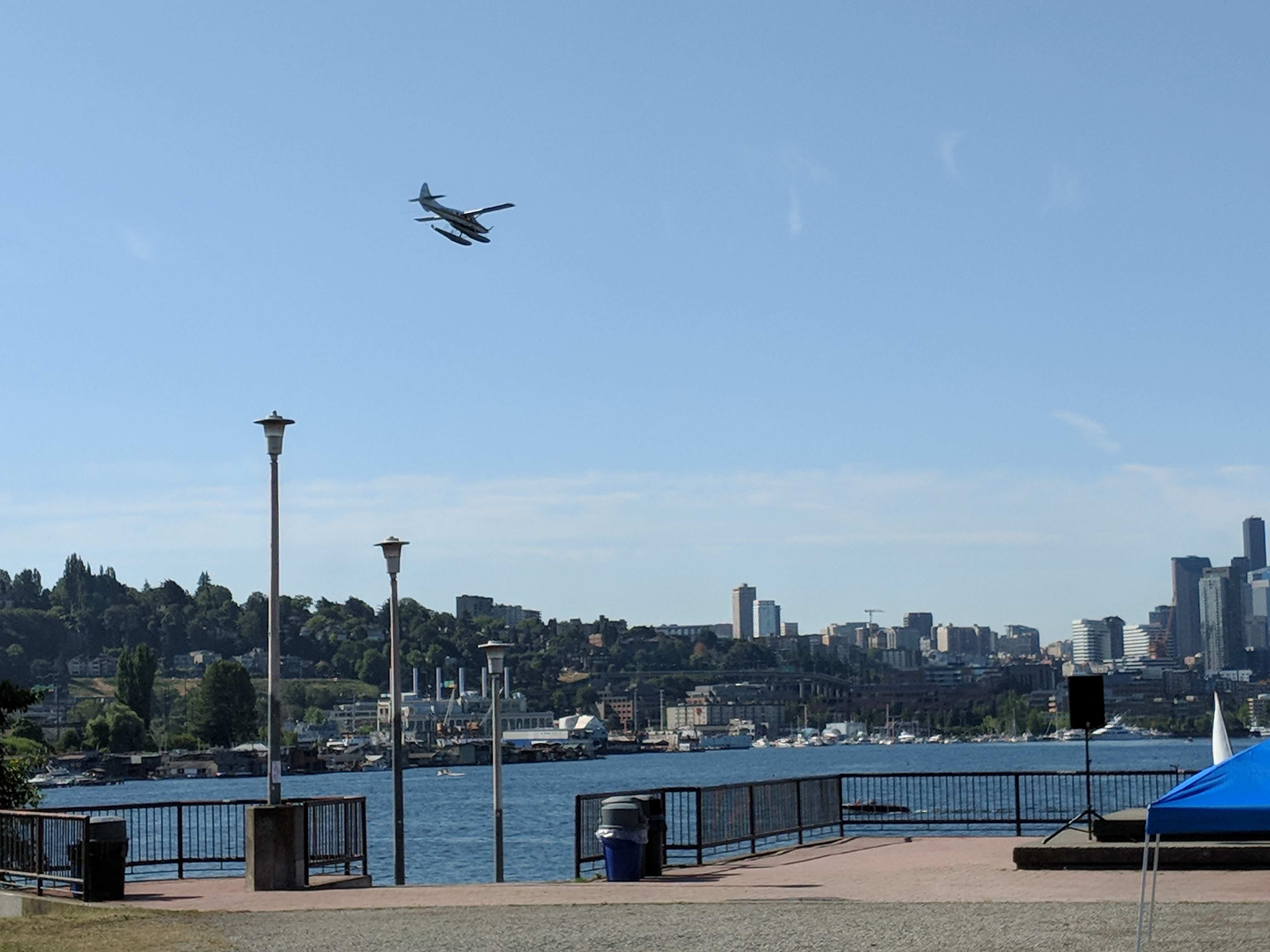
Crows cawing, swifts swooping, seaplanes buzzing overhead: Gas Works Park is a scene of calm and beauty with a touch of surreality. In the depths of the park, surrounded by giant tanks and cranks, we met a metaphysical mastermind and chatted about the intricate, delicate state of our currently accepted reality, bendable by artificial intelligence and by the super intelligence granted to some rare individuals.
The book I’m in
Never Go Back, by Robert Goddard. Two hapless RAF veterans find themselves mixed up in murder and mayhem, tied up in a nice bit of historical cold war skulduggery.
The photos
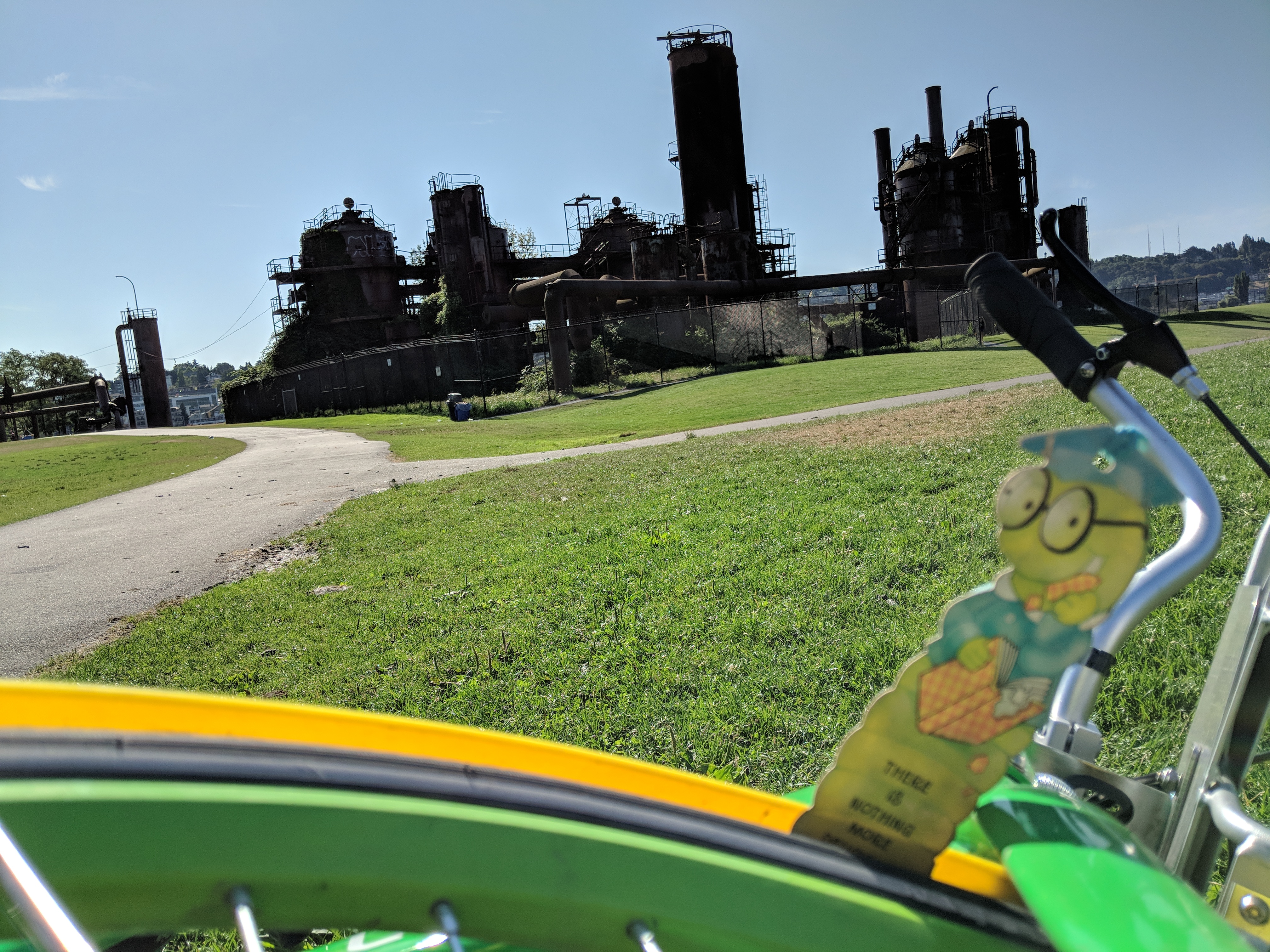
Me taking advantage of an abandoned bicycle for a quick pic on the approach to the park:
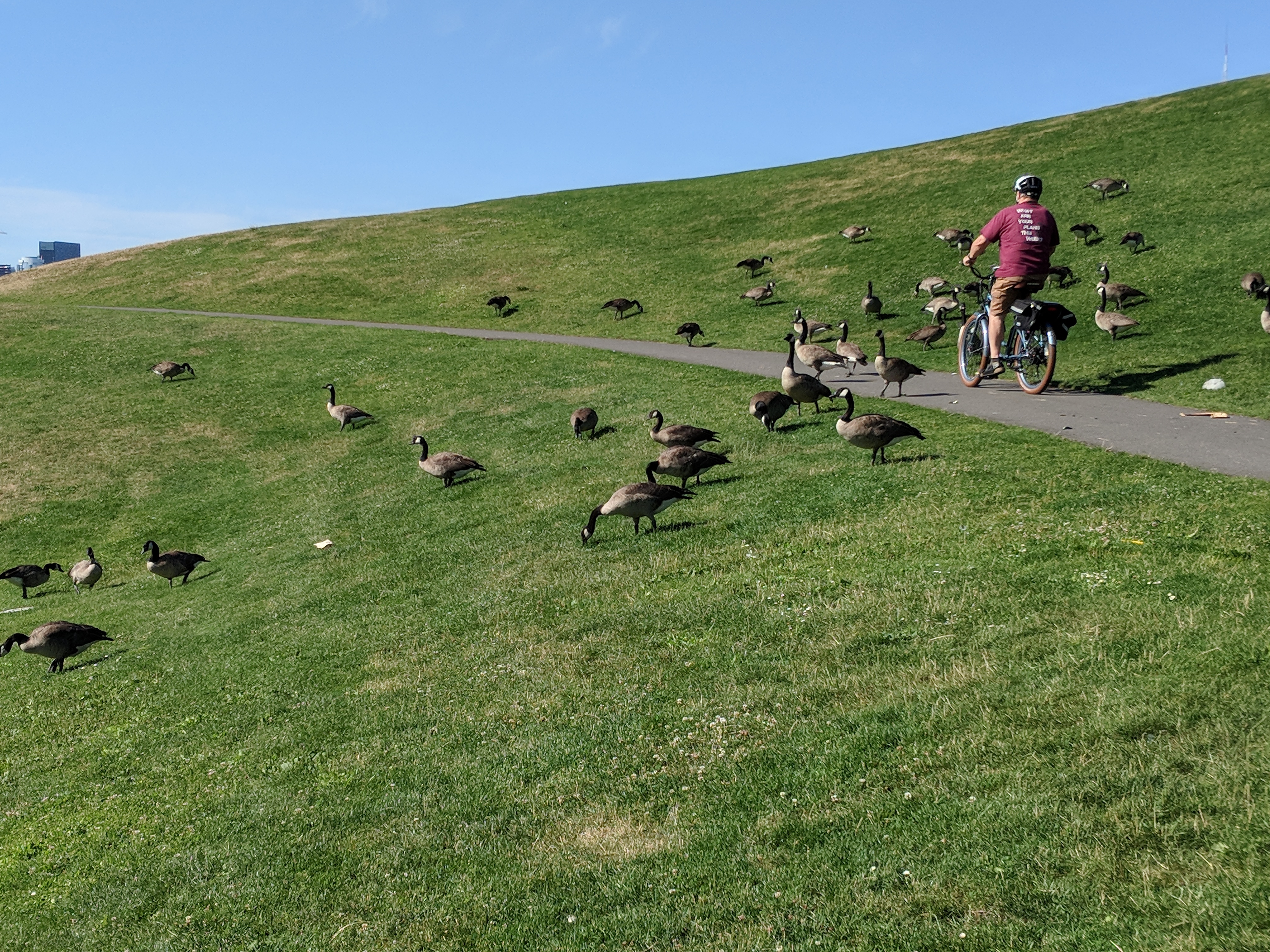
Geese abound on the grassy slopes. This cyclist took care to move slowly through the gaggle:
You can rely on a goose to have a good grasp on reality:
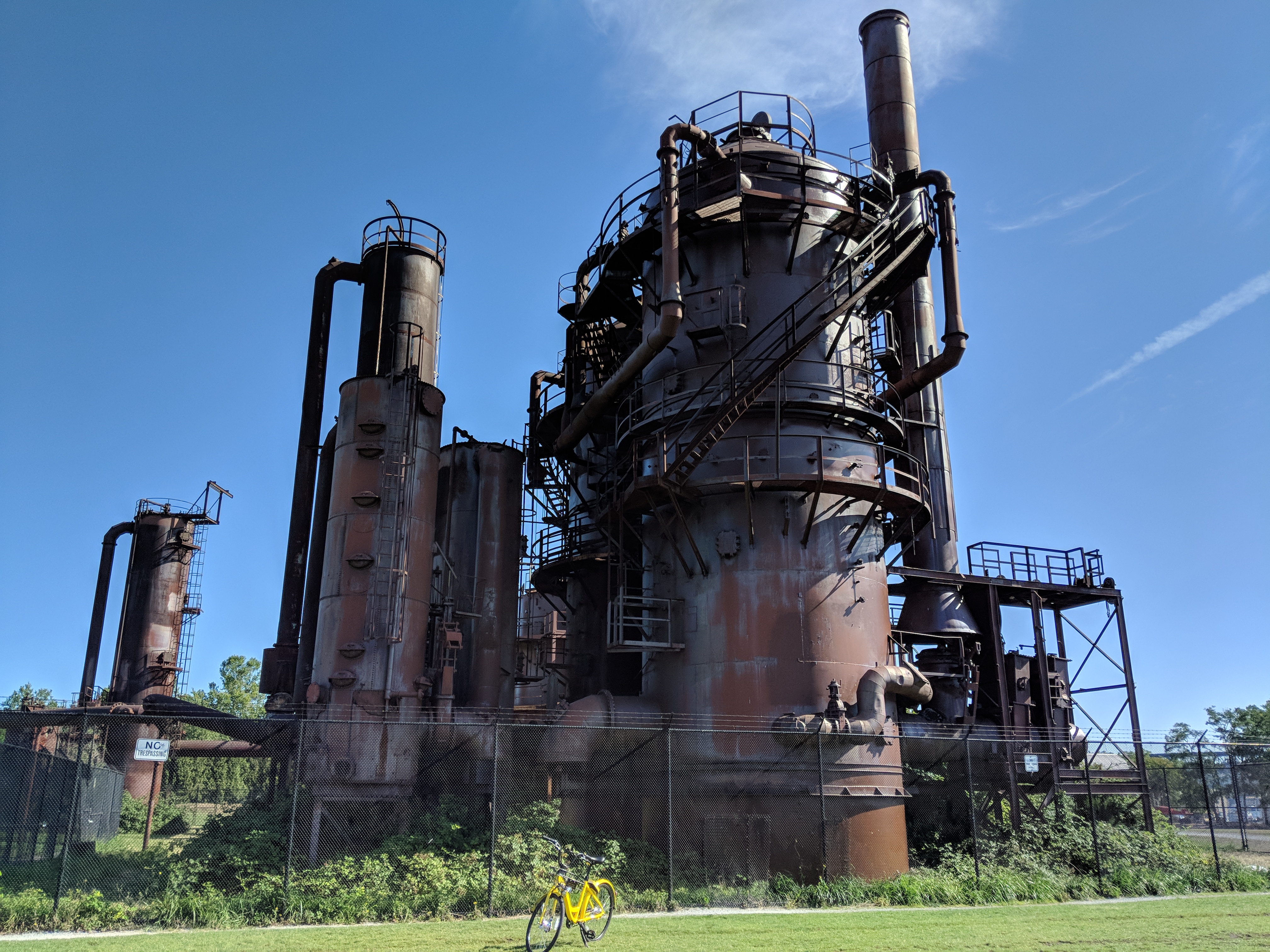
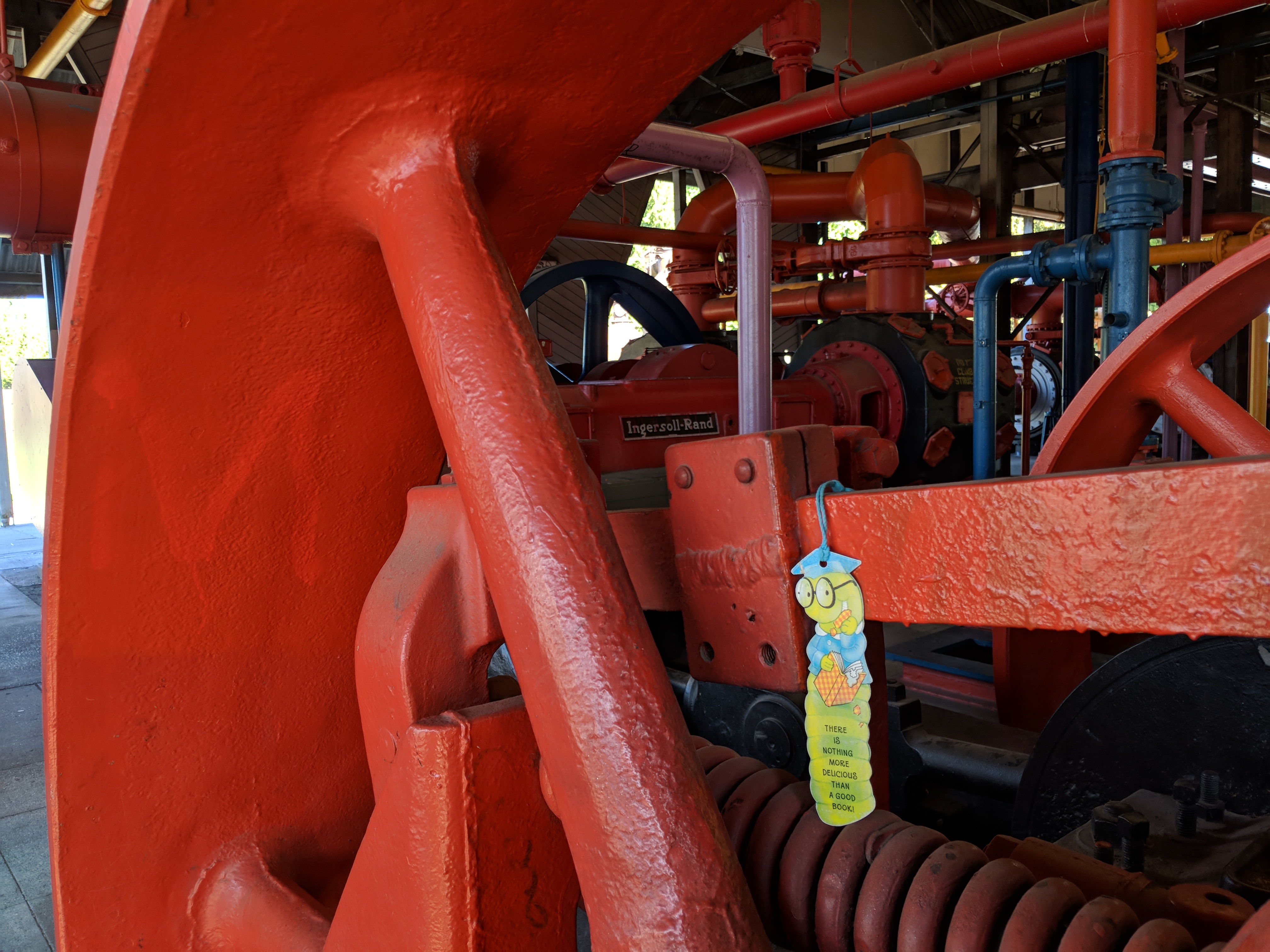
A bright bicycle is dwarfed by the tanks, staircases, platforms, and chimneys of the old gas works:
For 50 years, from 1906 to 1956, a coal gasification plant occupied this piece of land. The machinery was used to convert coal into gas, which the citizens of Seattle used to power their homes: lights, cooking, refrigeration, and heating.
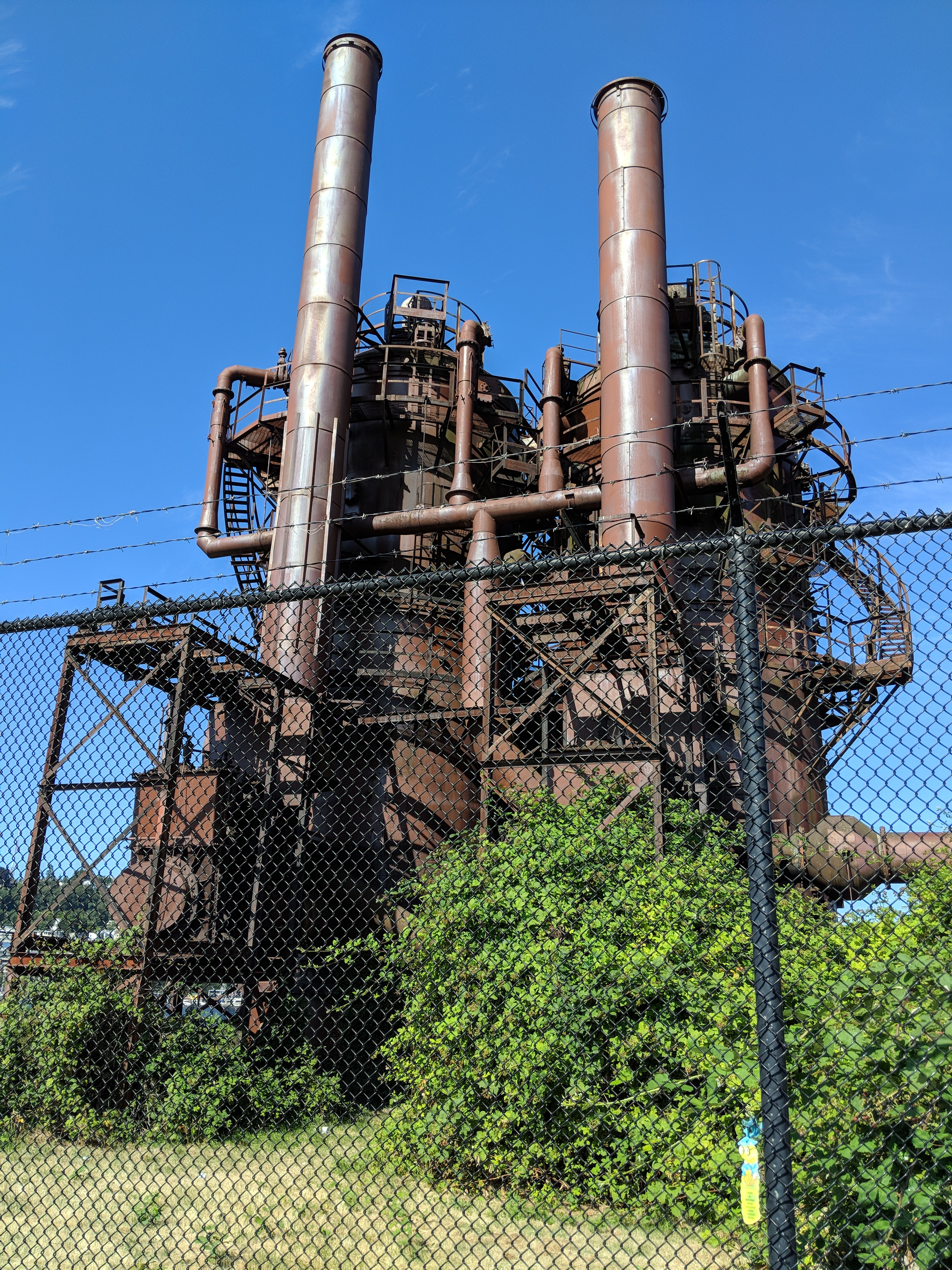
Now much of the machinery is fenced off. Look closely at the photo below for another glimpse of me:
Entangled intricacies of piping and platforms:
People cavort beneath the pipes:
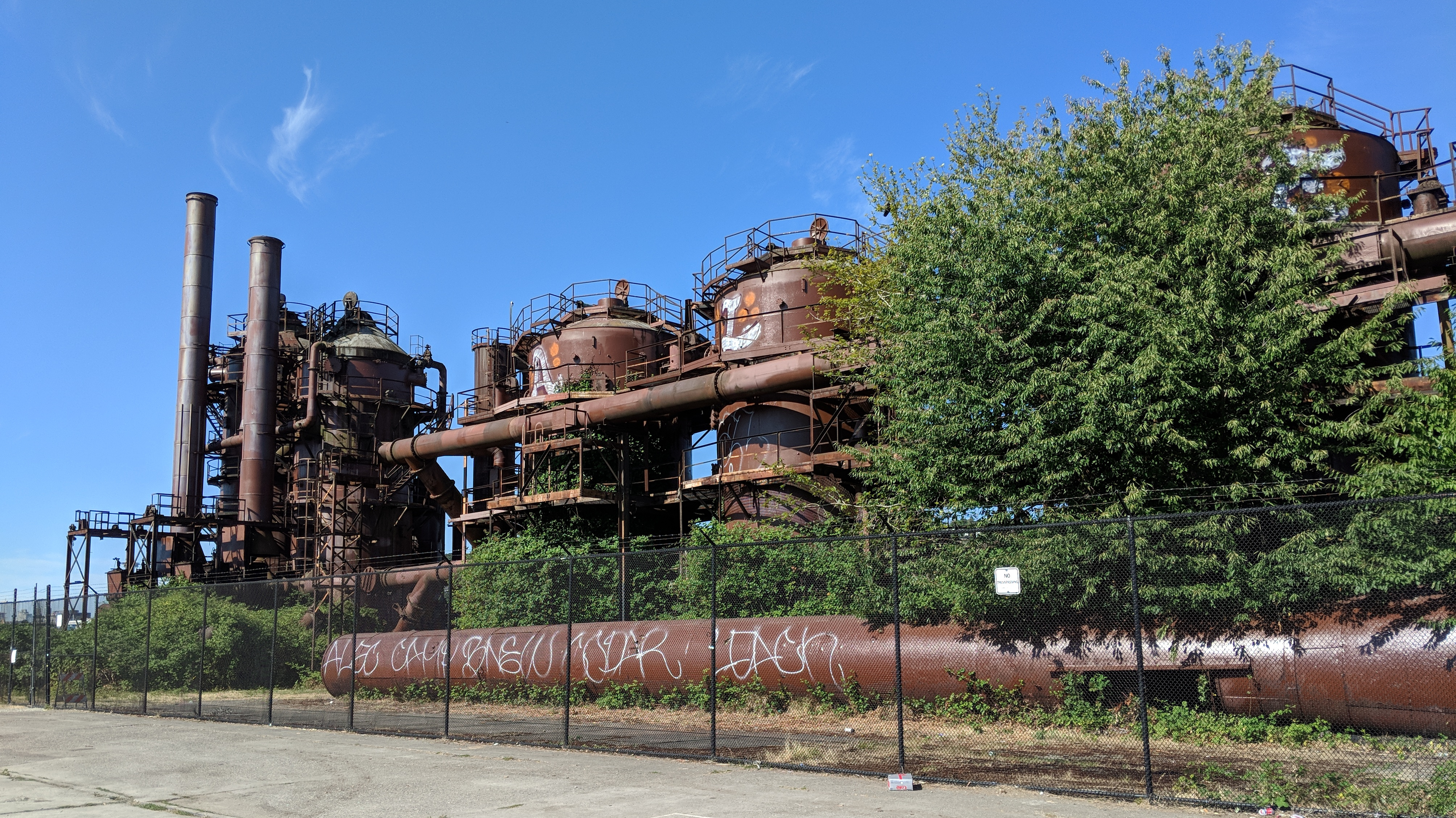
Graffiti has its say:
Some bits and bobs of the old gasification plant have been brightly painted and put on display:
While me and the TC were taking the above photo, we met the person who’d founded the Church of Craig. He’d also hobnobbed with metaphysical geniuses at the centre of the universe (in Seattle that’s a real thing) and found the secret way into the fenced-off playground at the old gas works. The TC and me now belong to an elite group of twelve who know the entrance. To gain access, you have to suspend your belief in the commonly accepted reality.
Shadows stretch out from the giant tanks while Seattle basks in the summer sun:
This is the blog of Mark Wordsworm, the travelling worm. I’m a 25-year-old bookmark (I haven’t aged at all since I first wrote this introduction) and I proudly boast my own Hallmark serial number, 95 HBM 80-1. You’ll probably want to read all about me and my Travelling Companion (the TC).
Today’s travel notes
Me and the TC are enjoying the superb weather of summertime Seattle. We’ve encountered some interesting folk, including a triffid (read my previous post), Sal the Salmon (photos below), and a metaphysical mastermind (coming up in my next post).
Yesterday we trickled along to the Ballard Locks, north west of Seattle. The locks are also known as the Hiram M. Chittenden Locks, named after the engineer who led the first phase of construction starting in 1911.
The book I’m in
Never Go Back, by Robert Goddard. Two hapless RAF veterans find themselves mixed up in murder and mayhem, tied up in a nice bit of historical cold war skulduggery.
The photos
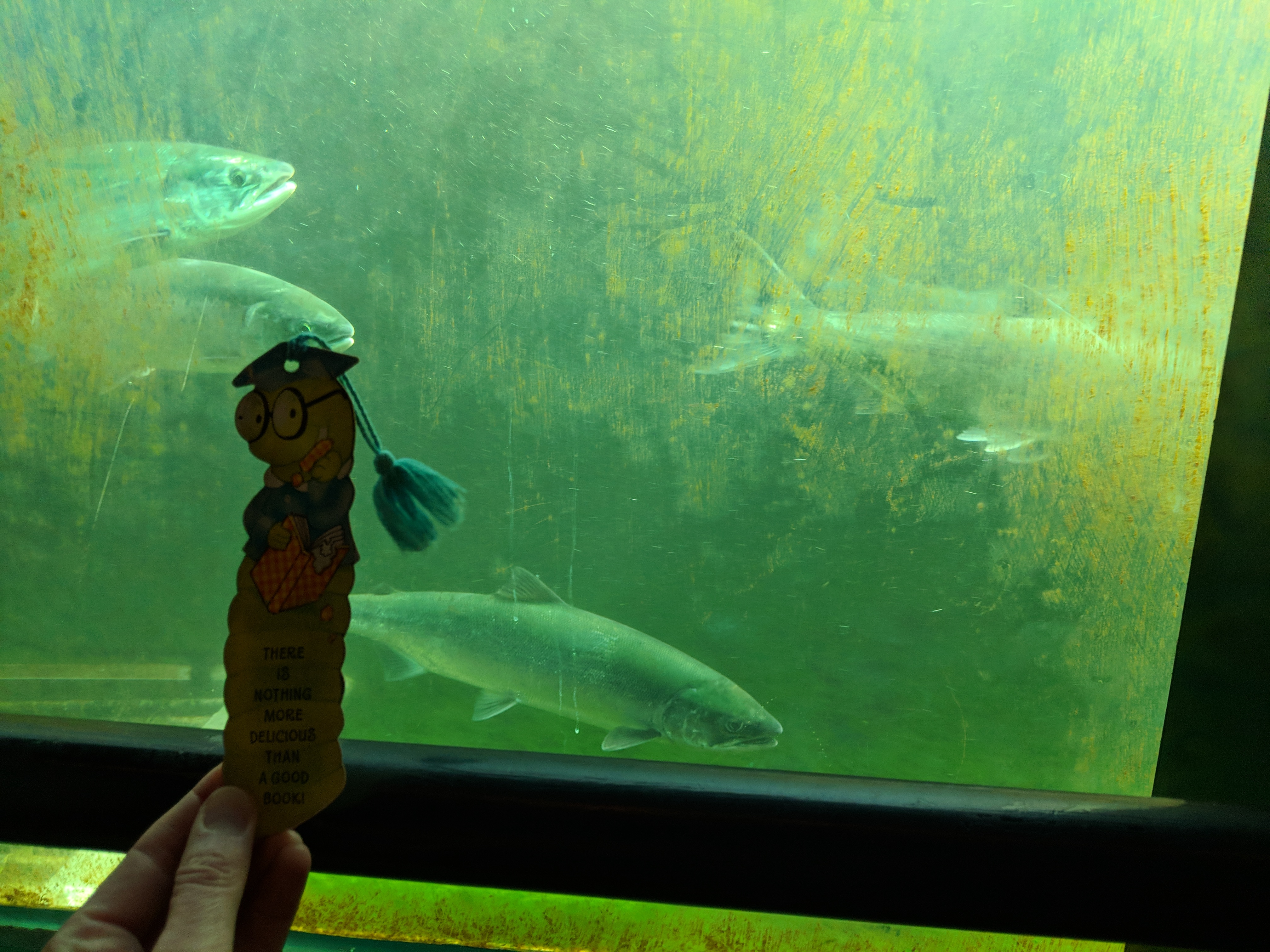
Me with Sal the Sockeye Salmon, at the fish ladder built alongside the Ballard Locks. Sal and his mates are taking it easy in the deep waters before tackling the next jump up the fish ladder:
The fish ladder is built so that you can see it from above and also go underground to view the fish through glass windows in the walls. The Sockeye Salmon are making their run at the moment, but in lower numbers than past years.
The Ballard Locks are part of a series of constructions built in the early 1900s to make a navigable pathway from Lake Washington to Puget Sound. Once the various construction projects were finished, ships could carry cargo such as log, wood, and fish from the lake to the coast and in reverse.
The locks make it possible for boats to move up and down the Lake Washington Ship Canal, travelling inland from the coast or vice versa, even though there’s a big difference in the level of the water in Lake Washington (which is more than 6 metres above sea level) and in Puget Sound (which is at sea level).
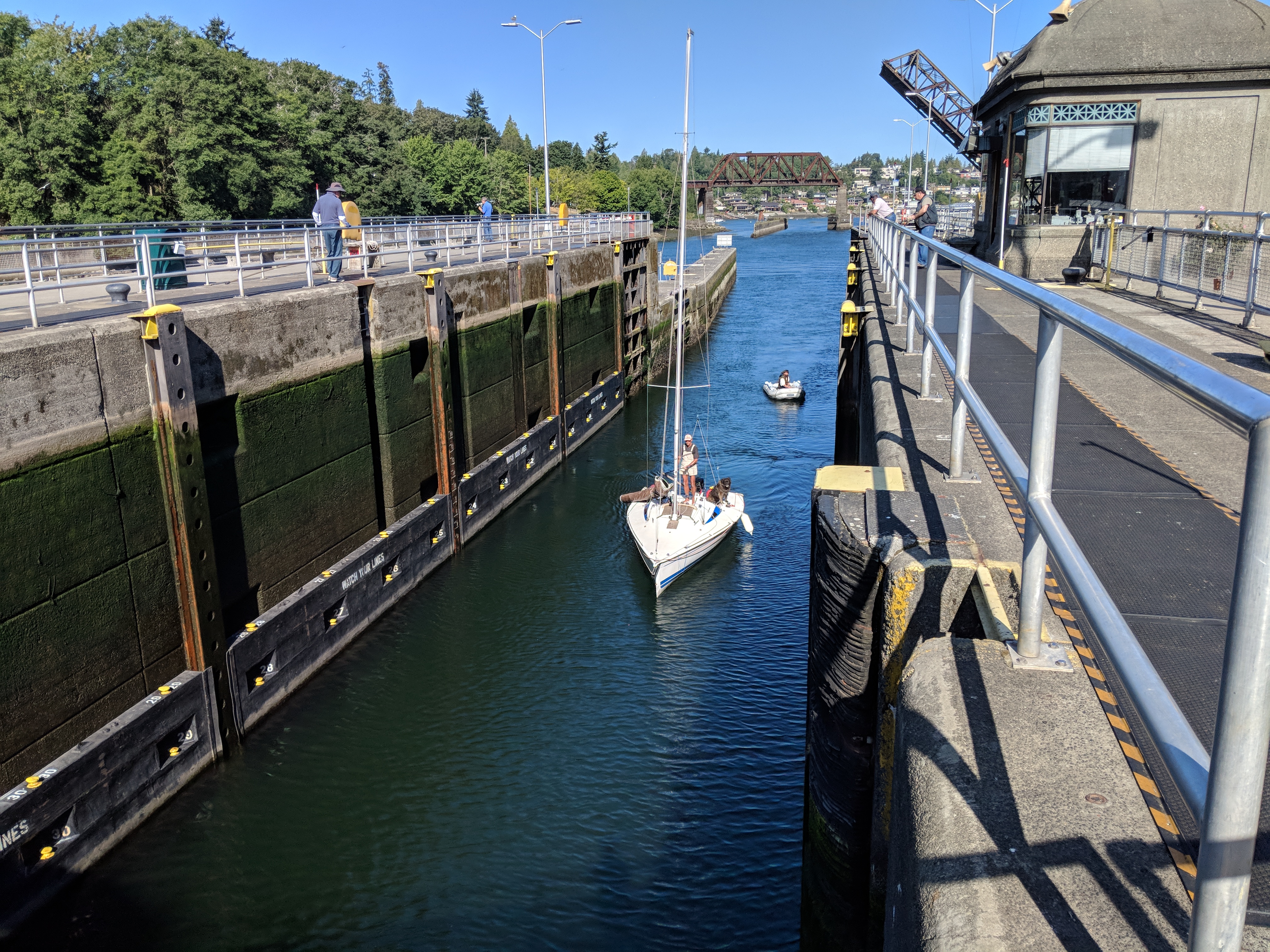
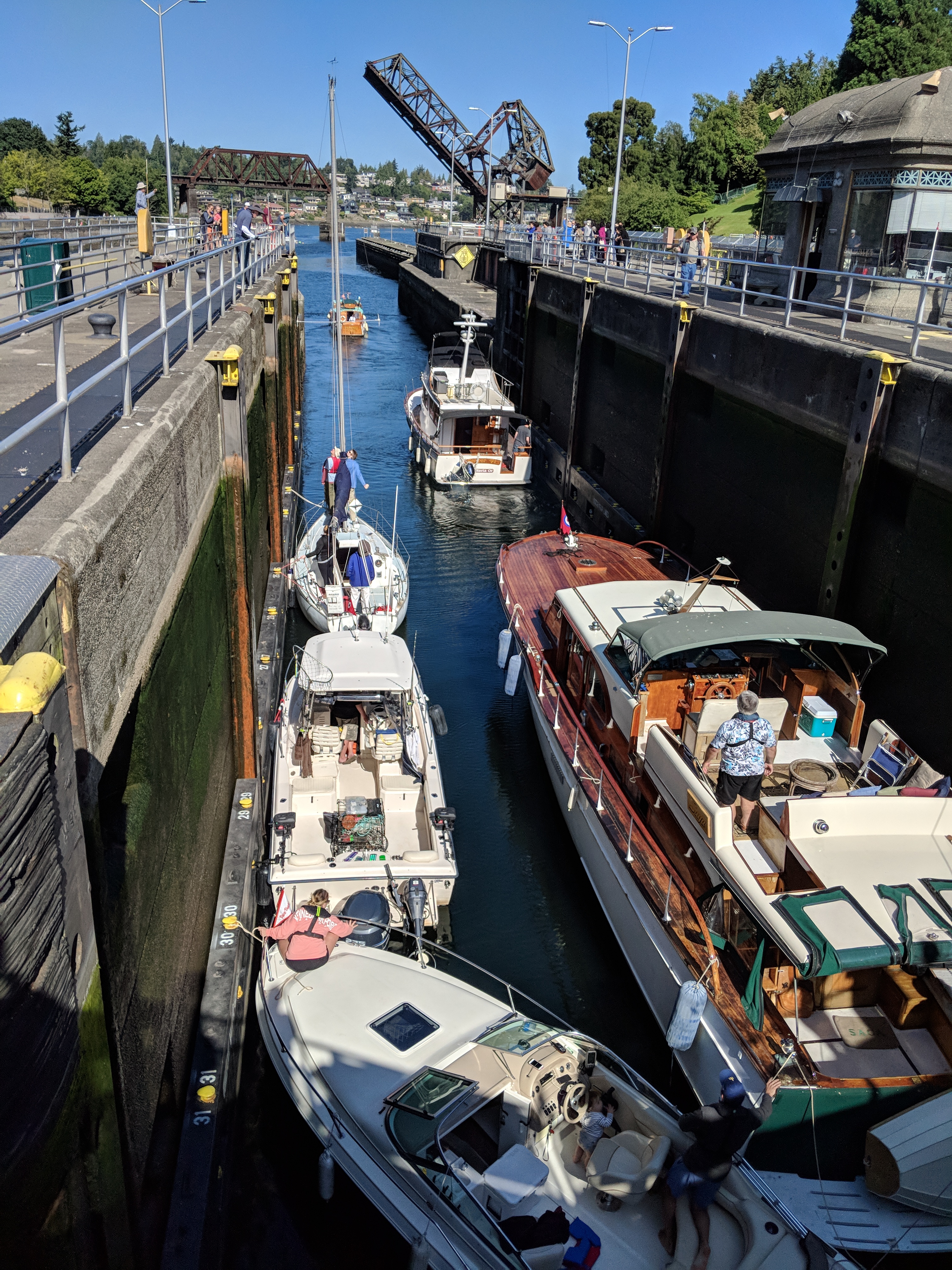
Here are a sailing boat and a dinghy entering the locks from the direction of Puget Sound, wanting to jump vertically upwards by a few metres into the canal. There’s a dog accompanying the sailor on the yacht:
The yachtsman secures his boat in the lock:
The lock gates close behind the boats:
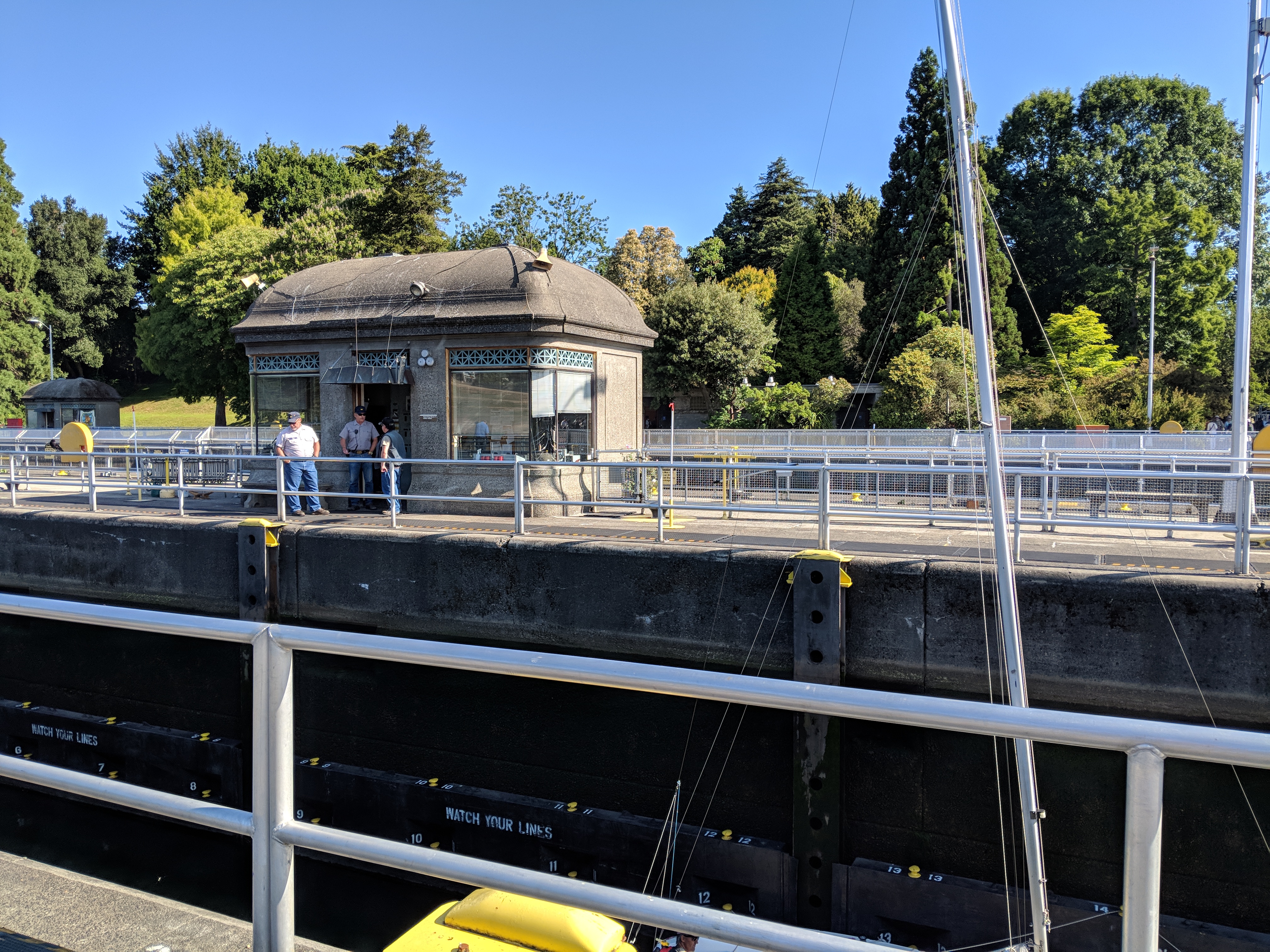
The lock operators watch from the side:
The filling-valves open below the water level, letting in the water from Salmon Bay. The water rises in the lock, lifting the boats with it, until eventually the water level is the same on both sides of the top gate, and the boats can move into the lake:
This lock is the larger of the two Ballard Locks. Things can get quite busy. In fact, the Ballard Locks are the busiest locks in the US:
A dam wall with a spillway holds back the waters of Salmon Bay from plunging down into Puget Sound. This picture shows the spillway, viewed from the Commodore Park side of the canal, which is on the side opposite the locks:
This video is taken from the walkway above the spillway, looking down at the patterns on the moving water, then raising the camera to look out towards Puget Sound.
This is the view from the spillway, looking west towards Puget Sound:
On the Commodore Park side of the canal is the fish ladder, winding up the bank from sea level at the bottom to the lake level at the top of the ladder. In all, there are 21 steps in the ladder:
This is the dam wall seen from the Salmon Bay side, with part of the fish ladder in the foreground:
Here’s another picture of the salmon under the water, on their way up the ladder from the ocean to the lakes:
This is the blog of Mark Wordsworm, the travelling worm. I’m a 25-year-old bookmark (I haven’t aged at all since I first wrote this introduction) and I proudly boast my own Hallmark serial number, 95 HBM 80-1. You’ll probably want to read all about me and my Travelling Companion (the TC).
Today’s travel notes
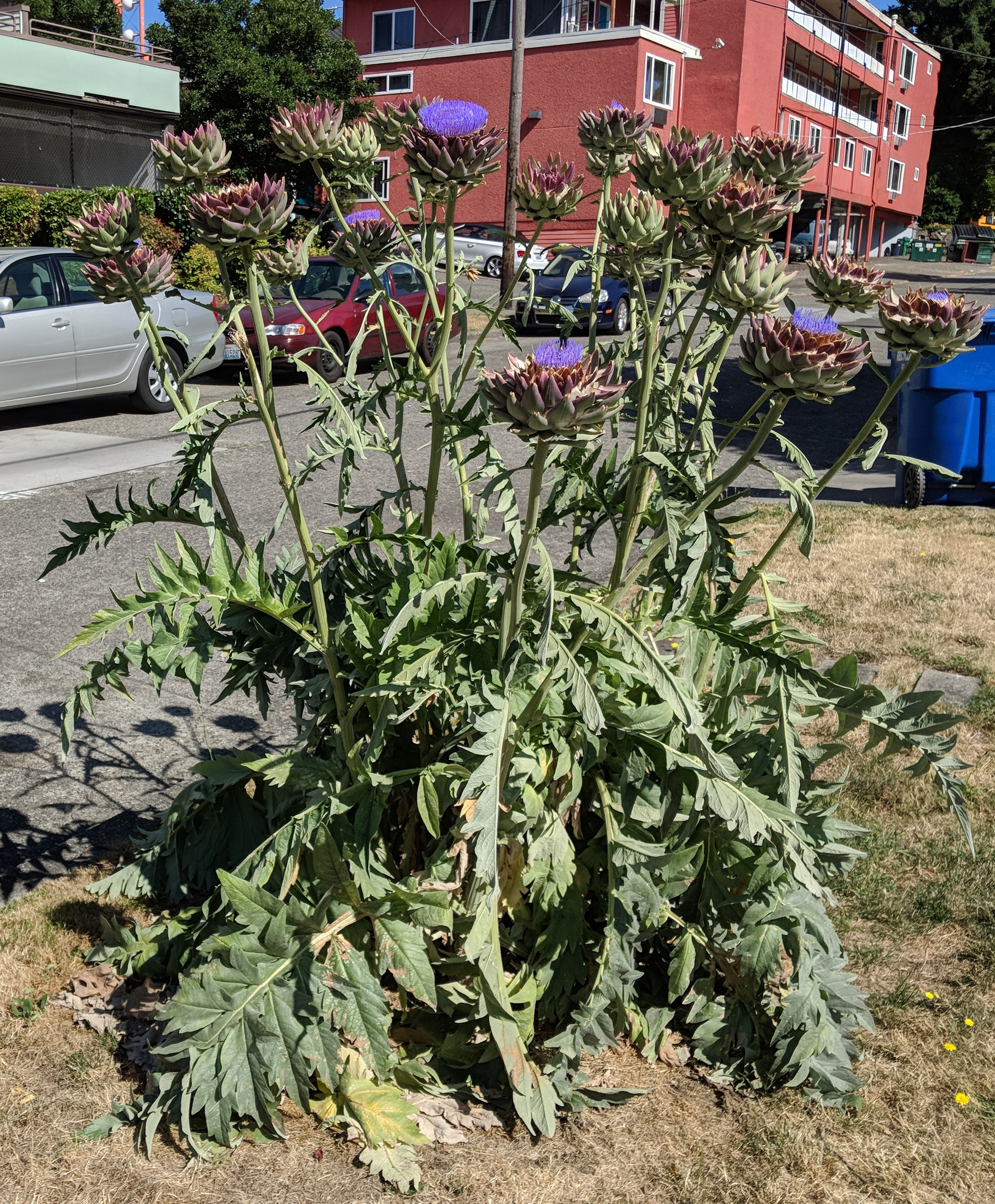
Alarm! This worm was wandering along a quiet Seattle road when I encountered a triffid. Fortunately for me, the creature was firmly rooted in the ground, gathering sustenance no doubt for its next foray into the world of us earthlings.
The photos
Approach with caution! A triffid rooted on a suburban Settle street:
The thing dwarfed the TC, but nevertheless, as is her wont, she insisted that I approach it for the obligatory portrait.







































 Travelling Worm