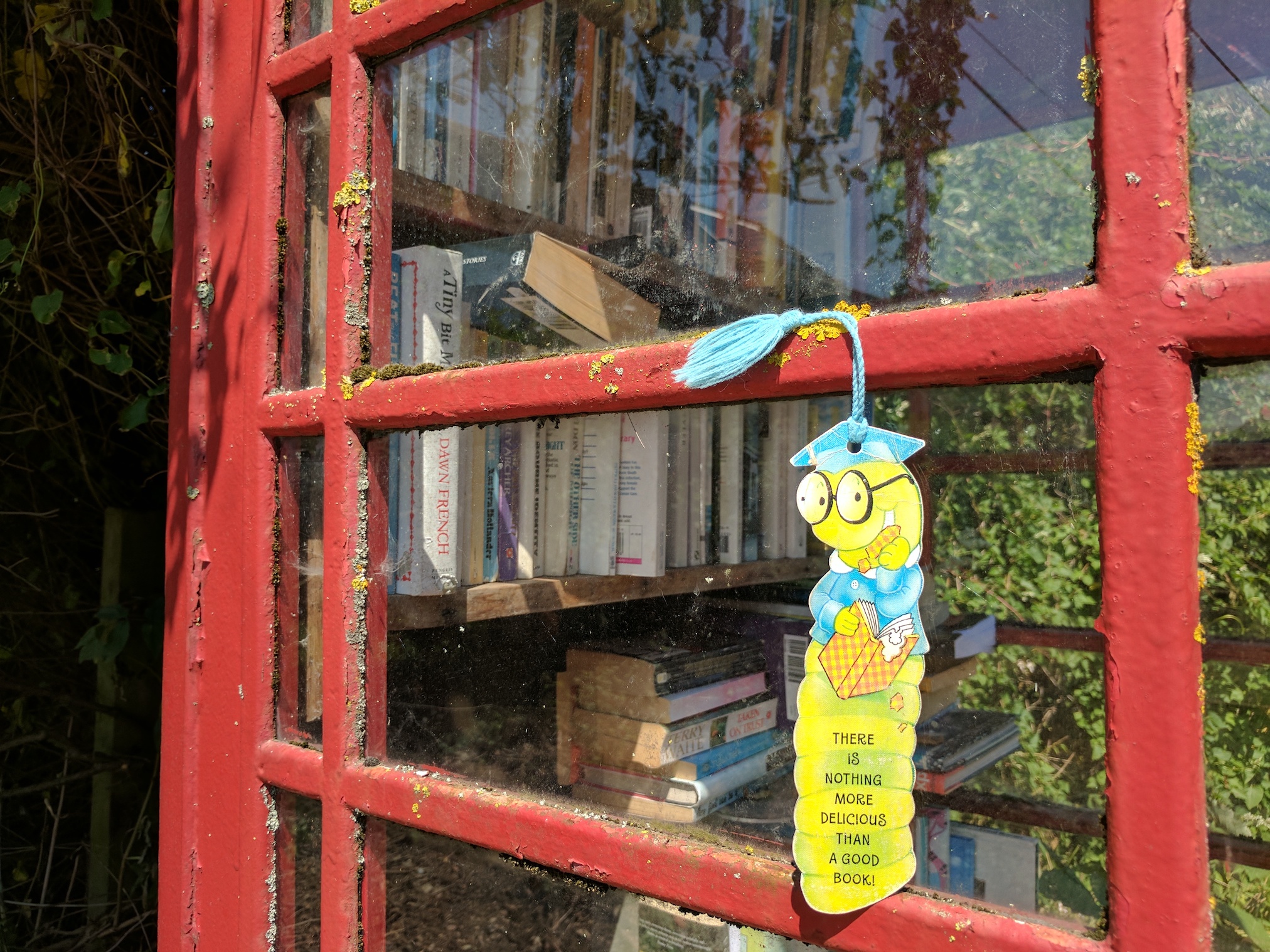
Travelling Worm

A bookworm's travelogue

Category: United Kingdom

  • A day in Edinburgh: Leith Walkway, Castle, Royal Mile, and more

    This is the blog of Mark Wordsworm, the travelling worm. I’m a 36-year-old bookmark (give or take a few years) and I proudly boast my own Hallmark serial number, 95 HBM 80-1. You’ll probably want to read all about me and my Travelling Companion (the TC).

    Today’s travel notes

    Me and the TC spent a day in Edinburgh, beautiful capital of Scotland. To throw a vote into the debate about visiting Edinburgh versus Glasgow, this worm’s firm opinion is that both are worth a visit. Your enjoyment depends on what you’re looking for. Glasgow is more restful. Edinburgh is gorgeous but more frenetic, especially in the areas focused on tourism.

    The book I’m in

    Stormswift, by Madeleine Brent. This author writes adventure stories about young heroines dragging themselves out of impossible situations by dint of courage, strength, and hard-won skills. Despite the dire subject matter, the novels are curiously calming.

    Travel tips

    If your legs allow, do the walk starting at the Water of Leith Walkway and up to Edinburgh Castle, then down the Royal Mile to the Palace of Holyroodhouse, finishing at the Princes Street Gardens. (This worm sat comfortably in a book for the onerous part of the walk, making an appearance only for the views and photo ops.)

    The photos

    Me starring in a picture taken from Bell’s Brae Bridge, part-way along the Water of Leith Walkway:

    Edinburgh Castle set high upon a rock, seen from the gardens of The Parish Church of St Cuthbert:
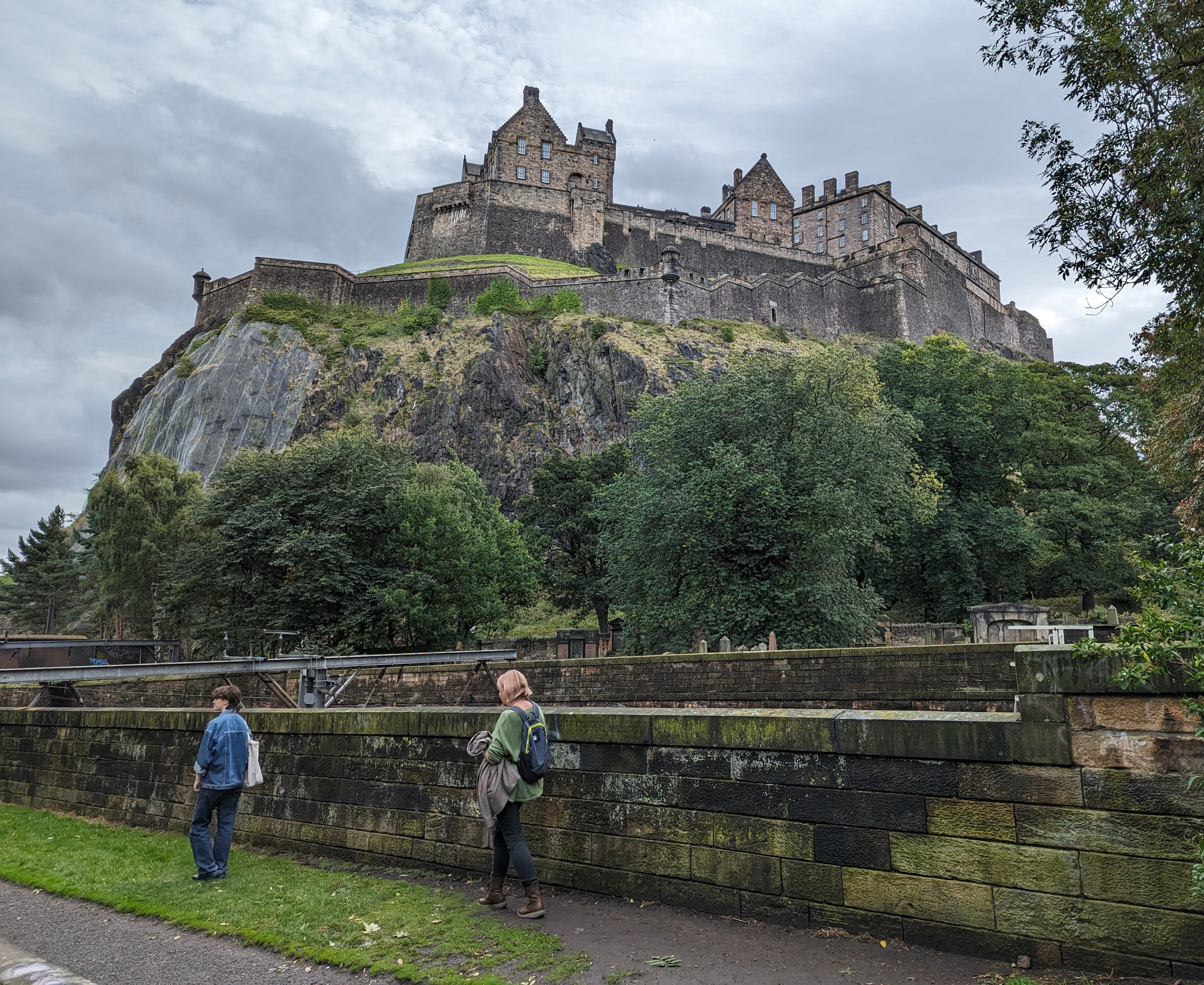
    The first fort on the rock was built by Iron Age peoples. The castle saw fierce fighting during the Wars of Scottish Independence in medieval times.

    As well as being a military stronghold, the castle has housed royalty over the centuries. Queen Margaret died in the castle in 1093. In the Royal Palace within the castle grounds, Mary Queen of Scots gave birth to James VI in 1566. He became king of Scotland at 13 months old. He later united the crowns of Scotland and England in 1603.

    Me outside Edinburgh Castle:

    A similar view, but without your faithful Travelling Worm:

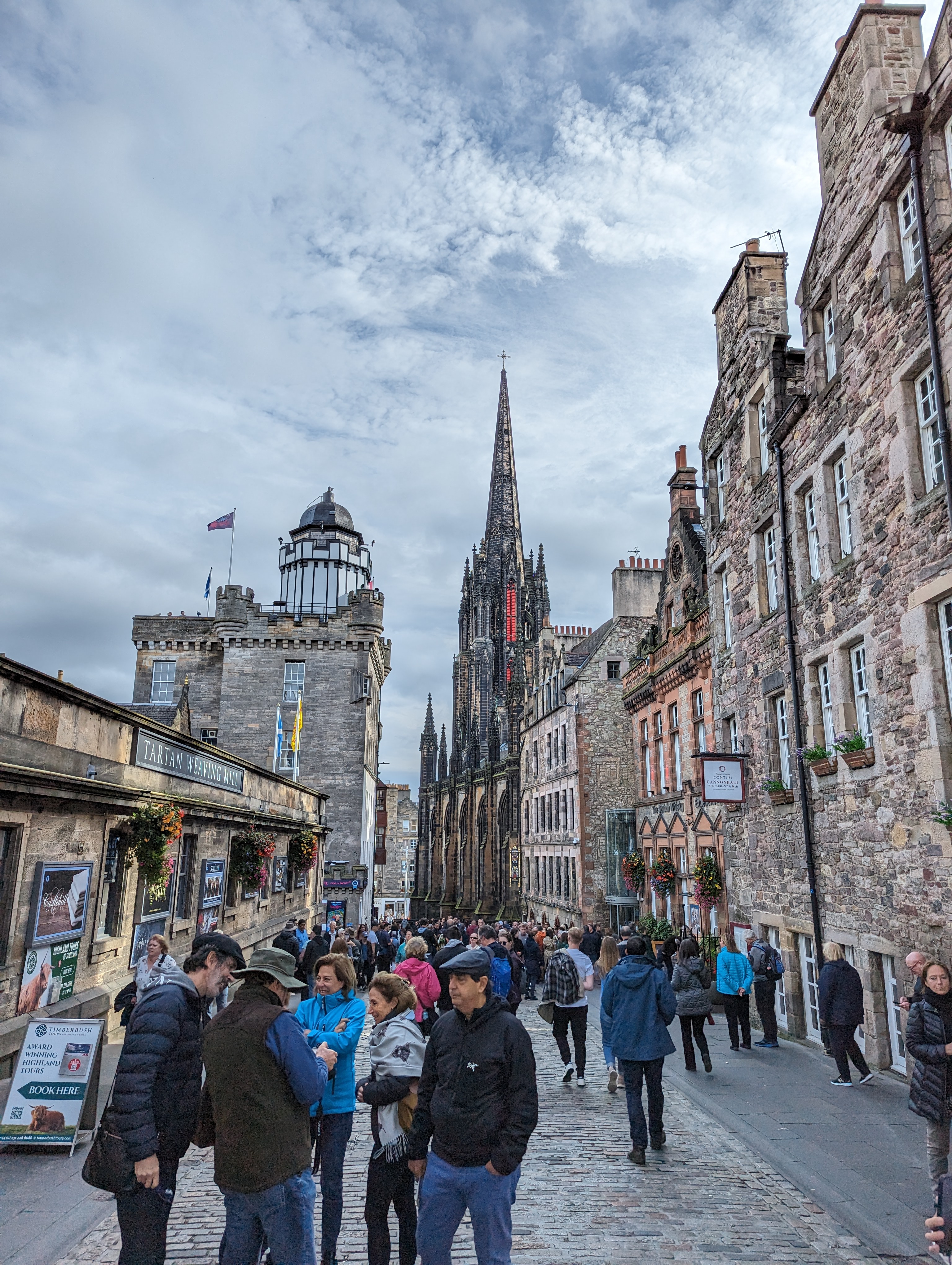
    After visiting the castle, we headed down the Royal Mile towards the Palace of Holyroodhouse. The next picture shows a general view of the Royal Mile:
    We encountered a couple of Picts telling their story. The Picts are an ancient people who lived alongside the Scots. Originating as an Iron Age society, one of the things they’re known for is painting themselves, hence the name “Pict”. The blue colouring comes indigo dye, made from the woad plant:

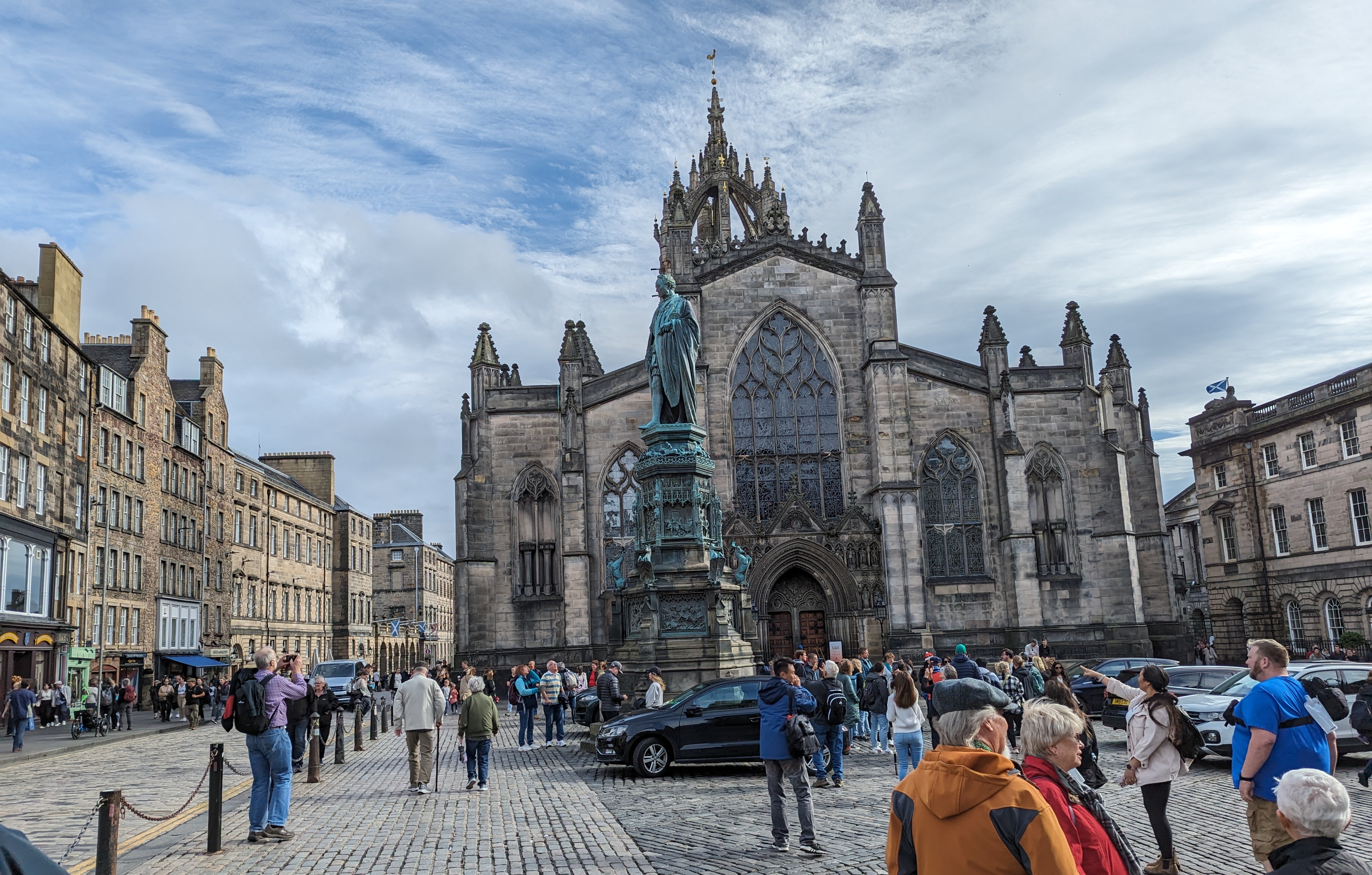
    St Giles Cathedral was founded in 1124 by King David I. It was originally a Romanesque church. It now belongs to the Church of Scotland congregation and follows the Presbyterian tradition of worship. The statue in front of the cathedral is of John Knox, founder of the Presbyterian Church of Scotland:
    A random view down a little alleyway, partway along the Royal Mile:

    A picturesque clock above a tavern:

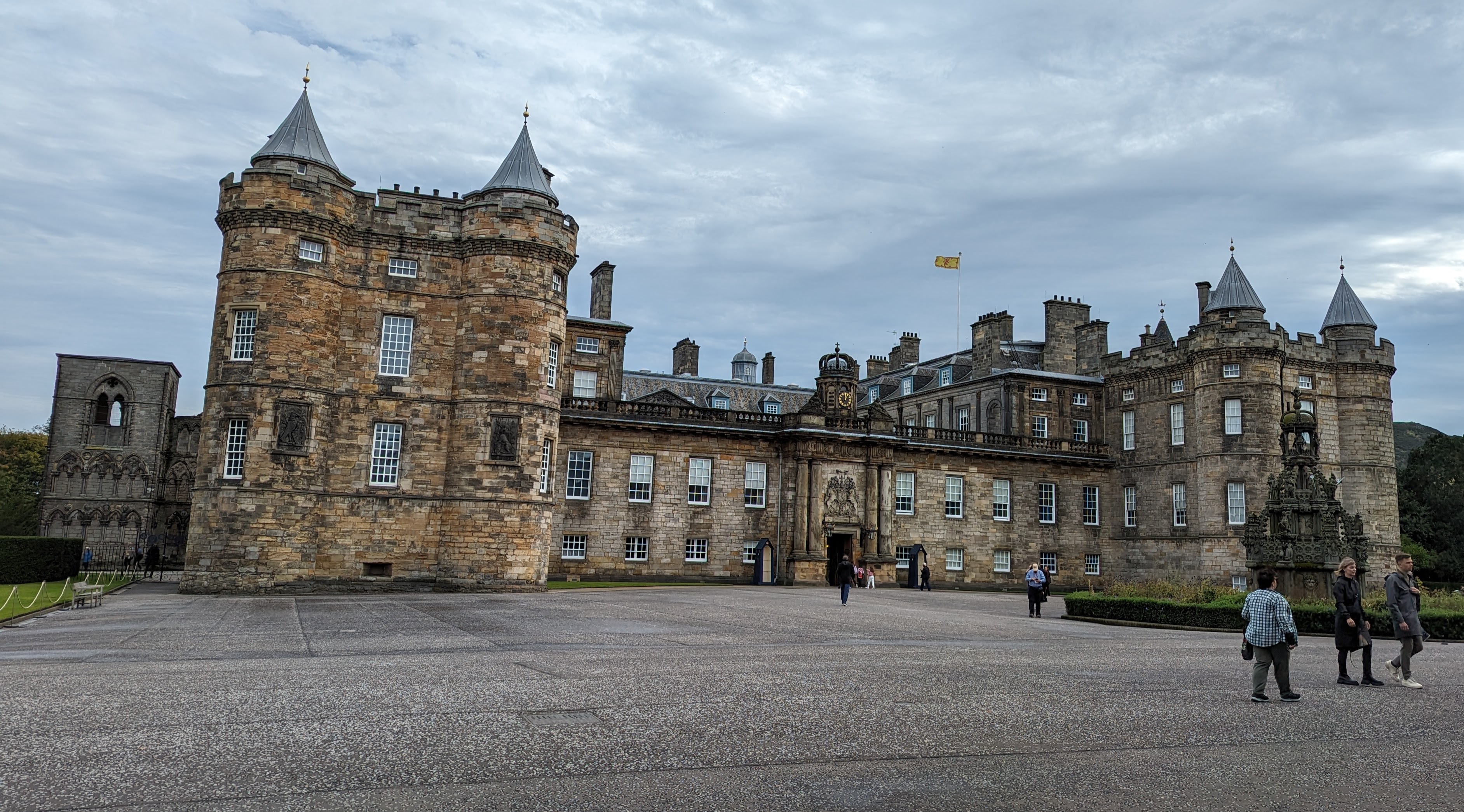
    At the end of the Royal Mile is the Palace of Holyroodhouse. The palace is the British King’s official residence when in Edinburgh. It’s also played a part in Scottish royal history, including visits from Mary Queen of Scots and Bonnie Prince Charlie.
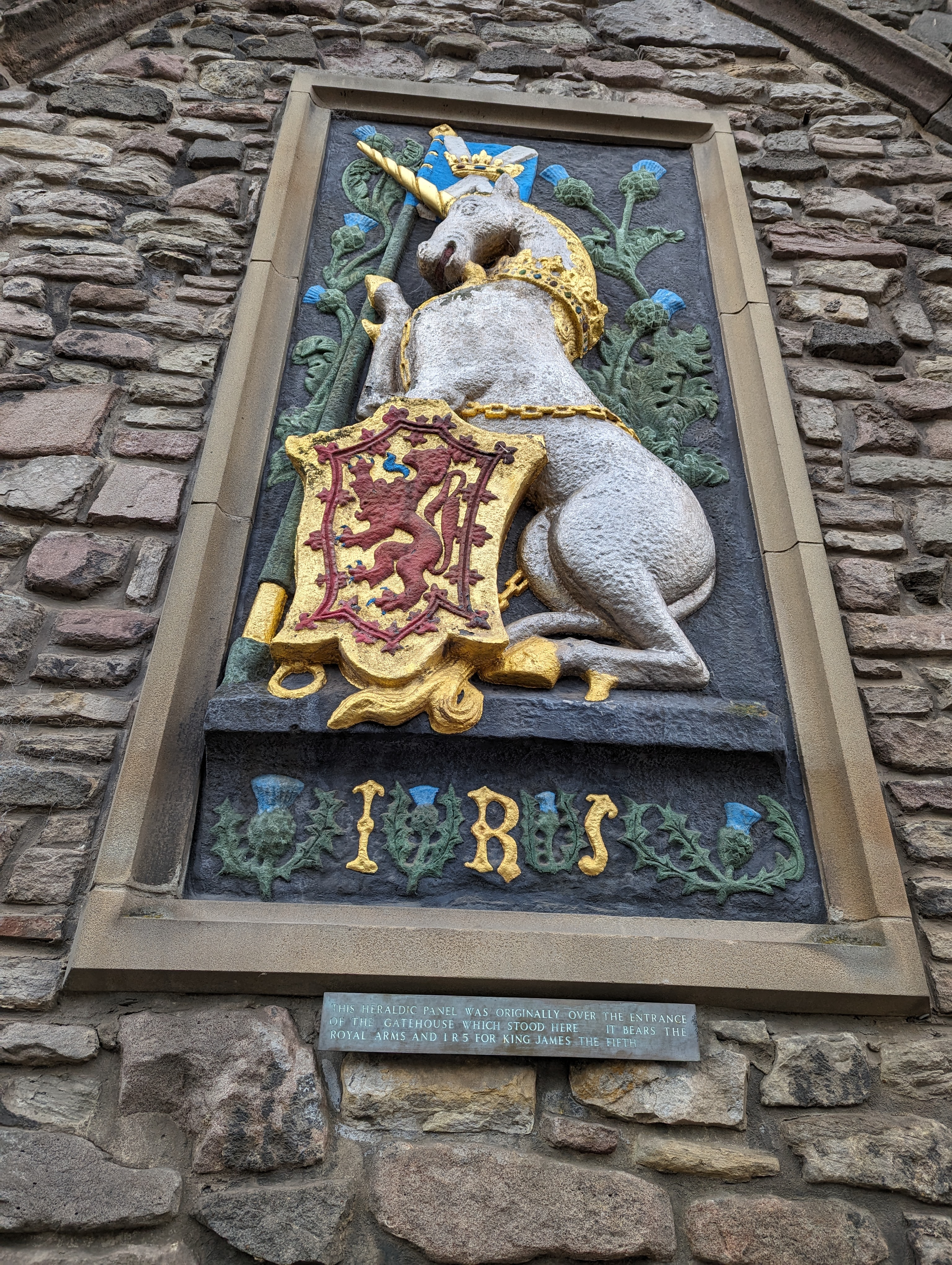
    On a wall near the palace is this heraldic panel of James the Fifth, including the Royal Arms:
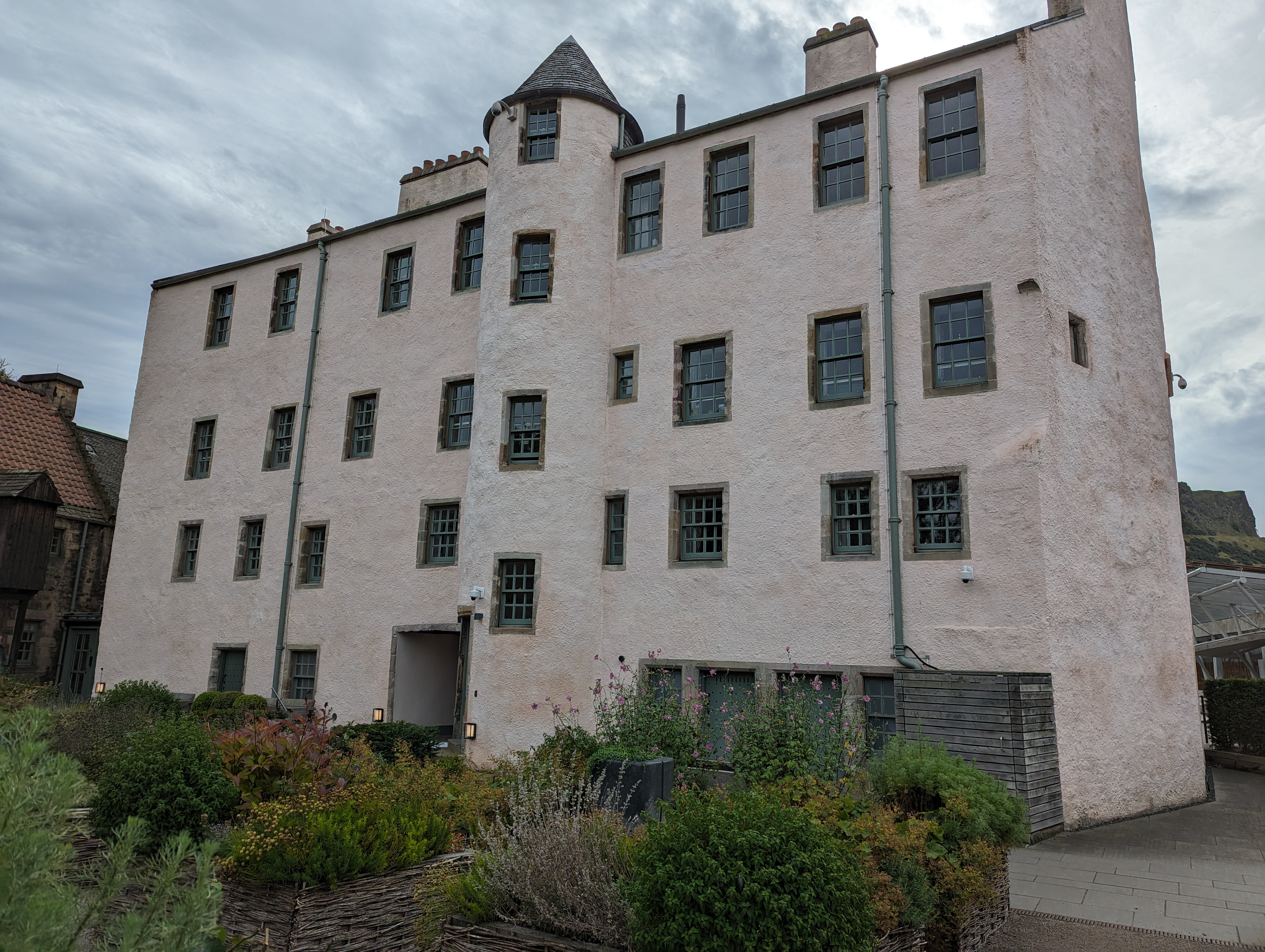
    Across the road from the palace stands the lovely Cheval Abbey Strand apartment block, a renovated 15th century building. The photo shows the rear of the building, with part of the Physic Garden that lies behind:
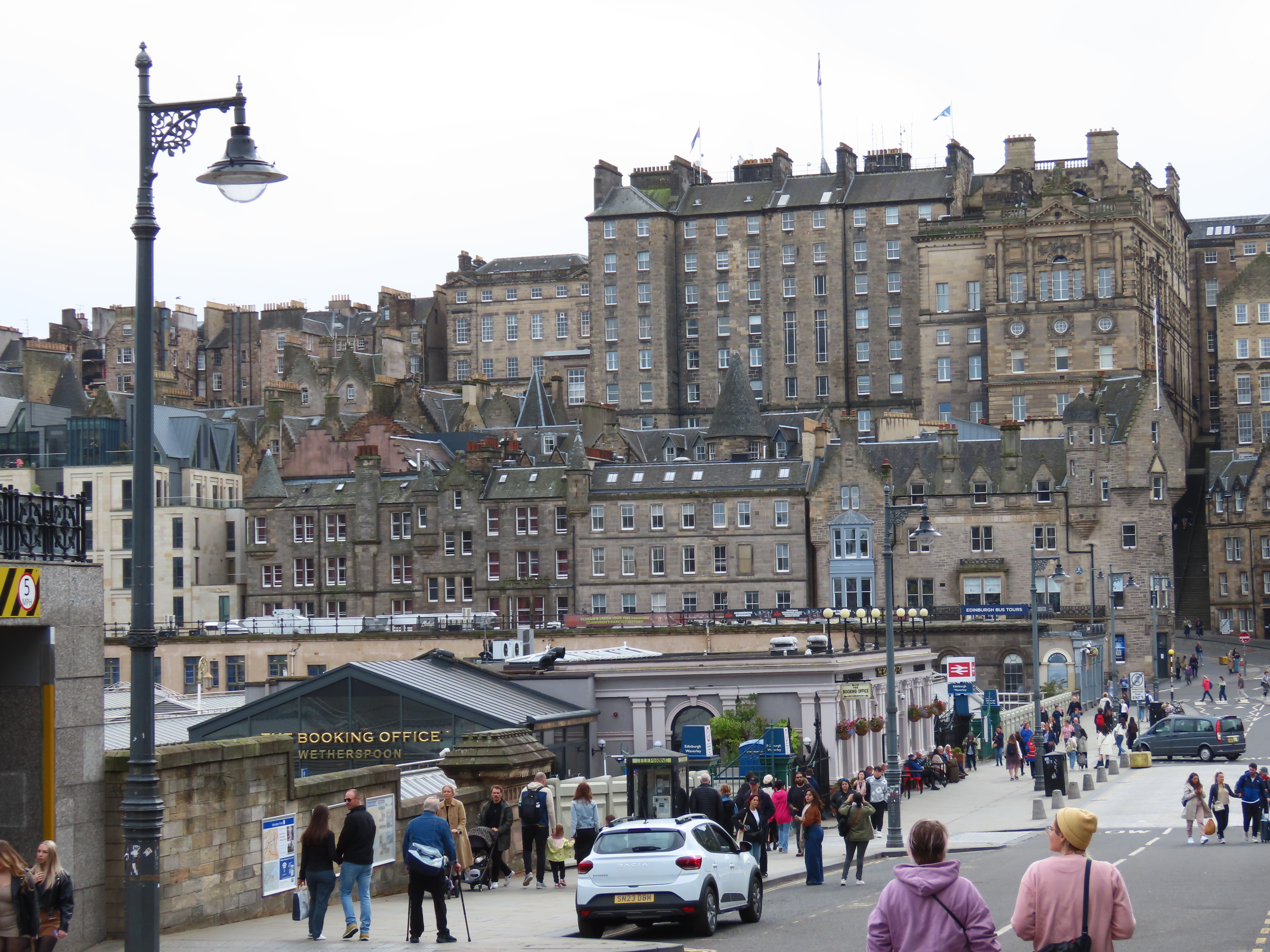
    To finish the tour, here’s part of Edinburgh Old Town, seen from Princes Street near the Princes Street Gardens:

  • Hadrian’s Wall at Walltown Quarry, Greenhead

    This is the blog of Mark Wordsworm, the travelling worm. I’m a 36-year-old bookmark (give or take a few years) and I proudly boast my own Hallmark serial number, 95 HBM 80-1. You’ll probably want to read all about me and my Travelling Companion (the TC).

    Today’s travel notes

    Me and the TC visited part of Hadrian’s Wall yesterday. The wall is more than 70 miles long, so we had to choose our viewing point. We chose Walltown Quarry, near the village of Greenhead in Northumberland. The beautiful countryside provided a spectacular backdrop for the remnants of the wall.

    The book I’m in

    Stormswift, by Madeleine Brent. This author writes adventure stories about young heroines dragging themselves out of impossible situations by dint of courage, strength, and hard-won skills. Despite the dire subject matter, the novels are curiously calming.

    Travel tips

    Drive the A68 through Northumberland and into Scotland. It’s one of the most beautiful drives in the world, passing through restful grey-stone villages and meandering over rolling green hills dotted with sheep and cattle.

    The photos

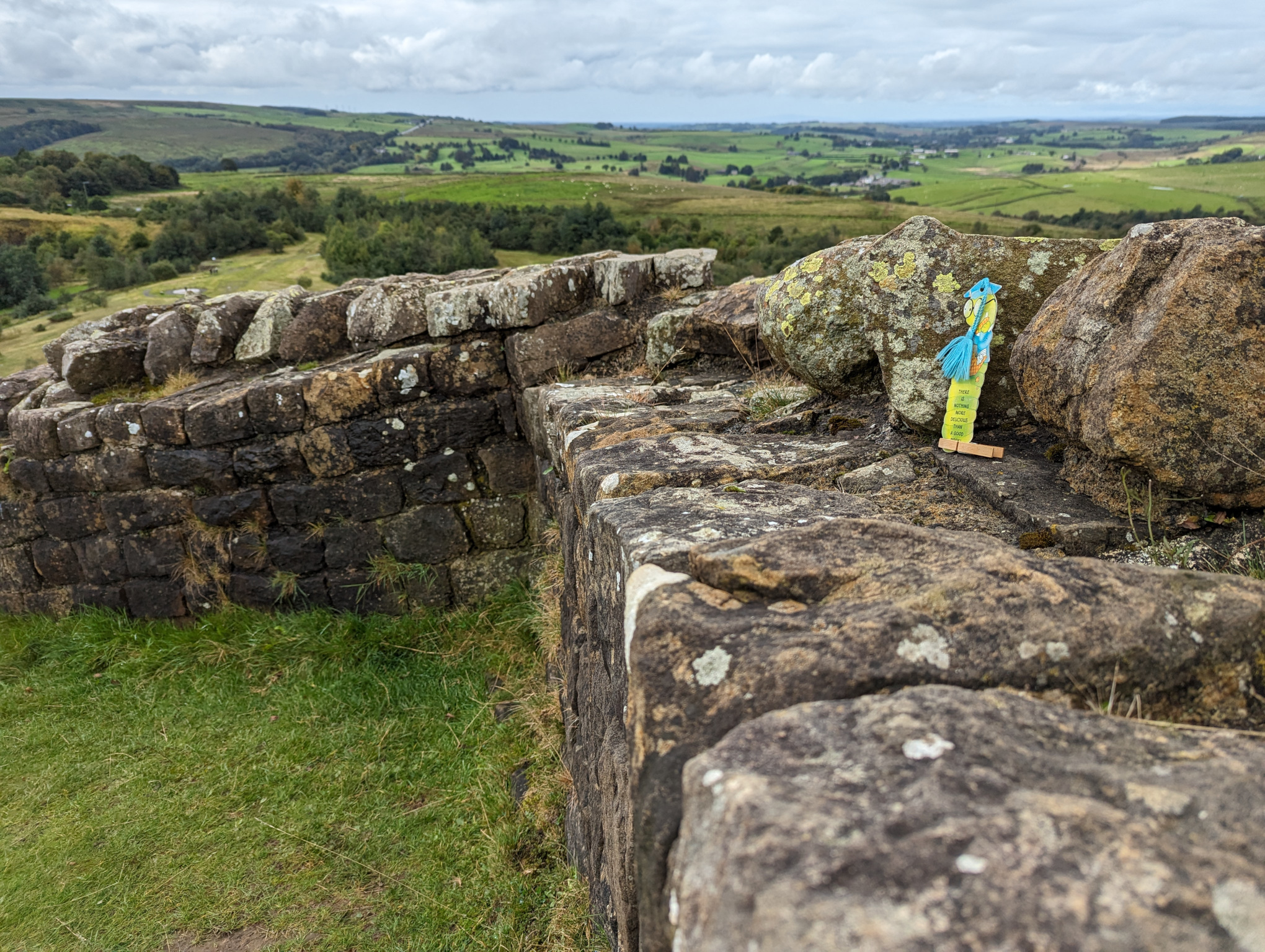
    Me and Peg on Hadrian’s Wall:

    Devoted readers will no doubt remark on Peg’s re-appearance on this blog. She took a long break from travelling, but is now back in full force. Expect to see her holding up her end of the tale again in this and future posts!

    This part of the wall stands atop a high cliff above the stone quarry at Walltown. Here’s a long shot of the cliff topped by the wall:

    The path up to the cliff face is guarded by a fearsome ogre. This worm stayed tucked in the TC’s book while we crept by, managing to get past before the ogre emerged fully from its lair:

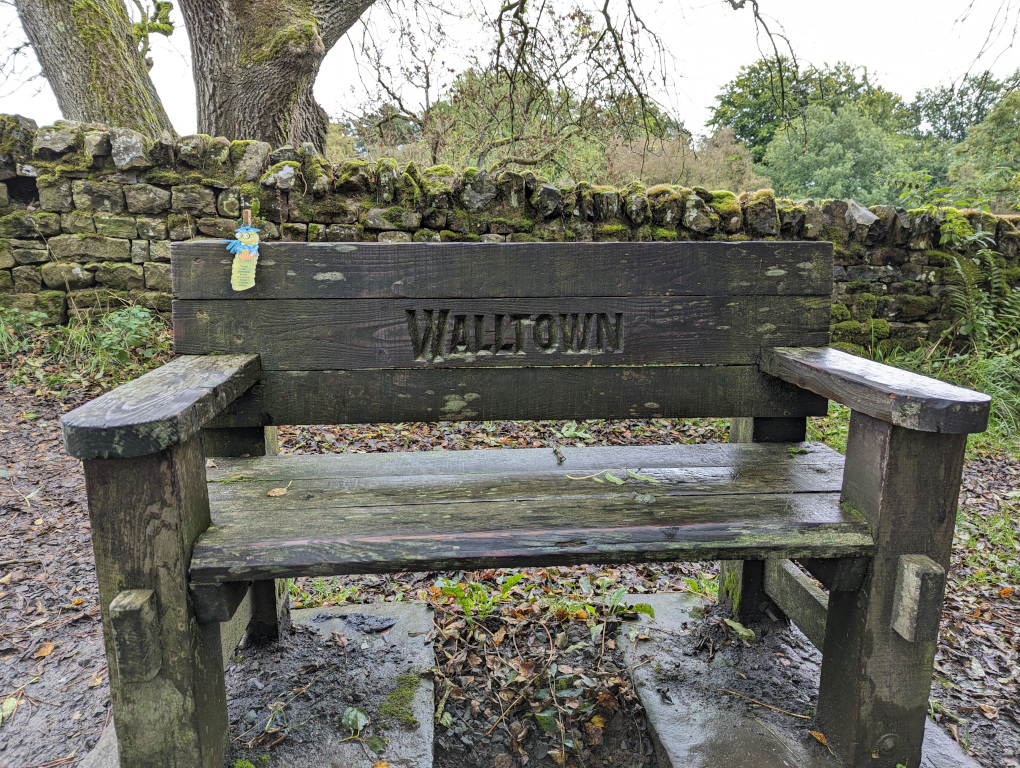
    Once we’d safely passed the slumbering ogre, me and Peg took a breather on the Walltown bench before making the final ascent to Hadrian’s Wall:

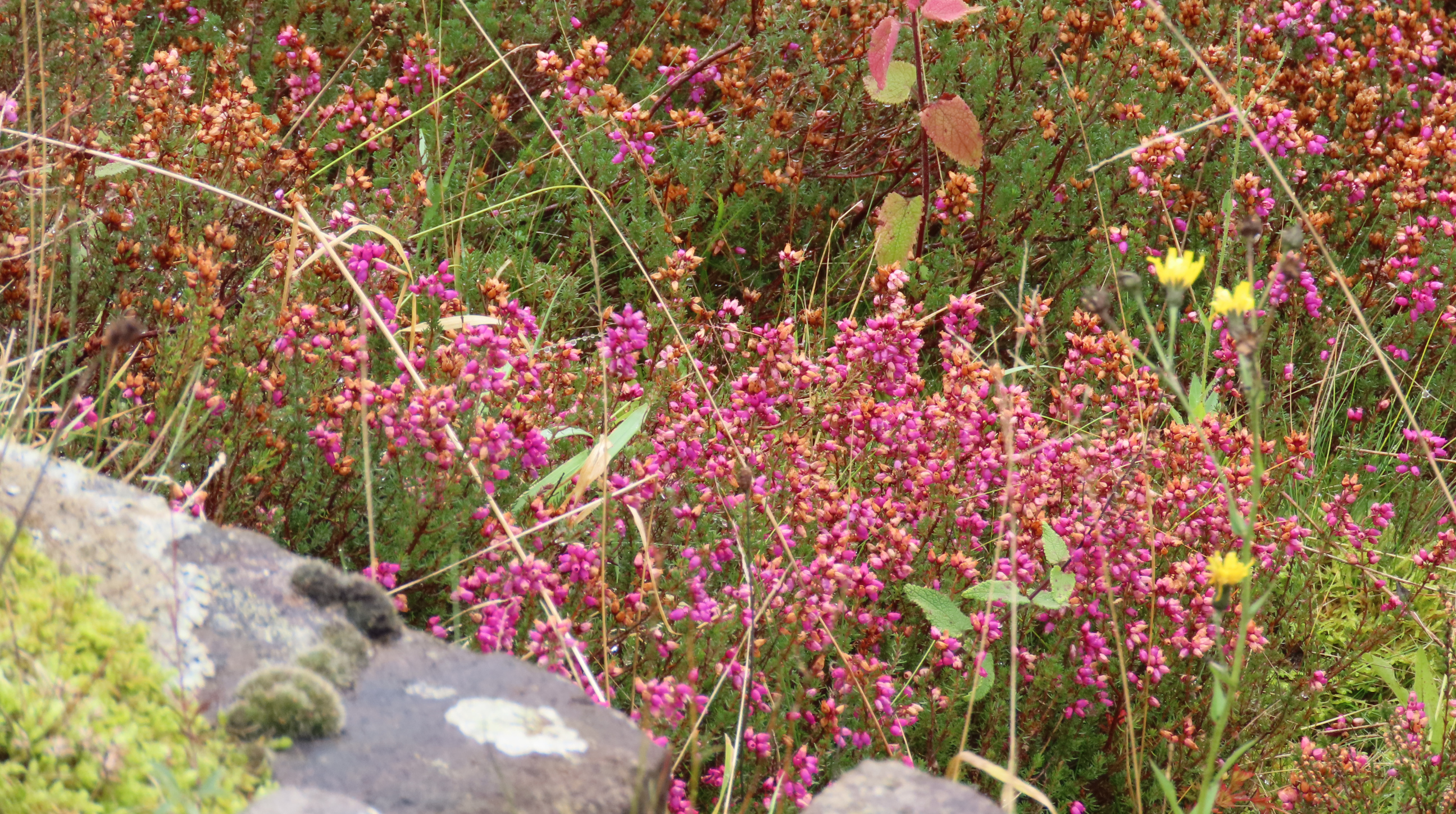
    Wild flowers marked the route:

    Drops from the recent rainfall sparkled on flower and leaf:

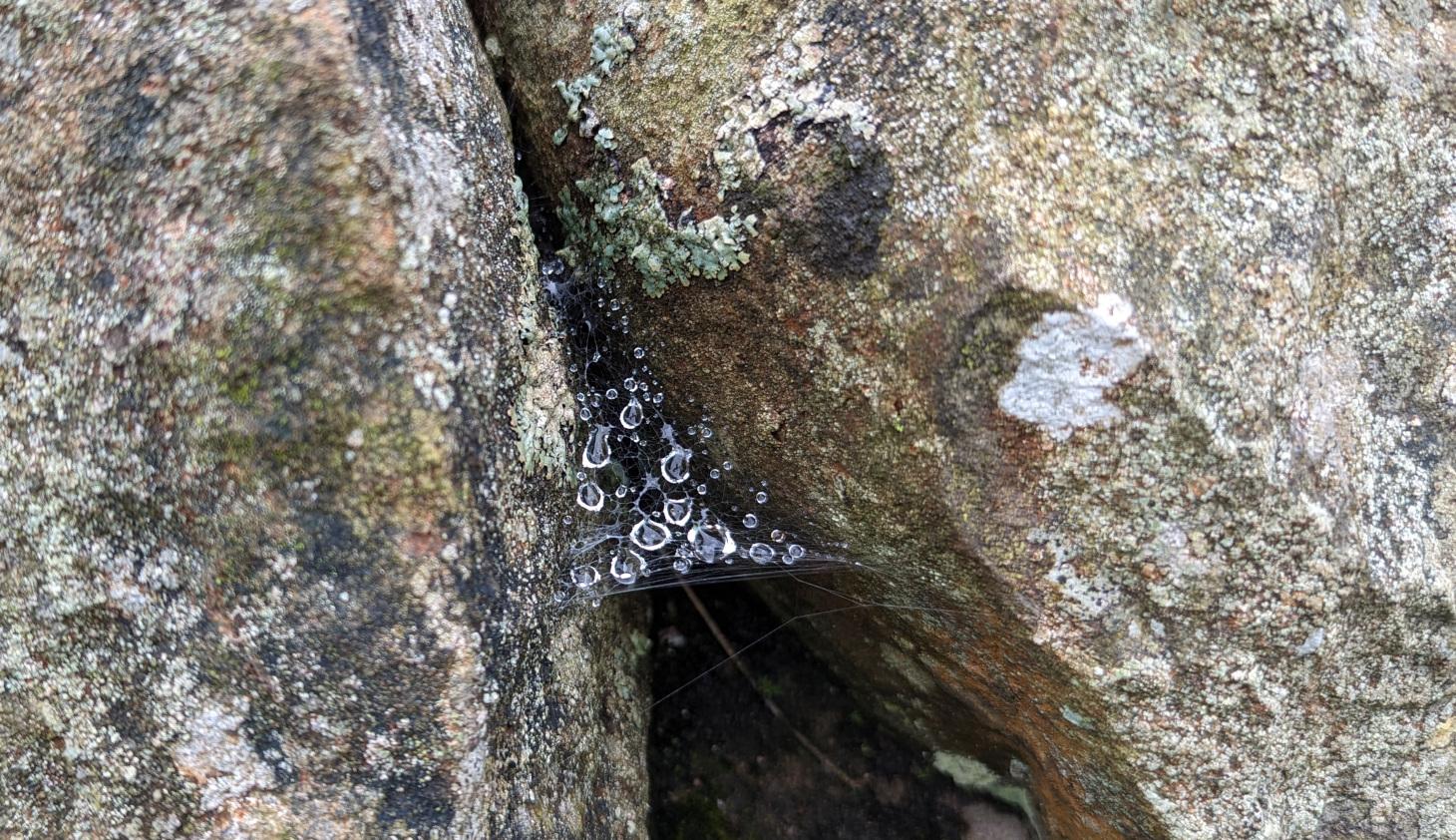
    Raindrops decorated the spiderwebs too:

    At the top of the cliff, Hadrian’s Wall runs over green velvet hills:

    The wall was built by the Roman emperor Hadrian in the second century AD, to draw a line of defence between the south of Britain, controlled by Romans, and the unconquered area to the north, roamed by the fierce Scottish clans. The wall stretches across Britain, from Wallsend on the River Tyne in the east to Bowness-on-Solway in the west.

    Adventurous souls took the high road:

    This worm found a new friend, who goes by the name of Bluebell. She confided in me that some call her Wall Flower, but she discourages that name with all her might. Me and Bluebell at her home atop Hadrian’s Wall:

    Wild flowers grab a handhold on the rocks near the wall:

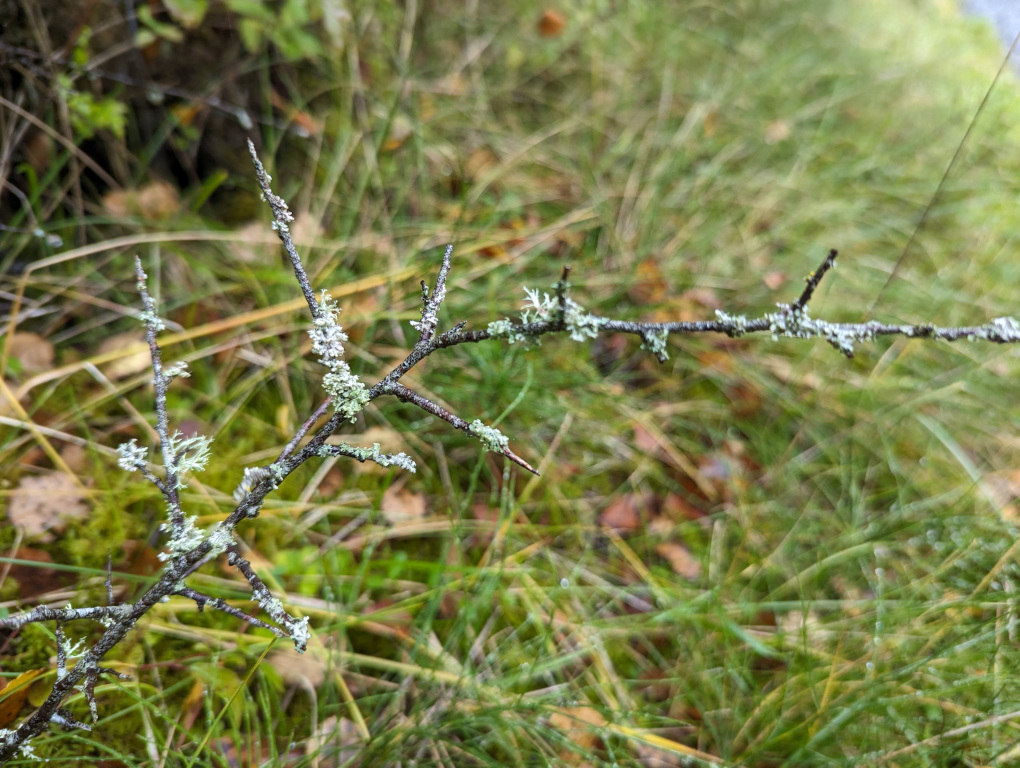
    Lichen adorns the stones on the pathway back down the hill:

    And drips off the branches of the plants:

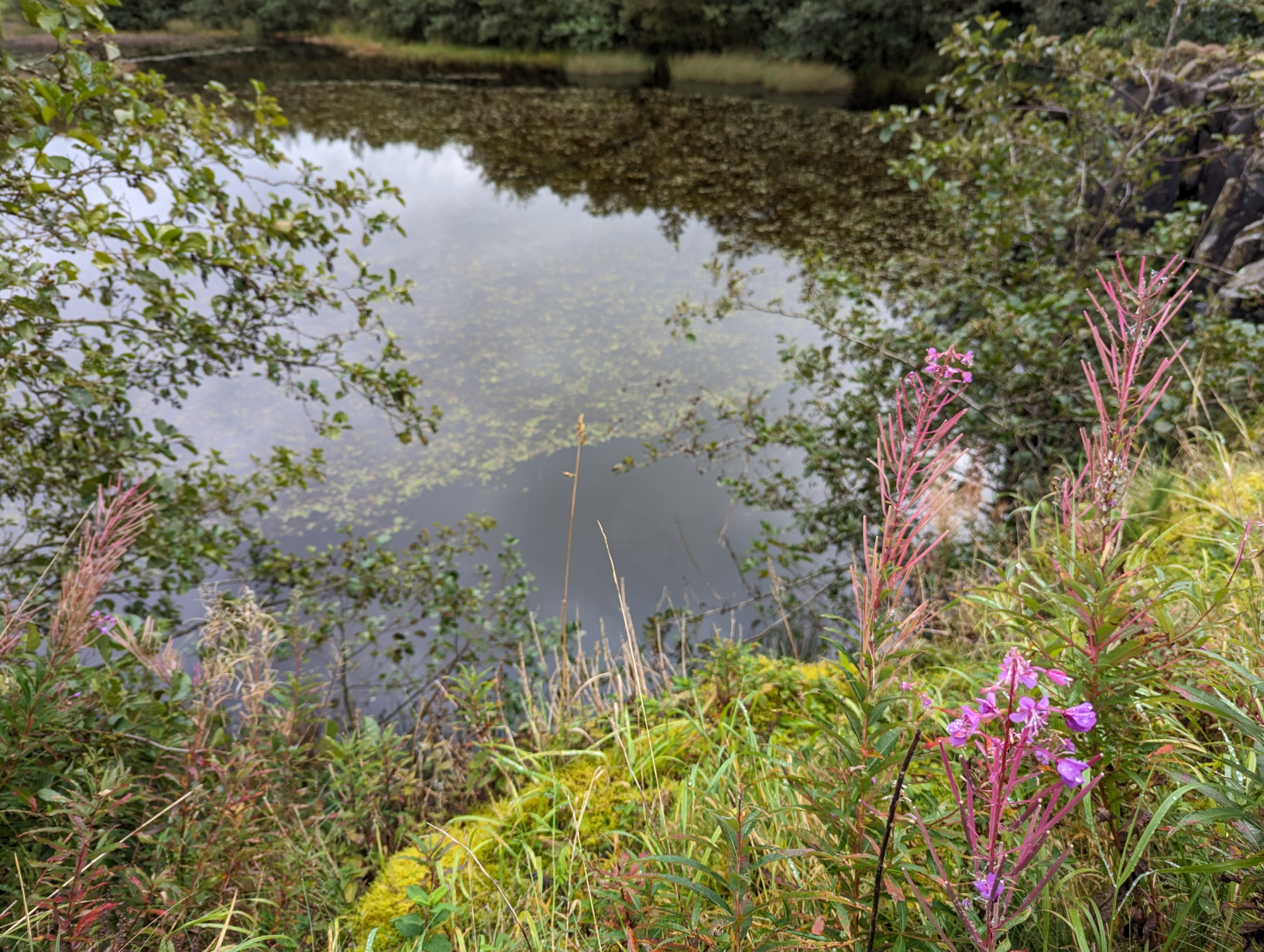
    The Walltown Quarry Pond:

    The stone dug out at Walltown Quarry was used primarily as chippings for surfacing roads. The quarry opened in 1876 and closed in 1976. After it closed, the land was filled in and landscaped to form the Walltown Country Park.

    Here’s a parting shot of Hadrian’s Wall from across the quarry pond:


  • Dunfermline Abbey and City Chambers, Scotland

    This is the blog of Mark Wordsworm, the travelling worm. I’m a 36-year-old bookmark (give or take a few years) and I proudly boast my own Hallmark serial number, 95 HBM 80-1. You’ll probably want to read all about me and my Travelling Companion (the TC).

    Today’s travel notes

    Me and the TC spent a few hours in Dunfermline this week. Dunfermline is a city in the county of Fife, Scotland, about three miles from the Firth of Forth. (This worm wrote about the bridges over the Firth of Forth in a previous post.)

    The book I’m in

    Imminent Peril, a Sasha McCandless adventure by Melissa F. Miller. The TC loves this series about a lawyer detective who attracts trouble and deals with it fearlessly.

    Travel tips

    Park as soon as you find a spot that’s close enough to your destination.

    The photos

    Looking across the rooftops to the Dunfirmline City Chambers:

    Dunfirmline City Chambers was built in the late 1870s. It combines French, Gothic and Scots baronial architectural styles into a pleasing medley. The clock tower stands out as a feature of the town.

    The clock caused a bit of drama in November 2022, when one of its hands became loose during strong winds. The town closed the roads around the tower until the clock was rendered safe.

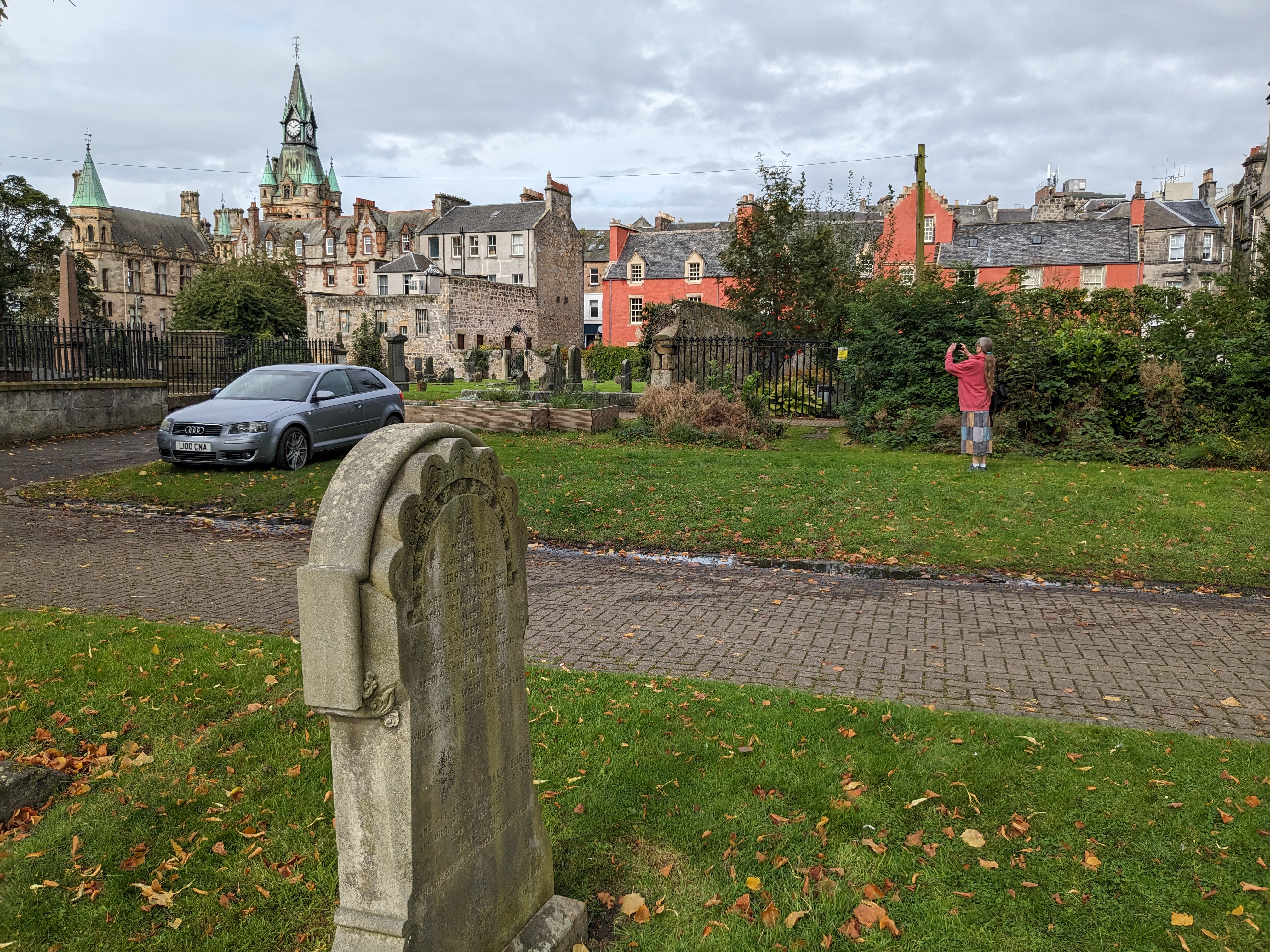
    This picture shows the building from the other side of a nearby grave yard:

    If you’re keen of eye, you might notice that the next picture shows a rare glimpse of the TC herself. It also includes a partial view of Abbot House, Dunfermline’s oldest house, known locally as the Pink Hoose:

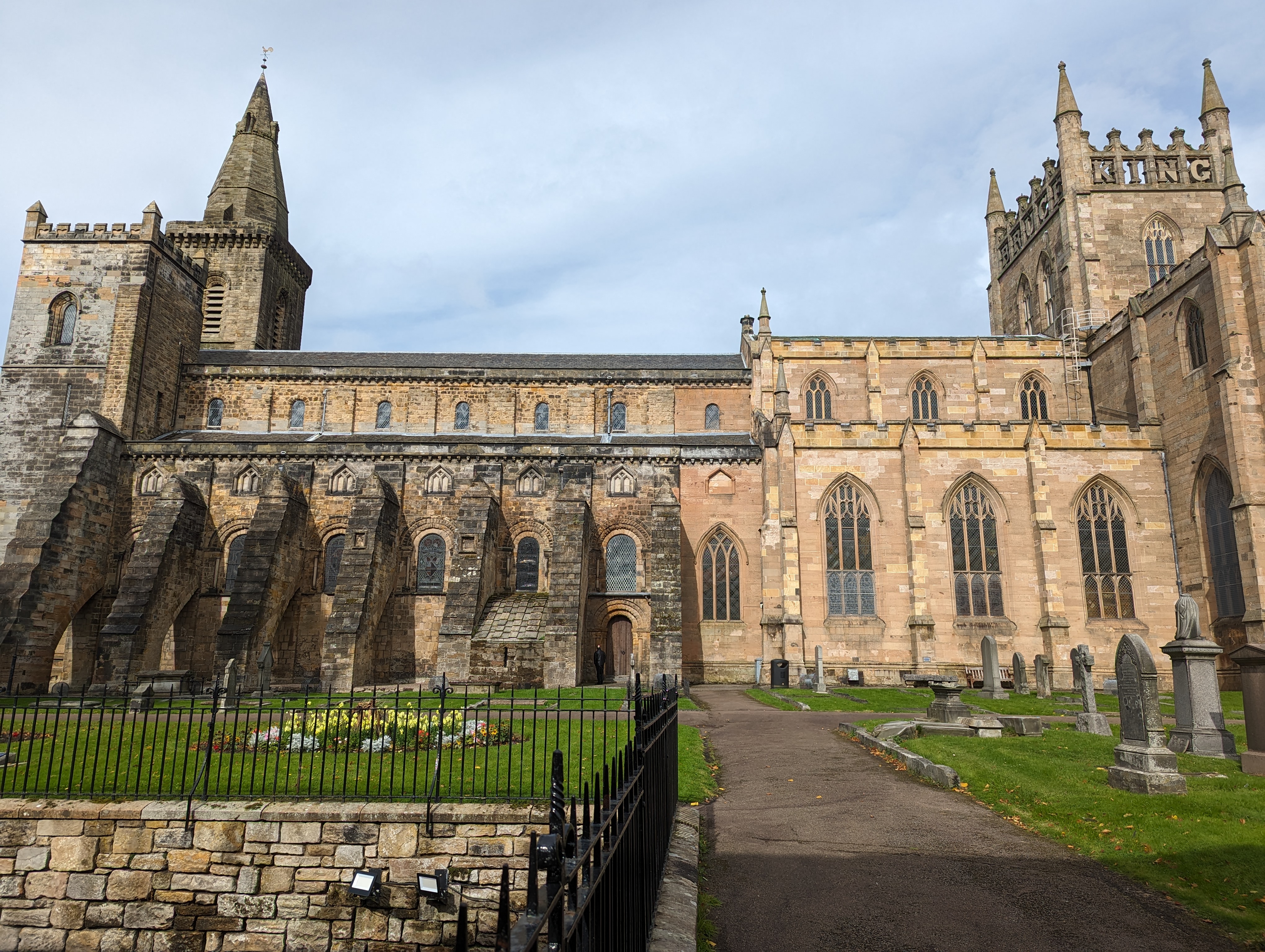
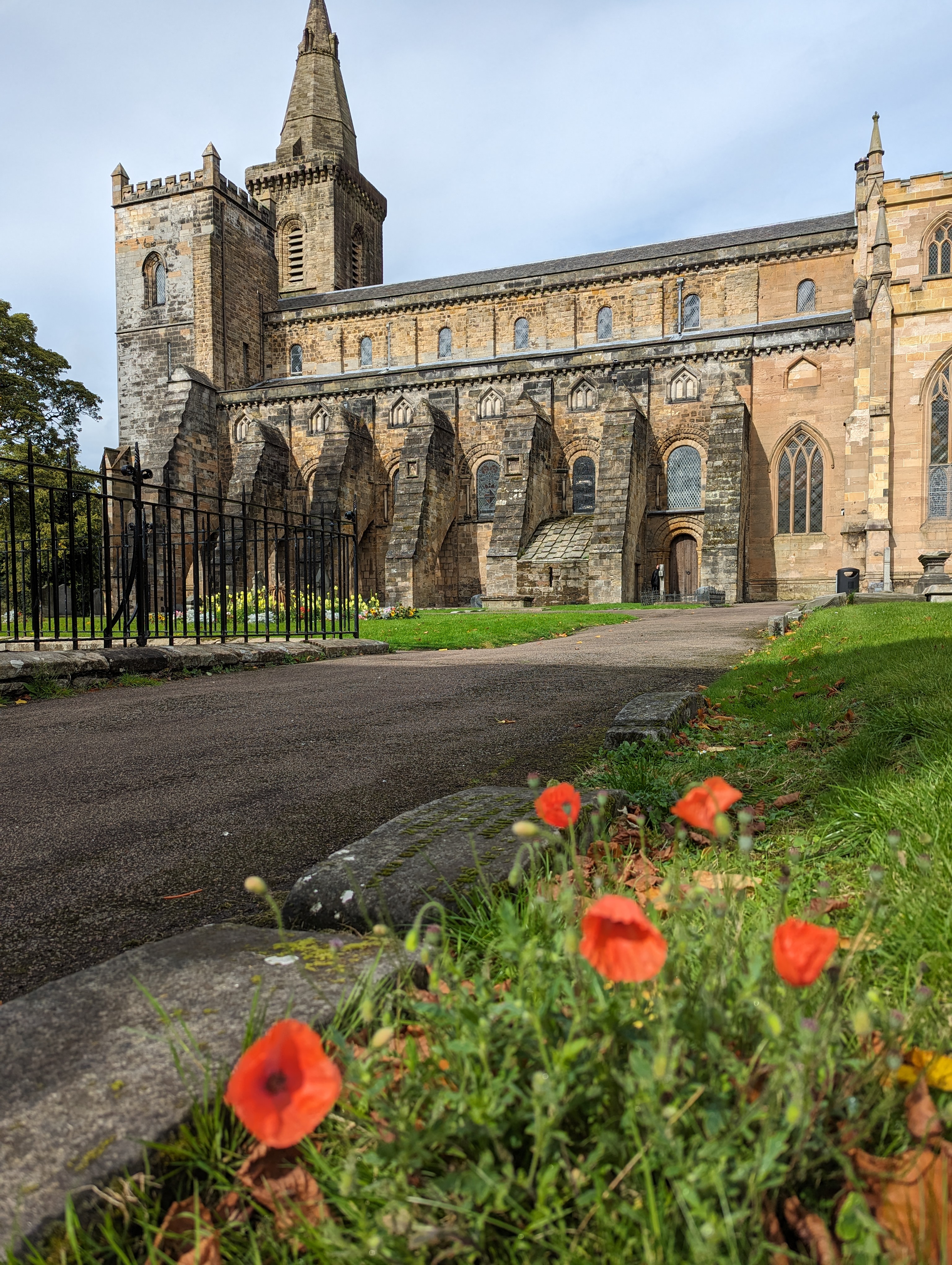
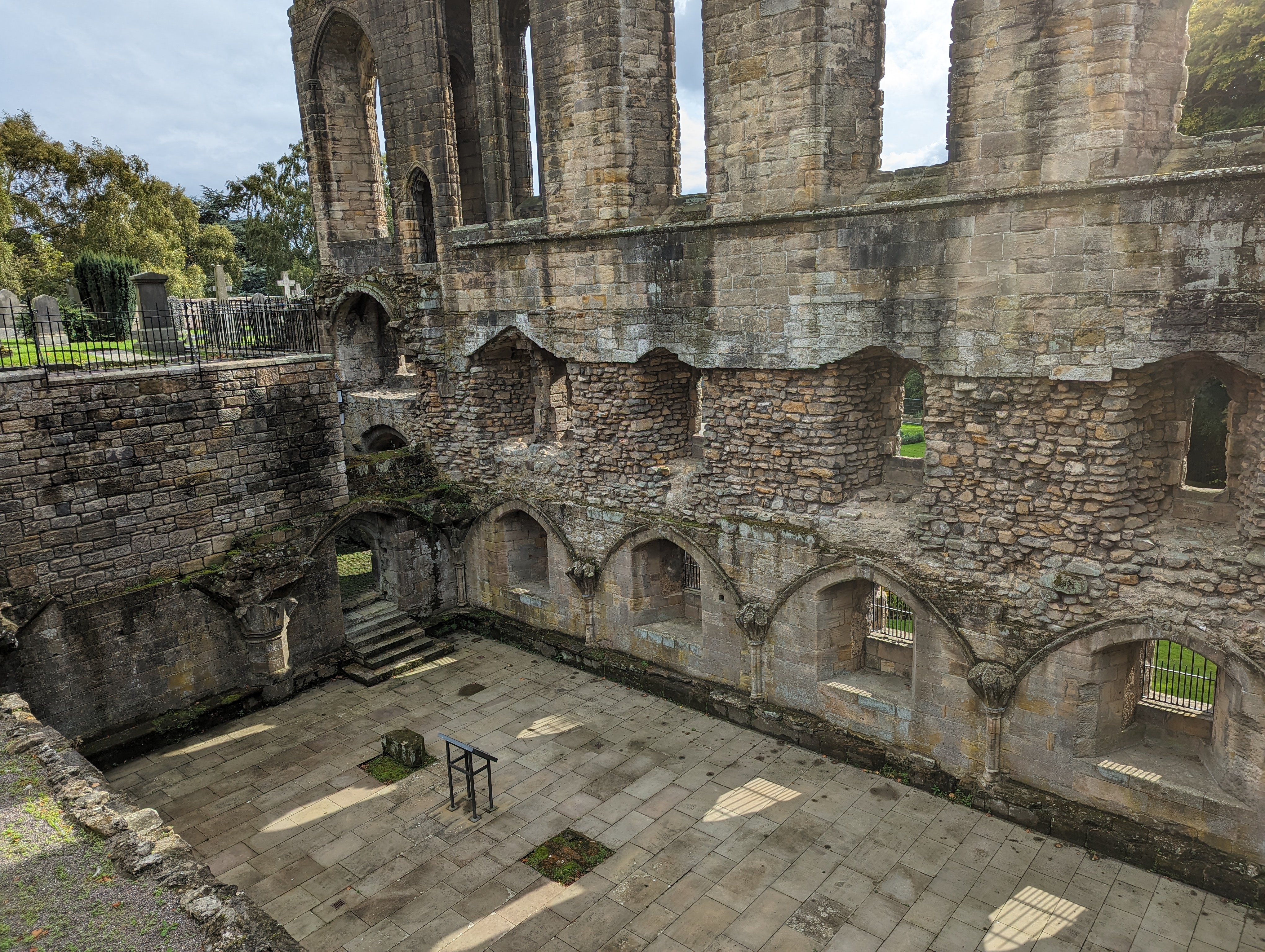
    Dunfermline Abbey has been home to Christian worshippers for more than 1000 years:

    The building has two distinct halves. On the left of the picture (the western half) is the Benedictine Abbey, founded by Queen Margaret in the eleventh century. Margaret arrived in Dunfermline in 1068, following the defeat of the English at the Battle of Hastings in 1066. She married King Malcolm in 1070 and founded Dunfermline Abbey in 1072.

    On the right (the eastern half) is the New Abbey Church, constructed in the early nineteenth century. Robert the Bruce is buried under this half of the church. The letters that you see in the balustrade of the square tower spell out “BRUCE KING”.

    Here’s another view of the older part of the abbey:

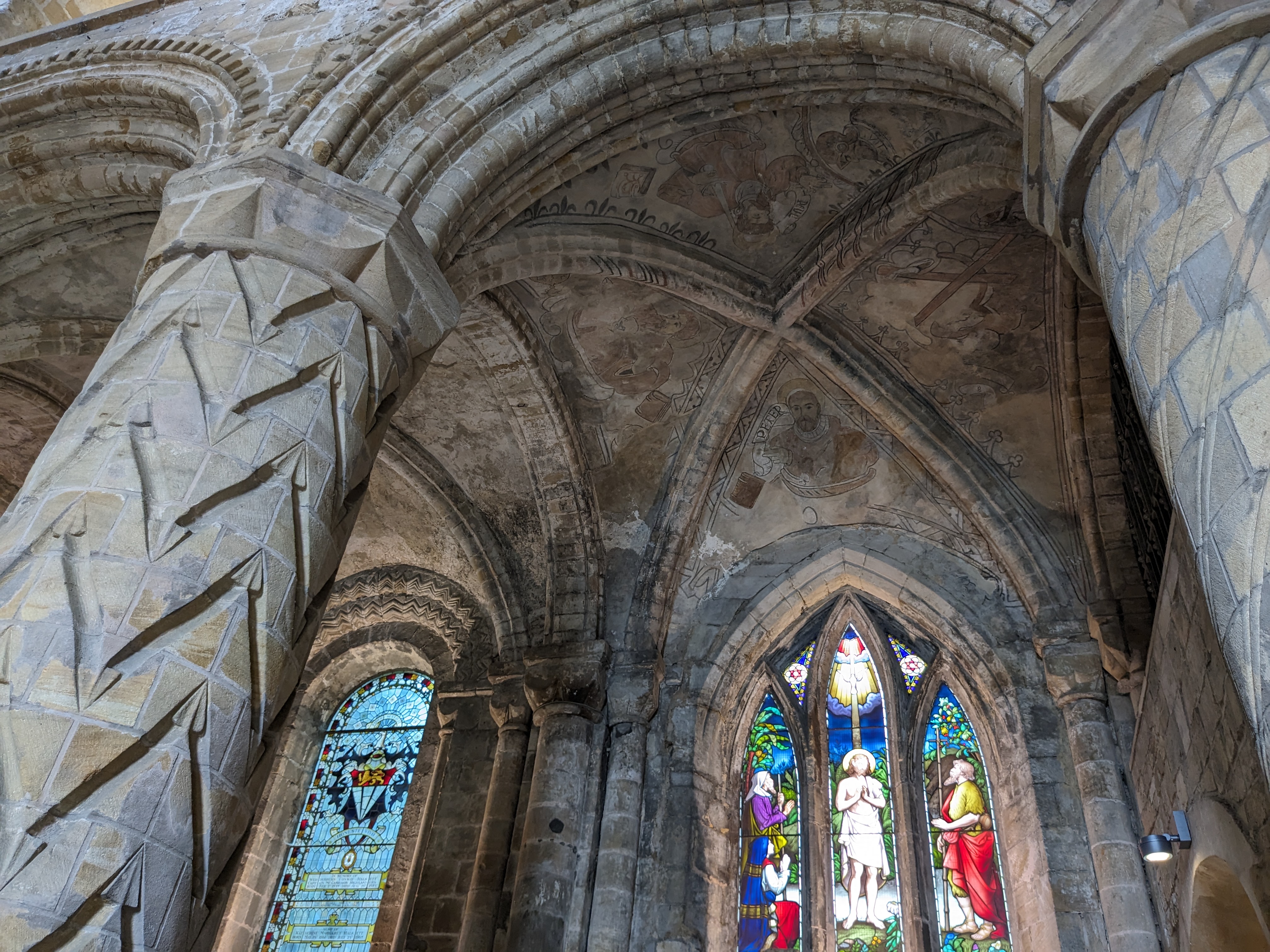
    Inside the abbey, one of the arched ceilings still has the early frescoes of the apostles:

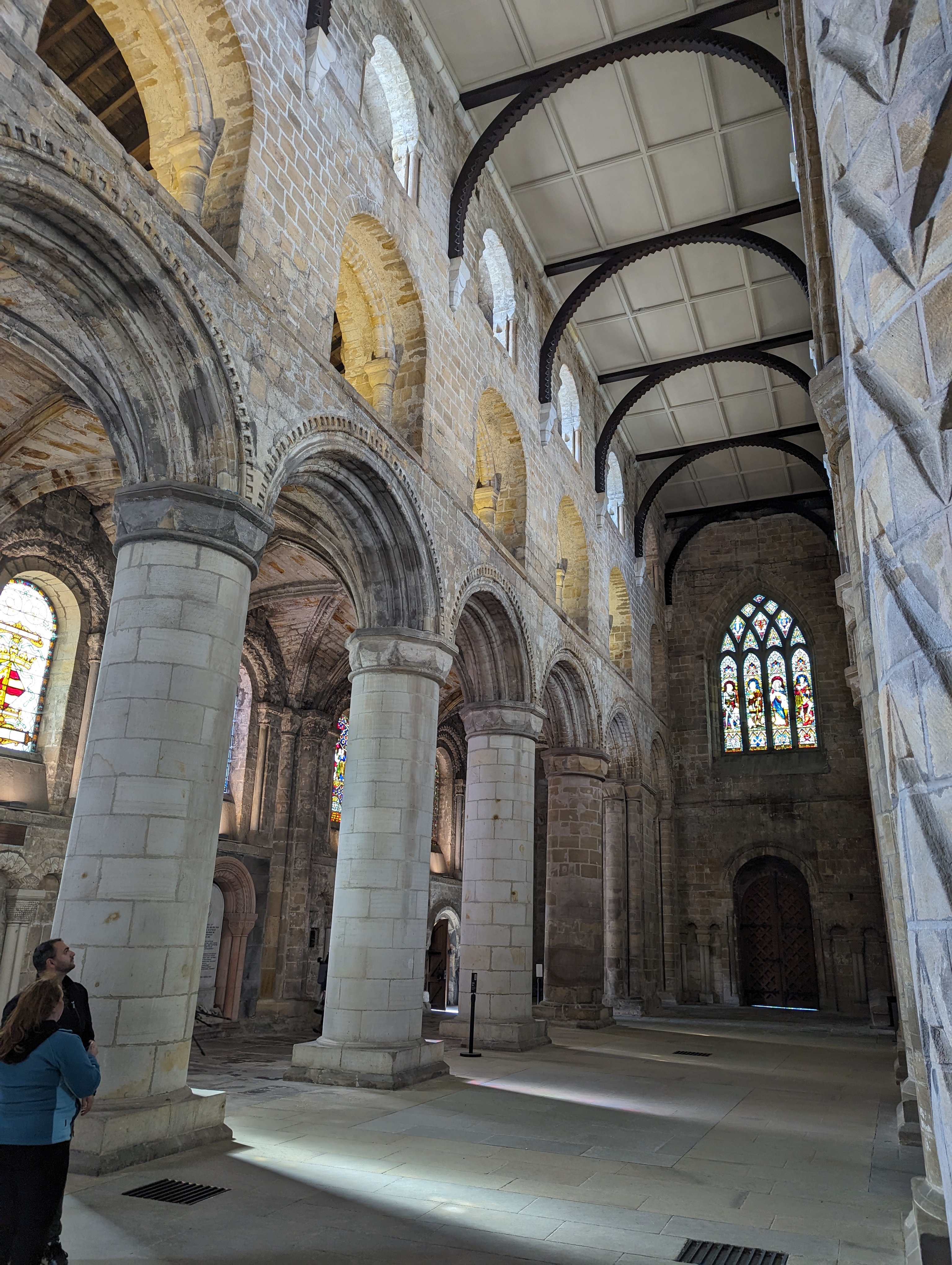
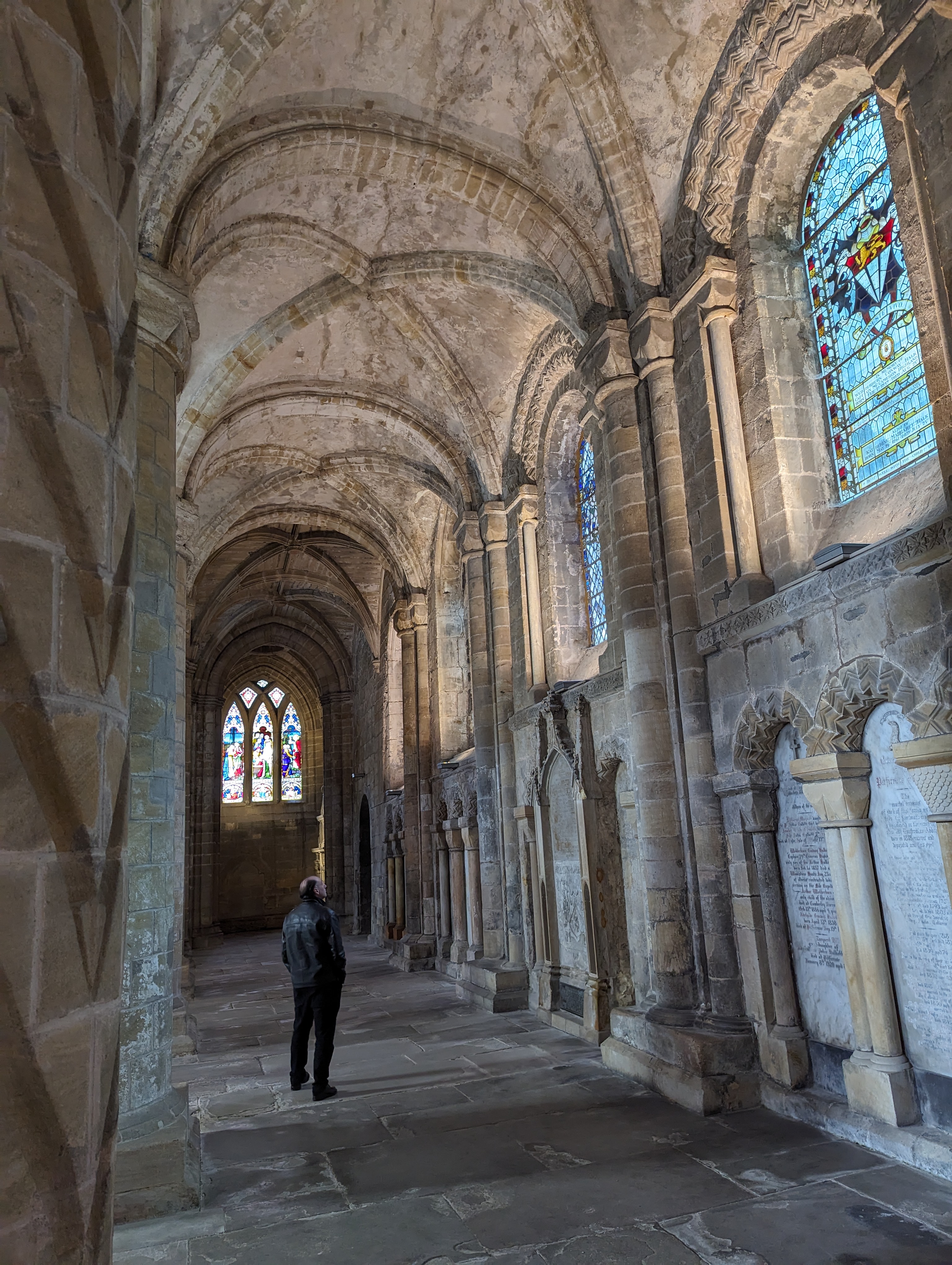
    More scenes from inside the old abbey:

    In the grounds of the abbey lie the ruins of the monastery that was built at around the same time as the old abbey, way back in the 1070s:


  • Bridges of Forth and Queensferry Crossing

    This is the blog of Mark Wordsworm, the travelling worm. I’m a 36-year-old bookmark (give or take a few years) and I proudly boast my own Hallmark serial number, 95 HBM 80-1. You’ll probably want to read all about me and my Travelling Companion (the TC).

    Today’s travel notes

    Me and the TC are touring bonny Scotland this week. We spent a day in Queensferry on the Firth of Forth. This worm was much taken by the bridges that cross the wide waters of the firth.

    Is this stretch of water called the Forth of Firth or the Firth of Forth, you might ask? And what do those two words mean? The water’s name is the Firth of Forth. “Firth” is a Scottish word, of similar origin to the Norwegian “fjord”, meaning a coastal inlet. “Forth” is the name of the river.

    The book I’m in

    Imminent Peril, a Sasha McCandless adventure by Melissa F. Miller. The TC loves this series about a lawyer detective who attracts trouble and deals with it fearlessly.

    Travel tips

    Bridges carry us across areas that would otherwise be tricky. They can be beautiful and amazing feats of engineering too.

    Recommended restaurant

    Scott’s Bar and Restaurant, Port Edgar Marina, Shore Rd, Queensferry. Friendly, professional service and excellent food.

    The photos

    A rainbow appeared over the Forth Bridge while we were enjoying dinner in South Queensferry:

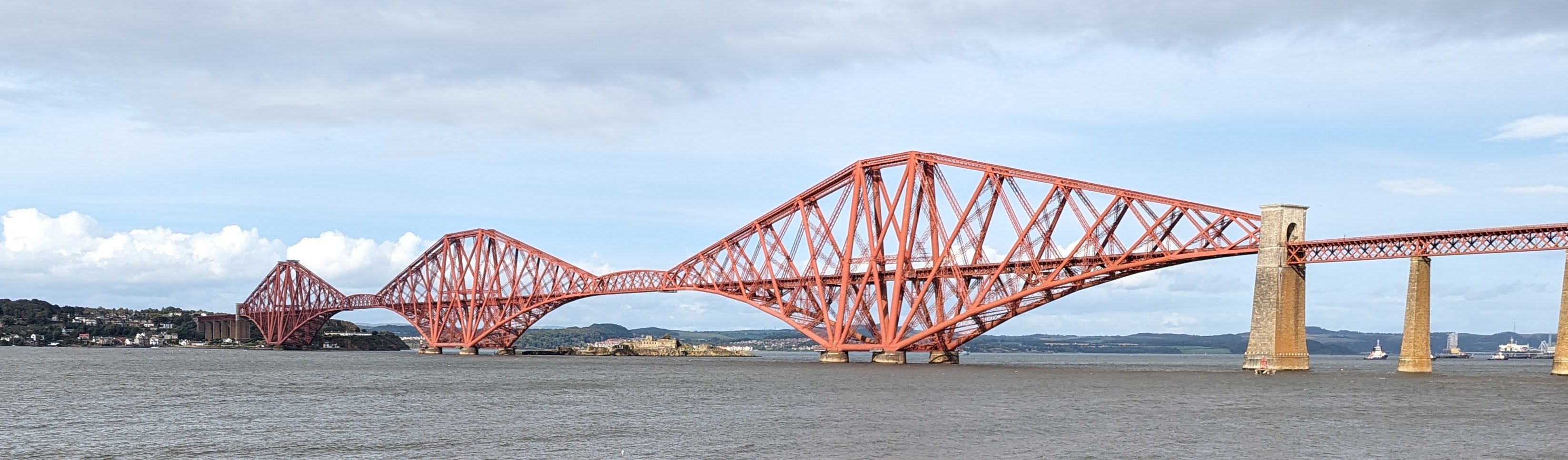
    Dating from its opening in 1890, the Forth Bridge is the oldest of three bridges that cross the firth at Queensferry. It’s used only by railway trains — no road traffic, cyclists, or pedestrians. Due to its revolutionary engineering, the Forth Bridge has been designated a UNESCO World Heritage Site. Until 1919, it was the world’s longest cantilever bridge (that is, a structure made of horizontal projections that are supported only at one end) and was heralded as the first major steel structure to be built anywhere in the world. In 1919, a bridge in Canada took over the claim to be the longest cantilever span in the world.

    The next picture shows all three bridges that cross the Firth of Forth at Queensferry. On the left is the Queensferry Crossing. In the middle is the Forth Road Bridge. And in the distance on the right is one end of the Forth Bridge:

    Here’s another view of the Forth Bridge, this time without the rainbow:

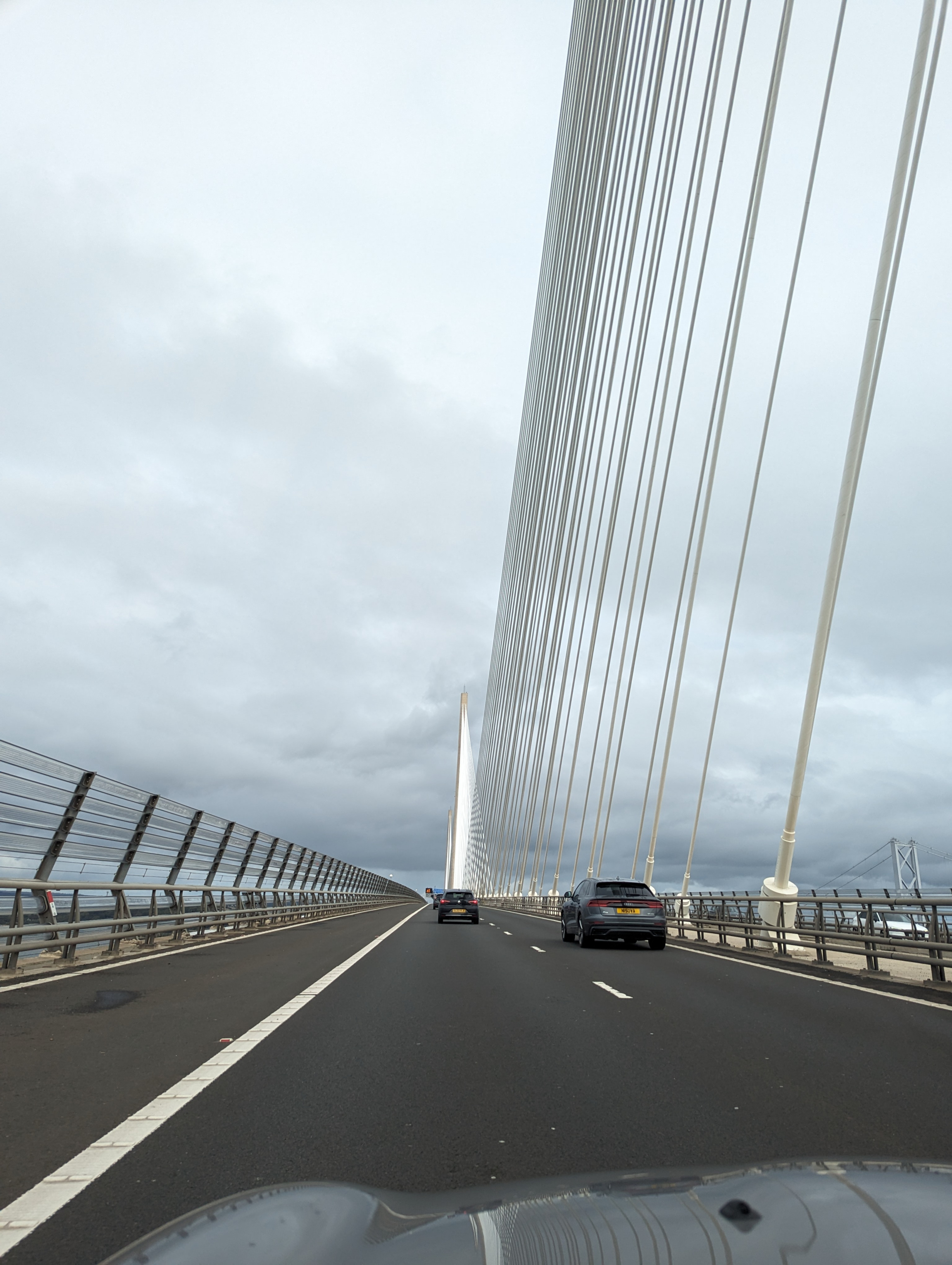
    We crossed the firth by car on the Queensferry Crossing Bridge. This is the newest of the three bridges. It opened in 2017. In the morning light, the clusters of cables around the bridge’s three towers glowed like white torches:

    As we drew closer, each glowing shaft of light resolved into multiple strands of cable:

    The third of the three bridges is the Forth Road Bridge, stretching across the river between the other two. It opened in 1964, and is an impressive long-span suspension bridge. Its use is now restricted to pedestrians, cyclists, and public transport. Here you see part of the Forth Road Bridge, with the Forth Bridge behind and below it:


  • Off road above Loch Lomond

    This is the blog of Mark Wordsworm, the travelling worm. I’m a 36-year-old bookmark (give or take a few years) and I proudly boast my own Hallmark serial number, 95 HBM 80-1. You’ll probably want to read all about me and my Travelling Companion (the TC).

    Today’s travel notes

    Me and the TC are touring bonny Scotland this week. We spent a day exploring the tracks around Loch Lomond and Loch Long in a Land Rover Defender. Our guide from 4×4 Adventures Scotland was skilled and knowledgeable, and excellent company to boot.

    The book I’m in

    Robinson Crusoe by Daniel Defoe, a tale of wonder and woe. It amuses this worm to apply analytic skills to the language and norms of the day, while at the same time enjoying a good yarn.

    Cautionary travel tales seem to appeal to the TC while herself travelling.

    Travel tips

    Come rain or shine, take a day off your busy travel schedule to soak up the beauty of the natural surrounds.

    The photos

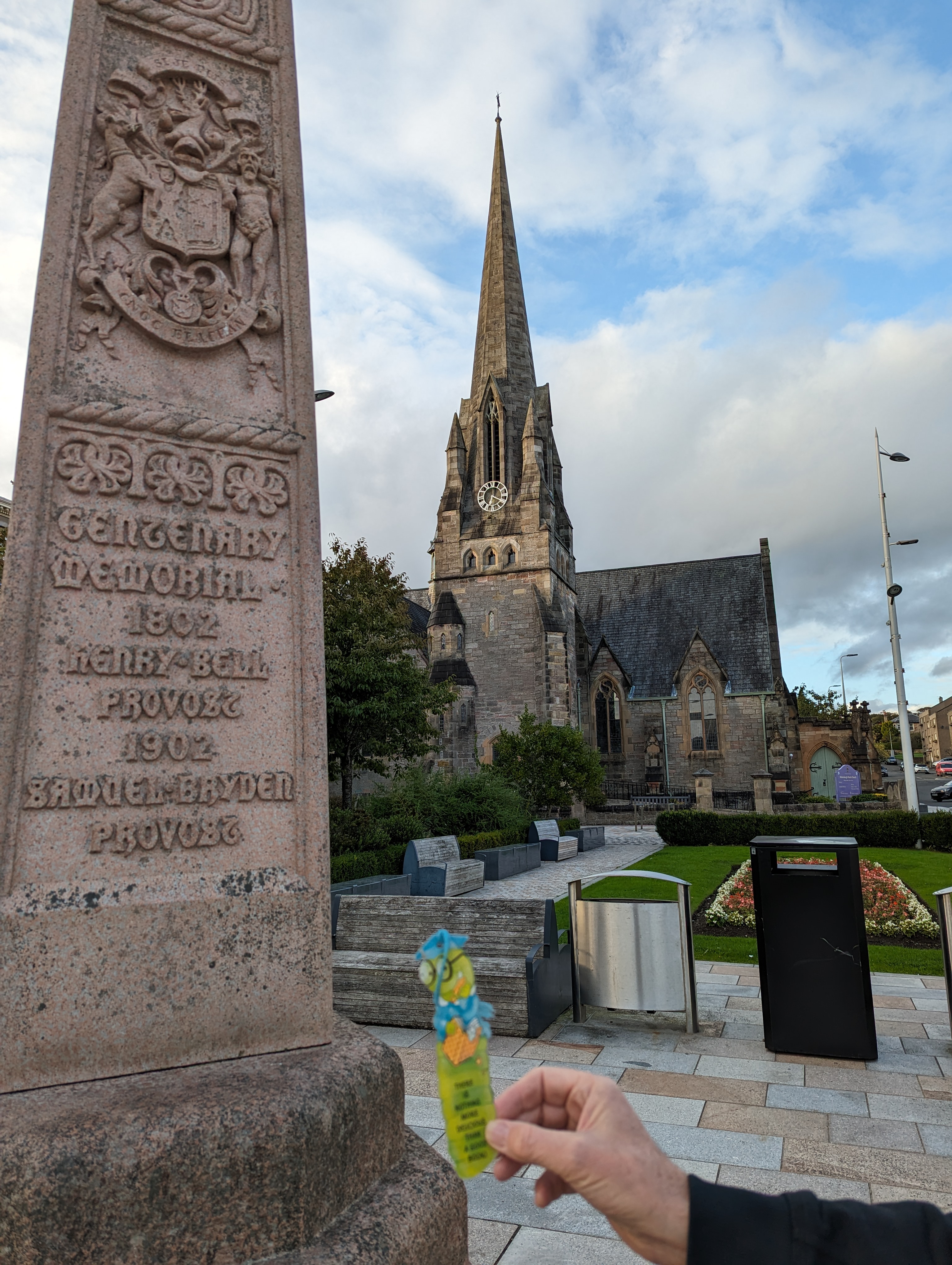
    Me in Helensburgh alongside a memorial to Henry Bell, provost of the town in 1802. Helensburgh lies on the shores of Gare Loch, near Loch Lomond. Henry Bell was the first person to found a steamship business on British waters:

    The TC organised a full-day off road adventure with 4×4 Adventures Scotland. The company provided a Land Rover Defender and a local guide named Alan, who knew the off road tracks around Loch Lomond and surrounds like the back of his hand.

    The vehicle was a Land Rover Defender 110 with a 2.4 litre engine, 33″ all-terrain tyres, a manual gear box, and differential lockers front and back. Approximately ten years old, she’d earlier served as an ambulance. She bore the name LU55 MAD, of which the first part harks to her base in the town of Luss and the second part harks to her nature. Show her a steep, rocky hill with a stream of water coursing down it, and she jumped at the challenge of getting to the top:

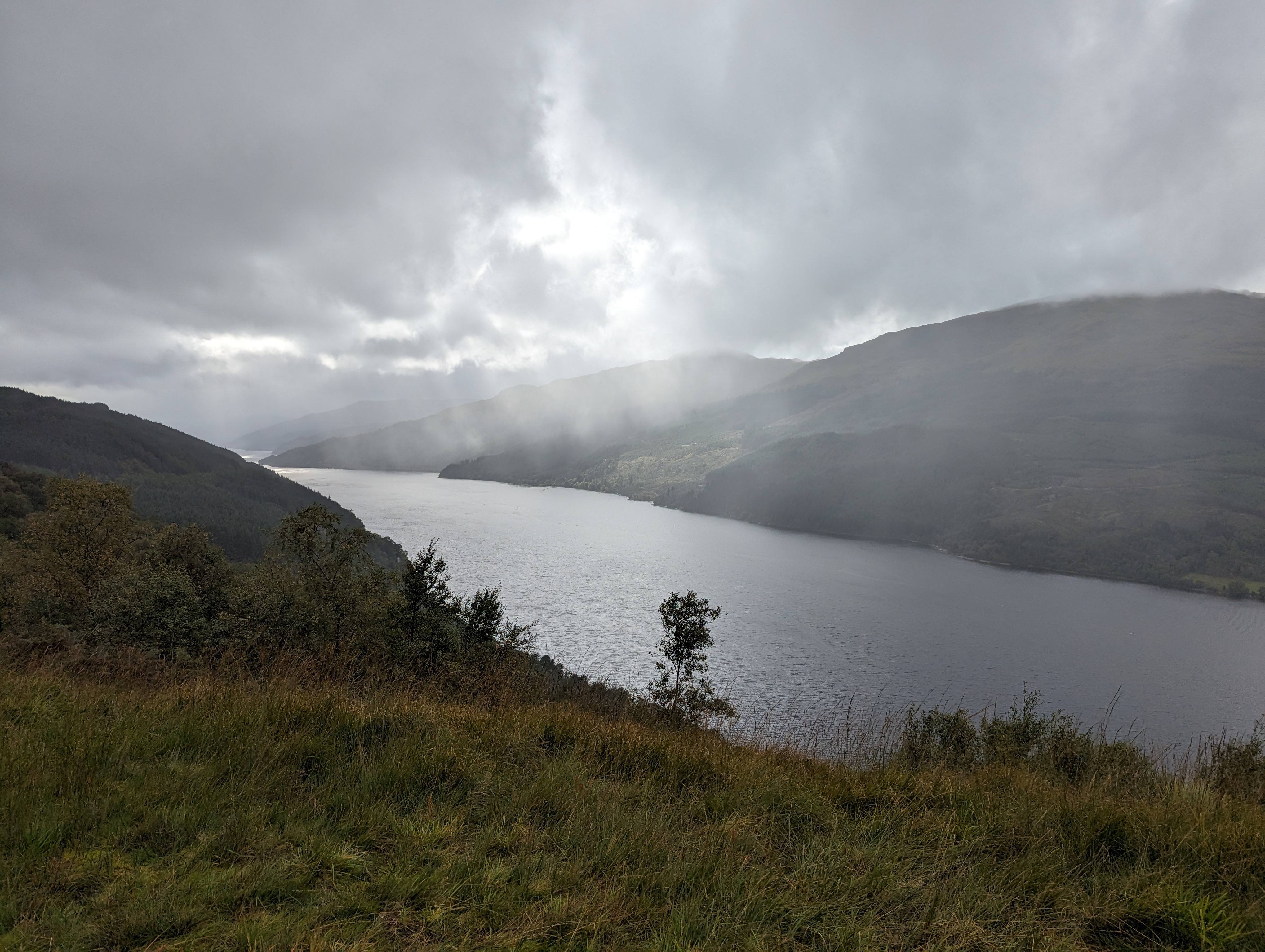
    The weather did us proud, throwing us an abundance of mood-filled scenes. This is the gorgeous Loch Long:

    The TC, bless her cotton socks, could not restrain the Ooohs and Aaahs. This worm concedes that there was beauty to be had. In particular, these mossy knolls appealed to my delicate body type. The hillocks rise a couple of feet in height and are entirely soft and spongy, with no hard rock or trunk beneath:

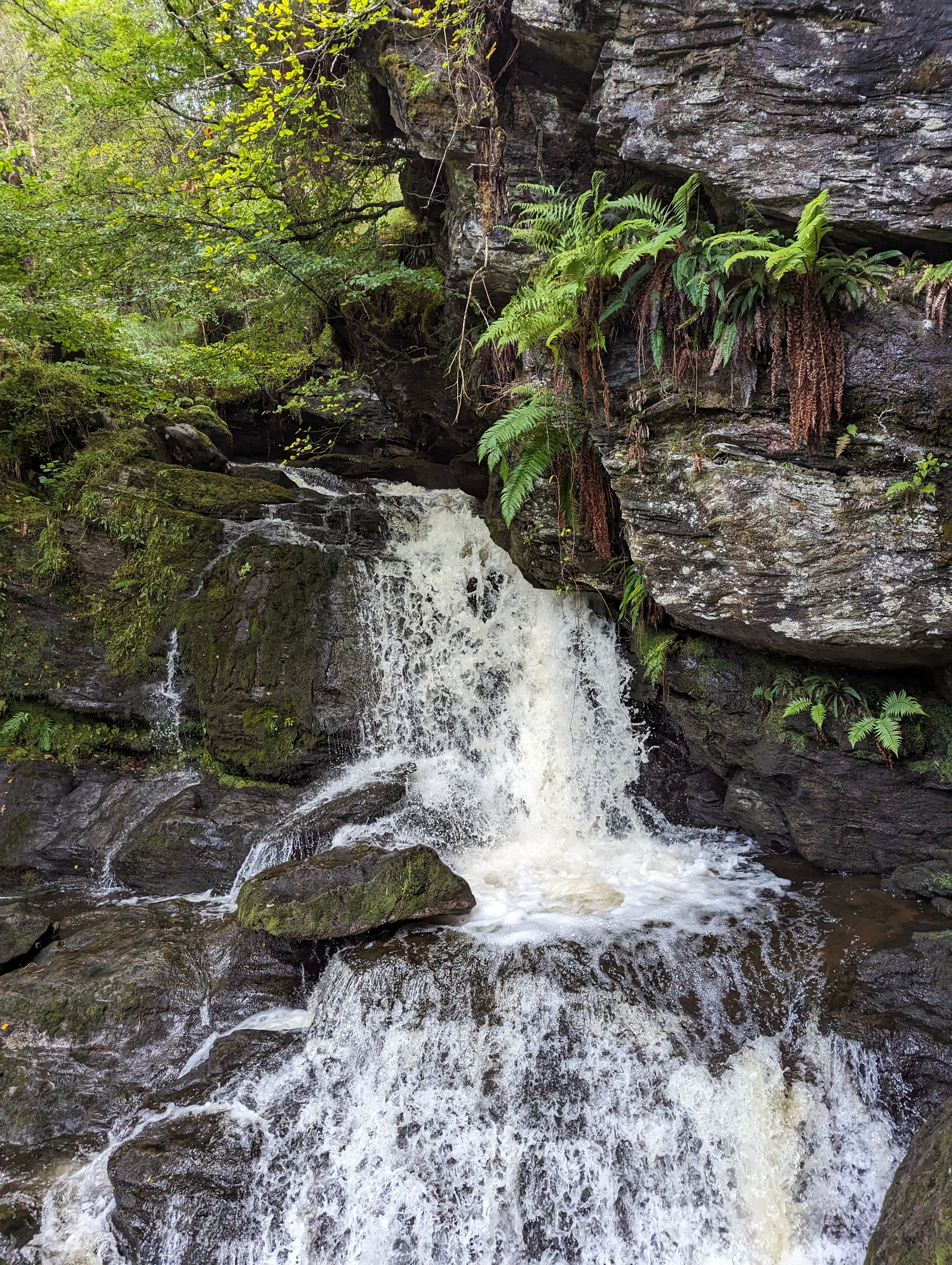
    Streams gushed down the slopes, ushered by moss and fern:

    More views of mount and loch that made the TC go Aaah. First, looking out over the islands in the wide part of Loch Lomond:

    To finish off, here’s the track running along Loch Long:


  • Imposing and peaceful Tintern Abbey, Wales

    This is the blog of Mark Wordsworm, the travelling worm. I’m a 25-year-old bookmark (I haven’t aged at all since I first wrote this introduction) and I proudly boast my own Hallmark serial number, 95 HBM 80-1. You’ll probably want to read all about me and my Travelling Companion (the TC).

    Today’s travel notes

    Me and the TC travelled from Bristol to the Wye Valley in Wales to see Tintern Abbey, on the recommendation of a coffee vendor we met at the Clifton Suspension Bridge.

    My impressions? The mix of fallen and still-standing walls is strangely effective in conveying the grandeur and peace of the place.

    Word of the day

    Abbey is the word of the day. The word stems from the same root as the Aramaic אבא (‘abbā), the Hindi abbā, and the Arabic ab, all of which mean “father”. An abbey is where the abbot lives, the abbot being the head of a group of monks. ABBA is also the name of a rather well known Swedish pop group. The group’s name is formed from the first letters of the singers’ names.

    Travel tip

    Pay heed to coffee vendors and other wise folks.

    The book I’m in

    Alaskan Fire, by Sara King. A good read, although slightly less sophisticated than this author’s other works.

    The photos

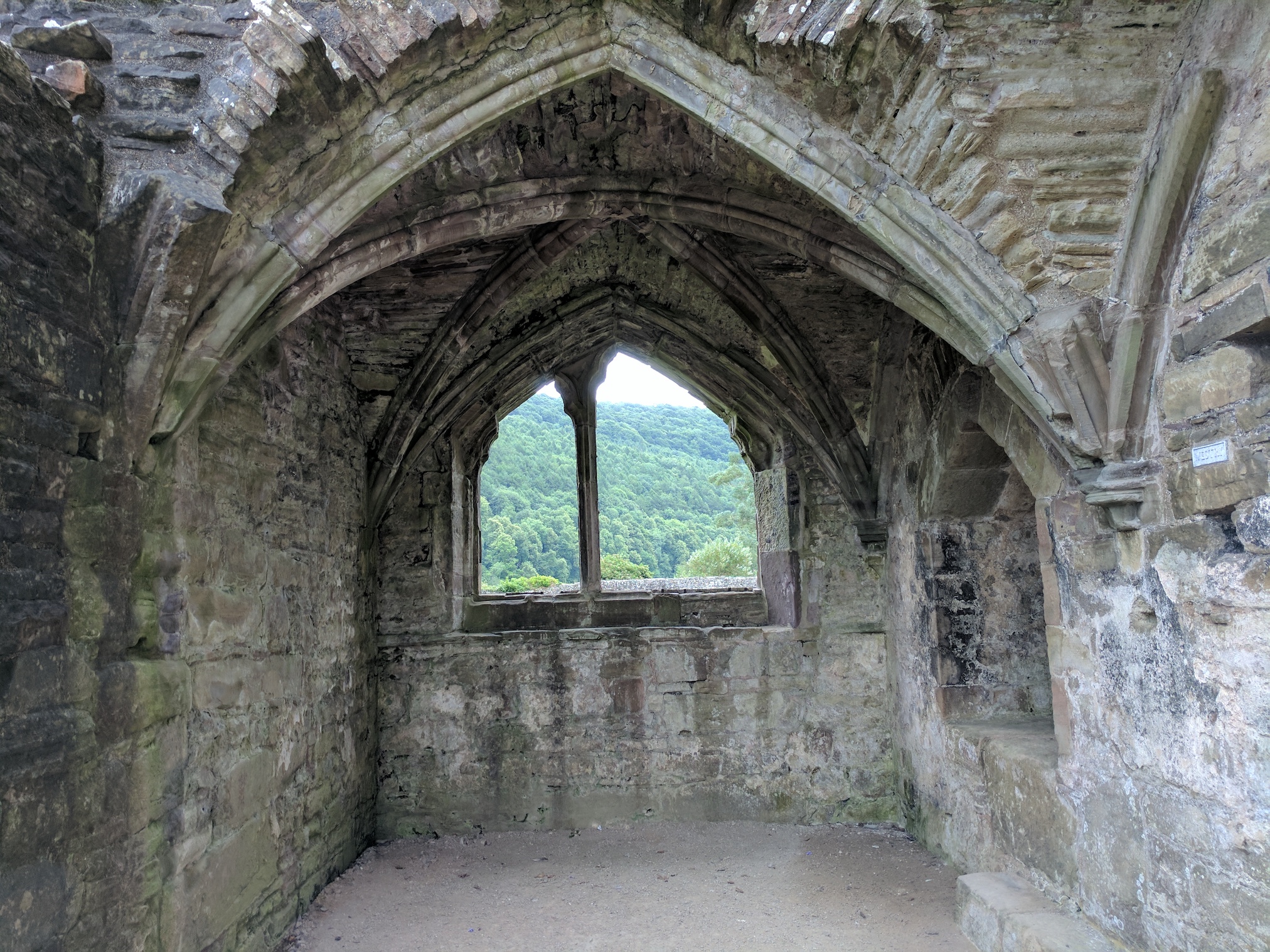
    Me taking in the sights from a window at Tintern Abbey:

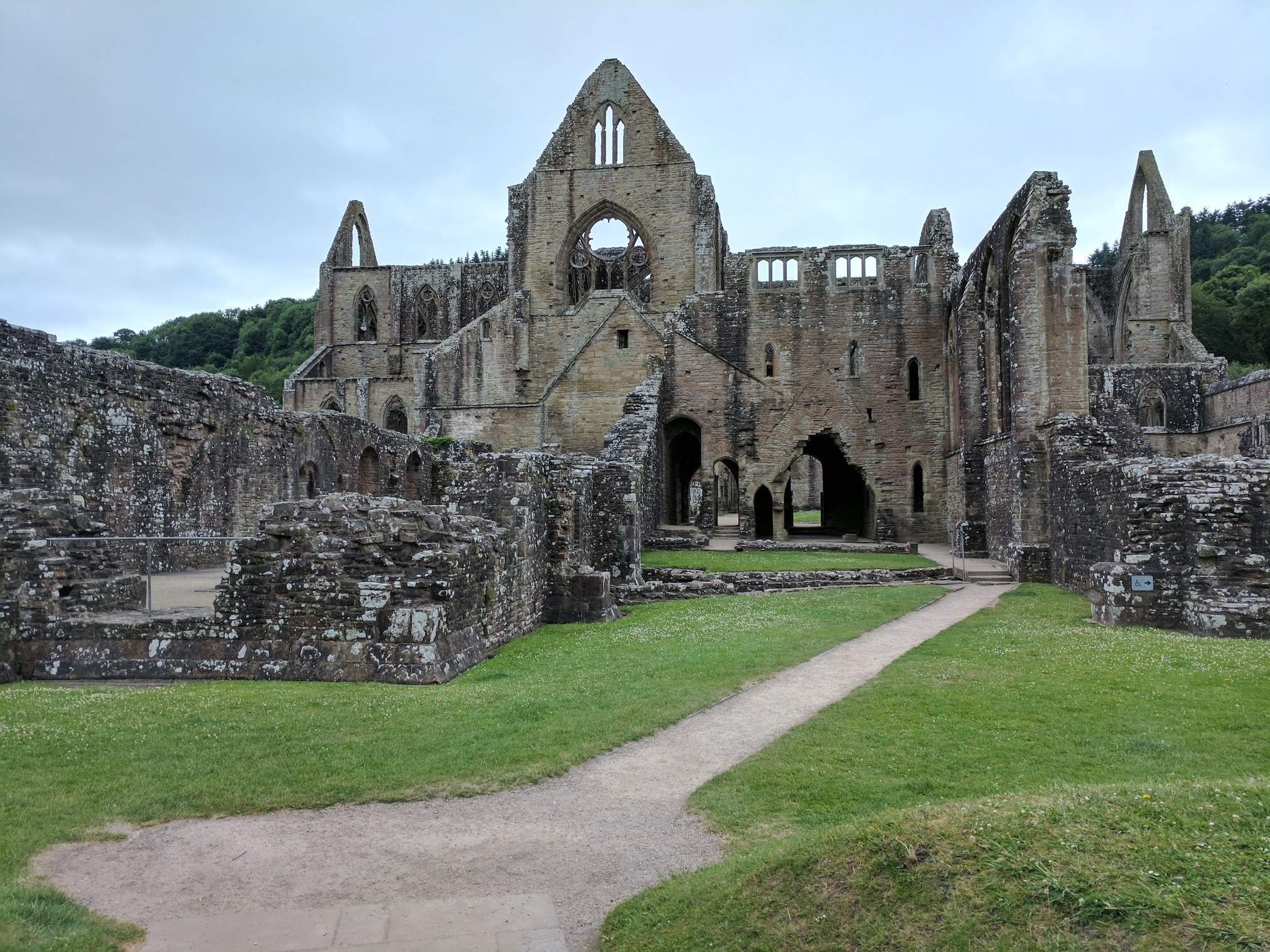
    The Welsh name for the abbey is Abaty Tyndyrn. The tourist brochure says Tintern Abbey is Wales’s best-preserved abbey. In Welsh, that’s “Yr Abaty sydd yn y cyflwr gorau yng Nghymru”:

    Play this video to hear the sounds of Tintern Abbey:

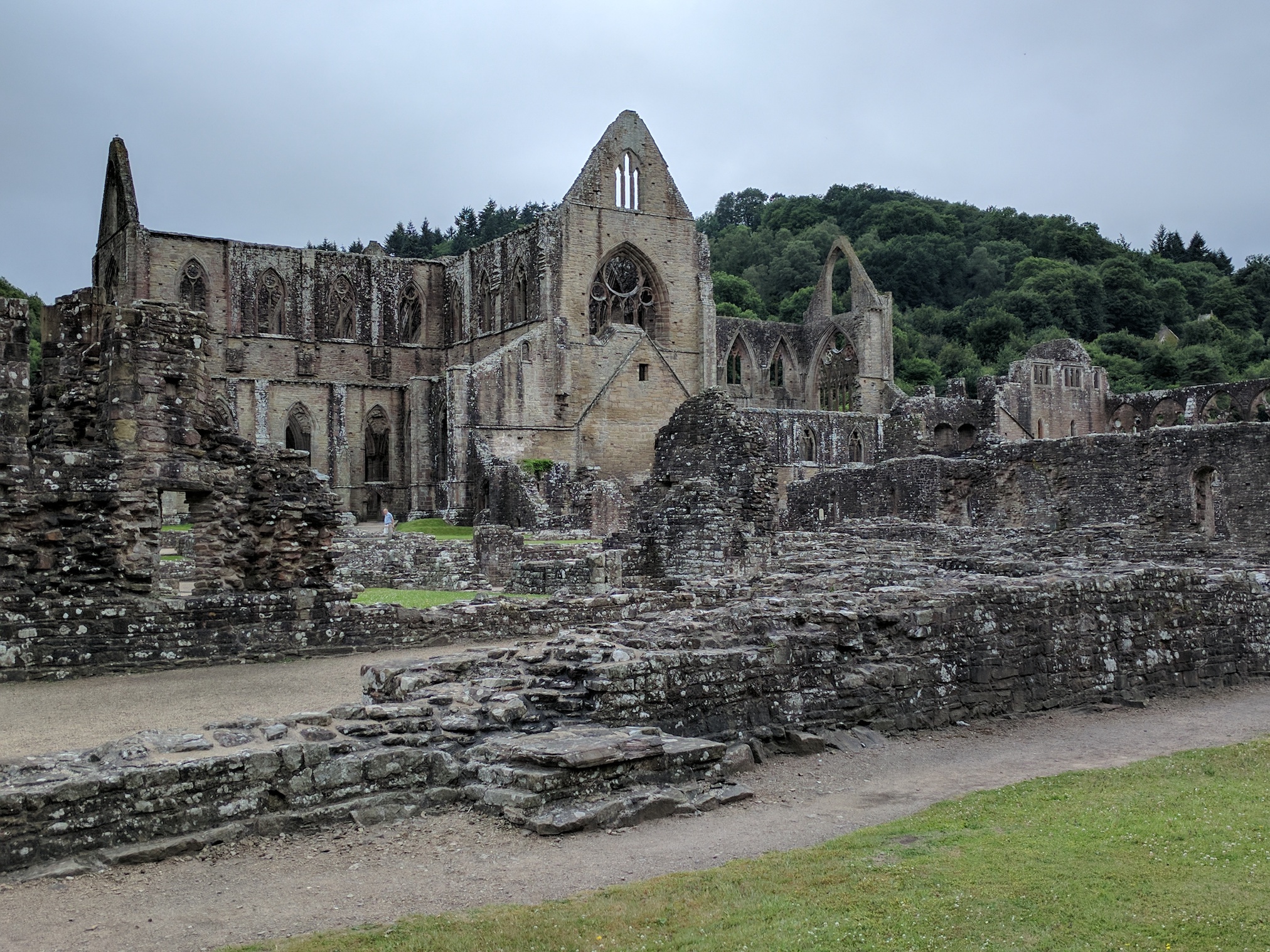
    The first buildings that formed the abbey were built in 1130s. Most of the original structure has disappeared, and what we see now was built in the 400-year period leading up to 1536. Then King Henry VIII passed a number of laws that put a stop to monasteries and the monastic life in England, Ireland, and Wales. The abbey fell to ruin:

    Flowers and poetry grow from its walls:

    Symmetry and sky greet you as you enter:

    The pantry has an imposing ceiling:

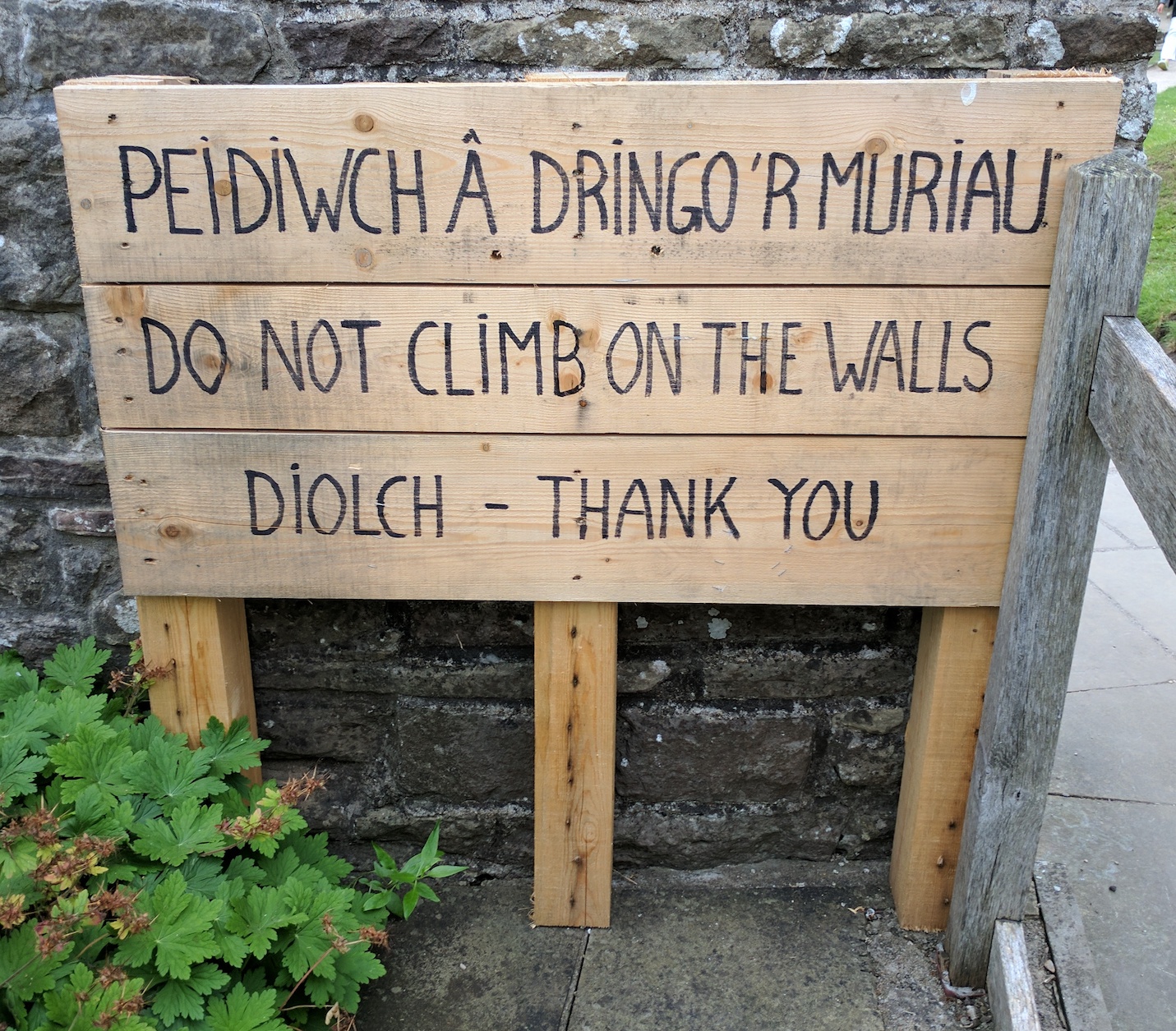
    Do not climb on the walls, written in English and Welsh:

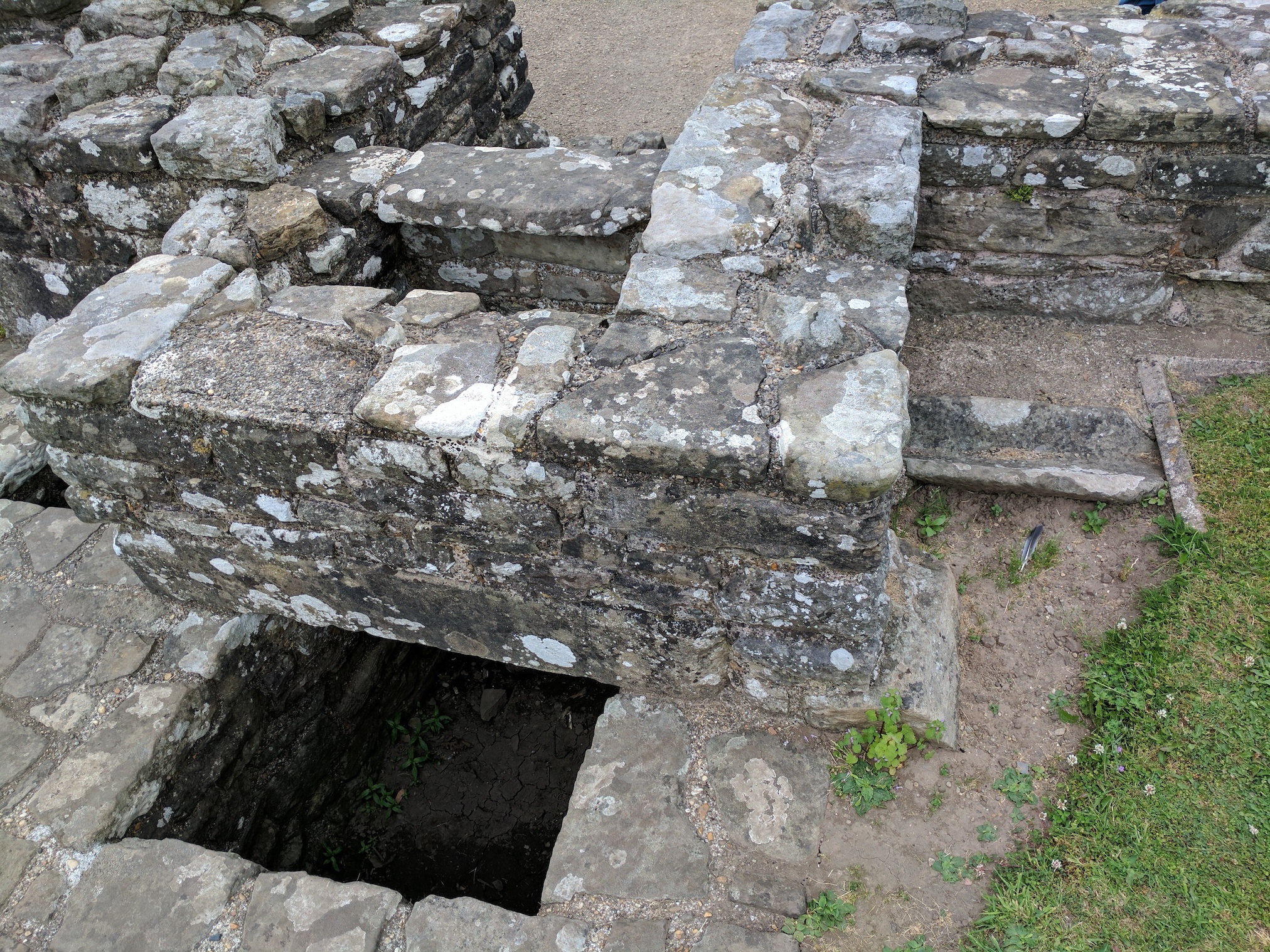
    This worm has noticed that the plumbing is often a high point in ruins. The abbey is no exception – the drainage system is lauded in the tourist information:

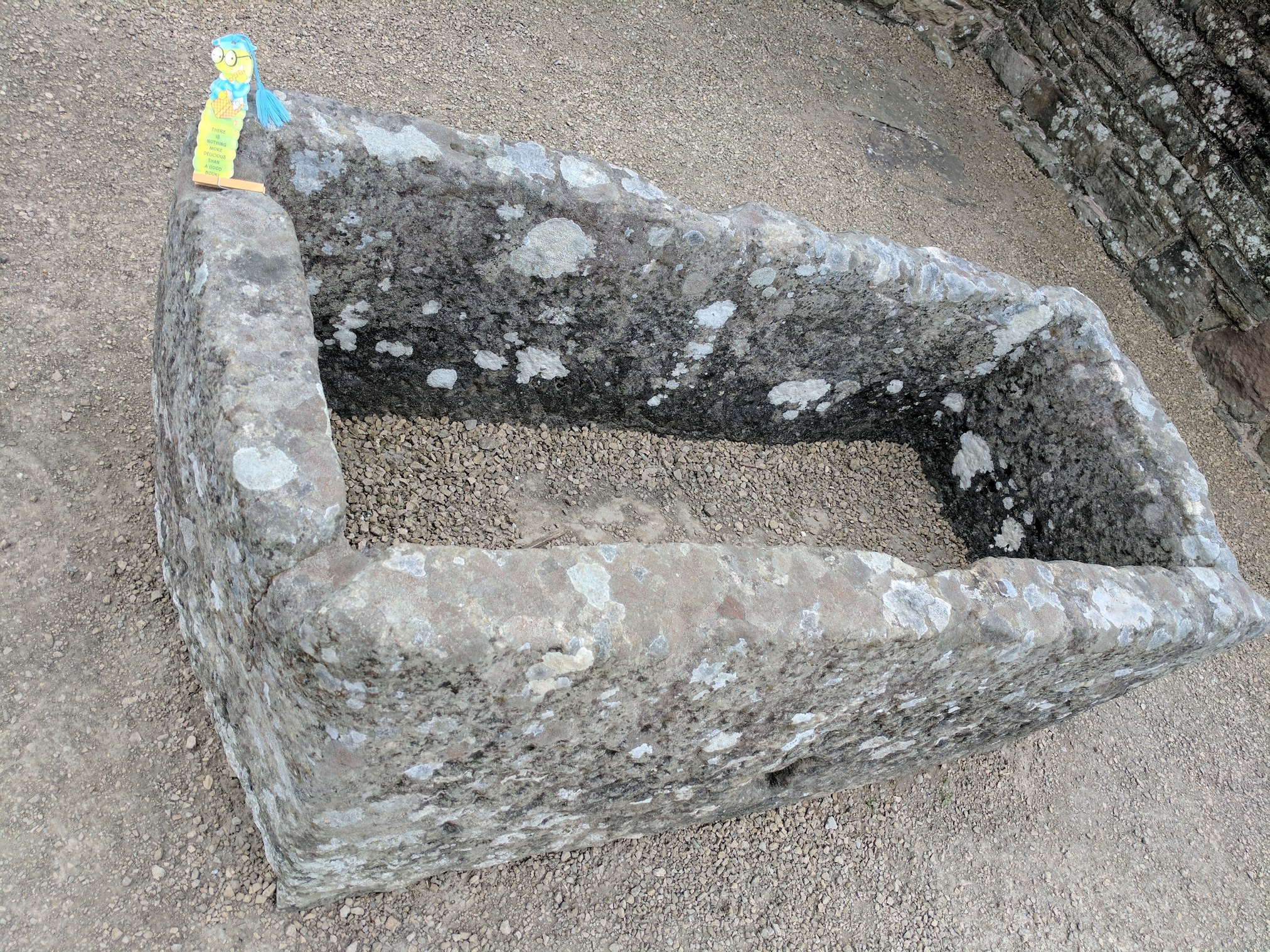
    Me and Peg checked out the bathing facilities:

    The view of the hills probably hasn’t changed much in the 850+ years since the abbey was built:

    Farewell gracious abbey:

    That’s all for today, folks.


  • Clifton Suspension Bridge thrice crossed

    This is the blog of Mark Wordsworm, the travelling worm. I’m a 25-year-old bookmark (I haven’t aged at all since I first wrote this introduction) and I proudly boast my own Hallmark serial number, 95 HBM 80-1. You’ll probably want to read all about me and my Travelling Companion (the TC).

    Today’s travel notes

    Me and the TC crossed the Clifton Suspension Bridge in three ways yesterday. We strolled across it, drove over it, and drove under it. The bridge spans the River Avon near Bristol, UK, and offers heart-stopping views of the city and the river.

    My impressions? An impressive work of engineering, surrounded by beauty.

    Word of the day

    Suspense is the word of the day. Dangling from a suspension bridge makes for a suspenseful day’s work.

    Travel tip

    If you’re driving, stop the car well short of the bridge and stroll down for a leisurely look.

    Recommended coffee cart

    A friendly, knowledgeable person offered us a cup of Union Direct Trade coffee and a chat at the Bristol end of the bridge. He’s fun to talk to, and the coffee is good.

    The book I’m in

    The Visitor, by Lee Child. I’m still munching my way through the same book as in my previous few posts. A good Lee Child is a good place to be.

    The photos

    Me snuggling up to one of the 3,500 load-bearing bolts that hold the Clifton Suspension Bridge together:

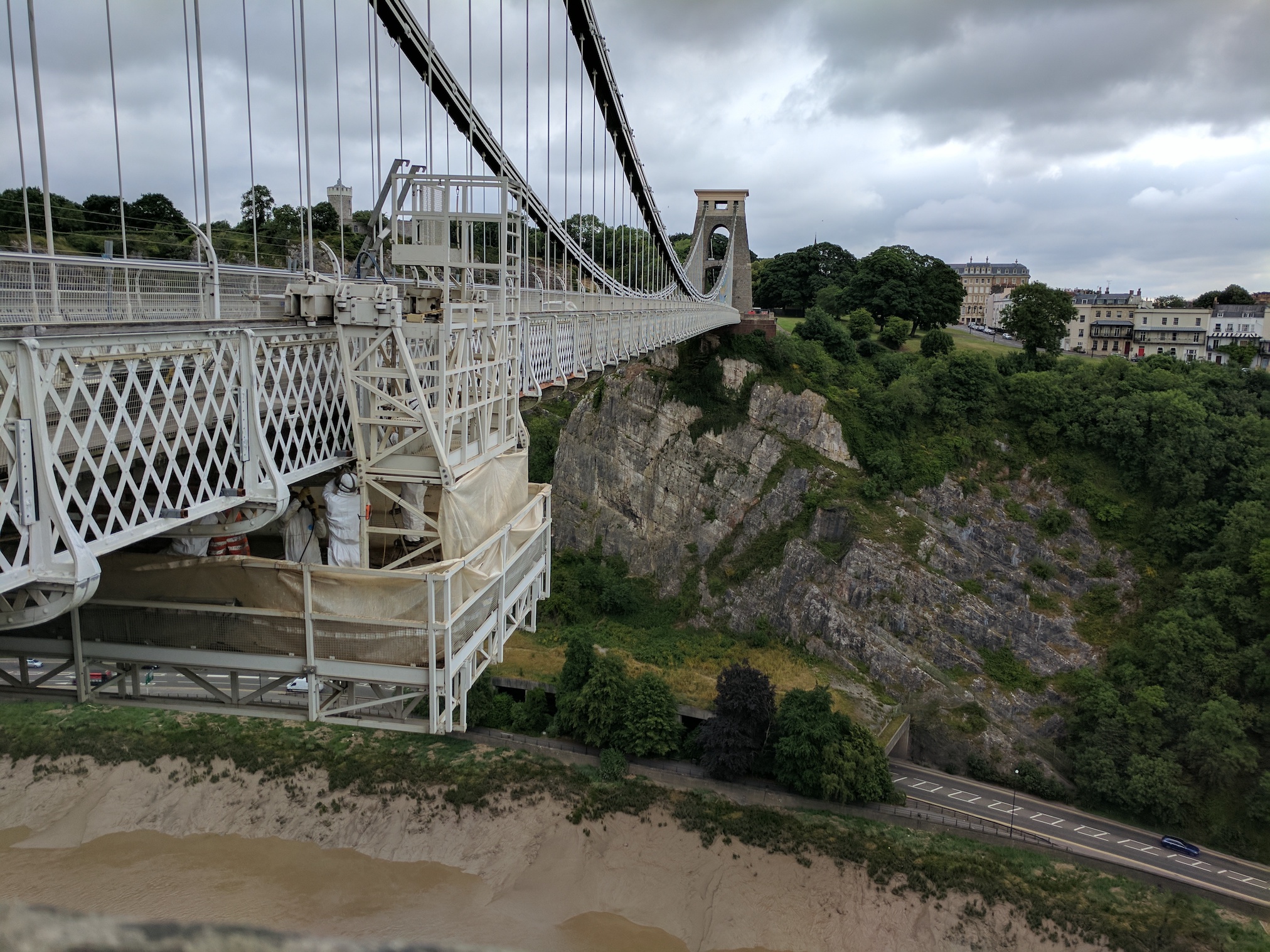
    This worm does not envy these workers dangling from a maintenance cage under the bridge, more than 245 feet above the river:

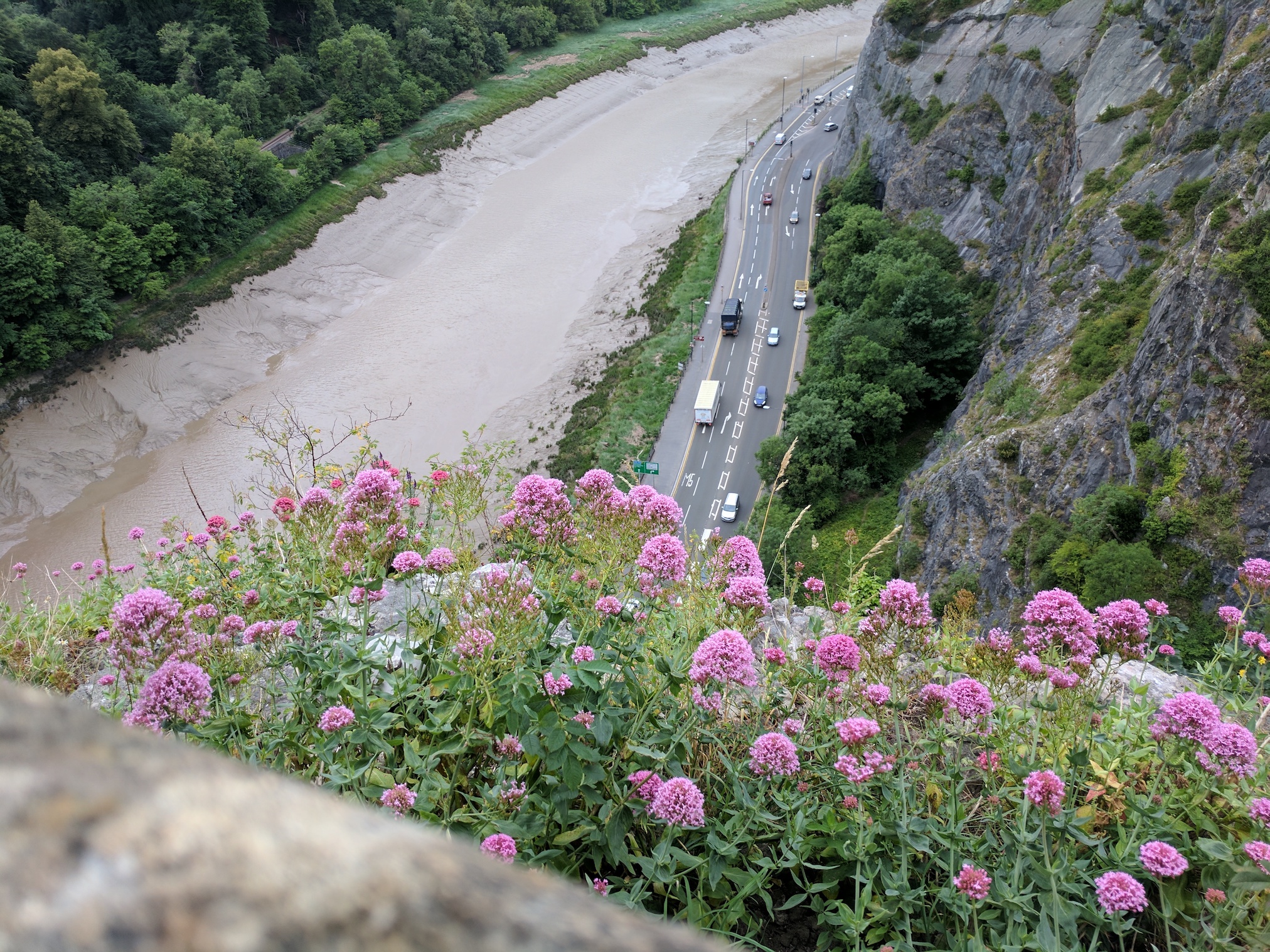
    On one side of the bridge is a view of the River Avon with the city of Bristol in the distance:

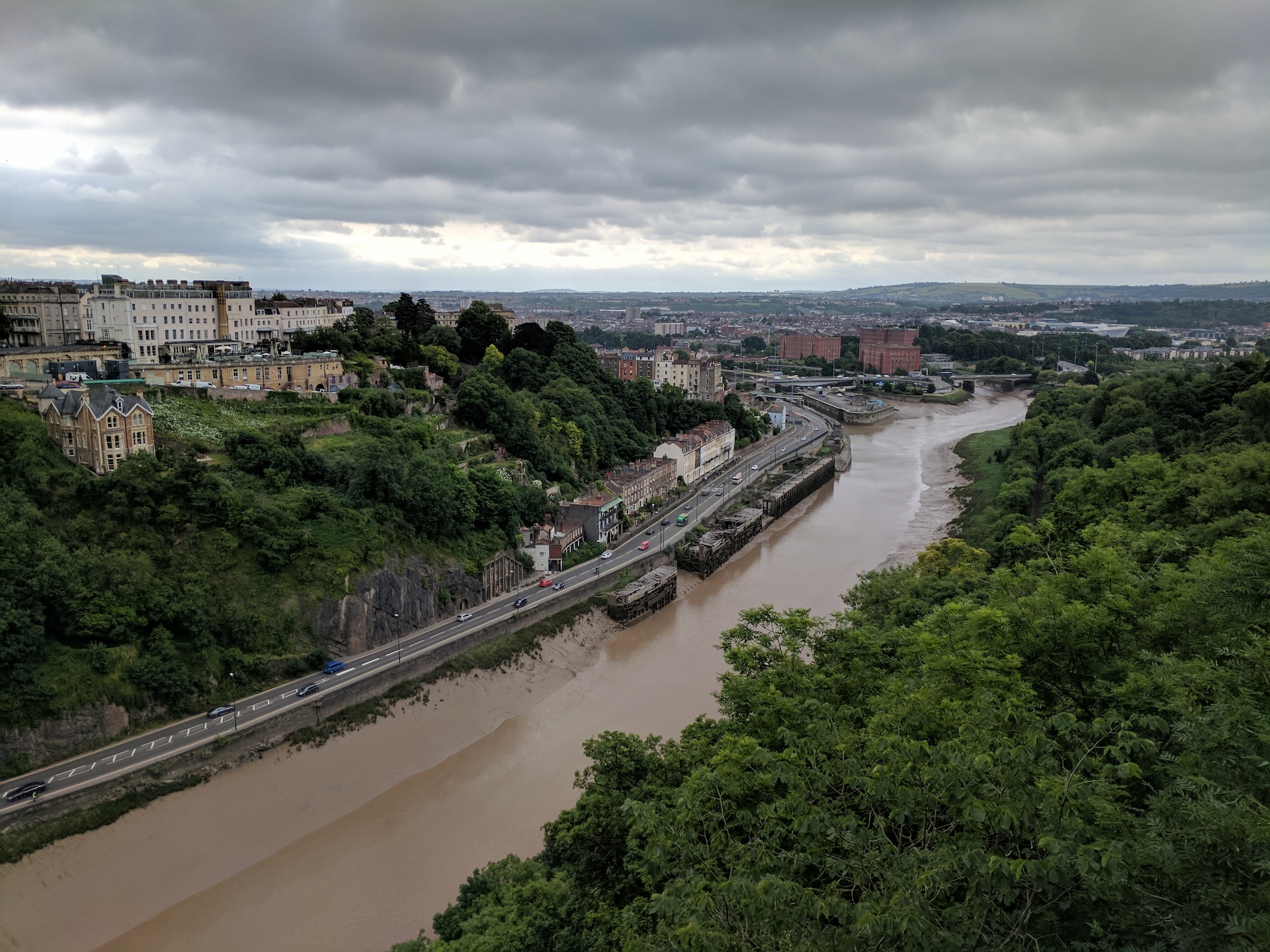
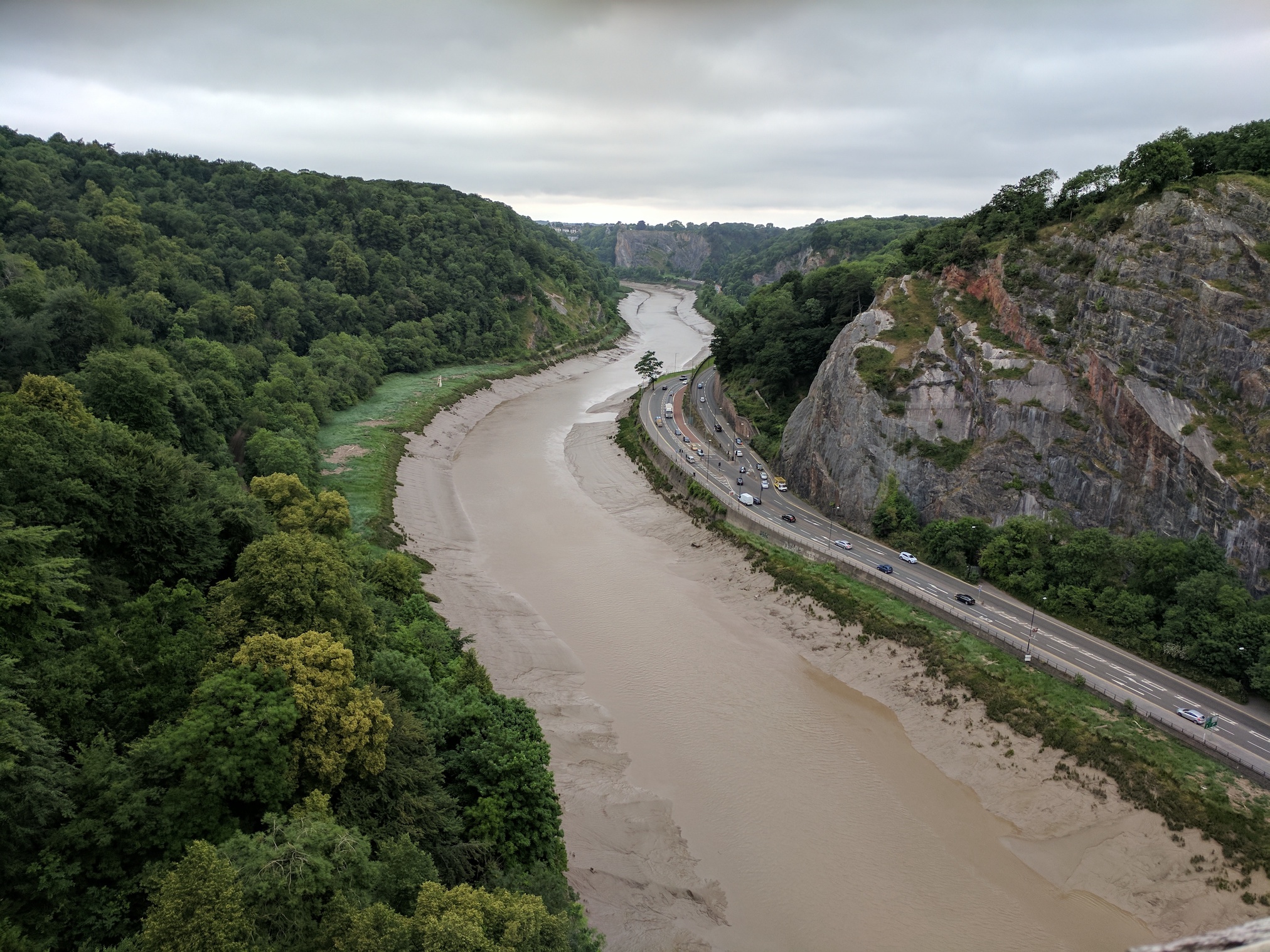
    On the other side of the bridge, the river stretches out its muddy banks:

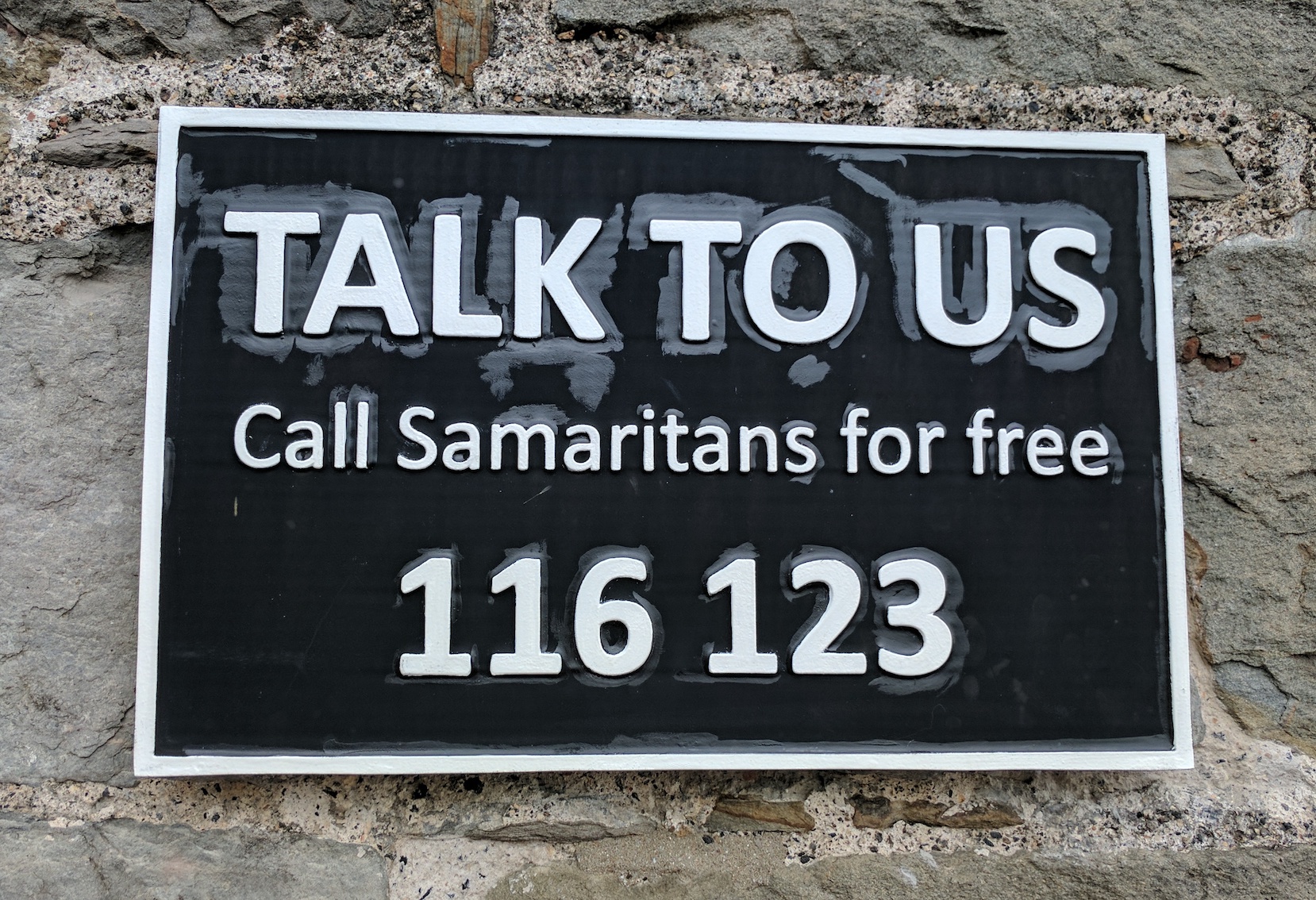
    A sobering sign hints of people less happy than we:

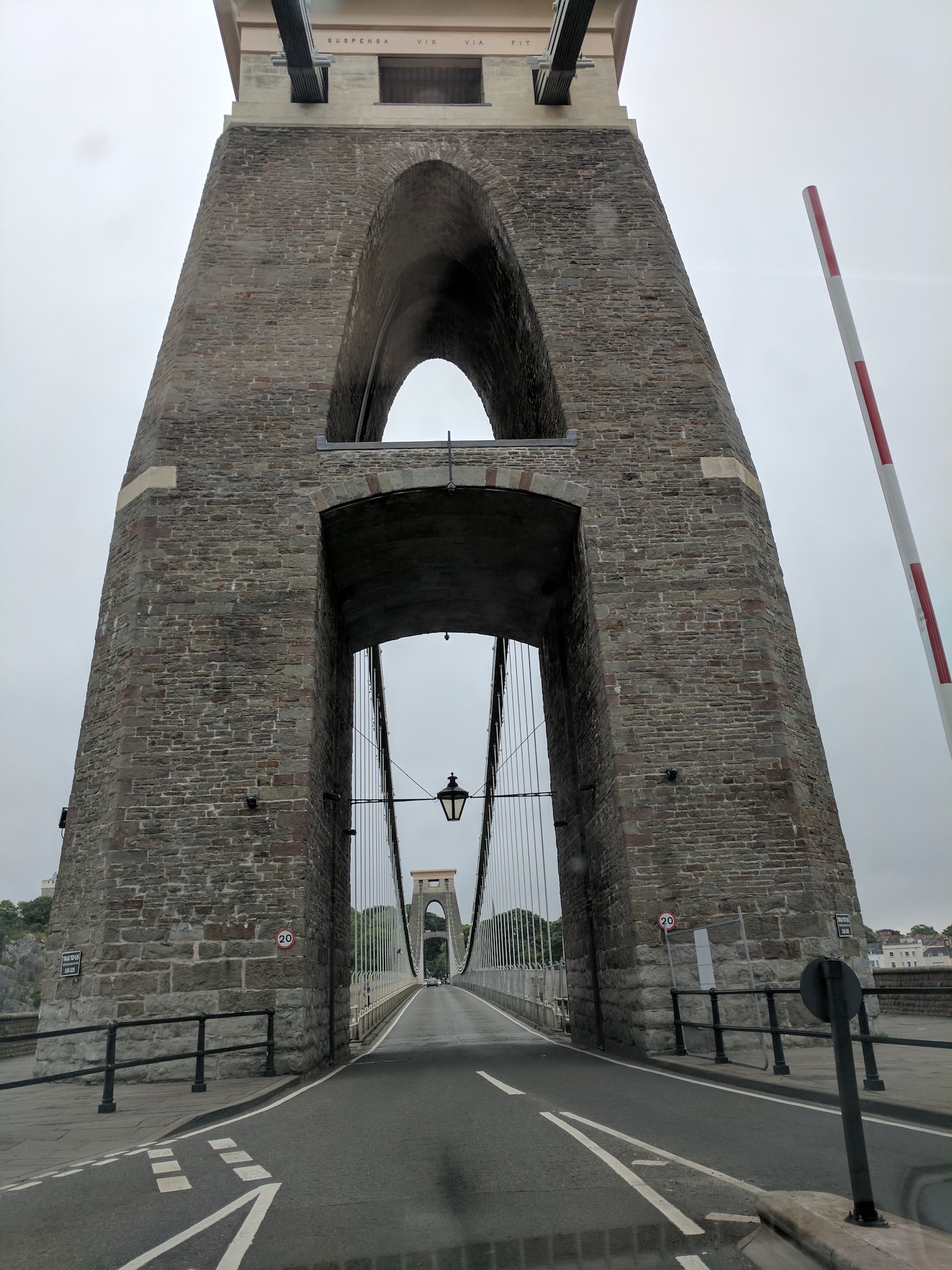
    Crossing the bridge:

    Flowers of the Bristol onion decorate the bridge’s sides:

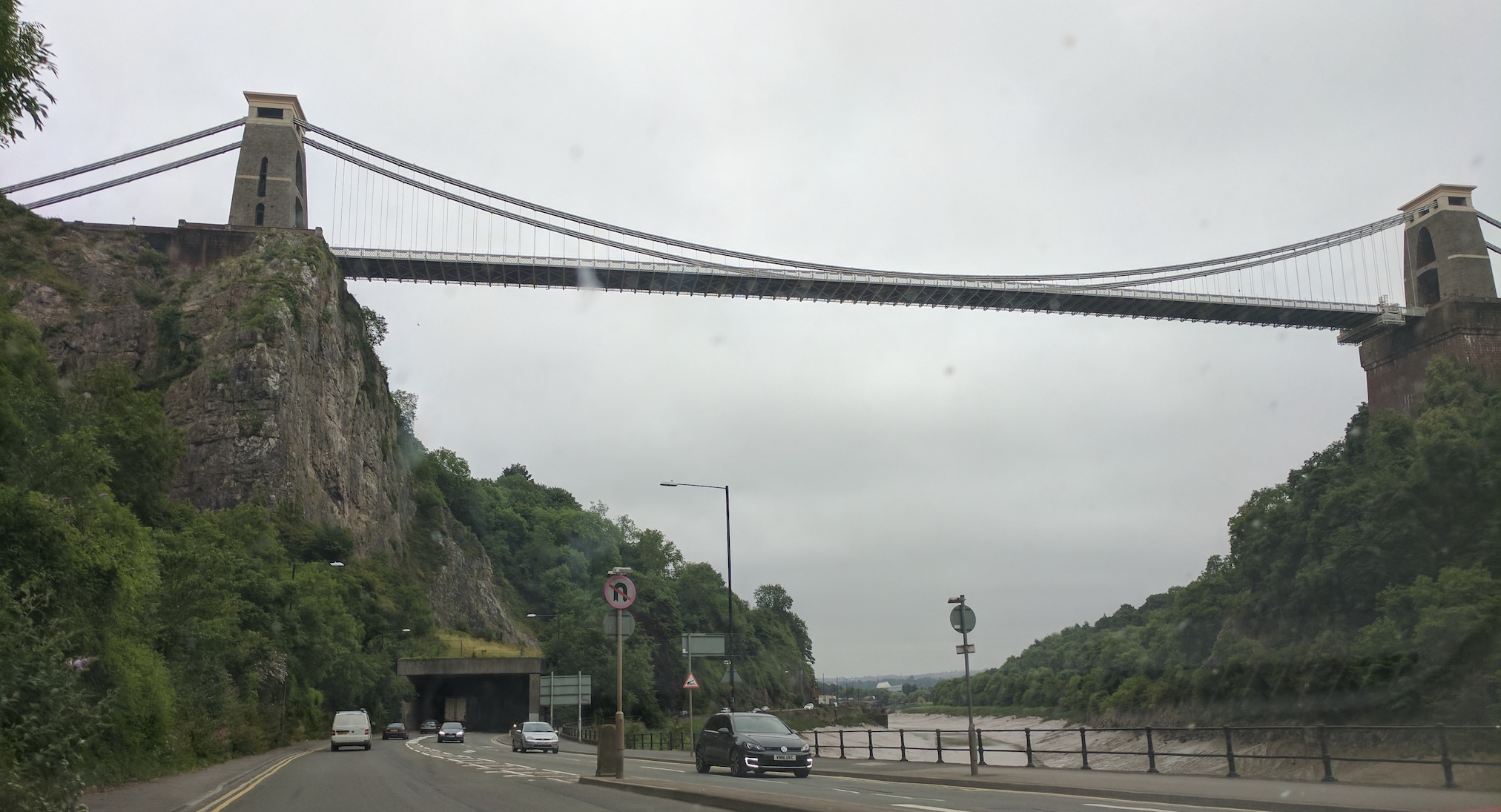
    The Clifton Suspension Bridge spand 702 feet and weighs 1,500 tonnes. The chains that support the bridge stretch 20 miles underground. Here’s a parting shot from the road below the bridge:

    That’s all for today, folks.


  • In search of the Grim Reaper

    This is the blog of Mark Wordsworm, the travelling worm. I’m a 25-year-old bookmark (I haven’t aged at all since I first wrote this introduction) and I proudly boast my own Hallmark serial number, 95 HBM 80-1. You’ll probably want to read all about me and my Travelling Companion (the TC).

    Today’s travel notes

    Me and the TC found ourselves in Bristol and went in search of the Grim Reaper by Banksy. This is the tale of our quest from the Thekla to Spike Island in search of the artwork.

    My impressions? A vibrant, thoughtful area of Bristol.

    Word of the day

    Graffito is the word of the day. It’s the little-known singular form of graffiti, and comes from the Italian word graffiato, meaning scratched. In the most common usage, graffiti are words, signs, drawings, or paintings that someone has put on a wall without permission. In art history, graffiti are works of art produced by scratching the surface. Another meaning of graffito is a deliberate mark or sign, such as a mason’s mark.

    Travel tip

    A good quest is a fine excuse to explore your surrounds.

    The book I’m in

    The Visitor, by Lee Child. I’m still munching my way through the same book as in my previous two posts. A good Lee Child is a good place to be.

    The photos

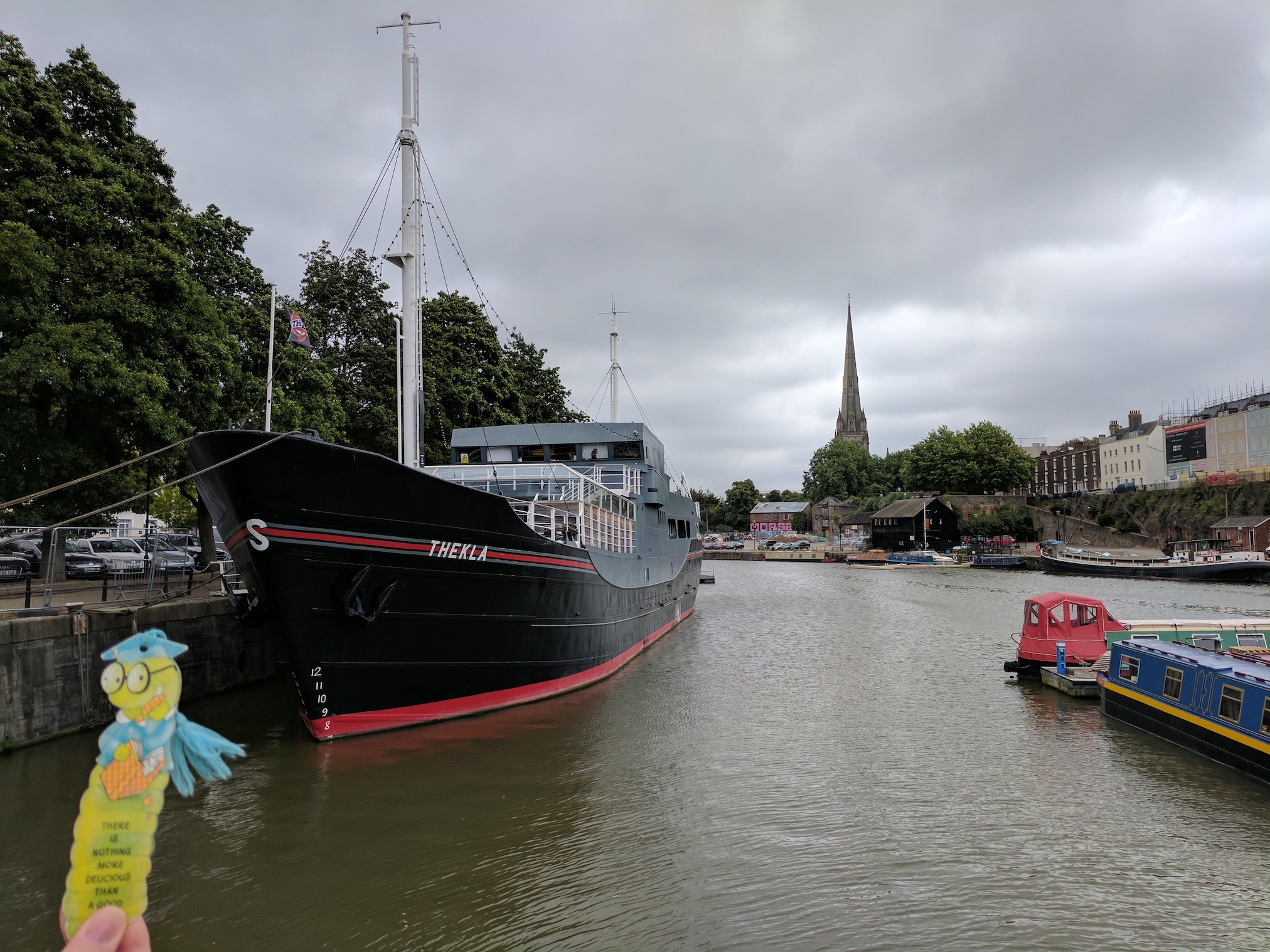
    Me at the Thekla. I’d heard Banksy’s Grim Reaper was on the Thekla, so that’s where I started my quest:

    At the start of the quest I didn’t know what a “Thekla” was. Then I found the boat. Next, look for the painting. I examined the river walls, the sides of the boat, the nearby buildings. No Grim Reaper.

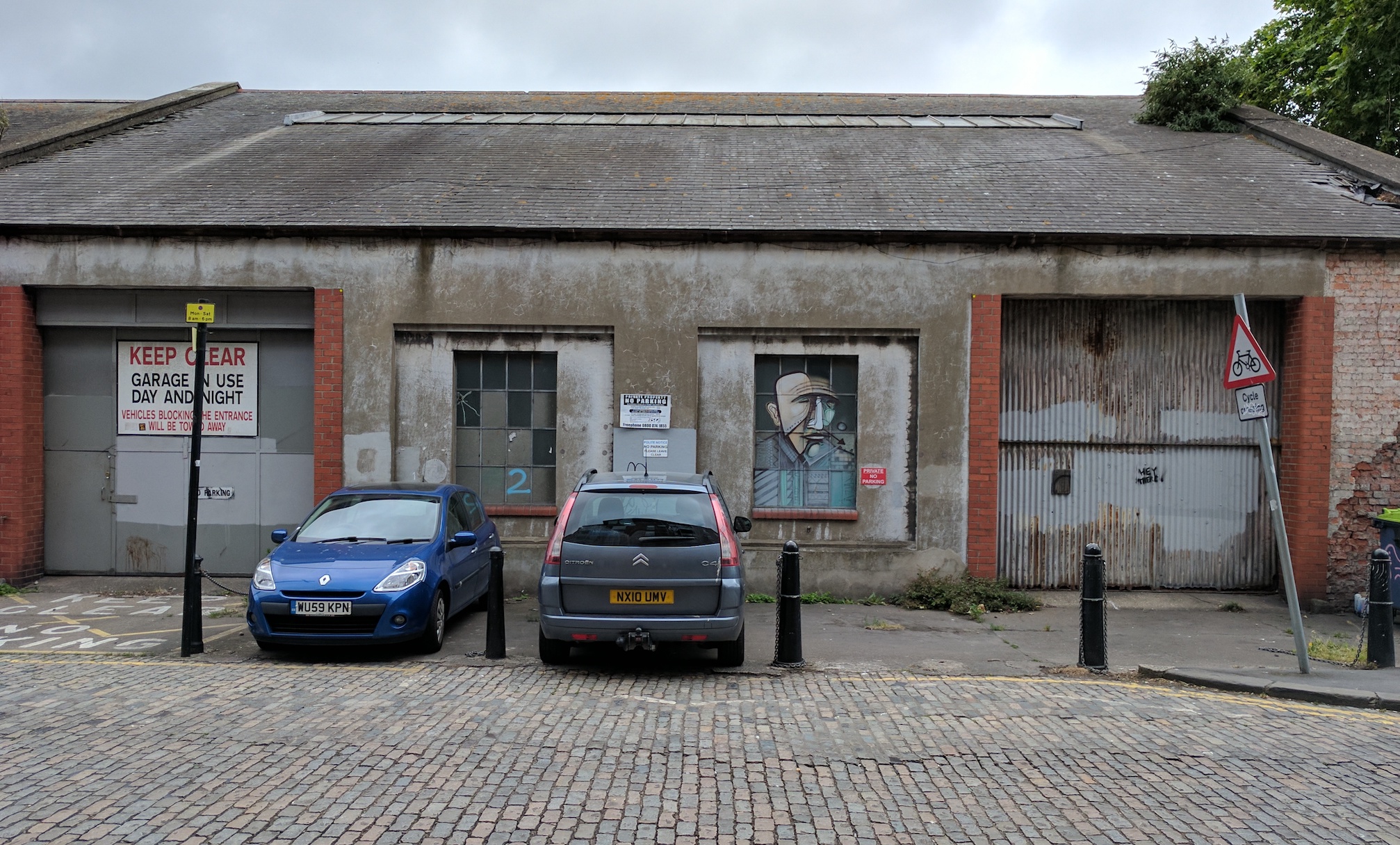
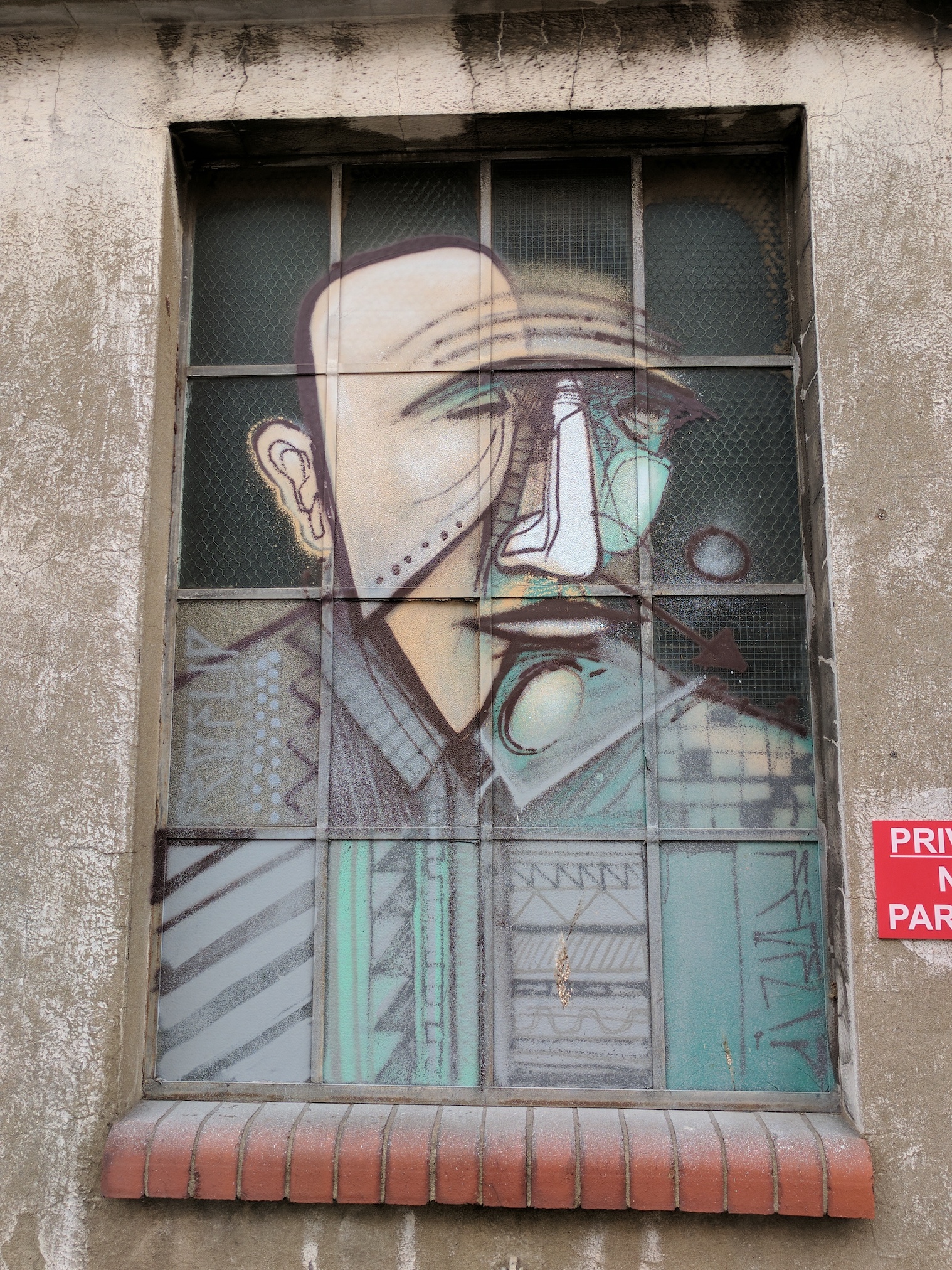
    However, I did come across this striking picture on a window near Welsh Back:

    Here’s a closer look. This worm thinks it’s an impressive work of art:

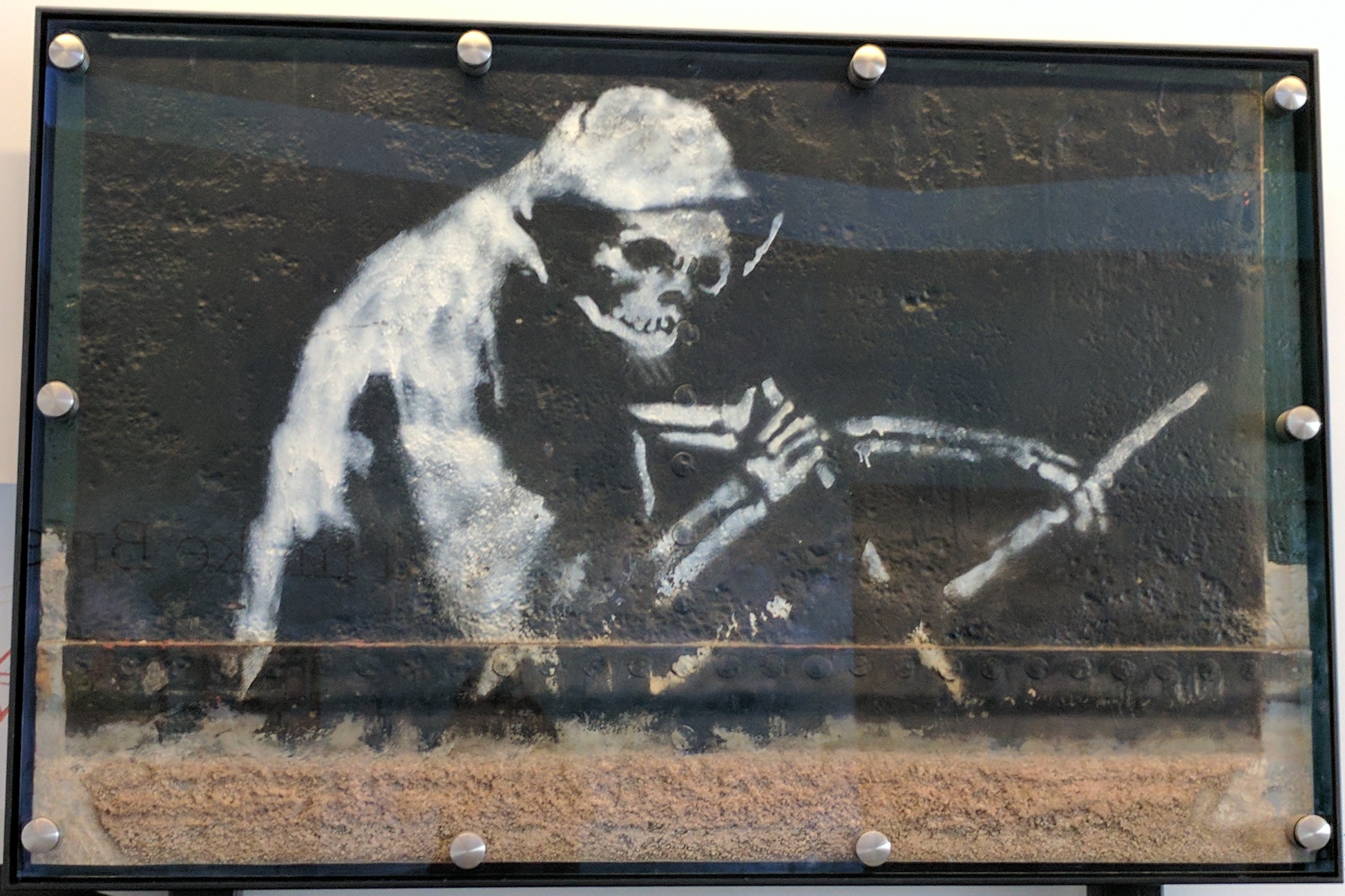
    Still, not a Banksy. A quick internet search yielded the vital clue. Banksy’s Grim Reaper had indeed originally been painted on the Thekla in 2003, but it was moved to the M Shed, a nearby museum, in 2015. The water and weather had damaged the work of art, and the owners were afraid it would disappear entirely. They cut out the piece of the boat that contained the Grim Reaper, and presented it to the M Shed as a long-term loan.

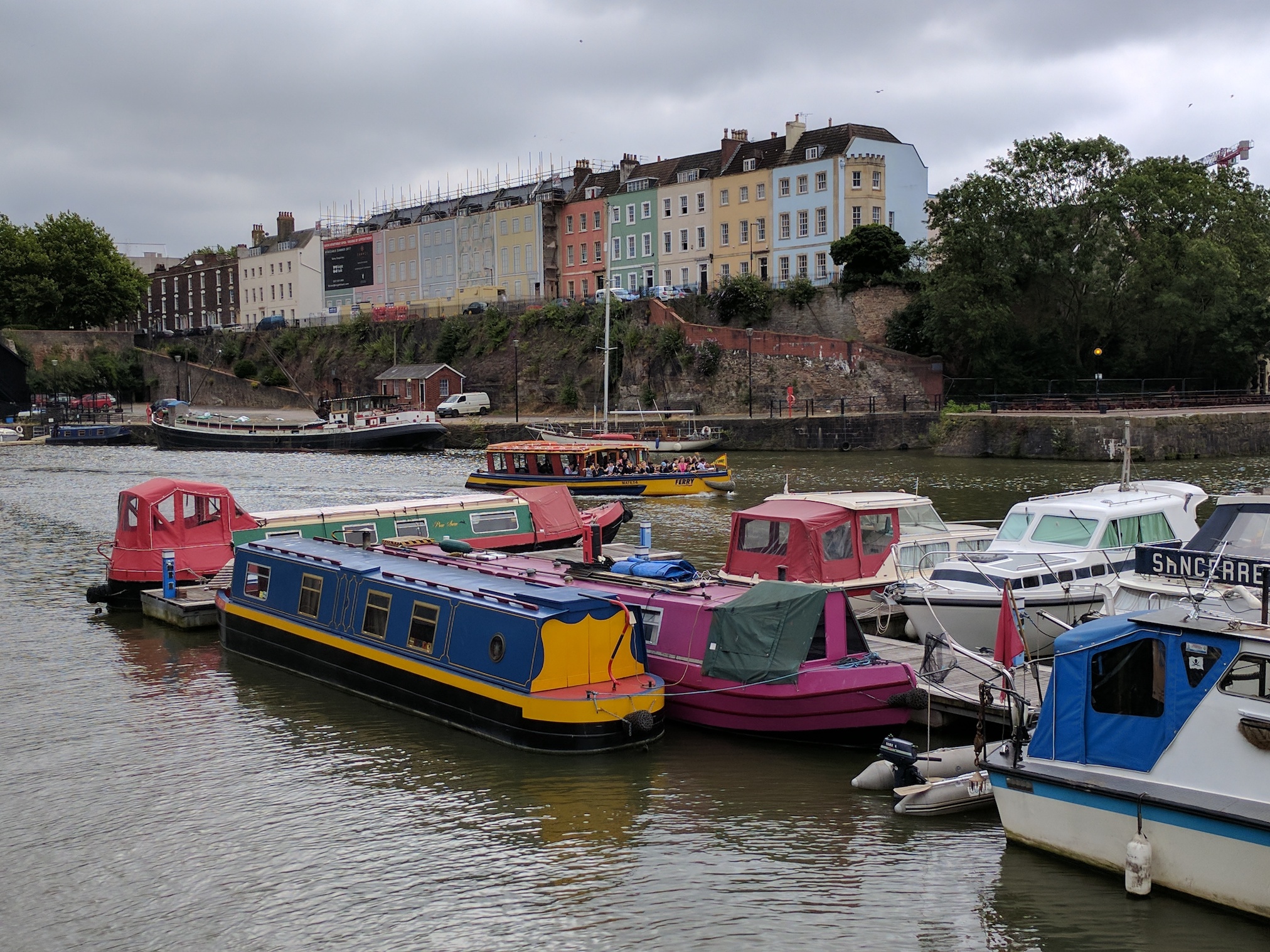
    So, off to the M Shed we go. First, a pretty view across the River Avon:

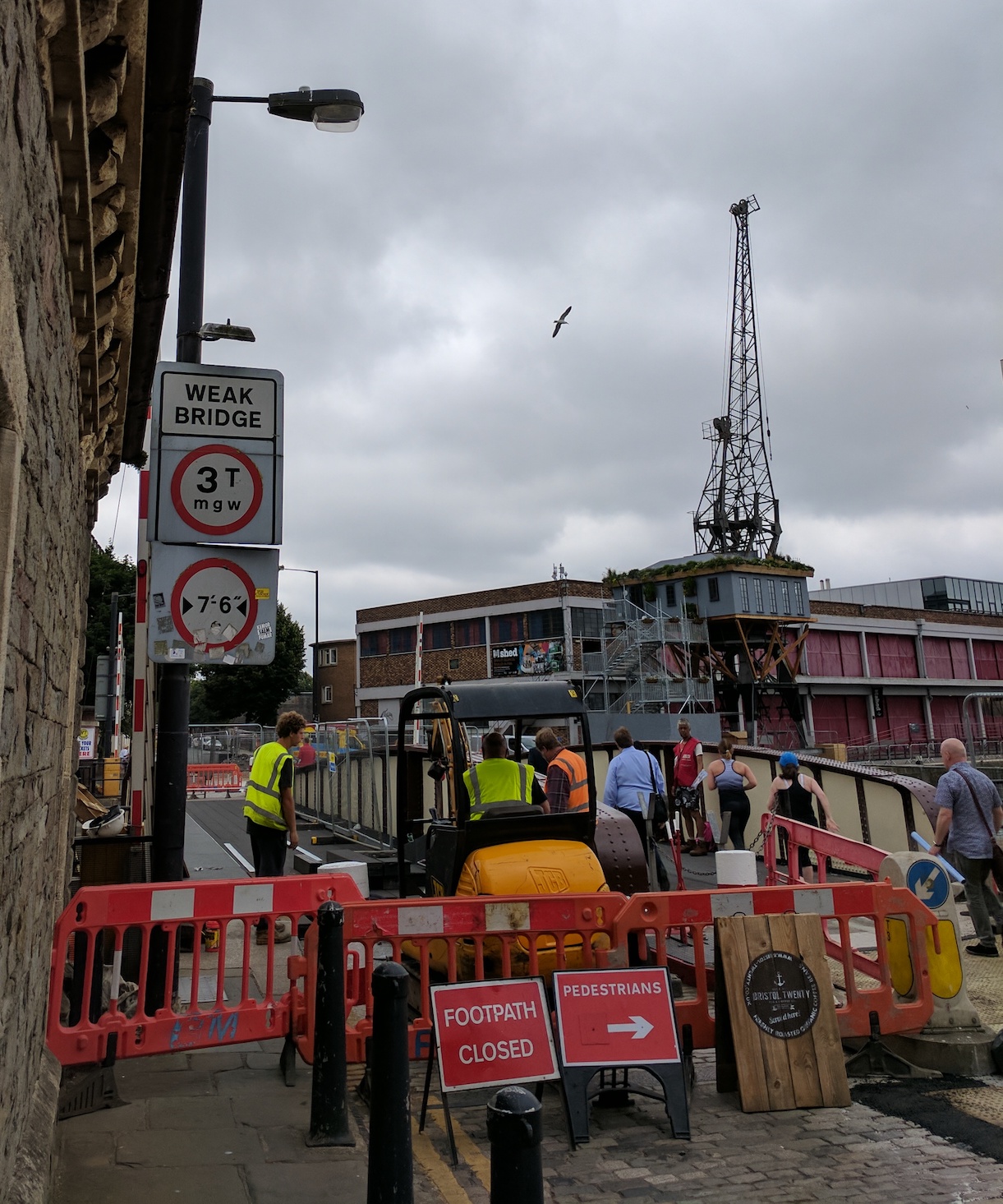
    The TC found this no-nonsense sign post amusing, particularly as the bridge does indeed present itself as a “weak bridge”:

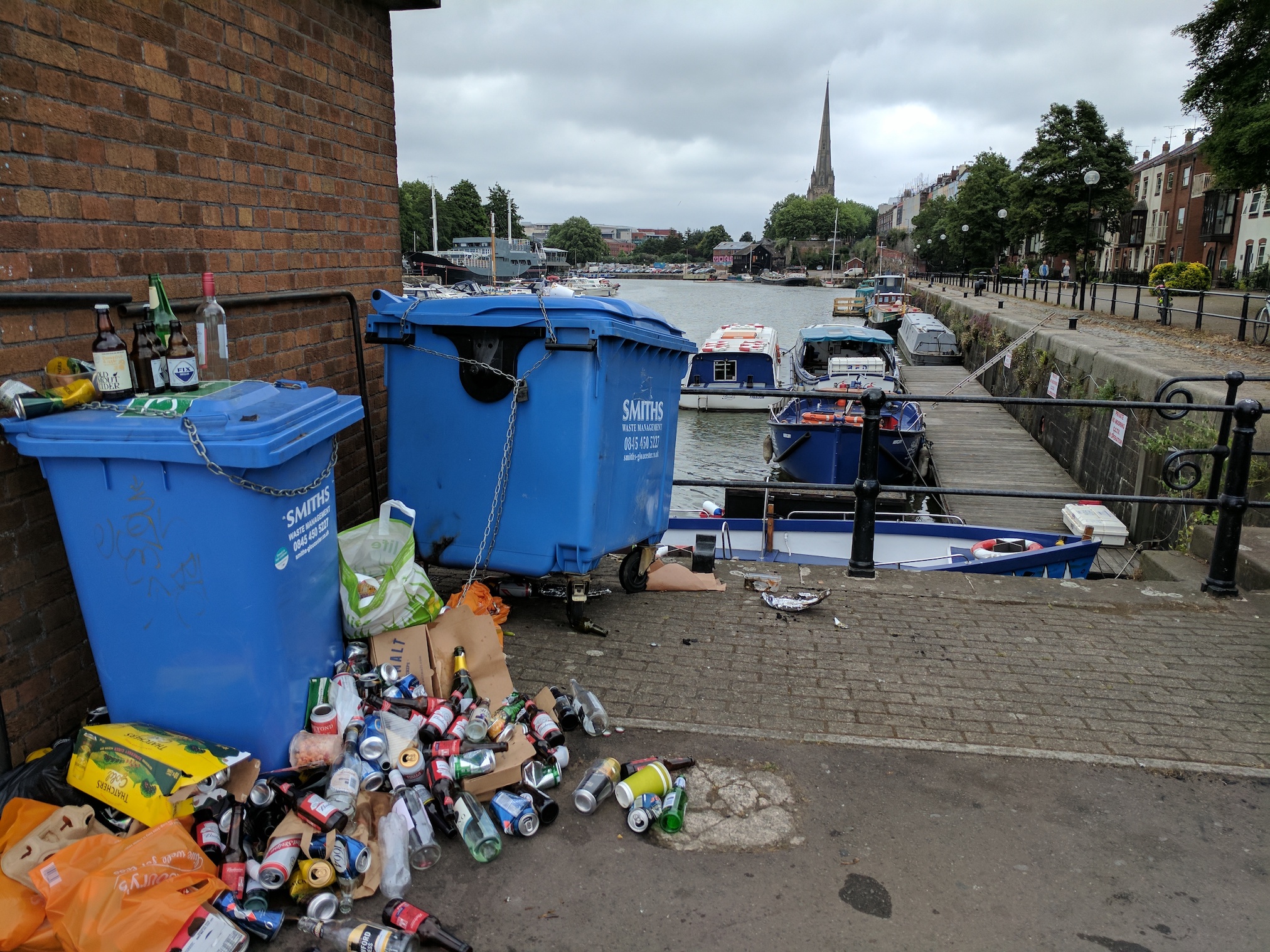
    Wend your way past the evidence of a good night out:

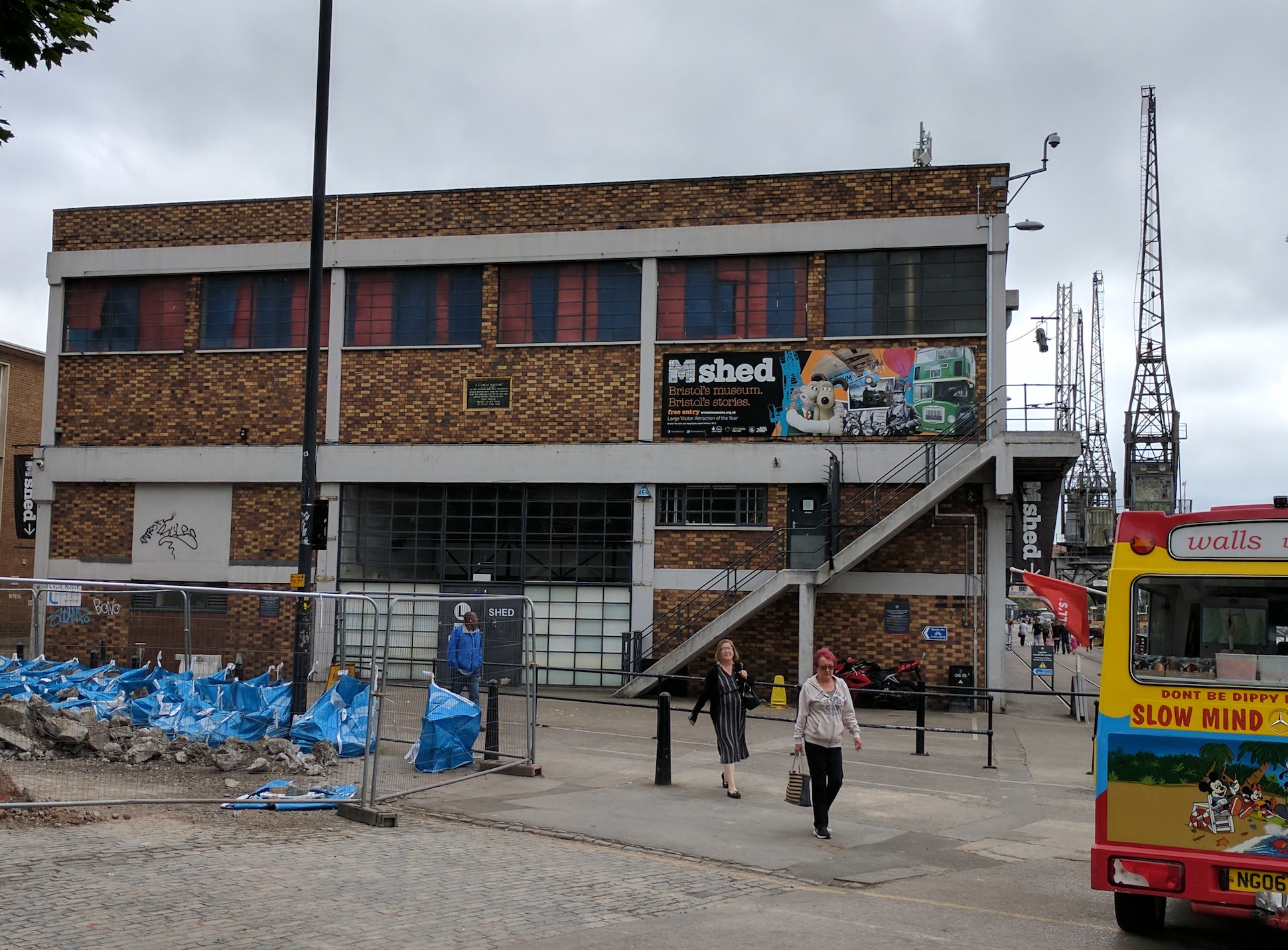
    And there’s the M Shed:

    Inside, the Grim Reaper at last:

    This worm does find it a little ironic that a stencilled graffito, surely expected to be temporary, should be behind glass and locked doors. On the other hand, I’m very glad that I managed to see this work, and that other people will be able to find it too.

    That’s all for today, folks.


  • Grenfell Tower fire tribute in Winchester Cathedral

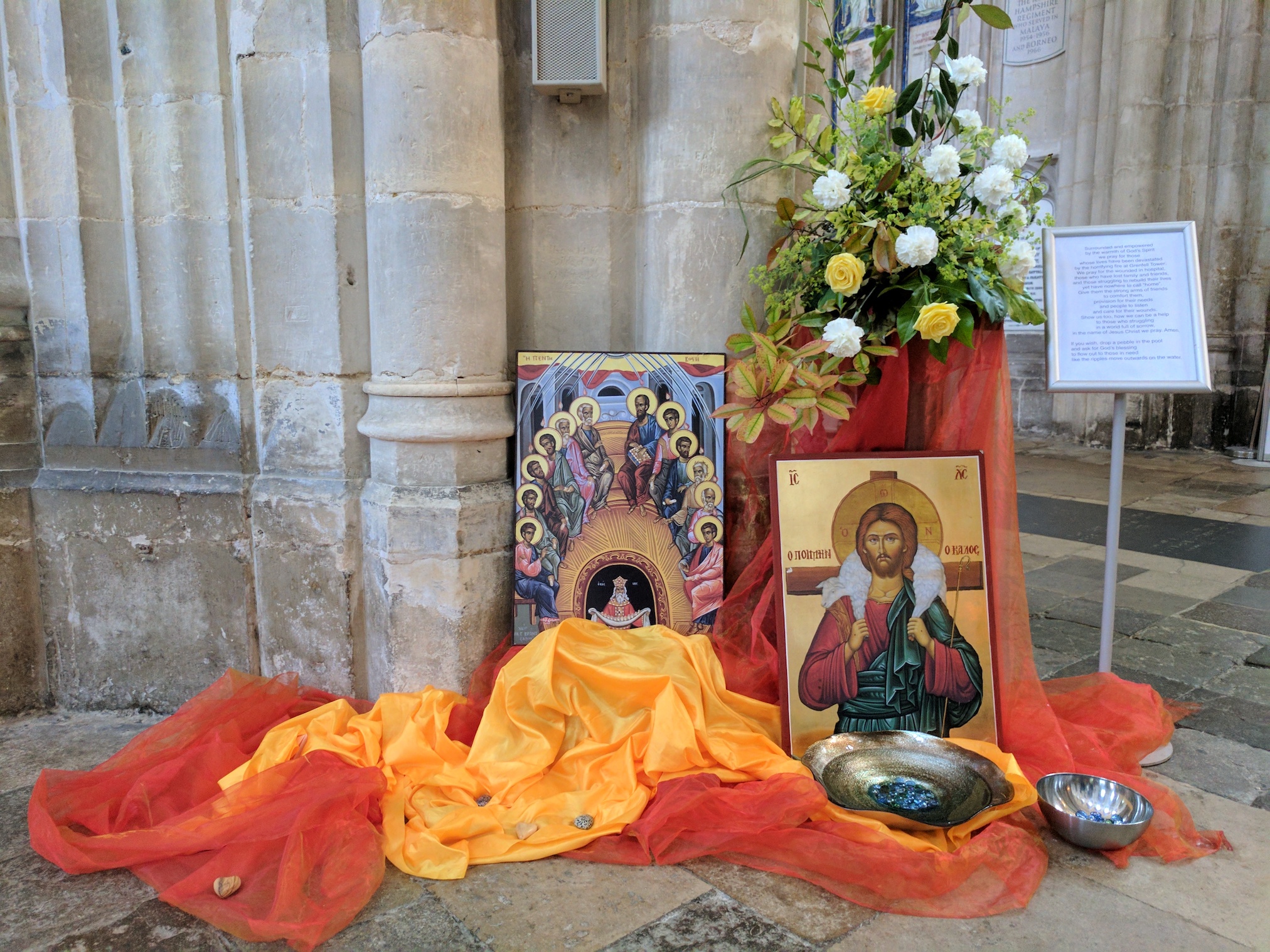
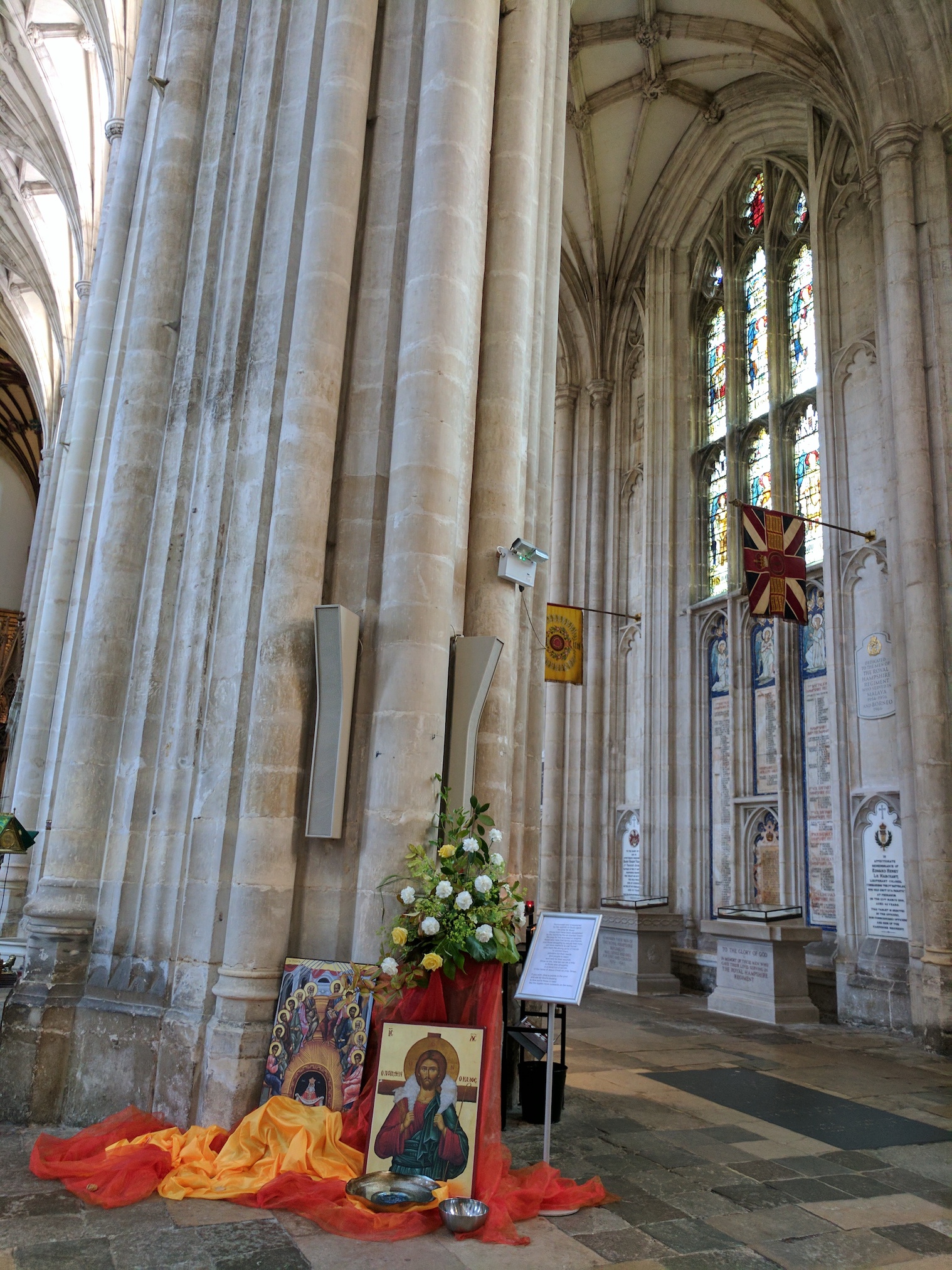
    I was at Winchester Cathedral yesterday, and saw this beautiful, heartfelt tribute to those affected by the Grenfell Tower fire:

    Visitors can pick up a pebble from the bowl on the right, and drop it into the pool of water in the left-hand bowl, as a way of showing support. Shared thoughts spread like ripples moving across the water.

    During our visit to the cathedral, we were struck by the sincere warmth of the guides and the restful beauty of the building. The Grenfell Tower tribute has the same gracious, simple warmth.


  • Telephone booth at Ashampstead full of books

    This is the blog of Mark Wordsworm, the travelling worm. I’m a 25-year-old bookmark (I haven’t aged at all since I first wrote this introduction) and I proudly boast my own Hallmark serial number, 95 HBM 80-1. You’ll probably want to read all about me and my Travelling Companion (the TC).

    Today’s travel notes

    Me and the TC were wending our way through the avenues of southern England when we came across a phone booth full of books.

    My impressions? A stamp of approval from this bookworm.

    Word of the day

    Telephone is the word of  the day. This worm wonders how long that word will last. We often use other words in its place, including mobile, and cell phone, or even just cell. The word telephone comes from two roots, tele- meaning far, and phone meaning sound. Nowadays we have a various devices that can transmit voices and sound, using diverse technologies. Mobiles are ubiquitous, and do more than transmitting and receiving sound.
    A bonus word of the day: lichen. When I was a much younger worm, I pronounced that word with a short “i” and a soft “ch”, to rhyme with “kitchen”. My teacher corrected me, saying I should use a long “i” and a hard”ch”, as in “liken”. Now I learn that the first is the British pronunciation, the second the American.

    Travel tip

    Don’t let a good phone booth go to waste. Nor a good book, for that matter.

    The book I’m in

    The Visitor, by Lee Child. The story follows on directly from Tripwire and features the same hero, Jack Reacher. The TC is on holiday and happened to have both books in her bag. I wiggled easily from the one to the other, and am experiencing that rare pleasure of reading two sequential books in sequence.

    The photos

    Me at the telephone booth on Holly Lane near Flowers Piece in Ashampstead, west of London:

    Liken me to a bit of lichen:

    A front view of the booth of books. Careful observers may spot the TC taking the photograph, mirrored in the glass:

    This short video gives you a feel for the surrounds: the business of vehicles passing by, interspersed with restful intervals of birdsong:

    That’s all for today, folks.