This is the blog of Mark Wordsworm, the travelling worm. I’m a 25-year-old bookmark and can proudly boast my own Hallmark serial number, 95 HBM 80-1. You’ll probably want to read all about me and my Travelling Companion (the TC).
Today’s travel notes
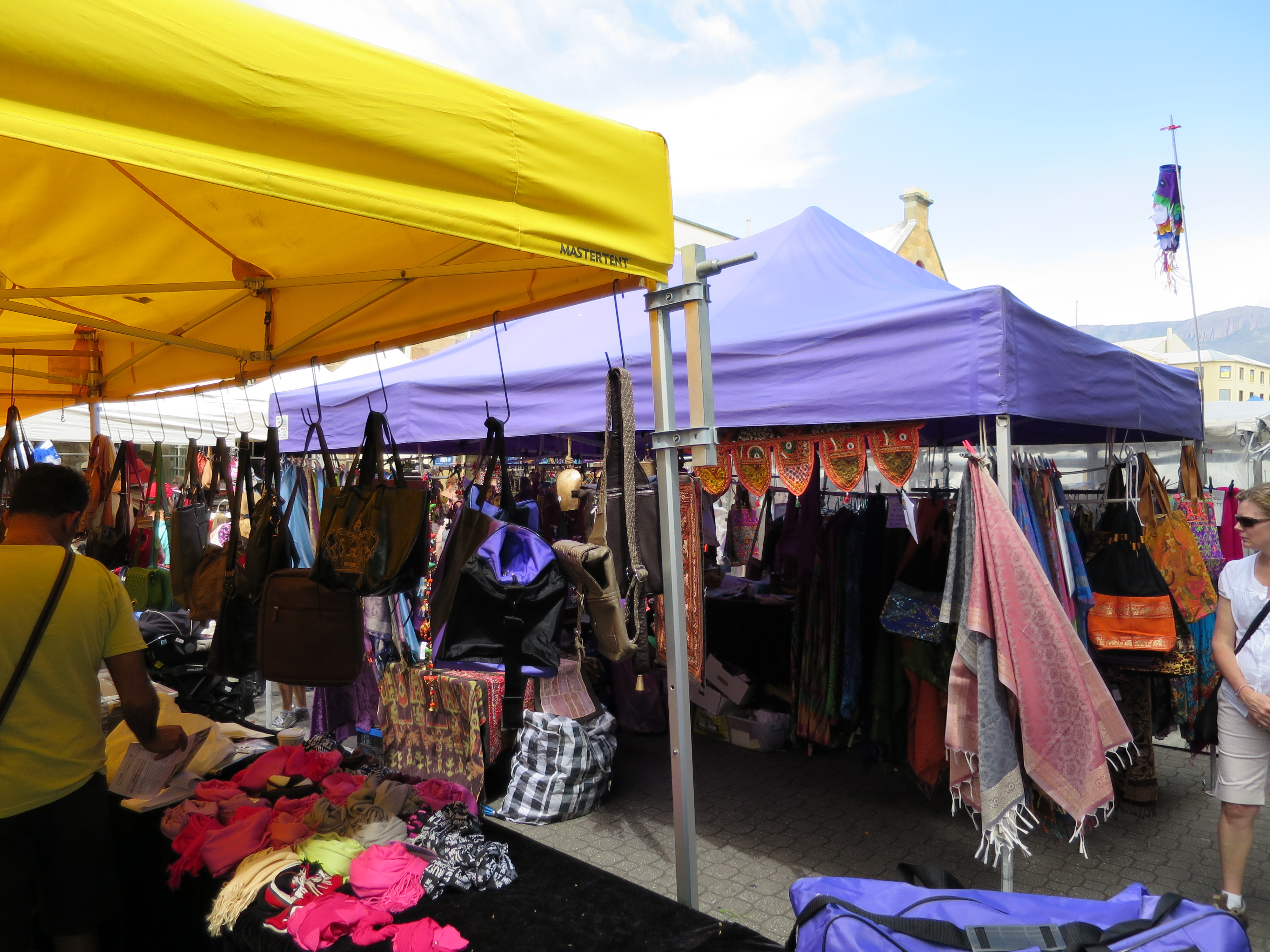
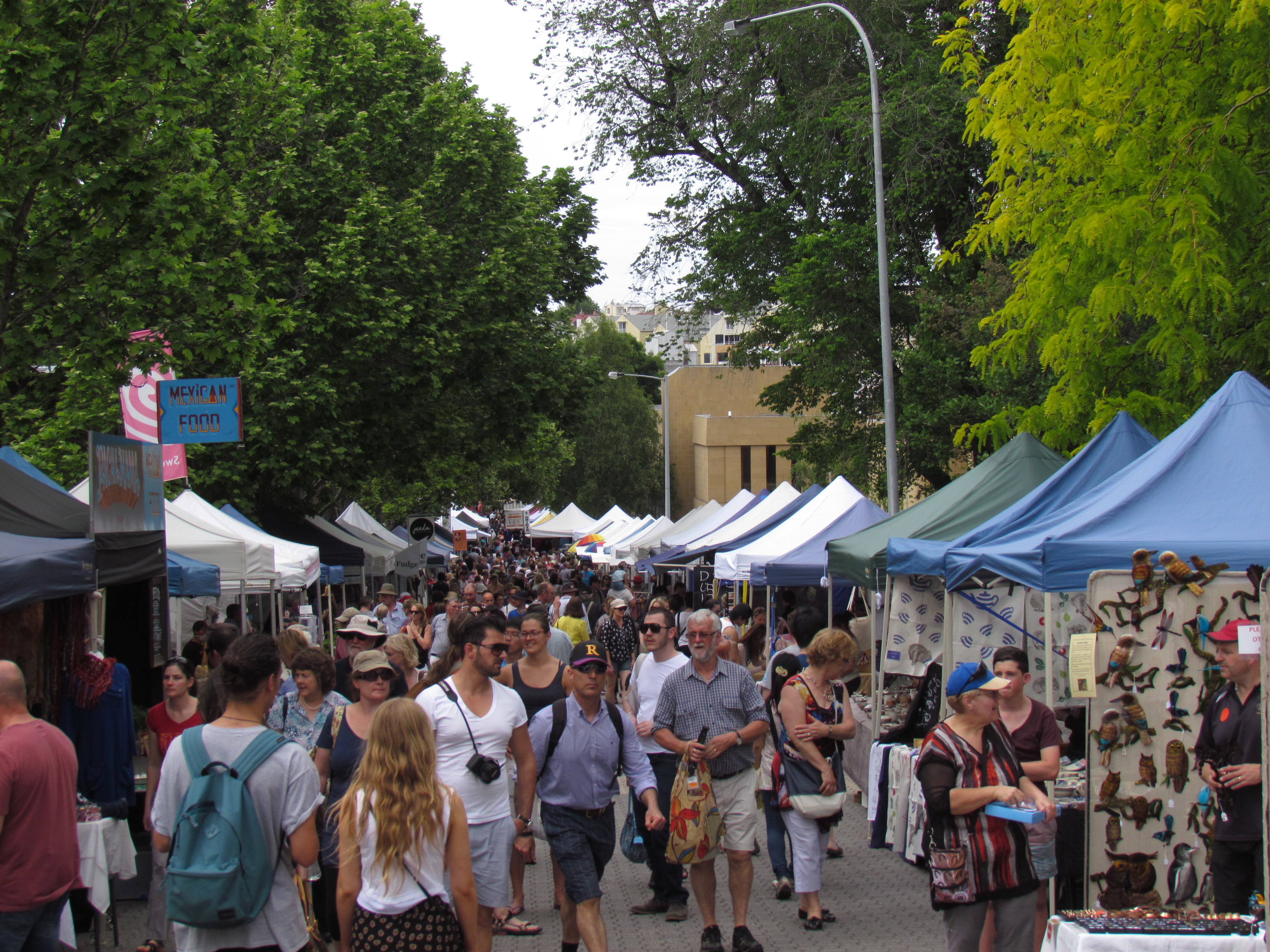
Me and the TC, plus her husband whom this worm fondly dubs the “TC-once-removed”, spent a long weekend in Tasmania last week. We visited the Salamanca Market in Hobart on Saturday morning.
My impressions? Colour, talent, scents, laughter.
The book I’m in
Catching Fire, part 2 of The Hunger Games, by Suzanne Collins. Classy teen science fiction that appeals to adults for its fast pace, clever social commentary and appealing characters.
Travel tip
Take a stroll around the streets in the area of the market, to smell the roses and absorb the architectural variety.
Recommended restaurant
This worm was a tad disappointed in the lunch we found near Salamanca Markets. I’d heard Hobart is a gourmet heaven, but the TC’s potato salad was decidedly below par. Enough said on that score.
The photos
Me in Salamanca Place:
Looking up through Salamanca Market towards Gladstone street:
A couple of the colourful market stalls, snapped by the TC-once-removed:
The view from Gladstone street, looking down through the market:
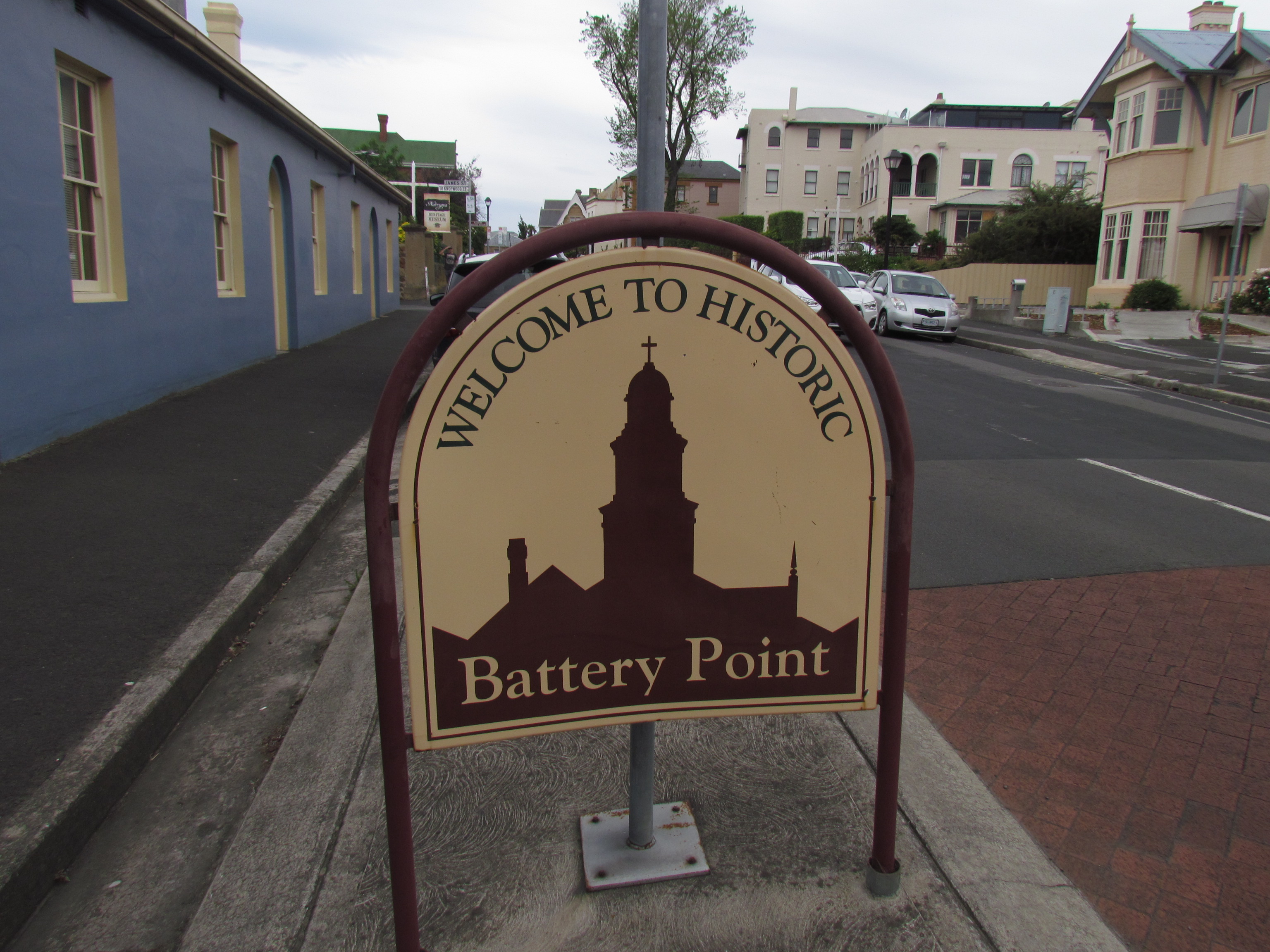
Nearby the market is Battery Point. It’s one of the longest-settled parts of Hobart, dating back to around 1804:
The balcony on this building intrigued the TC-once-removed, because there’s no way of getting onto it:
This is the blog of Mark Wordsworm, the travelling worm. I’m a 25-year-old bookmark and can proudly boast my own Hallmark serial number, 95 HBM 80-1. You’ll probably want to read all about me and my Travelling Companion (the TC).
Today’s travel notes
Me and the TC spent yesterday afternoon on Cockatoo Island on the Parramatta River, immediately inland of Sydney harbour. It’s a forlorn place, strewn with gravel and history.
My impressions? Sandstone, sheds and seagulls.
The book I’m in
Gidget, by Frederick Kohner. An engaging tale of a teenage surfer, written 1957. Clever use of language and style to carry along a simple story with tons of atmosphere.
Travel tip
When travelling to Cockatoo Island, take sunscreen and something to tie back your hair. (That is, if you have lots of it, as the TC does.)
The photos
Me on a metal lathe in the industrial area of Cockatoo Island:
Cockatoo Island, as seen on Google Maps:
The Aboriginal name for the island is Wareamah. The Aboriginal people of the area used to come to the island to fish. But there was no fresh water, so they didn’t live there permanently. In 1839 a governor of New South Wales decided the island was an ideal place to house prisoners and put them to work quarrying sandstone and building prison and military barracks and official residences.
The entrance to the island from the ferry wharf:
Walking into the industrial area:
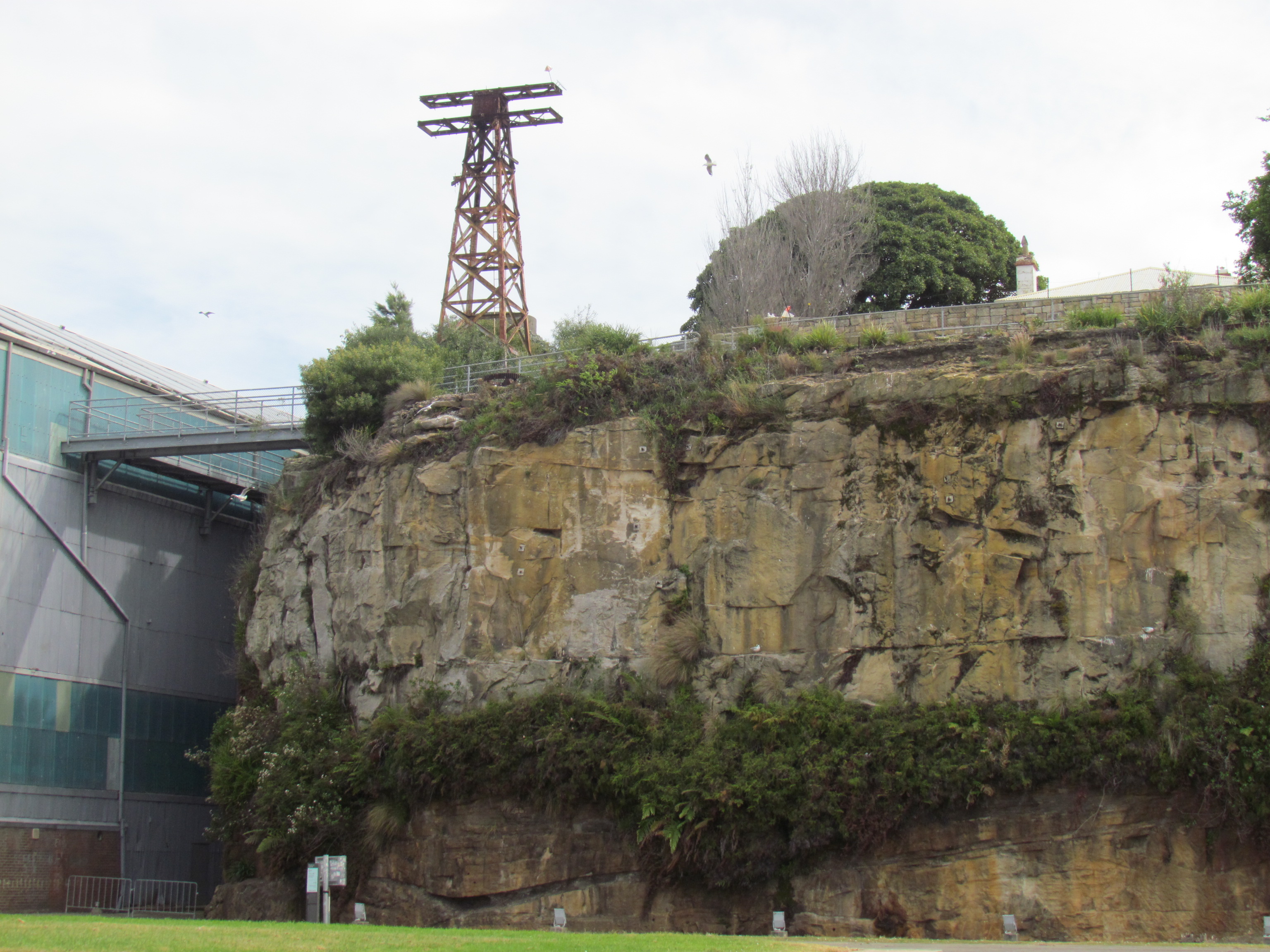
An impressive sandstone cliff on the right as you walk in, which has survived the extensive quarrying:
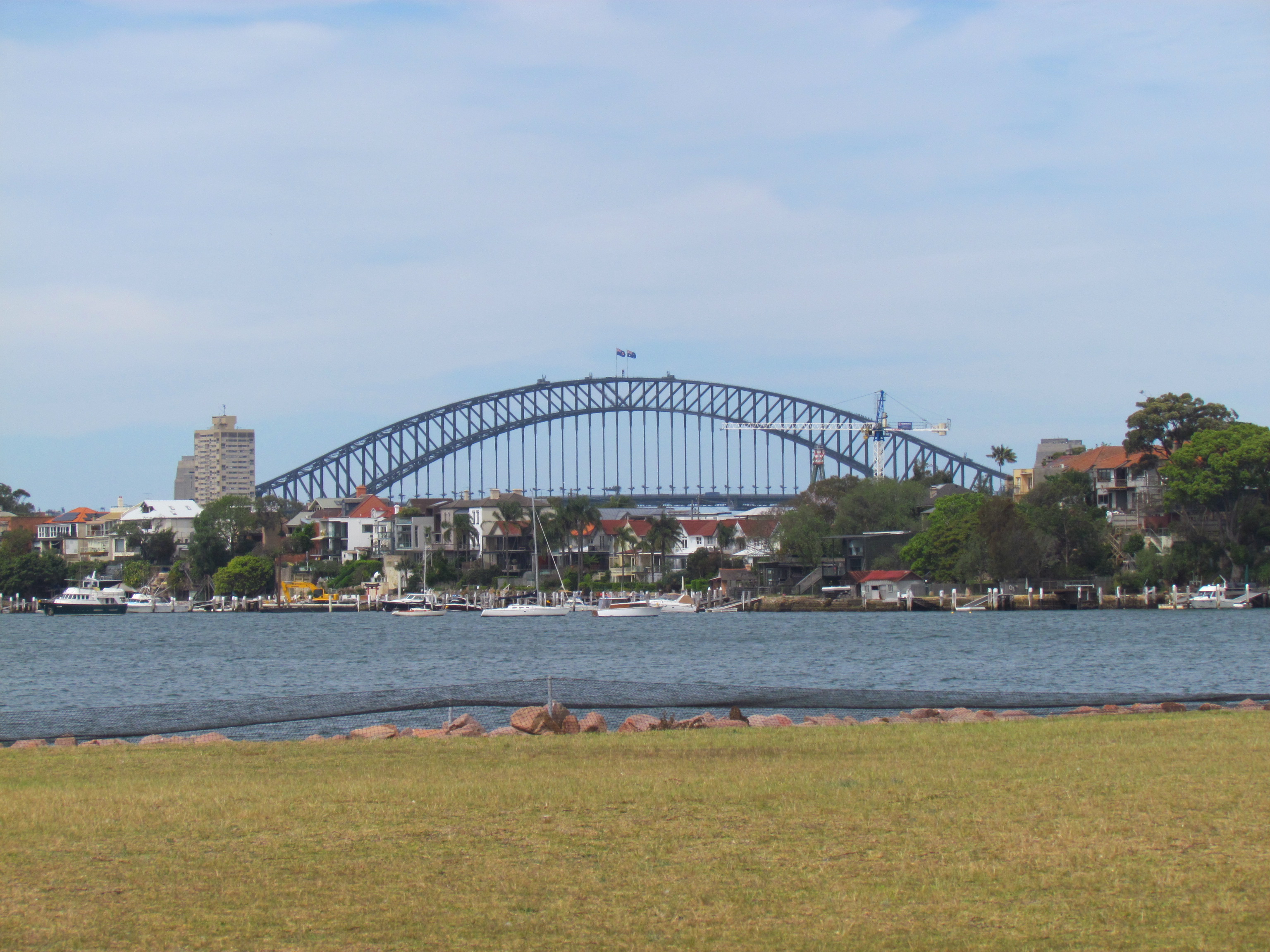
A view of Sydney Harbour Bridge from the island:
In the late 1800s and early 1900s, the island became a major ship-building site, playing a large part in ship construction and repair during World War II. Its use as a dockyard and construction facility for ships and submarines continued until 1992.
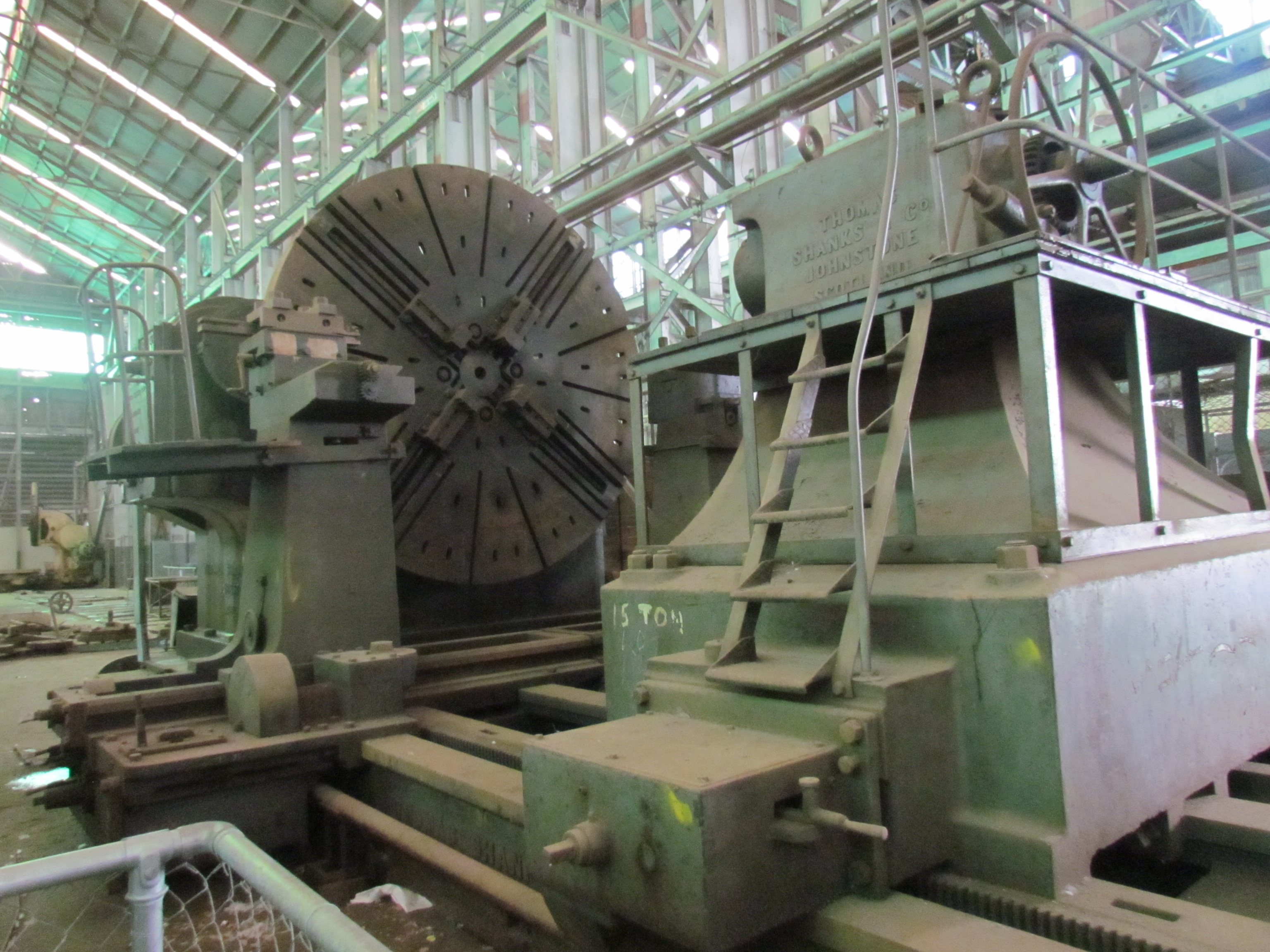
Inside a huge ship-building shed on the island:
The magnificent machinery made this worm feel small and insignificant:
More machinery:
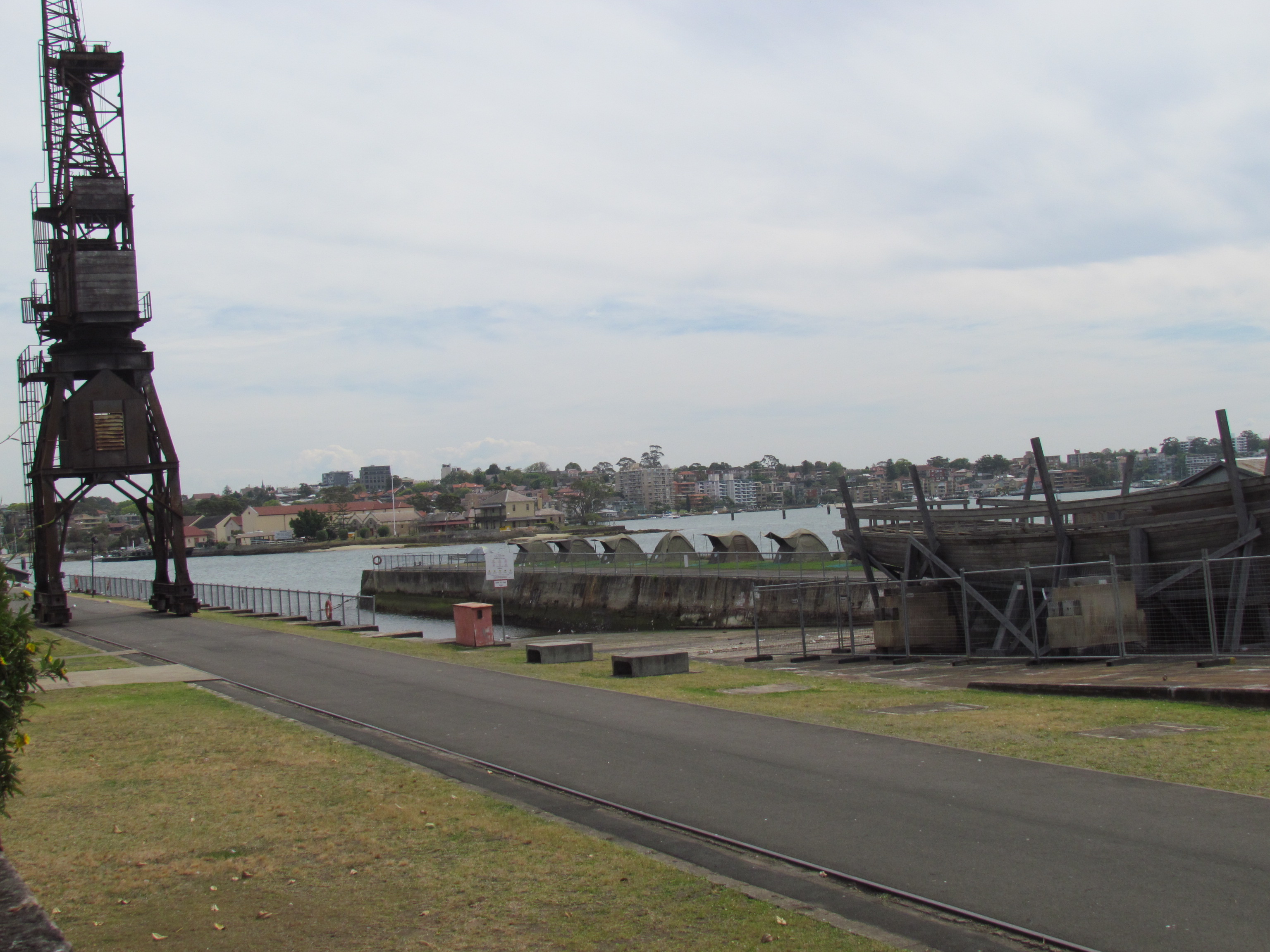
A giant crane stands guard over the Parramatta River:
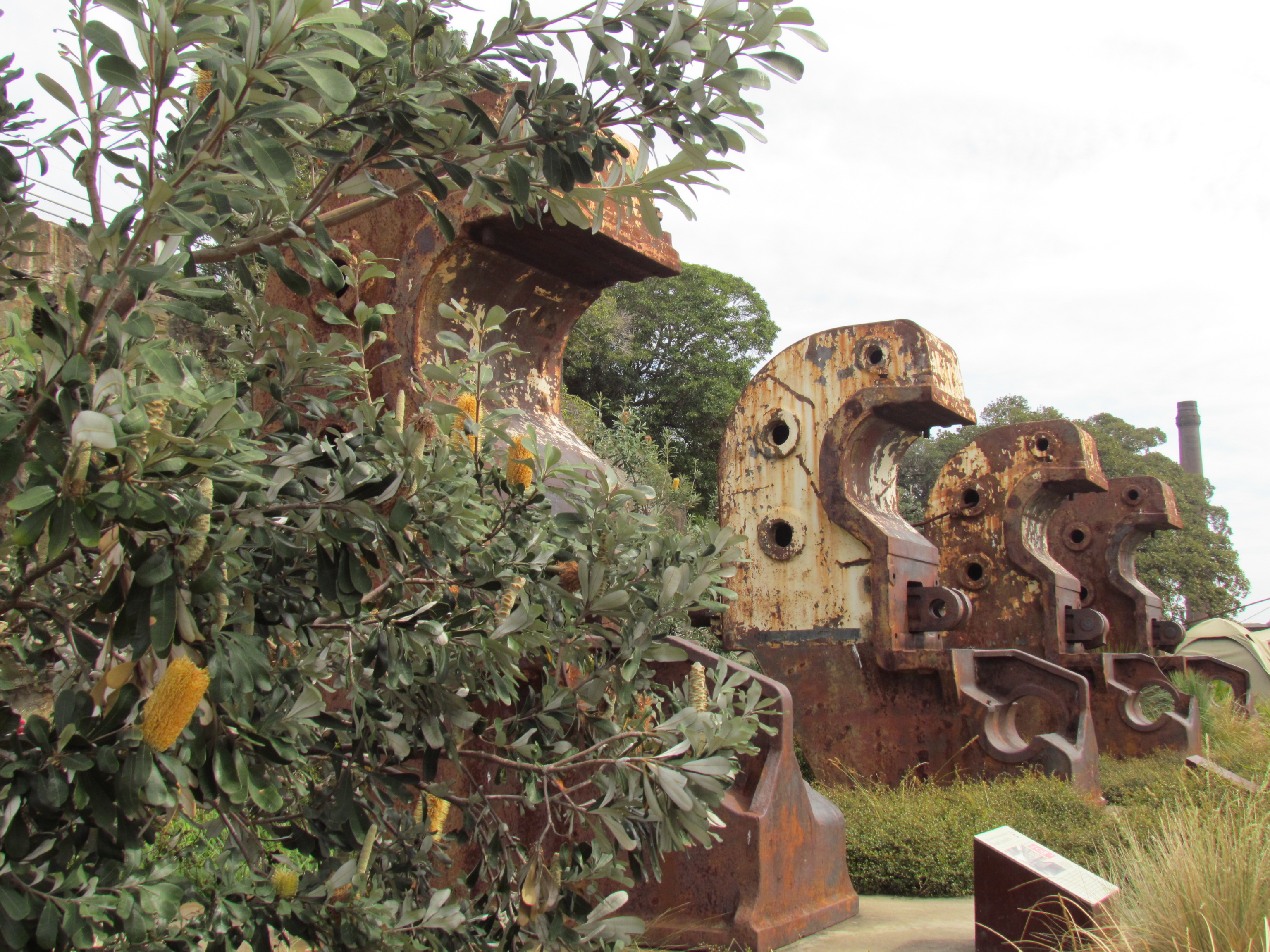
These imposing beam benders are the remains of a hydraulically-powered plate-bending machine from the 1920s, used to bend metal plates up to 9 metres long and one inch thick for ship building:
Below is one of the slipways used to launch ships after construction. Film buffs note: The ark at the top of the slipway was created for and used in the film “Unbroken”, directed by Angelina Jolie and filmed on the island last year:
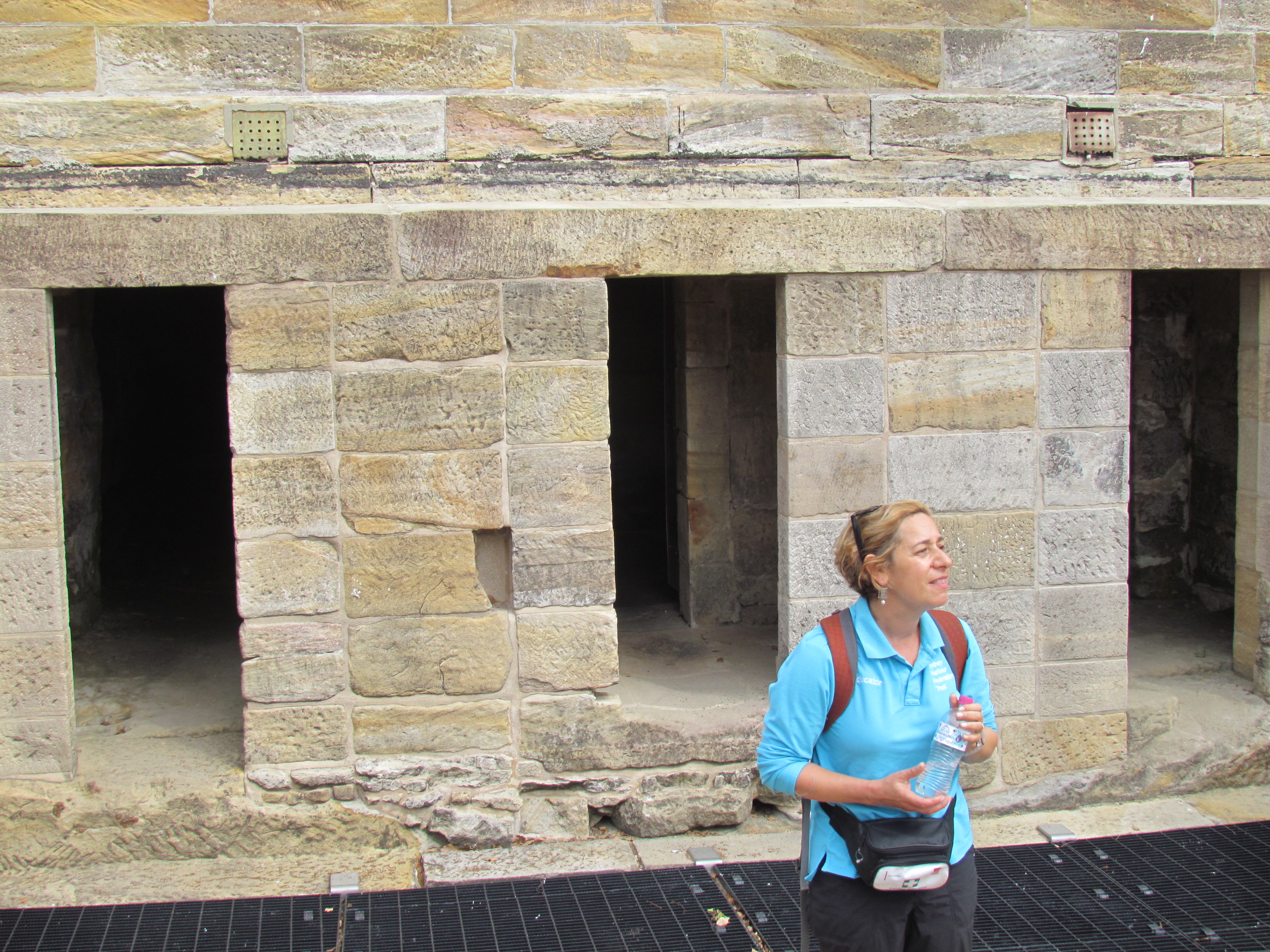
The solitary confinement cells on the island, opened to visitors only last week, and introduced with great enthusiasm by our charming guide:
Inside the left-most solitary-confinement cell:
A tunnel cut through the sandstone, built in 1912, and used as an air-raid shelter during WWII:
A view through the window of the now roofless military guardhouse:
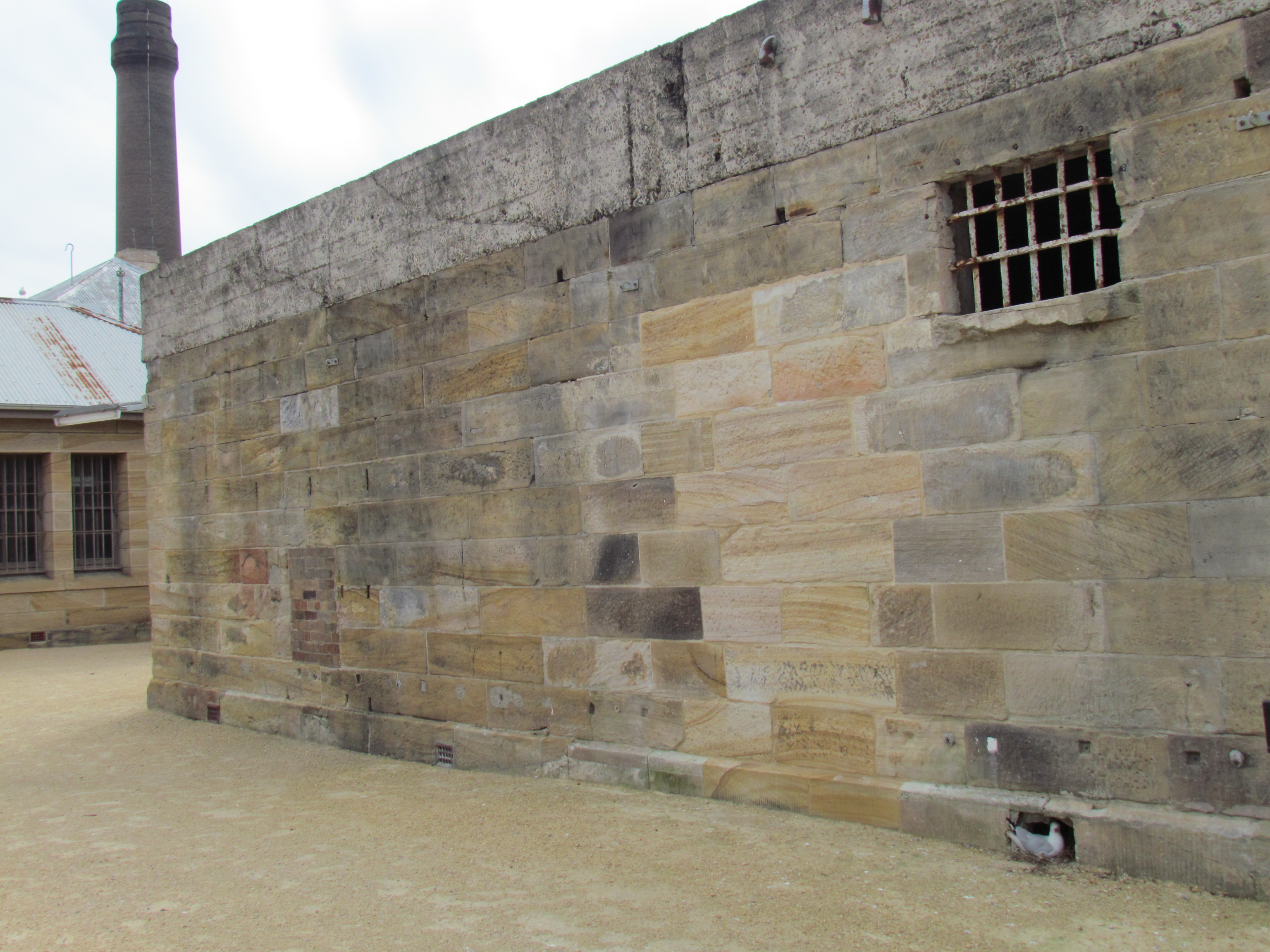
Below is the prison barracks, built in 1839. The convicts themselves quarried the sandstone and erected the buildings. Our guide told us that each man had a specific style when hewing sandstone. You can still see the marks in the stone used in the buildings on the island. At the end of each day, the overseers could tally each man’s work just by looking at the distinctive cuts in the stone:
Notice the seagull nesting at the bottom of the building in the above photo? Pro tip from a wary worm: You don’t need to worry about cockatoos on the island. They all left when people cut down the trees to make room for the convicts. So now the seagulls reign supreme. Go Jonathan! Be afraid, be very afraid. As our guide said, the chicks are cute but the parents are not.
This is the blog of Mark Wordsworm, the travelling worm. I’m a 25-year-old bookmark and can proudly boast my own Hallmark serial number, 95 HBM 80-1. You’ll probably want to read all about me and my Travelling Companion (the TC).
Today’s travel notes
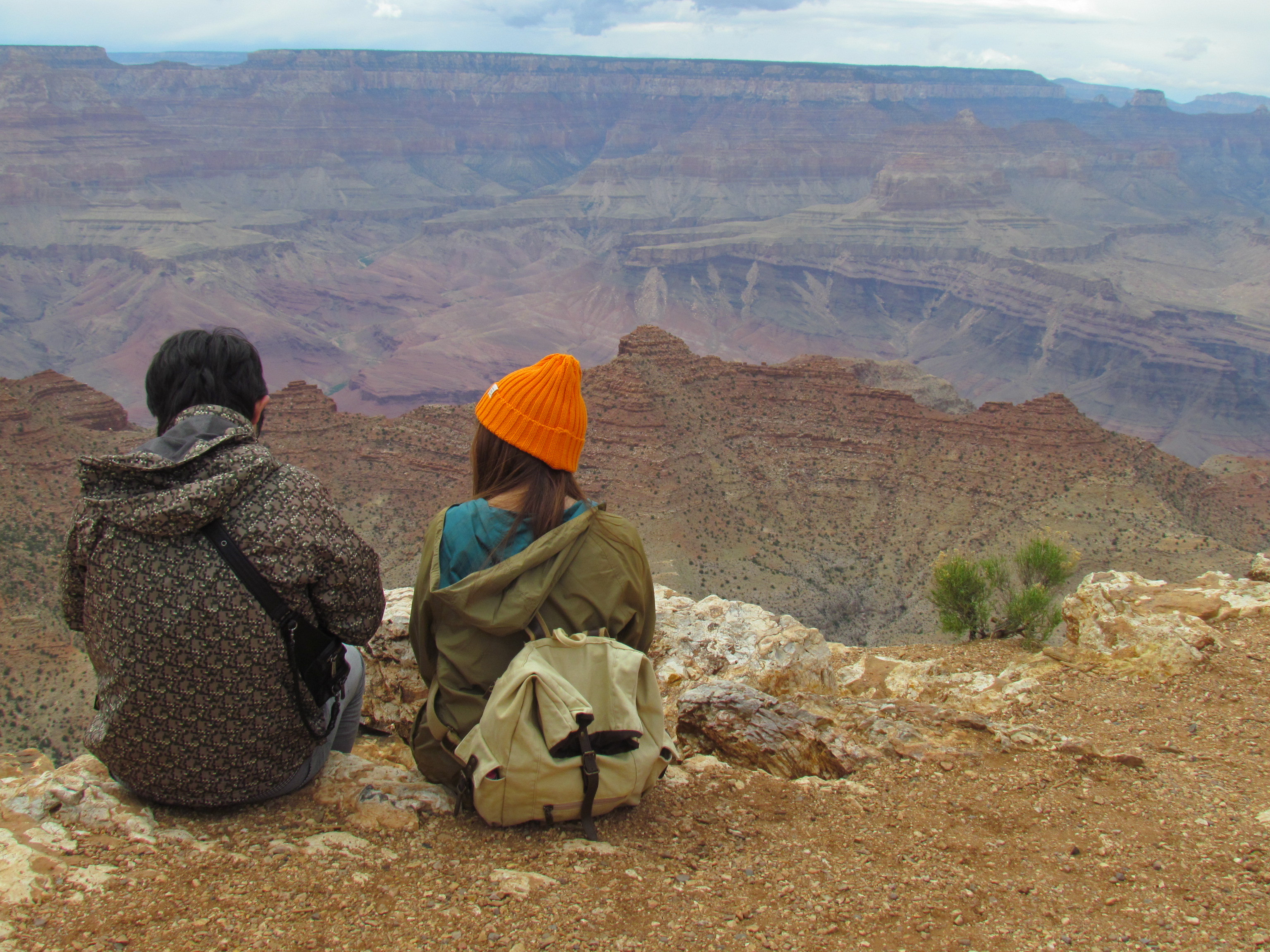
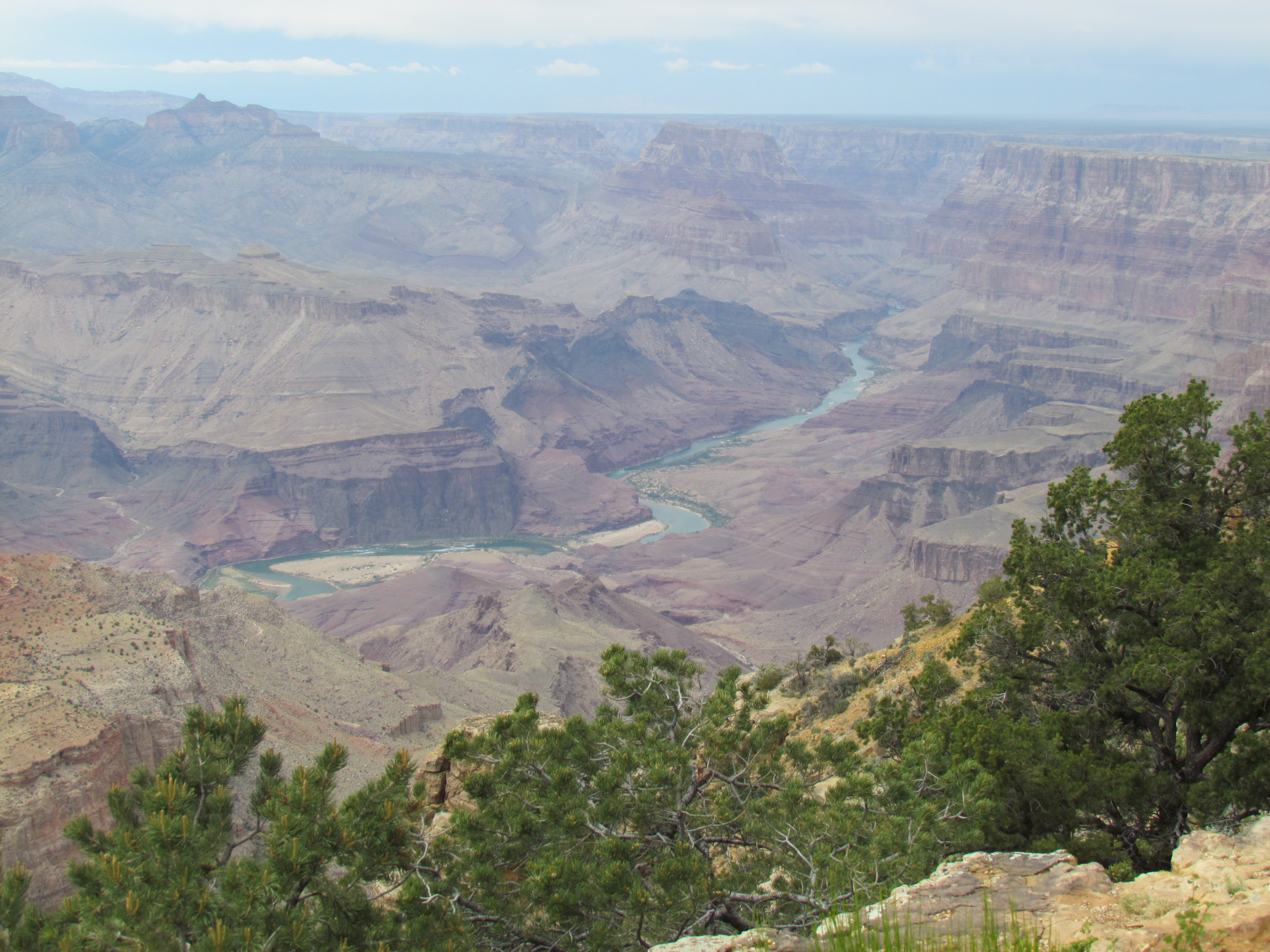
Me and the TC are spending a few days in Arizona, USA. We started in the capital, Phoenix, then drove to the Grand Canyon via Sedona and Flagstaff. The roads are good, the views are grand. Names like “Dead Horse Ranch Road” and “Bloody Basin Road” reminded us that travel wasn’t always as easy as it is now.
My impressions? Open skies, friendly people.
The book I’m in
Rules of Vengeance, by Christopher Reich. Fast action, intrigue, suspense.
Recommended accommodation
Little America Hotel, Flagstaff. Space and comfort.
Recommended restaurant
Diablo Burger in Flagstaff. Good food, friendly service, and a relaxed atmosphere.
Travel tip
Pack layers of clothing for travel in Arizona. The temperature in Phoenix was 40° Centrigrade (over 100° F). In Flagstaff, just two hours’ drive away, it was 18° C (64° F) and dropped to 9° C (48° F) at night.
The photos
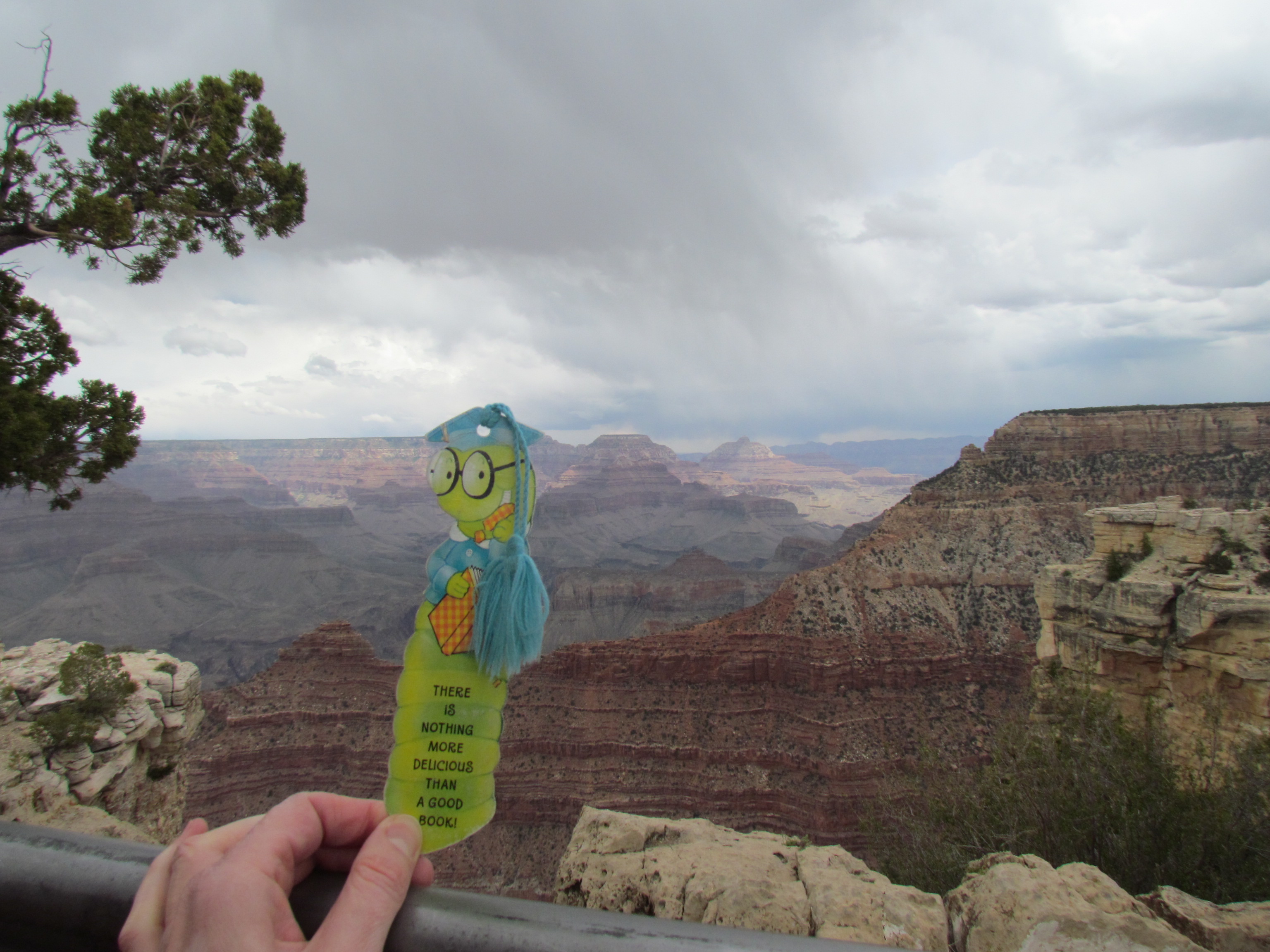
Me at the Grand Canyon, Arizona, USA:
This worm does confess to a bit of nervousness when my Travelling Companion, the redoubtable TC, propped me in position for the above shot. There was a bit of a drop behind me. The wind was a trifle gusty, and I not so gutsy.
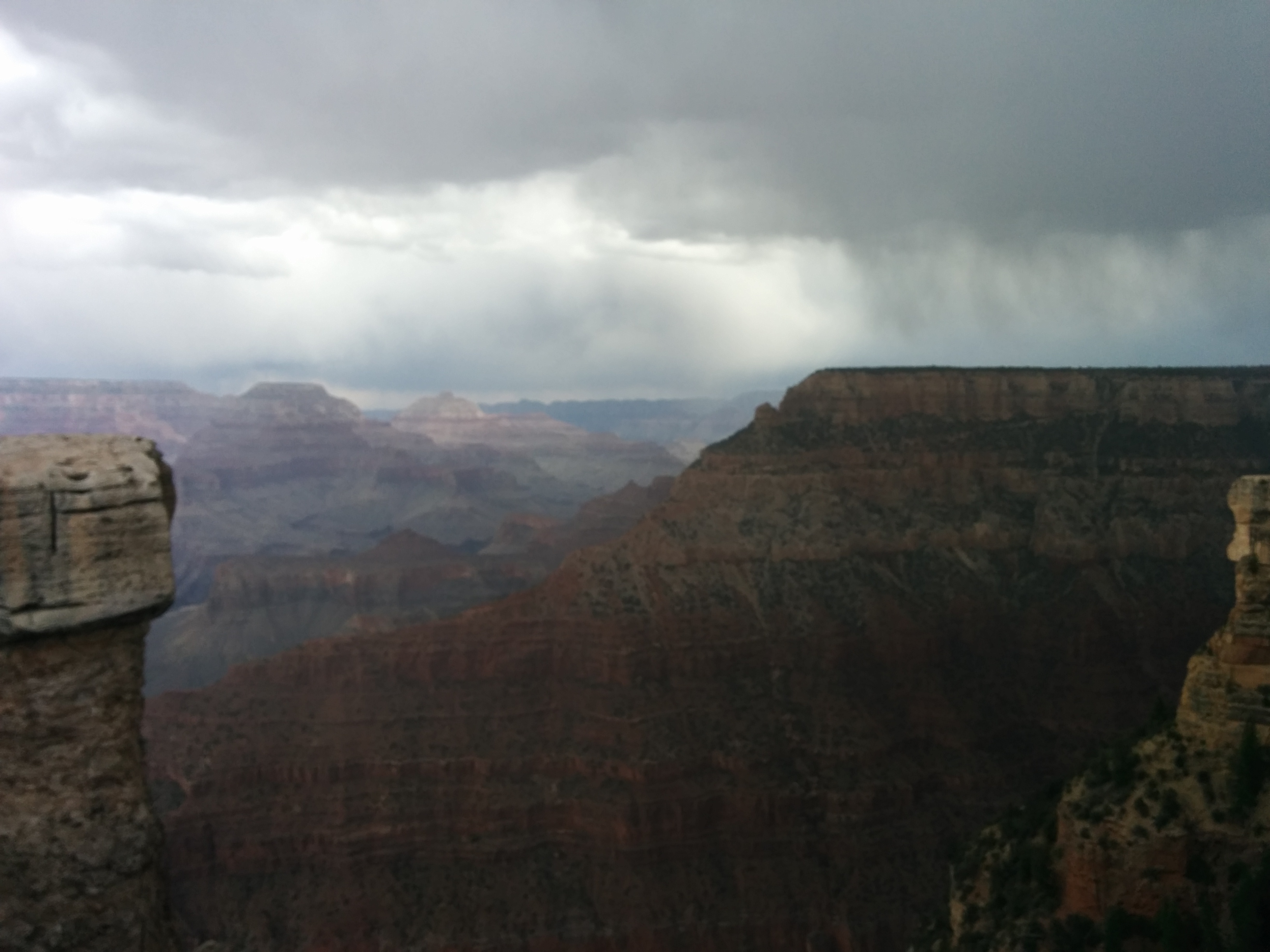
This storm cloud moved in a few minutes later:
Two more intrepid souls:
Is it possible that this streamlet dug the mighty canyon?
This little lady was squirreling around the edges of the canyon, storing food for the babes in her tum:
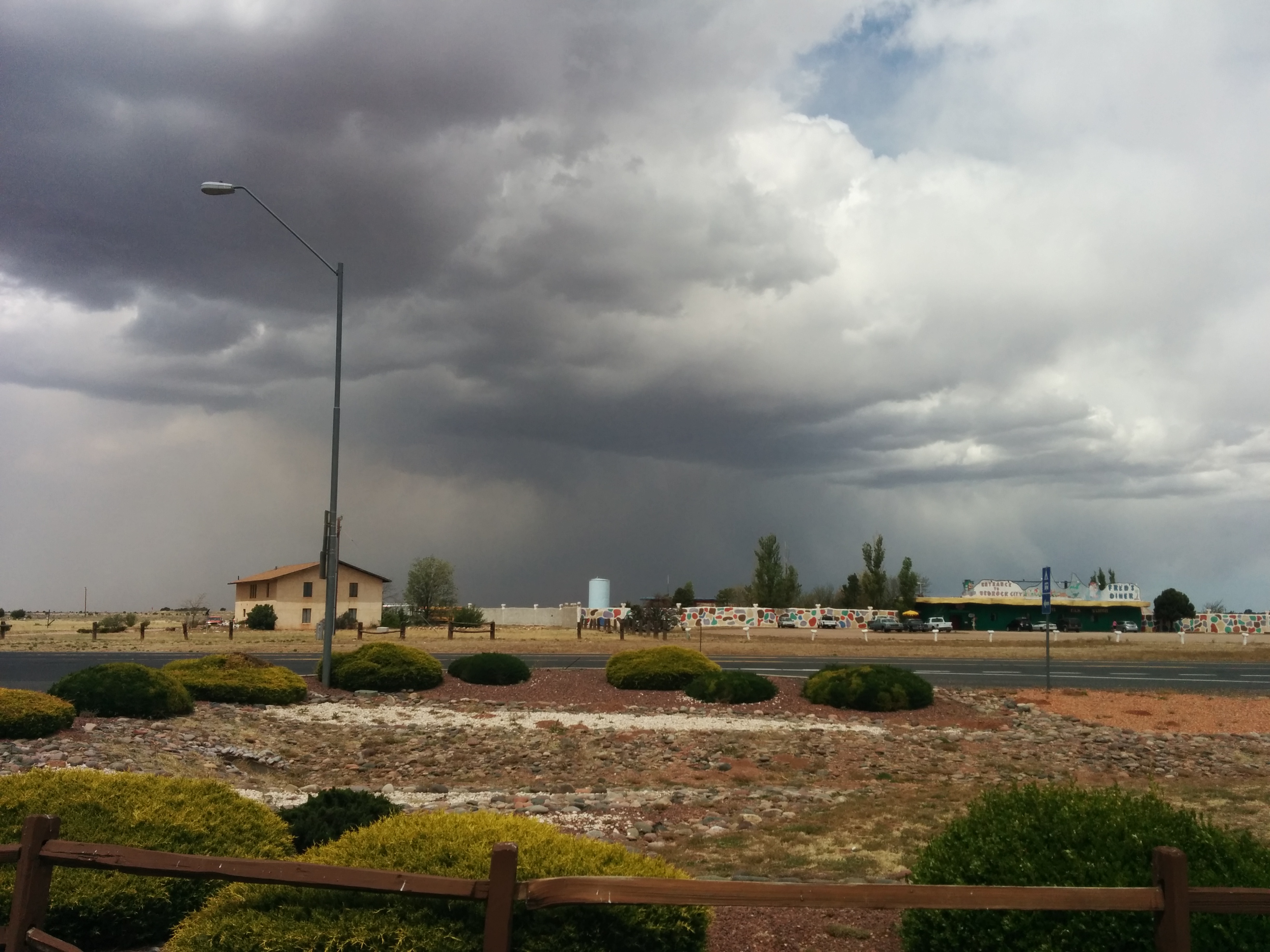
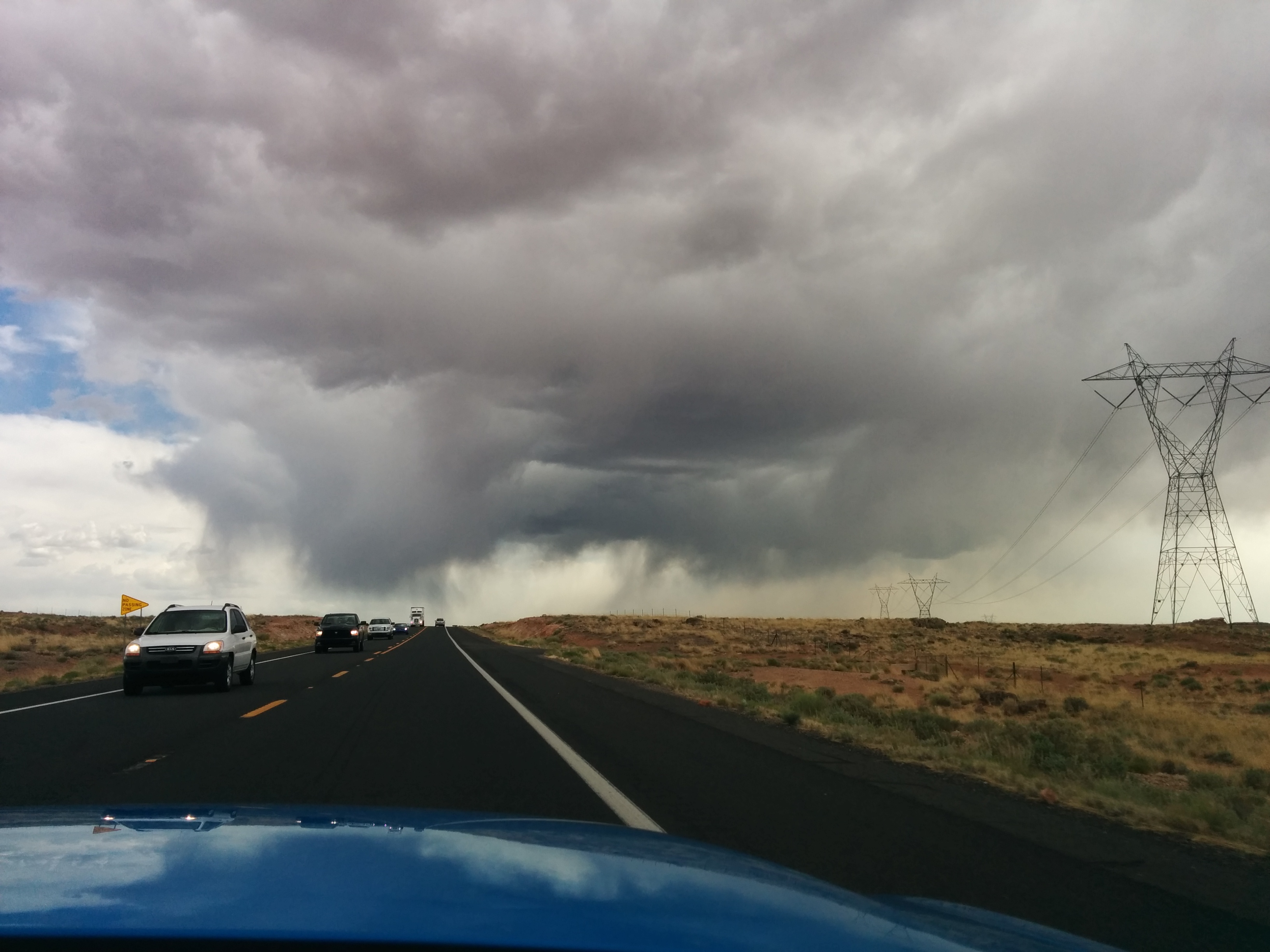
Arizona skies:
Drifting rain:
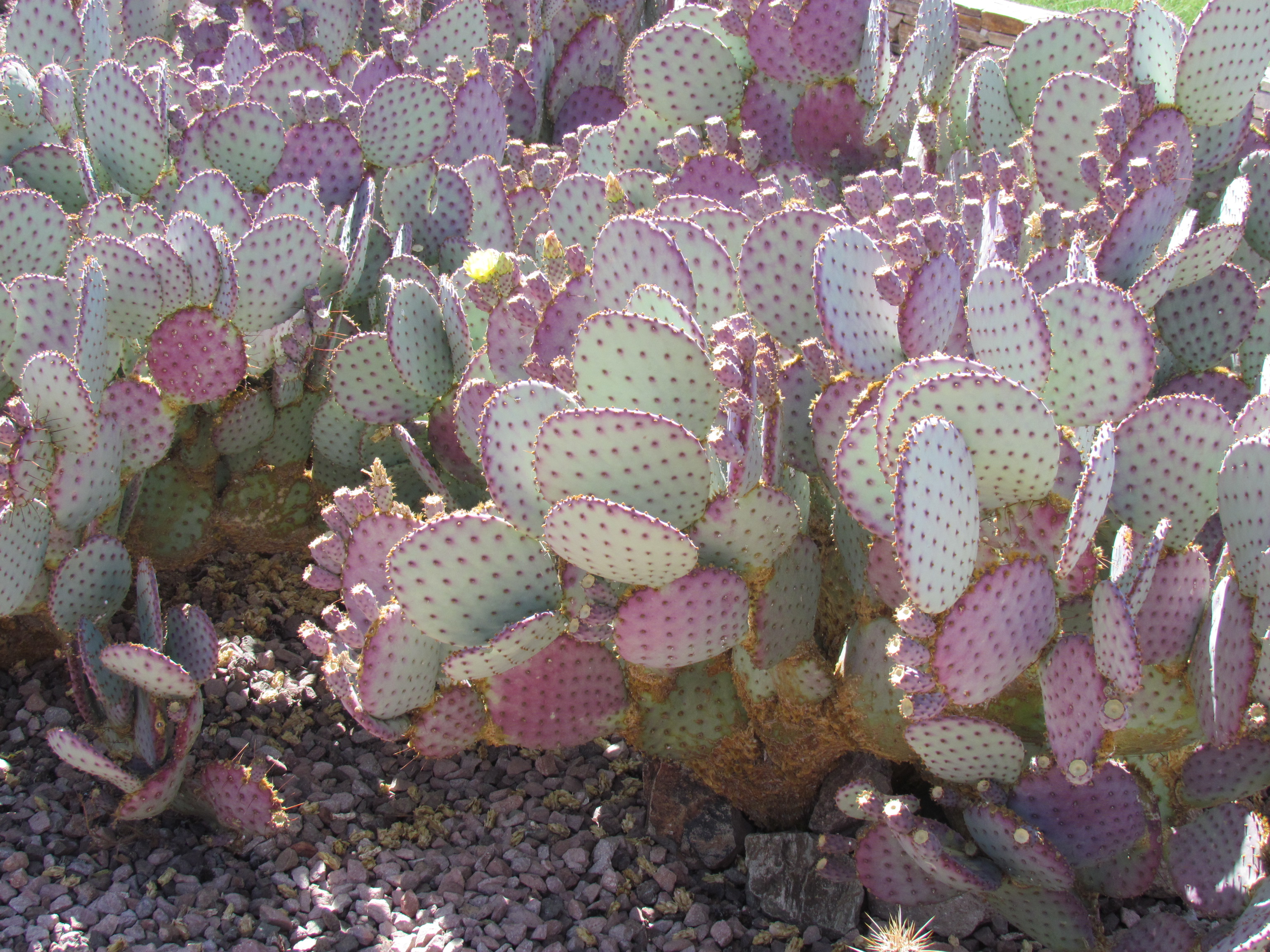
Delicate cactus hues:
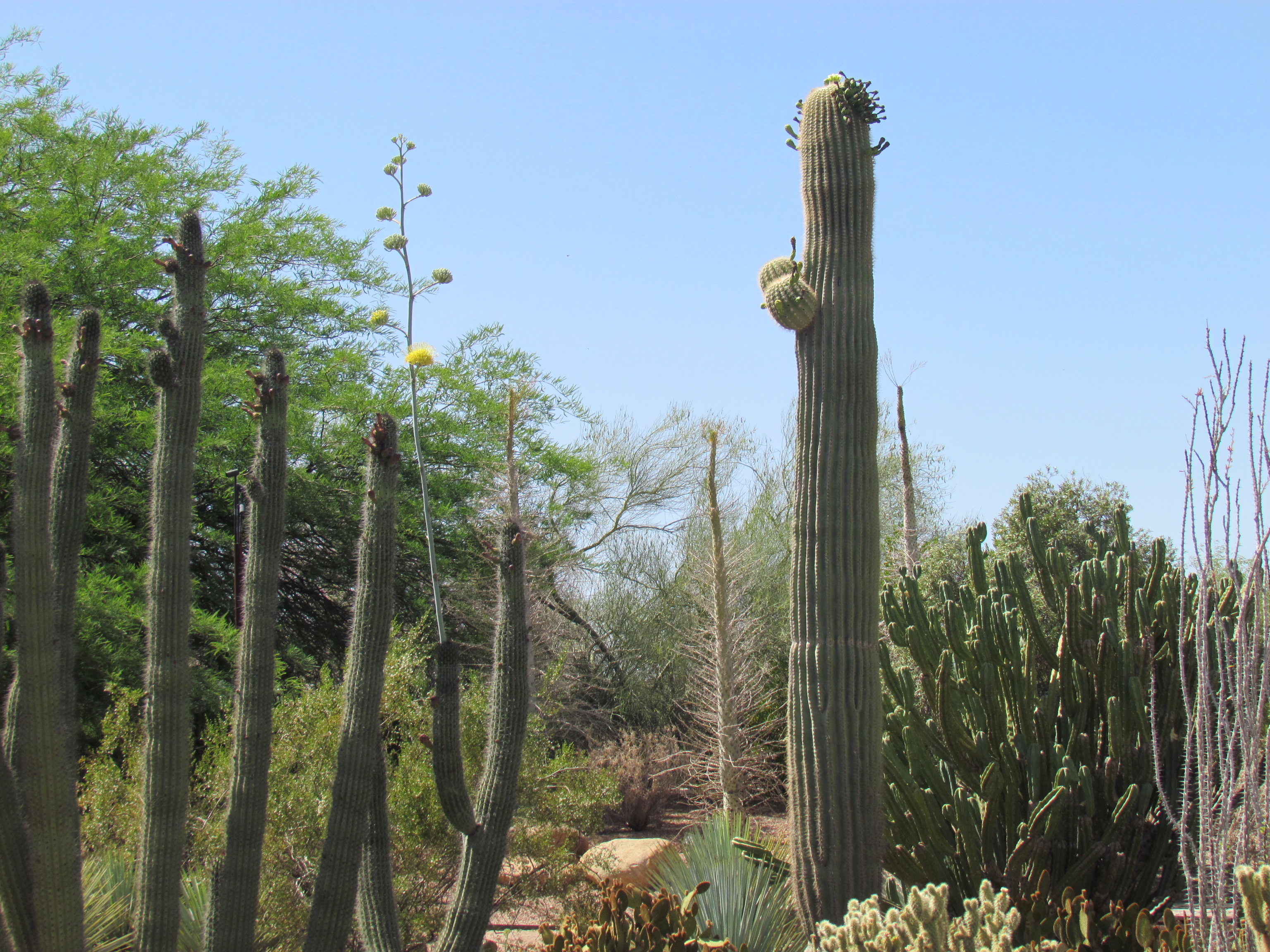
All shapes and sizes:
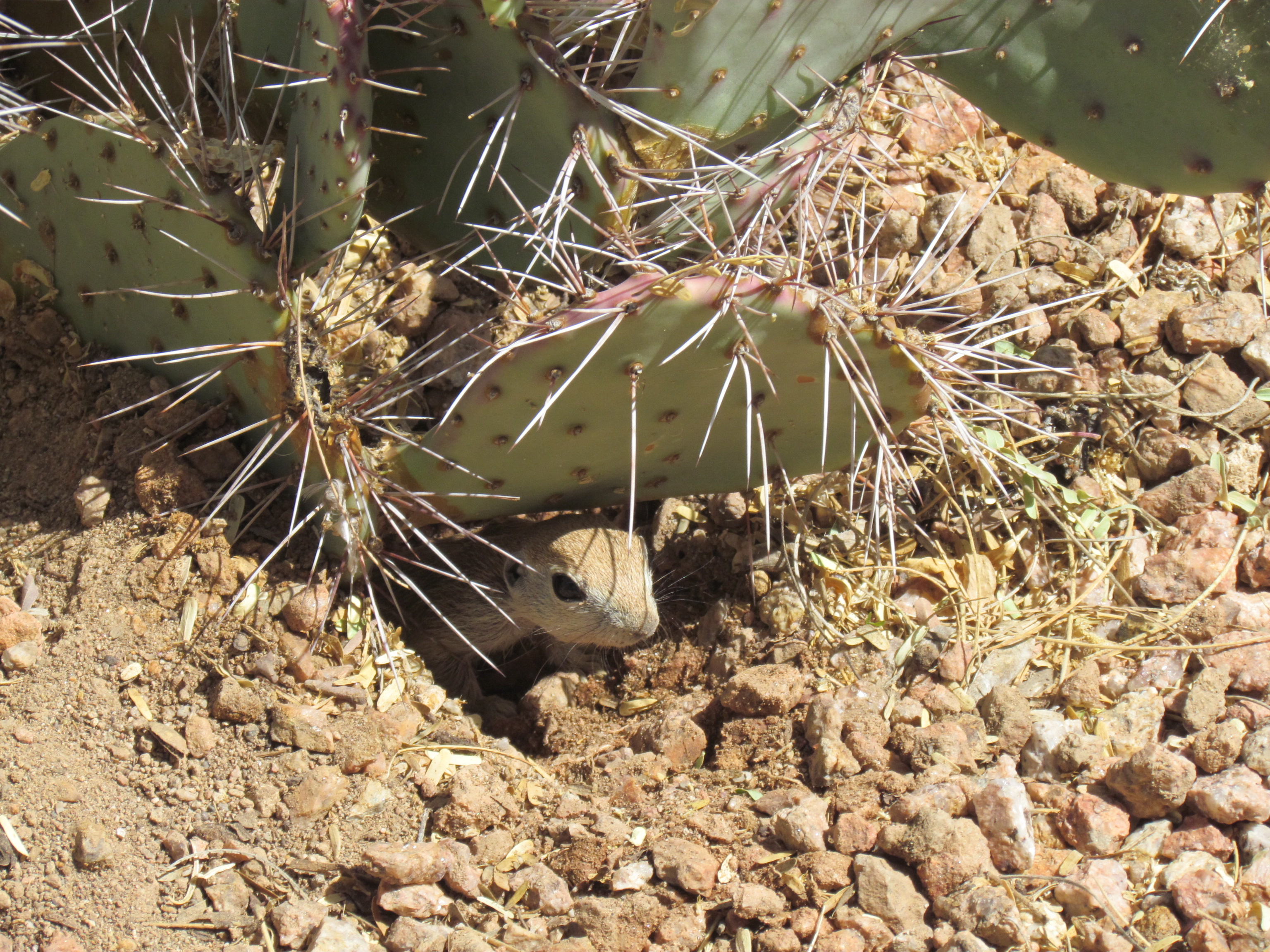
A tiny ground squirrel living under a cactus:
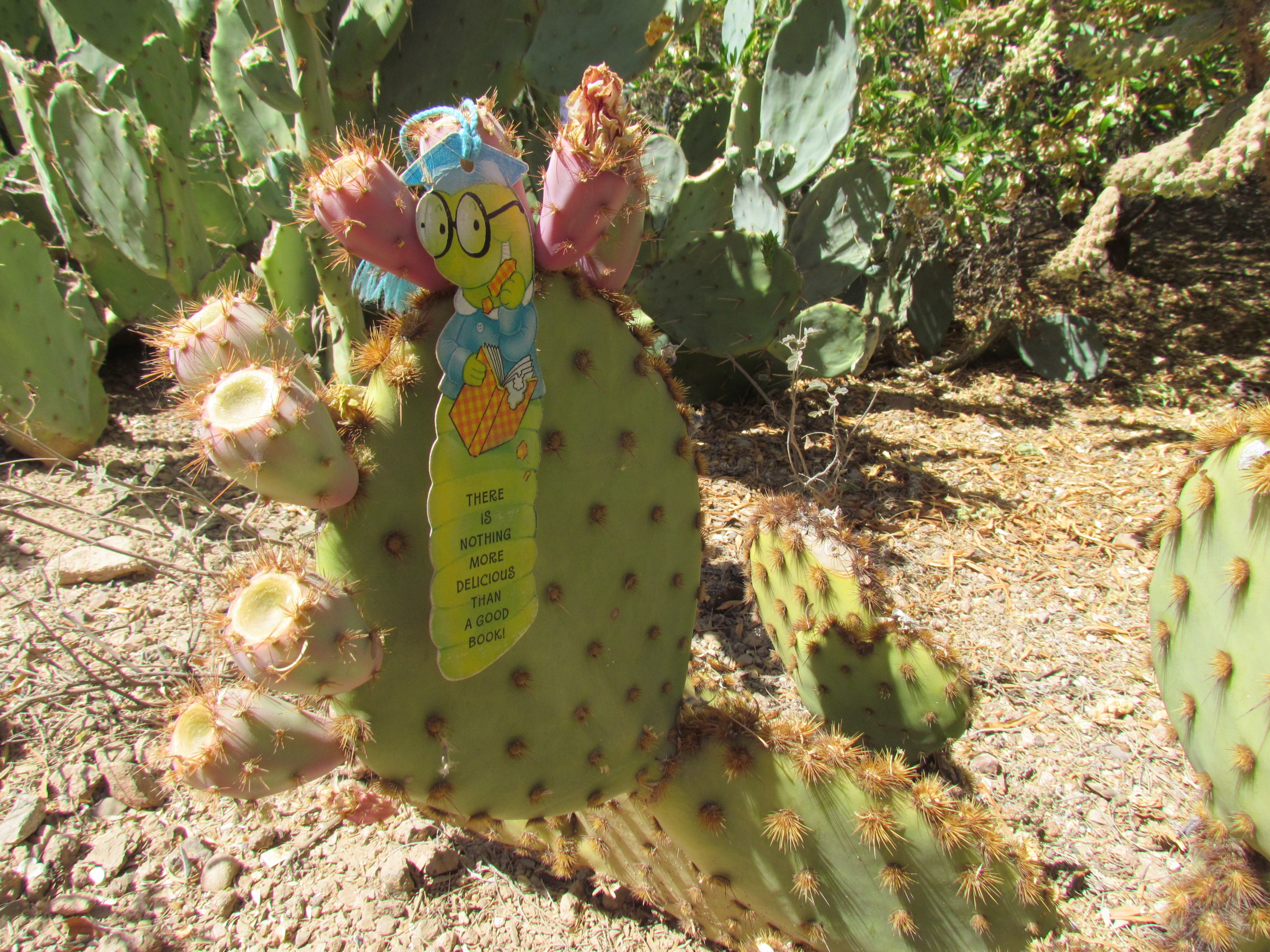
When positioning me in this pose, the TC discovered that prickly pears are aptly named:
This is the blog of Mark Wordsworm, the travelling worm. I’m a 25-year-old bookmark and can proudly boast my own Hallmark serial number, 95 HBM 80-1. You’ll probably want to read all about me and my Travelling Companion (the TC).
Today’s travel notes
Me and the TC popped over to Brisbane last week, to check out the two main campuses of the University of Queensland (UQ). My previous post includes moody shots of Ipswich and some fish in a library. Now for the lowdown on the big smoke itself.
My impressions? A university with character, in a city of character, owned by a river full of attitude.
The book I’m in
The Intercept, by Dick Wolf. Fast, believable action.
Recommended accommodation
Manor Apartment Hotel, 289 Queen Street, Brisbane. It’s in the centre of the city. The service is friendly, the rooms are roomy, and the breakfast is excellent.
Travel tip
Take a ferry trip down the river. It’s not always the fastest way of getting from A to B, but it’s a great way of seeing the city and relaxing at the same time. The ferry ride from the Eagle Street Pier to the UQ campus (St Lucia) takes about half an hour.
The photos
Me on a map of Brisbane, on a podium, on the top of Mount Coot-Tha:
The dark squiggly line running across the map is the river.
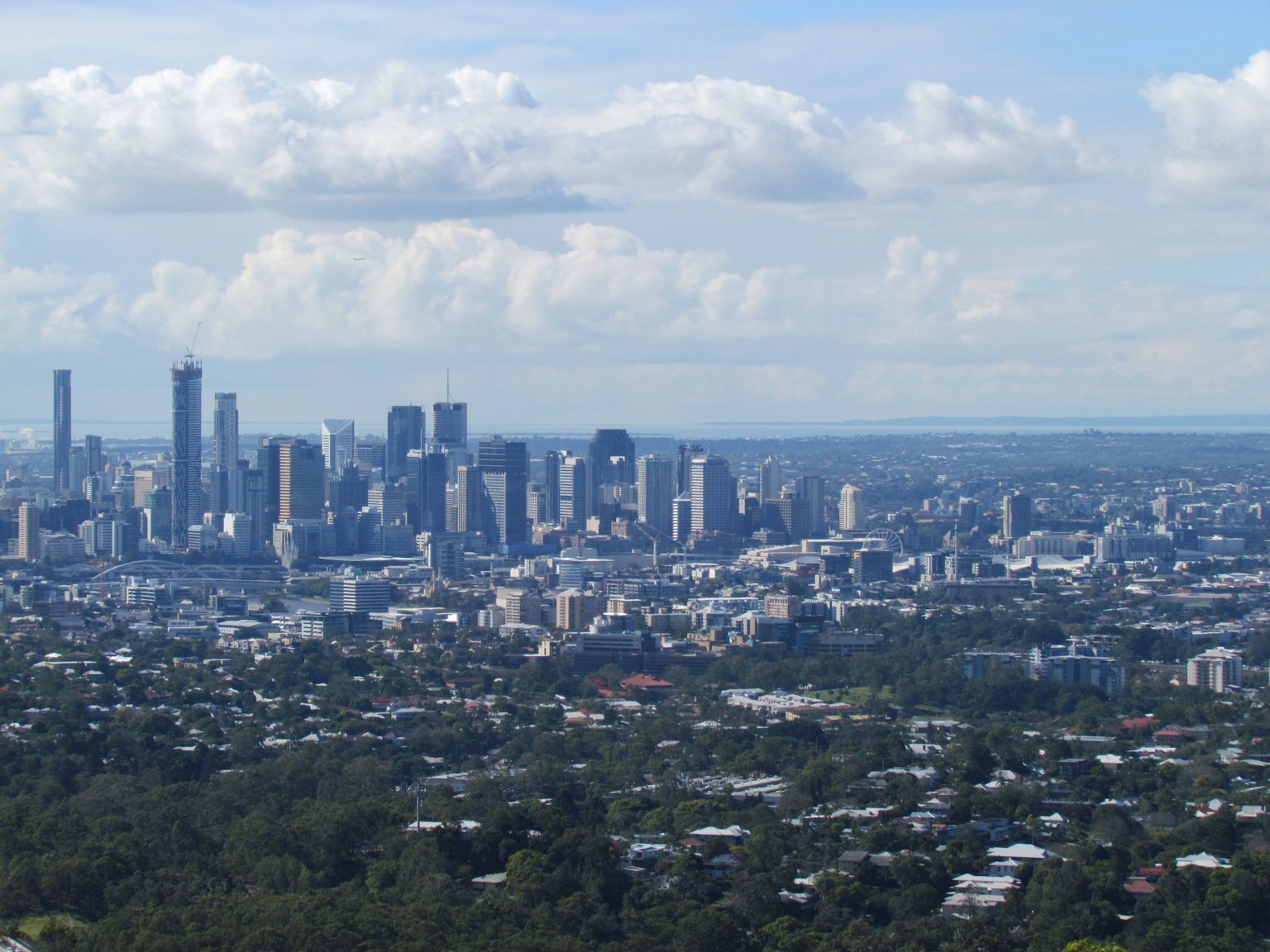
A view of the city of Brisbane, from the viewing site on Mount Coot-Tha:
The St Lucia campus is further inland by a couple of bends of the river. In this picture, you can see the wall of the great court that lies in the centre of the UQ’s St Lucia campus. It’s to the right of the patch of river, in front of the four poles rising up from the bridge:
St Stephen’s cathedral, Brissie:
“Brissie”, pronounced “Brizzy”, is the locals’ rather irreverent name for their city.
We took the ferry from the CBD to the university’s St Lucia campus. Here’s the striking Kurilpa Bridge, seen from the ferry:
Before depositing you on shores academical, this worm would like to take you on a diversion semiotical. Take a look at the sign below, which this worm spotted on a lavatory door at the end of a queue of women:
The women in the queue ignored this door. Instead, with great patience and forbearance, they were waiting in line for a single toilet, which had a sign containing just three pictures: the figure of a woman, a wheelchair, and a baby-changing platform. The patient queue assumed the first toilet (shown above) was for disabled people only, and the second was for everyone. The TC, bless her cotton socks, piped up that she was sure it was OK to use the disabled toilet. Imagine her delighted surprise, and that of everyone else in the queue, to discover six vacant toilets behind the above door, all ready and waiting for “ambulant” people’s use.
So, this worm muses, past experience has conditioned us to expect a special toilet for disabled people and to assume the difficult word “ambulant” is yet another term for “disabled”. And we don’t read.
Here’s another diversion. This worm as vastly amused to see the following sign in the hotel lobby. Shades of Sweeney Todd?
A closer look:
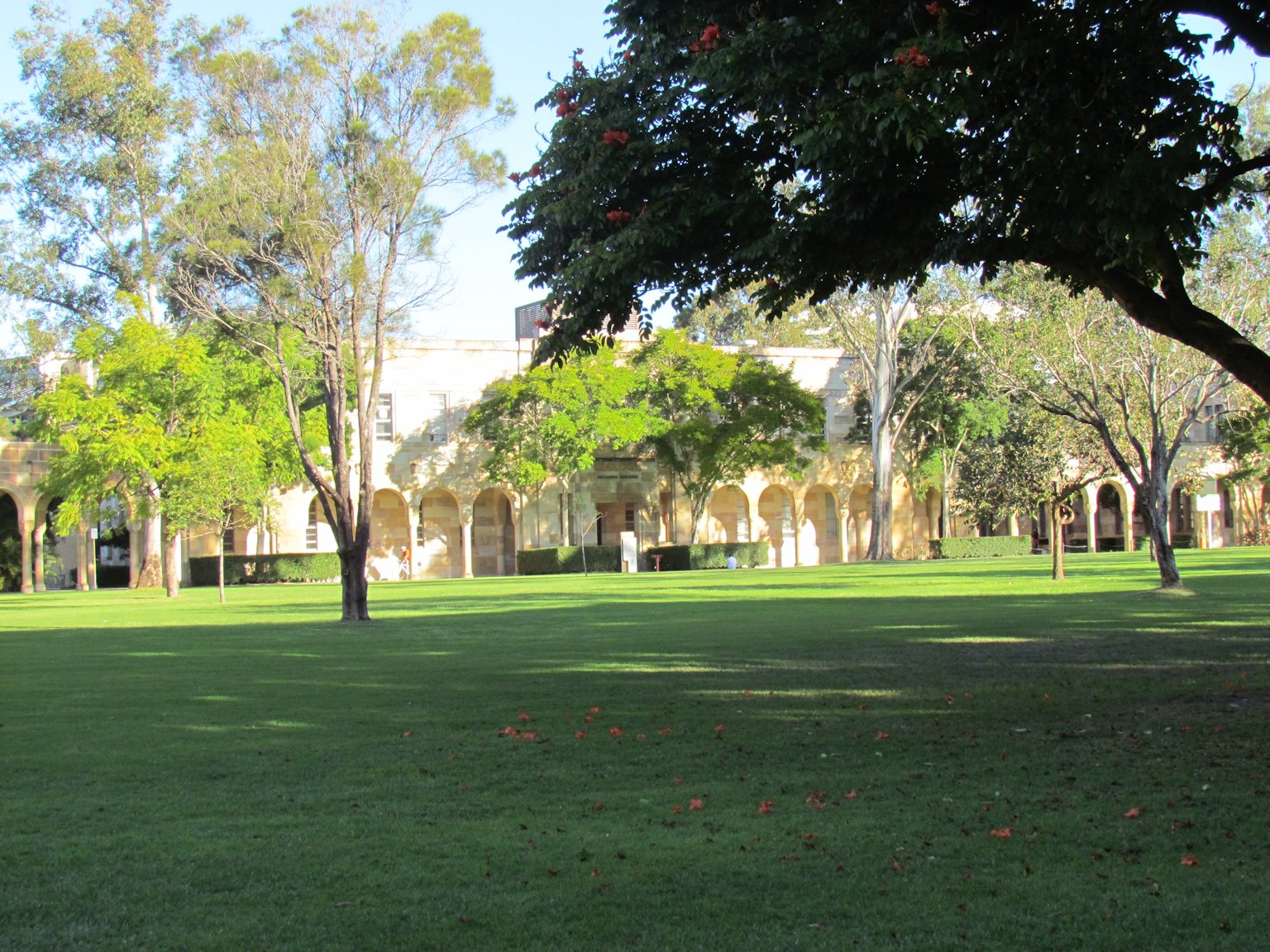
Moving on from dark humour to the light of academia, this is the outside wall of the magnificent great court at UQ’s St Lucia campus:
Inside is spacious and restful:
The detail on the walls:
One of the grotesques, rather gentler than many of that ilk:
This is the blog of Mark Wordsworm, the travelling worm. I’m a 25-year-old bookmark and can proudly boast my own Hallmark serial number, 95 HBM 80-1. You’ll probably want to read all about me and my Travelling Companion (the TC).
Today’s travel notes
Me and the TC were in Cape Town, South Africa, last week. We spent a day on Table Mountain. This worm has been there before (blogged too). The top of the mountain is one of the TC’s favourite places to be. This worm is fond of it too, though it can be a trifle draughty. I find myself hanging onto my hat, and the TC hanging onto me. It’s lucky one of us is the strong and silent type.
My impressions? A place of quiet and beauty.
The book I’m in
The Secret She Kept, by Amelia Carr. Tangled secrets, tangled emotions. The TC is moving me through this well-written book at a good pace.
Travel tip
If the mountain is clear, go up it. Do not delay. Tomorrow may never come. Or the cloud may roll in.
The photos
Me at Maclear’s beacon on top of Table Mountain:
We walked across the top of the mountain to Maclear’s Beacon. It’s a two-hour hike there and back, mostly flat with a short scramble when crossing from the front table to the back table. Great views, unique vegetation. Sir Thomas Maclear (1794 – 1879) was the queen’s astronomer at the Cape of Good Hope. He was a good friend of David Livingstone. One of the craters on the moon is named after him. Hmph, pretty famous, I suppose. He didn’t have a blog, though, unlike this worm.
Maclear’s beacon is at the highest point of Table Mountain – more than a kilometer up, at 1085 metres) It’s not much to look at: Just a heap of stones, built to act as a trigonometrical beacon. Still, it’s a good destination to aim for.
A view of Table Mountain draped in cloud, seen from the Waterfront in Cape Town. The TC took this photo after we intrepid explorers had come back down the mountain. You can just make out the top cable car station, towards the midlle-right of the photo where the cloud cover ends:
What on earth is that giant Lego man doing there? He is 18 metres high, made of 4200 Coca-Cola crates. A little bird told this worm the statue is called “Elliot” and is making a statement about recycling.
A close-up view of the top cable car station, with one of the cars visible near the bottom of the picture:
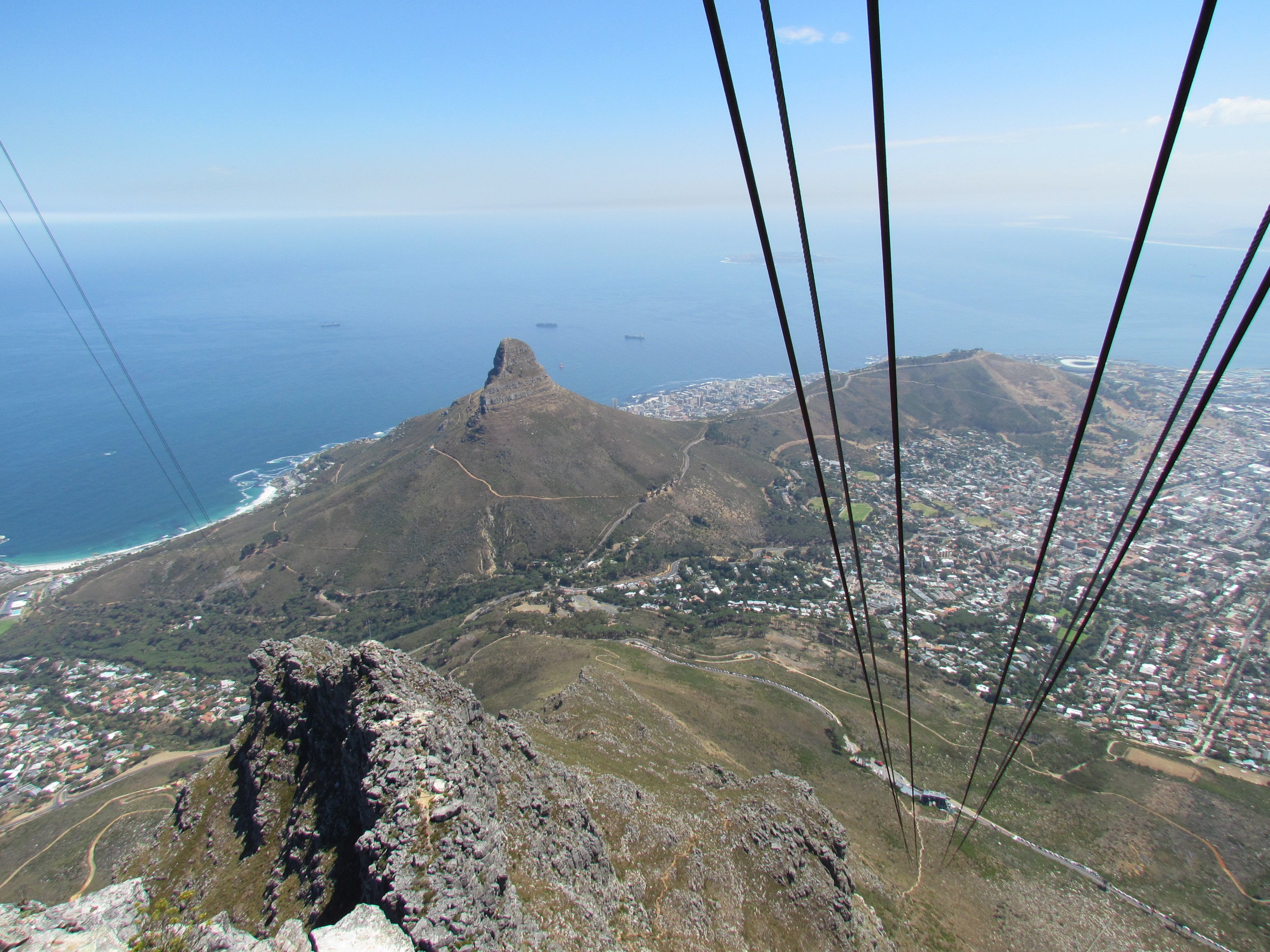
The next photo shows the view from the top. Those cables swoop down at a seemingly impossible angle, don’t they. At the end of the cables is the bottom cable car station. Also in the picture is Lion’s Head, the odd-shaped hill on the left of the cables. Cape Town city is to the right. In the bay, partially obscured by the cables, you can just make out Robben Island:
If you’re lucky enough to be at the top when the cloud moves in, you’ll see it flowing off the mountain and dissolving in the warmer air. This video also shows the coast on the west side of the mountain, ending with an eagle-eye view of Camps Bay, a popular Cape Town beach:
Walking into cloud on the mountain top is atmospheric and eerie:
The TC will take pot shots at plants wherever she goes. Pot shots with her camera, of course:
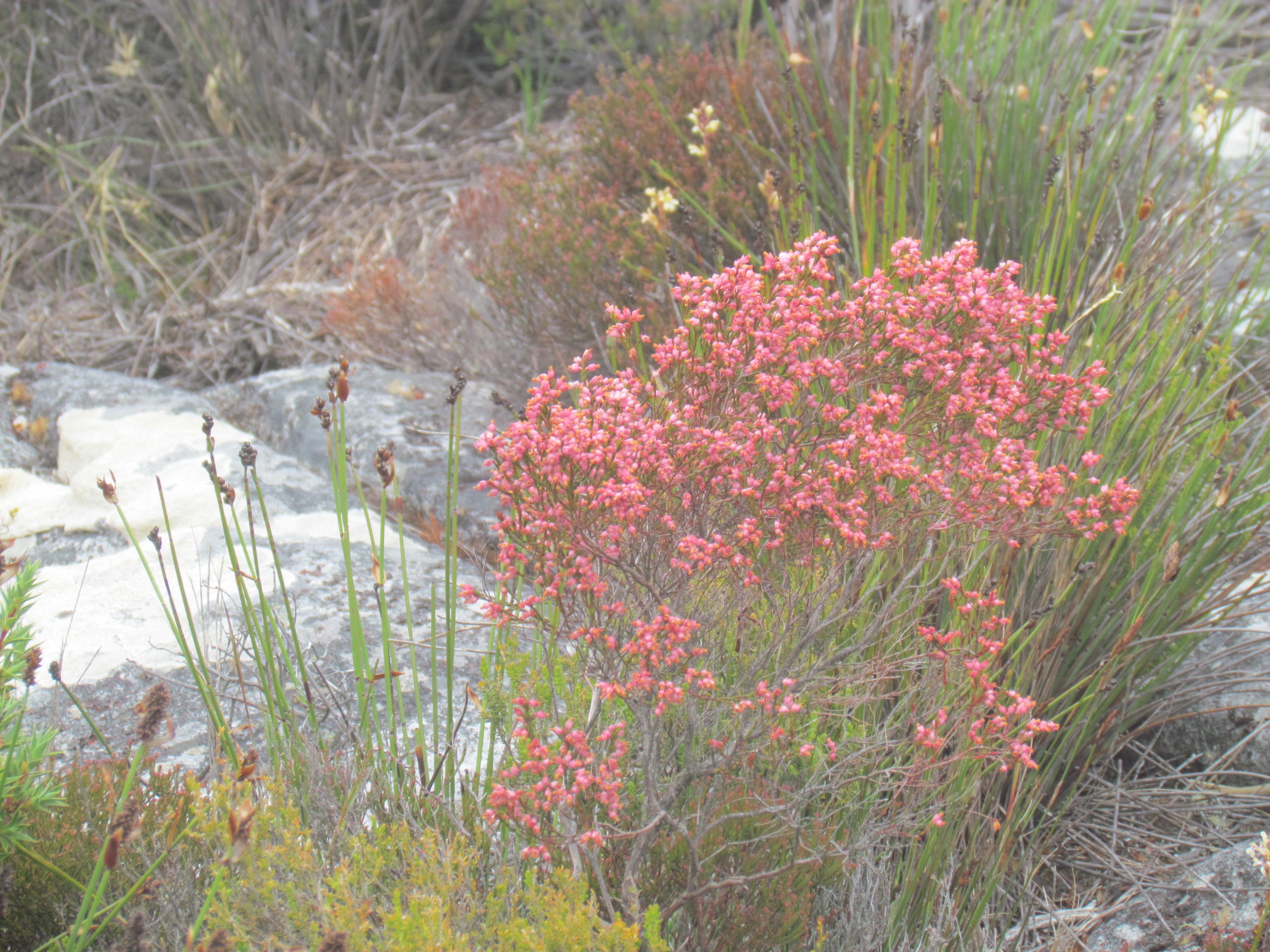
A plant in the mist:
Another pink plant:
A protea bush:
A protea flower in bud, with a dead bloom behind:
Back in the pink:
Walking back towards the cable car station, we chose the city side of the mountain. The cloud was advancing, swooping off the edge and rolling down towards the city:
This is the blog of Mark Wordsworm, the travelling worm. I’m a 25-year-old bookmark and can proudly boast my own Hallmark serial number, 95 HBM 80-1. You’ll probably want to read all about me and my Travelling Companion (the TC).
Today’s travel notes
Me and the TC have recently returned from a trip to South Africa. While in Johannesburg, we visited the well-known Lion Park, in Honeydew. Get up close and personal with a lion, be licked by a giraffe, or chat to a meerkat.
This post is mostly about lions. But I’ll tell you a bit about Johannesburg while we’re at it. In contrast to my usual adventure-filled writings, this is a post in which a whole lot of nothing happens. But it’s attractive nothingness, with just a hint of hidden violence.
I see that the Lion Park has a celebrity wall. This worm is sure they’ll add my picture to it soon!
My impressions? Somnabulance. Slow-moving pedestrians on shimmering pavements. Umbrellas wavering in the haze of the summer heat. Barbed wire atop high walls. Electrified fences. Gorgeous shopping. Intense industry. Building, ever building. Chaotic crossroads. Hawkers. Quality and squalour. Awesome. Much inthe last few sentences describes the lions too. The giraffe is all awesome.
The book I’m in
Code to Zero, by Ken Follett. Titbits of rocket science, Soviet spies, CIA and NASA. Just want you want for a good, fast read.
Travel tip
If you’re going to get licked by a giraffe, have a wet wipe handy.
The photos
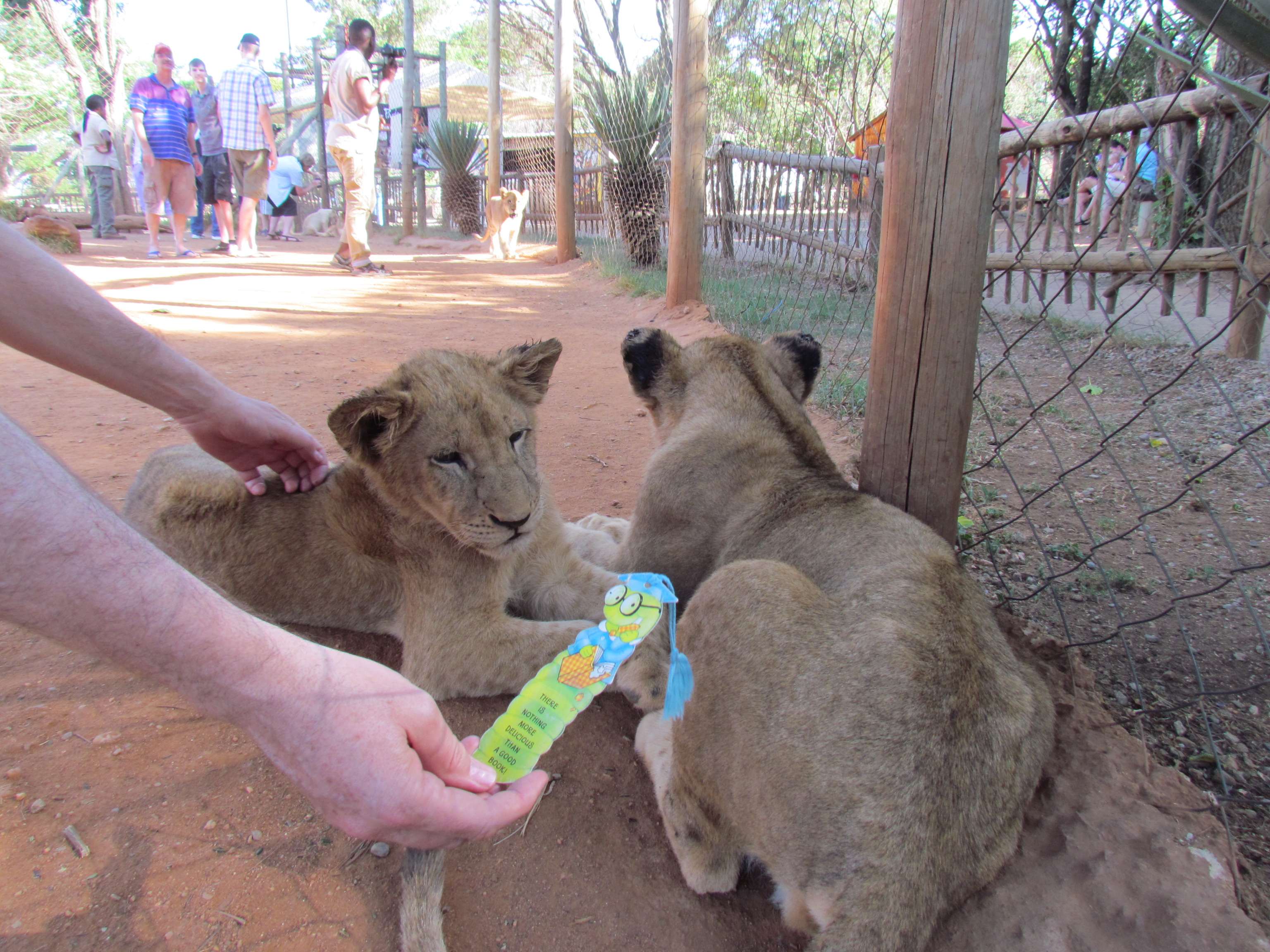
Me looking nonchalant, with lion looking uncomfortably interested:
I twaut I taw a puddy tat:
Sleeping lions – that’s all that happens in this video, honest:
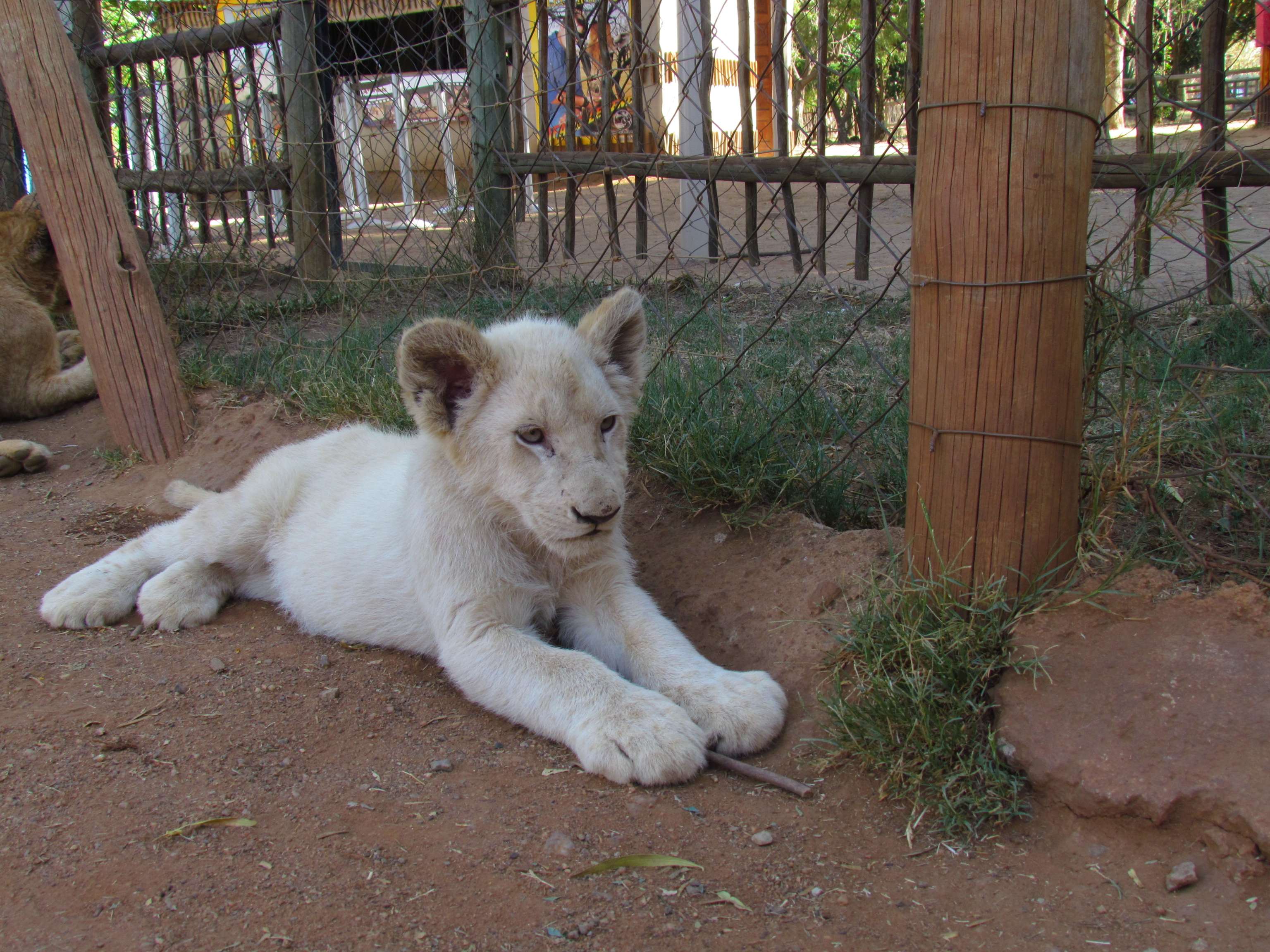
Lions are not always dignified:
And then, that effortless dignity of the jungle king:
I was safely inside the car with the TC when she took this photo:
Safely? When a lion is just a few feet away and looking right at you, the thin metal of a car door seems a flimsy barrier.
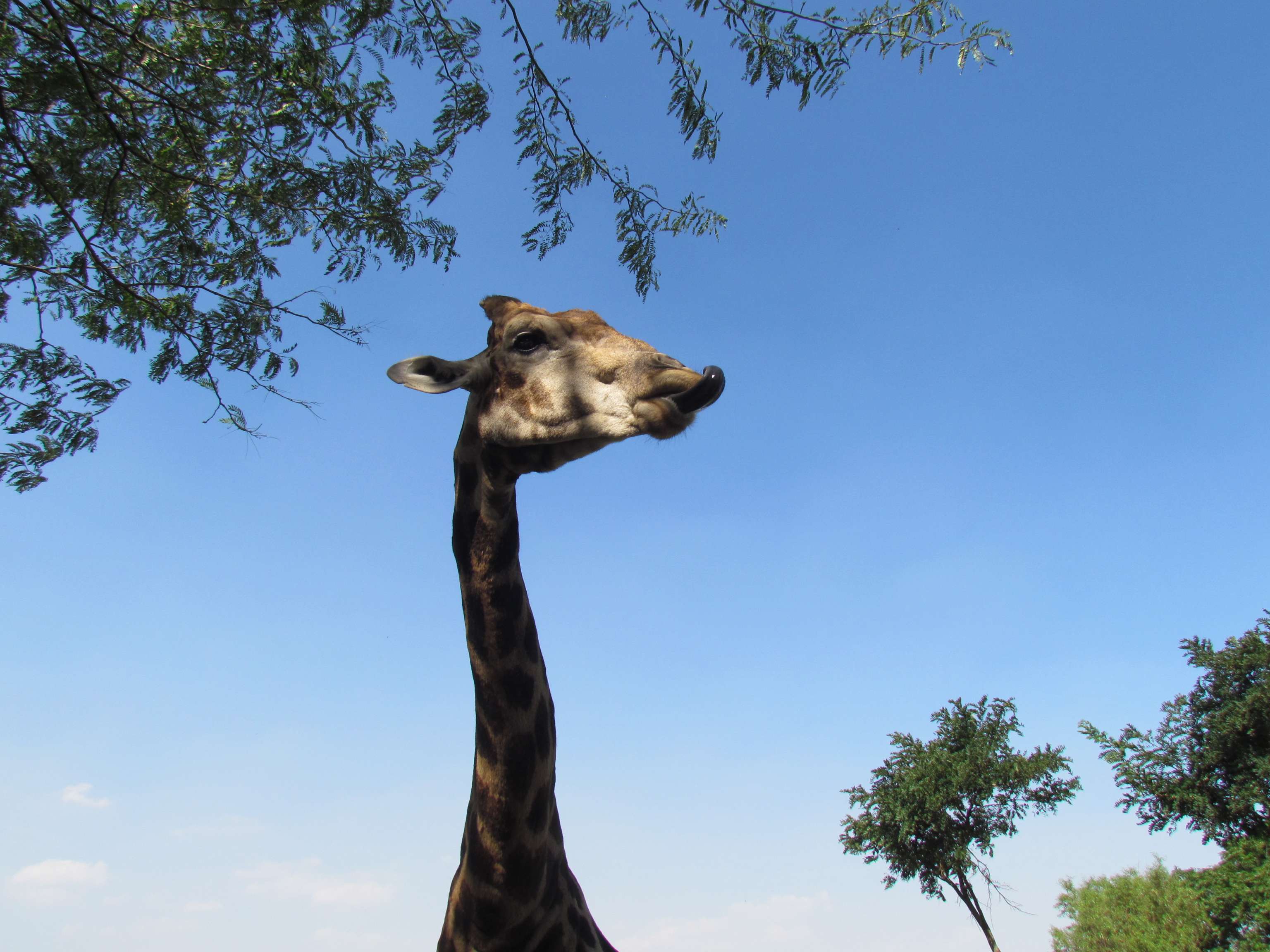
The other denizens of the park provide some light relief:
You’ve just gotta love a face like that.
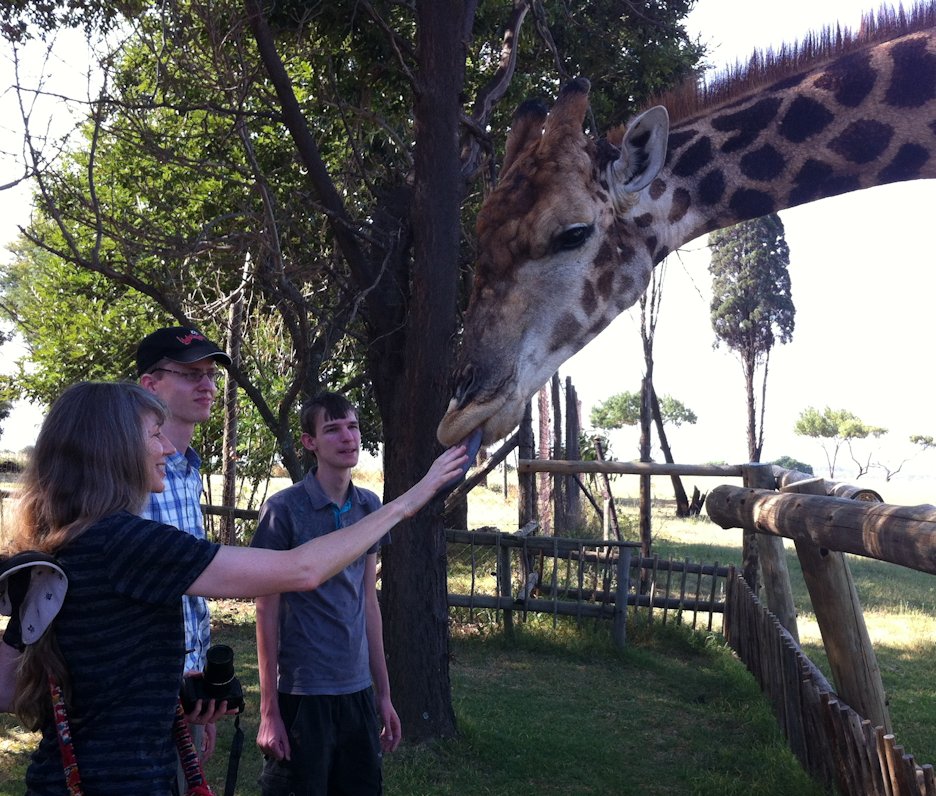
Fancy being licked by a giraffe?
The TC discovered that a giraffe’s tongue is long and slightly rough to the touch. The saliva is plentiful and sticky.
This is the blog of Mark Wordsworm, the travelling worm. I’m a 25-year-old bookmark and can proudly boast my own Hallmark serial number, 95 HBM 80-1. You’ll probably want to read all about me and my Travelling Companion (the TC).
Today’s travel notes
Me and the TC have just returned from a trip to sunny South Africa. One day we drove to the Magaliesberg mountain range, near Johannesburg. We headed up in the cable car to catch the view, then drove round the Hartbeespoort Dam.
The TC, bless her cotton socks, keeps humming a ditty from her childhood in South Africa (the RSA):
Braaivleis, rugby, sunny skies and Chevrolet
Braaivleis, rugby, sunny skies and Chevrolet
They go together, in the good old RSA
Braaivleis, rugby, sunny skies and Chevrolet
She’s even found it on YouTube. Ah, “the horror, the horror,” this worm weakly whispers.
My impressions? Sunny skies, a touch of chaos, some green scum, and many friendly people.
The book I’m in
I, Spy? (Sophie Green Mysteries, No 1) by Kate Johnson. A good, humorous read. The TC read the book on a Kindle. I felt a bit of an outsider, worming my way in and nibbling at the words whenever I could. The electronic bookmarks littering the pages were ten a penny and rather characterless, I feel.
Recommended restaurant
Squires on the Dam, Hartbeespoort Dam (opposite snake park). Things were a little rocky at the start. Indiana Jones would have felt right at home when the roof opened up and dumped a torrent of icky-smelling water all over the TC. This worm had to make a quick run for cover. My cardboard constitution is not compatible with water. But the restaurant staff recovered quickly, as did the TC, and our party of 13 people had a good meal and plenty of fun.
Travel tip
When travelling by air in South Africa, don’t put anything valuable in a suitcase that you’re checking into the hold. The TC’s luggage was rifled through on her trip from Johannesburg to Cape Town.
The photos
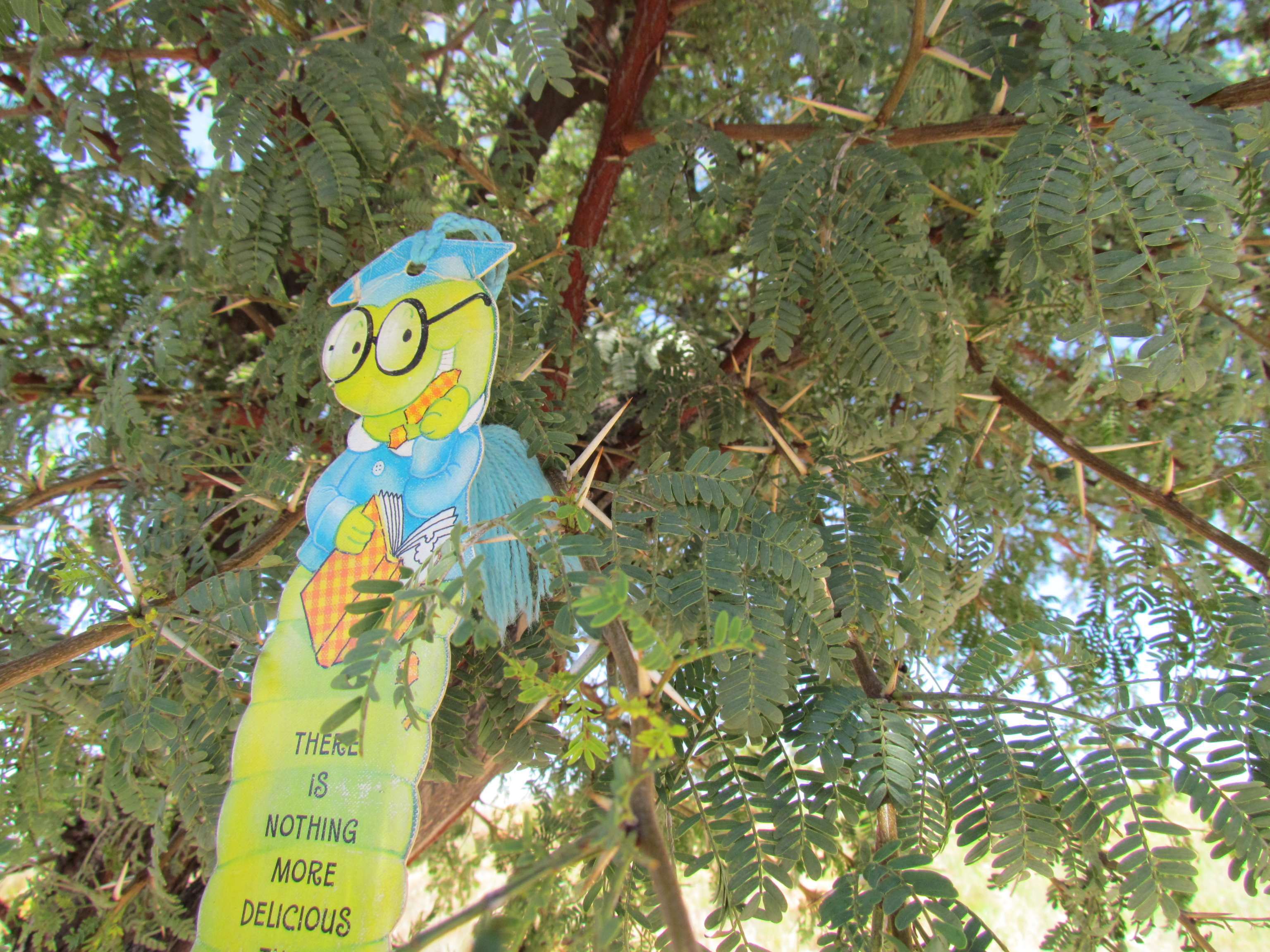
Me and a green doringboom, the famous thorn tree of Gauteng. Grandma, what big thorns you have!
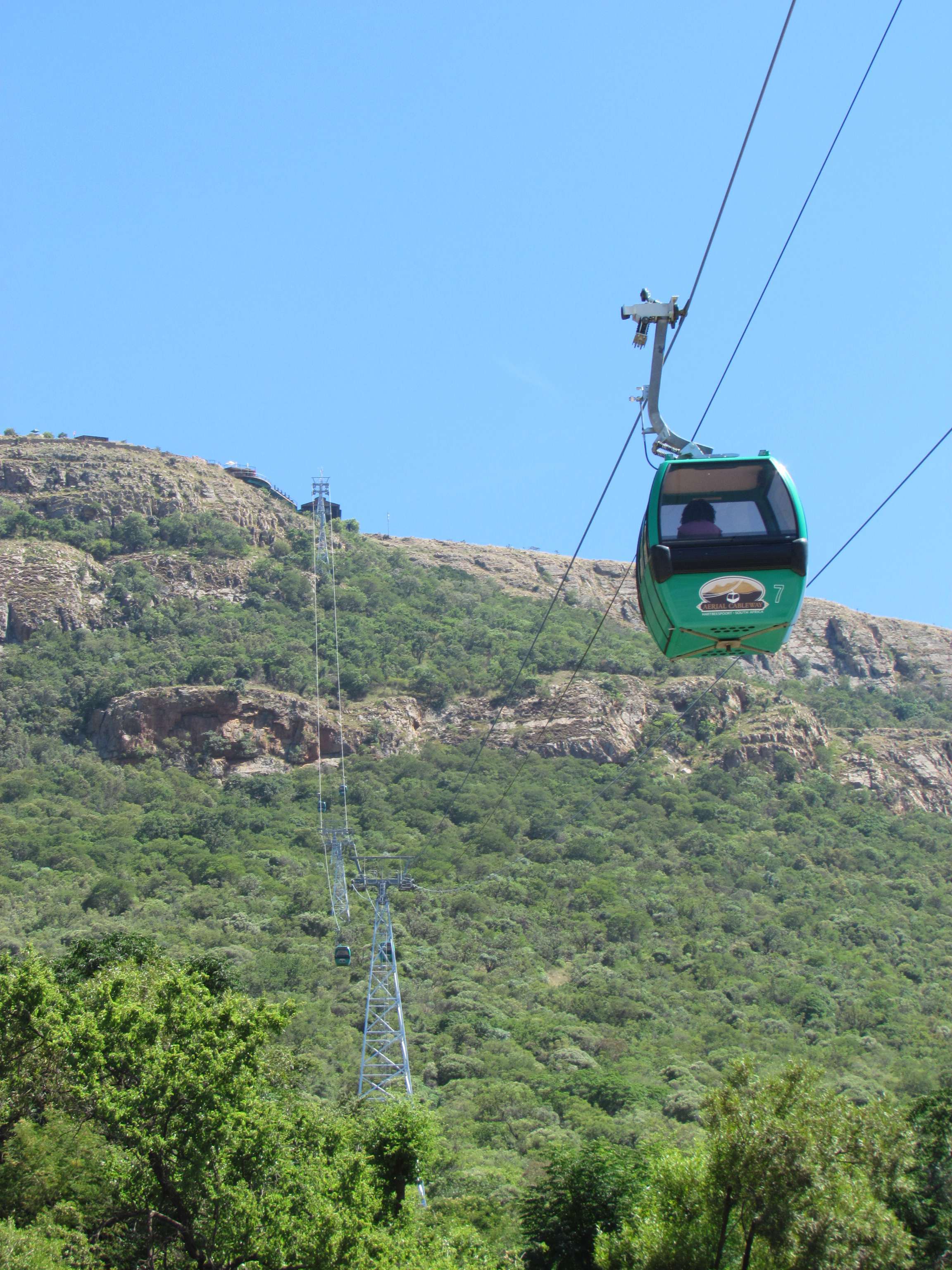
A cable car going up to the top of the Magaliesberg:
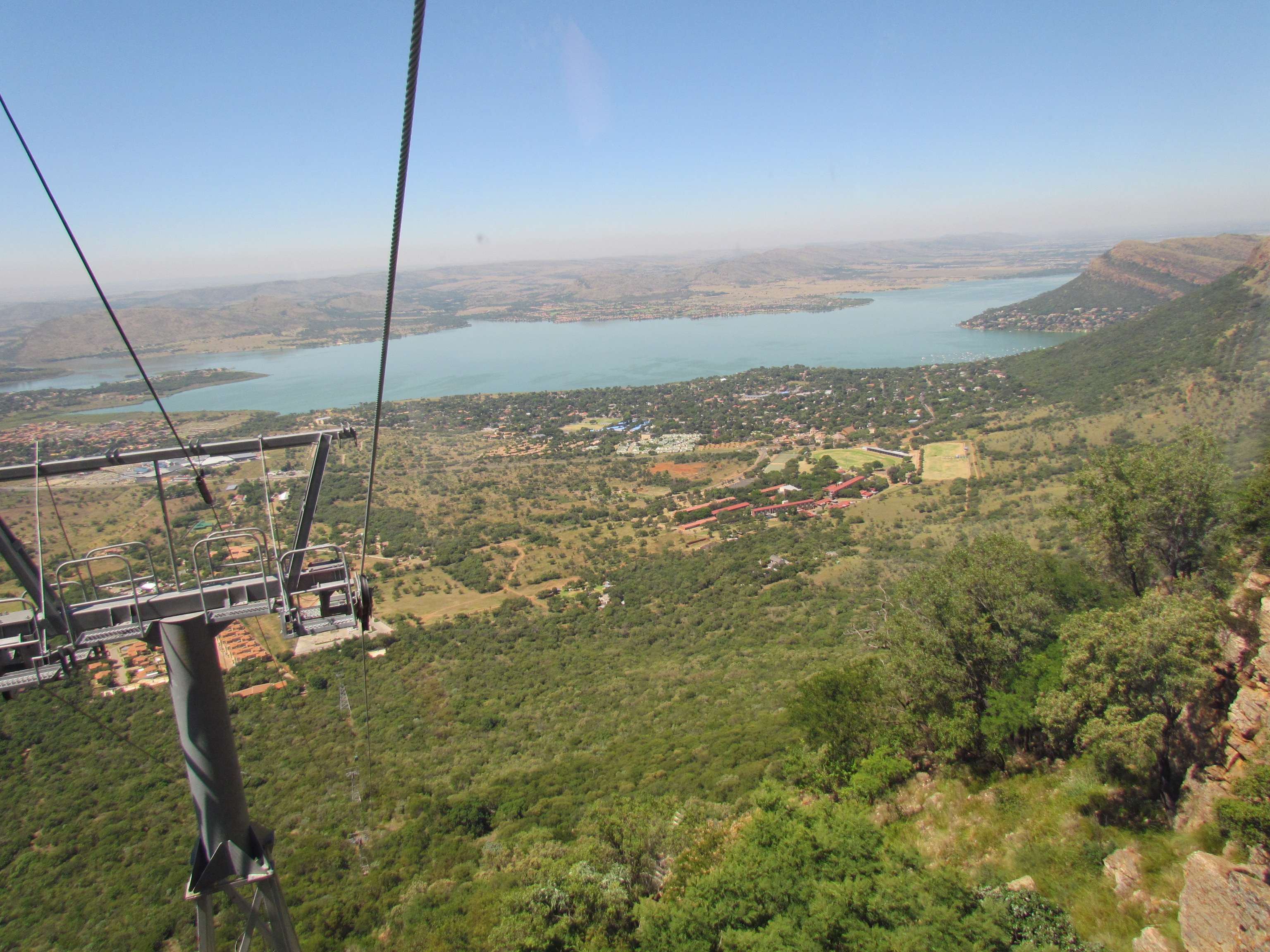
The view from part way up:
The green roof at the end of the cables is the lower cable station. Behind that is the Hartbeespoort Dam.
Another view from part way up:
Off to the right of the picture is the dam wall.
The top cable station is quite pretty:
Me gracing a plaque about “Harties”, as the locals call Hartbeespoort Dam:
The vegetation at the top is scrubby and grassy:
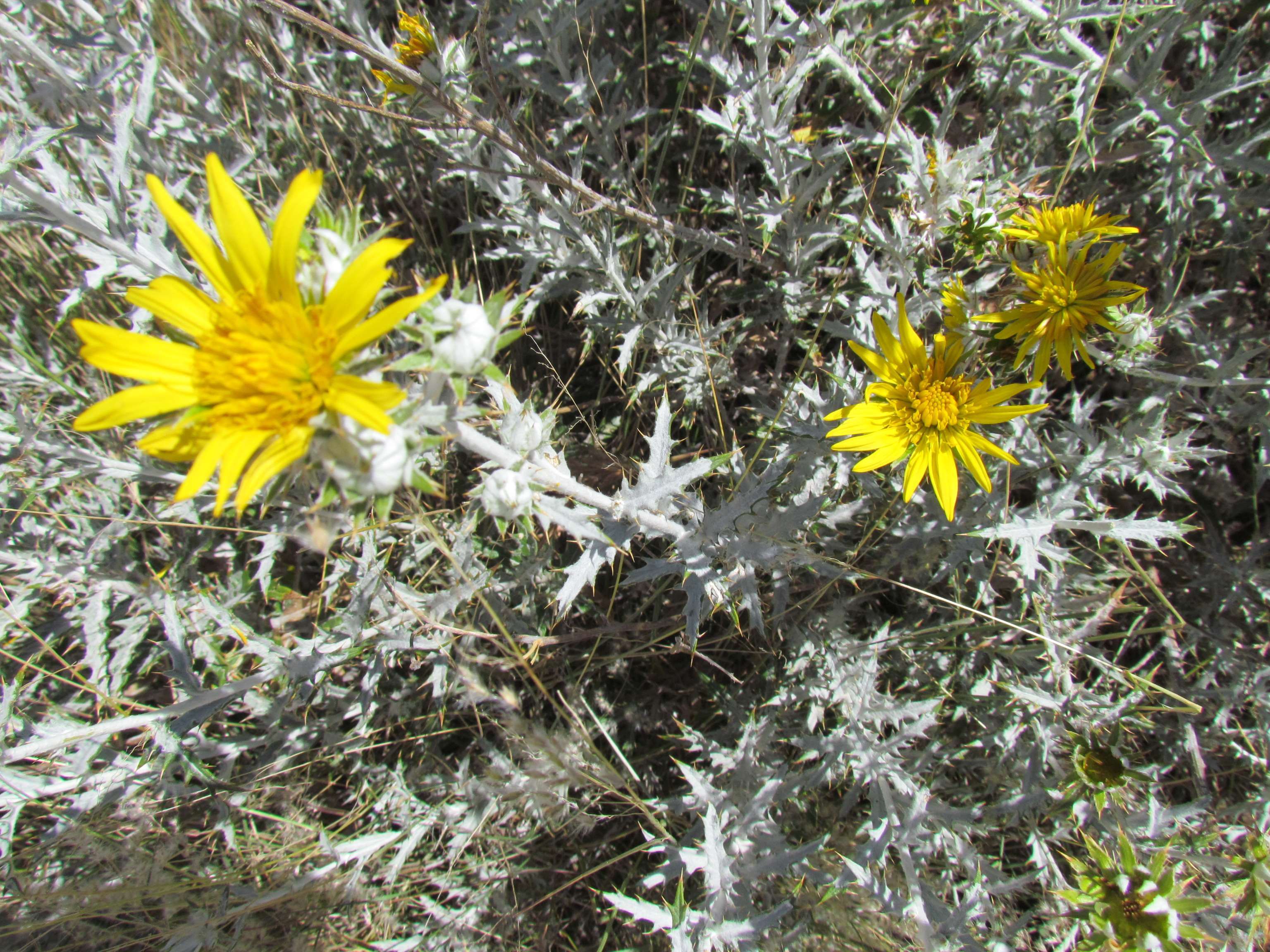
We came across the occasional flower:
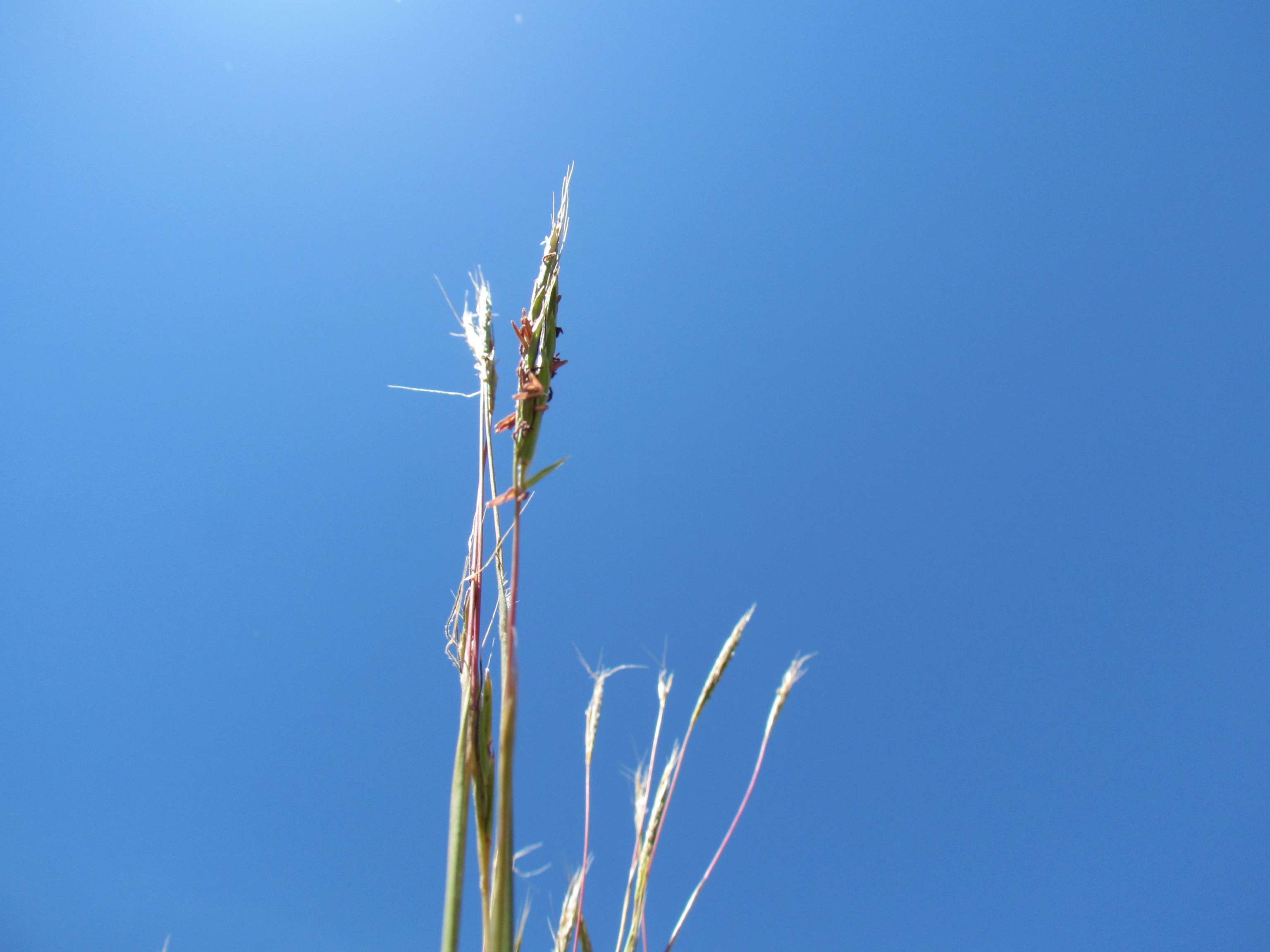
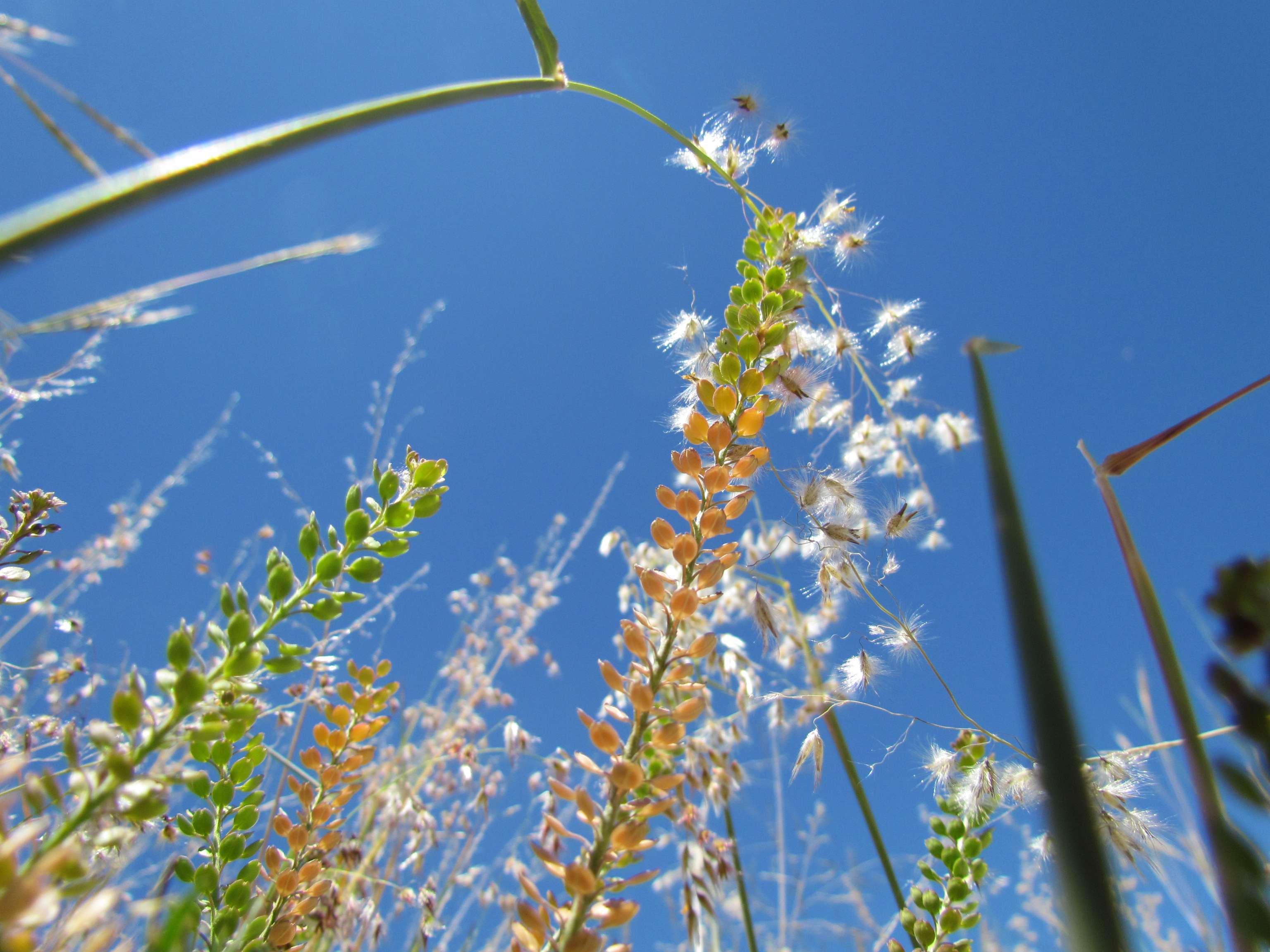
A worm’s eye view of a sprig of grass:
Things can be pretty when viewed from underneath:
More from a worm’s perspective:
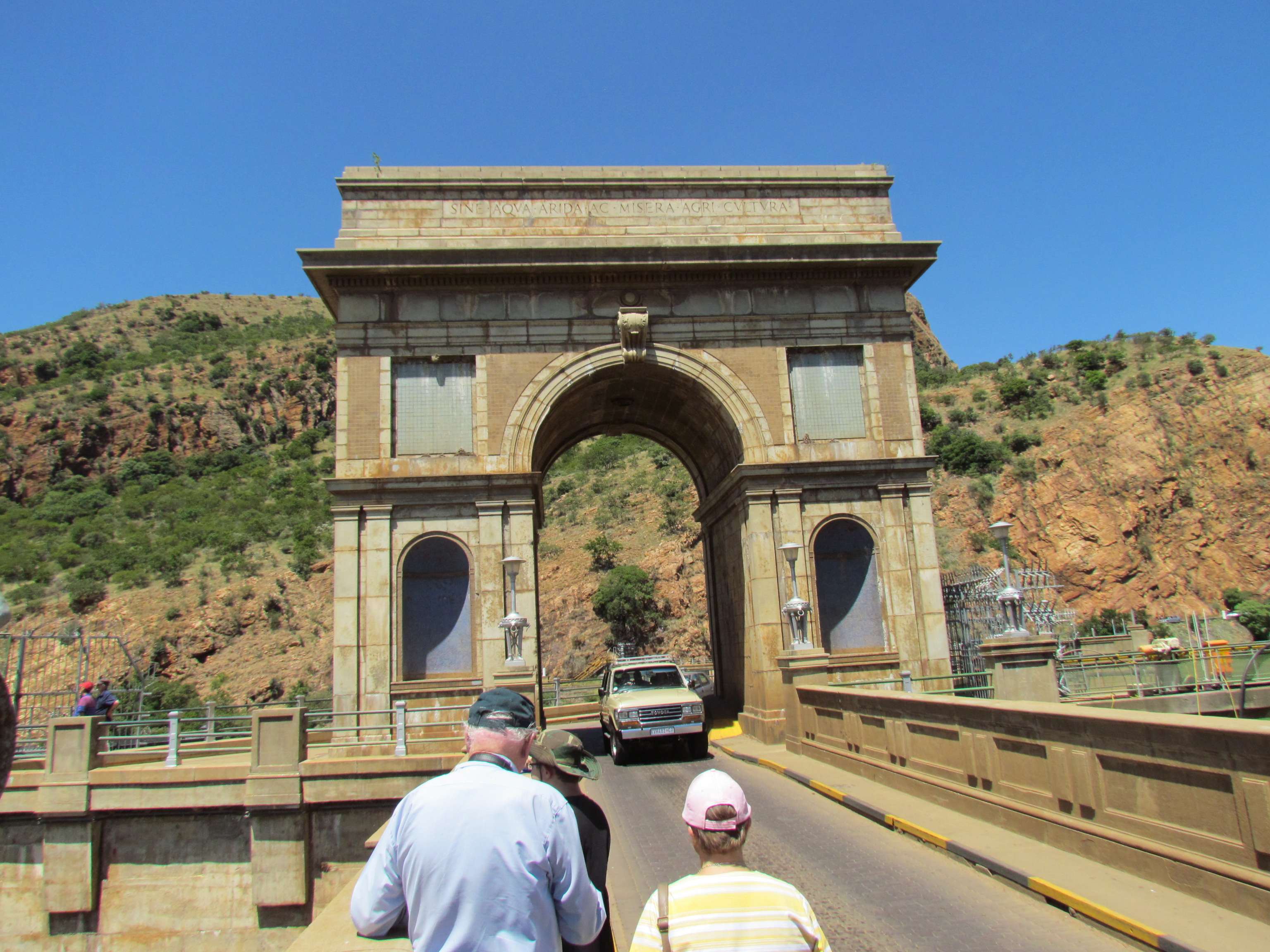
We came back down via cable car, and continued our drive around the Hartbeespoort Dam. This is the Romanesque archway that guards the dam wall:
The dam wall:
I’ll leave you with this idyllic picture of emerald green water… Wait! The end of this video is not for the squeamish:
Why is the water green? This worm heard many theories from concerned South Africans. Tons of raw sewage pumped into the dam. Nuclear waste from the nearby Pelindaba nuclear power plant. Uranium-containing water from nearby goldmines. Algae. Weeds. You name it, Harties suffers from it. Ag siestog, man.
This is the blog of Mark Wordsworm, the travelling worm. I’m a 25-year-old bookmark and can proudly boast my own Hallmark serial number, 95 HBM 80-1. You’ll probably want to read all about me and my Travelling Companion (the TC).
Today’s travel notes
Me and the TC spent a day in Bangkok, on our way home from Europe. When travelling to Europe three weeks before, we had spent a day visiting the temples of Bangkok. (This worm’s immortal words about that experience are captured here: Temples of Bangkok.) Now on our return journey, we decided to explore the streets of the city.
My impressions? Smiles, grime, and hard-working people.
The book I’m in
The White Pearl, by Kate Furnivall. The TC has only just started this book. This worm is enjoying the story, characters and setting. The content of the book complements this blog post rather nicely.
Travel tip
It’s hot in Bangkok.
Recommended accommodation
Ariyasomvilla Hotel, 65 Sukhamvit Soi 1 Klongtoey Nua Watana, Bangkok. A haven in a confusing maze.
The photos
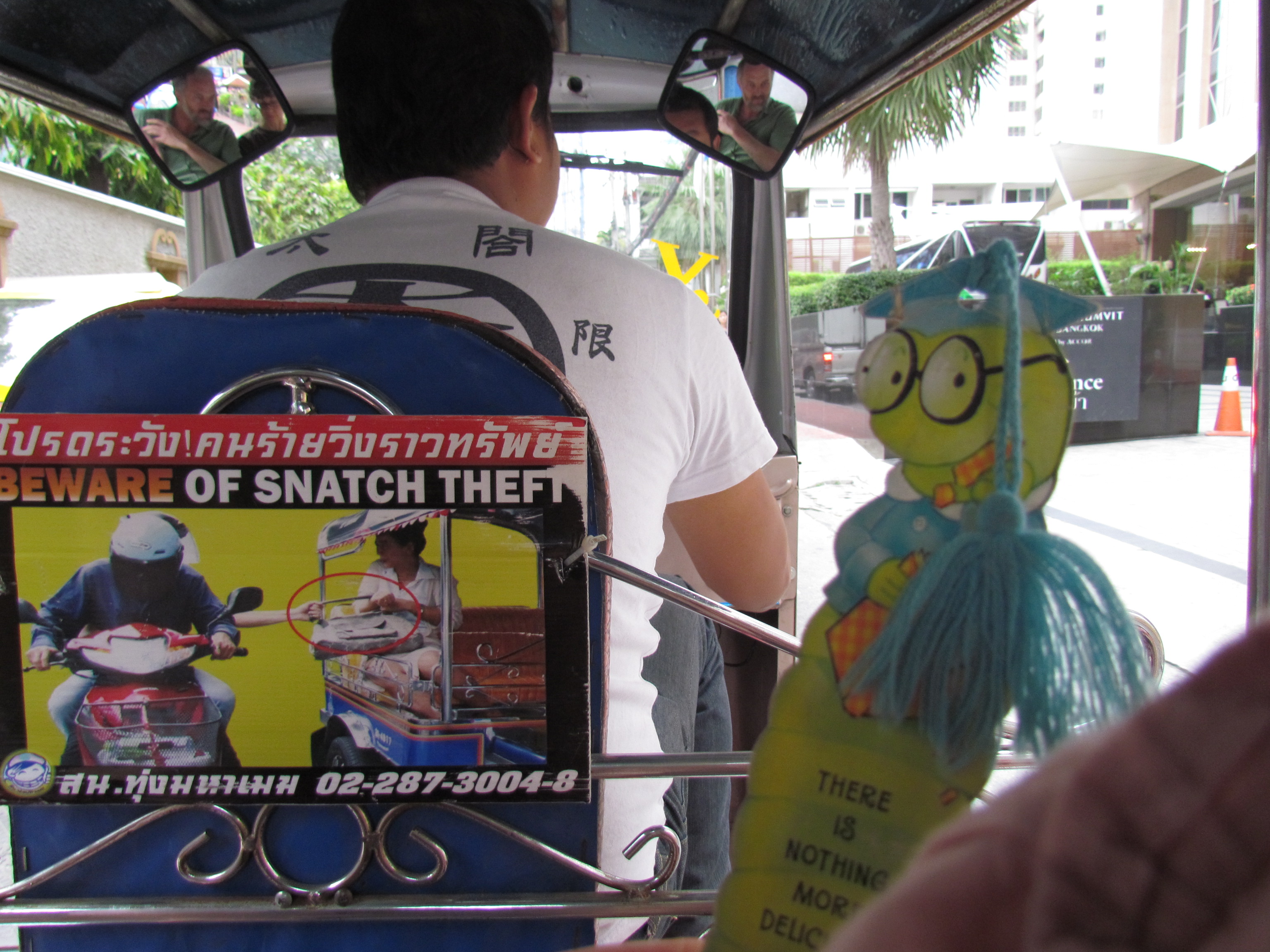
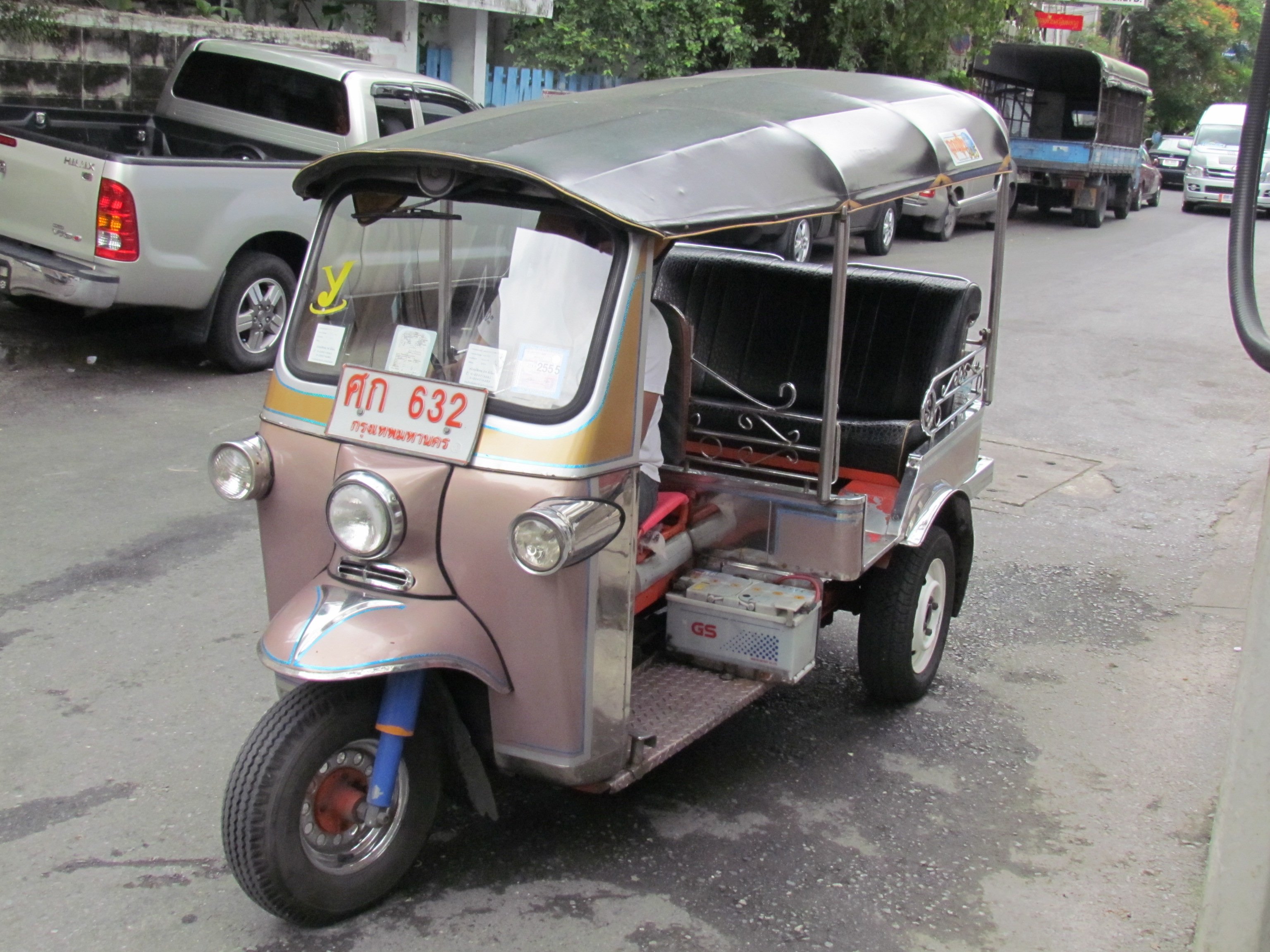
Me braving the streets of Bangkok in a tuk tuk:
The tuk tuk:
Here is a two-minute video showing what it is like to ride in a tuk tuk. There are some good street scenes of the more genteel parts of town. Press the play button to see the video, or go to YouTube to watch it there:
Scooters and bikes take over an intersection:
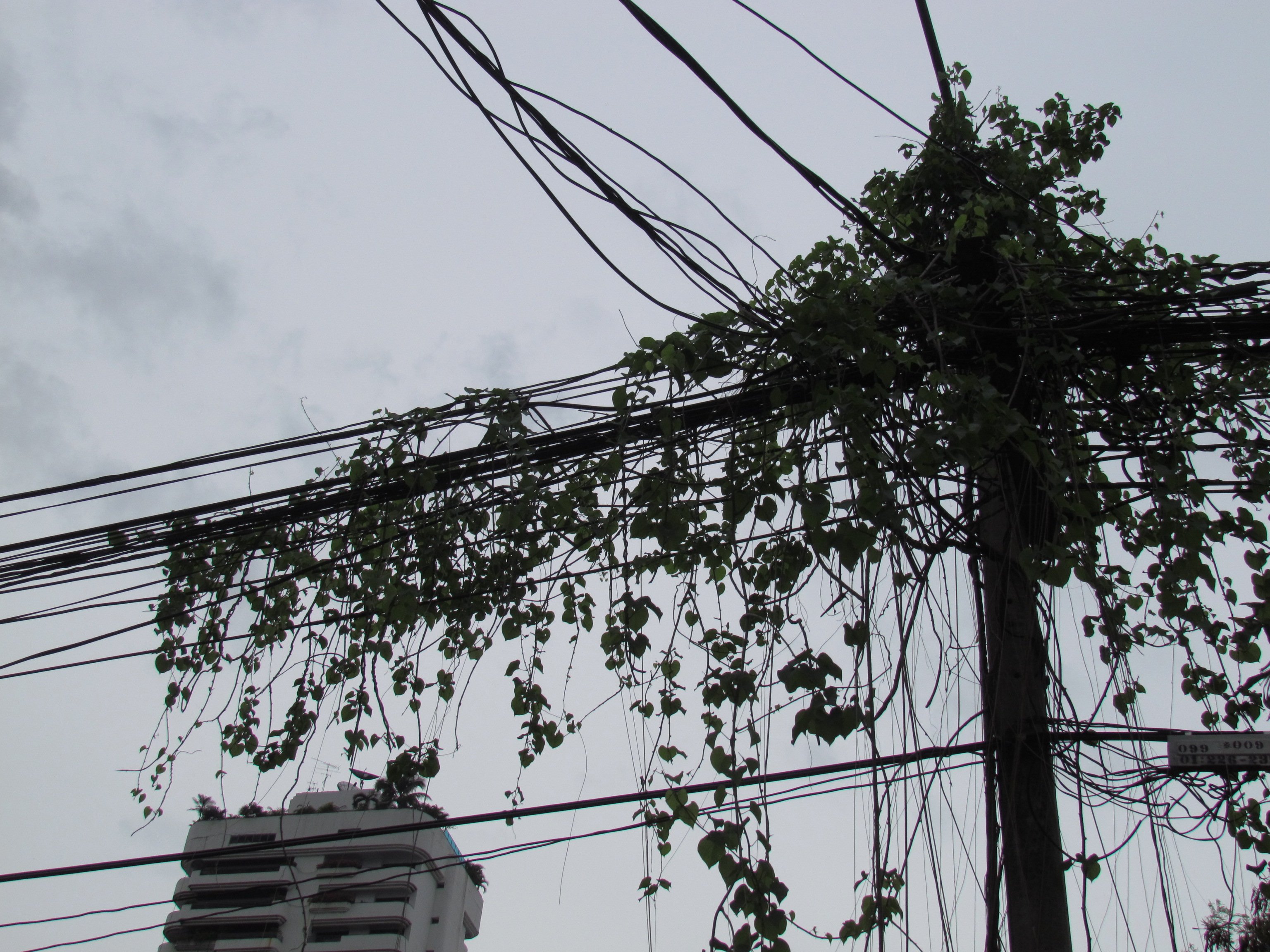
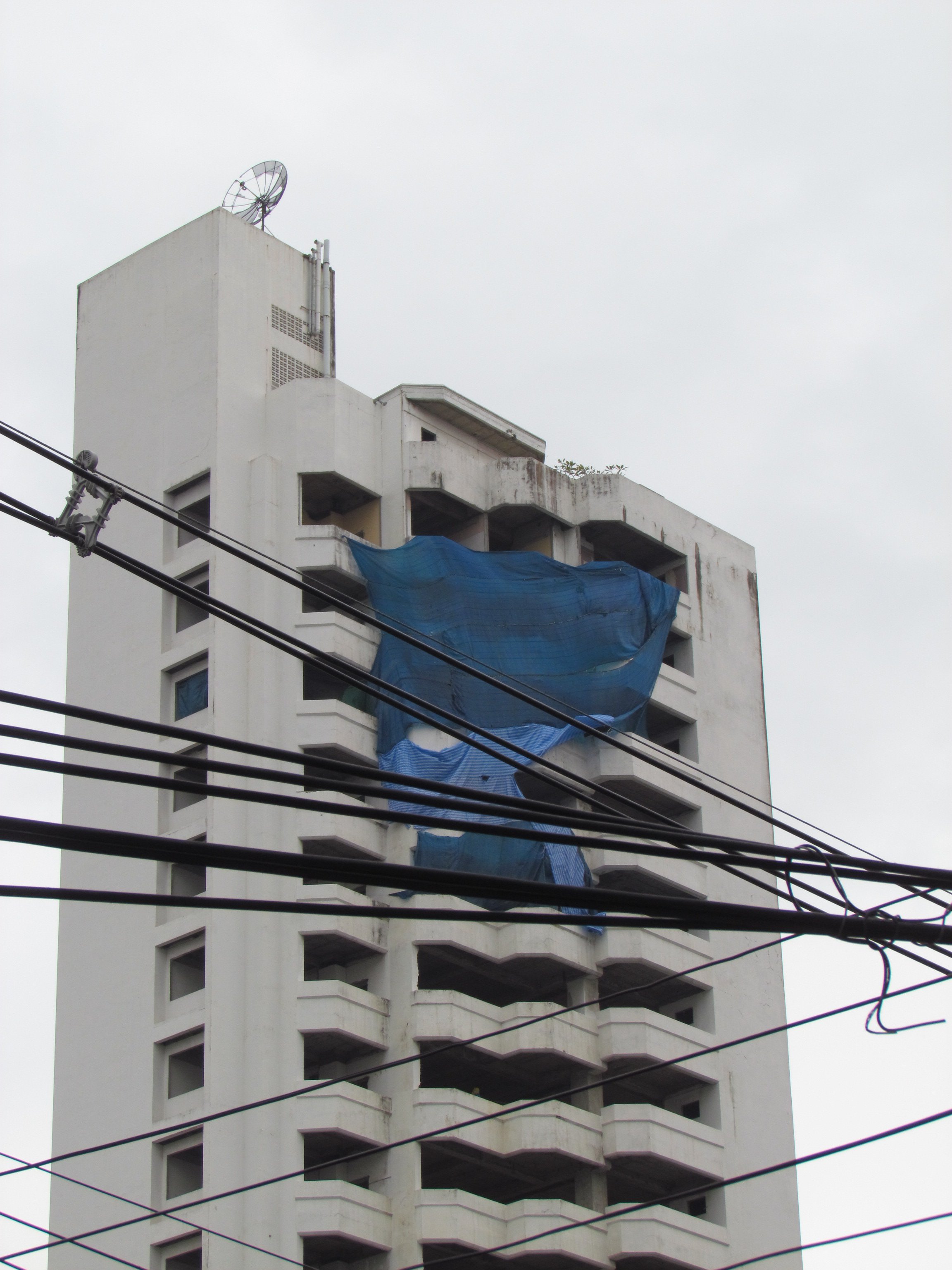
A mess of cables and a residential block:
Cables are draped haphazardly over poles and road constructions. This worm is amazed that the phone and electrical networks function. Here, vines add to the general drapery:
A body of water bubbles and seethes next to houses on stilts:
This business offers a variety of services, including marriage for aliens. Luckily, they offer translation services too:
More drapery:
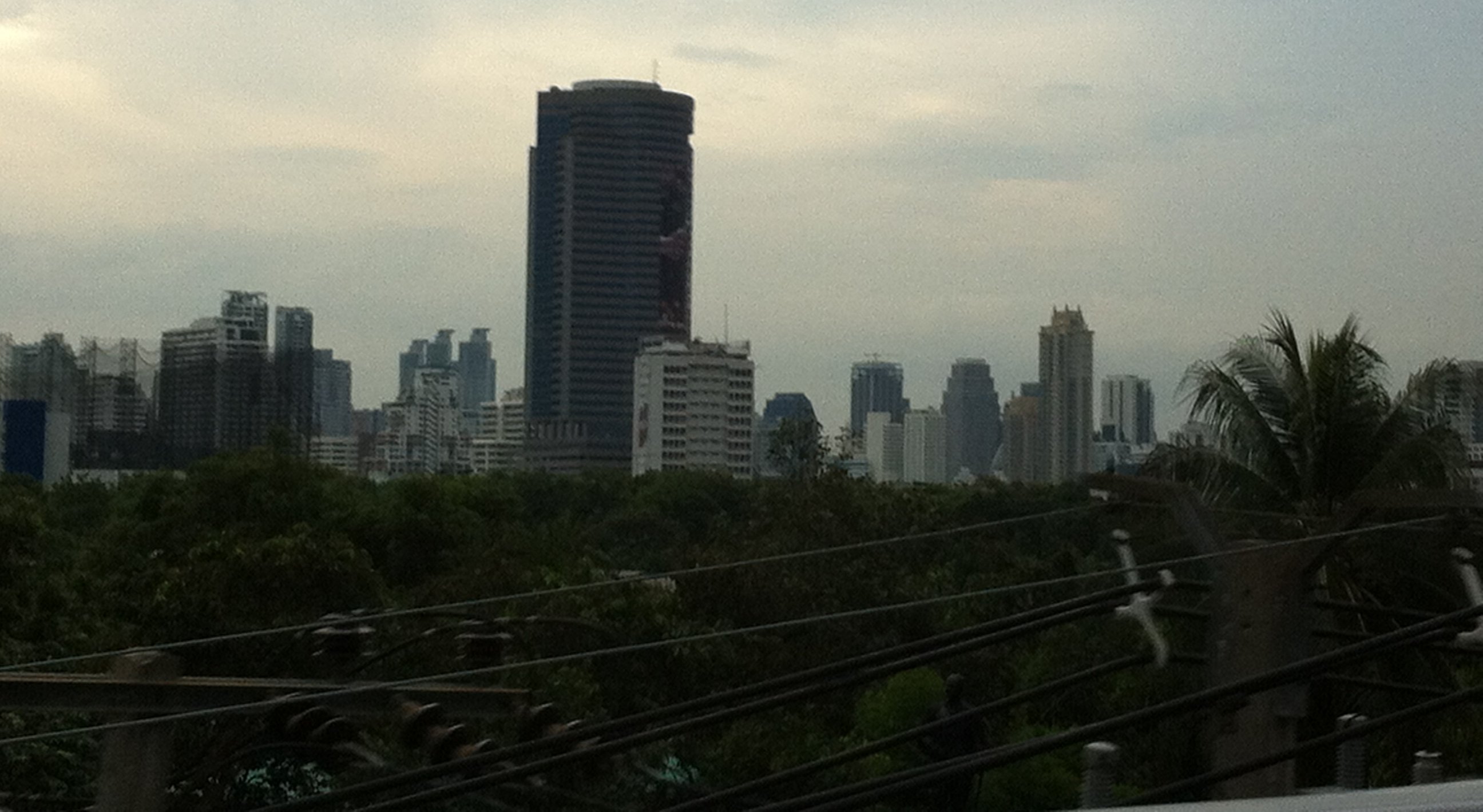
Shacks and new construction, seen from the motorway on the outskirts of the city. The grey bar in the bottom section of the picture is the safety rail on the raised motorway:
Farewell Bangkok. It’s an exciting confusion of a place. This worm is not sure he wants to go back there.
This is the blog of Mark Wordsworm, the travelling worm. I’m a 25-year-old bookmark and can proudly boast my own Hallmark serial number, 95 HBM 80-1. You’ll probably want to read all about me and my Travelling Companion (the TC).
Today’s travel notes
Me and the TC were bowling down the A421 in England, when we saw the sign for Bletchley Park. On a whim, and with half an hour to spare, we followed the sign.
Bletchley Park is where the British decryption experts worked during World War II, to decrypt signals from Germany and other Axis countries. The most famous German encryption machines were the Enigma machines.
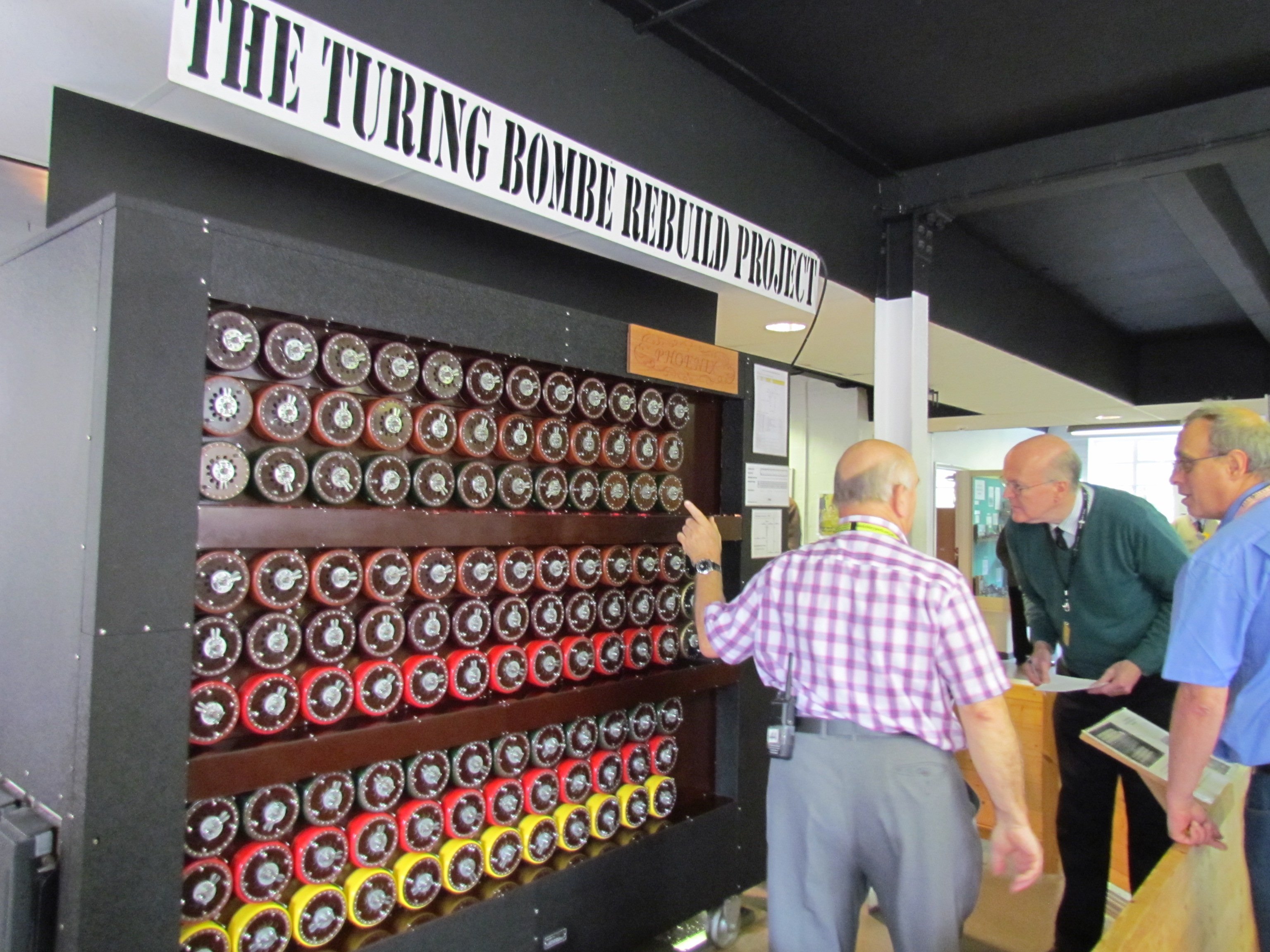
The museum at Bletchley Park has a number of German Enigma machines, as well as some British encoders. It also has the Turing Bombe – that’s the machine they used to decode the Enigma codes during World War II.
This worm wishes we had had longer to examine the machines and read all the information in more detail.
My impressions? Intensely interesting to see the machines and read the information provided. Also eery to walk around the grounds and see the mansion and the huts where everything happened.
The book I’m in
Terror’s Reach, by Tom Bale. Good fast action, with believable characters. An author to find more of.
Travel tip
Drop in on Bletchley Park if you have time. It’s well worth it.
The photos
Me with one of the German Enigma encoders:
Another of the Enigma machines, this one used by the Abwehr (Secret Service):
The Turing Bombe was designed by Alan Turing to decode messages from the German Enigma machine. Experts at Bletchley Park are currently rebuilding the Bombe, so there was a group of people buzzing around it, fiddling with wires and watching the bits and bobs turn.
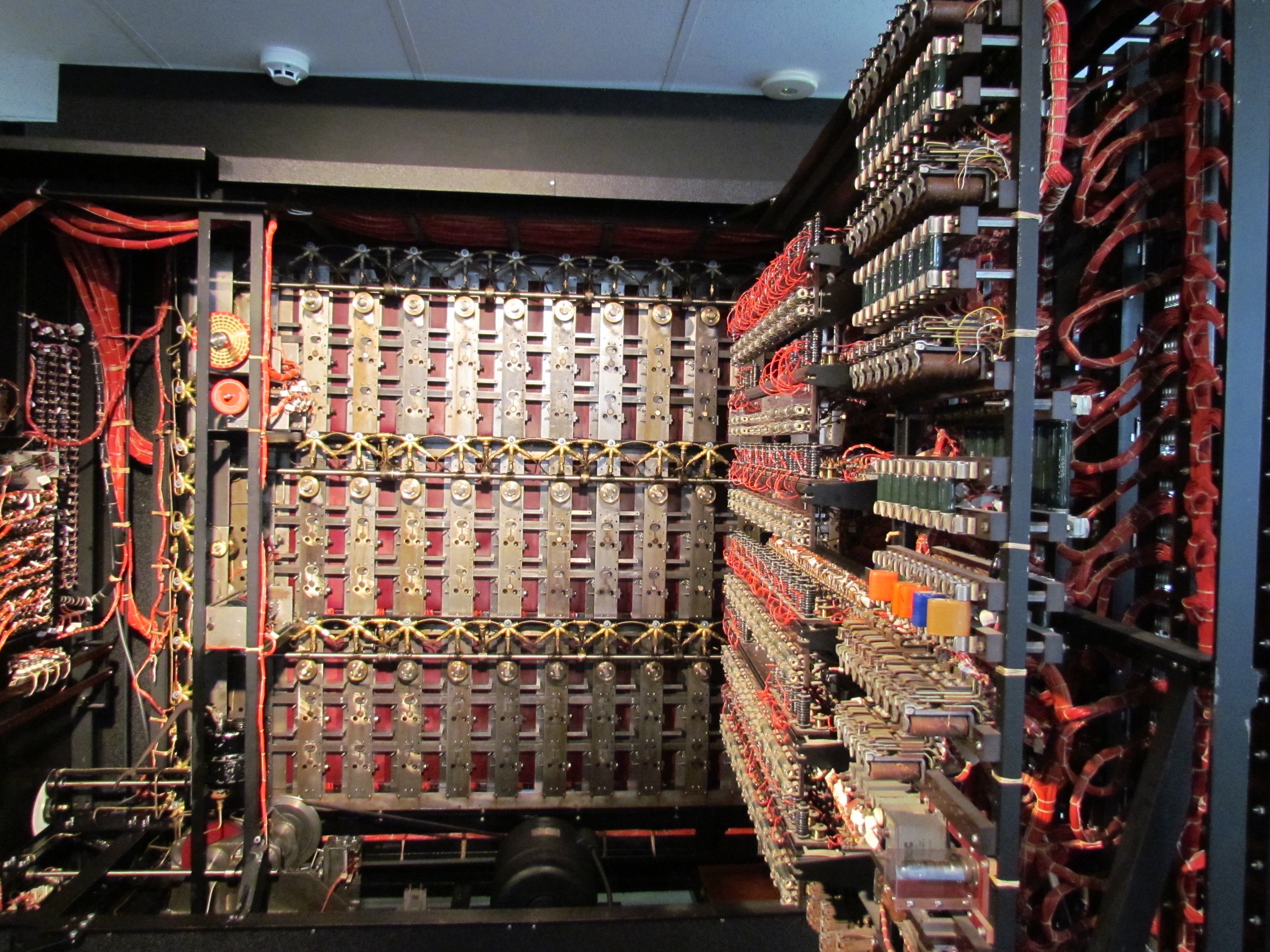
The other side of the Bombe, with the back open for inspection:
This is the blog of Mark Wordsworm, the travelling worm. I’m a 25-year-old bookmark and can proudly boast my own Hallmark serial number, 95 HBM 80-1. You’ll probably want to read all about me and my Travelling Companion (the TC).
Today’s travel notes
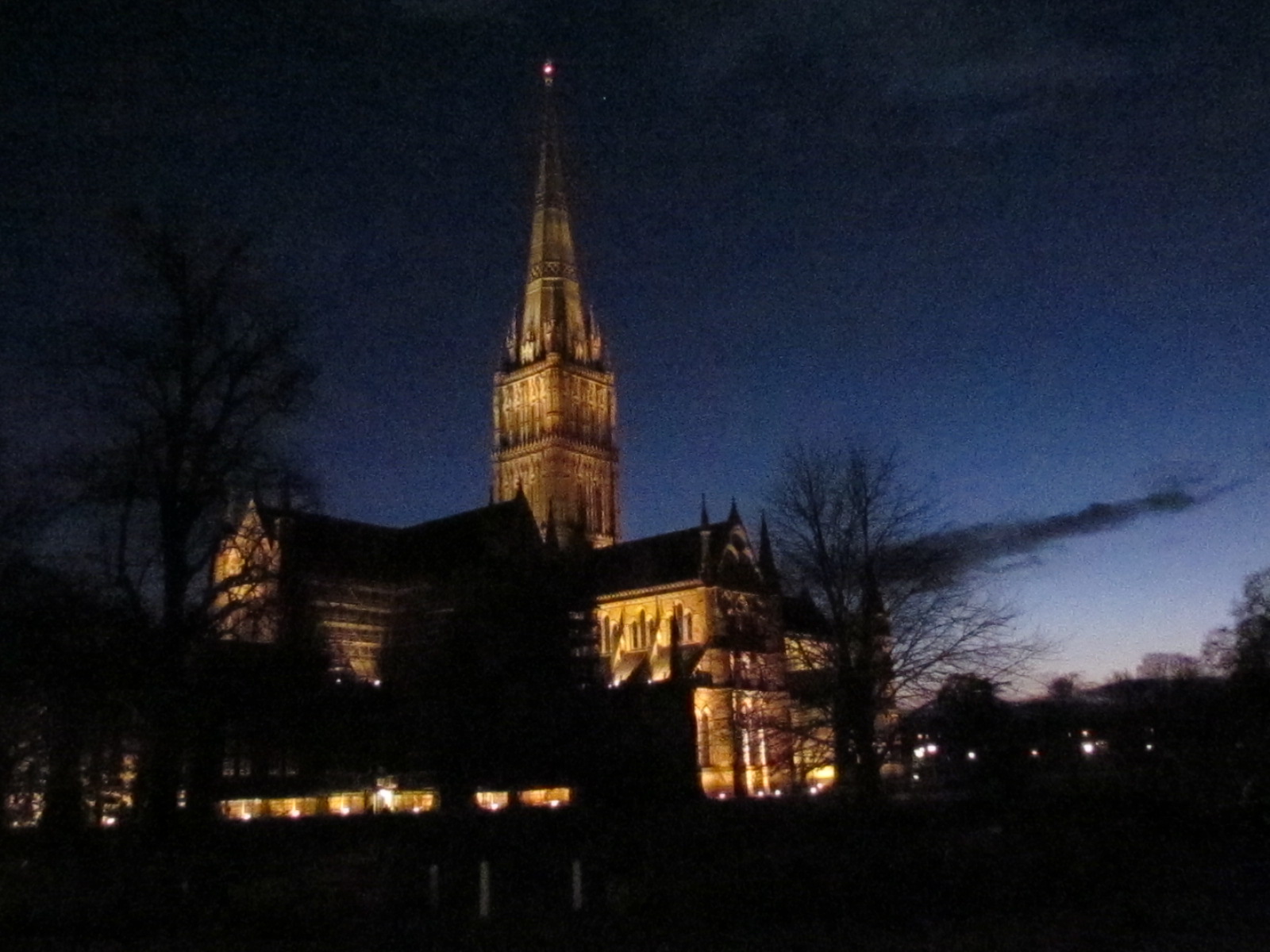
Me and the TC wandered the streets of Salisbury in England for a few hours, ooh-ing and aah-ing over its architectural cuteness. We strolled into the cathedral close at eventide, became enthralled in its grandeur, and came back the next morning for more.
My impressions? So much history and beauty – worth a longer visit than we had time for.
The book I’m in
The Dark Tide, by Andrew Gross. A good thriller with engaging characters.
Travel tip
You don’t need any travel tips from me when in Britain. Everyone you meet will delight in telling you how to get from A to B. Britons will also exhibit a healthy distrust of GPS devices (sat navs).
Recommended accommodation
Cathedral View, 83 Exeter Street, Salisbury. Wenda and Steve put a great deal of love and care into making their guest house a welcoming, comfortable home from home.
The photos
Me inside the walls of Salisbury cathedral:
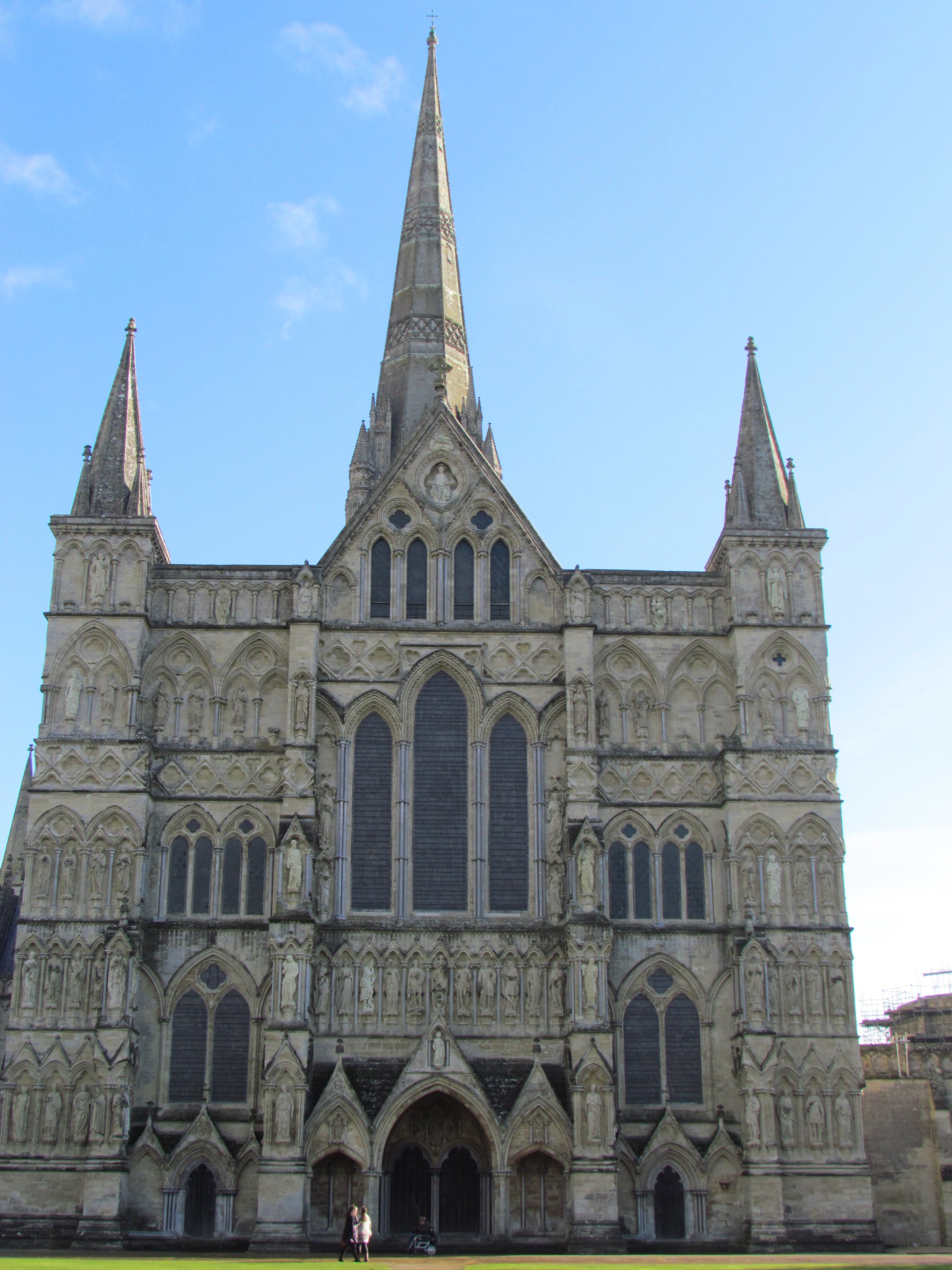
Salisbury cathedral, officially named the Cathedral of Saint Mary, was built between 1220 and 1258. This makes it a medieval building, and 750 years old. Here is the main entrance to the cathedral, known as the west front, with the spire behind:
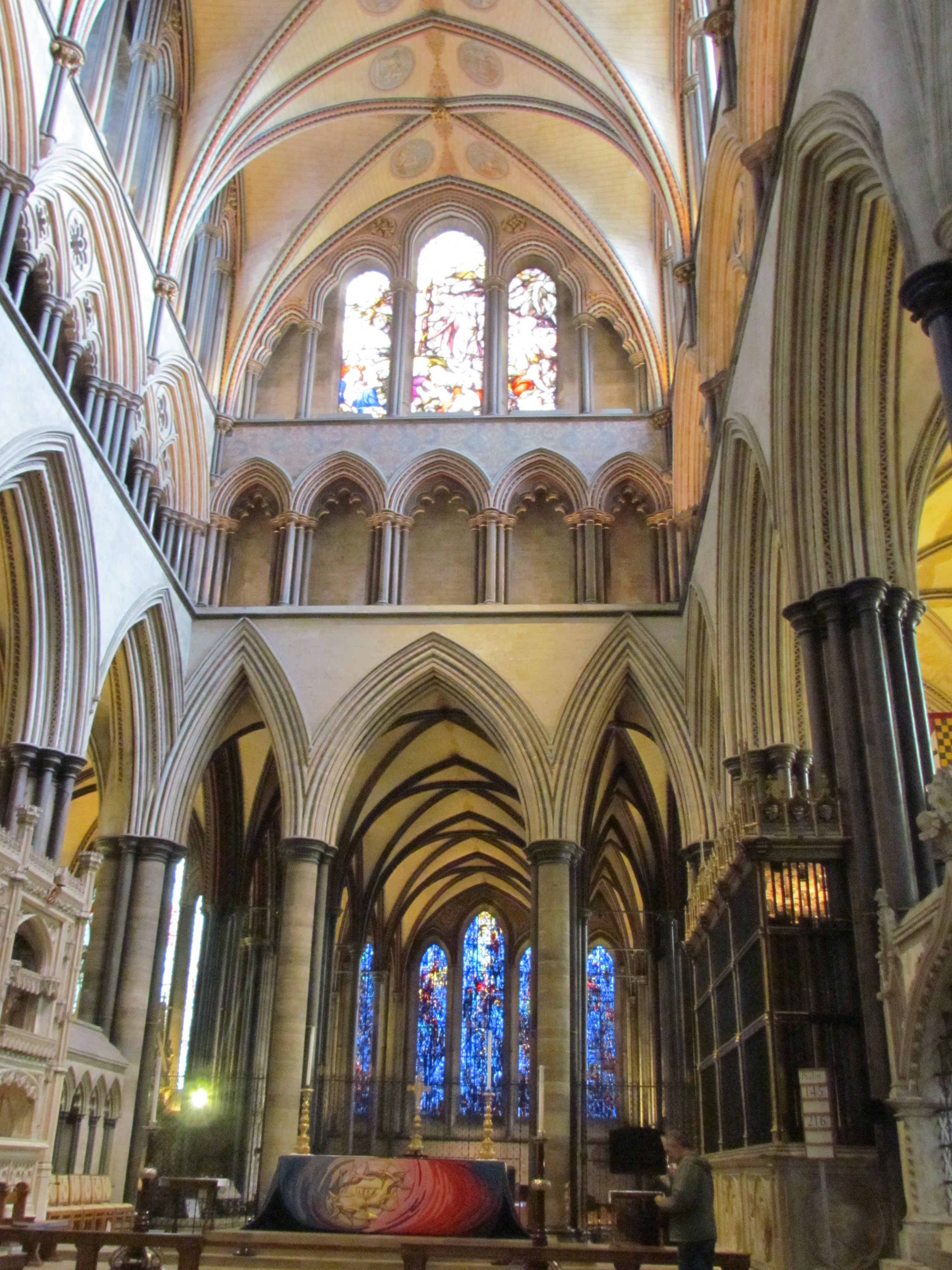
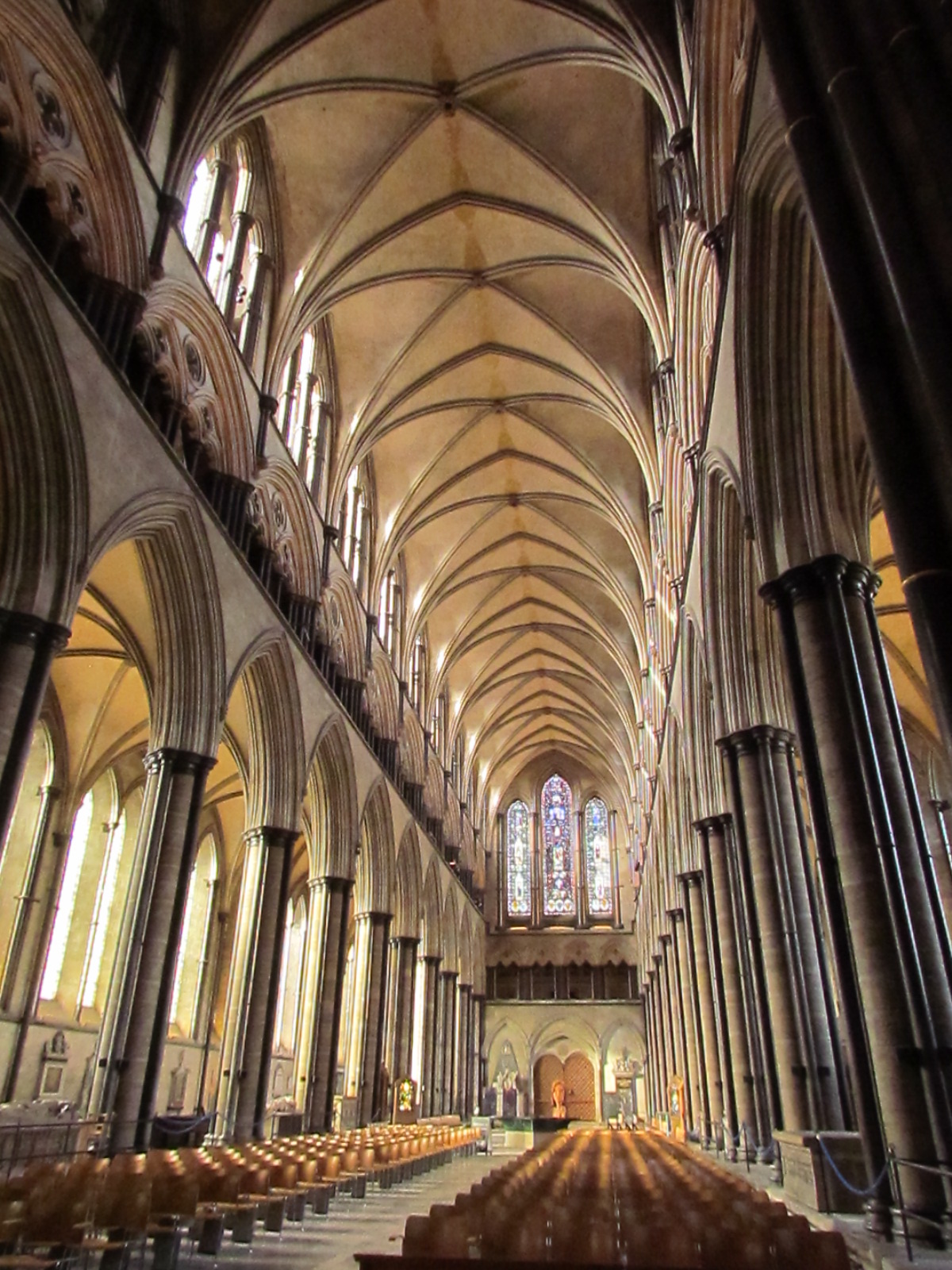
The architectural style of the cathedral is early English gothic. This worm admires the clean, sweeping lines of the building and the eye candy added by the sculptures and other decorations. Here is a view looking down the nave (the main hall) towards the altar:
Zooming in on part of a stained glass window:
Another hall in the cathedral:
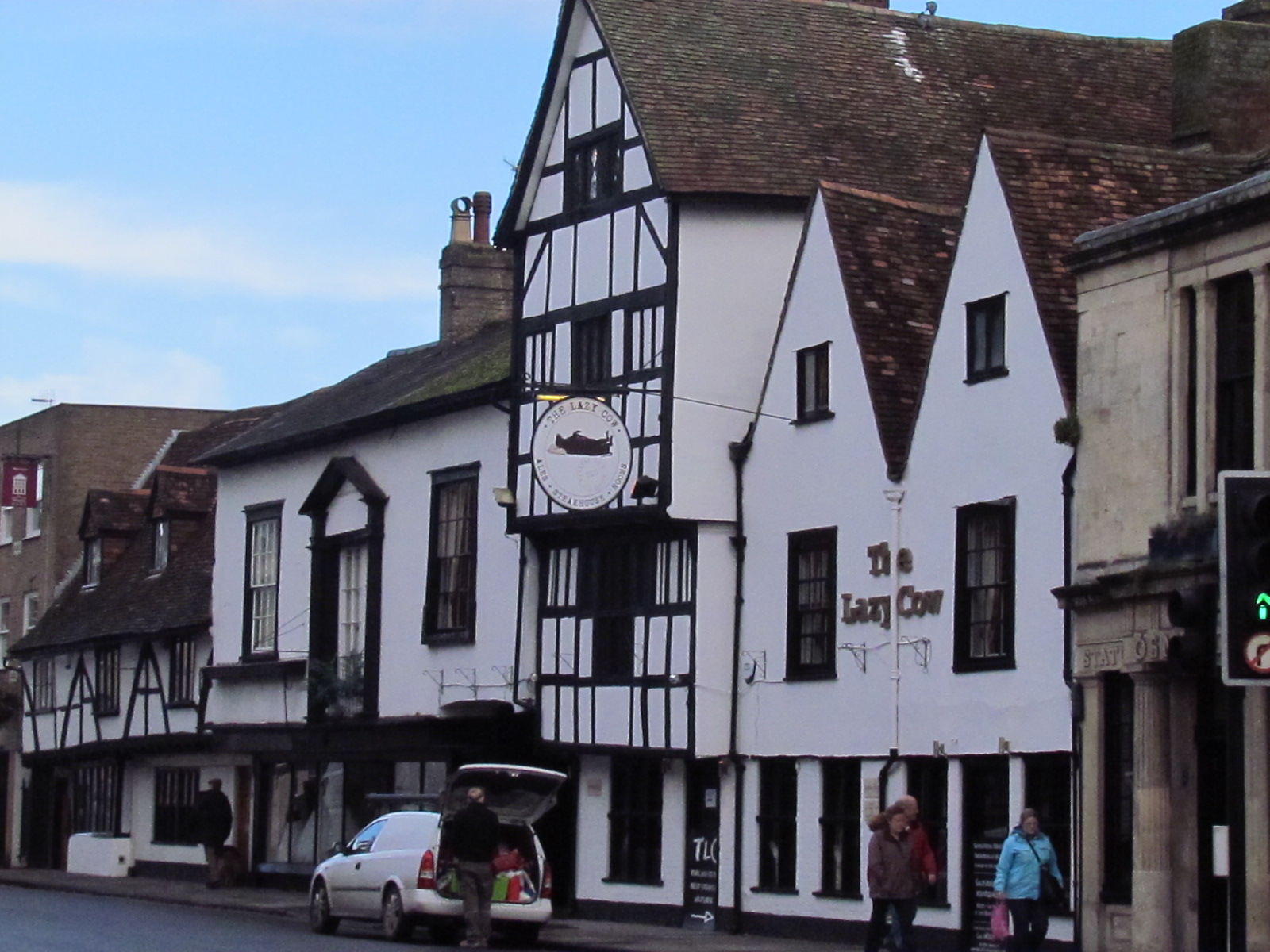
Outside the cathedral, the streets of Salisbury beckon. This is the Lazy Cow, opposite the entrance to the cathedral close in St John’s Street:
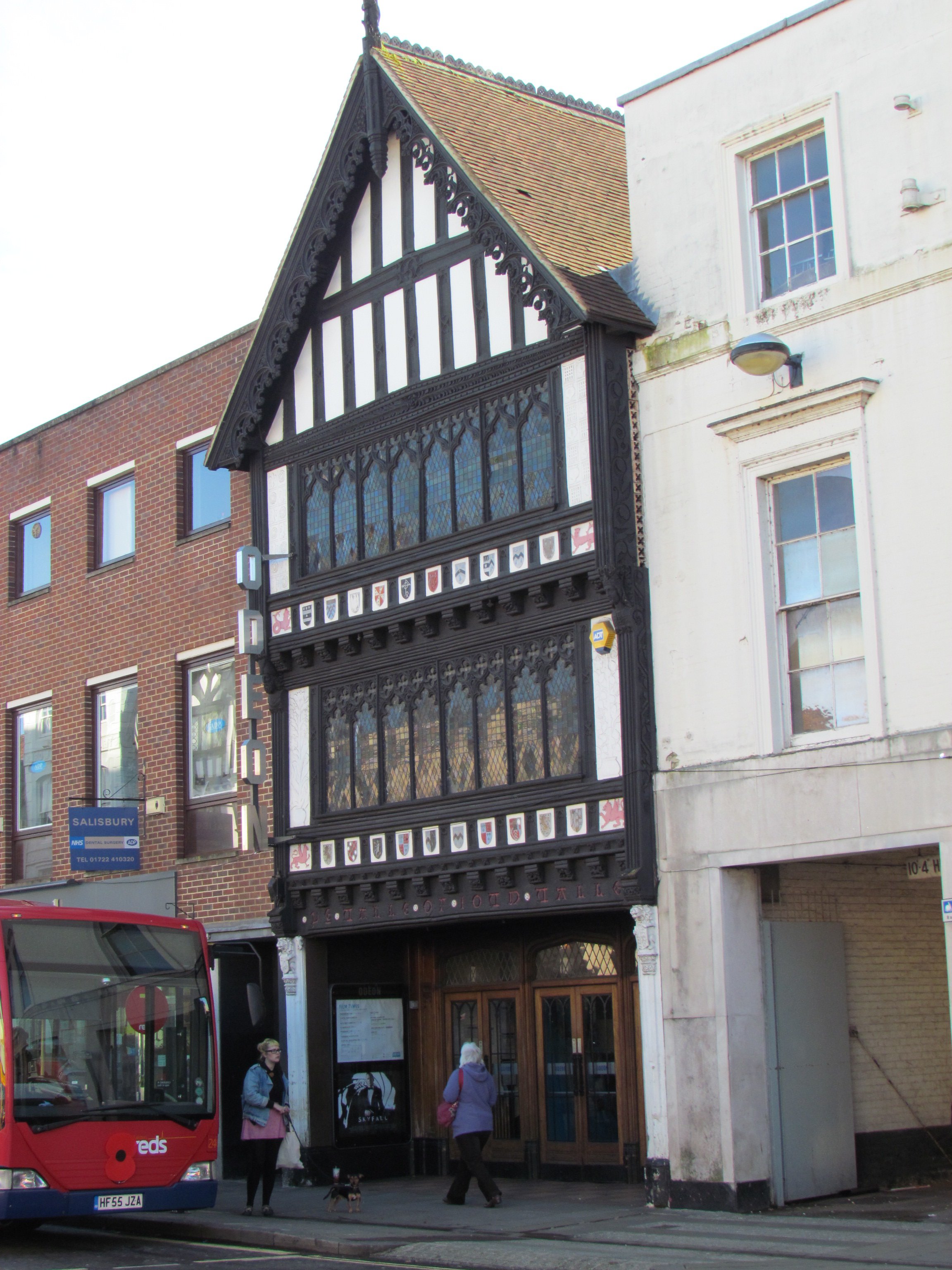
Me, the TC, and the “TC once removed” went to the Odeon cinema in Salisbury. (We watched the latest James Bond film, Sky Fall. This worm gives credit to Daniel Craig, Judy Dench and the team for a good job well done.) The cinema is said to be haunted:
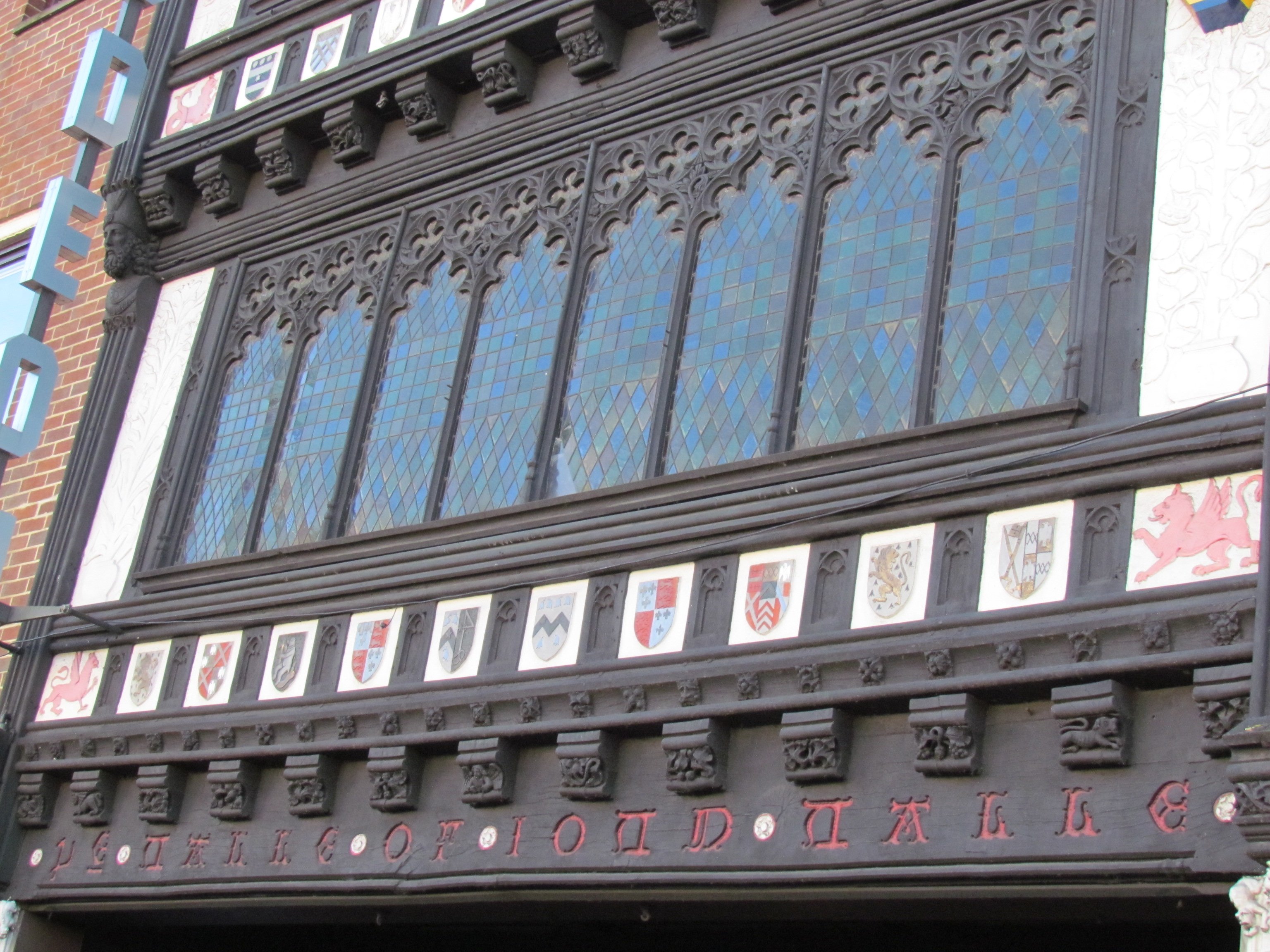
The entrance to the Odeon cinema is the Hall of John Halle, a fifteenth-century Tudor banqueting hall. Here is a closer view:
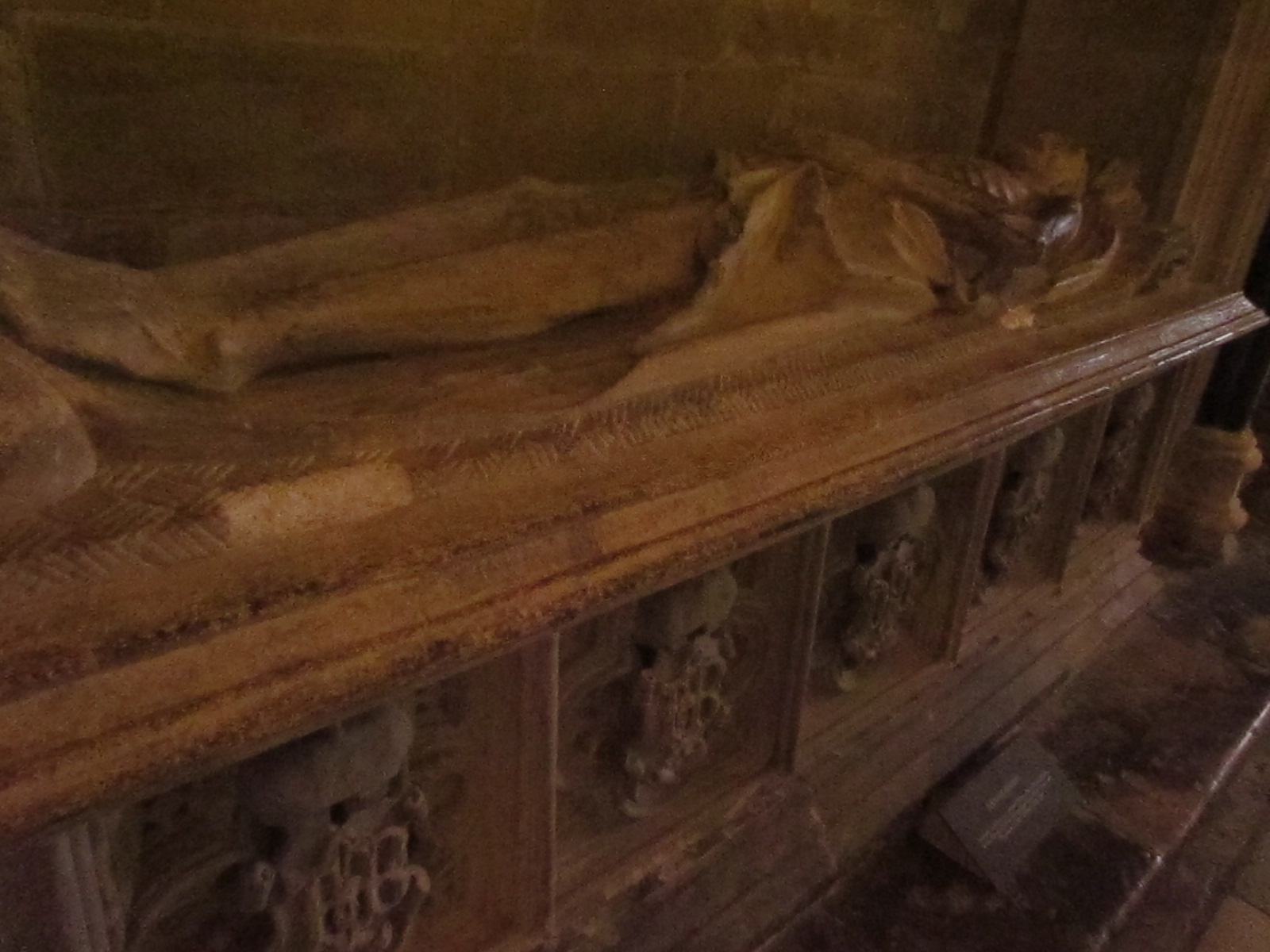
We did not meet any ghosts in the cinema. In the cathedral, we did find a tomb or two. This one belongs to Thomas Bennett, who lived in the sixteenth century and was secretary to Cardinal Wolsey:
Shadows and shivers. This is one of the many sculptures on the outside walls of the cathedral:
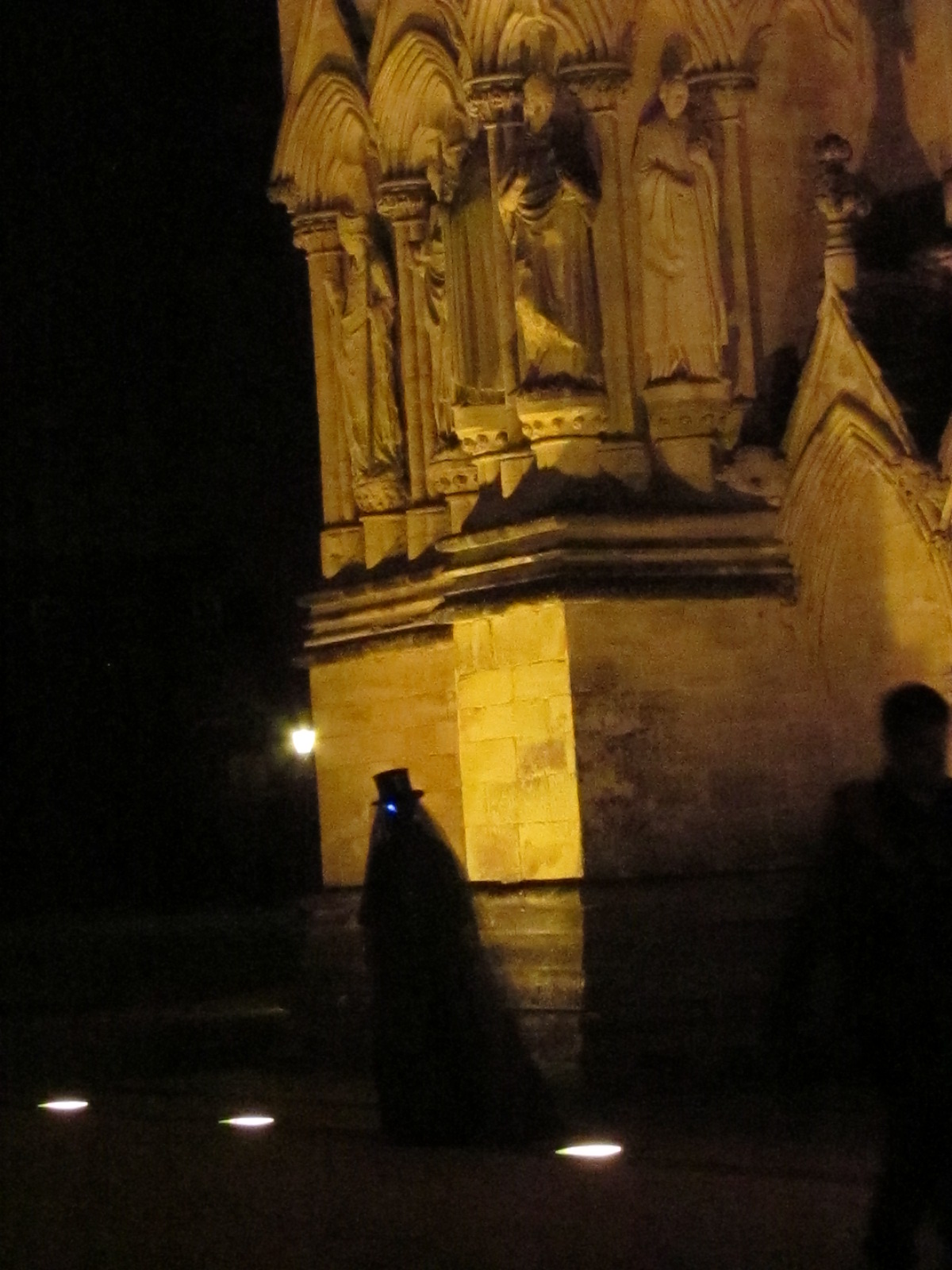
We encountered a weird cloaked figure with glowing blue eyes roaming around the cathedral close. This worm is sure it was real flesh and blood, not a ghost, but close enough to give the TC a delightfully shivery feeling:
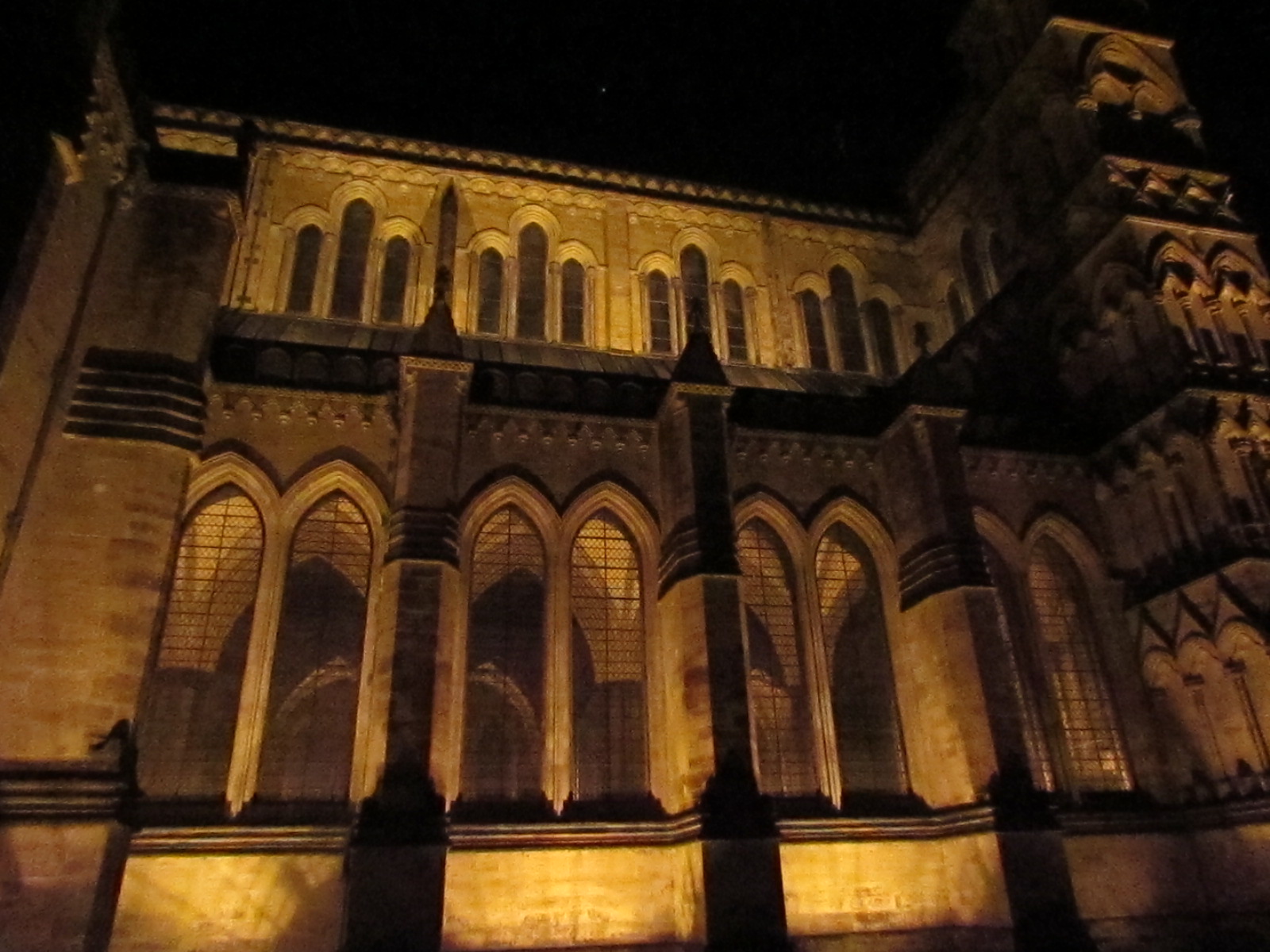
Seen from the outside at night, the inside of the cathedral offers a safe haven:





































 Travelling Worm