Travelling Worm

A bookworm's travelogue

Category: travel

  • Bridges of Forth and Queensferry Crossing

    This is the blog of Mark Wordsworm, the travelling worm. I’m a 36-year-old bookmark (give or take a few years) and I proudly boast my own Hallmark serial number, 95 HBM 80-1. You’ll probably want to read all about me and my Travelling Companion (the TC).

    Today’s travel notes

    Me and the TC are touring bonny Scotland this week. We spent a day in Queensferry on the Firth of Forth. This worm was much taken by the bridges that cross the wide waters of the firth.

    Is this stretch of water called the Forth of Firth or the Firth of Forth, you might ask? And what do those two words mean? The water’s name is the Firth of Forth. “Firth” is a Scottish word, of similar origin to the Norwegian “fjord”, meaning a coastal inlet. “Forth” is the name of the river.

    The book I’m in

    Imminent Peril, a Sasha McCandless adventure by Melissa F. Miller. The TC loves this series about a lawyer detective who attracts trouble and deals with it fearlessly.

    Travel tips

    Bridges carry us across areas that would otherwise be tricky. They can be beautiful and amazing feats of engineering too.

    Recommended restaurant

    Scott’s Bar and Restaurant, Port Edgar Marina, Shore Rd, Queensferry. Friendly, professional service and excellent food.

    The photos

    A rainbow appeared over the Forth Bridge while we were enjoying dinner in South Queensferry:

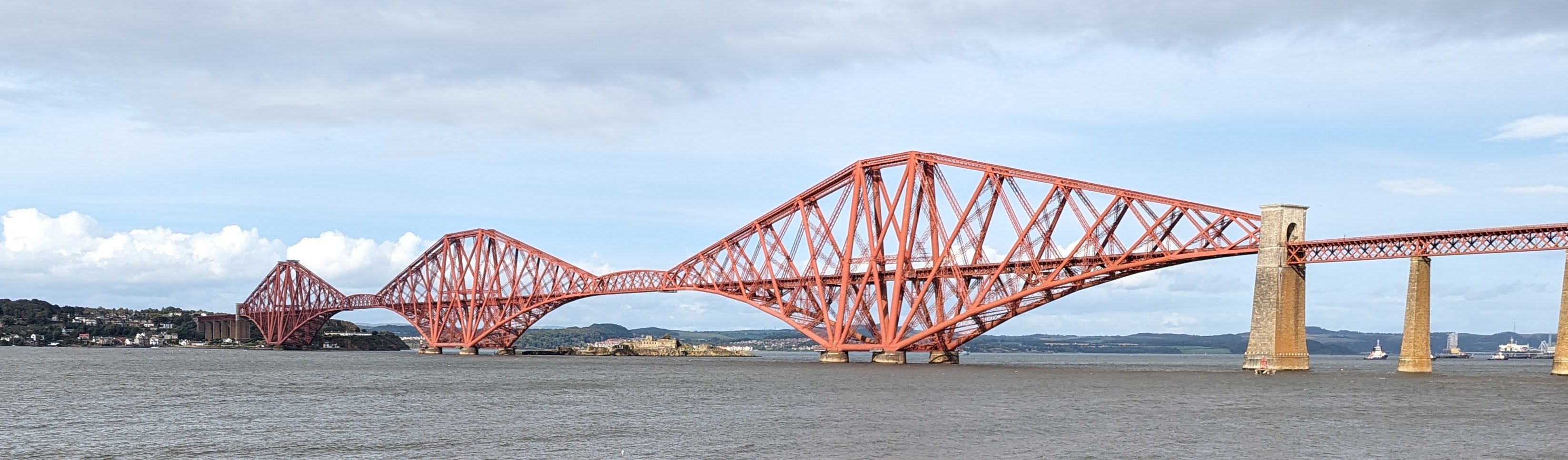
    Dating from its opening in 1890, the Forth Bridge is the oldest of three bridges that cross the firth at Queensferry. It’s used only by railway trains — no road traffic, cyclists, or pedestrians. Due to its revolutionary engineering, the Forth Bridge has been designated a UNESCO World Heritage Site. Until 1919, it was the world’s longest cantilever bridge (that is, a structure made of horizontal projections that are supported only at one end) and was heralded as the first major steel structure to be built anywhere in the world. In 1919, a bridge in Canada took over the claim to be the longest cantilever span in the world.

    The next picture shows all three bridges that cross the Firth of Forth at Queensferry. On the left is the Queensferry Crossing. In the middle is the Forth Road Bridge. And in the distance on the right is one end of the Forth Bridge:

    Here’s another view of the Forth Bridge, this time without the rainbow:
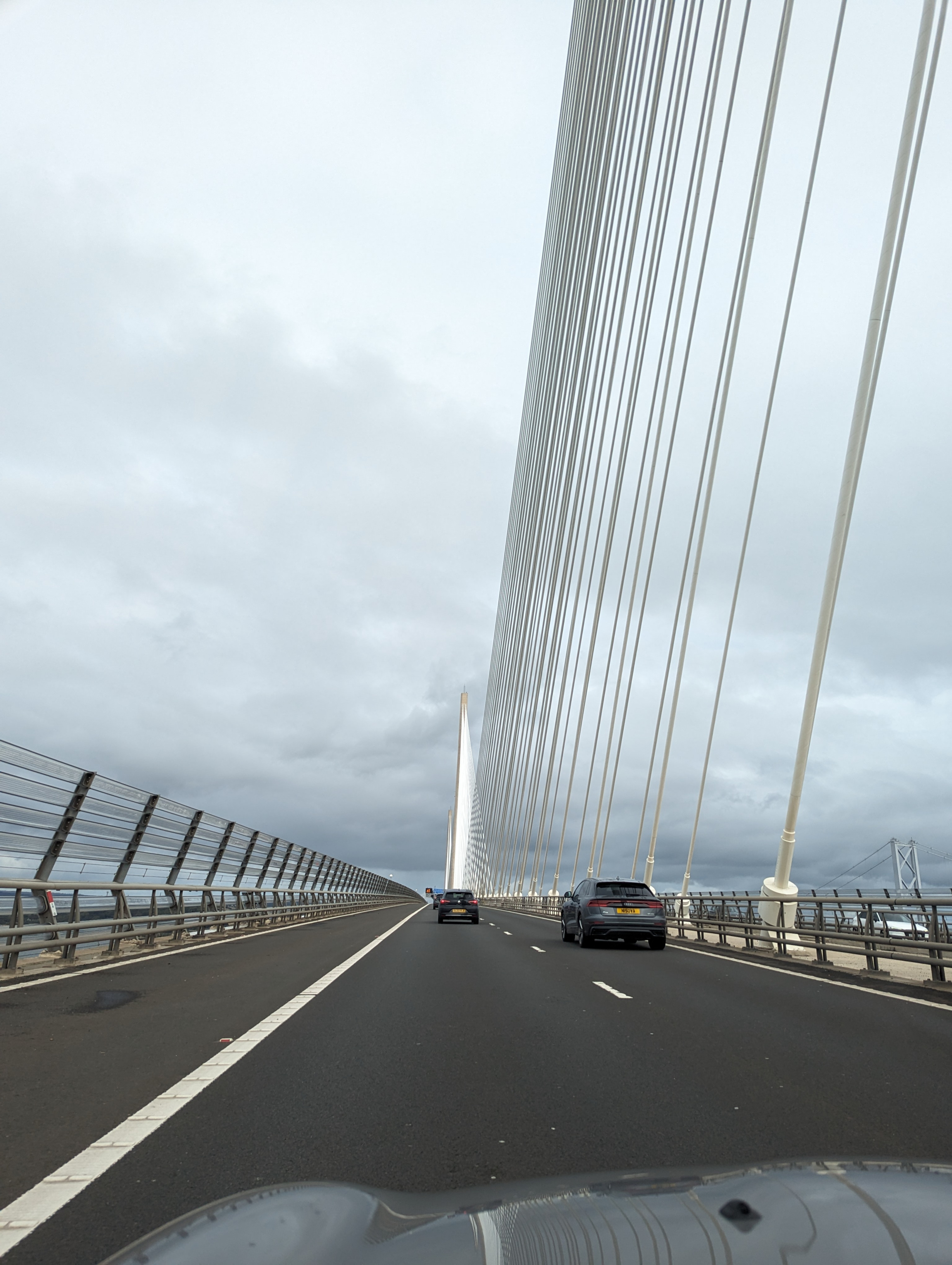
    We crossed the firth by car on the Queensferry Crossing Bridge. This is the newest of the three bridges. It opened in 2017. In the morning light, the clusters of cables around the bridge’s three towers glowed like white torches:

    As we drew closer, each glowing shaft of light resolved into multiple strands of cable:
    The third of the three bridges is the Forth Road Bridge, stretching across the river between the other two. It opened in 1964, and is an impressive long-span suspension bridge. Its use is now restricted to pedestrians, cyclists, and public transport. Here you see part of the Forth Road Bridge, with the Forth Bridge behind and below it:


  • Atop Table Mountain in the clouds

    This is the blog of Mark Wordsworm, the travelling worm. I’m a 36-year-old bookmark (give or take a few years) and I proudly boast my own Hallmark serial number, 95 HBM 80-1. You’ll probably want to read all about me and my Travelling Companion (the TC).

    Today’s travel notes

    Me and the TC spent a few days recently in Cape Town, South Africa. A must-do is the trip via cable car to the top of Table Mountain. The day we’d scheduled for the outing dawned cloudy and cold. We went up the mountain anyway. The TC is like that. Tomorrow may never come, she opines, and even if it does, there’s no guarantee it’ll turn out better than today.

    The book I’m in

    A Slim Green Silence, by Beverly Rycroft. This is a beautifully-written and engaging read. The author melds Afrikaans phrases with English prose, and a dash of Xhosa here and there. For a reader who’s lived in South Africa, it’s a pleasure to experience through the book the mix of cultures in a small South African town.

    Travel tips

    If you have a clear day, use it to go up the mountain. Even if you don’t have a clear day, go up the mountain anyway.

    The photos

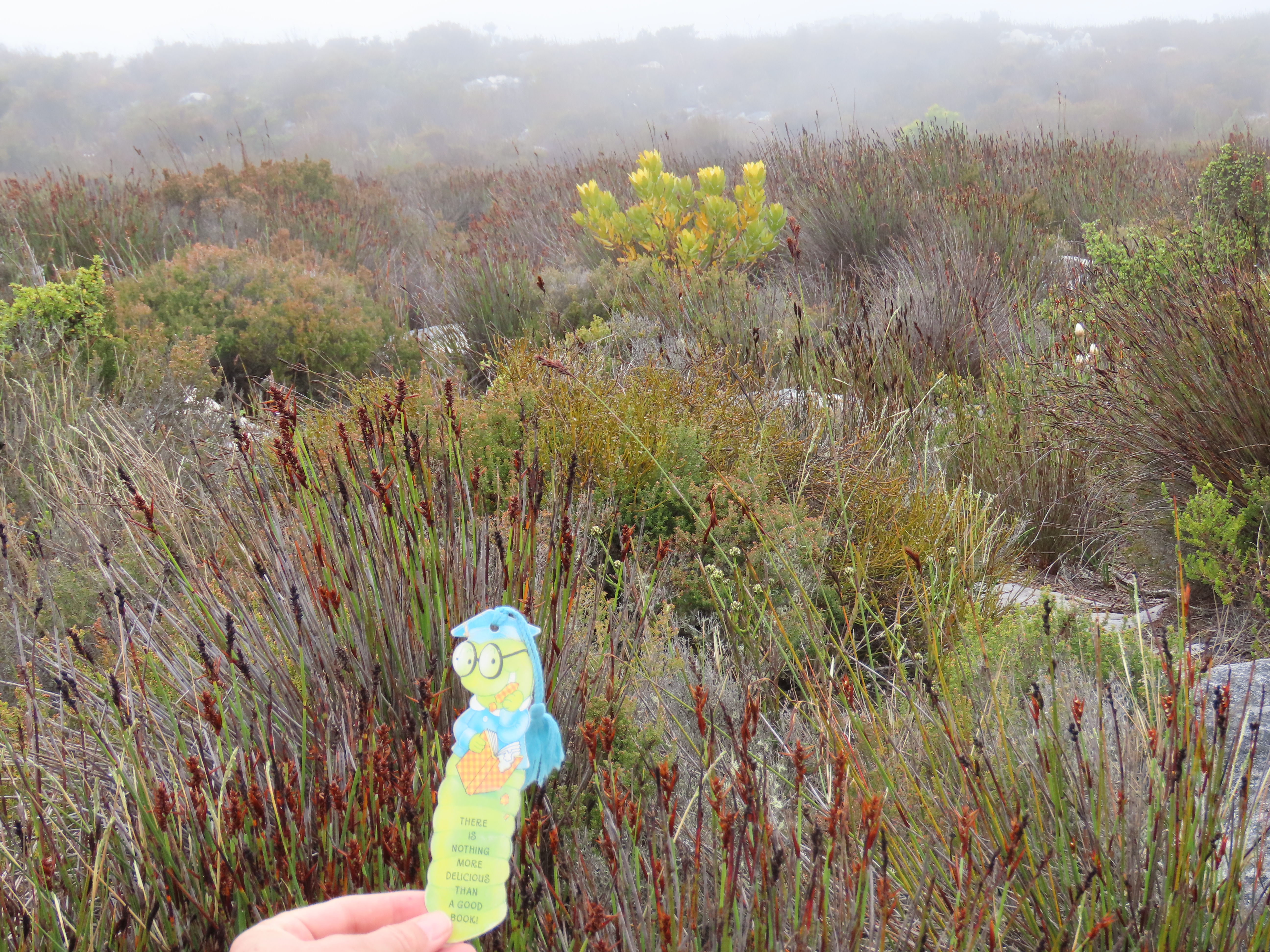
    Me among the fynbos atop Table Mountain:

    Fynbos is the name given to the vegetation in this area of Southern Africa. It’s uniquely hardy and beautiful, and it feeds and shelters the animals and birds of the mountain too.

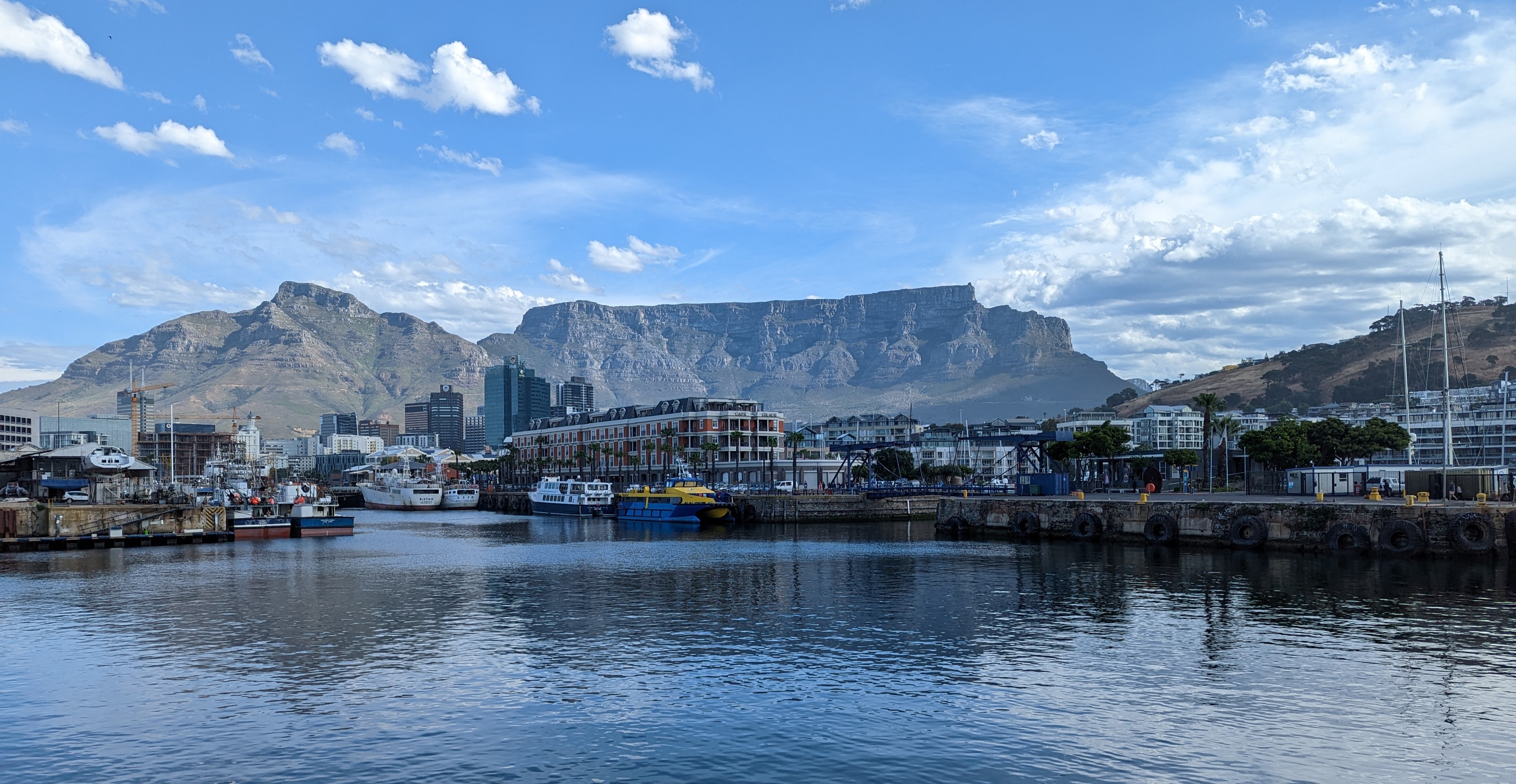
    The next shot shows Table Mountain in all its splendour, photographed from The Waterfront at the Cape Town harbour. On the left of the photograph is the mountain named Devil’s Peak. In the middle is Table Mountain itself, with the hotels and docks of the Waterfront in the foreground. The hill on the right is Signal Hill:

    To get to the top of the mountain, we drove through the city, up Kloof Nek road through Tamboerskloof and Oranjezicht, until we reached the lower cable station. From that vantage point, we saw the city of Cape Town and suburbs laid out below us:

    The lower station was clear and sunny as we started our ride to the top:

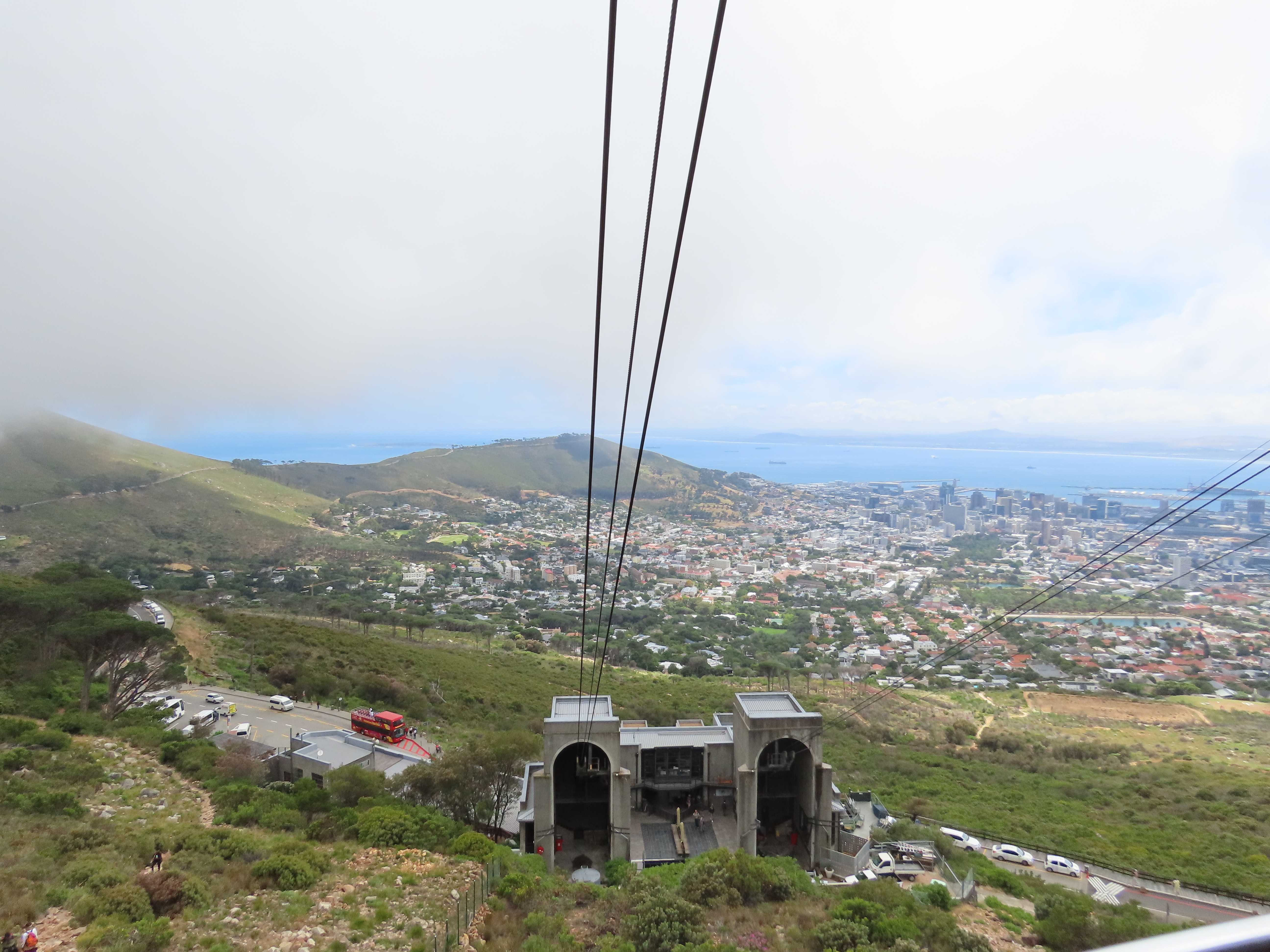
    There are two cable cars, as you can deduce from the two housings in the station. They travel at the same time, one on its way up the mountain and the other on its way down.

    The ride up was lovely, though a little eerie when we entered the cloud layer and the rest of the world disappeared. We couldn’t even see the hulking huge mountain that was just outside the window. I’d show you a photo, but all you’d see is a blank wall of grey.

    What’s it like on the top of the mountain when cloud is rolling up from below? Watch this video to find out:

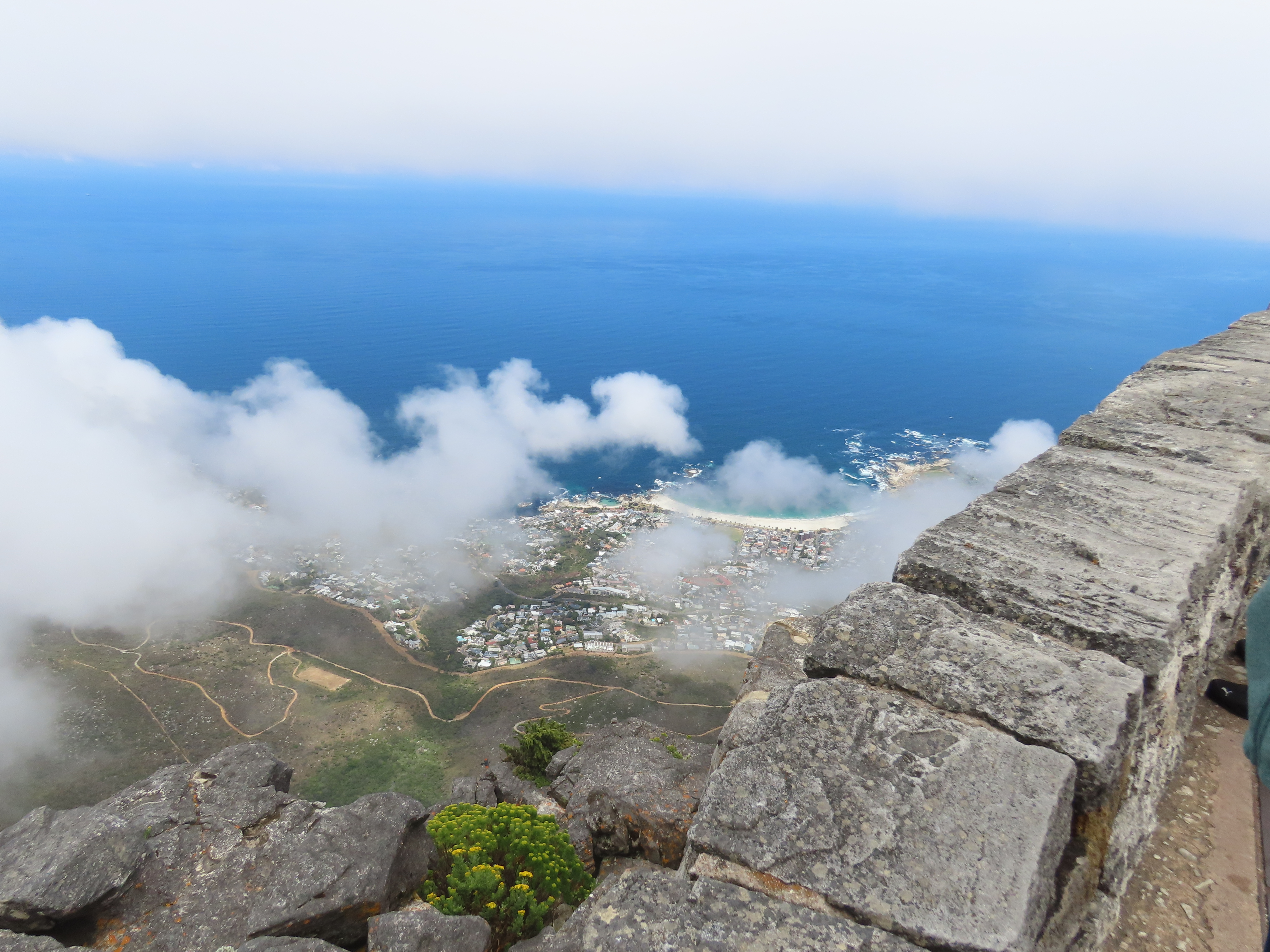
    On the western side of the mountain is the seaside suburb of Camps Bay:

    On the eastern side is Devil’s Peak and the suburb of Oranjezicht:

    A pinky orange lily poked above the rocks:

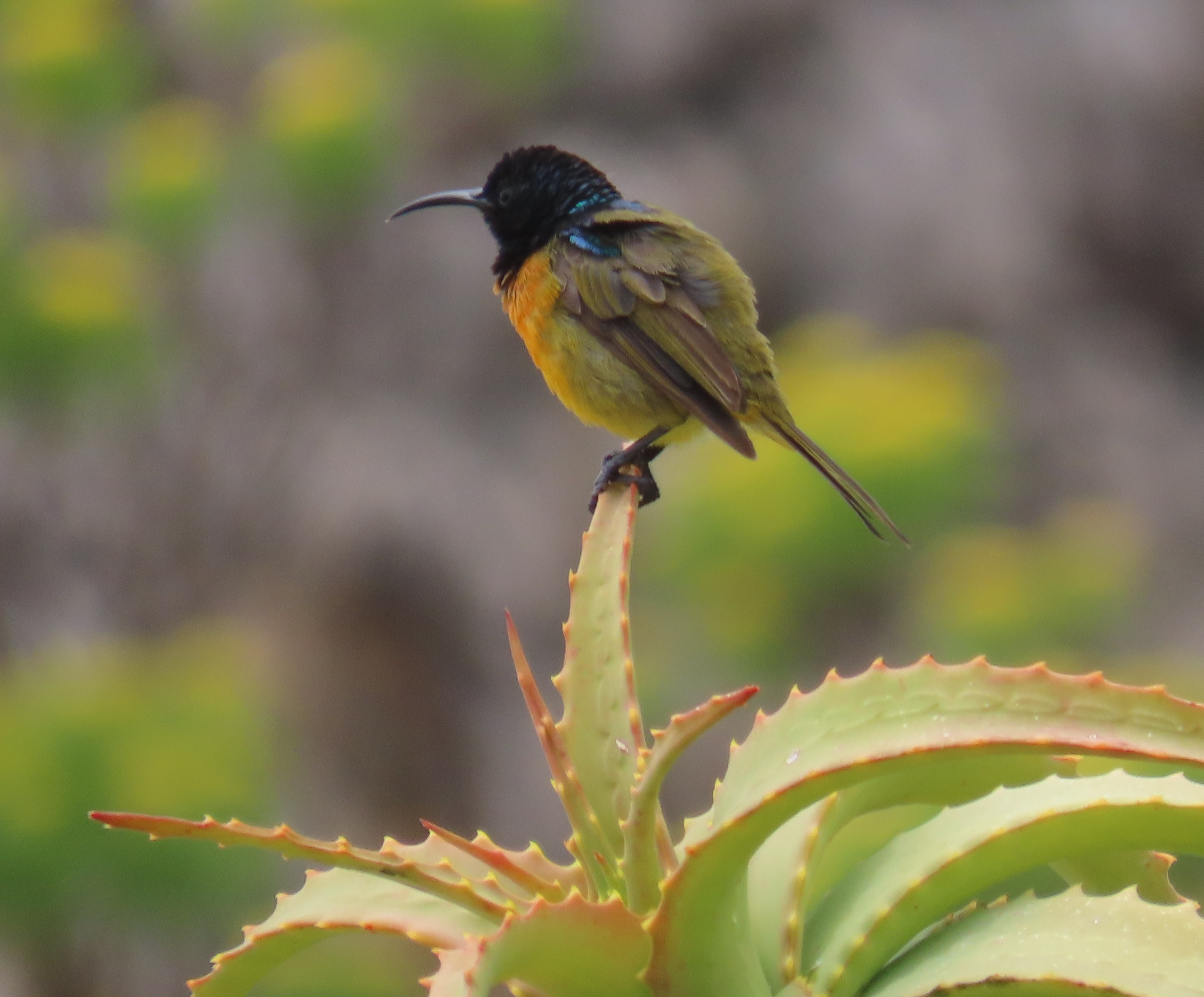
    An Orange-breasted Sunbird perched on an aloe:

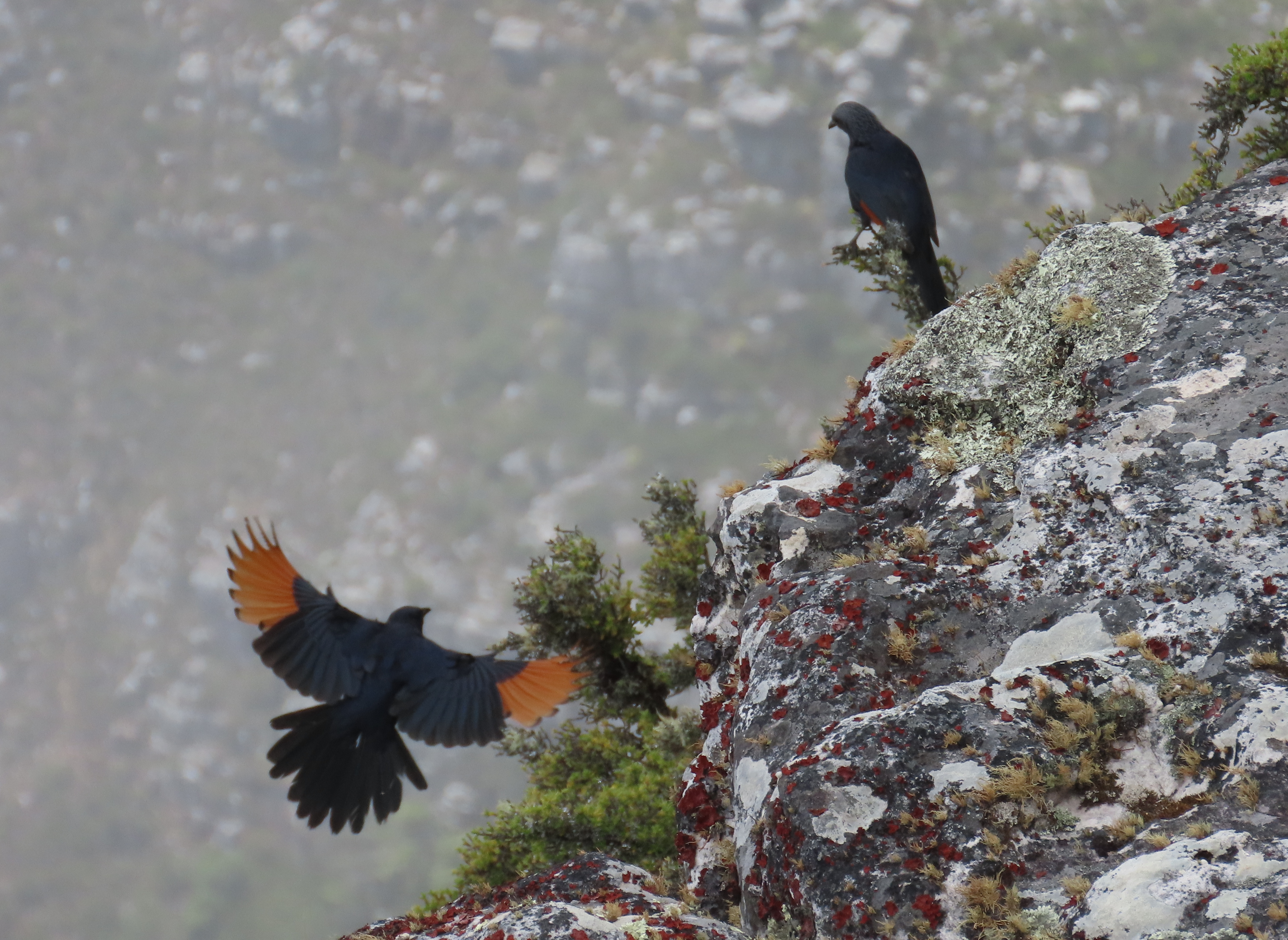
    A couple of Red-winged Starlings flitted around us. Needless to say, yours truly stayed under cover while these formidable creatures had their beady eyes on us:

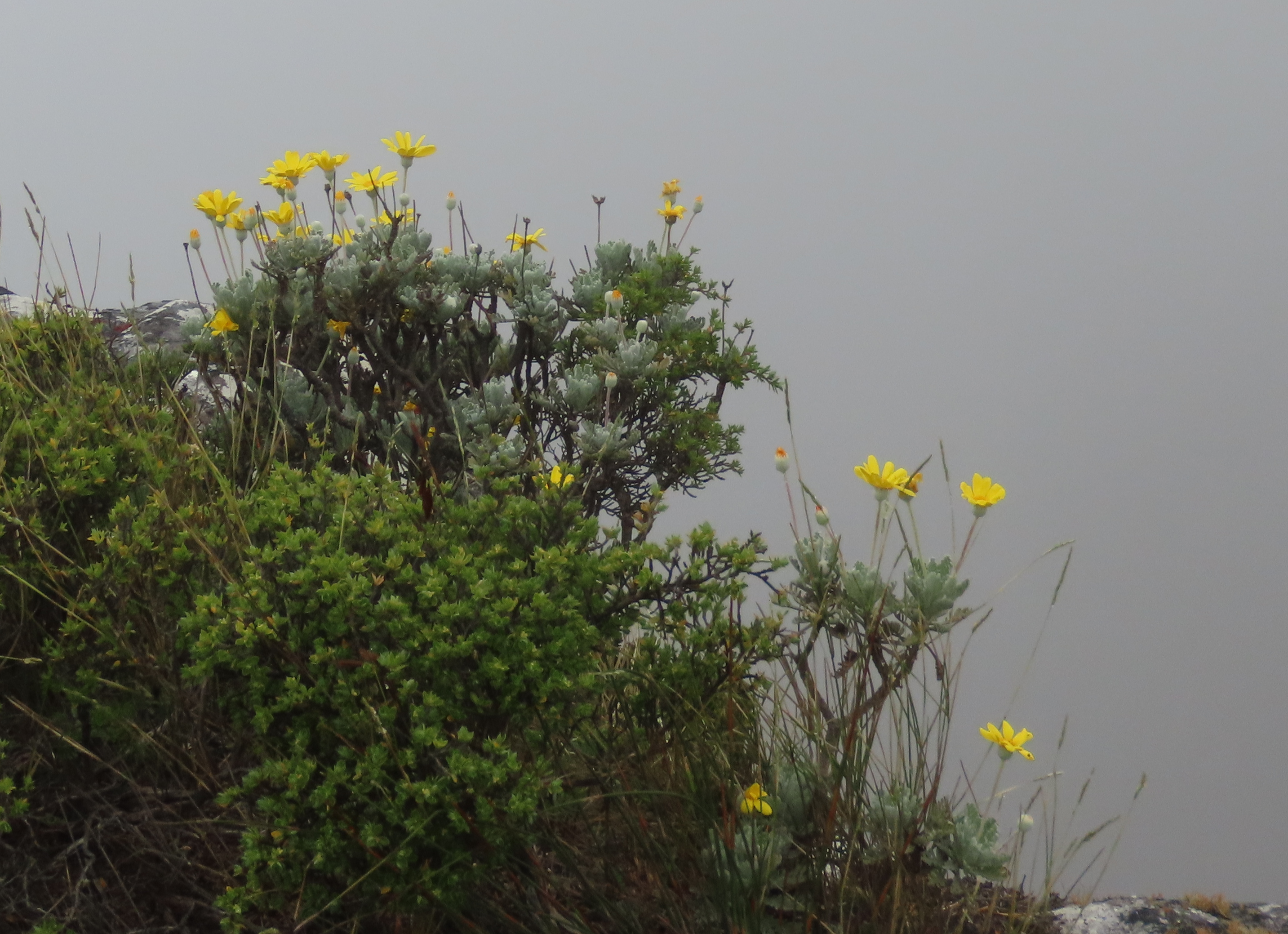
    Daisies did their level best to brighten up a grey day. That’s what daisies do:

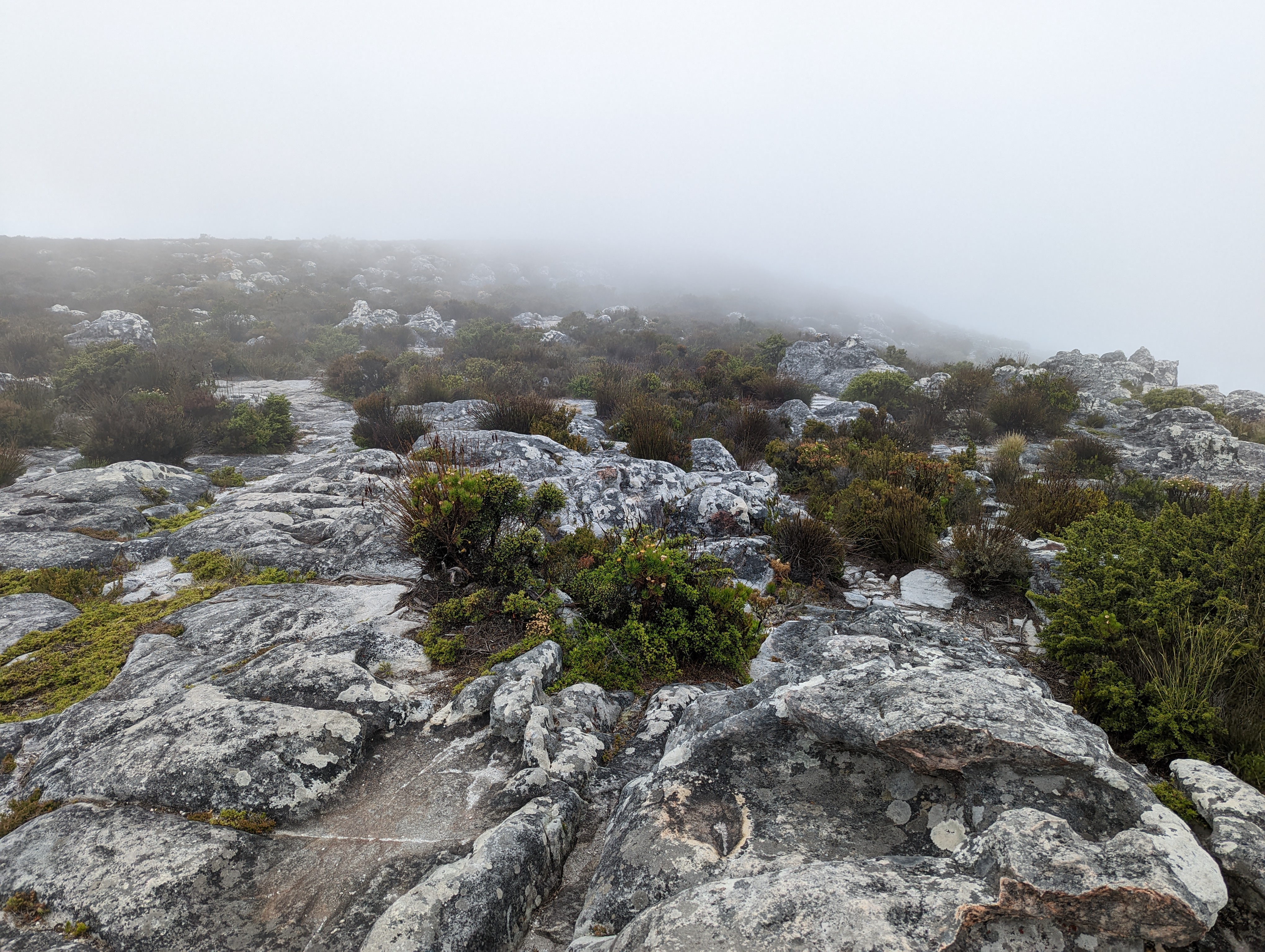
    The top of Table Mountain really is flat. There are some good paths, especially on the front table near the top cable station:

    Due to the mist, we decided to restrict our trip to just the front table. On other trips, we’ve made the crossing to the back table and walked all the way to Maclear’s Beacon. That’s a round trip of a couple of hours, and we didn’t think it wise given the current low visibility. So, back to the top cable station.

    This picture shows both the top and the bottom cable stations. It gives a good idea of the steep trip ahead of us!

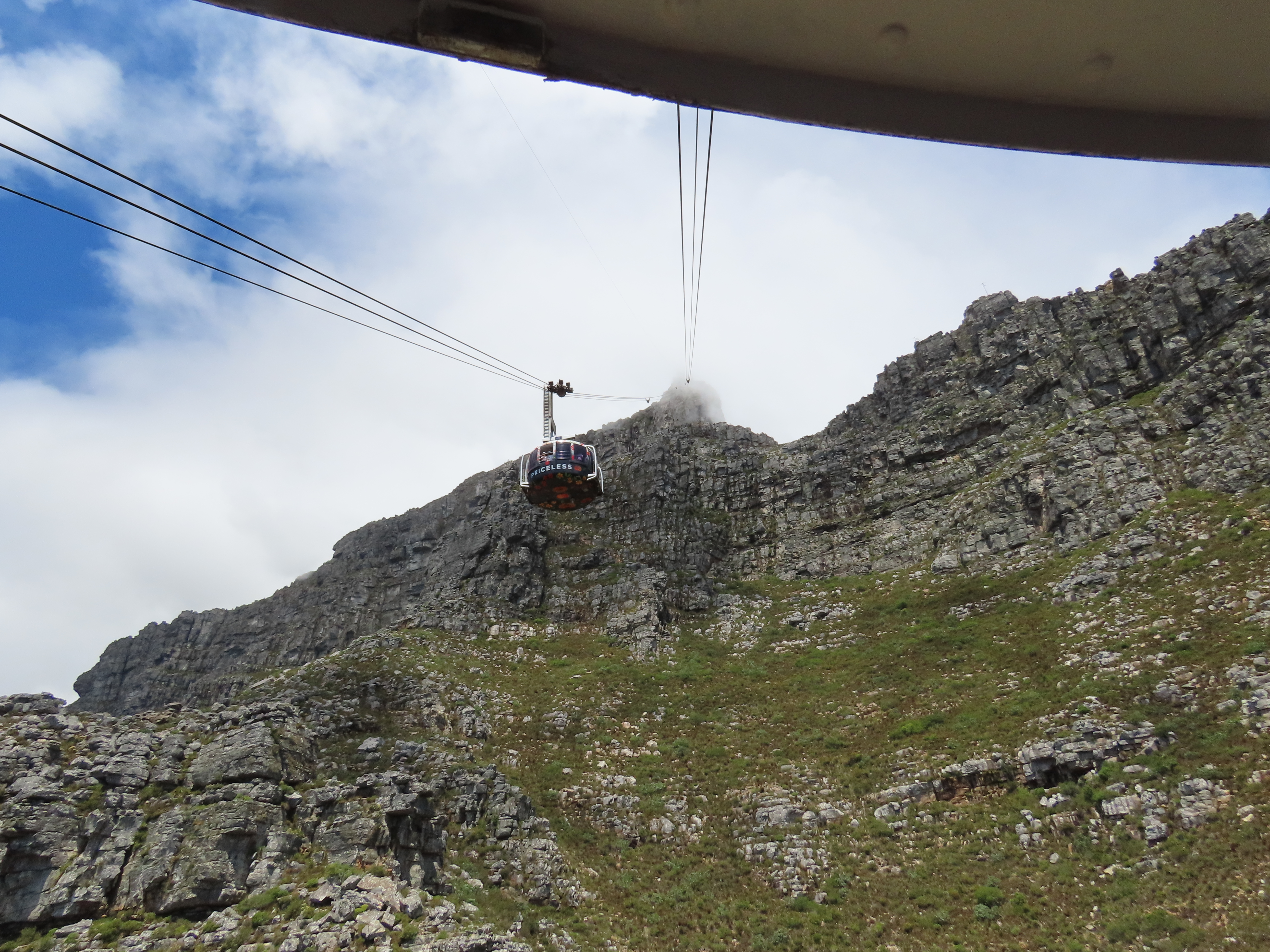
    The two cable cars pass each other, one on the way up and the other on the way down:

    Aboard the cable car once more, we saw the cables descending into the cloud:

    On the way down, we passed the other cable car on its way up. Here’s a view taken from our cable car, showing the upper station in the mist behind the other car:

    Table Mountain is a natural wonder and a place of calm and beauty. Heed the words of a wise worm: It’s well worth a visit.

    That’s all for today, folks.


  • A few days in Zurich

    This is the blog of Mark Wordsworm, the travelling worm. I’m a 36-year-old bookmark (give or take a few years) and I proudly boast my own Hallmark serial number, 95 HBM 80-1. You’ll probably want to read all about me and my Travelling Companion (the TC).

    Today’s travel notes

    Me and the TC have spent the last couple of weeks in Zurich. It was largely a working trip for the TC. Spending time in a city as a working person is a different experience from being a tourist. We have, however, found the time to see a bit of the city too.

    The book I’m in

    Tell Me Lies, by J. P. Pomare. The TC has just started this book. I’m looking forward to digging in during the long trip home from Zurich to Sydney.

    Recommended restaurant

    Burgermeister, Oberdorfstrasse, Zurich. The restaurant offers take-away as well as dine-in meals. You order your food at the counter and collect it there too. The food comes quickly. It’s very tasty and of high quality.

    Travel tips

    Parking is complicated. Blue zones, white zones, time restrictions… Read up on it before you arrive.

    The photos

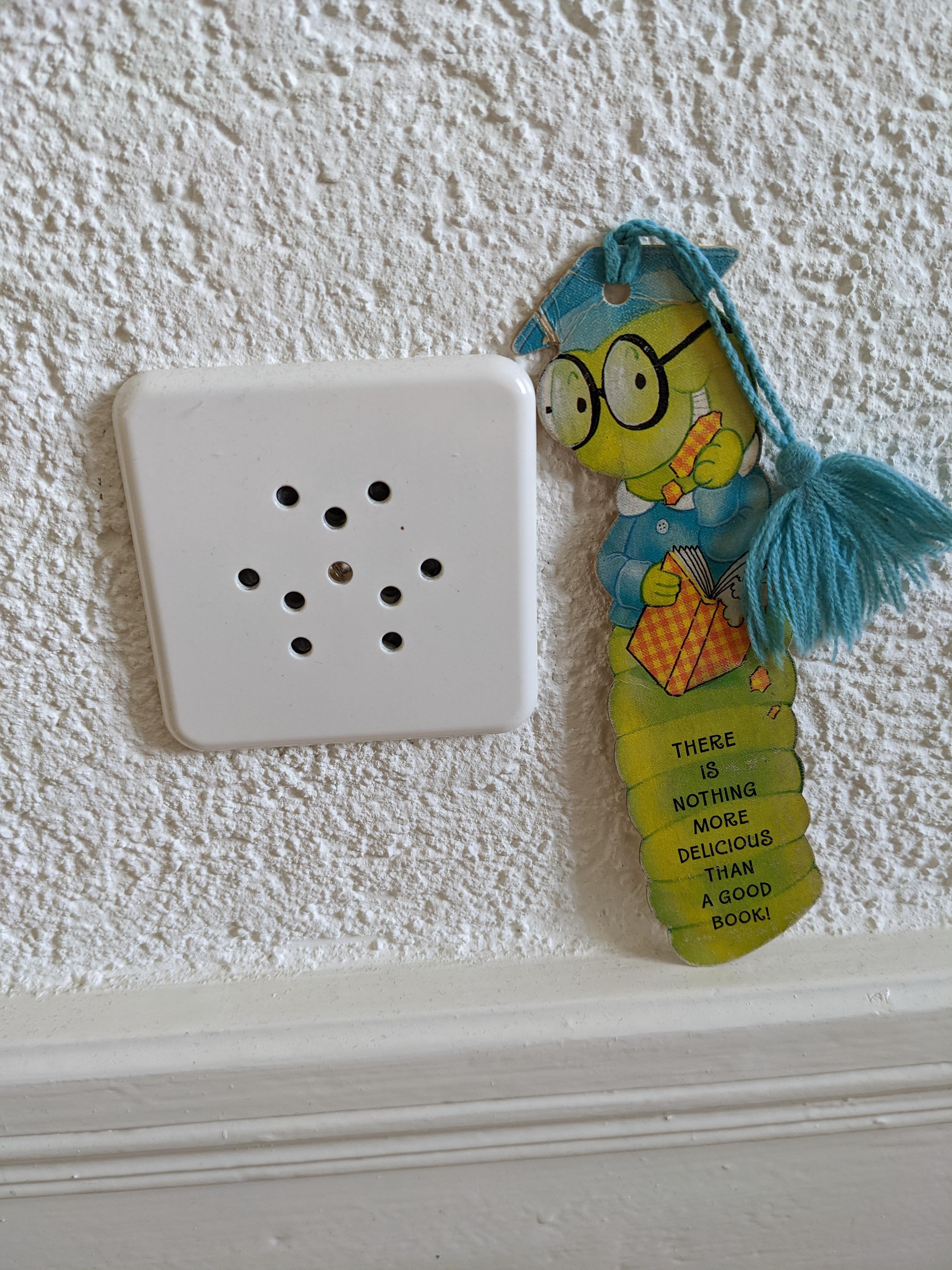
    Me surveying a complex-looking plug socket array in our Zurich accommodation:

    Swiss plugs differ from those in much of Europe. They have three prongs, with the middle one slightly offset.

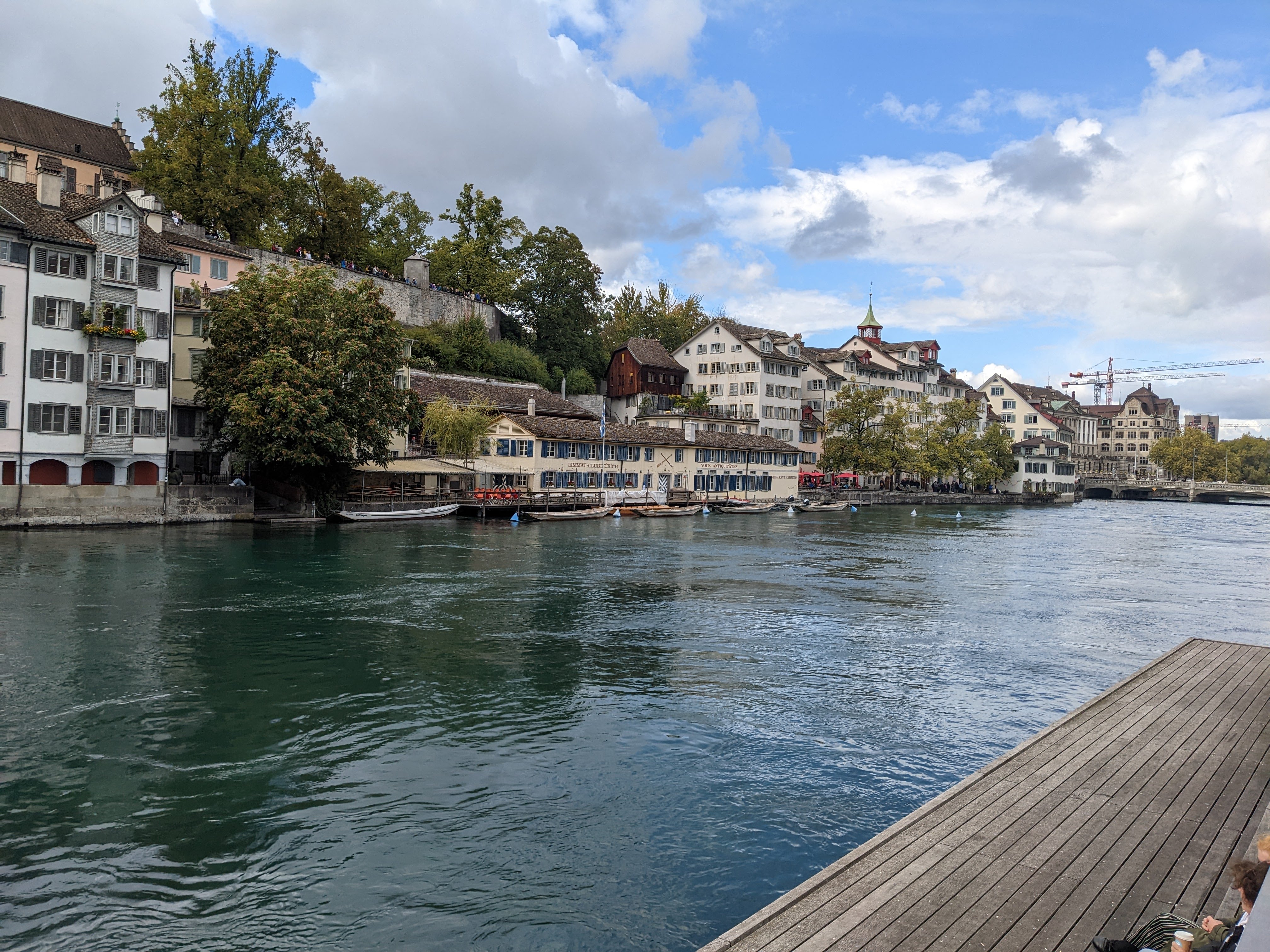
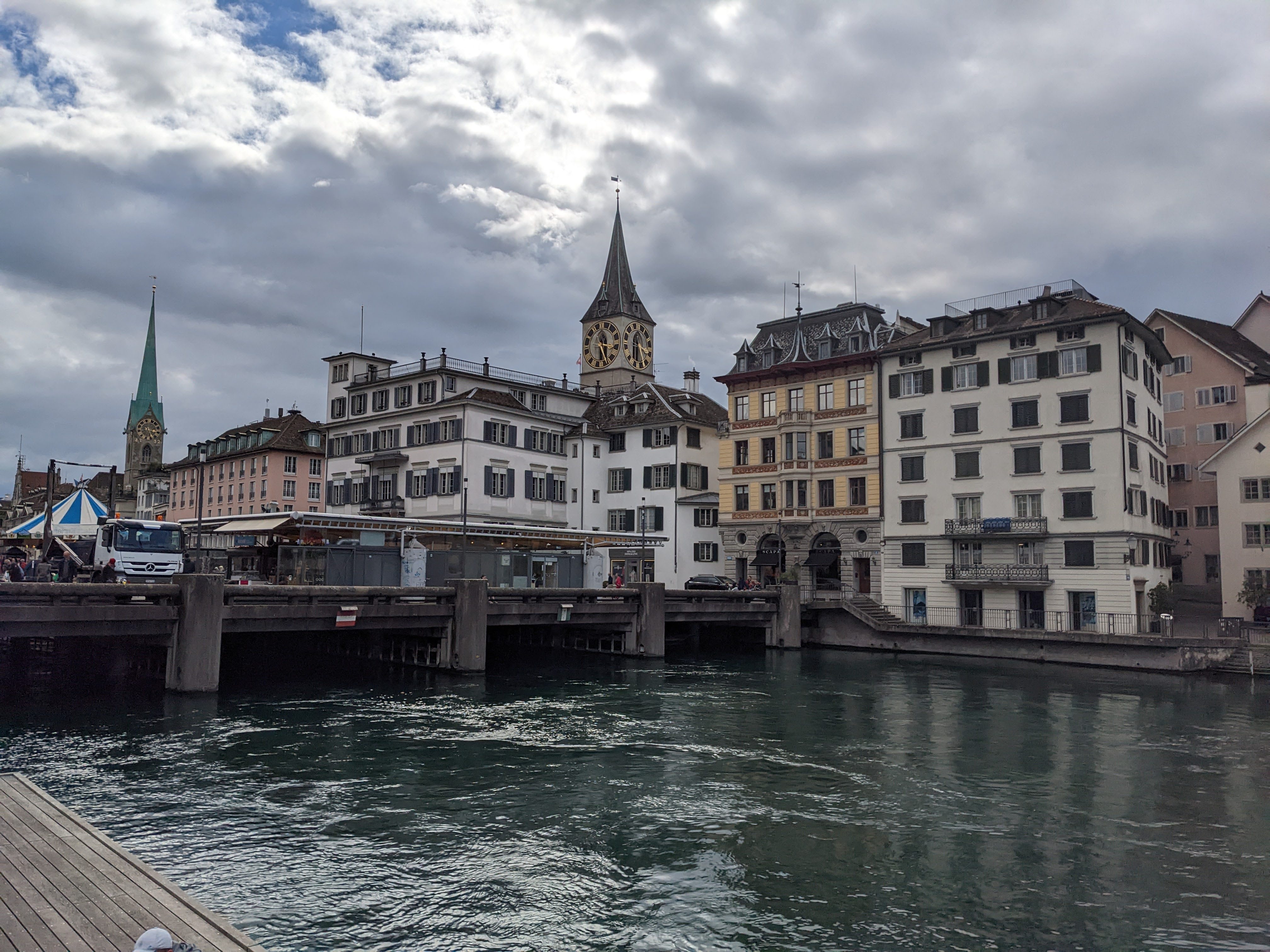
    The lovely Limmat River runs through Zurich. This worm appreciated the river in its many moods:

    Scooters, bicycles, motorbikes, e-bikes — people use a variety of vehicles to move around the city:

    Winding alleys lead down into the old town:

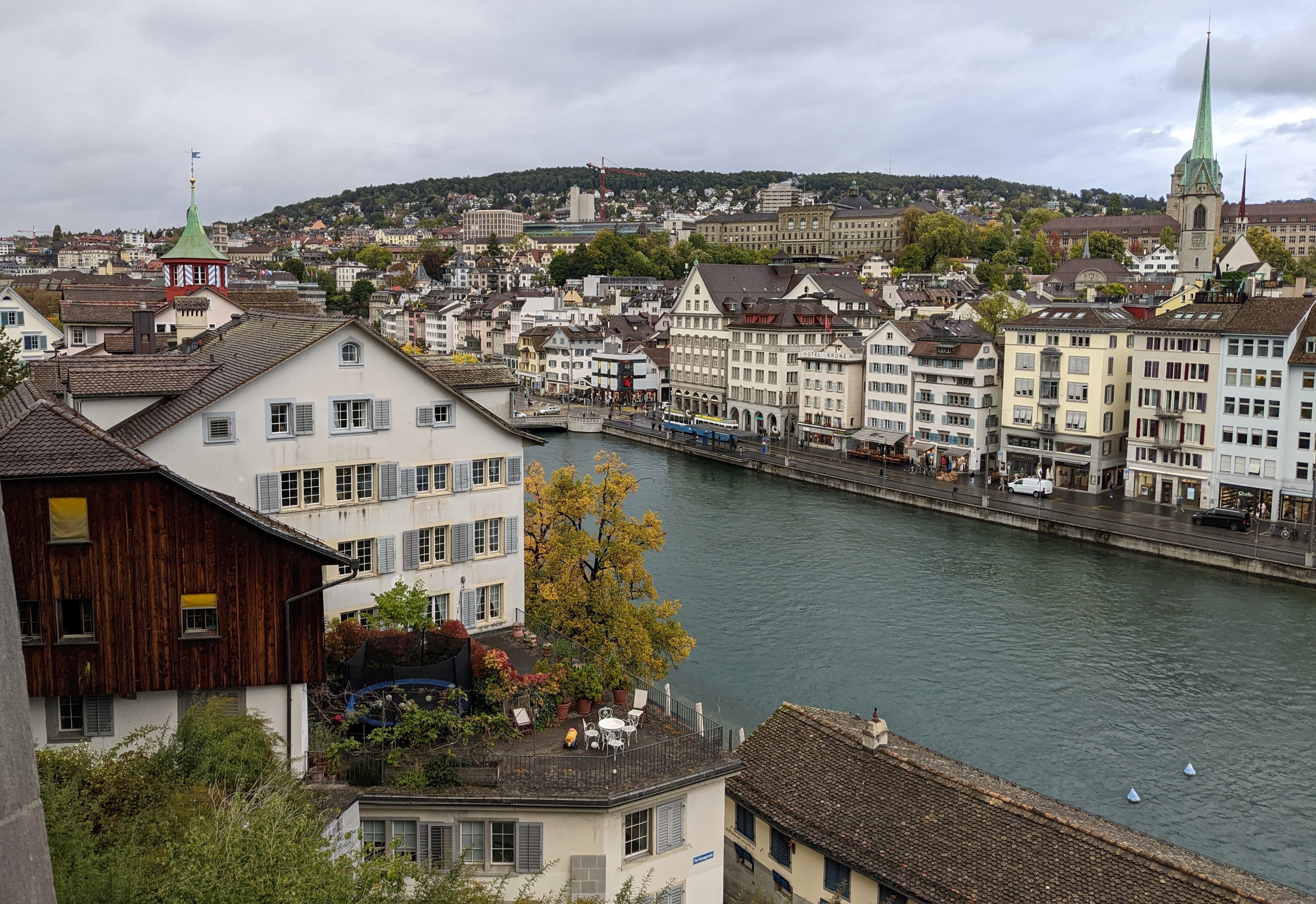
    A city view from the Lindenhof on the western bank of the Limmat river:

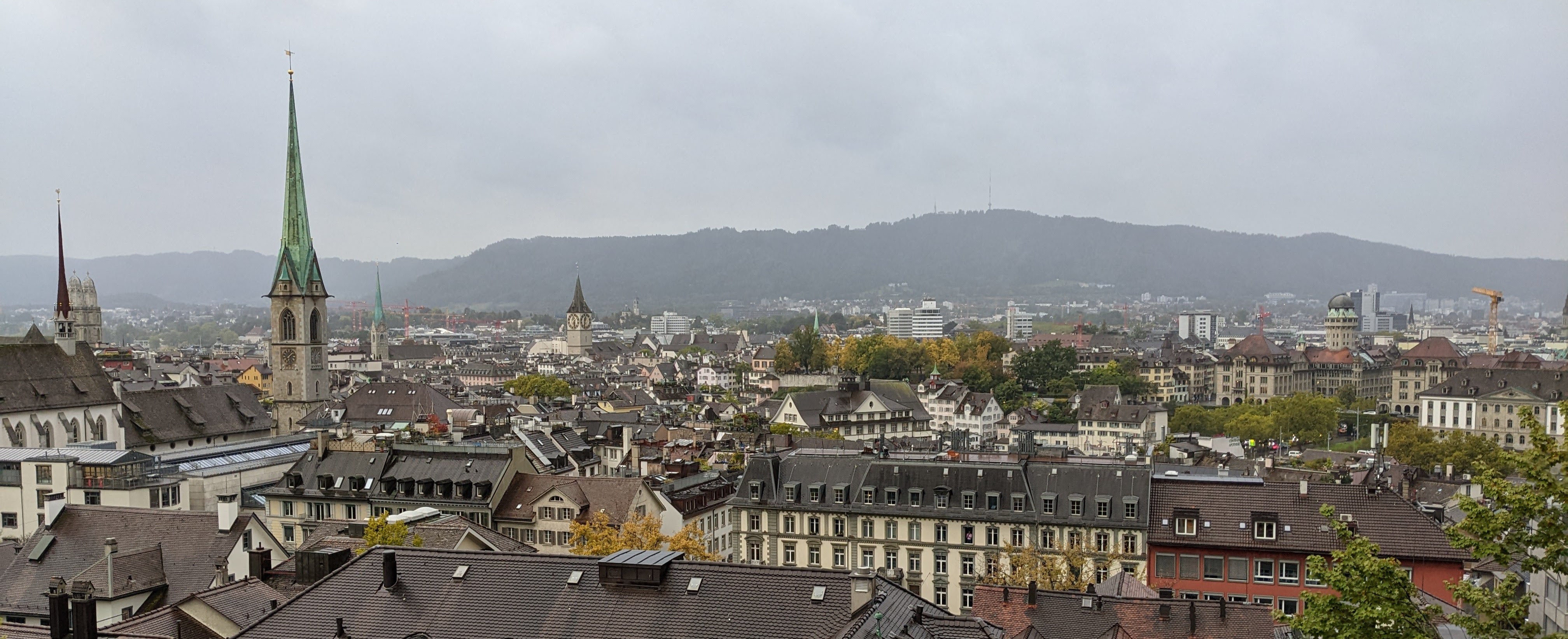
    Another view of the city, this time from the university on the eastern side of the river:

    I’ll close with some multi-coloured berries on a creeping plant. It was autumn. The leaves were beginning to turn and the air was acquiring a chill. Berry season. The TC passed this wall every day on her walk into the office in Zurich:

    That’s all for today, folks.


  • Rhine Falls, the most powerful waterfall in Europe

    This is the blog of Mark Wordsworm, the travelling worm. I’m a 36-year-old bookmark (give or take a few years) and I proudly boast my own Hallmark serial number, 95 HBM 80-1. You’ll probably want to read all about me and my Travelling Companion (the TC).

    Today’s travel notes

    Yesterday, me and the TC took a trip to the Rhine Falls (Rheinfall), the most power waterfall in Europe based on rate of flow. Although the Rhine Falls are in Switzerland, our train passed through a bit of Germany on the way there.

    The book I’m in

    Bleed for Me, by Michael Robotham. A good who-dunnit investigated by a flawed psychologist, a cop, and an ex-cop. This worm is eating through the book with great enjoyment.

    Travel tips

    There’s a good chance of getting damp, even if it’s not raining.

    The photos

    Me hanging out at the Rheinfall:

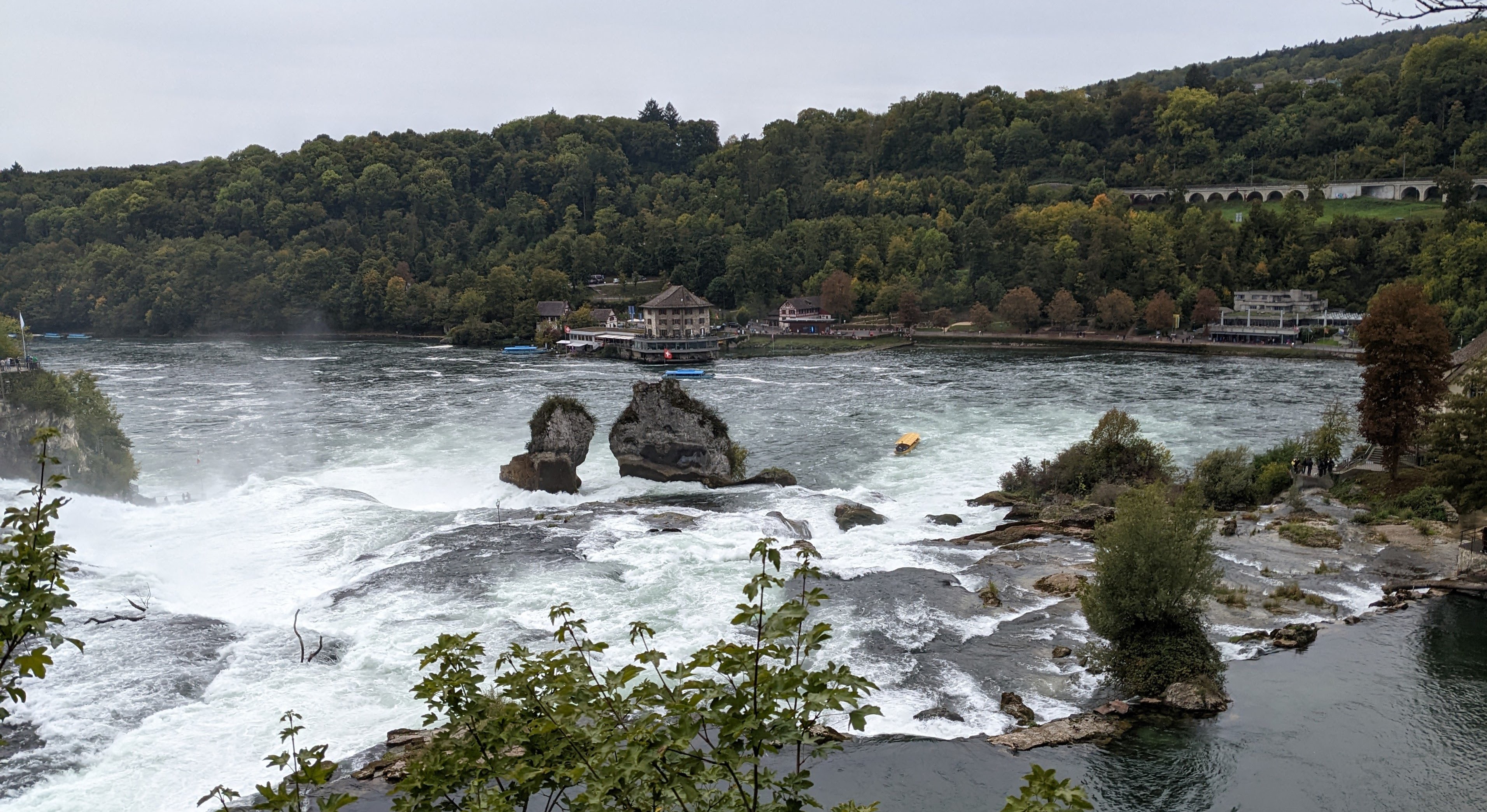
    Imagine you’re travelling down the Rhine, a leisurely ride on a boat, birds tweeting, sun shining, the gentle river flowing strong but smooth. Then, as you round a bend, suddenly there’s a roaring in the air and the river drops down by 23 metres right in front of you.

    Here’s what the Rhine Falls look and sound like from the river bank:

    A still view from the same spot:

    How small that yellow boat looks! Intrepid travellers can take a ride on one of these boats. Be prepared to get wet:

    The first viewing point is a short stroll from the train station, down a pretty street:

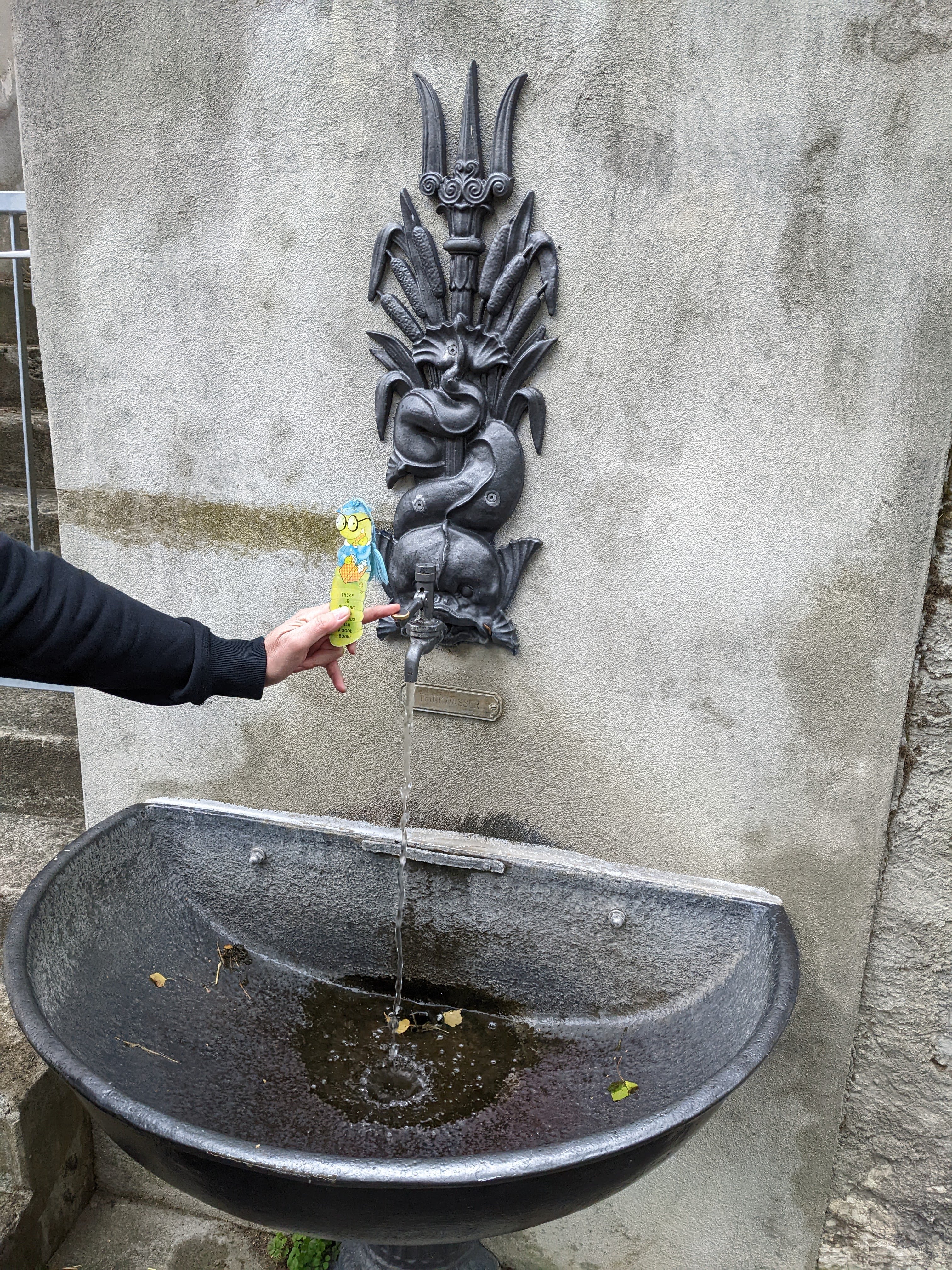
    I’ll close this post with another shot of yours truly at the local water spigot:

    That’s all for today, folks.


  • Chur, oldest city in Switzerland

    This is the blog of Mark Wordsworm, the travelling worm. I’m a 36-year-old bookmark (give or take a few years) and I proudly boast my own Hallmark serial number, 95 HBM 80-1. You’ll probably want to read all about me and my Travelling Companion (the TC).

    Today’s travel notes

    If you have the chance, follow in this worm’s illustrious footsteps and visit the historic town of Chur in Switzerland. It’s one and a half hours by train from Zurich. Chur lays claim to being the oldest settlement in Switzerland, tracing its history as far back as 3500-3900 BCE.

    The book I’m in

    Bleed for Me, by Michael Robotham. A good who-dunnit investigated by a flawed psychologist, a cop, and an ex-cop. This worm is eating through the book with great enjoyment.

    Recommended restaurants

    We popped in for coffee and cake at Cafe Maron, near the Chur train station. The fare was delicious, the service was friendly, and the cafe was brimming with people.

    For lunch, we chose Vanessa’s Kitchen Fusion Bistro. Highly recommended for the quality of the food and the service.

    Travel tips

    Walk the streets of the old town. If golf is your cup of tea, do the Urban Golf Parcours in Chur. Urban golfers use soft balls, to avoid hurting people and damaging property. It’s a good way to see the city.

    The photos

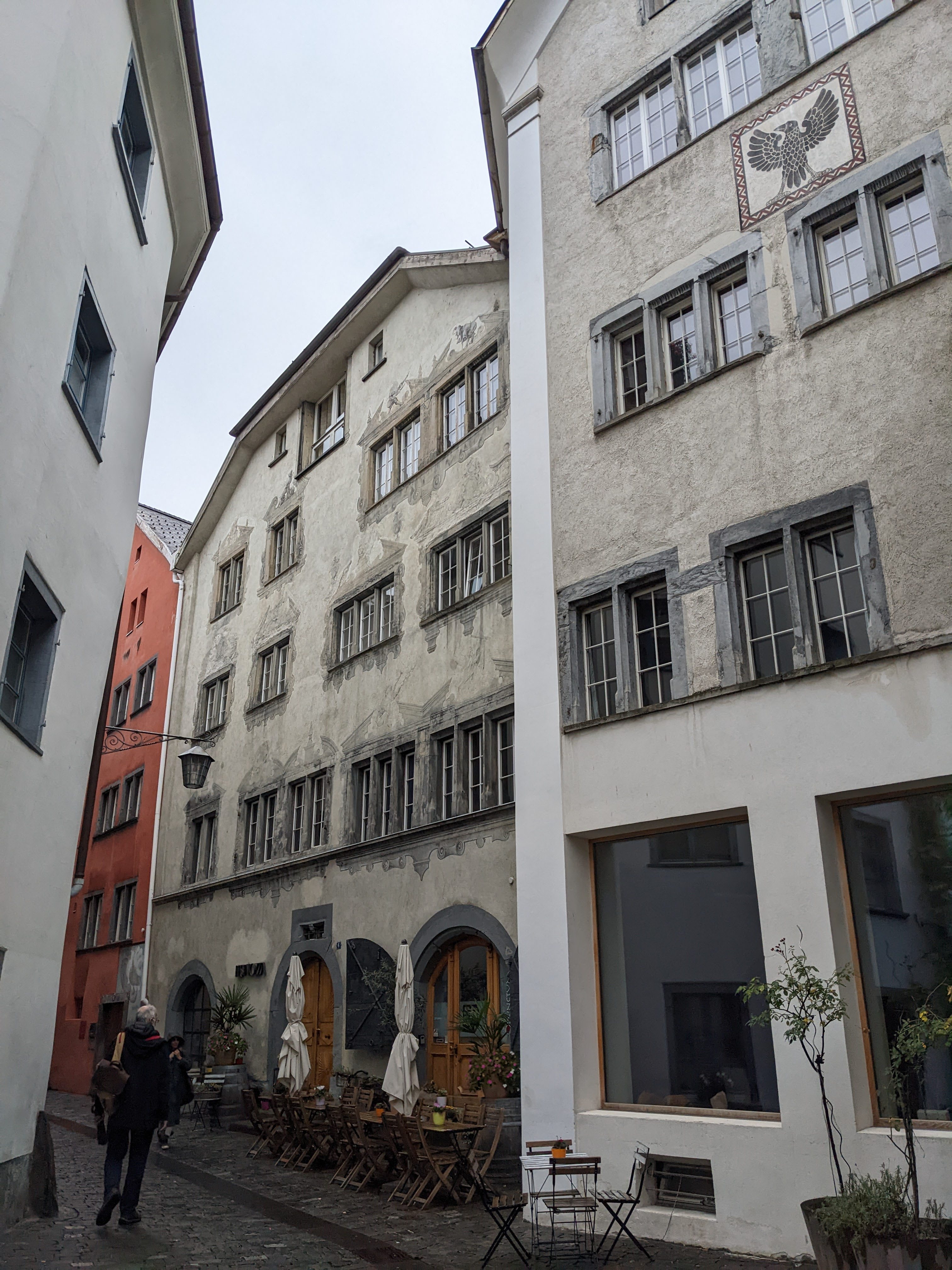
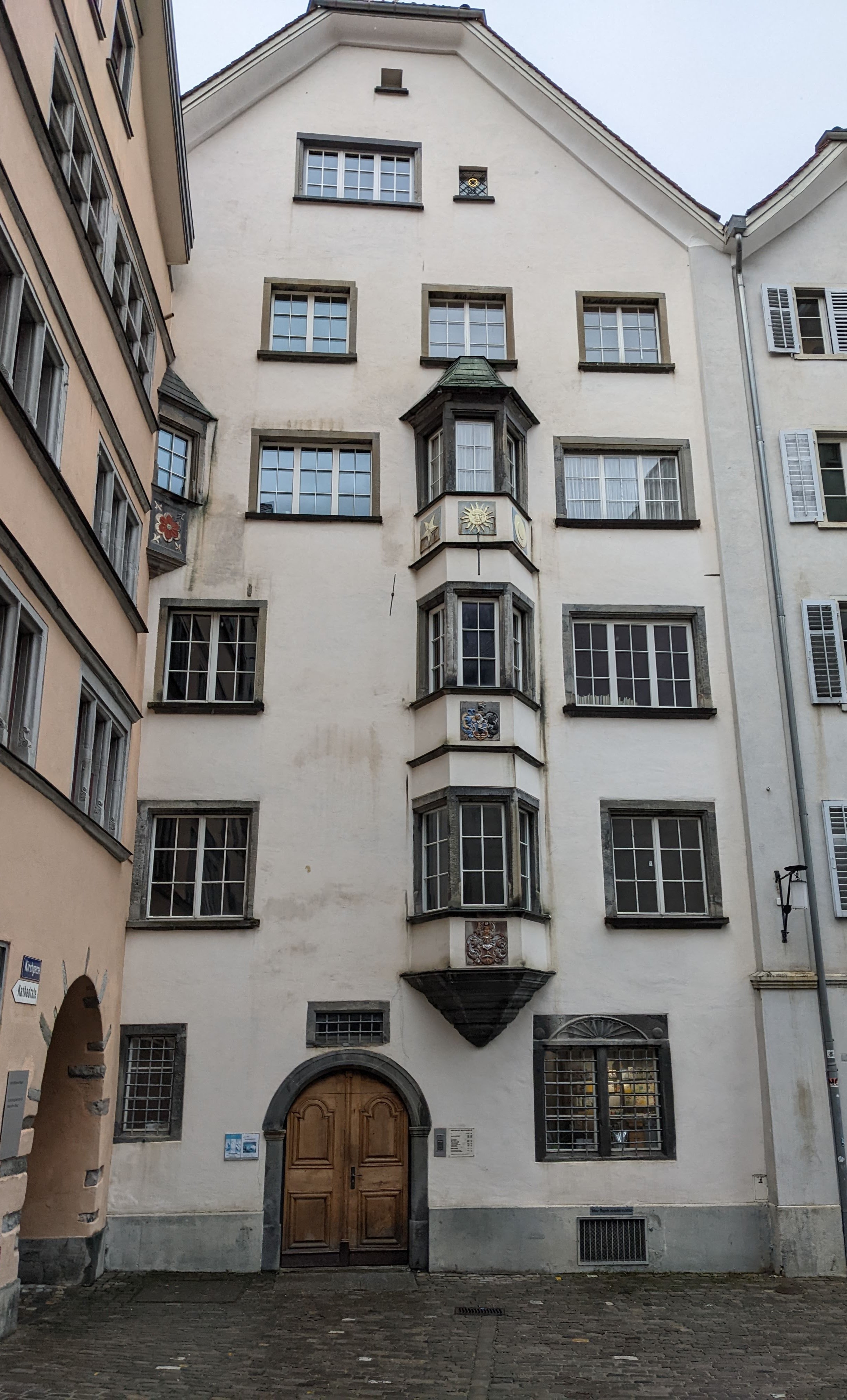
    Me hanging out with a beautiful woman at a historic building in Chur:

    Until 1887, night watchmen used to roam the streets of Chur, calling out the hours of the evening watch. The placards on this building tell the story:

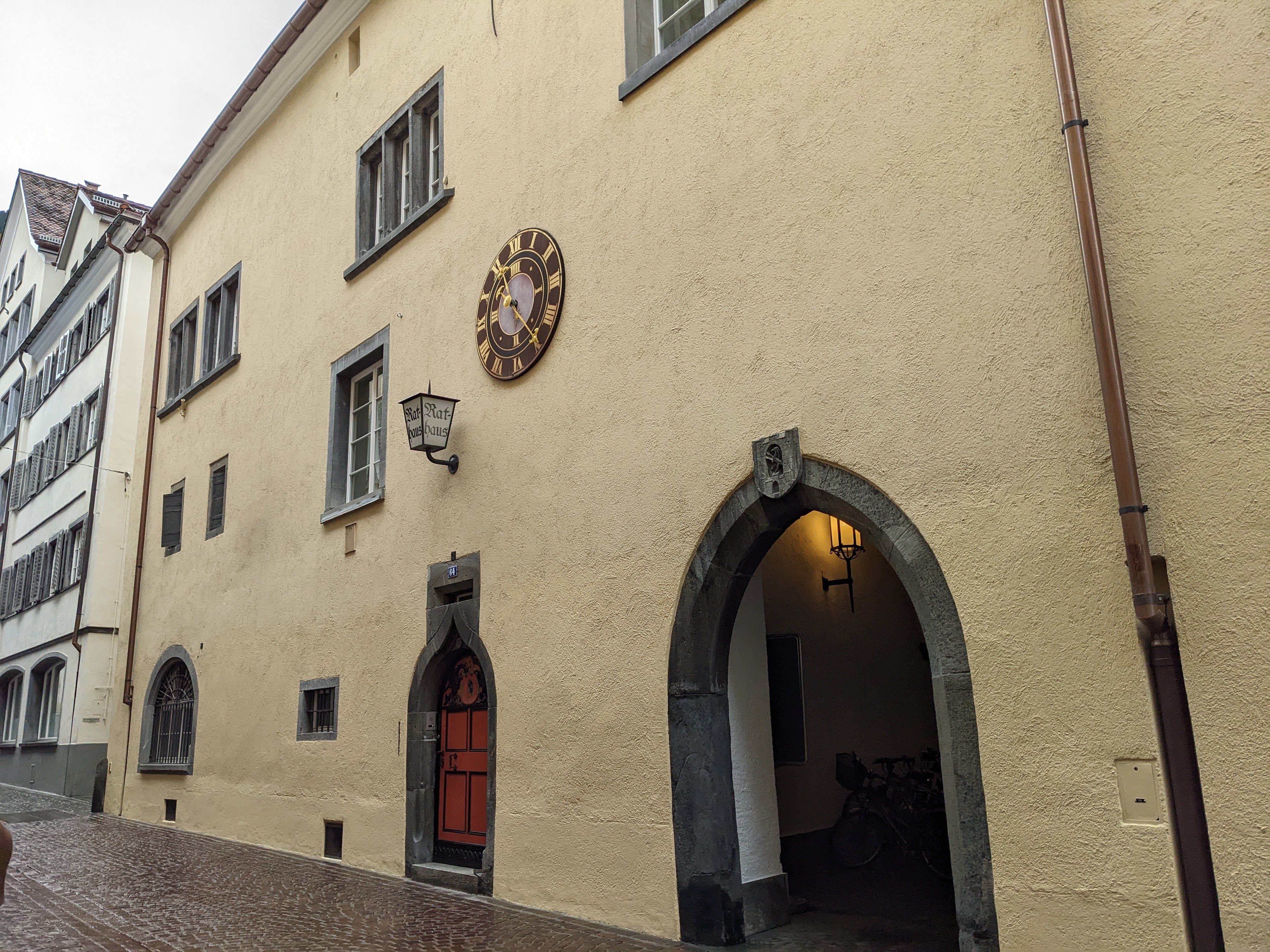
    The town hall (rathaus), with its medieval arches:

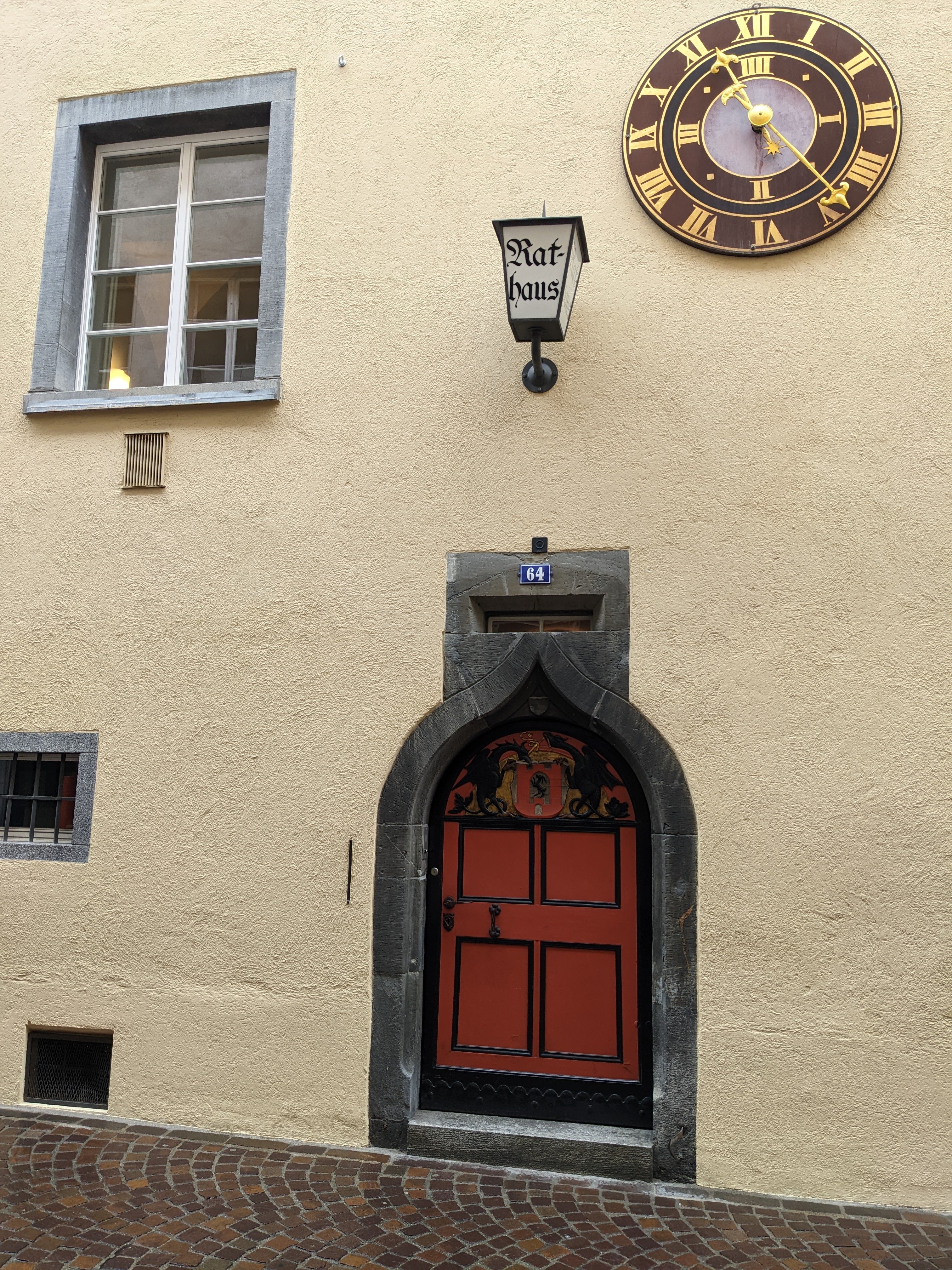
    A close-up of the entrance to the town hall:

    The opposite entrance of the town hall:

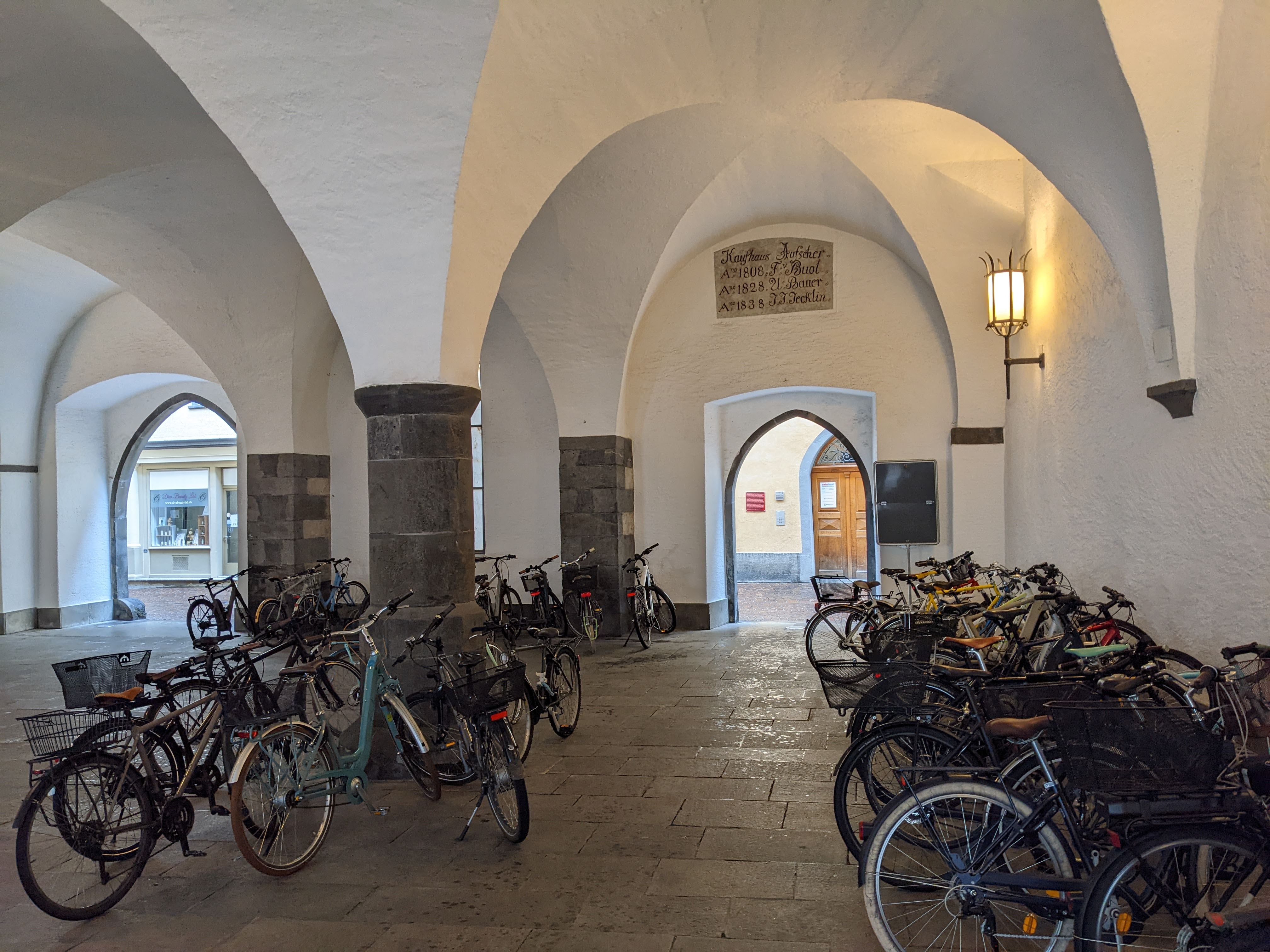
    The arched roof of a marketplace next to the town hall, currently a shelter for bicycles.

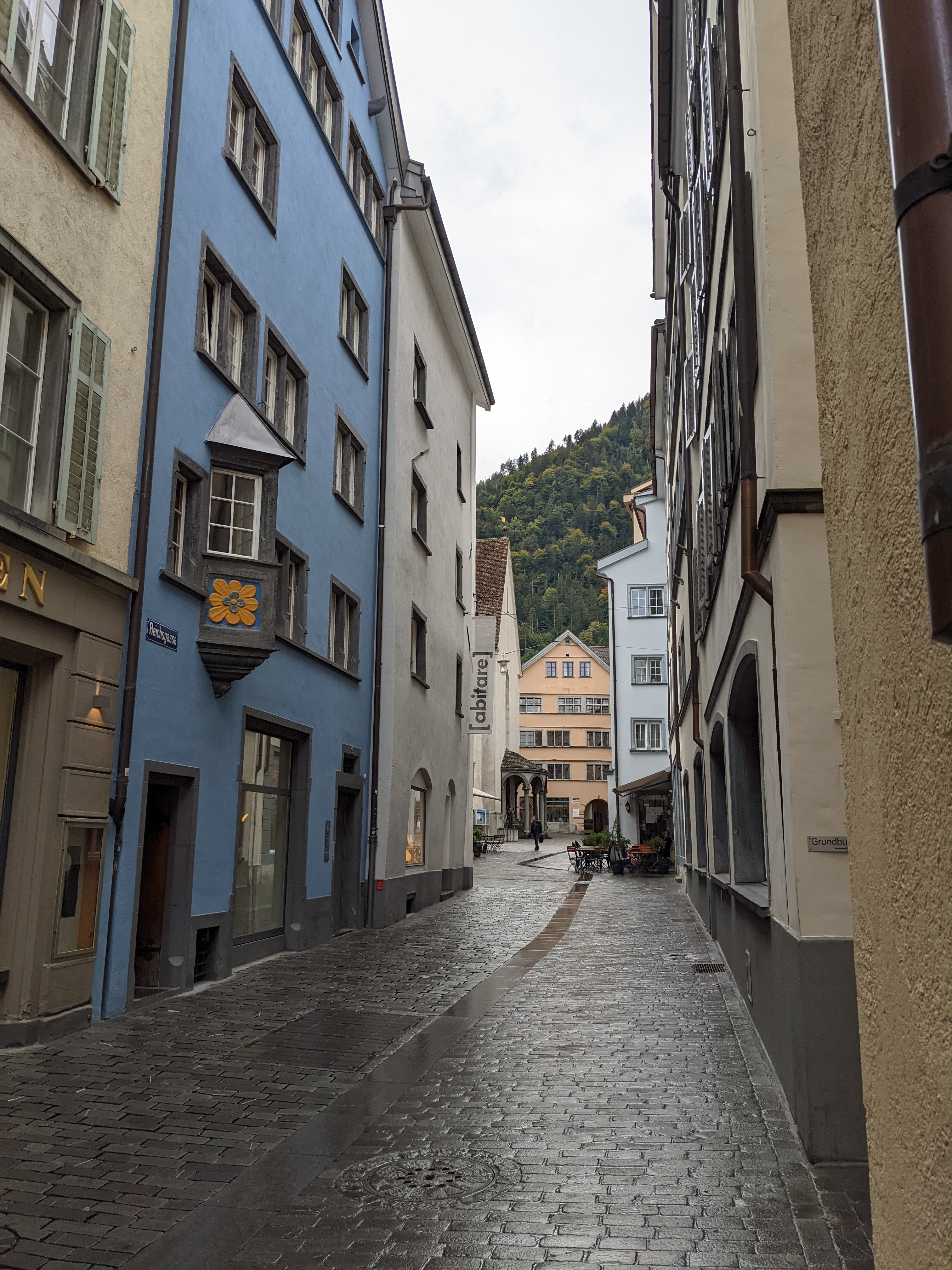
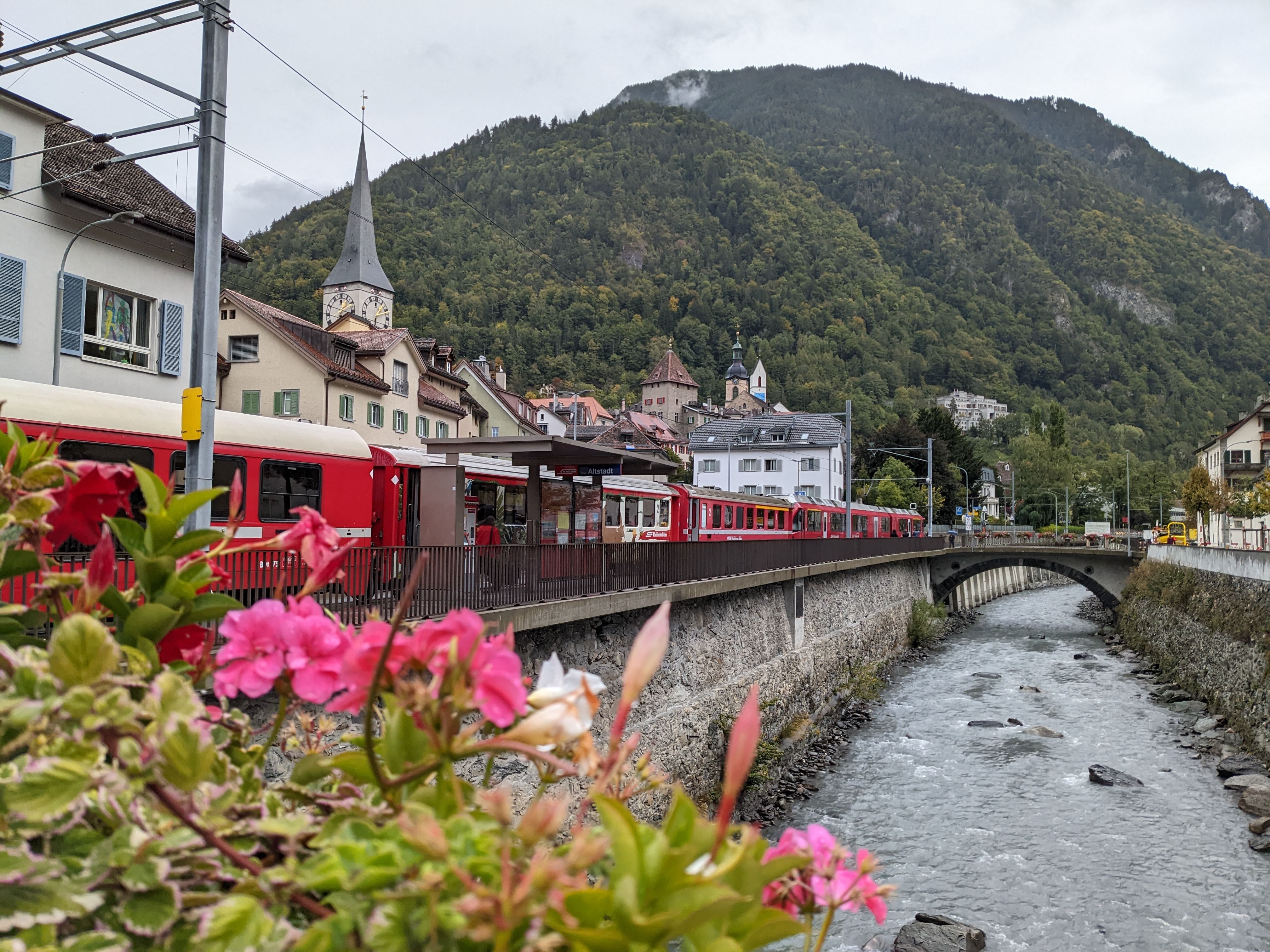
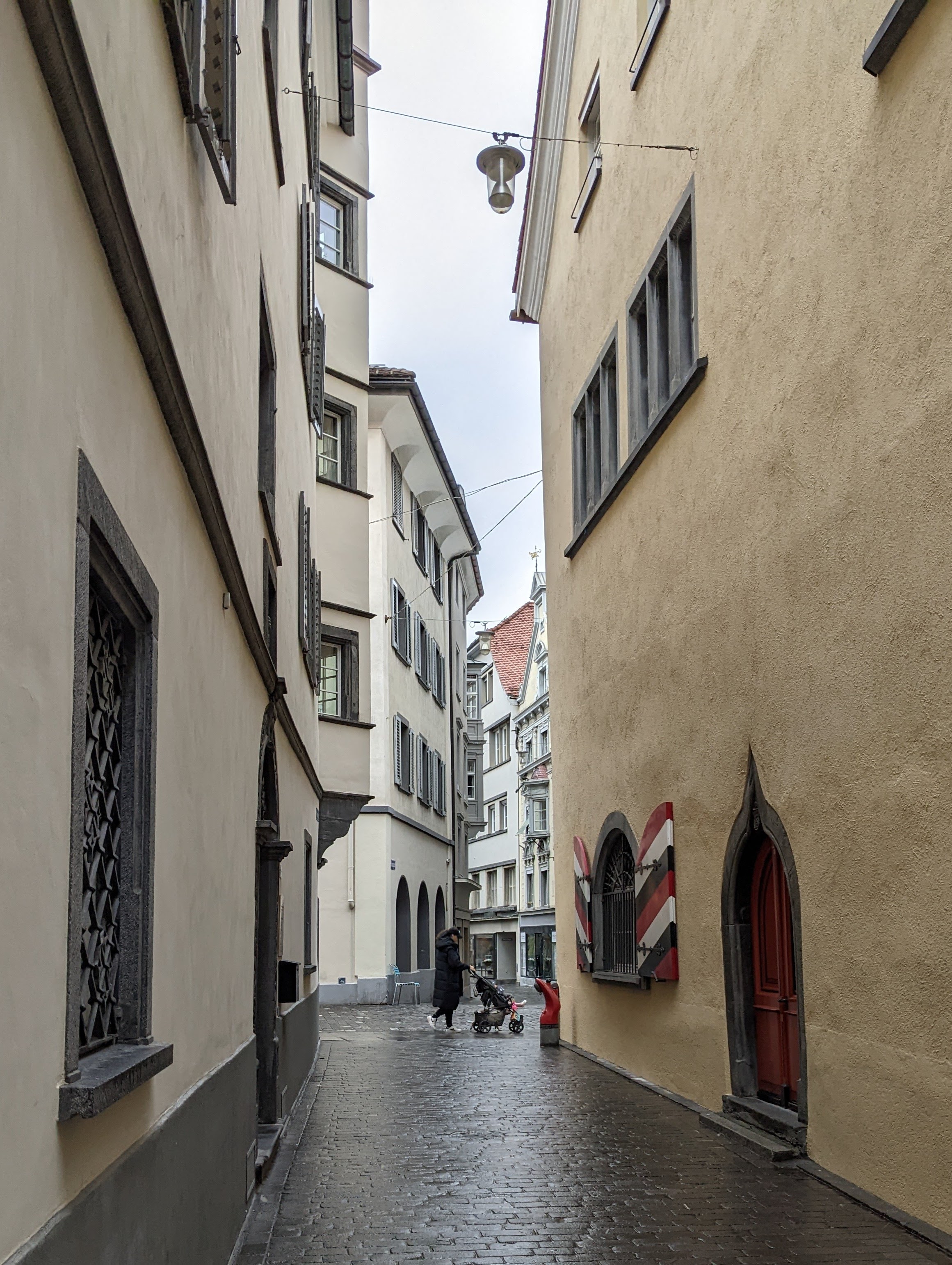
    Street scenes in the old town:

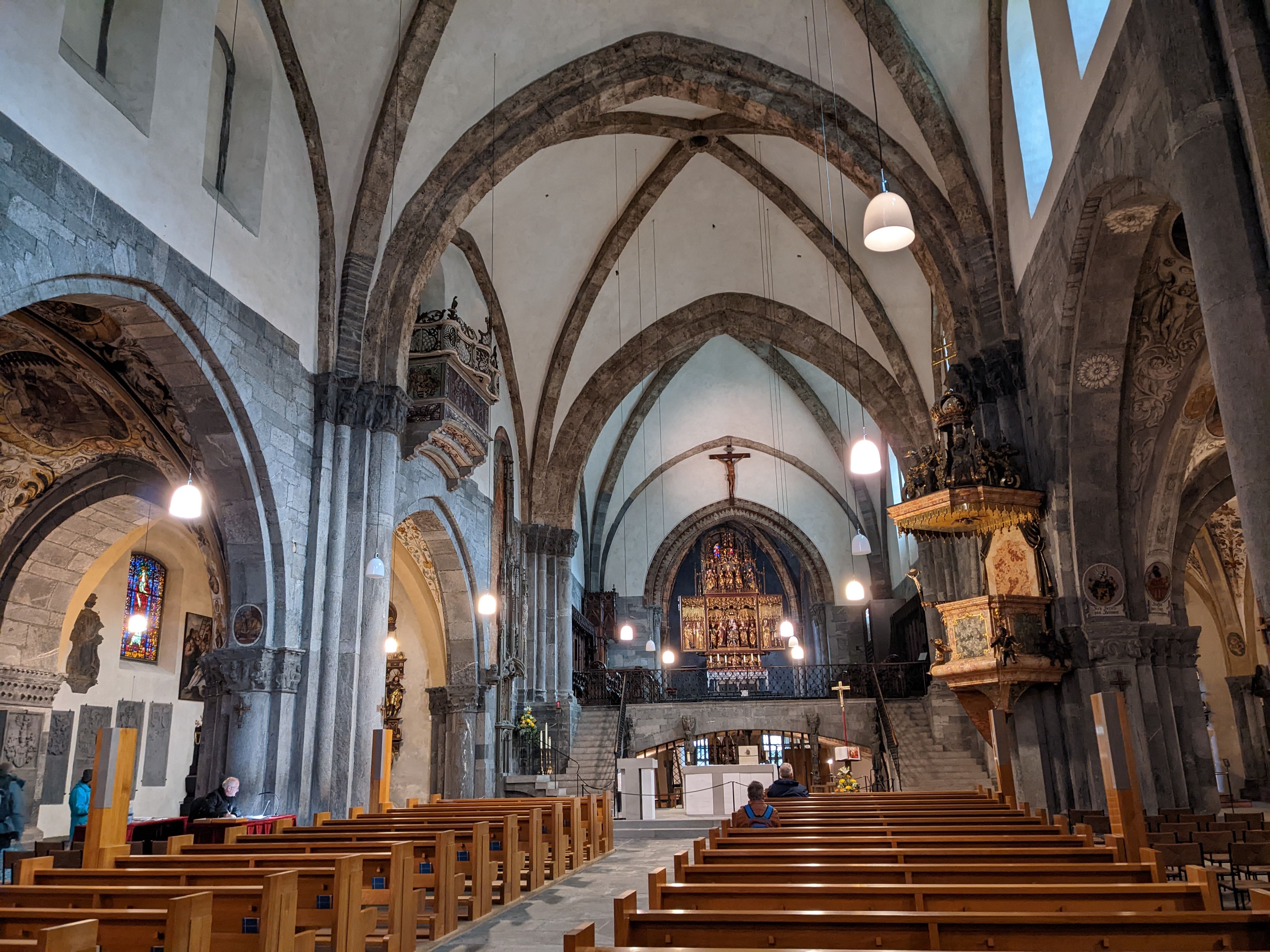
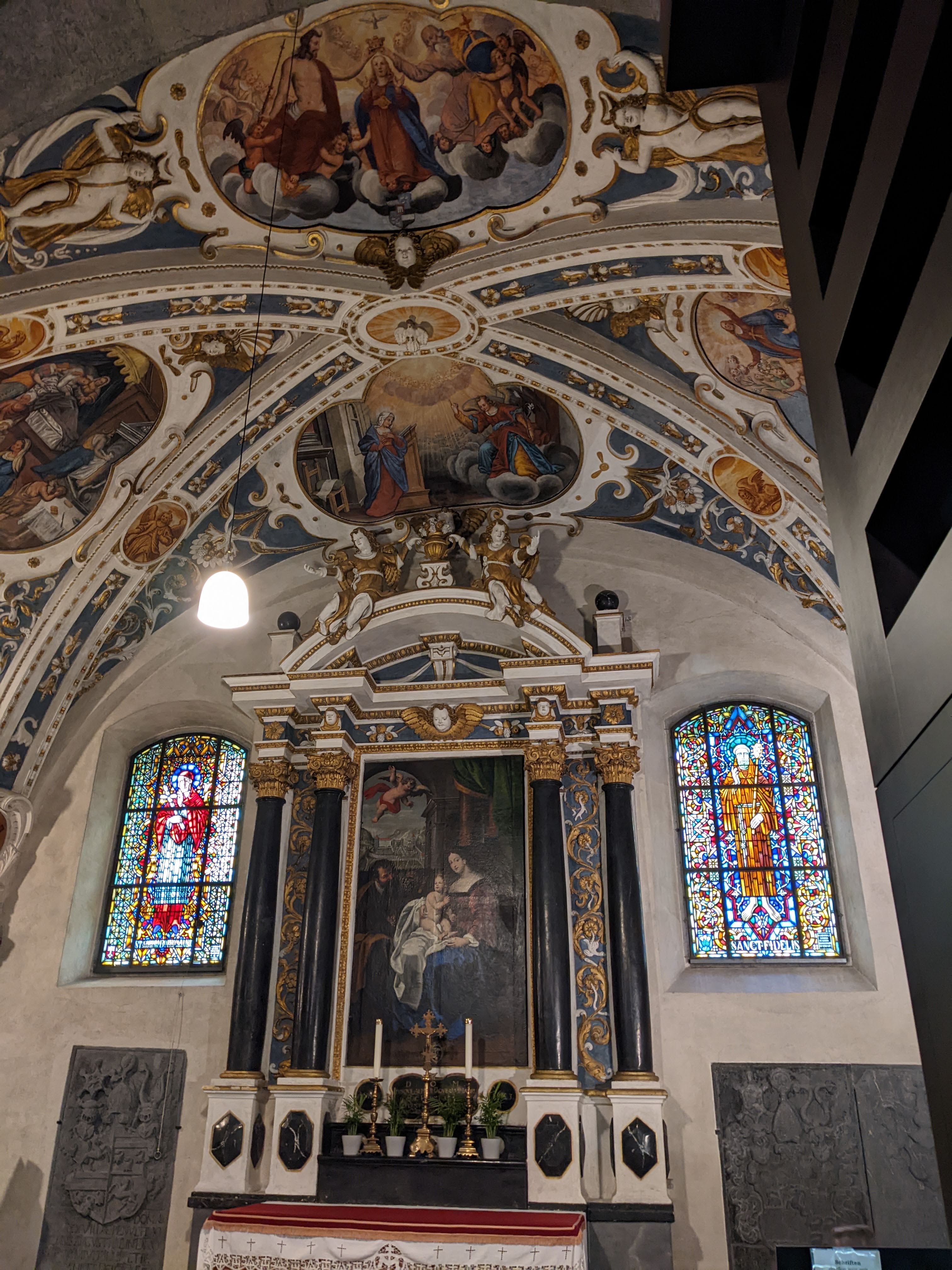
    The Cathedral of the Assumption is a place of beauty and quiet:

    A modern sticker on a mailbox, bringing the ugly to the sublime:

    The clock tower in Martinsplatz:

    At midday, the clock bell chimes the hour:

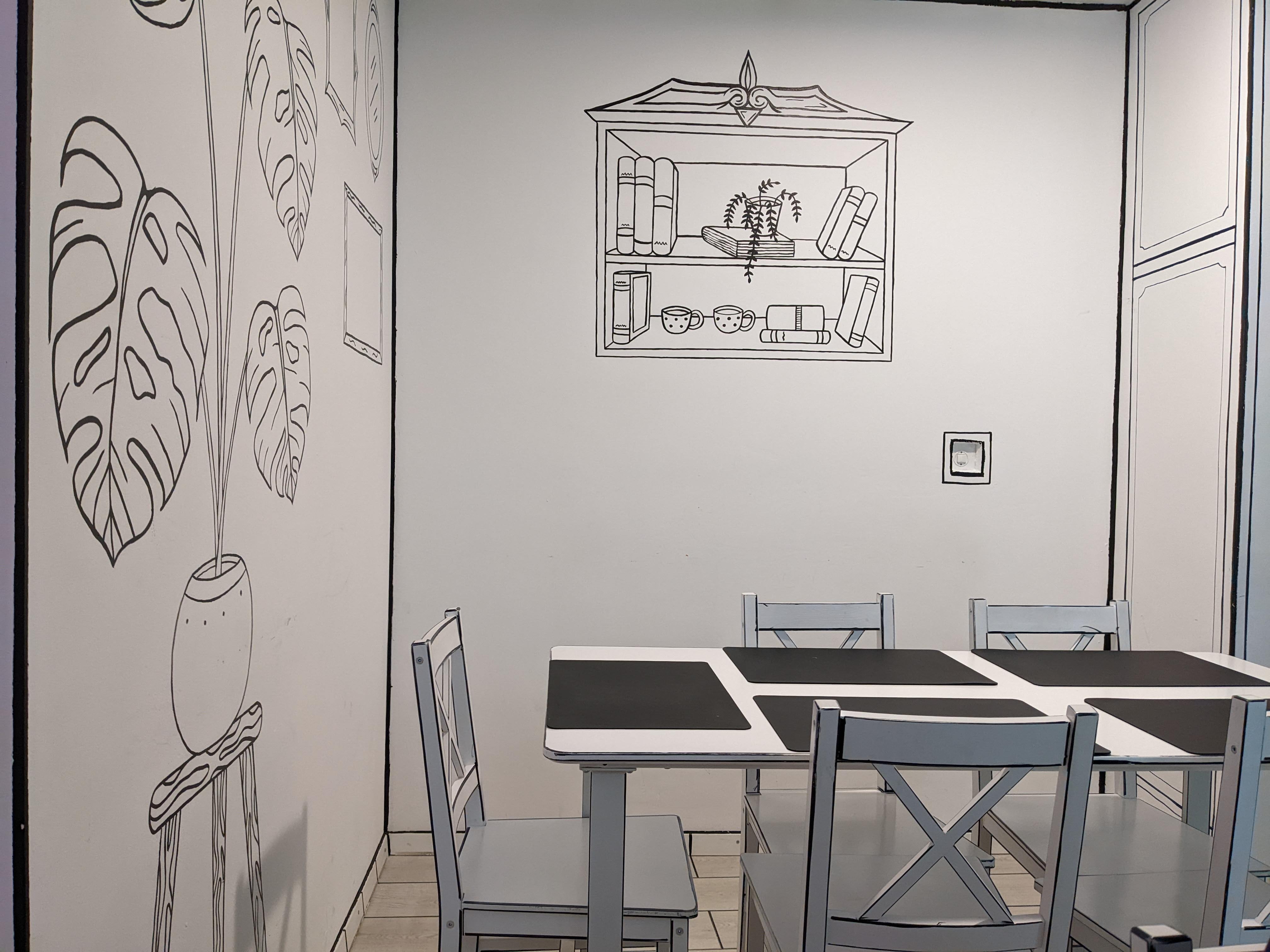
    The 2D room at Vanessa’s Kitchen Fusion Bistro, where we stopped for an excellent lunch:

    More street scenes:

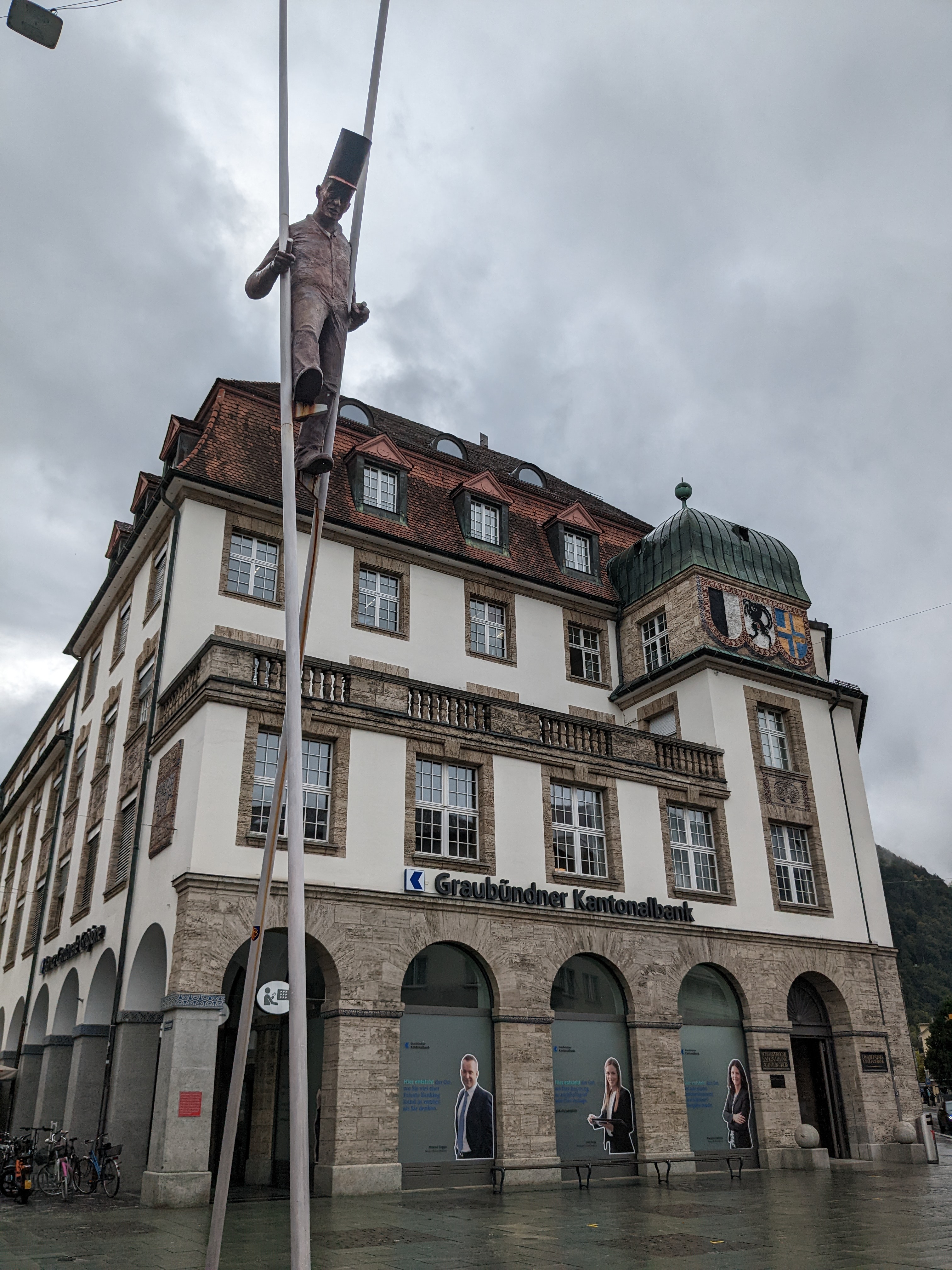
    An imposing statue graces the square at the head office of the Graubünden Cantonal Bank — a man on stilts:

    The train journey from Zurich to Chur is worth a few pictures too. For much of the journey, the train travels along the banks of the lakes: Zurichsee, Obersee, and Walensee. Here’s one of the lakes in a less-than-sunny mood, with snow-bedecked peaks peeking out of the cloud:

    The smudging is the rain on the train window. Here are more snow-bedecked peaks, in a sunnier mood:

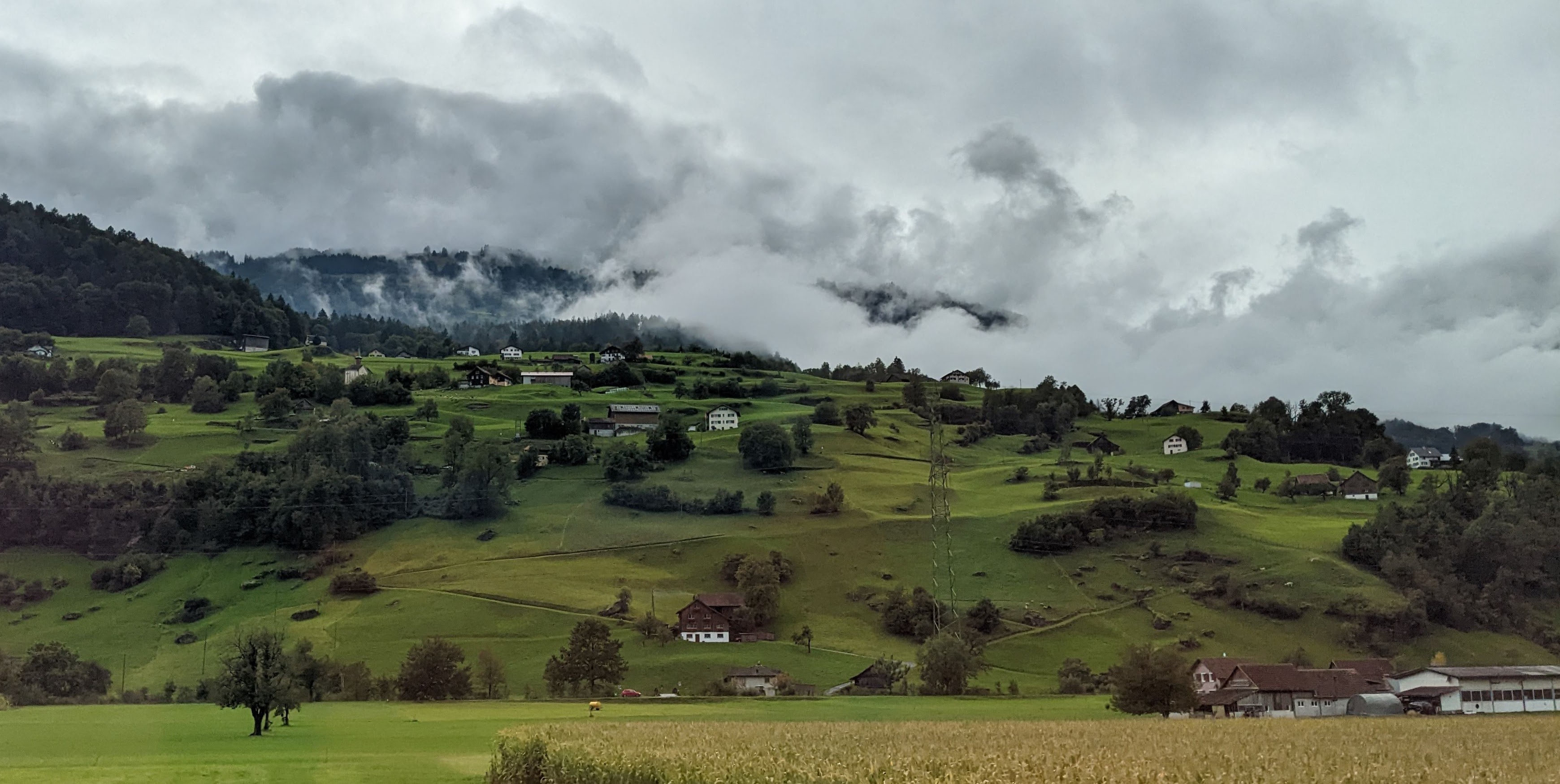
    I’ve remarked on the green felt effect of the Swiss countryside in earlier posts. Here’s more of it:

    That’s all for today, folks.


  • Medieval festival in Zug, Switzerland

    This is the blog of Mark Wordsworm, the travelling worm. I’m a 36-year-old bookmark (give or take a few years) and I proudly boast my own Hallmark serial number, 95 HBM 80-1. You’ll probably want to read all about me and my Travelling Companion (the TC).

    Today’s travel notes

    Me and the TC are in Switzerland. Today we travelled by train from Zurich to the small town of Zug, to see the annual medieval festival hosted by the town: the Mittelalterfest Zug.

    Here’s a nicety for people who’re intrigued by words, as is the TC: We travelled to Zug by Zug. How so? The town is called Zug. In German, a train is a Zug (including the initial capital letter, as in German all nouns are capitalised.) So, to Zug by Zug!

    The book I’m in

    Death’s End, by Cixin Liu, translated by Ken Liu. In the TC’s words (yours truly is by nature less effusive), this is a most amazing book. It’s part of the “three-body problem” series. Science fiction done right. Get a copy and read it!

    Travel tips

    Travelling by rail is pleasant, but figuring out how to buy the train tickets is complex. Give yourself plenty of time the first time you do it. Buying tickets from the vending machines at the station is the simplest option. The mobile app and website are overly complex.

    The photos

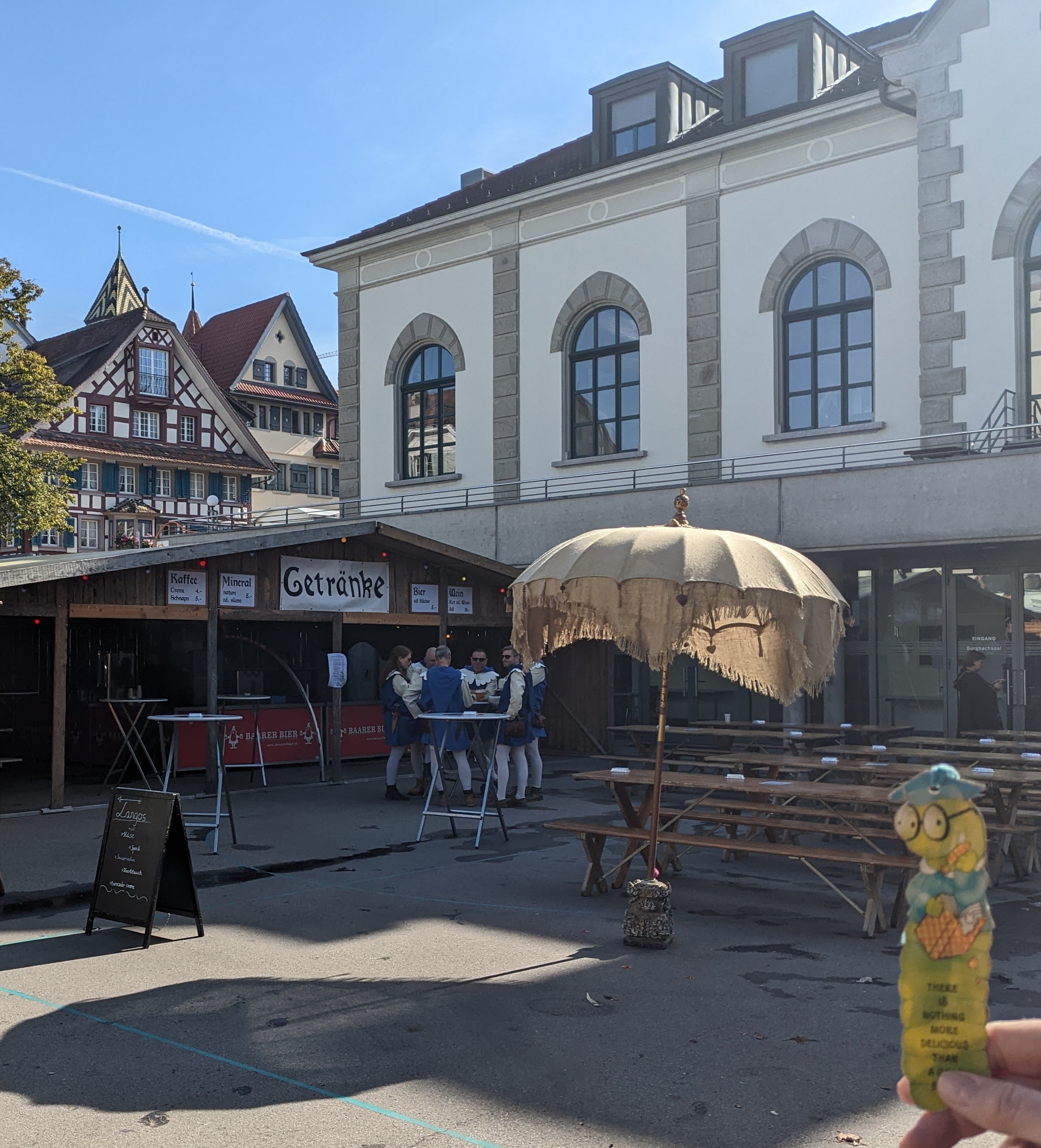
    Me in the refreshments area of the festival, contemplating the possibility of ale and vittles:

    As we wandered around the village, we came across people transacting their medieval business, seemingly unaware that they were in a time capsule that had been projected into the 21st century. These men were testing swords before an upcoming match:

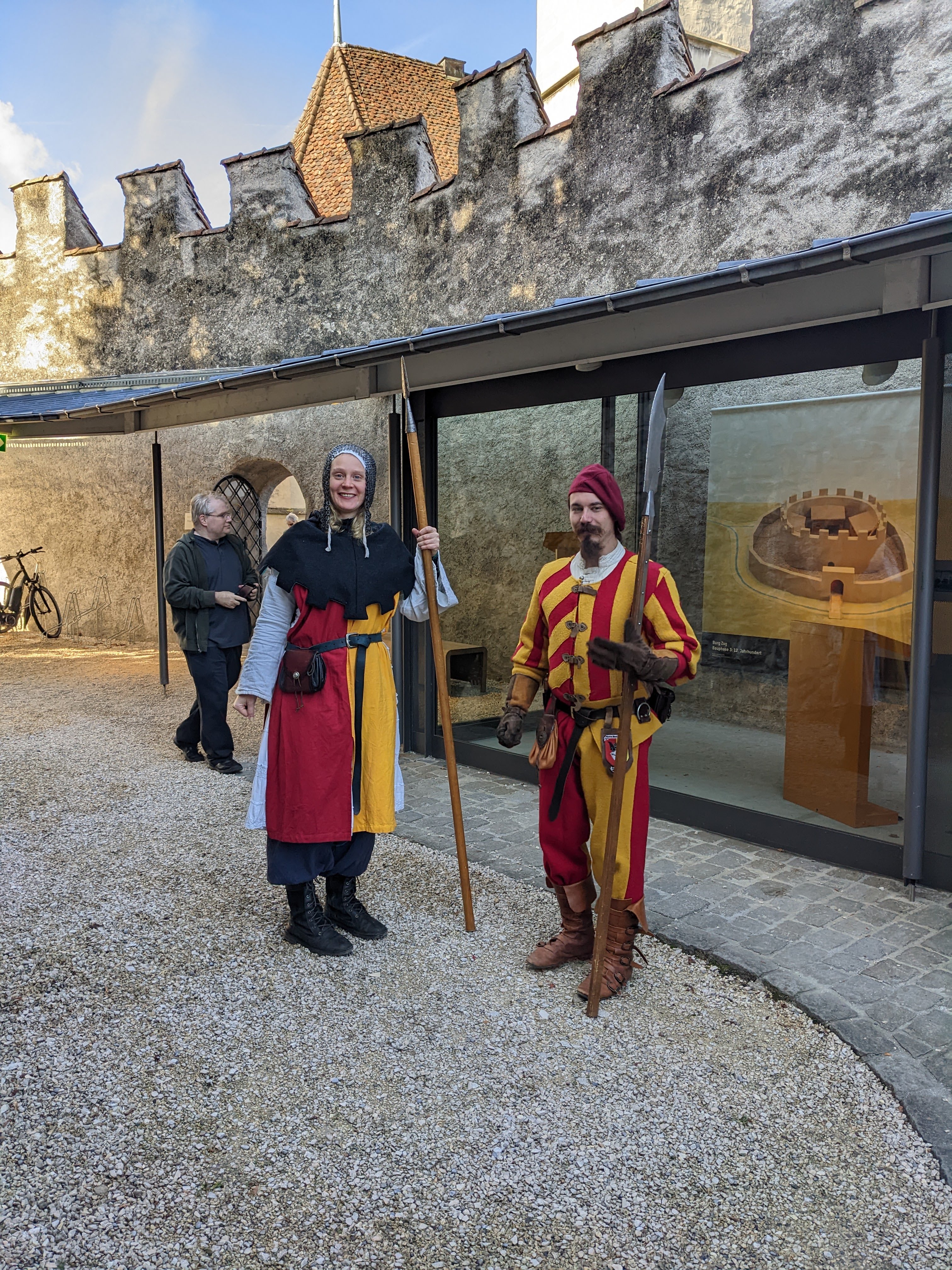
    Some of the village folk were guards, fearsome in their protection of the gateways. It was not uncommon to hear the command, “Halt”, roared out loud to stop the crowds from getting in the way when a photo was in order. This much to the amusement of said crowd, which tittered and took more photos of said fearsome guards.

    Another fearsome guard photo opp:

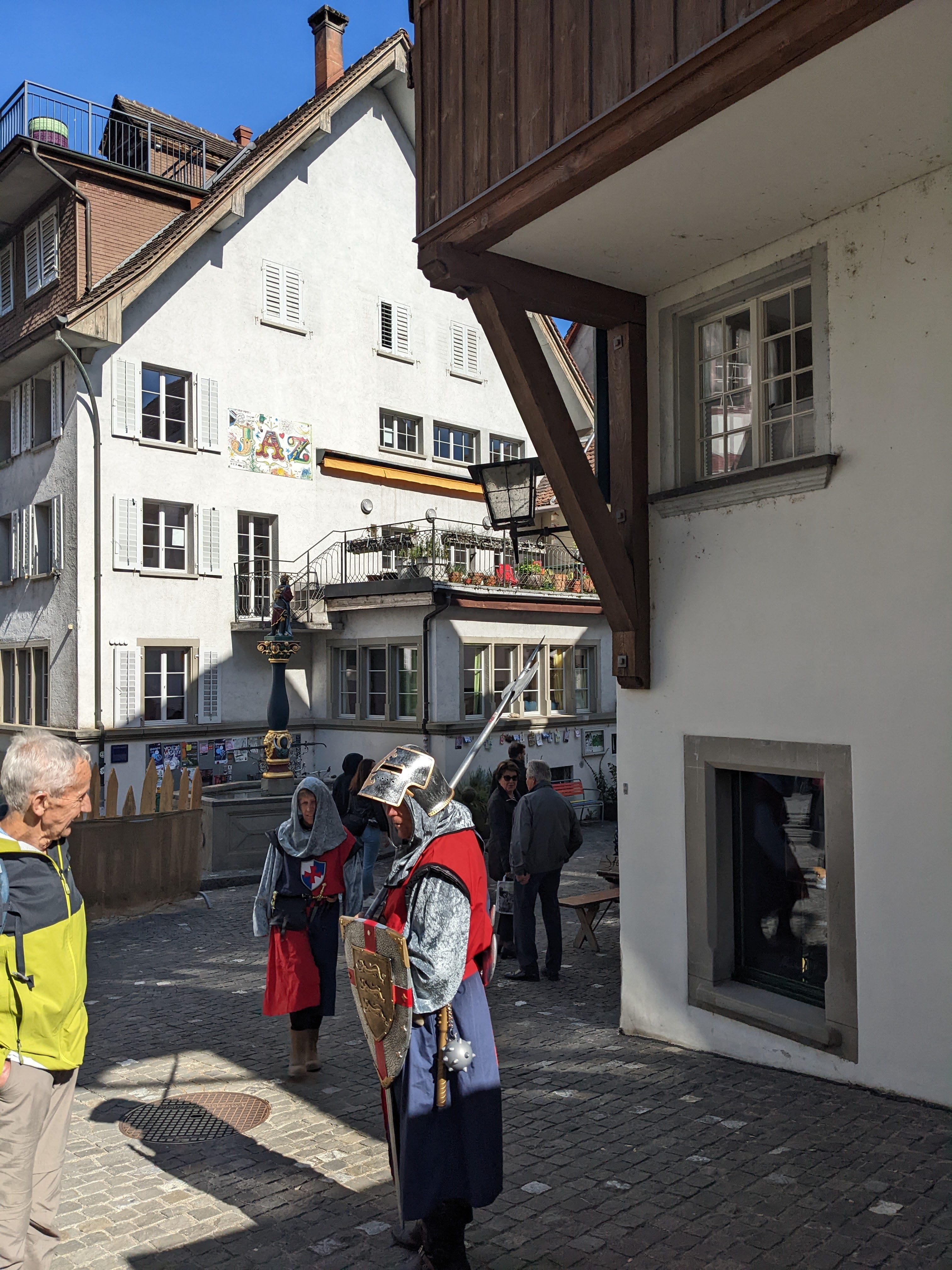
    Knights in armour shone in splendour under the autumn sun:

    Bands and bards roamed the lanes. It was interesting to see a band member playing the bagpipes. I’d thought these were a Celtic tradition, but evidently Switzerland did have bagpipes in the middle ages, called the Schweizer Sackpfeife. Here’s a short video of the Schellmerÿ band playing at the festival:

    A bard enchanting the crowd:

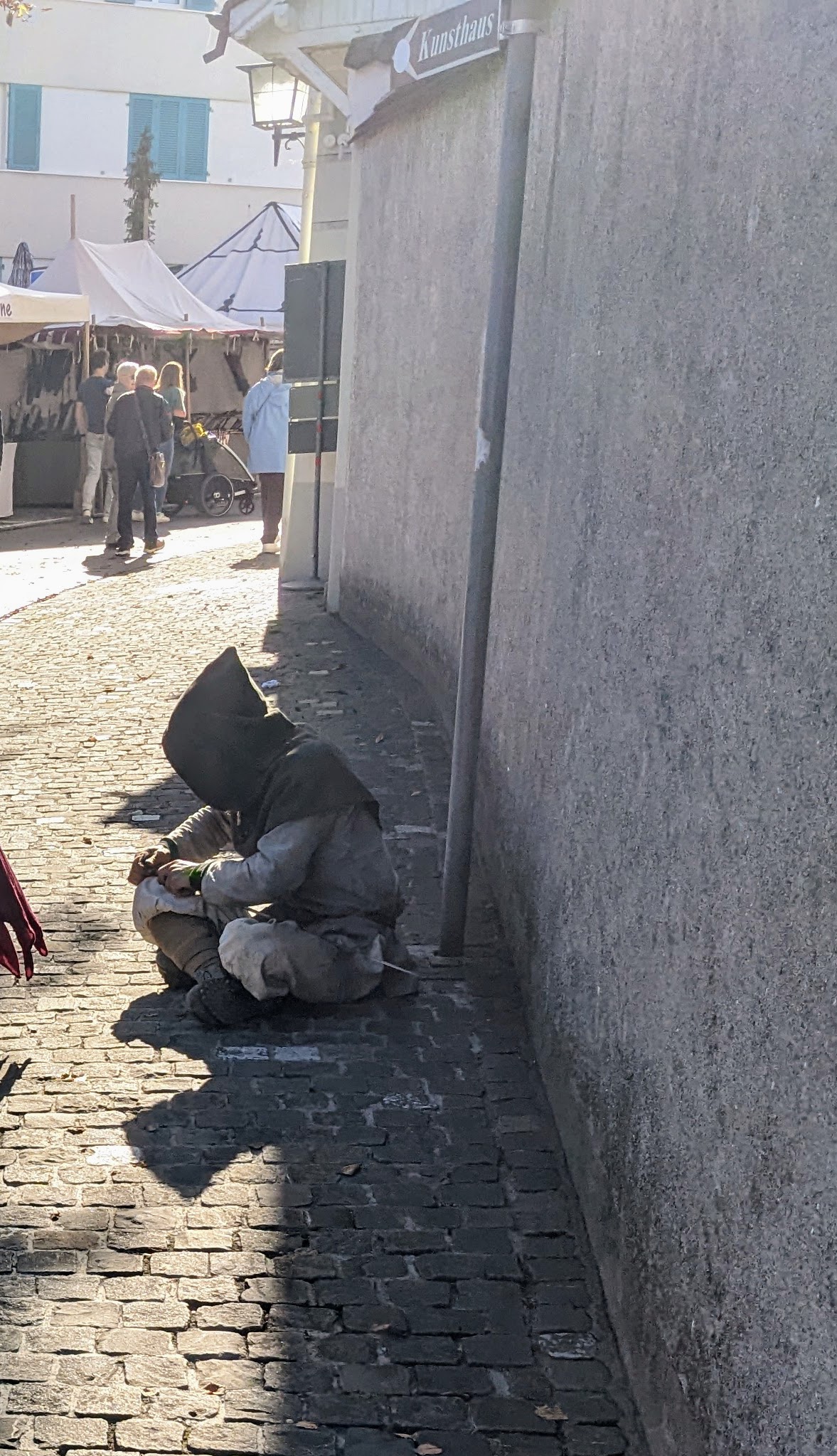
    A beggar sat quietly in the shade:

    A dark witch floated above the road surface, eerily tall and smooth of gait. Aided by a segway under his robes:

    The town of Zug has some gorgeous buildings:

    Here’s another, forming one side of a village square:

    From the sublime to the ridiculous, a nose protrudes from a building on the same square:

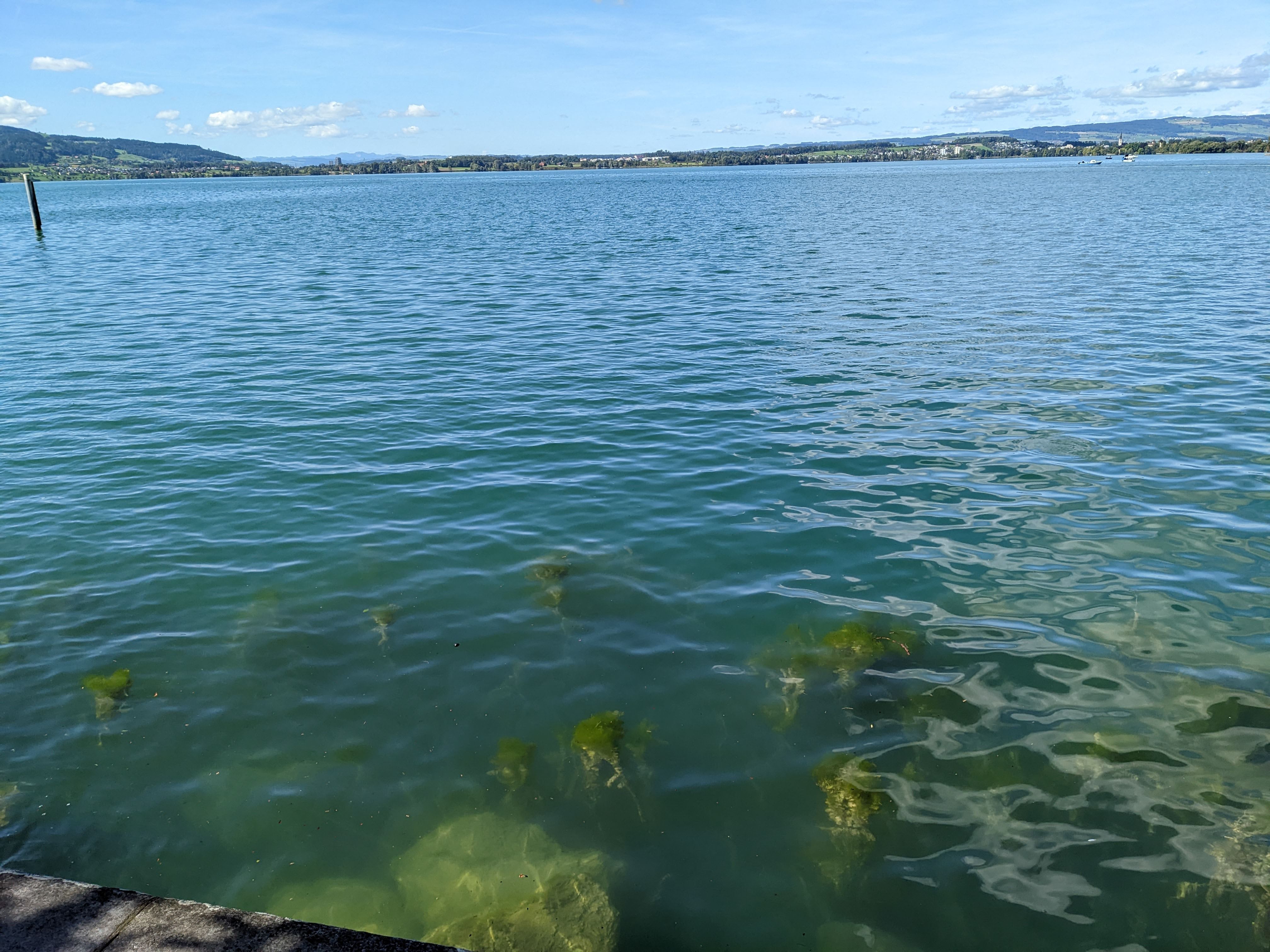
    Taking a stroll down the hill, we came across the Zugersee:

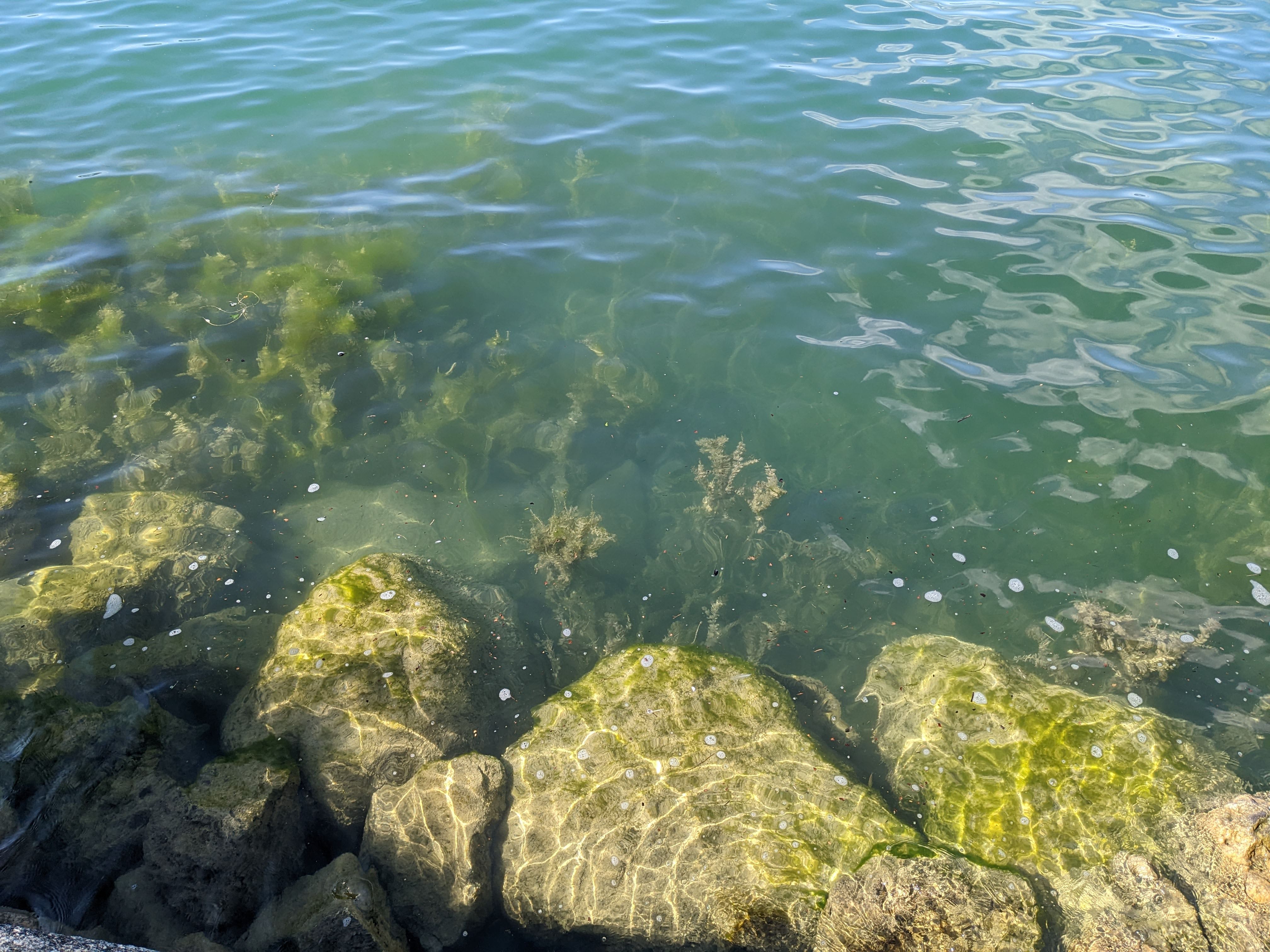
    The TC, bless her cotton socks, was fascinated by the plants growing in the lake, twisting and twirling into SciFi shapes, then pushing little flowers up towards the light. “Like underwater daisies”, she exclaimed:

    That’s all for today, folks.

  • Daintree River and Cape Tribulation

    This is the blog of Mark Wordsworm, the travelling worm. I’m a 36-year-old bookmark (give or take a few years) and I proudly boast my own Hallmark serial number, 95 HBM 80-1. You’ll probably want to read all about me and my Travelling Companion (the TC).

    Today’s travel notes

    Me and the TC recently spent a few days up in Far North Queensland. It’s a land of ancient forests, wide waterways, and tropical beaches.

    This post shows a little of our boat ride on the Daintree river and our trip on up to Cape Tribulation. Or “Cape Trib” as it’s fondly known to the locals.

    The book I’m in

    Autopsy, by Patricia Cornwall. I’m delighted to take my place inside a Kay Scarpetta novel again. Murder and mayhem ensue, cloaked in the delightful intrigues of this forensic pathologist’s family network. A good read.

    Travel tips

    Take an early-morning boat trip on the Daintree River. The Daintree River Wild Watch with Ian “Sauce” Worcester is a beautiful one. And if you do such a trip, take warm clothing. Yes, it’s the tropics, and yes it gets warm when the sun finds you. But on the river, cloaked in mist, it can be rather chilly.

    The photos

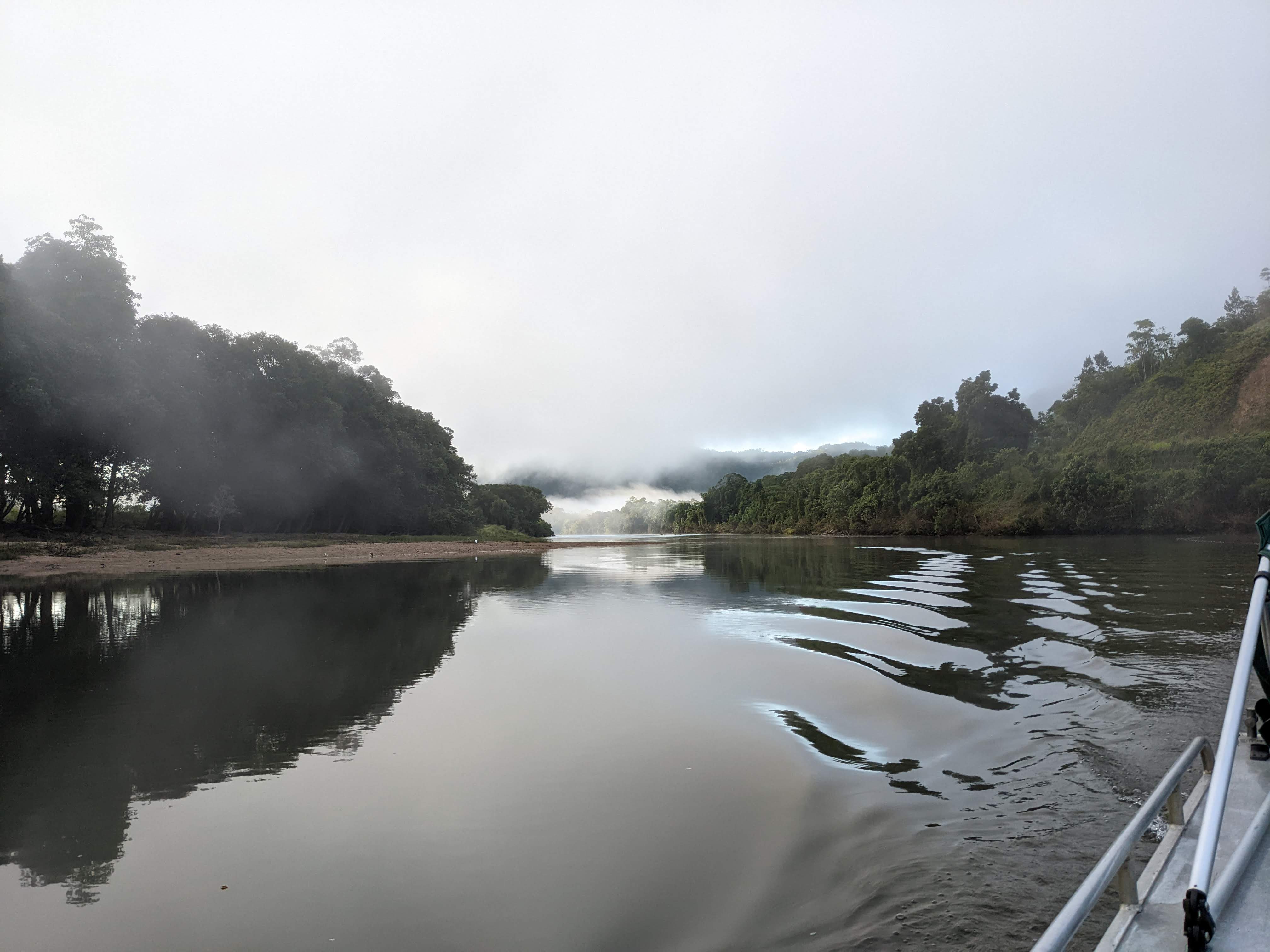
    Early morning on the Daintree River:

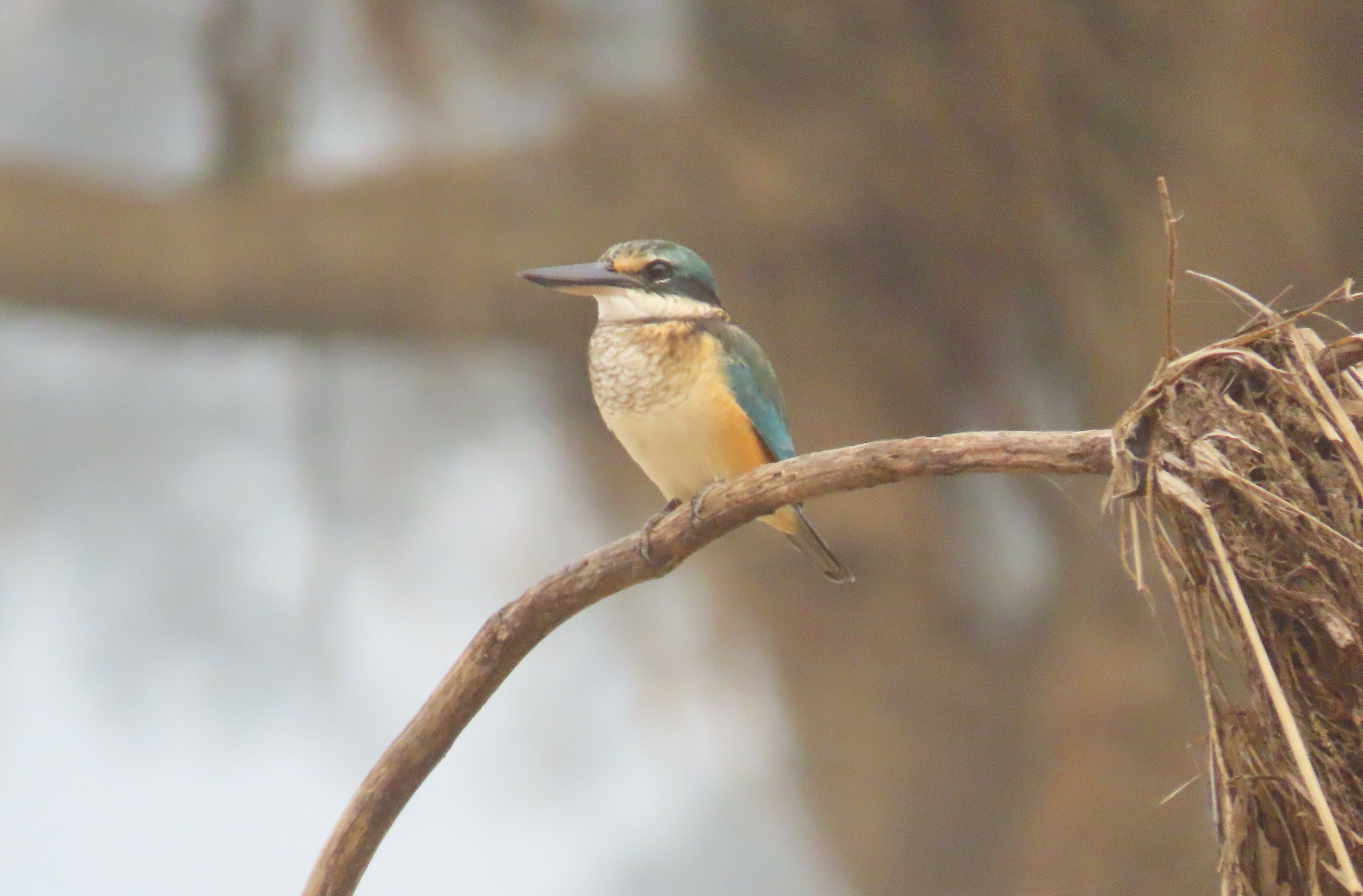
     As the sun came up, so did the birds, like this Sacred Kingfisher:

    A Rainbow Bee-eater, looking less than ready for the harsh light of day:

    The reflections on the still water made it hard to tell imitation from reality:

    Let’s move fifty kilometres north, to Cape Tribulation. Walking from the car park to the beach, we crossed this dark pond:

    Colorful crabs watched us from the driftwood:

    Mushrooms lit the way:

    The path opened up onto the sands of Cape Tribulation beach:

    Why the name “Cape Tribulation”? Evidently Captain Cook and his ship, the Endeavour, had a tough time in this area. The ship struck part of the Great Barrier Reef and suffered quite a bit of damage as a result. The captain and some of the crew had to trek across the land to find supplies, and found instead that making way through the thick jungle-like forest was no easy task.

    That’s all for today, folks.

  • Mossman Gorge and the Daintree Rainforest

    This is the blog of Mark Wordsworm, the travelling worm. I’m a 36-year-old bookmark (give or take a few years) and I proudly boast my own Hallmark serial number, 95 HBM 80-1. You’ll probably want to read all about me and my Travelling Companion (the TC).

    Today’s travel notes

    Mossman Gorge is part of the Daintree rainforest, a region in Far North Queensland on the north east coast of Australia. Me, the TC, and two other family members walked the Mossman Gorge circuit trail a couple of weeks ago (mid May).

    The book I’m in

    Bloody Genius, by John Sandford. A quiet tale of murder and mayhem. I’ll be happy if the TC deposits me in more of this author’s books.

    Travel tips

    The Daintree is in tropical Far North Queensland. Be prepared for the climate. Even though we were there in the cooler, dry time of year, it was still warm and humid. Take plenty of drinking water. Walk at a reasonable pace that suits you. Don’t plan to do too much in one day. Even for multi-legged folks like yours truly, it pays to take things easy.

    The photos

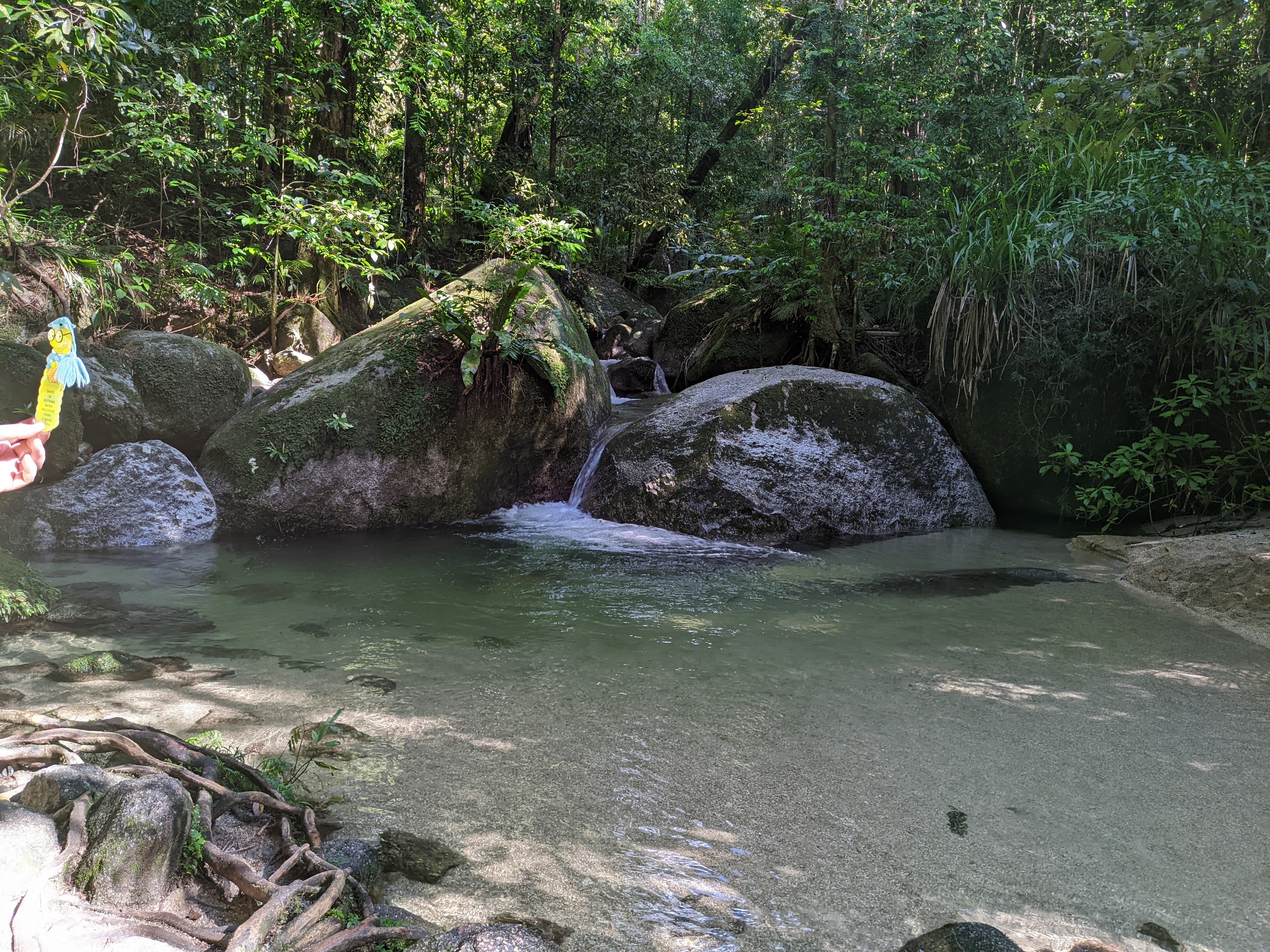
    Me at a clear forest pool in the Daintree rainforest:

    Report has it that the Daintree is the oldest rainforest in the world. It’s more ancient than the Amazon forest, by tens of millions of years. The Daintree survived the ice age by shrinking into small pockets which then expanded when the warmth came back. So, some of the plant species here were around when the dinosaurs called this area home.

    Me, dwarfed by a tall tree covered in vines:

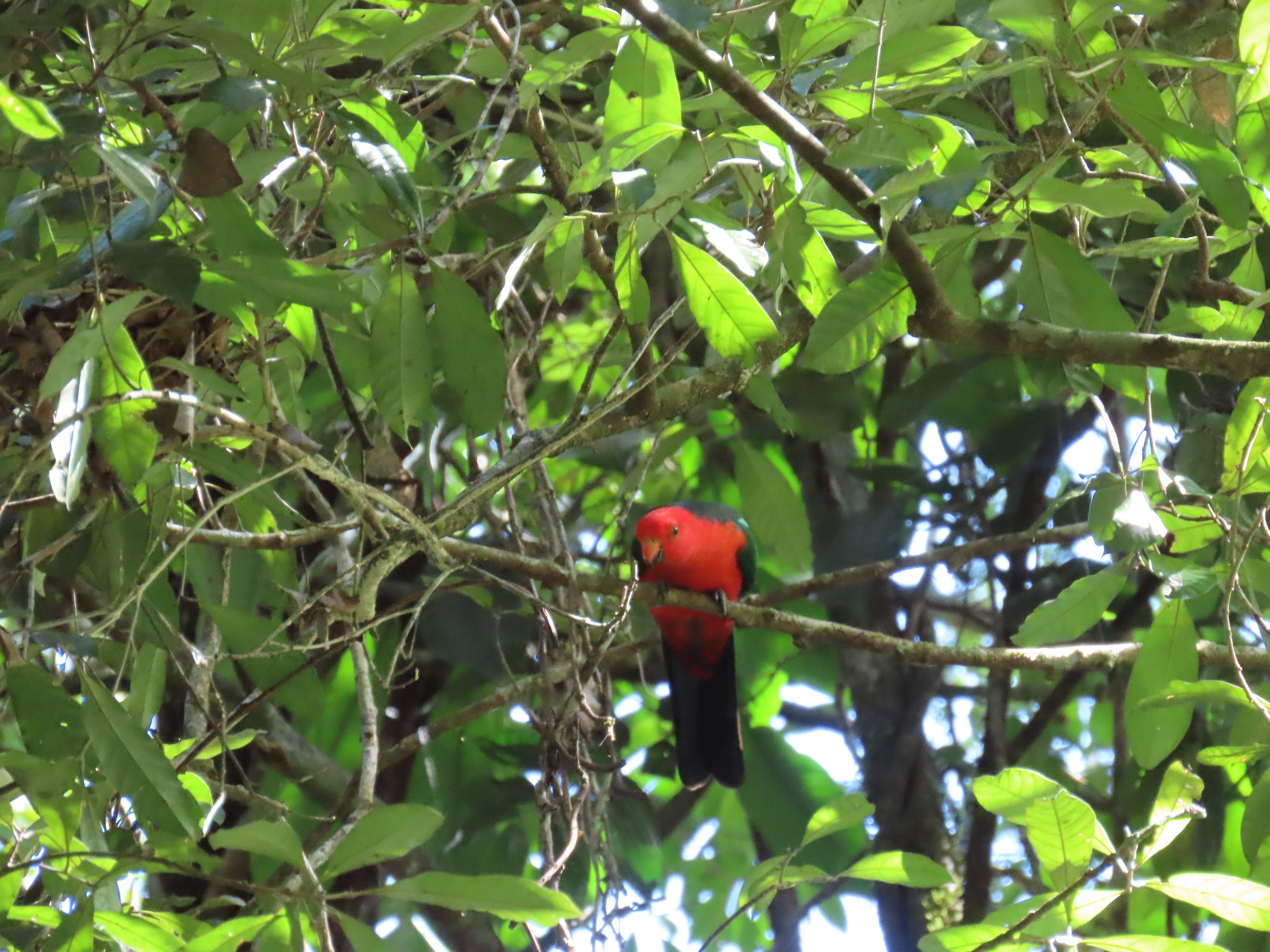
    Speaking of dinosaurs, look who’s looking down from above!

    That particular descendant of the dinosaurs is a King Parrot, one of the 430 species of birds found in this region.

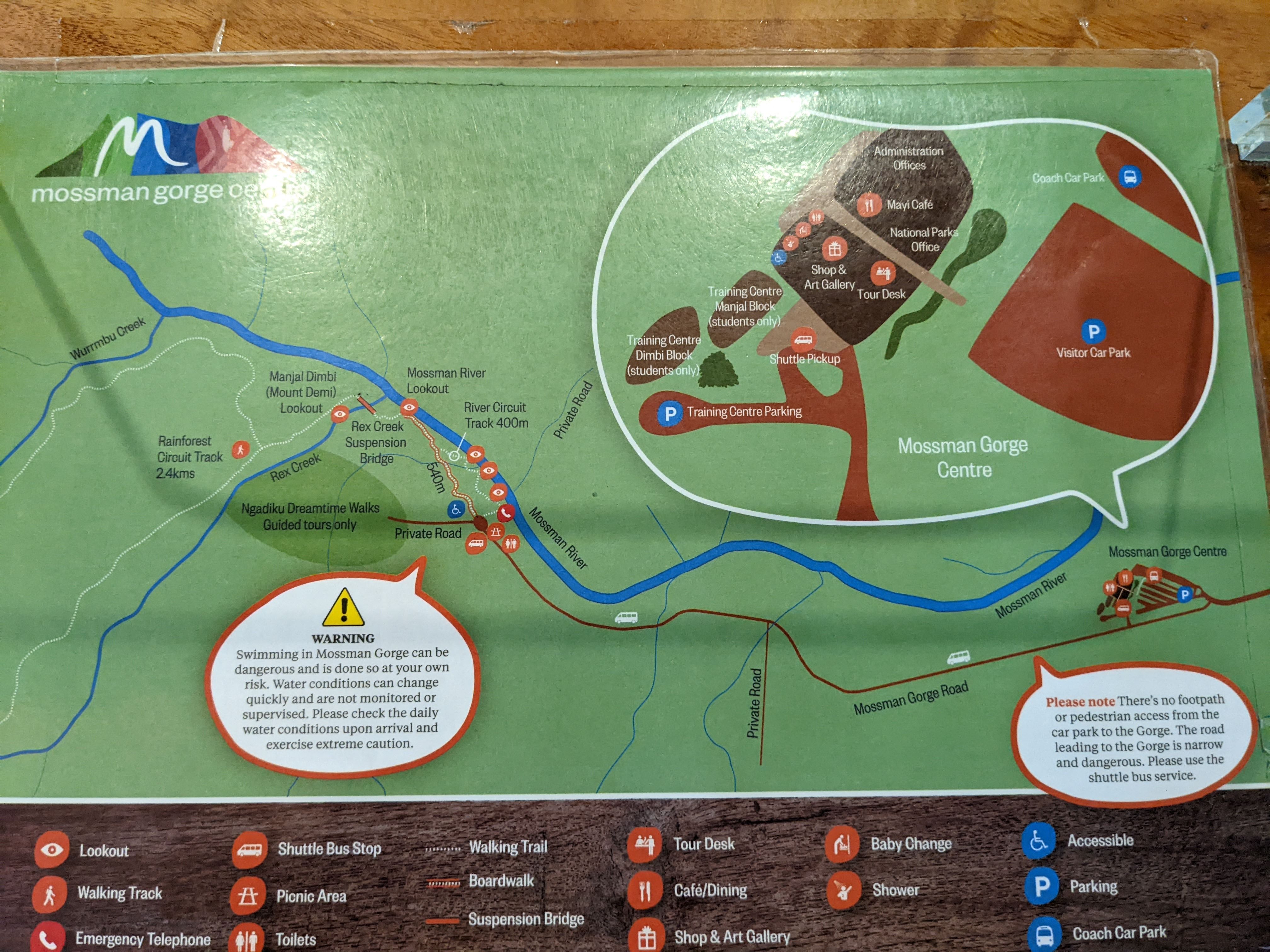
    The Mossman Gorge circuit track offers a lovely way to experience the rainforest. The track is well maintained, and fine to do without a guide. This map of the area shows the car park on the right. From the car park, we caught the shuttle bus to the start of the trail:

    A note from a cautious caterpillar: Heed the warnings! We saw one person being taken out by ambulance after slipping on the rocks, and another person requesting help from the paramedics.

    Warnings aside, being in the Daintree forest is a beautiful, restful experience. This photo captures the timeless atmosphere. Shafts of light filtered by greenery. Tall forest giants. Leaves and vines intertwined in huge variety.

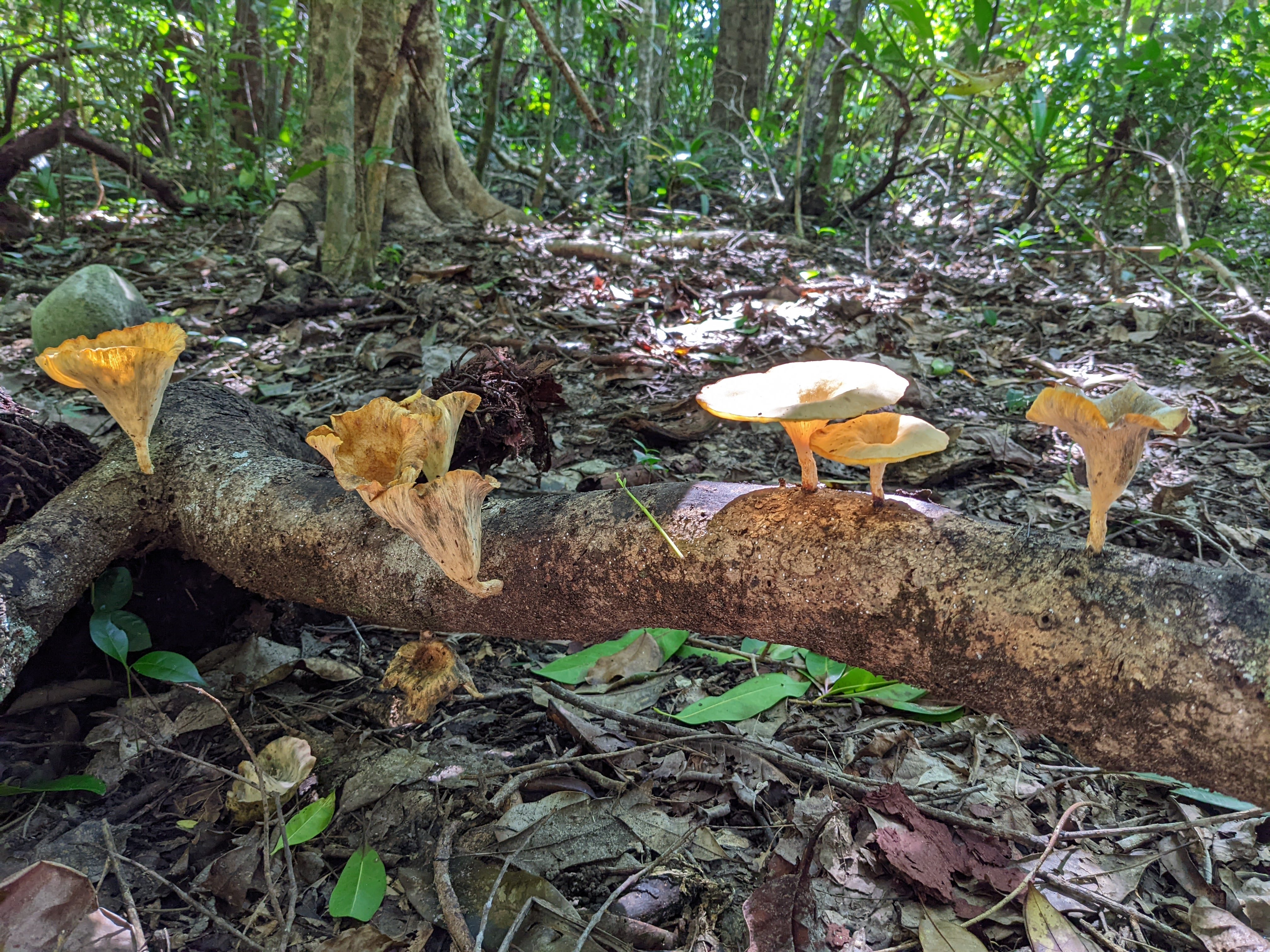
    I did get a crick in my neck from all that looking up at giants. Down at my level, though, there’s a lot going on too. Mmmm mushrooms. I wonder… which side of the mushroom should I nibble on?

    Back at the car park, Skull-face the Spider awaited us:

    Yes, the spider really was that big. It’s a Giant Golden Orb Weaver. If the TC walked into this spider’s web, the spider would cover her entire face! Still, it’s relatively harmless to humans. Yours truly, however, kept well away.

    Zooming in with the camera to take a closer look. The little spiders on the web weren’t actually all that little, until seen next to Skull-face:

    That’s all for today, folks.

  • Cairns in tropical northern Australia

    This is the blog of Mark Wordsworm, the travelling worm. I’m a 36-year-old bookmark (give or take a few years) and I proudly boast my own Hallmark serial number, 95 HBM 80-1. You’ll probably want to read all about me and my Travelling Companion (the TC).

    Today’s travel notes

    This worm and the TC spent a few days in Far North Queensland, where the sun is warm and the sea is calm. When it’s not holding a storm party, that is. Let me show you around the lovely town of Cairns, gateway to the Great Barrier Reef.

    The book I’m in

    Moonraker’s Bride by Madeleine Brent. A good yarn written in this author’s inimitable style. Yours truly is always happy when the TC puts me in one of Madeleine’s books. Madeleine Brent is the alter ego of Peter O’Donnell, best known for the Modesty Blaise series.

    Recommended restaurant

    The Chambers, Spence Street, Cairns City. Excellent food in a comfortable ambience.

    The photos

    Me with Ray, guardian of the Great Barrier Reef.

    Ray is a life-size sting ray, part of an imposing sculpture on the Cairns Esplanade. It’s titled Reef Guardian (Citizens Gateway to the Great Barrier Reef), by Brian Robinson:

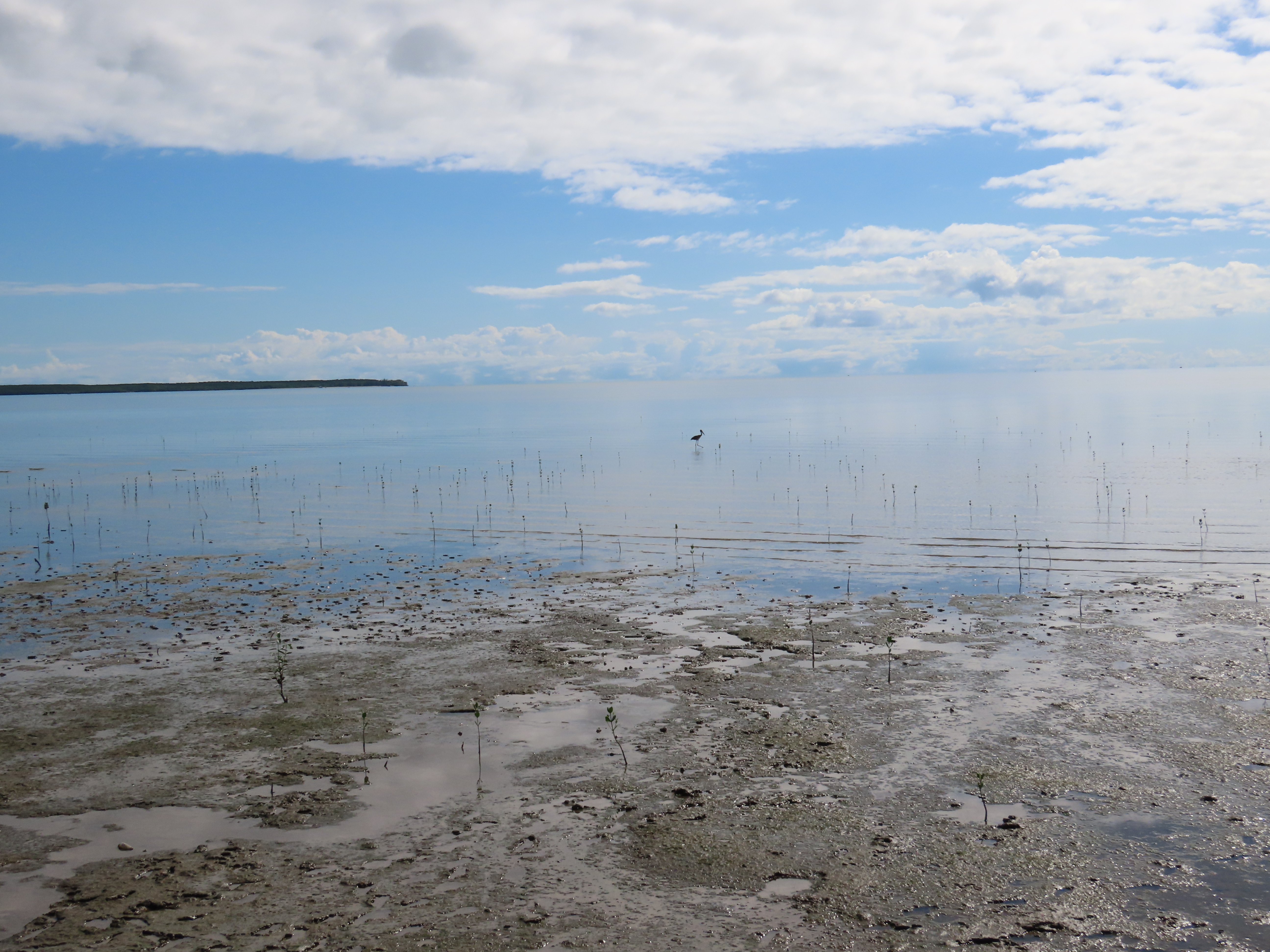
    Beyond the sculpture, the bay of Cairns presents an ever-changing vista. At low tide, it’s a mud flat with mangroves popping up here and there:

    In the distance is a Black-necked Stalk, stalking (that’s right, stalking) the shallows for a bite to eat. Here’s a closeup view of the rather lugubrious character:

    Needless to say, I stayed well out of sight. That beak, those eyes!

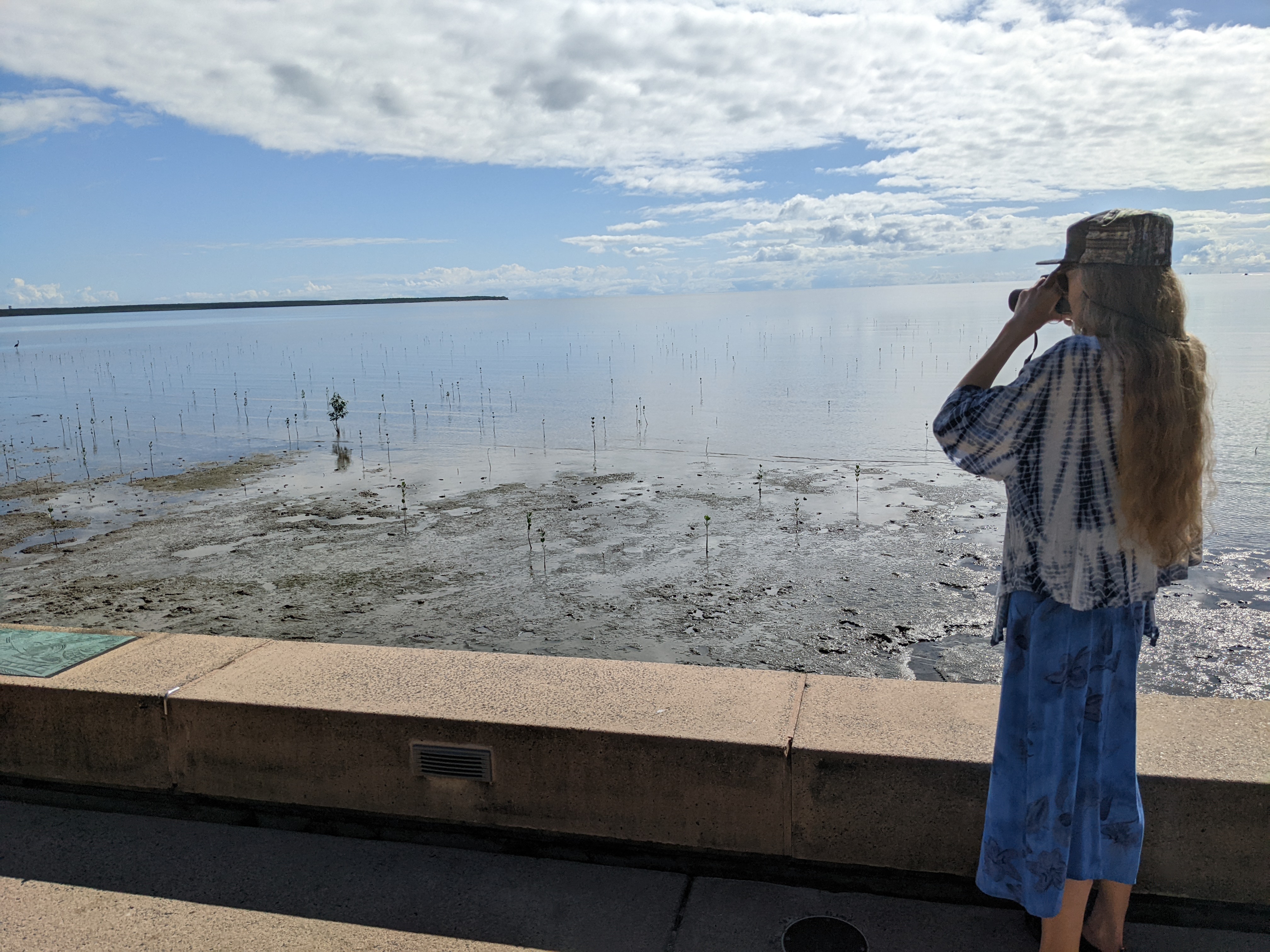
    The TC, bless her cotton socks, was captivated by the tranquility of the scene. She doesn’t look like food to a stalk. Here she is, captured on film in a rare unguarded moment:

    Along the bay runs the Cairns Esplanade, where Cairns folk and visitors take the air. One corner of the Esplanade is the favourite haunt of a couple of pelicans:

    The Cairns Esplanade Lagoon, a gently-sloping series of pools, leads the eye down into the Coral Sea. If you zoom into the picture, you’ll see Jonathan the seagull and his pals swooping above the Esplanade Lagoon. Perhaps they’re mimicking the frozen flight of fish that swoops there too:

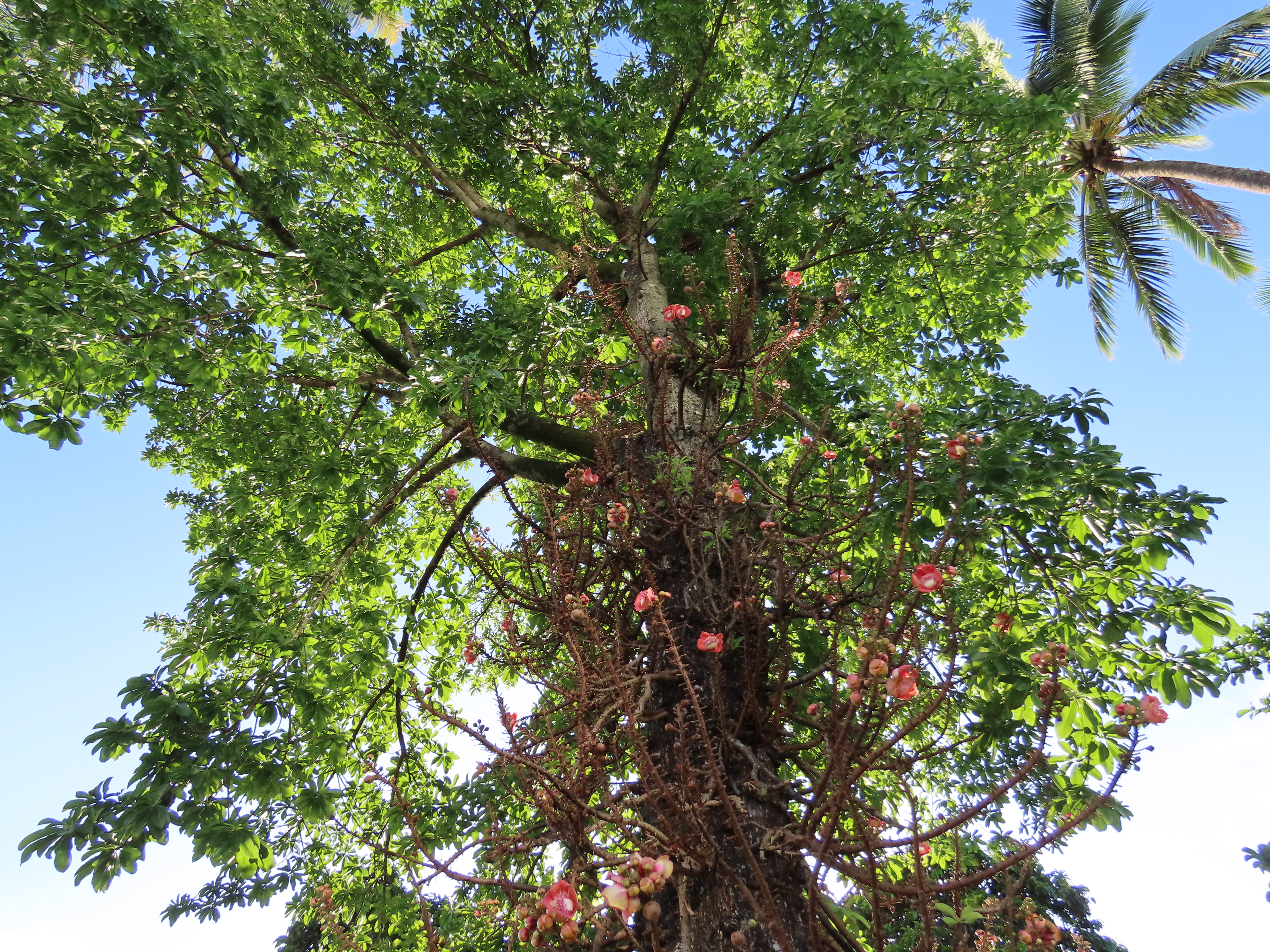
    Trees and grass in the middle of the Esplanade offer relief from the tropical sun. This flowering tree caught my eye because the flowers grow on stalks low down on the trunk and quite separate from the canopy of leaves:

    This is the flower:

    And another view of the flowering branches low on the trunk:

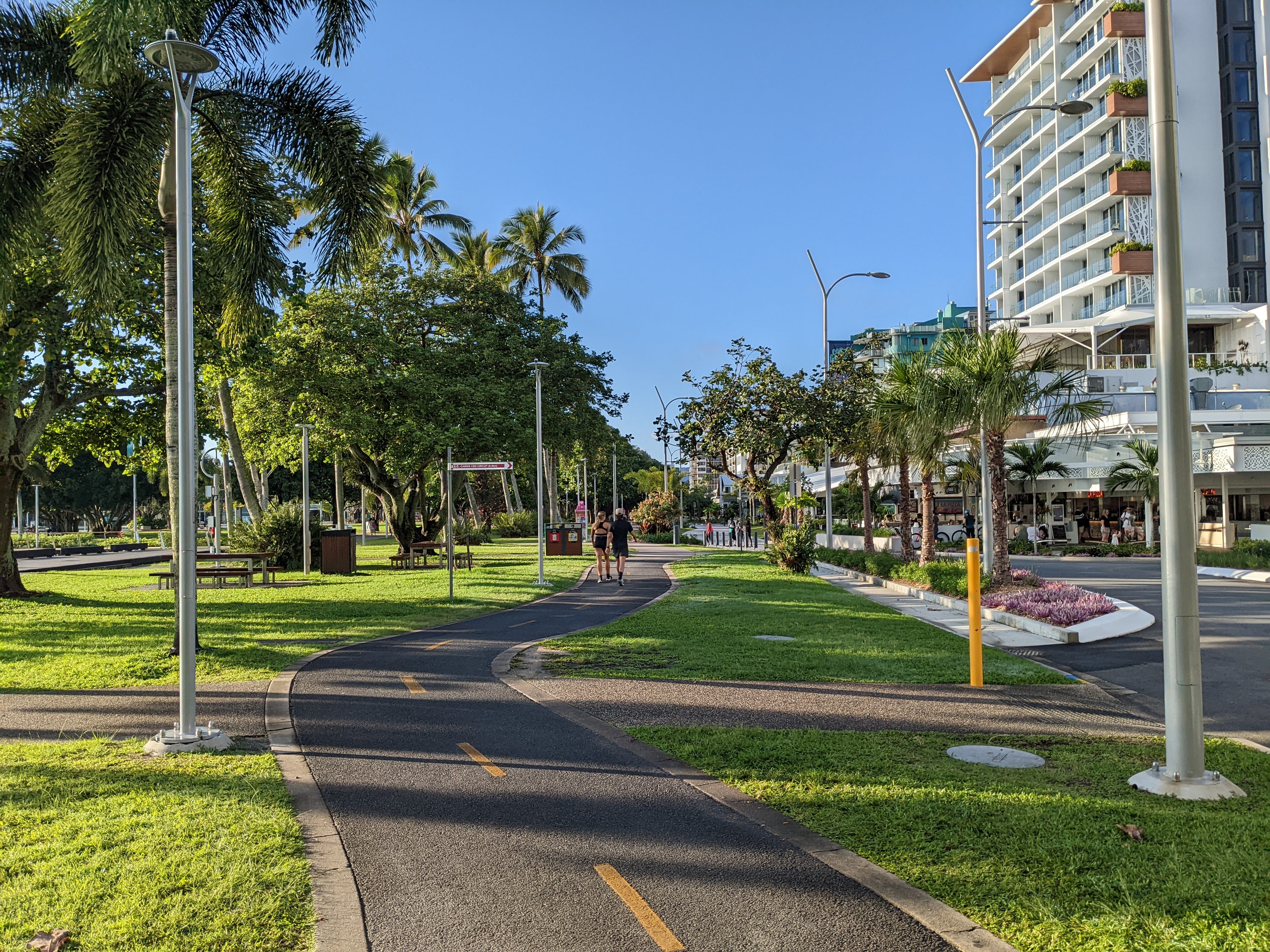
    On one side of the Esplanade lies the Coral Sea. On the other side, enticing eateries and shops line the road beyond the green sward:

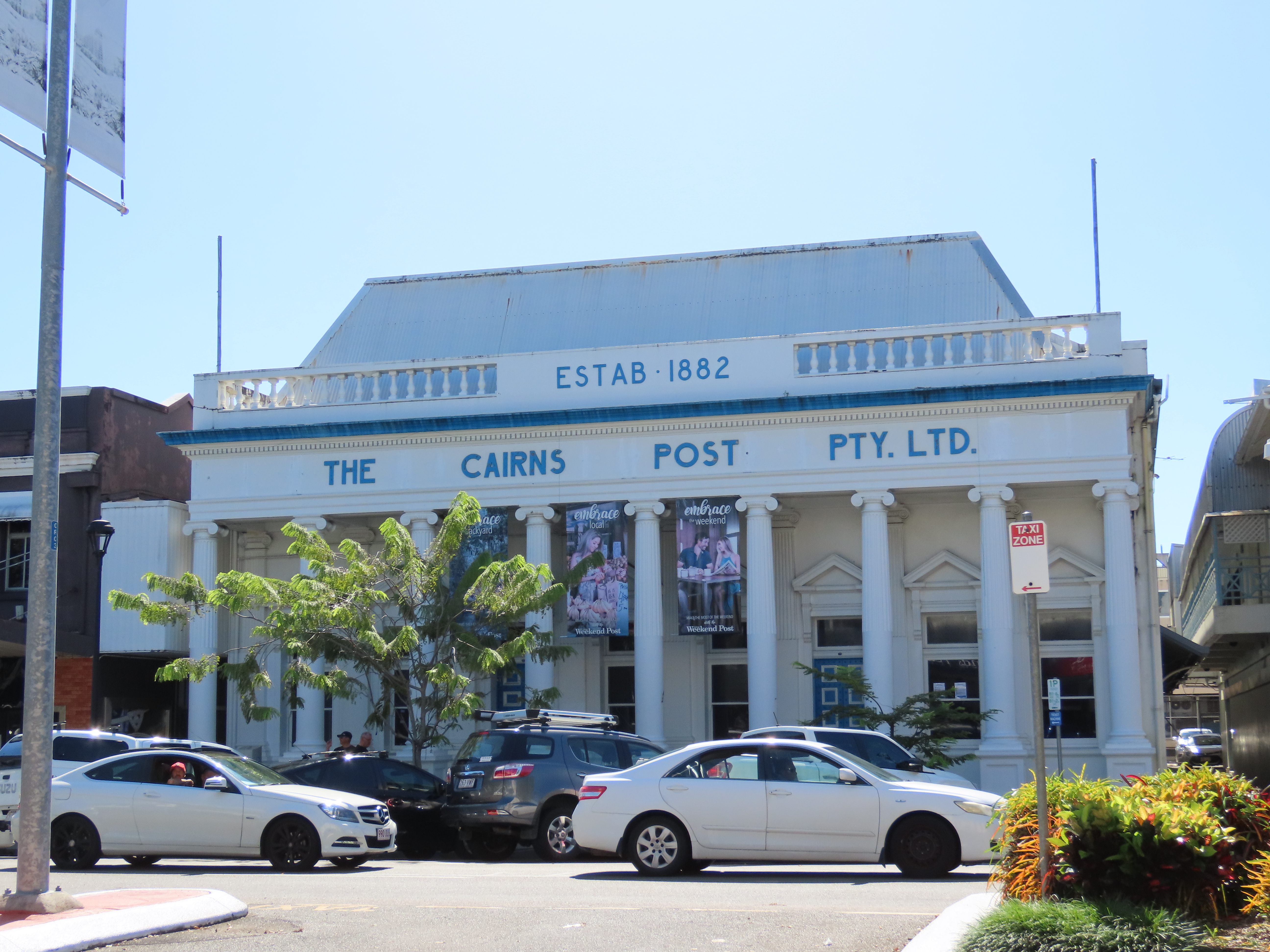
    Cairns is a town of wide avenues with some interesting architecture. An example is the Cairns Post building, established in 1882 as home to the Cairns Post news corporation. The building is currently for sale, so now’s your chance to hop in if you have an eye for architecture and a few million dollars to spare:

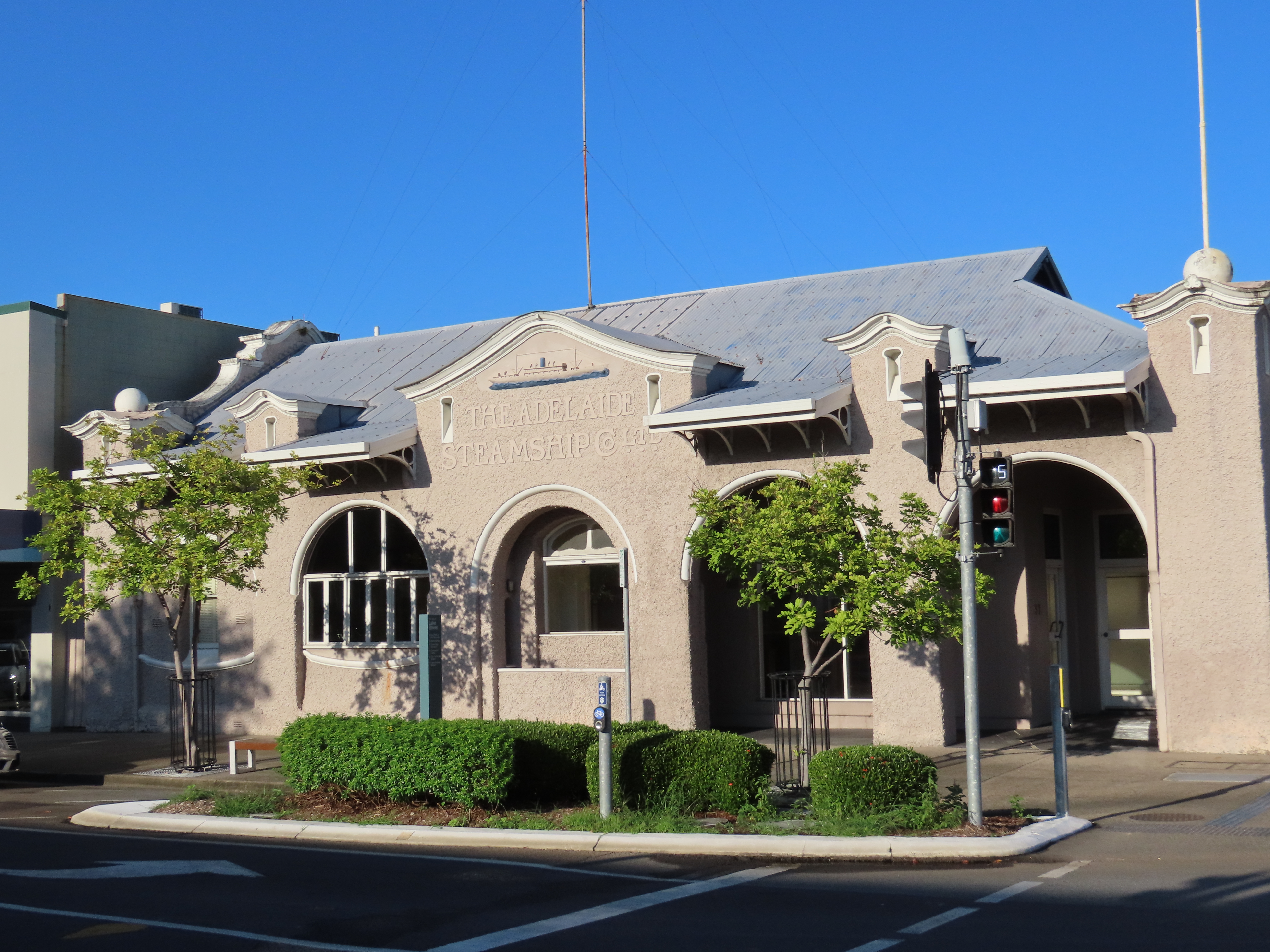
    The next photo shows a building erected in 1910 for the Adelaide Steamship Company:

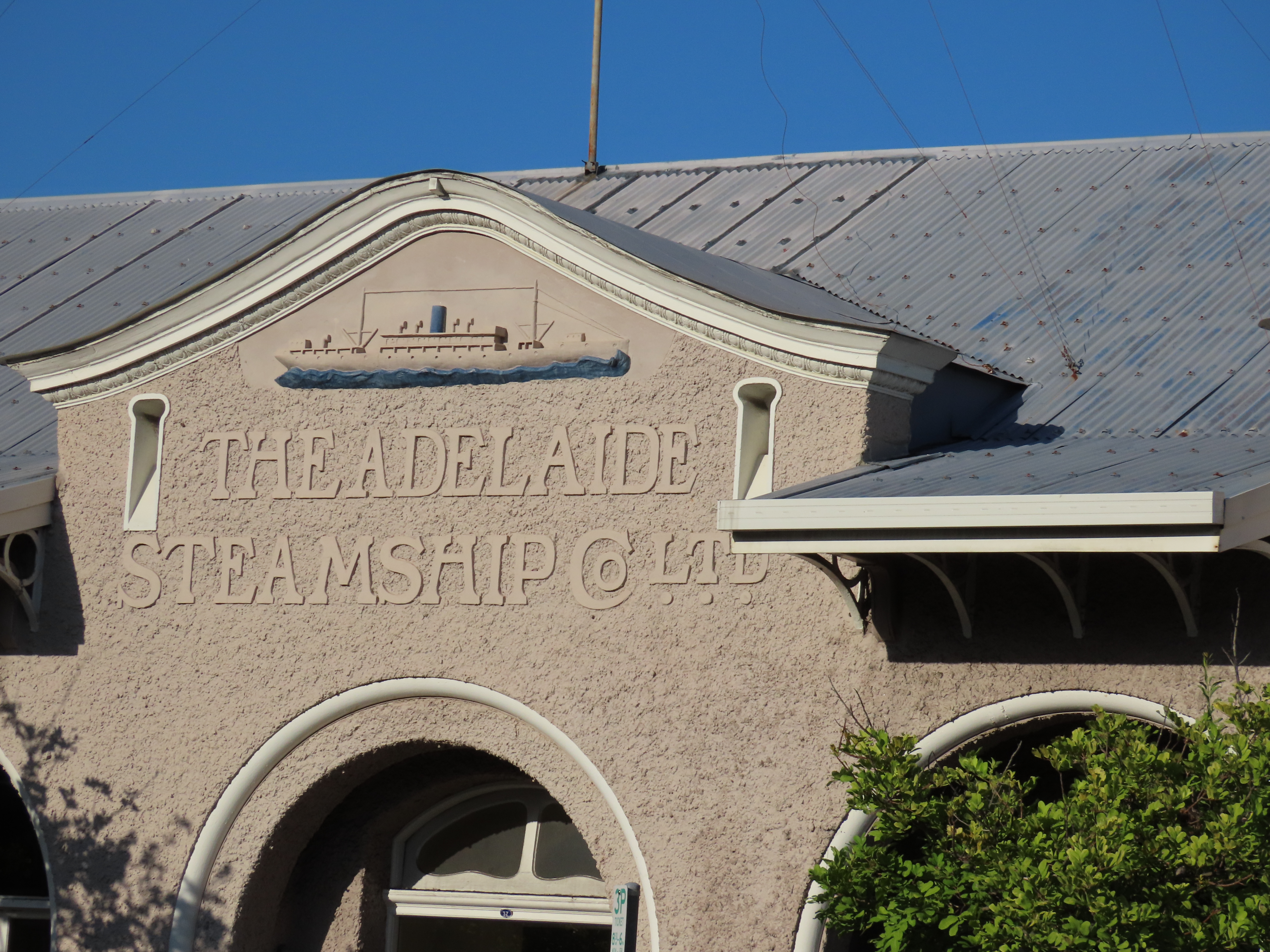
    Here’s a closeup of the central gable, showing the building’s name spelled out in relief below a sculpture of a company ship:

    An alleyway in the city centre:

    Let’s finish the story with a return to nature and its oddities. These weird-looking mushrooms, which the TC, bless her soul, spotted just off the Esplanade, are Veiled Lady Mushrooms:

    That’s all for today, folks.


  • Kurri Kurri Kookaburra and murals

    This is the blog of Mark Wordsworm, the travelling worm. I’m a 36-year-old bookmark (give or take a few years) and I proudly boast my own Hallmark serial number, 95 HBM 80-1. You’ll probably want to read all about me and my Travelling Companion (the TC).

    Today’s travel notes

    A couple of weeks ago, this worm visited the little town of Kurri Kurri. It’s an intriguing place, springing from a history of coal mining and now re-imagining itself as an artists haven.

    If you’re anything like the TC, bless her cotton socks, you’ll be asking, “Why two words?” Why is the town not called just “Kurri”? Towns and cities in Australia often have names that repeat the same word twice. The pattern comes from the Aboriginal languages that repeat a word to emphasize or strengthen the meaning of the word. In the local Minyung language, “kurri-kurri” means “the beginning” or “the first”.

    The book I’m in

    The Ones We Choose, by Julie Clark. A tale of genetics, romance, and tangled lives. Highly recommended.
    The photos

    Me with the Kurri Kurri Kookaburra:

    This Kookaburra is huge. If it were alive, I’d be taking shelter rather than posing in full view of that eye and that beak. Instead, I was happy to let the bird photo bomb me, as it’s a sculpture.

    In fact, this bird is a little like myself in that the representation is more magnificent than the original form.

    Here’s another view of the Kurri Kurri Kookaburra. The artist is one Chris Fussell. The sculpture was erected in 2009:

    Not far away from the big bird is the Kurri Kurri hotel, first opened in 1904. It’s a typical Australian hotel, in that its primary business is as a pub and restaurant, not accommodation. (The word “hotel” traps many a weary, unwary traveller just arrived in Oz.) It’s a lovely old building, with wrap-around verandas and frilly cast-iron railings:

    On a wall to the right of the hotel in the above picture is one of the murals that the town has recently become known for.

    More paintings liven up a utilitarian building in the town centre:

    The next mural fits right in with the business whose wall it adorns:

    If you look closely at the above mural (the one on the right), you’ll spot a Kookaburra on a pile of tyres. There are more than 60 murals in and around Kurri Kurri. Rumour has it that every mural includes a Kookaburra somewhere.

    Some of the wall decorations are of a bleaker nature, though still artistically and historically interesting:

    That’s all for today, folks.