This is the blog of Mark Wordsworm, the travelling worm. I’m a 40-year-old bookmark (give or take a few years) and I proudly boast my own Hallmark serial number, 95 HBM 80-1. You’ll probably want to read all about me and my Travelling Companion (the TC).
Today’s travel notes
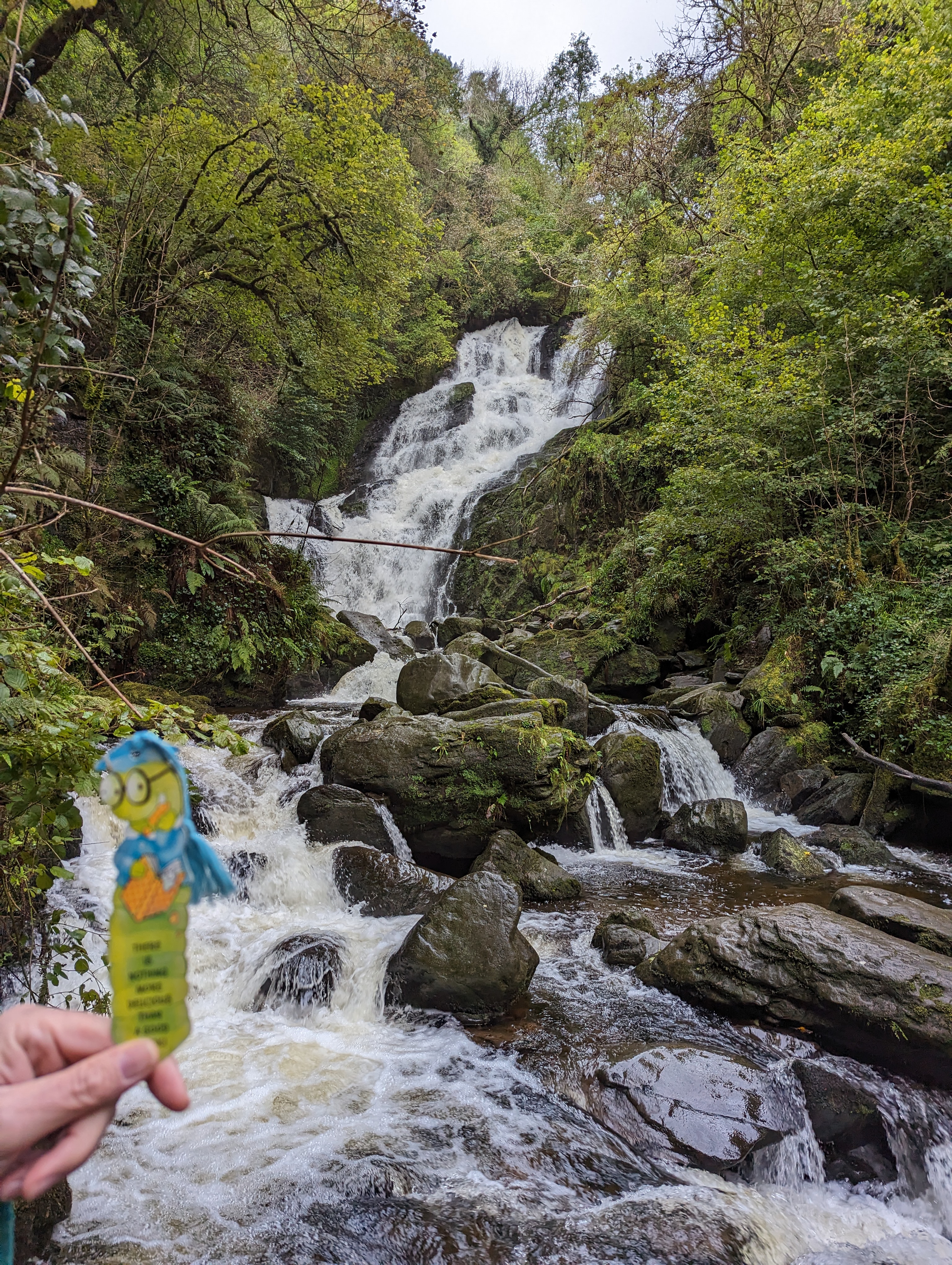
Me and the TC were in the area of Killarney in County Kerry, Ireland, a couple of days ago. We visited Torc Waterfall and Ladies View.
The book I’m in
Darknet, by Matthew Maher. A rollicking tale of murder and mayhem in the world of high tech.
Travel tips
Turn off the tech to enjoy the natural beauty. But the tech is useful in getting you to the right spot!
The photos
Me at Torc Waterfall:
For an immersive experience (as the high tech folks say these days), watch this video of the waterfall:
The waterfall is a very short walk from the carpark: approximately 200 metres.
Green is the colour of the walk:
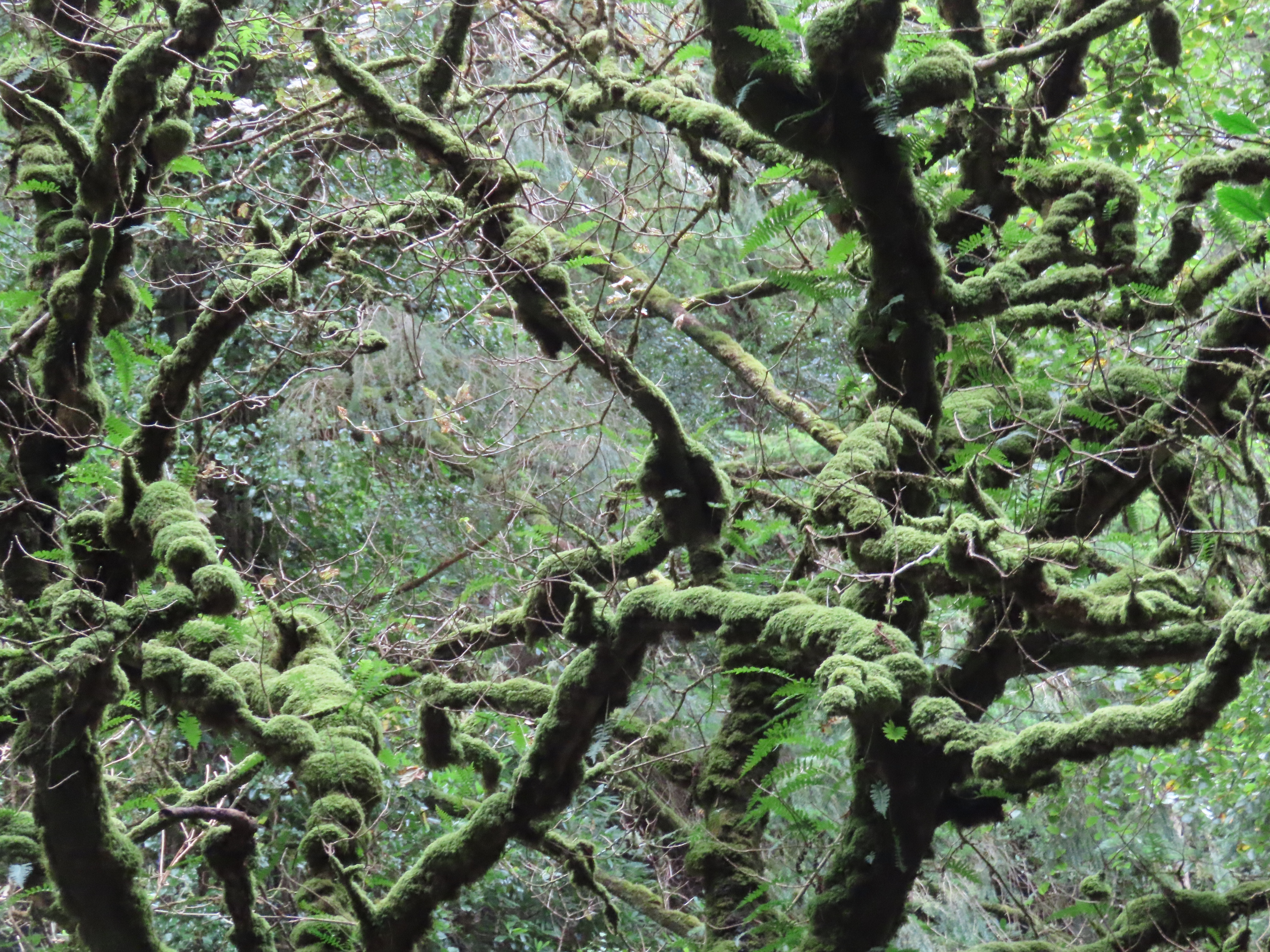
High on the branches of the forest, moss glows in the gentle light:
Our next stop was Ladies View, a lookout point over the lakes of Killarney:
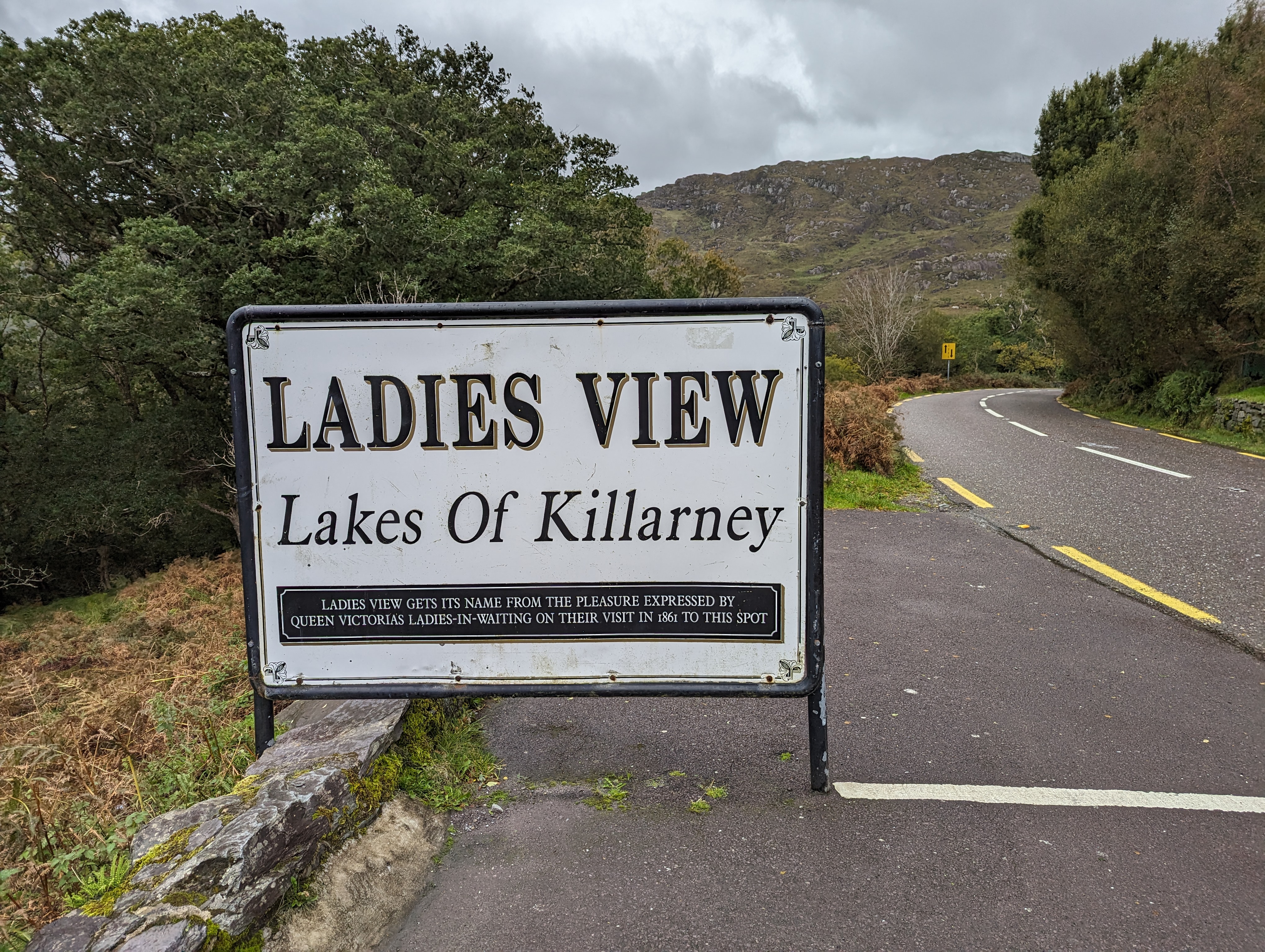
The name “Ladies View” comes from the popularity of the lookout among Queen Victoria’s ladies in waiting during the royal visit to Killarney in 1861.
Here’s another shot of the lakes, sans yours truly:
Thus spake the notice board:
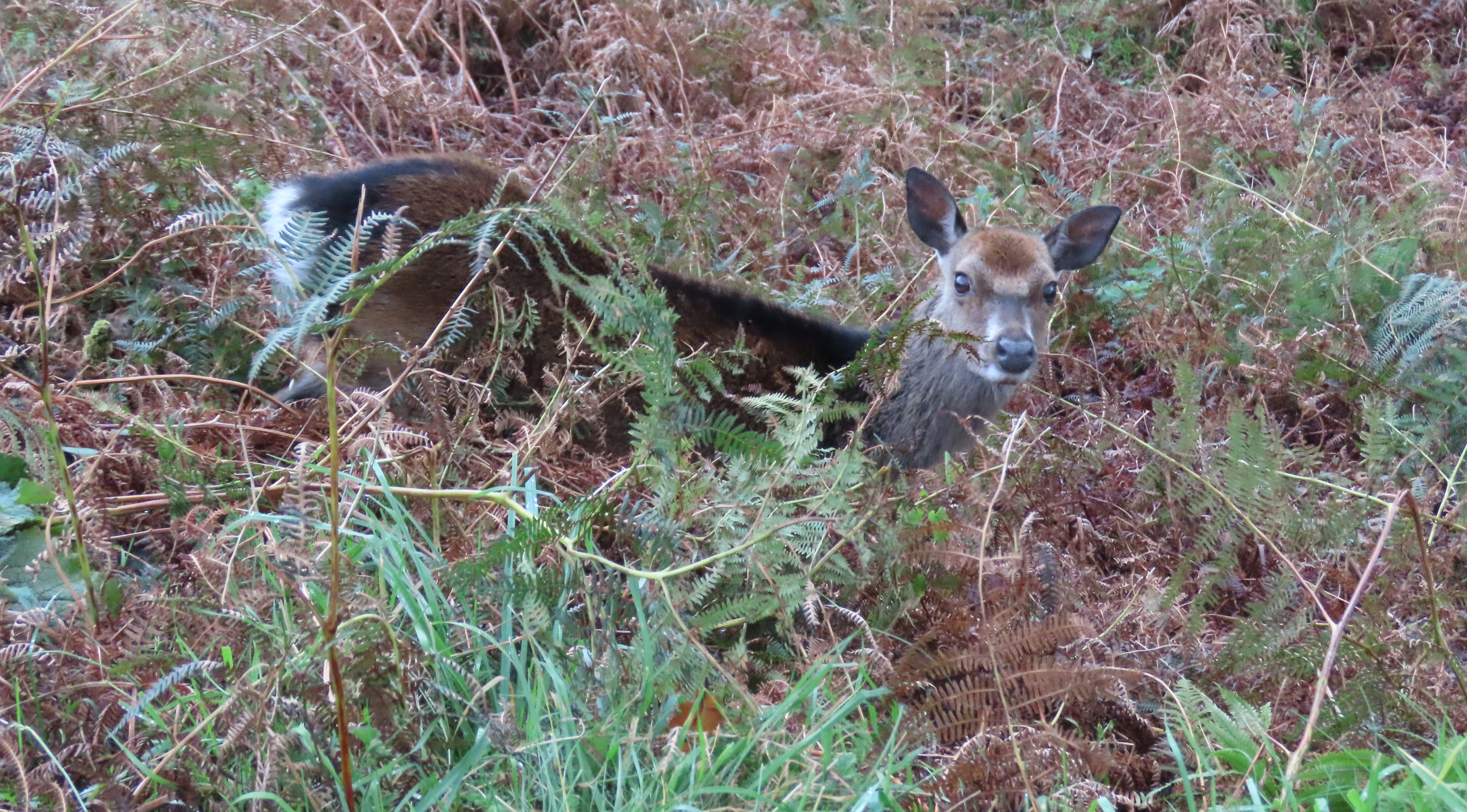
The ground drops away quite steeply at the edge of the road. The TC peered over the lip and came eye to eye with a deer quietly browsing:
This is the blog of Mark Wordsworm, the travelling worm. I’m a 40-year-old bookmark (give or take a few years) and I proudly boast my own Hallmark serial number, 95 HBM 80-1. You’ll probably want to read all about me and my Travelling Companion (the TC).
Today’s travel notes
Me and the TC are currently riding out Storm Agnes on the west coast of Ireland. This worm is taking the opportunity to write up some travel notes. My first Irish post was about Blennerville and the mystery of Robert Emmet’s grave. Now I’m going to tell you about yesterday’s drive from Tralee to Dingle, taking the scenic route via Camp, Caherconree, and Inch Beach. We then took the route over Conor Pass back to Tralee.
The book I’m in
Darknet, by Matthew Maher. The TC started this book once before, and abandoned it because the writing style is a little naive and there are some typographical errors. However, the TC-once-removed has persuaded her to try it again. So far, this bookworm approves the choice.
Travel tips
Go mall is not a direction to the nearest shopping centre. It means go slowly.
The photos
Me in Tralee, sprouting a pair of pink wings. Relax, dear reader, they’re not real. My metamorphosis is some way off yet:
The town of Tralee is a good place to stay if you’re planning to spend a couple of days exploring Ireland’s west coast. We’re lodged just outside the town, near the village of Blennerville. From there, we set out one fine afternoon to see part of the Dingle peninsula.
We branched off from the main thoroughfare (N86) at Camp and took the Caherconree scenic route. This is a gorgeous, single-track road through the mountains. Tumbling rivers and sure-footed sheep lined the way:
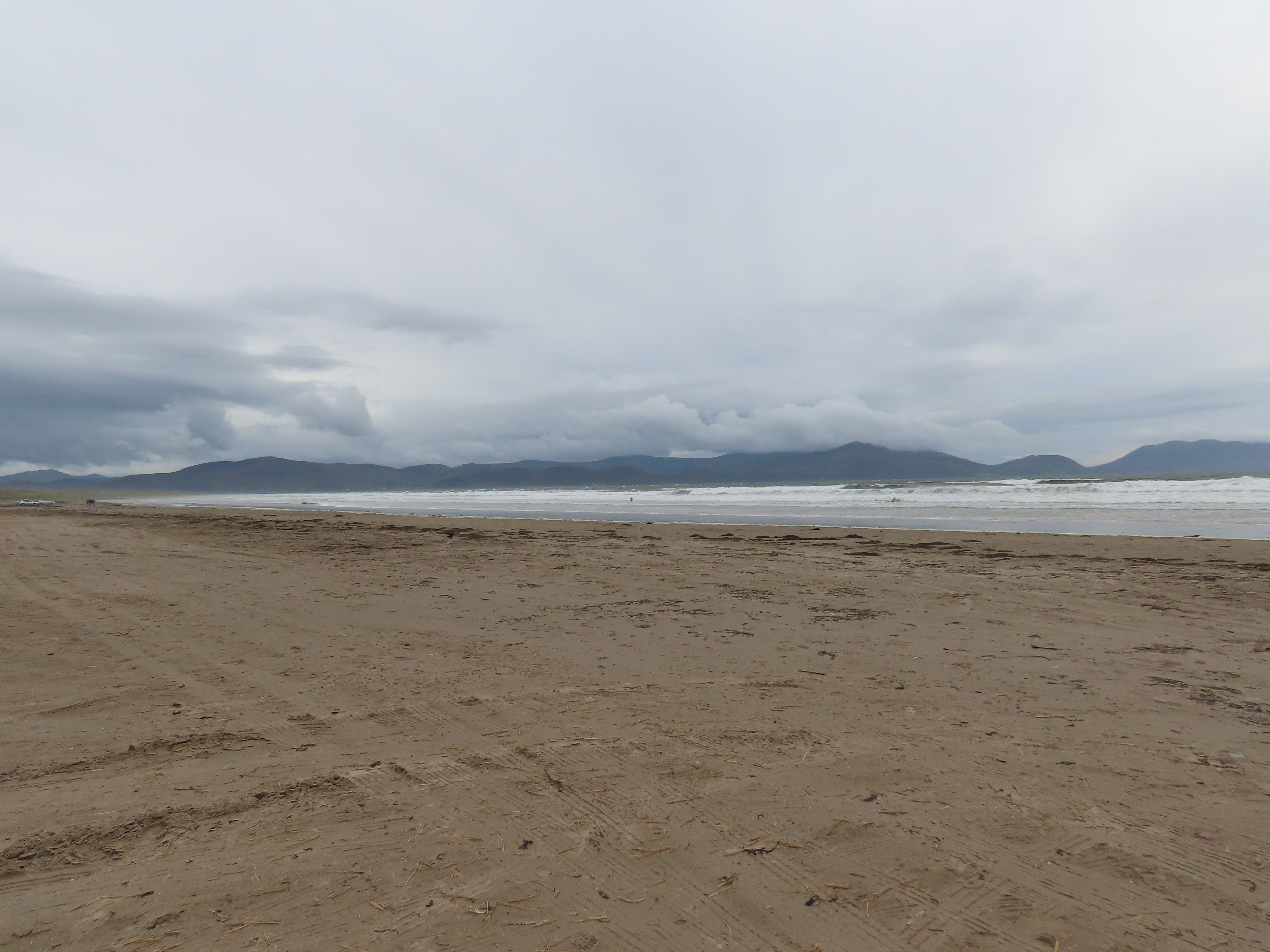
Upon reaching the southern coast of the Dingle peninsula, we headed towards Inch Beach. The TC, bless her cotton socks, had harboured romantic notions of dipping her toes into frilly waves on a golden shore cooled by a playful breeze. Instead, we encountered a somewhat fierce beach with a banshee wind and but two hardy souls venturing into the salty surf:
Dingle is a pretty sea-side town:
Signs and names come in Irish and English:
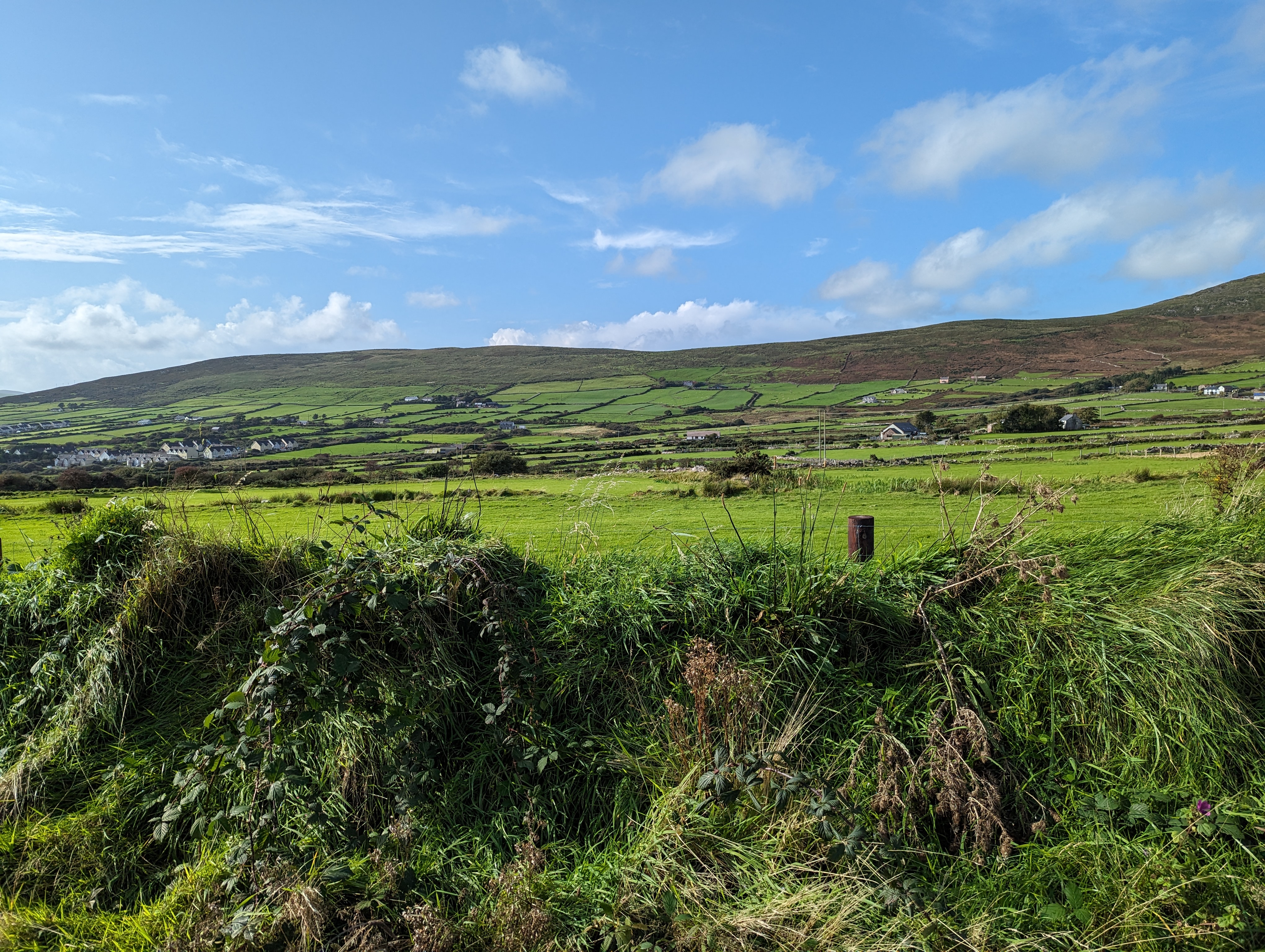
Leaving Dingle, the road heads through green fields and hedgerows:
Little wonder that Ireland is named the Emerald Isle. The theme of green runs through hill and vale:
We made our way up to Conor Pass. At 1,496 feet (about 455 metres), this is one of the highest paved passes in Ireland. The views occasioned the necessary ooohs and aaahs from the TC:
More of those sure-footed sheep braved the drop at the top of Conor Pass:
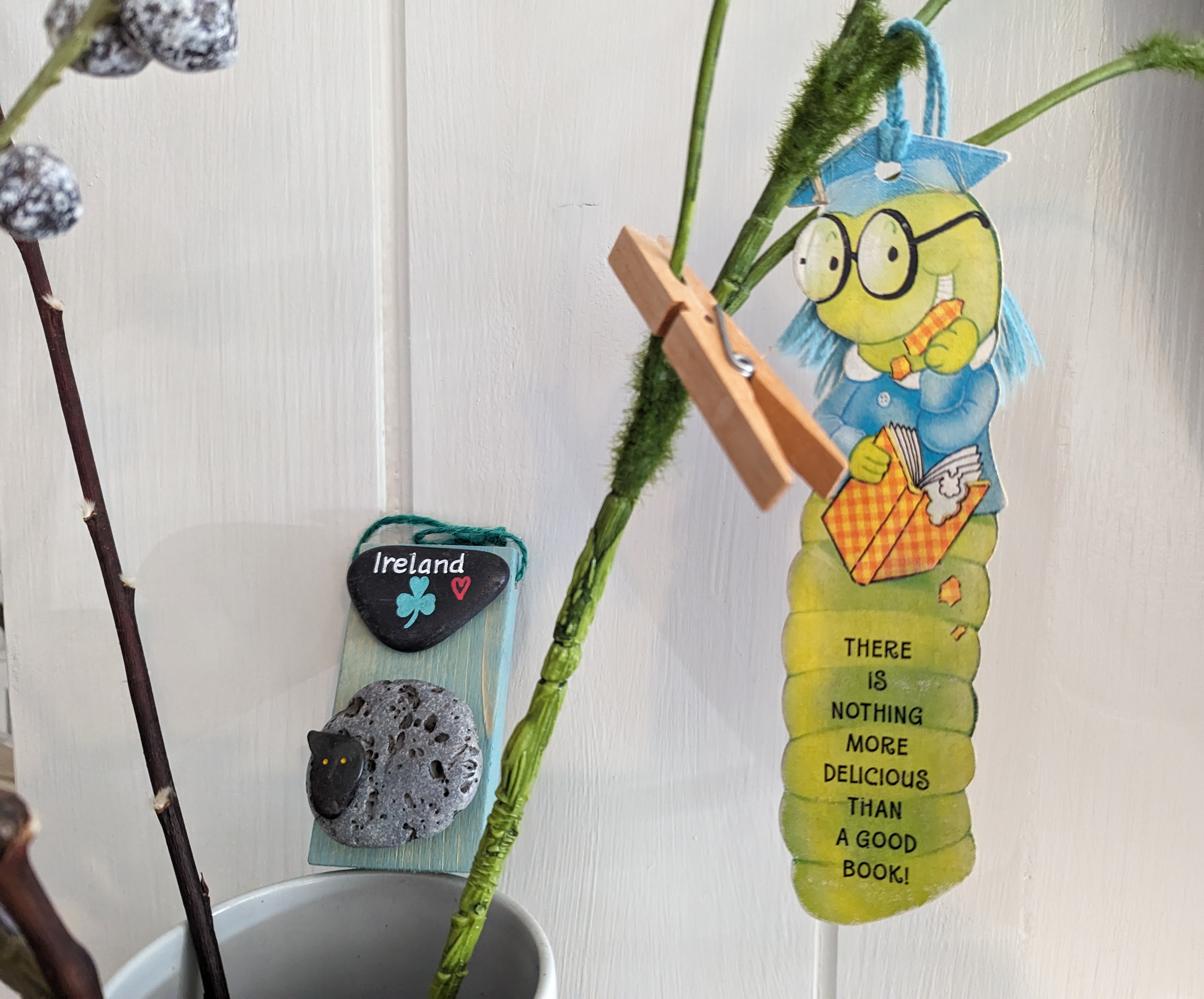
As a memento of these dauntless hill-trotters, the TC invited Sherbet the Sheep to join our flock of travelling companions.
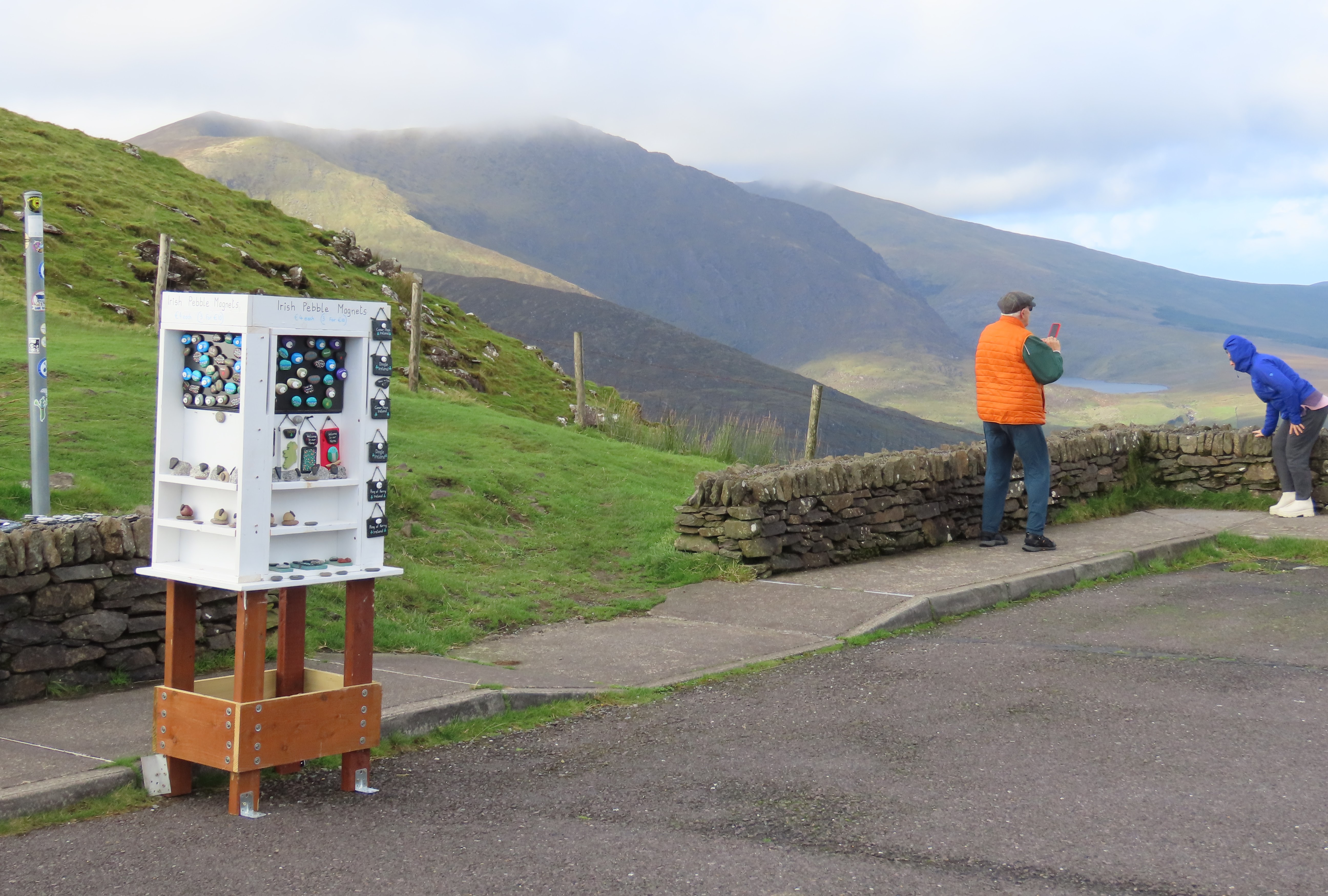
Sherbet’s first home was this booth at the top of Conor Pass:
Peg was delighted to welcome Sherbet to the fold, once I’d assuaged Peg’s jealous streak by letting her be in the forefront of the shot (without, of course, mentioning who’d be in focus):
This is the blog of Mark Wordsworm, the travelling worm. I’m a 40-year-old bookmark (give or take a few years) and I proudly boast my own Hallmark serial number, 95 HBM 80-1. You’ll probably want to read all about me and my Travelling Companion (the TC).
Today’s travel notes
Me and the TC are lodged close to the village of Blennerville on the west coast of Ireland. Let me spin you a yarn of happenstance and mystery concerning the romantic Irish hero Robert Emmet, his burial place, and one of his present-day family members.
The book I’m in
Stormswift, by Madeleine Brent. This author writes adventure stories about young heroines dragging themselves out of impossible situations by dint of courage, strength, and hard-won skills. Despite the dire subject matter, the novels are curiously calming.
Travel tips
Don’t go looking, and you will find.
The photos
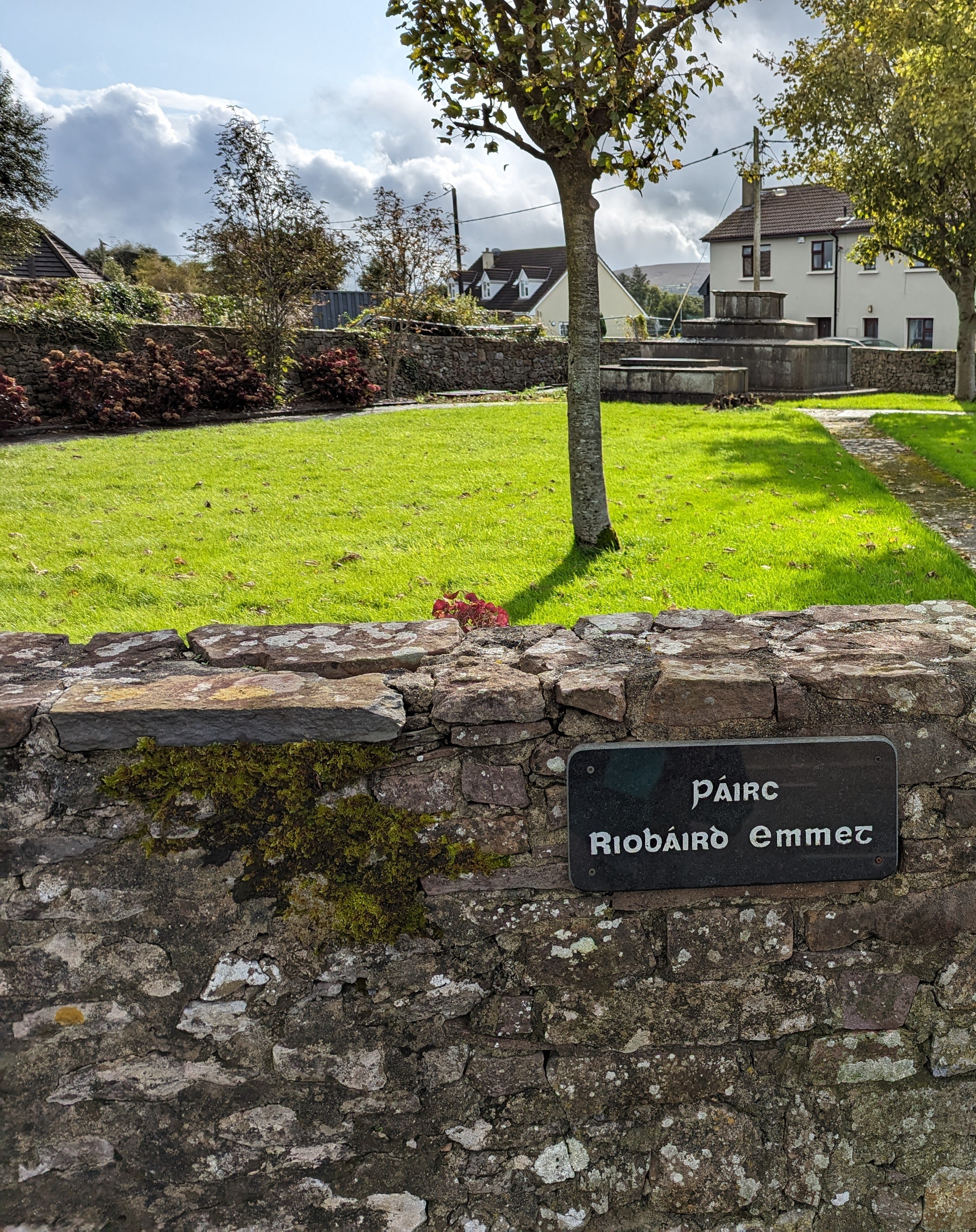
While taking a constitutional stroll in the area of Blennervile with me and the TC, the TC’s partner stopped short in his tracks and stared at a notice on the wall of a small park. The notice said, Páirc Riobáird Emmet. The park was dedicated to Robert Emmet, known in Ireland as “The Patriot”.
At this point in my story, it’s necessary to take a step back and explain a few things. The TC’s parter, henceforth to be called the TC-once-removed, has down the years heard tales from his mother of his familial connection to one Robert Emmet. The latter is an Irish hero from the days of the 1803 rebellion against British rule. Emmet inspired and led the uprising, which didn’t go well. Emmet was later tried for high treason, found guilty, and alas executed.
Back to our stroll on this fateful day. We had no plans to research the history of Robert Emmet. Indeed, we had no idea that we found ourselves in a place of significance with respect to that history. In addition, our decision to take a walk that morning, and indeed to take that particular route, was entirely random.
So, when the TC-once-removed saw the notice declaring a park dedicated to his forebear, he was flabbergasted. And not a little delighted.
Robert Emmet was hanged in Dublin in September 1803. The hangman then removed Emmet’s head and showed it to the people, saying “This is the head of a traitor, Robert Emmet”.
This worm promised you a mystery, and here it comes. What happened to Robert Emmet’s body? The remains were first taken to Newgate Prison and then back to Kilmainham Gaol in Dublin. He was then buried in Bully’s Acre, a public cemetry in Dublin. However, it’s widely believed that his body was removed secretly and buried elsewhere. But where?
Páirc Riobáird Emmet in Blennerville is but one of several places that claim to be the hero’s final resting place. Emmet is a descendant of the Blennerhassett family. Blennerville village was once the Blennerhassett estate village. According to local tradition, Robert Emmet was laid to rest in an unmarked grave under the back porch of St Anne’s Church, which once stood where the park is now located. The church was demolished in 1930.
Over the years, many people have searched unsuccessfully for the hero’s body. Robert Emmet’s supporters have a saying: “Do not look for him. His grave is Ireland”.
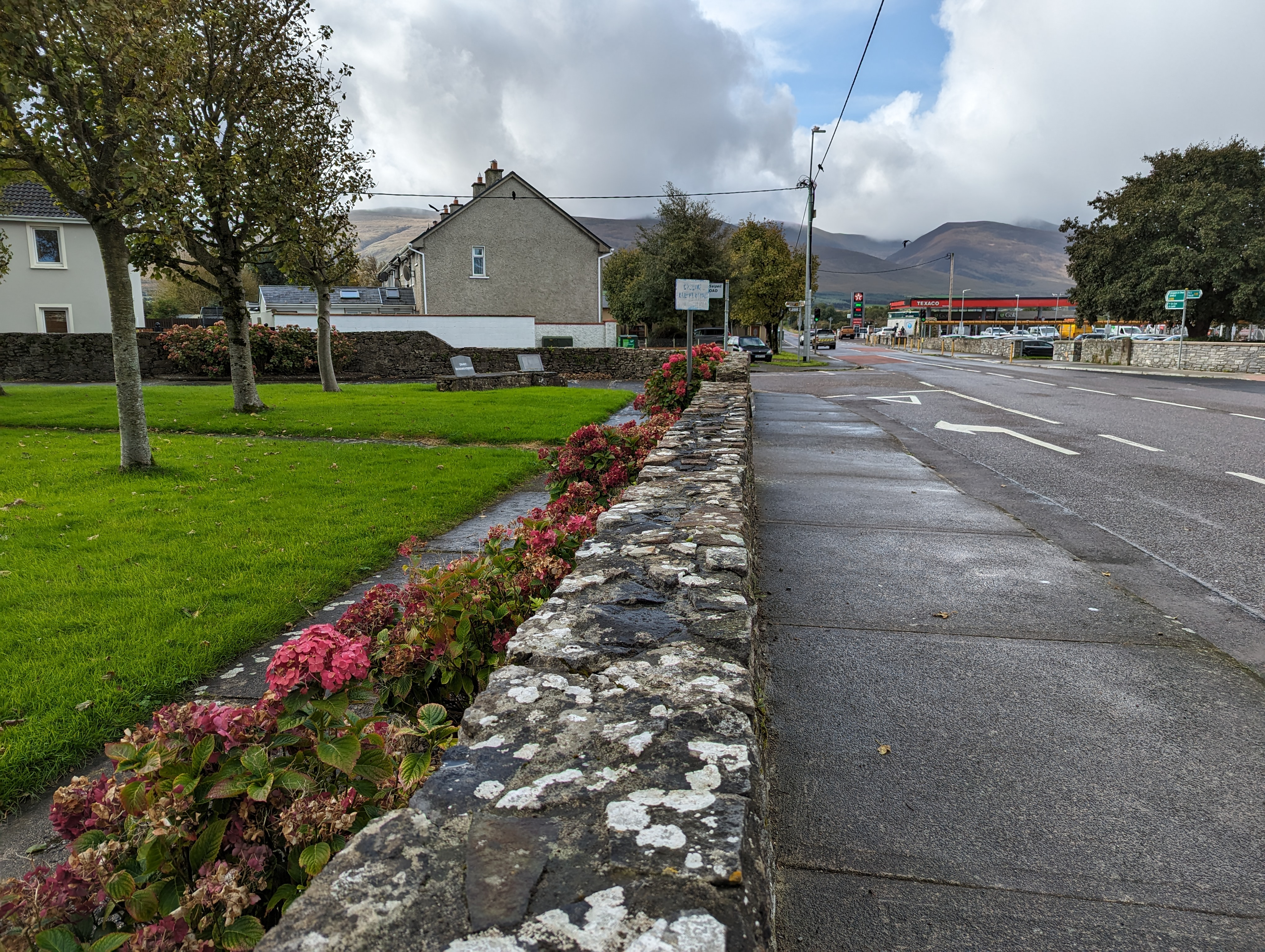
Leaving Páirc Riobáird Emmet behind us:
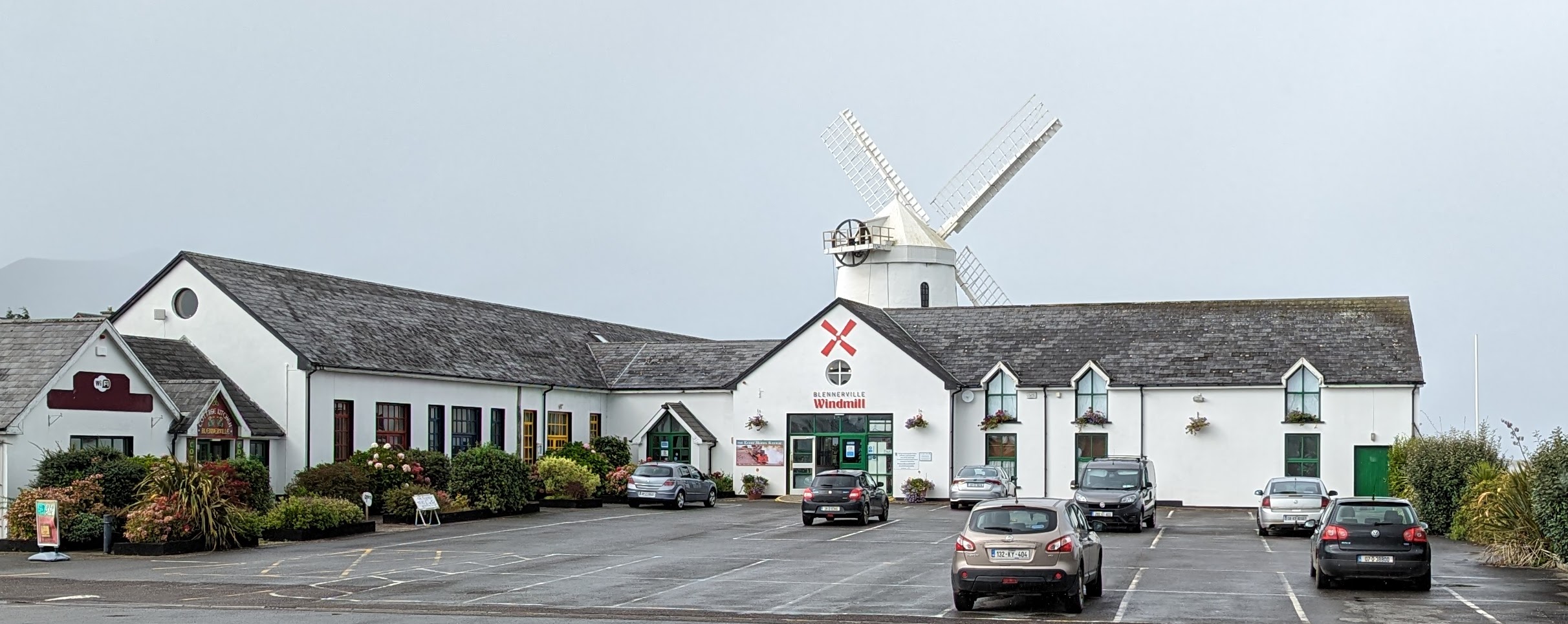
We strolled further along the road to Blennerville and came across the windmill:
Greys on greys, and a splotch of yellow from a person dressed for the weather:
Just beyond the windmill is Blennerville Bridge, with its views of the River Lee and the flats as the river opens into the Atlantic Ocean. The inclement weather provided us with a rainbow:
Jonathan was there:
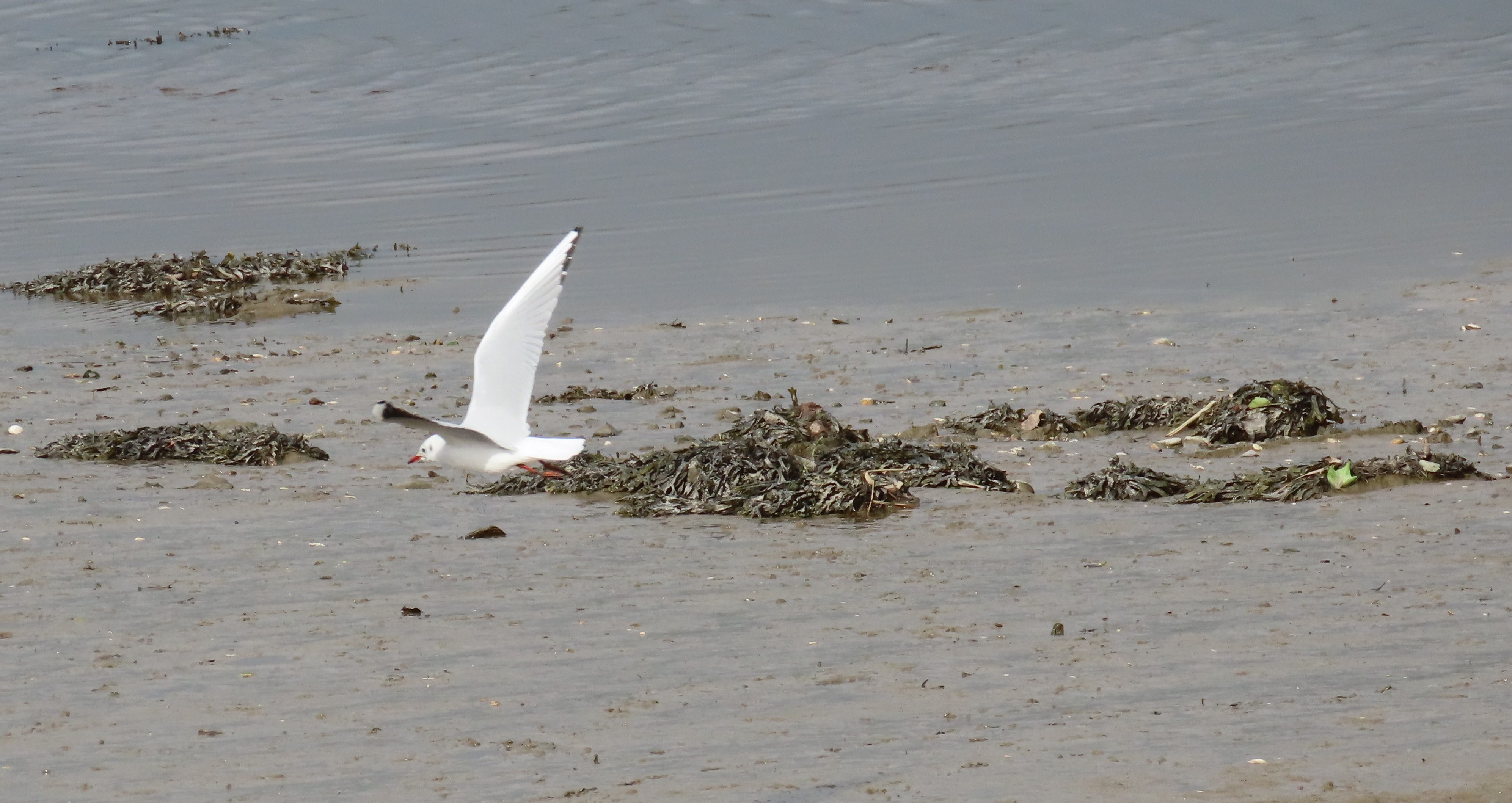
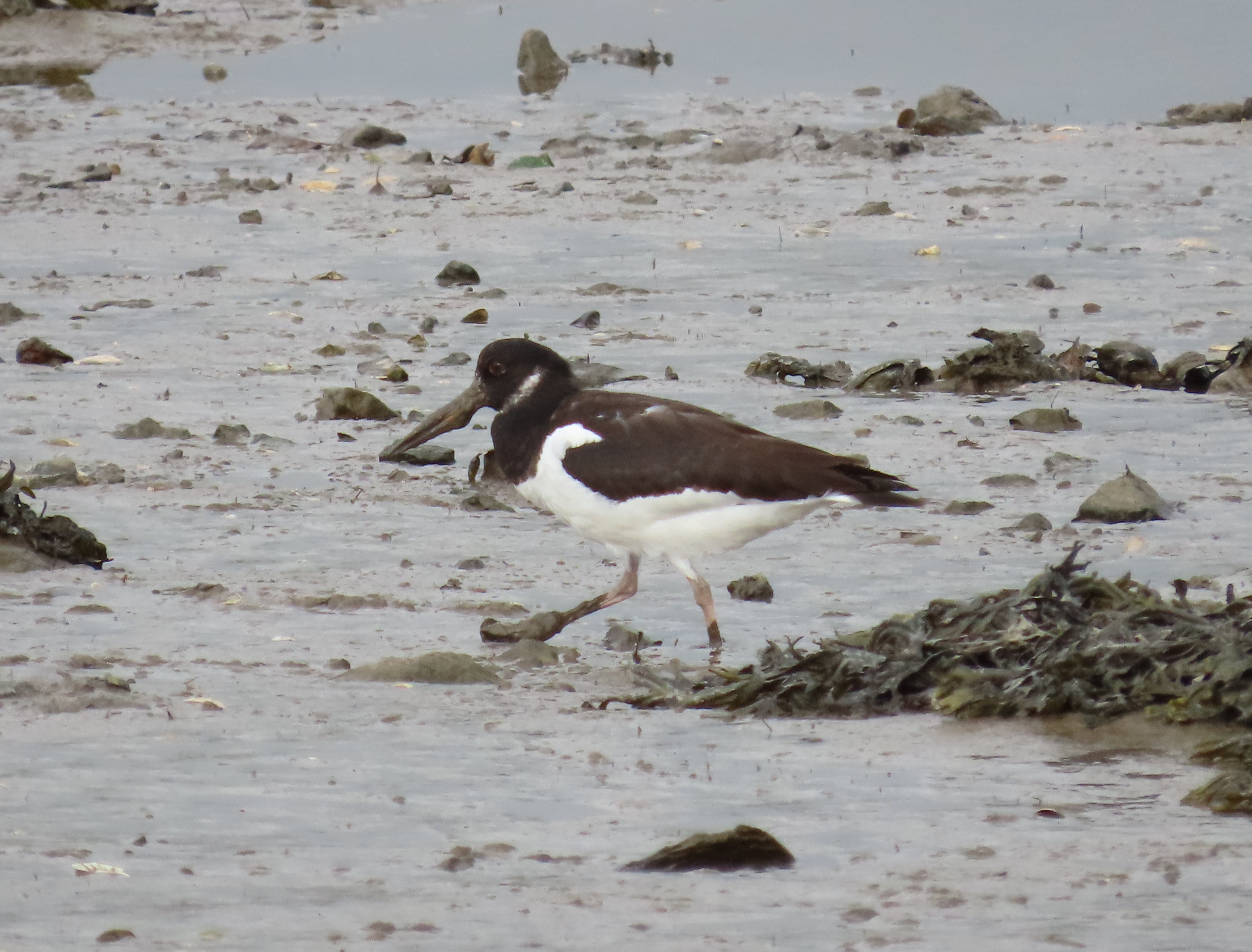
Jonathan had brought a couple of mates to explore the flats: an Oystercatcher with a muddy beak:
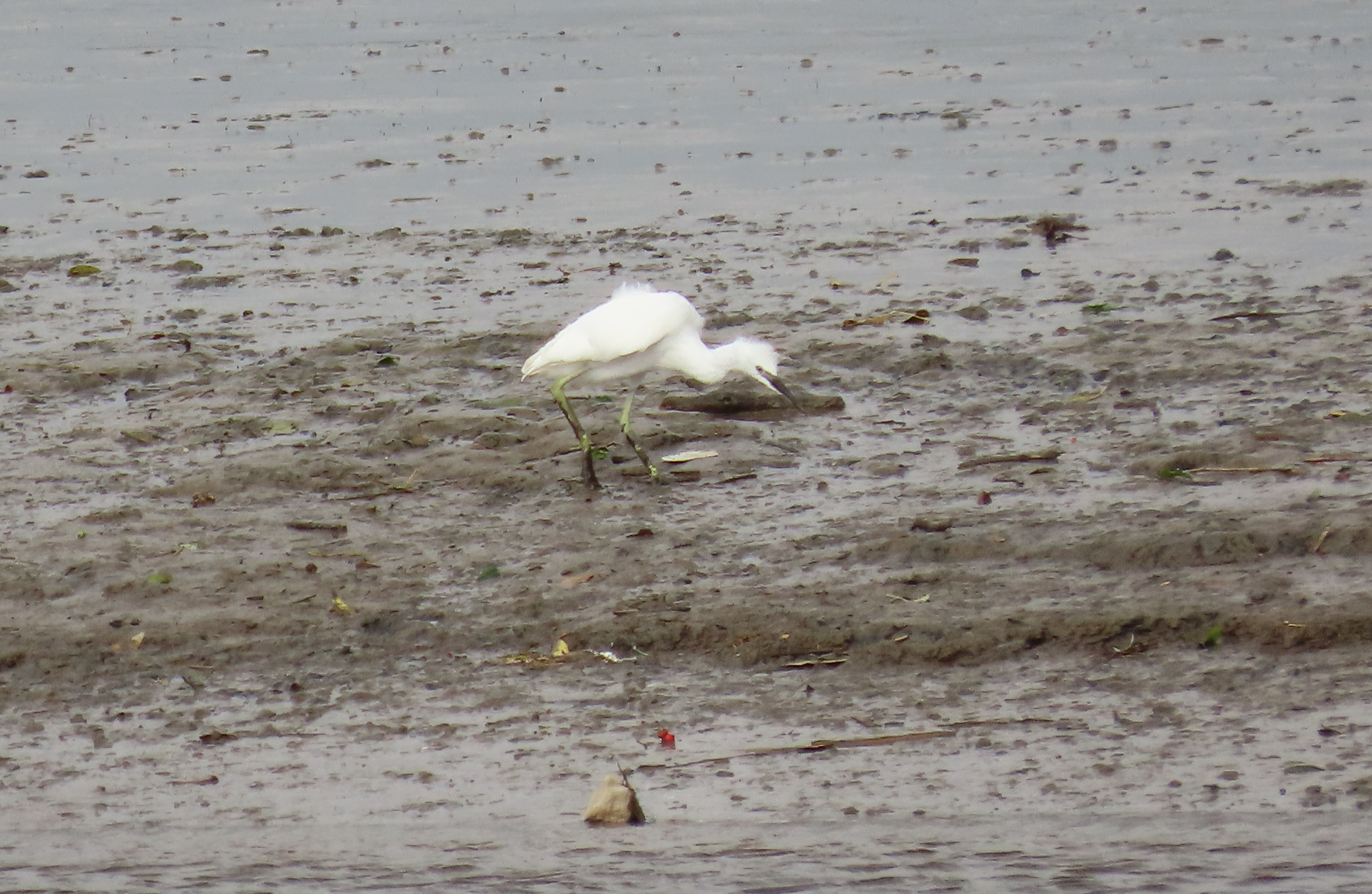
A young Little Blue Heron with green legs:
Heading off with a definite purpose in mind:
On that note, we continued our stroll. Here’s a scene from one of the streets in Blennerville:
This is the blog of Mark Wordsworm, the travelling worm. I’m a 36-year-old bookmark (give or take a few years) and I proudly boast my own Hallmark serial number, 95 HBM 80-1. You’ll probably want to read all about me and my Travelling Companion (the TC).
Today’s travel notes
Me and the TC spent a day in Edinburgh, beautiful capital of Scotland. To throw a vote into the debate about visiting Edinburgh versus Glasgow, this worm’s firm opinion is that both are worth a visit. Your enjoyment depends on what you’re looking for. Glasgow is more restful. Edinburgh is gorgeous but more frenetic, especially in the areas focused on tourism.
The book I’m in
Stormswift, by Madeleine Brent. This author writes adventure stories about young heroines dragging themselves out of impossible situations by dint of courage, strength, and hard-won skills. Despite the dire subject matter, the novels are curiously calming.
Travel tips
If your legs allow, do the walk starting at the Water of Leith Walkway and up to Edinburgh Castle, then down the Royal Mile to the Palace of Holyroodhouse, finishing at the Princes Street Gardens. (This worm sat comfortably in a book for the onerous part of the walk, making an appearance only for the views and photo ops.)
The photos
Me starring in a picture taken from Bell’s Brae Bridge, part-way along the Water of Leith Walkway:
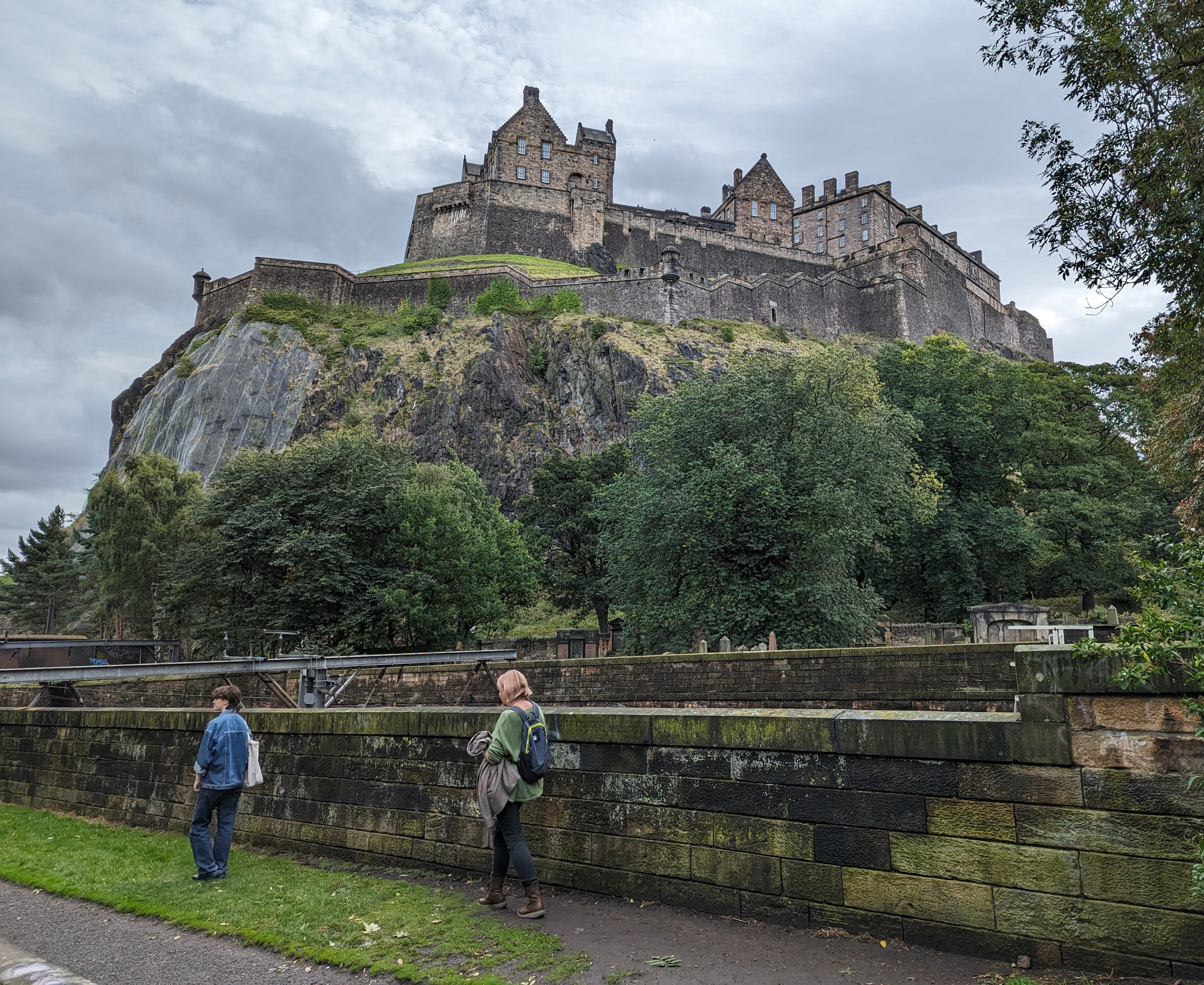
Edinburgh Castle set high upon a rock, seen from the gardens of The Parish Church of St Cuthbert:
The first fort on the rock was built by Iron Age peoples. The castle saw fierce fighting during the Wars of Scottish Independence in medieval times.
As well as being a military stronghold, the castle has housed royalty over the centuries. Queen Margaret died in the castle in 1093. In the Royal Palace within the castle grounds, Mary Queen of Scots gave birth to James VI in 1566. He became king of Scotland at 13 months old. He later united the crowns of Scotland and England in 1603.
Me outside Edinburgh Castle:
A similar view, but without your faithful Travelling Worm:
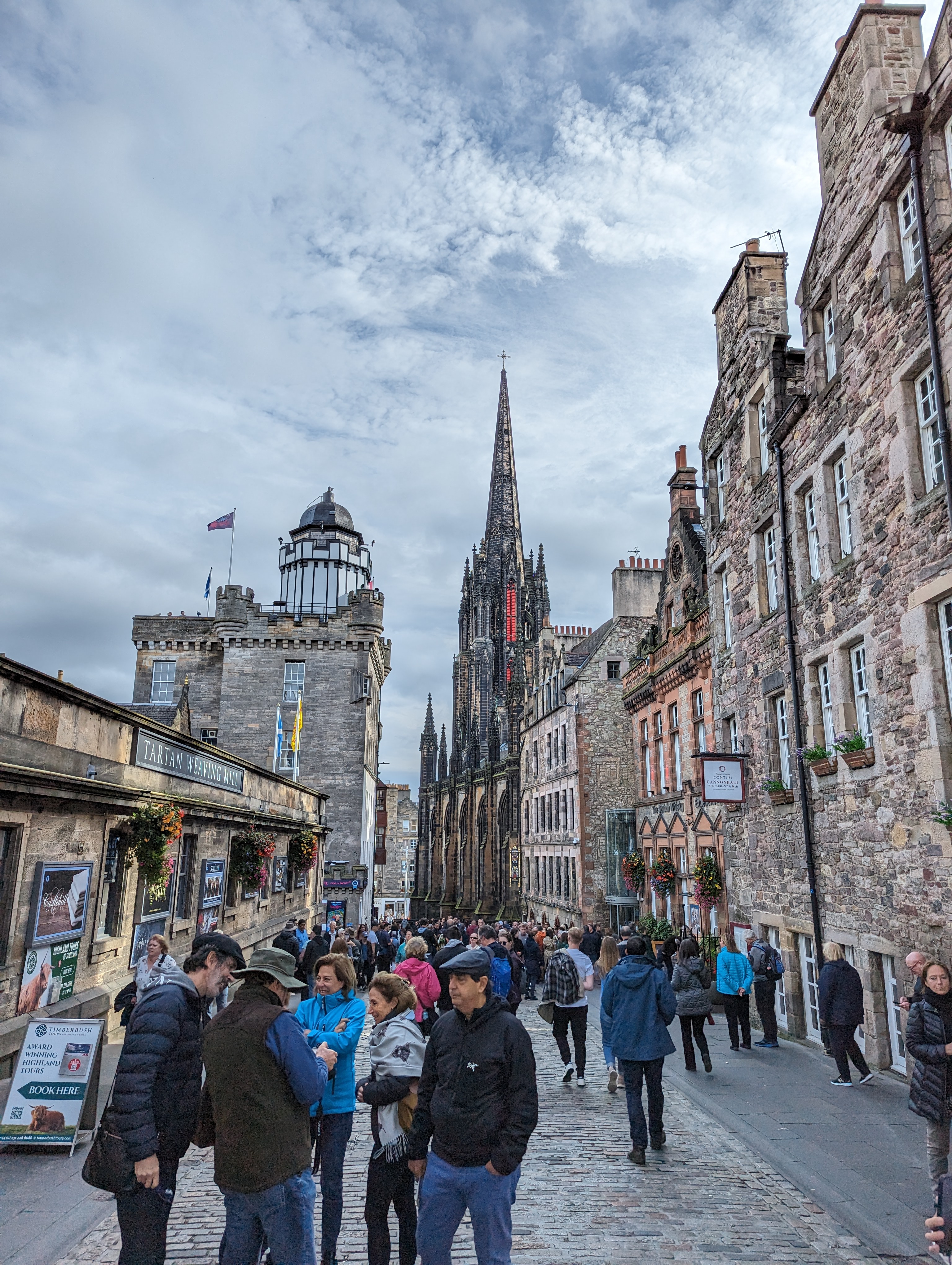
After visiting the castle, we headed down the Royal Mile towards the Palace of Holyroodhouse. The next picture shows a general view of the Royal Mile:
We encountered a couple of Picts telling their story. The Picts are an ancient people who lived alongside the Scots. Originating as an Iron Age society, one of the things they’re known for is painting themselves, hence the name “Pict”. The blue colouring comes indigo dye, made from the woad plant:
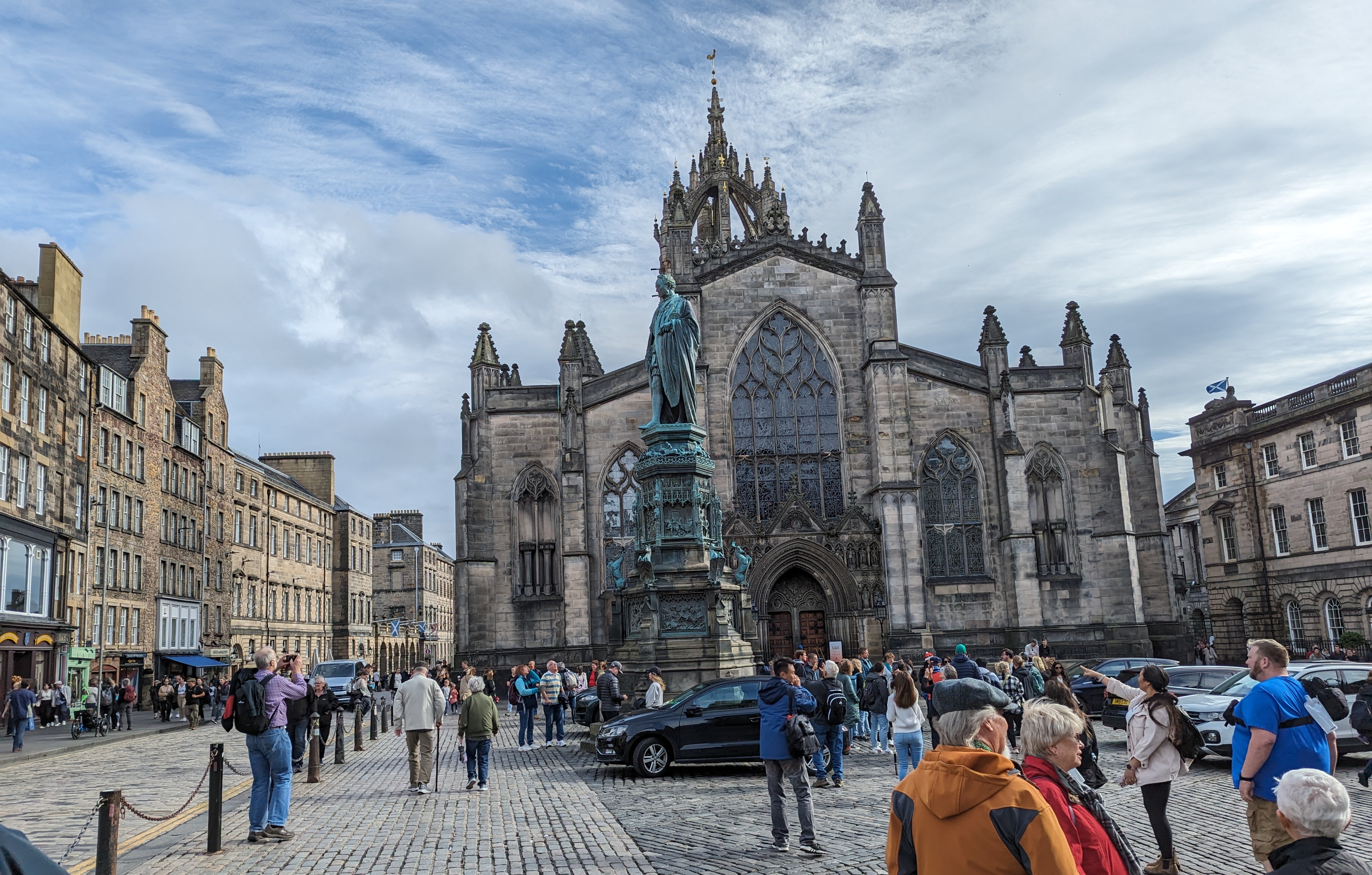
St Giles Cathedral was founded in 1124 by King David I. It was originally a Romanesque church. It now belongs to the Church of Scotland congregation and follows the Presbyterian tradition of worship. The statue in front of the cathedral is of John Knox, founder of the Presbyterian Church of Scotland:
A random view down a little alleyway, partway along the Royal Mile:
A picturesque clock above a tavern:
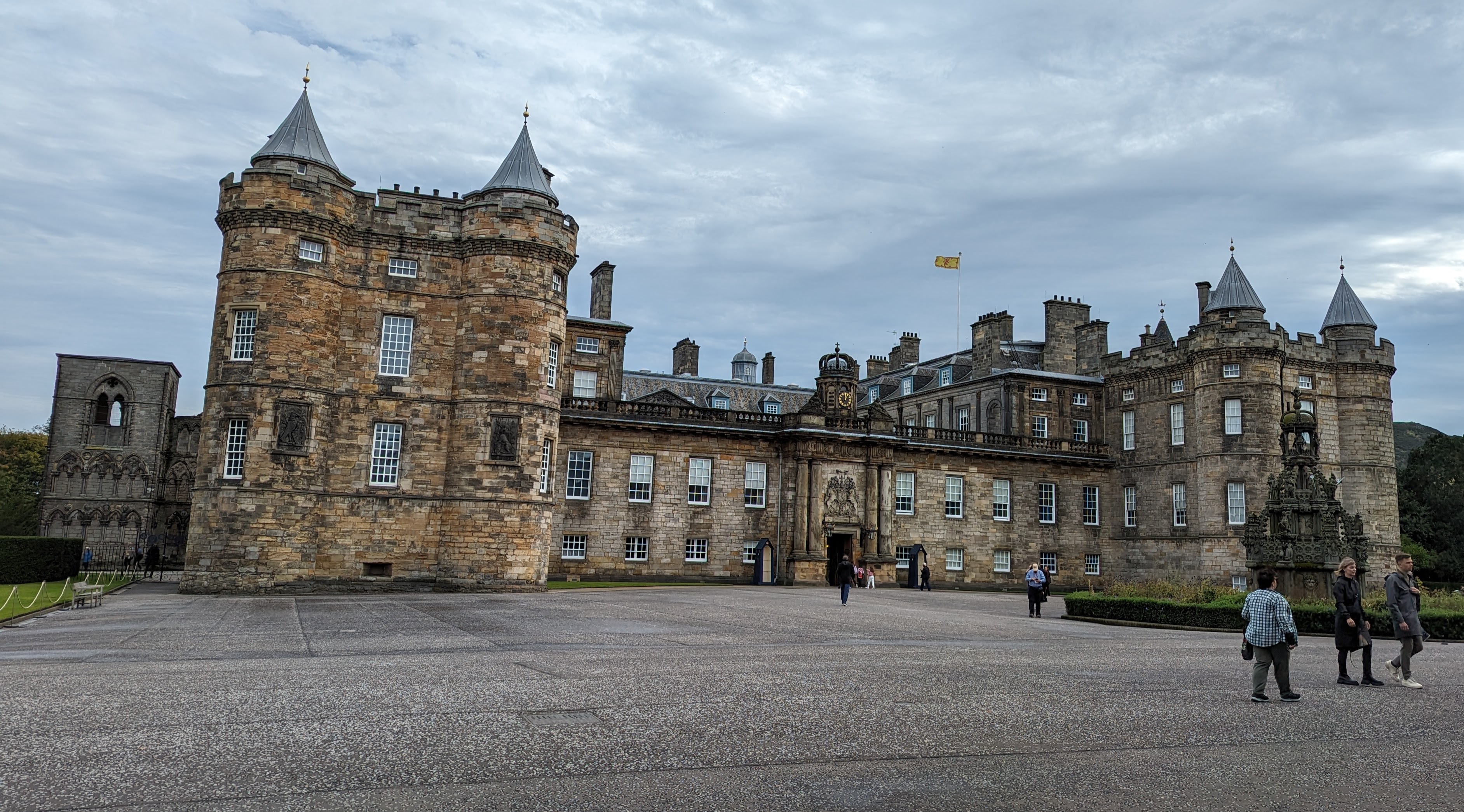
At the end of the Royal Mile is the Palace of Holyroodhouse. The palace is the British King’s official residence when in Edinburgh. It’s also played a part in Scottish royal history, including visits from Mary Queen of Scots and Bonnie Prince Charlie.
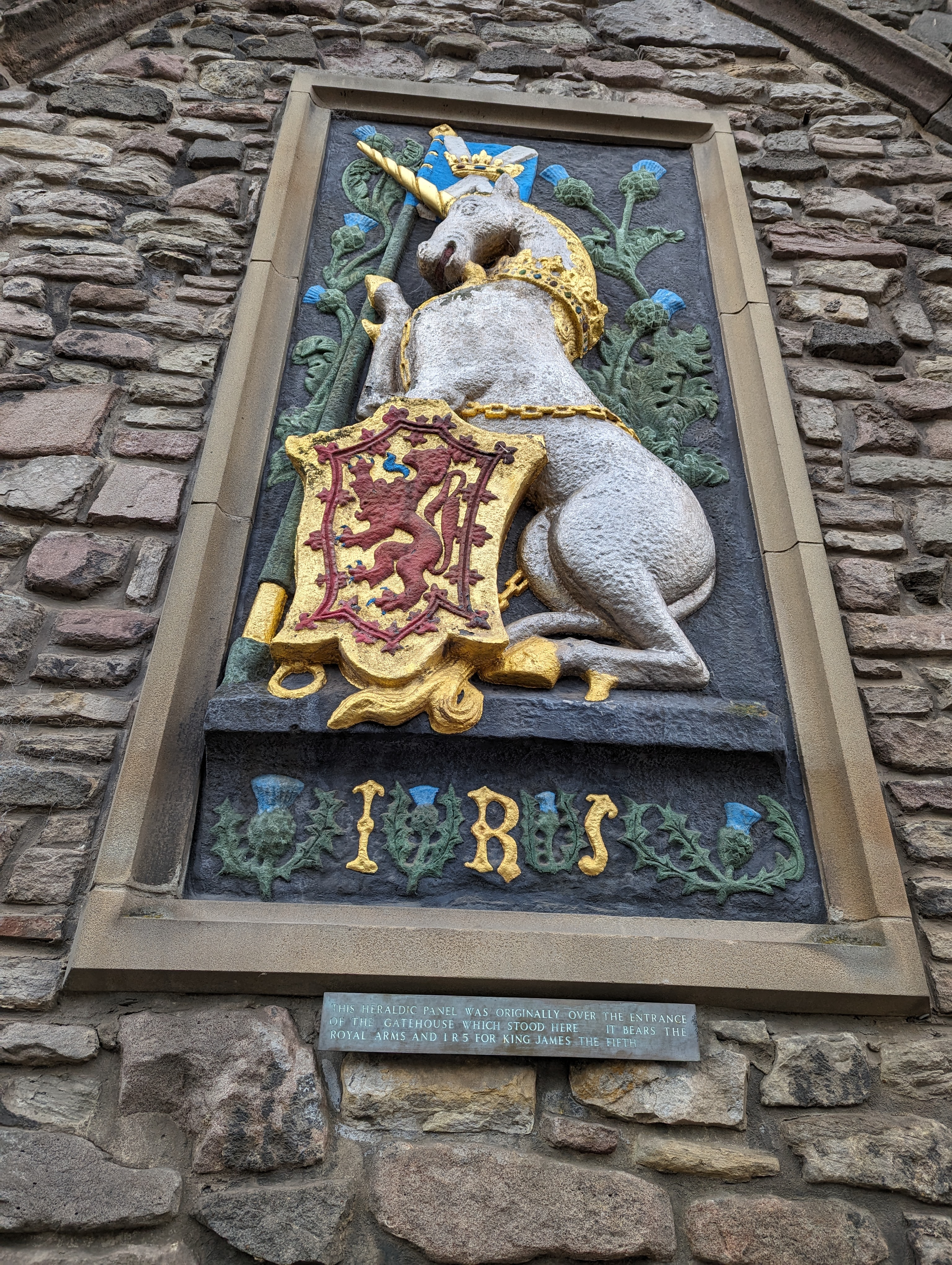
On a wall near the palace is this heraldic panel of James the Fifth, including the Royal Arms:
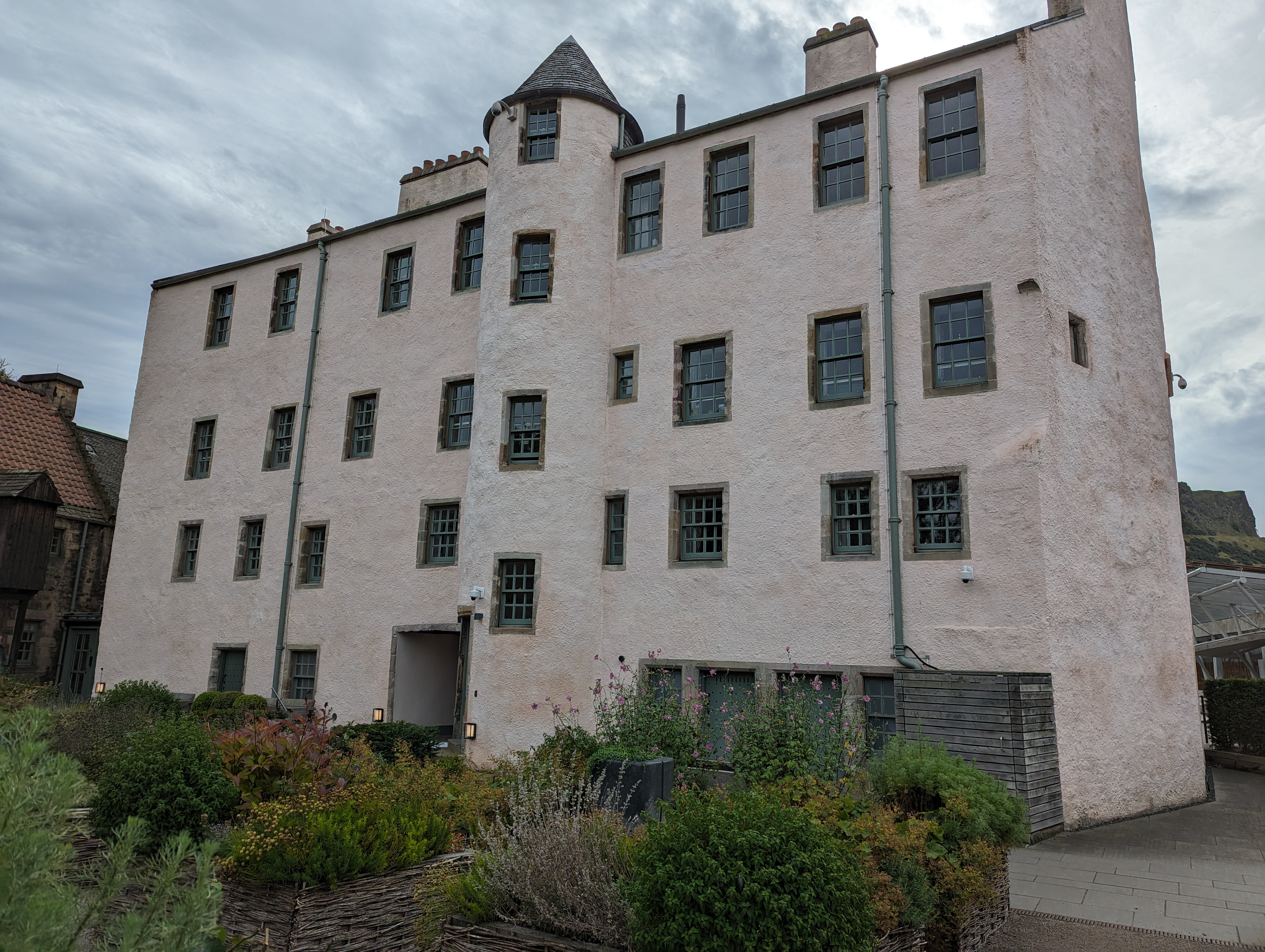
Across the road from the palace stands the lovely Cheval Abbey Strand apartment block, a renovated 15th century building. The photo shows the rear of the building, with part of the Physic Garden that lies behind:
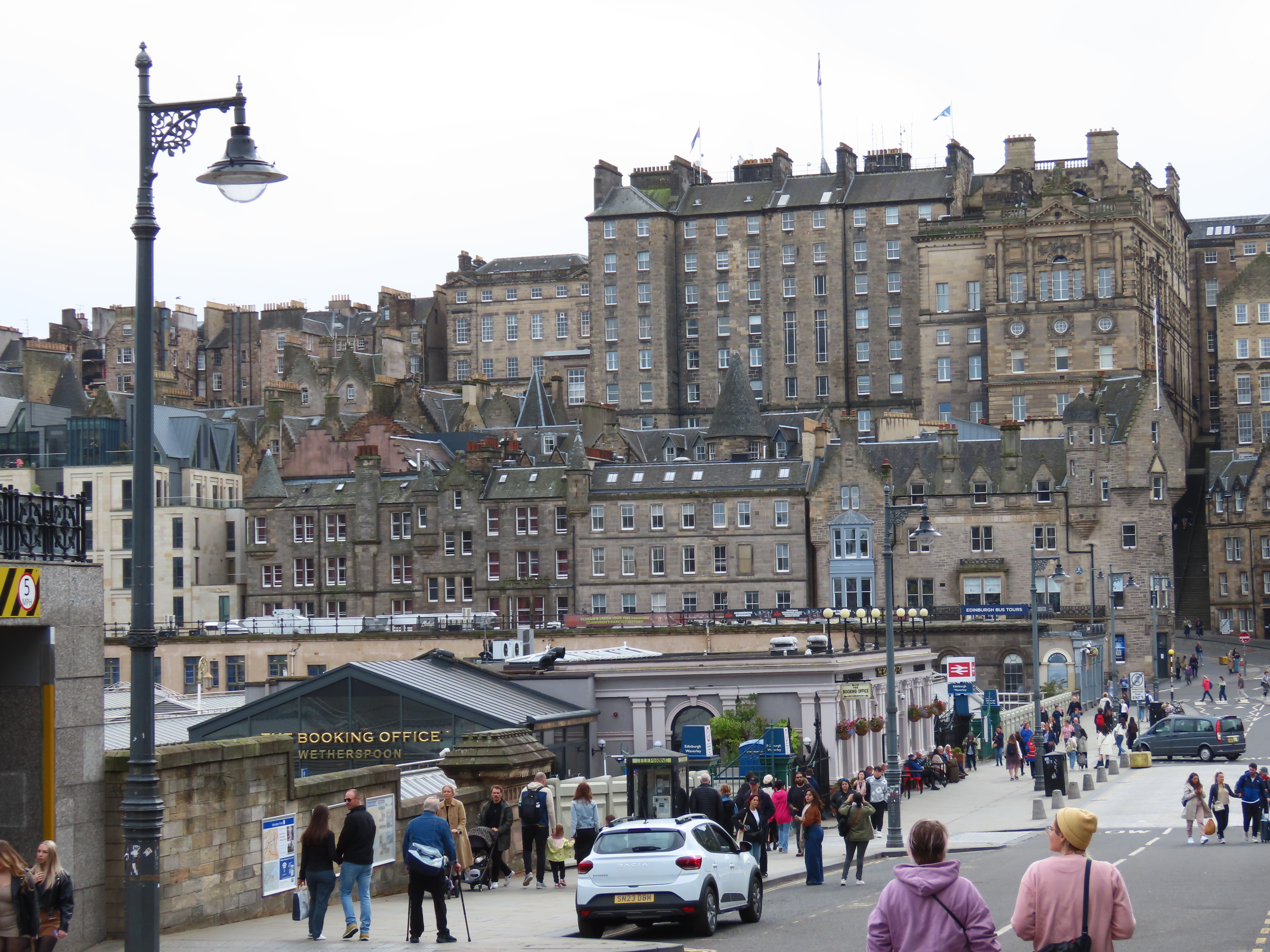
To finish the tour, here’s part of Edinburgh Old Town, seen from Princes Street near the Princes Street Gardens:
This is the blog of Mark Wordsworm, the travelling worm. I’m a 36-year-old bookmark (give or take a few years) and I proudly boast my own Hallmark serial number, 95 HBM 80-1. You’ll probably want to read all about me and my Travelling Companion (the TC).
Today’s travel notes
Me and the TC visited part of Hadrian’s Wall yesterday. The wall is more than 70 miles long, so we had to choose our viewing point. We chose Walltown Quarry, near the village of Greenhead in Northumberland. The beautiful countryside provided a spectacular backdrop for the remnants of the wall.
The book I’m in
Stormswift, by Madeleine Brent. This author writes adventure stories about young heroines dragging themselves out of impossible situations by dint of courage, strength, and hard-won skills. Despite the dire subject matter, the novels are curiously calming.
Travel tips
Drive the A68 through Northumberland and into Scotland. It’s one of the most beautiful drives in the world, passing through restful grey-stone villages and meandering over rolling green hills dotted with sheep and cattle.
The photos
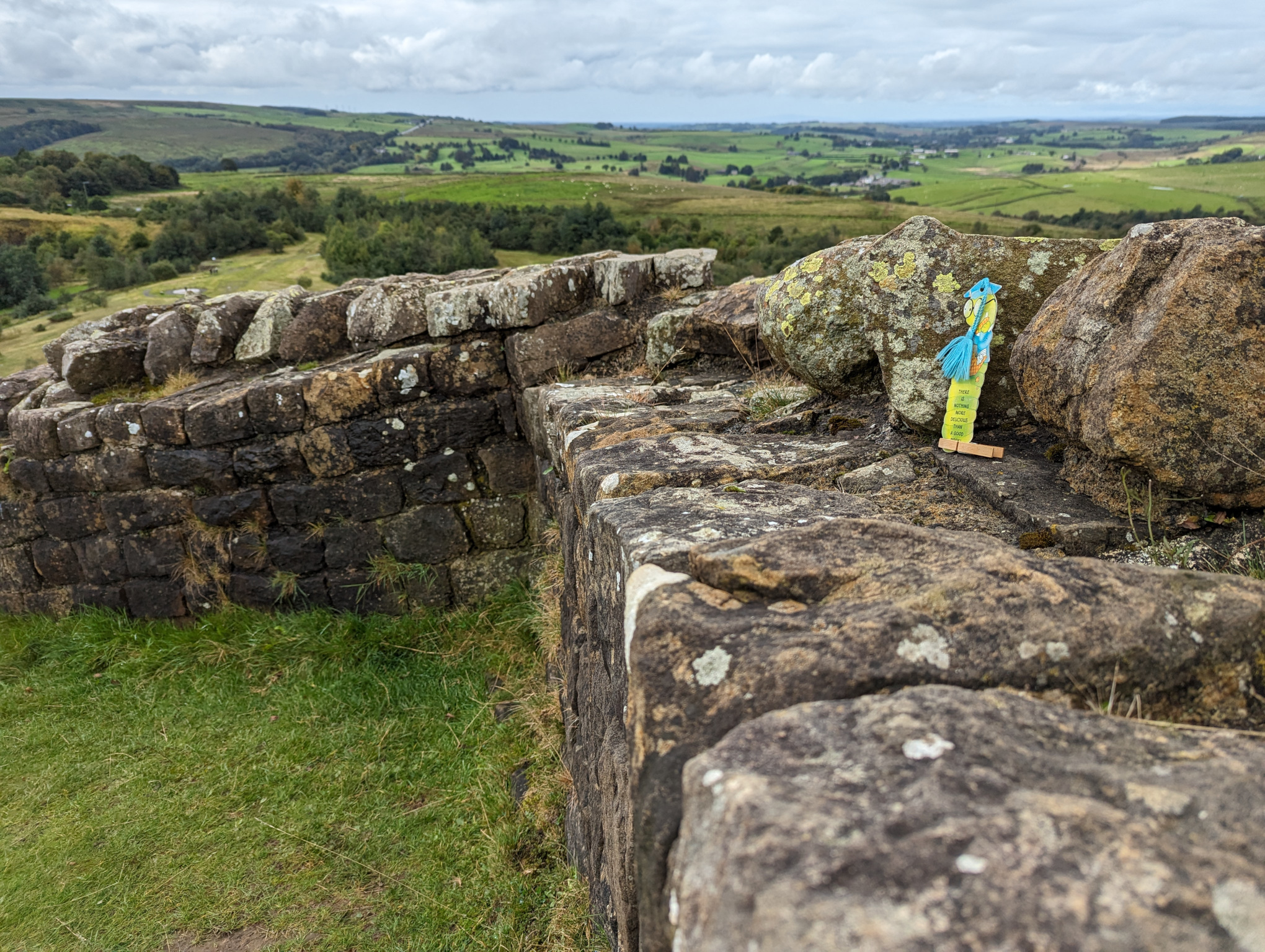
Me and Peg on Hadrian’s Wall:
Devoted readers will no doubt remark on Peg’s re-appearance on this blog. She took a long break from travelling, but is now back in full force. Expect to see her holding up her end of the tale again in this and future posts!
This part of the wall stands atop a high cliff above the stone quarry at Walltown. Here’s a long shot of the cliff topped by the wall:
The path up to the cliff face is guarded by a fearsome ogre. This worm stayed tucked in the TC’s book while we crept by, managing to get past before the ogre emerged fully from its lair:
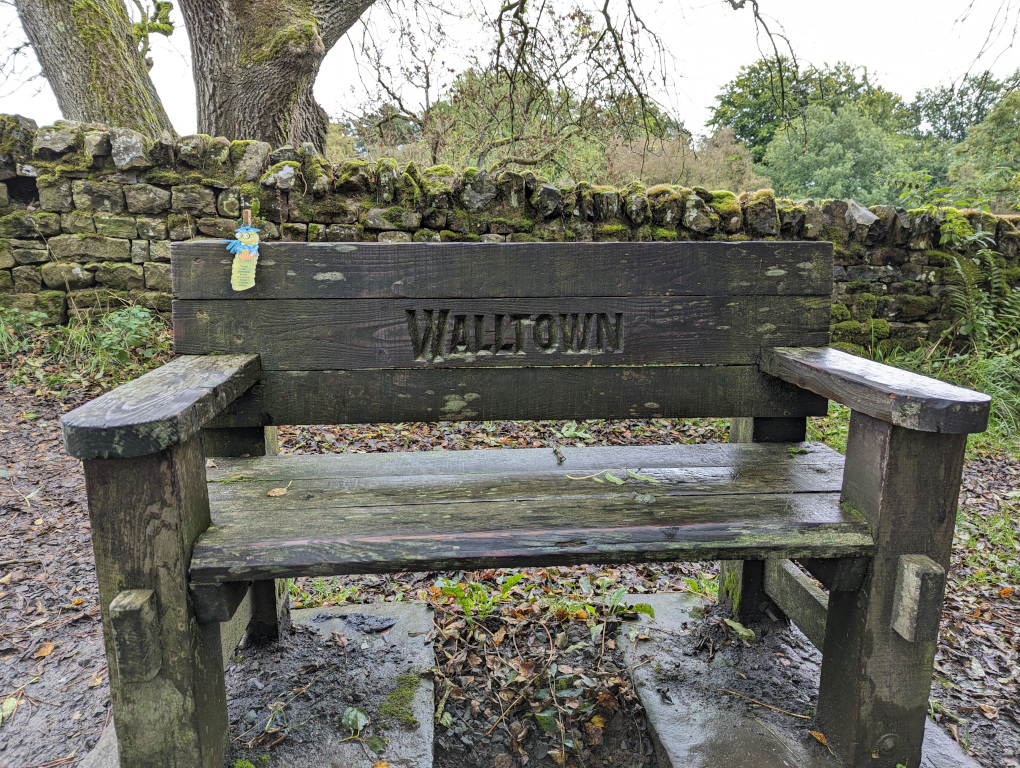
Once we’d safely passed the slumbering ogre, me and Peg took a breather on the Walltown bench before making the final ascent to Hadrian’s Wall:
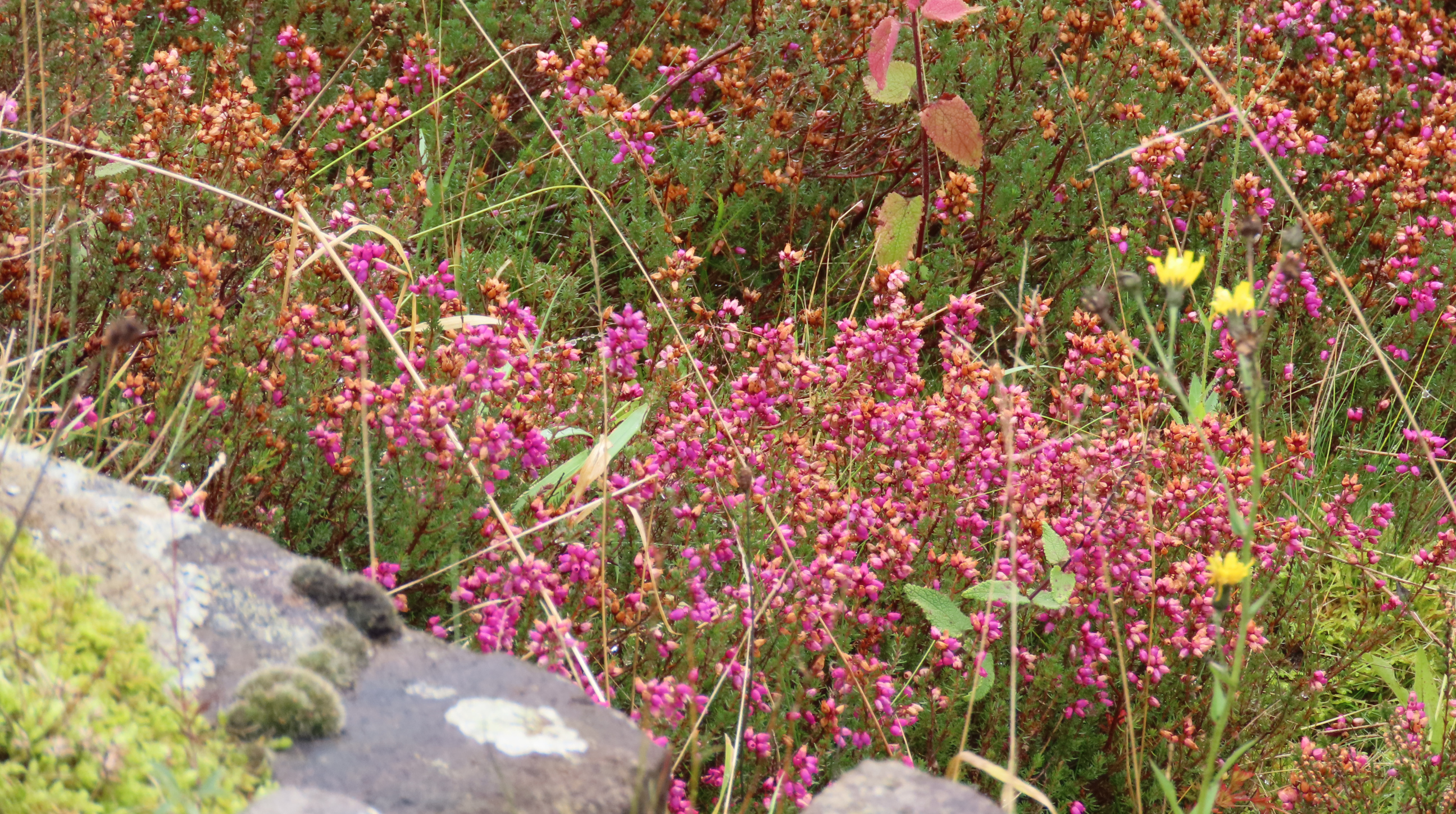
Wild flowers marked the route:
Drops from the recent rainfall sparkled on flower and leaf:
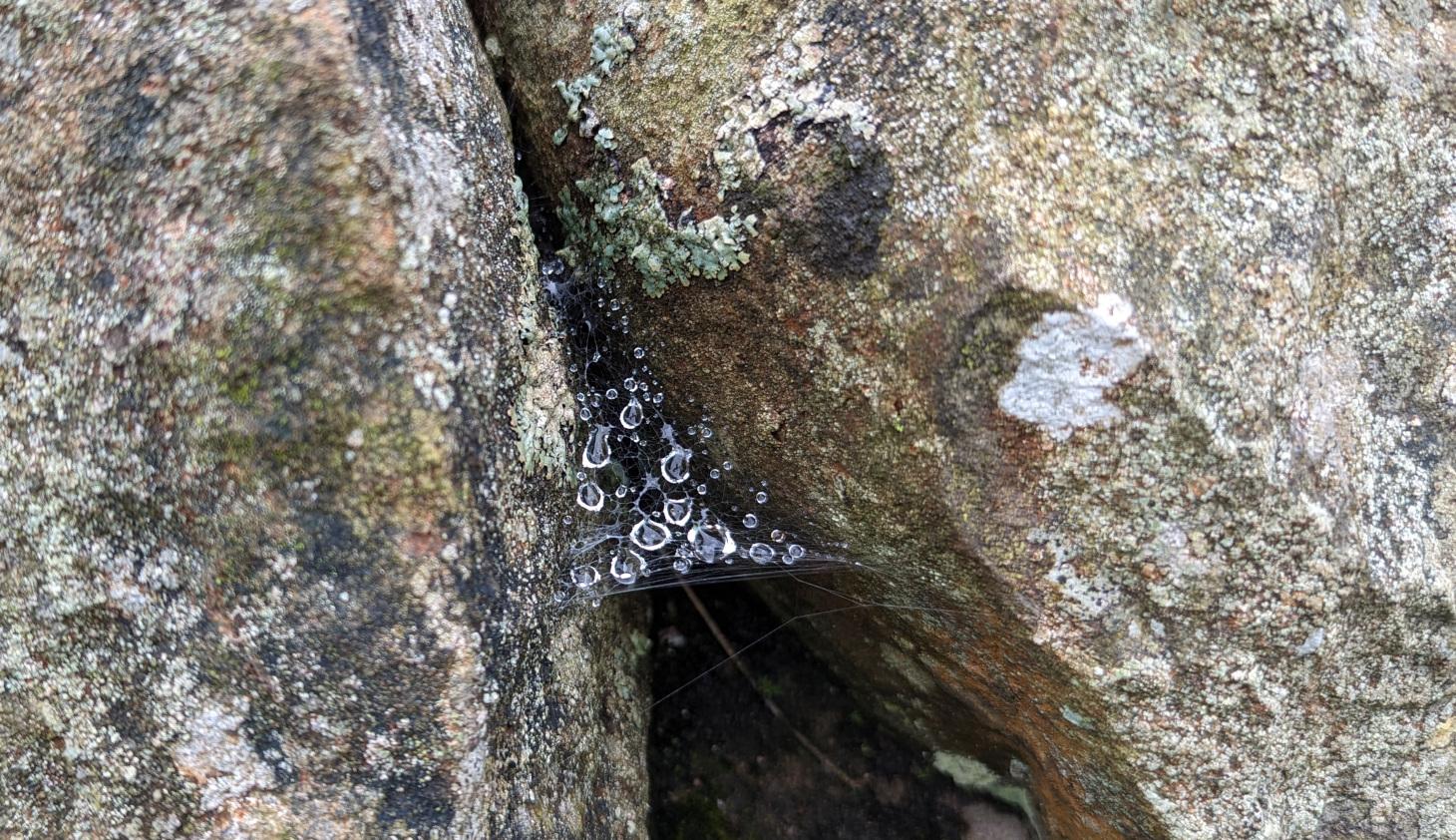
Raindrops decorated the spiderwebs too:
At the top of the cliff, Hadrian’s Wall runs over green velvet hills:
The wall was built by the Roman emperor Hadrian in the second century AD, to draw a line of defence between the south of Britain, controlled by Romans, and the unconquered area to the north, roamed by the fierce Scottish clans. The wall stretches across Britain, from Wallsend on the River Tyne in the east to Bowness-on-Solway in the west.
Adventurous souls took the high road:
This worm found a new friend, who goes by the name of Bluebell. She confided in me that some call her Wall Flower, but she discourages that name with all her might. Me and Bluebell at her home atop Hadrian’s Wall:
Wild flowers grab a handhold on the rocks near the wall:
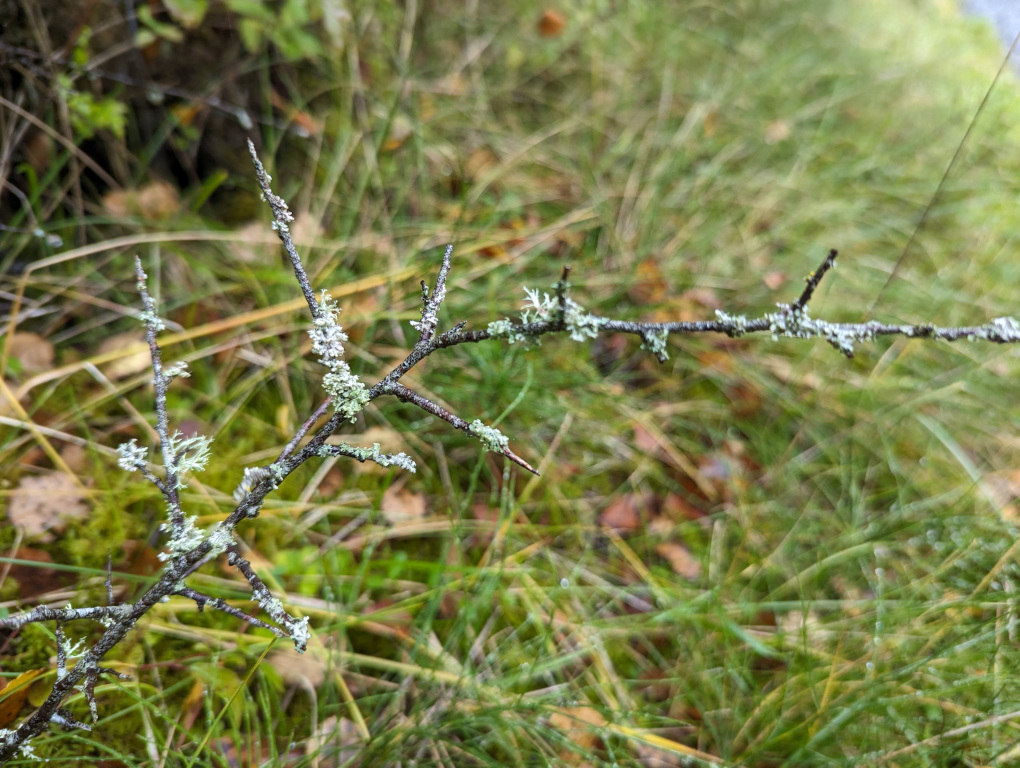
Lichen adorns the stones on the pathway back down the hill:
And drips off the branches of the plants:
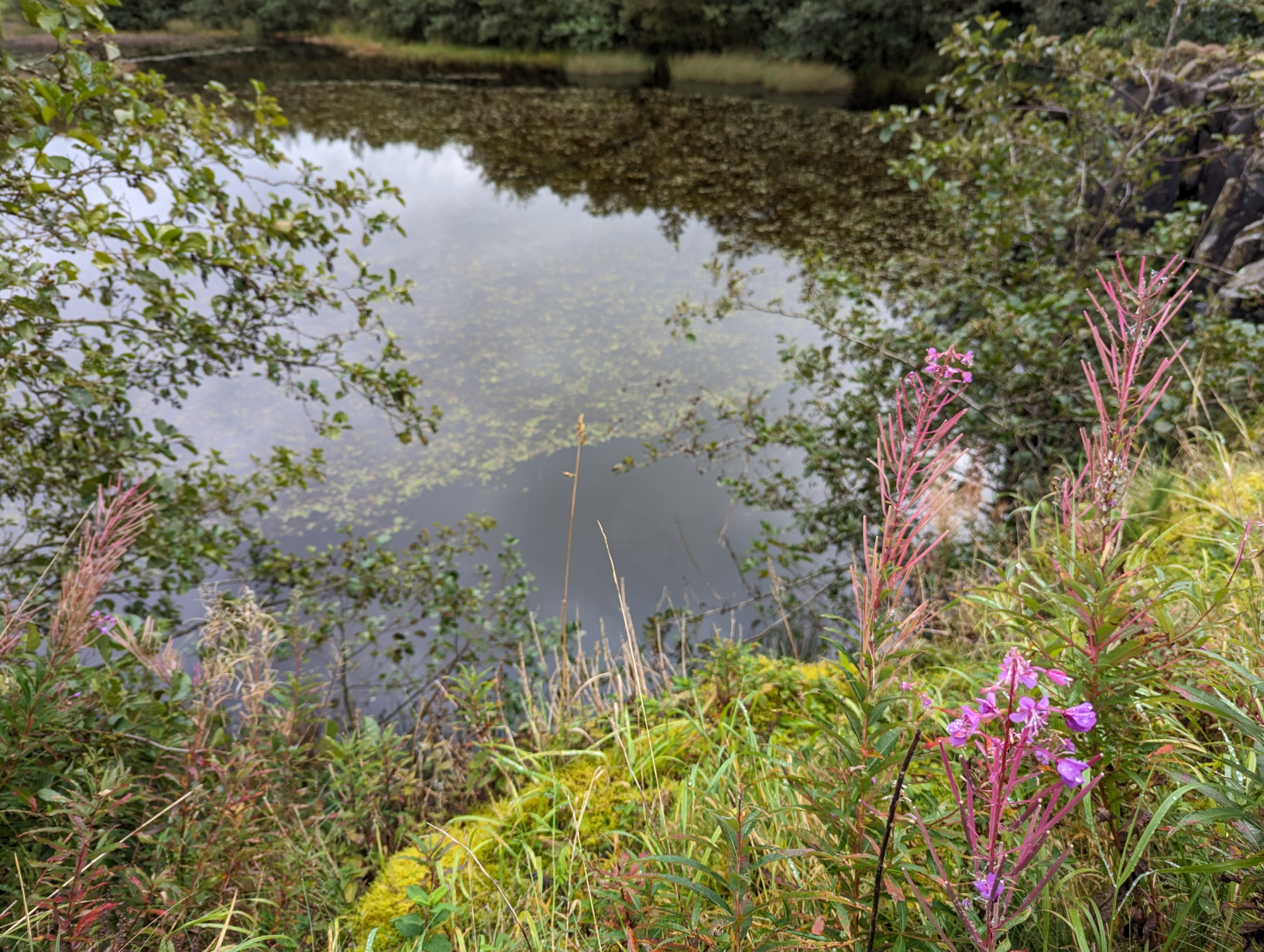
The Walltown Quarry Pond:
The stone dug out at Walltown Quarry was used primarily as chippings for surfacing roads. The quarry opened in 1876 and closed in 1976. After it closed, the land was filled in and landscaped to form the Walltown Country Park.
Here’s a parting shot of Hadrian’s Wall from across the quarry pond:
This is the blog of Mark Wordsworm, the travelling worm. I’m a 36-year-old bookmark (give or take a few years) and I proudly boast my own Hallmark serial number, 95 HBM 80-1. You’ll probably want to read all about me and my Travelling Companion (the TC).
Today’s travel notes
Me and the TC spent a few hours in Dunfermline this week. Dunfermline is a city in the county of Fife, Scotland, about three miles from the Firth of Forth. (This worm wrote about the bridges over the Firth of Forth in a previous post.)
The book I’m in
Imminent Peril, a Sasha McCandless adventure by Melissa F. Miller. The TC loves this series about a lawyer detective who attracts trouble and deals with it fearlessly.
Travel tips
Park as soon as you find a spot that’s close enough to your destination.
The photos
Looking across the rooftops to the Dunfirmline City Chambers:
Dunfirmline City Chambers was built in the late 1870s. It combines French, Gothic and Scots baronial architectural styles into a pleasing medley. The clock tower stands out as a feature of the town.
The clock caused a bit of drama in November 2022, when one of its hands became loose during strong winds. The town closed the roads around the tower until the clock was rendered safe.
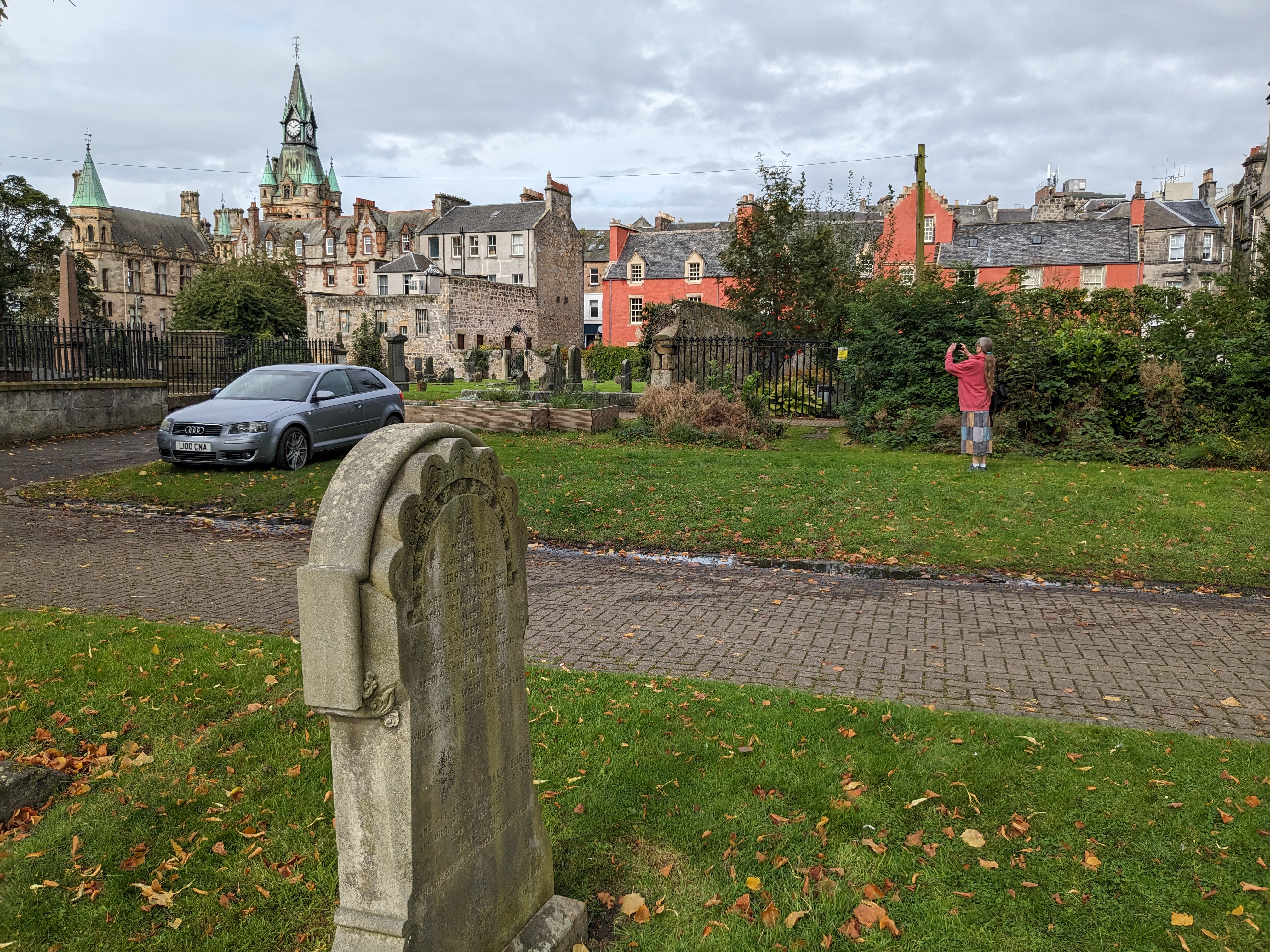
This picture shows the building from the other side of a nearby grave yard:
If you’re keen of eye, you might notice that the next picture shows a rare glimpse of the TC herself. It also includes a partial view of Abbot House, Dunfermline’s oldest house, known locally as the Pink Hoose:
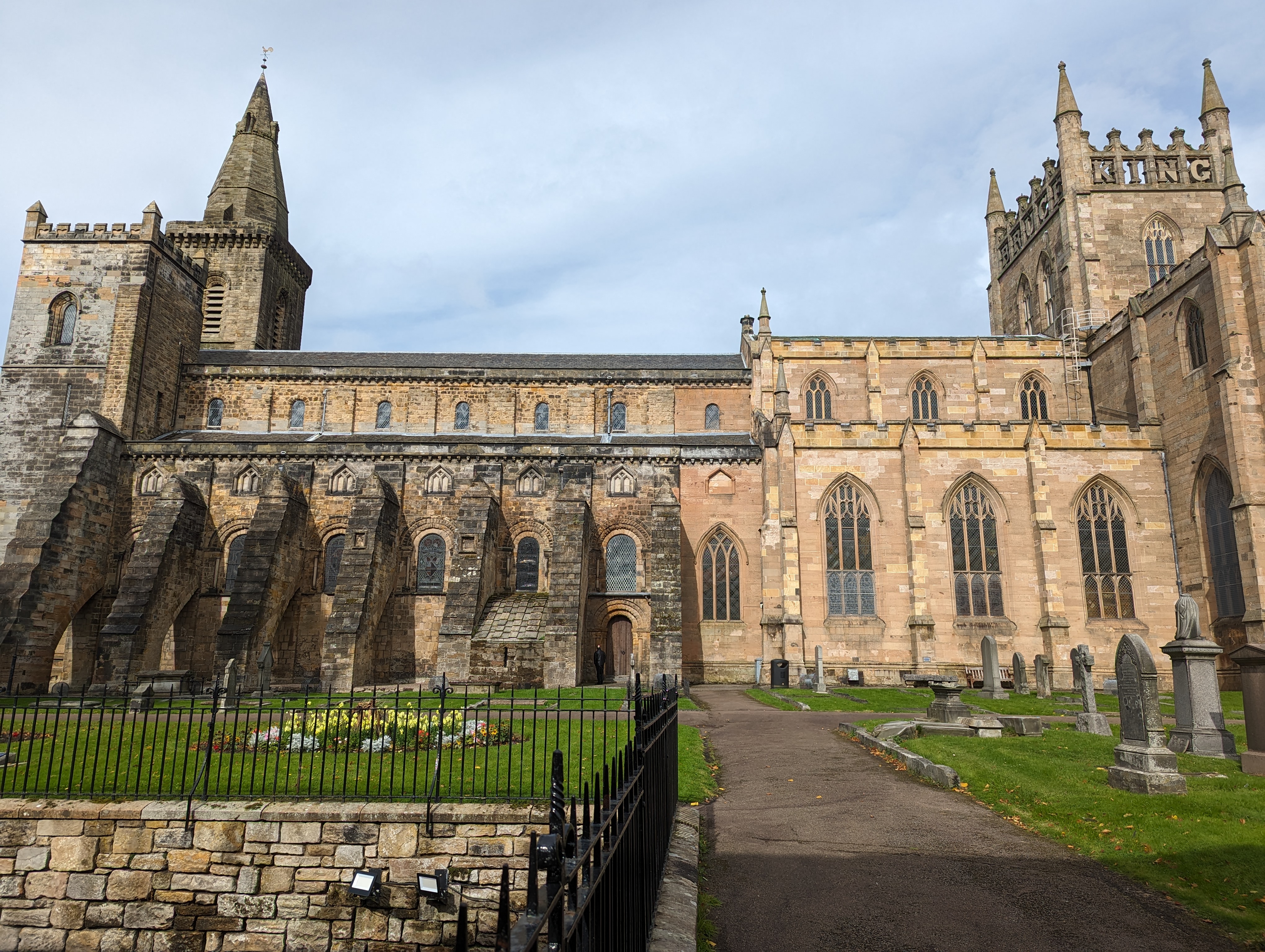
Dunfermline Abbey has been home to Christian worshippers for more than 1000 years:
The building has two distinct halves. On the left of the picture (the western half) is the Benedictine Abbey, founded by Queen Margaret in the eleventh century. Margaret arrived in Dunfermline in 1068, following the defeat of the English at the Battle of Hastings in 1066. She married King Malcolm in 1070 and founded Dunfermline Abbey in 1072.
On the right (the eastern half) is the New Abbey Church, constructed in the early nineteenth century. Robert the Bruce is buried under this half of the church. The letters that you see in the balustrade of the square tower spell out “BRUCE KING”.
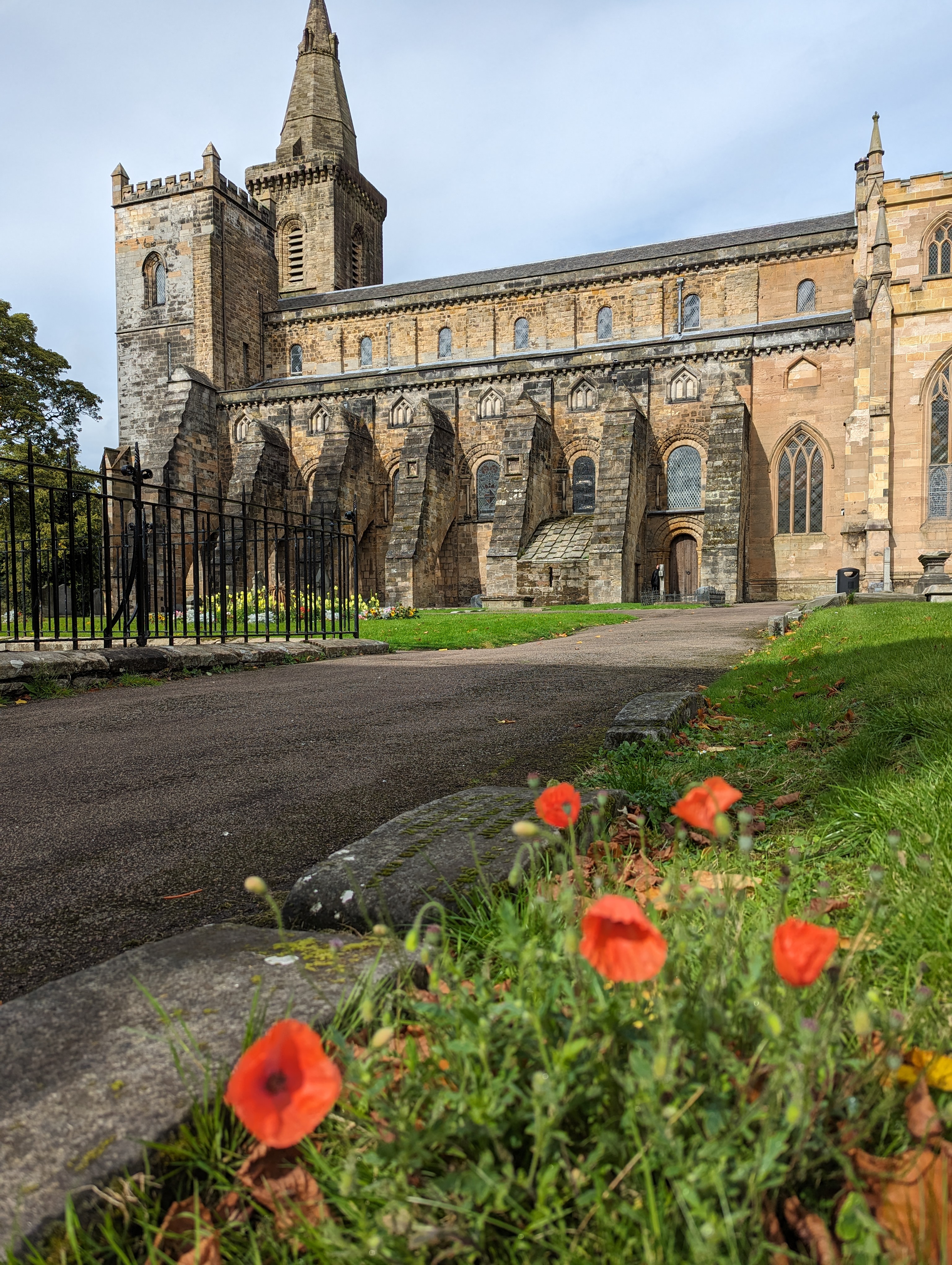
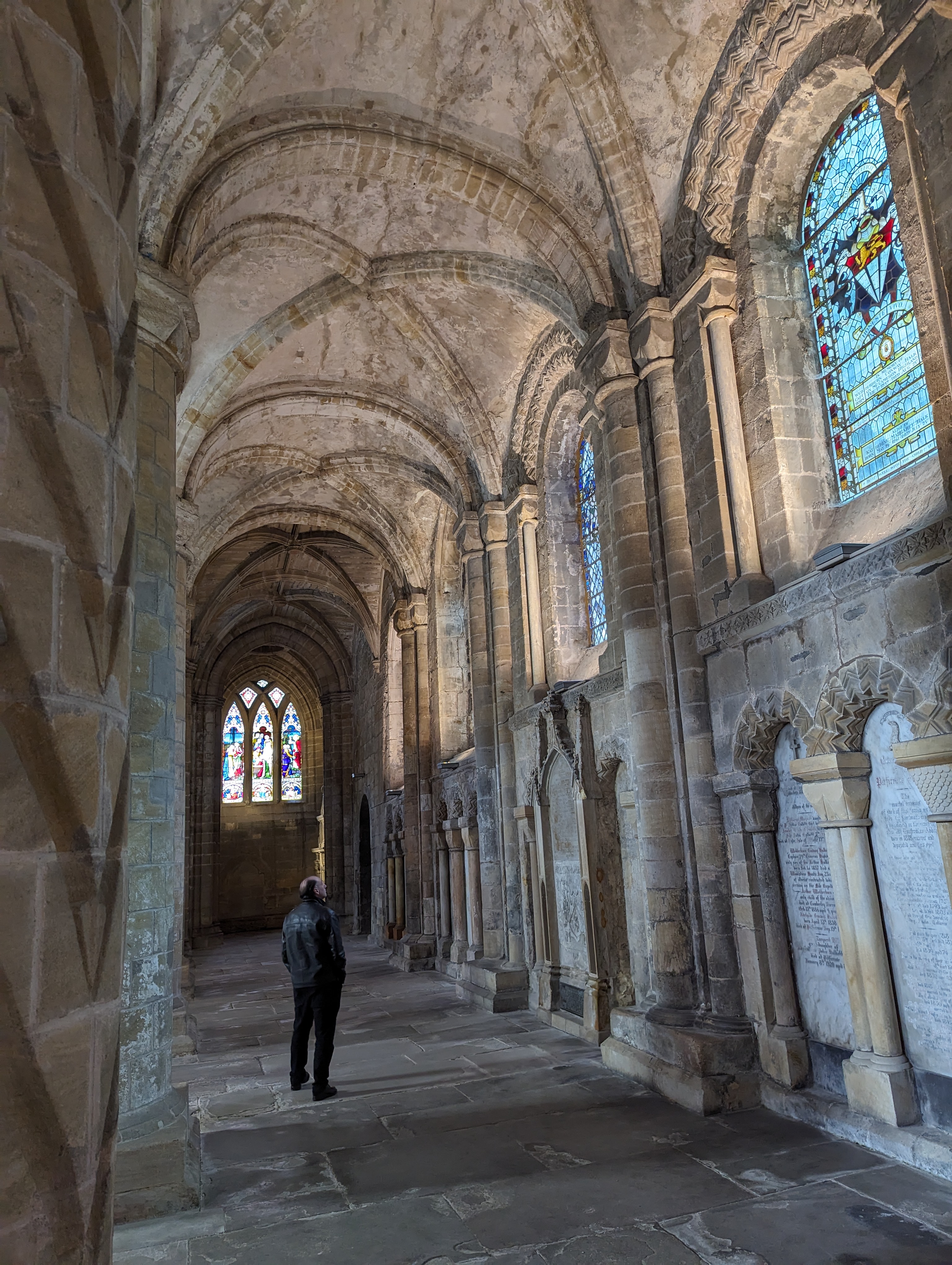
Here’s another view of the older part of the abbey:
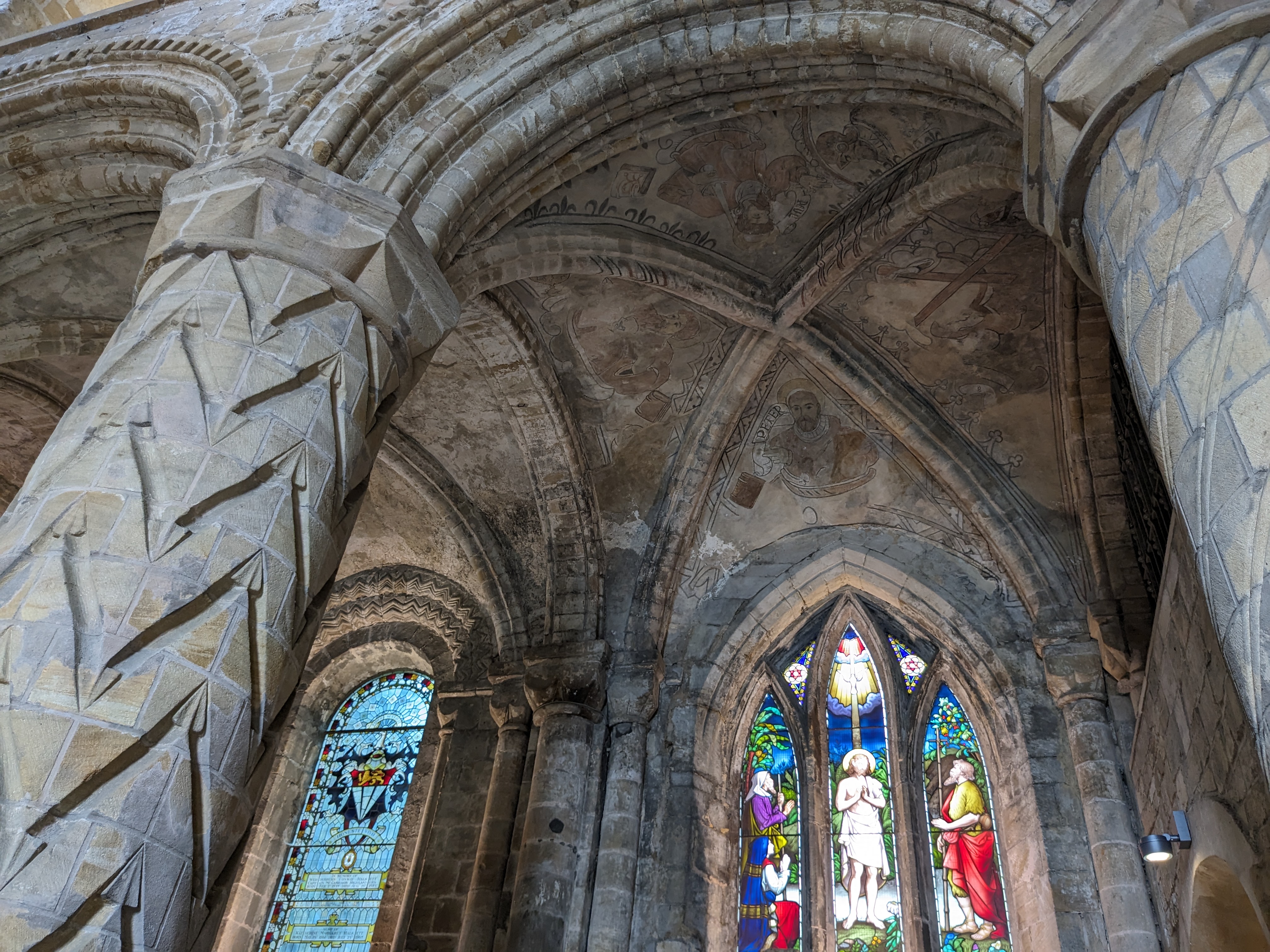
Inside the abbey, one of the arched ceilings still has the early frescoes of the apostles:
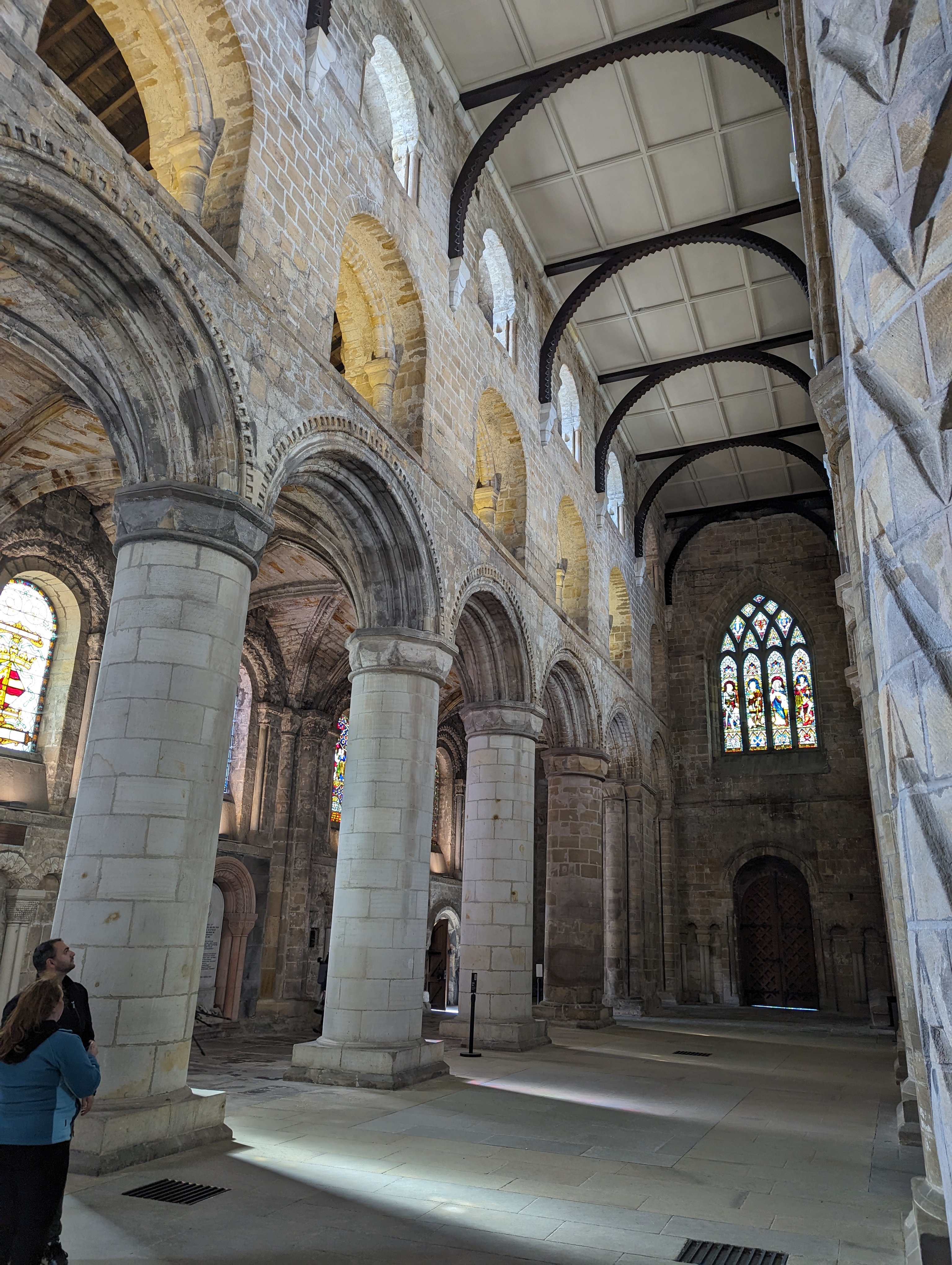
More scenes from inside the old abbey:
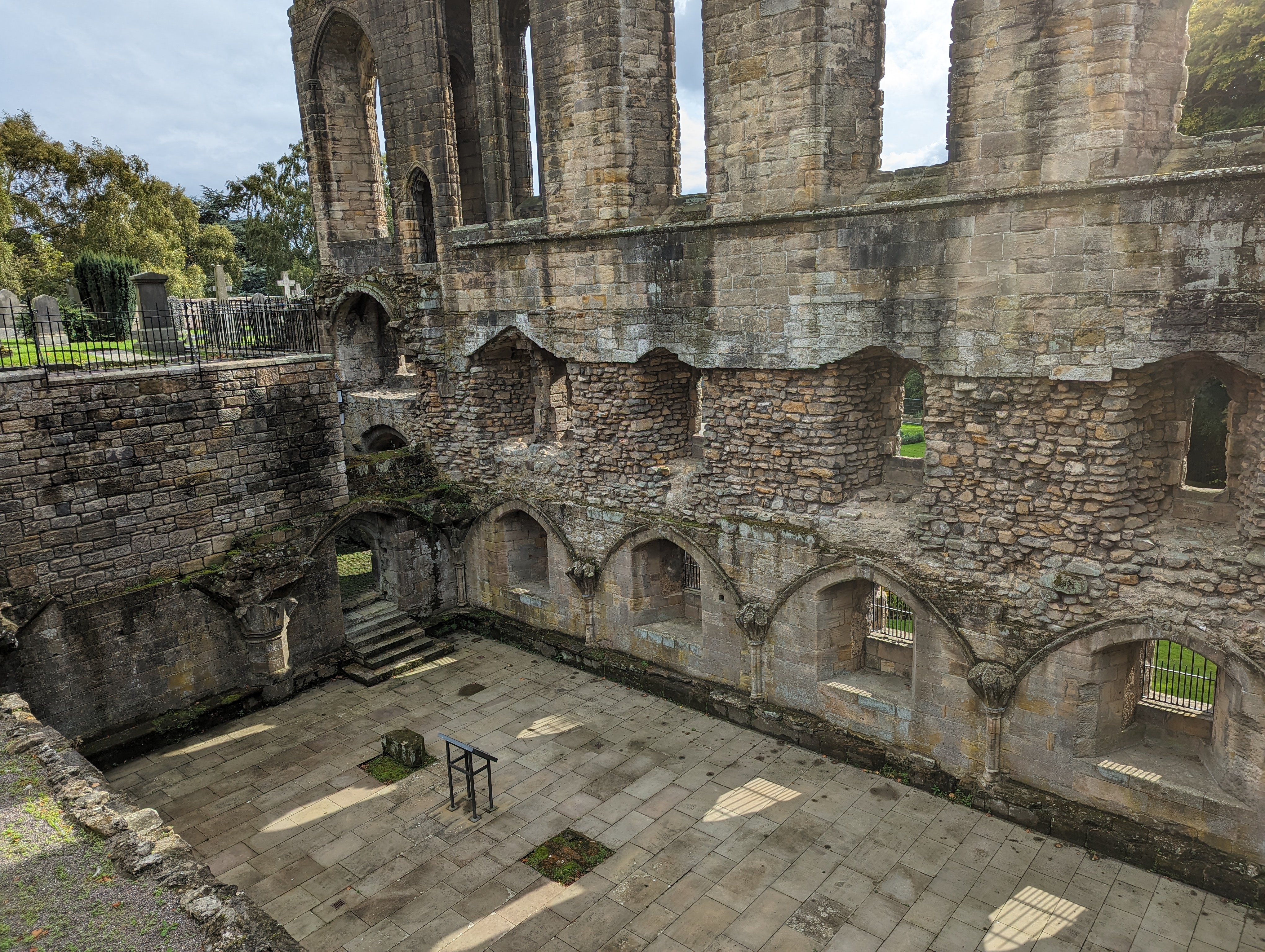
In the grounds of the abbey lie the ruins of the monastery that was built at around the same time as the old abbey, way back in the 1070s:
This is the blog of Mark Wordsworm, the travelling worm. I’m a 36-year-old bookmark (give or take a few years) and I proudly boast my own Hallmark serial number, 95 HBM 80-1. You’ll probably want to read all about me and my Travelling Companion (the TC).
Today’s travel notes
Me and the TC are touring bonny Scotland this week. We spent a day in Queensferry on the Firth of Forth. This worm was much taken by the bridges that cross the wide waters of the firth.
Is this stretch of water called the Forth of Firth or the Firth of Forth, you might ask? And what do those two words mean? The water’s name is the Firth of Forth. “Firth” is a Scottish word, of similar origin to the Norwegian “fjord”, meaning a coastal inlet. “Forth” is the name of the river.
The book I’m in
Imminent Peril, a Sasha McCandless adventure by Melissa F. Miller. The TC loves this series about a lawyer detective who attracts trouble and deals with it fearlessly.
Travel tips
Bridges carry us across areas that would otherwise be tricky. They can be beautiful and amazing feats of engineering too.
Recommended restaurant
Scott’s Bar and Restaurant, Port Edgar Marina, Shore Rd, Queensferry. Friendly, professional service and excellent food.
The photos
A rainbow appeared over the Forth Bridge while we were enjoying dinner in South Queensferry:
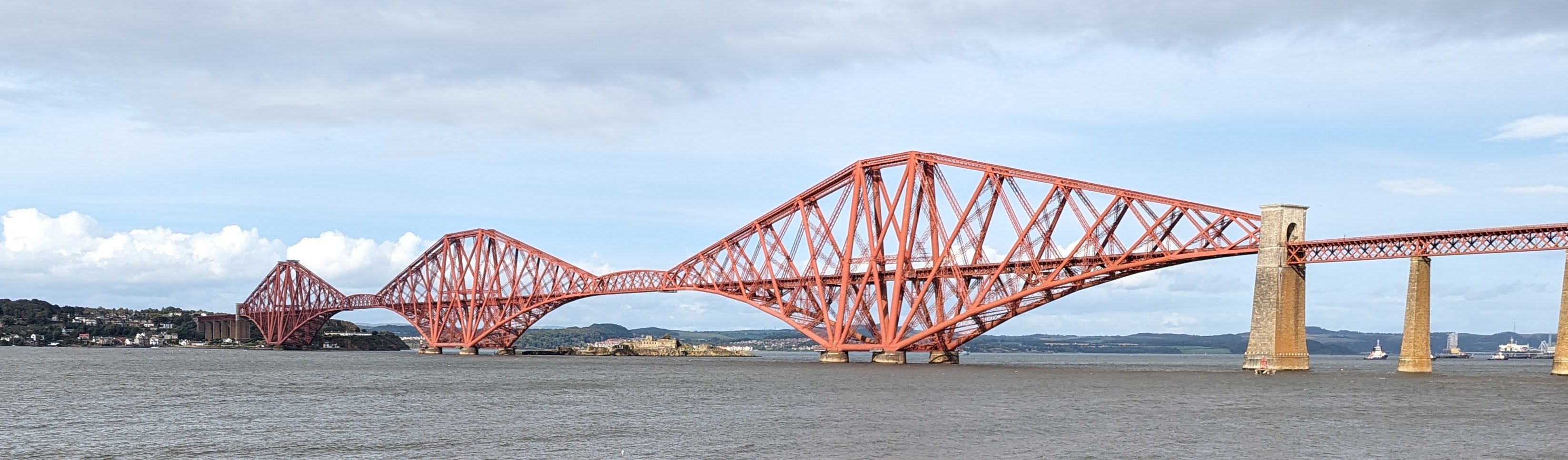
Dating from its opening in 1890, the Forth Bridge is the oldest of three bridges that cross the firth at Queensferry. It’s used only by railway trains — no road traffic, cyclists, or pedestrians. Due to its revolutionary engineering, the Forth Bridge has been designated a UNESCO World Heritage Site. Until 1919, it was the world’s longest cantilever bridge (that is, a structure made of horizontal projections that are supported only at one end) and was heralded as the first major steel structure to be built anywhere in the world. In 1919, a bridge in Canada took over the claim to be the longest cantilever span in the world.
The next picture shows all three bridges that cross the Firth of Forth at Queensferry. On the left is the Queensferry Crossing. In the middle is the Forth Road Bridge. And in the distance on the right is one end of the Forth Bridge:
Here’s another view of the Forth Bridge, this time without the rainbow:
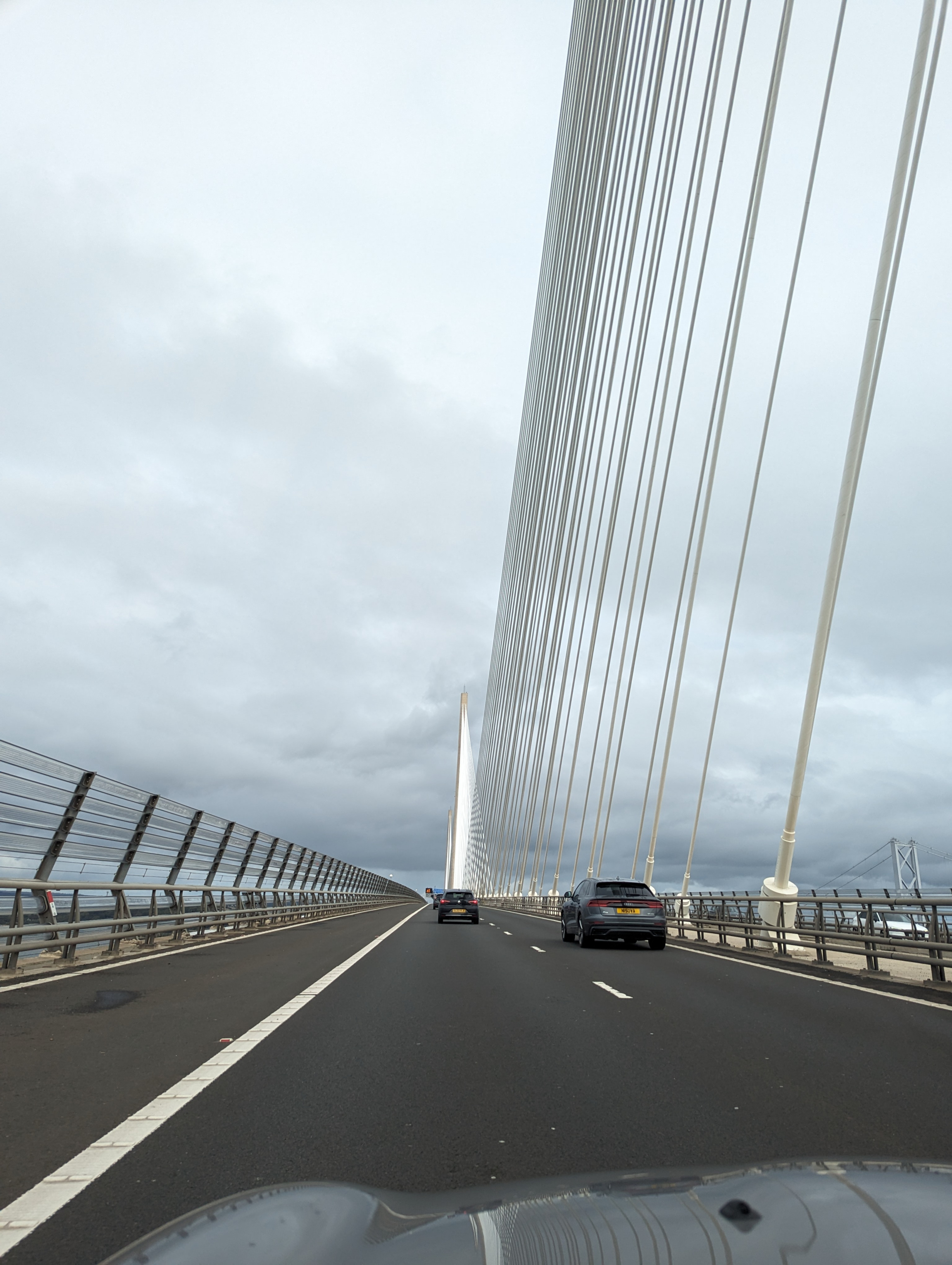
We crossed the firth by car on the Queensferry Crossing Bridge. This is the newest of the three bridges. It opened in 2017. In the morning light, the clusters of cables around the bridge’s three towers glowed like white torches:
As we drew closer, each glowing shaft of light resolved into multiple strands of cable:
The third of the three bridges is the Forth Road Bridge, stretching across the river between the other two. It opened in 1964, and is an impressive long-span suspension bridge. Its use is now restricted to pedestrians, cyclists, and public transport. Here you see part of the Forth Road Bridge, with the Forth Bridge behind and below it:
This is the blog of Mark Wordsworm, the travelling worm. I’m a 36-year-old bookmark (give or take a few years) and I proudly boast my own Hallmark serial number, 95 HBM 80-1. You’ll probably want to read all about me and my Travelling Companion (the TC).
Today’s travel notes
Me and the TC are touring bonny Scotland this week. We spent a day exploring the tracks around Loch Lomond and Loch Long in a Land Rover Defender. Our guide from 4×4 Adventures Scotland was skilled and knowledgeable, and excellent company to boot.
The book I’m in
Robinson Crusoe by Daniel Defoe, a tale of wonder and woe. It amuses this worm to apply analytic skills to the language and norms of the day, while at the same time enjoying a good yarn.
Cautionary travel tales seem to appeal to the TC while herself travelling.
Travel tips
Come rain or shine, take a day off your busy travel schedule to soak up the beauty of the natural surrounds.
The photos
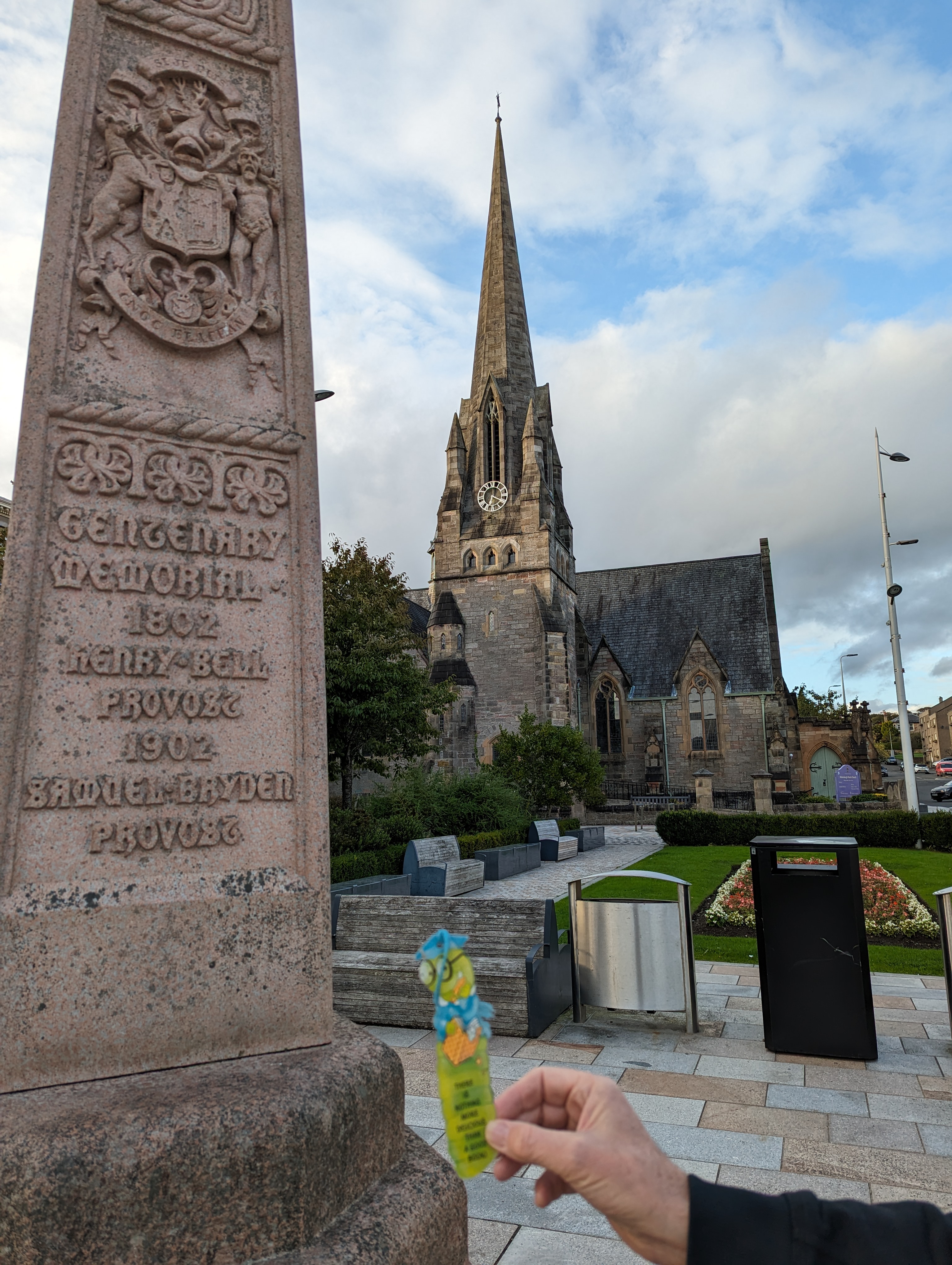
Me in Helensburgh alongside a memorial to Henry Bell, provost of the town in 1802. Helensburgh lies on the shores of Gare Loch, near Loch Lomond. Henry Bell was the first person to found a steamship business on British waters:
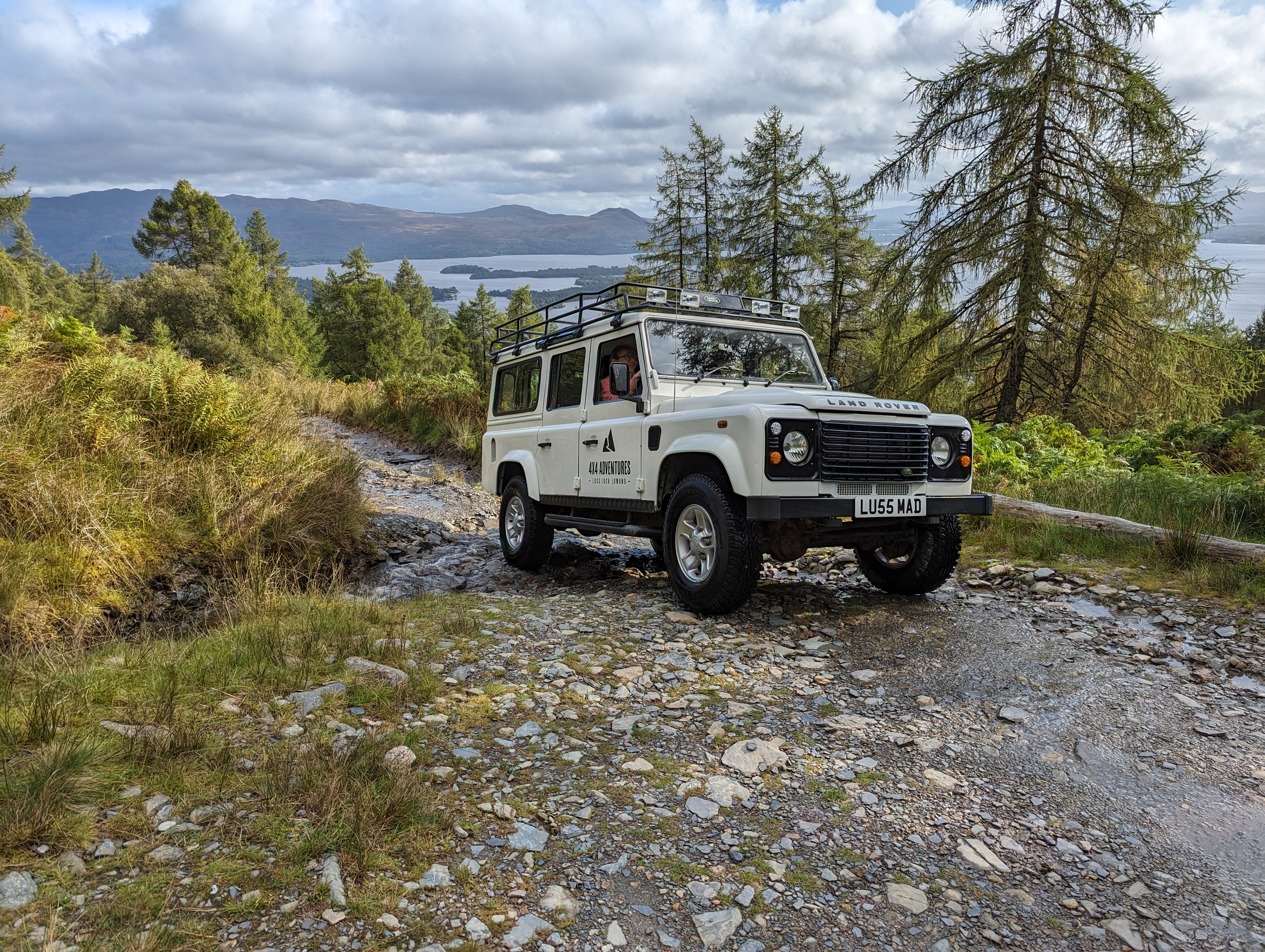
The TC organised a full-day off road adventure with 4×4 Adventures Scotland. The company provided a Land Rover Defender and a local guide named Alan, who knew the off road tracks around Loch Lomond and surrounds like the back of his hand.
The vehicle was a Land Rover Defender 110 with a 2.4 litre engine, 33″ all-terrain tyres, a manual gear box, and differential lockers front and back. Approximately ten years old, she’d earlier served as an ambulance. She bore the name LU55 MAD, of which the first part harks to her base in the town of Luss and the second part harks to her nature. Show her a steep, rocky hill with a stream of water coursing down it, and she jumped at the challenge of getting to the top:
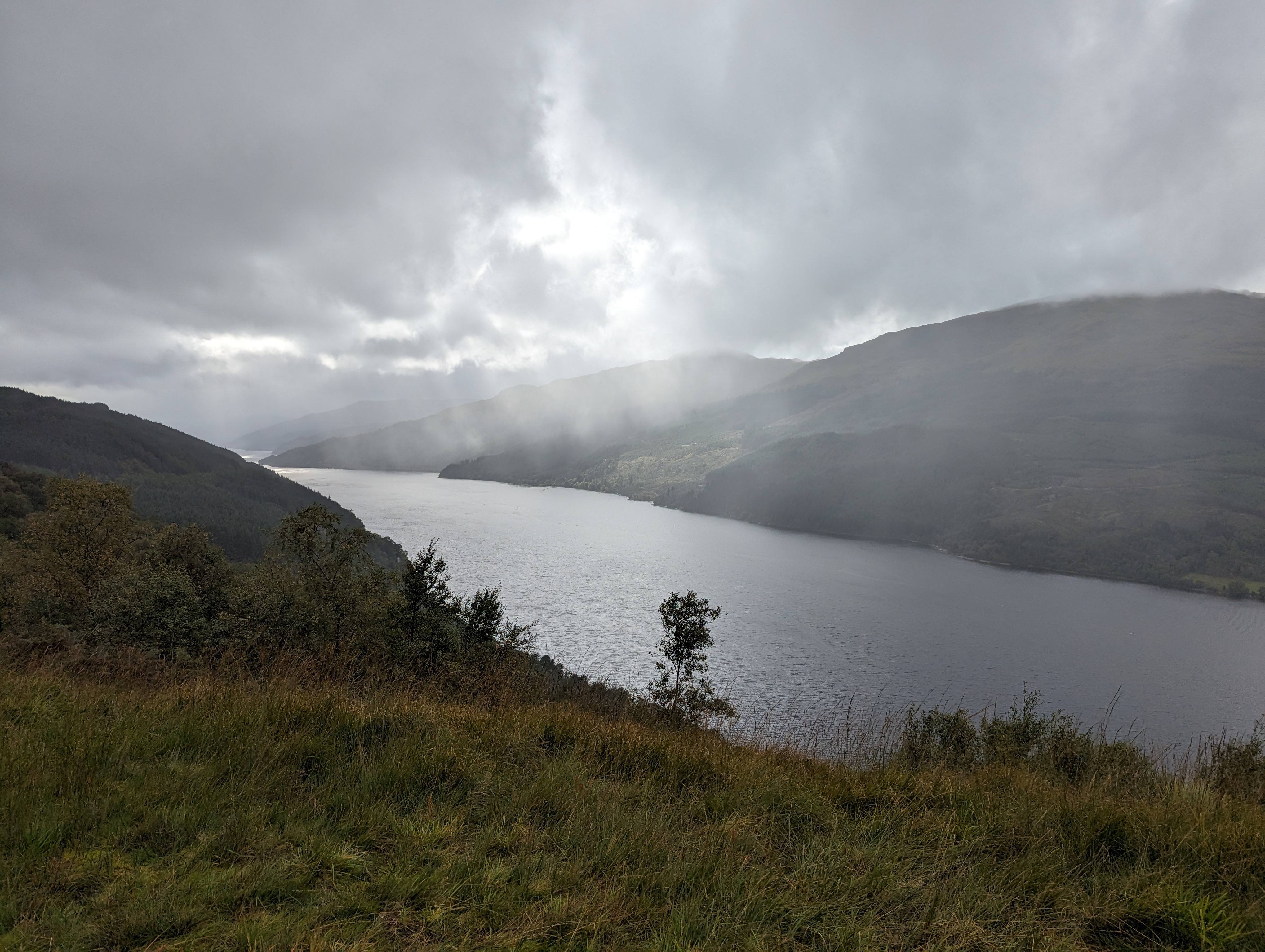
The weather did us proud, throwing us an abundance of mood-filled scenes. This is the gorgeous Loch Long:
The TC, bless her cotton socks, could not restrain the Ooohs and Aaahs. This worm concedes that there was beauty to be had. In particular, these mossy knolls appealed to my delicate body type. The hillocks rise a couple of feet in height and are entirely soft and spongy, with no hard rock or trunk beneath:
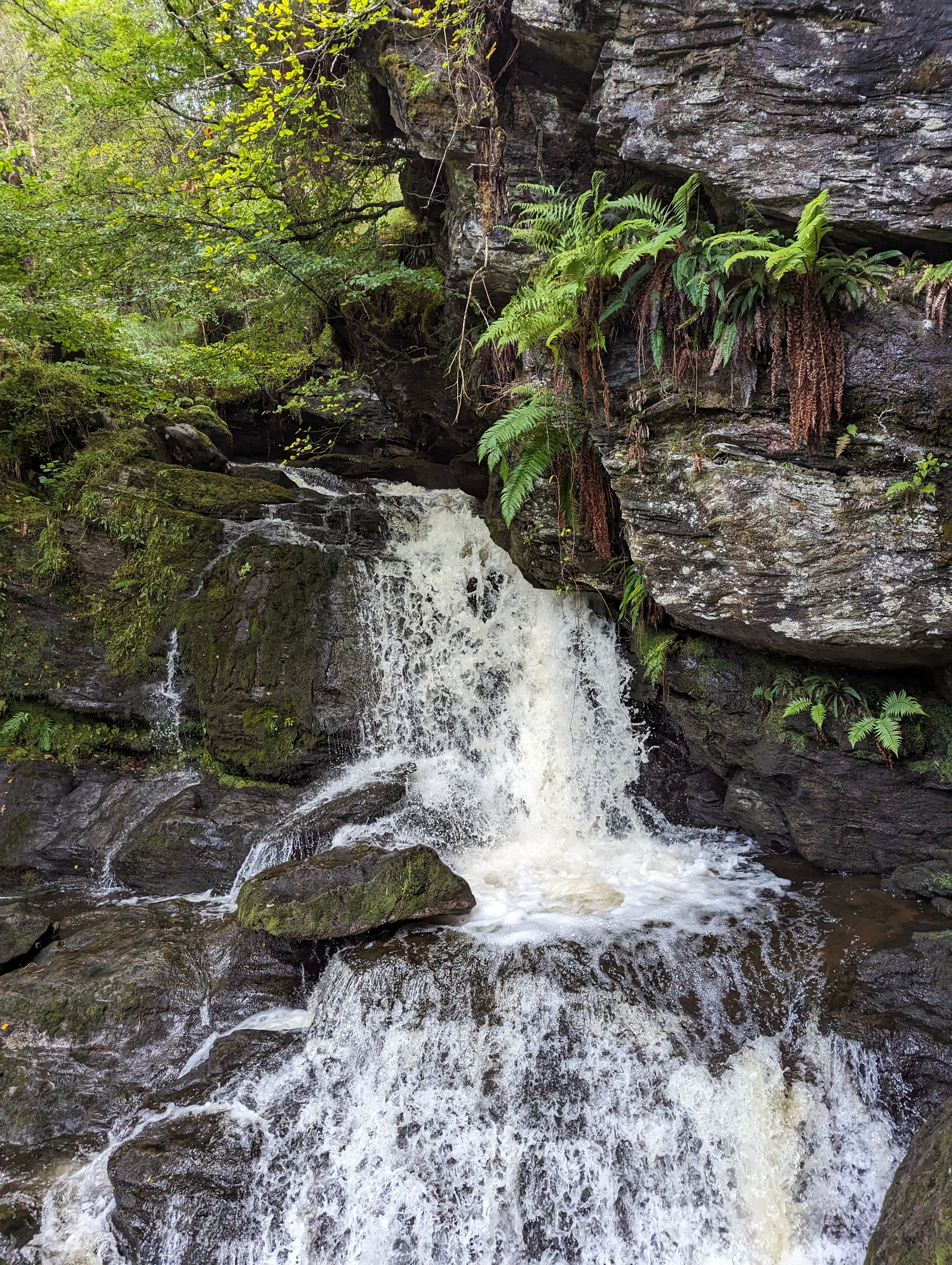
Streams gushed down the slopes, ushered by moss and fern:
More views of mount and loch that made the TC go Aaah. First, looking out over the islands in the wide part of Loch Lomond:
To finish off, here’s the track running along Loch Long:
This is the blog of Mark Wordsworm, the travelling worm. I’m a 36-year-old bookmark (give or take a few years) and I proudly boast my own Hallmark serial number, 95 HBM 80-1. You’ll probably want to read all about me and my Travelling Companion (the TC).
Today’s travel notes
Me and the TC spent a few days recently in Cape Town, South Africa. A must-do is the trip via cable car to the top of Table Mountain. The day we’d scheduled for the outing dawned cloudy and cold. We went up the mountain anyway. The TC is like that. Tomorrow may never come, she opines, and even if it does, there’s no guarantee it’ll turn out better than today.
The book I’m in
A Slim Green Silence, by Beverly Rycroft. This is a beautifully-written and engaging read. The author melds Afrikaans phrases with English prose, and a dash of Xhosa here and there. For a reader who’s lived in South Africa, it’s a pleasure to experience through the book the mix of cultures in a small South African town.
Travel tips
If you have a clear day, use it to go up the mountain. Even if you don’t have a clear day, go up the mountain anyway.
The photos
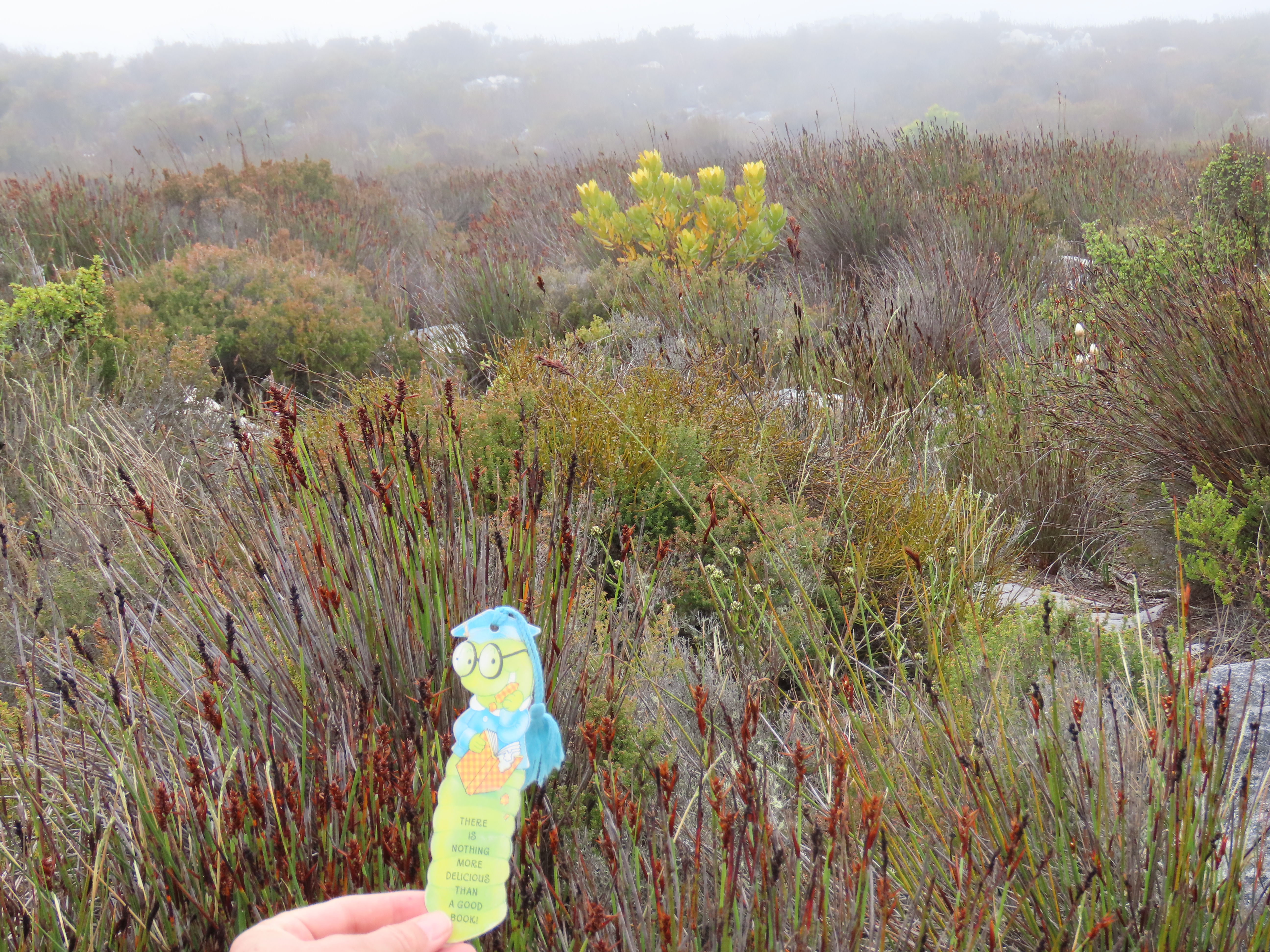
Me among the fynbos atop Table Mountain:
Fynbos is the name given to the vegetation in this area of Southern Africa. It’s uniquely hardy and beautiful, and it feeds and shelters the animals and birds of the mountain too.
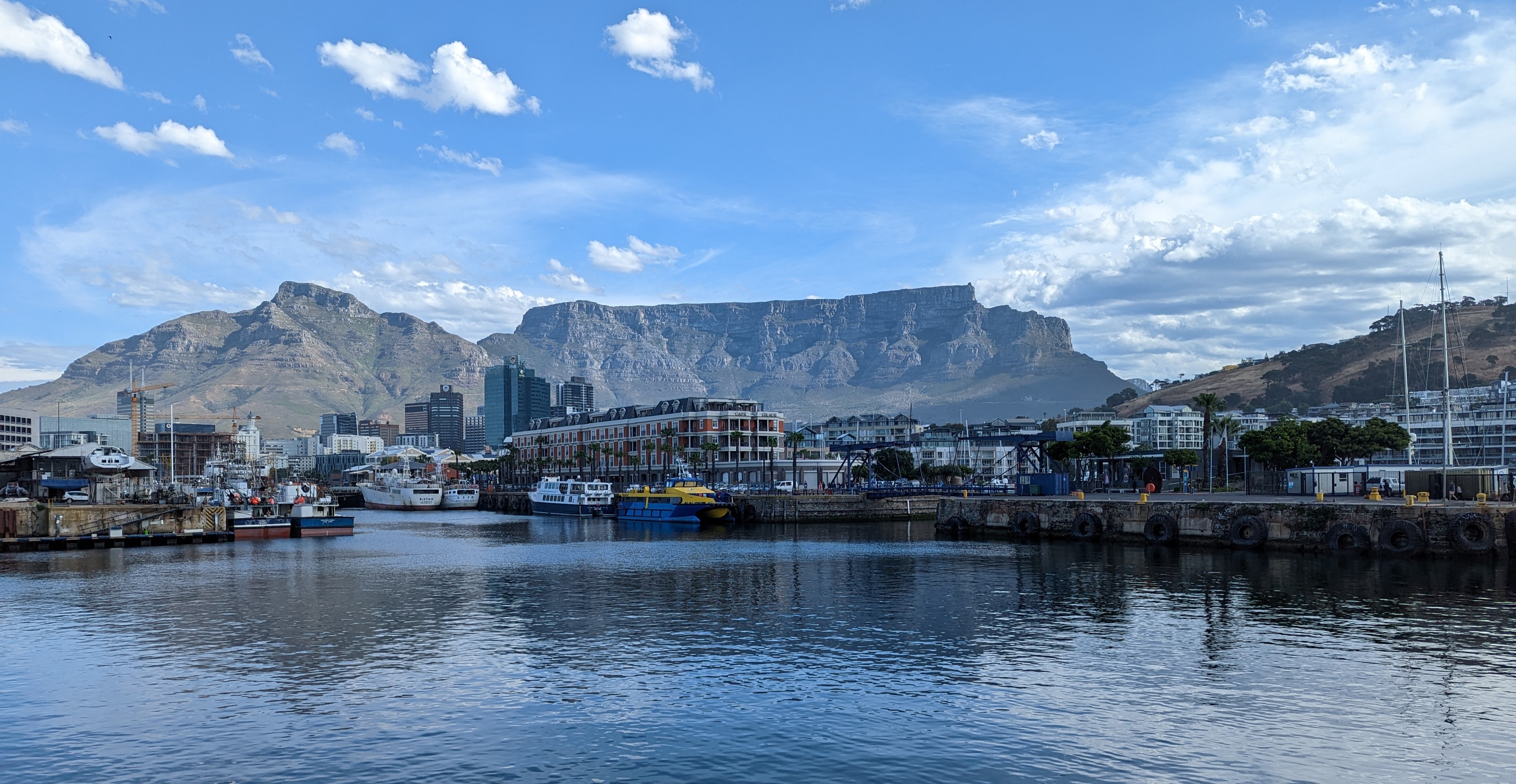
The next shot shows Table Mountain in all its splendour, photographed from The Waterfront at the Cape Town harbour. On the left of the photograph is the mountain named Devil’s Peak. In the middle is Table Mountain itself, with the hotels and docks of the Waterfront in the foreground. The hill on the right is Signal Hill:
To get to the top of the mountain, we drove through the city, up Kloof Nek road through Tamboerskloof and Oranjezicht, until we reached the lower cable station. From that vantage point, we saw the city of Cape Town and suburbs laid out below us:
The lower station was clear and sunny as we started our ride to the top:
There are two cable cars, as you can deduce from the two housings in the station. They travel at the same time, one on its way up the mountain and the other on its way down.
The ride up was lovely, though a little eerie when we entered the cloud layer and the rest of the world disappeared. We couldn’t even see the hulking huge mountain that was just outside the window. I’d show you a photo, but all you’d see is a blank wall of grey.
What’s it like on the top of the mountain when cloud is rolling up from below? Watch this video to find out:
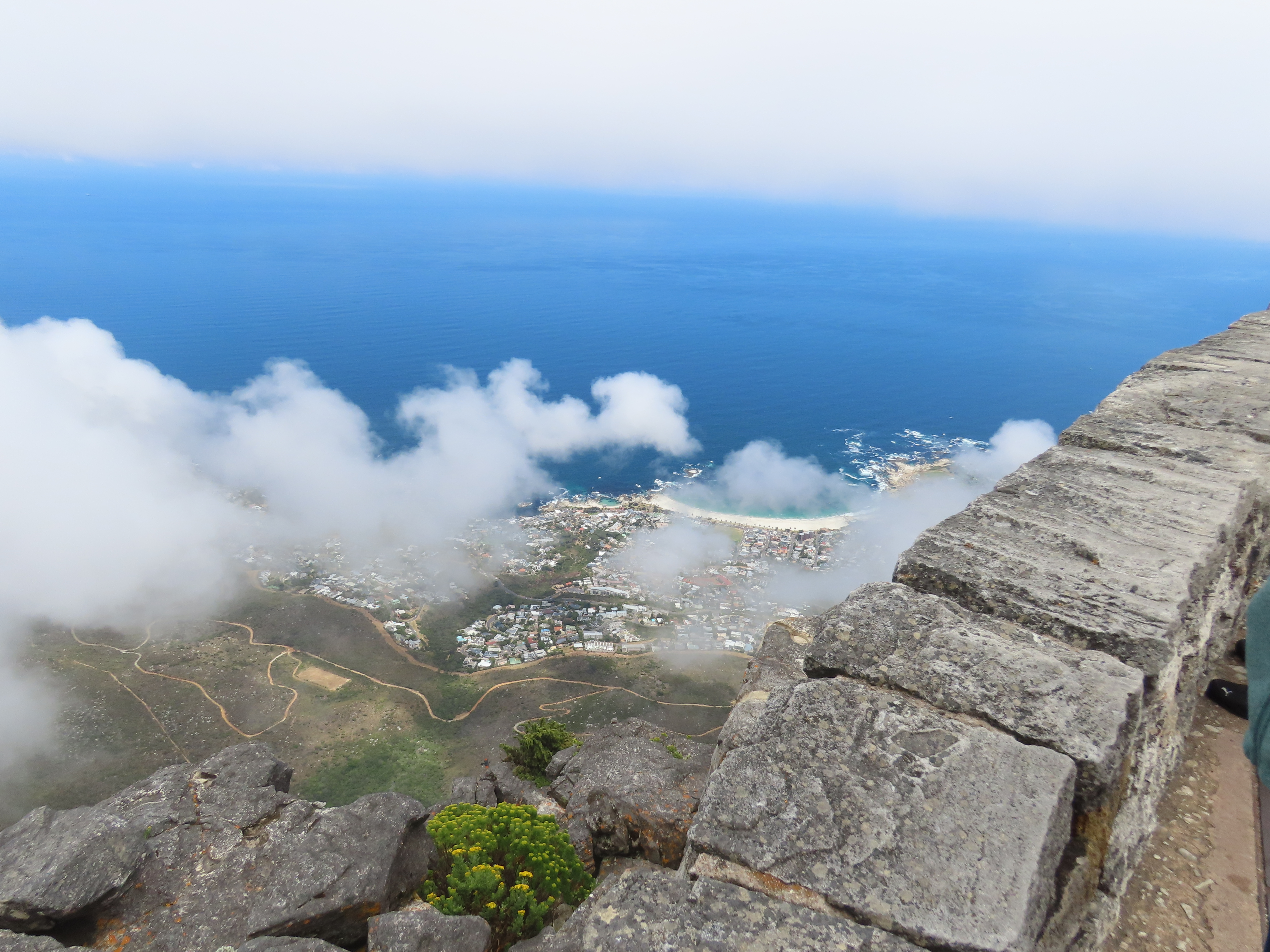
On the western side of the mountain is the seaside suburb of Camps Bay:
On the eastern side is Devil’s Peak and the suburb of Oranjezicht:
A pinky orange lily poked above the rocks:
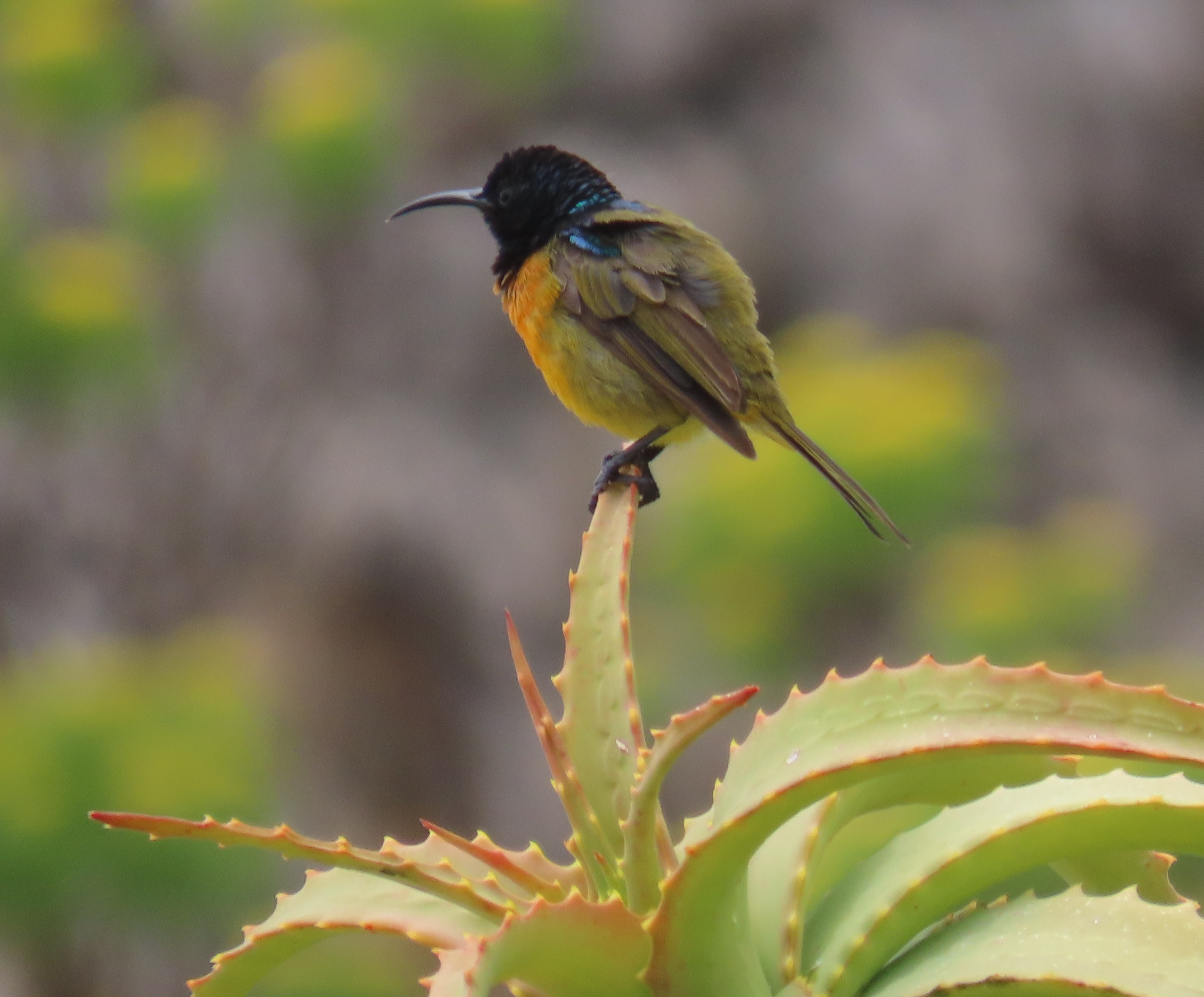
An Orange-breasted Sunbird perched on an aloe:
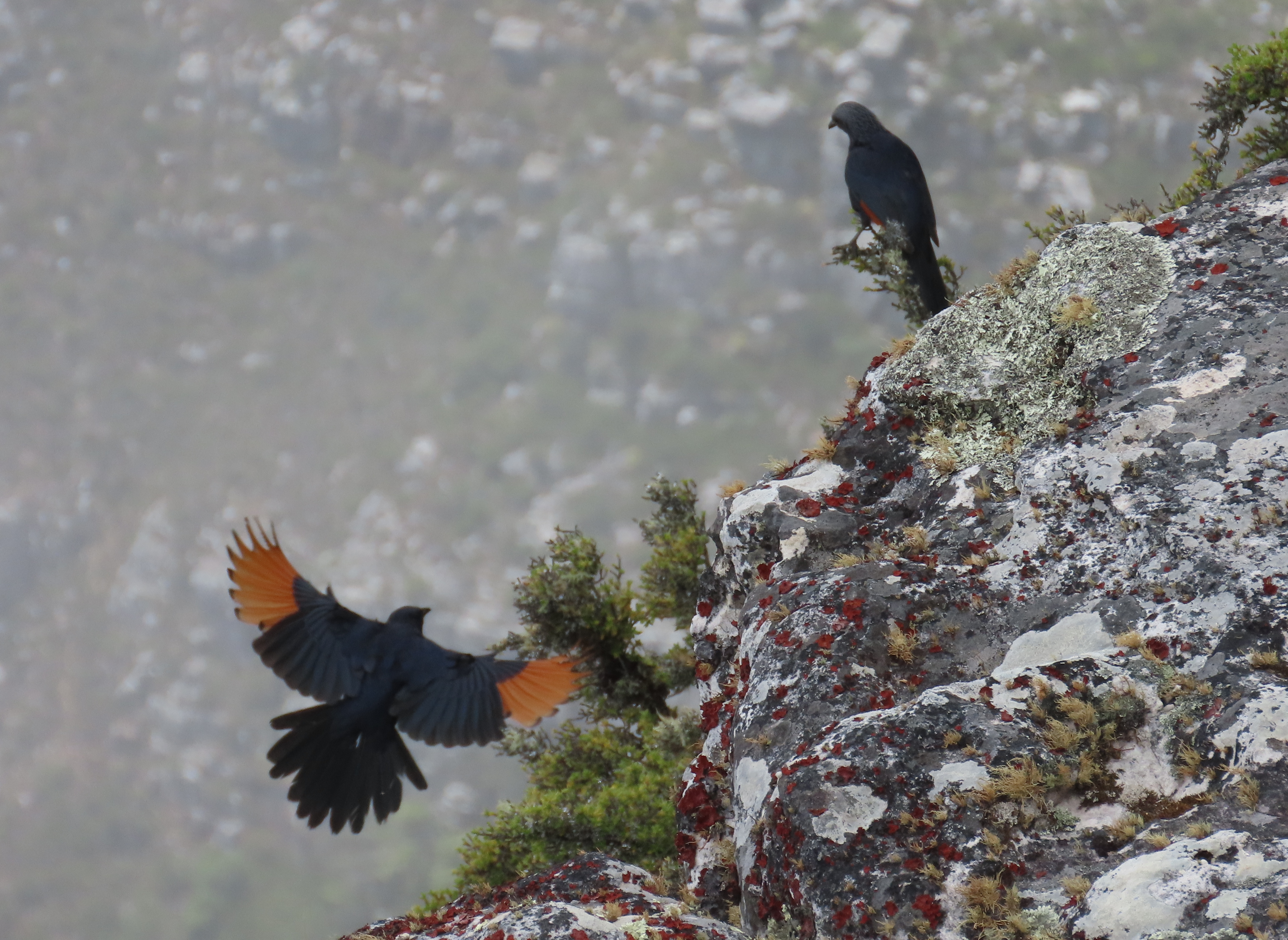
A couple of Red-winged Starlings flitted around us. Needless to say, yours truly stayed under cover while these formidable creatures had their beady eyes on us:
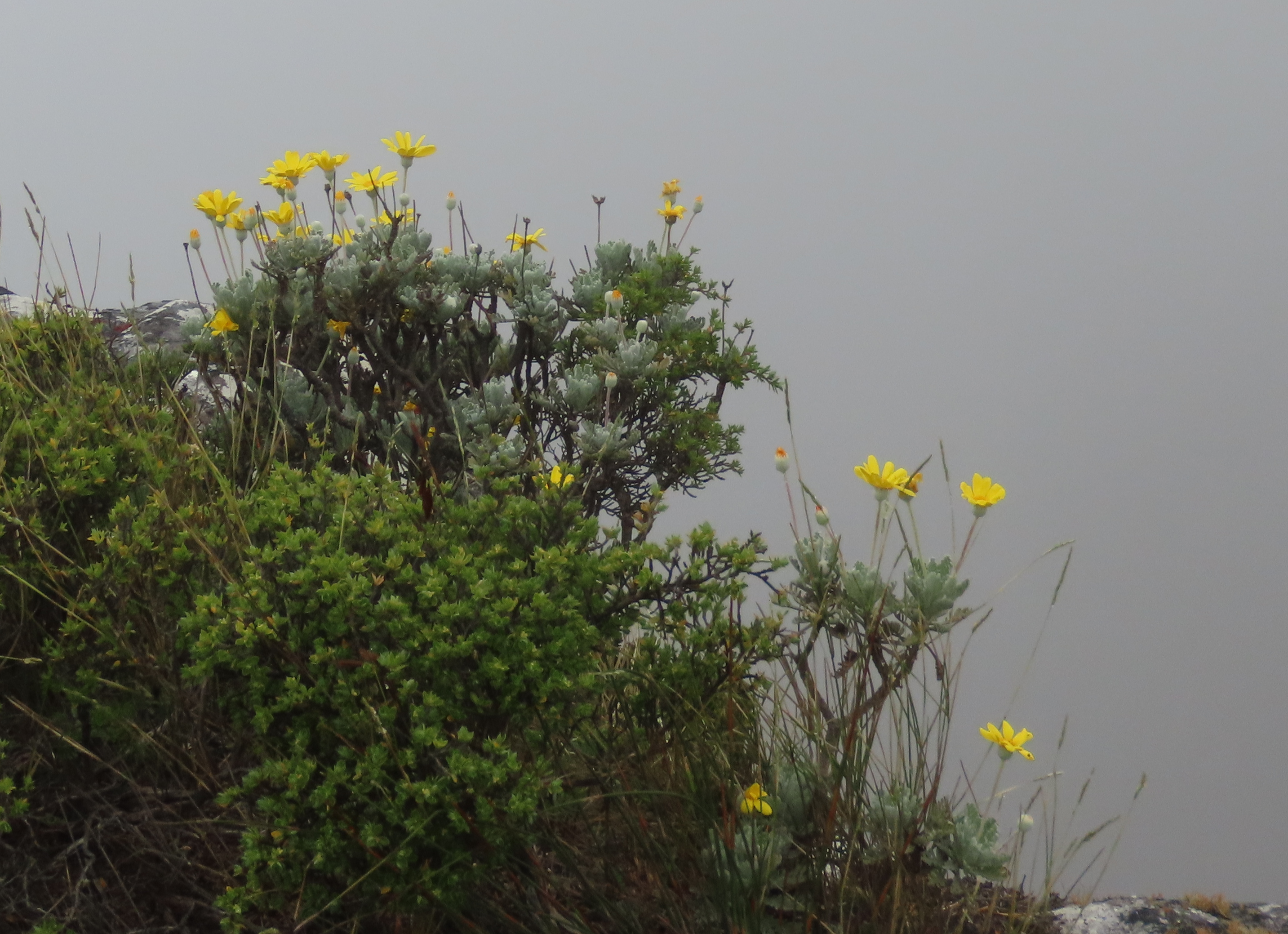
Daisies did their level best to brighten up a grey day. That’s what daisies do:
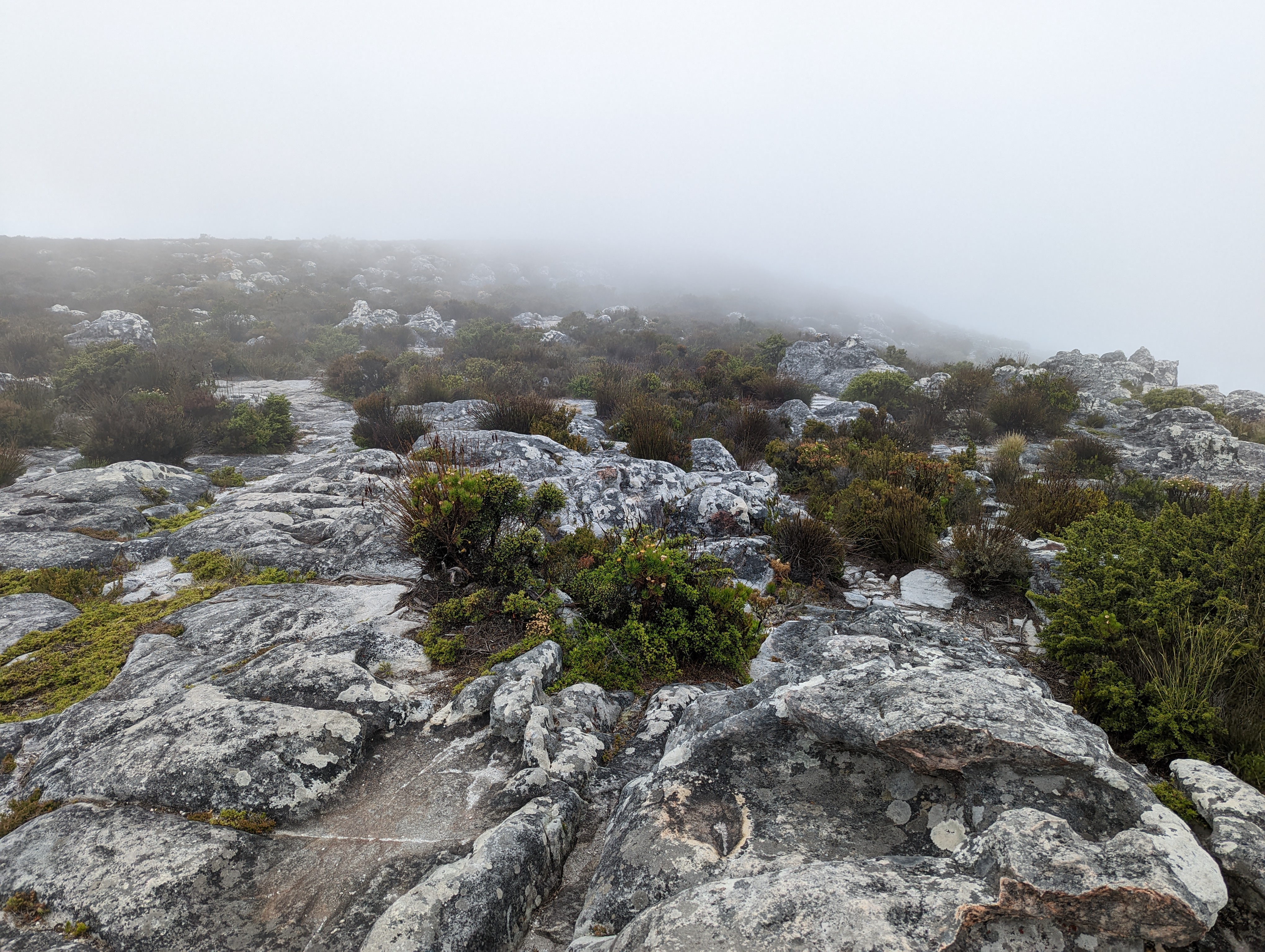
The top of Table Mountain really is flat. There are some good paths, especially on the front table near the top cable station:
Due to the mist, we decided to restrict our trip to just the front table. On other trips, we’ve made the crossing to the back table and walked all the way to Maclear’s Beacon. That’s a round trip of a couple of hours, and we didn’t think it wise given the current low visibility. So, back to the top cable station.
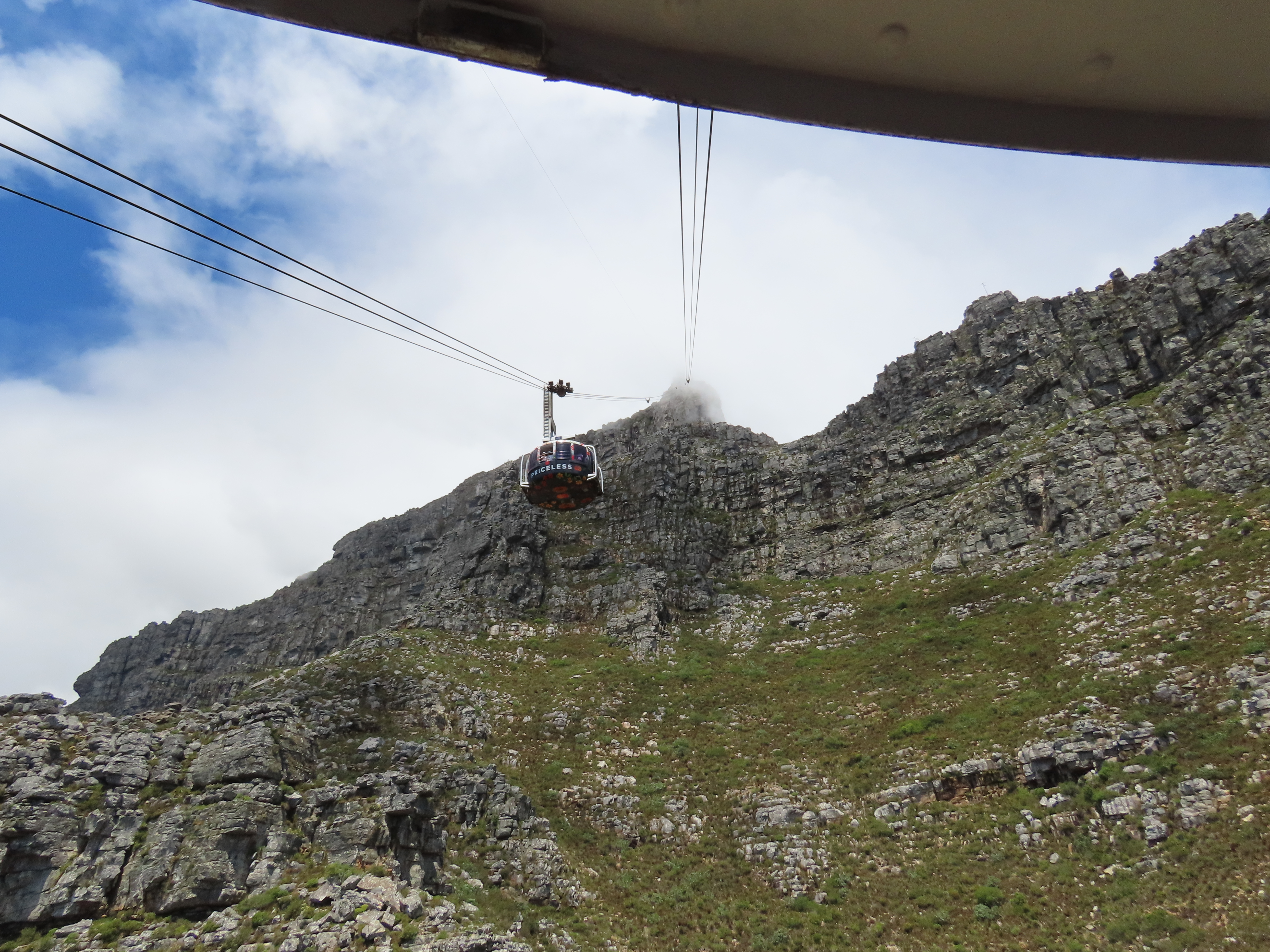
This picture shows both the top and the bottom cable stations. It gives a good idea of the steep trip ahead of us!
The two cable cars pass each other, one on the way up and the other on the way down:
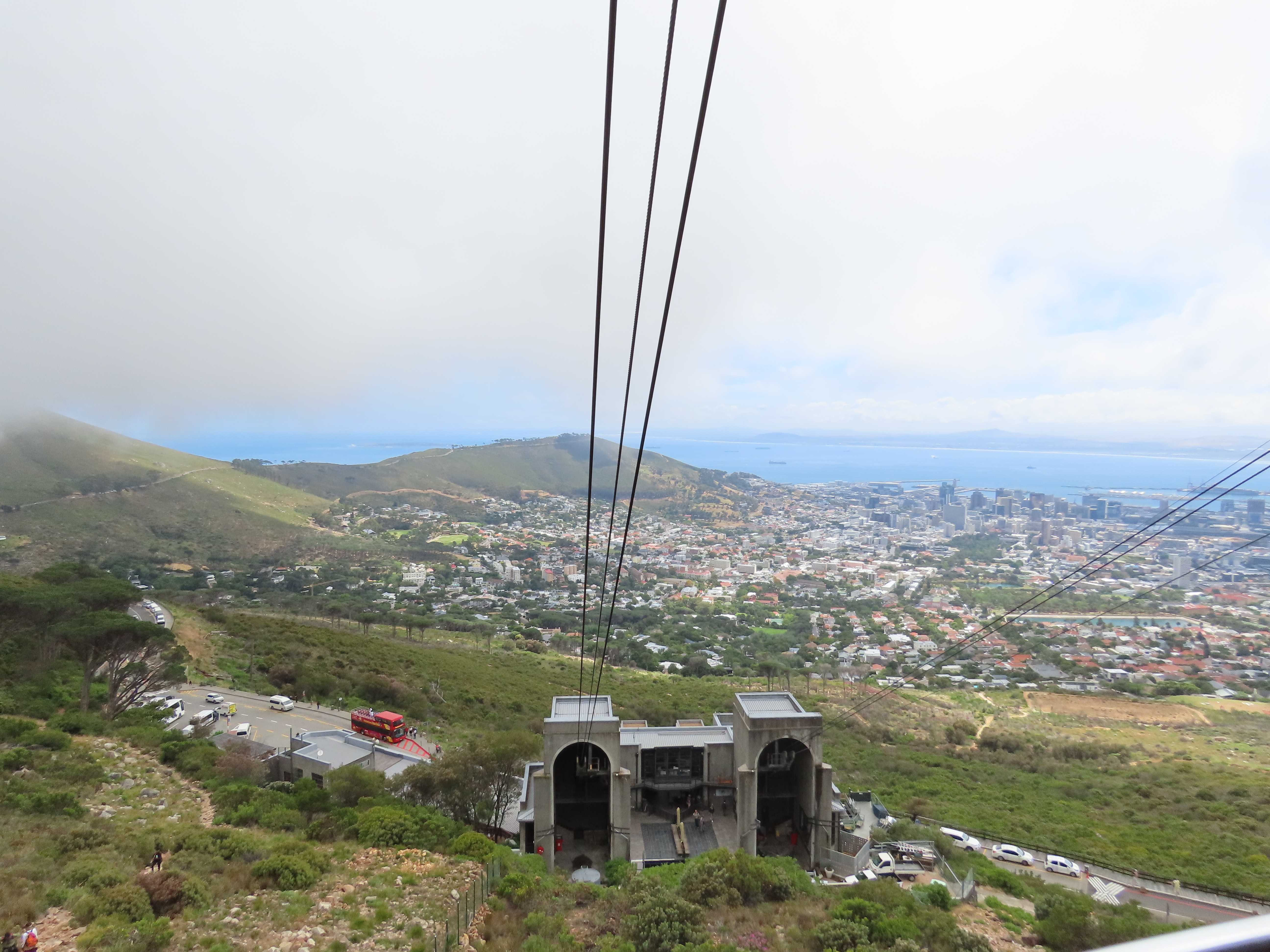
Aboard the cable car once more, we saw the cables descending into the cloud:
On the way down, we passed the other cable car on its way up. Here’s a view taken from our cable car, showing the upper station in the mist behind the other car:
Table Mountain is a natural wonder and a place of calm and beauty. Heed the words of a wise worm: It’s well worth a visit.
This is the blog of Mark Wordsworm, the travelling worm. I’m a 36-year-old bookmark (give or take a few years) and I proudly boast my own Hallmark serial number, 95 HBM 80-1. You’ll probably want to read all about me and my Travelling Companion (the TC).
Today’s travel notes
Me and the TC have spent the last couple of weeks in Zurich. It was largely a working trip for the TC. Spending time in a city as a working person is a different experience from being a tourist. We have, however, found the time to see a bit of the city too.
The book I’m in
Tell Me Lies, by J. P. Pomare. The TC has just started this book. I’m looking forward to digging in during the long trip home from Zurich to Sydney.
Recommended restaurant
Burgermeister, Oberdorfstrasse, Zurich. The restaurant offers take-away as well as dine-in meals. You order your food at the counter and collect it there too. The food comes quickly. It’s very tasty and of high quality.
Travel tips
Parking is complicated. Blue zones, white zones, time restrictions… Read up on it before you arrive.
The photos
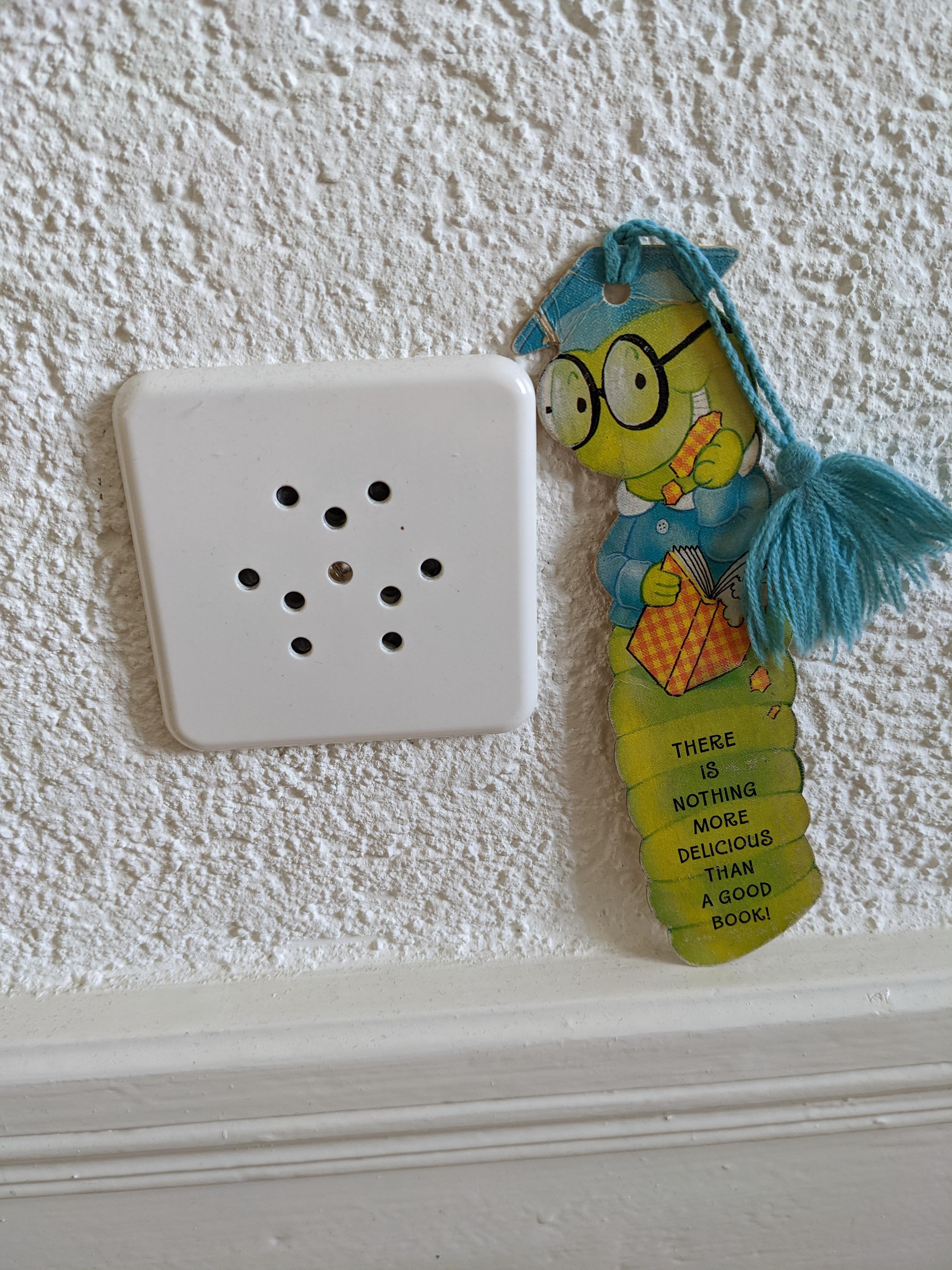
Me surveying a complex-looking plug socket array in our Zurich accommodation:
Swiss plugs differ from those in much of Europe. They have three prongs, with the middle one slightly offset.
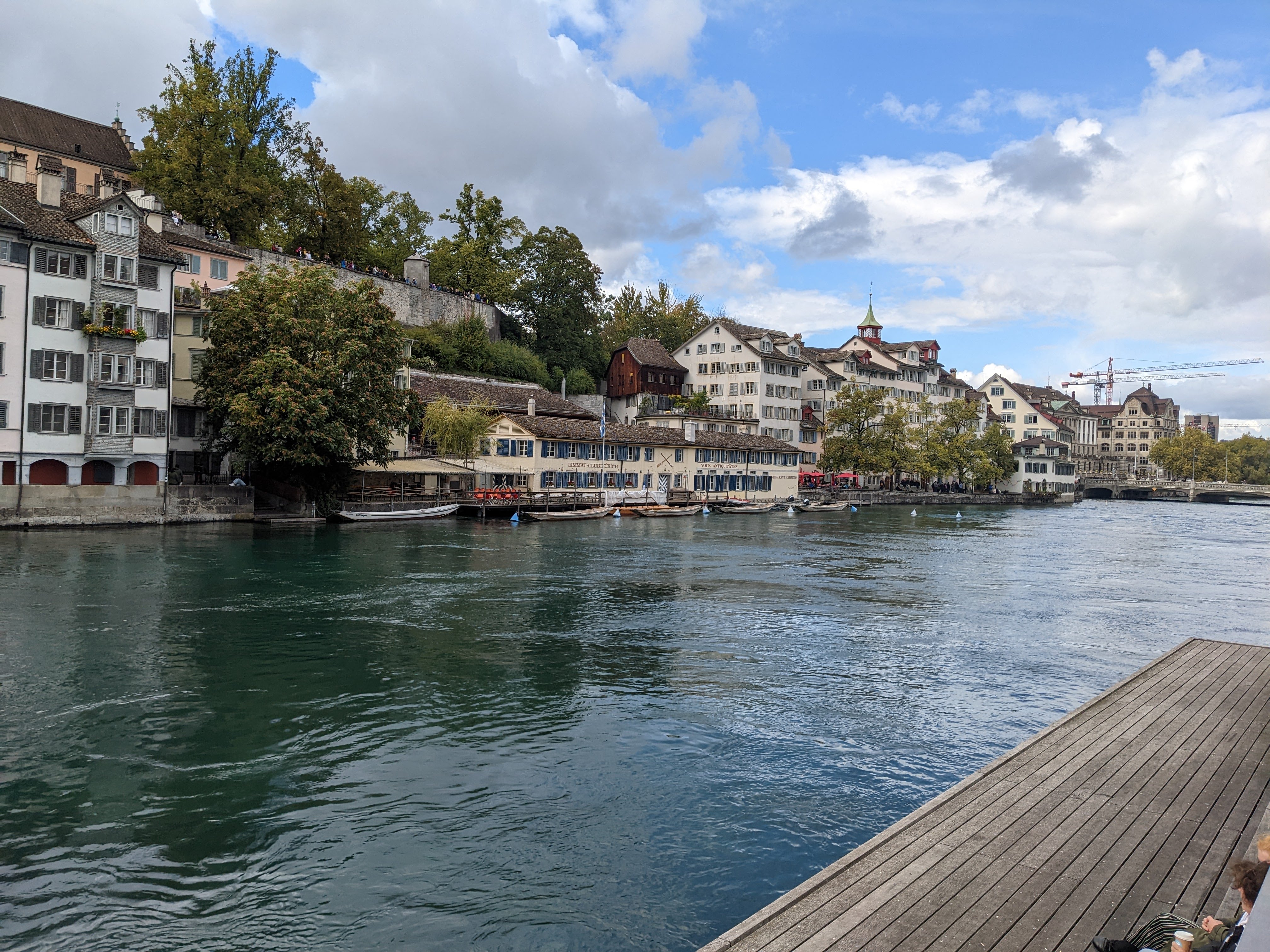
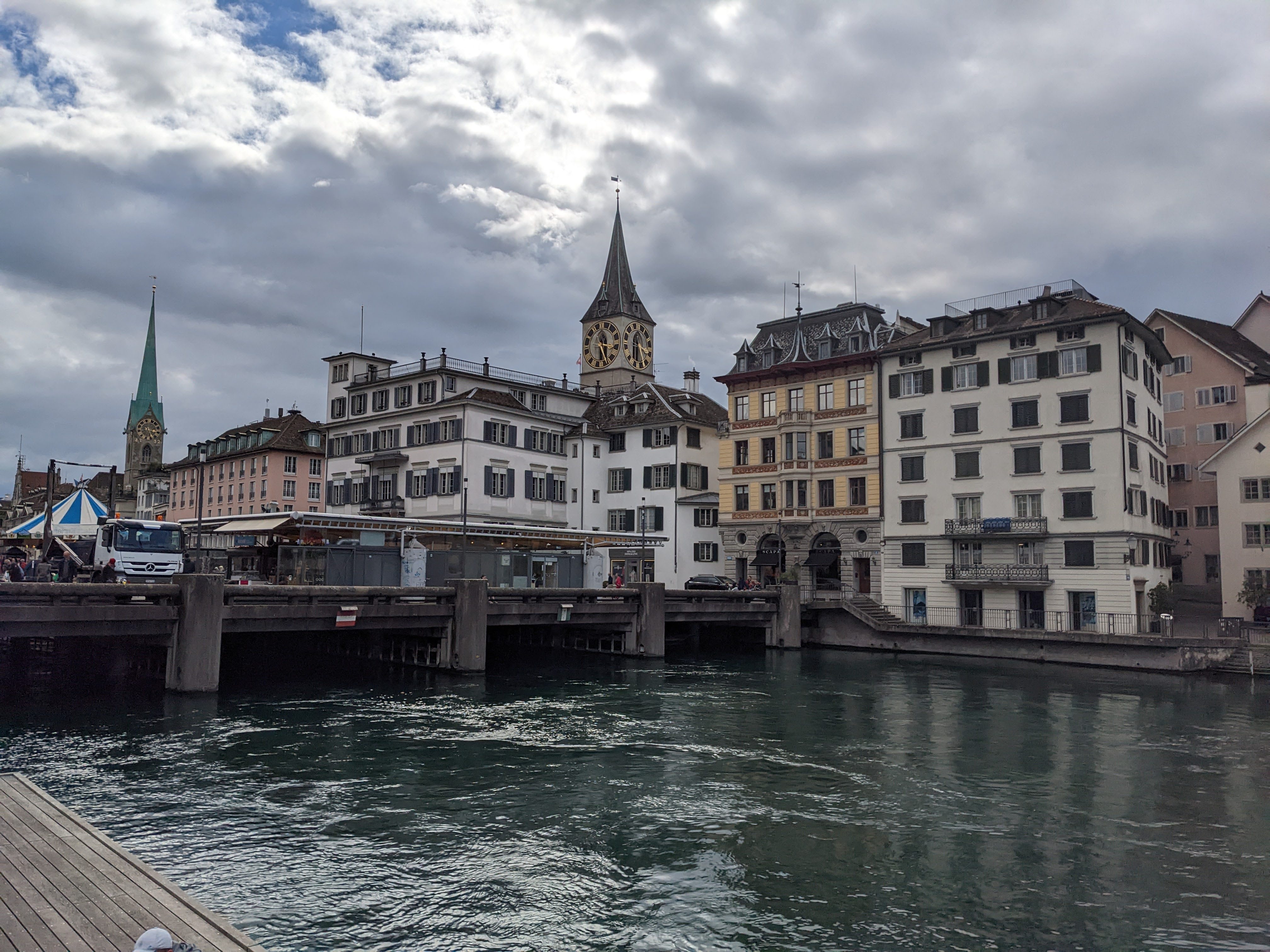
The lovely Limmat River runs through Zurich. This worm appreciated the river in its many moods:
Scooters, bicycles, motorbikes, e-bikes — people use a variety of vehicles to move around the city:
Winding alleys lead down into the old town:
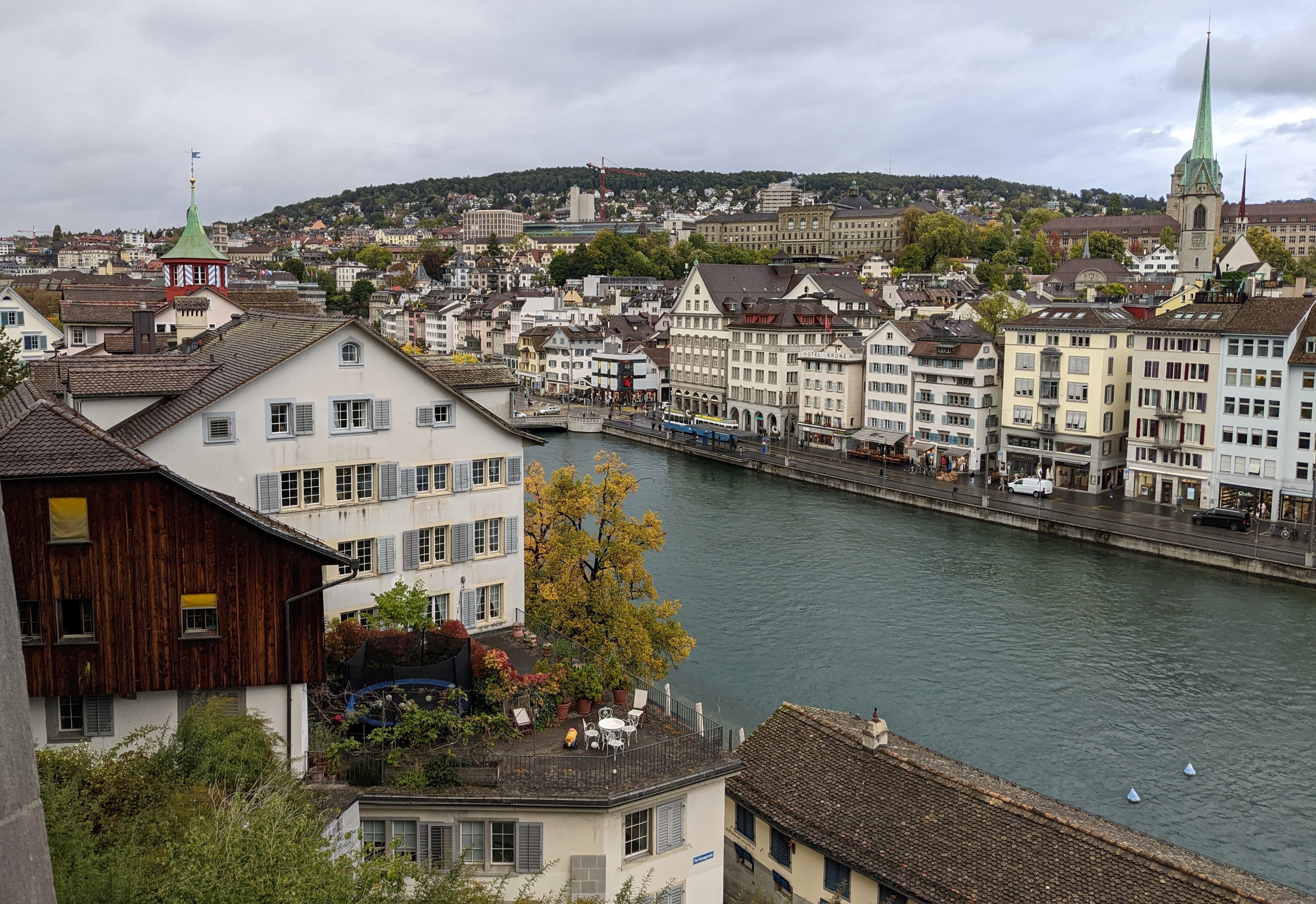
A city view from the Lindenhof on the western bank of the Limmat river:
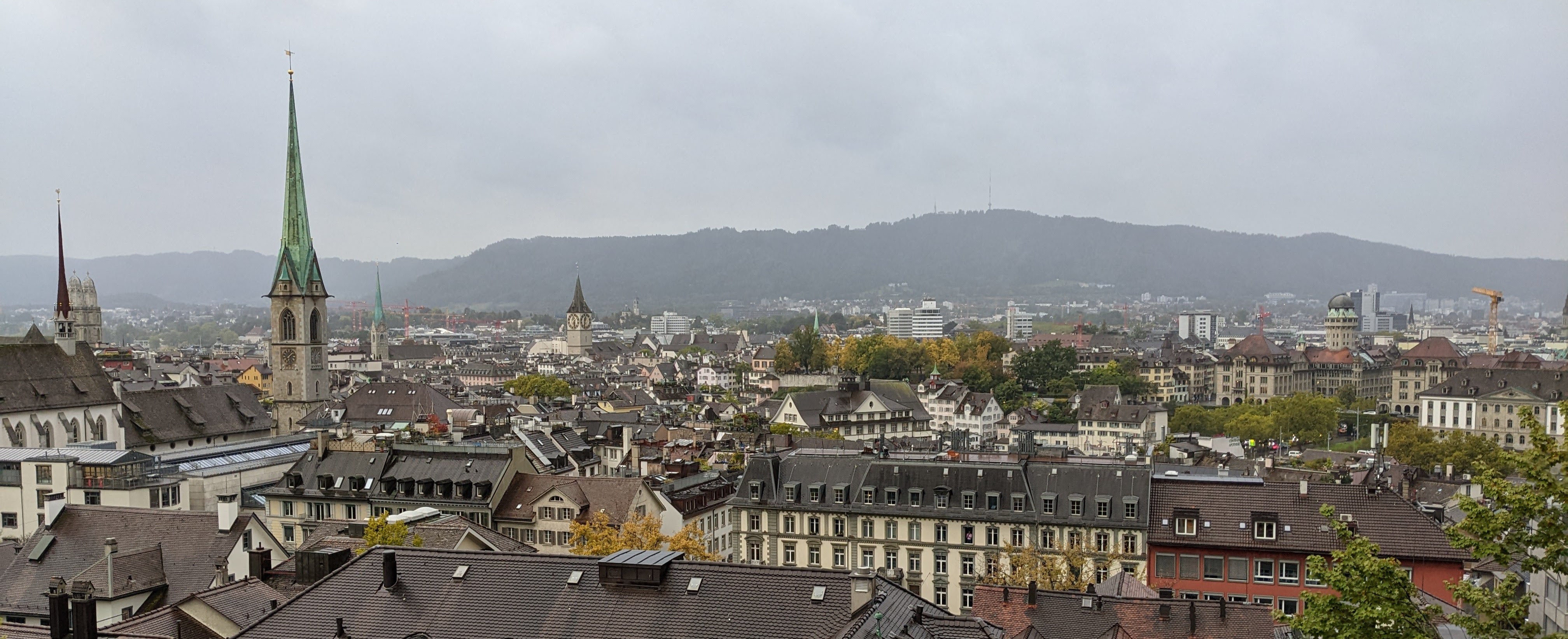
Another view of the city, this time from the university on the eastern side of the river:
I’ll close with some multi-coloured berries on a creeping plant. It was autumn. The leaves were beginning to turn and the air was acquiring a chill. Berry season. The TC passed this wall every day on her walk into the office in Zurich:










































 Travelling Worm