Travelling Worm

A bookworm's travelogue

Category: book review

  • Oscar Wilde gets a new green carnation

    This is the blog of Mark Wordsworm, the travelling worm. I’m a 40-year-old bookmark (give or take a few years) and I proudly boast my own Hallmark serial number, 95 HBM 80-1. You’ll probably want to read all about me and my Travelling Companion (the TC).

    Today’s travel notes

    Me and the TC came across a couple of statues of Oscar Wilde in Dublin. To our delight, one of them was accompanied by its original sculptor, Danny Osborne. He was drilling into the statue’s hand! Read on for the story.

    The book I’m in

    Darknet, by Matthew Maher. A rollicking tale of murder and mayhem in the world of high tech.

    Travel tips

    Take a walk in the park, even in the rain. You never know who you’ll meet or what you’ll see.

    The photos

    Sculptor Danny Osborne repairing his statue of Oscar Wilde in Merrion Square Park, Dublin:

    It was a wet and grey day in Dublin today. Nevertheless, me and the TC took a walk in the park. To our surprise, this fellow climbed up a ladder behind the sculpture of Oscar Wilde and started drilling into the statue’s hand. The TC, ever fearless in pursuit of knowledge, asked him if he was the original artist. He said yes, and added that he was replacing the green carnation that was broken a few years ago.

    The sculpture, erected in 1997, is magnificent and eye-catching. It emphasizes the beauty of stone, much loved by Wilde himself. The large base is made of quartz from the Wicklow Mountains which lie outside Dublin. The jacket is carved from green jade, the head and hands from white jade, the collar and cuffs from pink thulite, and the trousers, shoes, and socks from blue and black granite.

    The statue originally held a bronze carnation in its right hand. Presumably the bronze would turn green with the passage of time. We were lucky enough to encounter the artist doing the necessary repairs to replace the carnation.

    Back in Oscar’s time, a green carnation was a symbol of the queer community. In 1892, he made the artificially-coloured flower famous by wearing one on his lapel and encouraging his friends to do the same. Whenever anyone asked what the green carnation meant, Oscar would imply mystery and slight danger. There are rumours that he did this to generate publicity for his new play, Lady Windermere’s Fan.

    The statue provoked some controversy at the time of its unveiling. Seen from another angle, Oscar does look a little debauched and careless:

    However, this worm finds the work intriguing and engaging.

    Me with another version of Oscar, just across the way from the park. This one is right outside the playwright’s home:

    Here’s the statue in its entirety:


  • Places of beauty near Killarney, Ireland

    This is the blog of Mark Wordsworm, the travelling worm. I’m a 40-year-old bookmark (give or take a few years) and I proudly boast my own Hallmark serial number, 95 HBM 80-1. You’ll probably want to read all about me and my Travelling Companion (the TC).

    Today’s travel notes

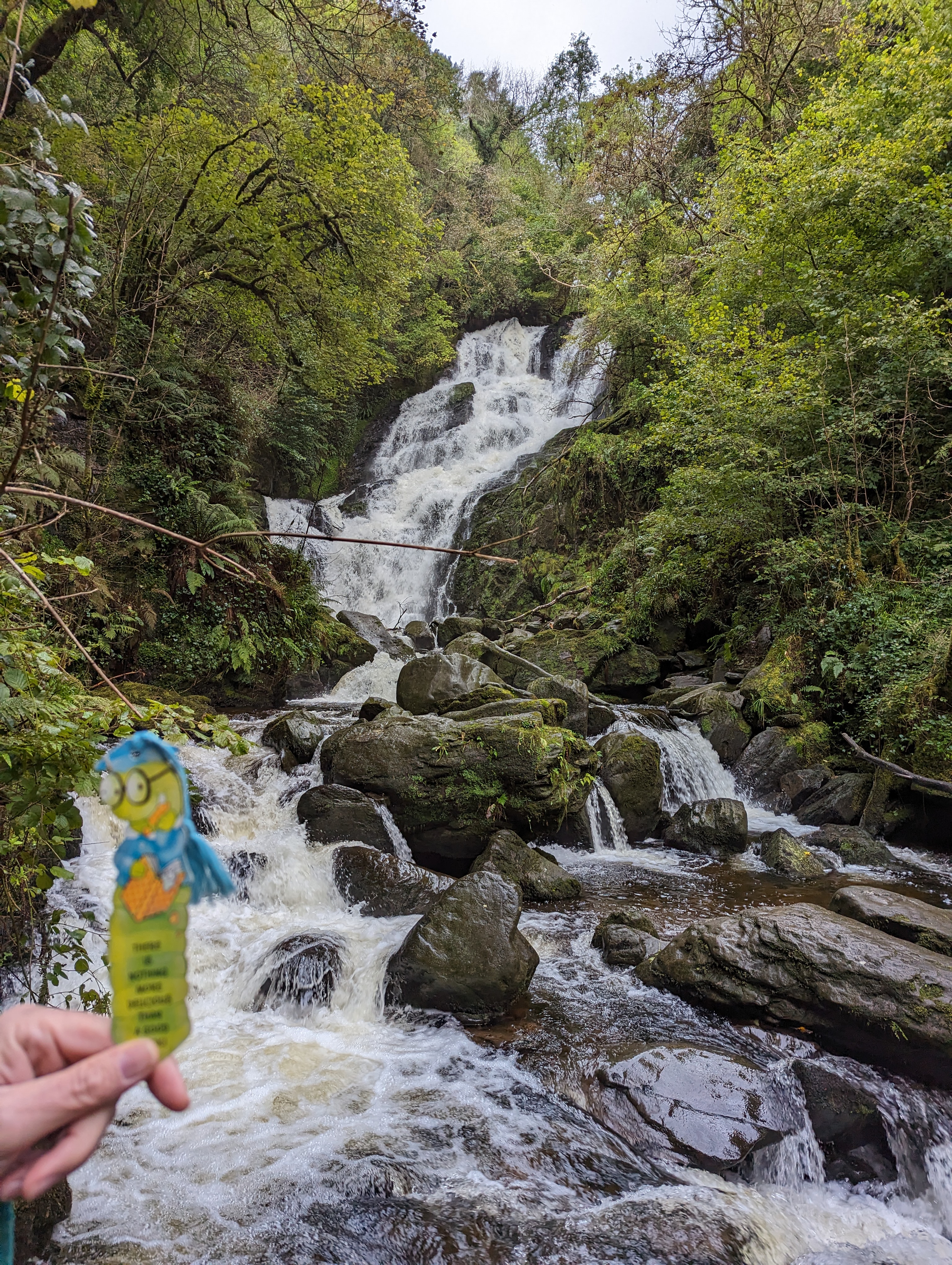
    Me and the TC were in the area of Killarney in County Kerry, Ireland, a couple of days ago. We visited Torc Waterfall and Ladies View.

    The book I’m in

    Darknet, by Matthew Maher. A rollicking tale of murder and mayhem in the world of high tech.

    Travel tips

    Turn off the tech to enjoy the natural beauty. But the tech is useful in getting you to the right spot!

    The photos

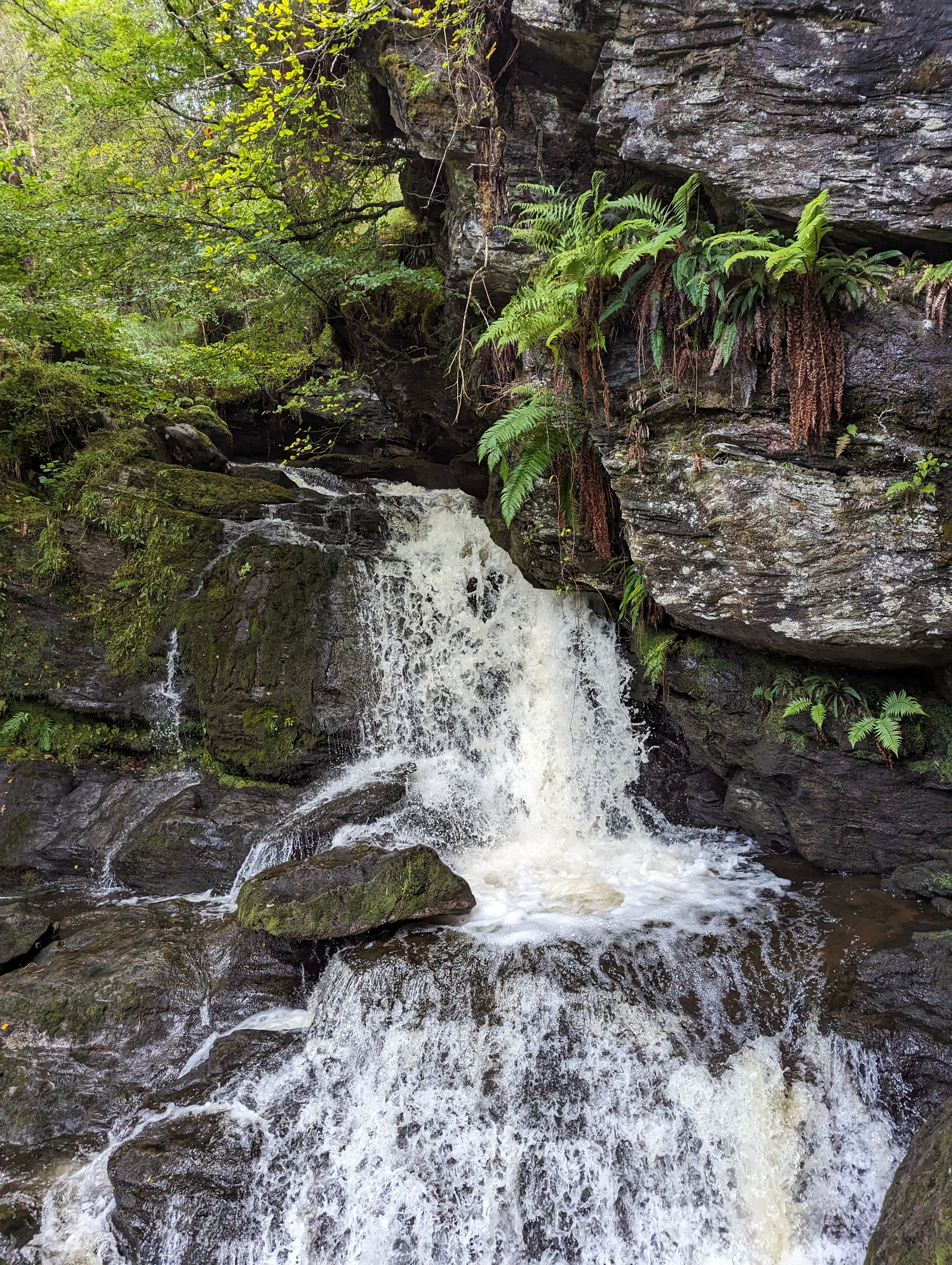
    Me at Torc Waterfall:

    For an immersive experience (as the high tech folks say these days), watch this video of the waterfall:

    The waterfall is a very short walk from the carpark: approximately 200 metres.

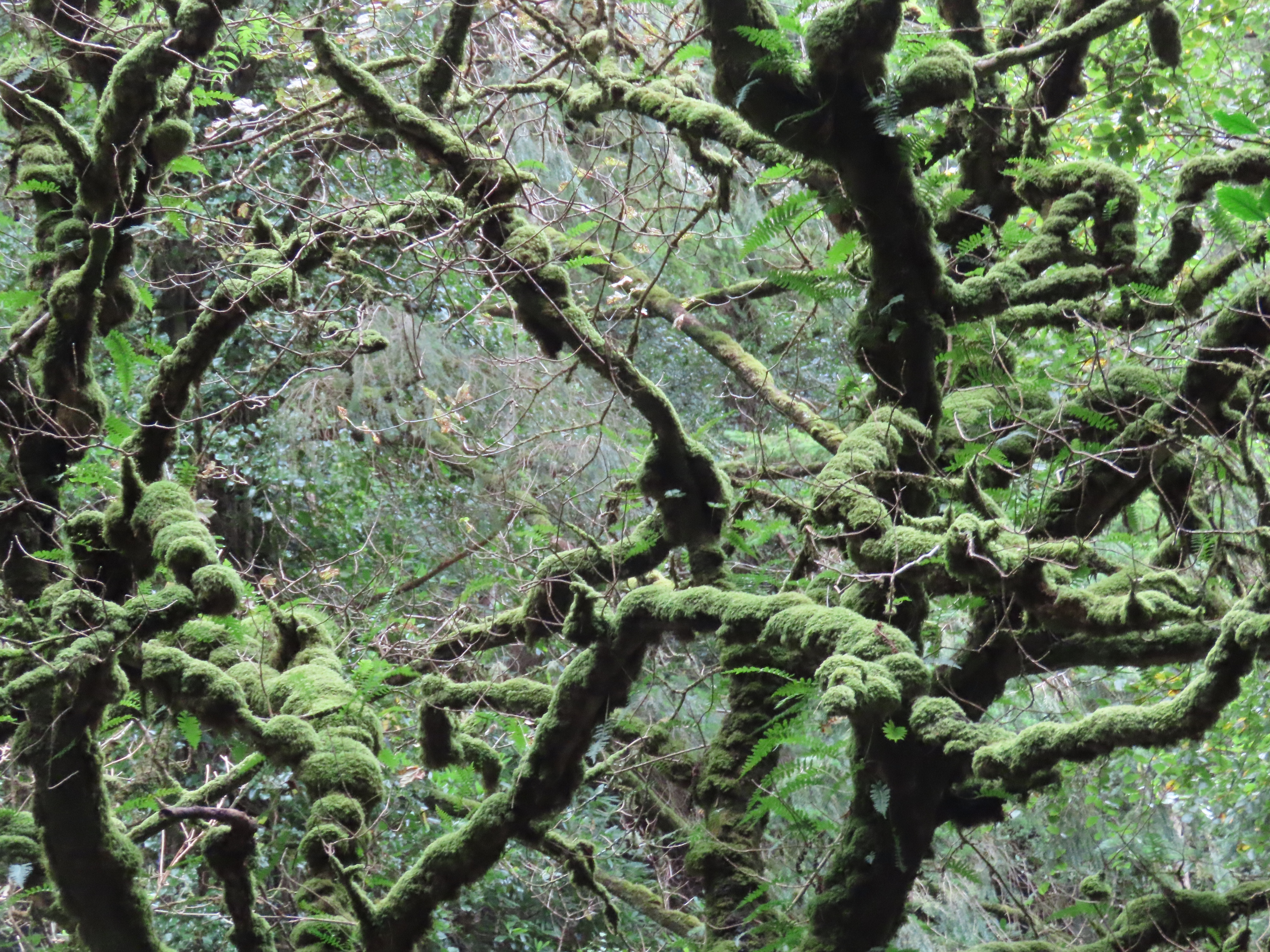
    Green is the colour of the walk:

    High on the branches of the forest, moss glows in the gentle light:

    Our next stop was Ladies View, a lookout point over the lakes of Killarney:

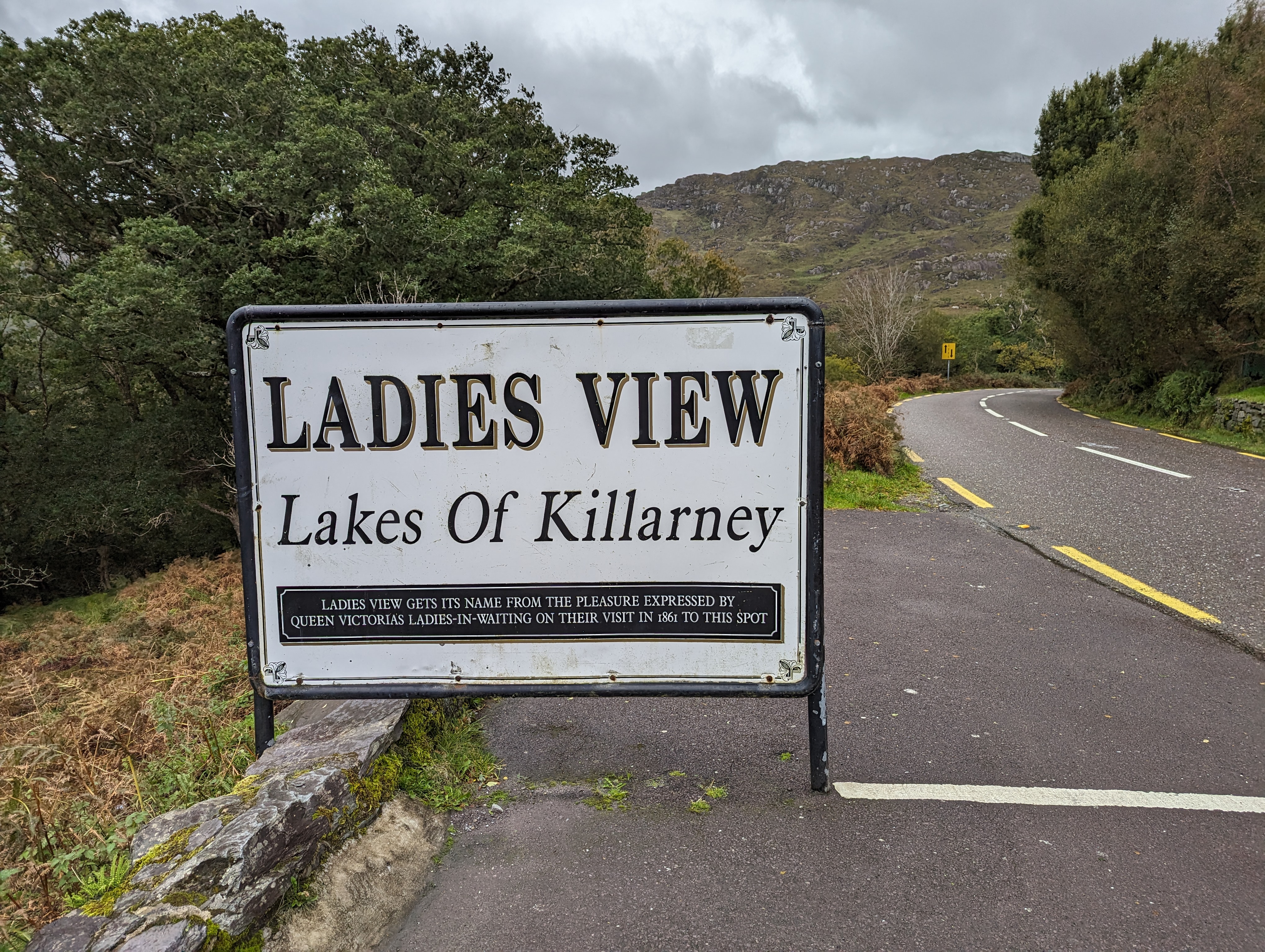
    The name “Ladies View” comes from the popularity of the lookout among Queen Victoria’s ladies in waiting during the royal visit to Killarney in 1861.

    Here’s another shot of the lakes, sans yours truly:

    Thus spake the notice board:

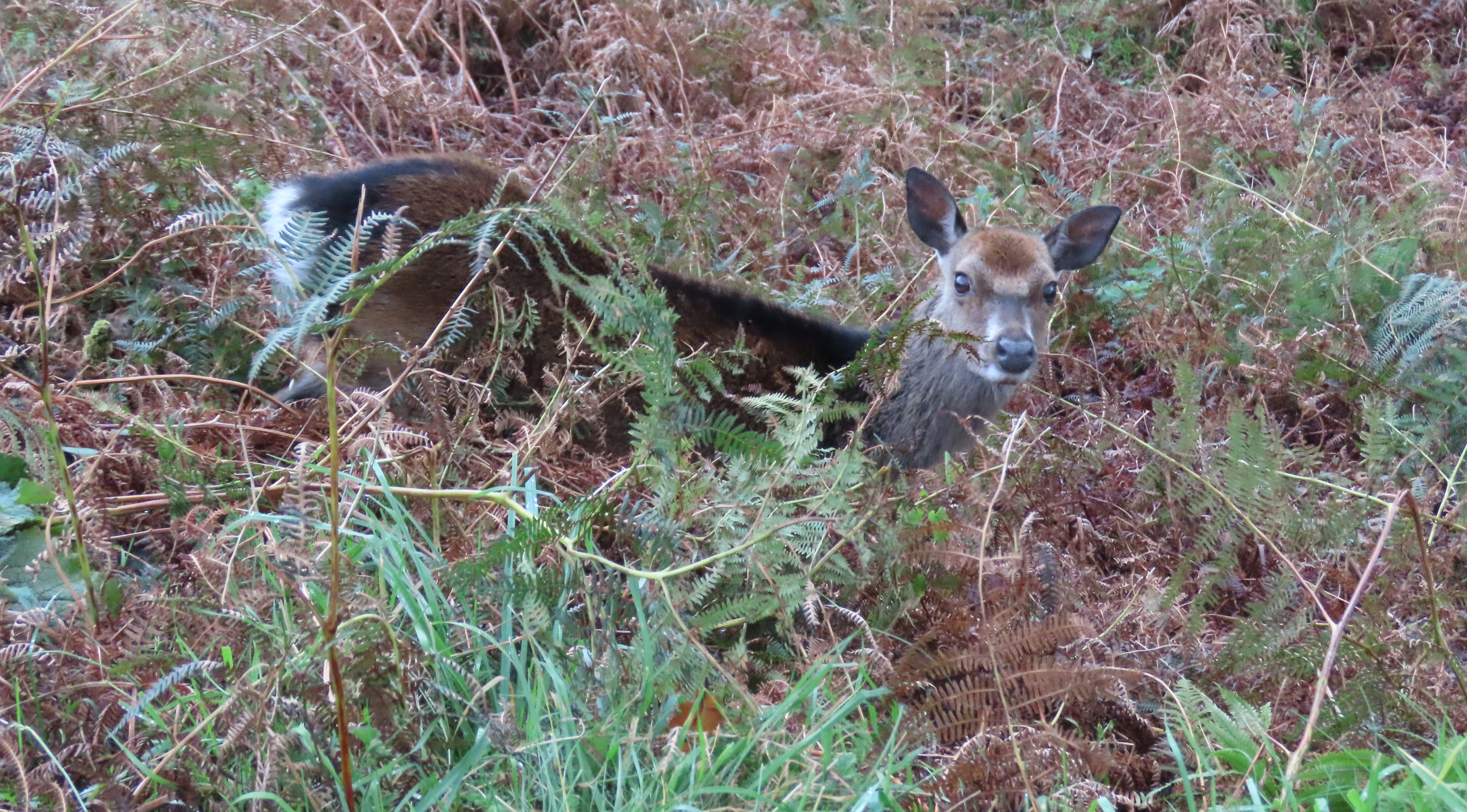
    The ground drops away quite steeply at the edge of the road. The TC peered over the lip and came eye to eye with a deer quietly browsing:


  • Blennerville and the mystery of Robert Emmet’s burial place

    This is the blog of Mark Wordsworm, the travelling worm. I’m a 40-year-old bookmark (give or take a few years) and I proudly boast my own Hallmark serial number, 95 HBM 80-1. You’ll probably want to read all about me and my Travelling Companion (the TC).

    Today’s travel notes

    Me and the TC are lodged close to the village of Blennerville on the west coast of Ireland. Let me spin you a yarn of happenstance and mystery concerning the romantic Irish hero Robert Emmet, his burial place, and one of his present-day family members.

    The book I’m in

    Stormswift, by Madeleine Brent. This author writes adventure stories about young heroines dragging themselves out of impossible situations by dint of courage, strength, and hard-won skills. Despite the dire subject matter, the novels are curiously calming.

    Travel tips

    Don’t go looking, and you will find.

    The photos

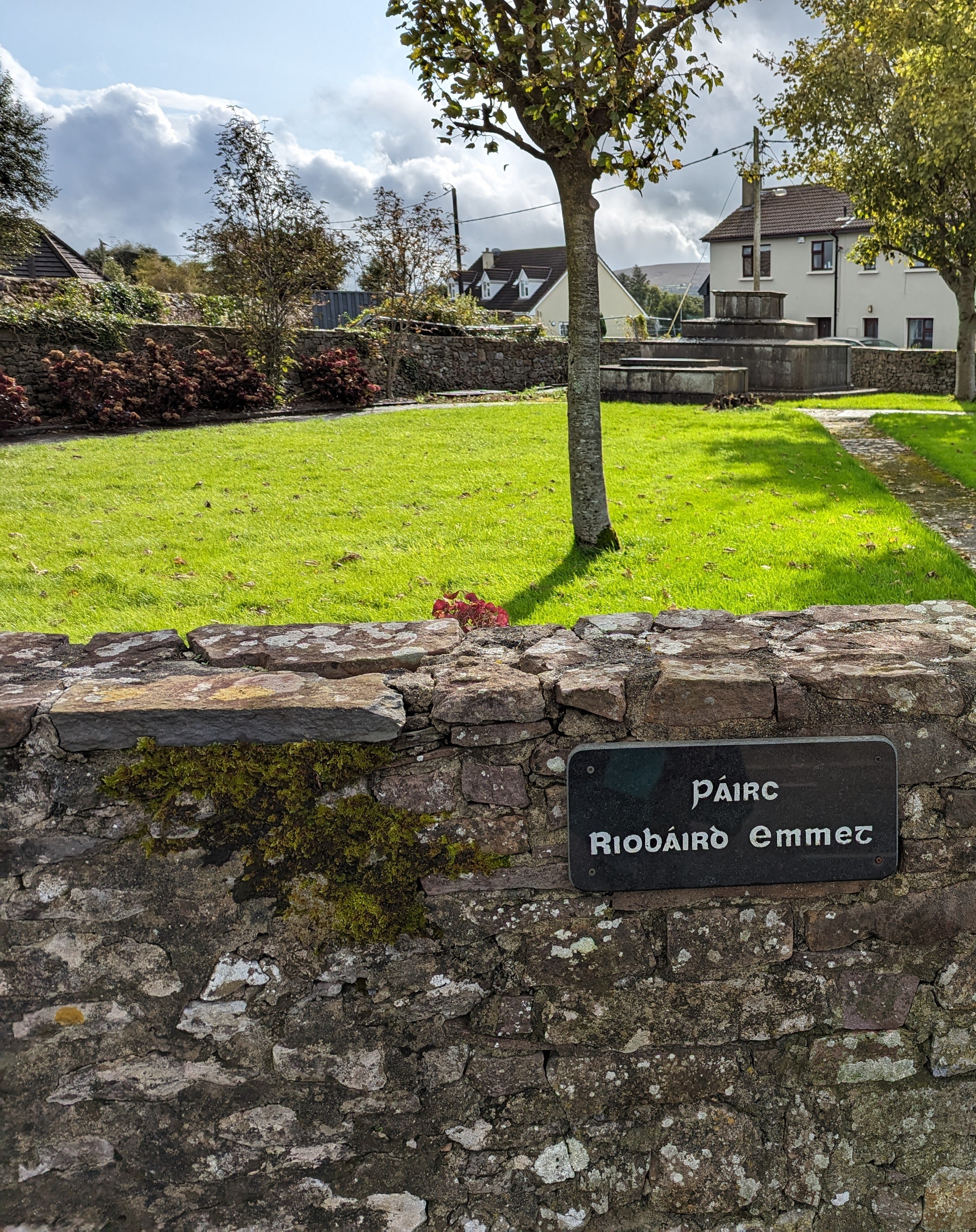
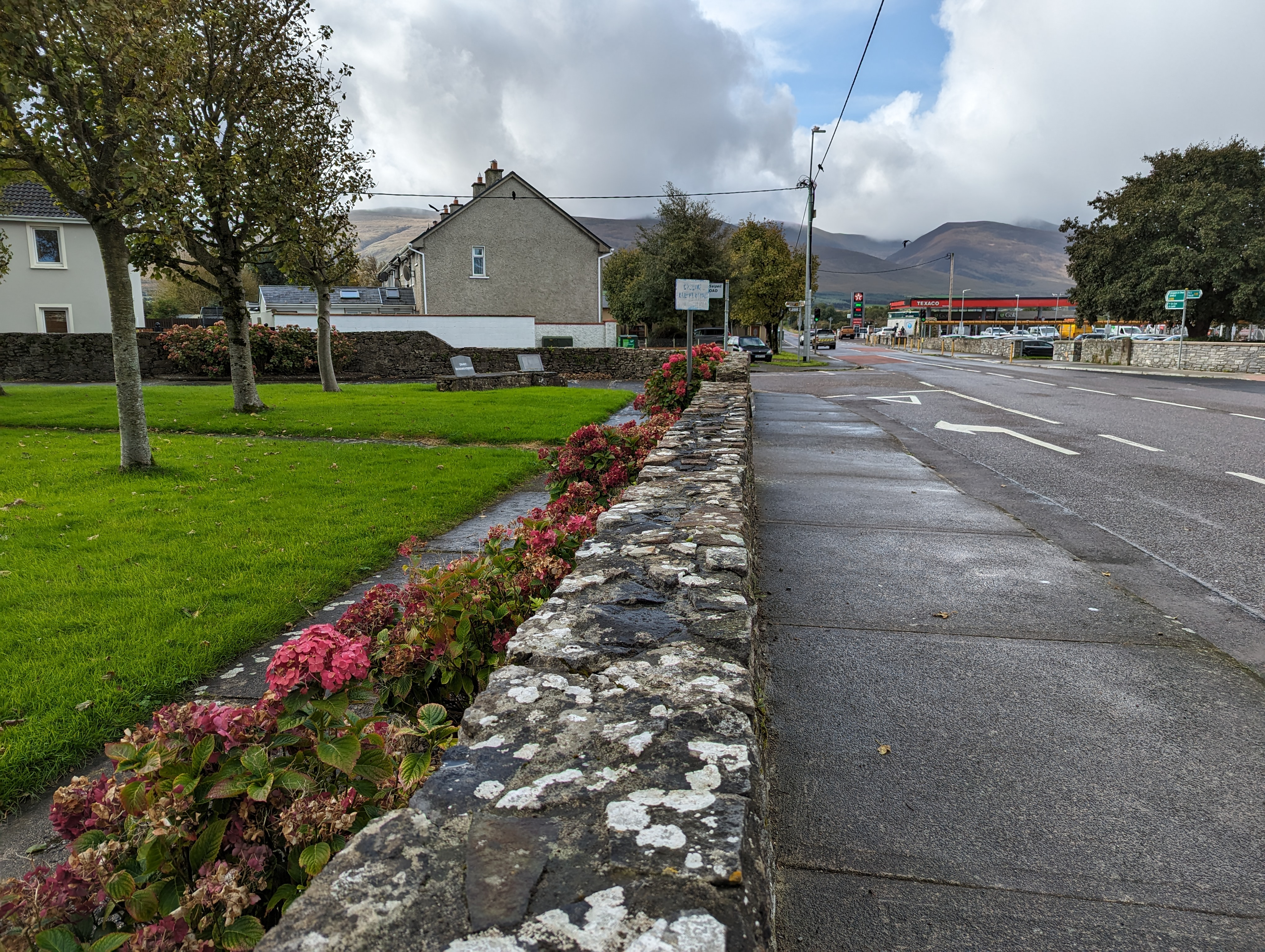
    While taking a constitutional stroll in the area of Blennervile with me and the TC, the TC’s partner stopped short in his tracks and stared at a notice on the wall of a small park. The notice said, Páirc Riobáird Emmet. The park was dedicated to Robert Emmet, known in Ireland as “The Patriot”.

    At this point in my story, it’s necessary to take a step back and explain a few things. The TC’s parter, henceforth to be called the TC-once-removed, has down the years heard tales from his mother of his familial connection to one Robert Emmet. The latter is an Irish hero from the days of the 1803 rebellion against British rule. Emmet inspired and led the uprising, which didn’t go well. Emmet was later tried for high treason, found guilty, and alas executed.

    Back to our stroll on this fateful day. We had no plans to research the history of Robert Emmet. Indeed, we had no idea that we found ourselves in a place of significance with respect to that history. In addition, our decision to take a walk that morning, and indeed to take that particular route, was entirely random.

    So, when the TC-once-removed saw the notice declaring a park dedicated to his forebear, he was flabbergasted. And not a little delighted.

    Robert Emmet was hanged in Dublin in September 1803. The hangman then removed Emmet’s head and showed it to the people, saying “This is the head of a traitor, Robert Emmet”.

    This worm promised you a mystery, and here it comes. What happened to Robert Emmet’s body? The remains were first taken to Newgate Prison and then back to Kilmainham Gaol in Dublin. He was then buried in Bully’s Acre, a public cemetry in Dublin. However, it’s widely believed that his body was removed secretly and buried elsewhere. But where?

    Páirc Riobáird Emmet in Blennerville is but one of several places that claim to be the hero’s final resting place. Emmet is a descendant of the Blennerhassett family. Blennerville village was once the Blennerhassett estate village. According to local tradition, Robert Emmet was laid to rest in an unmarked grave under the back porch of St Anne’s Church, which once stood where the park is now located. The church was demolished in 1930.

    Over the years, many people have searched unsuccessfully for the hero’s body. Robert Emmet’s supporters have a saying: “Do not look for him. His grave is Ireland”.

    Leaving Páirc Riobáird Emmet behind us:

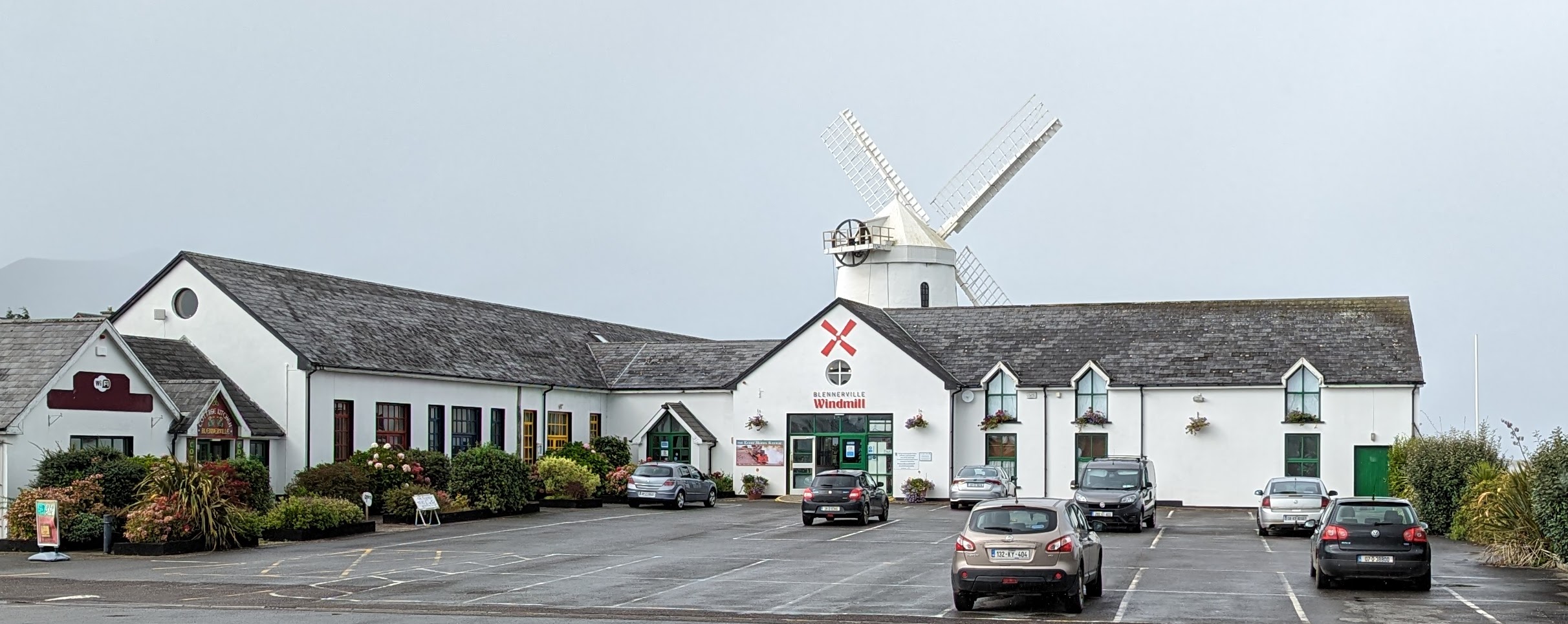
    We strolled further along the road to Blennerville and came across the windmill:

    Greys on greys, and a splotch of yellow from a person dressed for the weather:

    Just beyond the windmill is Blennerville Bridge, with its views of the River Lee and the flats as the river opens into the Atlantic Ocean. The inclement weather provided us with a rainbow:

    Jonathan was there:

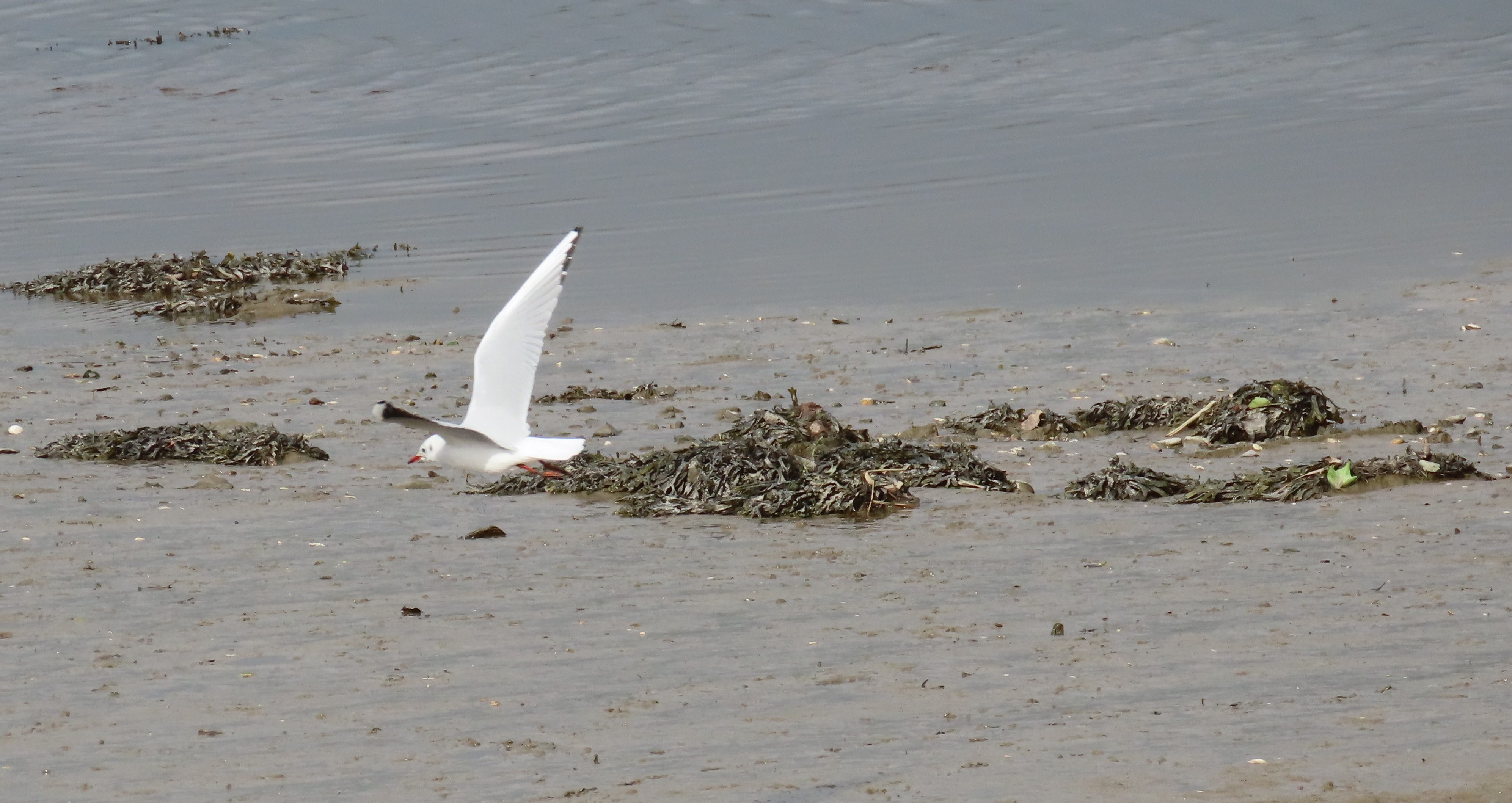
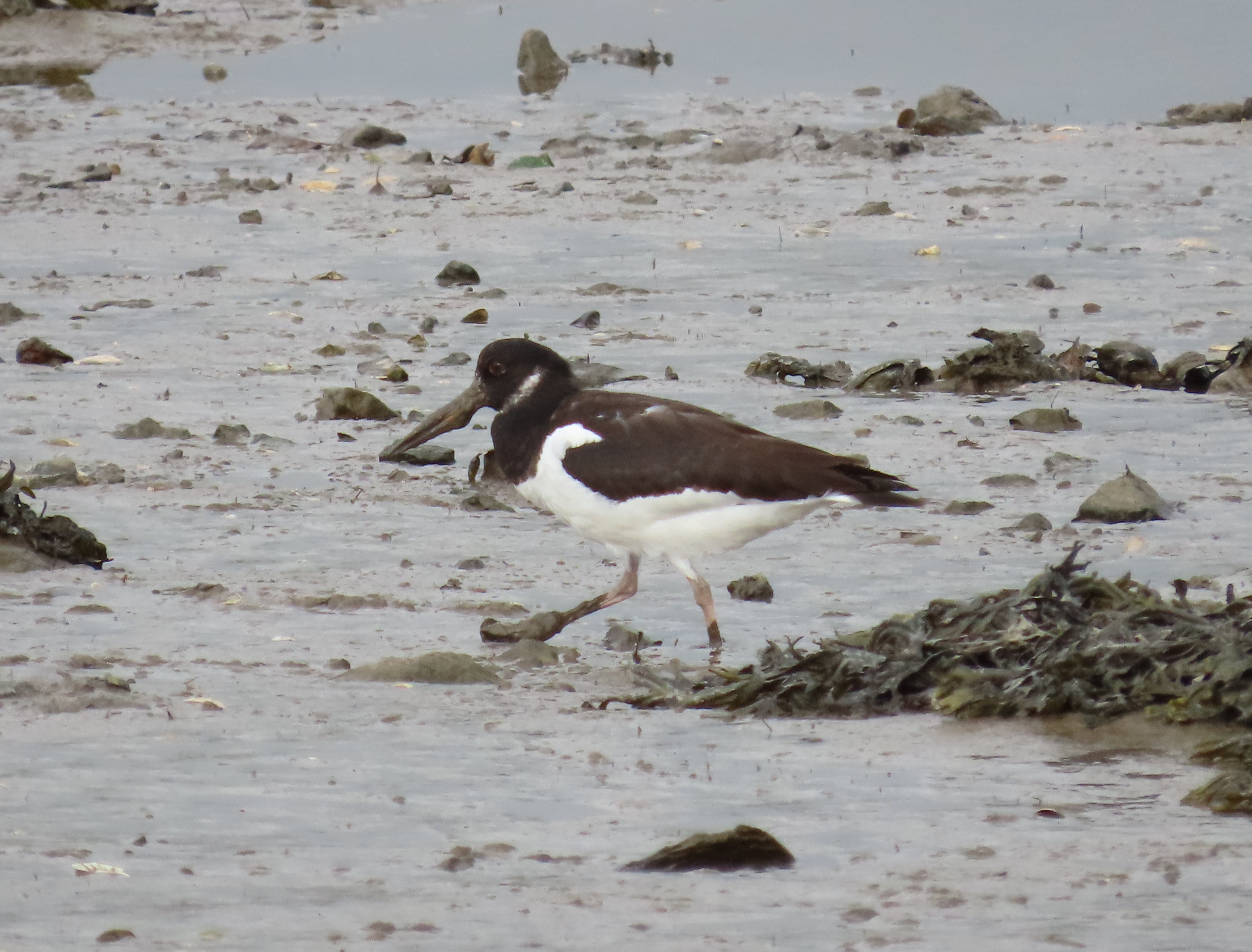
    Jonathan had brought a couple of mates to explore the flats: an Oystercatcher with a muddy beak:

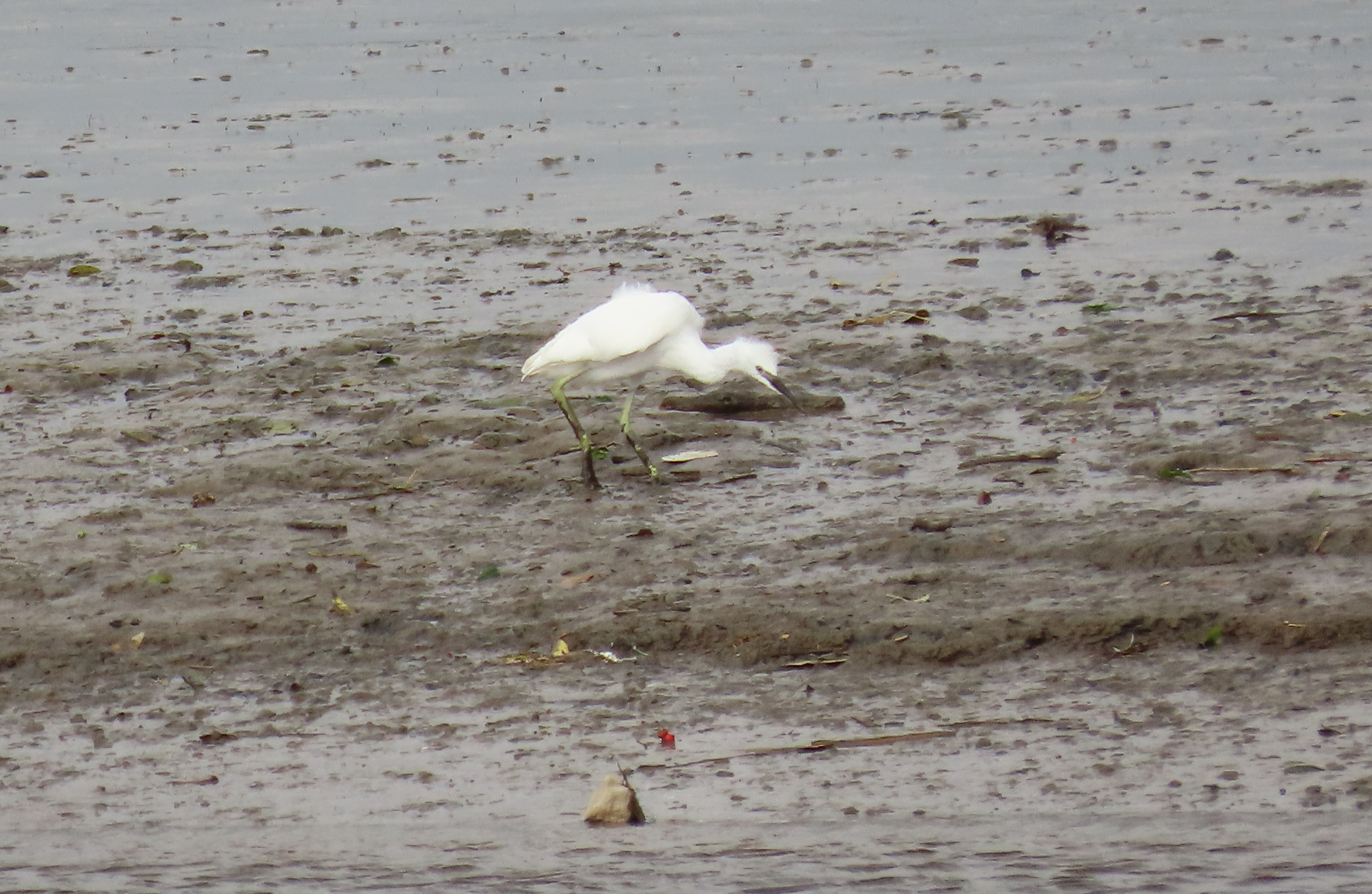
    A young Little Blue Heron with green legs:

    Heading off with a definite purpose in mind:

    On that note, we continued our stroll. Here’s a scene from one of the streets in Blennerville:


  • Hadrian’s Wall at Walltown Quarry, Greenhead

    This is the blog of Mark Wordsworm, the travelling worm. I’m a 36-year-old bookmark (give or take a few years) and I proudly boast my own Hallmark serial number, 95 HBM 80-1. You’ll probably want to read all about me and my Travelling Companion (the TC).

    Today’s travel notes

    Me and the TC visited part of Hadrian’s Wall yesterday. The wall is more than 70 miles long, so we had to choose our viewing point. We chose Walltown Quarry, near the village of Greenhead in Northumberland. The beautiful countryside provided a spectacular backdrop for the remnants of the wall.

    The book I’m in

    Stormswift, by Madeleine Brent. This author writes adventure stories about young heroines dragging themselves out of impossible situations by dint of courage, strength, and hard-won skills. Despite the dire subject matter, the novels are curiously calming.

    Travel tips

    Drive the A68 through Northumberland and into Scotland. It’s one of the most beautiful drives in the world, passing through restful grey-stone villages and meandering over rolling green hills dotted with sheep and cattle.

    The photos

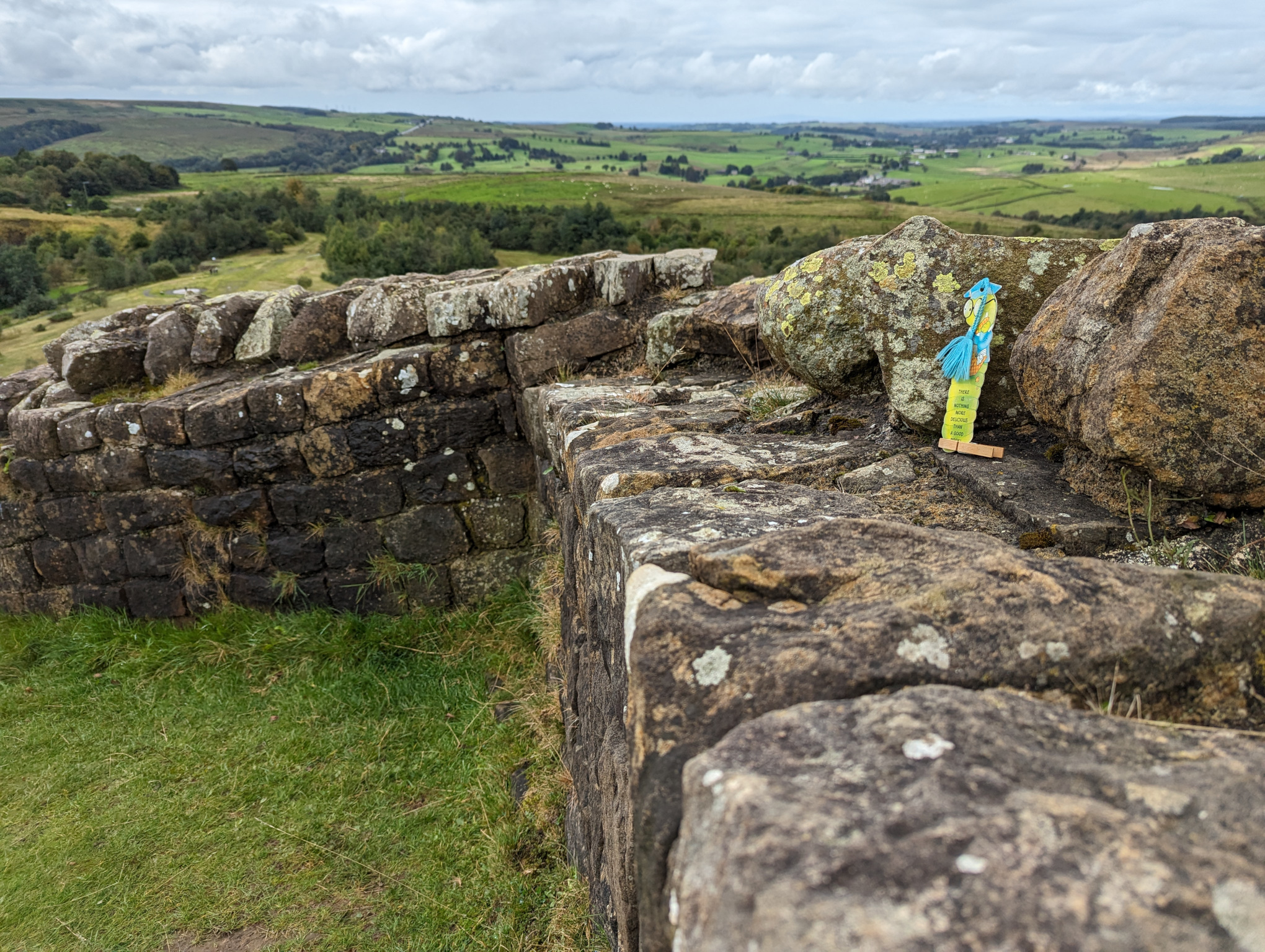
    Me and Peg on Hadrian’s Wall:

    Devoted readers will no doubt remark on Peg’s re-appearance on this blog. She took a long break from travelling, but is now back in full force. Expect to see her holding up her end of the tale again in this and future posts!

    This part of the wall stands atop a high cliff above the stone quarry at Walltown. Here’s a long shot of the cliff topped by the wall:

    The path up to the cliff face is guarded by a fearsome ogre. This worm stayed tucked in the TC’s book while we crept by, managing to get past before the ogre emerged fully from its lair:

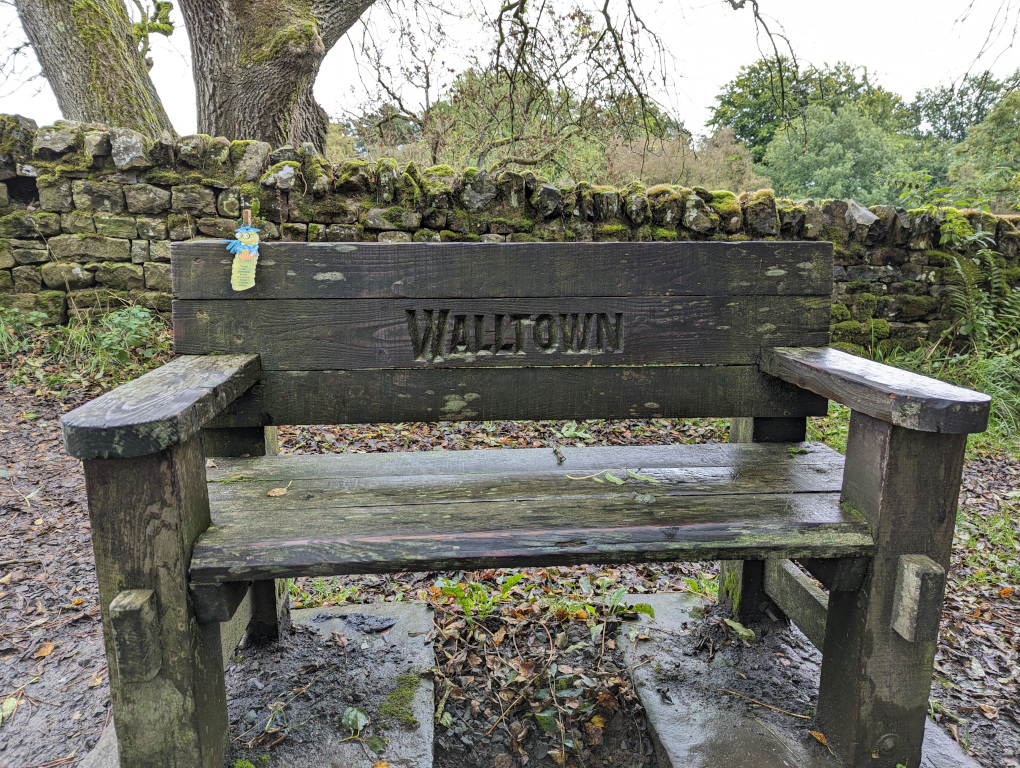
    Once we’d safely passed the slumbering ogre, me and Peg took a breather on the Walltown bench before making the final ascent to Hadrian’s Wall:

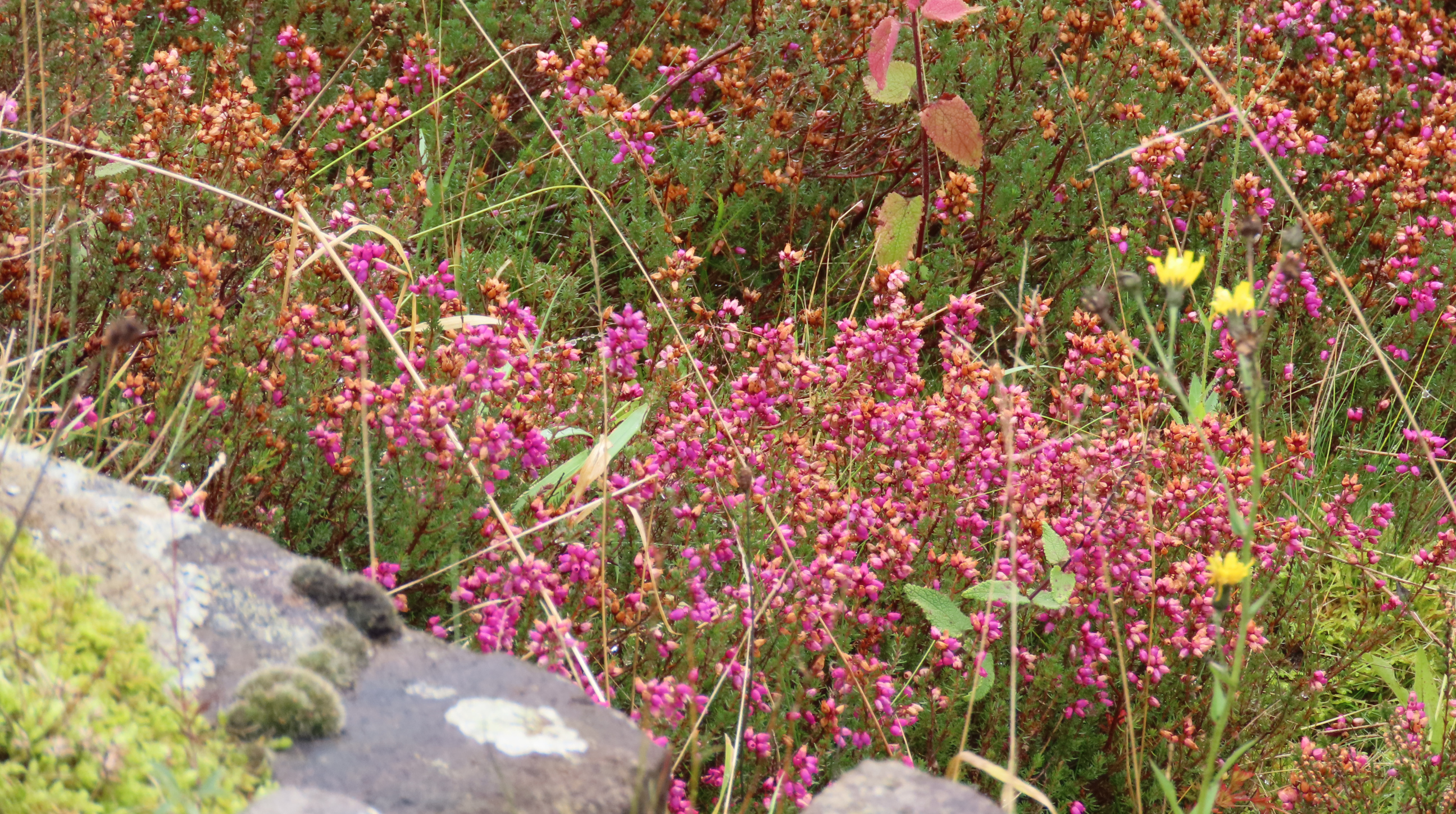
    Wild flowers marked the route:

    Drops from the recent rainfall sparkled on flower and leaf:

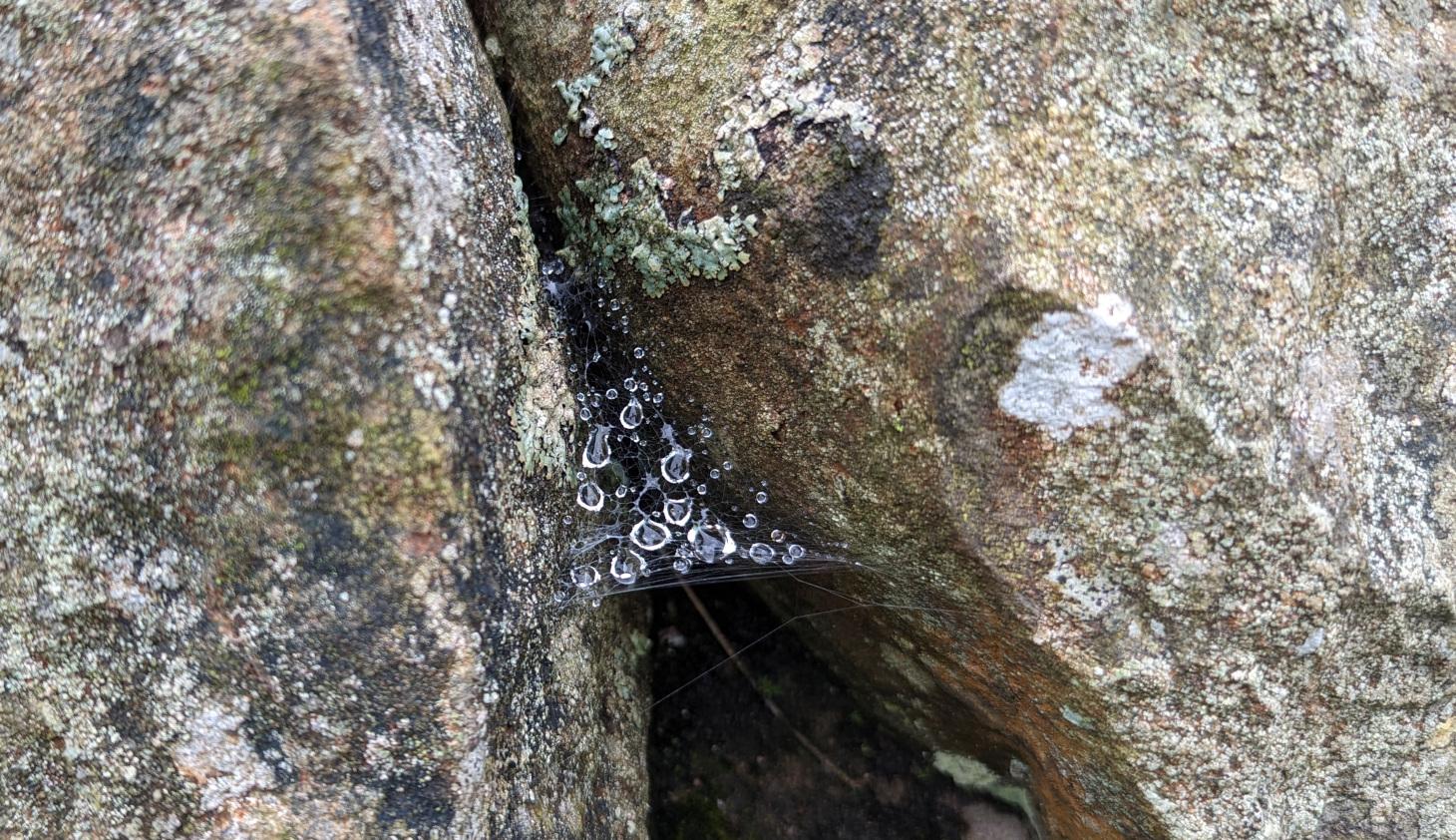
    Raindrops decorated the spiderwebs too:

    At the top of the cliff, Hadrian’s Wall runs over green velvet hills:

    The wall was built by the Roman emperor Hadrian in the second century AD, to draw a line of defence between the south of Britain, controlled by Romans, and the unconquered area to the north, roamed by the fierce Scottish clans. The wall stretches across Britain, from Wallsend on the River Tyne in the east to Bowness-on-Solway in the west.

    Adventurous souls took the high road:

    This worm found a new friend, who goes by the name of Bluebell. She confided in me that some call her Wall Flower, but she discourages that name with all her might. Me and Bluebell at her home atop Hadrian’s Wall:

    Wild flowers grab a handhold on the rocks near the wall:

    Lichen adorns the stones on the pathway back down the hill:

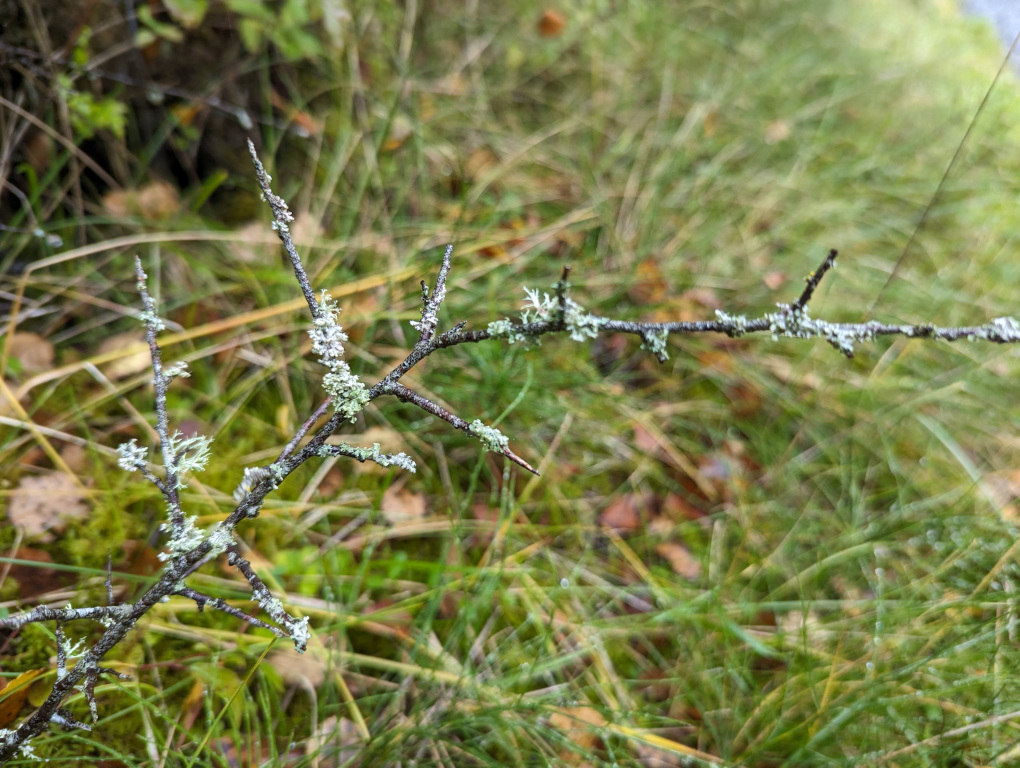
    And drips off the branches of the plants:

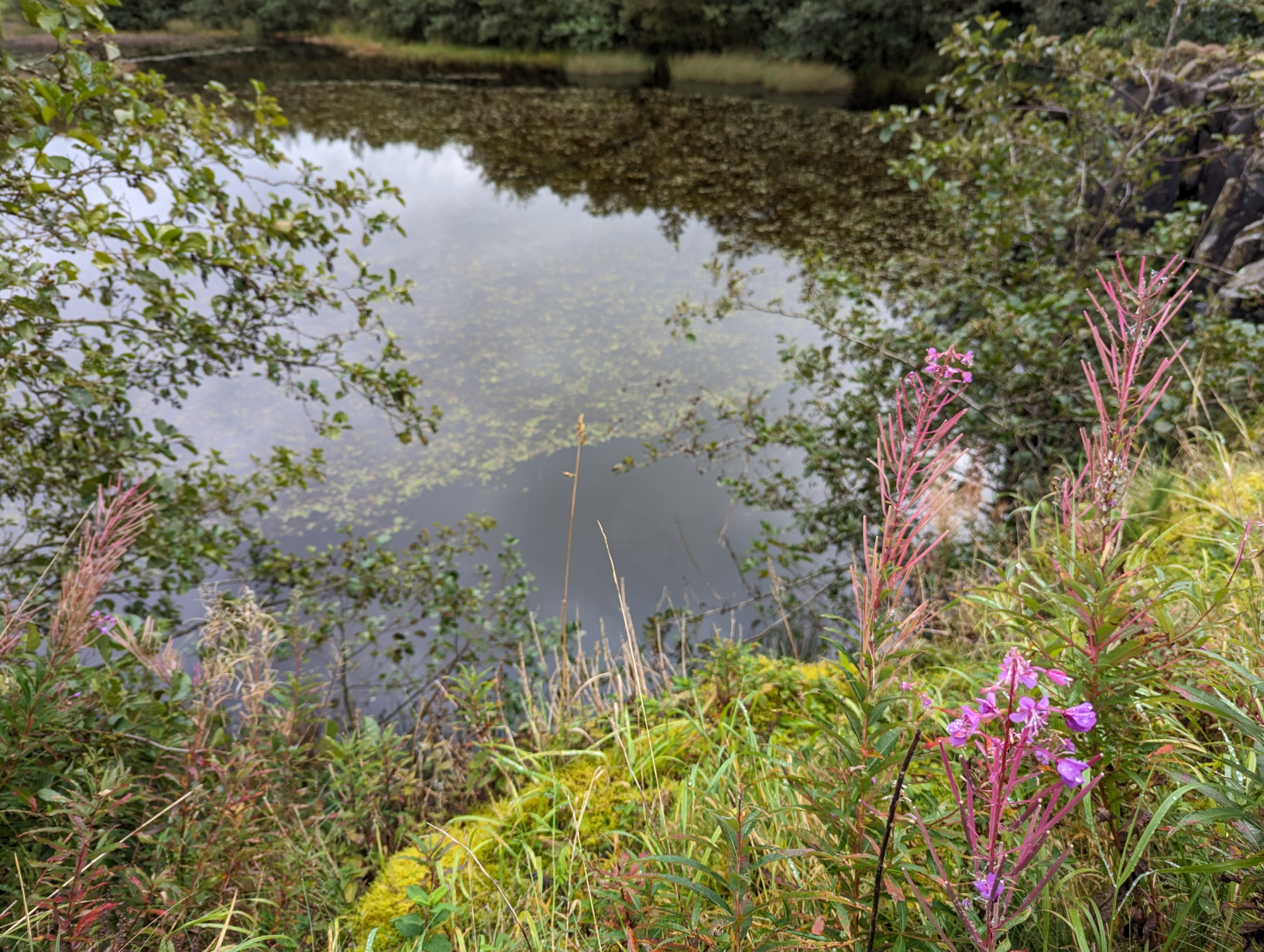
    The Walltown Quarry Pond:

    The stone dug out at Walltown Quarry was used primarily as chippings for surfacing roads. The quarry opened in 1876 and closed in 1976. After it closed, the land was filled in and landscaped to form the Walltown Country Park.

    Here’s a parting shot of Hadrian’s Wall from across the quarry pond:


  • Off road above Loch Lomond

    This is the blog of Mark Wordsworm, the travelling worm. I’m a 36-year-old bookmark (give or take a few years) and I proudly boast my own Hallmark serial number, 95 HBM 80-1. You’ll probably want to read all about me and my Travelling Companion (the TC).

    Today’s travel notes

    Me and the TC are touring bonny Scotland this week. We spent a day exploring the tracks around Loch Lomond and Loch Long in a Land Rover Defender. Our guide from 4×4 Adventures Scotland was skilled and knowledgeable, and excellent company to boot.

    The book I’m in

    Robinson Crusoe by Daniel Defoe, a tale of wonder and woe. It amuses this worm to apply analytic skills to the language and norms of the day, while at the same time enjoying a good yarn.

    Cautionary travel tales seem to appeal to the TC while herself travelling.

    Travel tips

    Come rain or shine, take a day off your busy travel schedule to soak up the beauty of the natural surrounds.

    The photos

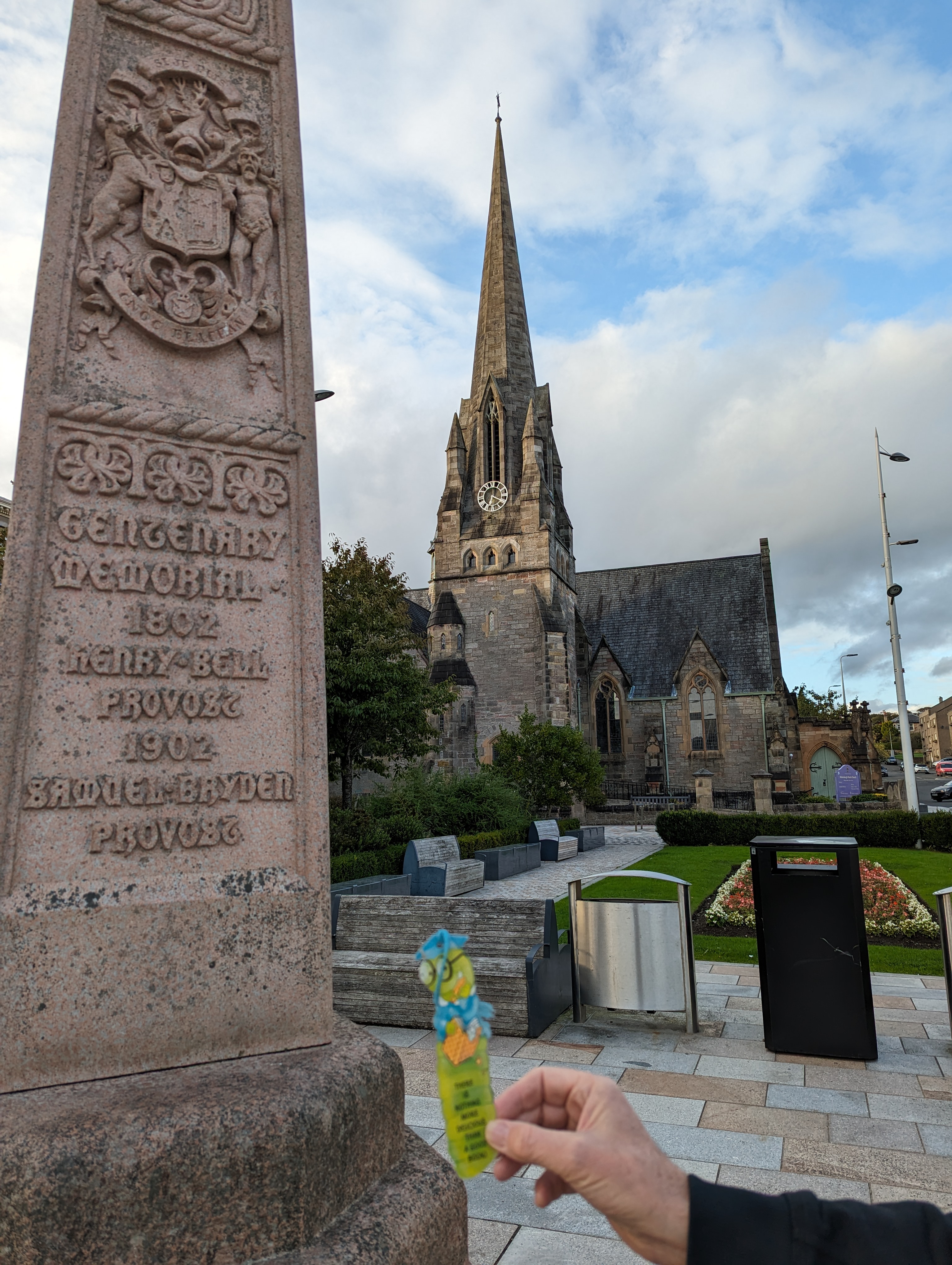
    Me in Helensburgh alongside a memorial to Henry Bell, provost of the town in 1802. Helensburgh lies on the shores of Gare Loch, near Loch Lomond. Henry Bell was the first person to found a steamship business on British waters:

    The TC organised a full-day off road adventure with 4×4 Adventures Scotland. The company provided a Land Rover Defender and a local guide named Alan, who knew the off road tracks around Loch Lomond and surrounds like the back of his hand.

    The vehicle was a Land Rover Defender 110 with a 2.4 litre engine, 33″ all-terrain tyres, a manual gear box, and differential lockers front and back. Approximately ten years old, she’d earlier served as an ambulance. She bore the name LU55 MAD, of which the first part harks to her base in the town of Luss and the second part harks to her nature. Show her a steep, rocky hill with a stream of water coursing down it, and she jumped at the challenge of getting to the top:

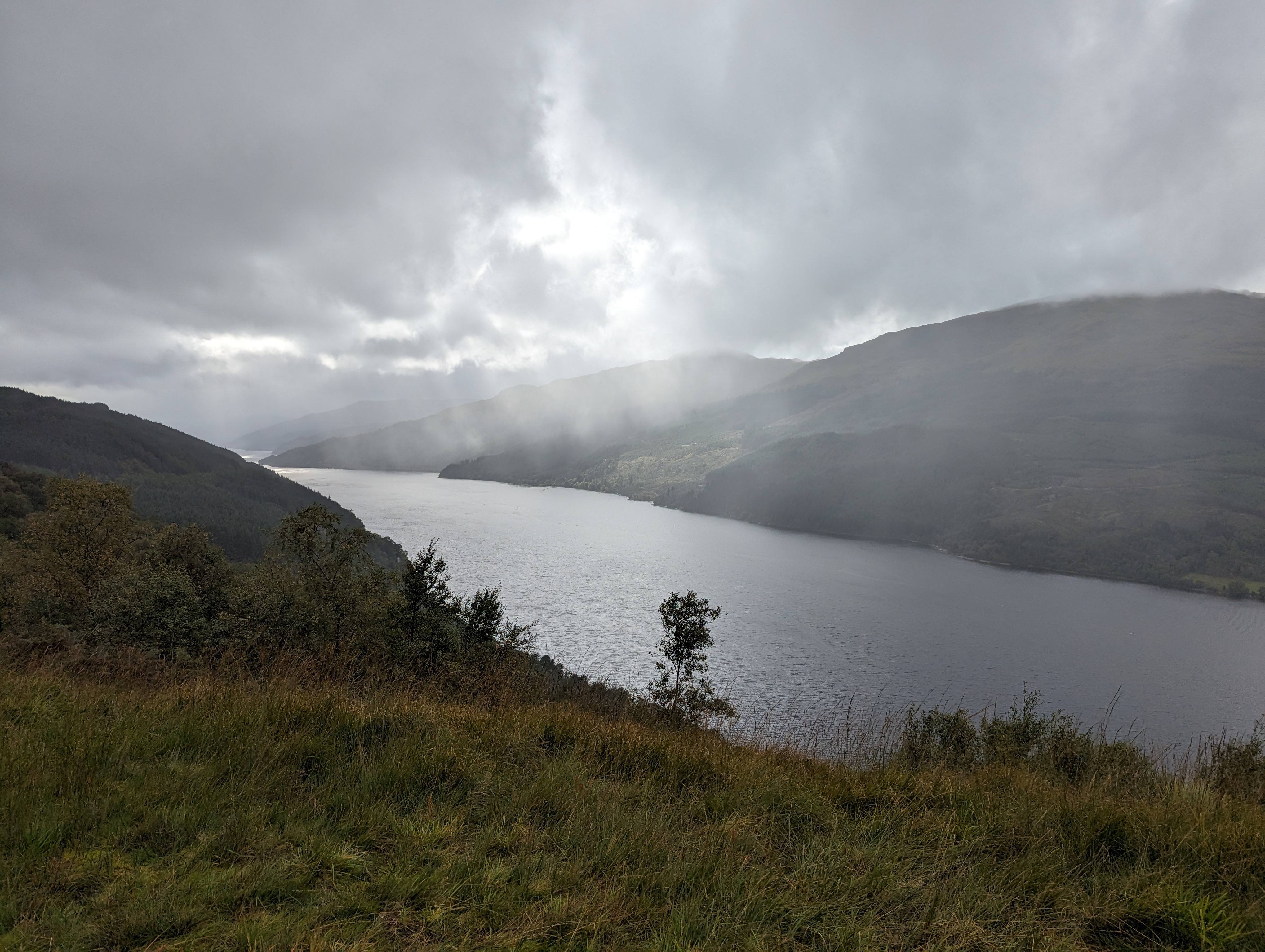
    The weather did us proud, throwing us an abundance of mood-filled scenes. This is the gorgeous Loch Long:

    The TC, bless her cotton socks, could not restrain the Ooohs and Aaahs. This worm concedes that there was beauty to be had. In particular, these mossy knolls appealed to my delicate body type. The hillocks rise a couple of feet in height and are entirely soft and spongy, with no hard rock or trunk beneath:

    Streams gushed down the slopes, ushered by moss and fern:

    More views of mount and loch that made the TC go Aaah. First, looking out over the islands in the wide part of Loch Lomond:

    To finish off, here’s the track running along Loch Long:


  • Switzerland’s Klausen Pass in the clouds

    This is the blog of Mark Wordsworm, the travelling worm. I’m a 36-year-old bookmark (give or take a few years) and I proudly boast my own Hallmark serial number, 95 HBM 80-1. You’ll probably want to read all about me and my Travelling Companion (the TC).

    Today’s travel notes

    On a rainy Saturday in late September, me and the TC drove across Klausen Pass in the Swiss Alps. The pass is about one and a half to two hours’ drive from Zurich, depending on how many scenic diversions you make.

    The book I’m in

    Bleed for Me, by Michael Robotham. This worm is enjoying the book. It’s a good example of the author’s combination of believable characters caught up in a difficult situation.

    Travel tips

    It’s chilly in the Swiss Alps even in autumn. Layer up to enjoy the cold!

    The photos

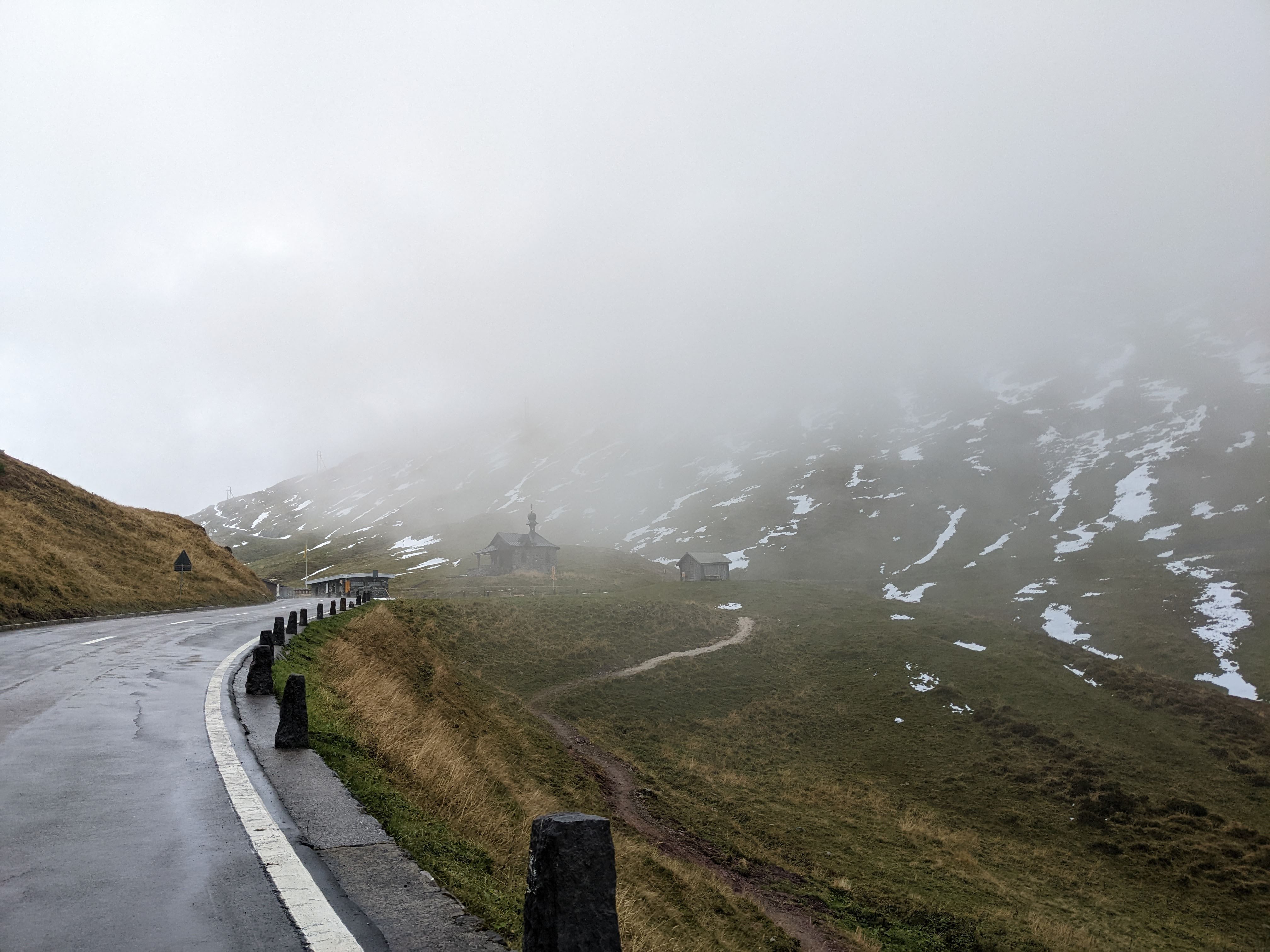
    Me at the little chapel at the top of Klausen Pass:

    The chapel is the Kapelle Bruder Klaus, built in 1717. It was shrouded in mist and surrounded by streaks of snow:

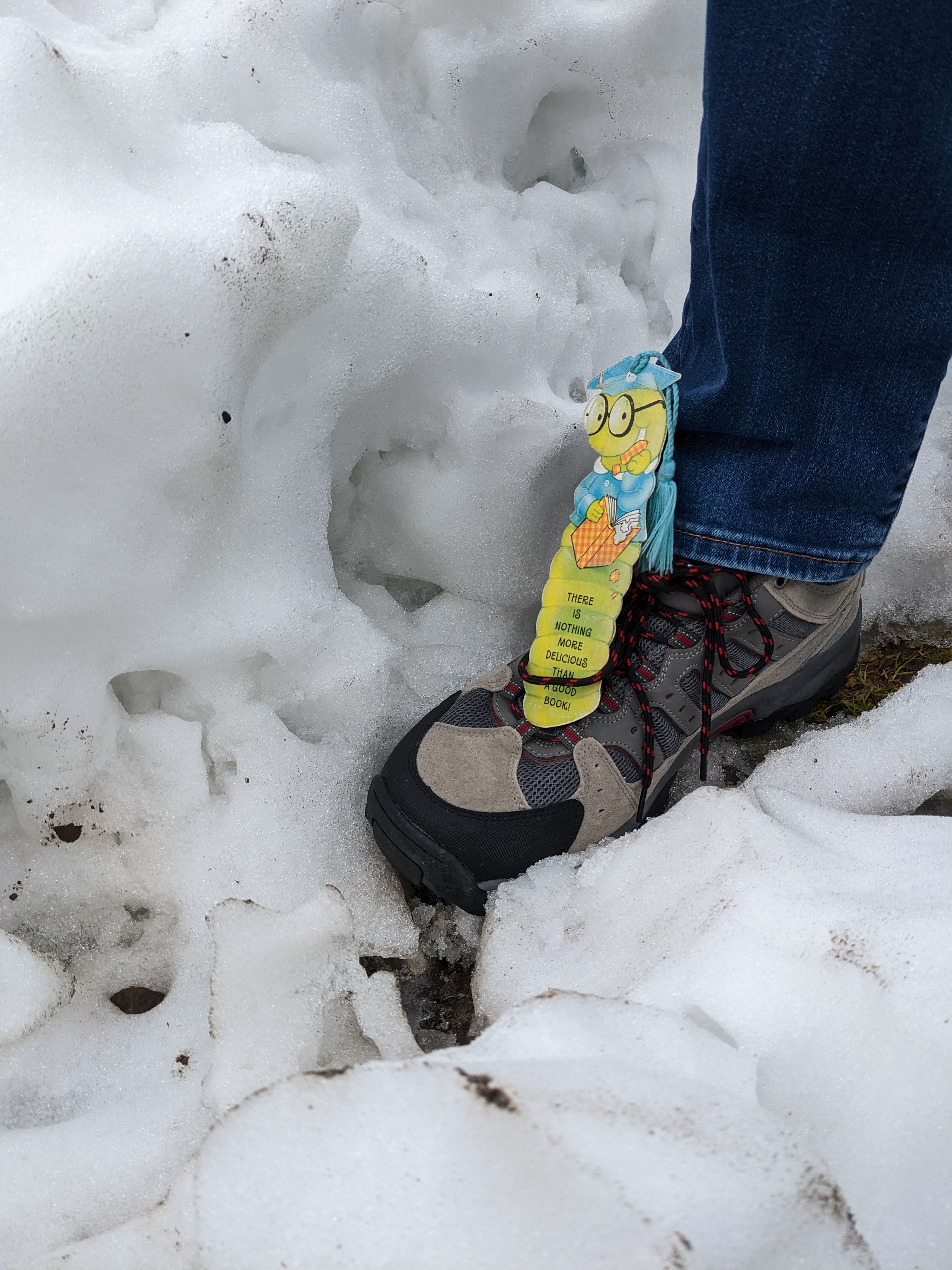
    We were lucky to be in the area in September. The road is usually closed between October and May, due to the high snowfall on the pass. Me again, catching a ride on the TC’s shoe to avoid the snow pile that towered over my head:

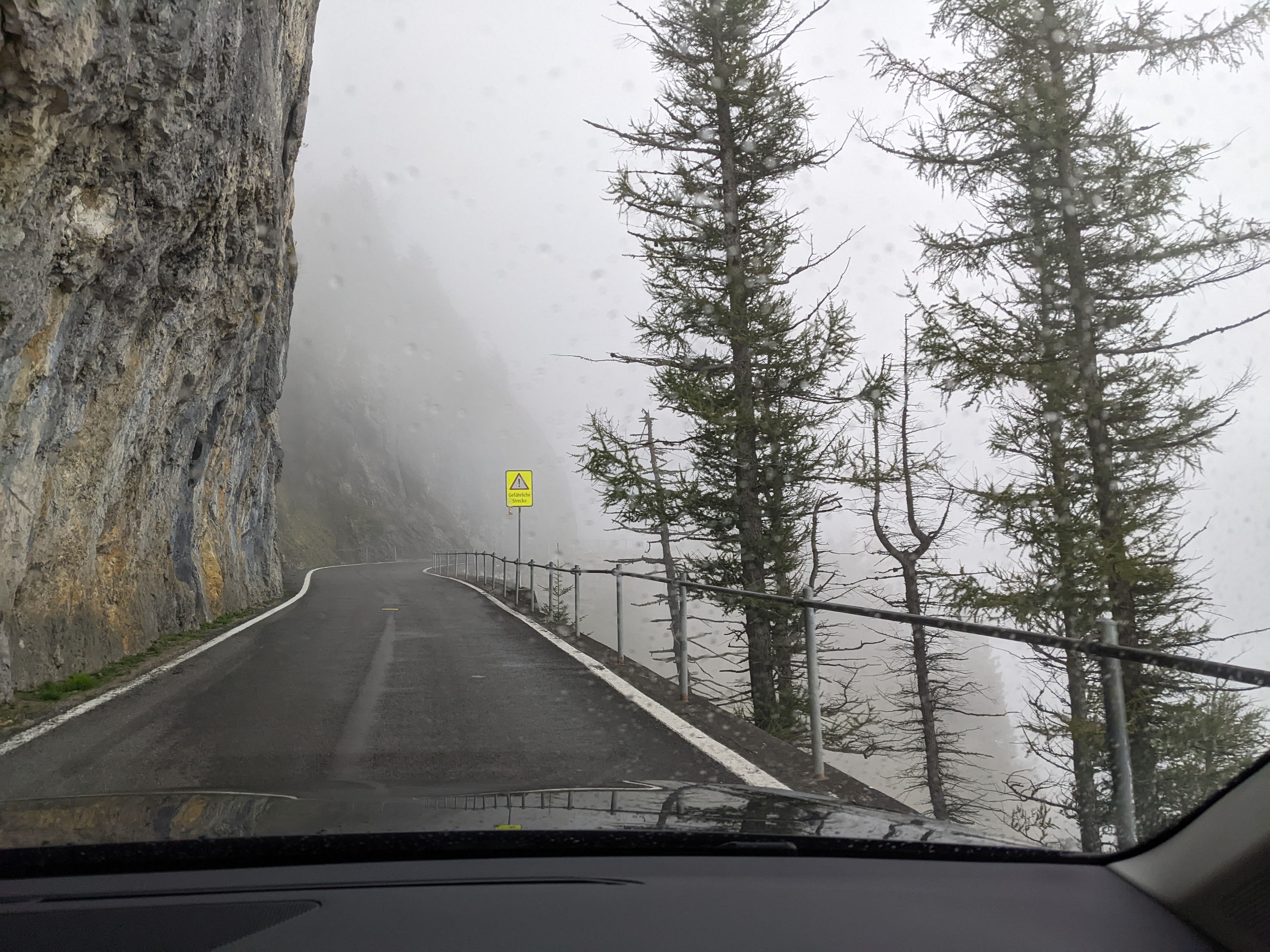
    The Klausen Pass started out as a cattle track in the Middle Ages. In the year 1196, the track was controlled by a customs office in Bürglen. The highest point of the pass is at an elevation of 1,948 metres (6,391 feet). Now a fully-tarred road, it still offers plenty of interesting sections adorned with danger signs like this one remarking that we were approaching a Gefärliche Strecke:

    Waterfalls peeked out through the clouds:

    The views were gorgeous, of green valleys and toy-town settlements:

    Cows clanged musically as they grazed:

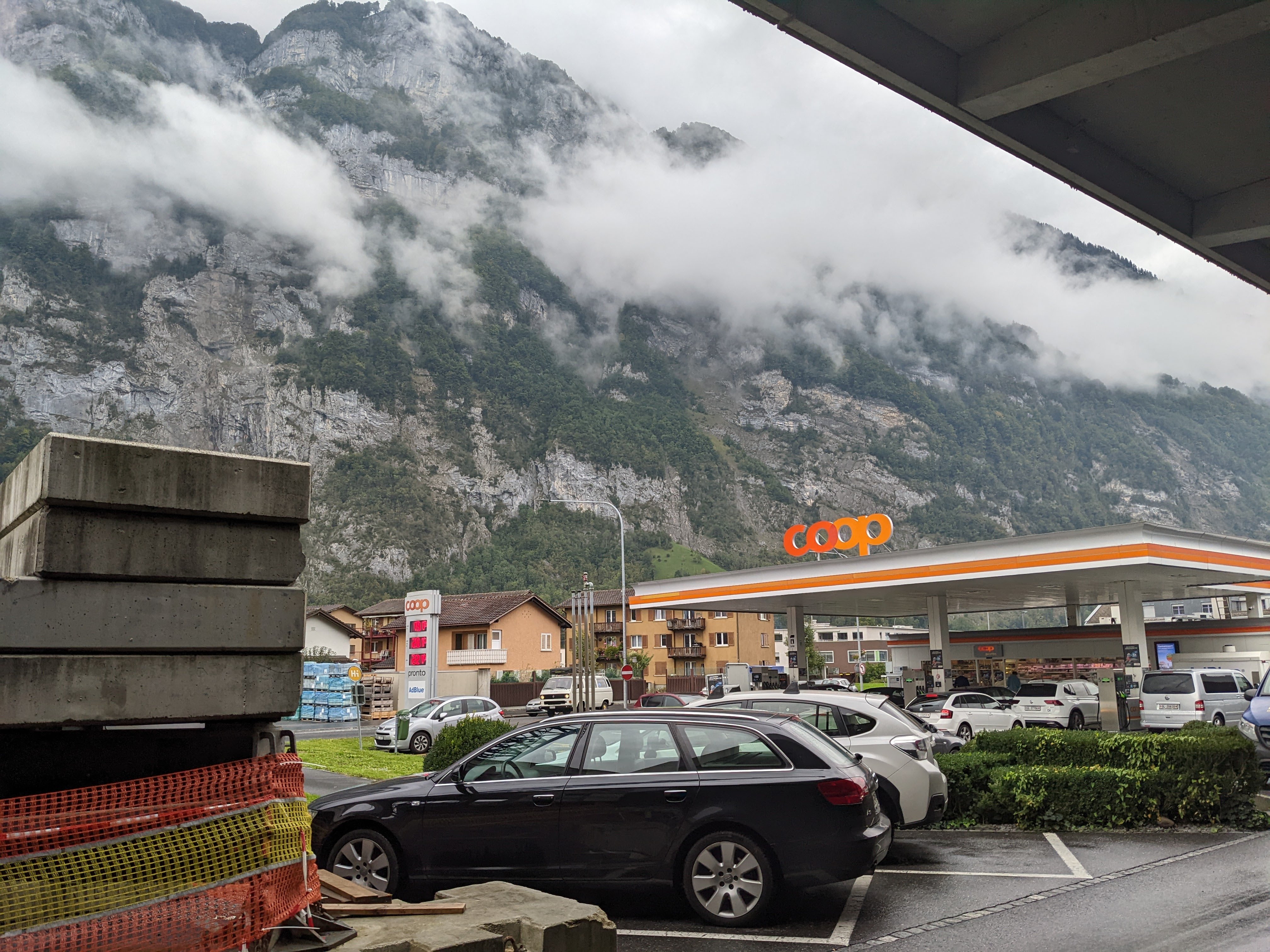
    When we reached the bottom of the pass, we stopped for fuel. The TC, bless her cotton socks, was entranced by the way the mountains loomed all round. “They just go pffffrrrt, straight up!” she remarked.

    That’s all for today, folks.


  • Medieval festival in Zug, Switzerland

    This is the blog of Mark Wordsworm, the travelling worm. I’m a 36-year-old bookmark (give or take a few years) and I proudly boast my own Hallmark serial number, 95 HBM 80-1. You’ll probably want to read all about me and my Travelling Companion (the TC).

    Today’s travel notes

    Me and the TC are in Switzerland. Today we travelled by train from Zurich to the small town of Zug, to see the annual medieval festival hosted by the town: the Mittelalterfest Zug.

    Here’s a nicety for people who’re intrigued by words, as is the TC: We travelled to Zug by Zug. How so? The town is called Zug. In German, a train is a Zug (including the initial capital letter, as in German all nouns are capitalised.) So, to Zug by Zug!

    The book I’m in

    Death’s End, by Cixin Liu, translated by Ken Liu. In the TC’s words (yours truly is by nature less effusive), this is a most amazing book. It’s part of the “three-body problem” series. Science fiction done right. Get a copy and read it!

    Travel tips

    Travelling by rail is pleasant, but figuring out how to buy the train tickets is complex. Give yourself plenty of time the first time you do it. Buying tickets from the vending machines at the station is the simplest option. The mobile app and website are overly complex.

    The photos

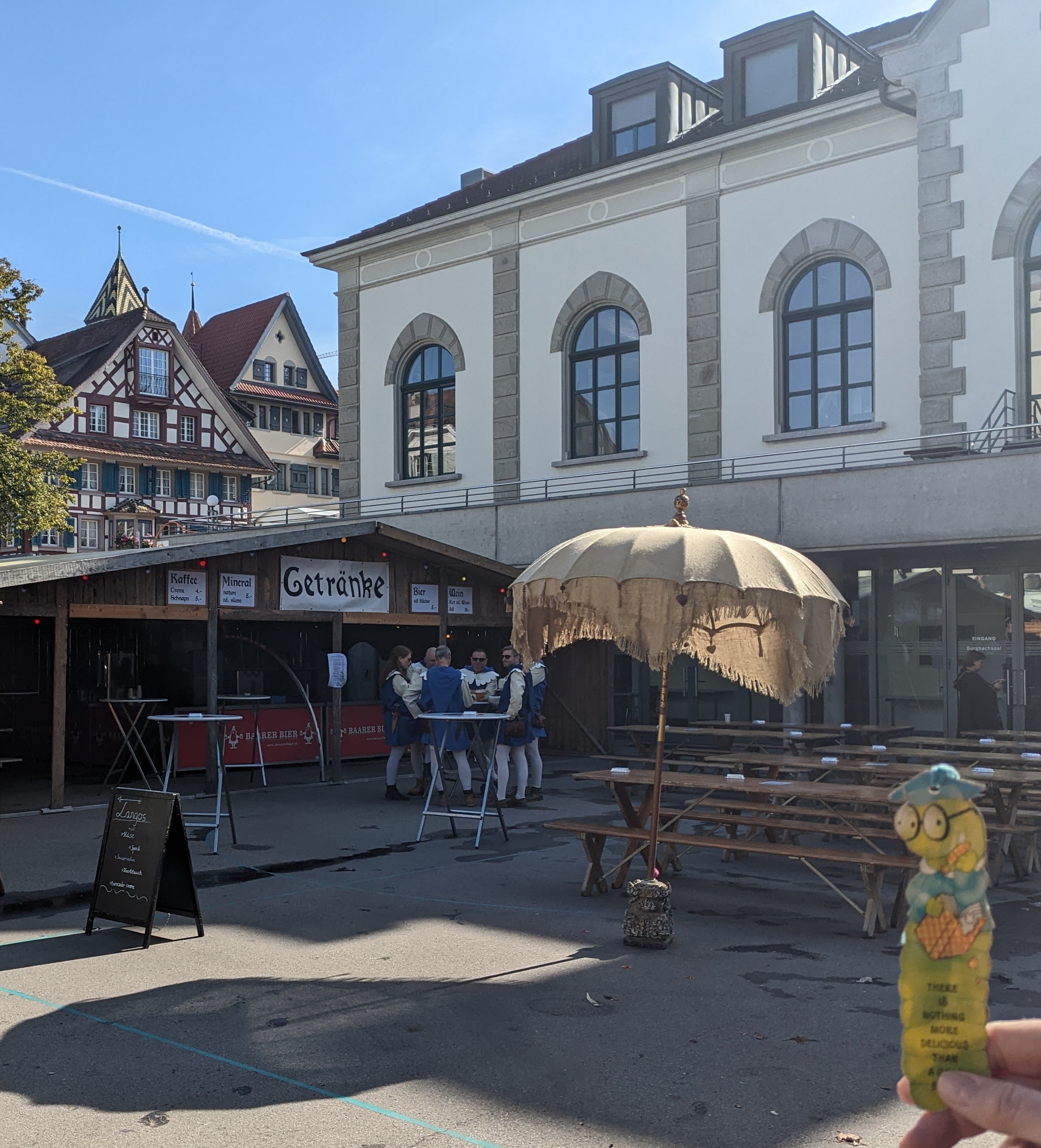
    Me in the refreshments area of the festival, contemplating the possibility of ale and vittles:

    As we wandered around the village, we came across people transacting their medieval business, seemingly unaware that they were in a time capsule that had been projected into the 21st century. These men were testing swords before an upcoming match:

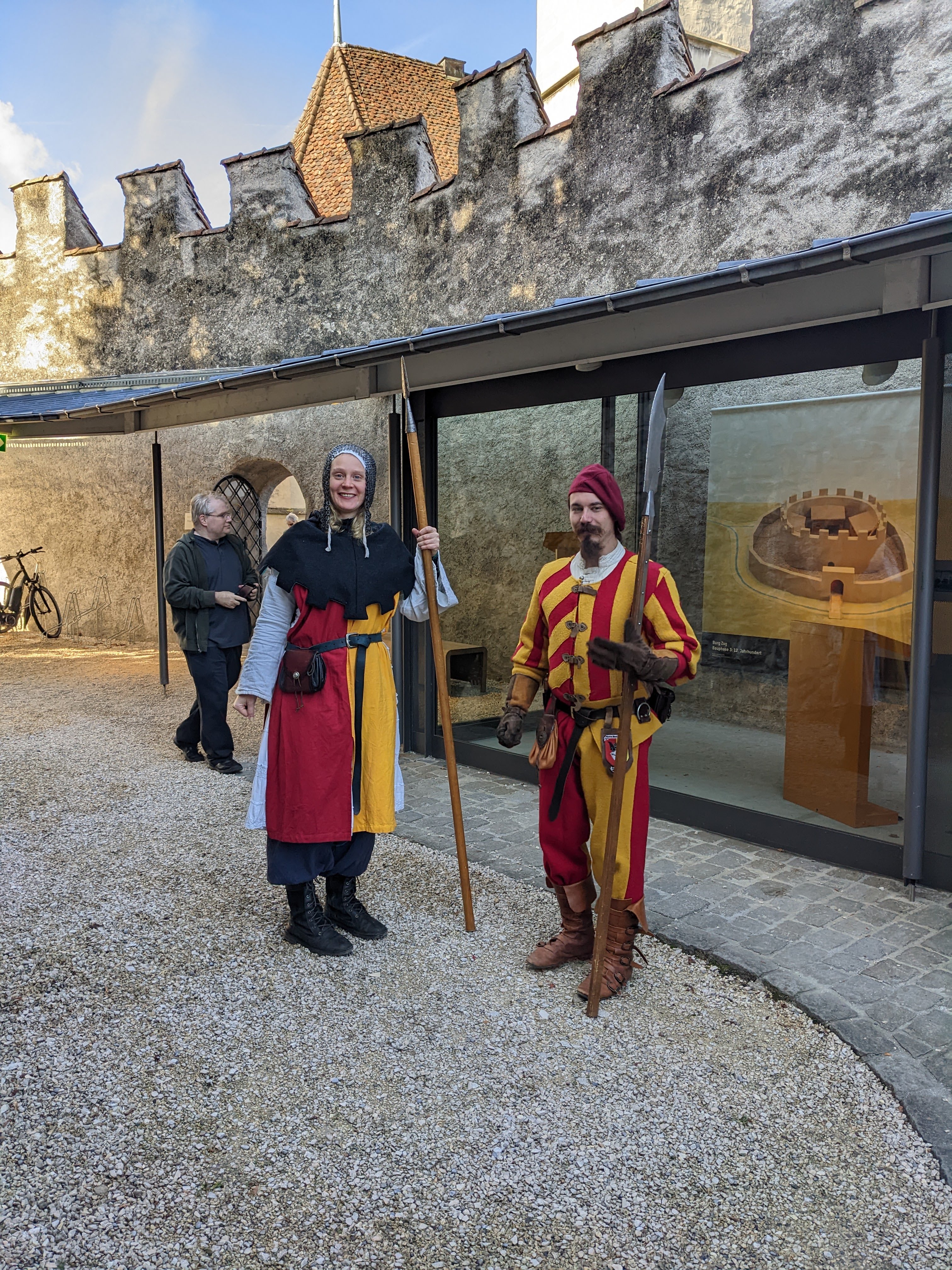
    Some of the village folk were guards, fearsome in their protection of the gateways. It was not uncommon to hear the command, “Halt”, roared out loud to stop the crowds from getting in the way when a photo was in order. This much to the amusement of said crowd, which tittered and took more photos of said fearsome guards.

    Another fearsome guard photo opp:

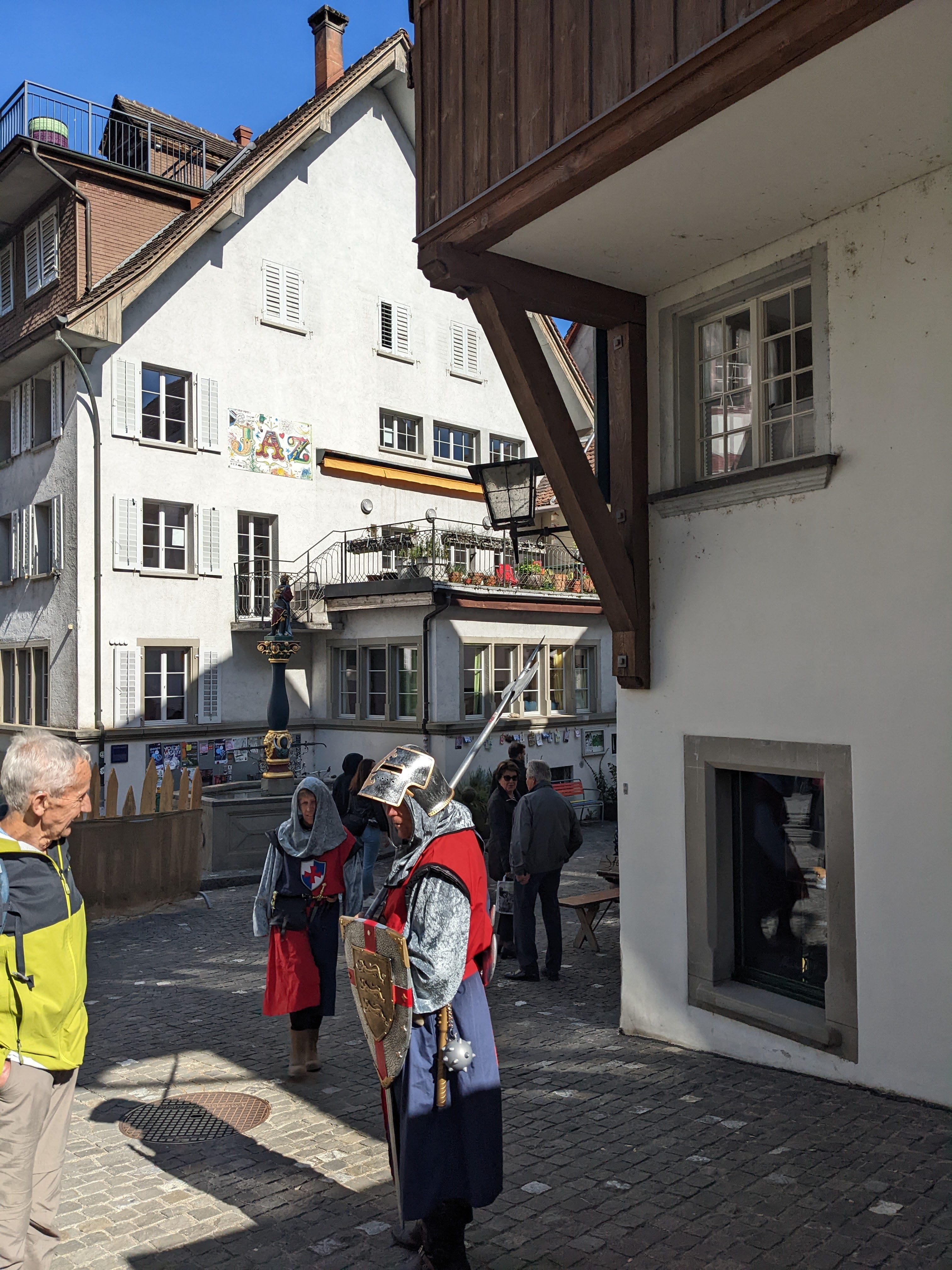
    Knights in armour shone in splendour under the autumn sun:

    Bands and bards roamed the lanes. It was interesting to see a band member playing the bagpipes. I’d thought these were a Celtic tradition, but evidently Switzerland did have bagpipes in the middle ages, called the Schweizer Sackpfeife. Here’s a short video of the Schellmerÿ band playing at the festival:

    A bard enchanting the crowd:

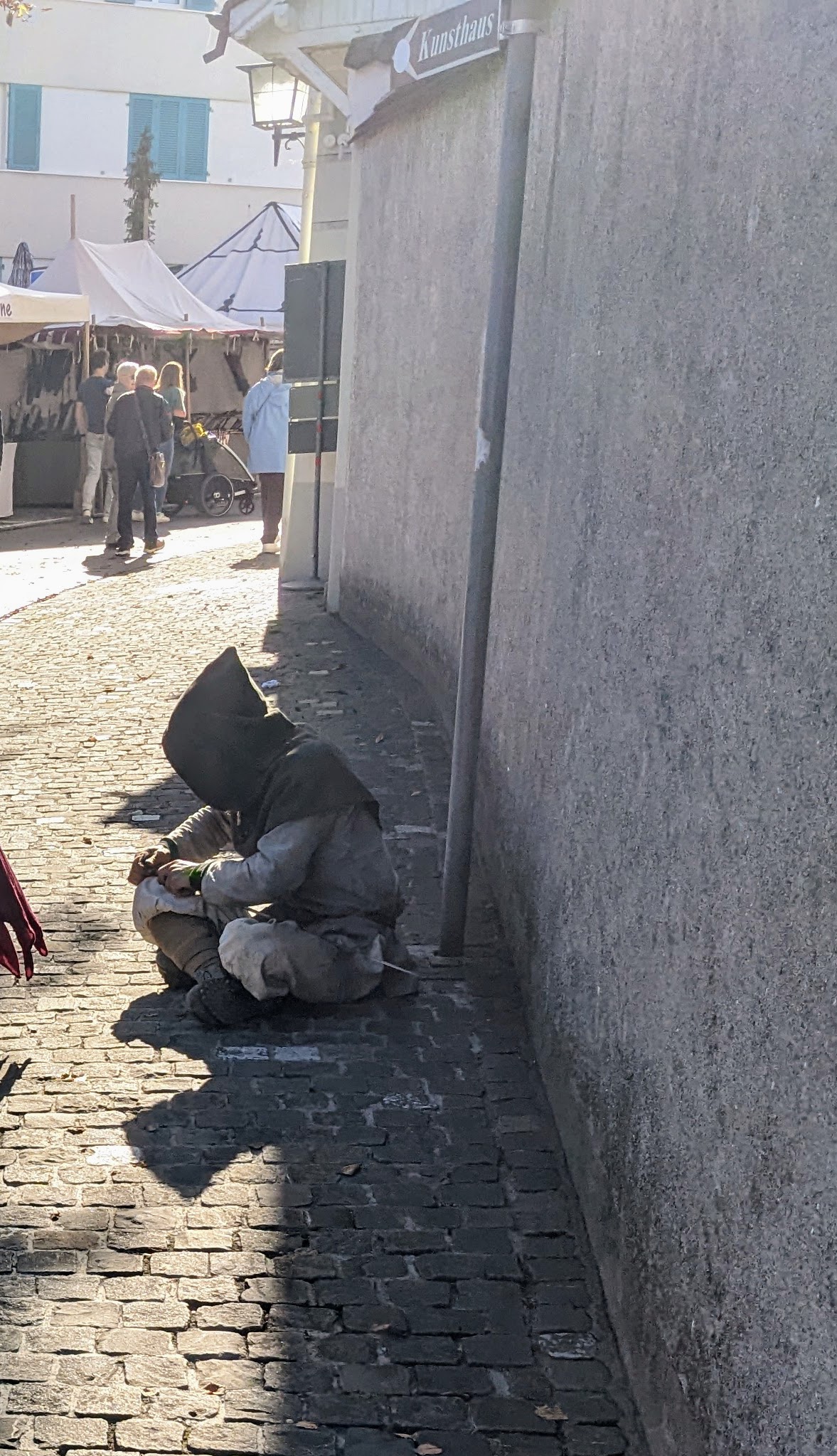
    A beggar sat quietly in the shade:

    A dark witch floated above the road surface, eerily tall and smooth of gait. Aided by a segway under his robes:

    The town of Zug has some gorgeous buildings:

    Here’s another, forming one side of a village square:

    From the sublime to the ridiculous, a nose protrudes from a building on the same square:

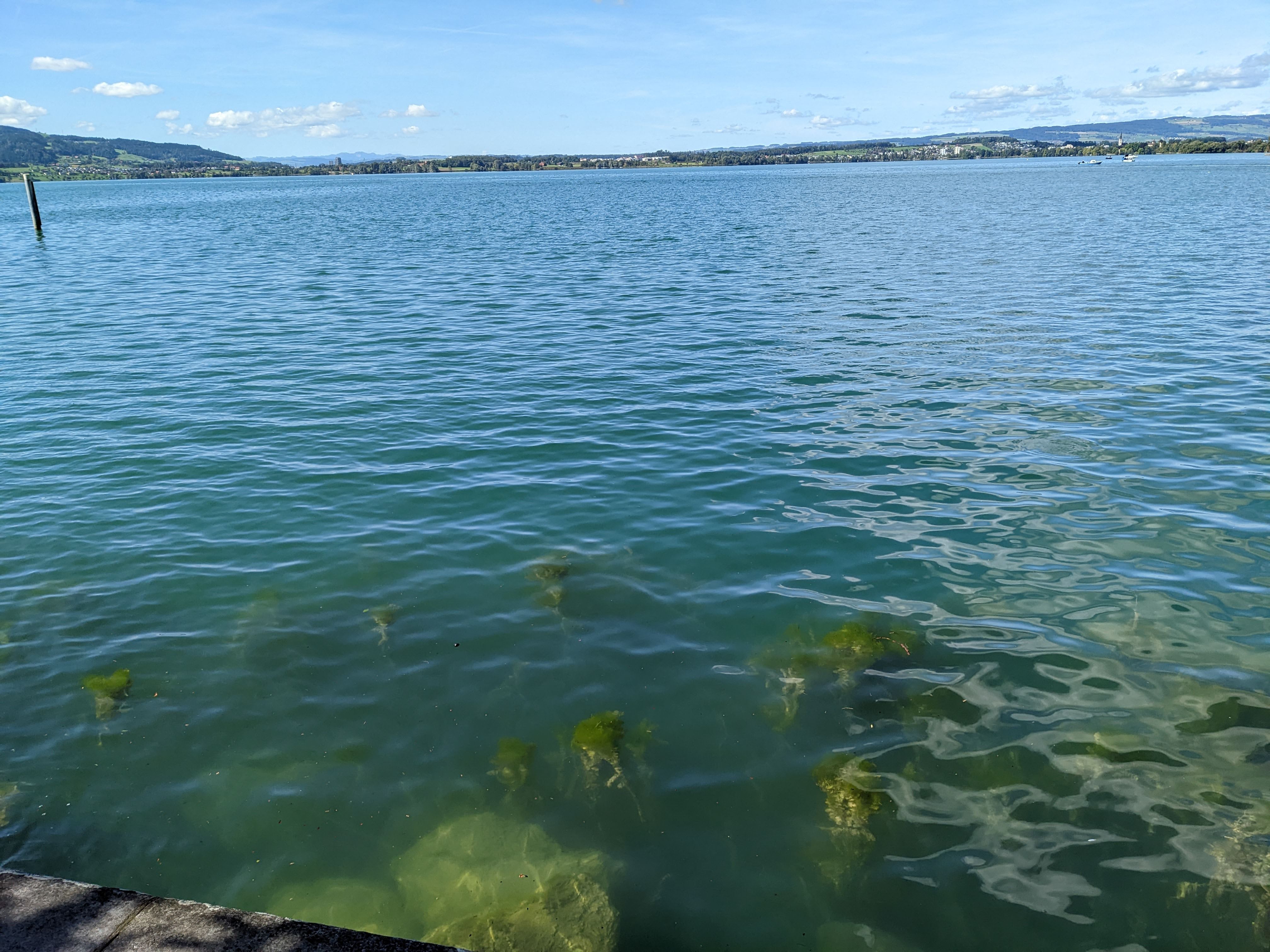
    Taking a stroll down the hill, we came across the Zugersee:

    The TC, bless her cotton socks, was fascinated by the plants growing in the lake, twisting and twirling into SciFi shapes, then pushing little flowers up towards the light. “Like underwater daisies”, she exclaimed:

    That’s all for today, folks.


  • Kurri Kurri Kookaburra and murals

    This is the blog of Mark Wordsworm, the travelling worm. I’m a 36-year-old bookmark (give or take a few years) and I proudly boast my own Hallmark serial number, 95 HBM 80-1. You’ll probably want to read all about me and my Travelling Companion (the TC).

    Today’s travel notes

    A couple of weeks ago, this worm visited the little town of Kurri Kurri. It’s an intriguing place, springing from a history of coal mining and now re-imagining itself as an artists haven.

    If you’re anything like the TC, bless her cotton socks, you’ll be asking, “Why two words?” Why is the town not called just “Kurri”? Towns and cities in Australia often have names that repeat the same word twice. The pattern comes from the Aboriginal languages that repeat a word to emphasize or strengthen the meaning of the word. In the local Minyung language, “kurri-kurri” means “the beginning” or “the first”.

    The book I’m in

    The Ones We Choose, by Julie Clark. A tale of genetics, romance, and tangled lives. Highly recommended.

    The photos

    Me with the Kurri Kurri Kookaburra:

    This Kookaburra is huge. If it were alive, I’d be taking shelter rather than posing in full view of that eye and that beak. Instead, I was happy to let the bird photo bomb me, as it’s a sculpture.

    In fact, this bird is a little like myself in that the representation is more magnificent than the original form.

    Here’s another view of the Kurri Kurri Kookaburra. The artist is one Chris Fussell. The sculpture was erected in 2009:

    Not far away from the big bird is the Kurri Kurri hotel, first opened in 1904. It’s a typical Australian hotel, in that its primary business is as a pub and restaurant, not accommodation. (The word “hotel” traps many a weary, unwary traveller just arrived in Oz.) It’s a lovely old building, with wrap-around verandas and frilly cast-iron railings:

    On a wall to the right of the hotel in the above picture is one of the murals that the town has recently become known for.

    More paintings liven up a utilitarian building in the town centre:

    The next mural fits right in with the business whose wall it adorns:

    If you look closely at the above mural (the one on the right), you’ll spot a Kookaburra on a pile of tyres. There are more than 60 murals in and around Kurri Kurri. Rumour has it that every mural includes a Kookaburra somewhere.

    Some of the wall decorations are of a bleaker nature, though still artistically and historically interesting:

    That’s all for today, folks.


  • Lost in Portland, Oregon

    This is the blog of Mark Wordsworm, the travelling worm. I’m a 25-year-old bookmark and can proudly boast my own Hallmark serial number, 95 HBM 80-1. You’ll probably want to read all about me and my Travelling Companion (the TC).

    Today’s travel notes

    Me and the TC are in Portland, Oregon. They told me it’d be summer. They said I wouldn’t be cold. They were mistaken.

    My impressions? Warm, friendly people. They smile as you pass them in the street. I feel they’d take care to avoid stepping on a humble worm.

    The book I’m in

    Rich Man’s War, by Elliott Kay. Military sci-fi as a genre has a strange appeal, especially when travelling. This worm puts it down to a camaraderie among people shoved into small spaces under stressful circumstances.

    Recommended accommodation

    Hotel deLuxe, 729 SW 15th Ave, Portland, OR. The rooms are furnished with care and talent, and the reception is friendly.

    The photos

    Me outside Portland Central Library:

    Worm at Portland Central Library

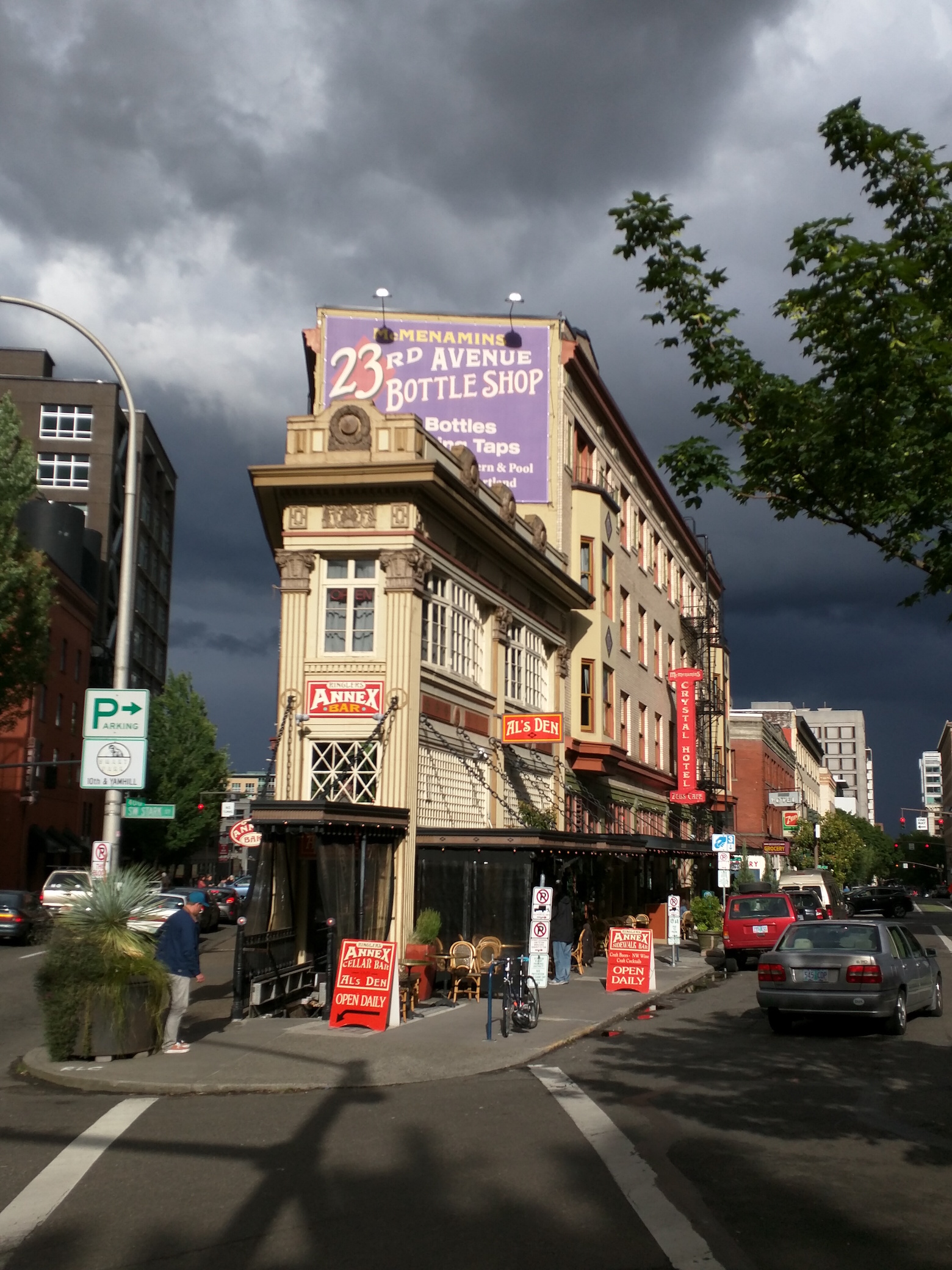
    Storm clouds loom over McMenamins Ringlers Annex, a tavern at the corner of SW Stark Street and W Burnside Street:

    McMenamins Ringlers Annex tavern, Portland

    The TC and I went for a stroll to explore the city. Our outing progressed in typical fashion. Before setting off, we checked the map and located downtown Portland. On a whim, we diverted to see the Pioneer area. So, we spent a few hours doing what the TC does best – getting lost!

    Here’s the Pioneer Courthouse in SW 5th Avenue, Portland:

    Portland Pioneer Courthouse

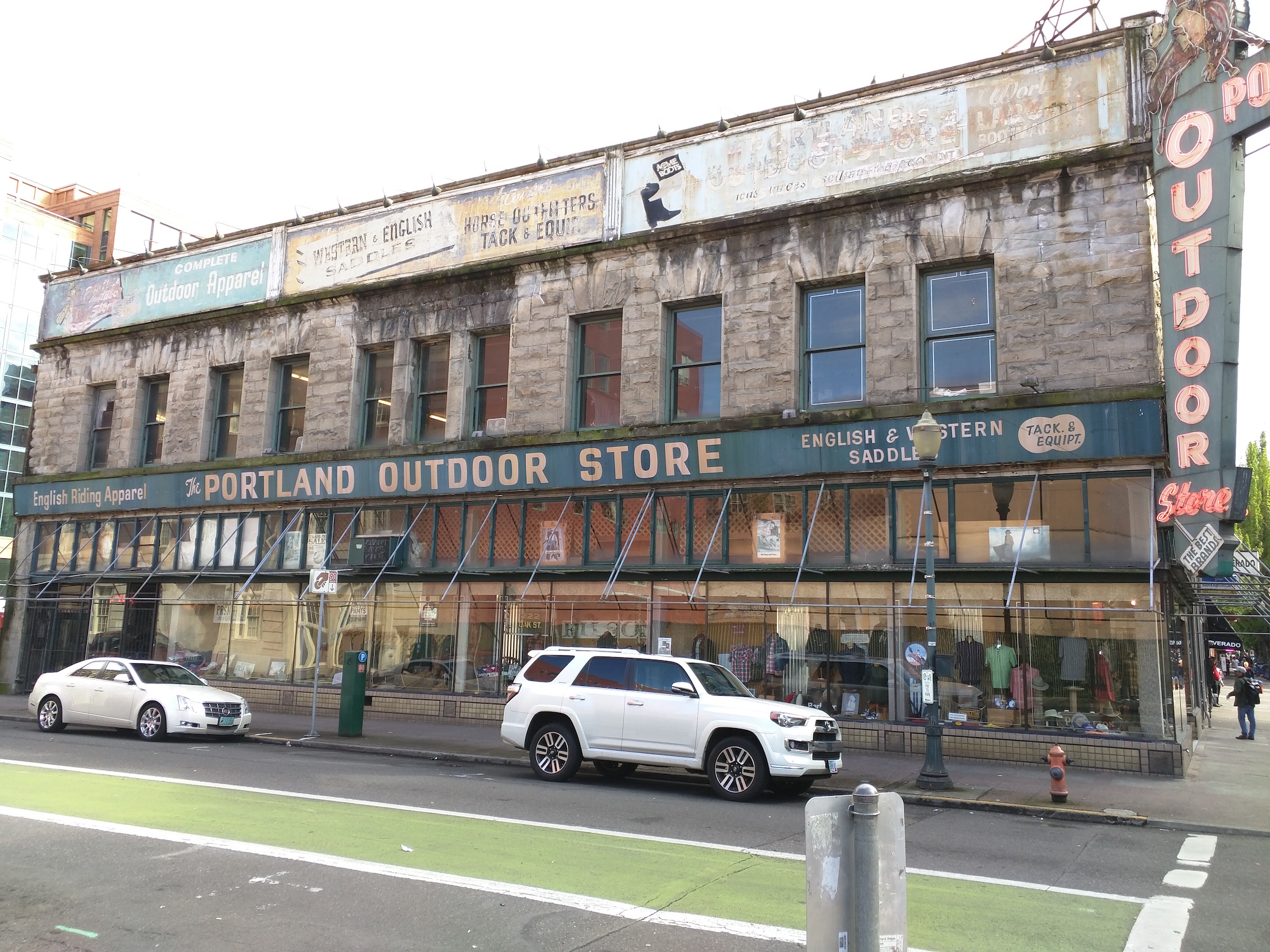
    For a different atmosphere, the Portland Outdoor Store in SW 3rd Ave:

    Portland Outdoor Store

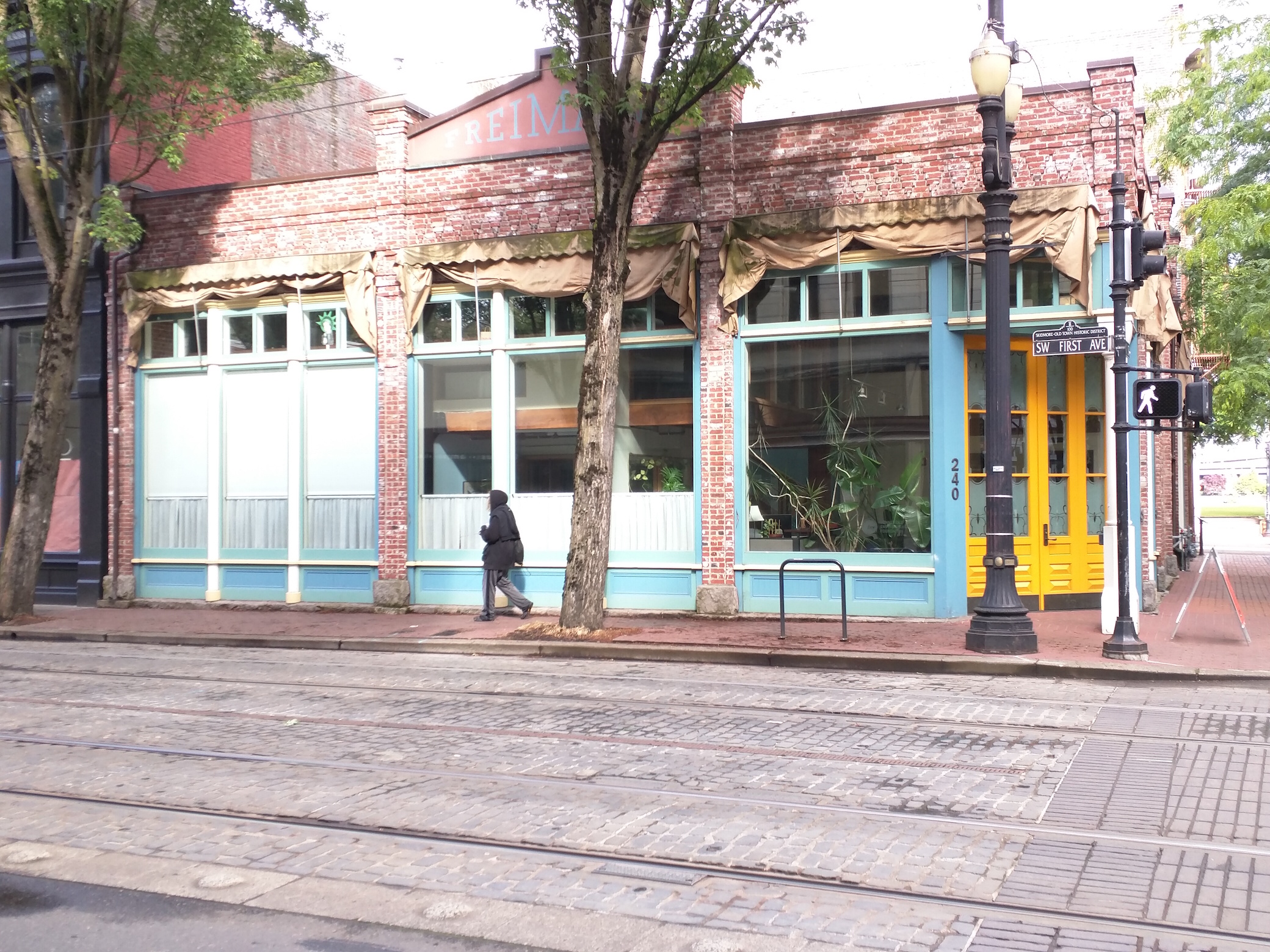
    With apologies for the bleached out appearance of the lighter areas (the TC says the lighting was difficult) here’s a colourful place in SW First Ave:

    SW First Ave Portland

    They have trams in Portland:

    A tram in Portland

    After our impromptu tour of the Pioneer area, the TC and I set off again confidently, continuing our quest for downtown. A few blocks later the TC checked the map, only to discover that we’d been heading in opposite direction. (May I say that this is not an uncommon occurrence when going for a stroll with the TC.) The Portland riverside was now nearby, so the TC decided that was where we wanted to be anyway.

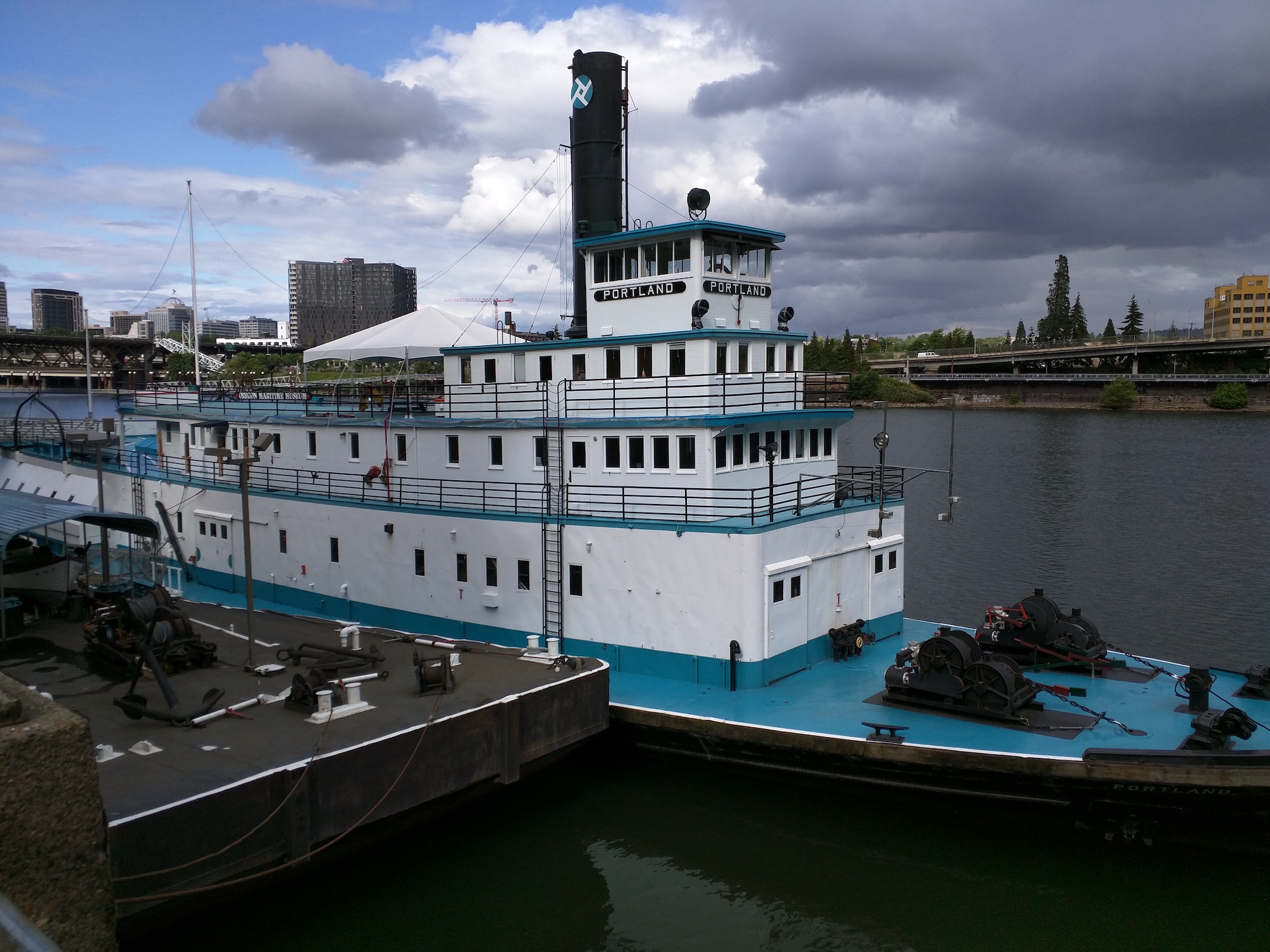
    The vintage tugboat Portland, moored off SW Naito Parkway:

    Historic tugboat Portland

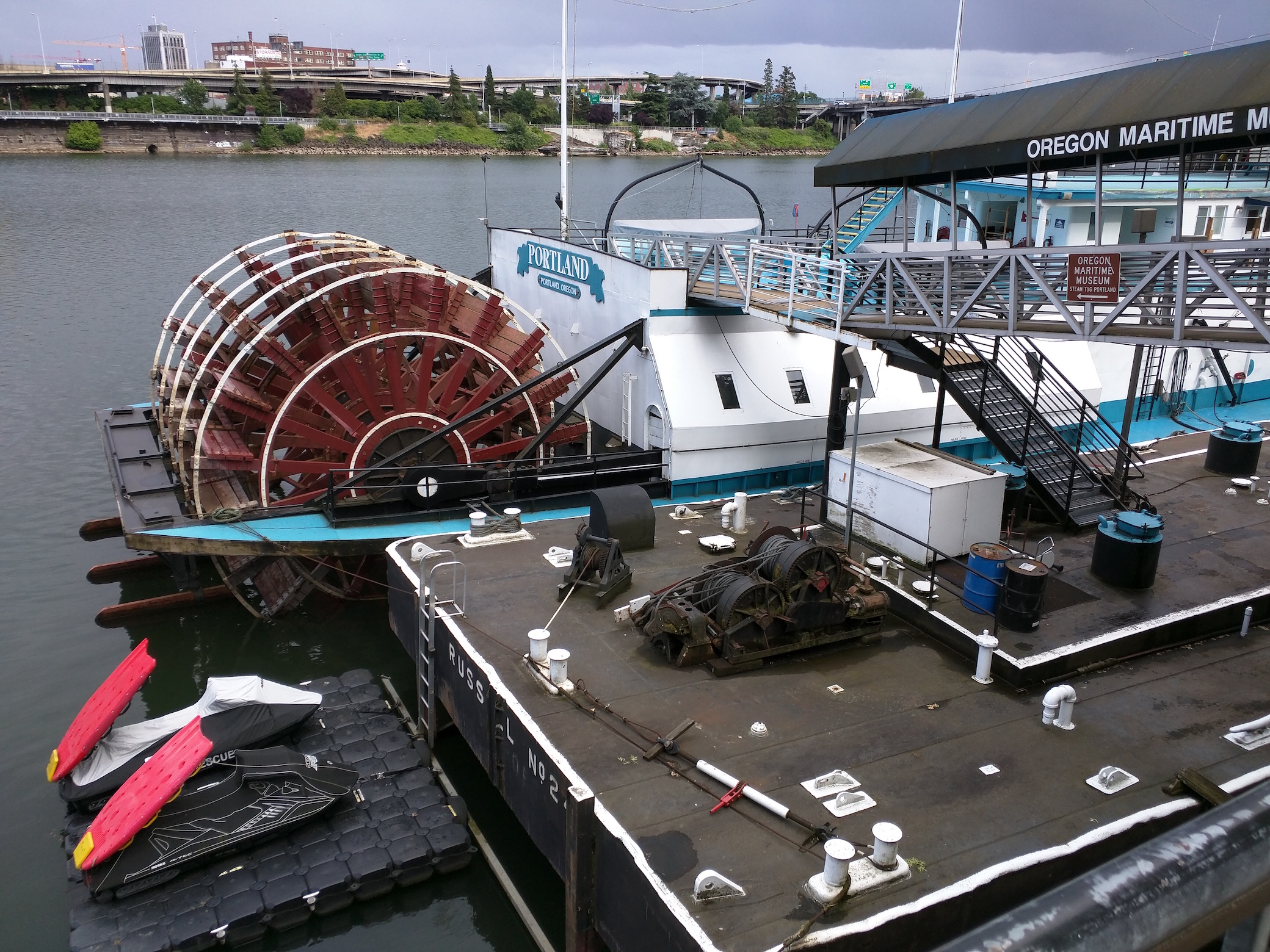
    The tug is a paddleboat, lovingly restored, which now houses an exhibition of the Oregon Maritime Museum:

    Paddle tugboat Portland

    Geese taking off in front of the E Burnside bridge:

    E Burnside bridge Portland

    The N Steel Bridge in Portland has a bare nuts-and-bolts feel that must surely appeal to engineers:

    N Steel Bridge Portland

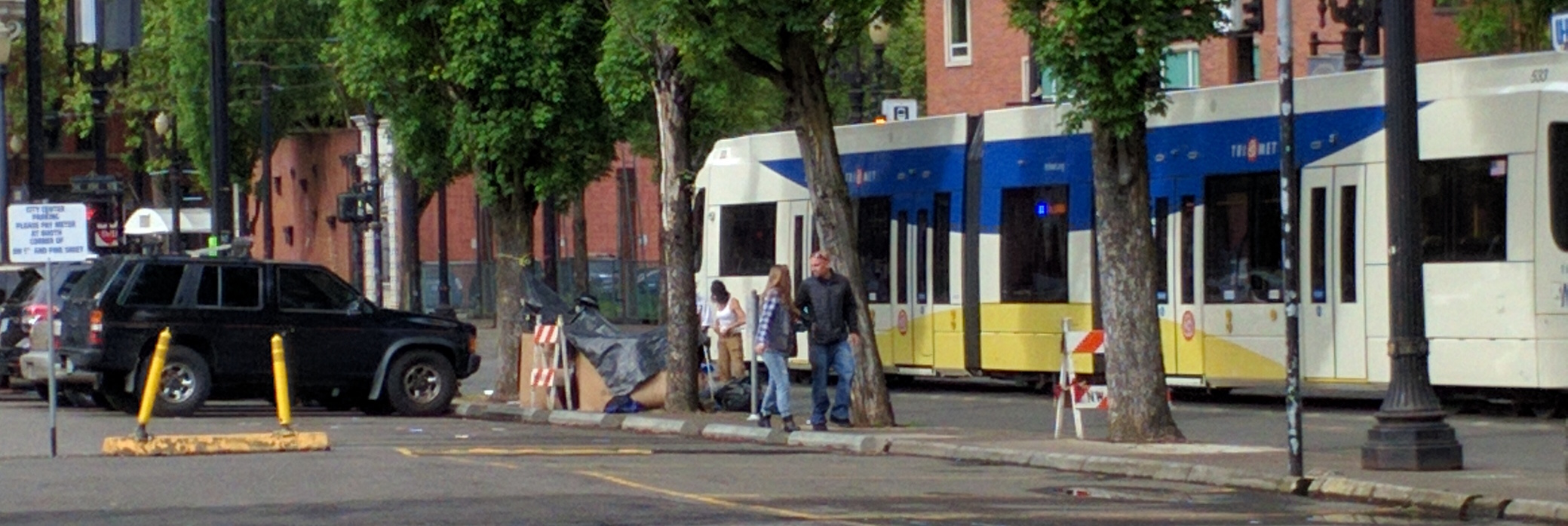
    It’s sad to see that there are homeless people in Portland, as in so many cities around the world. The TC and I saw many homeless people during our ramble. In the middle of this scene is a shelter built of cardboard and black plastic:

    Homeless in Portland

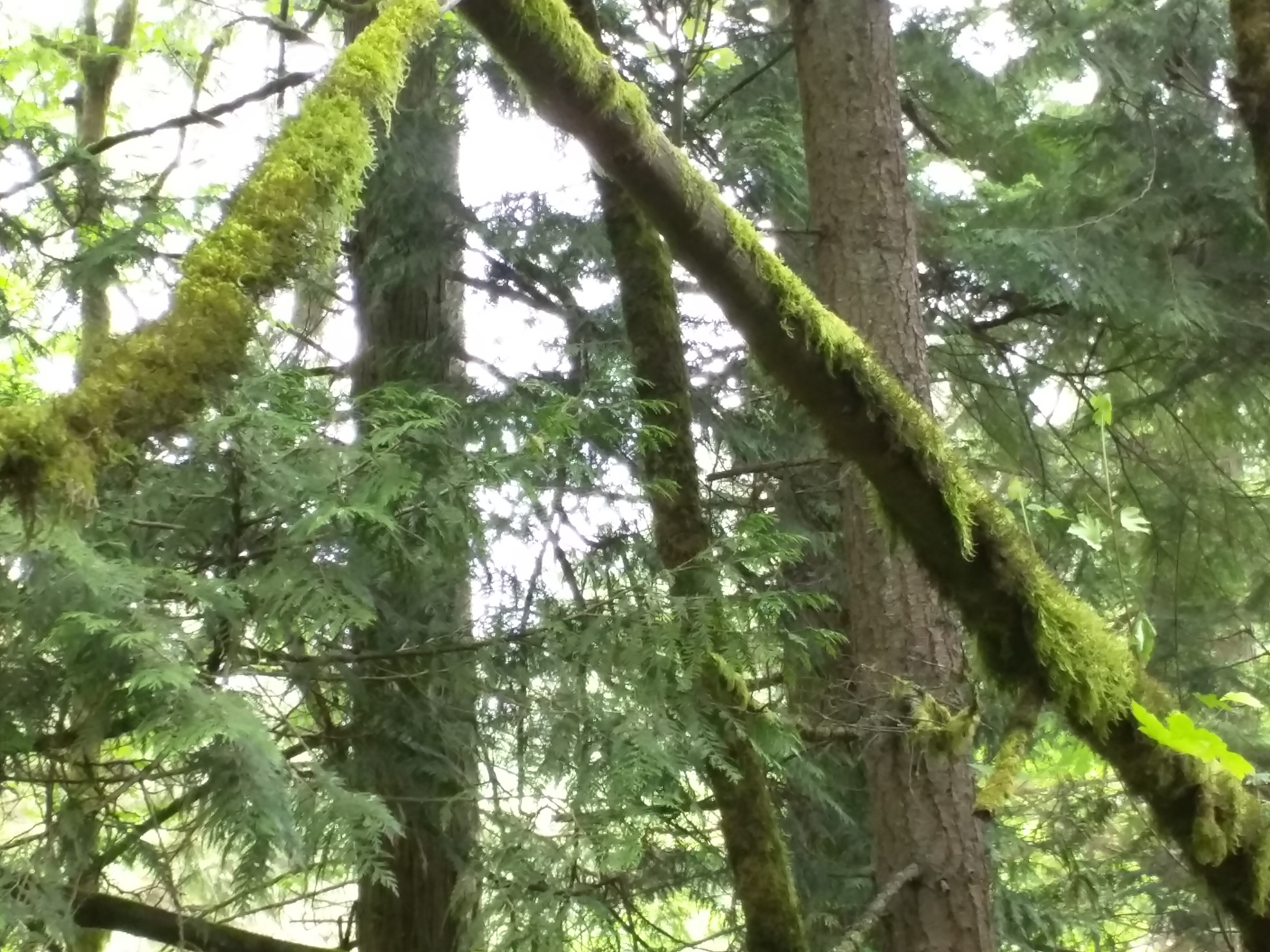
    On another day, we hiked along the trail from Macleay Park to Washington Park, in the hills above Portland. The TC, bless her cotton socks, was in her element. She’s quite a one for woodsy walks. Moody moss dripped from the trees:

    Moss in Washington park

    That’s all for today, folks.

  • Inside the book – Things Unseen by Sarah Maddox

    Inside the book – Things Unseen by Sarah MaddoxMy travelling companion, fondly known as the TC, has recently published a book: Things Unseen. It is a psychological romance, or a romantic drama with a strong psychological theme.

    Being of a somewhat serious nature, this worm has decided to explore the philosophical and psychological aspects of the book.

    “My dear worm,” I hear you say, “the blurb says the book is ‘a combination of sizzling romance, eerie horror, and tense psychological drama’. That doesn’t sound like serious science!”

    In my years of exploring and consuming books, this bookworm has found that many a novel has a good solid grounding in “serious science”. That is what makes them compelling reading.

    Symbols and dreams

    In both Jungian and African (Xhosa) methodologies, symbols are seen as a powerful tool for dealing with psychological problems. Literature also makes good use of symbols and the associations that they so easily bring into the minds of readers.

    This worm is particularly taken with the way Things Unseen plays with symbols, mixing  European and African traditions. It makes you think about the implications of two different sets of symbolism meeting at the tip of Africa, mostly unaware of their different world views, and attempting to forge a life together. This has been happening over the centuries in that turbulent part of the world. It is still happening all over the world, in the microcosmic sense, when two people meet.

    What do you see when you look at the picture on the cover of  Things Unseen? A ghost, perhaps, looming over a burning house? Perhaps the white cloak and dark face make the figure seem threatening. Or perhaps the figure is instead a symbol from African culture, of a healer dressed in white and hovering protectively over a household in trouble.

    Xhosa traditional healers believe that our “ancestors” communicate with us via dreams. The word “ancestor” to a Xhosa person comes loaded with a set of associations and beliefs that Europeans are unaware of. An ancestor is a presence in your mind and in your family, who plays a very definite and beneficial role in guiding your actions and guarding you and your people.

    Jungian healers believe that our unconscious communicates with our conscious minds via symbols in dreams.

    A book written by M. Vera Bührmann describes the similarities between the treatment methods and philosophies of African witchdoctors and Jungian psychologists. It is a fascinating read, being a personal account of investigations by a Jungian psychologist spending time with a group of Xhosa healers: Living in Two Worlds, Communication between a white healer and her black counterparts (Human & Rousseau, 1984).

    Characters or tropes?

    A trope is a character type that authors use to call up a set of expectations and images in their readers’ minds. Think of evil stepmothers, the big bad wolf, a druid, an orphan who becomes a king, and so on.

    Things Unseen has a couple of well-known and much-loved character types, brought to life as individuals. This worm’s favourite cameo is Felicia, the pyromaniac. Felicia dresses in brightly-coloured scraps, assembled into an eccentric outfit with short, bright leggings. She cuts the hem off a dress, leaving a jagged outline. Like upside-down flames, she thinks. She hovers in the background, watching the heroes of the book with a gimlet eye, and muttering about the perfect conflagration she is planning.
    Then there’s Tim, the ghost buster… Ah, but I will not spoil your fun.

    Disclosure: It is only fair to disclose that Mark Wordsworm (the Travelling Worm, and author of this blog) is a nom de plume of Sarah Maddox, author of Things Unseen. Thanks for reading this post. 🙂

    Getting hold of the book

    Things Unseen is available in eBook format from these sites:

    The customary “Me” photograph

    Followers of this blog will be expecting a picture of this worm looking dashing while doing something daring. I am, as always, keen to please, so here it is.

    Me cuddling up to Things Unseen on a Kindle.
    Inside the book – Things Unseen by Sarah Maddox20February2013 002-truncx