Travelling Worm

A bookworm's travelogue

Tag: new south wales

  • The Big Koala & The Dog on the Tuckerbox

    In this post: The Big Koala, The Dog on the Tuckerbox, and a fearsome Fairy-wren, all near the New South Wales country town of Gundagai.

    This is the blog of Mark Wordsworm, the travelling worm. I’m a 40-year-old bookmark (give or take a few years) and I proudly boast my own Hallmark serial number, 95 HBM 80-1. You’ll probably want to read all about me and my Travelling Companion (the TC).

    Today’s travel notes

    On our way to the Victorian High Country, me and the TC stopped for a short break in the country town of Gundagai. The town is a popular stopping place on one of the main routes to the border between New South Wales and Victoria.

    Just outside the town, we met a big koala, a dog perched on a tucker box, and a bird that sits still for no-one.

    “What’s a tucker box,” you ask? It’s a lunch box. Nowadays, Australians carry their food around in an esky rather than a tucker box. “Esky?” That’s a cool bag or ice box, named after “eskimo”.

    The book I’m in

    The Phenomenon of Man by Pierre Teilhard de Chardin. Yes, the TC is putting me in some heavy stuff. We’ll see how this turns out.

    Travel tips

    When driving the Australian highways, take a turnoff and see where it leads.

    The photos

    Me and the Big Koala near Gundagai:

    It was, errm, interesting being so close to those claws. Yours truly survived by dint of keeping a low profile. That’s easy to do when you’re two-dimensional. Just turn sideways on.

    There are “big somethings” dotted all around Australia. This worm has already met the Big Bogan at Nyngan and the Kurri Kurri Kookaburra. Now the Big Koala. No doubt the TC, bless her itchy feet, will go in search of more big somethings.

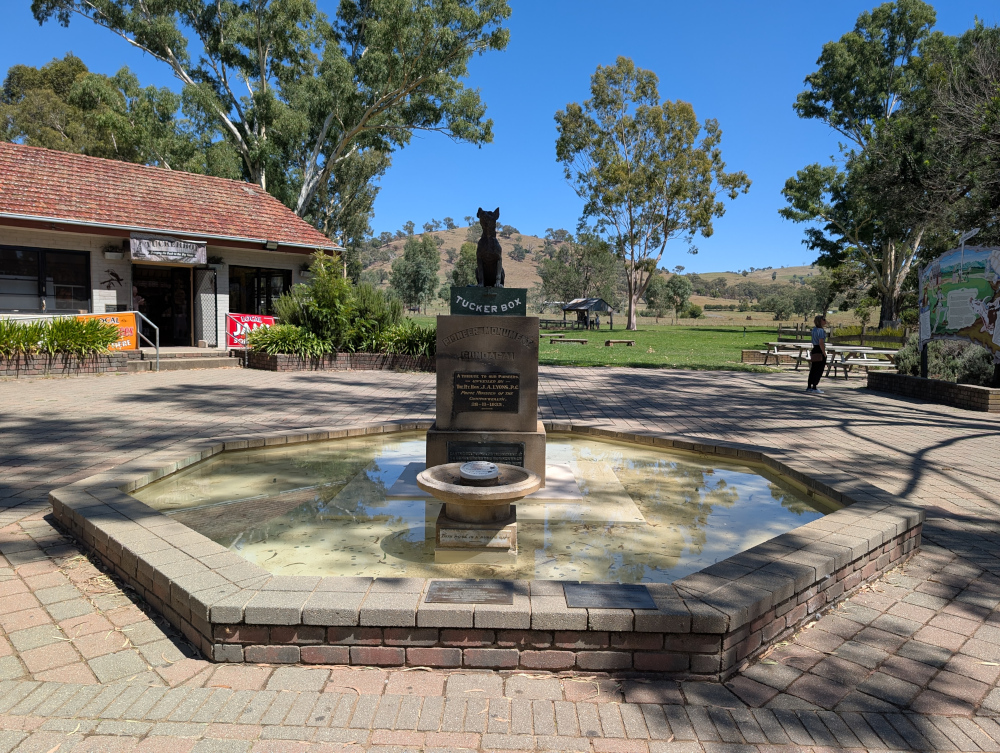
    A few million steps from the Big Koala (a few million, that is, if you’re a small worm like yours truly) is the Dog on the Tuckerbox:

    The plaque below the dog and the tucker box declares the statue to be a tribute to the pioneers of Australia, unveiled in 1932.

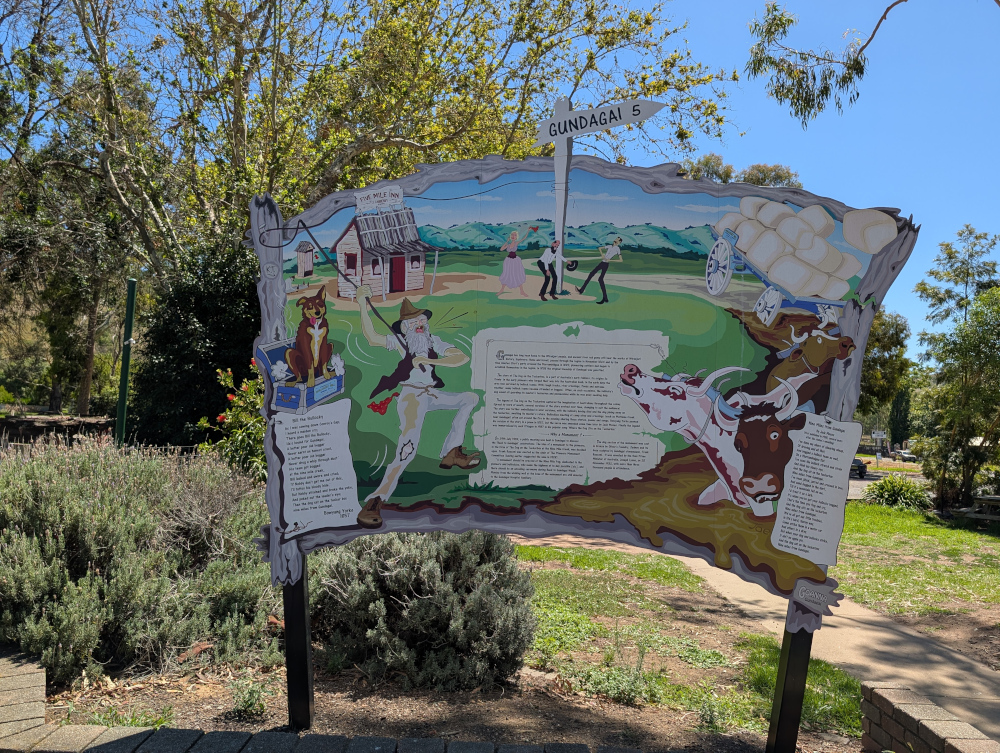
    A rustic sign post tells the story:

    Ironically, as far as I can tell, the dog that features as the hero of this monument was probably based on lyrics by Charlie ‘Bowyang’ Yorke, who wrote a far less clean poem than the two shown on the sign. In Charlie’s story, the dog did a poo on the cattleman’s tucker box.

    I’ve used a more polite word than the original poem, to protect tender ears. You can probably guess the original word: it rhymes with “sat“, which is now used as a replacement in the poem.

    What’s more, the dog chose his moment when the cattleman was battling through the hardest of times: his wagon was bogged, the axle snapped, the team of bullocks stuck, and rain starting. The unfortunate cattleman couldn’t even dry his trousers or boil a pot of tea.

    On to prettier things:

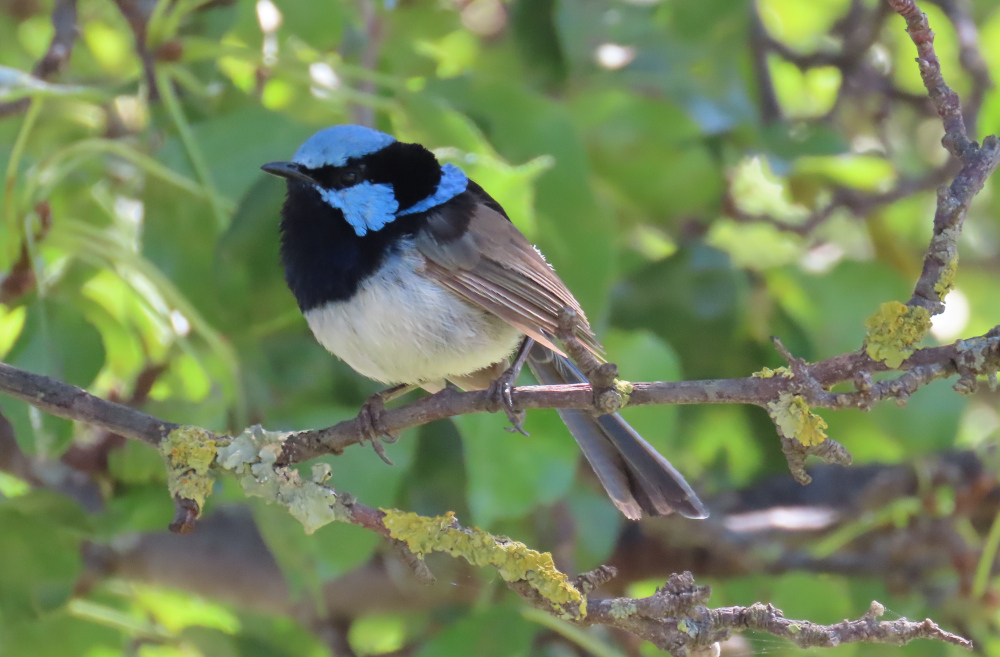
    In using the word “pretty”, yours truly is of course referring to the lichen on the twigs, not to the beady-eyed creature perched above. That’s a baby dinosaur, known to some as a Superb Fairy-wren, and it eats people like me for breakfast. I stayed hidden in my book while the TC ooh-ed and aah-ed over the monster.

    I’ll be back soon with more news about our trip to the Victorian High Country.


  • Coxs River & Six Foot Track 4WD

    This is the blog of Mark Wordsworm, the travelling worm. I’m a 40-year-old bookmark (give or take a few years) and I proudly boast my own Hallmark serial number, 95 HBM 80-1. You’ll probably want to read all about me and my Travelling Companion (the TC).

    Today’s travel notes

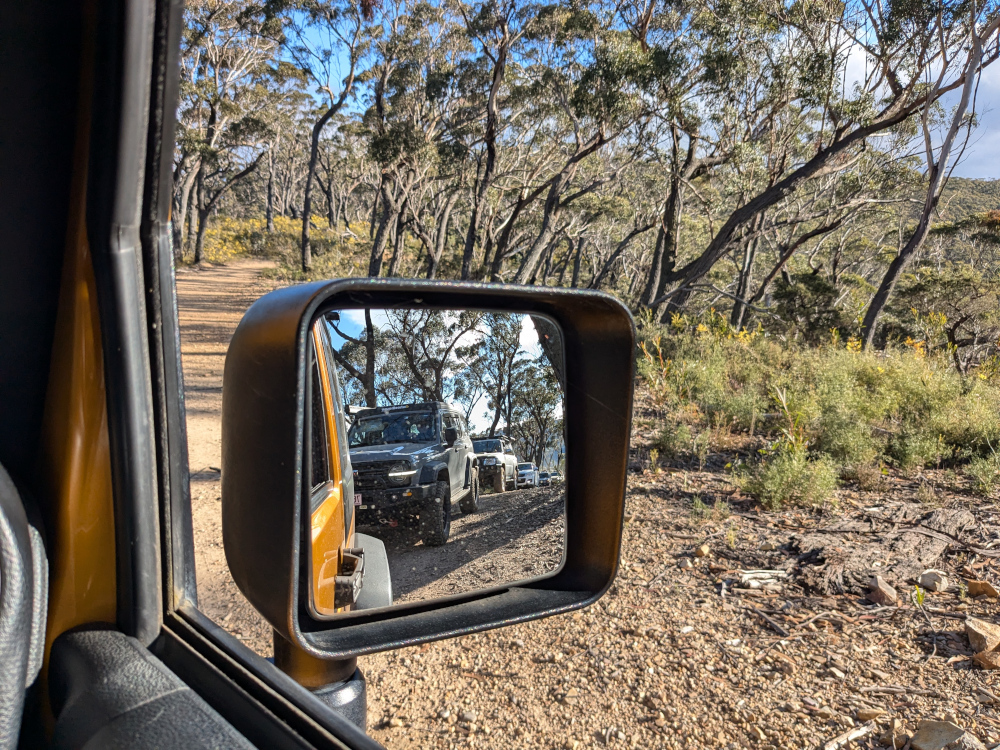
    Me, the TC, and Janet the Jeep recently drove across country in the Blue Mountains area, from Little Hartley to the Jenolan area. The trip included Coxs River Road, Ganbenang Road, Cullenbenbong Road, Glen Chee Road, Six Foot Track, and Black Range Road.

    The book I’m in

    No Time for Goodbye, by Linwood Barclay. A psychological drama packed with plot twists. Much like a 4WD road.

    Travel tips

    You’ll need a 4WD vehicle for most of this trip. The first part, before the turnoff to Coxs River camping ground, is fine for 2WD vehicles. But you’ll need a 4WD to get down to the camp site, and then back up again to follow the rest of Glen Chee Road.

    The photos

    Me at Coxs River camp ground:

    The TC, bless her woollen mittens, decided to focus on the river rather than on yours truly. Sometimes I disagree with her choices.

    We started our trip at the Little Hartley end of Coxs River road. The first hour or so is a lovely, meandering route, part sealed and part dirt. The views are of rolling hills and dales. And cows. This shot is from a trip last year:

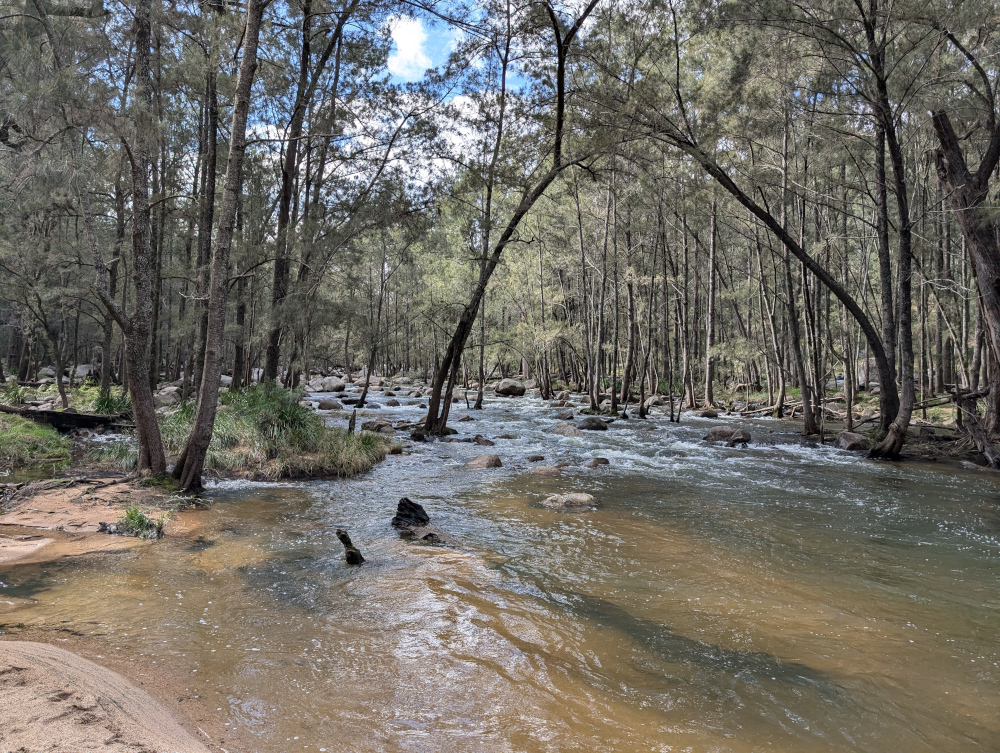
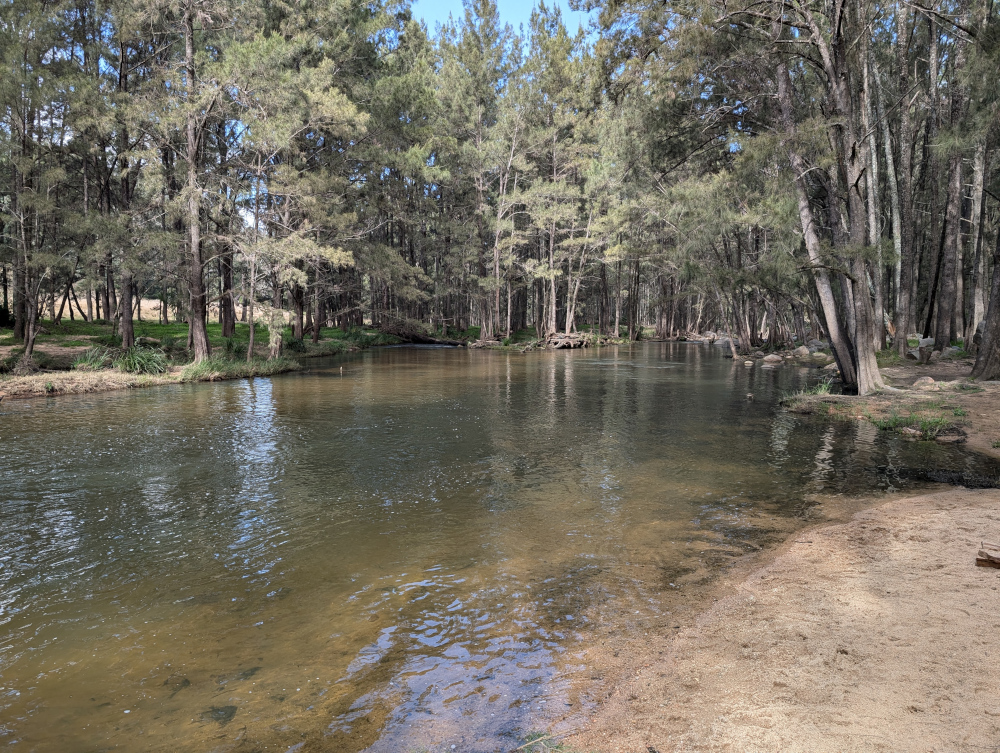
    At the camp ground, Coxs River is wide and rippling:

    Looking in the other direction, the river widens out into tranquil pools:

    We took a walk from the camp ground towards Bowtells Swing Bridge. This is a 20-minute walk through the forest, with views of the river gorge on one side:

    Bowtells Swing Bridge is currently closed for maintenance. It’s been so for a long while: years. This worm has never seen it open. Crossing the bridge could be a wild ride, swinging over a deep river canyon:

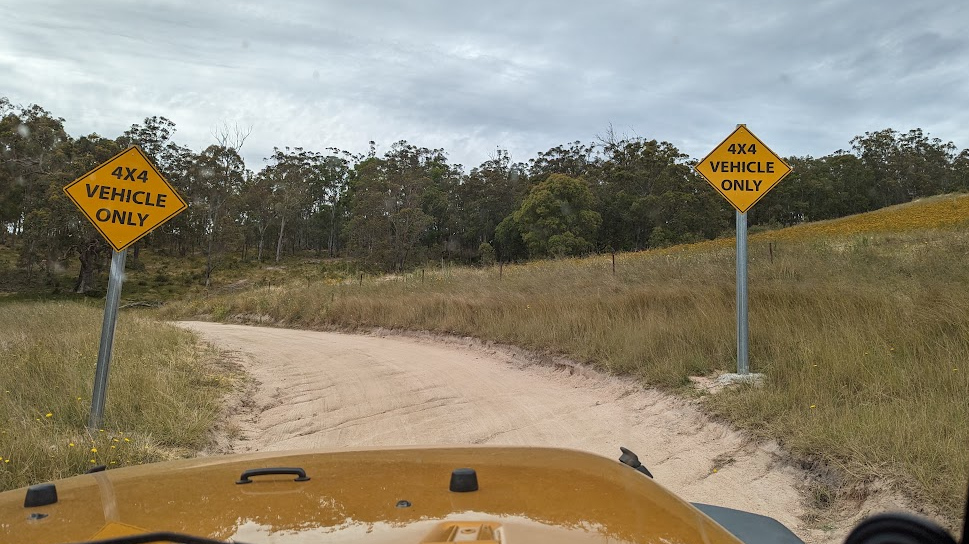
    If you turn left when you come up the road from the camp ground, you enter the 4WD-only part of Glen Chee Road:

    See what it’s like driving Glen Chee Road near Pass Gully. This clip shows some track erosion, but it’s an easy drive when dry:

    Further along Glen Chee Road, descending towards Alum Creek Camping Ground:

    The road leads through pretty forest:

    Despite it being mid winter when we made this trip, yellow flowers were sprinkled across the bushland:

    In the next video, we cross Little River. This is one of several river crossings on the trip. They’re not hard, provided the river is low and your vehicle is a capable 4WD.


  • Newcastle, New South Wales

    This is the blog of Mark Wordsworm, the travelling worm. I’m a 36-year-old bookmark (give or take a few years) and I proudly boast my own Hallmark serial number, 95 HBM 80-1. You’ll probably want to read all about me and my Travelling Companion (the TC).

    Today’s travel notes

    This week marked my first visit to Newcastle, famed as the largest coal-exporting city in the world. Now, dear reader, you’d be justified in thinking that I’m talking about the Newcastle in north-east England. Nay, not so, this Newcastle is on the eastern coast of New South Wales, Australia.

    I greatly enjoyed my short visit to this harbour city, and my pleasant encounters with Novocastrians.

    The book I’m in

    Tragaron’s Daughter, by Madeleine Brent. A well-written, fast-moving romance and thriller combined.

    Recommended restaurant

    One Penny Black, 196 Hunter St, Newcastle. Highly recommended. Friendly service. Tasty fresh food in good quantity.

    The photos

    Me in front of the pavilion of the Newcastle Ocean Baths, a grand Art Deco building from the 1920s:

    In the above photo, I’m on the southern side of the pavilion. Take a stroll with me around the building. Go slowly now — I may have more legs than you, but they’re shorter than yours.

    The pavilion and baths were to be closed for renovation just three days after our visit. This worm felt privileged to see them in their current state, and hopes to see the renovated version soon. A somewhat whimsical sign under the pavilion predicted the upcoming upheaval:

    Behind the pavilion are the baths themselves, open to the sea and sky, with tiered seating at one end:

    Behind the tiered seating hides an intriguing little dome, complete with an intriguing little internal staircase:

    The next picture shows the pavilion again, viewed from the northern side this time:

    Moving south from the baths, you can stroll along Newcastle beach, bounded by a terraced headland:

    Moving inland, you’ll probably encounter tram or two. Big brother, in shape at least, to yours truly:

    This worm steered clear of lurking Corellas. Crafty characters they are, with one eye always open for a tasty morsel:

    The streets of Newcastle are well worth a wander, for their varied architecture:

    This building is a good advertisement for the architectural offices that inhabit it:

    To end on a slightly political note, I’ll share this photo demonstrating nuclear free sentiments. No doubt the statement expressed here is in response to a recent state government announcement that Newcastle is one of three sites under consideration for a nuclear submarine base:

    That’s all for today, folks.


  • Wentworth Falls and Valley of the Waters, Leura

    This is the blog of Mark Wordsworm, the travelling worm. I’m a 25-year-old bookmark and can proudly boast my own Hallmark serial number, 95 HBM 80-1. You’ll probably want to read all about me and my Travelling Companion (the TC).

    Today’s travel notes

    The TC recently spent a couple of days in Leura, a town in the Blue Mountains near Sydney. I was there too, but I spent my time cosily buried in a book. The TC, brave soul that she is, went on a four-hour hike from Leura to Wentworth Falls and back. The walk is 6 to 7 kilometres in distance, with a vertical drop and ascent of 200 metres.

    My impressions? To judge by the TC’s glowing face and weary limbs, this was a walk and a half. She loved it, and had sore muscles for days afterwards.

    The book I’m in

    Jupiter War, by Neal Asher.

    Travel tip

    When walking in the Blue Mountains, take plenty of water and some food. Although your intention may be to stay out only a couple of hours, weather can change and mishaps can happen.

    Recommended accommodation

    Fairmont Resort, 1 Sublime Point Rd, Leura NSW 2780. Comfort, warmth, and friendliness.

    The photos

    Looking out over the Blue Mountains from the Fairmont Resort in Leura. This is where the four-hour walk started. Early in the morning, the valley is filled with mist:

    Leura, Blue Mountains

    On the way to Wentworth Falls, the path takes you up and down, through forest-filled glens, under overhanging rocks, along cliff faces:

    Walk to Wentworth Falls

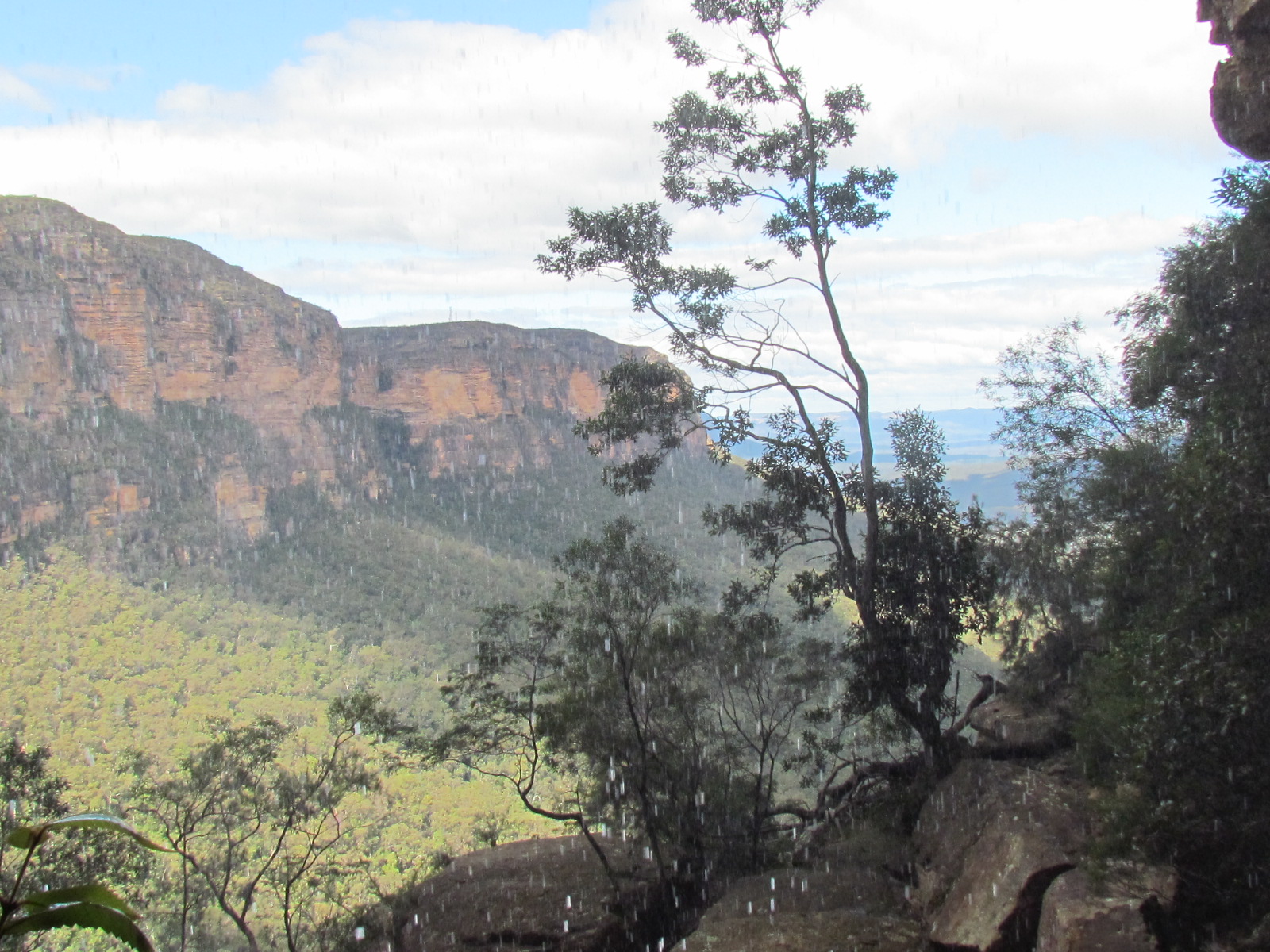
    The views are stunning:

    On the way to Wentworth Falls

    At the top of Wentworth Falls, the ground just ends. The water falls over the edge:

    At the top of Wentworth Falls

    Wentworth Falls, seen from the bottom:

    Wentworth Falls

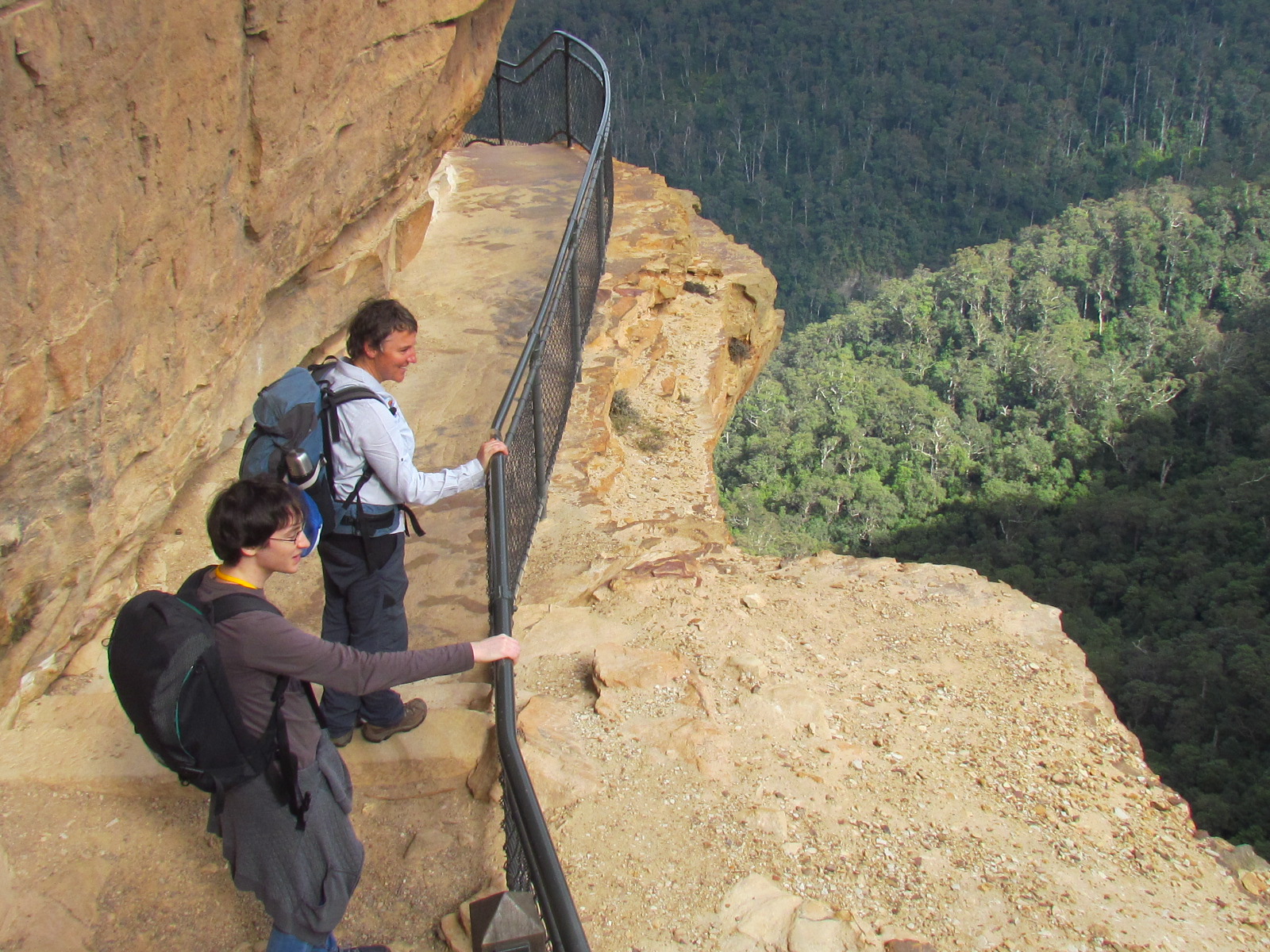
    To get down there, you can take the National Pass, a spectacular cliff-face path of metal and rock:

    National Pass, Wentworth Falls

    Cockatoos frolic around the falls:

    Cockatoo at Wentworth Falls

    On the loop back to Leura, the TC’s group walked through the Valley of the Waters. This is a gorgeous walk, with waterfalls and hanging gardens and spectacular views. This shot is taken from behind the curtain of water that drops off the cliffs:

    Valley of the Waters, Blue Mountains

    Here’s a short video taken from behind the same waterfall:

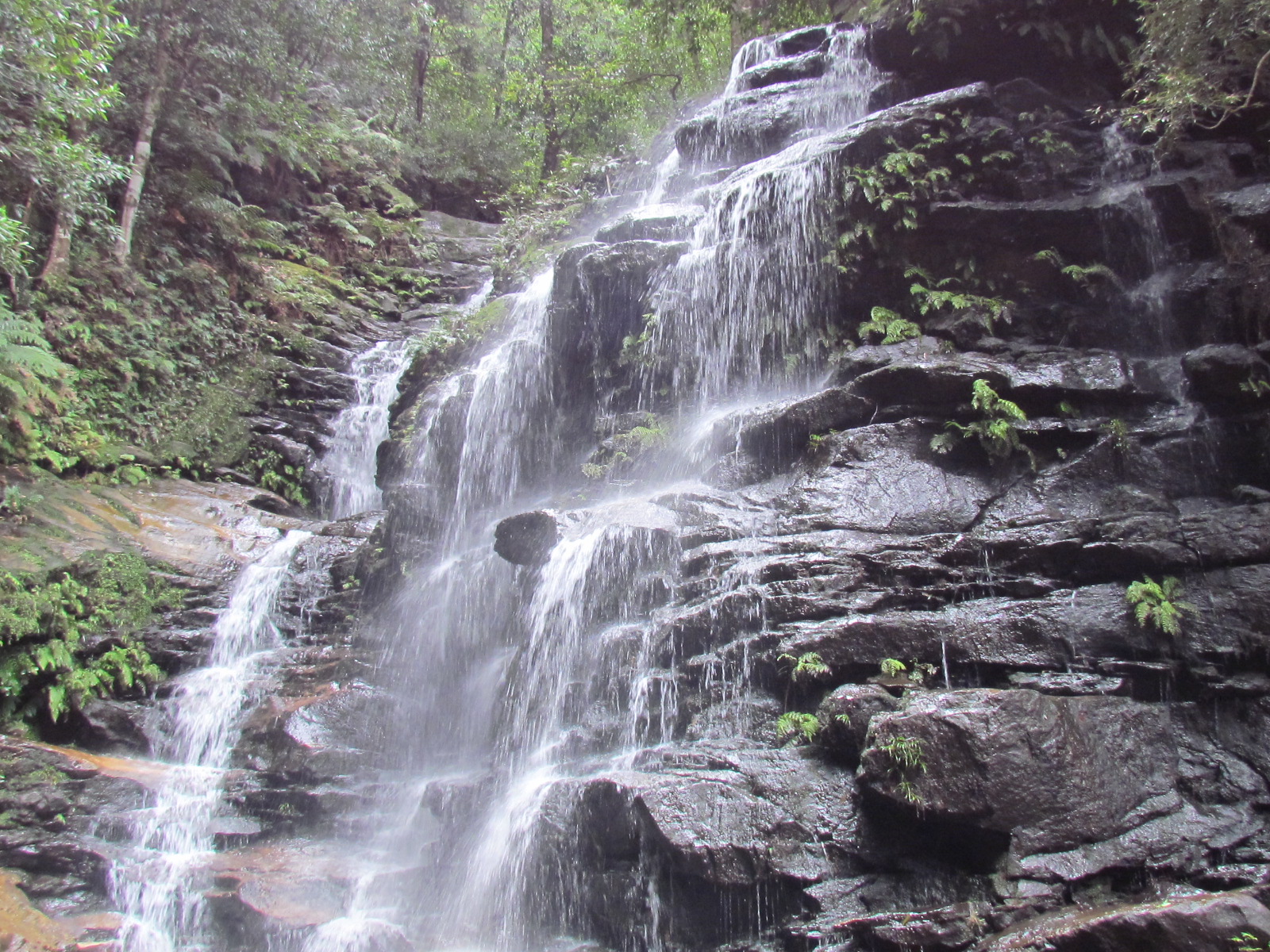
    The Cascades are a silver shower of water on black rock:

    The Cascades, Valley of the Waters

    That’s all for today, folks.

  • Cockatoo Island in Sydney

    This is the blog of Mark Wordsworm, the travelling worm. I’m a 25-year-old bookmark and can proudly boast my own Hallmark serial number, 95 HBM 80-1. You’ll probably want to read all about me and my Travelling Companion (the TC).

    Today’s travel notes

    Me and the TC spent yesterday afternoon on Cockatoo Island on the Parramatta River, immediately inland of Sydney harbour. It’s a forlorn place, strewn with gravel and history.

    My impressions? Sandstone, sheds and seagulls.

    The book I’m in

    Gidget, by Frederick Kohner. An engaging tale of a teenage surfer, written 1957. Clever use of language and style to carry along a simple story with tons of atmosphere.

    Travel tip

    When travelling to Cockatoo Island, take sunscreen and something to tie back your hair. (That is, if you have lots of it, as the TC does.)

    The photos

    Me on a metal lathe in the industrial area of Cockatoo Island:

    Cockatoo Island

    Cockatoo Island, as seen on Google Maps:

    Image created by Google Static Maps API: https://maps.googleapis.com/maps/api/staticmap?center=-33.8475896,151.1720669&zoom=16&size=470x352&maptype=satellite

    The Aboriginal name for the island is Wareamah. The Aboriginal people of the area used to come to the island to fish.  But there was no fresh water, so they didn’t live there permanently. In 1839 a governor of New South Wales decided the island was an ideal place to house prisoners and put them to work quarrying sandstone and building prison and military barracks and official residences.

    The entrance to the island from the ferry wharf:

    Cockatoo Island

    Walking into the industrial area:

    Cockatoo Island

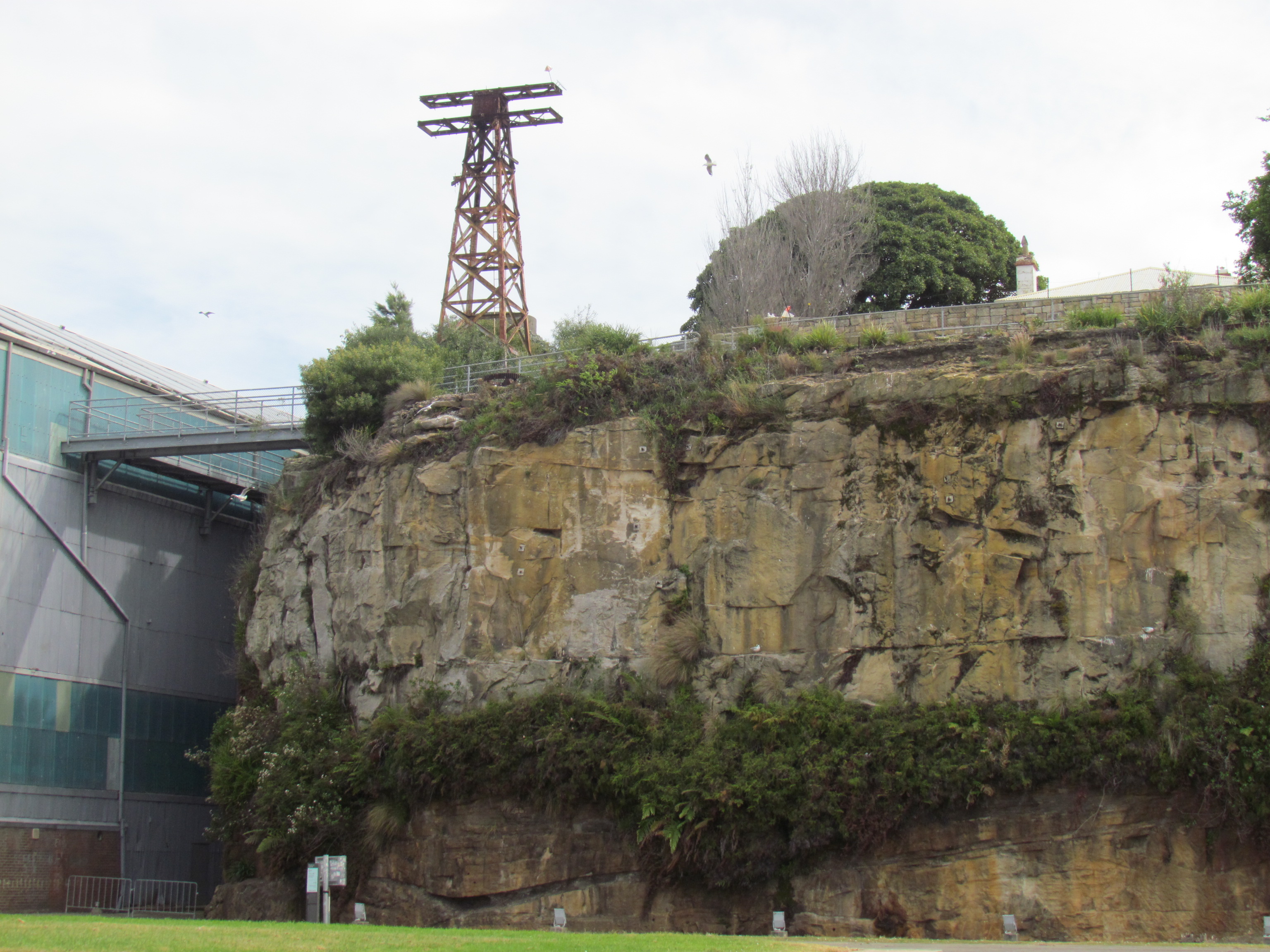
    An impressive sandstone cliff on the right as you walk in, which has survived the extensive quarrying:

    Cockatoo Island

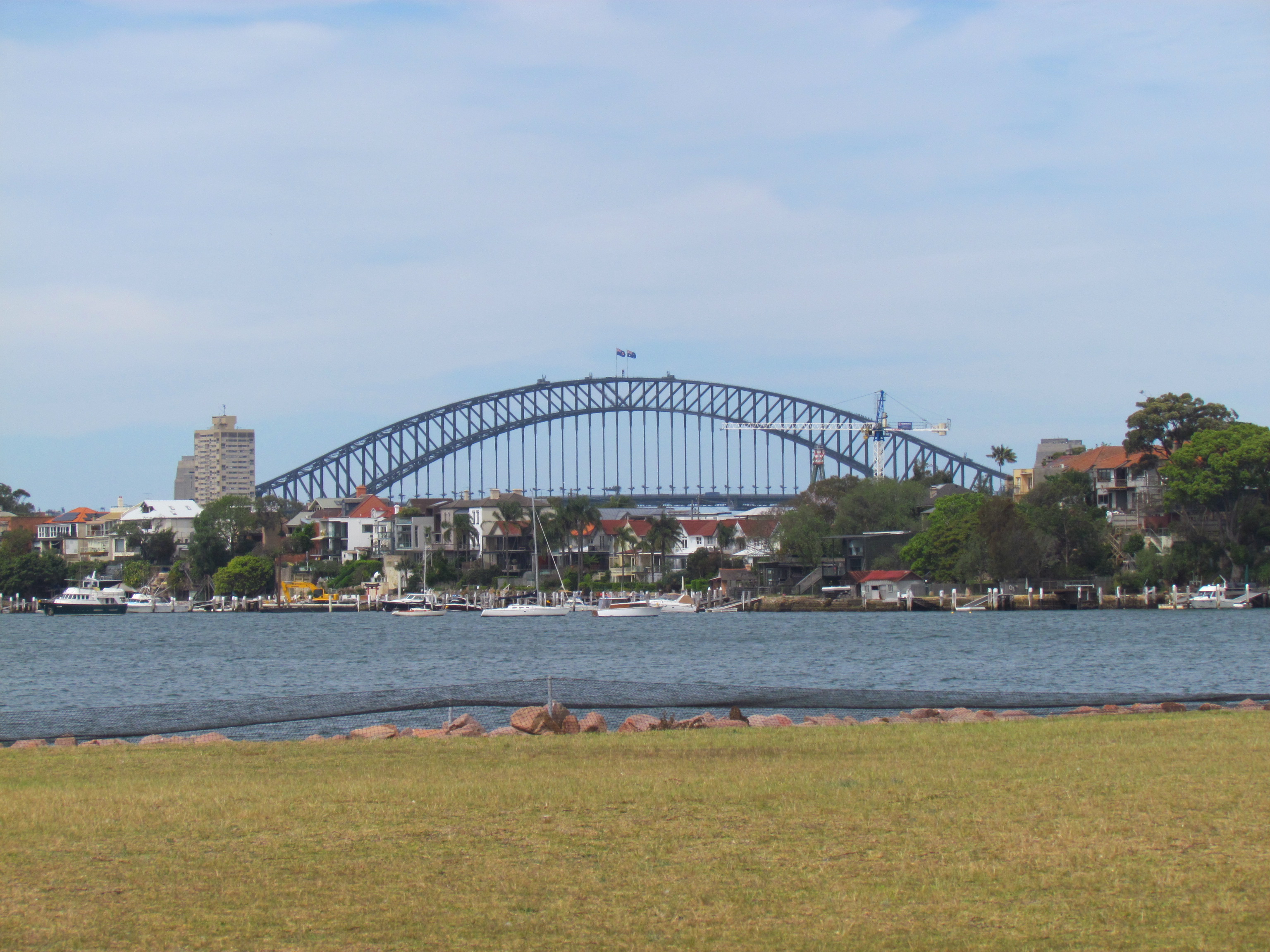
    A view of Sydney Harbour Bridge from the island:

    Cockatoo Island

    In the late 1800s and early 1900s, the island became a major ship-building site, playing a large part in ship construction and repair during World War II. Its use as a dockyard and construction facility for ships and submarines continued until 1992.

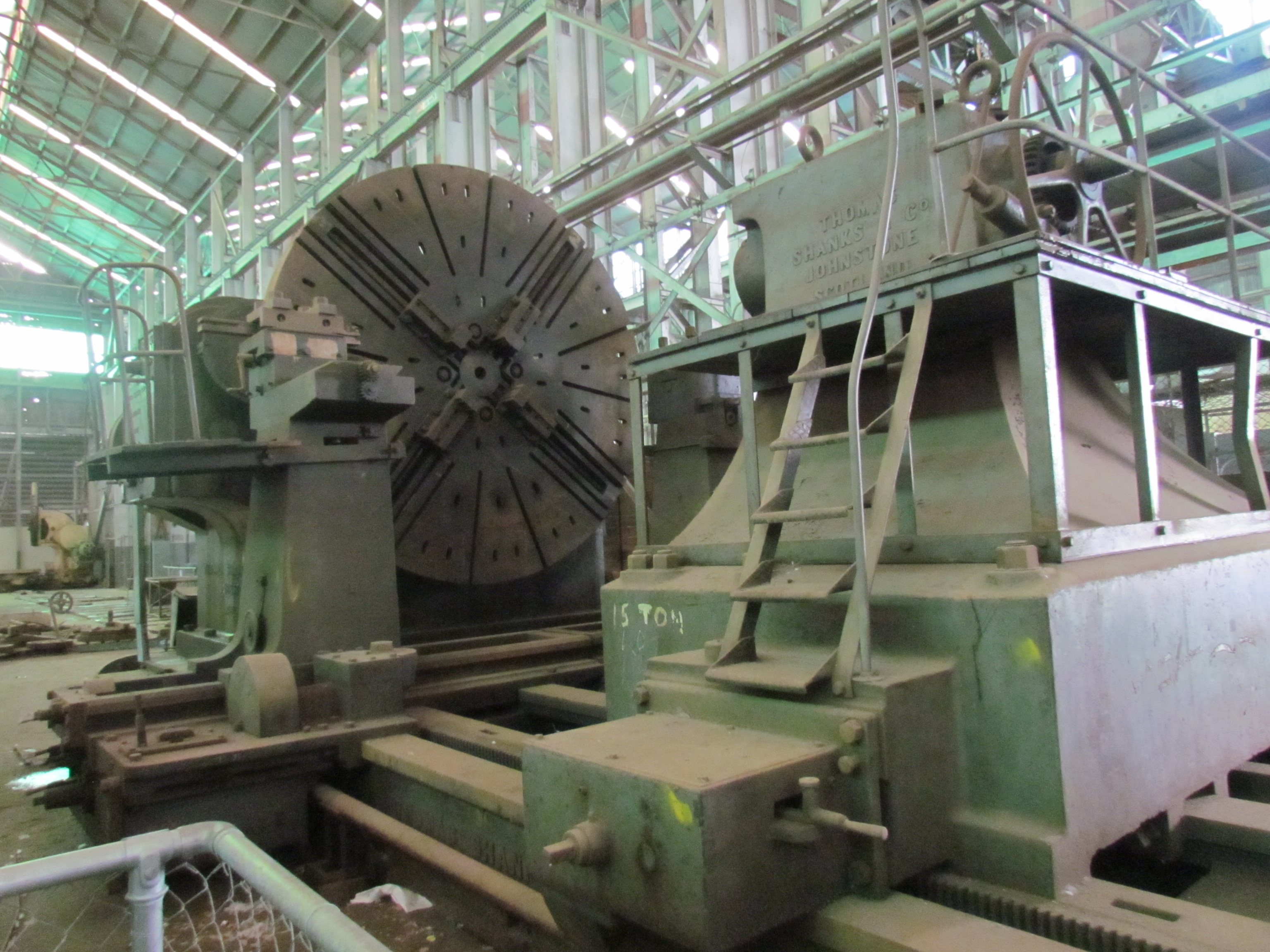
    Inside a huge ship-building shed on the island:

    Cockatoo Island

    The magnificent machinery made this worm feel small and insignificant:

    Cockatoo Island

    More machinery:

    Cockatoo Island

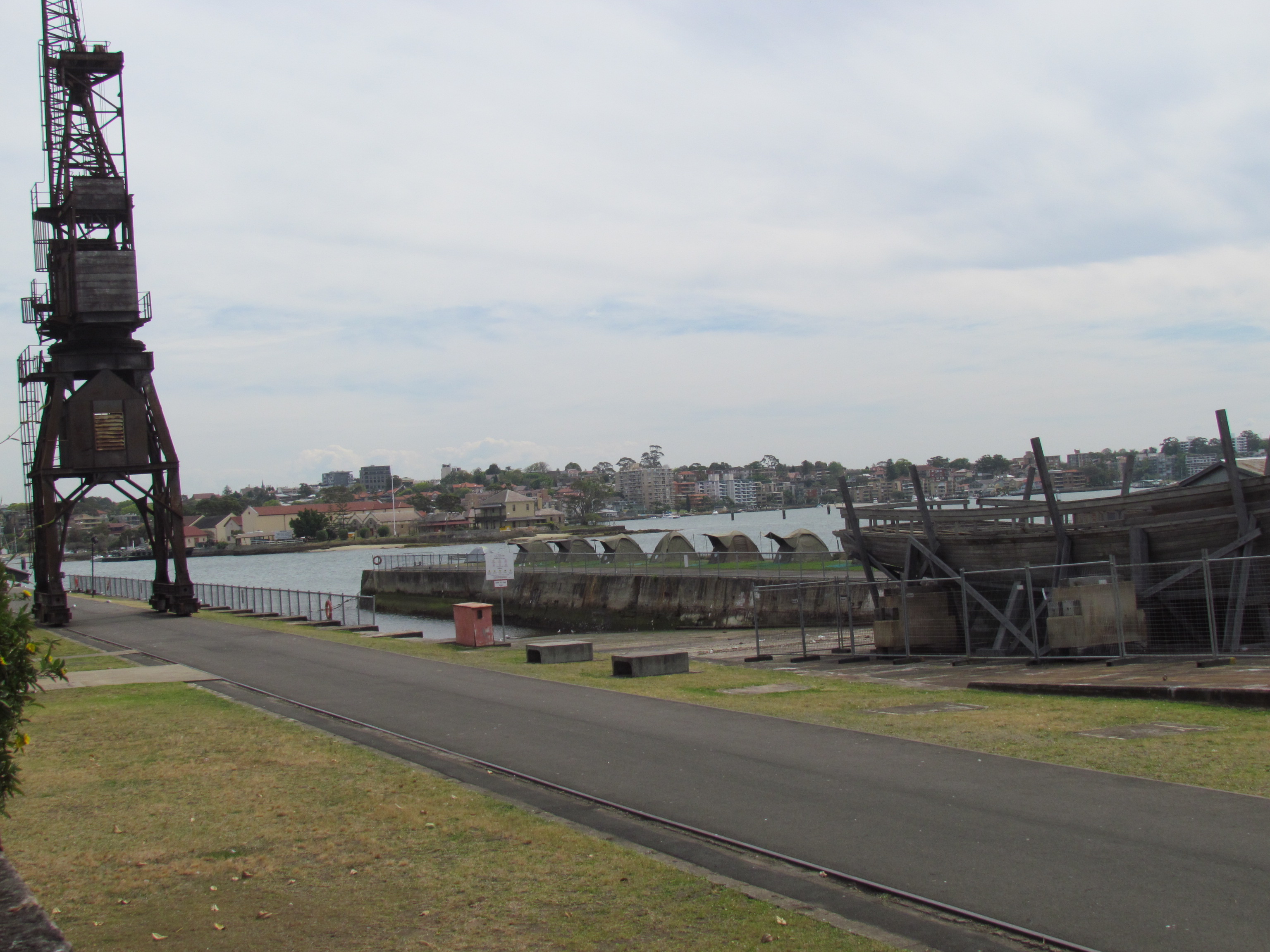
    A giant crane stands guard over the Parramatta River:

    Cockatoo Island

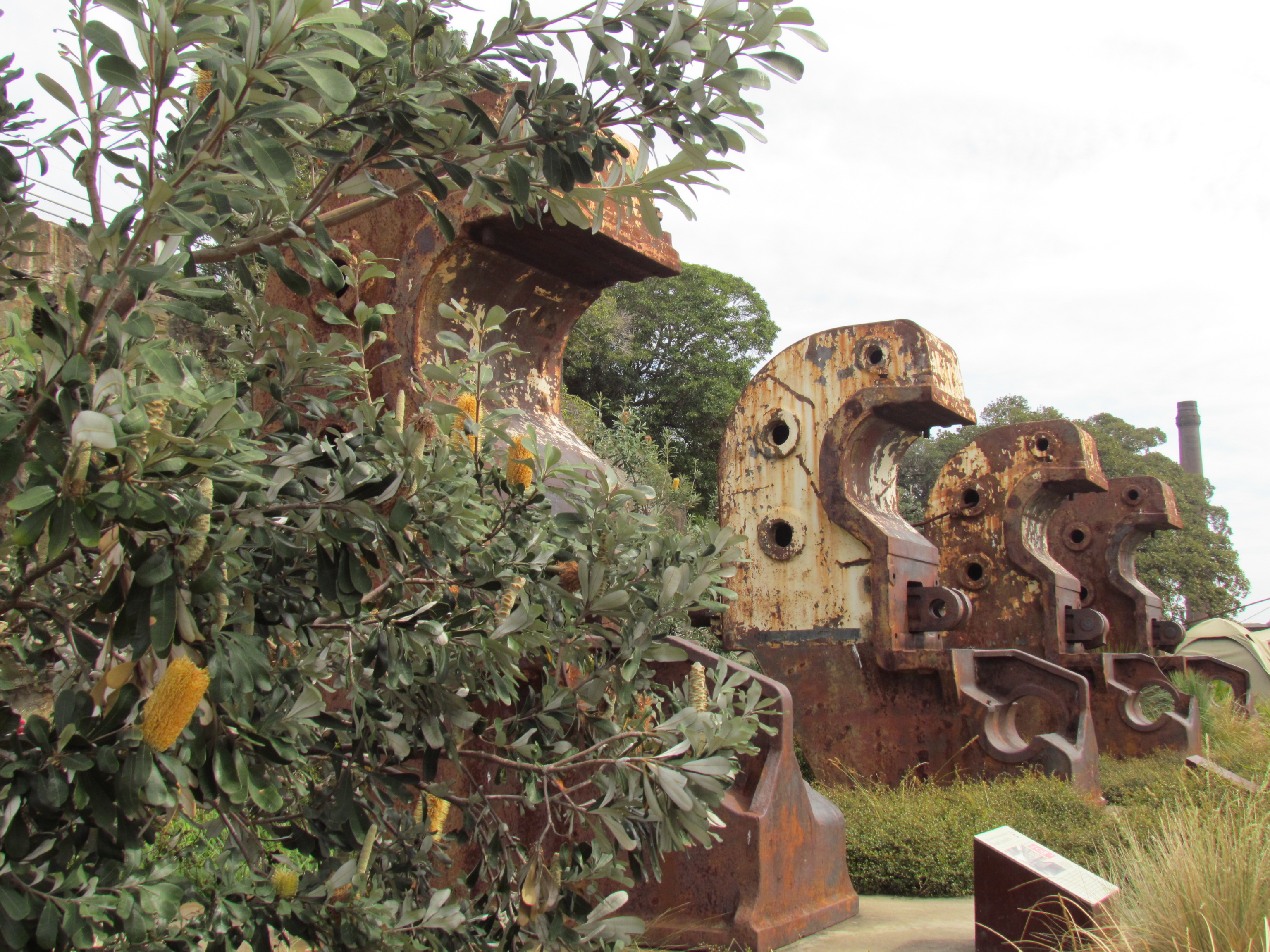
    These imposing beam benders are the remains of a hydraulically-powered plate-bending machine from the 1920s, used to bend metal plates up to 9 metres long and one inch thick for ship building:

    Cockatoo Island

    Below is one of the slipways used to launch ships after construction. Film buffs note: The ark at the top of the slipway was created for and used in the film “Unbroken”, directed by Angelina Jolie and filmed on the island last year:

    Cockatoo Island

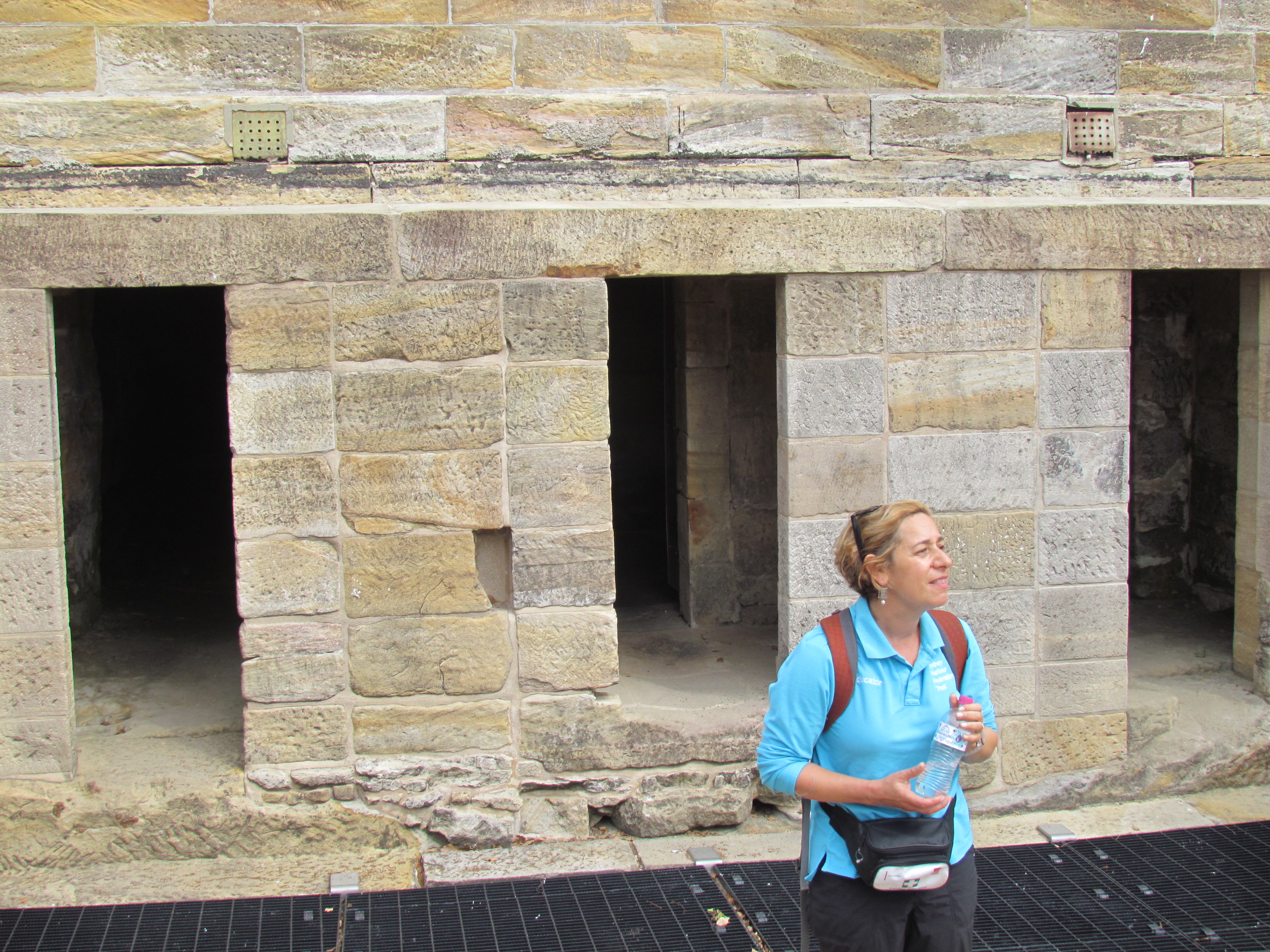
    The solitary confinement cells on the island, opened to visitors only last week, and introduced with great enthusiasm by our charming guide:

    Cockatoo Island

    Inside the left-most solitary-confinement cell:

    Cockatoo Island

    A tunnel cut through the sandstone, built in 1912, and used as an air-raid shelter during WWII:

    Cockatoo Island

    A view through the window of the now roofless military guardhouse:

    Cockatoo Island

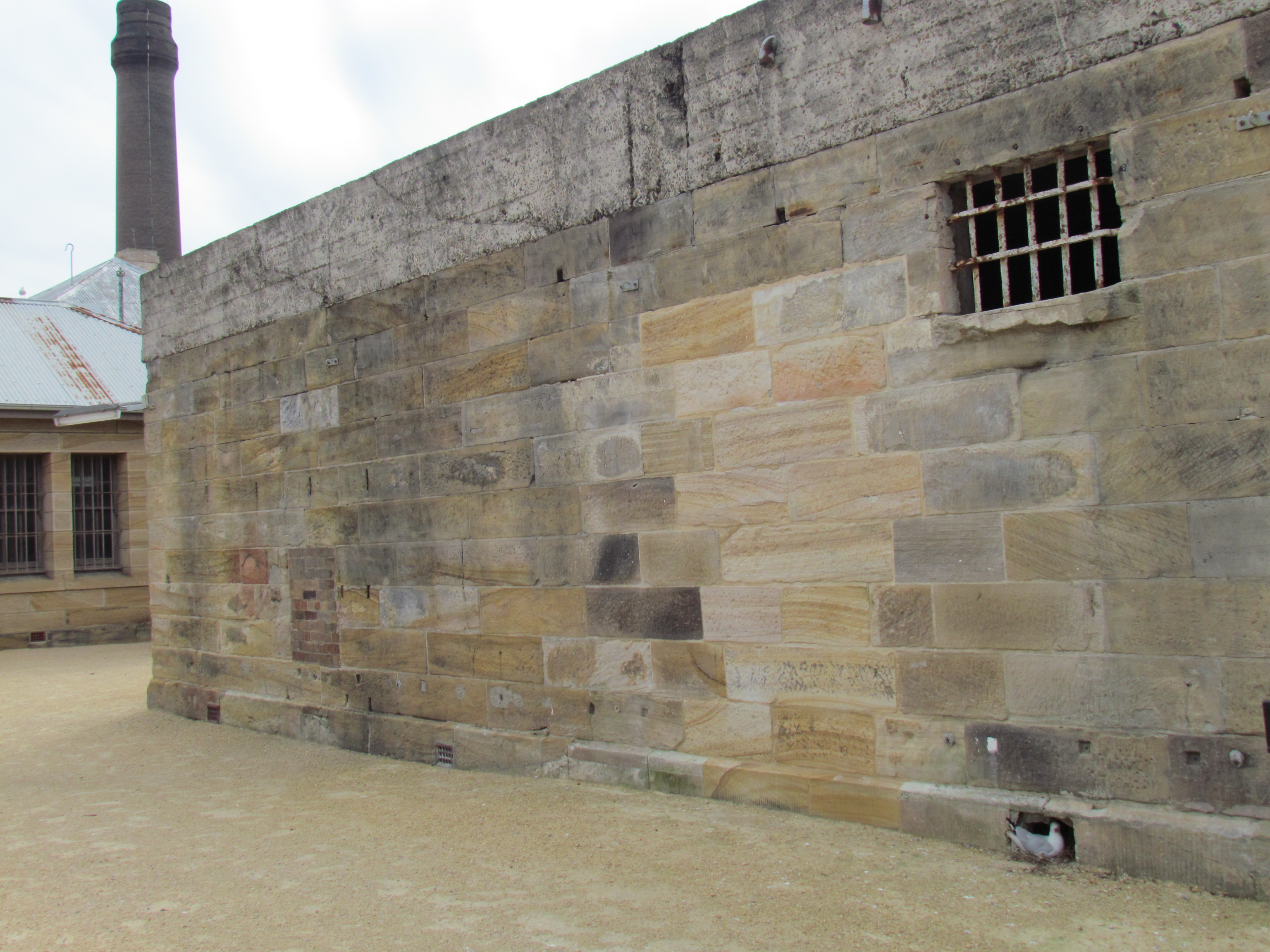
    Below is the prison barracks, built in 1839. The convicts themselves quarried the sandstone and erected the buildings. Our guide told us that each man had a specific style when hewing sandstone. You can still see the marks in the stone used in the buildings on the island. At the end of each day, the overseers could tally each man’s work just by looking at the distinctive cuts in the stone:

    Cockatoo Island

    Notice the seagull nesting at the bottom of the building in the above photo? Pro tip from a wary worm: You don’t need to worry about cockatoos on the island. They all left when people cut down the trees to make room for the convicts. So now the seagulls reign supreme. Go Jonathan! Be afraid, be very afraid. As our guide said, the chicks are cute but the parents are not.

    Cockatoo Island

    Inside the barracks:

    Cockatoo Island

    A window to freedom:

    Cockatoo Island

    That’s all for today, dudes.


  • Is this a worm or a fungus – in Sydney, Australia

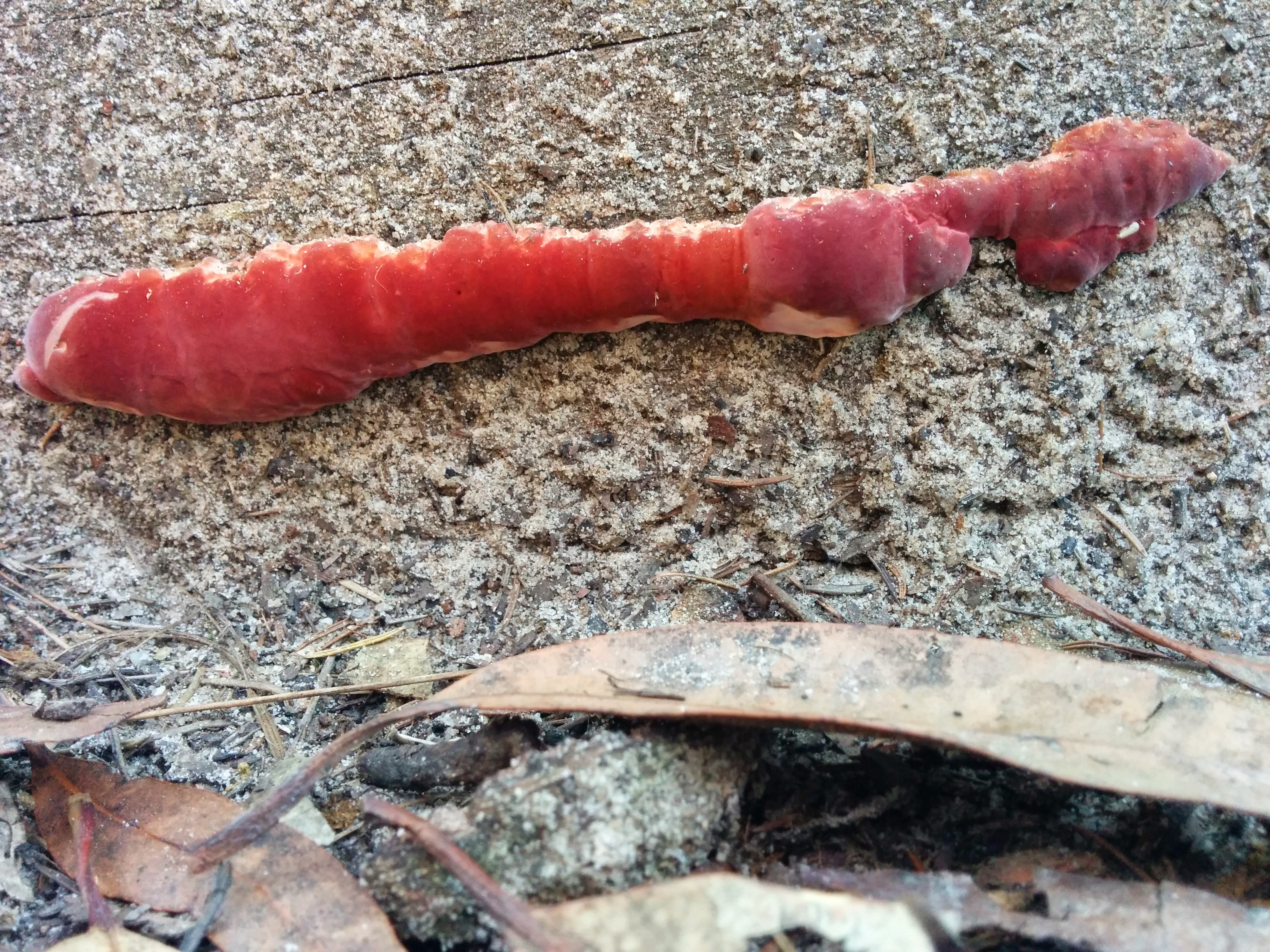
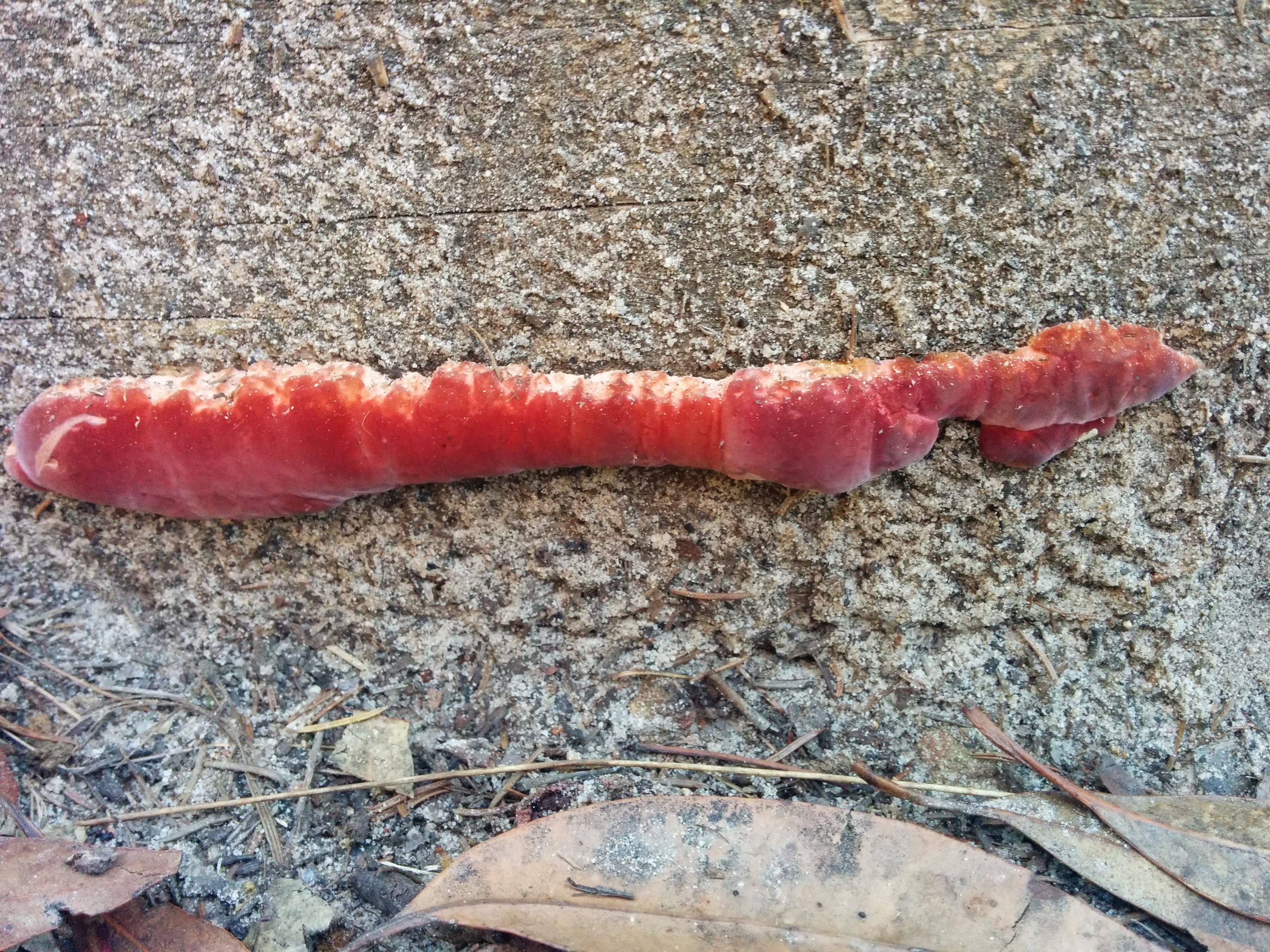
    The TC (my Travelling Companion) spotted this weird and wonderful creature on the Wild Flower Walk at Manly Dam Reserve near Sydney, Australia. We’re intrigued. Is it a worm, or some type of fungus, or something else entirely?

    It’s quite long, perhaps 10 to 12 centimetres – compare it with the gum tree leaves also visible in the photo. It’s red with pale cream extrusions at the edges. It’s attached to the vertical face of a step. It didn’t move, even when the TC prodded it gently with a stick.

    At first the TC thought it was a fungus. But looking more closely at the photos, we’re leaning towards some kind of worm.

    Worm or fungus?

    Here is is again, from a slightly different angle. You can probably enlarge the image by clicking it, or by right-clicking and opening the image in the browser.

    Worm or fungus?

    If you have any ideas about what it may be, please add a comment to this post!


  • Sydney under smoky skies

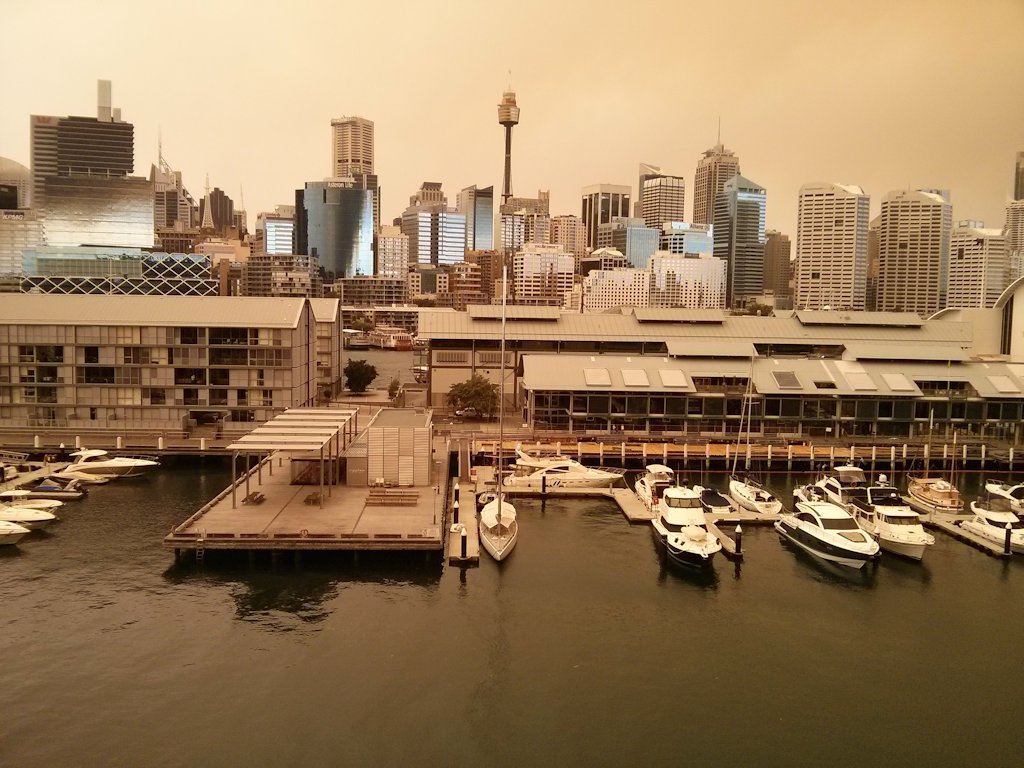
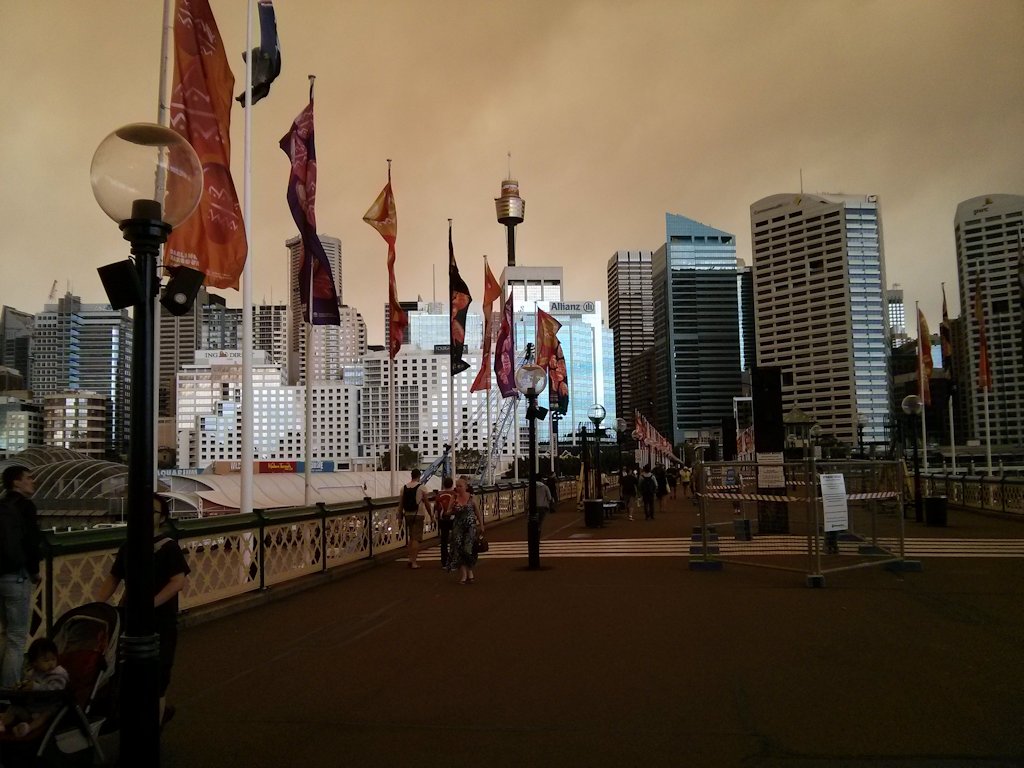
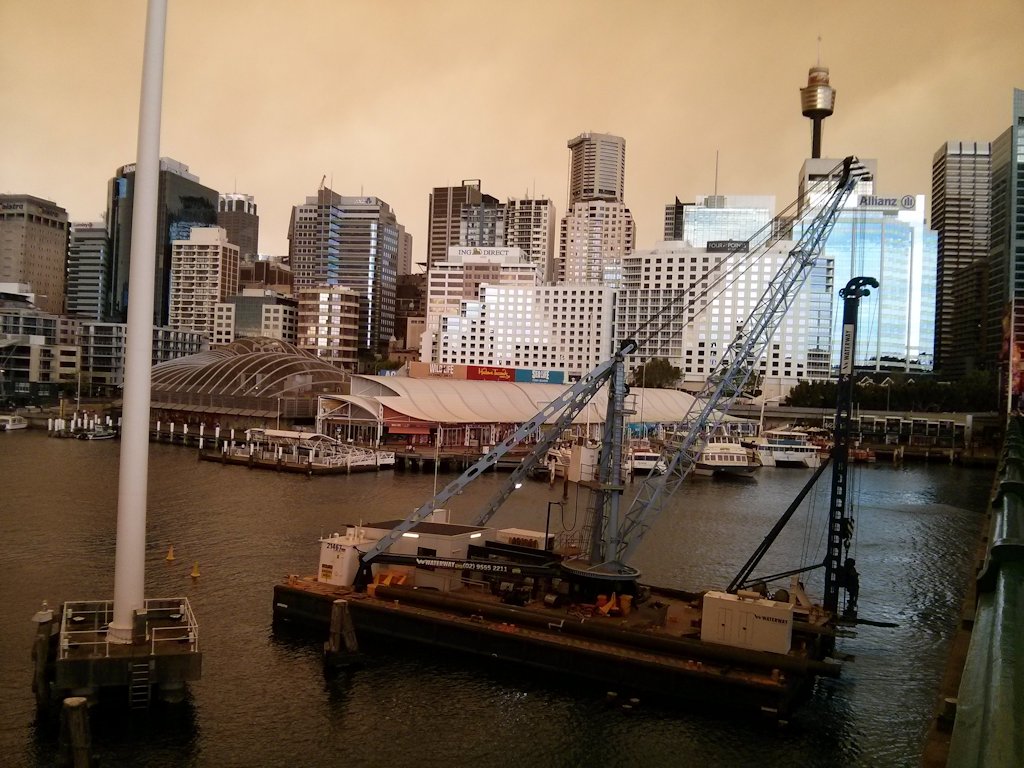
    New South Wales, Australia, is battling more than 90 bush fires. The last few days have been scenes of fierce horror and deep sadness for many people. Approximately 1500 fire fighters have been battling the blazes throughout New South Wales. Close to 100 homes have been destroyed. Our fire services and volunteers are hard-working, efficient, smart and heroic.

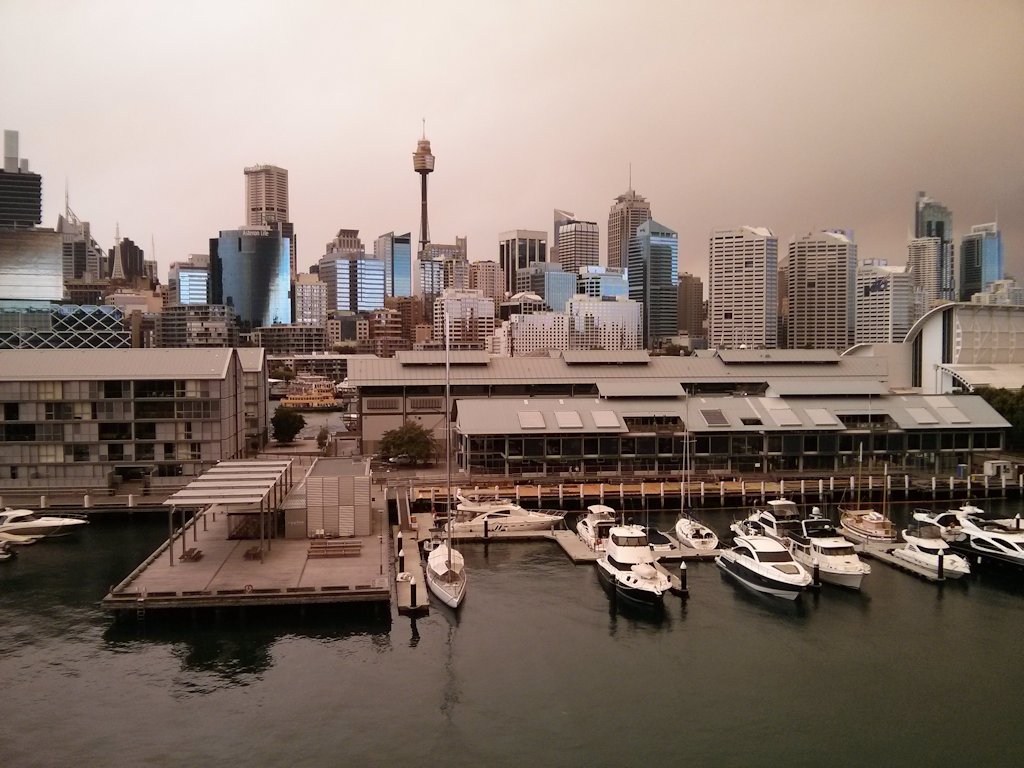
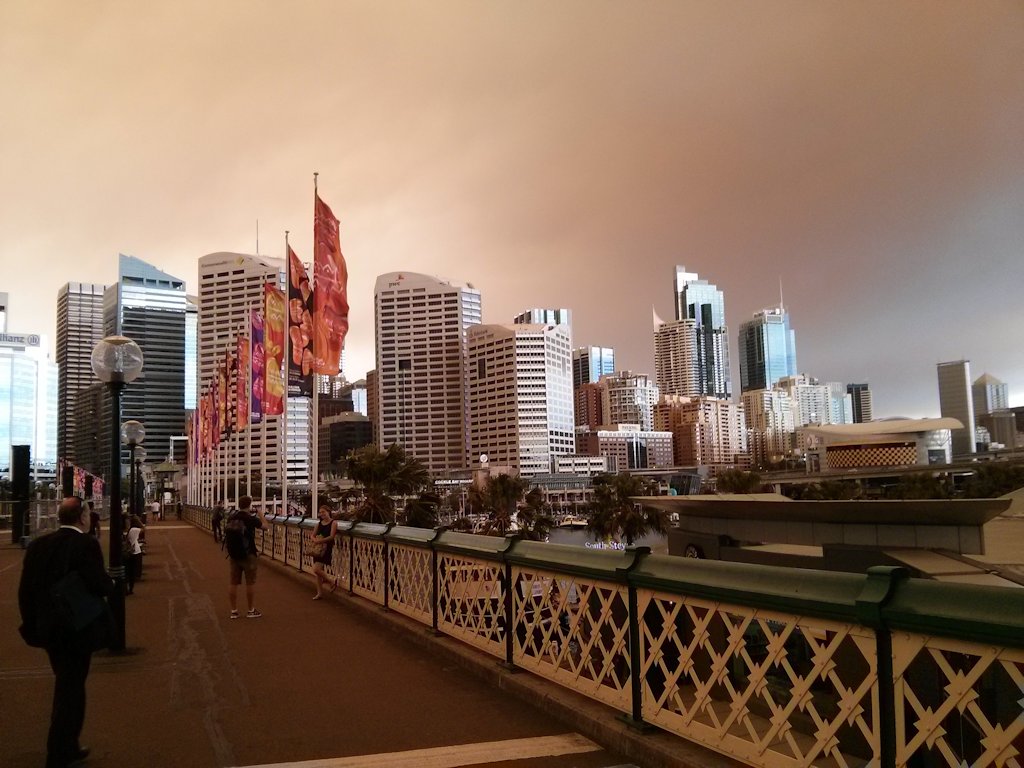
    For those of us in the city of Sydney, the fires brought smoke-filled skies and showers of ash. The weird lighting yielded some beautiful effects. It was as if someone had thrown a sepia filter over the city.

    These photos show the Sydney city skyline on Thursday this week, as seen from Pyrmont.

    Sydney under smoky skies, seen from Pyrmont

    Clear skies to the south

    The lighting changes minute by minute

    Pyrmont Bridge

    Pyrmont Bridge (demolishment of monorail is in progress)

    From the side of Pyrmont Bridge

    A closer look at the crane on the water


  • The Basin, Palm Beach, NSW Australia

    This is the blog of Mark Wordsworm, the travelling worm. I’m a 25-year-old bookmark and can proudly boast my own Hallmark serial number, 95 HBM 80-1. You’ll probably want to read all about me and my Travelling Companion (the TC).

    Today’s travel notes

    The TC’s mum is in town! Yesterday the TC took her mum and the family to The Basin, near Palm Beach just north of Sydney. The Basin is one of the bays in the Hawkesbury waterways, on the shores of the Ku-ring-gai Chase National Park. To reach it, catch a 20-minute ferry ride from Palm Beach.

    This worm heard that the outing would involve a ferry crossing and some splashing around in a lagoon. Being a pulp fiction kind of guy, water is anathema to me. So I stayed at home and sent Naught, my trusty stunt worm, instead. You may remember Naught, from his debut in my post about Shelly Beach.

    Naught’s impressions? If you’re looking for a relaxing day out of Sydney, where natural beauty and serenity vie with the kookaburras for your attention, The Basin is beaut.

    Recommended eating

    Take a picnic lunch. There are no restaurants or shops at The Basin, but you can grill food on the barbecues provided.

    The book I’m in

    After Shock, by Sam Fisher. A good action story, the second in the series about the E-Force rescue team.

    Let me tell you a secret: This worm was comfortably ensconced in Philip K. Dick’s book, Do Androids Dream of Electric Sheep? But the TC hoiked me out of there, saying her brain is too lazy for that book at the moment.

    The photos

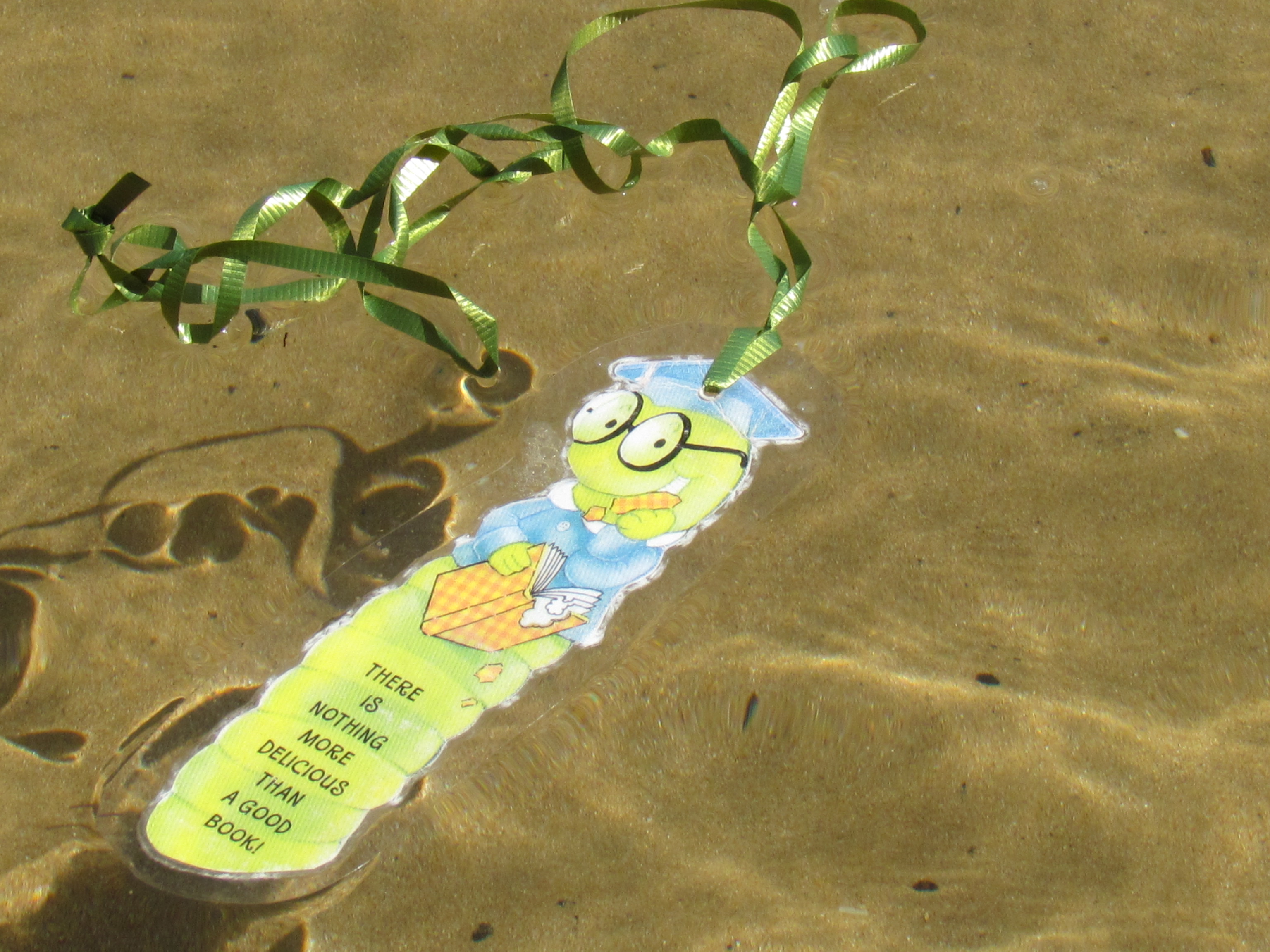
    Naught, my stunt double, taking a dip in the sparkling waters of The Basin:

    Naught taking a dip

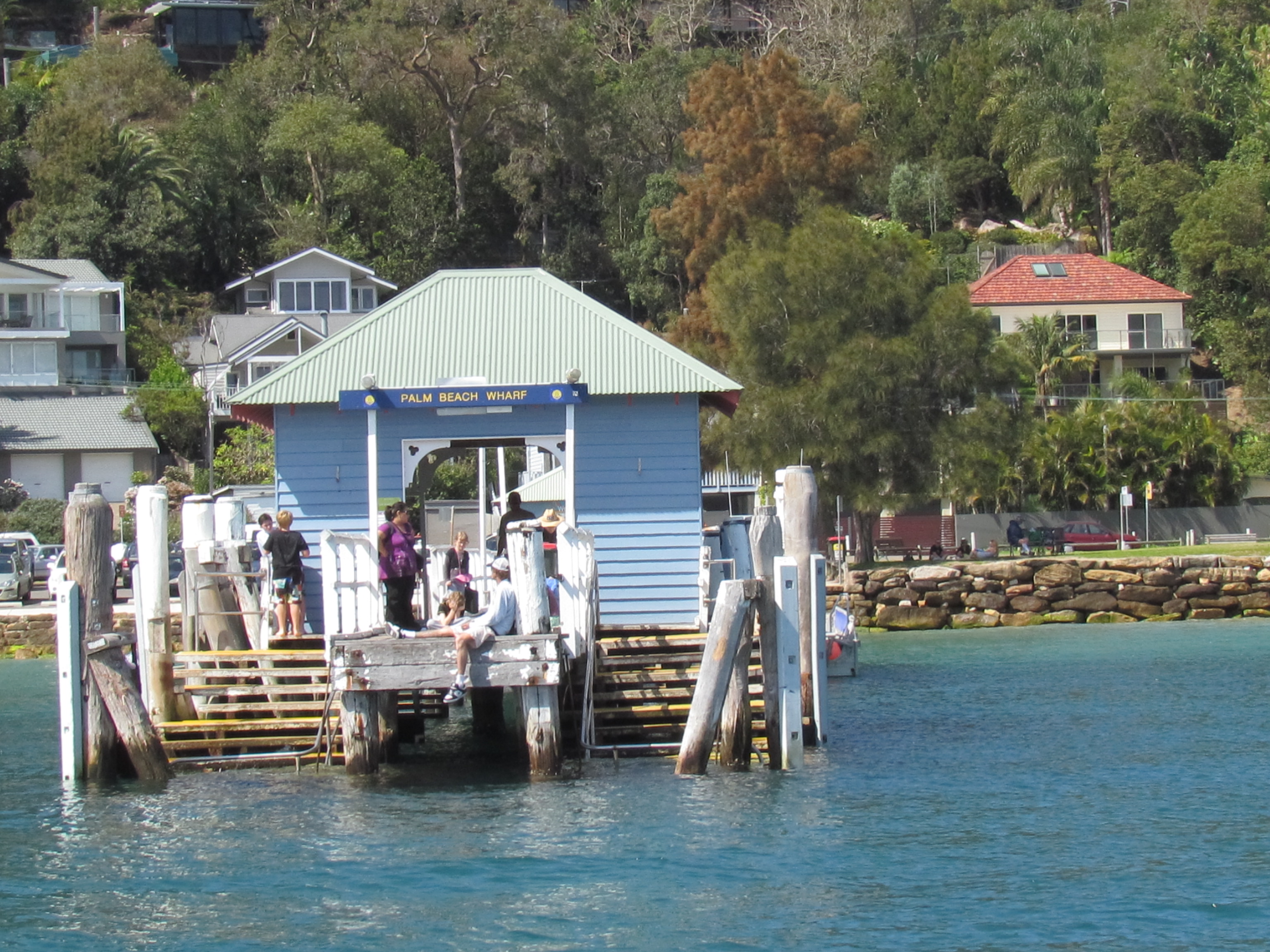
    Palm Beach Wharf:

    Palm Beach Wharf

    Heading out from Palm Beach across an arm of the Hawkesbury River, destination The Basin. Don’t be deceived by the halo. This is not Saint Wordsworm, but Naught who has already donned his protective coat:

    Naught on the prow of the ferry

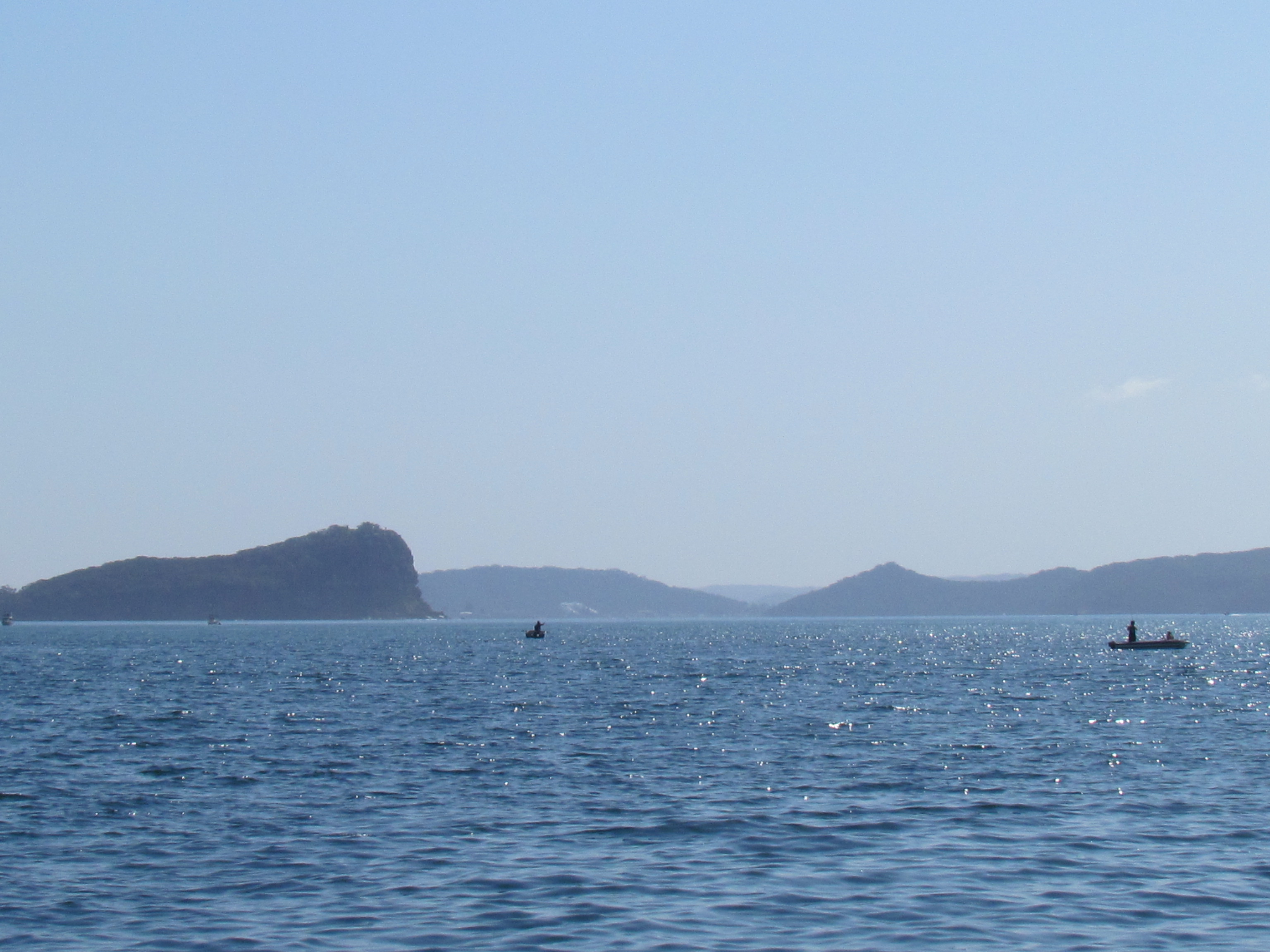
    The heads and hills of the Hawkesbury River waterways:

    The Hawkesbury River waterways

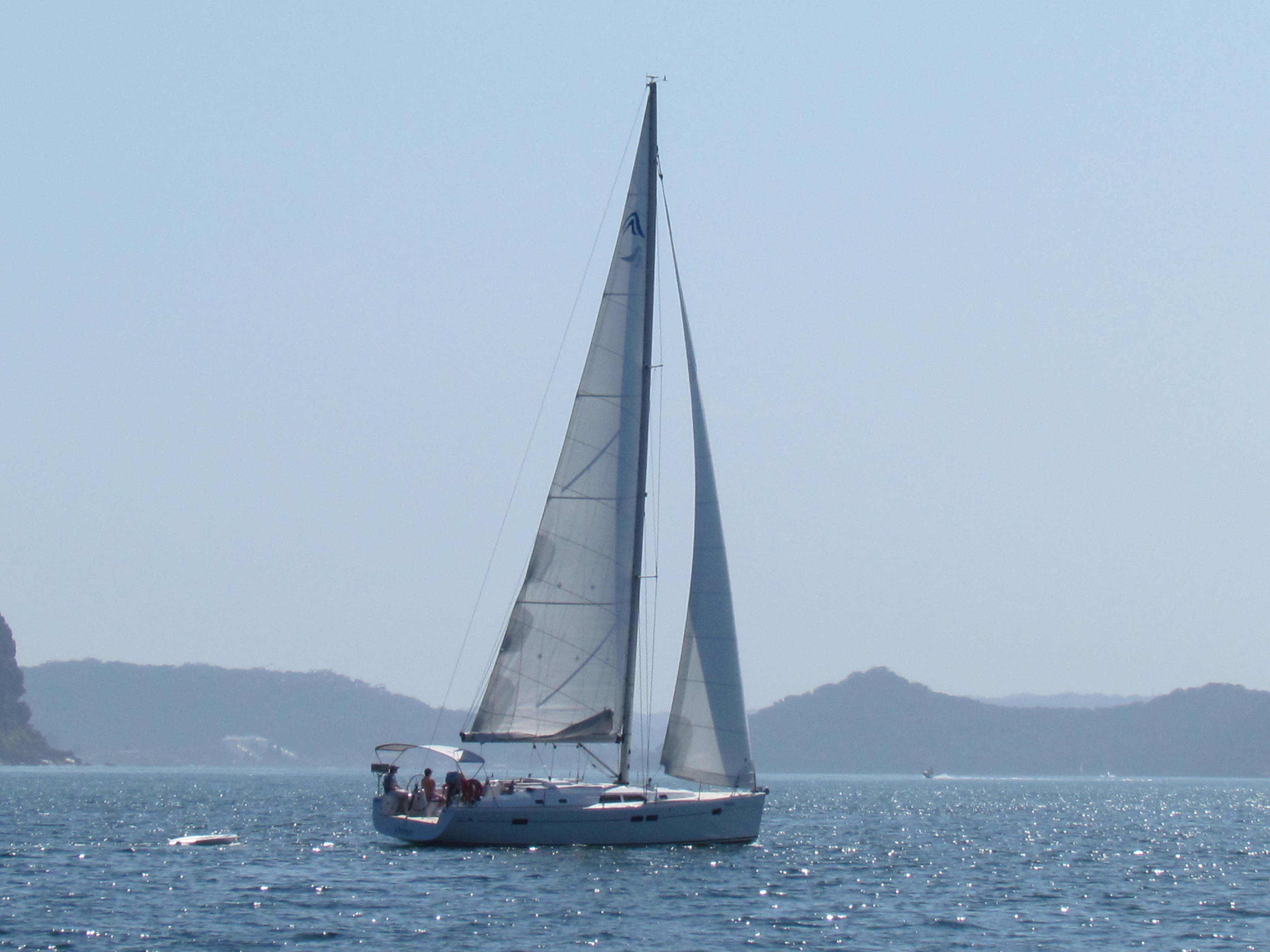
    Fellow wayfarers:

    A yacht sailing past

    Bennets Wharf, the ferry stop before The Basin:

    Bennetts Wharf

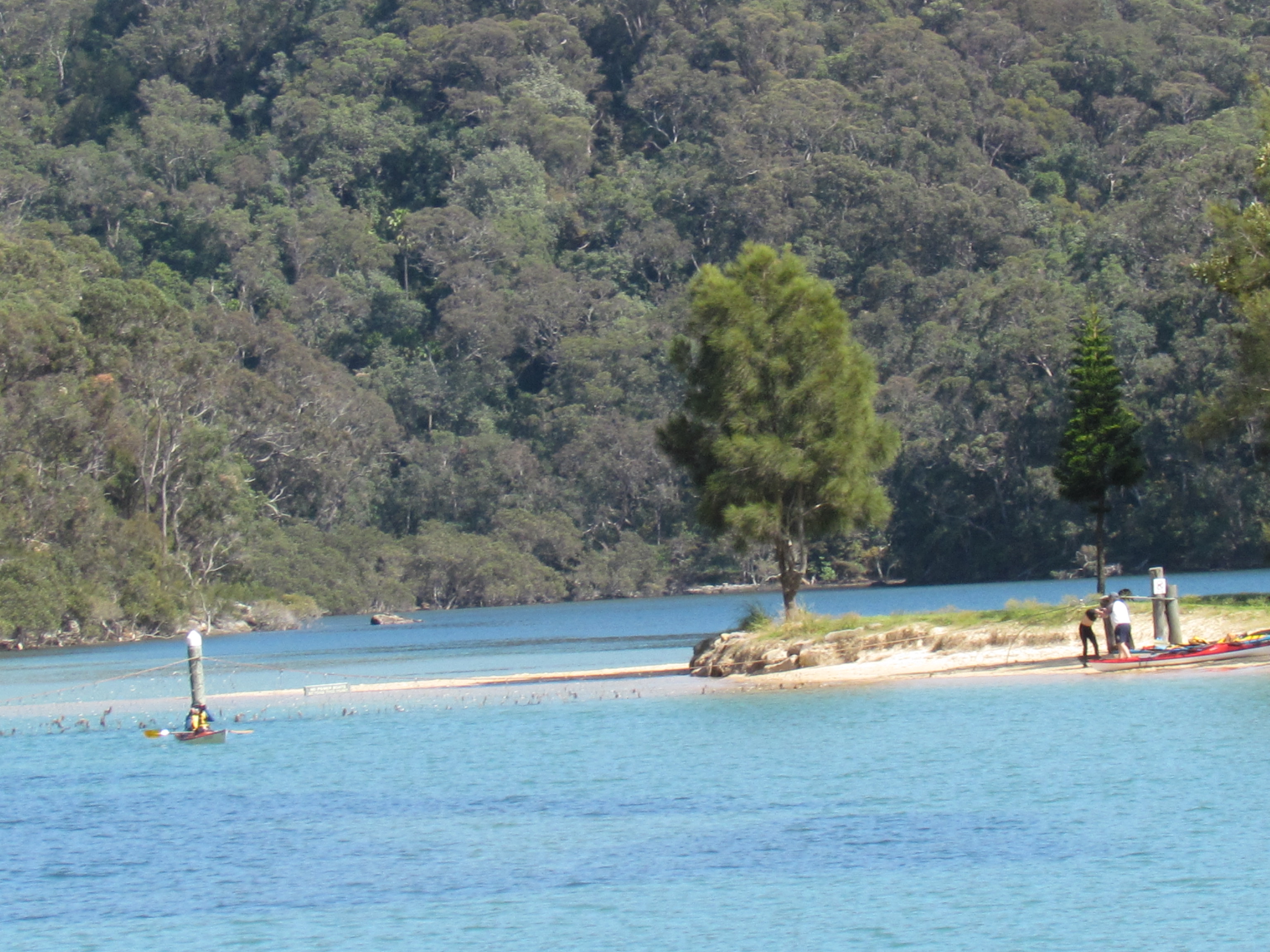
    The entrance of The Basin’s lagoon, seen from the ferry:

    The Basin's lagoon

    The ferry approaching The Basin Wharf:

    The ferry

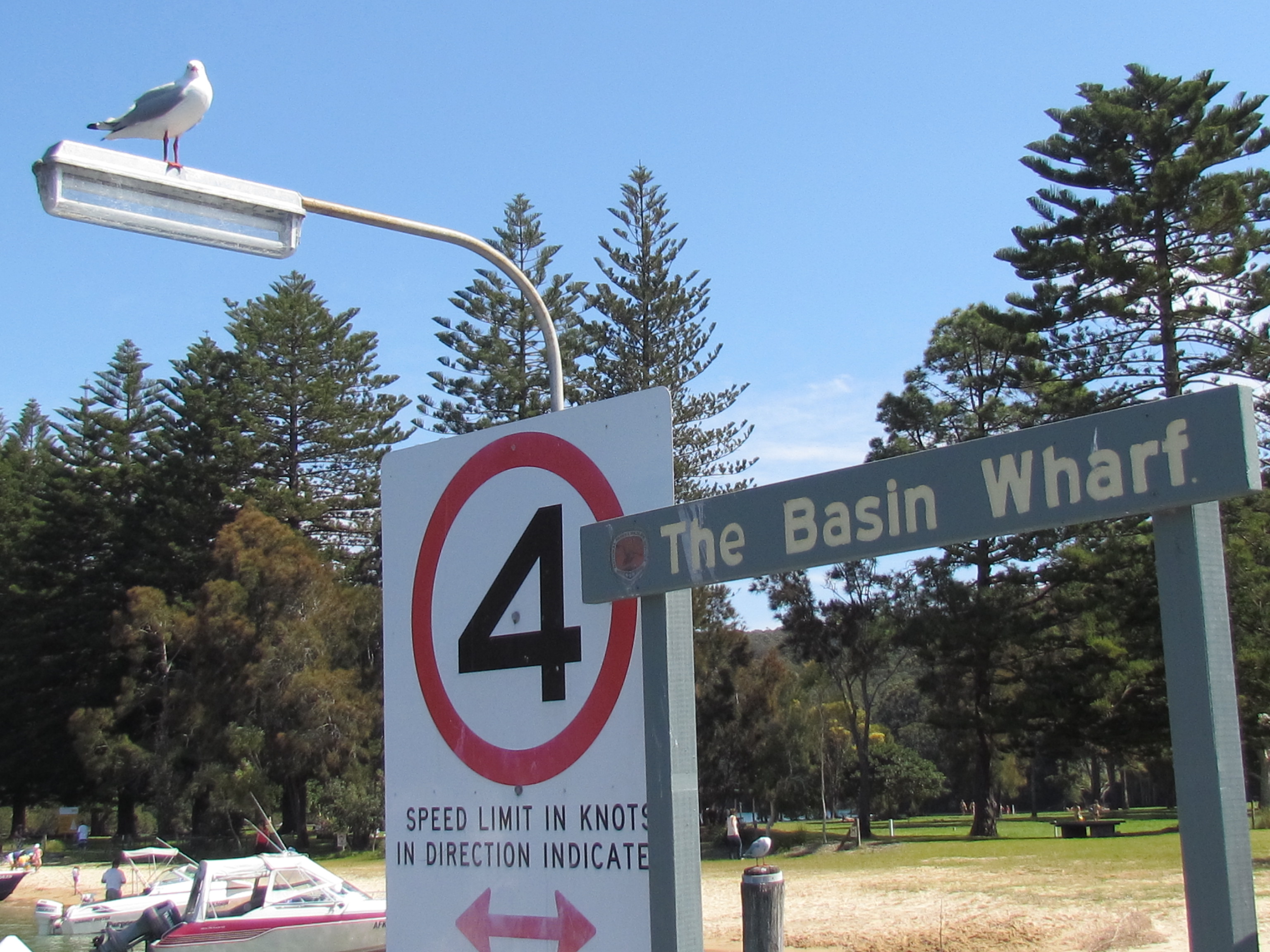
    Jonathan waits at The Basin Wharf to greet the travellers:

    The Basin Wharf

    Wallabies abound at The Basin. This mother has a full pouch. The pink cross struts are the feet of the little joey inside the pouch:

    A wallaby with a joey in her pouch

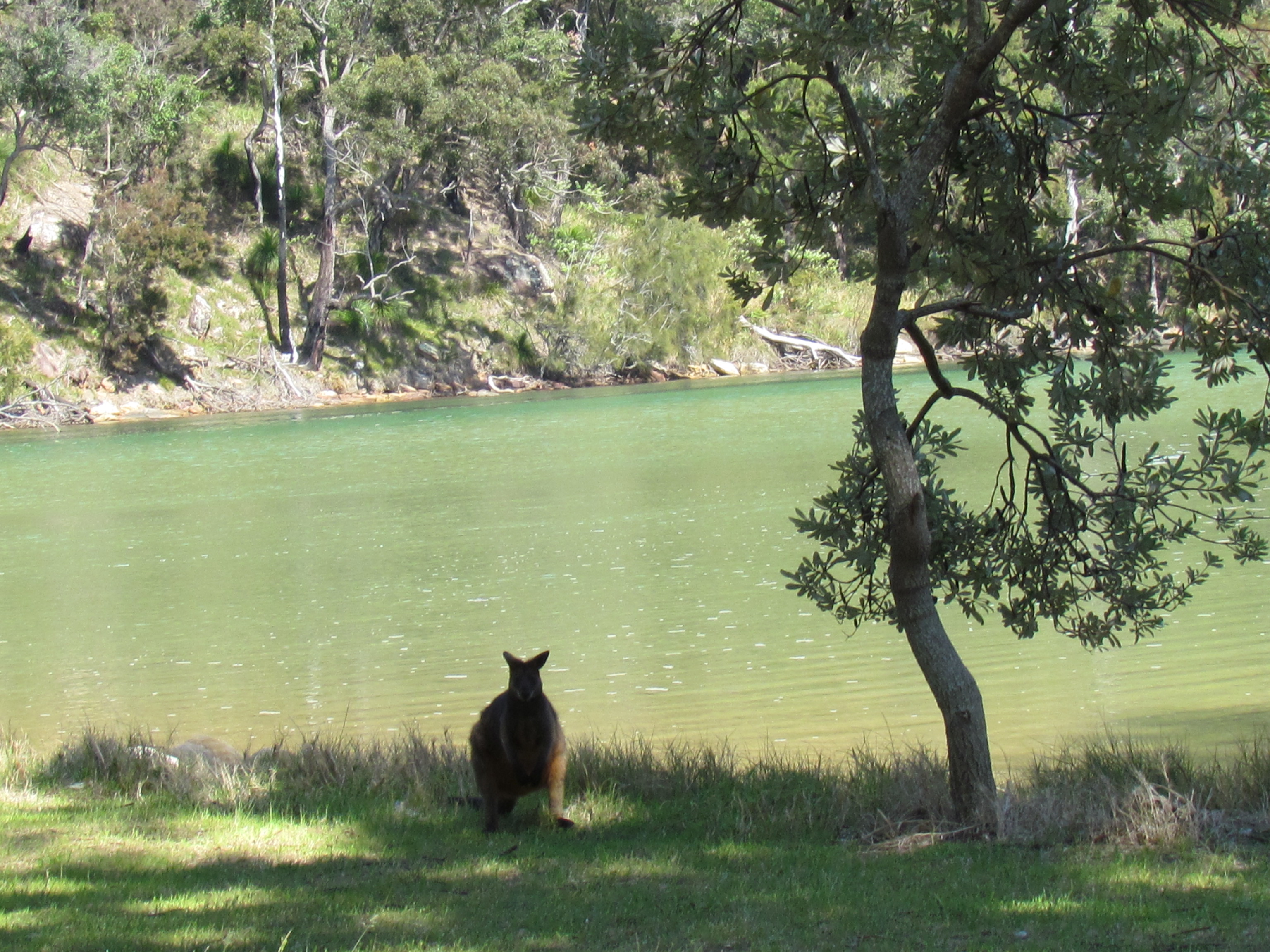
    Another wallaby on the shores of the lagoon:

    A wallaby under a tree

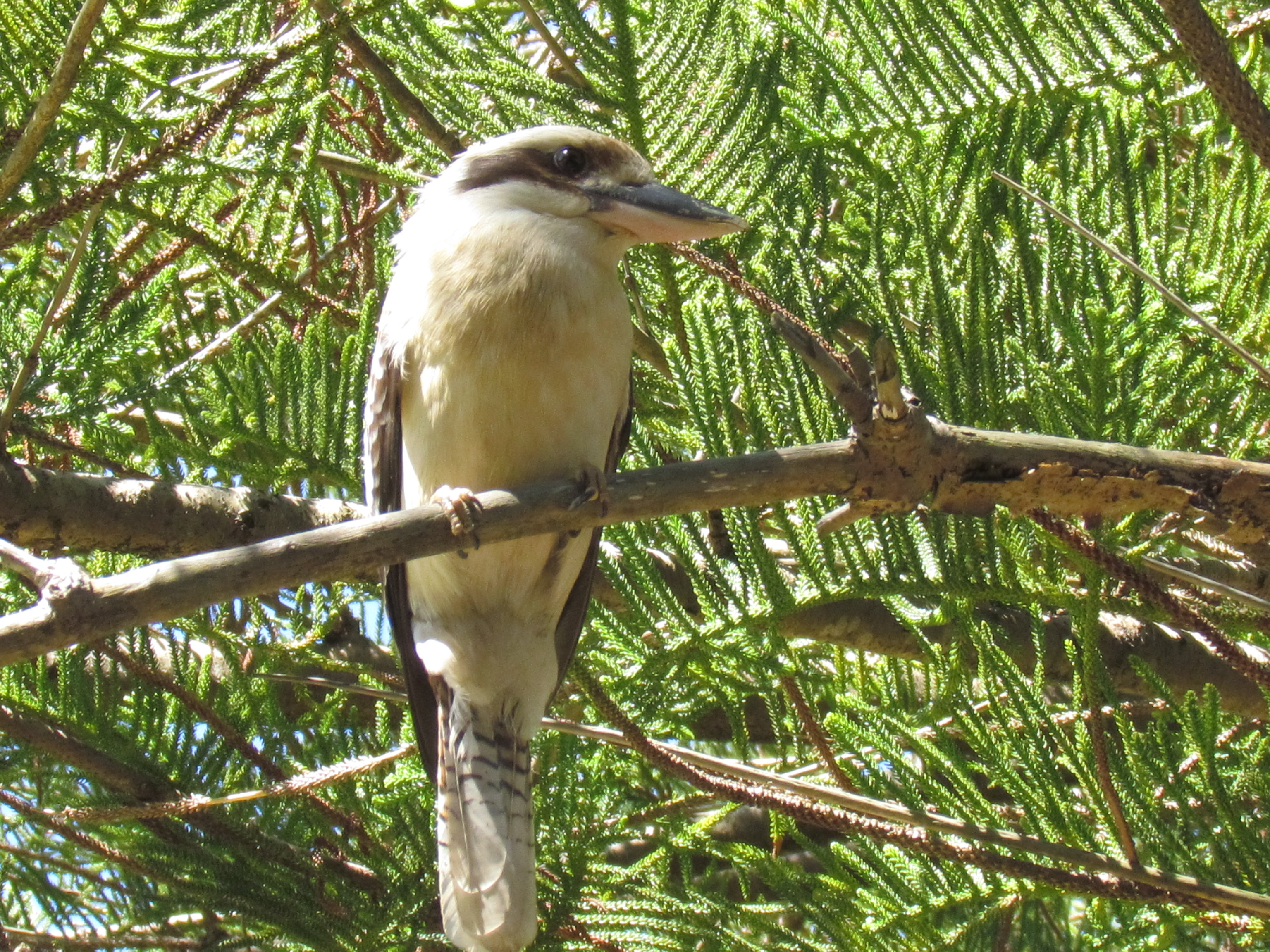
    A kookaburra takes an interest in the picnic:

    Kookaburra

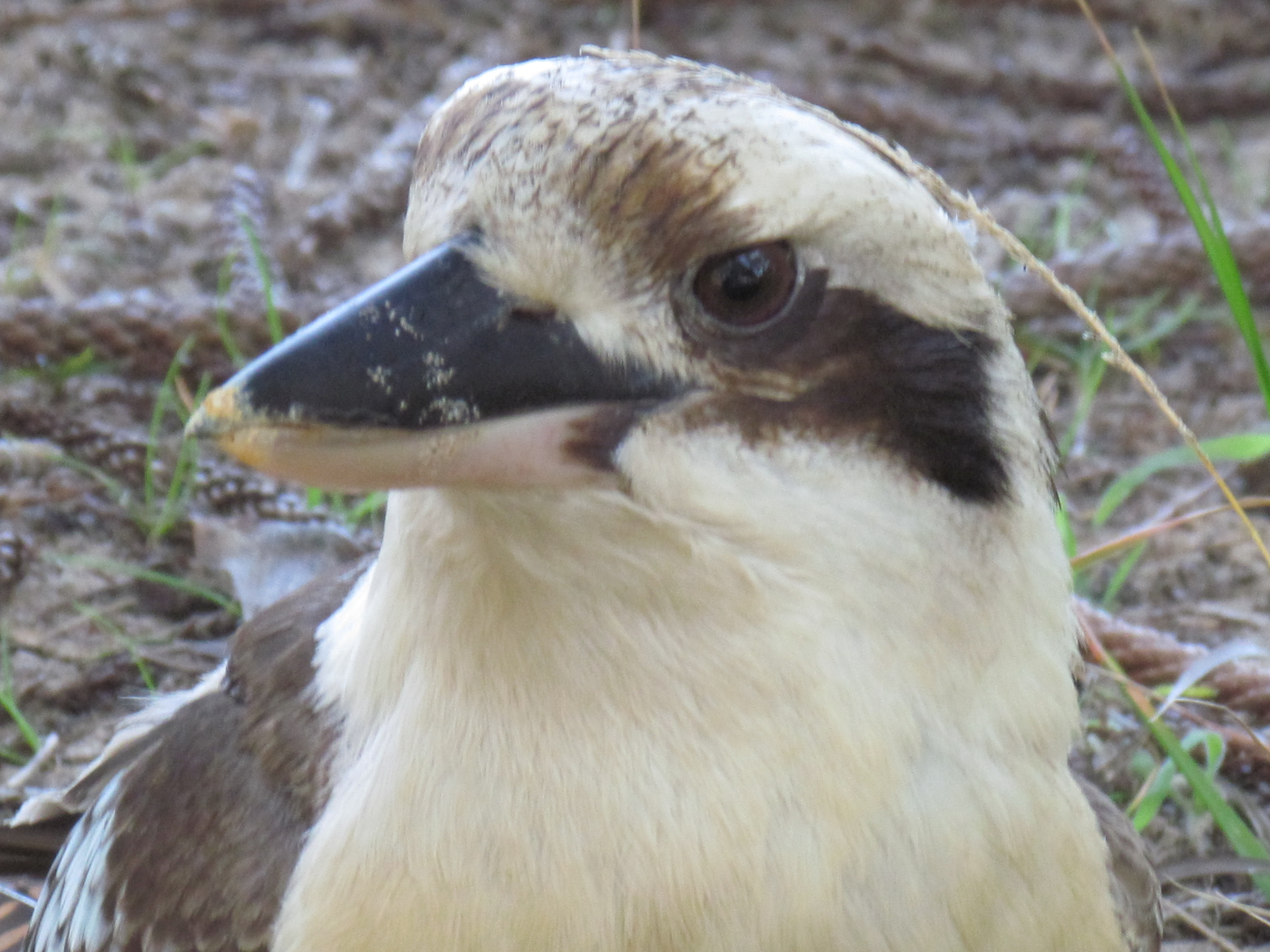
    A bird’s eye view. Will ya look at that beak! At this stage even a stunt worm is well advised to take cover:

    Kookaburra close up

    That’s all for today, dudes.


  • F-stops and focus and zooms, oh my!

    This is the blog of Mark Wordsworm, the travelling worm. I’m a 25-year-old bookmark and can proudly boast my own Hallmark serial number, 95 HBM 80-1. You’ll probably want to read all about me and my Travelling Companion (the TC) .

    Today’s travel notes

    Me and the TC have not been doing much travelling recently. You may have noticed the dearth of posts from this worm. What have we been up to, you may well ask?

    The TC has acquired a new toy, somewhat unimaginatively named the Canon PowerShot SX30 IS. We call it the SuperZoom. It’s a point-and-shoot digital camera, with a 35-times zoom lens, going from 4.3 mm wide angle to 150.5 mm telephoto. The equivalent in 35 mm terms is 24 mm to 840 mm.

    Have your eyes glazed over already? Do you feel the sudden urge to rush off into the traffic or jump over a cliff, or find some other way to put the zing back into life? Now you have the tiniest idea of what things have been like chez TC recently.

    The TC ummed and ahhed for months before buying the SuperZoom. She consulted DSLR experts, read reviews and agonised over the choice. Go for a DSLR with quality “glass” (that’s a lens, folks) and total control over all aspects of the photo, but requiring a number of lenses that are expensive, cumbersome and finicky. Or go for a point-and-shoot with a single zoom lens, possibly compromising on the quality of the picture because a one-size-fits-all solution is often a compromise.

    Then Canon produced the SX30 IS at around the same time as the TC decided against a DSLR. Decision made, and in the process the TC had learned a whole lot about just why the DSLR enthusiasts were worried that the SX30 IS might yield disappointing results.

    F-stops and apertures, exposure times and ISO speeds, bracketing and exposure bias, focal length, depth of field… It’s fascinating stuff. Especially when you realise that most of the terminology and skills were developed to suit photography done with 35mm film, and that folks now just kind of morph the same terminology into the digital world, where it kind of works. Yes, fascinating stuff. So the TC tells me.

    My impressions? For a details-oriented person like the TC, this photography lark looks to be an interesting occupation. From the point of view of those around her? Well, it keeps her out of our hair!

    Travel tip

    When travelling with a camera, or a camera-wielding TC, be prepared to stop and shoot at a moment’s notice.

    The book I’m in

    How to Do Everything: Digital Camera, by Dave Johnson. This is an excellent book for anyone wanting to learn about photography and digital cameras.
    This worm had a narrow escape recently. I was spending some time in a DK book on photography that the TC took a violent dislike to. Ask her about it, then duck!
    The photos

    Me with Peg and a piece of bark that’s recently fallen from a Sydney Red Gum tree:

    F-stops and focus and zooms, oh my!
    F-stops and focus and zooms, oh my!

    F-stop: f/4
    Exposure time: 1/125 sec
    ISO speed: ISO-80
    Exposure bias: -1 step
    Focal length: 4 mm
    Max aperture: 2.875
    Metering mode: Pattern
    Flash: No flash, compulsory

    The TC has discovered that the camera and Windows both store a number of interesting facts about how the picture was taken. To keep her happy, I’ve copied the details below each photograph in this post. She’s been experimenting with the options available in the camera’s various modes. Even thought it’s a point-and-shoot, it offers an impressive flexibility for those who care to click and flick various buttons, wheels and knobs.

    A jumble of bark at the base of a Scribbly Gum:

    F-stops and focus and zooms, oh my!
    F-stops and focus and zooms, oh my!

    F-stop: f/4
    Exposure time: 1/50 sec
    ISO speed: ISO-400
    Exposure bias: 0 step
    Focal length: 11 mm
    Max aperture: 4
    Metering mode: Pattern
    Flash: No flash, compulsory

    That looks like a secret code on some ancient rolled parchments, doesn’t it? Actually, it’s the work of grubs living in the bark of the tree.

    The trunk of a Scribbly Gum:

    F-stops and focus and zooms, oh my!
    F-stops and focus and zooms, oh my!

    F-stop: f/4.5
    Exposure time: 1/40 sec
    ISO speed: ISO-100
    Exposure bias: -1 step
    Focal length: 18 mm
    Max aperture: 4.34375
    Metering mode: Pattern
    Flash: No flash, compulsory

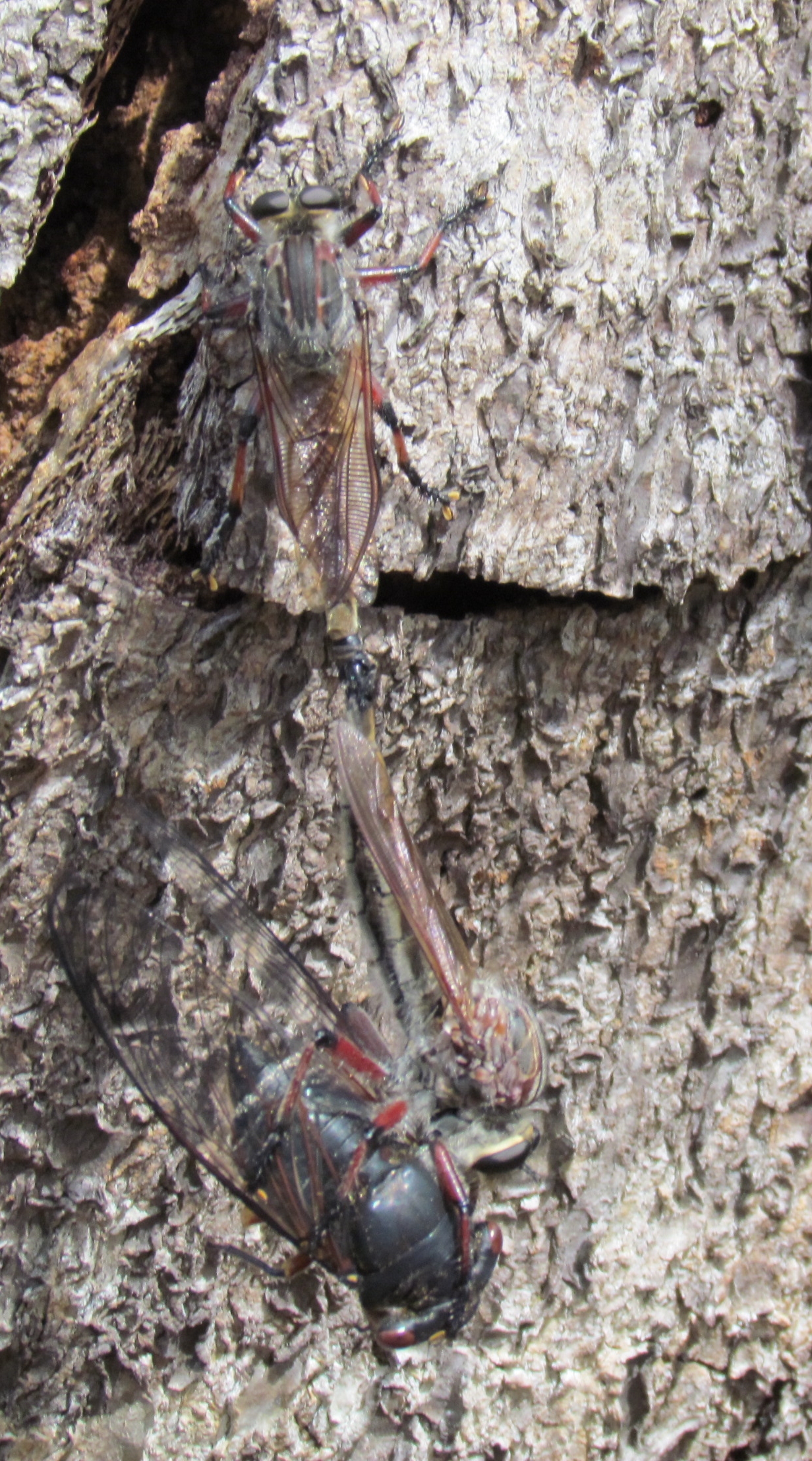
    Two dragonflies mating while one chomps a cicada:

    F-stops and focus and zooms, oh my!
    F-stops and focus and zooms, oh my!

    F-stop: f/4
    Exposure time: 1/250 sec
    ISO speed: ISO-100
    Exposure bias: 0 step
    Focal length: 12 mm
    Max aperture: 4
    Metering mode: Pattern
    Flash: No flash, compulsory

    Talk about hostile mergers and acquisitions! Did you know that dragonflies are carnivorous? This worm did not, and neither did the TC.

    Before we go any further, I have to admit I’m not sure that the happy couple are dragonflies. Their wings are parallel to their bodies, not at right angles. They don’t look like damselflies either, though. These critters were large: about 4 cm long. Do you know what they are?

    One of the pair has a cicada firmly grasped in its legs. The trio was very mobile, and flew up and around the TC twice while she photographed it.

    Another shot, where you can see the cicada more easily:

    F-stops and focus and zooms, oh my!
    F-stops and focus and zooms, oh my!

    F-stop: f/4.5
    Exposure time: 1/160 sec
    ISO speed: ISO-160
    Exposure bias: 0 step
    Focal length: 29 mm
    Max aperture: 4.34375
    Metering mode: Pattern
    Flash: No flash, compulsory

    A kookaburra, shot at maximum telephoto range (150 mm, 35x zoom, equiv. 840mm):

    F-stops and focus and zooms, oh my!
    F-stops and focus and zooms, oh my!

    F-stop: f/5.8
    Exposure time: 1/80 sec
    ISO speed: ISO-400
    Exposure bias: 0 step
    Focal length: 150 mm
    Max aperture: 5.0625
    Metering mode: Spot
    Flash: No flash, compulsory

    The TC is inordinately proud of that shot. It was tricky to keep the bird in focus at such a long distance. She played around with the depth of field (there’s another of her newly acquired terms) and exposure, took a number of shots, then chose the one she liked best.

    We’ve already covered trees and birds, two of the TC’s favourite subjects. Here’s the third:


    F-stops and focus and zooms, oh my!
    F-stops and focus and zooms, oh my!
    F-stop: f/3.5 Exposure time: 1/60 sec ISO speed: ISO-250 Exposure bias: -1 step Focal length: 8 mm Max aperture: 3.625 Metering mode: Spot Flash: Flash, auto, redeye

    That’s all for today dudes.


  • The black cockatoos are in town

    This is the blog of Mark Wordsworm, the travelling worm. I’m a 25-year-old bookmark and can proudly boast my own Hallmark serial number, 95 HBM 80-1. You’ll probably want to read all about me and my Travelling Companion (the TC) .

    Today’s travel notes

    For someone who professes to be the friend and companion of a travelling worm, it seems to this worm that the TC has an unhealthy fascination with birds. She’s been taking pictures of the black cockatoos that have just arrived in our neck of the woods.

    Needless to say, I stayed well out of sight. Black cockatoos are partial to the odd grub or two, and I don’t rate their level of discernment very highly. I think they’d pounce first and ask questions second.

    “Oops, sorry, did I just swallow Mark Wordsworm, the famous Travelling Worm?”

    These are the Sydney yellow-tailed black cockatoos. They seem to drop in at around this time every year, probably because a certain type of gum tree is in flower.

    The book I’m in

    Lake News, by Barbara Delinsky.

    The photos

    Me not inviting attention from a big cocky bird:

    The black cockatoos are in town
    The black cockatoos are in town

    Black cockatoos are difficult photographic subjects, because they’re… well, black. Here’s what the TC managed to get.

    Looking savvy:

    The black cockatoos are in town
    The black cockatoos are in town

    Looking cute and fluffy:

    The black cockatoos are in town
    The black cockatoos are in town

    Showing off the yellow tail:

    The black cockatoos are in town
    The black cockatoos are in town

    Prowling along a branch in silhouette, pretending to be a black panther and then spoiling it by squealing like an eagle:

    The TC in hot pursuit, snapped by the TC-once-removed:

    The black cockatoos are in town
    The black cockatoos are in town

    That’s all for today dudes.